

















![Metodi e tecniche di ricerca [5]](https://i.ytimg.com/vi/15HJzD1DN0k/maxresdefault.jpg)




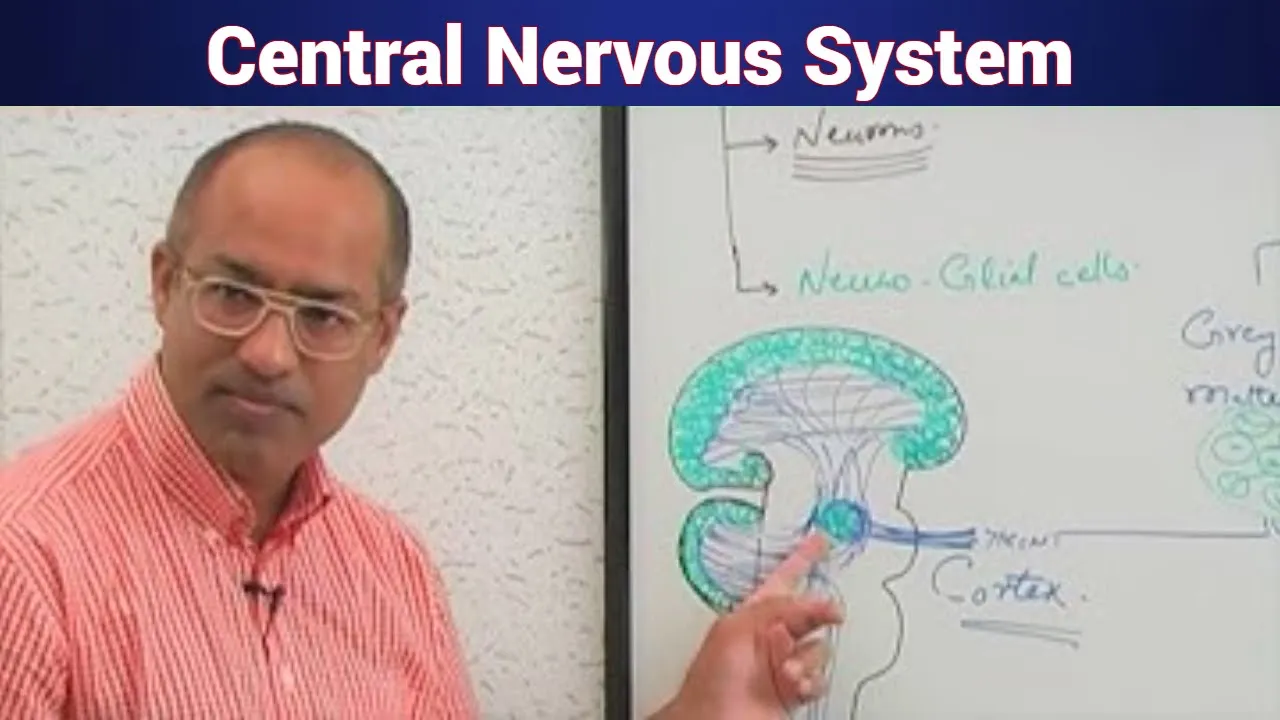
The cerebral cortex, the largest part of the nervous system spanning 2.2 square meters, contains approximately 100 million neurons organized into six histological layers (Brodmann areas) that process sensory information, intellectual functions, learning, language, thought, and memory. The motor cortex, located anterior to the central sulcus in the frontal lobe, controls voluntary movements through the pyramidal (corticospinal) tract and extrapyramidal system, with the primary motor area (Brodmann area 4) having a topographical homunculus representation. The reticular activating system (RAS), extending from the upper medulla, pons, and midbrain, regulates wakefulness and sleep-wake transitions through reciprocal inhibition between excitatory RAS neurons and inhibitory sleep center neurons, with sleep characterized by decreased muscle tone, reduced metabolic rate, and distinct NREM and REM stages that facilitate memory consolidation and restorative physiological processes.
Neurophysiology II: Brain Areas & Sleep-Wake Cycle | Intro Guide
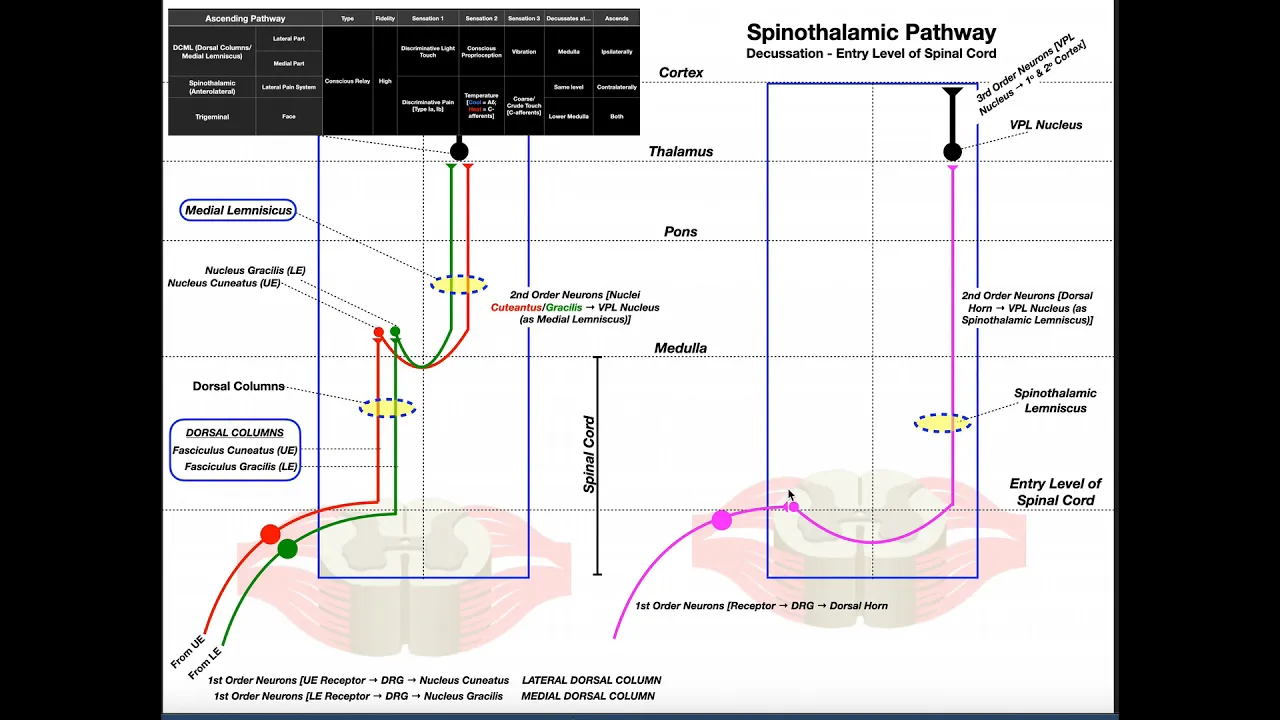
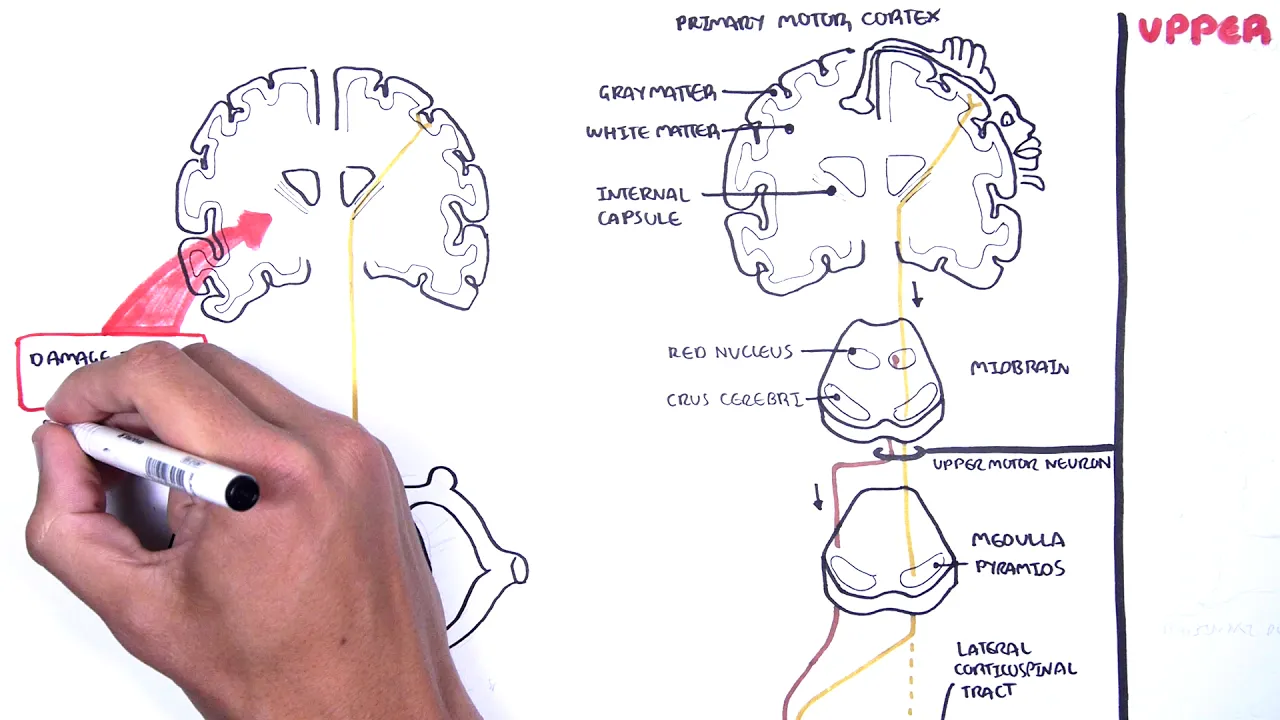
Added:yeah goody guys you guys will be surprised to see me in a grocery store so actually I came to my shop I just came here to read for the night so I'm just like let me record my introduction on your physiology too so they'll be having an introduction on new physiology too okay so I'm near a physiology too and first of all I'll be talking about the cerebral cortex okay so um let's have an introduction so the cerebral cortex is a sheet of neural tissue that is outermost to the cerebrum it is the largest part of the nervous system that occupies the area of 2.2 Square in the human right and the cerebral cortex play um a key role in integration of sensory information intellectual functions learning language thought and memory okay so um this is cerebral cortex okay spans an area of 2.2 square meters now um let's talk about speech uh awareness and consciousness um we say that the cerebral cortex functions in speech awareness and Consciousness and it contains about what 100 million neurons it is divided into two um hemisphere okay uh by Deep future future that's uh corpus callosum which is a broad brand of what cholesterol fibers now about the gray matter uh we say that green matter is the major component of the CNS consisting of a neural cells bodies and neural Fields uh that's a dendrites on myelinated axons glass cells that's the Astro uh also known as the astrogler and what's the oligodendro sites okay and the capillaries okay um now let's talk about the sulcus okay uh we said that the brain is into sulcus and gyaras okay the ridges are the sulcus all right um I think the gyri are let's go on uh we see that the surface of the cortex is folded into a large ridges okay um such that um to third of it is the grooves okay grooves that's a the inward like the inner all right that's the society that's a depression in the surface of the brain called the circles okay then how about the gyrus Jairus is a ridge on the cerebral cortex it is generally surrounded by one or more worth oxide okay so a gyrus is surrounded by um depressions of frogs okay now you can see um a whole diagram I could see the central sulcus okay you see the primary motor area you see the primary someone to sensory area so where any case area is the broadcast area and so on now um what are the layers of this cerebral cortex and we say that broadman neurologist that's um he lived between um 1868 to 1918 I'm demonstrated that the cerebral cortex is formed by what six layers of structures based on the histological difference um based on the histological difference in the arrangement of their six cellular layers okay he numbered them um one two three four up to 50 areas okay now um this map is used as a reference point to many of the different functional areas of the human brain okay now for example we have this tomato sensory area which is a three one and two and we have the visual area which is what the 18 um 17 and 18 in occipital lobe we have the auditory area which is the 41 and 42 and we have the pre-motor cortex which is what area four and six okay um let's talk about several dominance this is dominance of one server hemisphere over the order in control of cerebral function okay now for right-handed people we have the left hemisphere as the most dominant and vice versa okay for left-handed people we have what the right hemisphere as the most dominant okay and now we move to localization of hormone um homunculus um where we say that this is a topographical representation of what different body areas in the cerebral cortex okay and this is called what the homunculus now um the muscles of various parts of the body are represented in an inverted manner from medial to lateral depending on the intensity of The receptors okay now um the order of representation from media to lateral surface okay and we have the two we have the ankle we have the knee we have the hip we have the trunk we have the shoulder okay we have the arm we have the elbow we have the wrist and we have the hand we have the fingers and we have the face okay now however parts of the face are not represented in inverted manner okay now um this image here is not really clear though but um this is a hormone cause okay um these are homunculus now um how about the motor cortex um the motor cortex we say that um anterior to the central circles um doesn't multiple context it is anterior to the central circles and it's occupying the posterior one third of the frontal lobe okay anterior to the central circles and occupying the posterior once other frontal lobe is what the muscle cortex all right and this is the area four and six now posterior to the central circles is what the summer to sensory area which is the area of three one and two broad mounts area okay um the motor cortex controls the voluntary movement okay that's a fine fragmented movement of the hand um the right half of the motor area controls what the left side of the body now and the motor cortex can be divided into three parts um each has its own topographical representation okay the primary motor area that is presenter gyrus is area what four okay now um still talking about the motor cortex um the premoto cortex is what area six um now let's talk about the supplementary motor cortex all right now we say that the motor cortex receives what information from many parts of the brain and spinal cord now those are core um columns um those are column afferent from the skin touch receptors okay via the thalamic okay um you receive also intercostal uh projections from the somatosensory area receive auditory cortex okay now um also receives from the cerebrum basal ganglia and what the talams right all these are received by the supplementary muscle cortex okay um now um let's talk about efferent projections from what um the motor cortex efferent are like Okay um the fibers that are going out the fibers are going out from the motor cortex okay um we have the pyramidal tract and the corticospinal pathway okay now um the multicult also gives rise towards motor signals to the basal ganglia brain um brain stem and cerebellum okay and also to the cranial nerve nucleus via the cortical nuclear was trapped okay and also to the brainstem multi-nuclear decorative tract okay and also to the cortical strateau tract okay um from the cortical strata track to the basal ganglia okay now and also to the Ponto cerebellum via the cortical content with cerebellar what tract okay and um from the from the motor cortex you'll be moving towards the primary motor cortex right now inside the primary motor cortex lies in front of the central circles in the precentral gyrus okay now it corresponds to the broadmount area four it has a topographical representation of different muscle areas of the body that's a multi hormone colors okay now and the degrees of representation of different muscle area shows that it has a large representation for fingers and terms as well as muscles for speech okay because it has this large representation because um they are in constant use okay now it controls what contralateral movements uh mainly the distal limbs um this is for discrete movement and initiation of what motor activity okay um um this is a primary motor area that we are talking about uh we are currently talking about what the primary motor area then how about the promoting area this is a promoting area um it is um anterior when I say here is anterior to the what the primary motor area now um the premotal area is a broad month area six it lies immediately anterior to the primary motor cortex okay projecting inferior into the civilian fissure and superiorly into the longitudinal okay and the topographical organization is same as the primary was motor cortex okay it controls complex patterns of coordinated muscle activity right now um more purposeful movements are orientated to perform what specific tasks okay now I'm the premoto culture is the bezel ganglia the talamus the primary muscle cortex works together for the control of what complex patterns of coordinated muscle activity in the body okay no um let's talk about the supplementary motor area it has another topographical Organization for what control of motor function okay it lies mainly in the longitudinal feature but extends a few centimeters onto the superior frontal cortex that's the broadman's area six okay now what are the functions um um stimulation causes what bilateral grapsing okay that's a movement of both hands simultaneously it also functions in concert to the premotal area to provide attitudinal movements all right and physician movements of different segments of the body okay and also positional movements of the head eyes and posterior movements of the body okay and I'm now having done with the introduction to the various okay Parts I will be talking about the pyramider or the extra pyramidal system okay now instead of motor control of voluntary muscles are transmitted directly from the motor cortex to the spinal cord through two systems these are the pyramidal or the cortical spinal tract and we have the extra pyramidal okay um this um indirectly involving tracks from the brainstem basal ganglia and the cerebellum okay and examples of this extra pyramidal tract includes what reticulous spinal vestibular spinal rubric spinal tectos spinal okay and um they are they are mainly uh for the control of what posture okay um uh these are the words are the pyramidal tracts and they are collectively called what the descending Pathways okay and pyramidal tracks and the extra pyramidal tract okay um now um we don't read the introduction to the descending Pathways let's talk about each one of them so now we'll be talking about the pyramidal or the cortical spinal tract now we say that um uh the most important output from the motor cortex is the cortical spinal tract that's also known as the pyramidal tract okay also called the pyramidal tracks and this is derived from giant pyramidal cells called what best best sales okay sales of beds okay now the human cortical spinal tract consists of about what me a million one million accents okay 30 of this originates in the primary motor cortex 30 percent originate from the pre-moto and supplementary motor cortex forty percent originate from the summer to sensory cortex okay now this axons descend through the subcortical white matter okay to form internal capsule between the talamus and the basal ganglia and the cerebral was peduncle now as these tracks descend into the medulla they form medullary pyramids okay and these are prominent um protuberance on the ventral surface of the medulla okay now this tract crosses to the opposite side of the spinal cord about 80 cross the midline at a location known as the pyramidal decision to form was the lateral cortical spinal if they are cursing to the other side that's to the edge they are away from the midline that's why they are called lateral cortical spinal okay and 20 of the fibers do not cross okay for me the ventral or the anterior cortical spinal tract okay now um corticospinal tract makes what monosympathetic and monosynaptic connections with Alpha motor neurons that are important for individual muscle movements of the body they also form synapses with interneurons in the spinal cord okay now on the extra pyramidal tractor important for what coordinating larger groups of muscle Behavior such as running and walking okay um corticospinal tract has significantly modulated by both sensory information and information from the other motor region okay that's um a stream of tactile Visual and proprioceptual needed to make was voluntary movement okay now in addition the output from the motor cortex is under the substantial influence of what basal ganglia cerebellum okay and this is essential for execution of movement okay now um have you spoken about the designing Pathways you'll be talking about Legends all right Legends also known as Strokes and um these are into what the upper motor neuron Legend and the lower motor neuron lesion all right now um consists of these Legends include was hemorrhagic or ischemic okay this is this could be due to thrombosis okay this could just be trying this could be due to what thrombosis high blood pressure diabetes HIV and AIDS okay um this is a diagram showing upper motor um cortex um you could see the upper motor neuron and you could see what's the lower motor watt neuron okay now what are the signs of upper motor Legends okay now there's increasing muscle tone that's hypotonia and all superficial reflexes are lost and the Deep reflexes I was exaggerated okay and there's increasing tendon reflexes okay there's plastic paralysis and there's muscle atrophy which is rarely and there's lots of abdominal reflexes and babisky sign is what positive okay now by basically saying um stimulation evokes was plantar reflex downward flexion of big toes okay they're so reduced power okay then how about what uh the lower motorwort neuron Legends um is like opposite of the upper motor neuron okay here there is decreased muscle tone that's hypotonia and um there's a muscle atrophy okay um there's flaccid paralysis there's fasciculation of single uh muscle okay there's absence of tendon reflexes and um but basically sign is negative or there's no Babinski sign okay um having spoken about everything we'll be talking about wakefulness and sleep okay now this is where we say that the reticular activating system um the regular activating system is an anatomical location extending from upper medulla pons and midbrain okay it is responsible for regulating wakefulness and sleep wake word transition how you sleep um and how you wake up okay the transition between you sleeping and you waking up is come is controlled by the reticular activating system also known as the RAs okay now I'm Ross housed all the ascending tracks to the talamus and the cerebral cortex as well as the descending tracks from the cerebral cortex to the spinal cord okay now Ras it receives sensory inputs from all the peripheral receptors okay that's a muscle joint pain receptors temperature vision and auditory okay now stimulation of the reticular formation activates what the cerebral cortex does recticular activating system is responsible for what wakefulness okay now let's talk about the sleep wake cycle guys let's talk about sleeping cycle now we see that after the brain remains activated for many hours even the new neurons in the reticular activated system become more fatigued okay now are the positive feedback between the neurons in the rust and the cortex would fade and the inhibitory effects of the Sleep Center would take over leading to Rapid transition from wakefulness to sleep okay now during prolonged sleep excitatory neurons of the rust gradually become more and more excitable while the inhibitory neurons of the Sleep Center become less excitable because of their over activity thus leading to a new cycle of what wakefulness okay for you to sleep what is making you stay awake have to be fatigued before you sleep for you to wake up what is making you um sleep has to be fatigued before you wake up okay that's the summary to what you are saying now ability to fall asleep maybe due to the action of specific neurotransmitters that inhibit the activity of rust and this includes what serotonin and murami was peptide now drugs can stimulate or depress runs we have anesthetic drugs and what tranquilizers okay if rice is keeping you awake when you are a patient and they give you an aesthetic drug what happens you sleep okay so um an acetic drugs is what depressing the activity of rust okay this is a sleep wake cycle now let's talk about sleep right now sleep is a natural physiological phenomenon all animals sleep what is the definition sleep is a state of unconscious uh state of unconsciousness from which one can be aroused by external sensory water stimuli okay tapping me to wake up is an external stimuli now sleep is different from coma um coma is unconscious state where one cannot be aroused by what external stimuli now what is the duration of sleep um we say that um sleep duration varies from an individual okay newborns sleep between 18 to 24 hours growing children's sleep between 12 to 14 hours adults sleep between 17 to 9 hours seven to nine hours in old age you sleep about five hours right that's less that's why I find um old people staying awake to think so much okay now um what are the physiological changes during sleep now instead of during sleep all physiological activities are depressed including what your CVS your respiratory system um decrease urine output the specific gravity of urine also increases okay now muscle tone um is decreased as well as what reflexes all right there's positive babinsky sign um salivatory secretion decreases during sleep okay now I'm um sweat okay is this sweet secretions or sweat this should be sweat okay sweat secretions increases now what are the types of sleep we have the non rapid eye movement that's a slow wave sleep and we have what the rapid eye movement slip now let's talk about the non rapid eye movement slip now so that um this is the restful type of sleep characterized by decreasing peripheral vascular tone okay there's irregular blood pressure and respiratory rates okay there's decreased metabolic rate and dreams can occur but not remember okay now non-rapid eye movement sleep results in conservation of brain energy okay and it facilitates what memory memory consolidation through modulation of what synaptic neurons okay there are different stages of sleep not a rapid eye movement non rapid eye movement stage two non rapid movement stage three then rapid eye movement okay um rapid eye movement this is a paradoxical slip the brain is quite active and the skeletal muscle this is when you are almost waking up okay the skeletal muscle contraction of course it lasts for 5 to 30 minutes and repeat at approximately 90 minutes interval it occurs when an individual is extremely tired and tends towards rest now what are the important features of what rapid eye movement sleep and we say that dreams occur and can be recalled um waking a person um working a person from Rapid movement sleep is more difficult yet in the morning we wake during rapid eye movement sleep okay now muscle tone is substantially decreased depressed um heart rate and respiratory rate becomes irregular and despite the decrease muscle tone muscles contraction do occur especially okay um brain metabolism is increased by as much as what 20 percent and um ACG shows what brain wave that is character characteristics of what waking State okay there's increased secretion of corticosteroids and testosterone there's a cycle of what penile erections now my male friends will testify to this when you wake up most of times from a very deep sleep you find out your penis is your your penis is erected okay that's from rapid eye movement now what is the theory of sleep we said a decade to go sleep um sleep theory was believed to be due to what decreased activity in what um reticular what activating system and this concept is called into question however it is now the uh believe that sleep is caused by what active mechanism that inhibits the rust and other parts of the brain now what is a mechanism of sleep now we see that activation of the rash in brainstem is responsible for what weakness sleep has been attributed to what the inhibition of rust what is making you to stay awake the inhibition of these words will cause was sleep okay now um stimulation of the pre-optic region in the forebrain produces sleep while Legend here makes the animal permanently Sleepless okay now the pre-optic region has inhibitory efferent projections to the reticular formations thereby what's causing sleep okay now there are three areas in the brain where stimulated can induce sleep this include the Riff of the Calder ponds and the medulla and the Supra charismatic level of the hypothalamus um the pre-optic was nuclei and we also have the midline nucleus nuclei of the thalamus okay now um what are the chemical substances involved in sleep we have the serotonin okay we have the acetylcholine we have the noradrenaline we have the murami peptides okay and when small amount is injected into the third ventricle sleep is induced within meanings okay and cholinergic agonis enhances was rapid eye movement sleep physiological effects of sleep and we'll set an absence of sleep due to prolonged weakness will cause what irritability sluggishness of thought lack of concentration and psychotic behavior when somebody don't sleep for a very long time the Pacific will go mental okay now sleep restores normal functions of many parts of the brain from higher intellectual centers of the cortex to the vegetative and behavioral what functions of the hypothalamus and the limbic system sleeps helps in learning understanding okay and consolidation of memory what are the effects of lack of sleep um sleep deprivation affects many systems in the body that regulates what blood pressure heart rate peripheral vascular tone muscle activity and basal metabolism other Sleep Disorders we have insomnia that has difficulties to sleep we have the narcolepsy that's an irresistible was also State during the daytime we have the some nabulism that's a sleepwalking common in children we have the nocturnal and Neurosis that's a bed waiting we have the slope anopia that has a breathing cessation during our sleep and night okay so these guys we are done with the introduction to what um 02 we spoke about various areas of the brain and cerebral cortex and um spoke about sleep we spoke about the descending was um the descending tracks too okay so these guys I would like to close the picture and I'll see you guys very soon in the next tutorial and bye for now
Up Next

Sleep Function & Synaptic Homeostasis | Giulio Tononi | Allen Institute
@AllenInstitute
28.2K views•2011-10-07
Deciphering Neural Circuits Controlling Anorexia in Mice | Richard Palmiter
@AllenInstitute
2.3K views•2011-10-10

Vagus Nerve (CN X): Anatomy, Nuclei & Functions Explained
@Alilamedicalmedia
305.2K views•2022-10-31
How Exercise Benefits Your Brain: Science Explained
@TED
11.4M views•2018-03-21
Related Study Plans & Knowledge Roadmaps
Structured learning paths in Neuroscience