





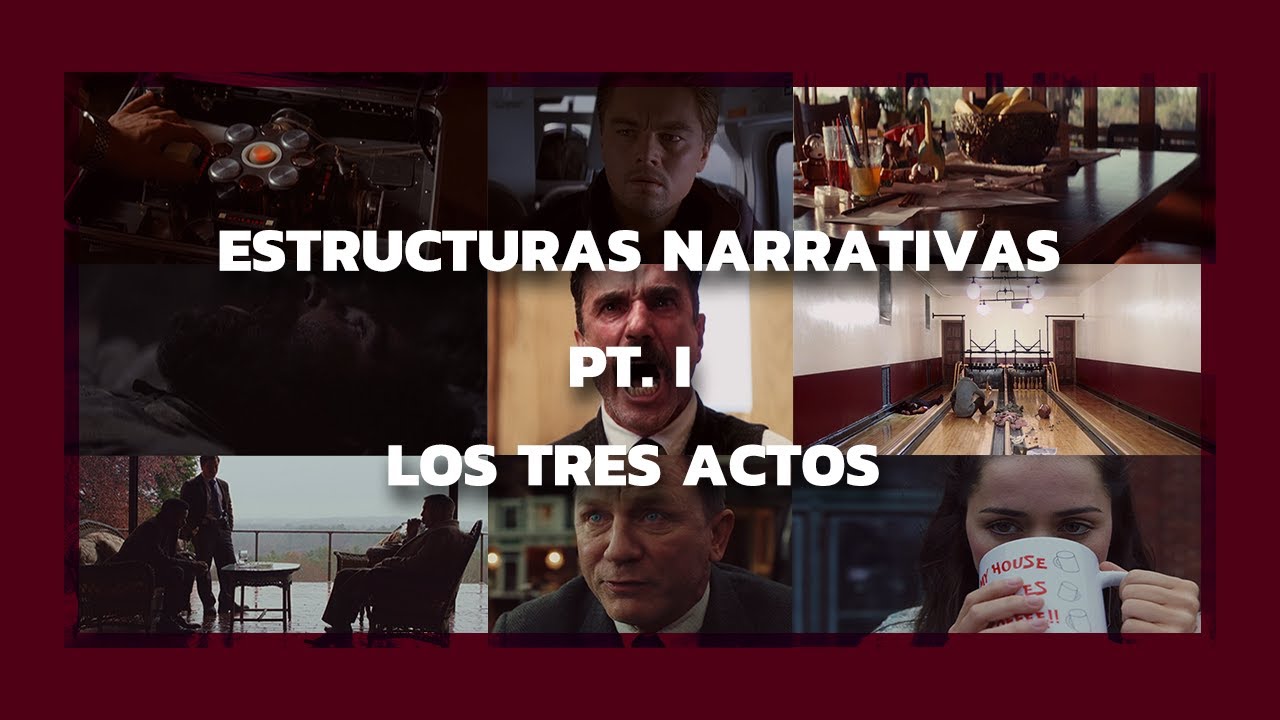












![Lecciones de cine 1 (de 3): Tiempo I [Orden y Frecuencia]](https://i.ytimg.com/vi/j4LhPU7t67s/hqdefault.jpg?sqp=-oaymwEmCOADEOgC8quKqQMa8AEB-AG-AoAC8AGKAgwIABABGH8gEyh-MA8=&rs=AOn4CLAxV4cpwqndqzbqgNKpDxS7ShRNCg)



Plot in cinema is the causal sequence of chronological events that transforms a simple story into a meaningful narrative, following universal structures like birth, growth, adventure, temptation, and life lessons, as analyzed through key narrative theories including Genette's concepts of order, duration, and frequency, Shklovsky's defamiliarization, Propp's folk tale morphology, and Campbell's hero's journey, with narrators categorized as extra-diegetic, homo-diegetic, or intra-diegetic, and focalization determining the viewer's perspective.
Plot in Cinema: Narrative Theory Explained | Film Studies Lecture
Added:Basic film terminology, including concepts like scene, sequence, mise-en-scène, and editing, to understand how stories are constructed visually.
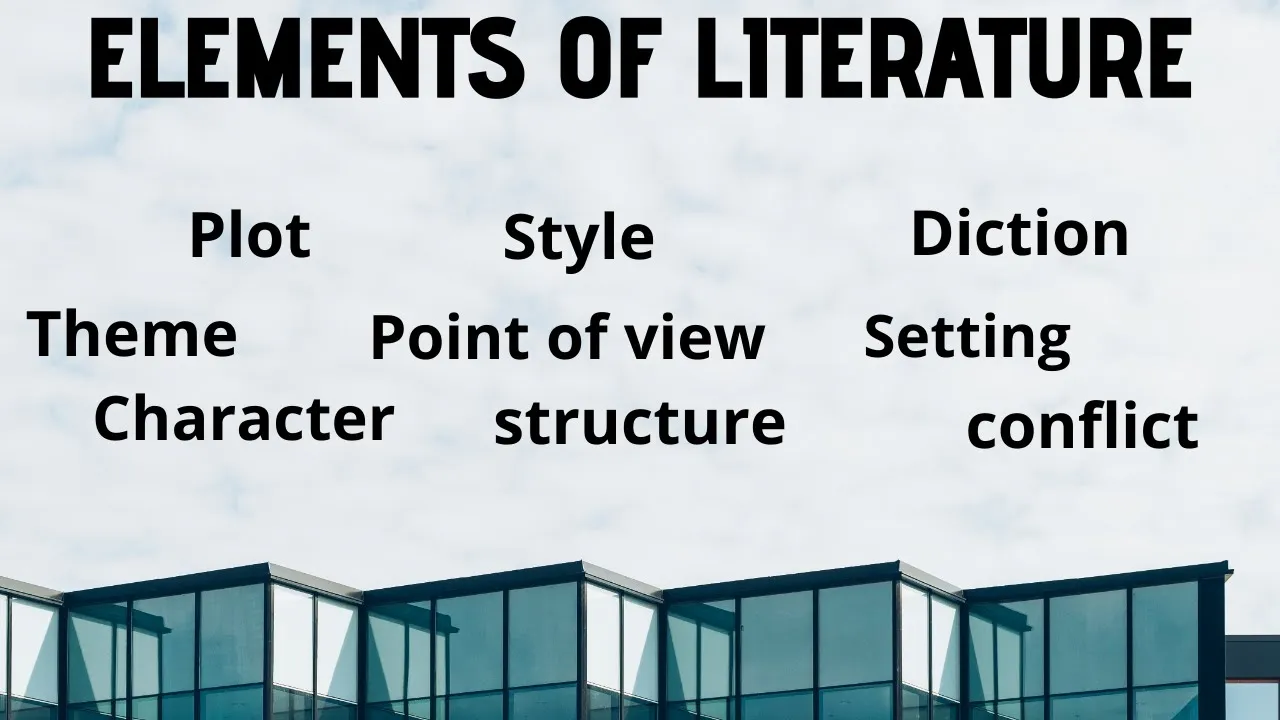
Fundamental literary elements of storytelling, such as protagonist, antagonist, conflict, setting, and theme.
A basic understanding of the traditional three-act narrative structure (setup, confrontation, and resolution) commonly used in mainstream cinema.
An awareness of the distinction between showing (mimesis) and telling (diegesis) in art and media.
Application of formalist narrative concepts, such as 'fabula' (the chronological story) and 'syuzhet' (the plot representation), to analyze complex, non-linear films.
Advanced study of focalization and narrative voice, exploring how restricted vs. unrestricted narration affects spectator psychology and empathy.
Investigation of structuralist and post-structuralist film theorists, such as Roland Barthes, Vladimir Propp, and Gérard Genette.
Analysis of alternative, non-classical narrative structures, including hyperlink cinema, database narratives, and avant-garde film storytelling.
Practical application of narrative theory to screenplay writing, specifically in manipulating temporal order, duration, and frequency for dramatic effect.
13.2K views116likes48:36Original Release: 2013-05-10
Good morning, lecture three, we are going to focus on plot in cinema, plot in films.
So, these are the key concepts that I will be discussing today. What is narrative?
And then I am going to talk about elements of narrative, how a plot is im-ploted, so, narrative.
Levels of narrative; diegetic, intra-diegetic elements, theories of narrative and certain cinematic and literary concepts, like defamiliarization and the concept of the unreliable narrative.
These are the key theorists we should be looking at, but this is not an exhaustive list, we will be dealing with more theorists as we go deeper into the course.
So, one is Gerard Genette, a French theorist who is the formidable influence on a narrative.
All these theorists basically they focus on literary theories, but then we are going to see how literary theories can be applied to cinematic theories as well.
Roland Barthes, Viktor Shklovsky and Vladimir Propp. So, these are our theorists that we will be looking in detail today.
So, what is a plot?
A plot can be, you know, cinematic plot or a literary plot.
Where is the plot, people often ask, what does it mean? So, it could be even verbal, written or visual as in cinema. Even a painting can have a plot, even a painting can a photograph can tell you a story there is the plot over there. Perhaps you are, some of you who are interested in photography would know the art of photo; there is the field called concept photography, you develop a concept and there is the plot, there is not merely a portrait or a picture, there is the concept there. So, narrative is the way a story is told.
So, the joke is, mothers no longer tell their children or children no longer tell their mothers rather that tell me a stories or tell me a narrative, that the way as story is told.
Film combines all these elements’ and therefore, becomes a complex activity.
Now see, I have to tell you something and please do remember it. Plot comes out of the story; it is the casual sequence of the chronological events in a story. I would like to direct your attention to E. M Forster’s Aspects of the novel to understand a story and plot better.
For instance, Forster gives us a story as; the king died and the queen died that is the story, but when you say the king died and the queen died of grief that becomes a plot.
Now, a most stories, most cinematic, most literary theories, and this is the very universal concept I am talking about, they deal with human and universal experiences; unless you are talking about Matrix which is of course, about human experiences but of very different kind.
So, this is what most of us face: birth, growth, going on adventure, adventure could be go going about with our day to day life, so that is adventurous enough.
Facing various temptations, give me example. I mean here of course, we are talking about narratives.
But what could be a narrative temptation, temptation in a narrative?
Hero is born, he grows, he goes on a particular adventure, he faces temptation, he may win or he may lose.
If he wins, it is happy ending; if he loses, it is a tragedy.
He may fall in or out of love that is part of the adventure.
Lastly, life lessons derived.
So all of us, when we take talk of our life, there are certain life lessons; at the end of these 5 years in IIT there will be certain life lessons, hopefully pleasant for most of us.
Now, let me give an example. How many of your familiar with the story of Oedipus?
Yes, can you apply Oedipus to this?
Yes, Shweta, just tell me birth and growth.
Student: So, Oedipus is born in the palace to the king and queen. And there is a prophecy which says that, he will grow up to kill his father and sleep with his mother. So, as he becomes toddler, they, his mother puts him in the basket and sends him out to be left free to die.
But he is taken piers by shepherd’s man and grows up in a different kingdom adopted by a neighboring king and.
Fine, now Tara, if you are familiar with the story, going on adventure, let me tell you and you have to help me here.
Oedipus, as she rightly pointed out grows up in the household of neighboring king, unaware completely that his real parents are some, some, some other people. Now, there in that other kingdom there is another prophecy and he is told by the oracle there, that you will end up marrying your mother and killing your father. Now, that prompts him to go on an adventure.
He escapes from that kingdom in order to avoid this horrible fate and goes on an adventure.
Now, what is that adventure? Things happen to him.
Student: And then eventually he gets into a war; he unknowing joins the army which is in a war with his original father.
And unwittingly, and he killed him.
And unwittingly, so that is going on adventure, thank you.
Facing temptations, yes perhaps not to that extent in Oedipus, but in many films and many stories you will find, we will be talking about that. Our own Indian epics that raise these elements of temptations; our heroes are in exile, they face various temptations.
Winning, loosing and then life lessons derived; it is a standard plot, this is the way most plots unfold.
Now, please do remember, plot comes out of the story. It is the casual sequence of the chronological events in a story. I would like to direct your attention to E M Forster’s Aspects of the novel to understand story and plot better.
For instance, Forster gives us a story as, the king died and the queen died that is the story.
But when you say, the king died and the queen died of grief that becomes a plot.
I am showing you a still from this very popular movie, no prices for guessing. What is this movie?
Students: Terminator, the judgement day.
Terminator two, ‘The Judgment Day’. Now, can you apply all these, I will give you one minute, can you apply all these elements that we have just discussed, to this movie?
You have to also tell me whose journey it is.
Apply the features we just talked about.
Srinath, can you start, can you give some inputs here?
So, boy’s journey, movie is seen through the point of view of; point of view is a very important concept in any narrative.
How a story is focalized. that is another concept that you should be familiar with; focalization, point of view, perspectives, all these terms are given to us by Gerard Genette.
Now Vidhant, if you apply birth, growth, adventure, do you think John Connor story, make makes sense?
Do all these things fit?
Yeah, it is a phenomenal story. It is an epic story in which the original story was in two parts; the way I remember, then after that also we had the couple of sequels to it, but the story begins and unfolds and ends in part one and part two, the way we understood, The Terminator we popularly refer to.
So, this is the story and there is the hero going on for an adventure, how he meets someone who becomes his mentor, a father figure and life lessons learn. So, there is the growth in the boy’s character. The robot, yes the robot remains the robot; but all there is the there are certain changes in the robot as well, he acquires more human, more humane qualities but in the boy there is the complete growth, in the character of a boy.
Student: John Connor and his friend are robbing an ATM or something; it is after that this scene is when they were chased by others, T-8 or T-x whatever. So, the yeah, so the facing temptation in the sense that his living with his foster parents and how he is rebelling here, he is at that particular age. So he is rebelling against the established,.
Also the fact that he comes from a disturbed family; absolutely absence of his real father, his foster parents are shown to be quite indifferent to him and then he also has this major problem where the mother is confined to an asylum.
So, all these, so it is also coming of age film, the kind of genre I keeps talking about, the bildungsroman, so a boy’s journey.
Now, Gerard Genette in his seminal text ‘Narrative Discourse’ (1983).
He tells us what are the components, basic elements of a story or the contents, and he tells us about events, the chronology. Of course, you know when you look at a movie like Pulp Fiction there is the total disruption of chronology, but that is, that is an exceptional movie that we, that also we are going to talk about later.
Causality, now all events should have a cause-effect relationship. This happen, b happened because a happened, there should be a proper and appropriate link. So, Genette also talks about causality, importance of causality and effect in a story. Characters; their actions and their interactions with each other or with one another and how these impact, how they lead to coherent plot.
Genette also talks about setting, the importance of setting in a plot. Spacio-temporal complexes by which we mean where it is set, spaces; temporal, what time it is set in.
Genette has given us three categories of time, of narrative time, called order, duration, frequency.
By order we mean, in which order the plot is unfolded. We also have flashbacks, flash forward in narratives, remember, no, right. So, flashbacks and flash forwards that contribute towards making of order, the order how sequences unfold.
In Pulp Friction for example, the entire concept of order is disrupted.
Duration, for how long does a particular scene lasts on screen that is duration. Frequency, the number of times scene is repeated or an action is repeated, that is frequency.
So, duration in other words suggest the speed of narration of time and is understood through the amount of text. In cinematic terms we can say, the amount of time is spent on screen and devote to the narration of stretch of a story time.
Frequency is the relation between an episode in the story and the number of times it is narrated.
In the narrative of Kurosawa’s ‘Rashomon’, a 1950 movie, a particular event is repeated several times. How many of you are familiar with ‘Rashoman’?
If you are not, then please watch it because that is the movie that will be discussed frequently in this course, So, Gerard’s concepts of order, duration and frequency.
So, this is still from Gone with the wind, here spaces and times are two elements which are very well defined, very clearly articulated. What are the spaces? What is the setting?
That is the time. Okay, space? The south, the south, the plantation period, the plantations, Albama, Atlanta those are the spaces that movie is looking at in particular; Tara, the heroine Scarlett O’ Hara’s mention that is a very important setting, space.
Temporal?
The civil war period, 1861 to 65 and the aftermath, so very clearly defined.
I am just trying to draw your attention to how narratives are done in films. So, here, space and time are clearly defined. And what is your opinion on a spaces and time in the Matrix?
Do you have a very clear indication of spaces and time, but this is also one way of, because it belongs to a totally different genre; the science fiction.
Movies like Gone with the wind belong to a different category, linear storytelling, classic Hollywood, classic storytelling.
Science fiction can play around with these elements.
So, science fiction has, you know grammar of its own.
Any comments, any questions here?
You are talking about Andy Warhol? Yeah see Andy Warhol is an Avant-gardist.
He is not really interested in telling you a story, but he is trying to capture a particular moment in our society.
So, he is the pop-culturist, he wants to look at the mundane aspect of life.
So, his various projects, I mean, look at his even photographs of Marilyn Monroe, Elizabeth Taylor, same picture but with tinged with a different color pallet.
It tells you about stardom. Marilyn is Marilyn, no matter where, so that is stardom for you.
Elizabeth Taylor remains Elizabeth Taylor. Now, what he is trying to capture in those famous documentaries is the idea of monotony of the contemporary work, so that is, Warhol.
So, there is not a story being told, but in films like Gone with the Wind, Citizen Kane, Matrix there is a story, there is the plot. In Warho lwe do not have plots.
So, Genette also talks about kinds of characters. A narrator could be reliable or unreliable; we are going to look at that, this is the very interesting area, the reliable narrator, the unreliable narrator.
We also look at levels of narrations, story within story, embedded narrations, multiple narrations. We also look at the narrative voice, who is the narrator?
Now I will explain, reliable and unreliable narrators, levels of narrators, narratology and the voice in a narrator.
Narrations in films are of three categories.
One could be extra-diegetic; these are the terms you should be familiar with, extra-diegetic is a kind of a voice-over, I am sure you know what is the voice-over in cinema. So, the voice does not necessarily belong to any character from the movie itself.
For example, in Billy Wilder’s the Apartment, there is the voice, there is the voice-over but the voice does not belong to anyone from the movie, from the film.
Homo-diegetic, the voice-over is the voice of a person or narrator who is the character in the film.
Intra-diegetic is when characters start speaking to each other to further the plot or to further reveal themselves.
They tell us a lot about themselves by their conversation with each other and I will give you examples from each category.
So, extra-diegetic, we have already seen The Apartment where character, the voice-over does not belong to any of the characters, remember these terms.
American Beauty, for example plays on the homo-diegetic narration, there is the voice-over; from within a year I am going to die, right, this is me and this is my house.
That is the way and we know that Kevin Spacey is talking to us.
Kevin Spacey somehow finds his way very often in this course and that will keep on happening; I was just giving it a thought and we were talking about Kevin Spacey yesterday with reference to ‘Seven’ and then I thought, Oh my God!, the number of films that I have in mind with star Kevin Spacey; so interesting actor and very interesting body of work.
Sunset Boulevard, if you have watched the movie, it is again a Billy Wilder movie and we are told the hero is already dead, the dead body; the voice-over belongs to the dead body, the dead hero.
My story begins one year ago. Do you know the movie? No? Sunset Boulevard, Billy Wilder’s movie, please make a note of it, belongs to the classic Hollywood period.
We will be talking about classic Hollywood soon.
So, Days of Heaven, one of the earlier movies of Richard Gere, a very young Richard Gere, directed by Terrence Malick, I think it was his first major feature and again, it has the very interesting voice-over. The voice does not belong to the hero or the heroine or even to the parallel hero; but to the hero’s younger sister, the hero is dead we are told at the beginning, the voice-over, the narrator is the hero’s sister.
Again example of homo-diegetic narration; Hitchcock’s Rebecca, Last night I dreamt I went to Manderley again, based on Daphne du Maurier's novel, that is the way the novel begins, that is the way the film begins, watch Rebecca.
Spiderman? Does it have any voic-eover?
With great power comes great responsibility, who does he say this to?
Earlier on in the movie his uncle says these very wise words; uncle telling these words of wisdom to Peter Parker, at the end of the movie we hear Peter Parker saying, repeating the same words.
Who is he talking to?
To us, to us and not to Mary Jane in particular; he is talking to us and it is his voice, the voice-over narration. So, pay attention to these elements, you will enjoy films more.
Any example, anything else that comes to your mind?
Fight Club, Titanic; all examples of which kind of narration, Homo-diegetic. And what is homo-diegetic, narrator or narrative?
The character who belongs to the movie; his or her voice, could be a minor, could be a major character.
And let me give a very example, a very interesting example in this category.
It is a movie called About a Boy.
Familiar with the title, About a Boy?
Hugh Grant’s?
Now, see there is something very interesting happening in About a Boy.
It is a very short, very sweet movie, but it has two voice-overs, two narrators at times contradicting, at another time complementing each other. So, the little boy who Huge Grant is father figure to and then occasionally, Hugh Grant’s voice. We have two voice-overs giving us narration.
So, very interesting movie in terms of plot and narrative.
Intra-diegetic, characters speaking to each other and revealing something about themselves for the audiences' benefit. We learn a lot about the plot and the characters.
Now, here we have Tom Hanks in conversation with a lady on the bench. We did, do you remember, there was, you know when we were doing semiotics we looked at this particular still from Forest Gump, that is the point when Tom Hank’s character is sitting alone on a bench.
Later on, he is joined by lady and then he starts talking to her and then he reveals.
So, Forest Gump is full of homo-diegetic as well as intra-diegetic narrations.
My Mama told me that life is a box of chocolates, watch the movie, we will be discussing it later on.
And then narration playing on with the concept of multiple perceptions; again, I go back to Rashomon, Kurosawa’s, please watch it and then we will be talking about it in greater depth later on.
Again, Genette’s concept of unreliable narrator; unreliable narrator, his function is to reveal an interesting gap between appearance and reality and to show how human beings distort or conceal the latter.
Several instances of unreliable narrator especially in contemporary cinema.
So, narrative is a kind of a confession, but it is riddled with devious self-justification and special pleading; unreliable narrator.
Now, this is a very good example of unreliable narrator.
Again we go back to Kevin Spacey’s character in The Usual Suspect.
Now, the entire story is told to us in flashback by Kevin Spacey, at the end of the movie when he walks off scot free, we realize that indeed he was the killer and we all get trapped by him, because the so many things; again semiotics at work. He is a cripple, what could he do, so that is the idea.
And then when he walks away and walks straight, we realize that we have been taken in.
And can you think of more examples?
Fight club is a very good example; fight club, is he an unreliable narrator or I felt it is a very strong example of homo-diegetic narration, he cannot, he betrays his organization that is another thing; he is not fooling the audience where the unreliable narrator fools the audience and sets certain kind of puzzles with the audience or the reader, readers are not able to decipher.
Perhaps, Memento could be good example of unreliable narrator.
Student: Sixth Sense.
Sixth Sense an excellent example of puzzle cinema and unreliable narrator, So, Genette also talks about the concept of focalization and perspective;whose point of view, through whose perspective do we watch a movie. We have already seen characterization.
We have already seen his concept of time, order, frequency, duration.
Now order of a narrative; of course the prime example is Pulp Fiction, but Memento is also another interesting take on, how filmmakers play around with the concept of order.
Anyone here, who has not seen Memento? If you have not yet, please, I, I know Christopher Nolan is a pattern here in the, in this institute, but do watch Memento all over again.
Now, what does the character do? We have been talking about character and American theoretician and novelist Henry James has written an any numbers of articles and essays on how important character is.
In fact, according to Henry James, character is much more important than the story because the plot is character, that is what he says and character is plot.
So, how do we build up a character? How does a director build up a character?
And this is what Francois Jost has to say about building up of a character.
“To distinguish between the relationships between how the camera shows the hero or the heroine and how the hero or the heroine is supposed to be seen; this is the buildup that you give, any director give to a hero or a heroine, to a character.
How he is supposed to be seen; when it sees things from the position of the character, this is 'internal ocularisation'.
So concept of ocularisation and focalization, they are very important in understanding narratives.
When the opposite occur, whereby it sees things from the position of some other person, it becomes external ocularisation” Now, here we are asked to see things from the hero’s point of view. I am very sure you know what Die Hard is all about, and the still says it all, we are supposed to. And what are we suppose to understand by these pictures?
The camera is telling us to look at the hero from a certain perspectives. What perspective is it?
What is he wearing? What is the hair like? What is the look in his eye?
What is he carrying with him? What kind of a hero is he? He is the one man army, he is the one man army and most heroes are supposed to be one man army, otherwise we have another plot like Seven where the villain is totally or completely in charge.
So, again a movie like, this is just an example why Die Hard is such an interesting study of character, plot too and it is highly entertaining movie but character; it plays on the idea of the lone ranger, all American hero and that is what the still tells us.
He is the lone hero.
No, no, I am not talking about a specific lone ranger, hero as the lone ranger, you know someone.
For example, John Wayne, most of the time he may have a supporter but it is not that important, after all he is the one man army. Hero is basically a loner and the story unfolds through his point of view. His masculinity is always fore-grounded.
And if you look at the still, you will understand that he is an out and out macho, all powerful hero.
So it is not, yesterday we were talking about Kevin Spacey and his ambiguous masculinity, sexuality; I wanted to play husband, but could not, here you have no such dilemmas.
Let me take you back to Aristotle and his poetics, 4th century B.C. text; where he says, that plot or a narrative is a whole that has the beginning, middle and end.
I am sure all of us here are familiar with this; plot should have a beginning, middle and an end, and that is how all stories are constructed.
Viktor Shklovsky in ‘Art as Technique’ a 1917 work says, that a story or a narrative can tell you about events in two different ways.
One could be very a straight forward and a very literal representation; for example which is called in other words, the denotation, a literal representation.
To connote as we have already seen; is the symbolism attached to that, the symbolic representation of the same object.
In a narrative according to Shklovsky, is the connotative code or element which is more important because; it gives a poetic color and lends an imagination, a creative quality to the narrative, we are more interested in the symbolic representation of, so that is what he says. And this is the concept that I have been talking about, defamiliarization.
The idea is where the ordinary is made extraordinary, not always by magical realism; a very popular literary technique especially by Latina American writers. We are not talking about magic happening here, ordinary becoming extraordinary. But it is the perspective that lends that touch where ordinary is making to look extraordinary, the notion of seeing things through new eyes.
So, we have a movie like Lost in Translation. Have you watched the movie?
How many of you do not know Lost in Translation? Do not know?
Please watch the movie; Bill Murray’s, directed by Sophia Coppola, Francis Coppola’s daughter. So, Lost in Translation, Bill Murray and Scarlett Johansson; where an American comes to which country, Japan, and looks at the new country through an entirely new perspective.
Roman Holiday, again the same story.
How does the ordinary become extraordinary in Roman Holiday?
Audrey Hepburn, Gregory Peck; Tara, do you know the movie?
Shwetha, do you know the movie? How does ordinary become extraordinary?
She is the princess who has been living in this ivory tower, that kind of a very protected life, always surrounded by bodyguards and her courtiers. One day she just decides to give herself a holiday and takes off. She is all by herself, and here she meets Gregory Peck an American journalist living in Rome.
She thinks that he is not aware of her identity, so she can play the normal girl.
He knows who she really is, but he goes along with her plans however naive they seem.
So she looks at, so taking a scooter ride with the hero is an extraordinary event.
Going to the barber and getting herself a new hair cut is an extraordinary event, which for any other person would not be. So, watch ‘Roman Holiday’, William Wyler, William Wyler is an important director for all of us, William Wyler’s ‘Roman Holiday’.
And the comedy in Marilyn Monroe and Lawrence Olivier’s The Prince and the show girl, arises from the fact, that she is a showgirl; a very beautiful but very common place girl, you know Marilyn would excellent playing such roles.
And how she behaves when she is, she comes in contact with some, someone of royal descent as played by Lawrence.
So, everything becomes funny there because she looks at the ways of the court, the royalty through her perspective.
So, that lends a touch of magic, something extraordinary happening.
Now, we come to Vladimir Propp and his morphology of the folk tale, 1928 text.
And this is something again, which you should be interested in.
These are the characters he categorizes as; you have a villain, every story has a villain.
You have a helper, helper could be any helper you know villains’, heroines’ or the hero’s’, we are not interested but there is always the helper, someone to assist; Lone ranger, has an assistant.
A donor or a magician, someone who has the capacity, who has the capacity to change, to bring magic in the proceedings.
Invariably female in distress.
A messenger or dispatcher.
You have a hero who is the real hero and you also have occasionally; occasionally you can also have a false hero, someone who every one thinks could be a hero but finally turns out, that he really was not. ‘Batman’ ‘The Dark Knight’, so who is the hero and who is the false hero?
Student: Harvey Dent.
Harvey Dent is a false hero and that point he is made extremely clear; by the end of the Dark Knight and the beginning of the Dark Knight Rises.
This is another, the key, the most seminal work on you know; this is almost like a Bible of all is screenwriters, Joseph Campbell’s The Hero with a Thousand Faces (1949).
Again, he draws on a lot from mythology and literature.
And Campbell’s book is divided into three key parts, which you can apply to some of the films you watch and we try to do that all the time, every movie and we try to do this. The other day we were watching with some of my scholars, movie called Inception, yeah, and we thought, how does this fit in with the concept of Campbell’s, the hero with the 1000 faces.
So, three parts; departure,hero departs from his comforts zone, his initiation into the rituals, whatever those rituals might be, and he returns. His return or perhaps he never returns, he is caught somewhere but in the end; Inception is not very clear about.
George Lucas in Star Wars takes Joseph Campbell’s book as the template and if you look at Star Wars it has all the elements; it has all these elements which you know, you talk about or like the way Propp describes hero, donor, dispatcher, magician, false hero, villain, helpers, damsel in distress.
The Batman series is also about hero’s departure, especially Batman Begins, departure, initiation and his return.
The Lord of the Rings, of course is the classic example, and the Matrix.
I would like to draw your attention to this movie and watch this, and tell me how it subscribes to the idea of hero’s departure, initiation and return.
So, we were talking about Vladimir Propp and morphology of folk tale.
Do you think it satisfies,the movie satisfy some of the or all, rather all of the characteristic?
Mention some.
See this the way you apply theories to cinema. When you watch Lord of the Rings in future please think of Vladimir Propp, do not forget him, please think of Joseph Campbell because you are doing this course, otherwise I would not make such demand on you.
So, tell me, who do you find by way of characterization?
Come on give me answers.
Student 1: Aragon’s character begins with departure, initiation and returns.
Student 2: We are talking about Vladimir Propp right?
Yes, departure, initiation, return, yes there is one element but that is also in Frodo that is also Frodo. Whose journey is it? Frodo’s journey.
Lord of the Rings is an out-and-out Frodo’s journey.
Then what happens to Aragorn?
He is a very important, very charismatic character; I mean it is Viggo Mortensen, it does not get better than that. So, we can, we cannot just say dismiss him off, we cannot say that Viggo Mortensen is not important but he is the helper here. So very important character, an important heroic matured character, he is the helper here.
Do you have a magician?
You have, yes. Do you have a villain?
Student: Sauron.
we have. We also have an anti-hero kind of a character.
Student: Gollum Yes, yes. So, Lord of the Rings is again completely dependent on Joseph Campbell’s and Vladimir Propp’s template.
Absolutely, all these hero movies, all especially movies, which deal with the journey of the hero and his spiritual awakening, his salvation, life lessons learned, remember that sentence; you know, remember, that life lessons learnt at the end of the journey, when it happens is always the hero bildungsroman hero’s journey, coming of age, something has been learnt.
So, thank you very much, we will continue tomorrow.
Up Next

66:55
Film Form and the Story-Plot Distinction in Citizen Kane Analysis
@danielsingleton5816
1.5K views•2020-08-31

23:14
Visual Analysis Essay: How to Analyze Graphic Novels in College Writing
@nataliepleimann5941
1K views•2020-10-14
4:55
Film Blocking Techniques for Directors: Space, Shapes, Lines
@StudioBinder
1.9M views•2018-07-23

4:00
Evolution of Darth Vader: Anakin Skywalker's Animated Journey Across Star Wars Films
@TellItAnimated
13.4M views•2019-03-30
Related Study Plans & Knowledge Roadmaps
Structured learning paths in Film Analysis
film-analysis
Sensory Cinema: Foley, Haptic Sound & Texture
01Introduction to Film Sound and Foley Artistry
02Micro-Sounds, Textures, and Extreme Amplification
03Haptic Audition and Film Phenomenology
+ 1 more learning modules
12h4 modules
Explore Roadmap
film-analysis
Breaking the Fourth Wall: Mockumentary & Satire
01The Invisible Wall: Basics of Cinematic Illusion
02Looking at the Lens: Direct Address & Character Glances
03The Mockumentary: Satire, Realism, and Complicity
+ 2 more learning modules
12h5 modules
Explore Roadmap
film-analysis
Analyzing the Long Take: Cinema, Space & Ethics
01Foundations of Film Grammar: Montage vs. The Long Take
02Choreography and Mechanics of the Simulated One-Shot
03Phenomenology of Film: Real-Time Spatial Continuity
+ 1 more learning modules
14h4 modules
Explore Roadmap
film-analysis
Anachronistic Music: Period Drama & Subversion
01Foundations of Film Sound and the 'Needle Drop'
02Traditional Authenticity vs. Revisionist History
03The Rise of the Anachronistic Soundtrack
+ 2 more learning modules
12h5 modules
Explore Roadmap