
















![Webinaire [BIODÉCHETS] Ambitions BIOGAZ 2023 - Déploiement du tri à la source pour les biodéchets](https://i.ytimg.com/vi/qm-asGx2_8Y/maxresdefault.jpg)



Anaerobic digestion is a controlled biological process where microorganisms break down biodegradable organic matter in the absence of oxygen, producing biogas (primarily methane and carbon dioxide) and nutrient-rich digestate; the process involves four sequential biochemical stages—hydrolysis, acidogenesis, acetogenesis, and methanogenesis—and requires careful management of key operational parameters including organic loading rate (2-8 kg VS/m³/day), pH (6.5-7.5), temperature (mesophilic 30-40°C or thermophilic 45-60°C), hydraulic retention time (10-40 days), C/N ratio (16-25), and particle size (<5 cm)—to optimize biogas yield while avoiding issues like acidification and ammonia inhibition.
Anaerobic Digestion of Biowaste: Process & Benefits
Added:The fundamental differences between aerobic and anaerobic biological processes.
Basic chemical composition of organic waste, including carbohydrates, lipids, and proteins.
The role of microbial communities and enzymes in decomposing organic substrates.
An understanding of basic biochemical parameters, specifically pH, temperature, and moisture content.
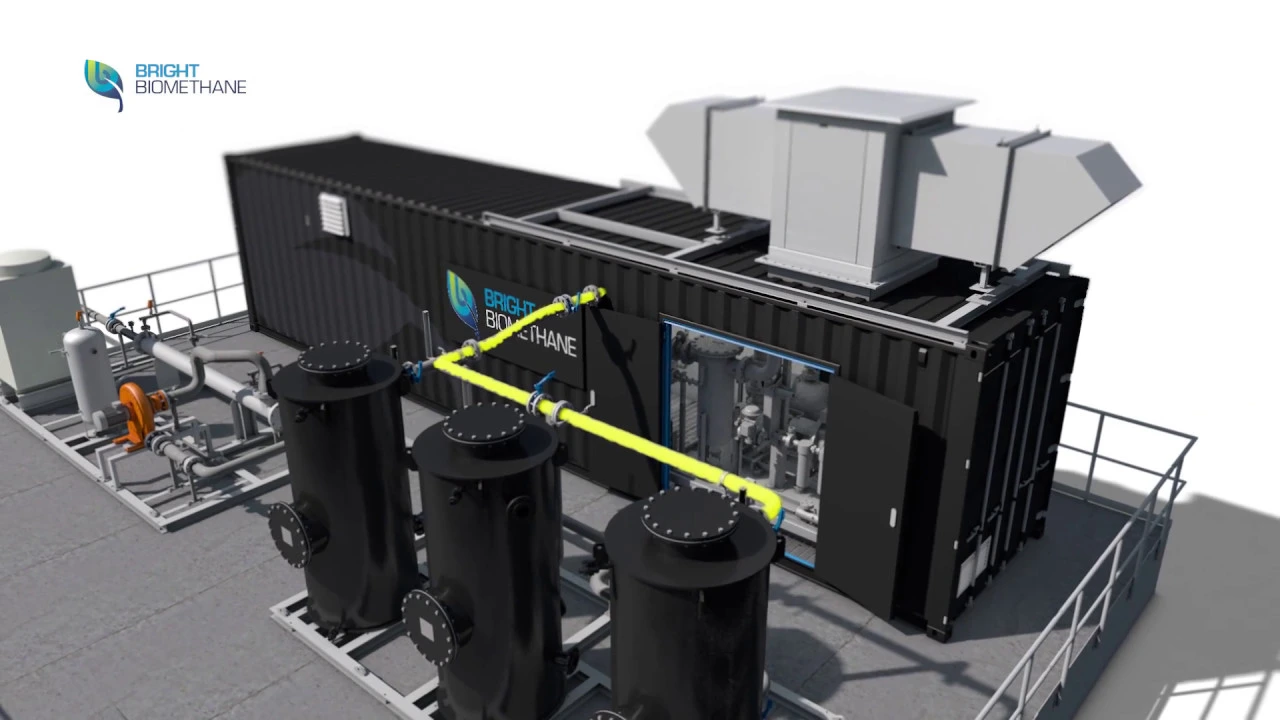
Biogas upgrading and purification technologies to produce high-purity biomethane.
Digestate post-treatment and its application as a sustainable agricultural biofertilizer.
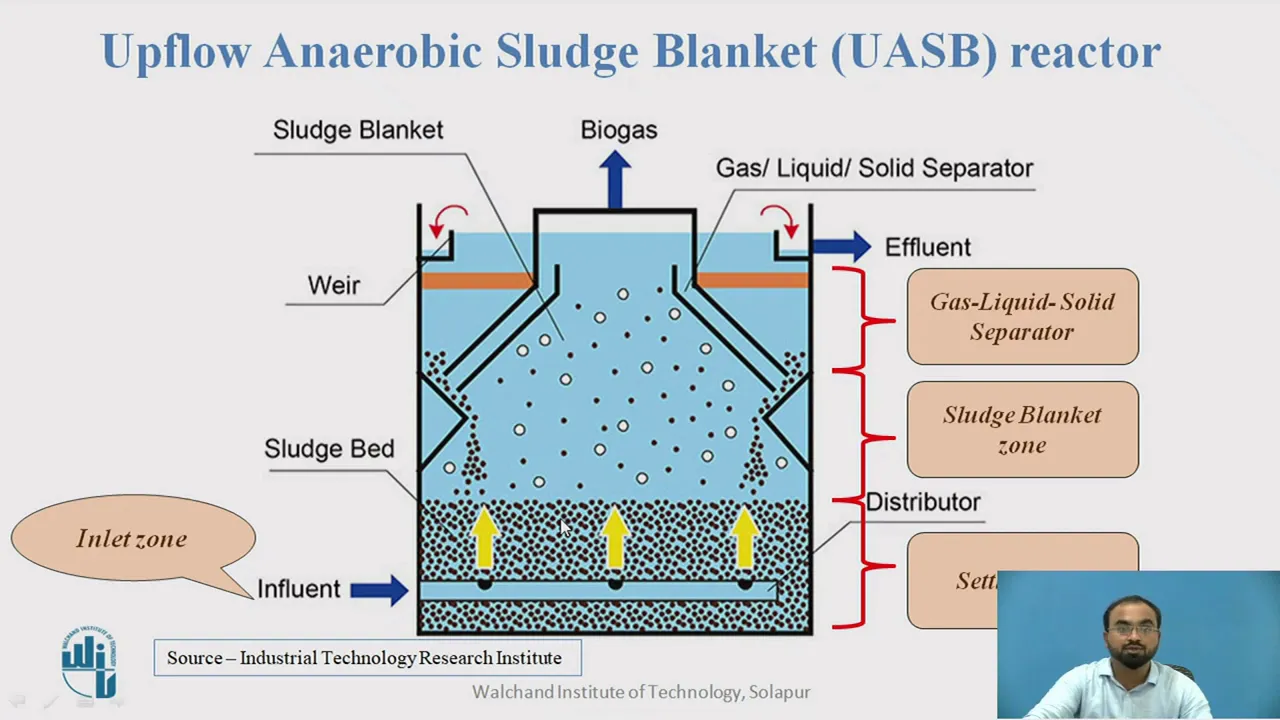
Advanced reactor designs, such as Continuous Stirred-Tank Reactors (CSTR) and Upflow Anaerobic Sludge Blanket (UASB) systems.
Co-digestion strategies, involving the blending of multiple organic waste streams to optimize methane yields.
Economic and life-cycle assessment (LCA) of establishing and operating industrial-scale anaerobic digestion plants.
146K views2.8Klikes11:12Original Release: 2018-10-15
Hi and welcome back! This week we'll talk about anaerobic digestion. Sometimes this is also called biomethanation or sometimes just called biogas treatment. I will probably often use the abbreviation AD for anaerobic digestion. For this module, I'm using this book published by SANDEC as a main resource. It's called "Anaerobic Digestion of Biowaste in Developing Countries". You can download this book on our website and it's free of charge. You will probably remember that in the past few modules, we have covered composting as one option for biowaste treatment. As you now know, composting is a process of controlled aerobic degradation, that means with air or with oxygen. You see this clearly here. This composting heap which has a passive areating tunnel in the center. In this module we'll talk about anaerobic digestion, which is the collection of processes were micro-organisms break down biodegradable matter in the absence of oxygen.
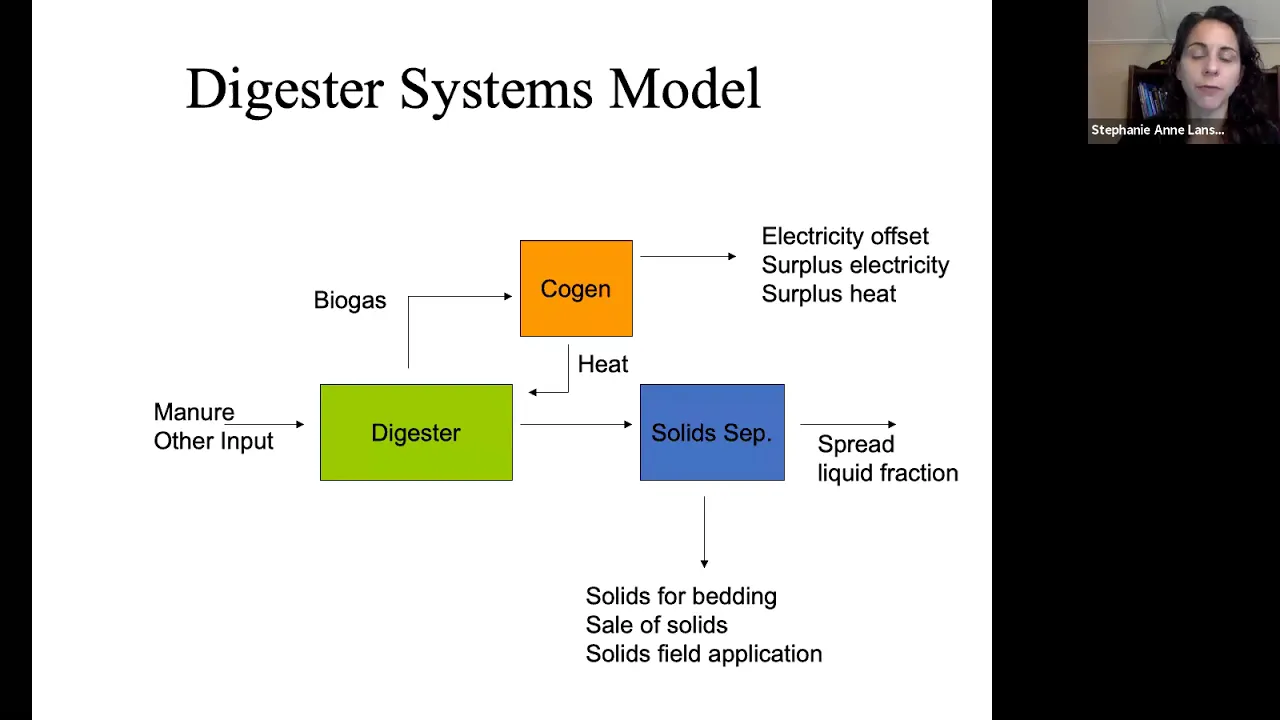
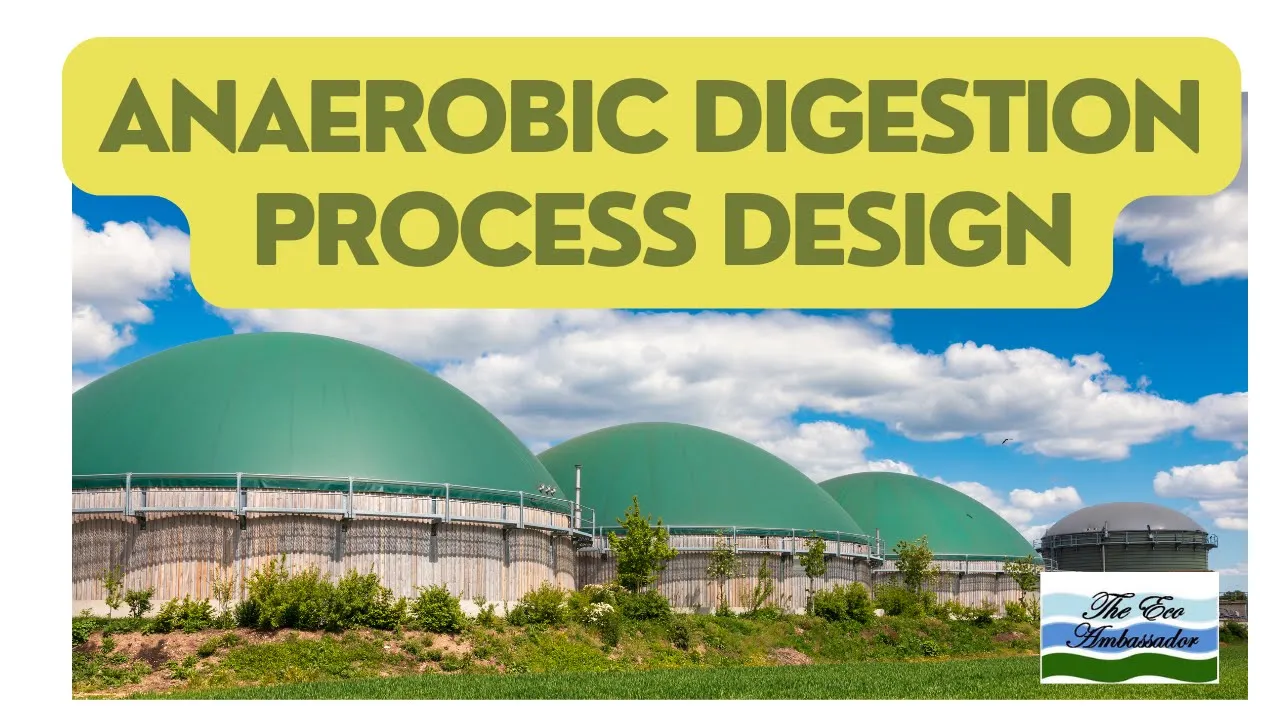
This is very common to many natural environments, such as swamps or stomachs of ruminants, cows. So, why is this interesting for waste management? Because in anaerobic digestion micro-organisms produce biogas. That's a mixture of methane and carbon dioxide. Methane is really what is interesting, because it's flammable and can be used as an energy source. In addition, what we also get is a nutritious digestate. Anaerobic digestion is becoming very, very popular for waste management. In Europe, many units are being built and operated and even in developing countries it's becoming very interesting, especially from the point of view of renewable energy resource. What we are especially interested in, is using this process in an engineered way with control design, for instance in an air proof reactor, in a digester to produce biogas and digestate, as you can see on this picture.
So, what are the key benefits of anaerobic digestion? Of course, we're producing renewable energy and that means, we're reducing our dependency on fossil fuels. We're also reducing greenhouse gases. AD is pretty good because it doesn't need much space. You can actually build the reactors underground. Of course, it also reduces solid waste volumes and thus avoids disposal costs. And it reduces pollution from waste and pollution from fossil fuels. Finally, of course, we can recover value from waste, in the gas and the nutrients. There are also a few drawbacks of AD, especially when comparing to composting.
The process of the AD is more sensitive, it's slower and it's less energy intense. In fact, the energy is contained in the methane, but that means that there is also no heat generation and that has implications for hygenization. AD is also technically more complex and therefore also needs higher levels of skills and investment. Now let's look at the biochemical processes. Anaerobic digestion happens in four steps. Although these processes happened partly simultaneously. The first step is hydrolysis. It is the slowest of the four degradation steps. Bacteria transforme complex organic materials into liquefied monomers and polymers. The second step is acidogenesis. That's where sugars and aminoacids are converted. The third step is acetogenesis. That is where the substances are then transformed into hydrogen, carbon dioxide and acetic acid. Finally, the last fourth step is methanogenesis, where the methanogenic bacteria convert hydrogen and acid acetic into methane gas and carbon dioxide. Typically the gas mixture will also contain hydrogen sulfide, that's the stuff that smells of rotten eggs, but also nitrogen, oxygen and hydrogen. In volume percent, methane amounts to roughly about 60% while CO2 is around 40%. Hydrogen sulfide is usually lower than 2%. Now, let us look at the parameters and operational conditions and how these influence the anaerobic digestion process. Let's start with the feedstock, also called the raw material or input material. We can distinguish between the solid content and the water content. The dry matter is also what we call total solids. Now, some of these total solids will be biodegradable and some won't. In this context, it is of course the biodegradable organic fraction that is relevant, and this we call volatile solids. Levels of total solids and volatile solids in waste differs depending on the type of waste. In this table you can see some examples regarding total solids and volatile solids of different waste feedstocks.
Depending on the type of waste you can also expect different amounts of methane yield, as shown in this table. Interestingly, lignin, one of the main wood constituents doesn't degrade under anaerobic condition. So, this anaerobic digestion is not really suited for treating yard waste or woody waste.
You can see this here in the last row, where methane yield of lignin rich organic waste is quite low. An important parameter in AD is the organic loading rate OLR. This parameter quantifies the substrate quantity per reactor volume and time. The unit is kilograms volatile solids per cubic meter and day. A good daily loading rate for unstirred reactors is 2 or below. With a stirred reactor this can be higher, you can increase this up to a loading rate of 8. The pH range for anaerobic digestion is between 6.5 and 7.5 so actually quite neutral. However, in the acidic phases, the pH is rather lower, whereas in the methogenic phase it is somewhat higher. Now, when the loading rate is too high, acidogenic bacteria will cause acidification of the reactor.
Methanogenic bacteria are rather more sensitive to these conditions and will thus be inhibited. To react to this the loading rate should be reduced or one can also add lime or sodium hydroxide to increase the pH level. Another factor influencing the AD process is temperature. Temperatures below 15 degrees Celsius are not ideal.
As then the organisms really slow down their activity. Underground construction or installation can buffer this variation of temperature, but the anaerobic process is most comfortable in two temperature zones: the mesophilic temperature zone between 30 and 40, and the thermophilic temperature zone between 45 and 60. Operation in the mesophilic range is more stable and can tolerate greater changes in parameters and consumes less energy. However mesophilic organisms are slower in degrading and so you need to give them more time.
Thermophilic organisms however are faster but the system is more sensitive to changes. Further parameters that influences the process is hydraulic retention time. That is amount of time that the material stays in the reactor. Ideal is a time between 10 and 40 days. The lower value is rather for higher temperature in the thermophilic range, because the process is quicker. Now, here we are confronted with an optimization process. If for given inputs the reactor volume is small, then the retention time is low, which means we'll get little biogas yield as there is little time for the process. If the reactor volume is large, then retention time increases and we get more yield, but at the cost of having a large reactor meaning more space needed and higher investment costs. Another parameter is the C/N ratio. We've heard about this in the composting module. Ideal is a value between 16 and 25. A higher value means limited supply of nitrogen, that means food for the bacteria and therefore less gas production. A lower C/N ratio can cause amonia accumulation which then inhibits the anaerobic process. The last parameter we'll look is the particle size of the input material. Here, small is beautiful. Particle sizes below five centimeters are ideal. What that does, it increases the surface area of the material and allows the microorganisms to faster degrade the material. For operation that means, that usually we chop up through a shredder our input material, to make small particles. So, let me summarize what we covered in this module. We looked at benefits and drawbacks, we looked at the four stages of the biochemical process.
And then we looked at different operational parameters: input material, organic loading rates, pH, temperature, hydraulic retention time, C/N ratio and finally particle size.
In the next module, we will look at different types of reactors and how to operate them. So stay with me for the next module!
Up Next

56:53
Anaerobic Wastewater Treatment Reactors | Conventional & High-Rate Systems Explained
@iit
15.8K views•2007-12-26
30:32
Ultrasonic Transducers: Resonant Frequency Measurement and Horn Design
@imajeenyus42
229.9K views•2017-02-22
54:16
Polymer Environmental Degradation: Mechanisms & Stabilization
@iit
1.8K views•2012-07-10

33:39
How a Student's Question Saved a NYC Skyscraper from Collapse
@veritasium
22.8M views•2025-04-26
Related Study Plans & Knowledge Roadmaps
Structured learning paths in Engineering
engineering
Building Acoustic Levitators: Physics & Arduino
01The Physics of Sound and Standing Waves
02Piezoelectric Transducers and H-Bridge Drivers
03Arduino Programming: Generating 40 kHz Signals
+ 2 more learning modules
14h5 modules
Explore Roadmap
engineering
Building Peltier Cloud Chambers: Particle Tracks
01Cosmic Rays & Cloud Chamber Physics
02Thermoelectric Cooling (TEC) Fundamentals
03Custom Liquid-Cooling Loop Design
+ 2 more learning modules
18h5 modules
Explore Roadmap
engineering
Yagi-Uda Antennas: Modeling, Build & VNA Test
01Introduction to RF and Antenna Fundamentals
02Yagi-Uda Antenna Design Principles
03Antenna Modeling and Simulation in 4NEC2
+ 2 more learning modules
18h5 modules
Explore Roadmap
engineering
ECG Monitor Design: Op-Amps, Filters & Noise
01Electronics & Breadboard Basics
02Op-Amps and Instrumentation Amplifiers
03Bioelectricity and ECG Fundamentals
+ 2 more learning modules
18h5 modules
Explore Roadmap