

















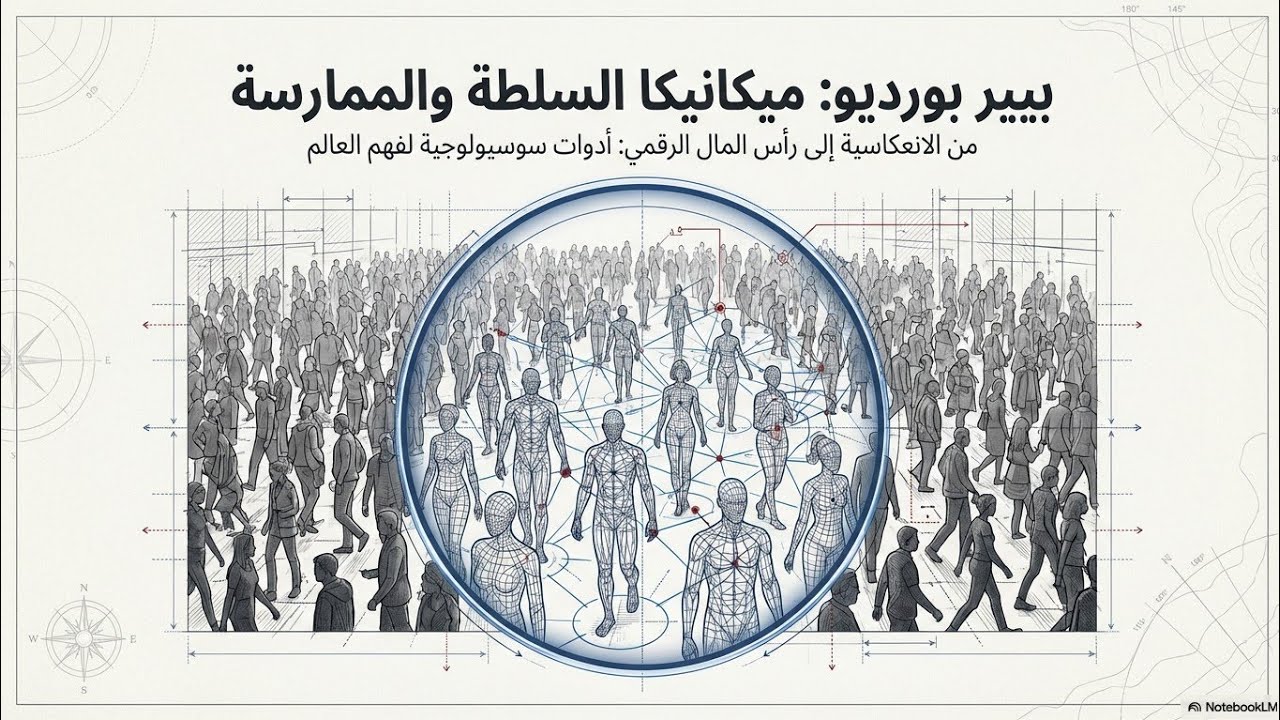


Pierre Bourdieu's theory explains how individuals navigate society through two interconnected concepts: habitus (unconscious cognitive structures internalized from one's social position that shape how we perceive and act in the world) and fields (networks of positions within specific social domains like education or economy, each with its own culture and logic of competition). Individuals compete using four types of capital—economic, cultural, social, and symbolic—and their effectiveness depends on their habitus, which is shaped by their demographic position in society. Importantly, habitus and fields mutually condition each other: fields shape our perspectives while our habitus determines how we engage with and give meaning to different social domains.
Habitus and Field Theory Explained | Pierre Bourdieu Simplified
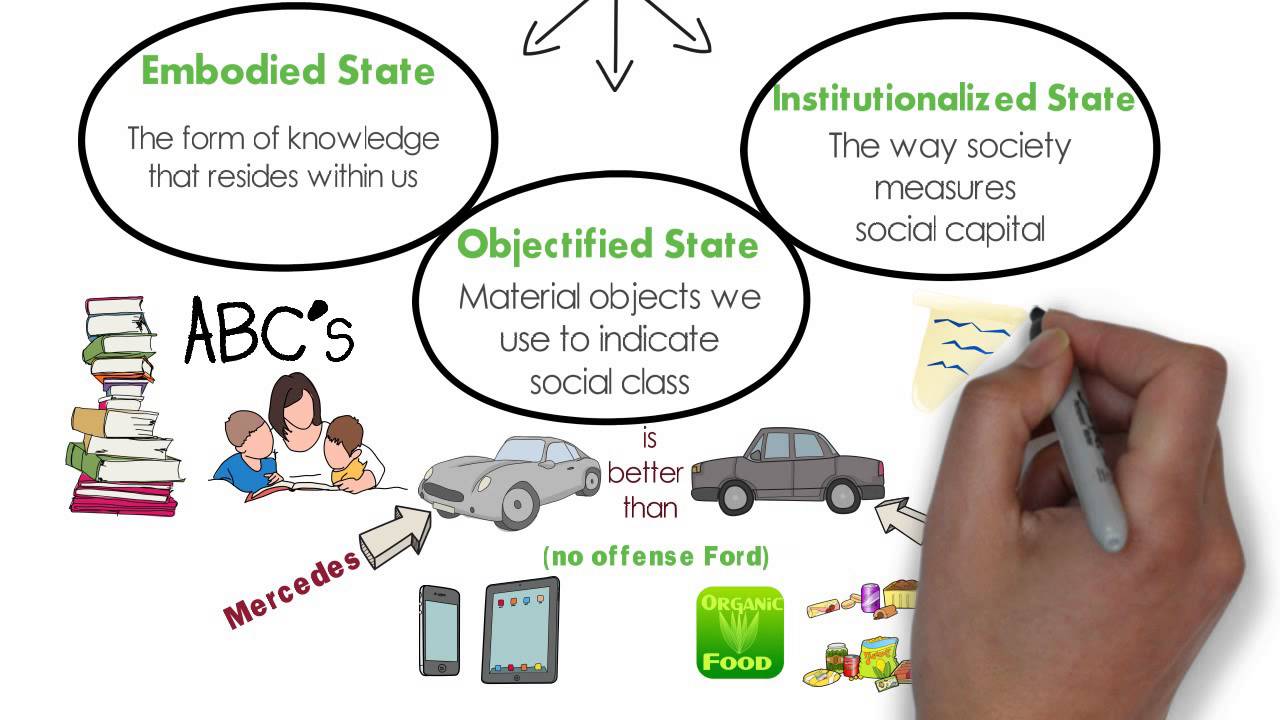
Added:hey guys welcome back in this uh video we're going to be talking about our last integrative theory uh which is about which is the theory of habitus and fields notice that you inhabit this okay this theory is way way simpler than it seems given the fact it has the term habitus the term field and it's by a french guy named pierre bourdue all of those things kind of suggest to us that this is going to be a complicated thing um there is a degree of sophistication in the idea of habitus but it's not super super hard uh so let's get into it uh pierre bourdieu comes up with this idea it's going to be a a theory that is kind of dialectical um meaning that one thing happens and it provokes a reaction and the other thing which provokes an action reaction in the first thing kind of like uh archers dualism between structure and agency um yeah peer board do is going to say that structure can constrains how we think and act but how we think and act also affects our structures so the way i want to organize it is in kind of two two steps first of all what people are like individuals have a habitus second of all what people do they compete in fields so micro level what's happening people have a habitus habitus is going to be defined as the mental or cognitive structures through which people deal with the social world so you can think of it kind of as a schema a set of concepts a cognitive structure that we are unconscious of that exist in our brain and that affect it influence the way we approach the world and the way we conduct ourselves that's it um it is importantly it is an internalization of the structures in society so you know you're a little kid and you learn about the world and what you're learning about is like you know the way the social world what works you're learning you know mundane things like how what how do you how to open a door or the fact that a stray dog could be dangerous or that that adult who's at the front of the classroom is a teacher you're learning all those things and all those things are real right those are real things but you end up with a conceptual schema in your mind that's the habitus period uh and then a couple of points underneath the period the main point is that different not every individual in society is going to have the same habitus and the key difference um according to pierre bourdue is your position in your society so he would suggest that you and i would not have the same um habitus even though we both will have ideas about the same things and they'll be related to each other but i'm gonna have the same habitus as uh as another 50ish year old white male professor um that is a position that i hold in the world um and that it affects the way i have internalized the structures that um that the real structures that are out there the way i have internalized them is affected by my position a woman even a white woman who is a professor and is about 50 is going to have a different habitus a black man in the same position is going to have a different habitus um my brother-in-law who is about 50 but is an electrician is going to have a different habitus so you can think of the intersection of a bunch of demographic uh a bunch of demographic conditions those are the things that that influence a habitus at least in the ways that peer board do say are significant they're probably you know there are probably other things as well it may be that no two individuals have identical ones but those demographics really kind of separate out a white male 50 year old cisgender heterosexual habitus is going to be pretty similar to another person who fits all those demographic criteria the habitus functions unconsciously i think i said that already it manifests itself in how we do things so the idea is that i will actually walk in a way that is consistent with my habitus and it's different than somebody else's habitus um i don't exactly like he doesn't do a ton with that but it's kind of an interesting thing to think about um and our habitus constrains our thought and our choice of action so i see i understand the world from the perspective of this habitus and it affects how i think about things it affects what i think about and it affects my choices of action all right that's the micro level all that stuff on habitus is um it's a lot of detail uh for something that basically comes down to your perspective that's don't write that as like that's what habitus means it means all the stuff i already said but like in sort of a shorthand way you can think about it that way all right so that's that's the micro level that's what people that's what people are what do people do bordeaux says that what people do then is they step out into the world and they compete um and that idea of competition is really crucial to what bordeaux to his whole social theory uh he's a conflict theorist he's i don't know if he was a marxist originally but he absolutely looks at the field of education as an example of a field and sees competition he looks at the field of the economy and sees competition he would even look at the field of religion or the field of art and see competition you don't have to agree with it but that's what he sees he says that um that that's what people do people compete in fields and uh what i need to do is define field for you so first of all a field is uh it's it's gonna kind of be well you could probably tell from the examples i gave it's kind of like george zimmel's idea of social worlds he talked about the social world of art the social world of religion um it's like that but it's a little bit different in the sense that bordeaux defines it as networks of positions so now networks of individuals although i as an individual inhabit a position i'm a college professor in the field of education right the field of education is a network of positions but it's not just that each field also has its own culture so remember archer was talking about how if you're just talking about structure you're missing out on key things uh bordeaux also believes in the importance of culture so a field is a network of positions but each field has its own culture and by that he means its own logic its own beliefs about what's important um so in education we tend to value we tend to value learning but if you think about what you're doing in school from the standpoint of the field of the economy who cares about education you need to do what you have to do to have as little debt as you can have and get out into the world and and earn a job but that isn't the logic of education right um and it's not that one's right or when's wrong it's just bordeaux says look there's competition in these fields but there's a different sort of logic a different set of beliefs about what's important in each one of them so as i go from one field to another field i'm carrying my habitus with me but i am competing based on the logic of the education field and then in a different place on the logic of the economy or if i were to be involved in to the extent that i'm involved in politics um that has a different logic as well so you can think of the social world is made up of all these different fields okay um so how do we compete first of all what are we competing for that's pretty simple to preserve or improve our position so you can think of that network of positions as having um different hierarchical levels so you know theoretically i would be in competition with the other professors in the world to get a uh to move up the ranks of tenure and to become a full professor um and you know to be highly esteemed by my colleagues that's what i'm competing for um the this is i think the uh all of this is interesting to me but this is a place where he gets pretty specific he says okay so that's that's what we're competing for how do we compete and he says we compete with four types of capital and i actually should have written this down here we compete with economic capital which just means you know basically money or your access to to that kind of economic resources cultural capital and cultural capital means kind of the different sorts of knowledge that you have so i would be in competition based on my ability to flex my knowledge of sociological theory for example social social capital is uh we talked about social capital capital a couple of uh videos ago social capital is the uh we talked about it with the the social uh the rational reconstruction of society james coleman um social capital is our our relationship so the social networks that we're involved in um and so i could use that to compete also it's it is me getting published in certain journals based on who i know and then finally symbolic capital and symbolic capital basically is about how honored i am the the meaning that is attached to me so if i you know if bone lenso becomes um some important name in sociology at some point then uh that would be social uh that would be symbolic capital for me um so that is what i am competing with but how do i use those things how do i use economic cultural social and symbolic capital well what bordeaux says is it really depends on my habitus i as a white male would be able to use these things effectively in a different way than a black woman would be able to um and i don't i'm not exact i don't know this stuff well enough to be able to say this would be the advantage that a white man would have in terms of in terms of these uh i mean my tendency would be to think that just my whiteness means something and my maleness means something that a black woman's blackness and femaleness doesn't mean in our society we tend to define whiteness and maleness as authoritative in a way that we don't define blackness and femaleness and so i have a symbolic capital advantage and for a woman who is just as intelligent a black woman who's just as intelligent and capable um with the exact same resume that i have she would have to fight uh to compete with a disadvantage here so she might have to use social connections more or her knowledge would have to be better than mine um which makes some intuitive sense i mean this is crappy i'm sorry that i'm having to say all this but bordeaux's theory when you think about the concepts that he's the way he's broken down society and the example that i just gave it kind of sounds right i mean it's an eminently reasonable way of thinking about the lived experience of a white male professor and a black female professor okay um so we're uh we're at the end of four dude that's that's basically it for him um the last two comments though that i need to make is he says that the field conditions habitus in other words what exists what we are competing for and the culture that exists there it influences my perspective on the world my habitus changes as i because habit a habitus changes over time because my position changes over time i go from a graduate student to a professor i go from a young man to a middle-aged man um those things change and those changes are happening as i am experiencing a field so the field conditions a person's habitus and all the fields that that a person takes part in are going to condition their perspective on the world on the other hand my habitus gives meaning to the field so the fact that i at a certain point became a person with a habitus that valued education that meant that the field of higher education had meaning to me in a way that my like election electrician um brother-in-law his habitus doesn't assign that meaning to this field um and so in that sense that's where bordeaux is getting at the idea of of um the micro influencing the macro and the macro influencing the micro okay that's it that's it for bordeaux sorry it's 15 minutes um and that is our last of these integrative theories so all of these what all of these have in common is an idea of the micro some sort of theoretical approach to what's happening at either the individual or the interaction level and then some idea of what's happening at the macro level like bordeaux sees all of this competition um gideon's and archer saw just the creation of these structures and all of these theories then are going to have some idea of how the micro level relates to the macro and how the macro relates to the micro that's what we mean by an integrative theory all right that's it for this week guys i'll see you next week
Up Next
Education and Social Inequality in US Schools | Sociology
@crashcourse
554.5K views•2018-01-22
Contemporary Sociological Theory: Micro, Macro, Integrative
@NaSESYNC
45.7K views•2016-02-17

How to Analyze Conversations Scientifically | Elizabeth Stokoe | TEDx
@TEDx
1M views•2014-12-04
What is Sociology? The Sociological Perspective Explained
@crashcourse
4.6M views•2017-03-13
Related Study Plans & Knowledge Roadmaps
Structured learning paths in Sociology