























The Monod equation (μ = μ_max × S/(K_s + S)) models cell growth kinetics by relating the specific growth rate (μ) to substrate concentration (S), where μ_max is the maximum growth rate and K_s is the half-saturation constant (substrate concentration at which growth rate equals half μ_max); this equation accounts for substrate-limited growth in bioreactors, unlike the ideal exponential growth model (dn/dt = μn) which assumes unlimited resources.
Cell Growth Kinetics & Monod Equation in Bioreactors
Added:Basic microbiology concepts, specifically the standard phases of cell growth (lag, exponential/log, stationary, and death phases).
Fundamental chemical kinetics, including reaction rates, rate constants, and the distinction between zero-order and first-order reactions.
Introductory calculus and algebra, particularly handling first-order differential equations and logarithmic calculations for exponential processes.
The concept of a limiting nutrient or substrate and its general role in biological metabolism.
Mathematical modeling of different bioreactor operation modes, such as batch, fed-batch, and continuous (chemostat) systems.
Advanced kinetic growth models that account for non-ideal conditions, such as substrate inhibition (Haldane model) or product inhibition.
Stoichiometry of cell growth and product formation, including the determination of yield coefficients (biomass/substrate and product/substrate yields).
Transport phenomena in bioprocesses, focusing on mass transfer limitations, oxygen transfer rates (OTR), and shear stress in bioreactors.
Practical applications of growth kinetics in environmental engineering (e.g., activated sludge processes) and tissue engineering (e.g., perfusion bioreactors for stem cells).
487 views1likes14:57Original Release: 2022-05-01
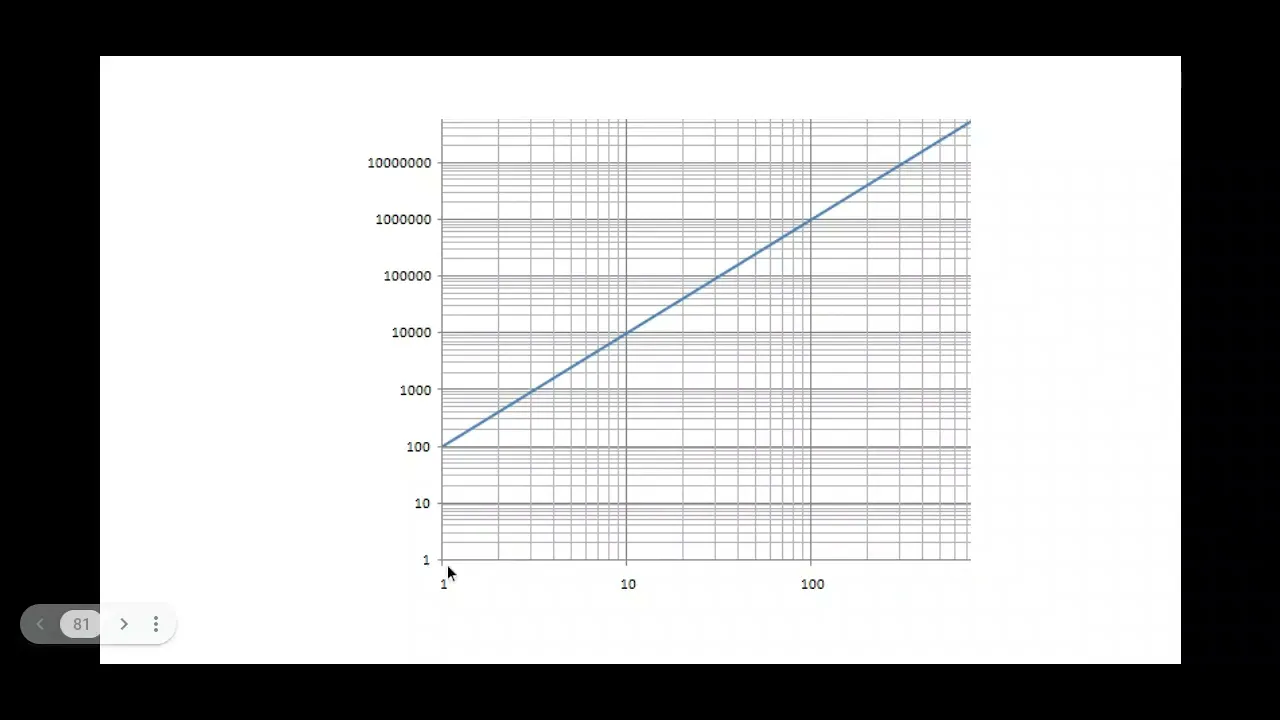
today we're going to discuss about the kinetics of cell growth in bioreactors this could be interesting in tissue engineering or also in environmental engineering so let's think of this a kinetics of a cell growth in bio reactors all in an environment we can generally think first let's consider an actively dividing cells actively dividing cells then the rate of growth will be proportional to number of cells assuming that there are all necessary environmental factors and nutrients are available so the rate of cellular growth i mean december cell numbers will be proportional to the current number of cells so how can i describe it like dn dt is proportional to n and let's put the proportionality constant as a mu so here so there are the and it means total number of cells and the mu we can see this is a rate constant for cell profile or growth rate so that means a rate constant for cell proliferation so then you can solve this equation so when you solve this differential equation the number of cells will grow exponentially exponentially with time [Music] so so that you can see those who can differentiate and becomes oneself into an exponential so if you can write it n equals n zero e to d mu t let's put as a uh this so here uh i define n sub zero is the time when time zero the number of cells so that is initial number of cells okay then here we can actually consider the way when we are culturing cells we know the cells grow up pretty fast like exponentially and so that we can have define the time when does the cell become twice so we can call it as a doubling time so doubling time for that population as when the n becomes a twice so that let's define the time as t sub d as a doubling time uh that's when uh the cell becomes twice of the original and then that would be n zero e to the mu t sub d and so that we can um we can solve this equation and what is that that means a ln 2 equals mu times t sub d or we can write down the doubling time as ln 2 over mu so that has written to the equation 3.
so here uh we will see so this is an ideal uh scenario but in reality the real cell growth especially the cells derived from an animal will be limited in terms of they have a special property of anchorage dependent and also density dependent uh cell growth so first uh let me write down what this encouraging and dependent so this is really when the cells are growing on a surface when they contact each other or cells are their rate of growth will not be as will be decreased so that's because cell or the hydrogen and spreading on on a solid surface are required for their proliferation and proper function another thing uh so the cells are spreading on a surface uh uh growth on a surface is required and another thing is the cell growth when they are crowded they have some contact inhibition property so that this the cell growth is depending on really cell density so that we call density dependent cell growth so that is an influence of a substrate substrate i mean the uh the amount of nutrient or on the surface environment for the cell to growth so or nutrient that limits are grown i mean cell growth i mean cellular on cell growth nature so from this ideal uh uh theory we can move on to a little more realistic aspect so that uh comes from uh so-called a famous monarch equation who got nobel prize uh from his uh work so that uh i will write down as a monarch model or monarch model okay so this monarch model is about really considering this influence of a substrate and uh the nutrients so uh the limit growth so this one is the like leading to the monarch mother and let me write down how does the monarch mother look like so this is the uh from if you look at from one so the growth rate is uh really one over n p n dt so that's y definition and here uh we consider a little bit more from here by defining the new max so the maximum growth rate and then also consider the concentration of the substrate let's call this rocket s and also i introduce a parameter for k sub s so this is the monarch model and let's put it the equation number four here let me define this um here um use of max is really maximum growth rate maximum growth rate and of course the s is substrate concentration then let's see and another one if k sub s is defined as half velocity constant so i have velocity constant so what do i mean by half velocity constant in fact uh this one is when the substrate concentration is the same as this parameter k sub s the growth rate will be half of the maximum so that's how the name comes from so when the substrate costs when when mu over mu sub x becomes one half okay so here uh really from one of the equation uh let me say so here mu max and k sub s is really empirical uh imperial car empirical parameters that is depending on so it's a function of of species so what kind of microorganisms and environment environment such as temperature ph and composition of a media so let's consider this look at this small notification behavior a little bit more so let me rewrite mu equals mu max times substrate concentration in s plus substrate concentration so their uh independent parameter at the substrate concentration and we want to figure out how the growth rate will change so first of all like what if there's no substrate then probably it won't grow let me let's check when substrate concentration holds zero then this for equation mu the growth rate also goes to zero unless the ks is non-zero so that's right and then what if there's enough of substrate concentration so then means we can mathematically consider there's infinity of a substrate then from equation four you can see mu goes to mu max and that makes sense so if you have a plenty of substrate then probably your growth rate will be maximum then what about in the middle so you can actually uh see like when substrate concentration becomes the same as this parameter k sub s then you can see from the equation that because these are the same so mu becomes one half of new mix and you can see why this ks is defined as half velocity cost in fact this velocity means like growth rate so let's actually uh try to write down uh draw how does this growth rate look like from here so from the x-axis as a substrate concentration y-axis as a mu which is a growth rate then from the equation when you put 0 equal zero and then you can find out there's a maximum uh growth rate which is mu max so when s goes to infinity so when substrate concentration is let's say uh s then you can find a half of this for that point so you can see the graph will look like this okay so of course it's a sympathetically closer to this one so on another aspect of uh analyzing this is the initial um initial growth rate change with respect to the substrate so it's initial a slope so when ks is zero so what the initial slope we can consider this from the a calculus point of view so you can do this uh differentiation p mu over d s when substrate concentration zero when you do this calculation you will find out mu max over k sub s so what that means is the initial slope of this curve is uh getting bigger when the maximum proliferation rate high in case of s is low so with that you can actually figure out how the realistic cellular proliferation or microorganism grows in a tissue engineering when you need to grow extracorporeally from the patient own cells how where and how much you can actually grow to be able to implant the patient or in environmental engineering you can consider how microorganisms such as uh may be useful bacteria or harmful bacteria how they grow in terms of their kinetic aspect and thank you for your attention
Up Next

4:18
Wound Healing Phases Explained | Animation Overview
@VisualMedEducation-cz5nl
2.5K views•2024-04-23

50:12
Bacterial Communication: Quorum Sensing and Biofilm Formation Explained
@JHUAAP
12.6K views•2011-06-28

5:35
Enteric Nervous System Explained: The Gut's Brain | Neurobiology Lecture
@alumniu6029
438 views•2018-09-12

7:08
Bacteriophages: Earth's Deadliest Killers and Future Antibiotics
@kurzgesagt
34.6M views•2018-05-13
Related Study Plans & Knowledge Roadmaps
Structured learning paths in Biology
biology
RNAi: Biogenesis, RISC & Gene Silencing
01Molecular Biology Foundations: DNA to Protein
02Introduction to RNA Interference (RNAi)
03Molecular Biogenesis of miRNA and siRNA
+ 2 more learning modules
10h5 modules
Explore Roadmap
biology
Mycorrhizae: Signaling, Biophysics & Ecology
01Foundations of Mycorrhizal Symbiosis
02Molecular Signaling and Root Colonization
03Biophysics and Bioenergetics of Nutrient Exchange
+ 1 more learning modules
11h4 modules
Explore Roadmap
biology
Circadian Clocks: TTFL, SCN & Periphery
01Foundations of Molecular Biology & Gene Expression
02Introduction to Chronobiology and Actograms
03The Core TTFL: Molecular Architecture of the Clock
+ 3 more learning modules
14h6 modules
Explore Roadmap
biology
Population Genetics: Math, Drift & Selection
01Genetic & Probability Foundations
02The Hardy-Weinberg Principle and Baseline Models
03Mathematical Modeling of Natural Selection
+ 3 more learning modules
18h6 modules
Explore Roadmap