


























The quantum wave function is a mathematical representation that encodes all information about a quantum system, with its square modulus giving the probability density of finding a particle at different positions; while probabilities (from the square modulus) are what we can measure experimentally, the full wave function—including its phase—is essential because it determines how the system evolves over time according to the Schrödinger equation and can lead to different experimental outcomes even when probability distributions appear identical.
What a Quantum Wave Function Really Represents | Quantum Mechanics Basics
Added:The concept of wave-particle duality, specifically the De Broglie hypothesis that matter can exhibit wave-like behavior.
Basic wave mechanics, including fundamental properties such as amplitude, phase, superposition, and interference.
Fundamental probability theory, including how probability distributions and probability densities are defined.
The historical transition from deterministic classical physics to probabilistic quantum physics.
The Schrödinger Equation, to learn how the quantum wave function mathematically evolves over time.
Alternative interpretations of quantum mechanics, such as the Many-Worlds Interpretation or De Broglie-Bohm (pilot wave) theory.
The formal mathematical structure of quantum mechanics, including operators, observables, and calculating expectation values.
Real-world quantum phenomena and technologies, such as quantum tunneling, quantum superposition, and the principles of quantum computing.
29.5K views1.9Klikes8:56Original Release: 2022-06-21
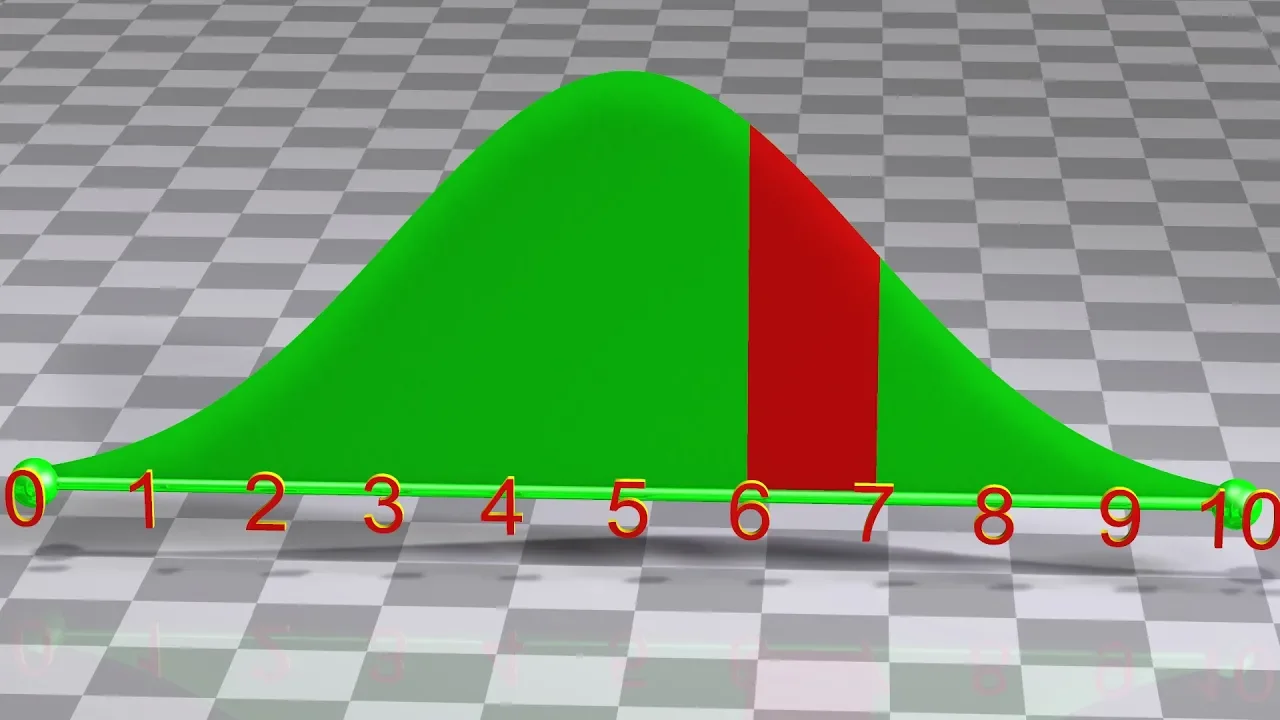
hello there my name is path and in this video we'll talk a bit about the basics of the quantum mechanical wave function if you enjoyed this video then please hit the thumbs up button and subscribe for more fun physics content let's get into it in order to understand what a wave function represents let's first imagine that we're studying a particle that is restricted to moving along a single direction and can only be found between these two points on this x-axis the restrictions are just for simplicity they're not necessary because when we restrict the movement of the particle the wave function becomes a bit easier to visualize and to understand now in reality the particle is somewhere in this region but we don't yet know where it is we need to make a measurement to find out where it is well in quantum mechanics we can actually calculate the probability of finding our particle in different regions before we actually make the measurement and when we do make the measurement the particle could be found in any of the regions that have some non-zero probability but of course it's more likely that the particle will be found in regions where the probability is higher now once we make the measurement we know where the particle is at least at that instant in time so we can ask the question what was the point of all the probabilities they have no real meaning when we're making one single measurement because the particle could basically be found anywhere in this region however if we considered making the exact same measurement on identical copies of our system at exactly the same time we would actually find the particles in all of these systems to be in different places despite the systems originally being identical to each other in every way this is remarkably different to classical physics which is the physics that came before quantum mechanics in classical physics if we made a measurement on identical systems at exactly the same time with the same measurement methods and so on we would find all of the particles at the same positions because in classical physics the act of making a measurement is just an act of gaining information about the system the particle was somewhere and we just found out where it is whereas in quantum mechanics the act of making a measurement actually changes the system in some way or at least this is the case in the copenhagen interpretation of quantum mechanics which is today the most popular interpretation around more on the idea in this video up here but here's the important thing when we make a measurement on multiple identical systems at the same time with the same measurement technique yada yada yada and keep everything else the same we still get a distribution of measurement results more particles are found in regions that when we talked about probabilities earlier had a higher probability and fewer particles are found in regions with lower probability specifically if this region say had a 12 chance of our particle being found there then roughly 12 percent of all of the particles found at all would be in this region and the more measurements we made the closer we'd be to finding exactly 12 percent of particles in this region and this is where we get a bit closer to the wave function in our discussion so far we split the line along which our particle could be found into distinct regions well in reality we can actually calculate the probability of finding our particle between any two points along our line or in other words we have the ability to split up these regions however we want how do we do this well we can do this because we have access to a mathematical function known as the probability density function for simplicity let's say the probability density function for this system looks like this we can take this function and calculate the area underneath it between two points on our line to calculate the probability of finding our particle between those two corresponding points and we can do this for any two points that we want that's why this function is called the probability density it shows how probability is distributed through space in this case and this probability density function is directly linked to what we call the system's wave function specifically the probability density function is equal to the square modulus of the wave function but hang on if we square something then won't it be positive anyway why do we need to take the modulus here well that's because the wave function doesn't have to be real all the time it can also be imaginary and the square of an imaginary number is negative but because probabilities can only be positive this is why we have to take the square modulus the implications of the wave function being possibly imaginary are interesting and i'll discuss these in a future video but i've also talked about them a little bit already in this video up here check it out if you're interested now at this point we can ask the question why do we care about the wave function at all after all it's the probability distribution that tells us about how likely we are to find the particle at different positions along our line so why bother with the wave function at all well the probability distribution isn't enough to uniquely define our system for example imagine we have a system here with the wave function phi whatever phi is it doesn't really matter to us right now and we have another system with the wave function i phi where i is the imaginary number the square root of negative 1.
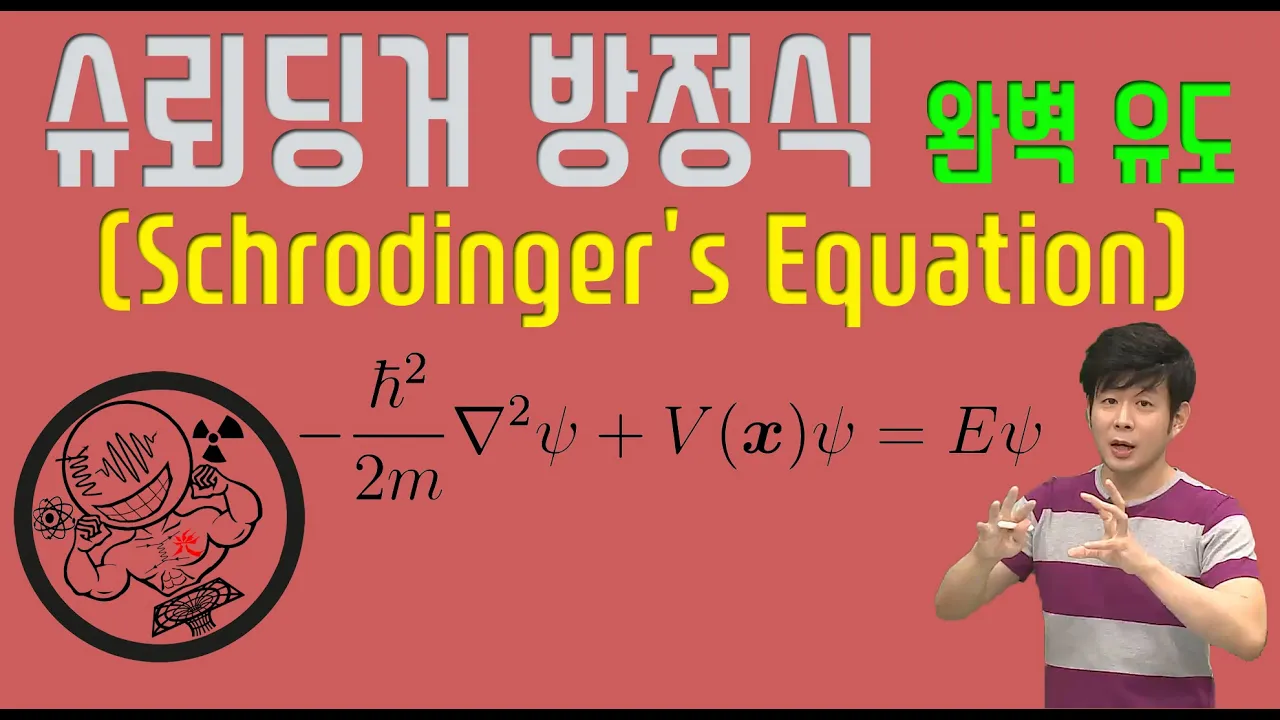
remember we said wave functions can be imaginary so this is a valid wave function well if we take the square modulus of these two wave functions then we get the same thing phi squared this means that the probability distribution of both systems is exactly the same but these systems are ever so slightly different to each other because they actually have different wave functions but again why should we care after all we can't directly measure the wave function we can only measure the probability distribution so how could we ever know that the wave functions of these two systems are different experimentally rather than just theoretically well even though we cannot directly measure whether the wave function is real or imaginary this phase as it's known does have important consequences in certain cases such as the double slit experiment or the aharenov bone effect i've made a whole video about this effect so check it out up here or linked in the description below if you're interested but the point is that we can in some cases measure appreciable differences due to the wave function being different even if we don't directly measure the wave function of either system and secondly the wavefunction is important because this is the quantity that actually changes over time according to the schrodinger equation this equation is the main governing equation of quantum mechanics check out this video up here for a full overview of what it means it basically accounts for the stuff making up the system in order to determine how the system will change over time for example it looks at all the kinetic energies and the potential energies in the system in order to tell us how the wave function of the system will change now finally it's important to note that we've discussed the wave function relating to the probability of finding a particle at a given position in space but in reality the wave function contains a lot more information than that the full wave function can give us probabilities of finding the particle in a given spin state or with a particular momentum or a given energy state or any measurement that we could make for that particle and with all of that being said this has been a very basic look at one representation of the wave function in quantum mechanics if you enjoyed this video then please hit the thumbs up button subscribe and hit the bell button for more fun physics content please check out my merch linked in the description below it features a quantum dice design based on a famous quote from albert einstein and finally a huge thanks to all of my giga patrons as well as all of the others over on my patreon page that's also linked down below if you'd like to support me on there thank you so much for watching and i will see you very soon [Music] so [Music] [Applause] [Music] you
Up Next

13:11
Quantum Superposition Explained: Vector Spaces and Measurement
@ScienceAsylum
500.8K views•2021-11-28

12:53
21cm Hyperfine Transition in Neutral Hydrogen: Radio Astronomy Basics
@AaronRobertParsons
12.4K views•2011-10-13

8:10
Geodesics: When Shortest Distance Isn't a Straight Line
@ParthGChannel
81.5K views•2021-06-01

27:14
Entropy and the Second Law of Thermodynamics Explained
@veritasium
27.5M views•2023-07-01
Related Study Plans & Knowledge Roadmaps
Structured learning paths in Physics
physics
Nuclear Physics (Decay, Fission & Reactors)
01Atomic Structure and the Binding Force
02Radioactive Decay and Half-Life
03Nuclear Fission Mechanics and Chain Reactions
+ 2 more learning modules
12h5 modules
Explore Roadmap
physics
Soft Matter (Polymers, Colloids & Rheology)
01Foundations of Soft Matter & Thermal Forces
02Polymer Physics and Macromolecules
03Colloids, Surfactants, and Self-Assembly
+ 2 more learning modules
38h5 modules
Explore Roadmap
physics
Analytical Mechanics: Lagrangian & Hamiltonian
01Mathematical Foundations: Calculus of Variations
02From Newtonian Mechanics to Constraint Dynamics
03The Principle of Least Action & Lagrangian Mechanics
+ 3 more learning modules
28h6 modules
Explore Roadmap
physics
General Relativity (Spacetime & Cosmology)
01Foundations of Relativity: Special Relativity
02The Geometry of Spacetime: Equivalence Principle & Curvature
03Einstein's Field Equations: The Mathematics of Gravity
+ 2 more learning modules
55h5 modules
Explore Roadmap