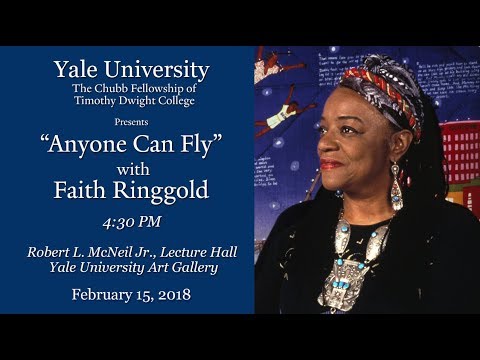
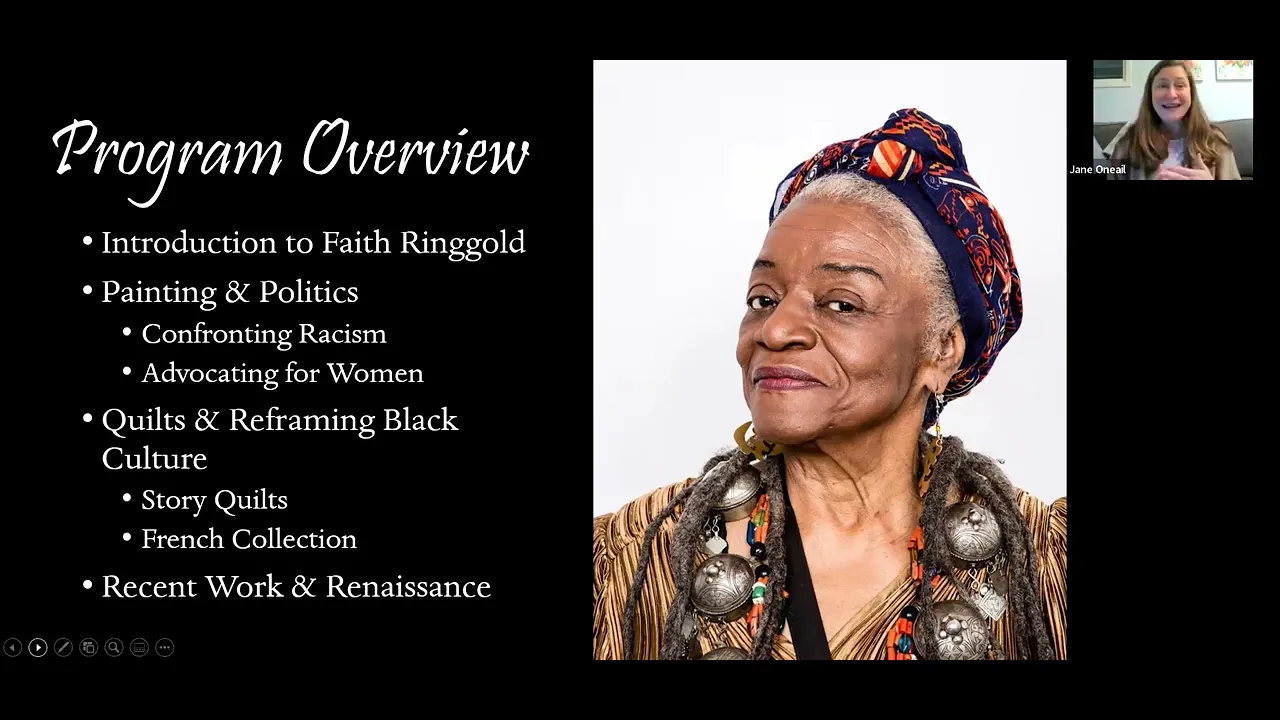























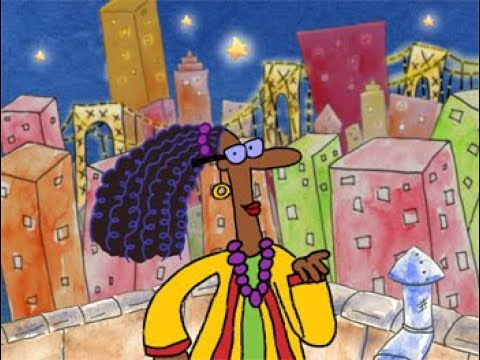
Faith Ringgold, a pioneering Black woman artist, developed the story quilt as a unique medium to express her identity and experiences, challenging the exclusion of Black women from the art world by creating portable artworks that combined painting with textile traditions; her work addresses themes of racial and gender power dynamics, particularly through her American People series and Black Light series, which responded to the limitations of traditional chiaroscuro techniques for representing dark skin, ultimately contributing to the broader fight for greater inclusion and representation of Black women in American museums and art institutions.
Faith Ringgold: Quilting Black Women's Stories & Activism
Added:An understanding of the Civil Rights and Black Power Movements of the 1960s and 1970s, which shaped Faith Ringgold's socio-political context.
Familiarity with the Feminist Art Movement and its critique of the exclusion of female artists from the traditional art historical canon.
Knowledge of the historical distinction between 'fine art' (such as painting and sculpture) and 'craft' or 'decorative art' (such as quilting and textiles).
Awareness of the cultural and historical significance of quilting within African American history, particularly as a medium for storytelling and community.
Exploration of 'Craftivism' (craft activism) and how contemporary artists use textiles, fiber arts, and traditional crafts for political expression.
A deeper study of intersectional feminism in art, examining how modern artists navigate the overlaps of race, gender, and class.
Analysis of institutional critique in the art world, focusing on how museums and galleries are addressing historical biases and underrepresentation of Black women.
Comparative study of contemporary textile and narrative artists influenced by Ringgold, such as Bisa Butler, Sanford Biggers, or Betye Saar.
52.7K views1.1Klikes8:31Original Release: 2022-08-23
We all may have different truths.
Art is a unique expression of life.
Faith Ringgold has opened the door for Black women artists, who now proliferate.
She made the world sit up and take notice.
Faith created a massive body of work.
She’s worked in oil paint, acrylic paint, fabric, soft sculptures, prints, and multiples.
She would do performances.
See the old people, look at their faces.
She really is an artist who lives to work.
She makes art that speaks of herself and of her own experience.
In a lot of ways, I have always wanted to have a voice, to have something to say about the world and to feel some sense of power.
I enjoy expressing the world as I see it.
There is such a thing as freedom, especially in America.
I was born in Harlem on 146th Street.
We traveled and my family was very interested in education.
They tried to make me as knowledgeable about different parts of the country and what was going on.
And, it was just a determination on my part, to not be told who I am and what I, what I can do.
She inherited from her mother an indomitable strength.
Faith was raising her two daughters by herself, trying to be an artist and working full time as an art teacher, and she incorporated all of those experiences.
Here it is.
Particularly, with the American People series, her interactions with liberal whites.
White power. Black Power.
Yes, indeed.
Black Power had just become popular.
They saw the Black Power, but white power is the biggest and they didn’t see it.
I think there are a couple of paintings that address this very issue: a Black woman and a white woman, I think that one is called “Between Friends.” A Black man in an all white boardroom.
During the sixties, if it was a White group, they had to have a couple of Black people in it.
Just be quiet. Don’t speak.
Keep your mouth shut and stay in this group.
Many of us would commit our art to the experience of being Black in America.
Then the issue came, “Well, why are you doing that?” You had to justify your existence.
You know, your culture.
The Black Light series, which she did after the American People series, is a response to what she had learned in school about the age-old technique of chiaroscuro, which is how you create the illusion of depth by shading things darker, if they’re in the background, and highlighting things to make them jump forward, which doesn’t work, if your skin is dark.
So she created a whole series of paintings and this kind of kaleidoscopic pop art.
Flat, two dimensional space to express the look and beauty of Black skin.
I’m really excited about the way we’re showing Faith’s approach to color theory in our exhibition design.
We’ve responded to what she says in her memoirs, which is that white walls tend to burn out the intricacy and the variation and the darker tones.
So we’ve pulled color specifically from her work to use as backdrops and see this work that she’s doing in color and see how it really pops.
In the 1960s, when she really found her voice and her mature work, Faith realized that she had to become an activist as well.
So she joined the Black Arts movement to protest museums and bring their attention to the fact that there were so few [Black people] and so few women in their museums.
We demonstrated at the Museum of Modern Art, and who got the show?
The boys.
How about it?
So I said, “Now wait a minute, this doesn’t make any sense.” She realized that the Black Arts movement was not about giving women power.
That was all about giving men power.
I wasn’t going to promote that.
And so I didn’t.
And I continued to make my work an expression of my freedom as a woman, as a Black woman.
You can’t love Faith’s art without loving Faith.
There’s something in her personality that is all wrapped up in the way that she makes art.
So, her process to me is probably as fascinating as her subject matter.
An artist has a right to decide that any kind of material is useful in creating their art.
Tibetan tangkas.
I thought this was an excellent alternative to framing paintings in wood.
Faith created a unique medium unto herself, called the story quilt.
I could frame it in cloth, and I could roll it up and carry it myself.
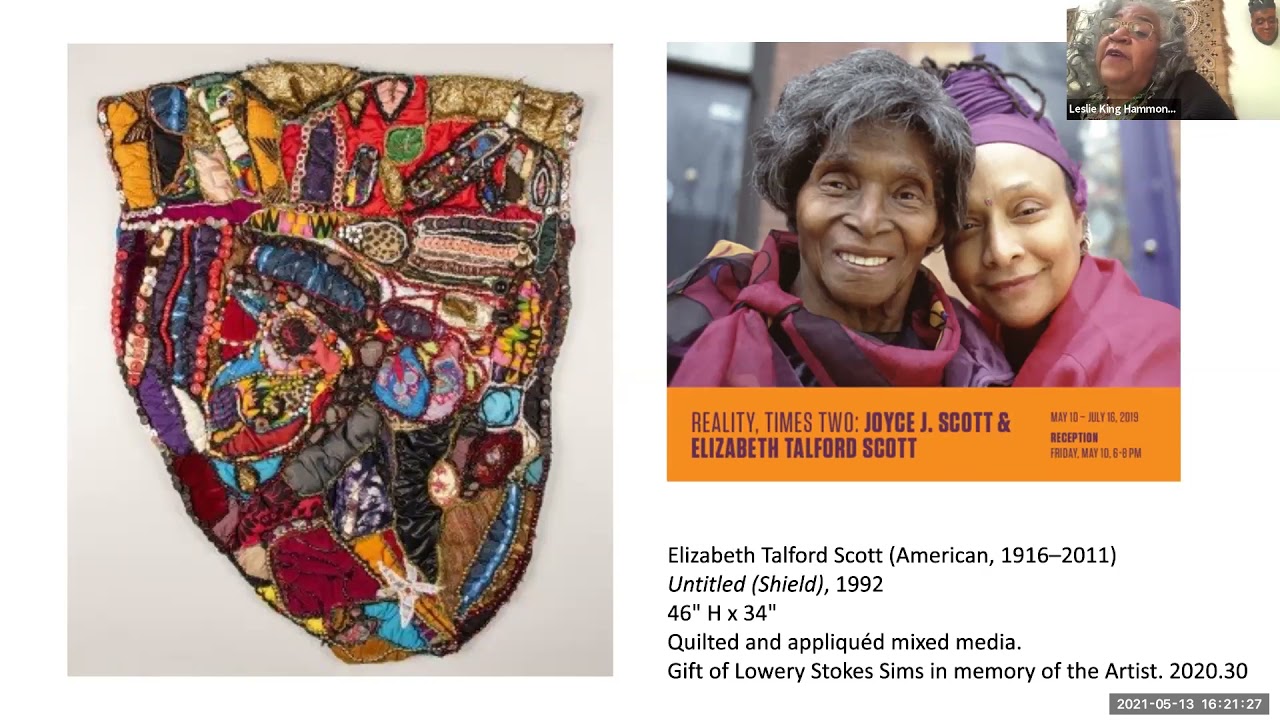
So, it had a lot to do with being a woman, and it had a lot to do with borrowing from the African American women, the tradition of quilt making.
And it was out of necessity.
Faith could not get her autobiography published.
The publisher said, “Look, that’s not your story,” and I was wondering, “How could somebody else tell me what my story was?” And so she said, “OK, I’m going to write my story on my artwork, and you’re going to have to read it.” Historically, women who worked in the weaving houses and made the clothes and the curtains and the dresses and so forth, no matter how beautiful a quilt might look, it was a quilt.
No museum was going to hang it with the paintings.
But why?
Because it’s made by women?
People are now fascinated by the quilt.
It has been released from its former limited status as crafts, just craftsy stuff, to high art.
Faith has always had her own vision.
When people see her art, they connect with it.
It’s a universal message.
The basis for much conceptual art is that it includes words.
And so it’s interesting to me that nobody sees Faith’s art as conceptual, but that’s exactly what it is.
Faith’s living legacy, I think, resides in us and in the museum world as it is now.
She fought for greater inclusion and greater representation.
The fact that we’re having these conversations, which she started in the sixties, now within the museum world, across all fields, is a total testament to how much she fought to open up those doors.
So this is what you’ve done.
Wow. A lot’s happened in 50 years.
I’ve just kept working and working and working, and I believe that it’s paid off to some extent.
Up Next

69:12
Paleolithic Cave Art: Altamira, Lascaux & Chauvet | History Lecture
@bushfire02
1.4K views•2024-06-14

114:18
Christian Iconography: History, Theology, and Meaning | Fr. Panayiotis Papageorgiou
@Trisagionfilms
58.8K views•2020-02-21
7:48
Ukiyo-e Art: History, Woodblock Printing & Influence
@japanathand
6.3K views•2023-06-08

16:34
Earliest Depictions of Jesus in Art: 10 Ancient Images Explained
@UsefulCharts
5.9M views•2022-06-03
Related Study Plans & Knowledge Roadmaps
Structured learning paths in Art History
art-history
Gothic Cathedrals: Engineering, Light & Society
01The Birth of the Gothic: Romanesque to Suger's Vision
02The Structural Triad: Pointed Arches, Ribbed Vaults, and Flying Buttresses
03Theology of Light: Lux Nova and Sacred Geometry
+ 2 more learning modules
14h5 modules
Explore Roadmap
art-history
Pre-Raphaelites: Realism, Symbolism & Critique
01The Victorian Art Establishment and Academic Formula
02The Founding of the PRB and Radical Realism
03Medieval Revivalism and Literary Symbolism
+ 1 more learning modules
8h4 modules
Explore Roadmap
art-history
Street Art: From Subways to Art Market
01Subcultural Origins in Philadelphia and New York (1970s)
02The Subway Era and Style Wars (Late 1970s - 1980s)
03The East Village Scene and Early Gallery Crossover
+ 2 more learning modules
10h5 modules
Explore Roadmap
art-history
Classic Maya Art: Iconography, Glyphs & Ritual
01Foundations of Classic Maya Visual Culture
02Deciphering Maya Hieroglyphs & Text-Image Integration
03Sacred Geography and Cosmological Architecture
+ 2 more learning modules
14h5 modules
Explore Roadmap