
















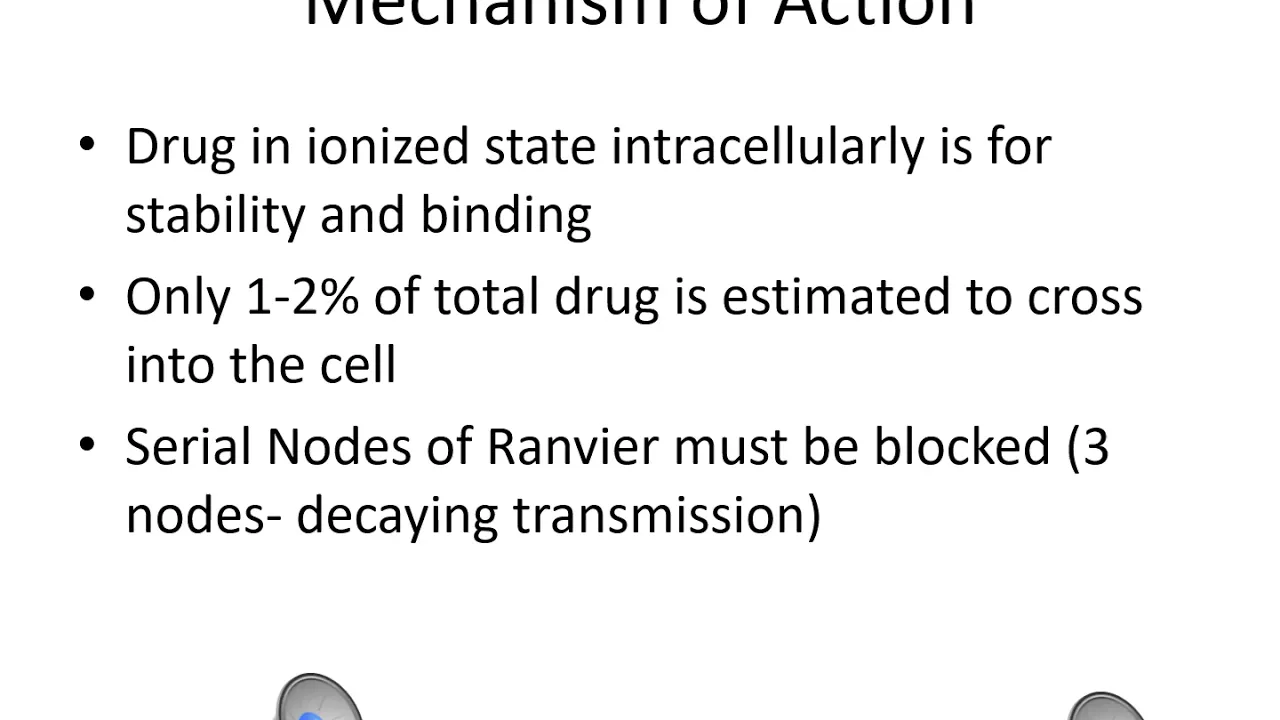
An action potential is a brief reversal of electric polarity across the cell membrane that occurs when excitatory signals cause membrane voltage to reach the threshold (-55mV), triggering voltage-gated sodium channels to open and allowing sodium influx that depolarizes the membrane; this is followed by potassium efflux that repolarizes and hyperpolarizes the membrane, with the refractory period preventing immediate re-firing and ensuring unidirectional propagation along the axon.
Action Potential in Neurons, Animation: Phases Explained
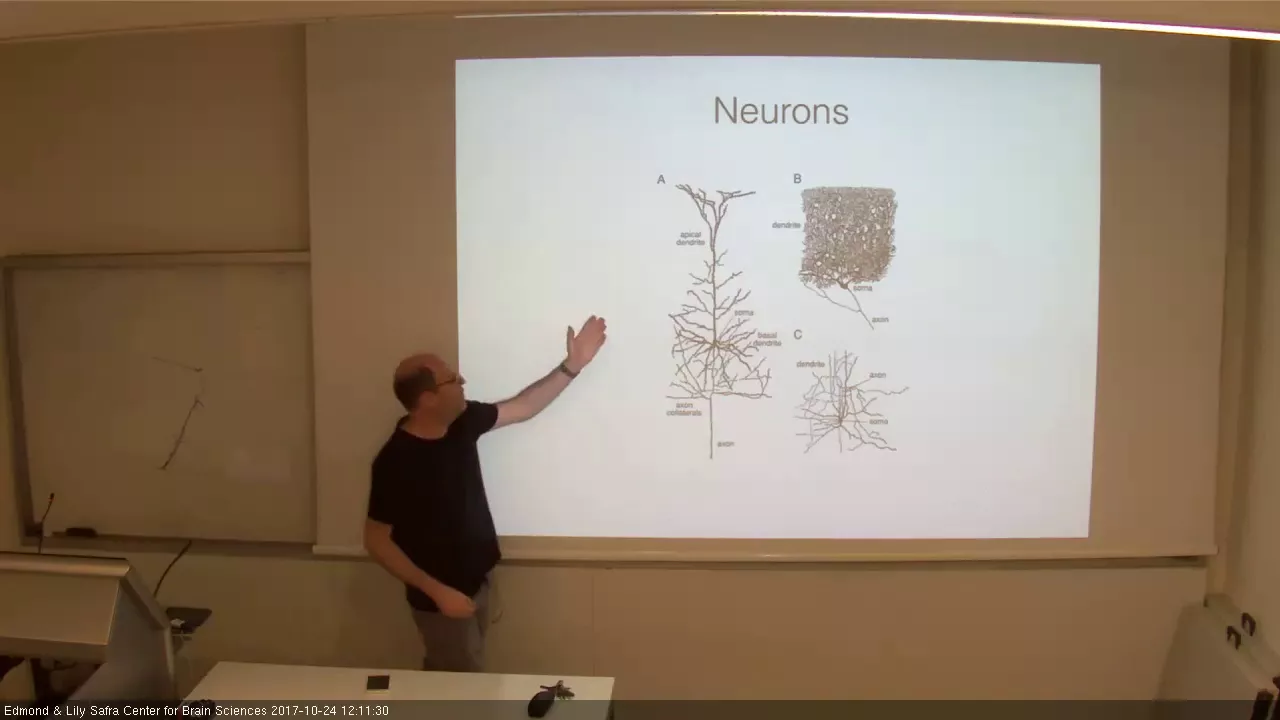
Added:Basic structure of a neuron, specifically the roles of the soma, dendrites, axon, and myelin sheath.
The concept of resting membrane potential, including how the sodium-potassium pump maintains a negative charge inside the cell.
Principles of passive and active transport, specifically diffusion and electrochemical gradients.
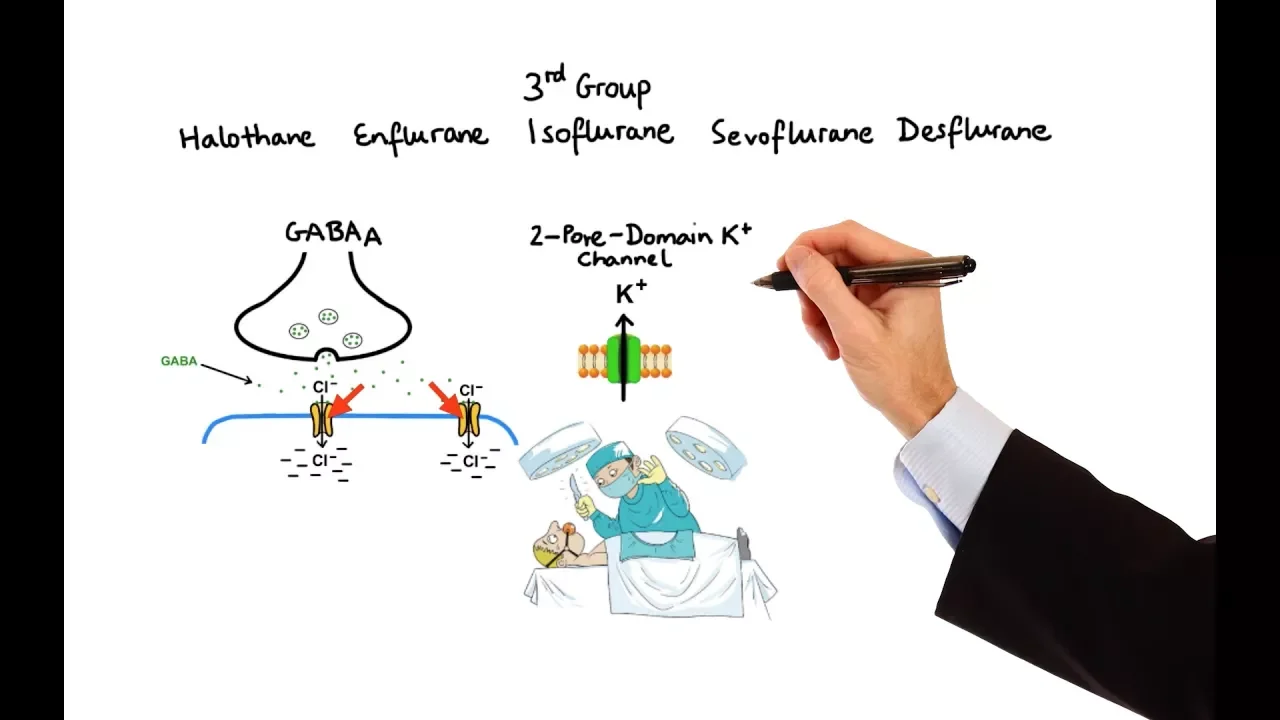
The difference between leak channels and gated ion channels (voltage-gated vs. ligand-gated).
Synaptic transmission and how the electrical signal is converted into a chemical signal via neurotransmitters at the synaptic cleft.
Saltatory conduction, specifically how the action potential propagates rapidly along myelinated axons via the Nodes of Ranvier.
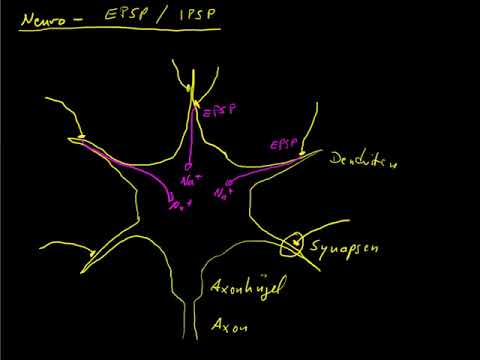
Spatial and temporal summation, explaining how a neuron integrates multiple incoming excitatory and inhibitory signals (EPSPs and IPSPs).
Clinical applications and pharmacology, such as how local anesthetics block sodium channels or the impact of demyelinating diseases like Multiple Sclerosis.
1.6M views25.9Klikes6:30Original Release: 2016-04-25
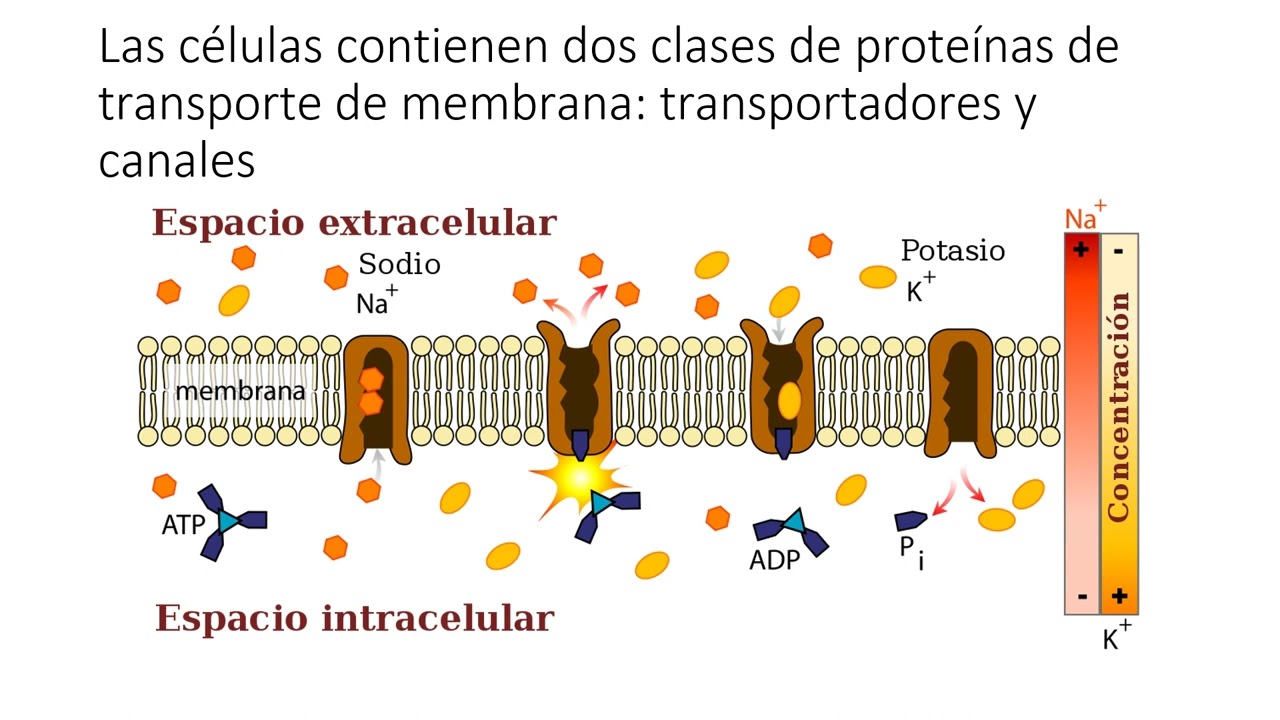
Neurons communicate with each other through their dendrites and axon. Generally, incoming signals are received at dendrites, while outgoing signal travels along the axon to the nerve terminal. In order to achieve rapid communication over its long axon, the neuron sends electrical signals, from the cell’s body to the nerve terminal, along the axon. These are known as nerve impulses, or action potentials. An action potential is essentially a brief reversal of electric polarity across the cell membrane. Cells are polarized, meaning there is an electrical voltage across the cell membrane. In a resting neuron, the typical voltage, known as the resting membrane potential, is about -70mV. The negative value means the cell is more negative on the inside. At this resting state, there are concentration gradients of sodium and potassium across the cell membrane: more sodium outside the cell and more potassium inside the cell. These gradients are maintained by the sodium-potassium pump which constantly brings potassium IN and pumps sodium OUT of the cell.
A neuron is typically stimulated at dendrites and the signals spread through the soma. Excitatory signals at dendrites open ligand-gated sodium channels and allow sodium to flow into the cell. This neutralizes some of the negative charge inside the cell and makes the membrane voltage LESS negative. This is known as depolarization as the cell membrane becomes LESS polarized.
The influx of sodium diffuses inside the neuron and produces a current that travels toward the axon hillock. If the summation of all input signals is excitatory and is strong enough when it reaches the axon hillock, an action potential is generated and travels down the axon to the nerve terminal. The axon hillock is also known as the cell’s “trigger zone” as this is where action potentials usually start. This is because action potentials are produced by voltage-gated ion channels that are most concentrated at the axon hillock.
Voltage-gated ion channels are passageways for ions in and out of the cell, and as their names suggest, are regulated by membrane voltage. They open at some values of the membrane potential and close at others. For an action potential to be generated, the signal must be strong enough to bring the membrane voltage to a critical value called the threshold, typically about -55mV. This is the minimum required to open voltage-gated ion channels. At threshold, sodium channels open quickly. Potassium channels also open but do so more slowly. The initial effect is therefore due to sodium influx. As sodium ions rush into the cell, the inside of the cell becomes more positive and this further depolarizes the cell membrane. The increasing voltage in turn causes even more sodium channels to open. This positive feedback continues until all the sodium channels are open and corresponds to the rising phase of the action potential. Note that the polarity across the cell membrane is now reversed. As the action potential nears its peak, sodium channels begin to close. By this time, the slow potassium channels are fully open. Potassium ions rush out of the cell and the voltage quickly returns to its original resting value.
This corresponds to the falling phase of the action potential. Note that sodium and potassium have now switched places across the membrane. As the potassium gates are also slow to close, potassium continues to leave the cell a little longer resulting in a negative overshoot called hyper-polarization. The resting membrane potential is then slowly restored thanks to diffusion and the sodium-potassium pump. During and shortly after an action potential is generated, it is impossible or very difficult to stimulate that part of the membrane to fire again. This is known as the refractory period. The refractory period is divided into absolute refractory and relative refractory. The absolute refractory period lasts from the start of an action potential to the point the voltage first returns to the resting membrane value. During this time, the sodium channels are open and subsequently inactivated while closing and thus unable to respond to any new stimulation. The relative refractory period lasts until the end of hyper-polarization. During this time, some of the potassium channels are still open, making it difficult for the membrane to depolarize, and a much stronger signal is required to induce a new response. During an action potential, the sodium influx at a point on the axon spreads along the axon, depolarizing the adjacent patch of the membrane, generating a similar action potential in it. The sodium currents diffuse in both directions on the axon, but the refractory properties of ion channels ensure that action potential propagates ONLY in ONE direction. This is because ONLY the unfired patch of the axon can respond with an action potential; the part that has just fired is unresponsive until the action potential is safely out of range. An action potential generated at the axon hillock usually travels down the axon to the nerve terminal and not back to the cell body.
This is because the concentrations of voltage-gated ions channels are higher in the axon than in the cell body.
Up Next
2:00
Neuroscience Basics: Primary Somatosensory Cortex Areas 3a, 3b, 1, 2
@neurochallenged
222.6K views•2016-11-29
21:55
Deciphering Neural Circuits Controlling Anorexia in Mice | Richard Palmiter
@AllenInstitute
2.3K views•2011-10-10
4:45
Long-Term Potentiation and Memory Formation: Cellular Basis
@Alilamedicalmedia
433K views•2017-04-04

13:03
How Exercise Benefits Your Brain: Science Explained
@TED
11.4M views•2018-03-21
Related Study Plans & Knowledge Roadmaps
Structured learning paths in Neuroscience
neuroscience
Appetite Regulation: Brain Circuits & Hormones
01Foundations of Endocrinology and Brain Anatomy
02Introduction to Energy Homeostasis
03Peripheral Signals: Leptin, Ghrelin, and Insulin
+ 2 more learning modules
14h5 modules
Explore Roadmap
neuroscience
Neuroeconomics: Value, Risk & Brain Mechanisms
01Foundations of Neuroscience and Brain Anatomy
02Introduction to Neuroeconomics and Subjective Value
03Dopaminergic Prediction Errors & Reinforcement Learning
+ 3 more learning modules
18h6 modules
Explore Roadmap
neuroscience
Spatial Navigation: Cells, Grids & Brain Maps
01Foundations of Brain Anatomy and Memory
02Place Cells and Head-Direction Cells
03Grid Cells: The Brain's Coordinate System
+ 2 more learning modules
12h5 modules
Explore Roadmap
neuroscience
BCIs: Neural Decoding & Prosthetic Control
01Neuroscience Foundations: How the Brain Signals Intent
02Signal Acquisition: Recording the Brain's Activity
03Neural Decoding: Translating Brain Waves into Data
+ 2 more learning modules
25h5 modules
Explore Roadmap