





















Long-term potentiation (LTP) is the cellular mechanism underlying memory formation, where high-frequency neural signals strengthen synaptic connections through a two-phase process: the early phase involves calcium-triggered phosphorylation of existing AMPA receptors and receptor insertion, supporting short-term memory; the late phase involves new protein synthesis and gene expression that enhances synaptic strength and correlates with long-term memory consolidation.
Long-Term Potentiation and Memory Formation: Cellular Basis
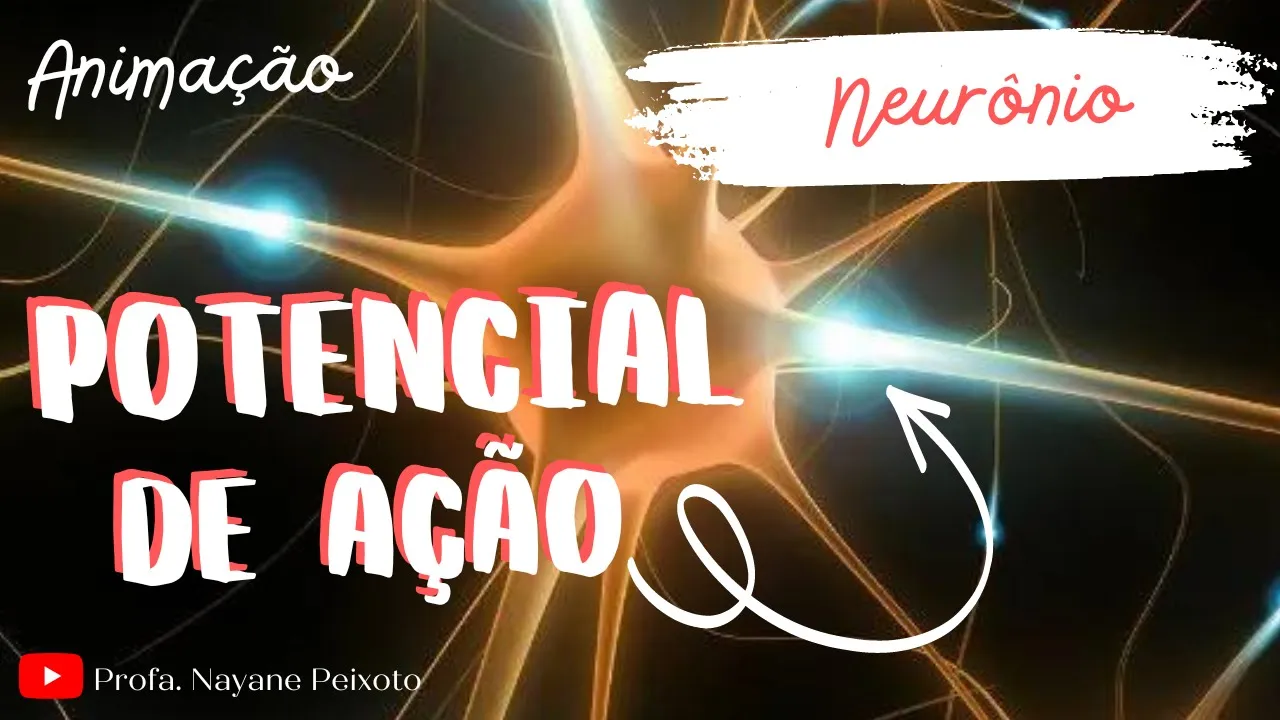
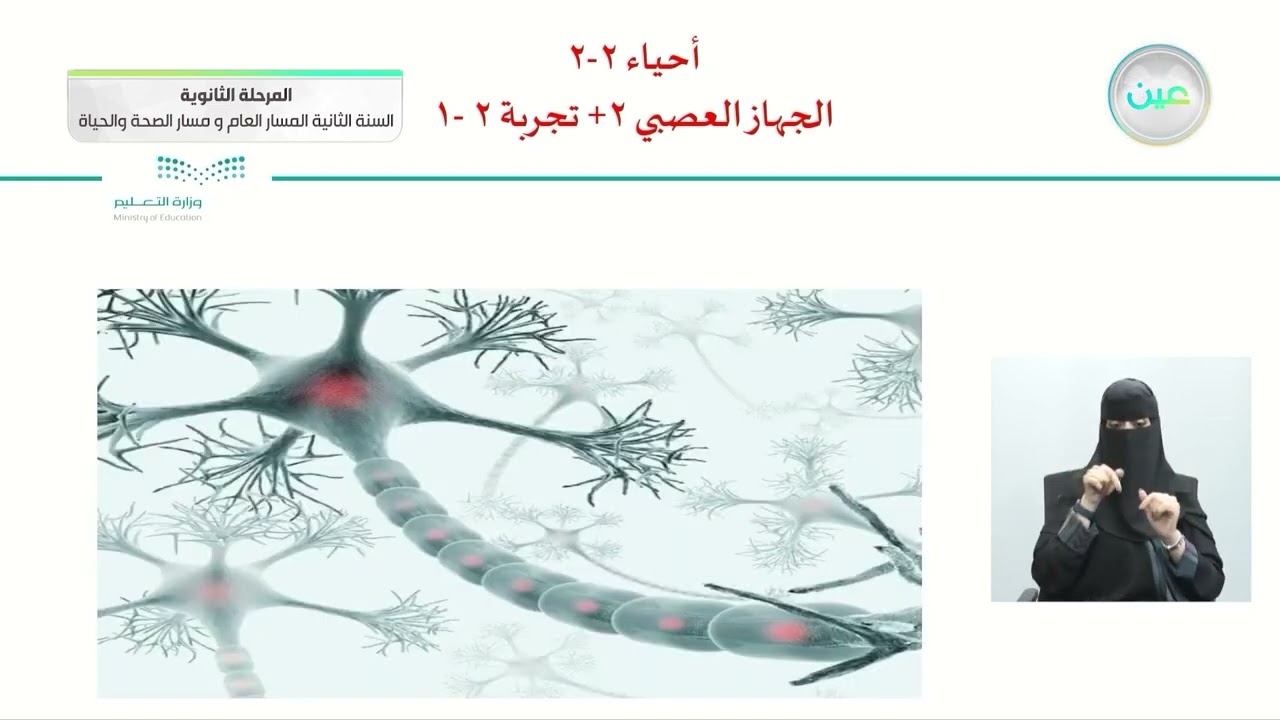
Added:Basic neuronal structure and the mechanism of the action potential.
The process of synaptic transmission, including neurotransmitter release and receptor binding (specifically glutamate).
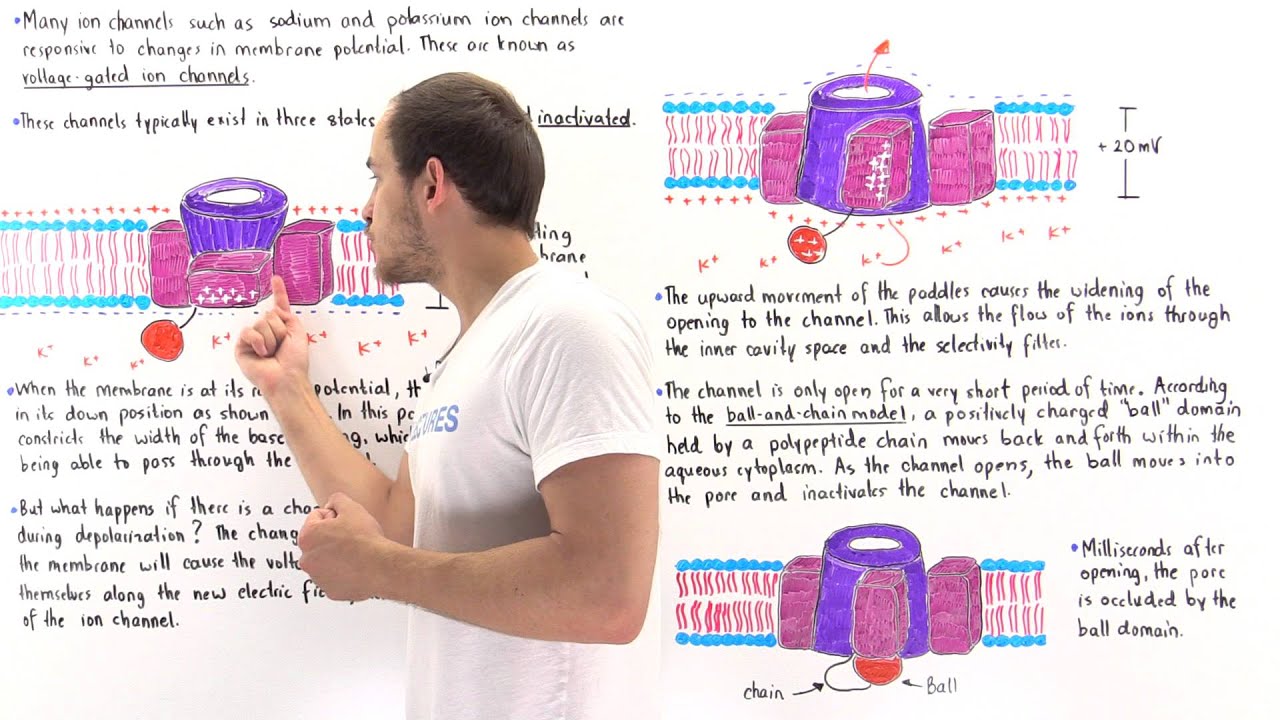
Principles of membrane potential and the differences between ligand-gated and voltage-gated ion channels.
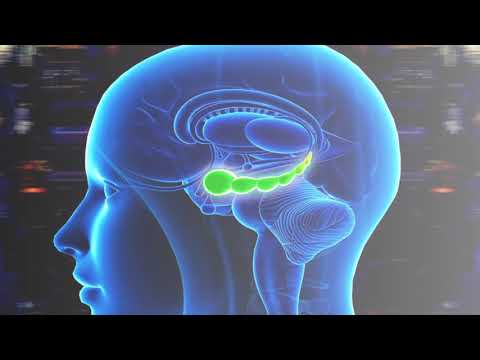
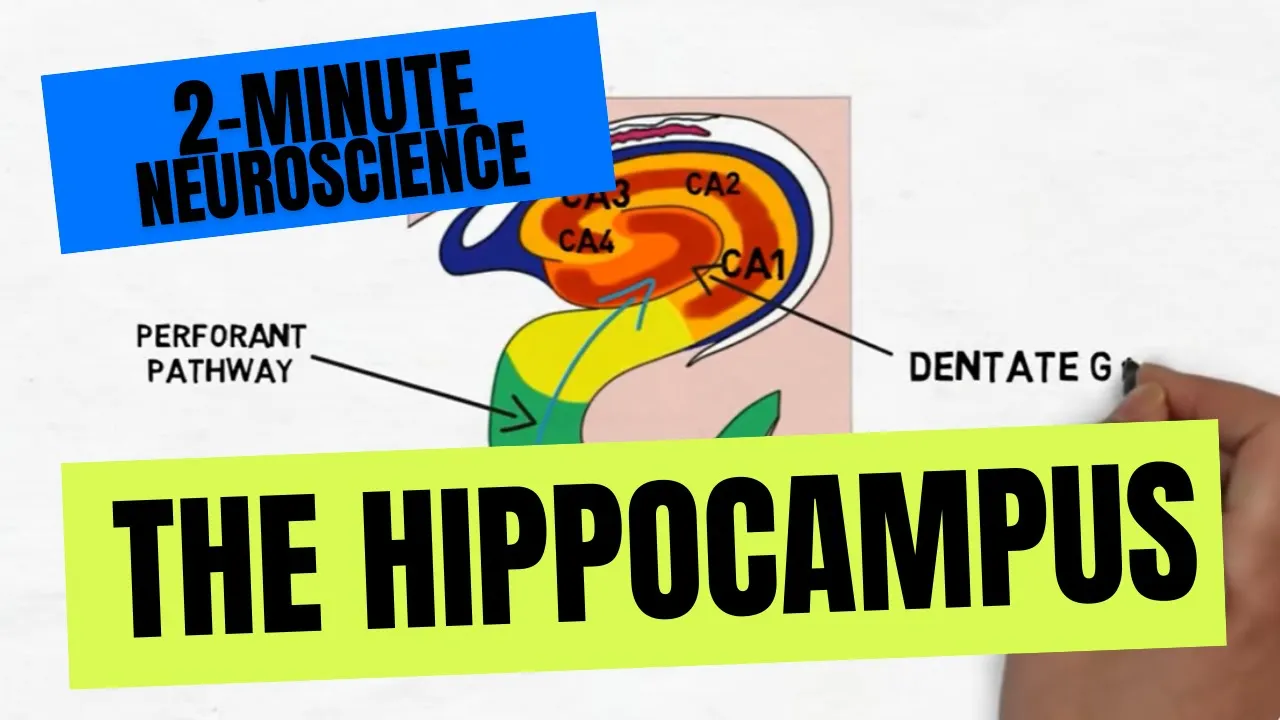
An introductory overview of the brain's anatomy, specifically the location and general function of the hippocampus.
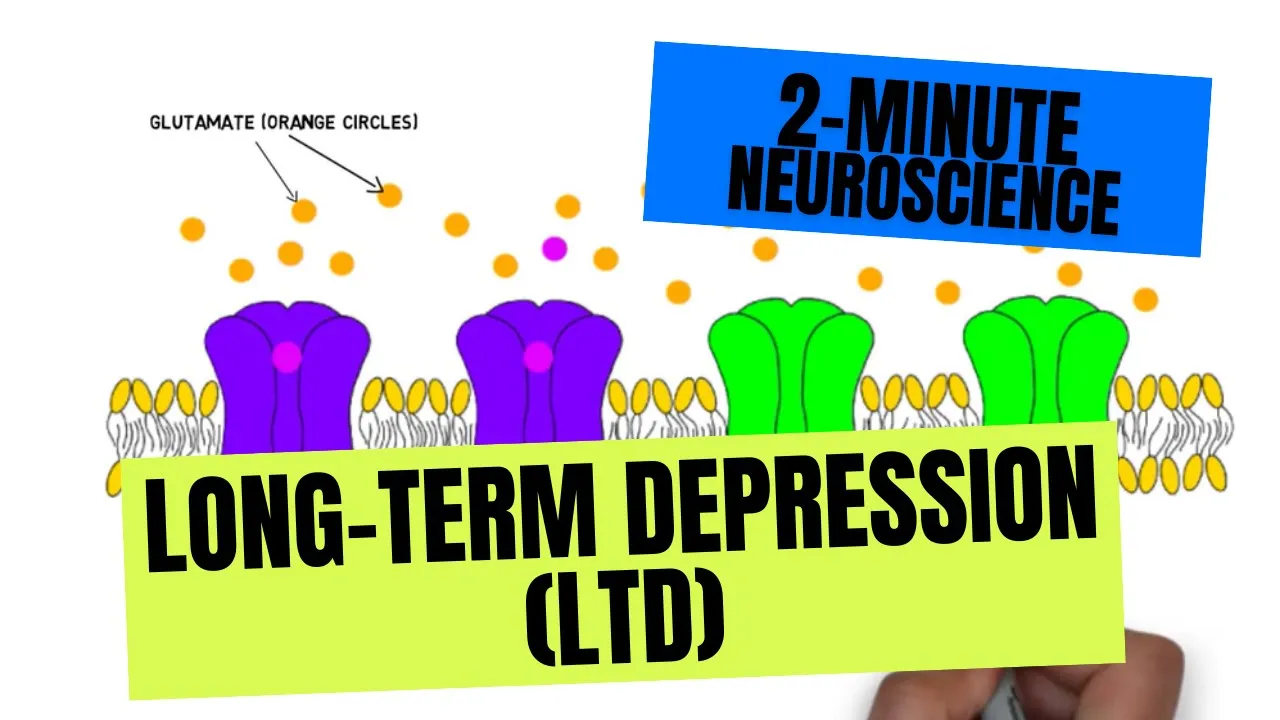
The mechanism of Long-Term Depression (LTD) as the counter-balancing process to LTP in synaptic plasticity.
Intracellular signaling cascades triggered by LTP, involving CaMKII, CREB, and local protein synthesis for structural remodeling of dendritic spines.
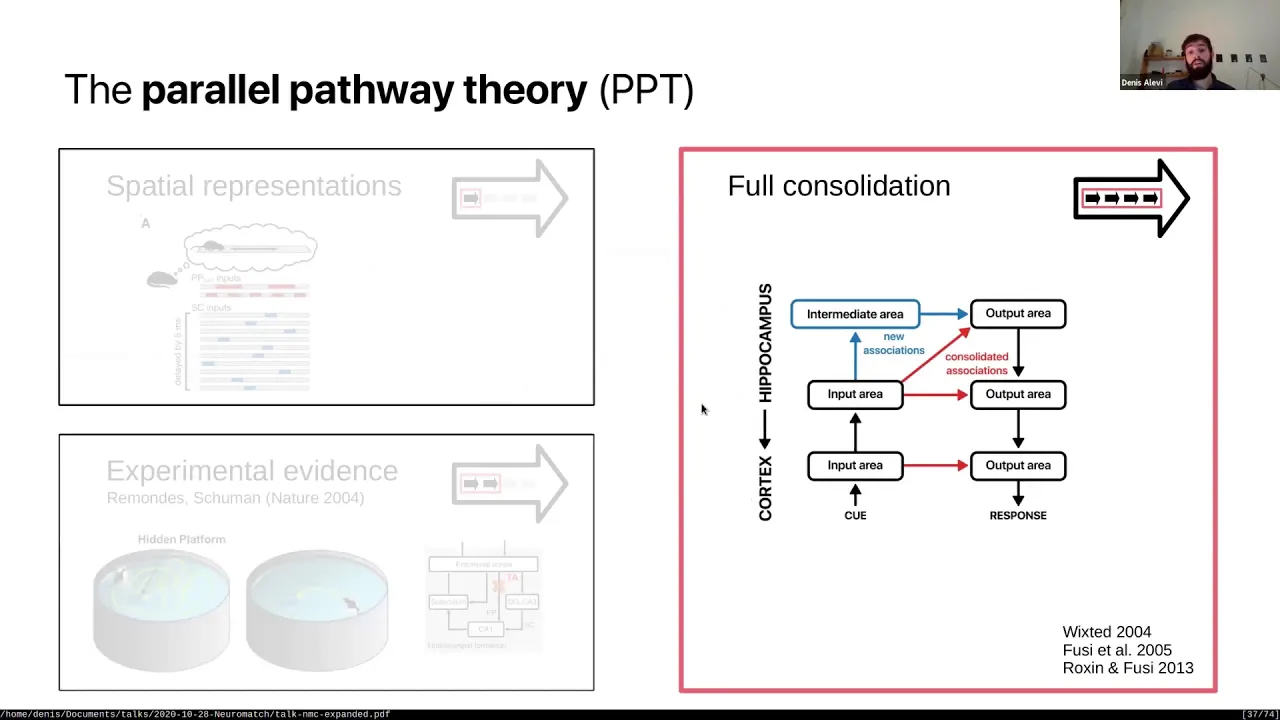
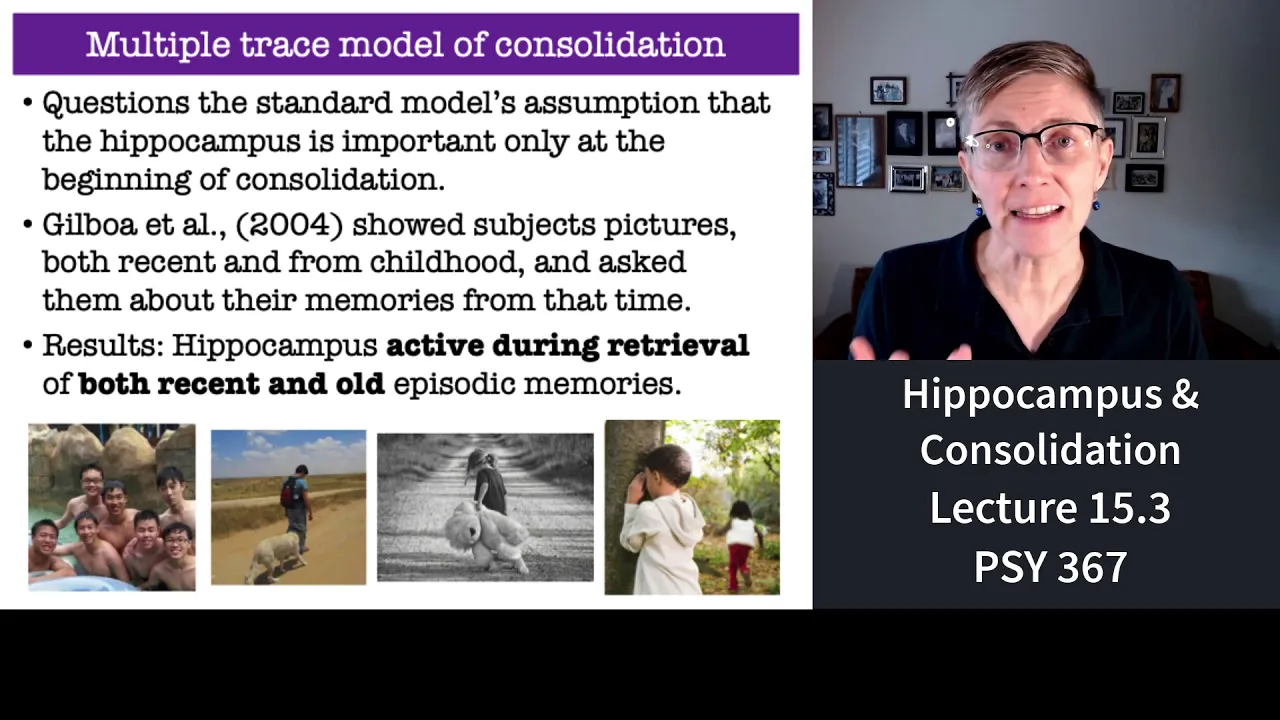
Systems-level memory consolidation, exploring how memories transfer from the hippocampus to the neocortex for permanent storage.
The clinical implications of LTP disruption in neurological disorders, such as Alzheimer's disease, and the pharmacology of cognitive enhancers.
433K views10.4Klikes4:45Original Release: 2017-04-04
The process of learning begins with sensory signals being transcribed in the cortex.
They are then transmitted to the hippocampus where new memories are believed to form.
If a signal is strong, or repeated, a long-term memory is established and wired back to the cortex for storage.
Lesions in the hippocampus impair formation of new memories, but do not affect the older ones.
The brain consists of billions of neurons.
Neurons communicate with each other through a space between them, called a synapse.
A typical neuron can have thousands of synapses, or connections, with other neurons.
Together, they form extremely complex networks that are responsible for all brain’s functions.
Synaptic connections can change over time, a phenomenon known as synaptic plasticity.
Synaptic plasticity follows the “use it or lose it” rule: frequently used synapses are strengthened while rarely used connections are eliminated.
Synaptic plasticity is believed to underlie the process of learning and memory retention.
New memories are formed when neurons establish new connections, or STRENGTHEN existing synapses.
If a memory is no longer needed or rarely recalled, its corresponding synapses will slowly weaken and eventually disappear.
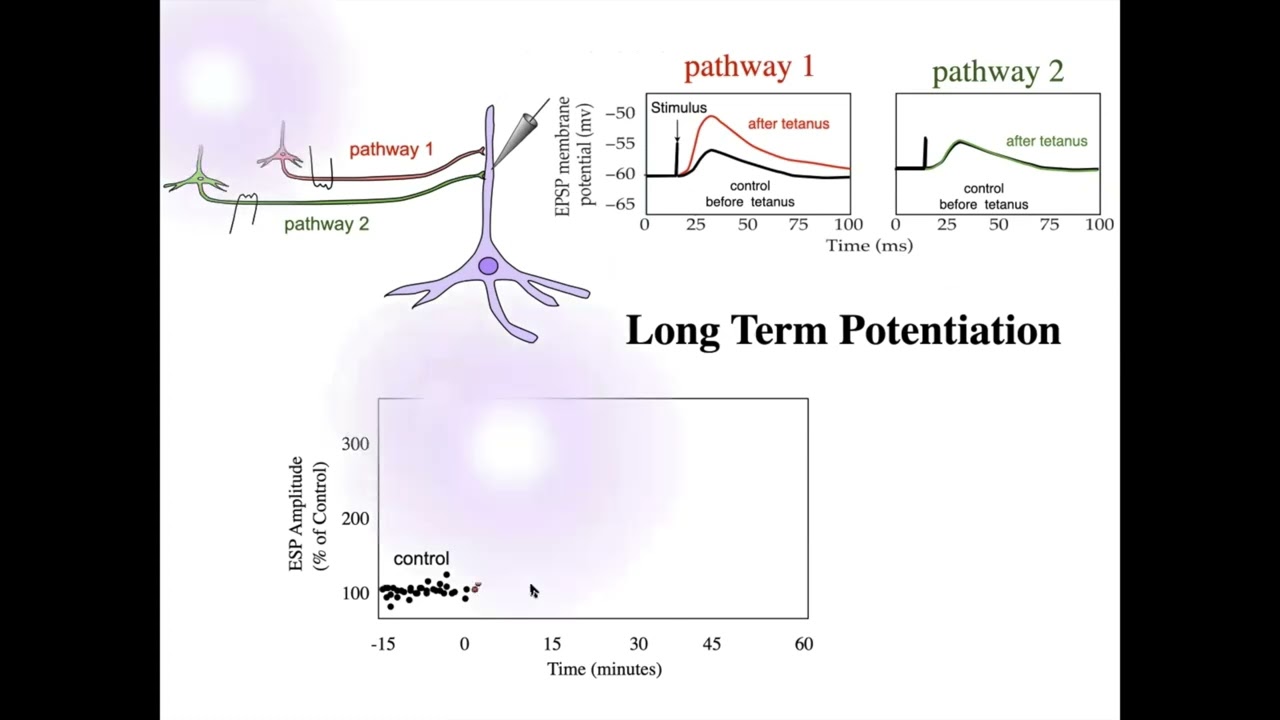
The strength of a synapse is measured by the level of excitability or responsiveness of the post-synaptic neuron in response to a GIVEN stimulus from the pre-synaptic neuron.
High-frequency signals or repeated stimulations STRENGTHEN synaptic connections over time.
This is known as long-term potentiation, or LTP, and is thought to be the cellular basis of memory formation.
LTP can occur at most excitatory synapses all over the brain, but is best studied at the glutamate synapse of the hippocampus.
When a glutamatergic neuron is stimulated, action potentials travel down its axon and trigger the release of glutamate into the synaptic cleft.
Glutamate then binds to its receptors on the post-synaptic neuron.
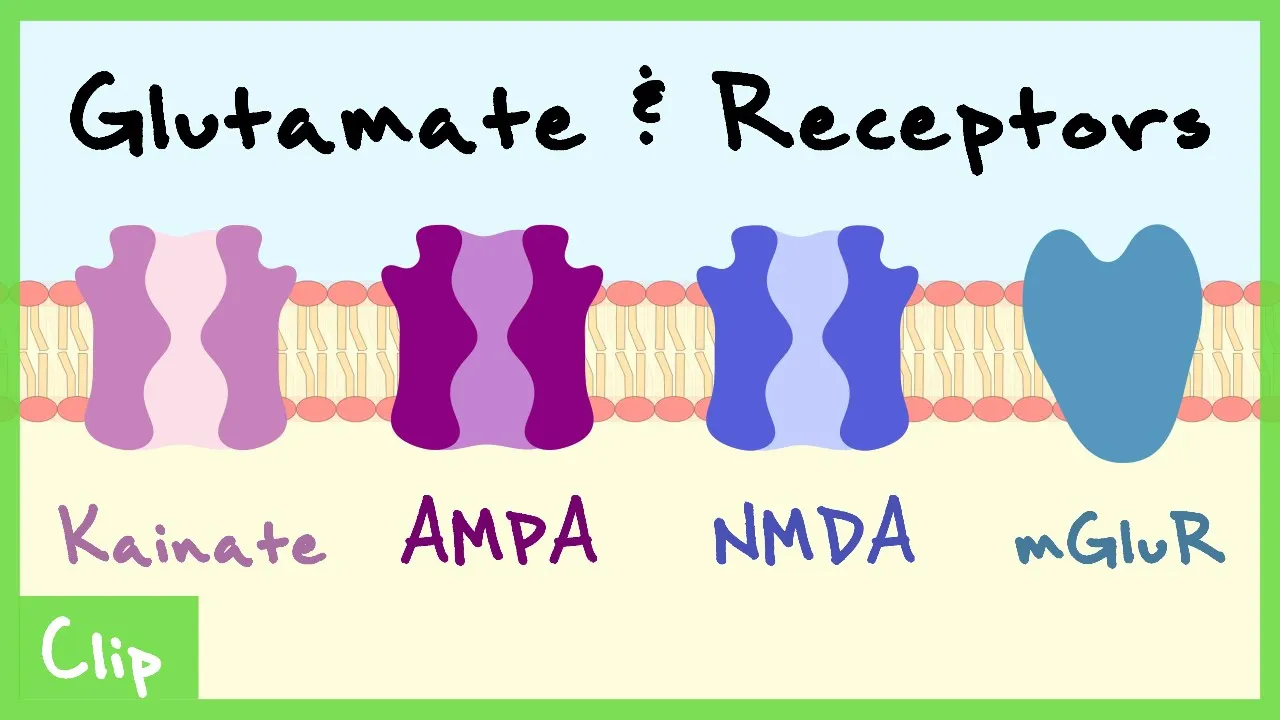
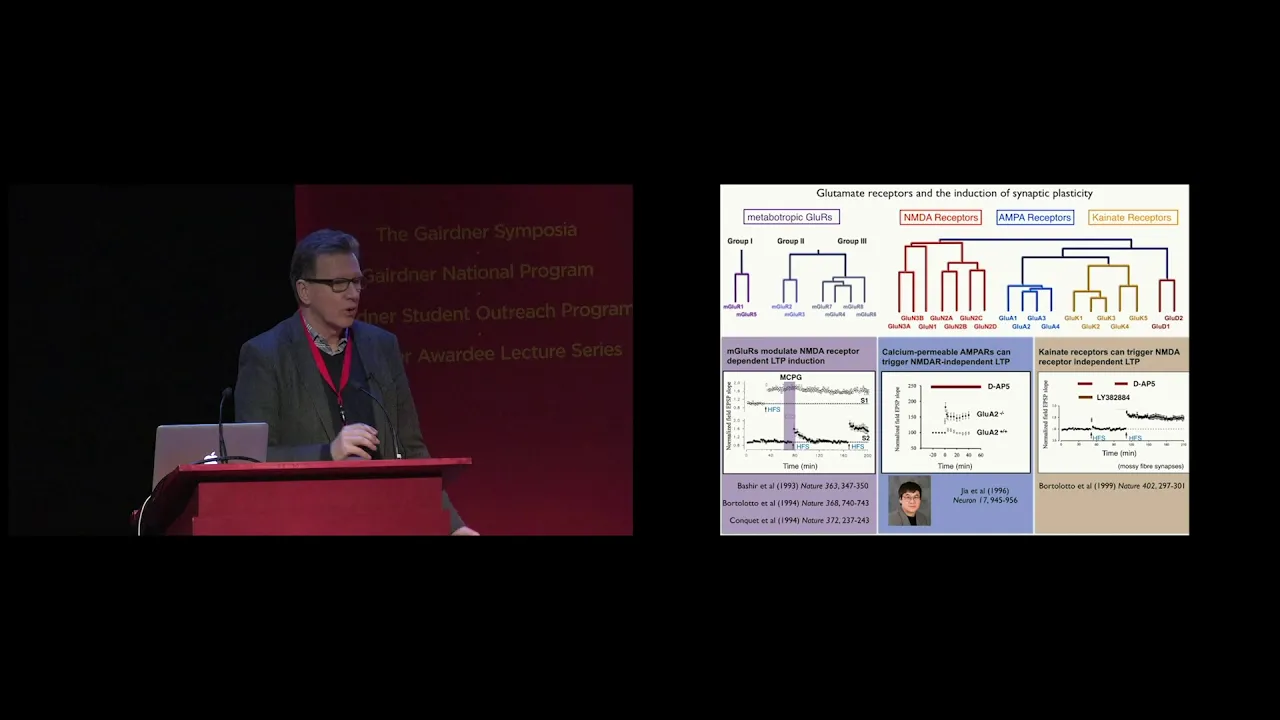
The 2 main glutamate receptors that often co-exist in a synapse are AMPA and NMDA receptors.
These are ion channels that activate upon binding to glutamate.
When the pre-synaptic neuron is stimulated by a WEAK signal, only a small amount of glutamate is released.
Although both receptors are bound by the glutamate, only AMPA is activated by weak stimulation.
Sodium influx through the AMPA channel results in a SLIGHT DE-polarization of the post-synaptic membrane.
The NMDA channel remains closed because its pore is blocked by magnesium ions.
When the pre-synaptic neuron is stimulated by a STRONG or REPEATING signal, a large amount of glutamate is released; the AMPA receptor stays open for a longer time, admitting more sodium into the cell, thus resulting in a GREATER DE-polarization.
Increased influx of positive ions EXPELS magnesium from the NMDA channel, which NOW activates, allowing not only sodium but also CALCIUM into the cell.
Calcium is the mediator of LTP induction.
There are 2 distinct phases of LTP.
In the early phase, calcium initiates signaling pathways that activate several protein kinases.
These kinases enhance synaptic communication in 2 ways: they phosphorylate the existing AMPA receptors, thereby increasing AMPA conductance to sodium; and help to bring more AMPA receptors from intracellular stores to the post-synaptic membrane.
This phase is thought to be the basis of short-term memory, which lasts for several hours.
In the late phase, NEW proteins are made and gene expression is activated to further enhance the connection between the 2 neurons.
These include newly synthesized AMPA receptors, and expression of other proteins that are involved in the growth of NEW dendritic spines and synaptic connections.
The late phase may correlate with formation of long-term memory.
Up Next
13:11
Action Potential in Neurons: Ion Channels & Signaling
@harvardextensionschool
3.4M views•2018-03-26
21:55
Deciphering Neural Circuits Controlling Anorexia in Mice | Richard Palmiter
@AllenInstitute
2.3K views•2011-10-10
6:30
Action Potential in Neurons, Animation: Phases Explained
@Alilamedicalmedia
1.6M views•2016-04-25

13:03
How Exercise Benefits Your Brain: Science Explained
@TED
11.4M views•2018-03-21
Related Study Plans & Knowledge Roadmaps
Structured learning paths in Neuroscience
neuroscience
Appetite Regulation: Brain Circuits & Hormones
01Foundations of Endocrinology and Brain Anatomy
02Introduction to Energy Homeostasis
03Peripheral Signals: Leptin, Ghrelin, and Insulin
+ 2 more learning modules
14h5 modules
Explore Roadmap
neuroscience
Neuroeconomics: Value, Risk & Brain Mechanisms
01Foundations of Neuroscience and Brain Anatomy
02Introduction to Neuroeconomics and Subjective Value
03Dopaminergic Prediction Errors & Reinforcement Learning
+ 3 more learning modules
18h6 modules
Explore Roadmap
neuroscience
Spatial Navigation: Cells, Grids & Brain Maps
01Foundations of Brain Anatomy and Memory
02Place Cells and Head-Direction Cells
03Grid Cells: The Brain's Coordinate System
+ 2 more learning modules
12h5 modules
Explore Roadmap
neuroscience
BCIs: Neural Decoding & Prosthetic Control
01Neuroscience Foundations: How the Brain Signals Intent
02Signal Acquisition: Recording the Brain's Activity
03Neural Decoding: Translating Brain Waves into Data
+ 2 more learning modules
25h5 modules
Explore Roadmap