





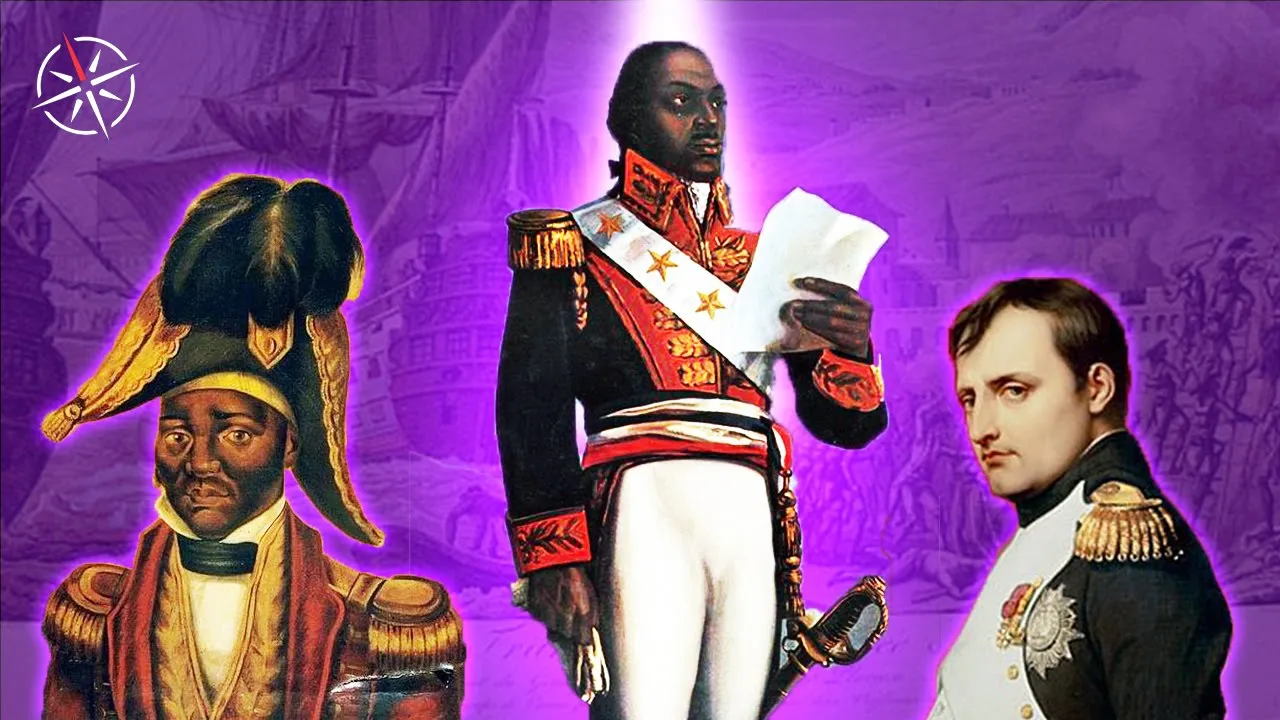
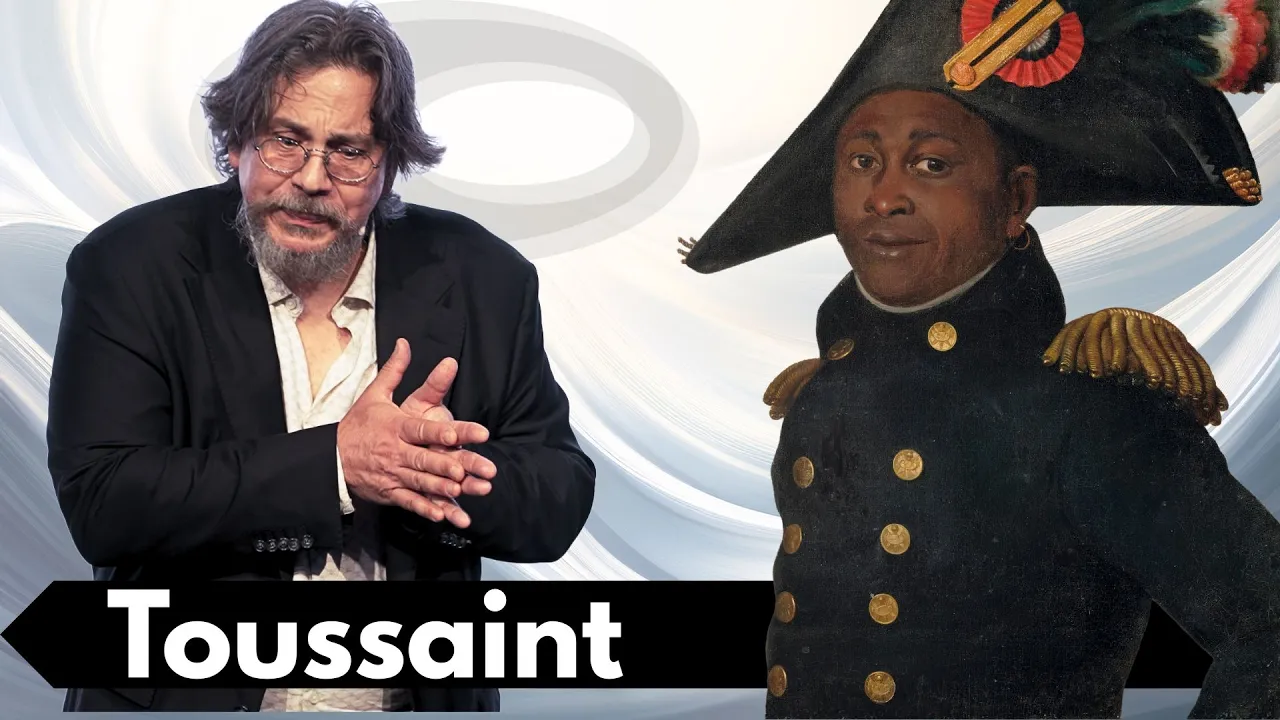











Toussaint Louverture, born around 1743 into slavery at the Bréda plantation in Saint-Domingue (modern Haiti), rose from an illiterate slave to become the brilliant military leader who led the only successful slave revolt in history—the Haitian Revolution. Despite lacking formal military training, he demonstrated exceptional tactical and operational warfare skills, defeating Spanish, British, and French forces through his ability to traverse difficult terrain quickly, lead from the front, and inspire loyalty among his troops. His leadership brought genuine racial equality to cities, though his later authoritarian measures alienated supporters and ultimately led to his capture by Napoleon's forces in 1802. While widely hailed as a revolutionary hero who embodied the cause of universal freedom, critics argue he betrayed the revolution by re-establishing the exploitative plantation economy and ruthlessly suppressing dissent. His death in French imprisonment in 1803 paved the way for Jean-Jacques Dessalines to declare Haiti's independence in 1804, creating the first post-colonial black-dominated nation in the Americas.
Toussaint Louverture: Slave Revolt to Haitian Revolution
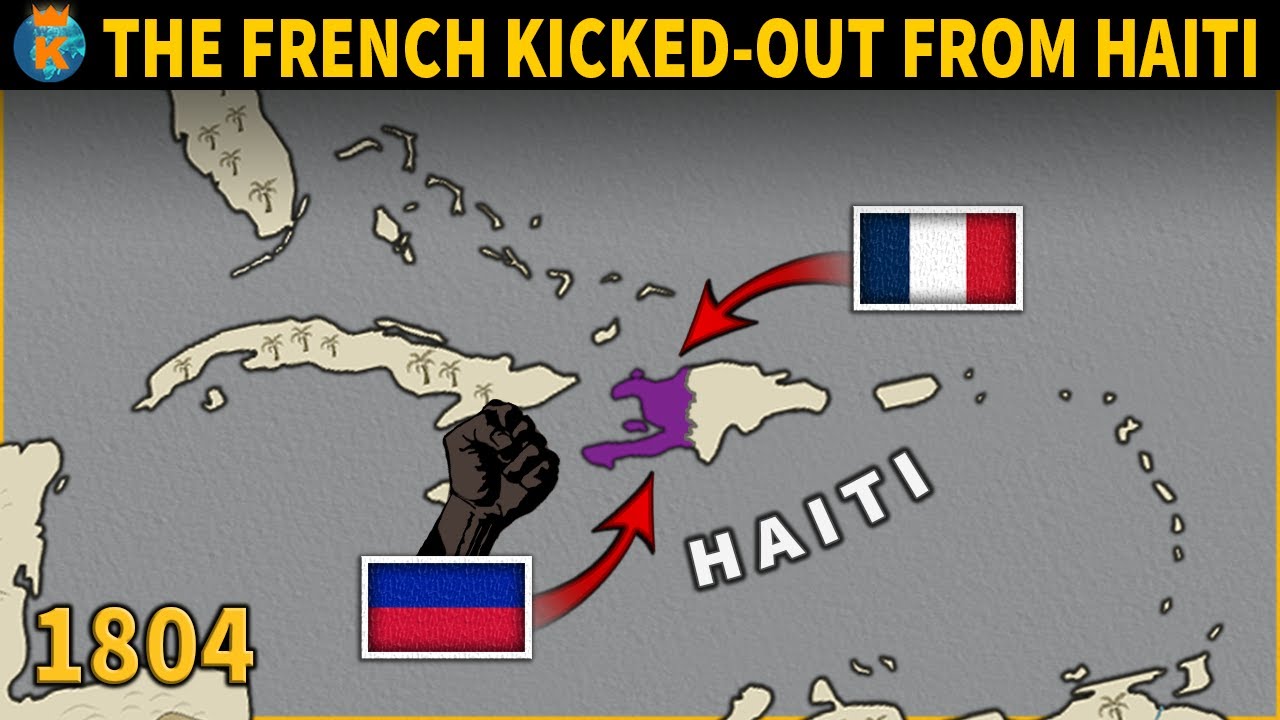
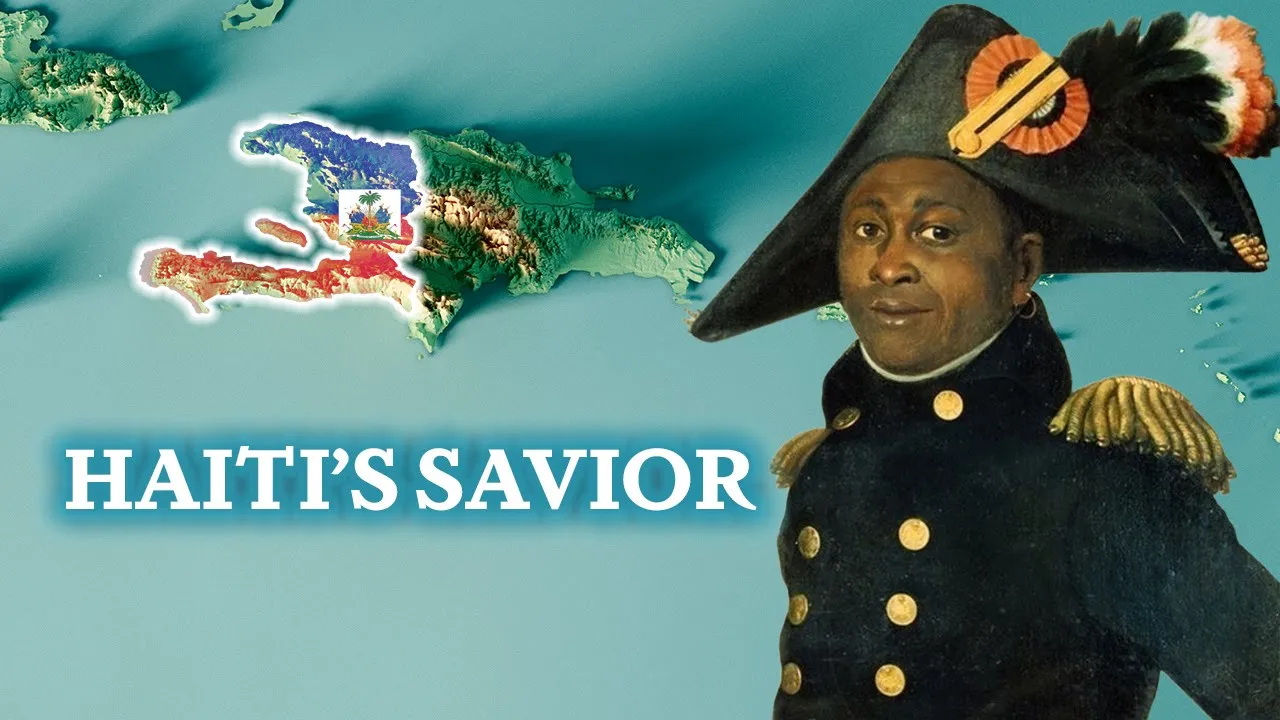
Added:It is the 29th of August 1793 in the French colony of Saint-Domingue, modern-day Haiti. A proclamation has started to spread around the colony, one that comments on the progress of the revolt against French colonial rule almost exactly two years after it first began. In the proclamation, the author asserts “I want Liberty and Equality to reign in St. Domingue. I am working to make that happen. Unite yourselves to us brothers and fight with us for the same cause.” It is a clarion call to arms for those amongst the former slave population who have not yet committed to the Haitian Revolution, but its author will not be around to enjoy Haiti’s full independence when it is acquired years later. The man will instead die an ocean away in France itself, a martyr to the cause he fought for….his name Toussaint Louverture….leader of the Haitian Revolution. The man known to history as Toussaint Louverture was born into slavery at the sugar plantation of Bréda at Haut-du-Cap in Saint-Domingue, present-day Haiti. As slave children took their surname from the plantation, he was known as Toussaint Bréda. A lack of birth records means that his date of birth is unknown. Estimates range from the late 1730s up to 1746. Most historians believe he was born in the early 1740s, and his name Toussaint, which means ‘All Saints’, may indicate that he was born on All Saint’s Day, the 1st of November, though his son Isaac claimed that Toussaint was born in May. Toussaint himself seemed to think he was born in 1743, though this was possibly just his own guess. Toussaint’s father Hippolyte was born in Africa and brought to Saint-Domingue. According to Isaac Louverture’s account, Hippolyte was the son of Gaou-Ginou, a king of the Allada people in Benin. Since historians have failed to identify a monarch of this name among the Allada, most scholars believe that Toussaint’s father may have been a powerful aristocrat. Even at Bréda Hippolyte commanded respect among the slaves. He was separated from his wife and children after being enslaved and remarried a slave woman at Bréda named Pauline. Toussaint was their first child. They would have four more children. The French colony of Saint-Domingue that Toussaint was born in occupied the western third of the island of Hispaniola, named by Christopher Columbus in 1492. The indigenous Taino people, whose population collapsed due to war and disease within a generation or two of Spanish colonisation, called the island Ayiti, meaning ‘land of mountains’. During the 17th century, the French began settling on the western part of the island, which Spain formally ceded to France in 1697 at the end of the Nine Years’ War in Europe. The French colony was known as Saint-Domingue after Santo Domingo, the main Spanish settlement on Hispaniola. French settlers established many plantations on the island and the colony soon became the world’s largest producer of sugar and coffee. While a new administrative capital was founded at Port-au-Prince on the western coast in 1750, the colony’s main commercial centre was Cap-Français on the northern coast, which by 1789 was a thriving cosmopolitan port boasting a population of 20,000 people. However, the extraordinary wealth of the colony was based on the exploitation of the island’s half a million slaves, the majority of whom were transported from Africa. Most slaves were forced to toil in the fields in the searing heat and were denied any political and civil rights. In response to the cruelty of the slave economy, from the mid-1740s escaped slaves known as maroons fled into the hills, forming armed bands to defend themselves against any attempts by their former masters to hunt them down. A charismatic spiritual leader named François Makandal led the movement in its early stages, and while he was captured and executed in 1758 he remained a legend and inspiration among slaves dreaming of liberation. In addition to the half a million black slaves and some 30,000 French colonists, the colony also hosted a similar number of mixed race individuals known as mulattoes who were free and allowed to own slaves of their own, but subject to various forms of legal discrimination that prevented them from enjoying equal status to the white population. Very little is known about Toussaint’s youth, but he appears to have been a thin, sickly child, who was nicknamed ‘Fatras-Baton’ or ‘little stick.’ Despite this label, Toussaint grew up to be an athletic young man and became a strong swimmer and rider. He would have been brought up to speak Fon, the native language of his parents in Benin, and during his childhood he acquired Haitian Creole, a language which combined French with influences from various West African languages. Toussaint is likely to have learned standard French from the Jesuit community, which controlled the Catholic Church in Cap-Français until 1763 when French colonial authorities removed them from the island amid a broader crackdown on the entire Jesuit movement in the Americas. After his parents’ death in 1774, Toussaint received lessons in history, geography, and mathematics from his godfather Pierre-Baptiste, a freedman who had been educated by the Jesuits. Pierre-Baptiste lived to be over 100 and Toussaint remained in touch with him throughout his life. It is possible that as a young man Toussaint read Julius Caesar’s Commentaries on the Civil War and the Histoire des deux Indes, an encyclopaedic history of international trade first published in 1770 and compiled by the Enlightenment writer, the Abbé Raynal, from a variety of different sources, including Denis Diderot. Toussaint was possibly influenced by passages from the encyclopaedia about the moral injustice of slavery and believed that sooner or later a great man would emerge among the slave population to lead an uprising to liberate himself and his comrades from their oppression. Toussaint’s advanced education was only possible because, unlike the majority of slaves on Saint-Domingue, he was not required to toil in the fields. He was a domestic servant who looked after the plantation owner’s livestock and horses, a task that he was eminently suited to owing to his skilled horsemanship, which earned him the nickname ‘Centaur of the Savannah.’ During the 1770s, Toussaint served as the coachman for Antoine-François Bayon de Libertat, a Frenchman who managed the Bréda estate between 1772 and 1789. In this capacity Toussaint was trusted by Bayon to travel around the colony as his representative. While Toussaint experienced less brutality as a slave than most of his peers, he still suffered from legal discrimination and was not immune from racial violence. On one occasion, Toussaint was walking home from Mass with his prayer book in hand when he was violently assaulted by a white man with a wooden stick, who told him that a black man should not read. Toussaint slipped away but never forgot the incident, and during the slave rebellion years later he encountered the same man and killed him without a second thought. Although Toussaint was designated a creole since he was born in Haiti, one biographer, Sudhir Hazareesingh, argues that he maintained a close affinity with his African roots. He inherited knowledge of herbal medicine from his father and combined this with Caribbean and European medical knowledge. His abilities as a healer ensured that he was respected by his peers. He spoke the Fon language to fellow Alladas who lived in Bréda, and after his parents’ death he sought help from an African-born woman named Pélagie, a close friend of his late mother, who helped him take care of his siblings and his children. Near the end of his life, Toussaint claimed to have had 16 children, of whom 11 had already predeceased him. In the early 1760s, he married a free black woman named Cécile, who gave him three children. Their eldest son, named Toussaint after his father, died in 1785. By this time Cécile had already left him for another man, and in around 1782 Toussaint married a slave named Suzanne, who was the niece of his godfather, Pierre-Baptiste. Toussaint had two sons with his second wife and also adopted her son Placide from a previous marriage. During the 1770s and 1780s, Toussaint and his family enjoyed a comfortable existence, enabling them to share their surplus with plantation workers who were in need. Archival research from the 1970s showed that by at least 1776, Toussaint was no longer a slave and had been formally emancipated. Toussaint possibly owed his freedom to Bayon de Libertat, who made the request to the nephew of the plantation owner, Count Louis-Pantaléon de Noé, after crediting Toussaint with playing a major role in restoring order to Bréda after a large number of slaves fled the plantation in 1773 in response to the brutality of an estate manager named Delribal, who appears to have temporarily displaced Bayon. In his twin capacity as a coachman trusted by Bayon and as a figure of authority and respect among his fellow slaves, Toussaint successfully brokered an agreement resulting in Delribal’s dismissal, Bayon’s reinstatement as manager, and the voluntary return of the escaped slaves. These circumstances led the grateful Bayon to petition successfully for his coachman’s freedom, after which Toussaint worked as a salaried employee. Indeed, other records from 1776 show that Toussaint was not only a free man, but that he acquired a slave of his own named Jean-Baptiste. In 1779, Toussaint also took out a lease on a small coffee estate with 13 slaves from his son-in-law, though the enterprise was unsuccessful and he abandoned it within a couple of years. While these developments may cast some doubt on Toussaint’s alleged later pedigree as a freedom fighter, his brief stint as a plantation manager allowed him to better understand the slave economy, and after the failure of his project he appears to have freed several of the slaves. The failure of the enterprise coincided with the breakdown of his first marriage with Cécile, his return to Bréda, and his marriage to Suzanne. Since his wife and children continued to be slaves at Bréda, Toussaint chose to remain on the estate, but he used his influence with Bayon to ensure that his family members worked in the house rather than having to endure backbreaking labour in the fields. Toussaint also ensured that his adoptive mother Pélagie was exempted from all labour duties by 1785, four years before he formally bought her freedom. By 1789, Toussaint was in his mid-40s and had been a free man for almost two decades. He continued to live on the slave plantation with his family, retaining a strong sense of solidarity with his black brethren, and was understandably reticent about admitting that he had been formally emancipated by his white employer Bayon. His own freedom jarred with the fact that the vast majority of his peers were still enslaved, and while Toussaint was pragmatic enough to realise that a slave uprising was unlikely to succeed, he was prepared to assume Makandal’s mantle when circumstances presented themselves. Such an opportunity came in the wake of the French Revolution of 1789, which split the white community on Saint-Domingue. During the 1780s, wealthy planters had resisted royal efforts to improve conditions for slaves by enforcing existing legislation against brutal punishments. Paradoxically, this meant that slaves and critics of slavery were more sympathetic to the monarchy, while the planters welcomed the revolution as an opportunity to assert their independence from France. The revolution in France inspired an uprising on Saint-Domingue late in 1790 by Vincent Ogé, a mulatto who demanded the right to vote but refrained from forging an alliance with black slaves. While Ogé was arrested and executed in Saint-Domingue, in May 1791 the National Assembly in Paris passed a law granting voting rights to persons of colour whose parents were also free. This minor concession provoked outrage from the planters as a challenge to their privileges, and led to the outbreak of conflict between whites and free persons of colour in the southern part of the colony. Toussaint, like the other domestic slaves and servants who worked in the houses of their masters, would have heard them talking about the revolution. In their interpretation of the events in Paris, the white slaves of France had overthrown the tyrannical yoke of their masters and were now living in abundance. Although the French Revolution had protected property, which included slaves, the underlying principles of Liberté, Égalité and Fraternité naturally appealed to the half-million slaves in Saint-Domingue. Fuelled with these idealistic notions, a group of slaves led by a priest named Dutty Boukman gathered at a secret Vodou ceremony in the woods of Bois Caïman near Cap-Français on the 21st of August 1791 to plan an insurrection to eliminate the members of the Colonial Assembly at Cap-Francais. While their efforts to violently overthrow the colony’s political elite three days later, on the 24th of August, failed, the slave rebels did kill their masters in the plantations around the port. Thereafter they rapidly took control of northern Saint-Domingue. Their success encouraged other slaves to join their ranks and their numbers swelled from 10,000 at the end of August to 80,000 by November. Toussaint’s role in the insurrection has been a source of controversy. By remaining at Bréda and protecting the Bayon family he seems to have taken a back seat during its early weeks. However, Toussaint later claimed to have been involved from the very beginning, and there are even suggestions that he coordinated with Bayon to organise the uprising behind the scenes as part of a royalist coup to eliminate the planters seeking independence. While the slave rebels did initially take up arms in the name of King Louis XVI of France, whom they regarded as the protector of their rights, there is no archival evidence that the rebellion was a royalist conspiracy. Toussaint did apparently play a key role from the very start, since the most prominent leaders of the uprising such as Dutty Boukman, Jean-François, and Georges Biassou were all coachmen and would have been known to him. After Boukman was killed in combat in November 1791, Jean-François and Biassou emerged as the leaders of the uprising. Toussaint initially sought to remain in the shadows, giving him the freedom to mediate between the white masters and the black slaves should the opportunity arise. In October 1791, after ensuring the safety of his own family and that of his employer, Bayon de Libertat, Toussaint left Bréda and formally joined the uprising, serving as an advisor to Georges Biassou under the title ‘General Doctor’. This was owing to his reputation as a healer. During the early months of the uprising, the rebels proved that they could hold their ground against the white militia, but struggled to expand their control beyond the north of the colony. Their destruction of the plantations had also led to food shortages and in December the rebel leaders offered to negotiate with the three civil commissioners who had just arrived from Paris. Their relatively modest demands were for the amnesty of 300 rebel leaders, the abolition of the use of the whip against slaves, and three days of freedom each week. When the offer was rejected by the Colonial Assembly, an infuriated Biassou threatened to execute all of the white hostages, Toussaint persuaded him not only to spare them, but to pardon them the next day. Despite this demonstration of magnanimity, the failed peace negotiations convinced Toussaint that there was no choice but to continue the struggle for general emancipation to the bitter end through full scale war and revolution. When the colonial authorities offered an amnesty for free people of colour in spring 1792, Toussaint rejected the offer and instead reinvented himself as a revolutionary leader. He received military instruction from a former white officer from Cap-Français and a black officer who had served in the colonial militia. By mid-1792 he had trained a loyal body of 500 to 600 men while remaining under Biassou’s nominal command. In July 1792, the rebel leaders wrote a defiant letter to the colonial assembly accusing them of betraying the ideals of the French Revolution. While Toussaint’s name was absent among the signatories, he may have been its author. At the time, the revolution was still being driven by moderates in Paris who were unwilling to abolish slavery, but following the storming of the Tuileries Palace on the 10th of August that late summer, the radical Jacobin faction gained control of the political agenda. The monarchy was abolished, and Louis XVI was executed in January 1793. The political upheavals encouraged France’s European colonial rivals, primarily Britain and Spain, to take advantage of the revolutionary disturbances in Saint-Domingue. While the British sought to take control of the colony by forming an alliance with the planters, the Spanish provided support to the slave rebels as part of their plans to regain full control of the island. In early 1793, Toussaint began negotiating an alliance with the Spanish, and by June 1793 Jean-François and Biassou were given the rank of lieutenant general in the king of Spain’s army, while Toussaint was named colonel and later promoted to general. His reputation for fairness attracted thousands of new recruits, bringing his independent command to 4,000 men. The Spanish alliance strengthened the rebel forces and threatened the French at Cap-Français. In response, the French commissioners Léger-Félicité Sonthonax and Étienne Polverel promised to grant freedom to all slaves who joined the fight against Spain. The announcement on the 20th of June led to hostilities in Cap-Français between the Frenchmen who supported the commissioners and the planters who were determined to defend slavery. During a three-day battle, the port was destroyed, up to 10,000 people were killed, and the commissioners emerged victorious following intervention by the slave insurgents in their favour. However, as a sign of his increasing confidence, Toussaint rejected Sonthonax’s offer and affirmed his loyalty to the king of Spain while denouncing the Republicans’ hypocrisy and the execution of King Louis XVI. He, like many of the black insurgents in Saint-Domingue, instinctively favoured monarchy over republicanism due to African political traditions. In August, Toussaint adopted the surname Louverture, meaning ‘the opening’, which may refer to the opening of a revolutionary path or his ability to break enemy lines in battle. In increasing desperation, while perhaps acting according to his genuine political convictions, Sonthonax announced the end of slavery in northern Saint-Domingue on the 29th of August. However, he saw freedom as a gift of the French Republican government and believed that while the slaves were to be given political rights, they would have to return to work on the plantations. The proclamation encouraged a number of rebels to defect from the Spanish to the French, but Toussaint continued to view Sonthonax with suspicion and remained in Spanish uniform. Meanwhile, a British force of 600 men landed in southern Saint-Domingue in September to make common cause with the white planters. They gradually took over several ports on the west coast. The presence of British ships in the Caribbean failed to prevent a French ship carrying a multiracial delegation to convey news of Sonthonax’s proclamation to Paris. On the 4th of February 1794, the National Convention in France ratified the proclamation and even abolished slavery across all of France’s colonies, granting citizenship to all French subjects regardless of race. The further radicalisation of politics in France had a profound effect on Saint-Domingue, where the island was divided between the British in the south and west, and the French and Spanish in the north. Spanish regular forces were reluctant to take the offensive and relied on the slave rebels to do much of the fighting, but the black forces were themselves crippled by bitter infighting, as Biassou raided Louverture’s supplies in early 1794. By May 1794, Toussaint Louverture and his 4,000 men controlled a substantial part of northwestern Saint-Domingue from his headquarters at Gonaïves. The disagreements with Biassou and reports of white planters beating slaves in plantations under Spanish protection led Toussaint to question his allegiance to the Spanish. On the 5th of May, after discussions with the French general, Etienne Laveux, he made the fateful decision to defect to the French, raising the Republican tricolour at Gonaïves. Shortly afterwards he defeated his former comrades-in-arms in Spanish uniform to consolidate his control of the northwest. Sonthonax and Polverel welcomed Louverture’s defection, but they were soon recalled to Paris to answer charges from the exiled planters, leaving Laveux as governor to face the British and Spanish without the prospect of reinforcements from France. This meant that Louverture’s army was the key to the cause of French Republicanism on the island. He soon proved his worth by pushing back the Spanish positions in the east. Toussaint was a charismatic military leader who always led from the front. For instance, in July 1794 he spearheaded an attack against Jean-François’ position at Dondon, reporting that the enemy commander escaped with, quote, “only his shirt and his trousers.” With talented officers under his command such as Henri Christophe, his adopted nephew Hyacinthe Moïse, and Jean-Jacques Dessalines, Louverture defeated Jean-François again in December 1794 to take control of the Grande-Rivière to the east of Dondon. In another demonstration of his military prowess, he defeated a renowned white creole army by leading his cavalry in a frontal assault to distract the enemy while his two infantry columns manoeuvred around the flanks of the highway supported by murderous artillery fire. In October 1795, Louverture and Moïse combined to defeat a Spanish counter-offensive by Jean-François and Biassou. Back in Europe, the Spanish had already signed the Treaty of Basel with France in July 1795, and the two black leaders soon went into exile. After the French and Spanish made peace, Louverture turned his attention to the British, laying siege to the British garrison at the port of Saint-Marc. The beleaguered British military presence on the island, which had been much reduced by an outbreak of yellow fever, received substantial reinforcements in early 1796. Now equipped with a large light cavalry force and having recruited some 7,000 black infantrymen, the British were poised to take over the island and Louverture had to withdraw and adopt a scorched earth strategy. While the British could not be dislodged from well-fortified positions such as Saint-Marc, they were not equipped to fight a guerilla war. Moreover, Toussaint had a reputation for moving swiftly and appearing where the British did not expect him. Furthermore, the crippling attrition from disease led many British soldiers on the ground to conclude that the war could not be won and that they had no business on Hispaniola. Conversely, Louverture’s victories against foreign enemies won the admiration of the French Republican authorities, and in March 1796 he marched into Cap-Français to put down an insurrection by mulattoes who briefly captured Laveux and appointed General Jean-Louis Vilatte as governor. On the 1st of April 1796, a grateful Laveux named Toussaint as deputy governor and labelled him the “black Spartacus” in reference to the Roman gladiatorial slave leader, a nickname which Louverture was proud to accept. Louverture admired Laveux’s commitment to the cause of emancipation and Laveux trusted him to issue proclamations on his behalf. However, the fall of the Jacobins in Paris in July 1794 strengthened pro-slavery opinion in France once again. In response Louverture encouraged Laveux to stand for election to the legislative assembly. Both Laveux and Sonthonax were elected, and while the former left for France in October, the latter remained on the island. Laveux’s departure left Louverture as the senior general in the French Republican army on Hispaniola. His appointment as general-in-chief was formalised several months later. He was determined to expel the British from Saint-Domingue and reunite the colony under French control. At a time when General Napoleon Bonaparte was gaining a reputation in northern Italy for his quick marches, which allowed him to gain local superiority over his Austrian foes before the latter had time to summon reinforcements, Louverture’s ability to traverse mountainous territory in the shortest amount of time, on one occasion covering 64 kilometres of mountainous terrain in a single day, was already well known to the British. In June 1797, Louverture took advantage of the absence of the main British army to capture several forts around Saint-Marc, effectively employing his artillery to breach their walls. While Louverture’s men were unable to dislodge the British from Saint-Marc itself, the war had taken a devastating toll on the British forces on the island. Out of some 20,000 British soldiers sent to Saint-Domingue, over 12,000 perished, mostly of disease. The remainder were holed up in a few forts dotted around the western coast. In early 1798, Thomas Maitland, who had recently taken command of the British forces on the island, decided to seek negotiations with Louverture. Under an agreement signed on the 30th of April 1798, Louverture secured the British evacuation of Saint-Marc and Port-au-Prince in return for a general amnesty for French counterrevolutionaries. Further agreements in August paved the way for the departure of the remainder of the British troops. Louverture’s success in expelling the British through his military and diplomatic efforts were welcomed by the French, but his enhanced stature and prestige caused anxiety among the French authorities. Although Sonthonax had appointed Louverture as general and arranged for his son Isaac and stepson Placide to receive an education in mainland France, the two clashed on several issues, including the return of white planters who had left Saint-Domingue in the wake of the slave insurrection. The Republican Sonthonax regarded the planters as counterrevolutionaries who had been banned from returning to the island, while Louverture believed that their return could reinvigorate Saint-Domingue’s economy, which had been devastated by war. When Louverture arranged for the return of his former employer, Bayon de Libertat, in July 1797, Sonthonax reminded him that aiding the return of an émigré was illegal. Louverture responded by sending Sonthonax a letter signed by several of his senior generals suggesting that the colony’s interests would be better served if he were to return to France. When Sonthonax’s took the hint, the French Directory in Paris sent General Joseph d’Hédouville to Saint-Domingue as a commissioner with orders to curb Louverture’s powers and develop a civil bureaucracy as a counterweight to Louverture’s control of the military. The new commissioner’s presence from May 1798 did not prevent Louverture from negotiating with Maitland behind his back to secure the departure of British forces from the colony. When Hédouville attempted to replace Moïse as commander of the Fifth Regiment, it provoked an uprising among Louverture’s men which resulted in Dessalines marching on Cap-Français with orders to arrest the commissioner. Hédouville prudently decided to leave Saint-Domingue in October 1798, leaving his powers with André Rigaud, a mulatto general and Louverture’s rival, who had established a semi-independent power base in the south of the colony with a force of some 8,000 men. Since Louverture had twice this number under his command, he was confident that he could prevail and bring the whole colony under his control. In September 1798, after negotiating the British withdrawal from Saint-Domingue, Louverture wrote to Laveux of the progress he had made since joining the French Republicans. He stated, “I found, my dear general and good friend, the colony dismembered, ruined, sacked, occupied by the rebels, the émigrés, the Spanish and the English. I am leaving it peaceful, purged of its external enemies, pacified, and advancing towards its restoration.” Louverture’s achievement had been extraordinary. Within the space of four years he had defeated the Spanish, negotiated the withdrawal of the British, and defeated several factional rivals in the process. Without any formal military training, Toussaint Louverture exhibited his mastery of tactical and operational warfare while leading from the front and frequently exposing himself to danger in the heat of battle. Louverture’s concern for the men under his command and his opposition to brutal punishments ensured that he had a loyal army staffed by competent officers whom he could rely on to execute his orders efficiently. His extensive experience as a conduit between white colonists and black slaves also provided him with the political and diplomatic skills to secure promises for the liberation he desired, firstly from the Spanish and later from the French. While Toussaint was pragmatic and switched his allegiances during the conflict, his embodiment of the cause of universal freedom, rather than just that of white Europeans, provided a sense of moral clarity that galvanised his men and encouraged French Republicans to support him. In his letters to the French Directory in late 1797, Louverture attacked conservatives who labelled black Haitians as savages by highlighting the savagery of colonial slavery, and warned that any efforts to reimpose slavery upon men who had experienced freedom would be futile and dangerous. For all his military success and his rise to power in Saint-Domingue, Toussaint recognised that the colony’s economy had been devastated by war, and sought all the external help he could get. After making peace with Maitland, Louverture came to see the British as a plausible commercial partner at a time when the Royal Navy was largely in control of the Atlantic Ocean and the Caribbean Sea. Although he continued to recognise nominal French sovereignty, and France was still at war with Britain, Louverture pursued an independent trade policy by negotiating a secret treaty to lift the British naval blockade on Saint-Domingue in return for a commitment not to stir up trouble in the British colonies of the Caribbean. Although news of the treaty was broken by the London press in December 1798, there was little the Directory could do in Paris, and Hédouville’s replacement as commissioner, Philippe Roume, was effectively reduced to a ceremonial figurehead. Louverture was emboldened to negotiate with the United States of America, which was then engaged in the undeclared Quasi-War with France at sea. Unlike his predecessor George Washington and successor Thomas Jefferson, both of whom were slaveholders from Virginia, President John Adams was a northerner from Massachusetts who opposed slavery and appreciated the commercial opportunities offered by the resumption of trade with Saint-Domingue. After Louverture promised that American ships would be protected in Haitian ports, the US Congress passed legislation to restore bilateral trade in early 1799. Louverture then secured the right to buy guns and ammunition from American traders. Although he had refused demands by both the British and the Americans to repudiate his colonial ties to France and declare outright independence, Louverture did fulfil his promise to help the British keep order in the Caribbean by informing them of a plot by Isaac Sasportas, a Sephardic Jew of Portuguese descent from Saint-Domingue, to foment an uprising in Jamaica supported by 4,000 French soldiers from Saint-Domingue. Louverture’s information led the British colonial authorities to arrest and execute Sasportas in December 1799. Louverture’s commercial agreements with the British and Americans caused alarm in Paris, and the Directory believed that sooner or later the rich sugar colony would slip away from French control. The Directory’s solution, as implemented by Hédouville before returning to France, was to stir up hostility between Toussaint and Rigaud. After a period of uneasy coexistence, Louverture now concluded that he could no longer allow Rigaud to remain in control of the ports in the south and the west, since it risked the landing of a French expeditionary force joining up with Rigaud to overthrow Louverture’s government. In an increasingly bitter racial conflict between black and mulatto armies, Rigaud accused Louverture of secretly conspiring with the British to restore slavery to Saint-Domingue, while Louverture likewise accused Rigaud of seeking to bring back slavery with the aid of French conservatives. The mulatto general took the initiative in June 1799 by seizing the coastal town of Petit-Goâve on the southern peninsula. This encouraged the talented mulatto cavalry commander Alexandre Pétion to defect from Louverture and rally to Rigaud. A series of revolts in the north and west compelled Louverture to move north to put them down, and he dispatched Dessalines to deal with Rigaud in the south. During this period Louverture survived two separate assassination attempts that resulted in the killing of his physician and coachman respectively. He blamed Rigaud for attempting to assassinate him. Louverture regained the initiative by requesting a US naval blockade of key ports under Rigaud’s control, while Dessalines was largely left to his own devices and prosecuted a ruthlessly efficient campaign against the mulattoes. Contemporary accounts indicate that up to 10,000 mulatto soldiers and civilians were killed by Dessalines’ men, though these figures were possibly hugely exaggerated to inflate Dessalines’ supposed military prowess. While the so-called War of the South was underway, General Bonaparte seized power as First Consul in Paris in November 1799 and quickly sought to reintroduce special laws in the colonies. While Bonaparte’s objective was to exploit the colony for its wealth, he recognised that Louverture was still in control of much of Saint-Domingue and stated that the new laws would not infringe on the liberty of the black population. Not long after Bonaparte’s commissioners arrived at Saint-Domingue to confirm Louverture as general-in-chief in June 1800, Rigaud left for the French colony of Guadeloupe in the eastern Caribbean. By July 1800, Louverture was in undisputed control of the whole of Saint-Domingue and could devote more attention to the economic revival of the colony. When Louverture invited the white planters to return to their plantations they found that their former slaves were unwilling to work for them and had begun cultivating their own small plots of land. After emancipating the slaves, Sonthonax and Polverel still required them to work the land, and although they were now paid a small wage and worked fewer hours, their freedom was limited and they were subject to fines and imprisonment if they refused to work. Louverture adopted a similar approach as governor of Saint-Domingue, investing in his own plantations, and he urged workers to respect private property and to work hard, rebuking those who refused to do so. For many plantation workers, little had changed, and there were occasional rebellions against Louverture’s rule. Louverture’s prestige and reputation among the black population allowed him to convince the rebels to stand down, by persuading them that they could only guarantee their freedom if they showed that they were capable of abiding by the laws which obliged them to work, however, there was little he could offer when they complained of poor treatment by white managers. Toussaint’s rule did bring genuine racial equality to the cities, where he re-established theatres with black and white actors sharing the same stage, but this was the experience of a small minority. The withdrawal of the British in 1798 and Rigaud’s departure in 1800 reduced Toussaint’s manpower requirements. Thousands of men who had taken up arms and risked life and limb for the cause of freedom under Louverture’s command were now required to work on the plantations. While the army continued to be prepared for a foreign invasion, Toussaint also employed it to enforce his work directives, leading to increased resentment among the labourers and increased confidence among the returned émigrés. In 1801, Louverture introduced restrictions on black farmers’ ability to buy small plots of land, crystallising inequalities between a small number of wealthy landowners and the mass of landless workers. Toussaint’s economic philosophy and his desire to revive the colony’s productive potential undermined the political ideals he championed on his path to power and alienated his natural supporters. Meanwhile, in January 1801 Louverture further consolidated his position by ordering his adopted nephew Moïse to invade Santo Domingo. Although the Spanish colony had been formally ceded to France under the terms of the 1795 Treaty of Basel, it remained largely under Spanish administration, but Moïse’s 10,000 men met little resistance and took over the entire colony within a month, leaving Toussaint in control of the whole island of Hispaniola. By doing so, Louverture had acted against instructions from Bonaparte and the French authorities on the island, who feared his increasing power. Louverture then moved to formalise his power by convening an assembly in early February 1801 to formulate a constitution for Saint-Domingue. The members of this body included white planters and free mulattoes, but no former slaves apart from Toussaint himself. When the constitution was promulgated in June 1801, Article 3 confirmed the abolition of slavery, but Article 14 codified the continuation of the new plantation economy. Article 6 banned the public observance of any faith other than Roman Catholicism, a step backwards from the religious freedom in France. The Haitian constitution of 1801 also concentrated power in the hands of the Governor, who had the power to propose legislation for consideration of the Central Assembly of Saint-Domingue. The members of this new legislative body would initially be appointed by the Governor, subject to election every two years. The constitution explicitly stated that Louverture was to be the first Governor, and granted him the right to remain in office for life and to nominate a successor for a five-year term in the event of his demise. Other measures prohibited political gatherings challenging the government and empowered Toussaint to use the army to disperse them. The constitution also made little reference to French sovereignty, except for an article which gave the Governor the responsibility of corresponding with metropolitan France. When Louverture sent the constitution to France in July 1801 seeking Napoleon’s endorsement, he claimed that, quote, “this constitution was received by all classes of citizens with transports of joy that will not fail to be reproduced when it is sent back bearing the sanction of government.” This naively optimistic statement was indicative of Louverture’s increasing detachment from the people, and in October 1801 he was shocked by a major uprising involving 6,000 farm labourers who claimed the support of General Moïse. Louverture dispatched the loyal Dessalines to crush the rebels before arresting Moïse and executing him without trial. Faced with these challenges to his authority, Louverture doubled down, labelling those who refused to work as “evil men, thieves and assassins,” and decreeing that any individuals making seditious statements against the government would be brought before a military court to answer charges, with draconian punishments including death, six months of hard labour, and deportation for those found guilty. The former rebel leader was now an authoritarian ruler. Louverture’s efforts to revive the plantation economy saw coffee exports return to two-thirds of their 1789 level, while sugar exports reached one-third. The improvement in the island’s economic fortunes came at a significant political cost to Toussaint and sowed the seeds for his downfall. Historians note the parallels between Toussaint’s fate and that of Maximilien Robespierre, the French Jacobin leader who owed his rise to power in 1793 to the impoverished masses only to have them turn on him in 1794 after he initiated the Terror of the guillotine in France, leading to an estimated 16,000 deaths. While Toussaint was within his rights to use armed force to put down the revolts against him, his execution of Moïse shocked his supporters and left him politically isolated. In addition to the domestic disturbances, Louverture had also angered Bonaparte back in France with his constitution and his invasion of Santo Domingo. Bonaparte, who had previously been ambivalent towards Louverture, could not tolerate the challenge to his power and authority by a former slave and vowed to restore direct French rule on Saint-Domingue. While Bonaparte’s ability to intervene in Saint-Domingue had been limited due to the ongoing war against Britain, a preliminary peace agreement was made with the British in September 1801, later confirmed by the Treaty of Amiens in March 1802. This gave Napoleon a free hand to launch an expedition to Saint-Domingue now that the Royal Navy was no longer impeding the French passage across the Atlantic Ocean. Many years later, while in exile in Saint-Helena, Napoleon attributed his ill-fated decision to invade Saint-Domingue to the colonial lobby and his wife Josephine, a creole from the French Caribbean colony of Martinique who had other interests in the Caribbean. However, in 1798 Josephine had requested and secured Toussaint’s assistance in reviving production on her estates in Saint-Domingue. As a measure of her gratitude, she invited Toussaint’s sons Isaac and Placide to dinner on several occasions. Bonaparte’s decision to turn on Toussaint instead appears to have been motivated by a desire to restore the pre-revolutionary system of production, with Saint-Domingue as the lynchpin of a restored North American empire incorporating the Louisiana territory west of the Mississippi, which had been ceded by Spain back to France in 1800. Bonaparte assembled a large expeditionary force of 20,000 men, many of whom had been suppressing royalist uprisings in France. The expedition was commanded by General Charles Victor-Emmanuel Leclerc, who was married to Napoleon’s sister Pauline. The mulatto generals Rigaud and Pétion sailed with the expedition, as did Louverture’s sons Isaac and Placide, who had been studying in France for several years. They carried a letter from Bonaparte to their father assuring him of his peaceful intentions, both as a means to conceal Bonaparte’s true objectives to reinstate the pre-revolutionary plantation economy, and also to secure Toussaint’s submission to Leclerc through peaceful means. Meanwhile, Leclerc also carried letters from Bonaparte promising the black cultivators that he was there to protect their freedom from Louverture’s tyranny. After leaving the port of Brest in December 1801, Leclerc’s expedition appeared off the coast of Saint-Domingue in late January 1802. Louverture had expected Bonaparte to take action and had acquired 30,000 muskets from the United States to defend the island, but he was shocked to learn of the size of Leclerc’s expeditionary force, remarking “We are going to die. The whole of France has come to Saint-Domingue. She comes to avenge herself and force the black people back into slavery.” He hurried to Cap-Français to support the garrison commander Henri Christophe and ordered him to resist Leclerc’s landing on the 2nd of February 1800. After holding Leclerc off for two days, Christophe evacuated the port city and razed it to the ground. While Louverture’s rallying cry to the black labourers whom he had recently alienated fell on deaf ears, he remained defiant and adopted a scorched-earth strategy aiming to exhaust the supplies of the French. Dessalines led a column of loyal troops to strike at weak and isolated French units. Nevertheless, around half of Louverture’s 18,000 men had deserted to Leclerc, accepting French assurances not to reintroduce slavery. Recognising his strategic weakness, Toussaint was prepared to negotiate with Leclerc, who was also seeking a diplomatic solution after being shocked by the ferocity of the Haitian resistance. Leclerc therefore dispatched Isaac and Placide and their tutor Coisnan to Toussaint, where they presented him with the letter from Napoleon assuring him of his peaceful intentions and urging him to work alongside Leclerc to govern the colony. Louverture understood that his safety could not be guaranteed if he submitted to an invading army whose officers included his rivals Rigaud and Pétion and refused the offer, though he gave his sons a free choice of allegiance. Isaac sided with Leclerc but was persuaded by his mother to remain at home, while Placide declared for his father and was given command of a guards battalion. After receiving reinforcements on the 17th of February, Leclerc expanded his offensive and attempted to trap Louverture in a pincer movement. A week later Louverture ambushed a French column commanded by General Rochambeau, whose father had been an essential ally to George Washington at Yorktown more than two decades earlier. The battle of Ravine-à-Couleuvres ensued, with Louverture leading from the front to attack the French. While Rochambeau managed to fend off the attack and estimates of manpower and casualties on each side differ considerably, the casualties inflicted on the French galvanised Louverture to continue the fight. A more significant engagement took place in March at the fort of Crête-à-Pierrot on the Artibonite River near Saint-Marc, where Dessalines’ garrison of 1,200 men held off a much larger number of French besiegers for three weeks. Although Dessalines abandoned the fort on the 24th of March, he had killed over 2,000 Frenchmen. Louverture gained in confidence following Dessalines’ tenacious resistance and encouraged black uprisings behind enemy lines. Dessalines’ heroics at Crête-à-Pierrot failed to prevent the defection of several key subordinates and in early May Henri Christophe surrendered and joined Leclerc. From late April, Louverture had been considering the prospect of his own surrender, and agreed to do so in return for a guarantee of freedom and for the men of his army to be integrated into the French command and to retain their ranks. Louverture made peace with Leclerc at Cap-Français on the 7th of May 1802, securing most of his negotiating objectives including an amnesty for himself and his leading generals. After learning of Louverture’s negotiations with Leclerc, Dessalines also submitted to Leclerc, though criticised Louverture for giving up the fight. Louverture refused to help Leclerc restore order and retired to his estate at Ennery. The French commander continued to see him as a threat and instructed General Jean-Baptiste Brunet to send Louverture a letter inviting him to consultations at his headquarters. Despite warnings from supporters that he risked arrest, Louverture agreed to meet Brunet with a small bodyguard on the 7th of June. After the two men exchanged pleasantries, a body of grenadiers stormed into the room and arrested Louverture. Toussaint had unwittingly walked into the trap driven by a sense of his own infallibility, though other historians argue that Louverture willingly sacrificed himself, recognising his decisions had compromised his cause and anticipating that one of his protégés would assume the leadership of the revolution in his stead. After arranging for the arrest of Louverture’s family and close associates, Brunet placed them onto a ship to take them to France. As he stepped on board, Louverture warned the Frenchmen, “In overthrowing me you have cut down in Saint-Domingue only the trunk of the tree of liberty; it will spring up again from the roots, for they are numerous and they are deep.” After crossing the Atlantic on the French ship Héros, the Haitian captives arrived at the port of Brest in early July. In a mirror of the slave ships that sailed across the Atlantic in the opposite direction, Toussaint was separated from his family and would never see them again. He was imprisoned for a month before being transferred to the Fort de Joux in the Jura mountains in eastern France, a location as far from the sea as possible to prevent him from escaping and boarding a ship back home. Upon his arrival Louverture was placed in a damp cell and deprived of his personal possessions, though he managed to write a short memoir justifying his conduct in Saint-Domingue, particularly after Leclerc’s landing in February 1802. Louverture also expressed his anxieties about the fate of his family and ended the document with a plea for Napoleon to show him mercy. This initial plea, and two other letters addressed to Bonaparte in the same vein, went unanswered by the First Consul. Instead Toussaint’s health declined in prison, his captor refused to send for medical assistance, and he died there on the 7th of April 1803. While Louverture was languishing in prison during his final months, the situation in Saint-Domingue was changing dramatically. News of the reimposition of slavery in the Caribbean islands of Martinique and Guadeloupe led the Haitians to doubt Leclerc’s sincerity. Alexandre Pétion turned against him, and Christophe and Dessalines soon followed suit. As Louverture had anticipated, the French expeditionary force was being crippled by yellow fever, like the British before them, and Leclerc himself succumbed from the disease in November 1802. His successor, General Rochambeau, unleashed brutal reprisals against the population, which only encouraged further defiance. After the shocking news of Louverture’s death reached Saint-Domingue, Dessalines emerged as the new leader of the Haitian Revolution. Unlike Louverture, who was unwilling to cut ties with France, Dessalines was prepared not only to seek independence from France but to eliminate the white population entirely. He sought an alliance with the mulattoes against the French and symbolically removed the white band from the French tricolour to create a red and blue flag. The renewal of hostilities between France and Britain in May 1803 led to a fresh British blockade of Saint-Domingue that once again prevented the French from reaching the colony. In response Napoleon gave up on his North American and Caribbean ambitions. He sold the Louisiana territory to the United States in April 1803 and largely accepted that Haiti would fall out of French control. By the end of October, Dessalines controlled most of Saint-Domingue, and on the 18th of November he defeated Rochambeau at the Battle of Vertières near Cap-Français, leading to the French evacuation of the island. On New Year’s Day 1804, Dessalines formally declared independence from France and adopted the name Haiti for the new state, the first post-colonial, black-dominated country in the Americas. However, the disorder in Haiti continued for decades. Infamously, Dessalines ordered the mass slaughter of up to 7000 predominantly white French Colonists a genocidal act which many consider to be even more egregious than the slave trade itself. Although Louverture is criticised by some for tolerating the population of the white French colonists during his rule, it is almost certain that he would not have permitted such a massacre of men, women and children to occur during his leadership. After being crowned Emperor Jacques I in October 1804 at Cap-Haitien, renamed from Cap-Français, Dessalines followed in Louverture’s footsteps in reintroducing the plantation economy and was assassinated in a coup orchestrated by Christophe and Pétion, who partitioned the country between north and south. Haiti was not reunified until Christophe’s death in 1820. Celebrated as the only successful slave revolution in history, the Haitian Revolution has inspired colonised peoples to rebel against their colonisers over the last two centuries. While Jean-François, Biassou, Sonthonax, Laveux, Dessalines, Moïse, Christophe, and Pétion each played their part, the Haitian Revolution is associated above all with the person of Toussaint Louverture. Born around 1743 in Saint-Domingue to an enslaved aristocratic family from west Africa, Toussaint had the fortune of becoming a well-educated and highly literate individual who was trusted by his white masters and respected as a figure of authority by the black workers. Although he had been liberated by master Bayon in his early 30s, Toussaint lived comfortably at the Bréda plantation with his enslaved family during the 1780s. When the slave uprising broke out in 1791, Toussaint emerged as one of its leaders, switching his allegiance first to Spain and then to Republican France in the name of universal liberty. Although he had no military training, Toussaint was an effective general, leading his men to victory against the Spanish and British by 1798. His political and military abilities enabled him to sideline his nominal French masters and restore diplomatic relations with Britain and the United States. His partial success in reviving the colony’s economic prospects with draconian methods came at the cost of alienating his natural supporters, leaving him short of allies when Bonaparte dispatched Leclerc to remove him from power. While Toussaint was to die in captivity thousands of miles away, his followers, Christophe and Dessalines, eventually defeated the French army and secured full Haitian independence. Although widely hailed as a military genius and visionary statesman who paved the way for Haitian independence and gave his life for the cause of universal freedom, Louverture was a controversial figure. Critics argue that he turned his back on his black brethren after assuming power by re-establishing the exploitative plantation economy and ruthlessly suppressing uprisings against his rule, while others argue that throughout his career Toussaint was a ruthless pragmatist who was not driven by any ideological principles but by his own personal thirst for power. Perhaps he was all of these things at the same time. What is unquestionable is that the Haitian Revolution would not have played out in the way which it did without his leadership. What do you think of Toussaint Louverture? Was he a revolutionary hero who embodied the cause of freedom and skilfully exploited rivalries between European colonial powers to advance his cause, or was he an unprincipled politician who craved power for himself and ultimately betrayed the Haitian Revolution that he led? Please let us know in the comment section and in the meantime, thank you very much for watching.
Up Next
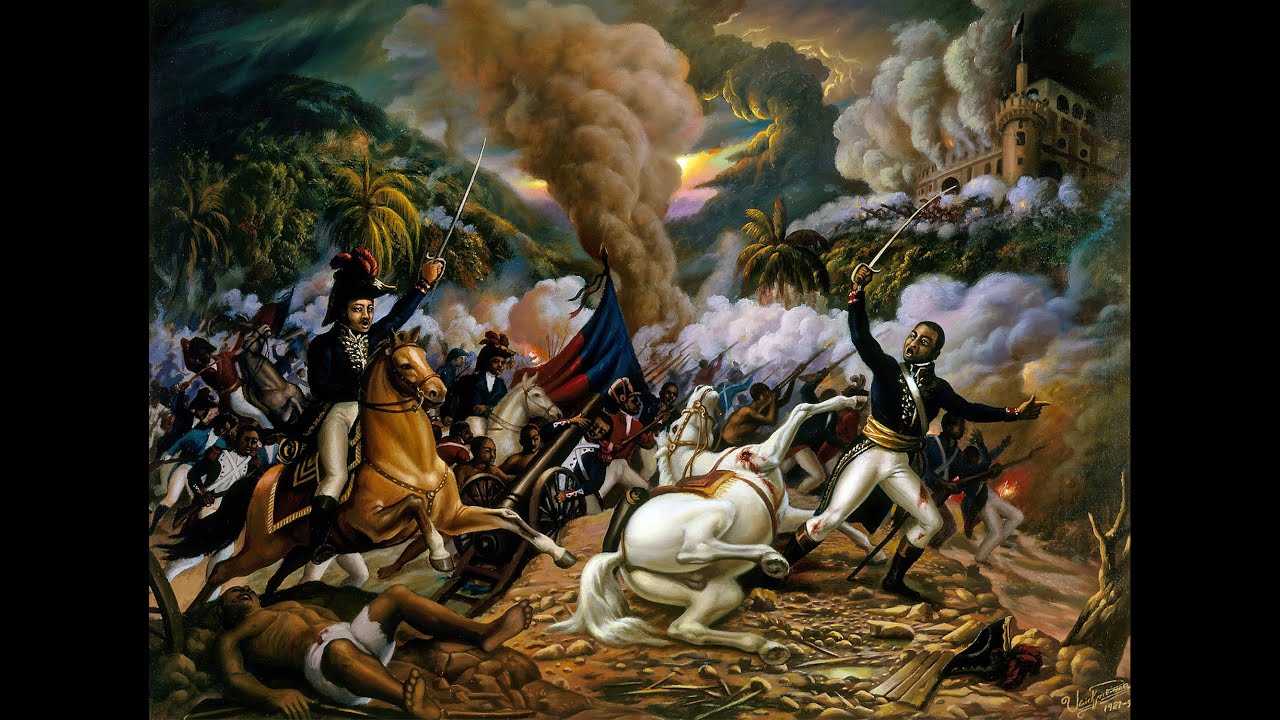
Battle of Vertières (1803): The Victory That Ended Slavery in Haiti
@NeferkareDessalines
2.3K views•2022-11-18

The Great Schism of 1054: Causes and Consequences
@SacredCathedrals
113.5K views•2026-02-19

The Life and Empire of Mansa Musa: West African History
@PeopleProfiles
1.7M views•2024-02-25

Understanding the Cold War: Superpower Conflicts and the Road to Détente
@OverSimplified
46.1M views•2019-01-24
Related Study Plans & Knowledge Roadmaps
Structured learning paths in History