











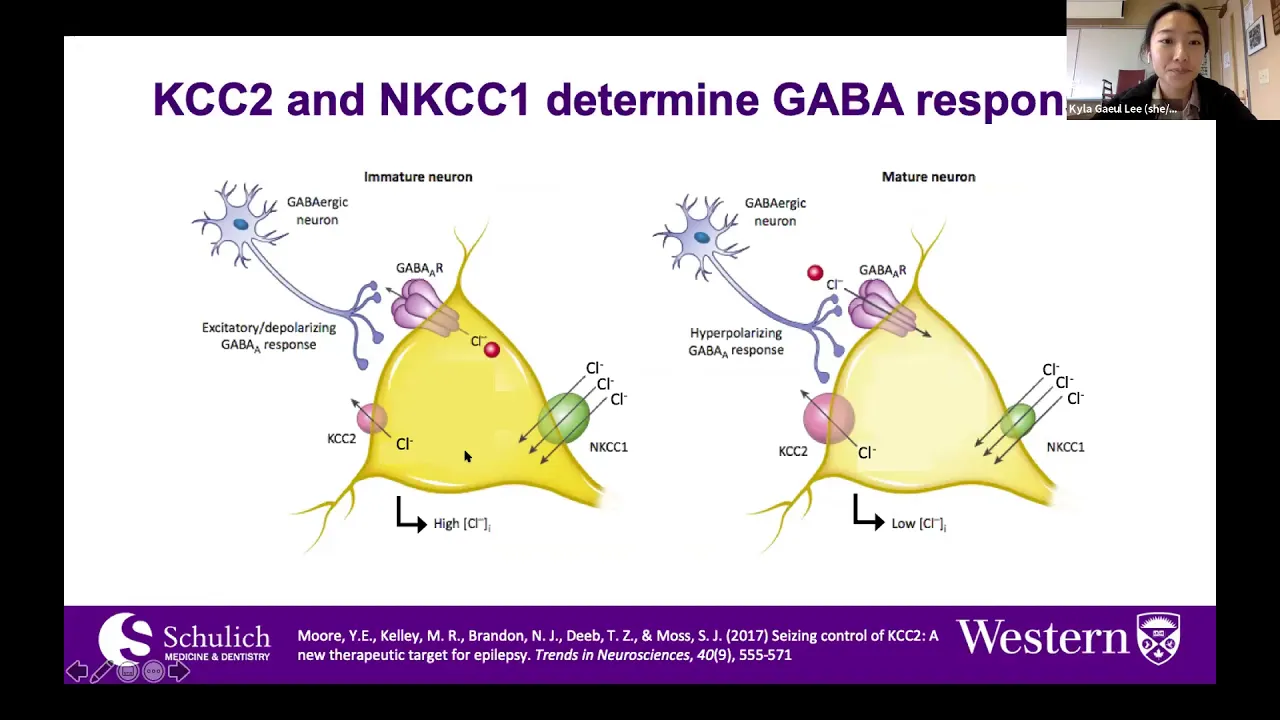




GABA (gamma-aminobutyric acid) is the principal inhibitory neurotransmitter in the central nervous system, synthesized from glutamate by glutamic acid decarboxylase and acting through two main receptor types: ionotropic GABAa receptors (ligand-gated chloride channels that hyperpolarize neurons by allowing chloride influx when the chloride equilibrium potential is below resting membrane potential) and metabotropic GABAb receptors (which inhibit postsynaptic cells either by opening GIRK potassium channels or blocking presynaptic calcium channels); GABA can also produce shunting inhibition when chloride equilibrium potential equals resting membrane potential, which reduces excitatory input by providing an alternative pathway for positive ions to exit the cell, and its excitatory or inhibitory effects depend on the developmental stage due to changes in chloride transporter expression (NKCC1 in immature neurons vs KCC2 in mature neurons).
GABAergic Synaptic Inhibition: GABAa, GABAb, and Shunting Inhibition | Neuroscience
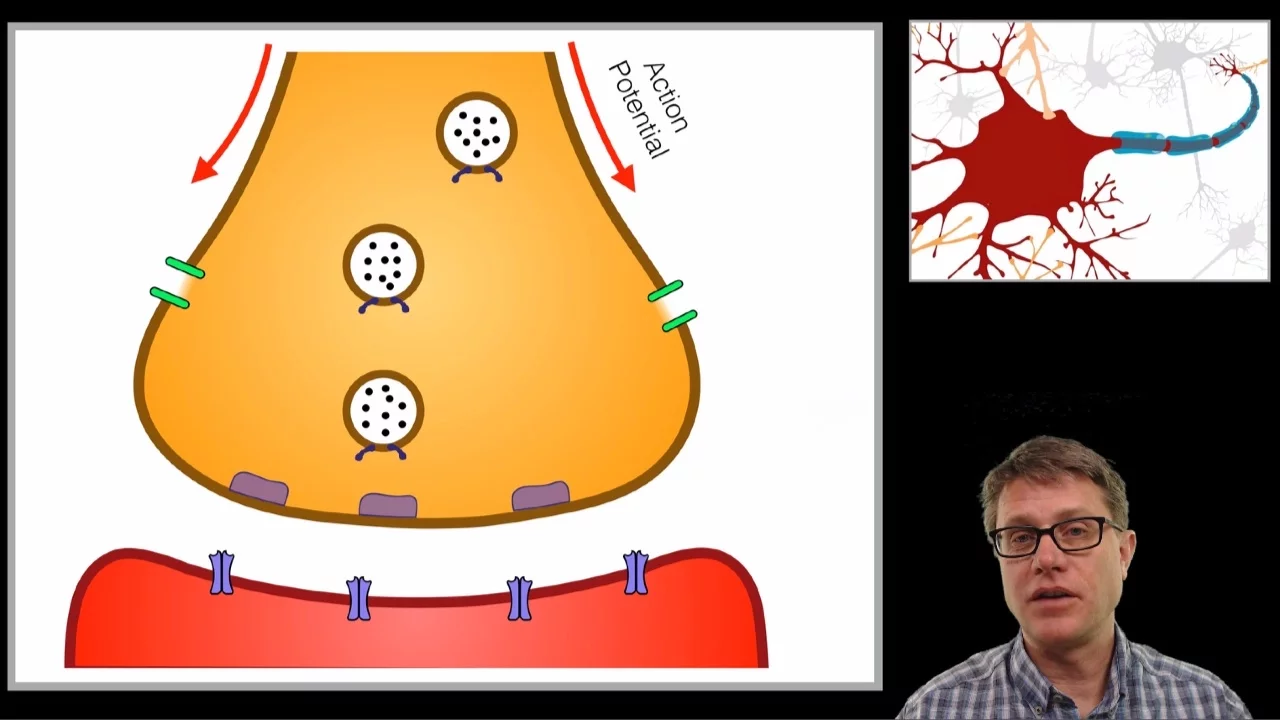
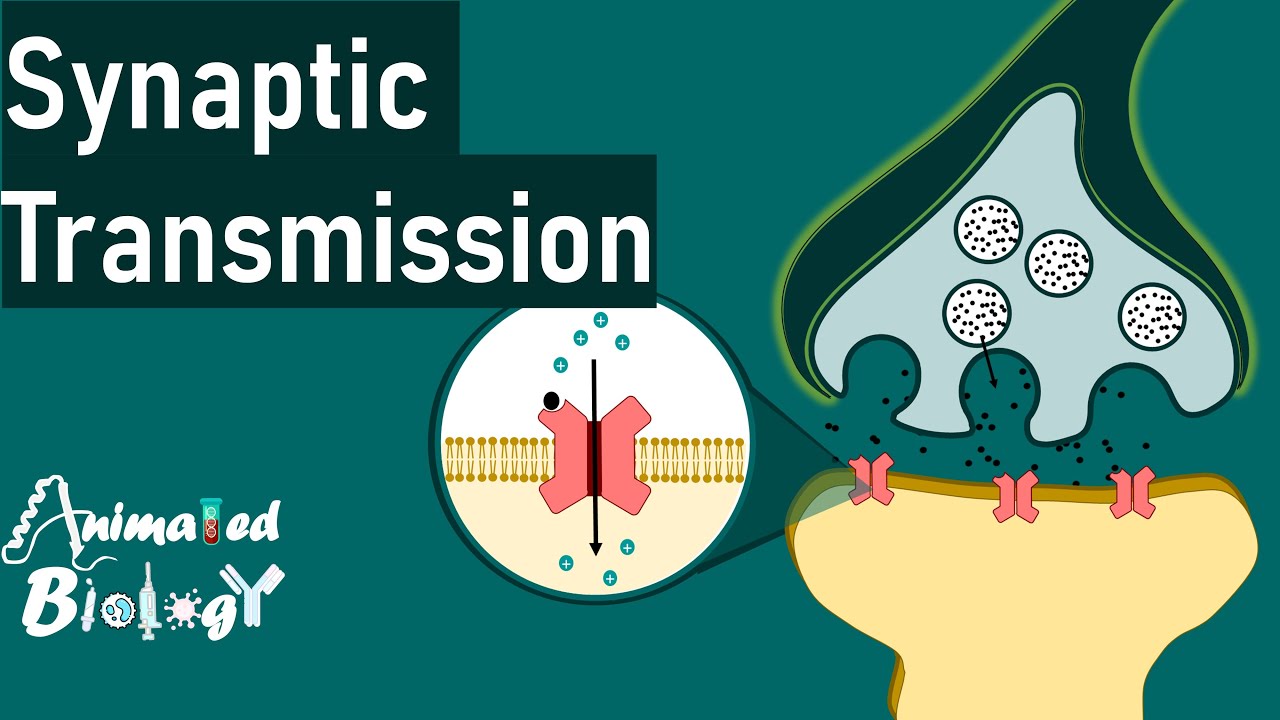
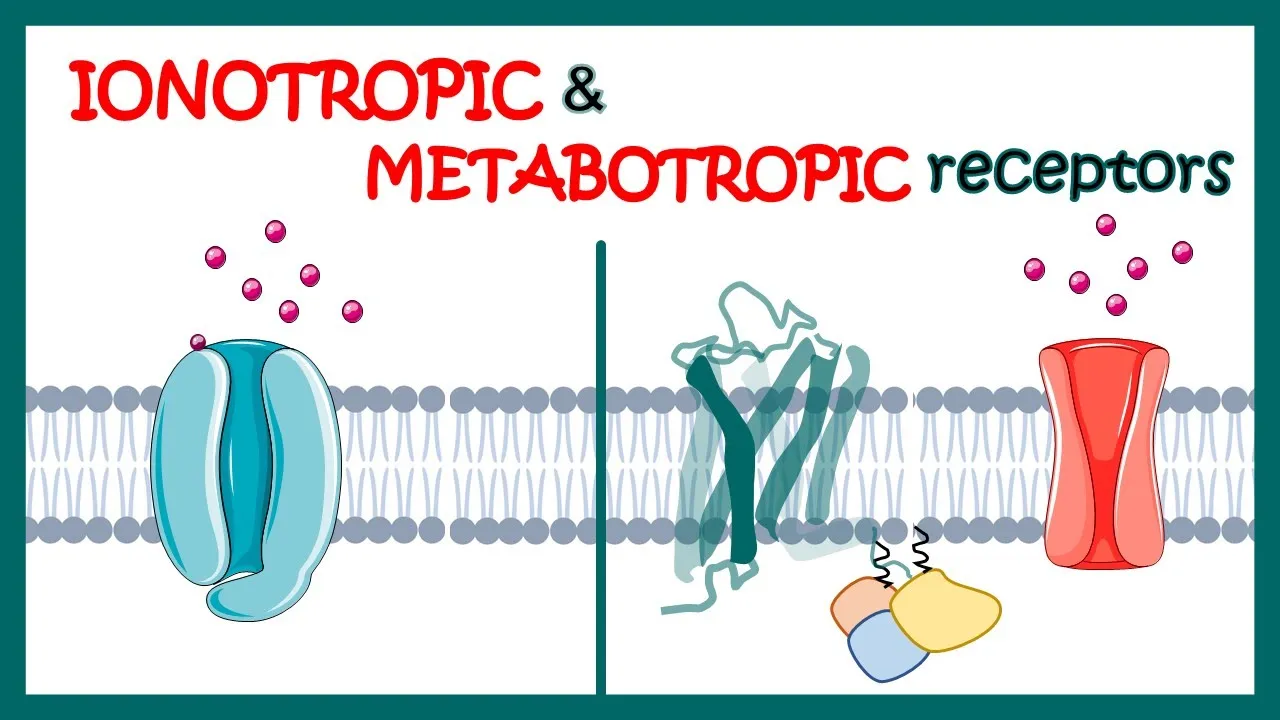
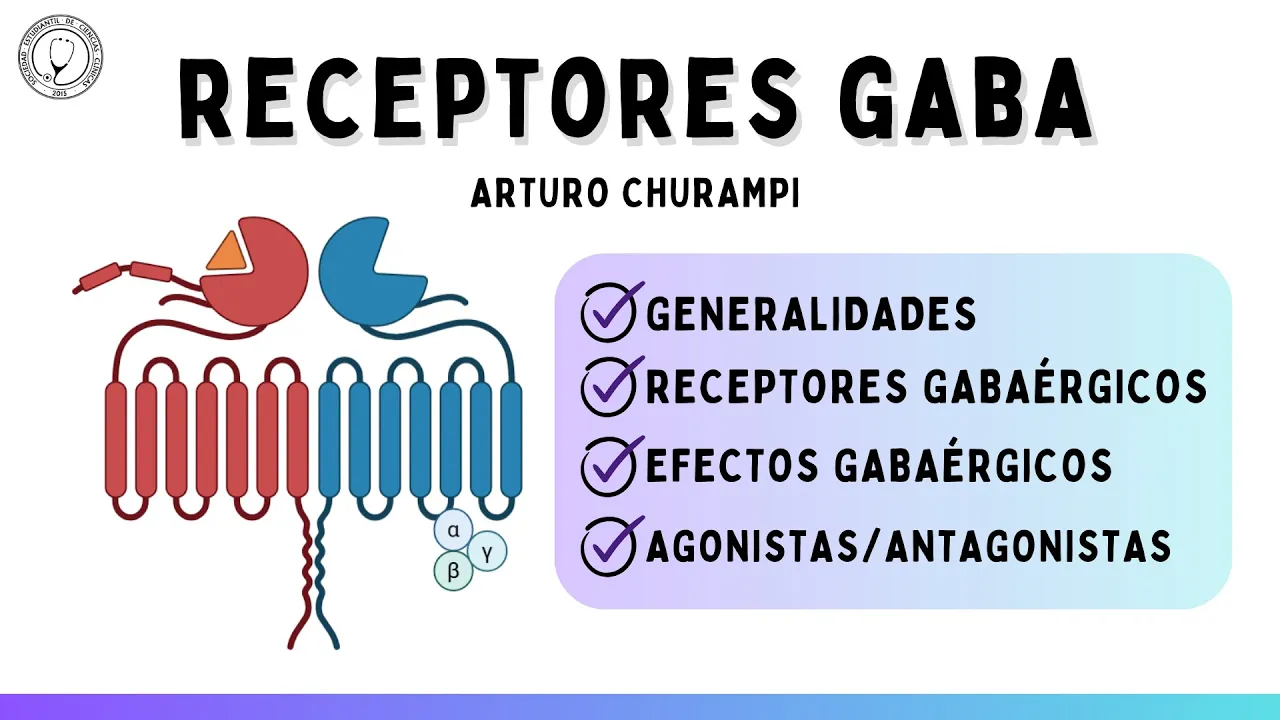
Added:foreign [Music] with glutamate now covered we can move on to the next neurotransmitter if you recall from the start of this section one huge difference between neurons in the central nervous system and neurons at the neuromuscular Junction is the fact that neurons in the central nervous system can have an excitatory or inhibitory output on the postsynaptic cell accordingly given that we've established that glutamate is the main excitatory neurotransmitter we need to now consider what is the main inhibitory neurotransmitter the main inhibitor neurotransmitter in the central nervous system is gamma aminobutyric acid or simply Gaba to understand this neurotransmitter let's first consider its synthesis and Signal termination mechanism and then we'll discuss the postsynaptic receptors as well as what inhibition it provides to the nervous system all right so just like the other neurotransmitters we've covered Yaba is synthesized and packaged at the presynaptic terminal interestingly enough it turns out that Gaba is synthesized from glutamate and this reaction is catalyzed by an enzyme named glutamic acid decarboxylase or simply gal as a noteworthy fact forget to properly function it requires a cofactor named pyridoxyl phosphate which is derived from vitamin B6 hence a deficiency in this vitamin could lead to problems with Gaba Communications in the nervous system now since Gaba is made from glutamate you will notice that there will be a lot of overlaps between the synthesis and the reuptake process of Gaba in comparison to glutamate nonetheless let's continue with the mechanism after synthesis Yaba is transported into the synaptic vesicles via the vesicular inhibitory amino acid transporter or vigat vgat uses the gradient of protons that is generated by vatpas to import Gaba inside the vesicles after action potential propagation and calcium mediated exocytosis of the vesicles the Gaba molecules are released in the cleft and interact with postsynaptic receptors to remove Gaba from the synaptic cleft inhibitory synapses also from tripartite synapses with astrocytes astrocytes and presynaptic terminals have particular Gaba Transporters named got that co-transport Gaba with sodium inside the Java that directly returns to the presynaptic terminal can get recycled or broken down if it is not needed in the astrocyte Gaba gets reconverted into glutamate by God the same enzyme that did the opposite reaction in the presynaptic terminal this glutamate is then converted into glutamine by glutamine synthetase the glutamine can then leave the astrocyte by the system and transporter and return into the cell to the system a transporter the two Transporters co-transport sodium with glutamine when glutamine is inside the presynaptic terminal it gets reconverted into glutamate by glutaminase which completes our reuptake cycle when Jabba is in the synaptic cleft it can interact with both ionotropic and metabotropic receptors The anotropic receptors for Gaba is named Gaba a and the metabotropic receptor is named Gaba B let's start with the ionotropic channel first I want to briefly discuss the structure of the Gaba a channel because it turns out that it has a very similar structure to the nicotinic acetylcholine receptor indeed the Gaba a channel is a pentamer usually composed rf2 Alpha 2 Beta and one Gamma or Delta subunit to open Gaba a channels there are two binding sites in between the two alpha and beta subunits that upon Gaba binding opens the pore when the port opens the receptor conducts chloride inside the cell but we'll come back to that aspect shortly another important structural aspect of this channel is that in comparison to the nicotinic acylcholine receptor which had negatively charged acidic residues near the pore the Gaba a receptor has positively charged basic residues which makes the channel selective for anions like chloride instead of cations now in terms of agonists and antagonist Gaba a channels are highly targeted by several types of drugs some notable drugs include benzodiazepines barbiturates and alcohol all these different drugs in Gaba bind to different sites on the receptor but all of them cause the receptor to open or at least increase the likelihood of being open for example it is known that benzodiazepines bind between the alpha and Gamma subunits yet on their own they do not activate the channel completely however when Jabba is bound and benzodiazepines are also bound the activity of the channel is considerably increased which considerably enhances the effects of the Gaba a receptor alright now in terms of its function the Yaba a receptor is essentially a ligand-gated chloride Channel this means that when two molecules of Gaba bind the receptor opens a path for chloride ions to flow if you recall from some of her first discussions the respective concentrations in and out of the cell for chloride are about 4 in 110 millimolars this imbalance in concentrations already hints at the fact that chloride will be driven to enter the cell purely from its chemical gradient from the nursed equation we can compute that the equilibrium potential of chloride is about negative 87 millivolts recall that the equilibrium potential is the value at which the chemical and electrical gradients of chloride are balanced such that there is no net current going across the membrane to visualize the equilibrium potential value better we can plot the IV curve of chloride from the conventions that we have established remember that positive current is called outward and is hyperpolarizing whereas negative current is called Inward and represents depolarizations hence at resting voltages above negative 87 millivolts the produced current is hyperpolarizing and Below negative 87 millivolts the current is depolarizing to see the effects of Gaba a receptors on postsynaptic Partners let's consider a plot of the membrane potential as a function of time for a neuron that has a resting membrane potential of negative 70 millivolts when jabber a receptors open the entry of chloride into the cells pushes the membrane potential towards the equilibrium potential of chloride because this hyperpolarization stems from a synaptic event it is also often referred to as an inhibitory postsynaptic potential or simply ipsp which directly opposes excitatory postsynaptic potentials or epsps that we've previously covered with glutamate and acetylcholine when this synaptic event happens alone and the equilibrium potential of chloride is below the resting membrane potential this is considered to be the typical form of inhibition but a different form of inhibition can occur under different conditions this form of inhibition is named shunting inhibition and to understand it let's consider the plot for the membrane potential as a function of time in cases where shunting inhibition occurs there are generally two features that cause it to happen first the equilibrium potential for chloride closely equals the resting membrane potential so for the purposes of this example imagine that the equilibrium potential for chloride now equals negative 70 millivolts the second aspect that is present is an excitatory input and here for this example we will assume that it comes from a glutamate receptor empa remember that the equilibrium potential of the ampa receptor is near zero because the channel is a non-selective cation channel for sodium and potassium now if the Gabba channels were to open the loan there would be no net current coming from them because the cell is already at the equilibrium potential for these channels inversely if the Amper channels were to open alone their activity would increase the membrane potential towards their own equilibrium potential to reach the threshold now here is where it gets interesting if both channels open simultaneously the excitatory input by the ampa receptor will be lessened in comparison to when it opens alone because the Gaba 8 channels essentially shunt the depolarization towards the resting state indeed when the two channels open you can almost imagine their combined activity as a tug of war and in this instance the Gabba Charles pulled the Empire activity down another way of conceptualizing shunting inhibition is to think about Java receptors in terms of positive charges indeed in terms of depolarizations in hyperpolarizations the activity of positive and negative charges are a bit interchangeable if we inverse their directions hence instead of thinking about negative ions entering the membrane we can imagine the Gabba channels as channels that let positive ions flow out of the cell now due to the fact that currents must always flow in closed Loops you can imagine that when the two channels are activated together the Gaba channels offer an additional path for the positive charges that have entered from ampa to leave again as a result the depolarization is shunted alright as a final comment about anotropic Gaba receptors I want to mention that although gabber is usually covered as an inhibitory neurotransmitter we are assuming that we are talking about a matroneuron because in the developing brain Gaba forms excitatory connections to understand how this can occur remember that whether a channel produces inhibition or excitation is purely a product of the ionic concentrations in which the neuron is baited in early in development the chloride concentrations are mainly controlled by the nkcc co-transporter which transports one sodium one potassium and two chloride ions inside the cell as a result the internal concentration of chloride is very high and its equilibrium potential becomes higher than the resting membrane potential thus when Java receptors open chloride ions leave the cell and cause a depolarization in mature neurons however the nkcc co-transporter gets down regulated and a new transporter by the name of kcc2 gets expressed kcc2 exports one potassium and one chloride out of the cell which makes the internal chloride concentration very small as a result the equilibrium potential for chloride becomes more negative and the IV curve shifts below the resting membrane potential now when the Gaba receptor is open it causes a hyperpolarizing current due to Chloride efflux for that reason you can see that inhibition and excitation comes from the reversal potential of the ions that flow through the channels and not necessarily from the structural properties of the channels themselves now that we have a good idea of what is going on with ionotropic channels let's discuss the metabotropic Gaba B receptors these receptors are generally associated with two main mechanisms of action although I am more than certain they mediate many more nonetheless let's cover the two that are the most common the first mechanism from gabapy channels is actually very similar to one we've covered for the miscarinic acetylcholine receptors and the metabotropic glutamate receptors this mechanism acts through the gig protein and mediates the activation of gerk potassium channels to inhibit the postsynaptic cell indeed given that the reversal potential of potassium which is about negative 80 millivolts is always below the resting membrane potential the opening of these channels causes an efflux of potassium that hyperpolarizes the cell the activation of these channels comes from the dissociation of the beta and Gaba subunit during gig protein activation the second mechanism occurs on the presynaptic side and here again the gig protein is used when the G protein gets activated the dissociation of the beta and gamma subunit from the alpha causes the blockage of presynaptic voltage-gated calcium channels given that the calcium channels are essential for transmitter release the blockage of these channels prevents neurotransmitters from being released and signaling onto the postsynaptic cell hence this presynaptic blockage leads to a postsynaptic inhibition now based on what we've discussed on the ionotropic and metabotropic channels we can establish that there is three General ways to inhibit the postsynaptic cell the first is through the action of the Gaba a receptor which hyperpolarizes the cell by letting chloride ions enter this form of inhibition includes the shunting inhibition we discussed as well the second way to inhibit the postsynaptic cells is through the activation of postsynaptic gerk channels by Gaba B activation and the Third Way is by preventing or at least diminishing presynaptic release by blocking presynaptic calcium channels Again by Gaba B activation before I conclude my discussion on inhibition I want to briefly mention that there is another important inhibitory neurotransmitter by the name of glycine Beyond being an important cofactor for nmda Activation glycine is the major neurotransmitter released by interneurons in the spinal cord this neurotransmitter acts on ionotropic channels and these channels behave in the same way as Gaba a receptors do they are ligand-gated chloride channels alright now that we have covered acetylcholine glutamate Gaba and glycine I want to move on to another category of neurotransmitters which are called biogenic amines there are five well-established biogenic amines dopamine norepinephrine epinephrine serotonin and histamine laughs thank you for watching this video if there was anything unclear or there was a mistake somewhere in the video make sure to let me know in the comment section if you enjoyed this video and found it useful you can consider leaving a like and subscribing to support the channel on the right you will see the informational resources that I've used to produce this video thank you again for watching and I'll see you in our next discussion [Music] thank you foreign
Up Next

Inhibitory Gating in the Dentate Gyrus: Synaptic Plasticity and LTP | Computational Model & Experiments
@IFISCseminars
220 views•2018-11-14
Deciphering Neural Circuits Controlling Anorexia in Mice | Richard Palmiter
@AllenInstitute
2.3K views•2011-10-10

Vagus Nerve (CN X): Anatomy, Nuclei & Functions Explained
@Alilamedicalmedia
305.2K views•2022-10-31
How Exercise Benefits Your Brain: Science Explained
@TED
11.4M views•2018-03-21
Related Study Plans & Knowledge Roadmaps
Structured learning paths in Neuroscience