














![MAIOR UNBOXING DO CANAL: LIVROS NOVOS DE JULHO [2021] | BOOK ADDICT](https://i.ytimg.com/vi/-OTrc84R-34/maxresdefault.jpg)








![[랜선투어 - 작품설명] 오르세 미술관 랜선투어 - 1부](https://i.ytimg.com/vi/sxNMkWb5yrw/maxresdefault.jpg)
Richard Redgrave's 1844 painting 'The Sempstress' exemplifies Victorian 'modern life paintings' that used religious iconography to evoke sympathy for distressed needlewomen, reflecting contemporary fears about women entering the workforce during industrialization; the painting depicts a middle-class woman working alone in a garret, illuminated like a saint, symbolizing the limited employment options available to Victorian women and the ideological construction of narratives warning against women's economic independence.
Redgrave's The Sempstress: Victorian Social Realism, 1846
Added:Understanding the socio-economic impacts of the Industrial Revolution in 19th-century England, particularly urbanization and the rise of factory and sweatshop labor.
Familiarity with the Victorian gender ideology of 'separate spheres' and the limited, often perilous economic opportunities available to working-class or distressed middle-class women.
The definition and core characteristics of Social Realism in art and literature, specifically its rejection of idealized, mythological, or historical subjects in favor of contemporary social critique.
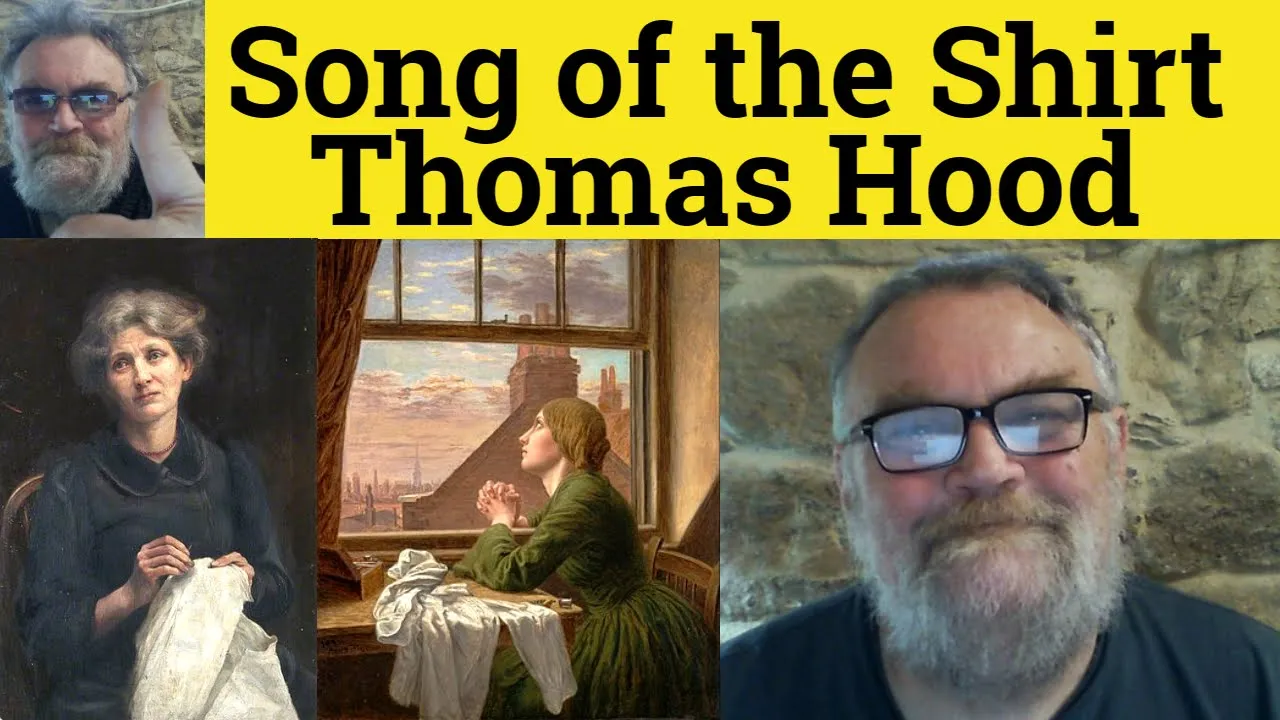
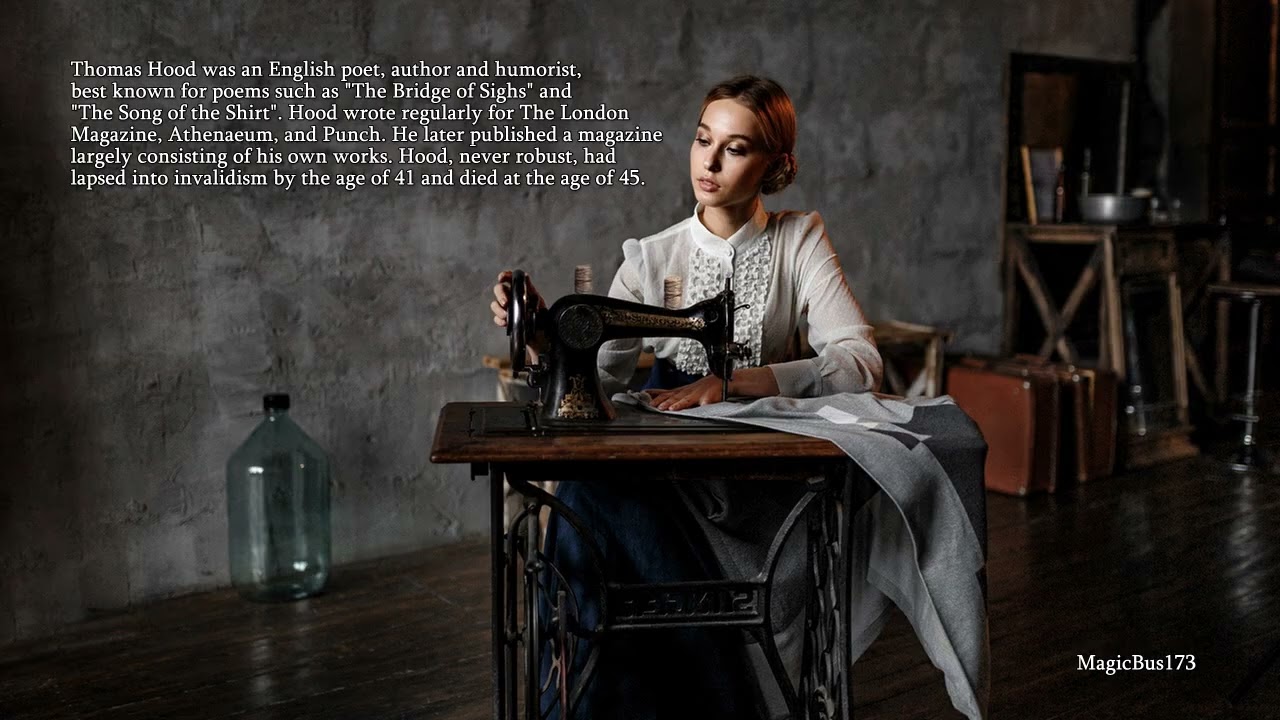
An introduction to the contemporary public outcry surrounding the 'sweated trades' in 1840s Britain, including literary influences like Thomas Hood's famous 1843 poem 'The Song of the Shirt'.
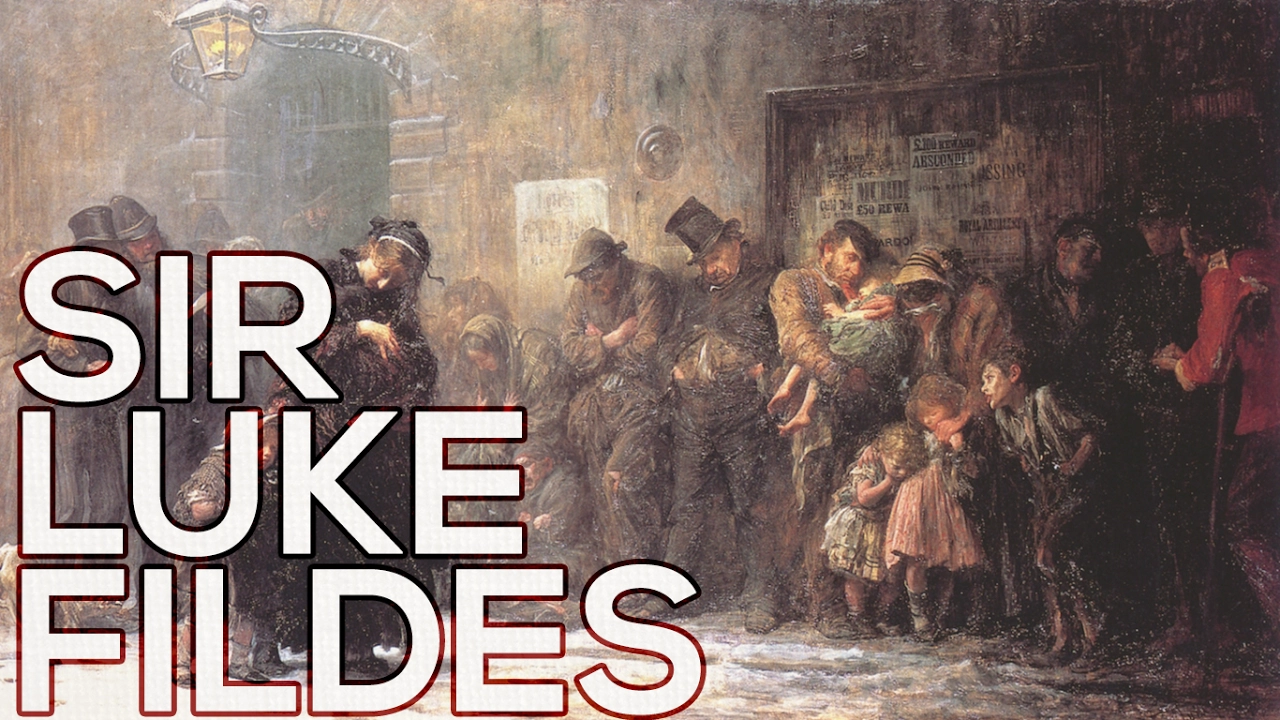
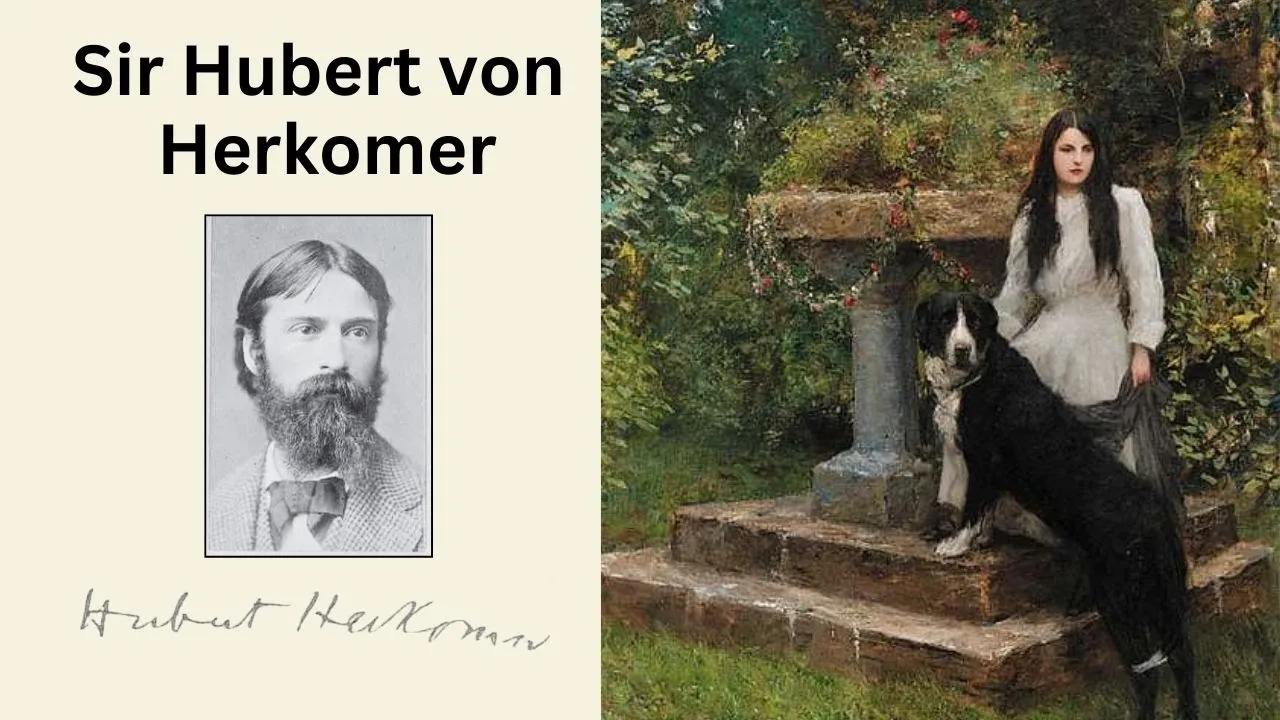
Comparative analysis of other Victorian social realist painters, such as Luke Fildes, Frank Holl, and Hubert von Herkomer, to examine how themes of poverty and labor evolved later in the century.
Exploring the intersection of Victorian visual art and reformist literature, analyzing how authors like Charles Dickens and Elizabeth Gaskell addressed similar themes of industrial exploitation.
Investigating the historical legislative reforms, labor movements, and early feminist activism that emerged in response to the exploitation of female workers in industrial England.
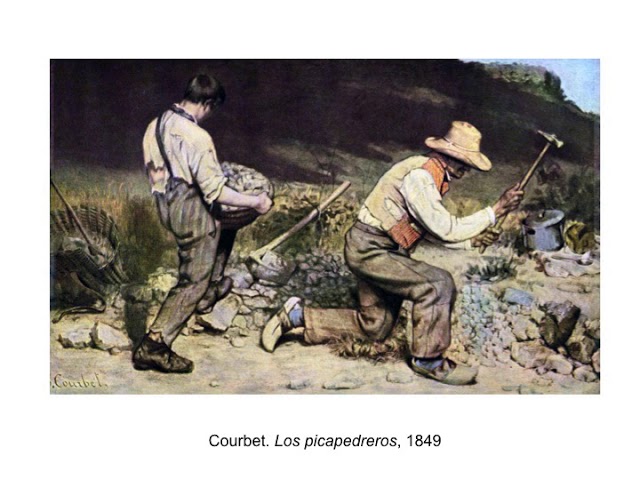
Comparing British Social Realism with French Realism of the same era, examining the works of Gustave Courbet and Jean-François Millet to understand regional differences in artistic protests against class inequality.
3.2K views27likes10:26Original Release: 2011-10-22
(jazzy piano music) - [Woman] So we're looking at Richard Redgrave's painting of The Sempstress from 1844.
- [Man] This is English.
- [Woman] Yes, we're in Victorian England, early Victorian England.
Victoria took the throne in, I think, 1837.
- [Man] And would we suppose that this is London?
- [Woman] It's a city certainly, and most likely London, which we can see out the window.
- [Woman] Is that a dorm room window?
[Woman] Yeah she's in a garret.
- In the garret, yes. - Yeah.
- [Man] And actually out the window you can see another light rather similar.
- [Woman] Exactly, so there's sort of a presumption that there are other women in other attics, also sewing until their their fingers bleed and they can't see anymore and they're weak and they haven't eaten.
A sort of category of women called distressed, that people referred to as distressed needlewomen.
- Really? - Mm-hmm.
- [Man] So this would have been a woman of the lower class then?
And so can you talk, tell us a little bit about her circumstances.
- [Woman] Not necessarily, she could have been a woman from the middle class and been reduced.
So that, for example, maybe she lived in the country and her father was a tradesman or a farmer and he lost his livelihood in some way or maybe her father died and she was forced to enter the work world.
Actually it's almost always women who were middle class or even upper middle class who were thrown onto the vagaries of the job market during this period.
- [Man] So one can identify very specific details of her circumstances, but it looks like Redgrave was using a lot of tropes of Christian art.
She's illuminated from without very brightly.
She looks up, she looks like a saint.
- [Woman] Yup, she certainly looks to be kind of appealing to God almost to save her, I think.
And in all these narratives, she would have moved in a pretty straight line from being reduced in her circumstances because if she was truly working class she wouldn't have become a seamstress.
If she was truly working class she probably would have become a domestic servant as a woman thrown onto the job market.
But being an upper class or middle class or higher level than a working class woman then she would have chosen this or being a governess to make money and so it really speaks to the limited opportunities, employment opportunities for women in the 1840s, which a lot of other women were writing about at this time.
- [Man] This trope and in a sense the sympathies and fears that this is meant to elicit would have been something that would have been recognizable to the public at this time.
- [Woman] Yeah, I mean this is, they were reading about these women in the newspapers.
And so the narrative went from her being reduced to maybe becoming an apprentice in a dressmaking shop and then ending up working in this lower end of the needlework trade, getting outwork sewing men's clothing and then the next step would have been being tempted into a life of, I use this word kind of loosely, prostitution, maybe cohabiting in order to pay the bills, maybe even real prostitution, and then often the last step was death.
- [Man] Some kind of consumption, yeah?
- [Woman] That all, right this, - [Man] Yeah?
Not necessarily?
- [Woman] Consumption and death.
There was a kind of standard narrative that went along with these images that I think was not entirely real, but a kind of ideological construction, kind of reinforced the dangers of what would happen to women when they entered the world of waged labor.
- [Woman] So is this a sort of moralizing?
- [Woman] Yeah, I think it's definitely meant as a kind of, it's safer for everyone if we keep women home and women don't have to work.
That was certainly one way of looking at the image.
Another kind of more feminist way of looking at the image would say, well actually this points to the need to make real employment opportunities for women, like someone like Anna Jameson would have written about that, about expanding the possibilities.
- [Man] So did this kind of narrative have an impact?
Was there any kind of societal response?
- [Woman] The artist certainly, I mean he wrote that he hoped to raise consciousness about these women.
And this is part of a whole group of paintings from the 1840s that art historians call modern life paintings.
The 1840s were a really bad period of economic depression and working class unrest, and so you find a lot of artists interested in sort of contributing to a kind of social reform that needs to take place.
So there was certainly the hope that that would happen.
These images, actually Redgrave's sort of iconic image, repeats in various forms throughout the 19th century.
I mean the issue of sweated labor is still a really powerful one for us today.
I don't think we've solved the problem of how do you make clothing really cheap for a really large mass middle class that wants to buy really cheap clothing, and so if you wanna buy really cheap clothing someone has to be paid really little to make it.
Before this people would have bought their clothing from a tailor, if you were upper class, and if you were middle class you got kind of hand-me-downs and if you were working class you bought, you also got hand-me-downs or you modified clothing that you got given or bought rags from the rag picker.
But now all of a sudden at this point you have an enlarged middle class that wants to buy ready-made clothing and you can't pay a unionized tailor to make a shirt that you sell for 20 p.
So you employ women.
- [Man] Who would have been looking at the emerging genre of the modern life painting?
Is this a salon painting or was this exhibited in an another venue?
- [Woman] No, this was exhibited at the Royal Academy and all these paintings were exhibited at the Royal Academy.
So these are definitely appealing to your normal sort of upper middle class, middle class audience with the idea of motivating some kind of reform, and there were lots of answers.
I don't think any of them worked.
Like for a while they thought, okay we'll just get all the seamstresses together and we'll move, we'll ship them to Australia was one.
There was an actually an emigration society for distressed needlewomen.
'Cause the idea was that if you had all of these single women on the job market, this is how they were gonna end up and so better to emigrate and to get them jobs somewhere else.
- [Man] It's interesting just how consciously the narrative was posed in a sense, and all of the other ways in which we generally talk about a painting are subsumed by the directness and the heavy-handedness of moral tale that's being told and I guess it's really just so deeply embedded in the fears of this moment and the importance of this social structure and the fears of that social structure breaking down.
- [Woman] Breaking down yes.
That's what this whole image is about really, is a kind of fear of a kind of patriarchal culture and a culture based on the work of artisans that's breaking down under the pressure of factories and, - Industrialization. - And industrialization.
- [Man] And the vex question for men at the time of women entering into the public sphere and this new economy, it's also strangely domestic here as well.
I could say not strangely and therefore being represented-- - [Woman] I think that's what made this image safe, is that instead of painting an image of a working woman in the mines, 'cause there were women working in the mines that were being investigated by parliament, but instead of showing those women half-naked trudging through the mines and really working class horrors, you could show an image that was much safer.
It was still an image of a woman in a domestic space, a garret, a kind of marginalized domestic space, but a domestic space nevertheless.
- [Man] Where she was safe and closeted away, but nevertheless there was the dangers implicit in that.
- [Woman] Right, and the idea of taking her and returning her to a rightful place in the home.
- [Man] Because if she was in the mine she would lose the sympathy of the audience.
Here she maintains that sympathy.
- Exactly. - Because she maintains her-- - [Woman] And also by being middle class she's like them and she also maintains their sympathy.
This is an incredibly sympathetic figure.
- [Man] So there's a kind of self-identification that can take place from the viewer whereas the worker in the mine that would have been too big a step away.
- Right too threatening. - Yeah absolutely.
- [Woman] This still has a semblance of relatable quality that you could look at it, it's a very sympathetic figure.
- [Man] It's interesting how the clock, is that a clock on the upper right?
- [Woman] Uh-hm.
- [Man] It almost replaces what we might expect to see as sort of a religious form.
Either a cross or some sort of?
- [Woman] But we're in England.
We're the Church of England.
- [Man] Yeah no, of course, no, no, no, right.
But we would expect to see if this was a Catholic environment, we would expect to see a cross or some sort of alter piece, so there is a kind of, the clock really functions there as some sort of adding some sort of moral dimension.
- [Woman] Yeah, well she's up through the night sewing.
- [Woman] That's the thing that defines her existence, time.
- Time, right. - That's right.
- [Woman] Finishing working all for the clock, right?
Everyone works, punches in and punches out.
- [Man] Working measure.
- [Woman] And that, of course, is the sort of the definition of the proletariat that Marx gives, right?
This clocking in and out.
- [Woman] It's a mechanical existence.
- Right. - And then also, just the sense of isolation.
- Yup, yeah. - That sense of aloneness.
- [Woman] In fact, women very often worked together or they worked in workshops as apprentices, but the vast majority of images show women alone in garrets.
Clearly the most sympathetic way to show them.
- [Woman] I think it would have been much more threatening if you show a group of women working communally.
- [Woman] Absolutely.
- [Woman] Much more risky.
This seems very safe.
(jazzy piano music)
Up Next

8:02
Romanesque vs. Gothic: Key Differences in Medieval Architecture
@AccessibleArtHistory
49.1K views•2022-09-11

114:18
Christian Iconography: History, Theology, and Meaning | Fr. Panayiotis Papageorgiou
@Trisagionfilms
58.8K views•2020-02-21

4:49
Hunt's The Awakening Conscience: Pre-Raphaelite Symbolism
@smarthistory-art-history
47.6K views•2012-04-02

16:34
Earliest Depictions of Jesus in Art: 10 Ancient Images Explained
@UsefulCharts
5.9M views•2022-06-03
Related Study Plans & Knowledge Roadmaps
Structured learning paths in Art History
art-history
Gothic Cathedrals: Engineering, Light & Society
01The Birth of the Gothic: Romanesque to Suger's Vision
02The Structural Triad: Pointed Arches, Ribbed Vaults, and Flying Buttresses
03Theology of Light: Lux Nova and Sacred Geometry
+ 2 more learning modules
14h5 modules
Explore Roadmap
art-history
Pre-Raphaelites: Realism, Symbolism & Critique
01The Victorian Art Establishment and Academic Formula
02The Founding of the PRB and Radical Realism
03Medieval Revivalism and Literary Symbolism
+ 1 more learning modules
8h4 modules
Explore Roadmap
art-history
Street Art: From Subways to Art Market
01Subcultural Origins in Philadelphia and New York (1970s)
02The Subway Era and Style Wars (Late 1970s - 1980s)
03The East Village Scene and Early Gallery Crossover
+ 2 more learning modules
10h5 modules
Explore Roadmap
art-history
Classic Maya Art: Iconography, Glyphs & Ritual
01Foundations of Classic Maya Visual Culture
02Deciphering Maya Hieroglyphs & Text-Image Integration
03Sacred Geography and Cosmological Architecture
+ 2 more learning modules
14h5 modules
Explore Roadmap