












![Fractales [Definición] Dimensión de Hausdorff - Autosemejanza](https://i.ytimg.com/vi/imShB29cWpo/sddefault.jpg)







![[다큐S프라임] - 자연에서 찾은 해답 - 생체모방기술 / YTN DMB](https://i.ytimg.com/vi/FT93FxXhU_g/maxresdefault.jpg)


Fractals are self-similar geometric patterns that repeat at different scales, appearing in diverse natural systems like trees, rivers, lightning, lungs, and blood vessels because fractal branching maximizes surface area within limited space, providing an efficient solution for organisms and natural processes to optimize resource exchange (sunlight, oxygen, nutrients, water) while minimizing energy expenditure.
Fractals in Nature: Why Trees, Rivers & Lungs Share Patterns
Added:Basic geometric concepts of dimension, scale, and ratio.
The fundamental concept of self-similarity, where a small part of a shape resembles the whole.
Basic biological and physical transport systems, such as how blood vessels distribute oxygen or how rivers collect runoff.
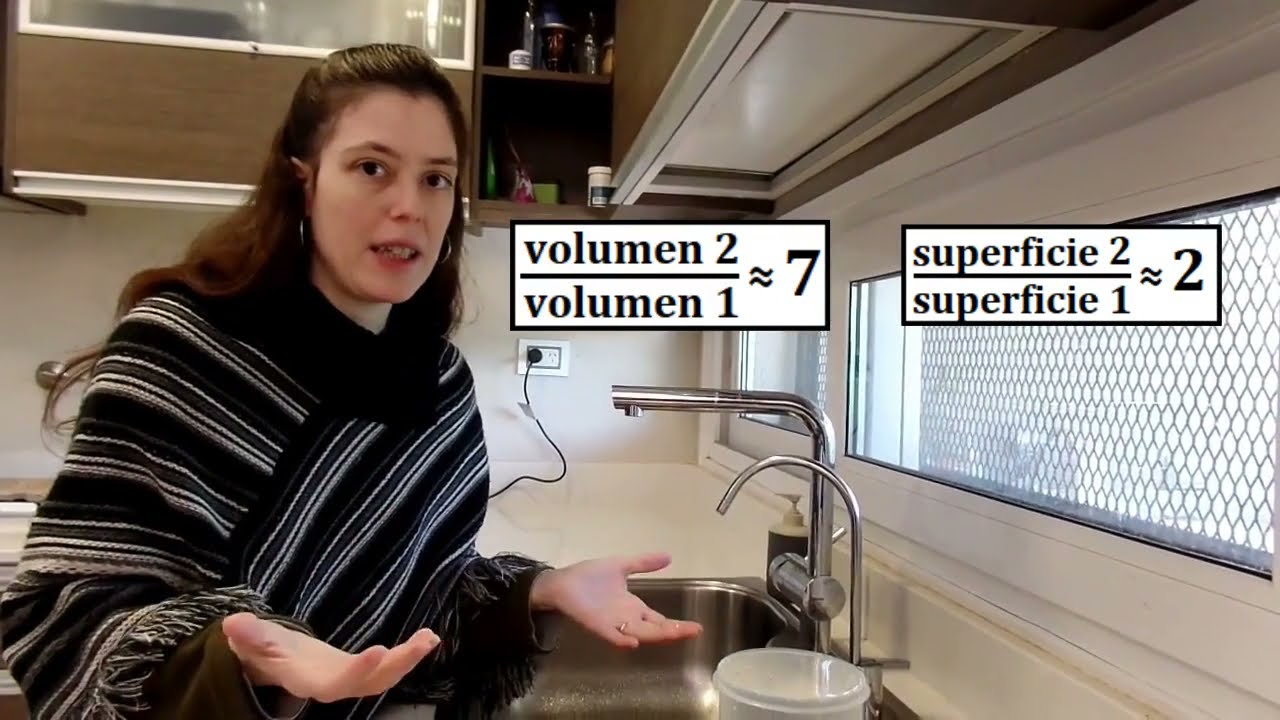
An introductory awareness of efficiency in nature, specifically how systems optimize surface area to volume ratios.
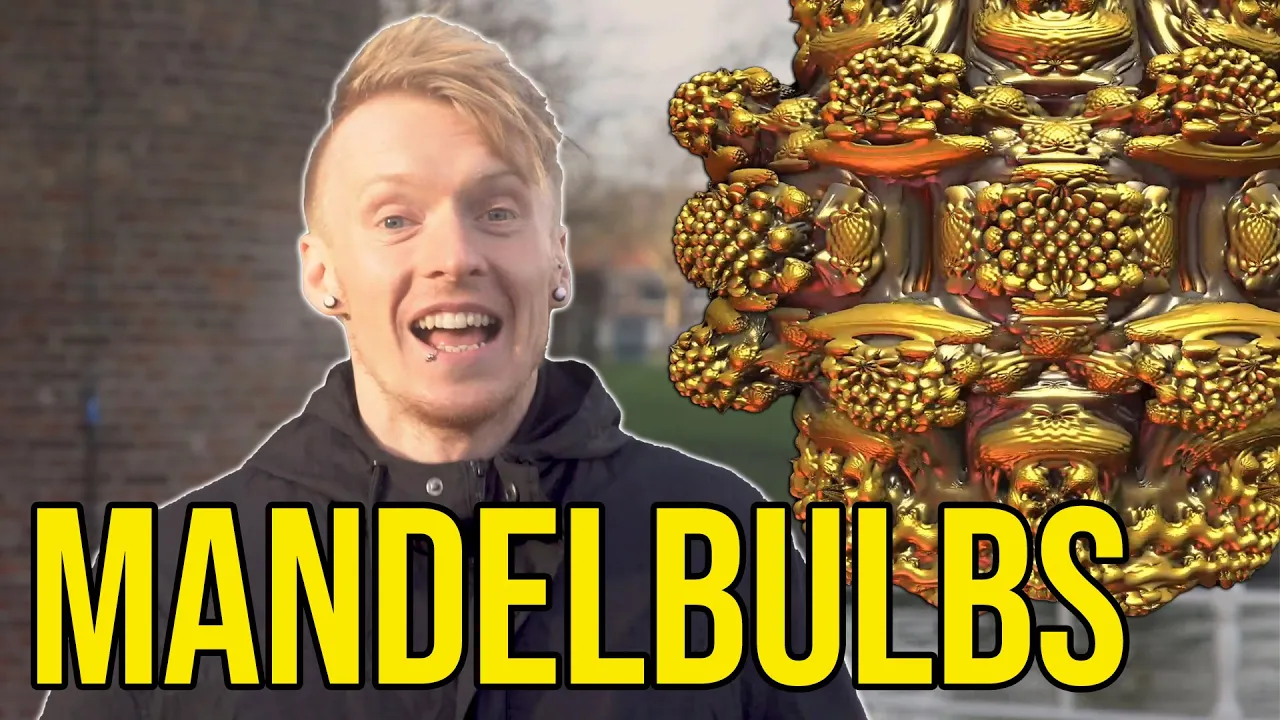
The mathematical definition of fractals, including fractal dimensions (such as the Hausdorff dimension) and the Mandelbrot Set.
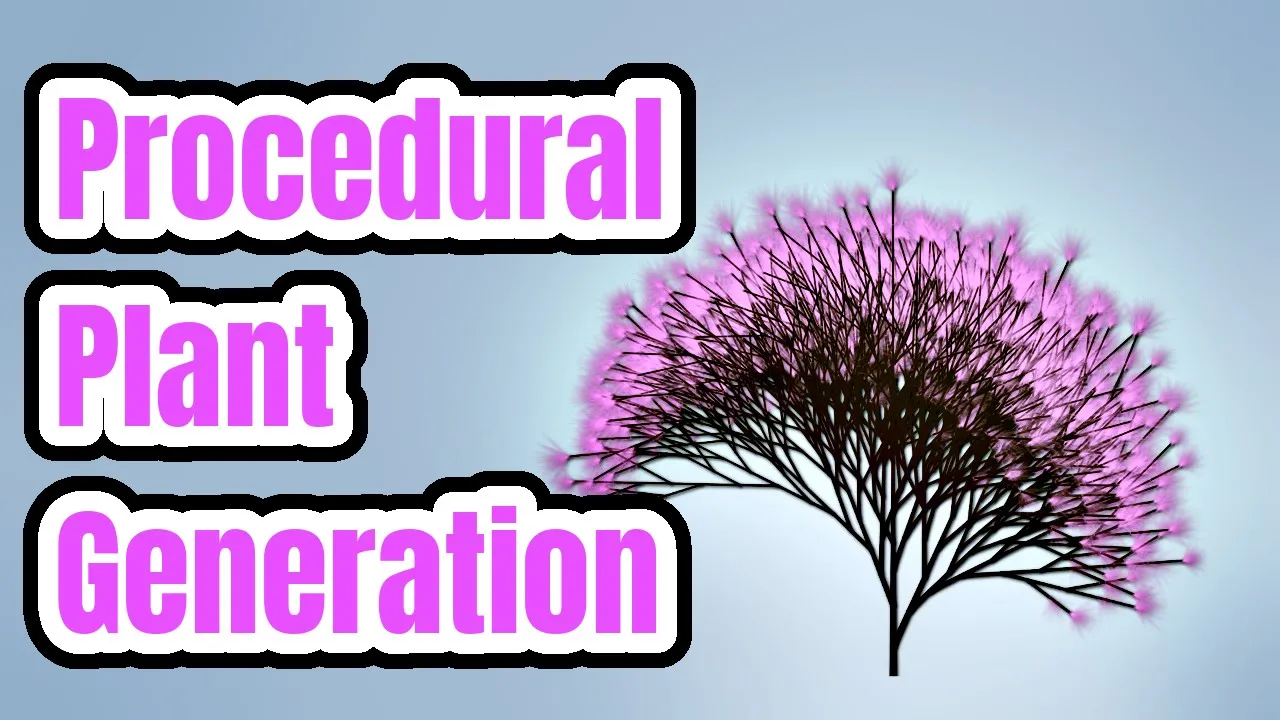
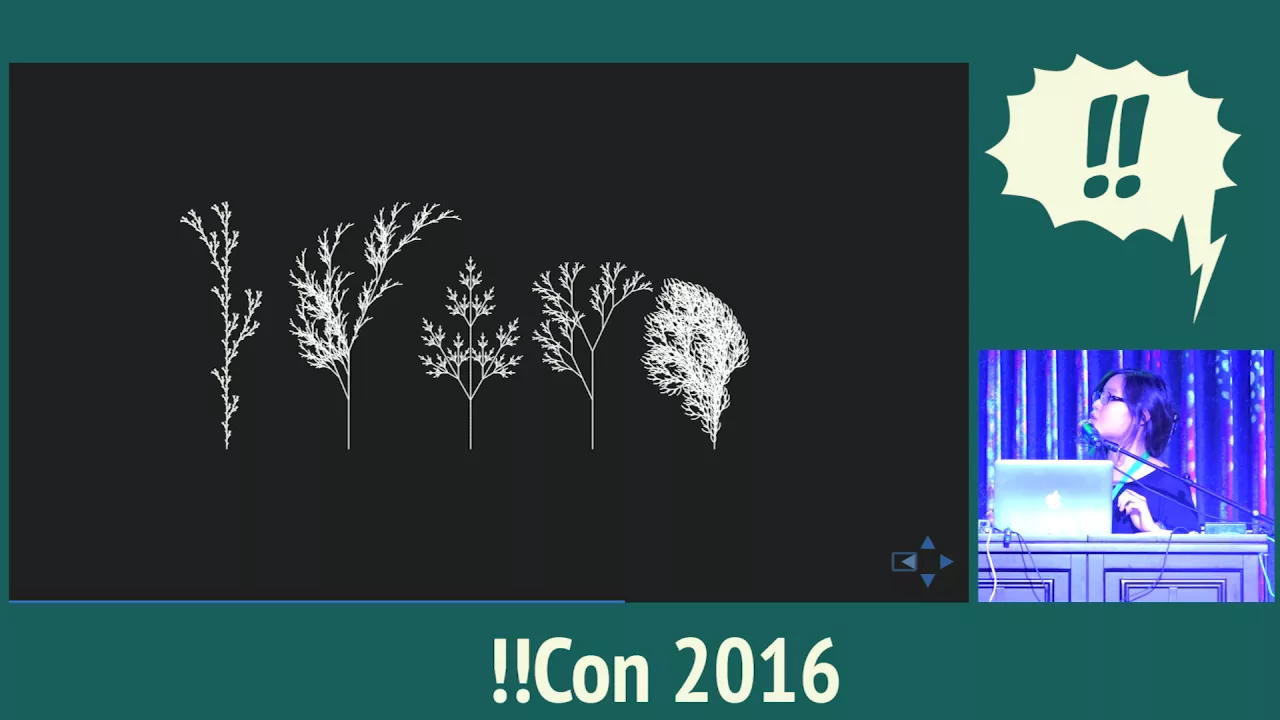
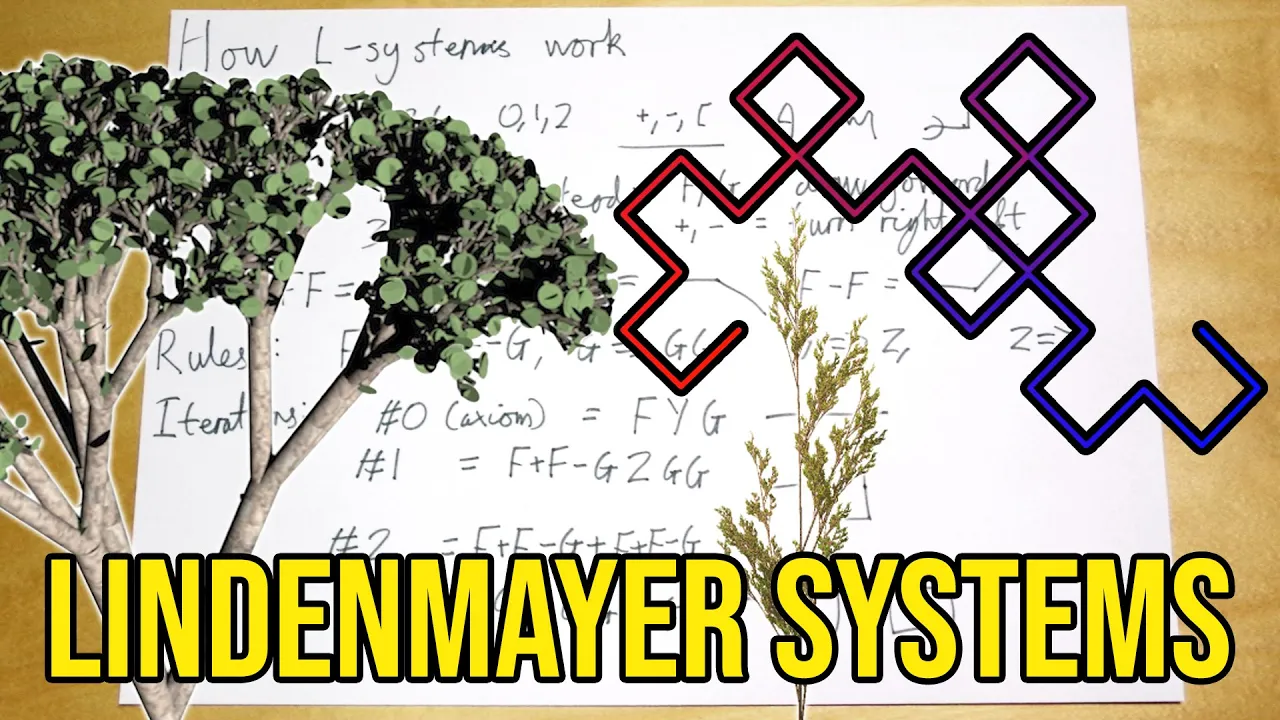
L-Systems (Lindenmayer Systems) used in computer graphics and biology to algorithmically model plant growth and branching.
Chaos Theory and non-linear dynamics, which explain how complex, unpredictable patterns emerge from simple mathematical rules.
Biomimicry and practical engineering applications, such as designing highly efficient solar panels, heat exchangers, or urban transit networks based on fractal branching.
1.1M views41.4Klikes11:14Original Release: 2024-07-18
- Hey, smart people, Joe here.
Ever notice how if you look at part of a tree, it looks a lot like an entire tree?
And why does this underground part of a tree look so much like the rest of the tree?
That's pretty weird.
This isn't a tree, but it sort of looks like one.
And so does this, hmm.
And these branches, sure look an awful lot like these branches, except those are blood vessels and so are these, which also kind of look like a tree, although this part reminds me of a river or maybe every river?
Lightning, lungs, cracks in the ceiling, what's going on here?
Why do all these things look so similar?
Once you start seeing it, you see it everywhere.
It haunts your dreams!
It's like there's some spooky connection between rivers and lightning bolts and broccoli and trees and all sorts of living and non-living things.
Well, all these objects have one thing in common, zoom in or out, and we see the same branching pattern repeat itself over and over at different scales.
These are fractals, a special kind of self-similar shape that mathematicians, and the rest of us, go extra crazy for.
And this video is about why we see them everywhere.
(pensive music) I don't know if you've ever looked at a tree as deeply as I have, but that weird thing where part of the tree also looks like a tree, that's called self similarity.
It's like one of those triangles with an infinite number of smaller triangles inside it or whatever this thing is.
And unlike the self-similar shapes we see in nature, these perfectly self-similar shapes are infinite.
We could zoom in or out and continue to see those patterns repeat forever!
Mathematician Benoit Mandelbrot named these self repeating shapes, fractals, because they exist sort of in between dimensions or in fractured dimensions.
What the heck does that mean?
Let's take a quick sidebar to talk about how the way that mathematicians use a word, it isn't always the same as how you and I use a word.
(upbeat music) You and I think of dimensions as the three that we live in or the two that exist on paper or even the one dimension of a line, because that's what we learned in geometry class.
What Mandelbrot meant by, "Dimension," has to do with how different shapes fill space as they get bigger or smaller and this is kind of the key thing for us as we explore fractals in nature.
You can 2X the length of this line and you get twice as much line.
Another way of saying that is you scale it up by two to the power of one.
If we do the same to a square, 2X its length and width, you get four times as much square, or you scale it up by two to the two.
Do it to a cube, 2X length, width, and height and we get eight times as much cube or two to the three.
This power right here is the dimension Mandelbrot was talking about and for simple shapes, it matches with our usual idea of dimension.
But what's interesting about a fractal like this one is when you scale it up by 2X, you get three times as much fractal.
(fractal reverberating) That exponent isn't one or two, you get 1.585 dimensions.
Even though the fractal sits in a two dimensional plane, just like a regular triangle does, when you scale it up, it doesn't fill space quite the same as a two dimensional object.
The same thing is true for fractals with volume, like this.
To a mathematicianologist or whatever, it's more than two dimensional, but not quite three dimensional.
Fractals exist in this weird in-between space and that's part of what Mandelbrot found so fascinating about 'em.
By the way, you know what Benoit B. Mandelbrot's middle name is?
Benoit B. Mandelbrot.
Nerdiest joke I know right there.
Anyway, Mandelbrot pointed out that fractals are not just a toy for mathematicians to make psychedelic art for your dorm room wall.
They can help us understand nature better, because they're everywhere.
To start off, why do trees even look like trees?
Well, the thing is, biologically speaking, there's no such thing as a tree.
Sure, there are things you and I call, "Trees," because of the way they look.
(buoyant music) But if you look at a tree like this one, many of the plants we call, "Trees," are more closely related to things that aren't trees and more distantly related to other things that do look like trees.
So, "Tree," is just a way of describing plants that look kind of tree-like.
It's almost as if growing fractal-like branches that look similar at different scales was the solution to some problem that all these different plants faced and that problem is soaking up a bunch of sun and CO2.
Growing tall is one solution to that problem or maybe growing just a few gigantic leaves on top of a trunk or even a canopy the size of a city block with all the leaves on the very tip.
But all of these options require spending a bunch of energy to grow for not that much gain, basically, you gotta make a whole lot of wood for not that much sun.
Luckily there's a better way to do it and that's where being a fractal is really useful.
A perfect fractal lets you put infinite surface area in a finite amount of space.
This snowflake isn't getting any bigger, but you can keep zooming in then you'll keep finding another smaller layer just like the first.
And you can keep doing this forever, meaning its outer edge, the line you need to draw this shape, is infinitely long.
Trees do something similar, by growing out each level as a smaller version of the previous level a tree can pack a bunch of surface area in its volume, not an infinite amount, like a mathematically perfect fractal, but it's a pretty cool way of soaking up more sun without wasting energy by getting all bulky.
And it's no coincidence that trees roots grow in a similar way, they need lots of surface area to soak up water and nutrients and fractal branching is the best bang for their buck, maximizing the volume that the tree can draw from without wasting unneeded energy building plumbing that's too big.
Meanwhile, inside our bodies, we have our own little trees.
A lung's job is to take in oxygen and an adult body needs around 15 liters of O2 every hour.
If our lungs were just two balloons, they'd never keep up.
Fractal branching means our lungs can hold half the area of a tennis court while staying packed up nicely inside our chest.
(graphics whirring) (crowd clapping) And our lungs aren't the only trees we have inside us.
Our entire circulatory system looks kind of like a bunch of fractal branches too.
We have almost a 100,000 kilometers of blood vessels in our bodies delivering oxygen and nutrients and removing wastes.
Fractal branching lets our circulatory system pack in as many blood vessels as we need to protect every point A with every point B, while also spending the least possible energy building our body's plumbing and manufacturing all the blood that runs through it.
In a way, it's like each of these living systems has a goal.
A tree wants to soak up a bunch of light and CO2, a lung wants to take in a bunch of air, a blood vessel wants to exchange nutrients with every cell in the body.
In all these cases, fractal branches are the most efficient way to scale up while staying basically the same size.
This secret pattern shows up in non-living things too.
All around the world, from their sources to their ends, rivers arrange themselves into branching shapes.
And by now you can probably guess why, at their source, fractal branching is the most efficient way to drain water from a given area of land.
And at their mouths we see fractal branching as sediment piles up and splits a river into smaller and smaller strands.
Cracks and lightning bolts are both ways of dissipating energy and it shouldn't surprise you that fractal branches are the most efficient way to do that inside of a given space.
And when scientists model all these ways of growing, it turns out that, like perfect mathematical fractals, these branching shapes are best described as in between dimensions.
At this point, it might be tempting to think there's one universal rule that underlies every branching fractal pattern that we see around us, but as usual, nature isn't so predictable.
We also see fractal branches in crystals, the shapes of snowflakes, even strange mineral deposits people sometimes mistake for ancient plant fossils.
Similar fractals, but a different reason.
Here, things like temperature, humidity, and the concentration of different chemicals act as a set of rules for building the thing.
And as these structures grow, those rules repeat themselves at multiple scales giving us self-similar fractal shapes.
What's amazing is that as much as these fractal shapes pop up in nature, there isn't a single gene or law of physics or brain making all these things grow fractal branches.
But one by one, as each of these systems evolved to be as efficient as possible, they all landed on the same solution to their individual problems, letting us look at things in an interestingly new dimension and making them infinitely interesting.
Stay curious.
Hey guys, just jumping in here with a quick announcement.
Look, it's an undisputed fact that everything looks cooler when you film it with a drone, right?
I don't make the rules, it's just how it is.
And I think there are some stories that, well, you can only tell from that perspective, the overview perspective.
Which is why I have a whole other show called, "Overview," about stories just like that.
And we are back with new videos, it's over on the PBS Terra channel.
You're gonna love this, We've won like real life science journalism awards for the stuff we make over there.
It's really cool.
Go check it out, there's a link down the description or you can click, you know, up there, wherever it's gonna be and I'll see you on, "Overview."
Now, back to your regularly scheduled end-card.
You know what else is infinitely complex and interesting?
All of you lovely people who support the show on Patreon.
Thank you, every one of you.
You are the reason that we can research questions like this and bring you interesting answers, like the one that you just filled your brain with.
If you would like to join our community, directly support this show, help us make videos like this, and also find out about new videos before anybody else, and a whole bunch of other cool stuff, there's a link down to the description where you can learn more.
See you in the next video.
By the way, you know what Benoit B. Mandelbrot's middle name is?
"Ben Watt," did I just call him, "Ben Watt?"
- [Crew Member] Yeah!
That's not how we say that... Ben-oit!
Up Next
17:18
Logistic Map: Period Doubling Route to Chaos | Nonlinear Dynamics
@ProfessorRoss
15.6K views•2021-04-20
4:43
Elliptic Curve Cryptography Explained: ECC, ECDSA, ECDH
@PracticalNetworking
28.5K views•2024-10-21
10:44
Fourier Series Introduction: The Big Idea Explained
@DrTrefor
387K views•2021-05-03
6:00
The Mathematical Impossibility of Accurate World Maps
@Vox
23.3M views•2016-12-02
Related Study Plans & Knowledge Roadmaps
Structured learning paths in Mathematics
mathematics
Tensor Calculus: Vectors to Riemann Curvature
01Mathematical Foundations: Linear Algebra & Calculus
02Covectors, Dual Spaces, and Tensor Basics
03The Metric Tensor and Index Gymnastics
+ 2 more learning modules
40h5 modules
Explore Roadmap
mathematics
Gödel's Incompleteness: Logic, Proofs & Limits
01Introduction to Formal Systems & Hilbert's Dream
02Set Theory, Cardinality, and Cantor's Diagonal Argument
03Arithmetization and Gödel Numbering
+ 2 more learning modules
14h5 modules
Explore Roadmap
mathematics
Galois Theory: Fields, Groups & Solvability
01Foundations of Abstract Algebra: Groups & Fields
02Polynomials & Field Extensions
03Splitting Fields & Symmetries
+ 2 more learning modules
24h5 modules
Explore Roadmap
mathematics
Non-Euclidean Geometry: Models & Geodesics
01Euclid's Fifth Postulate and the Birth of New Geometries
02Hyperbolic Space and the Poincaré Disk Model
03Geodesics: Defining Straight Lines in Curved Spaces
+ 2 more learning modules
15h5 modules
Explore Roadmap