
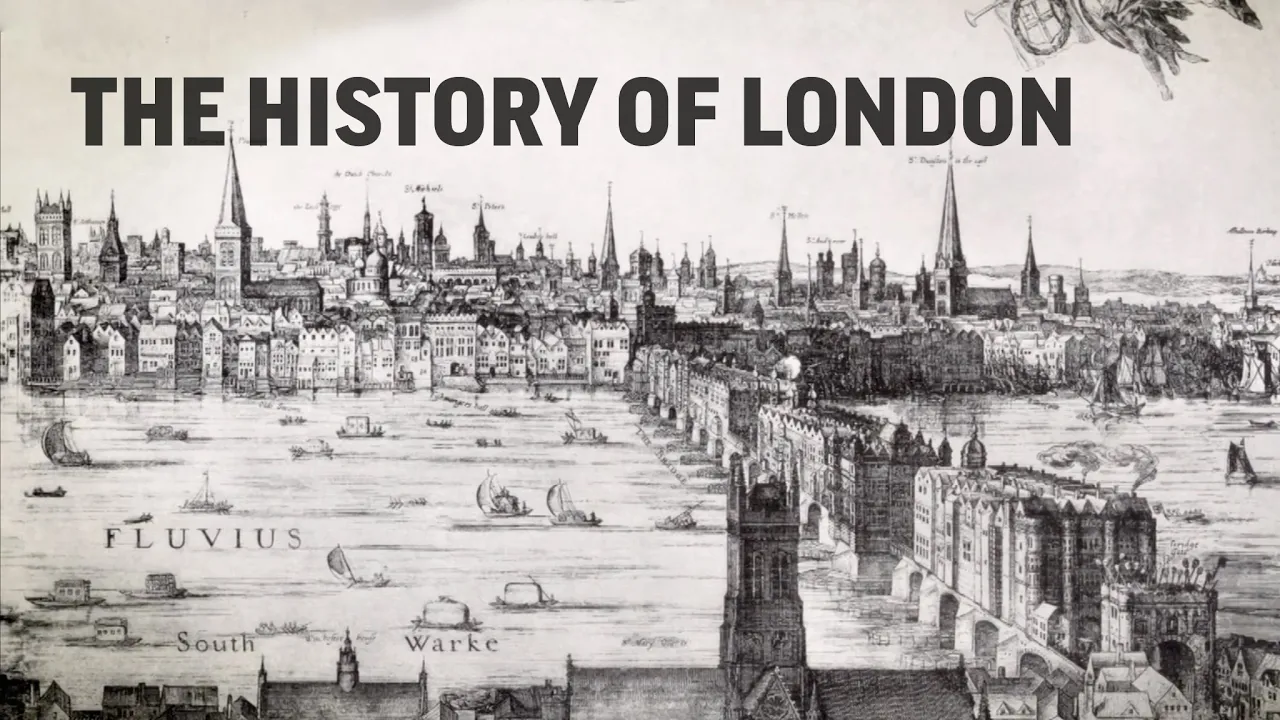











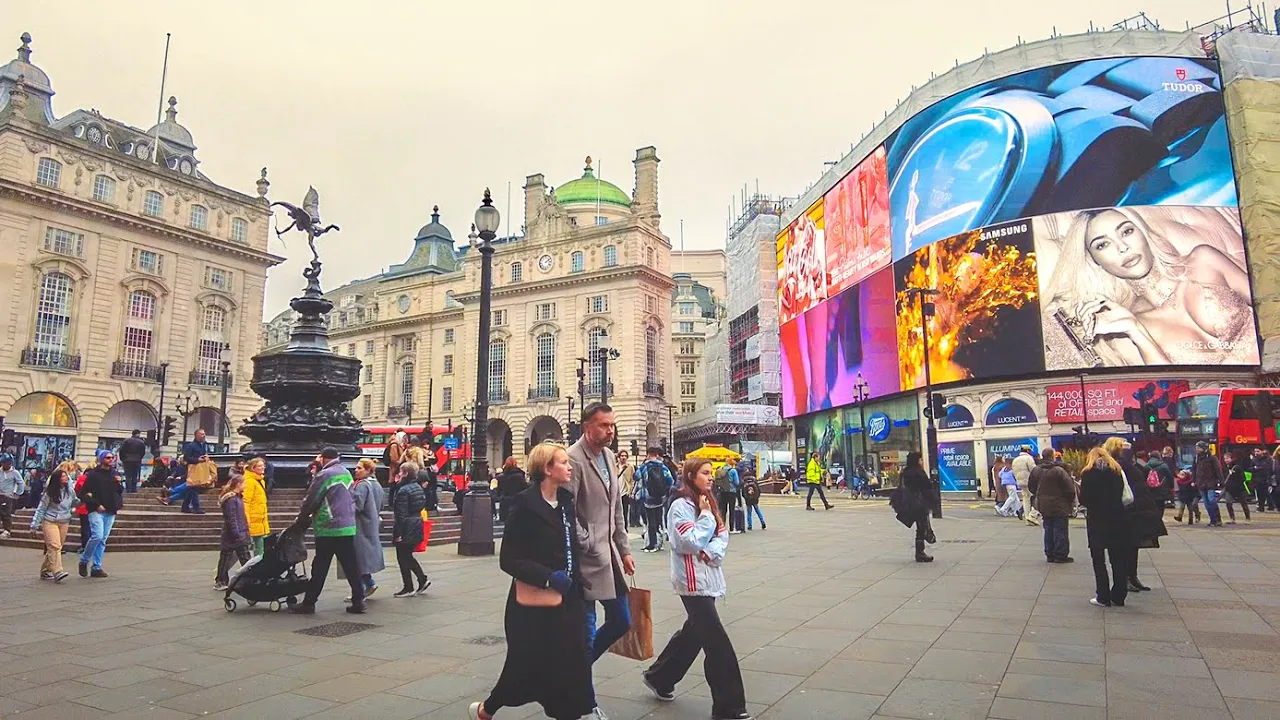










Tottenham Court Road in London has a rich dark history spanning centuries, including highwayman attacks in the 1700s, body snatching operations targeting nearby Whitfield Memorial Church in the 1700s-1800s, the catastrophic Great Beer Flood of 1814 that killed 8 people, use by revolutionary activists like Madan Lal Dhingra who practiced shooting at the Fairyland Arcade before assassinating a British official in 1909, WWII air raid shelters beneath Good Street Station, and the devastating V2 rocket attack on March 25, 1945, which was the last V2 to strike West London.
Tottenham Court Road: Exploring Its Dark London History (5 Tales)
Added:Basic understanding of London's historical geography, specifically its transition from rural outskirts to urban sprawl during the 18th and 19th centuries.
The historical context of the early medical profession in Britain, including the shortage of legal cadavers for anatomical dissection prior to 1832.
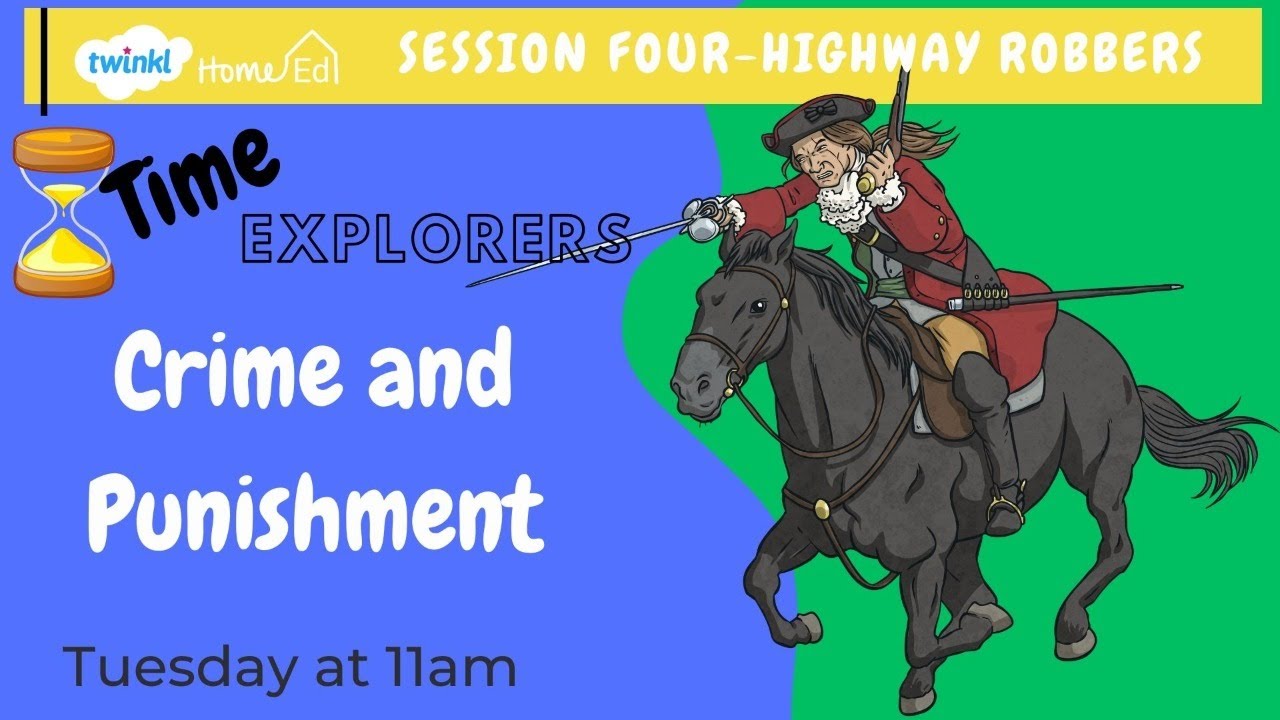
The social and legal conditions of 17th and 18th-century England that gave rise to highway robbery on the fringes of major cities.
An overview of the Allied home front in London during World War II, particularly the strategic bombing campaigns.
Investigating the Anatomy Act of 1832 and how it reformed medical ethics, anatomical study, and body procurement in the United Kingdom.
Analyzing the socio-economic evolution of London's West End, tracing Tottenham Court Road's transition from a perilous boundary to a commercial and electronics hub.
Studying the technological development and geopolitical impact of WWII V-weapons (V-1 and V-2 rockets) and their direct lineage to the Cold War Space Race.
Exploring the methodology of 'history from below' and urban historiography, assessing how local crimes and marginalized figures shape city narratives.
98.9K views3.6Klikes23:00Original Release: 2023-09-17
foreign stretching for about three quarters of a mile between Houston Road and Oxford Street and connecting Hampstead Road to Charing Cross Road Tottenham courts road is one of London's most recognizable streets names even more so nowadays thanks to its inclusion on the new Elizabeth line it's also a road which hides a surprising amount of dark history including links with Body Snatchers assassinations a large World War II bunker and much more and in this video I'd like to share five such Tales From Tottenham courts road with you [Music] with the Houston Tower bearing down on its northern end and the center points Tower dominating the South both of which are distinctive 1960s buildings Tottenham courts Road has a decidedly modern feel especially when you consider that until relatively recently it was also known for its large concentration of electronic shops however Tottenham Court's road is far older than it appears for many centuries it was a simple rival Trek much of which cut through open land even as late as the 1870s you would have found a Cow Shed clustered behind Hill's Furniture Store those cow sheds belong into a place called Christopher kappa's Farm which is where Kappa Street gets its name from and the fields around here also provided ideal venues for Bare knuckle boxing Tottenham coach Road's name meanwhile derives from Totten Hall a former manor house which wants to just north of Houston mode over time this building evolved into a pub which eventually became known as the Adam and Eve a lovely establishment which was demolished in the 1960s to make way for the Houston Tower quite a travesty I think you'll agree due to its once isolated backwardsville Tottenham Court Road was a particularly dangerous place after dark a freyberg's haunt of Highwaymen whose targets Travelers making their way between central London and what will end far-flung Villages such as Hampstead in kentish town a look through the newspaper archives reveals numerous reports of such robberies in March 1729 for example a lawyer named Mr Ward was attacked by two Highwaymen between Tottenham courts road to Turnpike and since Joel's pond it would appear Mr Ward was rather fond of Silva his watch in riding spurs were fashioned from the precious material as was a sword he carried needless to say the pair of hiring men helps themselves to these Treasures although they snaps The Sword in half and since Mr Ward's horse Galloping off into the night if that wasn't enough they then proceeded to beat their victim so violently that he Now lies as the point of death what a pair of scumbags eh less than a week later three Highwaymen all packing pistols robbed the coach near the same spot and in April 1750 it is reported that two gentlemen were robbed just north of Tottenham Court Road by seven young foot pads tolerably well dressed it sounds like they were truly Dandy hireman for sure somewhat more gruesomely in 1726 a farmer named Mr Billings discovered a body without a head in a field near Tottenham courts Road at a spot opposite to the Farthing Pie House which was close to present day Euston Road the body which was described as being much mangled and bruised and beginning to putrify was believed to have been connected to a severed head which had been found separately elsewhere sometime before that head having been put on display in Westminster churchyard now there's a fun day out for all the family as well as being a play stalked by Highwaymen and murderers looking to dump their victims Tottenham Court's Road was also a popular spot for Body Snatchers during the late 18th and early 19th century back then the law stated that only a certain number of corpuses specifically those of executed criminals could be handed over for dissection per year which was nowhere near enough to satisfy the requirements of the thriving Anatomy schools and so that's where the Body Snatchers came in gangs of near doogles who'd creep into graveyards at night to dig up freshly buried bodies for which medical students would pay a handsome sum on Tottenham courts Road their main target was the Whitfield Memorial Church which is now also known as the American International Church although when it was first established in the 1750s no burials could be facilitated here at first as the bishop of London stubbornly refused to consecrate the ground undeterred the church's Reverend toriel Joss came up with an ingenious solution to this obstacle when he heard that a church called Saint Christopher the stocks which was once located on threadneedle street was due to be demolished to make way for an expansion of the bank of England the land around since Christopher the stocks was consecrated so toriel Joss arranged for several cardstocks of this stuff to be brought over to Tottenham Court Road and dumped outside his church and hey Presto the Wakefield church now had soil deemed suitable for Christian burial cheeky but it worked once barrels could take place here though the Body Snatchers or resurrectionists as they are also known began to circle like vultures the extent of their nocturnal exhumations came to light in March 1776 when 20 bodies were discovered in a shed on Tottenham Court Road the location supposedly been the covert drop-off points where medical students collected their Grim Goods Legend has it that when targeting graves in the area the Body Snatchers liked to congregate at the Rising Sun a pub on Tottenham courts road which is still in business today the Rising Sun was first established in 1730 and the current building dates from the 1890s if you look up on the outside you'll see that it boasts some Splendid architecture in the 1980s this Grand Old Pub was converted into an Elvis themed bar called Presley's which as you can probably guess involved the walls been adorned with Elvis memorabilia whilst a star 4 uniform consisting of khaki shirts with ties a look inspired by the 1960 film GI Blues [Music] after being um All Shook Up in this manner the pub was restored in 1993 and returned to its original name thank you [Music] at around 5 30 pm on Monday the 17th of October 1814 Tottenham courts Rhoda became the scene of one of London's most bizarre disasters an event that came to be known as the great beer flood had you stood on the corner of Tottenham Court's Road in the great fossil Street roughly where the Dominion theater is now located in the early 19th century you would have seen the Horseshoe Brewery a large complex which proudly boasted a collection of Mighty wooden tanks 20-foot tall behemoths which are each capable of holding the equivalent of three and a half thousand barrels available these Berry monoliths were held together with Iron rings but tonight's fateful Autumn afternoon in 1814 a tough band on one of the barrels snapped causing the rats to burst unleashing a tidal wave of booze which like a domino effect crashed into the other barrels sending some 320 000 to gallons gushing out along Tottenham Coach Road in what was said to be a 15-foot High tsunami of beer this terrifying wave tore into a slum called This is Joel's Rookery located at the southern end of Tottenham Court Road which being a desperately poor area had many people living in basements the Deluge into these cramped Cellars resulted in the depths of eight people who were either drowned or crushed by debris tragically four of those who died were mourners who'd gathered for the wake of a two-year-old child how unlucky can you get for those not inundated though the beer flood provided a golden opportunity to procure as much booze as they could and many rushed out into the street to fill bottles up whilst others simply sucked the beer directly from the huge Lake in court the disaster was deemed an act of God meaning no mortal was held accountable for the freak incident and to the Horseshoe Brewery remained on Tottenham Court Road until 1922.
foreign arcades as a late 20th century Innovation gloomy neon bathed places where video games Penny waterfalls and fruit machines clatter and beep away they have in fact been around in some guys or another though for many decades and in the early 20th century there were several to be found on Tottenham Court Road offering all manner of mechanical fun for a penny including places where you could take a peek at the Saucy what's the bachelor saw type machines out of these the best-night amusement Palace on Tottenham Court Road was the Fairyland arcade which was situated at number 92 a spot now occupied by a modern building containing a Greg's Bakery the Fairyland arcade was especially popular thanks to its live Shooting Range which was located on the Upper Floor indeed it marketed itself as the best place in London where you could come and indulge in Gunplay because of this numerous radical activists were drawn to the arcade in the early 1900s for the purpose of using a shooting range as an unofficial training facility the most notorious example being a fellow named madame naldingla born in the Amritsar Northern India in 1883. my dad had moved to Britain in 1906 to study engineering at University College London his mind however was primarily occupied with politics specifically Indian Nationalism for Madan was someone who was determined to see India achieve independence from the British Empire so much so that he was willing to use violent means to achieve that end as such he drew up list of high-ranking officials who were connected with British rule in India figures Madan earmarked for assassination in preparation for his deadly task badan visited the Fairyland arcade several times a week where up in the Gun Gallery he practiced his shooting skills and by all accounts he became highly Adept at handling a revolver madan's first two Targets Lord Curzon and Sir Joseph Fuller narrowly avoided death when they turned up late to the meeting at which he'd planned to shoot them all of the third man on his list occurs and Wiley a former lieutenant colonel in the British Indian army wasn't so lucky on the evening of the 1st of July 1909 Wiley attended an event hosted by the national Indian association at the Imperial Institute in South Kensington her site that is now covered by Imperial College as the meeting Drew to a close at around 10 30 PM my dad burst through a set of doors and using the skills he'd owned on Tottenham Court's Road he opened fire striking Curzon Wiley along with an innocent Indian bystander both of whom died almost instantly Madan then tried to turn the gun on himself but it's clicked and jammed he was apprehended and tried soon after at the Old Bailey found guilty of murder Madam was sentenced to death a verdict to which he responded with the words I am proud to have the honor of laying down my life for my country he was executed by Henry pierpoint at Pentonville prison on the 17th of August 1909.
Madonna dengla wasn't the only radical to make use of the Fairyland arcade in September 1909 just one month after Madan had been sent to the Gallows police received a tip-off that a group of suffragettes were using the arcade's gun range for a similar purpose their intended Targets in this case supposedly being the then prime minister Herbert task with [Music] then on the 12th of August 1914 a murder occurred within the arcade itself this was committed by Donald lesbini a 22 year old army deserter who shot dead an employee at the arcade named Alice story his reason being that she'd insulted him lesbini was also sentenced to death although in this case he was later reprieved despite the violence associated with it the Fairyland arcade remained in operation until the 1920s [Music] with three stations dotted along its length Tottenham Court's road is well served by the London Underground let's take a look at each station in turn first up of course is Tottenham courts Road station itself which is located at the southern end on the junction with Oxford Street this station was first opened by the central London Railway now the central line on the 30th of July 1900 a day which saw many VIP guests take a special trip on the inaugural train the most famous of who was the American author Mark Twain the northern line or the Charing Cross Houston and Hampton Railway as it was then known arrived at the station in 1907.
as it's now accommodates the Elizabeth line as well Tottenham Coach Road station is going to become very huge indeed it even has an entrance all the way down by Dean Street and the platform stretched deep beneath Soho Square back at the older Central and Northern line platforms the most striking thing you'll notice are the many colorful mosaics which were designed in the 1980s by Eduardo Palazzi the Scottish Italian artist who is widely considered to be one of the pioneers of pop art [Music] brought in Leaf in 1924 Palazzi was a man who suffered a great tragedy in his formative years being of Italian Heritage he was placed in an internment camp in June 1940 despite being only 16 years old as were other members of his family not long after his father grandfather and Uncle were transferred to a camp in Canada although they would never make it there for the ship they were traveling on the amendora style was sunk after being torpedoed by a German U-Boat off of the coast of Donegal leading to the deaths of all three of Pilates relatives along with over 800 other Souls a memorial to this horrific event unveiled in 1960 can be seen outside Saint Peter's Italian Church on Clark on Mill Road about a mile from Tottenham courts Road when Elizabeth line or cross fell as it was then known necessitated an overhaul of Tottenham Court's Road station a lotsy's Arts Works were threatened with destruction this led to an outcry and a petition signed by over 50 000 people fortunately reversed the decision today around 95 percent of The Works remain in place and the sections that had to be removed mainly the colorful arches which one stretched over the escalators and are in the possession of Edinburgh University elsewhere in London you can see other works by Palazzi the most prominence being his 1995 sculpture of Newton which holds pride of place outside the British Library if you'd like to see what the Tottenham courts Road station looks like prior to the installation of palazzi's distinctive mosaics then he should watch 1981's An American Werewolf in London as it's on the Northbound Northern line platform that's the Hat plus date night commuter Joel brinsley played by Michael Carter encounters David Kessler in werewolf form leading to a terrifying Chase through the station's eerily deserted corridors foreign [Music] Coach Road is good Street Station which was opened in the summer of 1907 by the train cross Houston and Hampton Railway that company were a competitor to the central London Railway and as such they initially decided to call this station Tottenham Coach Road as well meaning for a time London had two Tottenham Court Road stations this confusing situation changed after just a few months though when it was decided to rename it after nearby good Street good job being a reference to John Gooch who was a local property developer in the 18th century in World War II a deep level air raid shelter was dug beneath good streets more of which later and in an awful Prelude to the king's Cross disaster of November 1987 a fire occurred here on the 21st of June 1981 when a pile of rubbish was set to light by discarded cigarettes the resulting Blaze leading to the death of one man with 16 other people suffering injury the Northern end of Tottenham Court Road is served by Warren Street Station which like good Street first opened in 1907.
originally the station was known as Houston Road and you can still see an old site bearing its name down on the platform the Victoria line arrived here on the 1st of December 1968. bring him with it to this Jazzy maze Motif oh Warren get it which was designed by Adam Fletcher and is indeed a solvable puzzle feel free to pause the video now and see how long it takes you to crack it apparently it shouldn't take more than a few minutes in other words the time it takes to wait for the next train similar to Tottenham Court's Road station Warren Street Station has also starred in the Colt horror movie in this case 1972's deathline in which the Northbound Northern line platform is stalked by a group of tunnel dwelling cannibals [Music] we'll head back down now to good Street Station to take a closer look at the large air raid shelter which I mentioned earlier there are two entrances to the old shelter which I should say is not accessible to the public the most prominent one is tucked between Cheney Street and North Crescent we'll also find this old war memorial and the other which is somewhat more discreet it's hidden away on Tottenham Court Road itself the shelter beneath good Street station is one of eight deep bunkers constructed alongside the tube during the second World War the rest abolted to various other points along the northern line each shelter consists of a pair of tunnels each being 1 200 foot long which are kitted out of bunk beds kitchens medical Bays lavatories and so on it was hopes that after the war they could be converted into rail tunnels as part of an Express tube line although this never happened of course today the Chinese Street entrance is known as the Eisenhower Center as this bunker was indeed offered to General Eisenhower during the war while it's not entirely clear if he ever used it the shelter was certainly used by the United States military though both as a hostel for troops and as a base for the Army signal Corps in the lead up to D-Day after the war the shelter remained in use as a hostel accommodating British troops who were passing through the capital on route to overseas postings this setup remained in use until 1956 when their tunnels were damaged by fire and today The Shelter resounded by a secure storage company called Iron Mountain close to the bunker albeit above ground is the most famous shop on Tottenham courts Road the furniture specialist Hills and in World War II the textile workshops here turned their hands to producing parachutes for the war effort opposite Hills stands a rather for lawn-looking coffee shop the reason it looks so isolated is that on March the 25th 1945 a day that happened to be Palm Sunday the spots were struck by one of the Nazis dreaded to V2 Rockets the world's first long-distance guided ballistic missiles destroying most of the surrounding buildings over 500 V2s hit to London and the one which exploded here just weeks before the war ended in Europe was the last one to strike the West End nine people were killed in the blast the Whitfield Church which we saw earlier in the video and is now known as the American church was one of the buildings destroyed by the V2 but it was rebuilt in the 1950s the other devastated properties however were not meaning essentially this spot is an old bomb site the space has however since been converted into the popular Whitfield Memorial Garden the centerpiece of which is this large mural a painting depicting local life which was created in 1980 and after becoming quite Tatty it is recently given a loving overhaul [Music] thank you so much for watching I hope you enjoyed this look around Tottenham courts Road and would love to hear your own thoughts and memories about this famous address do you remember Presley's bar what are your thoughts on Eduardo pilotti's mosaics and how long did it take you to solve the Warren Street's maze please be sure to let me know in the comments thank you so much to all of you who supported my Channel with your kind words likes and shares I couldn't do this without you if you haven't yet subscribed to Robert London then I'd appreciate it very much if you could please consider doing so as this along with clicking the Bell icon to receive notifications will ensure that you don't miss out whenever I publish a new video plus of course it would be wonderful to have you along if you're feeling extra generous you can also support smile work with a tip via even my Kofi account which I'll link below or the YouTube thanks button which appears as a heart icon beneath the video any such Financial donations are of course greatly appreciated and they really do help go towards creating content anyway on that note thanks again for watching friends stay well and please be sure to stay tuned [Music]
Up Next

5:30
How to Make Silkscreen Prints Like Andy Warhol | Tate
@Tate
791.5K views•2018-03-14

26:22
Walking in the City: Urban Rituals and the Flâneur in Contemporary India
@PSBTIndia
1.9K views•2016-08-02

9:49
FastAPI vs Flask vs Django: Choosing the Right Python Web Framework
@TechWithTim
302.5K views•2024-05-26

1:42
Game of Thrones Opening Credits: A Cinematic Analysis
@gameofthrones
46.3M views•2011-04-18
Related Study Plans & Knowledge Roadmaps
Structured learning paths in General & Interdisciplinary Studies
general-studies
Artificial Light: History, Tech & Human Impact
01The Pre-Electric Era: Fire, Oil, and Gas Lighting
02The Incandescent Revolution and Grid Electrification
03Gas Discharge and Fluorescent Illumination
+ 3 more learning modules
14h6 modules
Explore Roadmap
general-studies
Elevator Engineering: History, Physics & Cities
01From Hoists to Safety Brakes: The Dawn of Vertical Lift
02Hydraulic vs. Traction: The Engineering Physics of Elevators
03Modern Speed, Safety, and Algorithms
+ 2 more learning modules
12h5 modules
Explore Roadmap
general-studies
Rubber: Material Science, History & Geopolitics
01Origins of Natural Rubber & Mesoamerican History
02The Chemistry of Natural Rubber & Vulcanization
03The Geopolitics of the Rubber Boom & Colonization
+ 2 more learning modules
12h5 modules
Explore Roadmap
general-studies
Containerization: Evolution, Logistics & Trade
01Ancient Trade & Bulk Cargo: Amphorae to Barrels
02The Industrial Revolution & Cardboard Packaging
03The Containerization Revolution: Malcom McLean
+ 2 more learning modules
12h5 modules
Explore Roadmap