


















![Турбулентное течение круче ламинарного [Veritasium]](https://i.ytimg.com/vi/8tSbvSJT0eg/maxresdefault.jpg)



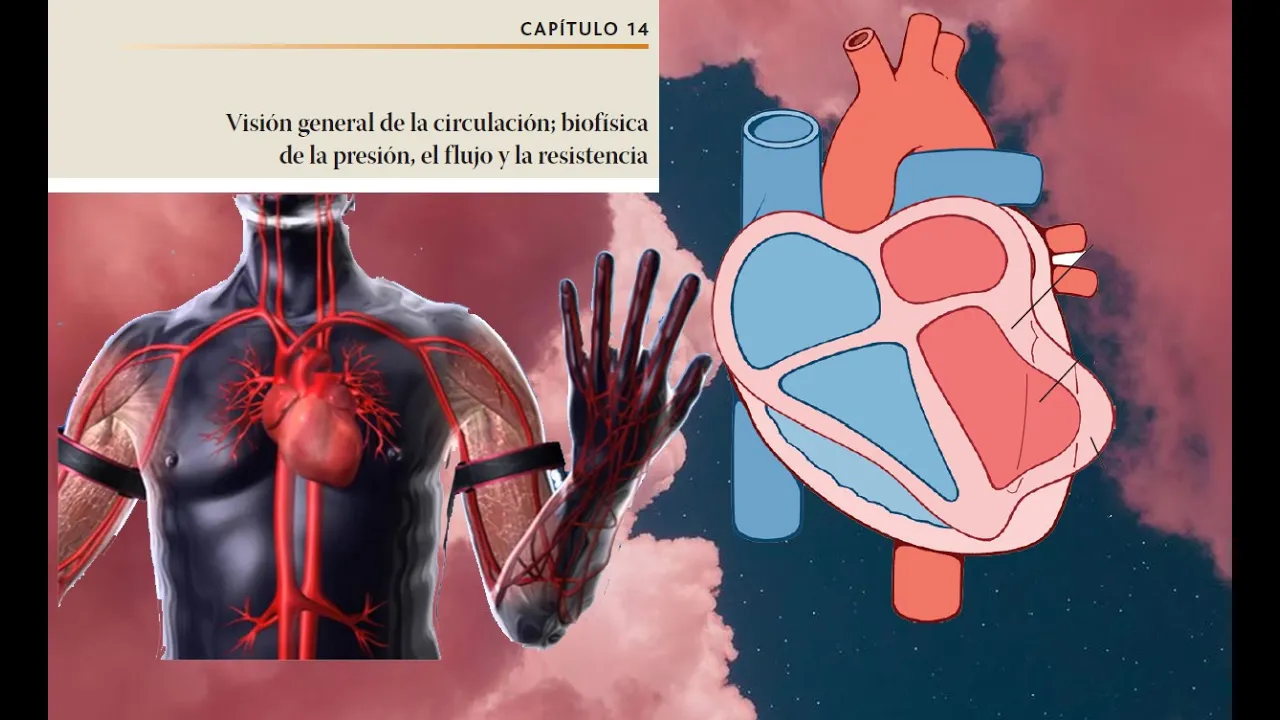





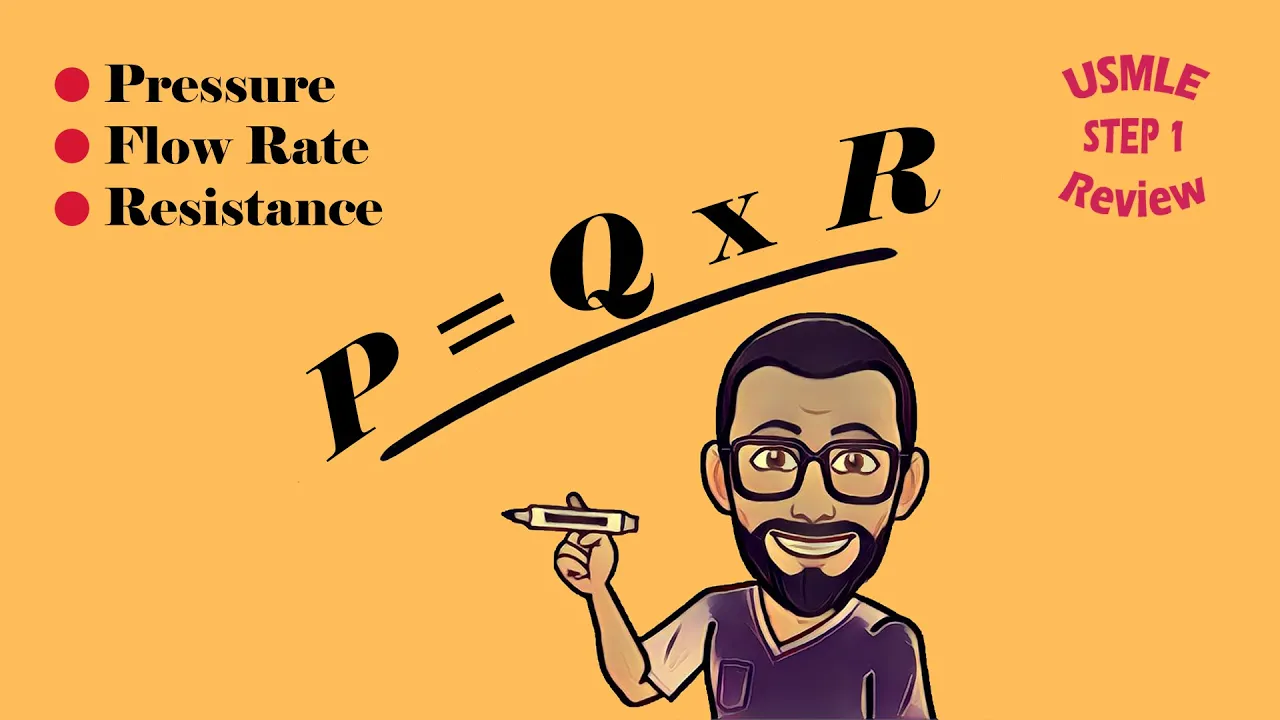





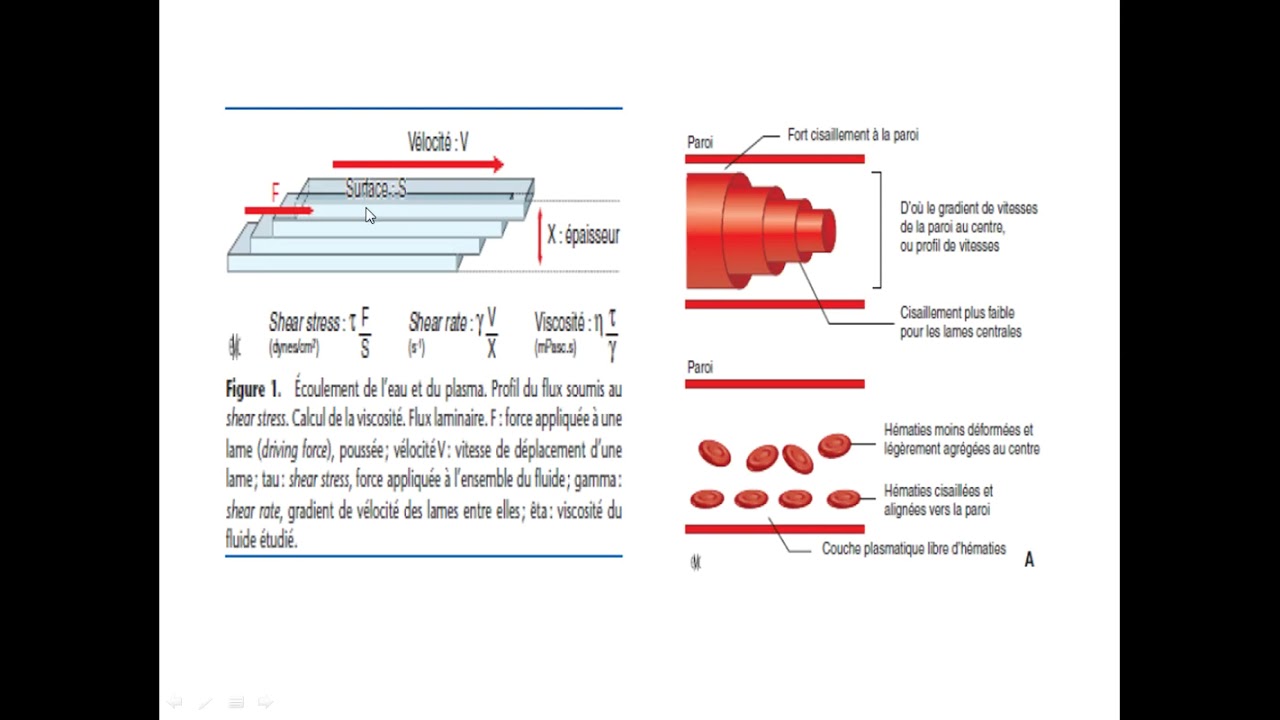
Poiseuille's equation (Q = πr⁴ΔP/(8ηL)) describes blood flow through cylindrical vessels, revealing that blood flow rate is directly proportional to the pressure gradient and radius to the fourth power, but inversely proportional to viscosity; this explains why atherosclerosis (which narrows blood vessel radius) dramatically reduces blood flow and increases blood pressure, as halving the radius decreases flow by a factor of 16.
Poiseuille's Equation Explained: Blood Flow & Viscosity
Added:The fundamental distinction between laminar and turbulent fluid flow.
The physical concept of viscosity as a fluid's internal resistance to flow.
How pressure gradients (the difference in pressure between two points) drive fluid motion.
Basic cardiovascular anatomy, specifically understanding blood vessels as cylindrical conduits.
The Reynolds number and identifying the mathematical limits where laminar flow transitions to turbulent flow.
The application of Poiseuille's law to calculate systemic vascular resistance in parallel and series blood vessel networks.
The clinical implications of vasoconstriction and vasodilation on blood pressure regulation (due to the 4th power radius dependency).
How blood behaves as a non-Newtonian fluid and how shear rate affects its viscosity in microcirculation.
152.9K views1.7Klikes7:10Original Release: 2013-09-25
Recall that any real fluid has a certain viscosity to it. Meaning it has a certain internal friction that is a result of the electrical forces between the molecules and atoms of that liquid or fluid. Now what if we take a fluid and allow the fluid to flow inside a cylindrical tube or pipe? Well, if we assume that our fluid has no viscosity, that means a force is not required to propel our fluid to move within our cylindrical pipe. In other words, if there's no viscosity, a net force or change in pressure is not required for our fluid to continue to move within that pipe. But because real fluids have viscosity, that means a pressure difference is required for that fluid to continue to move within our pipe. Now, an important equation exists that helps us talk about fluids moving within cylindrical pipes. And this equation is known as equation. And it's given by the following formula. So, Pacier's equation only really holds under two conditions.
So, these two conditions must be satisfied to use the following equation.
So, condition number one, the fluid that we're dealing with must be incompressible. So, the volume must remain constant. And assumption number two, condition number two, the fluid must undergo laminar or streamline fluid flow. If these two conditions are satisfied, we can use the following equation which states that the volume flow rate of our fluid within our cylindrical pipe is equal to the product of pi and the radius to the 4th power where the radius is simply the radius of our cylindrical tube. It's the radius of the cross-sectional area of our cylindrical tube multiplied by P1 minus P2. So the change in pressure between 0.1 and 2 where P1 is the pressure at this point and P2 is the pressure at this point and divide that product by H multiplied by the coefficient of viscosity multiplied by the entire length of our cylindrical tube. Now once again this equation known as Pier's equation only really holds when we have the following two conditions satisfied.
However, we can still use Pier's equation to approximate certain things.
For example, one application of using Quasier's equation is to approximate the volume flow rate of blood within the blood vessels found inside our body. So we can use Pacier's equation to approximate the volume flow rate of the blood. And let's see what types of results we get by using this equation.
We observe that blood volume flow rate is directly proportional to the pressure gradient in the blood vessels. The pressure gradient is simply the change in pressure P1 minus P2 divided by L the total length of our blood vessel that we're considering. So we see the following results. The volume flow rate which is given in meters cub / seconds is directly proportional to the pressure gradient the change in pressure divided by L. So we see that if the pressure gradient across our blood vessel increases, if the pressure on this end increases and the pressure on this end decreases, well then this entire fraction will increase and that means our volume flow rate of the blood within the blood vessel will also increase. Now what about result number two? From Pacier's equation, we see that blood flow rate is inversely proportional to the viscosity of the blood that we're dealing with. In in other words, if the viscosity of the blood increases, we see that our denominator becomes larger and that means our volume flow rate of the blood within the blood vessel decreases.
So we see the following result. Our volume flow rate of the blood within the blood vessel is inversely proportional to the viscosity of our blood we're considering. Now let's examine the final result. If we decrease the radius of our cross-sectional area of our cylindrical blood vessel, well then we decrease the blood volume flow rate. And notice the following important result. Our volume flow rate of the blood within the blood vessel is directly proportional to the radius to the 4th power. So that basically means that if we take the radius and divide it by two, we're not simply dividing the volume flow rate by two, but we're dividing the volume flow rate by 16 because this two is raised to the 4th power. So that means when we half our radius of the blood vessel, the volume flow rate decreases by a factor of 16. And that means a much larger pressure gradient must exist to allow our blood to flow with the same exact volume flow rate as before we decrease the radius of our blood vessel. So one important application of this principle is in artosclerosis.
Artosclerosis is essentially the thickening and the hardening of the blood vessels, the arteries found inside our body. When we have a buildup of fat within the blood vessels, the cross-sectional area, the radius of our cross-sectional area of the blood vessel decreases. And that means the volume flow rate as per this principle also decreases by a greater amount. And so our heart has to create a greater pressure to push that blood with the same volume flow rate as before. So that's exactly why our blood pressure increases when we have a buildup of plaque within our blood vessels, within the arteries of our fun.
Up Next

7:01
Geometric Optics: Concave & Convex Mirrors and Lenses Intuition
@DocSchuster
141K views•2013-03-01

12:53
21cm Hyperfine Transition in Neutral Hydrogen: Radio Astronomy Basics
@AaronRobertParsons
12.4K views•2011-10-13

12:35
Alpha Decay, Beta Decay, Positron Emission & Gamma Radiation
@AKLECTURES
44.1K views•2012-12-27

27:14
Entropy and the Second Law of Thermodynamics Explained
@veritasium
27.5M views•2023-07-01
Related Study Plans & Knowledge Roadmaps
Structured learning paths in Physics
physics
Nuclear Physics (Decay, Fission & Reactors)
01Atomic Structure and the Binding Force
02Radioactive Decay and Half-Life
03Nuclear Fission Mechanics and Chain Reactions
+ 2 more learning modules
12h5 modules
Explore Roadmap
physics
Soft Matter (Polymers, Colloids & Rheology)
01Foundations of Soft Matter & Thermal Forces
02Polymer Physics and Macromolecules
03Colloids, Surfactants, and Self-Assembly
+ 2 more learning modules
38h5 modules
Explore Roadmap
physics
Analytical Mechanics: Lagrangian & Hamiltonian
01Mathematical Foundations: Calculus of Variations
02From Newtonian Mechanics to Constraint Dynamics
03The Principle of Least Action & Lagrangian Mechanics
+ 3 more learning modules
28h6 modules
Explore Roadmap
physics
General Relativity (Spacetime & Cosmology)
01Foundations of Relativity: Special Relativity
02The Geometry of Spacetime: Equivalence Principle & Curvature
03Einstein's Field Equations: The Mathematics of Gravity
+ 2 more learning modules
55h5 modules
Explore Roadmap