








![Animaux : la grande cause du XXIe siècle ? [ Conférence Noé Bugaud ]](https://i.ytimg.com/vi/NxVKEXKXnd0/maxresdefault.jpg)

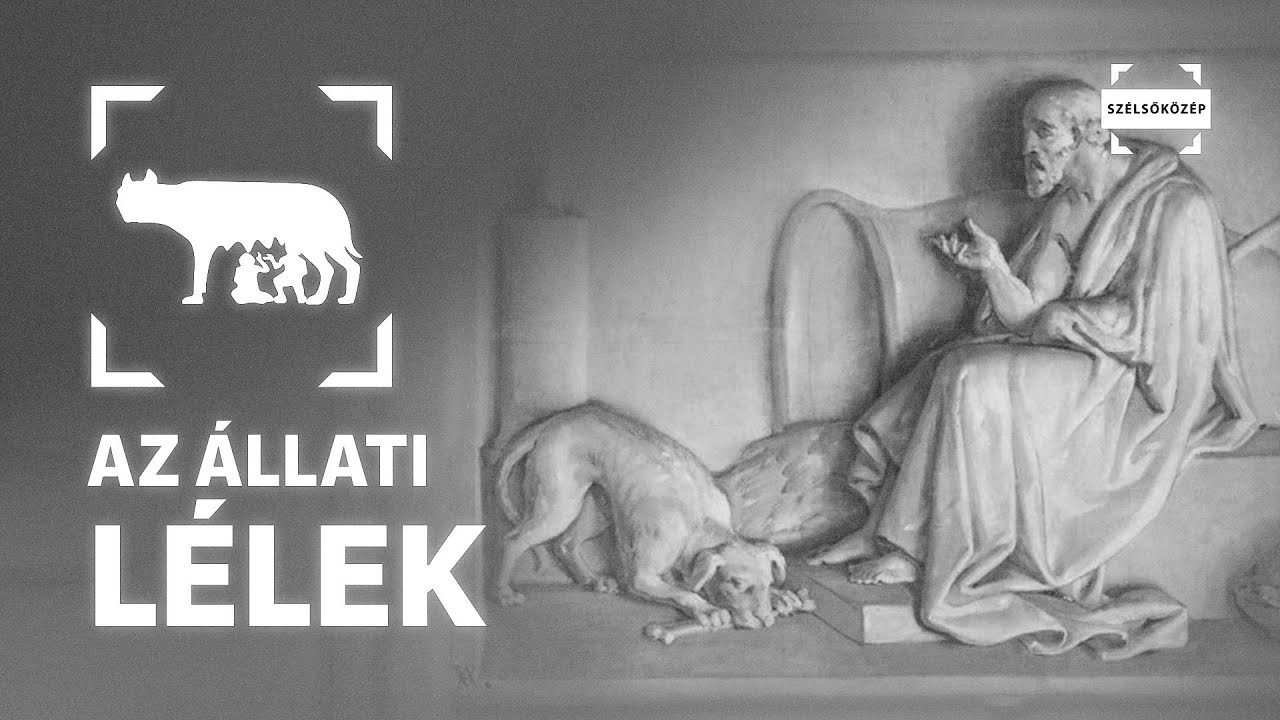


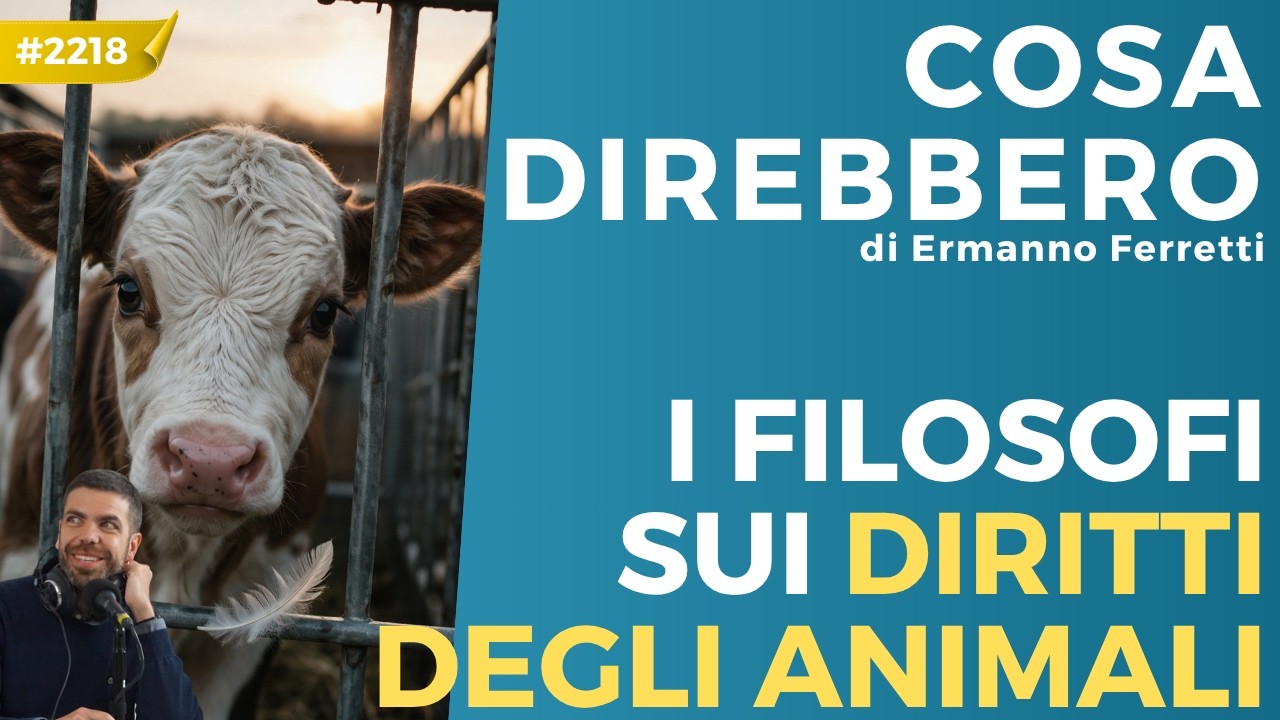









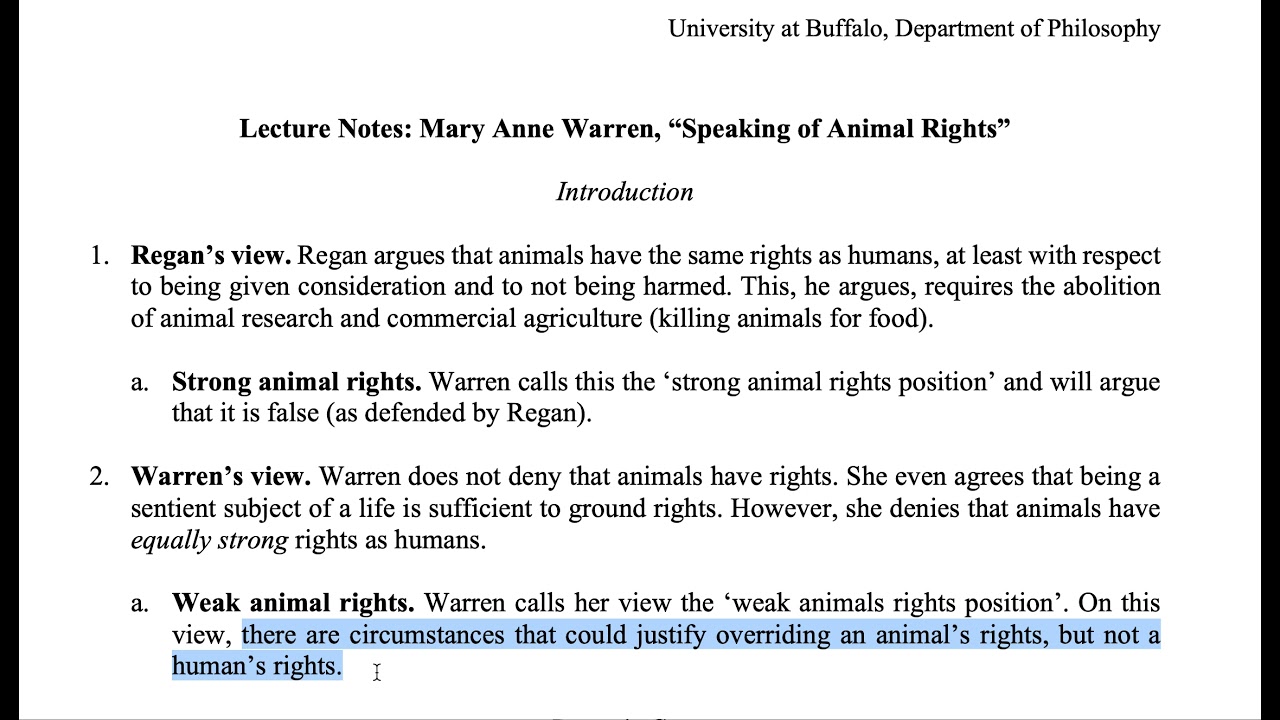


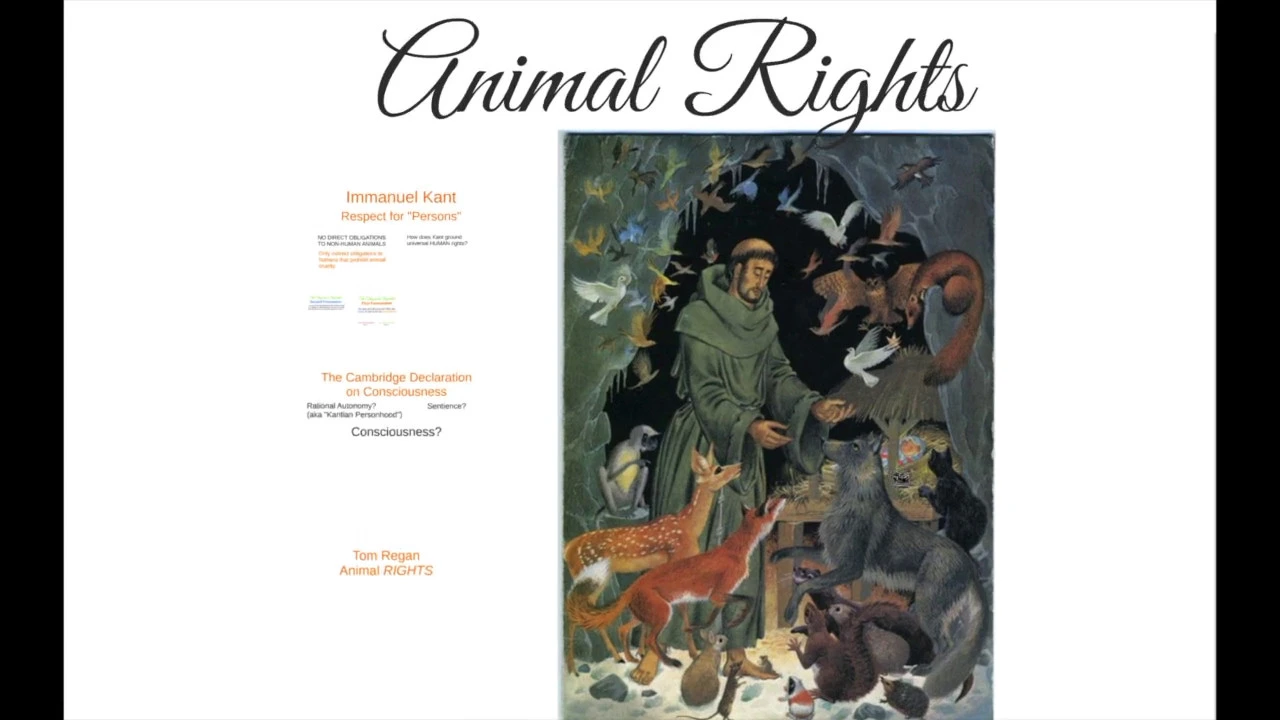
Animals have moral rights because they are 'subjects-of-a-life'—beings who are aware of what happens to them and for whom what happens matters to them, making their lives valuable in themselves regardless of their utility to humans; this moral status is determined by their capacity for conscious experience and welfare, not by traits like moral responsibility, self-awareness, or language ability, which would inconsistently exclude beings like human infants from moral consideration.
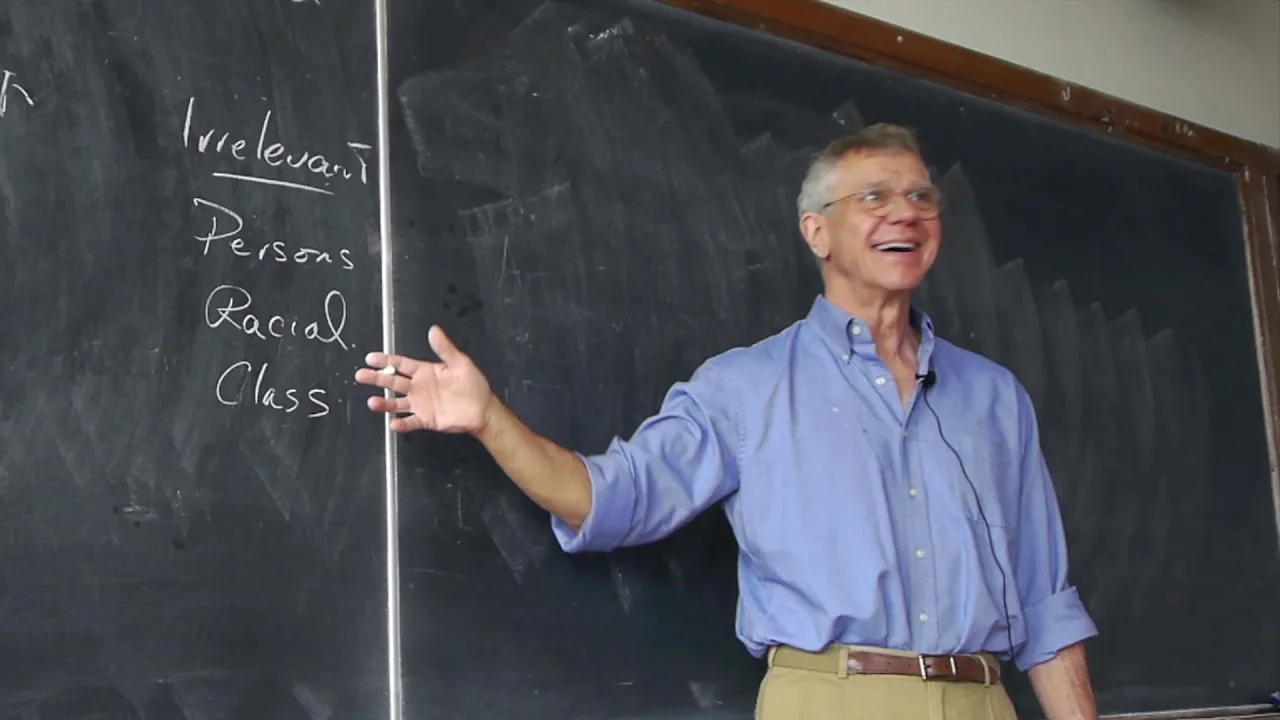
Professor Tom Regan on Animal Rights Philosophy: An Academic Lecture
Added:Introduction to Deontological Ethics (Kantianism), specifically the distinction between treating beings as ends-in-themselves versus mere means.
The fundamental difference between Consequentialist ethics (such as Utilitarianism) and Non-Consequentialist (rights-based) ethics.
The philosophical concepts of 'Moral Agency' (beings capable of moral reasoning) and 'Moral Patienthood' (beings to whom moral duties are owed).
An understanding of the traditional philosophical views on animal minds, such as René Descartes' view of animals as mindless automata.
A comparative study of Tom Regan's deontological rights theory versus Peter Singer's preference utilitarian framework for animal liberation.
The Abolitionist Approach to animal rights, pioneered by Gary Francione, which focuses on ending the property status of non-human animals.
The legal philosophy of non-human personhood and the practical efforts of groups like the Nonhuman Rights Project to secure habeas corpus for animals.
Relational and care-based critiques of Regan's rationalist rights framework, such as those found in Ecofeminist animal ethics.
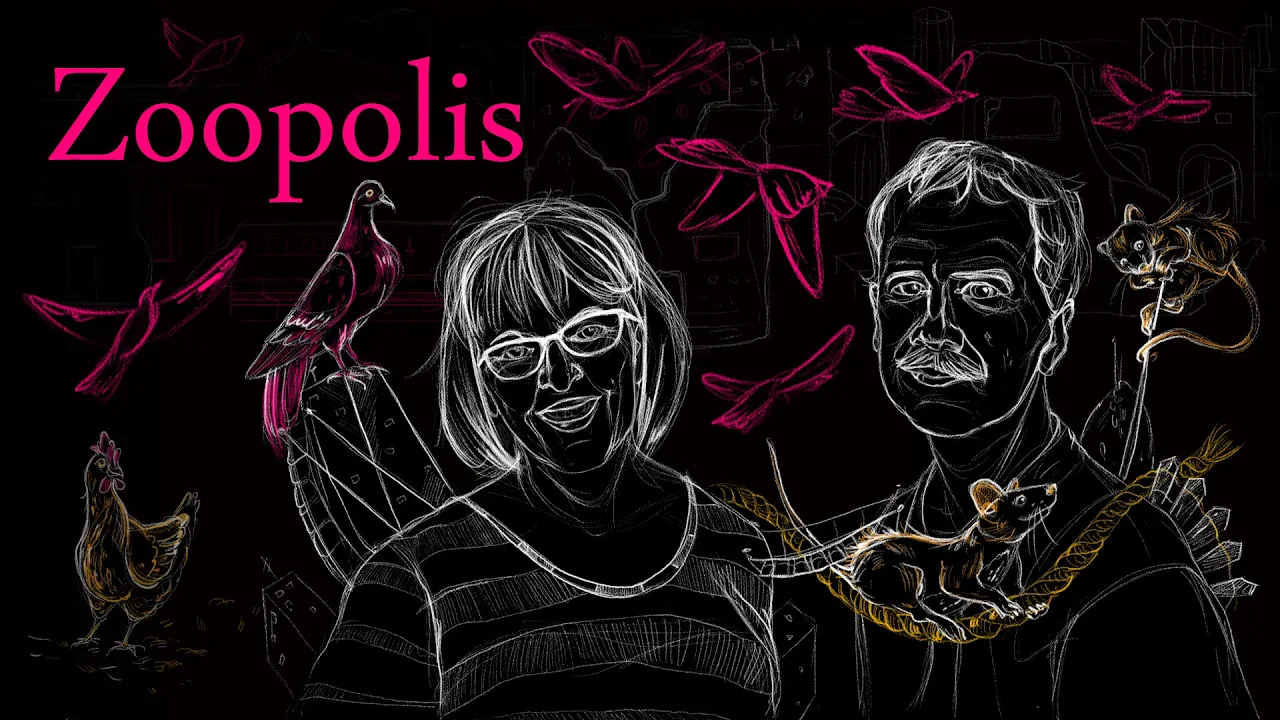
Political philosophy applications of animal rights, notably the concept of animal citizenship as proposed in Donaldson and Kymlicka's 'Zoopolis'.
23.1K views394likes49:55Original Release: 2016-11-12
I begin by reading um from the opening pages of my newest book called empty cages and is from the prologue called the cat a few years ago the home box office Network aired a program entitled to love or kill Man versus animals it told a fascinating and at the same time a disturbing story about how different cultures treat the same animals differently one especially chilling segment took viewers out to dinner in a small Chinese village you know how uh in America and I'm sure here in Germany as well uh uh patrons in some restaurants get to choose from among live lobsters or live fish and how uh after you make the dis selection the animal is killed and the chef Cooks a meal of your choice at this Chinese restaurant the things are the same except the menu is different at this restaurant patrons get to select from among live cats and live Dogs the video takes its time first we see the hungry patrons inspect the cats and dogs Jam cheek by Jou into wooden cages next we see them talk it over then we see them make their selection finally we see a man yank a white cat from her cage and hurry into the kitchen while the cat claws and screeches the cook hits her several times with an iron bar clawing and screeching more now she is abruptly submerged into a b tub of scalding water for about 10 seconds once removed and while still alive the cook skins her from head to tail in one swift pull he then throws the traumatized animal into a large Stone vat where as the camera Zooms in we watch her gulp slowly with increasing difficulty her eyes glazed until her last breath taken she drowns the whole episode from selection to final breath take several minutes when the meal is served the diners eat heartily offering thanks and praise to the Cook so this is several years ago when I saw this for the first time and I'll read my response to my reaction to that I cannot ever remember being so stunned in all my life with what I had seen I was literally speechless like many Americans many Germans I already knew that some people in China Korea and other countries eat cat and eat dog the video didn't teach me any new fact about dietary Customs what was new for me what pushed me back in my chair was seeing how this is done seeing the process watching the awful shock and suffering of the cat was devastating I felt a mix of disbelief and anger welling up in my chest I wanted to shout stop it what are you doing to this cat stop it well unless I'm mistaken I think everybody in this room shares with me this Common Core of compassion every one of us in this room if we were to see something like this happening to a cat we would want to ose it we would want to intervene we would want to help the cat we would want to stop what was being done to the Cat every one of us in this room I dare say shares that Common Core of compassion as do many Koreans as do many Chinese as do many other people where this sort of practice is common well I'm an animal rights Advocate and proud of it and and all that I think happens is this that animal rights Advocates like myself generalize on the response that all of us have to the Cat episode we don't limit our compassion to cats and dogs we don't limit our compassion to members of our immediate family that live in the same apartment or home or D dormatory room as we do I mean there are other animals in the world that are being exploited but there are 50 billion animals that are slaughtered every year in the world for consumption just like that cat was and that works out I mean if I my math is right it works out to incredible figures somewhere in the neighborhood of 80 880,000 a minute are being slaughtered for food and so as animal rights Advocates what we want to do is what we're saying is we oppose what's being done to these animals the major industries animal abusing industries that turn animals into food turn them into clothes turn them into performers turn them into competitors turn them into tools as animal rights Advocates we oppose what's being done to these animals as animal rights Advocates we want to intervene as animal rights Advocates we want to help and as animal rights Advocates by God we want to stop what's being done to animals thank you but that is what it is to be an animal rights Advocates is to say the same thing that we all feel about that cat the same compassion the same sense of urgency the same sense of the determination to help to intervene to stop that we feel in the case of that cat or a dog we feel in the case of hogs and and chickens and porpuses and whales and the other animals that are being exported now you have to wonder how did we get this way because the one thing we know is there aren't that many of us there maybe are 1% or 2% of the American population for example that's vegetarian a lesser percent that's vegan and a great percentage of the 1% or 2% that are vegetarians are vegetarians for sumach reasons for their health you know not a high fat high high cholesterol diet they don't care about animal rights they care about their health and other people who are vegetarians are not particularly interested in animals they're concerned about the environment the devastation that occurs the environment in order to feed the 50 billion animals that are slaughtered and those animals have to eat something that and that food has to be grown somewhere and there is an there are environmental cost and so some of the 1% to 2% are vegetarians or vegans because of environmental reasons but animal rights are vegans for animal rights reasons and as I say you have to wonder how did we get this way and I think from after more than 30 years nanc I more than 30 years of activism and animal rights uh advocacy I don't think there's a single one answer no there's not a one siiz fits all aners I think there are at least three different paths that people take to end up where Nancy and I are where end up where other animal rights Advocates are whereas I say what we want to do is not simply protect that cat we want to protect the 50 billion some are D vincian I call them and I take this inspiration after Leonardo D Vinci of course what we know about Leonardo alardo most of us anyhow is he was a great painter he's just a great painter famous paintings less well known is that Leonardo was a great animal rights advocate in his time in his way when he was a very young boy very young boy he had an explanation about what meat was where it came from what what is lamb what is steak what is chicken and they explained to Leonardo what the source of this meat on the table was he said I'll have none of it it's a very young boy he said I'll have none of it I'm I'm done and they said well at least at least drink the milk at least to eat the cheese where does it come from so they explained to Leonardo we milk and cheese I have none of it he said but a very young age he became a vegan on his own for reasons of compassion he said to his friends who were who ate meat he said your stomach is the graveyard of animals the tomb of animals he called called it that's where animals rot in your stomach that's where they rot that's what it is to eat an animal it's to bury it in your stomach where it rots and he would have none of it and when he would go into the markets and the uh and see birds and cages who are being sold for to stay in in small cages with people he would go and he'd spend his money on the birds and take M and let them go free them where they belonged so there is this path that some people have to animal rights advocacy that it seems to me like there's just some people have a natural empathy and a natural compassion for animals and Le Leonardo personifies this once he understands his heart is too big you know heart is bigger than his stomach you know my my heart is too big I can't I can't do this I mean I I I have to protect them and it's not something that he was taught it's not something that was based on proof he didn't have to be convinced it wasn't figured out it was just who he was and over these years that we've been involved in advocacy we have met some people like this who at a very early age once they understand what's going on they want to they want to disengage from supporting it but not many people I think in our experience has been like that more of what I call Damascus and I call them Damascus after the famous story in the Bible about Saul on the road to Damascus and if you recall the story it goes like this friends of Saul up in Damascus and they said Saul get up here come up here because there's this preacher up here named Jesus and people are starting to listen to him and we want to we want to kind of get him out of time and discourage people from paying attention to what this man has to say so Saul says okay I'm on the way so off he goes on the road to Damascus and on the road to Damascus the heavens kind of shake and all this illumination and so on and Saul hears Jesus speak to him from the heavens and the and if you remember the words he says the voice of Jesus says Saul Saul why do th persecute me and and Saul is just overwhelmed by this and on the basis of this single experience on the basis of this single experience Saul one of the great detractors of Jesus becomes Paul perhaps the principal Apostle of of Jesus just transformed like that and so damascan I think are people who have this as they say transforming life altering experience uh their life has changed like from the you know from the in one minute one way and the next minute the next in the blink of an eye so to speak they enter into a new Consciousness a new way of understanding the world and what they experience what happens to them is not something that's based on proof it's not like a philosopher stands up before them and says hey here's an argument premise one here's premise two is this that it's not an argument that happens to them they just have a life-altering experience it's something that happens to them rather than something that they figure out I I'll give you an example that I some years ago when I was in Berlin I met a a person who had a damascan a damascan and what happened to him was it uh during the second world war there were the Allies were bombing Berlin and after the sirens said all clear and people came out from the the shelters and the and the basements and so on they came up onto the street of burl streets of Berlin and he could hear this clop clop clop clop clop and there was a horse running down the cobblestone streets of uh where where he was living and he looked and the horse was on fire the horse was on fire from the very tip of the horse's T nose to the tail apparently some gasoline had spilled all over the horse and it got ignited and the horse was just running madly down the street and here's this boy he's about 10 years old at the time and he stands there and the horse come running right at him and just before running running into him just before running over him he looks him in the eye he says they have this eye contact and in that moment this young boy's life was transformed he thought at that moment his role in the world was clear that he was there to protect the animals he was there to see that what happened to this horse would not happen to any other animal he was transformed in the way that Saul was and then there are people who I call muddlers and I don't know if that's a word that you're familiar with in Germany but muddlers are people who take their time about things you know they don't know where they're going they don't they're they don't have anything in the genes like Leonardo there's nothing that they bring to this to to it that they're already con compassion and empathy and sympathy and there's not nothing dramatic or transforming they they just mudle along they just they begin to think about things they begin to ask questions and they begin to find answers and part of it involves their head they ask factual questions and philosoph what is V where does V come from what are you telling me V comes from that kind of animal raised raised in confinement can't turn around they treed an anemic diet they keep it in semi Darkness I I didn't know that yeah that's true Mr mudler M mudler that's true oh my gosh uh then uh what are you telling me about uh uh uh elephants elephants uh elephants what they walk 50 mil a day how can they do that when they're tethered in in you know in this cage in a zoo or or or travel in a circus how can they travel 50 m a day so muddlers are just kind of Mudd along they finding out this and finding out that and sometimes they have some you know some emotional experience they might see the the they might see the Cat episode on HBO and oh my god did you see that and then then next thing that happens you know their their heart starts to experience things and one day then what happens is for muddlers it's my experience anyhow one day they wake up and they look in the mirror and you know what they see an animal rights Advocate looking back at them that a person in the mirror is an animal right I I how did I become that I I didn't set out to become an animal right Advocate but over time that's what happens that's what Nancy that's our journey you know we were not the vincian we were not the maskin we're just muddlers just muddle along till we got to where we are and so I'm assuming that most of you folks are muddlers just because that's been our experience and so for us I mean there is a question to ask and that is the question do animals have rights and it's a very important philosophical question and what we know is that whatever the answer is we're not going to find it in the media you know in America here's what happens in the media loves a plane crash if a plane crashes the media will be there there's a story you have a safe landing that's not a story know when when Nancy and I came came uh got in the train to heidleberg and got off and got off safely you know what there was no media there there wasn't a newspaper person there wasn't any video camera they weren't covering it because it wasn't a story the other thing we say in America is if it bleeds it leads if you kill somebody you know especially a particularly Grizzly murder that's news but if you help somebody that's not news if you know if I if I I got to tell you I mean if I if I got naked and ran through the streets of heidleberg and said free the animals free the animals free the animals I'd get media coverage that's for sure but here any media here well that's just the way it works but we're not going to find answers in the media we're not going to find it in opinion polls and we say what's the percentage of people who believe in animal rights what's the percentage of people who think that animals shouldn't be test used in cosmetic testing what's the percentage of people who who think that animals elephants shouldn't be in circuses or the porpuses shouldn't be on in Marine Mammal display what's the well all that tells us is what people think it doesn't tell us whether what people think is true is reasonable well grounded well thought out doesn't tell us anything like that and we're certainly not going to find the answer to the question about animal rights by saying well you know we've never recognized animal rights here in here here in he highberg never no that's so that settles that that that's not going to be settle the issue now if if our unexamined Traditions uh settled issues women would still not vote you know mean women would still not own property women would still not uh be able to file for divorce women will would still not be uh um you know find a place at the table of Education if we simply accept it uncritically traditions we don't we don't believe that for a moment in other categories why should we believe it when it comes to the question about animal rights it's only I think the only way you and I personally will find the answer that's that we can Embrace is by thinking independently independent of media independent of the polls independently of our cultural traditions and that is the invitation of philosophy philosophy's invitation ask us to think for ourselves such a subject you know think about it I mean when I when I when I took chemistry and I walked into chemistry my chemistry professors didn't say the first thing I know most important thing for you is to think for yourself m m the first thing the chemistry professor said is learn this know this drill drill drill when I walked into physics and calculus and biology and history they didn't say you're here to think for yourself they never said anything remotely like that they said learn this dud you know like that but philosophy what's a subject it says think for yourself think for yourself but as I say AB think for yourself but um you have to be logical when you do this you know you can't just say uh X is uh xal Y and yal Z but X doesn't equal Z no you can't you have to be logical when you when you when when we do our thinking we have to be factually informed and we have to free ourselves from Prejudice there are some requirements it's just not sitting around over beer uh waxing poetic we have to try to try to satisfy some requirements and so my most fundamental reason for being here is is is not to try to persuade anybody that animals have rights I don't think I have that power you know there are evangelists in in the United States that go around and they give these talks you know that you're going to they're going to convert you to this particular position this you're going to come forward and say oh I believe I believe I'm I'm not an evangelist I'm not here to convert people what I am here is to extend the invitation of philosophy and that is as I say to think independently to think hard logically factually inform formed bring ourselves from Prejudice so when we say that animals have rights we actually mean something by that it actually has a Content it's not just saying uh I like animals a lot no when I say animals have rights we actually trying to say something when we say that animals have rights and to understand what we're trying to say when we say animals have rights obviously the the best way to go is to find out well what do we mean when we say that human beings have rights because people have been thinking about human beings having rights for thousands of years and people have been thinking about animals having rights for several decades maybe so we have a lot to learn from people who have gone before us we can stand on the shoulders of our predecessors and have a better idea see the things more clearly and I'm talking here of course about moral rights legal rights are a different matter legal rights or questions of legislatures or despots or something here I'm talking about the whole idea of moral standing and what we need to understand is that in our case when you and I invoke our rights what we're saying is look we we deserve to be protected we deserve to be protected uh when it comes to our most important goods and our most important goods are our life our body and our Liberty so right serve this function in our moral thinking to say individuals in this room deserve to be protected when it comes to the Integrity of their life the Integrity of of your your body the Integrity of your Liberty and and in this sense then rights are Place limitations on other people's freedom that's that's the their function in in the the moral sphere uh your rights limit my freedom and the same is true vice versa my rights limits yours and and so this sense we can think of rights as as it were like invisible no trespassing signs and what I'm saying here is then something like this see you may want to but morally you're not free to invade my body you may want to but morally you're not free to injure me or to crush my organs or to Blind me or to break my arms you know you're not free to invade my body it's already occupied in case you haven't noticed there's somebody here it's this body belongs to somebody no trespassing and when it comes to my life again you're not at Liberty to take it it's not yours it happens to belong to somebody's M and the same in your case too I'm not at Liberty to take yours or yours and the same come is true when it comes to Freedom you are not at Liberty to take my freedom and I'm not at Liberty to take your freedom when it comes to morality so the first thing about rights is it places limits on the freedom of others the second is that rights take priority over other important moral considerations when we invoke our rights we're invoking what I think is the most powerful consideration when it comes to thinking morally and the best way I have of trying to illustrate what this means is to use an ex example from a card game we were talking about this earlier and and this is a game that you're probably not familiar with but this is is a game called Bridge so let me give you this example we're playing a game card game called bridge and in this particular hand diamonds are Trump play the Queen of Spades rer plays the King of Spades you play the ace of spades it's my turn to play four players I don't have any Spades but diamonds are Trump in this particular hand that we're playing and I do have the two of diamonds in the game of bridge trumps are so powerful such a powerful card that the two of diamonds beats the Queen of Spades it beats the King of Spades it even beats the Ace of Spades that's how powerful the Trump suit is in the game of bridge well if we think about morality as a game we say well what are what are some of the cards that are played in this game well there's social custom obviously and there's there's uh personal gain there's the the public good and then there are the rights of the individuals here's what we're saying then where we say that rights are Trump let's take social custom as our example what we're saying is this uh you can't justify violating the rights of Anna okay you can't justify viting your violating your rights because the rest of the people in the room are going to VI going to benefit we're we're not justified in breaking your leg or you know pulling your eyes out or uh throwing you in prison or uh taking your life because the rest of our us are going to benefit I'll give you a historical example in the United States in the in the 194s and this went on This research went on for more than 30 years funded by the United States government there were roughly 400 black uh migrant workers uh who were told that they had bad blood and they were given not any cure for their bad blood they were given a sugar pill what they had was syphus you're familiar with that idea the disease syphus what they had was syphus and what the purpose of the research was was not to help them not to cure them not to benefit them the purpose of it was to find out what happened if they didn't receive medical treatment the purpose of it was to see how long it took them to Die the purpose was to see what the complications were and for 30 years the federal government the United States of America the federal government funded This research now no serious advocate of Human Rights and I count myself among those people would approve of This research and you say well why why look the social the public good all these benefits for society look at the all the all these future Generations of cph suffers how they benefited from this research no no no no no not if you're an advocate of Human Rights the violation of the rights of the individual Trump are more important they're the two of diamonds against the AC of Spades against the public good that's what it means when we argue for that's what it means when you invoke that it is what it is mean when we believe in the rights of the individual rights or equal remember first rights are no trespass rights Place limits on other people's freedom reciprocally rights are more most EMP powerful consideration they Trump other considerations they're more important than public good they're more important in reers uh personal Advantage they're more important than than uh honoring so social customs and they are equal my rights are no greater than yours and your rights are no greater than mine when it comes to rights they are the same they are equal when we say then that animal that human beings have rights we mean something we're trying to say something rather than just saying oh I like human beings a lot that's not we're saying we're trying to say no no no uh human beings are to be protected uh you and I are to be protected you know more than me me no more than you against the same sorts of things against the the the power of custom against the those who seek their own advantage against those who want to advance the public good well do any animals have rights now we know what we're asking what we're asking is Do any animals have the same moral status than you and I have that their life and their freedom and their Liberty should be protected the respect for their life and their Liberty and their bodily Integrity trumps public good social custom personal gain when it comes to their rights they're no greater than ours and ours are no greater than theirs when it comes to life and integrity and bodily integrity and that's what we're asking so there really is a question and the answer that question are they do they are there any animals like us in these respects uh we know we're going to have to ask two really hard kinds of questions one going to be factual questions and with askable what is the case what's true as a matter of fact and others are going to be foundational questions and the foundational questions go to the very heart of the issue they're going to say who has rights and why so that question then do animals have rights has to be viewed within this context of factual questions and foundational questions and the main factual questions I think are these two or any animals like us physically kind of look around at them there's there any uh important similarity between our bodies and the bodies of other animals and then the second question is are any animals like us mentally see because if if it were the case and it's certainly possible there's a possible world see where you know we'd walk around we'd kind of look at our physiology and look at our anatomy and say you know there's not another single animal in the world that's like us physically that's certainly possible possible world uh and so yeah it's possible and similarly it could be the case that that that you go around and you actually look and you think about this as hard as you can and you say you know there's not another single animal that's like us mentally not in any respect it's possible if that's true see then the argument for animal rights really gets pretty weak if if if that were true it'd be like trying to say chalk has rights chalk has rights you say well it's not like it's physically that's okay it's not like that's okay it still has rights it's pretty weak aren arent it's not like us in any respect it's hard to see how they have rights because we have rights but see the closer you find a resemblance between the physical makeup of other animals and the mental makeup of other animals it's going to be harder and harder to say we've got rights and they don't so these questions I think are where the action is and so we say physically look around remember we're going to be on Prejudice we're going to kind of open our eyes look around and say are there any an animals like us they have sense organs have a central nervous system the uh they have a brain uh well mammals and birds do last ey checked I don't mean to be an expert I don't think I'm an expert when it comes to biology and other sorts of things but the last I checked I mean these animals are fundamentally like us when it comes to their physical and anatomical makeup and others who saying well fish fish what about fish maybe maybe that certainly maybe it's worth thinking about what I'm saying here see is that that that there is this kind of striking similarity of course as you know that the DAR Darwin saw more than 100 years ago said well what about mentally um are any animals like us uh mentally and it certainly is possible uh that they're not it could be that when you look at the mind of other animals there's nothing there it's just an absolute Empty Glass there's nothing nothing going on that cat and dog you share your life with at home you go back and go home open the door they jump up and down nothing is going on behind those eyes they're not aware of anything they don't care about anything they don't like anything they don't remember anything certainly possible uh no Sensations noirs no emotions no beliefs nothing so well H actually there's a little bit going on not a whole lot going on behind those eyes uh just a little bit so there's a little you know they it's very nominal when it comes to Sensations and desires and emotions and beliefs that's certainly a possible position but unless I miss my guess unless I miss my guess you go back and think about that cat and that episode The Cat episode and we try to think about that cat we're going say no no no no no that that cat had a lot going on and that and that and that mental life of that animal that there was robust in terms of what the cat could sense and what it wanted and what the emotions had felt and this beliefs they're very robust you know when I say this I'm only saying what Darwin said Darwin's a much smarter man than me I defer to Darwin and when you when you read what Darwin says and he he studies the the behavior of other animals as he says with an unprejudiced eye with an unbiased eye what he says is I mean these animals remember and they expect and they plan and they intend and they like and dislike and they fear now they're complicated psychological creatures they're what I call subjects of a life they're somebody not something they have a biology biography not simply a biology there's something really going on there there are living beings who are in the world aware of the world aware what happens to them and what happens to them matters to them because it makes a difference to the quality of their life as they experience it whether I care about it or not whether you care about it or not or whether anybody cares about it or not what happened to that cat mattered to that cat it made a difference to the what it was like to be that cat in the world so what I'm suggesting then is that those animals I talked about are not like Chu they resemble us physically anatomically they resemble us psychologically mentally you know may be hard for us to see that because our culture doesn't encourage it but that's what I think the truth of the matter lies you know they they are some bodies not some things foundational question who has rights and why really hard questions philosophers as I said have been debating this for a long time and depending on how we answer this animals are going to either fare well or fare ill so that for example if somebody says all and only those who are morally responsible have rights then I don't know about animals then here's what here's what they when these philosophers can't this is content in spirit this the sort of thing that Kant would say if he were here I think uh to be morally responsible means that that uh we're able to think about uh the choices that present present themselves to us and we're able to weigh the rightness and the wrongness of the choice we make and then without being coerced by any anyone else we personally individually choose to behave as we do and if we choose to do the right thing well then we deserve some praise and if we choose to do the wrong thing then we deserve some blame because after all we're the one who made the choice so for example if if the question was um uh going out L late tonight and somebody's minding their own business walking down the streets of idleberg and I go go go up and I knock them in the head and knock them out and steal their purse or steal their wallet and and and then off I go well the idea is see I mean assuming nobody coerced me to do this I would I'm the one who made that choice I'm the and so I'm responsible for that choice I bear the burden of that choice uh and I I hopefully somebody will find out about it blame me punish me for that choice all entirely appropriate but when when we think about cats and dogs and porpuses and and coyotes and and chickens and uh turkeys it's really hard to think of them as being morally responsible for anything they do you know here's here's a turkey walking around you just say well have you thought about the rightness or wrongness of what you've been doing huh uh I mean uh it seems to me I mean the turkey's going to look at you very with a very Blank Stare and say I mean I don't know what you're talking about uh right or wrong uh an animals uh or again you take a case like there's a lion and there's a wilderbeast on the serengetti plane and the Lion's sitting there and there's looking for dinner and there comes the wilderbeast and there goes the lion after the wilderbeast and we and we S stand up and say no no no I mean don't you know the difference between right and wrong I mean of course Lions don't know the difference between right wrong no they're not they're not morally responsible for what they do they do what they do but they're not morally responsible for it so if you would take this idea that you have to be morally responsible in order to have rights then the person then you can say animals really are like us physically they really are like us anatomically they really are like us psychologically but they're not really like us when it comes to moral responsibility so they don't have rights and we do so if that's true remember so then they don't have their protections against their body is not protected morally their life is not protected their Liberty is not protected so we would not do anything wrong in principle anyhow if we took their life injured their body stole their freedom there's just this little problem not all human beings are morally responsible for example Nancy and I have four grandchildren the one is one he's a terror uh his idea of having fun is finding something to break uh you know he gets his hand on things he wants to break them including his sister uh say break you know this his that's his idea of fun and so we're kind of no but see the the point is that this little fell doesn't sit around he doesn't understand right wrong uh blame worthy praiseworthy he doesn't have Fest idea about moral responsibility not the Fest idea so do we say oh well then we're not limited we can we can injure his body we can we can take his life as we please no we don't say that we say what we do say is by God that young boy has rights even though he's not morally responsible don't we say that that's what I think we say but then see if we're going to be logical which is what philosophy says then we can't say that young boy has rights even though he's not morally responsible then we can't say but you know lions and tigers and bears don't have rights because they're not morally responsible that's inconsistent we're being inconsistent we're having one standard for human beings another standard for animals that's not consistent that's not logical somebody said well they have to be self-aware yes cats and dogs and porpuses and elephants are in the world aware of the world aware what happens and what happens matters to them but they don't know they're in the world they're on the of being in the world and then in particular what a lot of philosophers say and therefore they don't know they're going to die you know you have to know you're in the world and know know you're going to leave the world and since they don't know they're in the world they don't know they're going to leave the world they don't know they're going to die they have no idea B but being did and that's why even though they're like us physically and anatomically we have rights and they don't there's my grandson he had the foggiest idea that he's in the world he has no idea he's going to die die someday and so do we say well then he's not protected when it comes to his body or his freedom or his life we don't we say no no no no he has the same rights as you do same rights as I do and then they're equal we say we really do say that we insist upon it in fact but then we can't be logical we say oh well my grandson doesn't have to be self-aware in order to have rights but by God chickens have to be self-aware in order to have rights we don't say that if we're going to be logical which is again one of the requirements I don't know how philosophers got to say this but they do they say in order to have rights you have to be able to use language I'm not kidding you they do say this I mean I'm and then they say uh all those animals I've been talking about don't speak English they don't even speak German and uh and they say and therefore therefore we have rights and they don't have rights and I can only tell you that it just there it seems to me to be uh a such a bizarre idea that you have to have be able to speak a language in order to have rights it seems like there's no logical connection between two I can see why you have to be able to speak in order to do crossword puzzles or something but I mean the idea that you have to be able to speak a language in order to have rights just doesn't make any sense to me at all and and so I'm not going to belor the point then people say oh well here's the difference here is the difference yes they are like us physically yes they are like us you know know in physiology and anatomically yes they are like a psychological yes they are somebody not something yes they have a biography not just a biology but they don't have a soul and it just so happens that we all do it's so convenient isn't it I mean we all do we all do and so there's my there's our grandson he's got one too now we found the difference uh why he has rights and we have rights and they don't have rights uh well I hope I have a soul I think it' be a very nice thing I really do hope I have a soul I've always thought this CU I mean it would be so interesting wouldn't it uh after our body dies that somehow or other we go on living I mean that's really an exciting prospect I mean I'm I'm voting in favor of that I mean I I I hope that's true I hope it's true for you too I mean would would be nice but see I just can't see again any logical connection between what's going to happen to me after I die after I die because I have a no mortal Soul I'm going to continue to live and my moral status now before I die I just don't see how the the one has any logical bearing on the other plus notice this and this this is an idea I don't take credit for it's the idea of CS Lewis CS Lewis very famous 20th century Christian theologian anybody know that name CS Lewis okay CS Lewis argues this way he says you know I actually think that we have souls and animals don't have souls and so after we die there's a future life for us and after they die there is no future life and then he says which is really interesting precisely because that's true we have to make sure sure that we don't injure their body unnecessarily and don't take their life unnecessarily and don't deny their freedom unnecessarily because the bad things that happen to them in this life can't be made up for them in some future life CU they don't have one see he actually turns the idea right on its head rather than their lacking souls mean right giving us a blind check to exploit them oh no it's just the opposite because they don't have Souls our fundamental obligation is to protect them protect them not eat them not wear them not experiment on them help that cat that's what Lewis would say subjects of the life this is the view that I argue for and for example someone I see someone has a copy of of uh uh the case for animal rights this is the position that I Tred try to defend and remember what I mean by that when I'm when I talk about a subject of life I'm saying someone who's in the world aware of the world aware what happens to them what happens to them matters to them matters to them whether anybody else cares about it or not makes a difference in the quality of their life for them for the cat for example and see if that's the answer that we give it's that's the answer after thinking logically and carefully and being informed and trying to free ourselves from Prejudice we finally come to this idea that such of a life that's it that's the foundation of R that's the found that's what make you and I the same that's what make you and I our grandson the same that's what makes all of us uh fundamentally the same and then if they're fundamentally the same then we're going to we're going to say oh boy now now we're in for some Readjustment in our life because and I'll skip over some things here I'll skip over these some of these OB objections because it just go to practical implications because if it's subjects of a life that have have have rights then remember rights are Trump the little two of diamond beasts the Queen of Spades the King of Spades the Ace of Spades you can't justify harming animals because uh social custom or personal gain or the public good you know it's not a sufficiently good more small reason to kill animals for food because there's lots of you know mock burst in heidleberg I mean that's not a sufficiently good reason to kill animals that it's just we've been eating knur in heidleberg for Generations I mean that's not a sufficient reason or uh or the or the public good again and these implications for the the the quality and character of our own life as they say apply to what we eat the clothes we wear how we learn what we do for fun so do animals have rights if you're di vincian you already have answered that question because of the mystery of compassion and sympathy and uh that you brought with you like Leonardo if you're a damascan then uh there's I'm I'm I'm not in the business of being Evangelical here I'm not trying to have people come on down and declare your allegiance to animal rights I mean it's not that's I don't think that uh that's it but if you're a muddler like uh I've been and Nancy have been that we know we can't find the answers in the media and in public opinion polls or unexamined traditions we can only find the answer by thinking independently which is the invitation to phosy and phosy invitation is to think for ourselves my God think for ourselves but using logic being factually informed freeing ourselves from Prejudice and as I said before at the very outset and I'll conclude by saying this again thanking you for your gift of time that the fundamental purpose of my remarks has been to extend that invitation D Shen
Up Next
32:14
Animal Ethics and Meat Consumption: A Philosophical Analysis
@DWDocumentary
130.3K views•2023-02-26

164:01
John of Damascus on Holy Images: A Theological Defense
@BannedBooks
139 views•2026-04-25

68:32
Should We Destroy the Machines? Big Tech Surveillance Critique
@TheStoriesWeTell303
167.9K views•2025-11-30
4:57
The Myth of Sisyphus: A Greek Legend of Eternal Punishment
@TEDEd
8.6M views•2018-11-13
Related Study Plans & Knowledge Roadmaps
Structured learning paths in Philosophy
philosophy
Frankfurt School: Critical Theory & Culture
01Foundations of the Frankfurt School and Critical Theory
02Horkheimer & Adorno: The Critique of Instrumental Reason
03The Culture Industry and Mass Deception
+ 2 more learning modules
12h5 modules
Explore Roadmap
philosophy
Philosophy of Language: From Frege to Austin
01The Linguistic Turn: An Introduction to Language in Philosophy
02Gottlob Frege: Sense and Reference
03Early Wittgenstein: The Picture Theory of Meaning
+ 3 more learning modules
15h6 modules
Explore Roadmap
philosophy
Feminist Epistemology: Standpoint & Injustice
01Introduction to Epistemology and Feminist Critiques
02Sandra Harding and Standpoint Theory
03Donna Haraway and Situated Knowledges
+ 2 more learning modules
12h5 modules
Explore Roadmap
philosophy
Environmental Philosophy: Ethics & Deep Ecology
01Foundations of Environmental Ethics & Anthropocentrism
02Biocentric Individualism and Animal Liberation
03Ecocentric Holism and Deep Ecology
+ 1 more learning modules
10h4 modules
Explore Roadmap