

















Historical linguists reconstruct proto-languages like Proto-Indo-European by identifying systematic sound correspondences between related languages, which follow predictable patterns of change that can only be explained by common descent rather than borrowing, as demonstrated by the regular correspondences between English and German words that show the same statistical patterns as the Romance languages diverging from Latin.
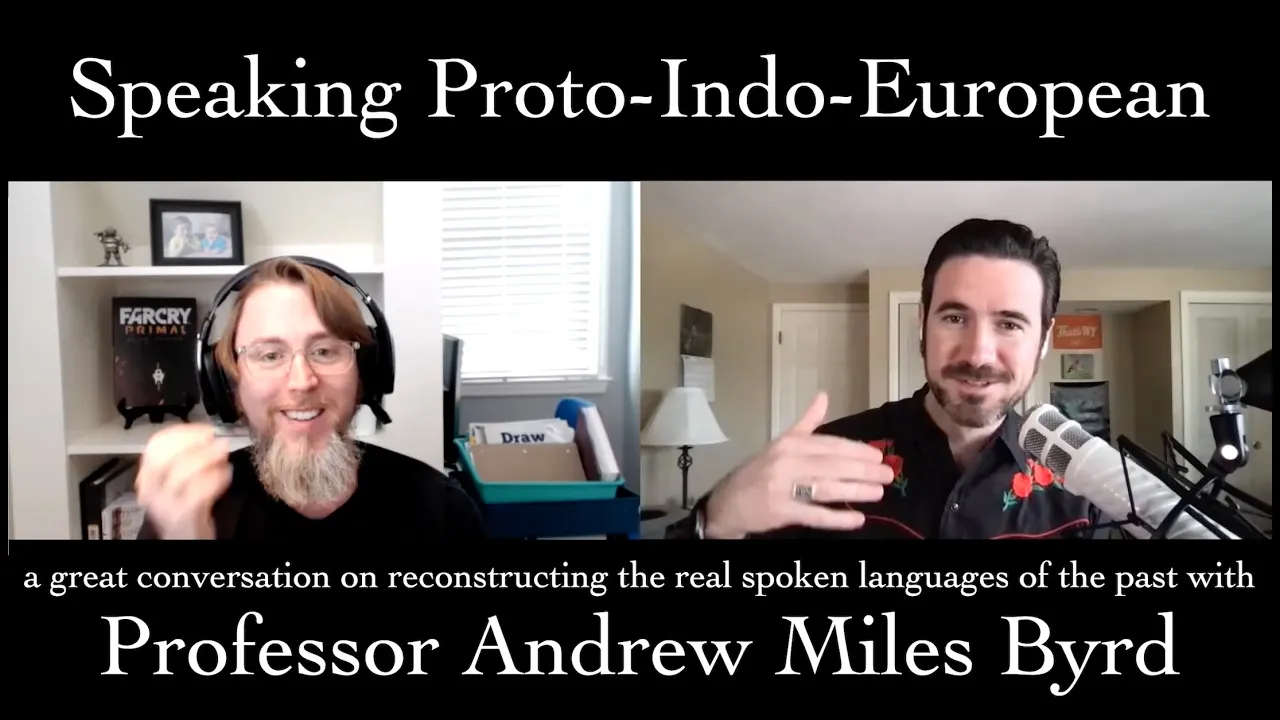
How We Know Proto-Indo-European Languages Existed
Added:Basic concepts of historical linguistics, specifically how languages evolve over time and branch from common ancestors.
The Comparative Method, which is the foundational tool used by linguists to compare sister languages and reconstruct ancestral forms.
An understanding of phonetic sound changes and sound laws (such as Grimm's Law) that describe systematic shifts in pronunciation.
Familiarity with the major branches of the Indo-European language family, such as Germanic, Romance, Slavic, and Indo-Iranian.
The 'Urheimat' problem and archaeological theories (such as the Kurgan hypothesis) regarding the geographic origin of Proto-Indo-European speakers.
Comparative mythology and the reconstruction of Proto-Indo-European society, religion, and technology using reconstructed vocabulary.
The Laryngeal Theory, an advanced linguistic concept that explains seemingly irregular vowel patterns in Indo-European daughter languages.
Reconstruction of other major proto-languages (e.g., Proto-Uralic, Proto-Afroasiatic) to compare different language families and methodologies.
105.7K views4.1Klikes43:05Original Release: 2023-09-04
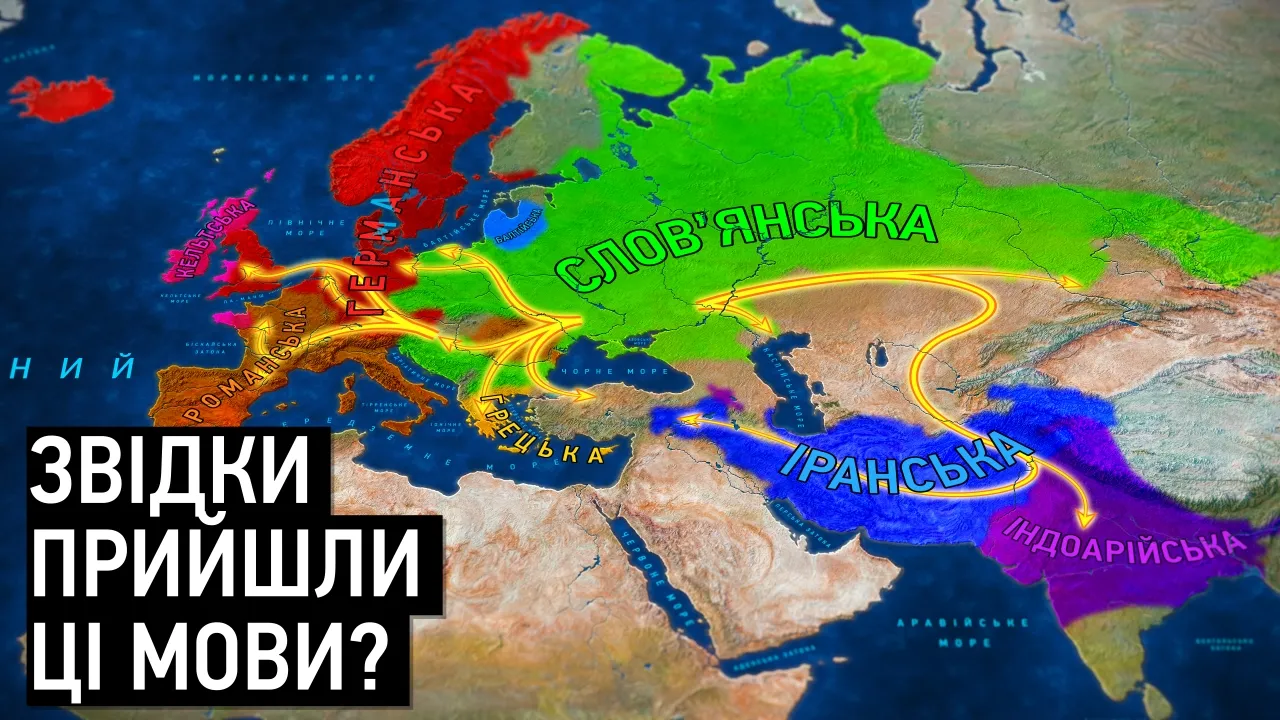
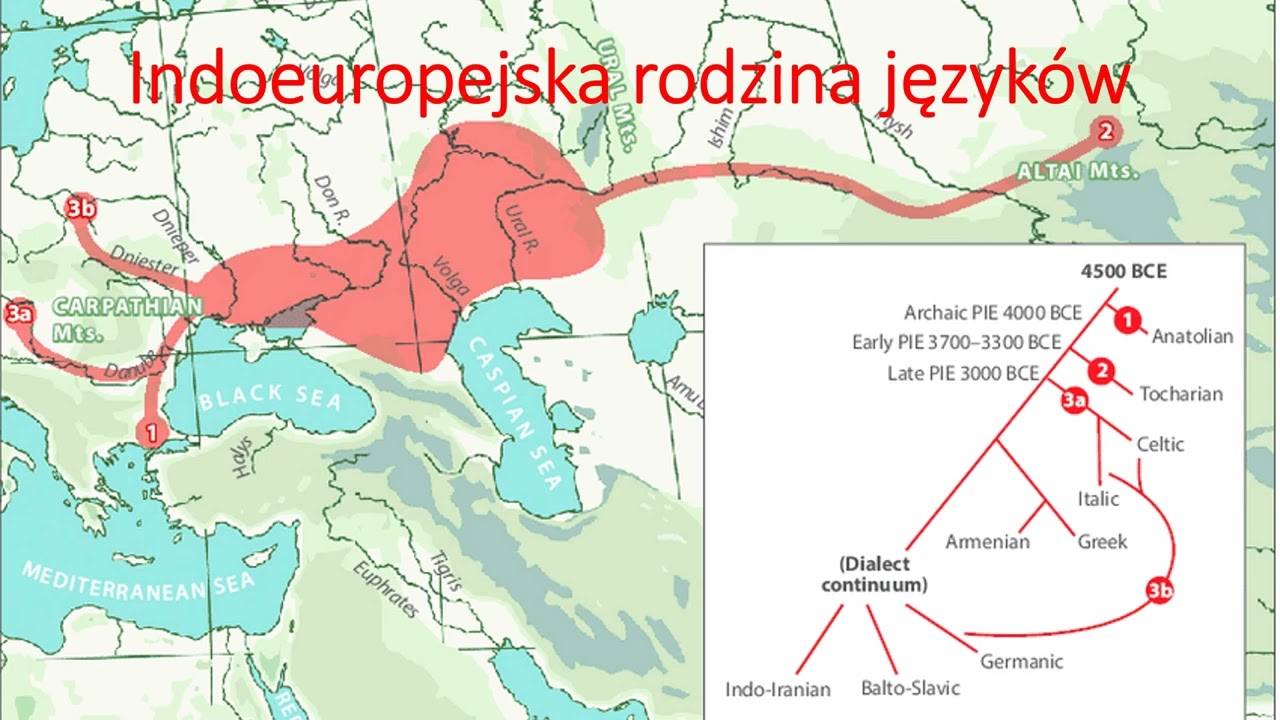
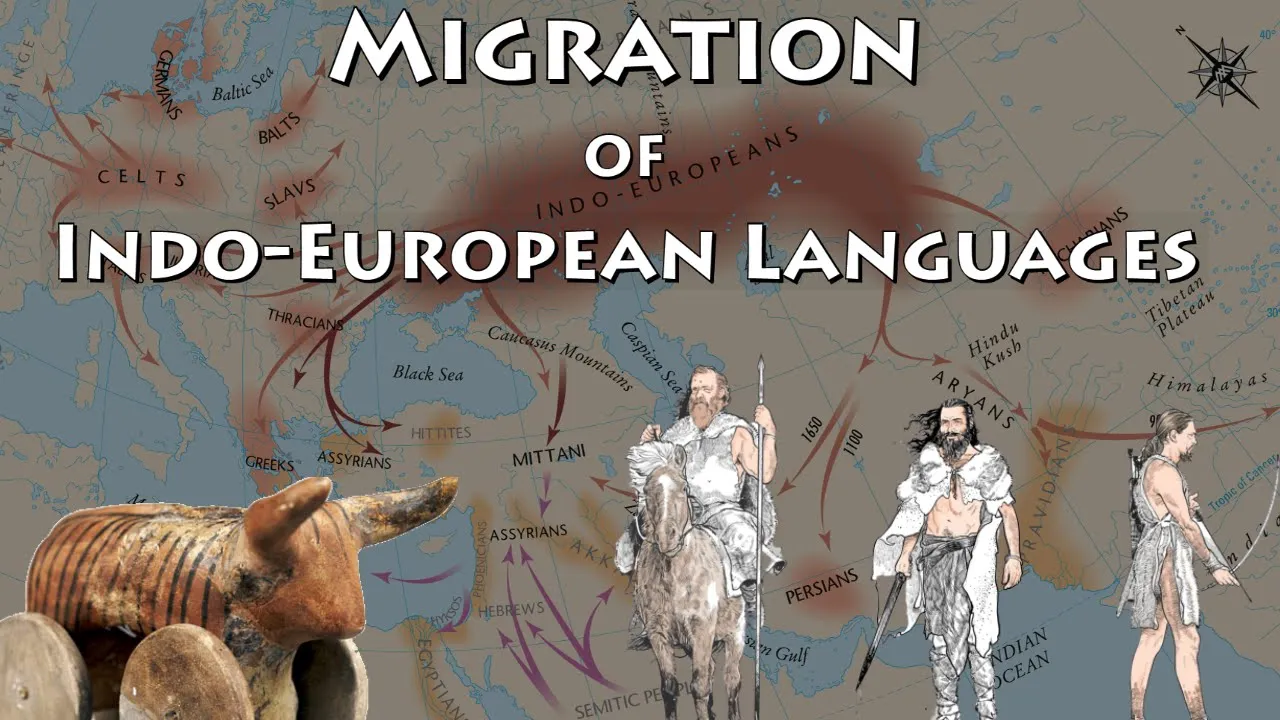
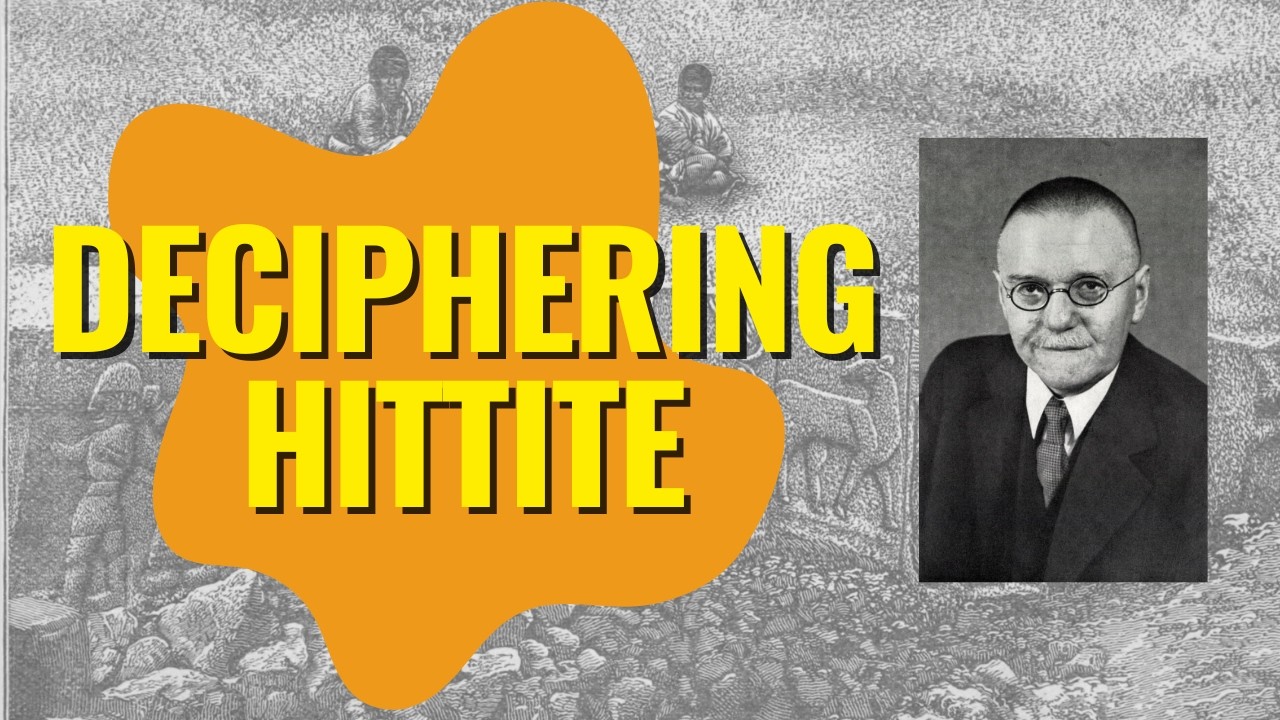
hello this video is for people who are very skeptical of the idea of Proto languages like proto-indo-european and also people who aren't really skeptical but just want to learn more about why we think they existed as part of the aim this video is to convince people of the reality of Proto languages who maybe find them a bit hard to believe I'll be building up the argument from Fairly basic axioms so sorry if any of this comes across as patronizing I'm not necessarily assuming anyone watching doesn't know these things it's just useful to Bear them in mind because they are what the rest of the argument is built on and also you often find holes in an argument when you build it up from the axioms so that's what I'm doing here to try and show you that there aren't really any holes in it first of all a disclaimer the idea of pro to Indo-European being in some way historically real is not disputed as far as I know within the field of historical Linguistics it's widely accepted details of what it was like are debated but the fact that our reconstruction is supposed to represent a real historical language or a prehistoric language as the case may be is not really in question within the field of course consensuses within Fields can be wrong so it is useful to go through the arguments every so often just to check that they still hold up I mostly want to use this video to dispel the idea that reconstructed proto-indo-european is just unsystematic guesswork I've seen even people who are interested in historical Linguistics in theory assuming that a lot of it is just people guessing and I also want to make clear that nobody in the field is claiming that we can perfectly reconstruct every aspect of this language reconstructive methods are good at some things and not good at others so I'll build this up bit by bit Axiom 1 is that language changes over time even if you live in the same place as your grandparents grew up you probably don't speak the exact same way as them they might use sentence constructions that you fully understand but wouldn't use yourself and their accent is probably slightly different to yours Dr Jeff Lindsay has a video on the progression of the British Royal Family's accent over the last 80 years showing that three generations of the same family have experienced a lot of language change Axiom 2 is that there are correspondences between different versions of the same language if I want to do a Scottish accent with a caveat that there are lots of Scottish accents but let's say I picked a specific one I don't have to hear a person with my target Scottish accent saying every word in the dictionary to be able to guess how they'd say certain words I just need to learn some fairly simple rules where I would say a in my accent they're more likely to say e where I say o they say or the fact that I'm able to learn these basic rules shows that there are systematic correspondences between my accent and the target Scottish accent where one sound exists in my accent another corresponding sound exists in this Scottish accent occasionally the correspondences aren't enough to go on there are some situations in which they don't hold up they're not perfect but they apply often enough that if I get used to saying the sounds I can apply them to most new words that I want to say this relies on there being a rule-governed relationship between my sounds and Scottish sounds whenever I say sound a my Target accent has sound B Axiom 3 is that sound correspondence can be caused by sound change in my accent I say other with a the sound with my tongue between my two rows of teeth my mate TJ says other with a V sound the pronunciation is spreading through UK accents at the moment where it used to be relegated to working class Accents in London this is an example of an ongoing sound change that causes a sound correspondence the earlier sound is the the latest sound is the now wherever I say the TJ says the if I wanted to do his accent so to speak even though it's very similar to mine I'd have to apply that regular rule that regular transposition now the correspondence isn't one to one it works better one way than the other because there are some words where we both say the like Vine but there is still this regular correspondence a sound change has caused the sound correspondence between two slightly different accents Axiom 4 is that sound change isn't completely deterministic it's not like if you have a the sound in any language it will inevitably become a v sound because in some dialects it stayed there and in you know some dialects it's changed to something like duh one of my favorite musicians Dr John has a song called This dat and Duda sorry about my pronunciation there so while sound change is usually regular and not random that is it applies in all words where it can it's not like one sound is destined to turn into a specific other sound this is why it's hard to predict how languages will evolve in the future because each sound could go a number of ways five although it's not completely deterministic sound change does usually happen within certain constraints the reason Za can turn into the is that they have something in common that makes them sound similar to each other in fact speakers with them merged sometimes can't even hear the difference between the two sounds when someone else says them the sounds are both made by blowing air through a very narrow Gap near the front of the vocal tract in one case between the tongue and the teeth and the other case between the lower lip and the upper teeth so they sound similar and it's easy for a person to hear the imitators v as a kid and then just stick with that and end up passing it onto their own children the also has something in common with duh duh no longer has that fricative element instead it's a build up and a release of the air but it's pronounced with the tongue in a very similar place when sounds change they don't usually jump to something totally random they usually change to a sound that's similar in some way to the original sound before the change most often either in the place within the mouth that they're articulated or the way that they're articulated fricative or plosive for example over time though the changes can stack up and take the sound a long way from where it started six because sound change isn't deterministic and there's a lot of wiggle room in how sounds will change when two communities are separated geographically or separated in some other way like by social class their systems of pronunciation will each accumulate a different set of systematic changes and over time the two language varieties will become more and more different to each other they'll develop two different Regional accents with systematic correspondences still existing between them over time they'll become so different that the speakers of one won't even be able to understand the speakers of the other unless they specifically learn to seven over time sound correspondences gradually get fuzzier and fuzzier with the rules becoming more and more complicated and the correspondence is becoming less and less strong I suppose this is because a lot of correspondences aren't one-to-one like the correspondence I mentioned earlier between Mitha and TJ's the in some words we have two different sounds in others we have the same sound this correspondence is still clear enough but as these complications stack on top of each other it becomes harder and harder to see sound correspondences and presumably it would eventually get to a point where they're not even mathematically detectable anymore so a question for dialect starts splitting into two separate dialects because two groups of its speakers have moved away from each other and it eventually develops into two separate languages what happens first the language is becoming mutually unintelligible with each other or the sound correspondence is becoming statistically undetectable the romance languages are a perfect example of this because we have their written forms going all the way back to Latin a caveat textbook classical Latin isn't the exact last common ancestor of all the romance languages it seems like the absolute last common ancestor before they split apart was a later version of spoken Latin or what some people call Vulgar Latin but here we have something as close as you could hope to a written proto-language diverging into its descendants and you see regular patterns of change slowly dragging the languages apart from each other nowadays the standard romance languages are not very mutually intelligible being a native French speaker doesn't mean you can automatically understand Spanish you have to study it or be exposed to it for a while and yet they they still show very strong patterns of sound correspondence so the Latin example shows us that as our axioms suggest there is good historical precedent for one ancient language dividing into lots of different descendant languages which still bear strong statistical relationships with each other even after their speakers can no longer understand each other Axiom 8. of course this is an obvious one not all languages are written down we have to assume that the great majority of human languages historically haven't been written down and so there are cases where we see a strong statistical relationship between a few languages but we don't have a written common ancestor so here we have to ask is this like a case of Latin where you have a common ancestor with lots of descendants and the ancestor in this case just happens not to have been written down the people he spoke it hadn't developed writing or is there some other explanation for the correspondences let's take English and German as an example you see very regular sound correspondences between English and German words that have similar meanings the correspondence between o and I is the one I normally use these are so extensive that it's functionally impossible that it's a coincidence clearly these words are in some way related to each other whether that's by common descent being borrowed between the languages at some point or whatever it almost just looks like a very very large version of the difference between two Regional accents a linguist would say that's what it is but we'll come to that later are these correspondences there because English and German are the grandchildren of a shared grandparent language in the same way that French and Spanish are or what English and German originally just two unrelated languages that historically interacted with each other and shared a lot of loan words the Crux of this and I think this is one of the most important parts of the video is can we tell the difference between two words that are cognate because they're native words that come from a common ancestor language and two words that are similar because one language learned a word into the other well lots of research has been done into word loaning among modern languages normally the language that's borrowing the word preserves the pronunciation as well as it can but adapts it slightly to its own pronunciation system if the two pronunciation systems are very different this can lead to an immediate and very large change in the words pronunciation for example when Japanese takes long words from English it has to shove the words into its more rigid consonant vowel syllable structure so the word in Japanese ends up with a load more syllables than it had in English but English and German have quite similar systems of pronunciation with a lot of vowels and consonants and a lot of freedom around what sounds can be in what order taking the example of an actual recent loan word from German into English schadenfreude becomes Chardon freuder not identical pronunciations but pretty similar so the fact that corresponding German and English words like Stone and Stein are pronounced so differently from each other despite showing a statistical correspondence tells us that if they were loaned they must have been loaned a long time ago and that each language must have progressed them through a fair few of its own sound changes since the loaning event making them less similar to each other or they come from a common ancestor that was spoken a long time ago well nobody said they were recent loan words they could be loan words from a thousand years ago that doesn't prove a proto-language I hear you say well here's the thing in order for this regular sound correspondence to exist between so many thousands of words all of these words that show Regular correspondence among which are the most commonly used words in both languages would have to have been loaned about the same time why is that languages accumulate sound changes constantly this is extremely well recorded in modern languages and spelling evidence and rhyming evidence tells us that it was true in the past as well if some words have been loaned in one century and some words have been loaned in The Next Century a load of sound changes would probably have happened between the two loaning events let's say the loaning was from German to English as a hypothetical if the first set of words were loaned in the 500s they'd have all the sound changes that happened in German up to the 500s the slight adjustments to English pronunciation and then all the subsequent sound changes that happened in English but if another set of words was loaned in the 600s it would show a different pattern of sound change it would have a hundred years more German Sound changes and a hundred years less English ones this would break up the patterns of Correspondence they wouldn't be as regular as they are today so if it was a loaning event all these thousands of very common words would have to have been loaned more or less at once and the thing is if you count up all of say the Thousand most commonly used words in English and German and then you exclude any obvious romance loan words I'll come back to that in a minute almost all of them show this one big pattern of Correspondence so if you said these words were loaned say from German into English you'd be saying that pretty much all of english's core vocabulary got entirely replaced with German loan words at once now it's not just words it's grammatical features like morphological endings this relationship isn't as obvious between German and Modern English but if you trace English texts backwards in time you find there's a continuous line between Modern English and an Old English with grammar a lot like German's grammar grammatical patterns that show a lot of correspondence with German grammatical forms especially written older German grammatical forms so you'd be suggesting that not only did German replace almost all of english's core vocabulary but also its morphology and syntax I'm just going German to English here as an example it could be the other way around it doesn't matter now here I'm anticipating the response well surely that is what happened the Saxons and the angles or whoever came over speaking German and they invaded and they forced their language on everyone well first of all you probably already know that the Continental Germanic languages at that time weren't much like modern German modern German has changed a lot since then um So to avoid confusion let's call this invading language not German let's call it maybe Continental West Germanic so Continental West Germanic comes along and replaces basically the entire vocabulary and grammar of this language being spoken in England well that's not an instance of loaning or influence that's a wholesale replacement of the entire language so some Continental West Germanic speakers stay on the continent some go and live in England and completely replace the local language with Continental West Germanic which is the only way you could explain all of the correspondence now you have these two communities of people both speaking Continental West Germanic as I said whichever way you look at it a load of regular sound changes are needed to explain why these words are pronounced so differently yet keep the correspondences in the two modern languages so we assume that Continental West Germanic had a different pronunciation to the modern languages and that because it had now split into two communities with a c separating them the two communities experience their own sound changes as languages do eventually they develop two different Regional accents as languages do and after a long time they became two languages mutually unintelligible with each other but with a strong pattern of statistical correspondence between them as languages do you'll have worked out by now that I've just described a simplified version of exactly what linguists think happened a Proto language got split in two geographically and developed into two separate languages just like late colloquial Latin did with the romance languages it just happens that the speakers of this proto-language didn't write their language down as most humans in the history of humanity haven't done if you have any issue with that chain of reasoning at all please feel free to write in the comments and I'll try my best to respond the argument for the existence of proto-indo-european is broadly similar in the 1800s researchers Jacob Grimm sorry Jacob Grimm and Rasmus Rask notice that there were patterns of regular sound correspondence between Germanic languages and Sanskrit in India and over time other researchers extended this to other languages Latin and ancient Greek and so on because these are more distantly related to each other than German and English are they've come to look a lot more different to each other but the statistical patterns of Correspondence still hold after all this time most obviously in the consonants among other things words that start with a B in Latin very often correspond with words of a similar meaning starting with a fur in Germanic languages English full Latin bless which meant cattle or money in Old English beku farro a letter of piglets borgos when you take old English spelling into account the correspondence has become even more regular which makes sense because Old English is earlier and presumably closer to the proto-language when you add other languages the patterns get stronger Old English Bears strong correspondences to Gothic and extinct Germanic language that we have very early written evidence of and Gothic Bears strong correspondences to Latin they all bear correspondences to ancient Greek to Sanskrit to Modern Albanian to Persian and again these correspondences are irregular and exist in the core vocabulary the commonly used everyday words does English have lone words from especially romance languages that it gained later in its development like around the Norman Conquest for example yes of course it does but these lone words are easy to spot because they suddenly start being used in English texts mostly at some point after the 1100s in basically the same forms as they have in French at that time and again they characteristically show all the sound changes of French before a certain date and then all of the sound changes of English after that date and most importantly the core vocabulary of English is mostly native vocabulary that falls into these Indo-European patterns of Correspondence not the more easy to see French English learning patterns of Correspondence French loan words are also less likely to be common everyday words and they're more likely to be for specialized things things that were only introduced to English in the late Middle Ages or things that rich people did there are some exceptions like person which is a very common word that was learned from French but most of the more commonly used words in English don't show any evidence of having been loaned from French they fall into these greater deeper Indo-European patterns of Correspondence if you count all the words in the dictionary a large percentage of them will be French loan words but most of the words in the dictionary are specialized terms that aren't used that often the common words are the important ones because these are the most resistant to replacement by loans bear in mind you're not going to be able to go through every native word in the English core vocabulary and find a Latin cognator Sanskrit cognator hittite cognator Persian cognate and so on because sometimes words fall out of use in particular branches the Latin word ursos for bear has no cognate in English because at some point we started referring to bears as brown things which is where the modern word bear seems to come from words also change in meaning over time so it's possible that there is a cognate in another language but they mean quite different things now seven thousand years down the line and we can't be confident that they're the same word anymore so we shouldn't expect correspondences to be perfect and apply to 100 of native words in 100 of corresponding languages in fact if they did that would raise serious questions about the theory because you'd expect the correspondences to have become somewhat fragmentary after several thousand years of Divergence but fragmentary doesn't mean muddled it's like having a sheet of tartan with a load of holes in it the pattern is still there and there would have to be a lot of holes in The Tartan before the pattern became unreconstructable so here we have the same conclusion as with proto-germanic strong correspondences between the majority of words and the core vocabularies of all these languages couldn't be explained by loaning because it would have to be such Mass loaning all at once thousands of years ago into all of the languages that it would constitute language replacement and the indistinguishable from the idea of a proto-language just replacing local languages which is exactly what linguists think did happen again a clincher is that the further back in time you take Indo-European languages the more they look like each other the less muddled the sound correspondence has become the more they have very similar case and gender systems other than these languages coming from a proto-language I don't think there's any statistically viable alternative genuinely please feel welcome to put one in the comments if you can think of one but please bear in mind the points I made so far in this video and it would be helpful if you may be pointed to specific things you think I've said which are logically inconsistent or fallacious but obviously just say whatever you want whatever criticism you want so if we accept that there was a proto-language and we call it proton the European what now many people I've seen online accept the idea of Proto and the European as a historic language but don't think that we can know anything about it I've also heard people describe protein to European as a kind of abstraction that explains the relationship between the modern languages but doesn't represent any real historical language I think that in principle proto-indo-european is supposed to be a reconstruction of a real historical language this is what happens when we triangulate back all of the sound changes and I'll go into that more in a minute so we accept as historical linguists that proto-indo-european must have existed as a single language and that's why there are these correspondences the Reconstruction is a triangulation of the correspondences and so one way or another it's going to resemble the historical language there is no explaining how these are related without describing what the proto-language was like to some extent the Reconstruction we have is fairly low resolution phonetically speaking so you can build it up like this this is how I'm going to approach it anyway I'm going to use the example of the word for father so I picked a number of older and newer Indo-European words for father here some of them are transliterated so they're all in the Roman alphabet because the audience here is mostly English speaking so to reassure you that these transliterations aren't engineered to make the word seem more similar than they really were converting the Roman alphabet into the devanagary script that's used to write Sanskrit is it's possible to do that pretty robustly because not only is the Devon agree script still used to write Sanskrit today but classical Sanskrit pronunciation was described in a lot of detail by a linguist called Panini in the first millennium BC so we can be confident that this system of transcription is appropriate for the Sanskrit of that time as for hittite it was written in cuneiform which they learned from the Sumerians I can link to a video in the description if you're wondering how Samir and quno cuneiform was deciphered in terms of how symbols mapped onto pronunciation and if you look at hittite spelling through the lens of they were probably using roughly the same symbols as the Sumerians to represent similar sounds then a lot of things make sense given names and Loan words look roughly how they should look compared to how they look in other languages where they pop up and also it produces a version of hittite that fits all the patterns we'd expect of a natural modern language to fit um rather than just producing a load of nonsense or something that didn't look like a natural language at all so hair type pronunciation isn't fantastically fantastically well understood as far as I know but it's understood enough to do appropriate transliterations for the modern languages that are still spoken today I'll convert these into phonetic transcriptions I'll rely on the spellings of the older languages because I know a lot of people in this boat are probably skeptical that we can reconstruct all the pronunciations and it would double the length of the video if I explained how that's done so first of all are all of these words necessarily cognate with each other on the face of it Latin ancient Greek and Sanskrit are very similar to each other here English has a pretty similar structure with consonant vowel consonant vowel an erotic sound at the end and then you have three that are a bit less obviously similar to each other for the Albanian and the hittite forms I can tell you that this at root for father actually very closely resembles known Latin and ancient Greek words which can be used as a respectful term of address for a father sounds in Albanian and hittite regularly correspond with tur sounds in Latin and Greek so it's likely that these are actually just related to this other root meaning Father which isn't necessarily related to the batida one so we'll cut these out of the equation and say that they probably come from a different proto-indo-european word interestingly in words that show other regular correspondences between Latin and Greek and Irish the per from Latin and Greek regularly disappears in the Irish cognate so the fact that this Irish form doesn't start with any consonant is actually what you'd expect if it was part of this regular correspondence this her in Modern Irish between vowels is also in regular correspondence with t between vowels in Latin and Greek and then this ra at the end is in regular correspondence between Latin and Greek so this English form is exactly what you'd expect as a cognative Latin going by this big pattern of sound correspondence so now we have five forms which seem to be cognate with each other what's the Proto form well the three of these that look the most similar to each other also happen to be the earliest attested the ones that we have written down from the longest time ago of course the ancestors of English and Irish must have existed when Sanskrit was first written down but they themselves were not written down at that time and so we don't know what they were like back then other than through reconstructions which I won't get into here because these three languages are attested from earlier we should give them more weight in our reconstruction because they've had less time to accumulate sound changes since they diverged from proto-indo-european this doesn't mean they're definitely more similar to proto-indo-european but it does mean that they're more likely to be more similar but the fact that these earlier attested languages all look very similar to each other is pretty promising first of all let's make a reconstruction of the structure of the ancestral word did it start with a consonant four out of five are examples say it probably did but is it remotely possible that Irish is actually the conservative one here the proto-indo-european didn't have an initial consonant in this word and that all the other languages gained an extra consonant at some point down the line well in modern languages it's fairly common for consonants to degrade away and disappear but it's very unusual for consonants to appear completely out of nowhere they usually develop from other consonants so on that front it's more likely that proto-indi European had an initial consonant here and Irish lost it the earliest attested languages all have the same consonant in this position and remember this word fits into the pattern of regular correspondence we talked about earlier so it appears that the languages didn't loan it to each other but inherited it from a common ancestor it's very very unlikely that these three languages all independently developed a consonant out of thin air which is rare to begin with but that they all develop the exact same consonant from thin air in all of the words where this correspondence exists is so unlikely as to be basically impossible so there was almost certainly an initial consonant here in the proto-language obviously at first glance it seems likely that it was per or I'll say per even though it was probably unaspirated but again is it possible that English is the more conservative one with fur or could both per and fur have come from a different Proto sound well places like per are more likely to turn into fricatives like fur than vice versa again it's a lot more likely that this common sound change happened in one language than that this rare sound change happened independently in three languages we'll go over it more later but we'll take per as a placeholder here the same sorts of arguments can be made for this T in the middle it's more common for t to undergo lunition and become her than vice versa so the earlier attested is more likely as an ancestor sound than the later attested her in Irish ta is also more likely to change into the than vice versa sounds are more likely to change in a way that makes them more sonorous and have more acoustic energy being a voiceless plosive is much less sonorous than the which is a voiced fricative so again one ta to the change is a lot more likely than three the changes this rotic at the end exists in all of the languages except Sanskrit but we're only looking at the nominative singular forms here and the r consonant or maybe an alveolar actually appears in Sanskrit if you look at other declensional forms like the accusative and the locative so it's likely that some sound changes just deleted it in the nominative case and it was there originally as I say losing consonants is much more common than spontaneously gaining them but then that still leaves some ambiguity about whether this is more likely to be an English approximate sound or a Trill or a tap era um generally trills and Taps are more common rotic sounds but you know that's you know that's a level of phonetic detail that I personally don't know about Proto and the European maybe there are papers um specifying it further vowels can change a lot in a short space of time so you might expect the vowels to be very different from one language to the next among the ancestors Among The Descendant languages and they are a bit different I think the Irish vowel here usually has a more front tongue position compared to the English one but the first vowel in the word always seems to be one with a low tongue position something in the ah neck of the woods except in Sanskrit where it's e so is there any point even hoping for regular correspondence between vowels well for a long time an Indo-European Linguistics it seemed like only some vowels showed robust regular correspondences with each other whereas others were scattered semi-randomly one theory that was proposed to explain this strange pattern was that proto-indo-european had a set of extra consonants that influence the pronunciation of vowels around them as consonants often do in modern languages and then they disappeared in all of The Descendant languages leaving the vowel pattern looking random linguists worked out if these so-called laryngeal consonants existed where mess where you know where must they have been in the Lexicon what words must they have been in and where in the words must they have been in order to explain the pattern of vowels that we see in The Descendant languages now critically if you want to explain a slightly irregular vowel pattern by proposing a set of consonants in the proto-language that caused the modern vowel pattern and then disappeared you have to use Occam's razor your explanation will be a lot more convincing and Powerful if it makes fewer assumptions about things that happened because you could just say oh there were 200 extra consonants in proto and European and in all of The Descendant languages there were 50 sound changes that honed the vowel system to exactly what it is now in that case you're assuming a lot of things that you don't have direct evidence for if on the other hand you can show that the vowel pattern can be entirely explained by a very small set of assumptions for example there were three extra consonants in the proto-language and each descendant language underwent a small number of conditions sound changes before losing these consonants then that shows that the vowel pattern we see in The Descendant languages is actually pretty close to being regular and it suggests that your explanation is very close to the truth of the proso language proposing extra consonants might feel like some leap to unjustified conclusions but it arises from exactly the same kind of logic as proposing any historical sound change based on our understanding of modern ones it's easy to propose things like mergers of sounds we suspect that in working class London English to fur at some point so that Thor and four both ended up being pronounced like four but we don't have video recordings of that happening we know that sometimes sounds are lost from languages a common type of sound change again in working class London English H is often dropped off the start of a word so if it best explains the vowel pattern of early Indo-European languages all we're suggesting is that there was a sound change a loss of a small number of consonants which explains the modern pattern succinctly it just so happens that an emergent property of that assumption is that there must have been three extra consonants in proto-indo-european for The Descendant languages to lose that's the best explanation we have and it fits with what we know about sound change in modern languages but why are we imposing so much regularity on this so many rules surely the vowels could have just changed at random with no rule governed pattern and then you don't need to propose any extra consonants well in modern languages random large-scale disordered sound changes just don't happen sound changes happen according to rules for example a rule like ah changes to oh if there's a nasal consonant after it or something like that and these rules tend to apply wherever they're applicable sometimes with odd loose exceptions but not large scale exceptions across the whole lexicon and it's the rule-governed nature of this change that produces the correspondences between The Descendant languages so either these vowels changed according to an apparently random pattern on a large scale which is something we don't see happen in modern languages or some consonants were lost which is something we regularly see happen in modern languages the option that is by far the most likely is that there was once a set of consonants that's now been lost and if we slot those consonants into the Reconstruction in the right places then all of a sudden that vowel pattern makes sense if the police find a dead person with a stab wound but there's no knife in the room no sharp objects the police don't conclude that the person's body must have just created the Stab Wound by itself because that's not how bodies work they assume that an object has caused the wound and maybe they're able to reconstruct some of the structural properties that the object might have had based on the wound even so this laryngeal Theory would be a lot more credible if we did have an example of an early Indo-European language with consonants where the laryngeals was supposed to be and when hittite was deciphered it was found to be such a language exactly where the laryngeal written as H2 is reconstructed in proto-indo-european there is some kind of consonant in hittite and in some cases H3 in proto and the European seems to have merged into that consonant as well we don't know about the pronunciation of that consonant in hittite in extraordinary detail and we don't know much about the pronunciation of its ancestor H2 in proto-indo-european Beyond a few basic properties but we have a good idea of where it came within words like many consonants in many languages it seems like it could be at the start and ends of syllables or be in the middle and function a bit like a vowel like the UR in the Czech word apologies to check people for that pronunciation and this word for father H2 seems to have been at the nucleus of the first syllable and it was H2 that developed into the vowels in The Descendant languages the second vowel is short e in Latin long air in ancient Greek and long ah in Sanskrit these are by far the most valuable languages in this case because there's so much scope for the vowels to have changed in English and Irish because it's thousands of years later well thousands of years later in the case of all of these languages but more thousands of years in the case of English and Irish this is one of the vowels that falls into a more regular pattern of Correspondence across Indo-European languages and so we don't need a laryngeal to explain it The Descendants in later languages are much much more often front vowels than they are back vowels and there are other vowels in other words where The Descendants are much more often back vowels than front vowels so it's very likely that this vowel had a front tongue position we don't know how high but it was probably lower than the highest tank position e because for reasons that I explained in my last video we think that e was a separate sound that was related to the consonant so that place was already taken if you like within the vowel space so it could have been anything from E to e to ah the exact way that H2 and the E vowel were pronounced is where a lot of modern debate is as you can see this isn't a perfect pristine exact idea of what the word sounded like at a phonetic acoustic level because we don't have enough data to do that if you think that's kind of an incomplete reconstruction then you're right we can be sure about some things than others we can be very confident about the P sound for example it's easy to say and I've heard many people say oh without an audio recording you have no idea what it really was you're just guessing but I really can't stress the extent to which that's not true the phonetic arguments I've given so far are not the only Arguments for per in this position the sound systems of modern languages across the world show strong patterns with sounds often organized into kind of sets of sounds with similar properties to each other and a lot of symmetry between those sets if you reconstruct the Proto and European sound system in the way I've described for the word father you come out with a sound system that looks very much like a modern natural sound system with regular patterns and sounds organized into intersects the per sound fits neatly into this pattern again more technically it was probably an unaspirated ba like you find in modern Spanish if you reconstruct this sound as anything else for example you first have to explain why a load of descendant languages independently underwent the same sound change to turn it into ba even though sound change is much more common and then you have to explain why the sound system of Proto and European now looks less symmetrical and less like a modern language most sound systems have some asymmetricality so this isn't a cardinal sin but it's another point in favor of ba being very likely for this sound but there are ways that it could possibly be something slightly different from but they're just much almost much less likely than ba finally some people just have a general issue with the idea of postulating things without direct human attestation there are many areas of study in which we use reasoning and our understanding of well-recorded patterns in the modern world to extrapolate information about what happened in the past the Big Bang is an obvious example of something that can't be observed but can be inferred by analyzing patterns and things that we can observe and measure some final clarifications about misconceptions that sometimes float around around the idea of Proto and the European protein European was not the first language in the world many many hundreds of languages must have been spoken before and at the same time as pro-20 European and if you've heard anyone say that proto-indo-european was the first human language they weren't very well informed about the theory at all it was a normal language that just happened to have been spoken a few thousand years ago and its descendants happened to still be spoken very widely today for historical reasons that are not fully understood proton the European was definitely not spoken over the whole of Europe and Western Asia we don't know how wide an area was spoken over probably a fairly small area probably around what's now Ukraine although that could definitely be quibbled with and has been quibbled with recently in a paper in science but presumably the language community that spoke that spoke it split into groups which traveled to other parts of Eurasia and those groups developed their own dialect and those became languages and that's how we ended up with The Descendant languages in so many different places today before I've given the mistaken view that it was strictly one single language but I now agree with the view I've heard a lot more that our reconstruction represents the average of a group of very closely related dialects um how do we know one of the known written languages wasn't proto-indo-european for example Sanskrit or hittite well obviously it won't be one of the relatively late written ones like Latin or gothic so we're looking at the early written ones like hittite or Sanskrit and the point of a proto-language is that you should be able to go from the proto-language to any of The Descendant languages using a series of regular rule-govern changes that resemble the kinds of changes that happen in natural languages today and you can't do that with Sanskrit or hittite you can't naturally derive all of the modern and European languages from either of them sounds emerged in hittite which are not merged in other Indo-European languages um you know it doesn't it doesn't look like what the ancestor should look like thank you very much for watching I think that's everything I want to say in this video and I'm more than happy to respond to comments whether that be from people who are still skeptical or from actual Indo-European linguists who know more about the subject than me who want to offer anything additional or offer criticisms of my explanation or Corrections or whatever thank you very much for watching and I will talk to you again soon
Up Next

21:50
Historical Linguistics: The Comparative Method Explained
@hunterlockwood9000
691 views•2020-03-26
36:52
Constraint Interaction in Optimality Theory: Epenthesis & Deletion
@Vidyamitra
180 views•2018-08-20

8:59
Forensic Linguistics: How Language Solves Crimes | PBS
@pbsstoried
1M views•2024-01-25

21:32
Accent Expert Explains U.S. Regional Dialects | Part 1
@WIRED
9.3M views•2021-01-21
Related Study Plans & Knowledge Roadmaps
Structured learning paths in Linguistics
linguistics
Optimality Theory: Tableaux & Constraints
01Phonological Basics: Sounds, Syllables & Rules
02Foundations of Optimality Theory: GEN, CON, and EVAL
03The Constraint Inventory: Markedness vs. Faithfulness
+ 2 more learning modules
15h5 modules
Explore Roadmap
linguistics
Morphosyntactic Alignment: S, A & P Systems
01Foundations of Syntax: Transitivity and Arguments
02The Linguistic Variables: Mapping S, A, and P
03Nominative-Accusative Alignment
+ 3 more learning modules
12h6 modules
Explore Roadmap
linguistics
Analyzing Sign Language: Phonology & Syntax
01Foundations of Sign Language Linguistics
02Phonology: The Five Parameters of a Sign
03Morphology: Word Formation and Classifiers
+ 2 more learning modules
14h5 modules
Explore Roadmap
linguistics
Pragmatics: Speech Acts, Grice & Politeness
01Introduction to Pragmatics: Meaning in Context
02Grice’s Cooperative Principle & Implicature
03Speech Act Theory
+ 2 more learning modules
14h5 modules
Explore Roadmap