

















Sound changes in languages follow predictable, regular patterns rather than random variations; this principle allows linguists to reconstruct earlier stages of languages by identifying consistent sound correspondences. Grimm's Law exemplifies this regularity through three systematic consonant shifts that transformed Proto-Indo-European into Germanic languages: voiceless stops became voiceless fricatives (P→F, T→Th, K→H), voiced stops became voiceless stops (B→P, D→T, G→K), and voiced aspirates became voiceless stops (BH→B, DH→T, GH→K). These changes occurred consistently across all words in Germanic languages, enabling scholars to trace language relationships and reconstruct proto-languages by reversing these sound laws.
Grimm's Law & Sound Change: Historical Linguistics Explained
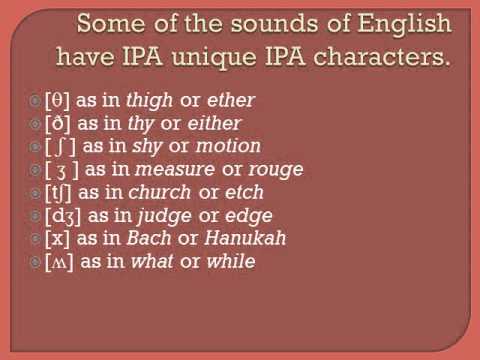
Added:Basic Phonetics and Phonology: Familiarity with the International Phonetic Alphabet (IPA) and the classification of consonants by place, manner, and voicing (e.g., voiced vs. voiceless stops and fricatives).
The Concept of Language Families: An understanding of the Proto-Indo-European (PIE) language family and how daughter languages (like Germanic, Latin, and Greek) descend from a common ancestor.
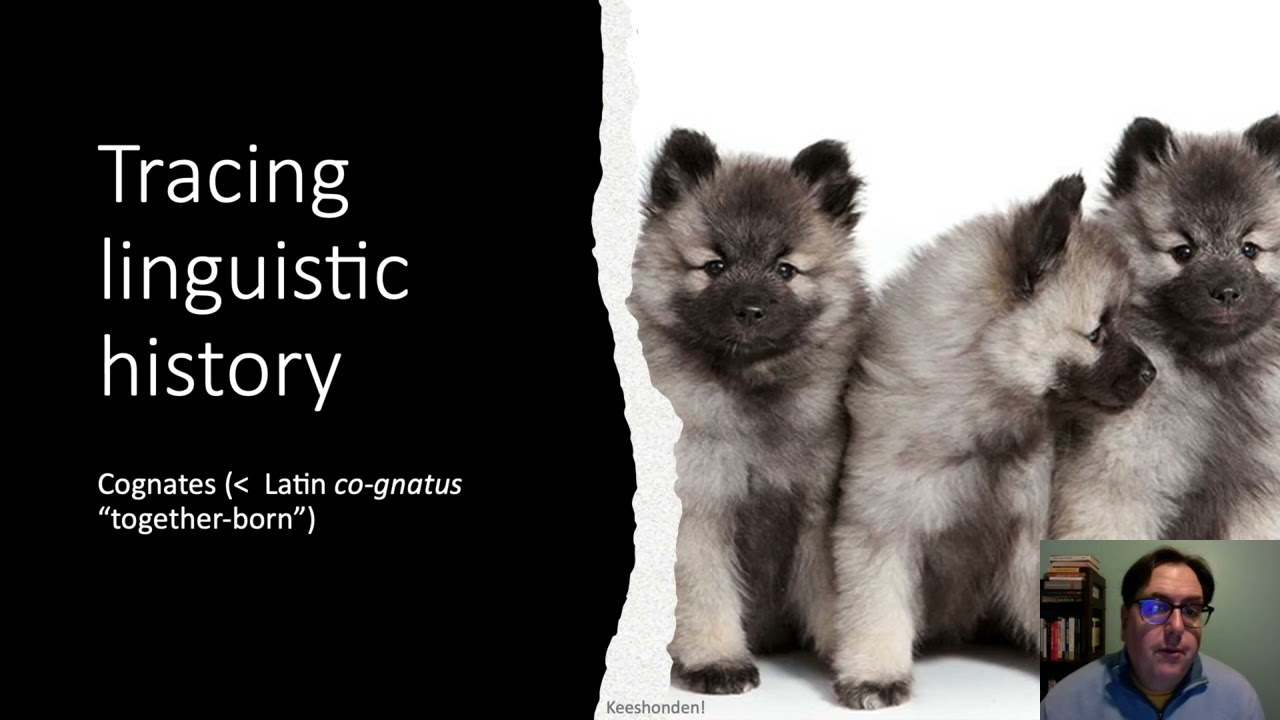
Cognates and Comparative Linguistics: Knowing what cognates are (words with a common etymological origin) and the basic principles of comparing words across related languages to trace historical relationships.
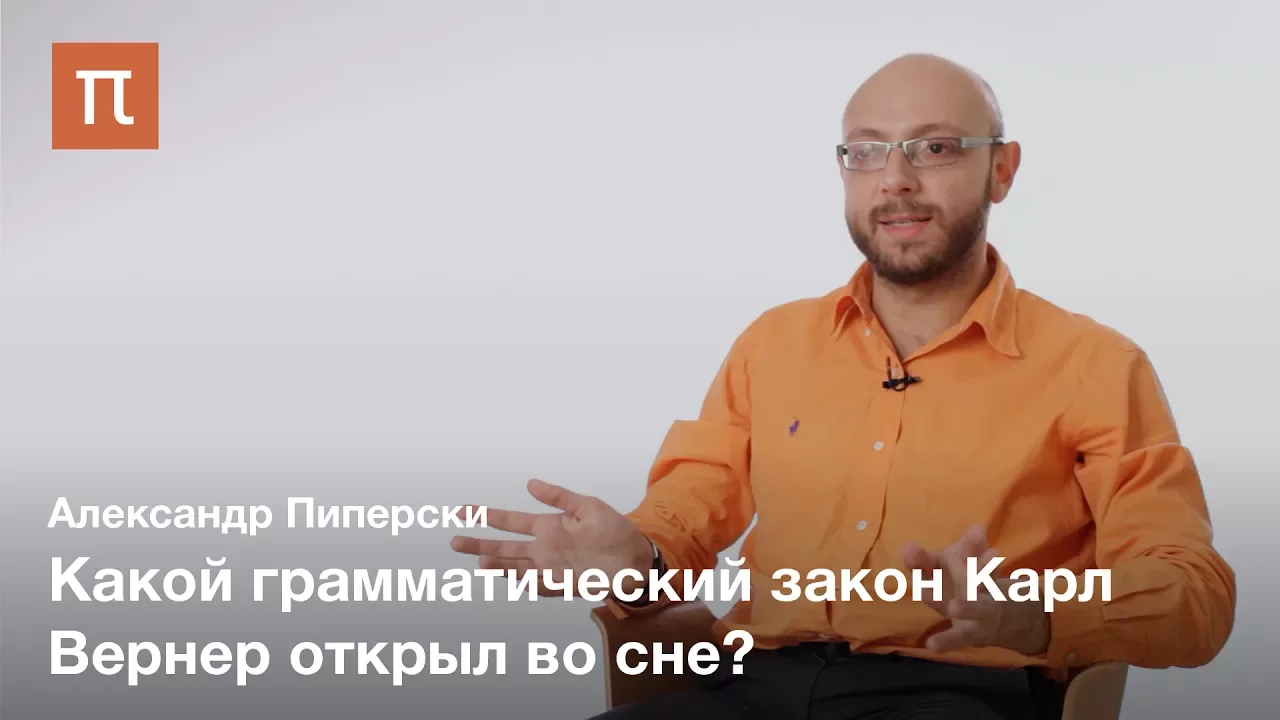
Verner's Law: Exploring the key historical linguistic development that resolved apparent exceptions to Grimm's Law based on the position of the Proto-Indo-European pitch accent.
The High German Consonant Shift: Analyzing the subsequent phonetic changes that split High German from other Germanic languages, explaining differences between modern English and German cognates.
The Neogrammarian Hypothesis: Investigating the late 19th-century linguistic school of thought asserting that sound laws operate systematically and without exception under equivalent phonological conditions.
Advanced Proto-Indo-European Reconstruction: Applying sound laws to reconstruct broader PIE vocabulary, morphology, and syntax, and exploring other historical sound shifts like Grassman's Law or Dahl's Law.
66.2K views2.3Klikes10:37Original Release: 2017-05-03
hi I'm Dr Jackson Crawford I'm a specialist in the Old Norse language and a historical linguist currently teaching at the University of California Berkeley and as of fall 2017 happy returning home to the Rockies to teach at the University of Colorado Boulder over the school year that's now concluding I have for some reason been posting videos about topics in Norse language and myth and also sometimes about more General Linguistics questions and today what I want to address is something more in the general Linguistics vein the regularity of sound change is one of the most important discoveries of the field of historical Linguistics in the past two centuries or so that it's existed basically if a given sound changes in one place in a language in one word or root that sound will change in the same way in other words and roots in the language barring some other sound change that prevents the operation of this sound change so for example in the last century or so the English language has been losing a sound the sound which is spelled wh or was spelled wh in words where it's present outside of a very few Pockets such as parts of Scotland and parts of the United States this sound has become a w a w everywhere that it once existed I'm kind of a fossil because I picked it up from older relatives the wh that you see spelled in words like which or why or where is routinely regularly replaced by W so you get which why where you are not going to expect that if a speaker does have that H sound like me if I say which why where you would be surprised to find out that a word like w l e whale you would be pretty surprised if I said like Dale right this violates the regularity of sound change I routinely have that H or you routinely have that W there's not going to be some surprise case where one of us has a d or P or something there instead similarly I know that I'm going to say when and I'm expecting that you're going to say when or when I don't expect that you're going to say you know Ben so this regularity is sort of a no-brainer but it's actually surprising just how consistent it is and consistent it is looking backwards at earlier stages of the language so we know from the efforts of historical linguist since about the 1780s that most languages of Europe and the western or southwestern part of Asia are all related and share a common ancestor and we call these the Indo-European languages because they stretch from India to Europe I have a separate video which I'll link in a card in the top right that discusses the uh sub branch of the uropean language family and give some examples of languages in each branch but suffice to say that the regular relationship of these languages can be demonstrated by regular sound changes just like the H to rule that's occurring in English right now one of the most famous documentations of a regular sound change in all of historical Linguistics actually concerns the way that consonants from Proto induran the ancestor language of all the Indo European languages develop into the Germanic languages now the Germanic languages are not languages descended from German although they include German the Germanic languages include English German Dutch frian Yiddish the Scandinavian languages Swedish Norwegian Fise isic Danish and also the extinct language Gothic and its close relatives I have a video that discusses the timeline of Old Norse one of the Germanic languages and includes some discuss question about the other dramatic languages too I'll post that in a link in a card on the top right as well but basically along the way to becoming the Germanic languages the Indo-European language in northern Europe had certain consonant changes occur and these consonant changes are called Grim's law and today you can look at a Germanic language like English and look at the consonants especially at the beginning of words where there have been fewer sound changes in the ensuing centuries to affect things and see a regular relationship between those consonants and the consonants in other Indo European languages so what I've got set up here are the changes of Grim's law with the Proto induran sound on the left side with an asteris representing reconstruction it's typical in linguistics you write an asteris next to a sound or word if it's not actually tested in writing anywhere and then to the right side I have what comes out in the dramatic languages including English so for my examples since I only have so much space on this little board I just have one of each sound but uh as I occur to me I'll also provide some others and I've mostly used Latin to represent the other Indo European languages this is just because Latin is the most familiar old indoeuropean languages to most speaker Indo European language to most speakers of English but down here I've had to rely on Sanskrit and Greek a little bit more don't interpret this as meaning that Latin is the answer of English because it isn't it's just that Latin is a distant cousin that keeps the sounds of prot European more routinely than the dramatic langues do so the first cluster of changes under Grim's law are P to f t to th which in Old Germanic languages like old Lis and Old English is typically written with the letter Thorn which looks a little bit like a P with an extra bar at the top and K to H in linguistics terms voiceless stuff STS become homorganic voiceless fricatives so P to F we see for instance Latin PO keeps the P but English father has the P turn into an F another good example of this would be Latin piscus fish where English has fish F we also see for instance at Latin tenuis thin and English thin the T has become a th or Latin C the root word for heart and English Heart Another series of changes includes B to p d to T and G to K in linguistics terms voice stops become homorganic voiceless stops this one is hard to find examples of because there's actually extremely little B in proto European for whatever reason that means that is pretty rare in early Germanic languages so a weak example that I have dug up is Latin bakum which is cognate with English Peg but I think even English Peg is alone from another dramatic language from older Dutch there's also D to T which there are more examples of Latin Dent or Greek D for tooth cognite with English teeth this also gives you a nice example of T to th the loss of in before fricative here in English is quite regular G to K there's the Latin root G that you'll find in English words like gelled or Glacier this is a root for cold and then English words like cool and cold prot European also had a series of voiced aspirates so I'm probably saying those poorly to someone with a fine accent for these things someone who perhaps speaks an indic language that still has these sounds since Latin also loses these it's hard to use Latin as an example here but I can use Sanskrit which keeps them as an example so for instance Sanskrit brother is cognate with English brother where we have the BH turning into just a b also notice another good example of T to th in for instance Sanskrit m is English me this is honey or a sweet drink so English me of course a drink made from honey and the GH disappears in sanscrit too but it becomes a KH written Kai in Greek so I'll use a Greek example here can which becomes or which is cognant with English Goose this is another case where a nasal like here has been lost before fricative in English and its closest relatives if you look at any given native word of English that is a word that's not borrowed from another language you will find that there is almost always some cognate in multiple other Indo European languages outside the Germanic group that has the that shows the effect in English of Grim's law so for instance something as simple as English Hound for a dog is cognate with Lettin con like in canine or something like English uh for or from that prepositional uh FR is cognate with Latin Pro which we see in many borrowed words in English one of the interesting things about English is that it's borrowed so many words from Latin and from Latin derived languages like French that you often have words that are affected by Grims law the native English vocabulary and words that are not affected by Grim's law because they've been borrowed from Latin which has no Grims law because it's not dramatic so you have to watch out in English and sort of sift through the borrowed versus the unborrowed vocabulary for instance we have father but we also have paternal from Latin we have thin but we also have a tenous argument from ltin we have heart but we also have cordial greetings Etc so that's something you have to watch for but for the native vocabulary sound changes like Grim's law allow us to formulate in very exact terms exactly how languages have changed over time and by back projecting those laws and sort of undoing them they allow us to reconstruct earlier stages of a language from the University of California I'm wishing you all the best
Up Next

7:51
Verner's Law Explained: The Germanic Consonant Shift
@AvuncularFeldspar
110.8K views•2008-08-31
36:52
Constraint Interaction in Optimality Theory: Epenthesis & Deletion
@Vidyamitra
180 views•2018-08-20

19:28
Writing Proto-Indo-European: *gʷr̥h₃-dʰh₁-o- & More | Etymology
@JacksonCrawford
22.5K views•2023-12-01

21:32
Accent Expert Explains U.S. Regional Dialects | Part 1
@WIRED
9.3M views•2021-01-21
Related Study Plans & Knowledge Roadmaps
Structured learning paths in Linguistics
linguistics
Optimality Theory: Tableaux & Constraints
01Phonological Basics: Sounds, Syllables & Rules
02Foundations of Optimality Theory: GEN, CON, and EVAL
03The Constraint Inventory: Markedness vs. Faithfulness
+ 2 more learning modules
15h5 modules
Explore Roadmap
linguistics
Morphosyntactic Alignment: S, A & P Systems
01Foundations of Syntax: Transitivity and Arguments
02The Linguistic Variables: Mapping S, A, and P
03Nominative-Accusative Alignment
+ 3 more learning modules
12h6 modules
Explore Roadmap
linguistics
Analyzing Sign Language: Phonology & Syntax
01Foundations of Sign Language Linguistics
02Phonology: The Five Parameters of a Sign
03Morphology: Word Formation and Classifiers
+ 2 more learning modules
14h5 modules
Explore Roadmap
linguistics
Pragmatics: Speech Acts, Grice & Politeness
01Introduction to Pragmatics: Meaning in Context
02Grice’s Cooperative Principle & Implicature
03Speech Act Theory
+ 2 more learning modules
14h5 modules
Explore Roadmap