














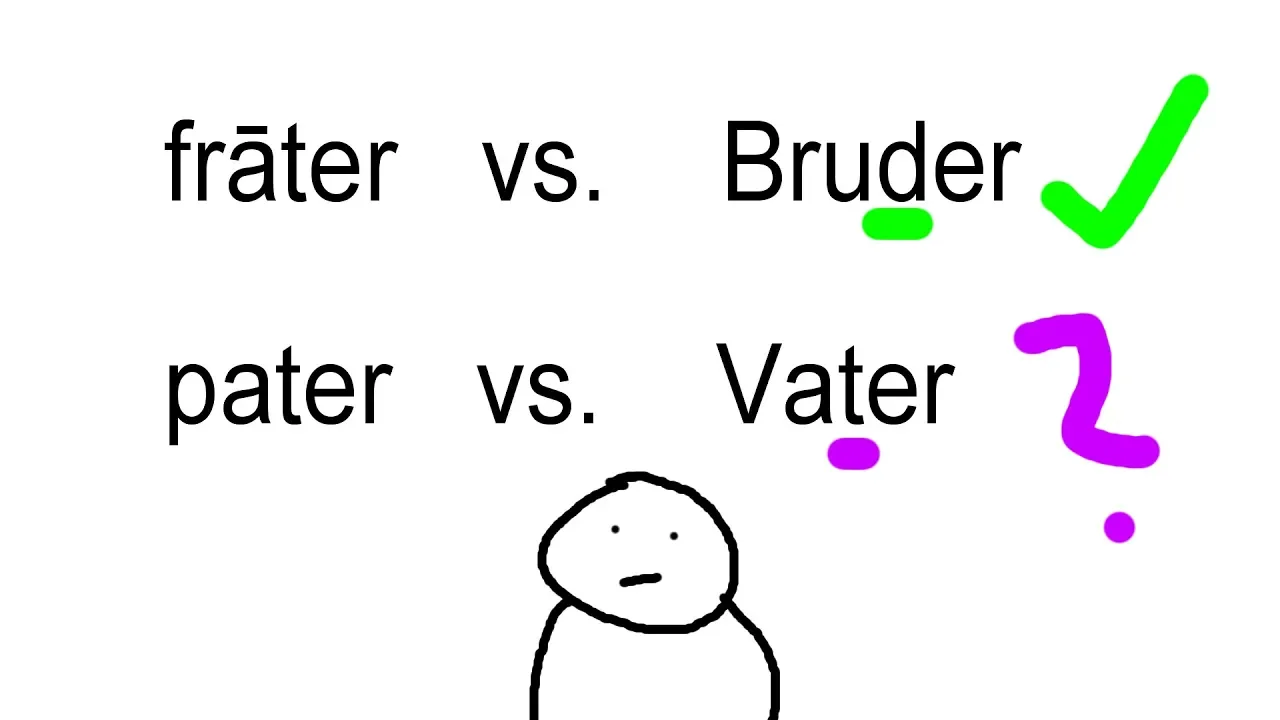









Verner's Law, discovered by Karl Verner in 1875, explains why certain consonants in Germanic languages (like Gothic and Old English) developed voiced sounds (b, d, g) instead of voiceless ones (p, t, k), addressing the exceptions to Grimm's Law; this discovery revealed that the original Indo-European consonants were actually voiced, and the voiceless forms in Latin were later developments, fundamentally changing our understanding of Germanic language evolution.
Verner's Law Explained: The Germanic Consonant Shift
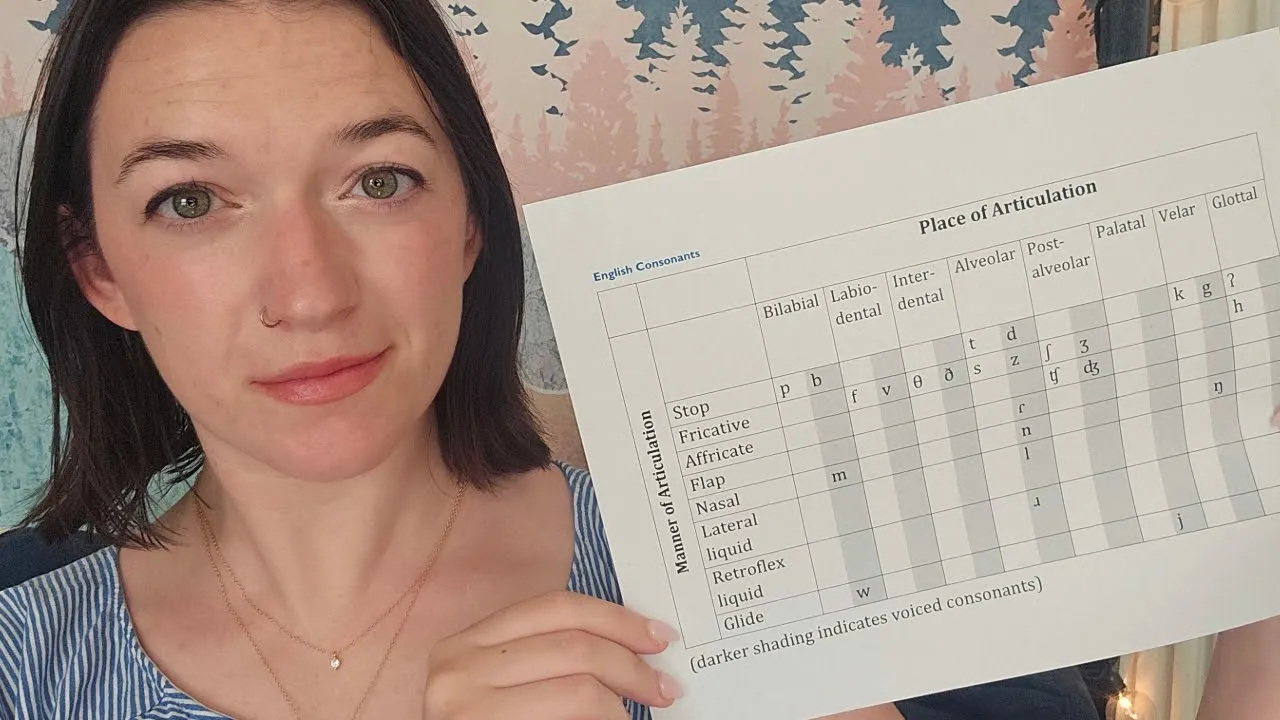
Added:Basic phonetic concepts, particularly the distinction between voiced and voiceless consonants, and manners of articulation (stops vs. fricatives).
The concept of Proto-Indo-European (PIE) and how historical linguists reconstruct proto-languages.
Grimm's Law (the First Germanic Consonant Shift), as Verner's Law specifically explains the systematic exceptions to this sound change.
The nature of mobile pitch accent systems in ancient Indo-European languages like Sanskrit and Ancient Greek.
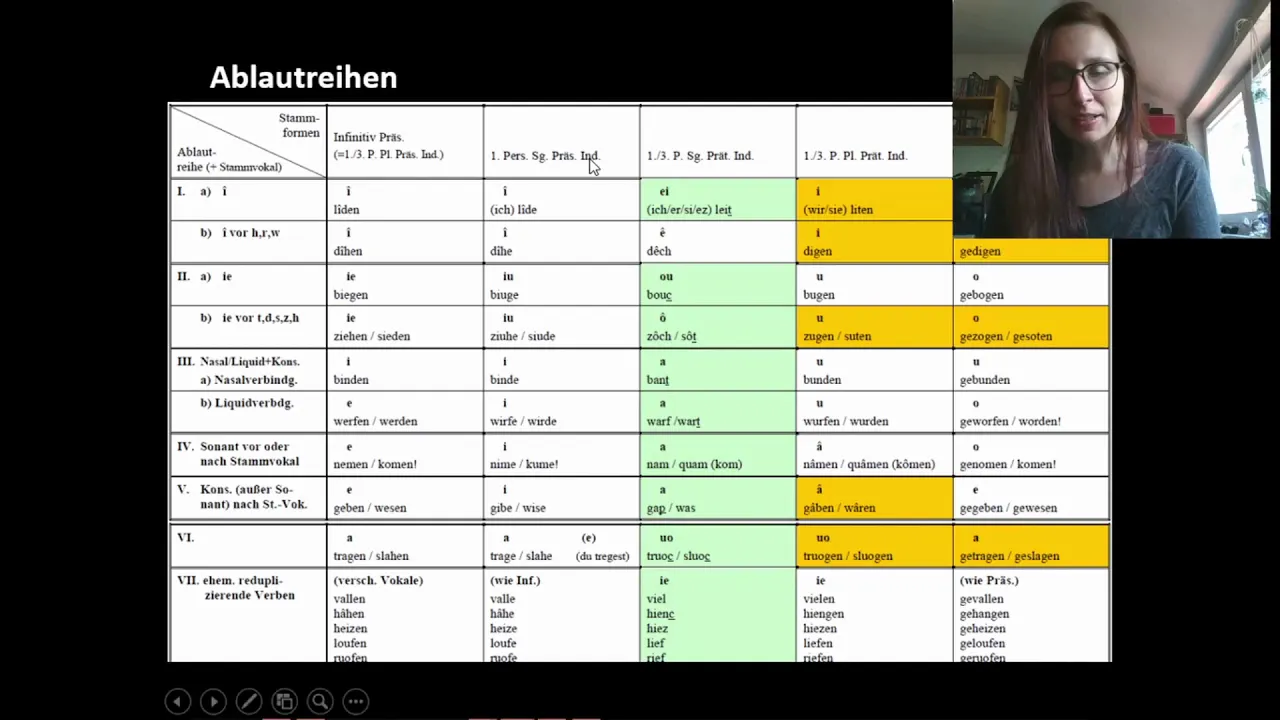
Grammatischer Wechsel (Grammatical Alternation), which shows how Verner's Law created consonant alternations in Germanic strong verb paradigms (e.g., modern English 'was' vs. 'were').
The Proto-Germanic Accent Shift, exploring how Germanic languages transitioned from a mobile pitch accent to a fixed stress on the root syllable.
The Second (High German) Consonant Shift, which explains the further phonetic divergence of High German from other West Germanic languages.
The application of regular sound laws in the comparative method to reconstruct vocabulary across Germanic and Indo-European branches.
110.8K views1.1Klikes7:51Original Release: 2008-08-31
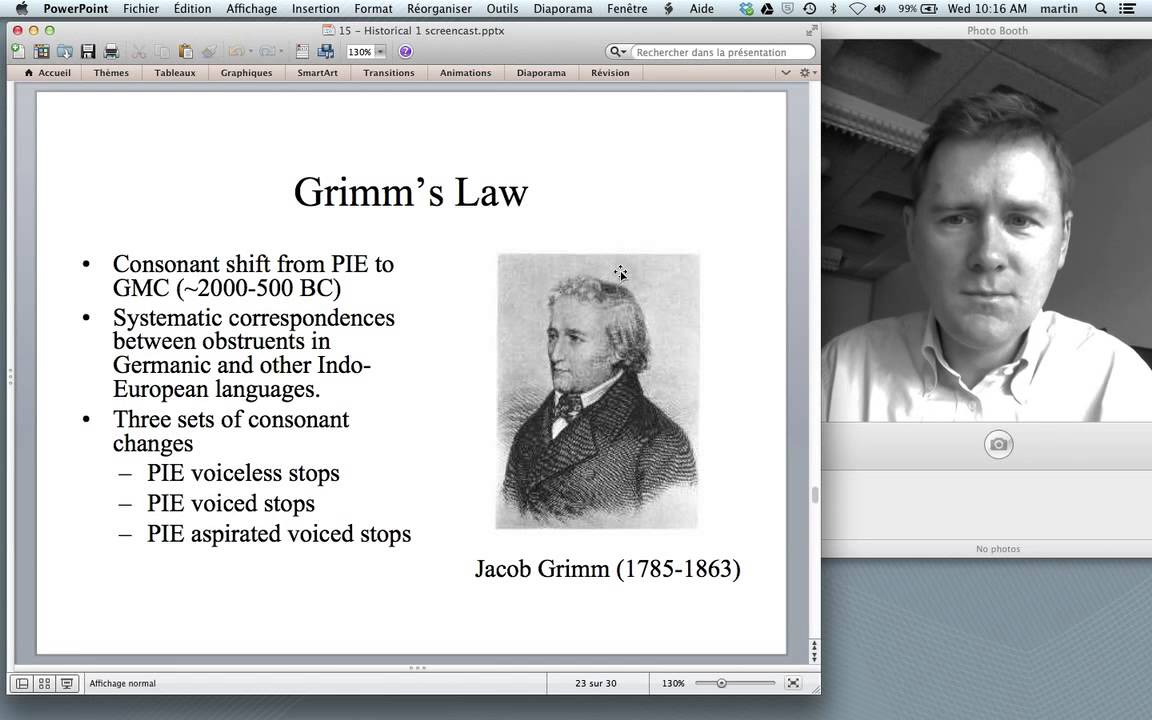
what's wrong Frankie nothing nothing why this mangled copy of Brown's Gothic grammar would tell a different story just these Dawn and D bations I know they may look daunting but with a little perseverance and verner's law you can tackle most any problem what's burner's law you don't know they didn't teach us well verner's law is a voicing rule of early Germanic a very important voicing rule so why don't I tell you and you all about it [Music] the story of verner's law begins in 1749 with the birth of Sir William Jones in England Jones was a scholar of Greek and Latin who even as a boy found that he could learn ancient languages with the greatest of ease through his Brilliance and hard work Jones's knowledge of the classical World surpassed even that of his teachers who found that they did not know exactly what to do with him apart from letting him continue to read on his own but alas Jones was not able to put his skills in philology to any kind of practical use and he would have to choose another field if he was going to support himself through life things became so hopeless in fact that William Jones found it necessary to enter law school and be trained for the bar though he graduated with honors and a great breath of knowledge of Juris Prudence his love of ancient and far-off cultures never waned and so when an opportunity arose to fill a Judicial Post in India he jumped at the chance and was off to the subcontinent India though a British colony at the time was still a great mystery to most westerners and those who went there had no idea what they could expect but Jones was The Adventurous sort and he made his journey there his Greatest Adventure soon after his arrival in Bengal in the northeastern part of the country William Jones established the Royal Asiatic Society in the hopes of enlightening the world about the history and culture of India poking around for ancient texts Jones found that they were not difficult to come by and that several languages were preserved there whose Origins reached farther back into Antiquity than anything that could be found in Europe one of these languages was called sanscrit and Jones set his mind to becoming proficient in that most revered of Classical Languages of IND India in his readings Jones discovered something fascinating and unexpected about Sanskrit the words and the grammar of that language were not dissimilar to those of Latin and Greek and what was more they seemed more complete less degraded Jones theorized that Latin Greek and Sanskrit had all come from some common ancestor and then developed along different lines this fascinating new idea was made public by him at the next meeting of the Royal Asiatic Society Jones's idea took a while to catch on but when Sanskrit became more widely known in the west and other modern languages began to be studied more in depth the idea of a protol language other than Hebrew became more and more popular by the early 19th century the term Indo-European had been created referring to a language family spanning from India all the way to Europe and encompassing such diverse languages as Latin Greek Hindi Welsh French German Icelandic Russian and many others reshaping our conception of language completely can one little boy change the world I guess he can if he's William [Music] Jones heck I know all about induran well maybe but you probably don't know how certain continent shifted from Proto Indo European European to Germanic gee no well let me tell you about the next important people in the story The Brothers [Music] Grim the early 19th century was a busy time for linguists as they now had a new and exciting framework for investigation and many language families had never really been given much serious consideration before though many of the most important discoveries in Indo-European were made by the noted philologists rosmos Christian rasque and France Bop much of the information that came to light about the Germanic languages was codified by the brothers Grim these were the same Brothers Grim who compiled the most famous collection of European fairy tales telling of the dangers of bears in the woods wolves in the woods and little girls in the woods in the second edition of his deer grammatic yakob Grim using data from both Rusk and his own work formed what was later to be known as Grim's law or the first consonant shift in the development from Indo-European to Germanic he observed a very significant change had occurred in the shape of consonants particularly those labeled stop consonants that is consonants that temporarily stop the flow of air completely exactly why this change occurred is not known and numerous theories have been put forth to explain its causes concentrating on the results of the change however Grim noted that Indo-European p t and c became Germanic FF and H later H thus explaining the connection between fatherly fish and paternal Pisces between the house of horns and Kasa Corum and between the pronoun two in Latin and th in English Grim's law explained the changes in hundreds of words and was justifiably hailed as one of the great discoveries in historical Linguistics but unfortunately there were also many words that did not develop according to Grim's law the Indo European root okus for example which occurs in the word ocular of the I should have shifted to a form with h thus or this however did not happen the ger IC forms always have voiced sounds a voed sound being one that uses the lyrics As in vo Z versus voiceless s Gothic has AO Old English had a and Modern English has I where Y is actually a variant of an ancient good though one might expect Grim to have reacted harshly to critics of his theory which worked so well in most situations Grim in fact recognized the shortcomings of his law and hoped that someone would come along to find out why there were so many discrepancies why B's were becoming B's why T's were becoming D's and why K's were becoming G's what he asked himself had caused the voicing in these consonants
Up Next

13:48
The Indo-European Dual Number: Language, Culture, and Legacy | TEDx Talk
@TEDx
112.2K views•2015-12-18
36:52
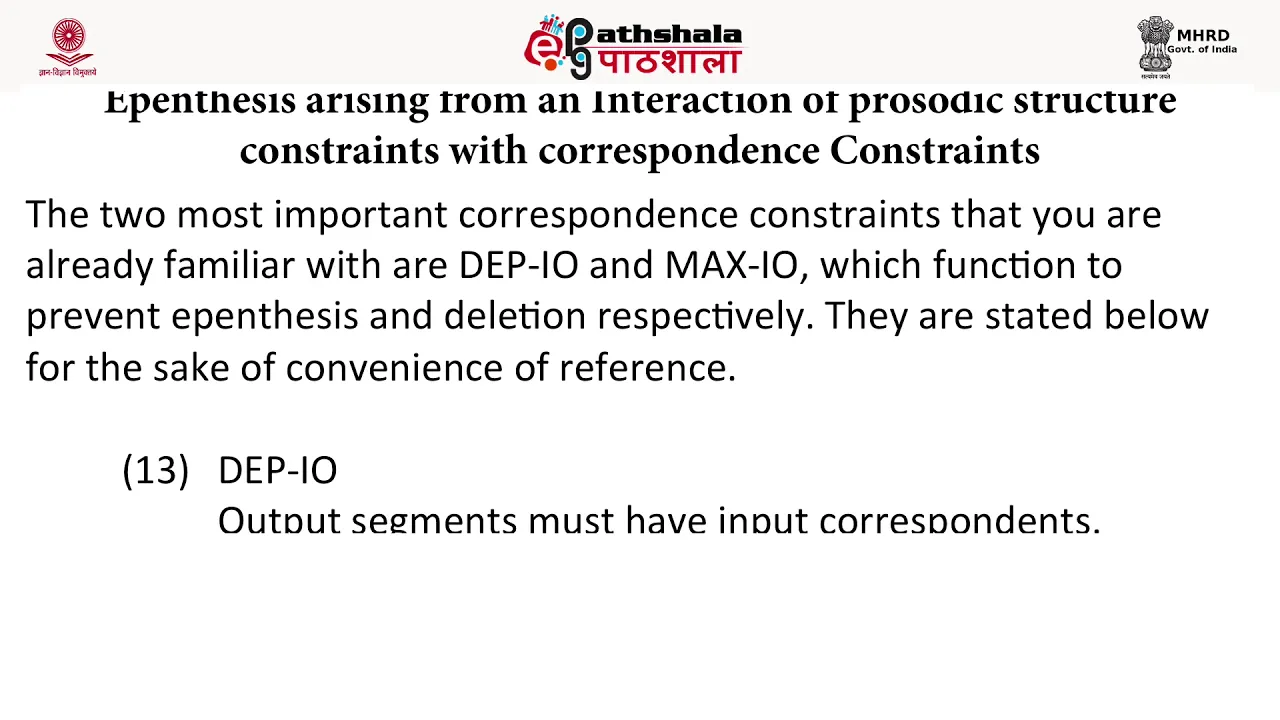
Constraint Interaction in Optimality Theory: Epenthesis & Deletion
@Vidyamitra
180 views•2018-08-20

8:59
Forensic Linguistics: How Language Solves Crimes | PBS
@pbsstoried
1M views•2024-01-25

21:32
Accent Expert Explains U.S. Regional Dialects | Part 1
@WIRED
9.3M views•2021-01-21
Related Study Plans & Knowledge Roadmaps
Structured learning paths in Linguistics
linguistics
Optimality Theory: Tableaux & Constraints
01Phonological Basics: Sounds, Syllables & Rules
02Foundations of Optimality Theory: GEN, CON, and EVAL
03The Constraint Inventory: Markedness vs. Faithfulness
+ 2 more learning modules
15h5 modules
Explore Roadmap
linguistics
Morphosyntactic Alignment: S, A & P Systems
01Foundations of Syntax: Transitivity and Arguments
02The Linguistic Variables: Mapping S, A, and P
03Nominative-Accusative Alignment
+ 3 more learning modules
12h6 modules
Explore Roadmap
linguistics
Analyzing Sign Language: Phonology & Syntax
01Foundations of Sign Language Linguistics
02Phonology: The Five Parameters of a Sign
03Morphology: Word Formation and Classifiers
+ 2 more learning modules
14h5 modules
Explore Roadmap
linguistics
Pragmatics: Speech Acts, Grice & Politeness
01Introduction to Pragmatics: Meaning in Context
02Grice’s Cooperative Principle & Implicature
03Speech Act Theory
+ 2 more learning modules
14h5 modules
Explore Roadmap