







![Какой же русский не понимает санскрита? Ученые против мифов: классика [7-11, 2018]](https://i.ytimg.com/vi_webp/Jzz8vUHO9tQ/maxresdefault.webp)










In Proto-Indo-European reconstruction, an 'S' in parentheses indicates uncertainty about whether the sound belongs to a suffix or word-initial position (S-mobile/rebracketing), while subscripted Hs (h1, h2, h3) represent laryngeal consonants that caused vowel changes in descendant languages but did not survive into modern Indo-European languages; these laryngeals explain vowel discrepancies like the feminine suffix -a in Latin versus -ō in Proto-Germanic, and their disappearance triggered compensatory vowel lengthening in both branches.
Proto-Indo-European S-Mobile and Laryngeals Explained
Added:Introduction to Historical Linguistics and the Comparative Method used to reconstruct unattested languages.
Basic understanding of Proto-Indo-European (PIE) as a reconstructed ancestral language and its major daughter branches (e.g., Germanic, Indo-Iranian, Italic).
Fundamental concepts of phonetics and phonology, specifically consonantal articulation, voicing, and vowel systems.
An understanding of the regularity of sound change and sound laws (such as Grimm's Law).
The historical discovery of Hittite and the Anatolian branch, which provided the empirical archaeological proof for Ferdinand de Saussure's Laryngeal Theory.
The mechanics of PIE Ablaut (vowel gradation) and how laryngeals functioned as 'vowel colorers' and 'lengtheners' to shape Indo-European grammar.
PIE Root Theory, focusing on the standard consonant-vowel-consonant (CeC) root structure and the role of laryngeals within those templates.
Specific developments of laryngeals in daughter languages, such as the 'triple reflex' of laryngeals in Ancient Greek compared to other branches.
111.1K views5.9Klikes12:14Original Release: 2023-02-07
Hey guys, what’s up. So, there’s no doubt that the reconstructed language we know as Proto-Indo-European can be a bit intimidating, and sometimes, downright illegible. There are some concepts that aren’t easy to understand without a lot of help. I mean, what in the world does all this mean? Well today, I’m gonna try and help y’all out. In this video, I’ll take two of the most confusing phonological concepts from PIE, and explain them in a lot of detail, with like, examples and such. To be specific, y’all are gonna learn about what it means when there’s an S in parentheses at the beginning of a lemma (the root given for reconstructed words), and later, I’ll explain the weird Hs with subscript numbers.
Let’s go!
So first off, and a bit easier, what does it mean when a PIE reconstruction starts with an S in parentheses? Like all of these? This is known as S-mobile to Indo-European scholars, and it’s an example of rebracketing. Rebracketing is a process by which, due to people being unsure where word boundaries are, a sound will move from the end of one word to the beginning of the next one, or vice versa. We have examples of this in modern English, namely with the letter N. You see, English has an allomorph on the indefinite article, in which it’s pronounced a when before a consonant, and an before a vowel. (An is the original form, btw.) As a result, things can get a bit murky when talking about words that could or could not begin with N, especially for illiterate people, which was most people until recently. The best known example of this is the word nickname, which is an alternative unofficial name someone or something may be called. In Early Middle English, the word was actually ekename [ˈeːknaːm], with eke [eːk] meaning “additional”. (It comes from Proto-Germanic *auk, and it’s related to North Germanic words for “and”, and West Germanic words for “also”). But ya, during Middle English, speakers were saying the phrase an ekename and thought that instead, it was a nekename. And that gives us the modern term nickname, so no, unfortunately it’s not related to the fact that Nick is a nickname of Nicholas, which was what I thought in grade school. It can go the other way too, like with adder, a type of snake that falls into the broader category known as vipers. In Early Middle English, it was a nadder, and it’s related to the German word Natter, the Dutch word adder, and more distantly, the Italian word natrice, which means grass snake. Interestingly, you’ll notice that the Dutch word also underwent rebracketing. The Dutch indefinite article doesn’t have an allomorph, but it does end with N, and that’s enough. The German article, on the other hand, is eine, since the word is feminine, which prevents any dreams of rebracketing in that case.
But like, how does this fit into PIE? Well, the sound in question is S, which just so happens to have ended a lot of derivational suffixes in PIE. And using words from modern Indo-European languages, we can tell that the PIE speakers and their relatively close descendants sometimes couldn’t decide whether an S was on an inflectional suffix, or at the beginning of a word (or both). Take, for example, the English adjective short. It comes from Proto-Germanic *skurtaz, which itself comes from PIE *skr̥tós. Also take the cognate Spanish adjective of the same meaning, corto. It comes from the Latin word curtus, which itself comes from the PIE word… *kr̥tós. But wait, didn’t I just say short and corto are PIE cognates? Ya, and they still are. However, in this particular case, due to rebracketing happening in at least one of the branches, the community that went on to become Germanic thought that this word started with a [s] sound, while the community that would eventually speak Latin disagreed. This results in historical linguists being unable to tell if the PIE word was *skr̥tós or *kr̥tós, so they put an S in parentheses there to indicate the uncertainty, as without the rebracketing, we would have either English short and Spanish escorto, or if the opposite was true, Spanish corto and English… hort (because of Grimm’s law). (I said that last part because I know linguistic whataboutisms are some absolute catnip to us language nerds.) And this isn’t an isolated example, Wiktionary lists 40 lemmas with S-mobile on the front, so I’ll say there are at least 40 of them. Here’s the full chronological description of all the relevant sound shifts involved in the short vs. corto evolution.
Ok now we’re gonna completely change course, and talk about the other thing I’ll explain in this video, the Hs with subscript numbers. Basically, these are called the PIE laryngeals, and they represent throaty sounds of uncertain value. There are three of them, fittingly labeled h1, h2, and h3, and none of them survived into any presently living Indo-European languages.
The only reason we suspected their existence is because of inconsistencies within the vowels of modern Indo-European languages. However, this concept is ridiculously hard to understand when using child languages we do know, to reconstruct unattested parent languages. So instead, I’m gonna do the opposite; I’ll use a parent language we know to preconstruct child languages that we don’t, to make the sound shifts easier to conceptualize. Basically, I’m gonna take Modern English, and make up some hypotheticals about its evolution in the future. But first, I gotta set some parameters. First off, remember that super successful video where I predicted sound shifts in Future American, like 300 to 700 years in the future? Ya nah, we’re going wayyyyy further than that here. Rather than 2723, a more apt timeframe for what I’m about to say would be like 7023, or maybe even 80’ or 9023. Second, I’m not making any actual predictions here, I’m merely coming up with examples of potential sound changes that collaterally demonstrate how the PIE laryngeals were figured out. And finally, I actually don’t expect anything I’m saying here to come true, because the futuristic settings I’m putting up are absolutely apocalyptic. So what are these settings? Well, in this timeline, something catastrophic happened, like a second coming of the Chicxulub asteroid or something like that, that destroyed all of our present records of the English language, as well as everyone who speaks any language related to English and all of their records. The only Indo-European survivors are a few English speakers, and they continue to have their language evolve- and specifically for our purposes, the liquids that we now know as L and R disappeared, but they still left their mark. This means that Modern English is the proto-language in this scenario (or actually 1700s English, to be more accurate). These future people have their own writing system, which I will be representing with the Latin alphabet for clarity, and they realize, much like William Jones, that all of these languages have a common origin, and they decide to reconstruct it. They figure out the consonant correspondences just fine, but then they realize that there are unexpected discrepancies among the vowels. So they get back to work. By the way, I’m gonna save the spoilers so that y’all can try to solve this like a riddle if y’all want.
So anyway, these linguists lay out their tables of words to compare. They’re puzzled- for example, why would the [ø] sound from Language 1 have so many different corresponding vowels in the other languages? Why are the bottom two words on the list homophones in Languages 1, 4, and 5, while in Languages 2, 3, and 6, they’re pronounced differently? And why are some of these vowels at the ends of words completely absent from Language 6? The linguists wise up. Since consonants can sometimes change the vowels around them, they hypothesize that there must have been some consonants in the parent language that no longer exist, but that affected the vowels surrounding them before going out. By investigating further, they figure out that there were two of them, and that they were liquids, and that the bygone consonant at the end of the first word on this list probably promoted rounding, while the consonant ending the second word, as well as being in the middle of the first word, promoted centralization. With this realization, the linguists can now transcribe the proto-language (which remember, is just Modern English). They call the centralizing liquid Liquid 1, or L1, and determine it probably involved bunching up the tongue, while the rounding liquid is dubbed Liquid 2, or L2, and it’s said to have been lateral, since that would lead to rounded vowels. These linguists can’t be exactly sure what sounds Liquid 1 and Liquid 2 are, so they’ll have to settle for these weird letters with subscript, but now they can reconstruct the words in the proto language as shown onscreen. Y’all ready for me to reveal these Modern English consonants? Well, Liquid 1 is [ɹ], and Liquid 2 is [ʟ], which makes the words we’ve been working with… circle, elder, lake, raid, cold, and cord.
But like, why’d I just show all that? Well, some of the changes I was basing these hypothetical future languages off of are already in motion around liquids. Take, for example, AAVE in some places, which I loosely based Language 3 off of. It has optional R deletion in coda position, where it’s pronounced [ə]. It also puts L in a considerably-less-optional allophone in coda position, becoming [w], but in some cases, this can just result in a rounded vowel. For example, the word circle in AAVE is already pronounced something like [sɹ̩kʊ]. Similar things can be said about British English, which is what I loosely based Language 2 off of. But to contrast the above two dialects, I’ll use the words cold and cord. As you can hear, my dialect of American English has an allophone where /ɞu̯/ becomes [o] before both L and R. However, in British English, this allophone only exists before R, or at least it did, before the R disappeared. The L also disappeared in some British English, but without the allophone, giving us cold and cord. Meanwhile in some AAVE, the R and L are both absent, but the allophone doesn’t exist at all, which means that the above two words are homophonic in this AAVE, both pronounced [kʰʌu̯d]. By contrast, in older southern drawl, which I loosely based Language 4 off of (basically how my grandma talked), this allophone also doesn’t exist, but the L and R are still there. All this is why the hypothetical future reconstructions are so complicated- different allophonic systems can occur in different dialects before the conditioning environment potentially disappears, and if you don’t have writing from the proto language, you’ll just have to deduce what kind of consonant was there. (By the way, to cover what the other three future languages were loosely based off of: Language 1 was loosely based off of Baltimore, Philly, or any American dialect that has strong rhotic centralization, Language 5 was loosely based off of English with a thick West African accent, and Language 6 wasn’t based off of anything, I just needed a dialect to entirely delete the last syllable in circle.)
So now back to the actual topic at hand, linguists had to use modern Indo-European vowel discrepancies to determine the consonants in PIE that caused them. But I’m not gonna make y’all solve any riddles this time, as I said earlier, there were three laryngeals in PIE. h1 generally leads to mid vowels like [e] so it was probably just something soft like [h], h2 generally leads to open vowels like [a], so it was definitely harsher, maybe like [x] or [χ], and h3 generally leads to rounded vowels like [o], so it was probably labialized itself, like [xʷ]. Again, while the sounds I postulated above fit the bill for the laryngeals, and I use them when I have to read PIE words, we can’t be 100% certain that those were their true pronunciations.
So anyway, what were some of the problems that the laryngeals solved? Well as mentioned, they mostly helped solve vowels within words. For instance, if Proto-Germanic had a well-known o>a shift, then why was the feminine marker in Latin -a, while in Proto-Germanic it was -ō? This can get explained with Laryngeal 2. If the PIE feminine suffix was *-a, then this would seem backwards. However, the laryngeal system solves it by making the feminine suffix *-eh2. This way, you could have the Proto-Germanic suffix *-ō and the Latin suffix -a without any offsetting vowel shifts. We can see this using a reconstructed PIE word for water, *h2ékweh2, which became Latin aqua, which you’re probably familiar with, and Proto-Germanic *ahwō, which didn’t survive into Modern English, but it did become the Swedish word for river, å. This rule also explains certain vowel shifts in the middle of the word as well, like the fact that the difference between Proto-Germanic *brōþēr and Latin frāter can be explained with their PIE descendant being *bʰréh₂tēr. But then, you may ask why the Latin word pater corresponds to Proto-Germanic *fadēr. In this case, there wasn’t a vowel before the laryngeal, the PIE word was just *ph₂tḗr. Also, notice how in both Latin and Proto-Germanic, the first vowel in the word for brother is long, while in father, it’s short. The long vowel is, in fact, a trace of the now-gone laryngeal- both languages did compensatory lengthening to the vowels when the laryngeals disappeared. Outside of the words, like I demonstrated with Language 6 in the hypotheticals earlier, the PIE laryngeals also explain some vowels there. For example, the English word star is a cognate with the Greek word αστέρας [aˈsteɾas]. Looking further back, the Proto-Germanic word was *sternǭ, while the Ancient Greek word was ἀστήρ [astɛ̌ːr]. So what did the PIE word look like? In fact, it was *h₂stḗr. (Pause to read if you want to know what this nonsense with the suffixes is.) Laryngeal theory explains this, as there was simply the difference in sound shift ordering, that the speakers who would become Greek added an epenthetic [a] sound after the laryngeal before it disappeared, while the Pre-Germanic speakers just had the laryngeal drop off with no trace.
In addition, the laryngeals solved some consonant-related issues in Indo-European languages as well.
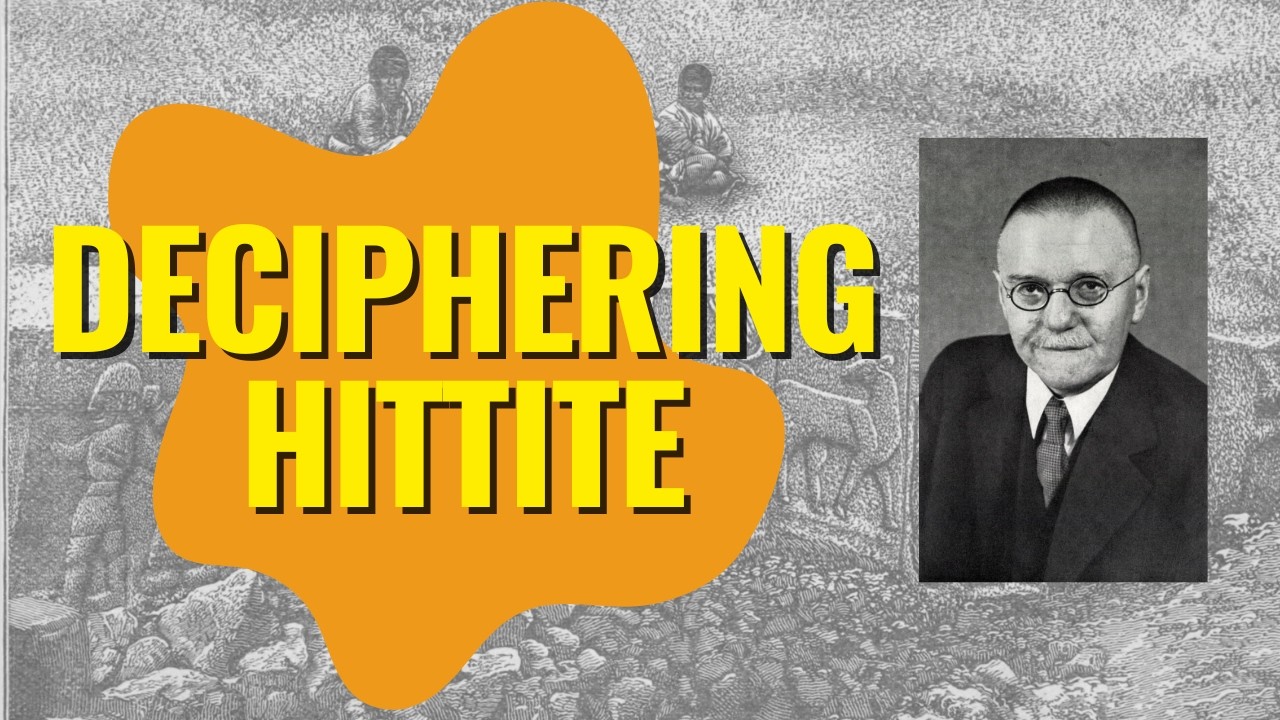
For one, there’s the way laryngeal theory was proven true- Hittite, an ancient language that was spoken in what’s now Turkey. Basically, the theory about laryngeals was first hypothesized in 1879 by a Swiss linguist named Ferdinand de Saussure, but it wasn’t widely accepted.
However, the newly deciphered Hittite language was determined to have been Indo-European in the late 1910s by Czech linguist Bedřich Hrozný, but it had an unexplained [χ] sound (typically transcribed with H with a breve below it) that didn’t seem to originate from anything they knew in PIE. So in 1927, a Polish linguist named Jerzy Kuryłowicz proposed that the findings of Saussure and Hrozný were in fact connected, and that the Hittite [χ] sound was descended from the PIE laryngeals. Boom, multiple problems solved.
As it turns out, Laryngeals 2 and 3 both became the Hittite [χ] sound, as shown with the examples on screen. For other examples of the laryngeals surviving as consonants, there are a few Persian words starting with the [χ] sound that are believed to be loanwords from now-extinct minority languages beside Persian that kept the laryngeals. Here are the main examples of those. And finally, in the Indo-Aryan languages, the laryngeals combined with voiceless plosives to form the aspirated plosives, which is why those languages have four sets of plosives instead of the three that PIE had. If you want to see the specifics of the laryngeals, go to the Wikipedia page titled Indo-European sound laws, and scroll down to the section called “Vowels and Syllabic Consonants”.
So there you have it, that’s two complicated concepts from PIE explained in detail, with modern and/or futuristic examples so that they’re easier to conceptually grasp. Hopefully the next time you’re reading some word in PIE, you’ll remember this and it’ll be easier to understand both how to read it, and what exactly it means for their evolution into the modern Indo-European languages. I think these are the two most difficult concepts, but if there are any others from PIE (or any other proto language, for that matter), leave a comment, and there’s a chance it may become a video in the future, but also I intend to do a video about Indo-European sound shifts a bit down the road when I can, so I’ll probably end up covering it there. Thanks for watching, and I’ll see y’all next time.
Up Next
45:45
Words in the Clouds: Digital Writing and Letter Archives
@mtsuhonorscollege
173 views•2019-04-24
36:52
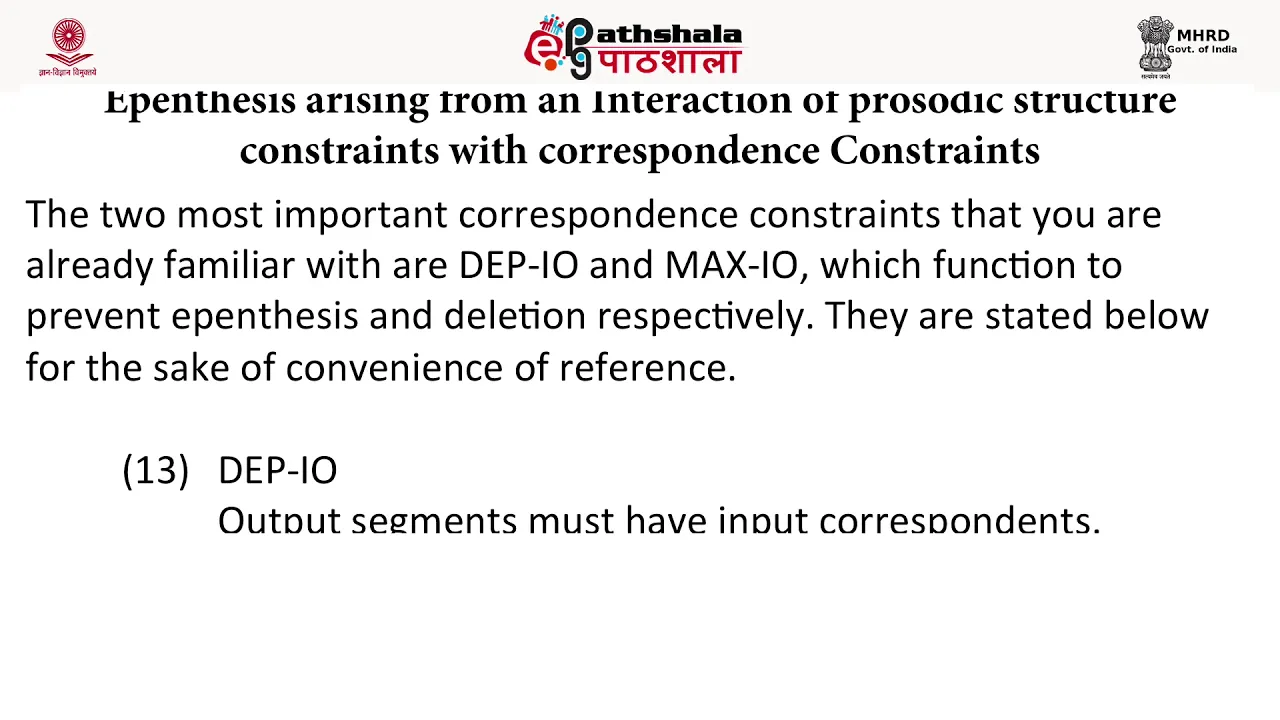
Constraint Interaction in Optimality Theory: Epenthesis & Deletion
@Vidyamitra
180 views•2018-08-20

8:59
Forensic Linguistics: How Language Solves Crimes | PBS
@pbsstoried
1M views•2024-01-25

21:32
Accent Expert Explains U.S. Regional Dialects | Part 1
@WIRED
9.3M views•2021-01-21
Related Study Plans & Knowledge Roadmaps
Structured learning paths in Linguistics
linguistics
Optimality Theory: Tableaux & Constraints
01Phonological Basics: Sounds, Syllables & Rules
02Foundations of Optimality Theory: GEN, CON, and EVAL
03The Constraint Inventory: Markedness vs. Faithfulness
+ 2 more learning modules
15h5 modules
Explore Roadmap
linguistics
Morphosyntactic Alignment: S, A & P Systems
01Foundations of Syntax: Transitivity and Arguments
02The Linguistic Variables: Mapping S, A, and P
03Nominative-Accusative Alignment
+ 3 more learning modules
12h6 modules
Explore Roadmap
linguistics
Analyzing Sign Language: Phonology & Syntax
01Foundations of Sign Language Linguistics
02Phonology: The Five Parameters of a Sign
03Morphology: Word Formation and Classifiers
+ 2 more learning modules
14h5 modules
Explore Roadmap
linguistics
Pragmatics: Speech Acts, Grice & Politeness
01Introduction to Pragmatics: Meaning in Context
02Grice’s Cooperative Principle & Implicature
03Speech Act Theory
+ 2 more learning modules
14h5 modules
Explore Roadmap