









![1.5. KEPLER KANUNLARI- Sayfa-90 /Uygulama- 2 /12. Sınıf Fizik Meb Ders Kitabı] [Fen Lisesi]](https://i.ytimg.com/vi/svLnBd3q1T8/hqdefault.jpg)














Lagrangian points are five specific locations in a two-body gravitational system (such as the Sun-Earth system) where objects can maintain the same orbital period as the larger body despite being at different distances; these points exist because the combined gravitational forces from both bodies create effective changes in the apparent mass that govern orbital motion, allowing objects at different radial positions to achieve synchronized orbital periods.
Lagrangian Points Explained: Physics of Orbital Mechanics
Added:Newton's Law of Universal Gravitation and its role in calculating gravitational attraction between celestial bodies.
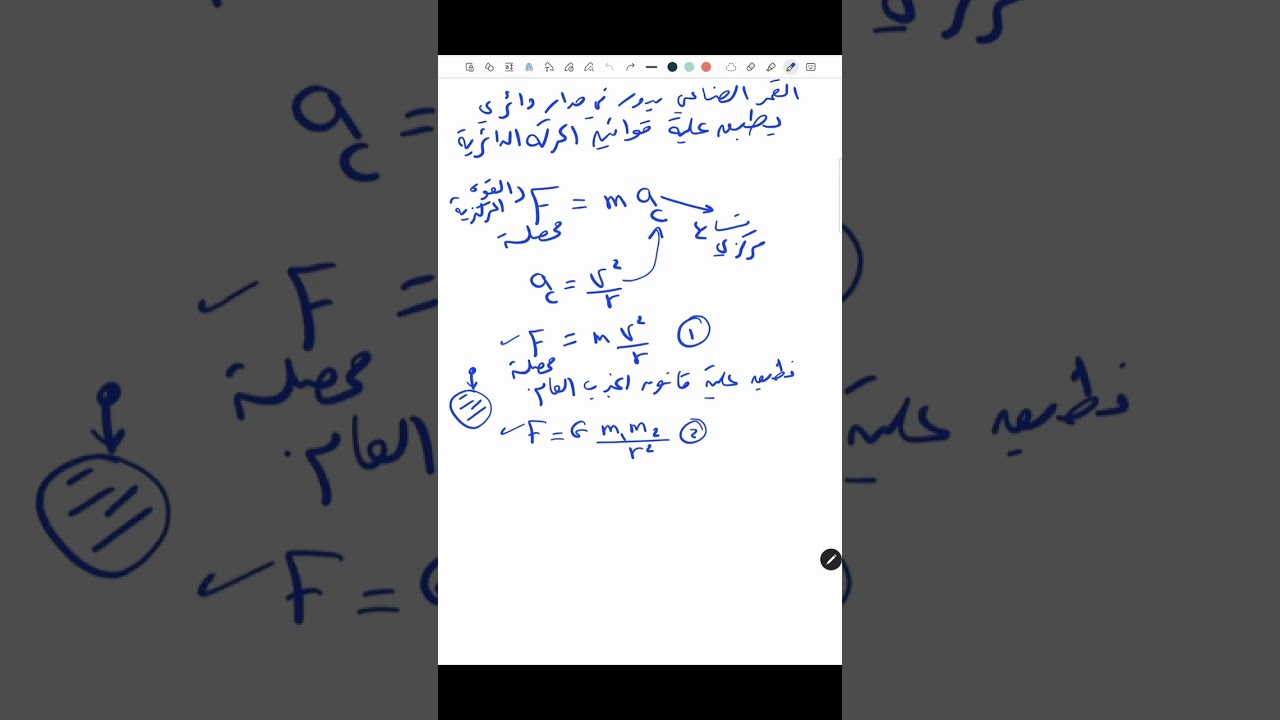
Centripetal force and the physics of uniform circular motion.
Kepler's Laws of Planetary Motion, specifically the relationship between orbital radius and orbital period.
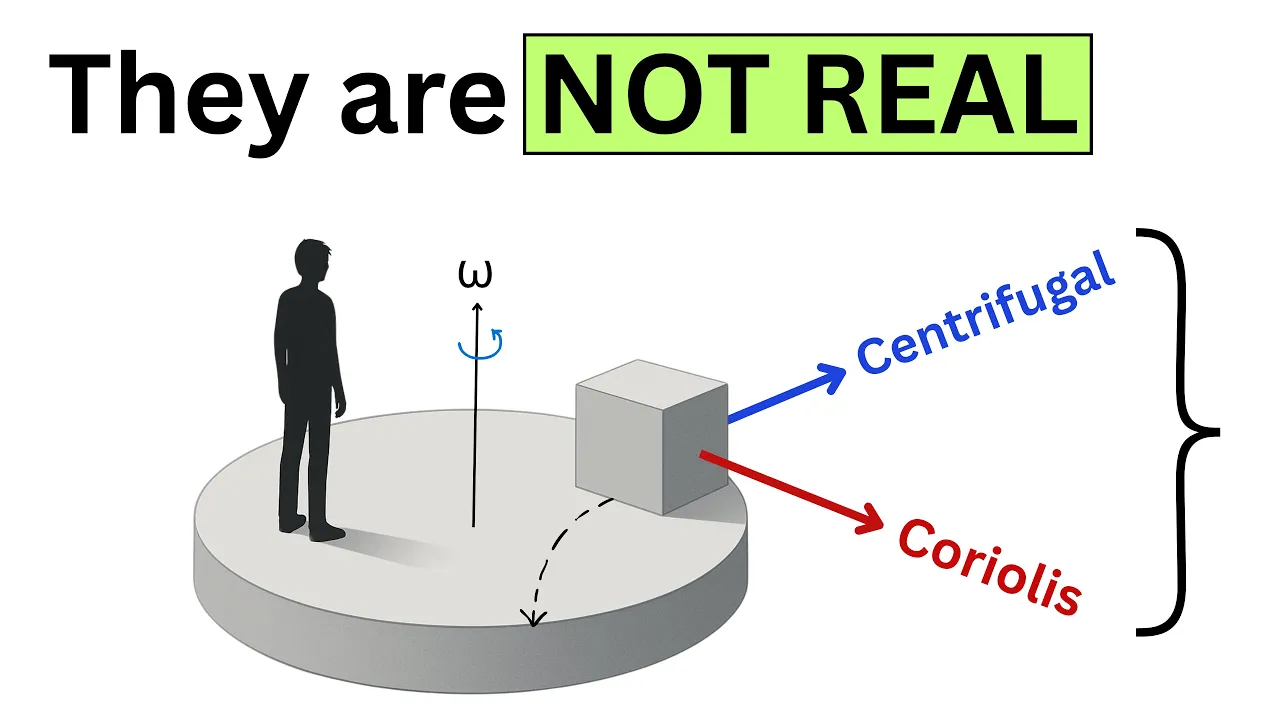
The distinction between inertial and rotating reference frames, including the concept of centrifugal force.
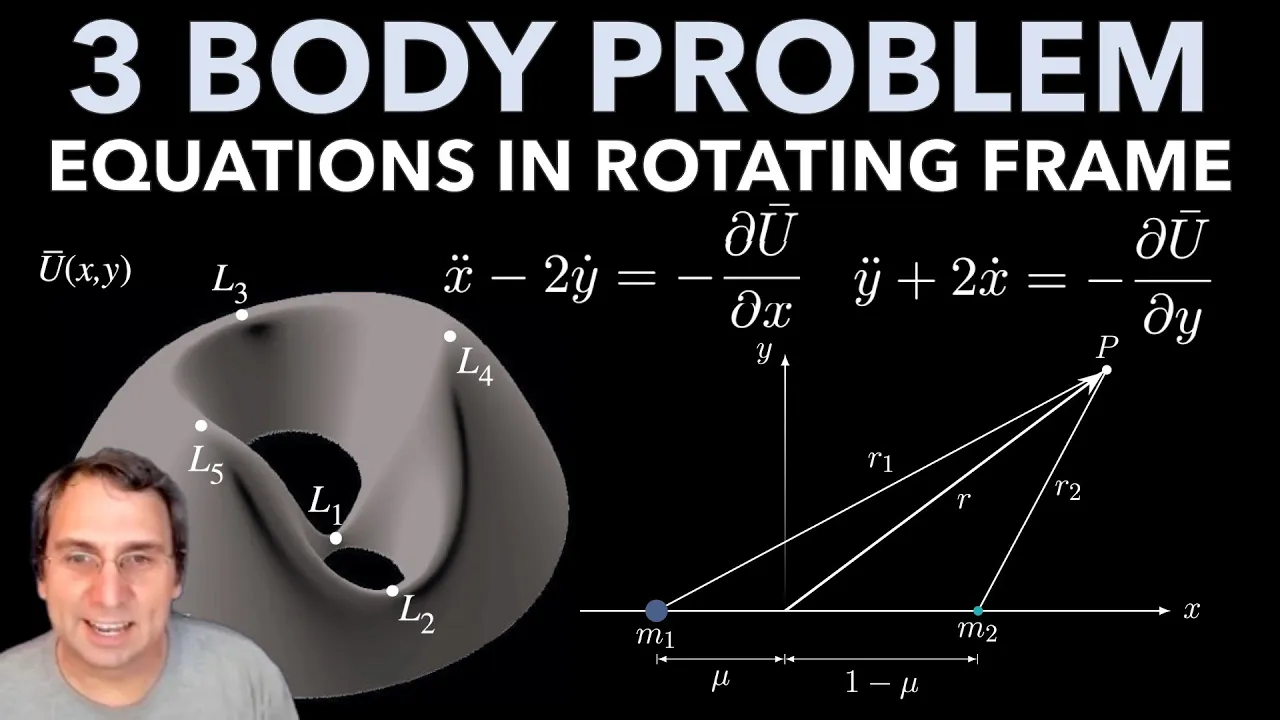
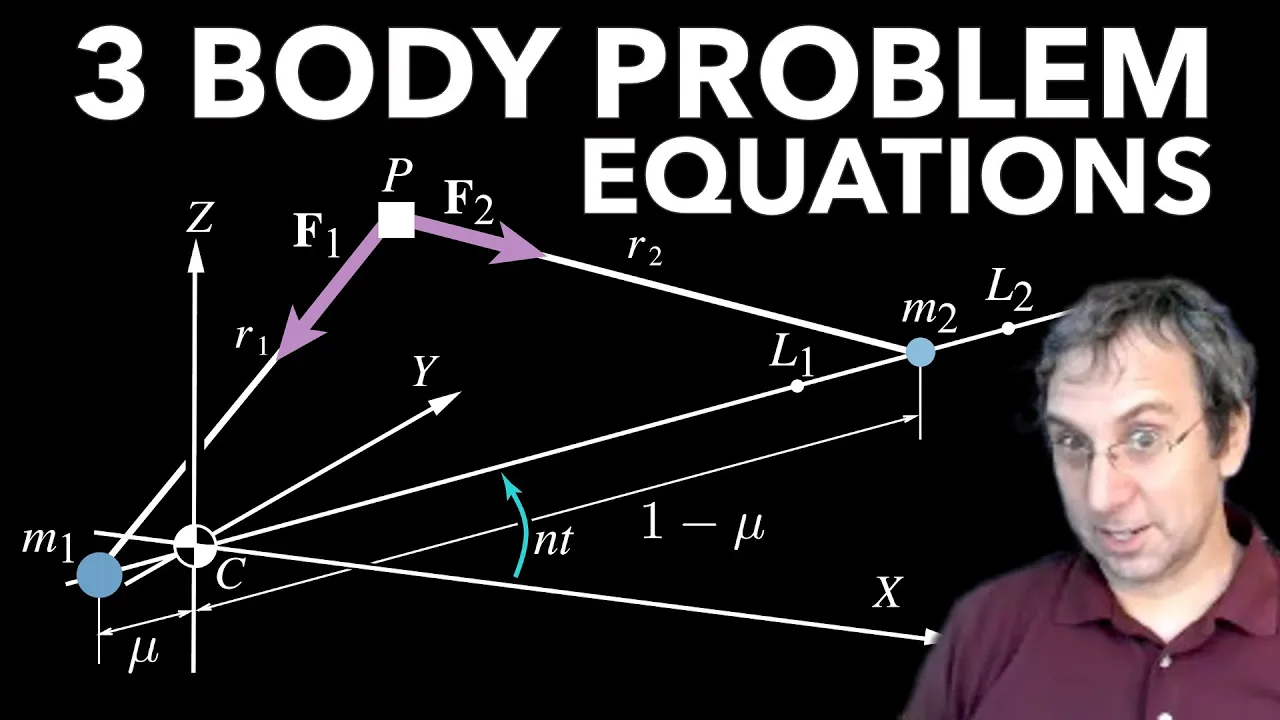
The Circular Restricted Three-Body Problem (CR3BP) and its formal mathematical derivation.
Stability analysis of equilibrium points using effective potential wells and Jacobi constants.
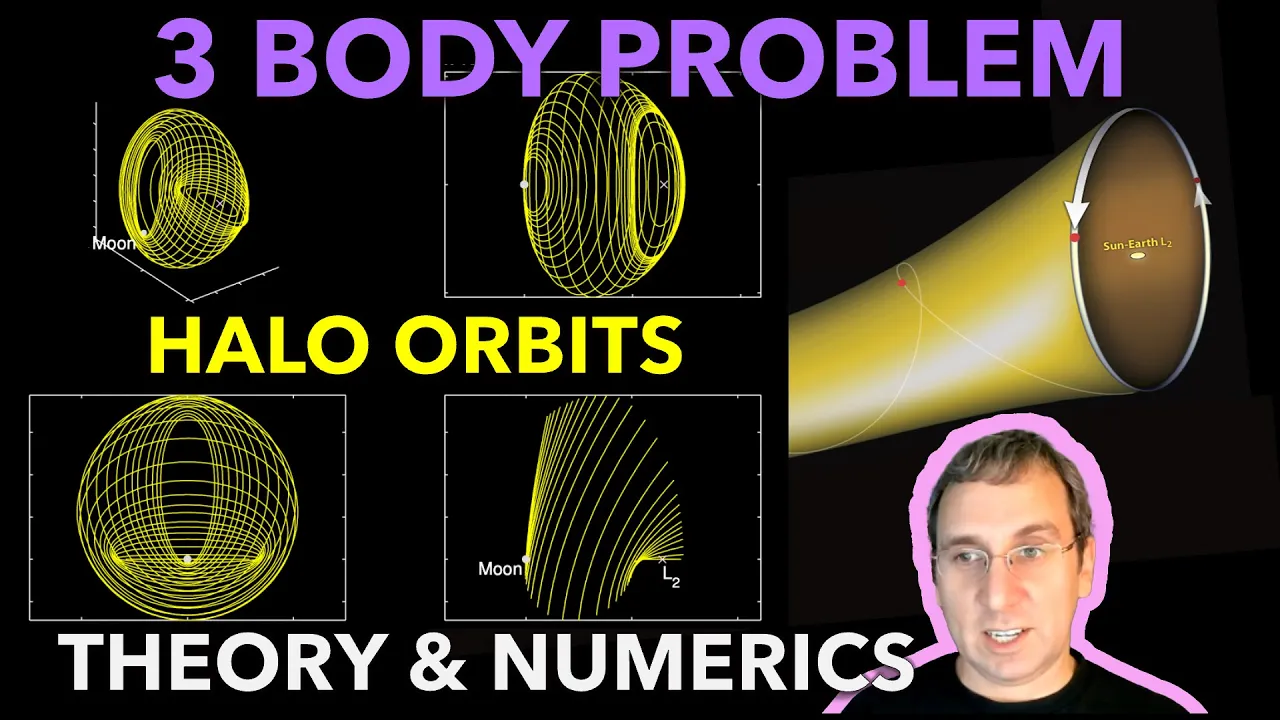
Spacecraft trajectory design, including Halo orbits, Lissajous orbits, and station-keeping at L1 and L2.
Real-world astronomical systems, such as Jupiter's Trojan asteroids at the L4 and L5 points.
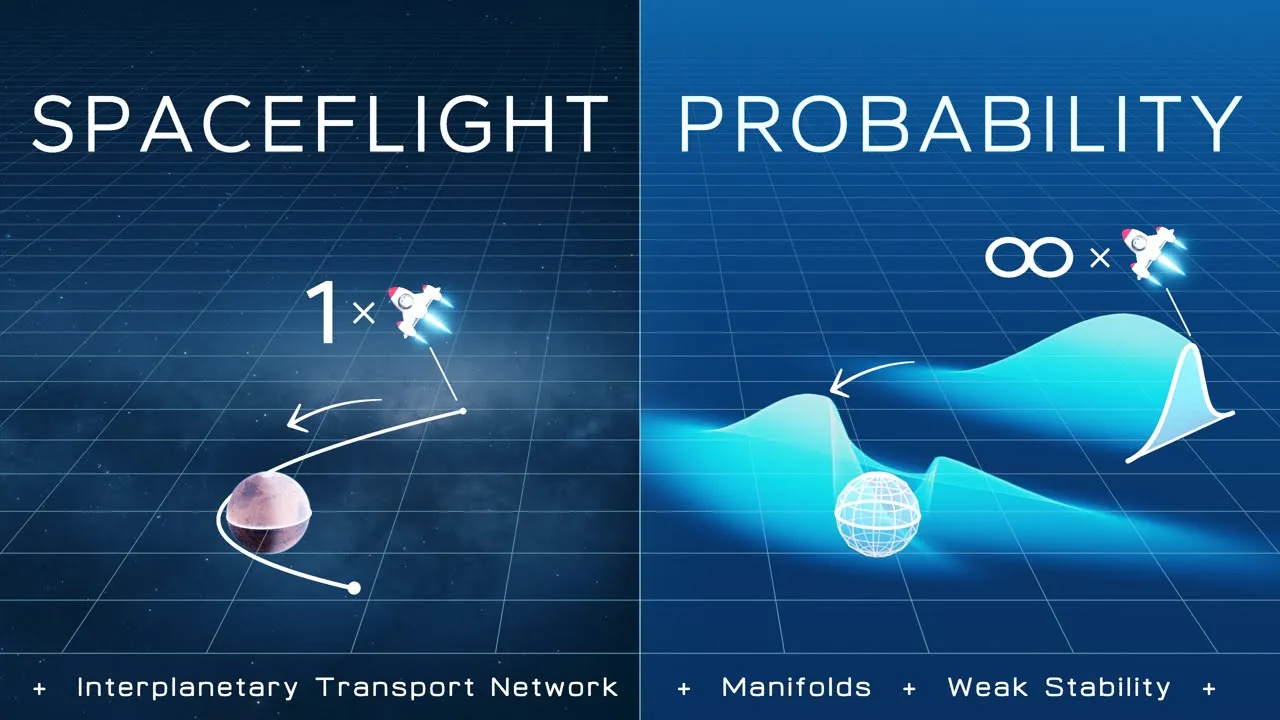
The Interplanetary Transport Network (ITN) and the use of weak stability boundaries for low-energy space transit.
113.4K views2.2Klikes15:01Original Release: 2012-11-28
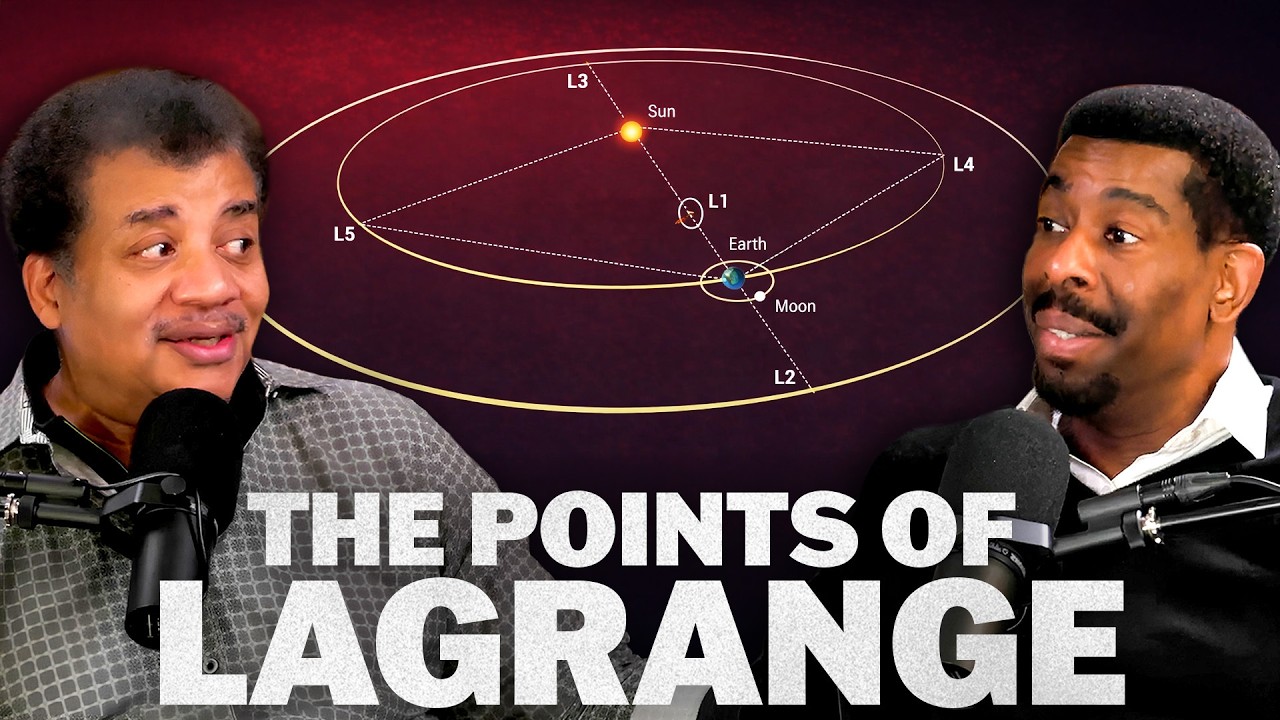
hello everybody this is going to be a little tutorial of something called the lran points I'm going to try to explain them through pictures also through some fet software that I'll be showing you in a little bit and also through equations so let me just set up lran points really quickly in a very general way this circle is meant to represent the nearly circular it's an ellipse but nearly circular orbit of the earth and so in the center here I'm going to have the Sun and then out here somewhere I have the Earth you all well know that the Earth has an orbital period of about 365 and A4 that's rounded days well there are some really interesting locations around the orbit there are five of them they're called lran points on these specific points you can have a place where you have the same orbital period 365.25 days but you have a different position the first lran point is located in between Earth and the Sun so we'll say L1 the second lran point is located on the other side of Earth from the sun L2 the third is actually located about here or so on the opposite side of the sun from the earth we'll call that L3 and then there are two more that are located probably somewhere around here they're going to be triangles here so let's call this L4 and we'll call this L5 so at all of these different locations here that I'm circling in green you can actually have a situation where your orbital period is the same as it is for Earth so by the way before I get too deep into this I am just using the Sun and the Earth here as my example to talk about the lran points you could be using different systems you could look at the Moon as it's traveling around the earth and then there would be some lonian points associated with the moon's orbit as well so back to this as our particular example at first this may not seem all that spectacular or all that interesting to you but I want you to keep in mind that this entire system would be rotating around in an orbit so as the Earth would be tracking down this path going across this orbit you would also have the lran points moving around as well so if you will picture this entire thing is a giant wheel that's perhaps rotating in the counterclockwise direction as I have it drawn so from here I think I'm going to actually move to a fet simulation so you can see why this is so interesting the thing we're going to be looking at is that these different location on these lran points they shouldn't actually be able to have the same period as the Earth but they do there's some really interesting physics behind why they're able to achieve this the simulation I'm about to show is from the University of Colorado it's put together by fet here's the web address that you could go to so you could play around with it yourself it's actually called my solar system so this is the fet simulation and I've put in some initial conditions so that we can just look at three different bodies that are orbiting uh we'll call it the sun here in this situation I've tried to put them roughly in circular orbits though I didn't spend very much time trying to get it exact what I want you to notice is that The Closer the orbiting object is to the central object in this case we'll just call it the Sun the faster it's going to go around that means it has a smaller period a smaller capital T this is crucial for understanding the lran points because what you're going to notice is that the lran points are not at the same orbital radius as the Earth is however they still have the same orbital period it has to do with figuring out the forces and the centripetal force that's caused by gravitational attraction recall that there's a centripetal acceleration for this little purple guy as it's going inwards towards the Sun and this is being caused by the gravitational pole between the two massive objects and so what you do the short of the story for lran points is that you have to have a way to manipulate the amount of gravitational pull and attraction in towards the center that manipulation comes from a second body so to put some names on it the Earth's gravitational pole in addition to the sun's gravitational pole will cause a different amount of centripetal force for objects that are located at the lran point then what they would have had if it was only the Sun that different amount of pole causes them to have actually different orbital periods so let's come back to this picture for a moment and just talk about one of the lran points at a time so I'm going to clear some board space here and we're going to look at lran point1 so here's the sun here's the Earth out here moving around in its orbit it's got an orbital period of 365.25 days and then located somewhere right here is a lran point that means that you could place an object there and it would go in its own orbit with its own orbital radius but it would actually have the same period of rotation as the earth that is what makes this so special because remember you just looked at that fed simulation that says if something is closer to the Sun it should go around faster and have a smaller period but it doesn't the way that you resolve this is that I come over and I look at the Earth and I notice that the Earth is going to have a force where it's being pulled towards the Sun and this is a force due to gravity and so it can be described by the universal gravitational constant times the mass of the Sun time the mass of the Earth all over the orbital radius squared so that's the equation that's written up here that is also the centripetal force that is allowing the Earth to be accelerated inward towards the Sun for that centripetal acceleration if you come look at the lran point however you've got this spot right here and there are two Force vectors on it one is the force from Gravity felt from the Sun here but then there's another Force also from Gravity though where the Earth is pulling it back this way and it is actually this combined force that is equal to the centripetal force that's causing the acceleration for the Gran point so just to be clear for the Earth the centripetal force is equal to the force of gravity from the Sun we'll call it but for the L1 for the lran point the centripetal force is equal to the force of gravity pulling inwards from the Sun but also you would need to subtract off the force from Gravity that's from the earth so essentially the Earth out here is weakening the amount of pull towards the direction of the Sun so I actually think one of the easiest equations to look at for this is right here instead of talking about how we've just at least effectively reduced the FG the pole towards the sun you could also think about it as if we just weakened the mass of the sun it's as if at that lran point it seems like the sun doesn't have as much mass as it does that strategy of thinking is useful because if you come up here and look at this equation that I just highlighted you will see that the orbital period is proportional to the square < TK of 1/ M alternatively I could write that t is proportional to m to the - one2 power whatever your preference but the important matter is is that if I have decreased M the period will go up a period that goes up means that you've slowed it down so if we come back to this fet simulation we'll say that this is Earth out here and notice how quickly this purple one is moving what you can do is if you could weaken the amount of force the centripetal force that's being pulled inward then this thing will start to move around slower and slower and there's a certain spot that has to do with where you were placed in between the Sun and the Earth here where you can weaken that gravitational pole just the right amount and so that you can actually track at the same rate that that Earth is going around so let me see if I could do it here it would just be hanging out traveling inside at that same rate so I tried to do as best I can I'm missing it a little bit here but that is what it means to be at that lran point while on this fet simulation I want to show you something else here's one object orbiting a single Central item so perhaps this is the sun in the middle you will notice that the Sun Also moves around this definitely is happening in real life even the sun is jiggling around as the Earth and all the other planets pull on it and what happens is both of these objects actually happen to be going around the same location and that's called the Berry Center and I can amplify this effect if I come in here and and I'm going to make the mass of that purple one even bigger so it was these are arbitrary units it was 10 units of mass now I've made it 40 and I've Amplified it here so what's going on is these two things are orbiting around a Common Center of mass which I could just kind of throw in right there it so happens that the radius of the sun is actually larger than this equivalent kind of yellow wiggle of the star for our solar system and so it's not particularly noticeable plus the the sun is our frame of reference anyways and so you can't really see this wiggle in the Sun but it is there it's called the Berry Center that's relevant when we talk about some of these other lran points so if I go back and quickly sketch up the different lran points so if you look at the second lran point out here it would want to move slower if the Earth wasn't involved what you do is you get a combined gravitational attraction for this guy where the sun is pulling it this way and then there's also a smaller force from Earth also pulling it that way it effectively makes it look like the mass of the Sun is bigger than it really is just for that one spot and if this m is getting larger we're effectively getting larger since it's in the denominator it's going to make the period go down when the period is a small number that means it's actually moving faster and so that's how you would get the matching here now this one over here the third is actually said to be outside of the Earth's orbit by just a smidgen but it's actually closer to the Sun than the Earth is if you think about what I just said it sounds like I just contradicted myself but that was the idea of that Berry Center so remember that the sun is actually wiggling around in its own way so when the earth is on the right side over here the sun is on the left side and so what that does is it does allow for the possibility for the sun to actually be closer to that third lran point but still have it be outside of the orbit of the Earth the last ones I feel like are probably going to be the hardest ones for me to draw here so what you need to do is you need to make yourself an equilateral triangle so I still have Earth over here I still have the sun over here and this would be symmetrical so I'd have this the fourth and the fifth lran points are geometrically on these equilateral triangles so these are all 60° angles what you have is this radius here is equal to this radius here and this all has symmetry so from here on out all only work on one side this spot up here at four is being pulled on in two different directions it's being pulled a lot this way and it's being pulled a little bit this way as described by Universal gravity it is the combination of those vectors that's going to show us what the net force is that's pulling it in the kind of downward and left Direction and really these vectors that I'm showing here this is still not to scale or even close to scale you would have a really big Vector that's pulling towards the Sun and then you would have a tiny little Vector that's pulling towards the Earth and when I add those things head to tail what I get is this green Vector that doesn't seem to point either to the Sun or to the Earth it actually points down here somewhere and it has a little bit more pull than it would have otherwise well that little bit of a more pole is what's responsible for this thing having the same orbital period still but still being outside of the Earth's orbit so similar arguments as before and what's really interesting about this though is if you go through the geometry here you will see that the location that this thing actually points is down to the Berry Center for four and five here these things are being accelerated towards the center of the Center and so they can just nice and happily Move Along again same orbital period now the very last thing that I want to show I actually only just discovered this as I was getting this simulation ready Fett built in a simulation called Trojan asteroids and what they are actually showing is the lrange in fourth and fifth point there happen to be asteroids that are stuck in these lran points so there's your equilateral triangle this would still be the Earth over here and this would be the Sun and they are called the Trojan asteroids I'm not really good with the story but I think you call one side I don't know which is which admittedly one side is like the Trojans and the other side is the Greeks or something like that so they actually have a built-in simulation that shows these things orbiting around in the fourth and the fifth lran points which is pretty cool pretty cool stuff if you think it made sense to you certainly you should let your computer know
Up Next

9:37
Understanding the Wave Function in Quantum Mechanics
@sixtysymbols
576K views•2009-08-08

12:53
21cm Hyperfine Transition in Neutral Hydrogen: Radio Astronomy Basics
@AaronRobertParsons
12.4K views•2011-10-13

32:32
NMR Spin Physics I: Zeeman Effect, Resonance Condition & Larmor Frequency
@nptel-indianinstituteofsci8064
2.3K views•2024-01-17

27:14
Entropy and the Second Law of Thermodynamics Explained
@veritasium
27.5M views•2023-07-01
Related Study Plans & Knowledge Roadmaps
Structured learning paths in Physics
physics
Nuclear Physics (Decay, Fission & Reactors)
01Atomic Structure and the Binding Force
02Radioactive Decay and Half-Life
03Nuclear Fission Mechanics and Chain Reactions
+ 2 more learning modules
12h5 modules
Explore Roadmap
physics
Soft Matter (Polymers, Colloids & Rheology)
01Foundations of Soft Matter & Thermal Forces
02Polymer Physics and Macromolecules
03Colloids, Surfactants, and Self-Assembly
+ 2 more learning modules
38h5 modules
Explore Roadmap
physics
Analytical Mechanics: Lagrangian & Hamiltonian
01Mathematical Foundations: Calculus of Variations
02From Newtonian Mechanics to Constraint Dynamics
03The Principle of Least Action & Lagrangian Mechanics
+ 3 more learning modules
28h6 modules
Explore Roadmap
physics
General Relativity (Spacetime & Cosmology)
01Foundations of Relativity: Special Relativity
02The Geometry of Spacetime: Equivalence Principle & Curvature
03Einstein's Field Equations: The Mathematics of Gravity
+ 2 more learning modules
55h5 modules
Explore Roadmap