





![Confucianism: Ritual, Cosmos, and Inner Alchemy | Eastern Esoteric Journey [Ep. 8]](https://i.ytimg.com/vi/F8Y5X_4j02c/maxresdefault.jpg)







![[인물역사] 세상이 아무리 바뀌어도 흔들리지 않는 법 , 공자가 가죽끈이 끊어지도록 읽은 책 '주역'ㅣ시니어역사](https://i.ytimg.com/vi/GaOAwSMZYl8/maxresdefault.jpg)
The Classic of Changes (I Ching) is an ancient Chinese divination system consisting of 64 hexagrams formed by combinations of broken (yin) and unbroken (yang) lines, which Neo-Confucian philosophers later interpreted as expressing a metaphysical framework where the Great Ultimate generates yin and yang, which in turn generate the five phases and all things in the universe, providing a philosophical foundation that emphasizes the unity of all existence while acknowledging genuine diversity and the legitimacy of ordinary human experiences and attachments.
I Ching Philosophy: Divination in Neo-Confucianism & Jung
Added:Basic structure and history of the I Ching (Book of Changes), including the concepts of Yin and Yang, trigrams, and hexagrams.
The core tenets of classical Confucianism, particularly its ethical framework and the concept of the 'Junzi' (exemplary person).
An introductory understanding of Carl Jung's analytical psychology, specifically his theories on the collective unconscious and archetypes.
Fundamental concepts of Chinese cosmology, such as 'Qi' (vital energy/material force) and the concept of dynamic balance in nature.
Advanced Neo-Confucian metaphysics, specifically the synthesis of 'Li' (principle) and 'Qi' (vital force) in the works of Zhu Xi and Wang Yangming.
Carl Jung's formal treatise on 'Synchronicity: An Acausal Connecting Principle' and how it challenges Western mechanistic frameworks of causality.
Comparative analysis of Eastern divination practices and Western esoteric traditions (such as Astrology, Tarot, or Hermeticism) through a psychological lens.
The contemporary application of the I Ching in modern psychotherapy, decision-making frameworks, and active imagination techniques.
74.4K views2Klikes1:08:45Original Release: 2021-04-26
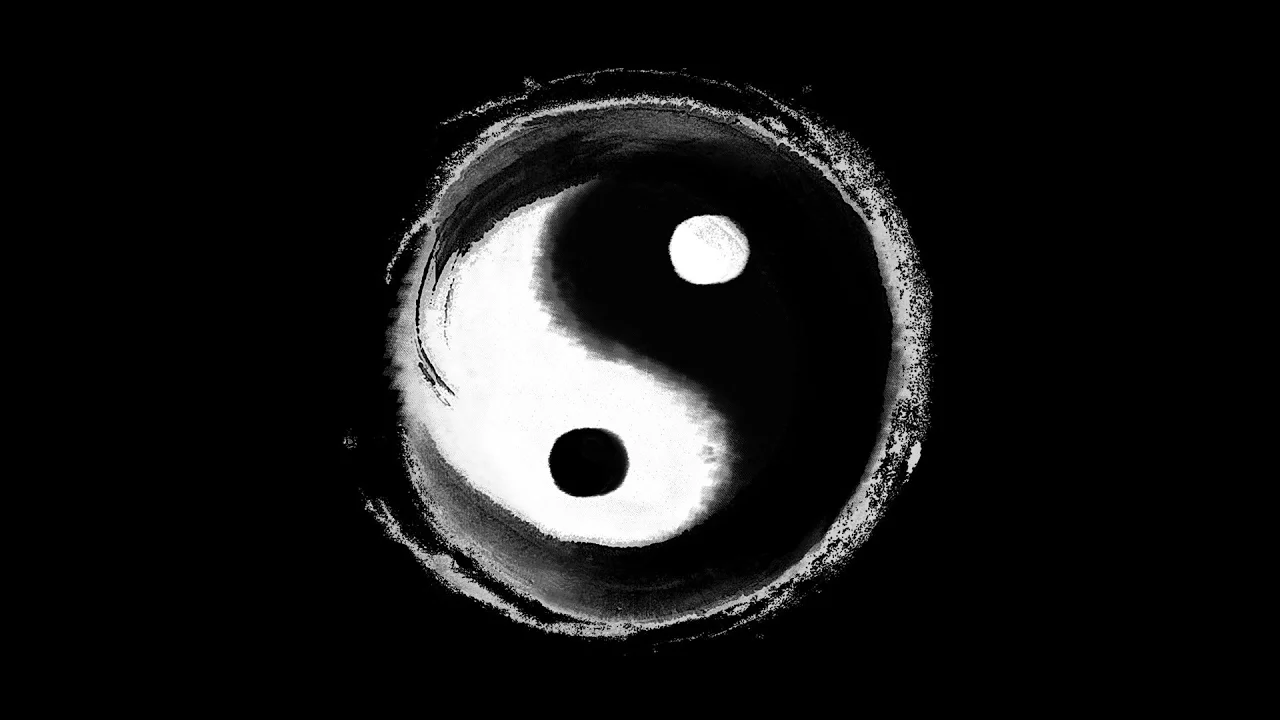
all right i'm professor van norton and this is neoconfucianism and chinese buddhism today is our lecture on the classic of changes in the neoconfusion tradition thank you all for coming in so you might be wondering why getting seated music was george harrison's while my guitar gently weeps from the beatles white album and that's because george harrison has said in an interview that he was inspired by the e jing the classic of changes to write that song because he learned from the classic of changes that things are connected in unexpected ways and in honor of that he grabbed a book on his shelf the first book he saw open it up to a random page saw the phrase softly weeps and was inspired to write a song about it so as we'll see a lot of people have actually been influenced by the classic of changes but let's start out by understanding you know what this work is and what its origin is so i mentioned in a previous lecture that in our earliest samples of chinese writing are oracle bone inscriptions and in really ancient times like 3 000 years ago in china people would try to divine the future and also try to find out what the spirits of the ancestors wanted or would support by using oracle bones often they were the plastron which is the bottom part of a turtle shell the top parts the carapace the bottom parts the plastron and they would take these dry them out and then they would ask questions and apply a heated metal bar to the bone and then it would crack under the heat and they would somehow read the cracks we don't know the method by which they read the cracks now for really lucky after they read the cracks they would inscribe the questions they asked on the bone and if we're really really lucky sometimes they would actually inscribe what actually happened and what the divination response was and also what actually happened and so this is a sample oracle bone if you look carefully in the upper right hand part you can see the inscription on this one you'll notice that the characters are very different from modern characters if you read chinese it's okay if you don't but these are the modern uh uh correspondent characters you can see they're very different from the original ones and what this says is uh crack making on day um goo is the name of the diviner and the statement they were testing was bon will have no misfortune i didn't check this but and think that bond is probably a place name it's the name of a town and they're asking whether something bad is going to happen in the city of bonn if you look on the opposite side of the same shell it will say almost the same thing except it'll end with bond will perhaps have a misfortune and so they would pair positive and negative formulations on the same shell and they would read them so this is really fascinating these things exist and people use them but as you can imagine this is very labor-intensive you need prepared bones you need something to heat them with you got to read the cracks so eventually people developed a simple simpler method of divination and the book that we're looking at today the egg that's literally classic of changes uh there's an older romanization of the name where it's written like that at the end there and people often mispronounce it i ching so if you have some friends who were into new agey things sometimes they're into the what they call the i ching but it's actually pronounced and the the core of the ejing is really a divination system and it's a divination system that replaced the earlier use of oracle bones for divination so the book the e-jing as we have it now has several parts one part is a bunch of hexagrams what's a hexagram hexagram literally means six lines and so a hexagram is a group of six lines each of the lines can be either broken like the bottom one in this hexagram or it can be unbroken like the the second one from the bottom in this hexagram and a hexagram is technically composed of two trigrams and a trigram is a hexamine six tri means three a trigram is a collection of three lines each of which is either broken or unbroken and the bottom trigram in this hexagram looks like that the top one looks like that so if you're good at math and you say okay we've got a hexagram each of the lines can be either broken or unbroken that's going to give us 64 combination of hexagrams trigrams you've got two possibilities grouped into three so there's eight different kinds of trigrams and 64 different hexagrams in the e jing the classic of changes so that's the core of the e jing but each of the hexagrams also has a name this particular hexagram is named mung which means something like enveloping it could also mean like a young sprout and then there's also a judgment on the hexagram as a whole which tells you what when you establish what the relevant hexagram is for your question or your situation the judgment tells you for this entire hexagram what's the judgment and you have to interpret it and apply to the situation we'll look at some examples in a second there are also line statements which are fortunes or or divinations based on particular lines counting from the bottom and you consult them when you have a moving line we'll explain what that is in just a second philosophically what's made this a really important work are what are called the ten wings or the appendices to the changes and probably the the hexagrams the names the judgments the line statements they're very very ancient you know we can't be sure how ancient but they're they're quite old and written in a very archaic style of chinese the ten wings historically are much more recent many scholars including me would say the appendices the ten wings date from either the end of the warring states period the end of the joe dynasty or the beginning of the han dynasty and it was in the han dynasty that the ejing became one of the jingle the five classics that were made central to confucian education in the han dynasty now i'm not going to tell you all of the ten wings but in uh t walton van norden readings in later chinese philosophy we give you some excerpts from the what sometimes called the great appendix um the great appendix uh is also sometimes called the appended statements and then we also give you a an excerpt from the explanation of the trigrams so this is what you'll find in the main body of the changes this is what a hexagram looks like this hexagram is chin which is made of just unbroken lines and there's its name chin there's the character for it and there's the romanization of the name the hexagram name this part chen is the primal primal unobstructed flow beneficial and upright that's the hexagram judgment that's the judgment on the hexagram as a whole and then you've got a line statement for each line so for example second young line the dragon appears in the fields it's beneficial to meet a great man if the second line from the bottom count these lines from the bottom if the second line from the bottom is a changing line you would pay particular attention to the line statement on the second line in addition to the judgment on the hexagram as a whole so how did this work come into existence there's a traditional story about the evolution of the of the changes this story is probably inaccurate but it was widely accepted and to this day there are still a handful of scholars who accept this so it's worth knowing the story and the story is that fushi who was a pre-dynastic sage king who supposedly invented many aspects of civilization first discovered the trigrams the collection of three lines each of which can be broken or unbroken and then king one who was one of the founding figures of the joe dynasty discovered the hexagrams and named the hexagrams and wrote the judgments on the hexagrams as a whole king one's son the duke of joe was also very important in establishing the joe dynasty supposedly wrote the line statements and then khunsa confucius it's attributed to him the ten wings again i think that's probably not true but it's important for understanding the high esteem people had for the appendices to the changes that people attribute attributed them either to confucius or some people would say it was they were written by the immediate disciples of confucius who were reporting what confucius had said about the changes all right so how do you use the the changes to find your fortune well you ask a question or you ask about a situation that you want information about and the traditional method for getting the relevant hexagram is the yarrow stock method yarrow stock is also sometimes called milfoil uh there's a bunch of plate but many books will tell you how to do the euro stock method the arrow is a kind of plant and you can see these are like just sticks but you could use a straw um i've seen it done with swizzle sticks which you use to stir a cocktail anything like that you can use you're supposed to have 50 of them you take the first one and you put it between your pinky and your ring finger and then you don't use it after that and then you take the remaining 49 and you randomly divide them into two piles and you start to count them out and you can look up a lot of paces how to do the yarrow stock method it's fairly complicated and it takes a while and you have to do this procedure once for every line in the hexagram so six times some people think it's important to use the arrow stock method to get a hexagram because it because it takes a long time it's kind of and you have to concentrate on what you're doing it's kind of a meditative practice so some people think it's very important that you do the elaborate meditative practice but i've honestly never used the arrow stock method although i've seen it done a much simpler method originated in china as early as the tong dynasty and that's the the three coin method and to use the three coin method you can use chinese coins like this picture shows but you could also use you know pennies nickels quarters whatever you feel like doing and you assign the number three to head and number two to tails so then you throw the coins and you see what you get and you add up the total once for each line and then you convert traditionally in this way if you get a seven or a nine it's a yang line if you get an eight or a six it's a yin line if you get a six it's what's called an old or a moving yin line and you're going to want to mark that because you're going to want to check the line statement for that line or if you get a 9 it's going to be an old or moving yang line and again you're going to want to note that because you're going to want to check the line statement on that line so how would this work well suppose i i threw the coins and i'm going to do this six times and i'm going to write down the numbers i get each time and maybe this is just an example maybe the numbers i get are eight seven six eight eight and nine in that order remember in identifying a hexagram you start from the bottom and you go up to the top so you could write them out like that and now eight is going to give you a yin line seven is going to give you a young line right so yin is broken yang is unbroken six is going to give you a lim yin line same with eight and then nine is going to give you a yang line and notice that nine and six are old versions of yin and yang respectively and so you're gonna wanna note that as you get the hexagram all right so what do you do now that you have the hexagram well lots of books is that this is actually more common for some reason in english translations than it is at least in my experience in chinese editions but i mean you could just like look through it until you find the hexagram but many books also and also online i got this from wikipedia have a finding list where you see okay what's the the trigram for the top part of my hexagram and what's the trigame trigram for the bottom part of my hexagram and then you triangulate them so for example our hexagram that we had before enveloping was the one we got before and the top part of that is gun mountain and the bottom part of that is con water and by taking the row and the column we can find enveloping and then in a book the index will tell you what page to go to to find that hexagram and then you'll find the name the judgment and the line statements so when you want to consult the changes for divination purposes you state a question or describe a situation to ask about then you generate a hexagram you can do it by the aerostock method you can do it by the coin method there are different forms of the coin method you can have a there's an app on your phone that will generate one for you um i i personally think it doesn't make too much difference as long as you get a hexagram use a finding list maybe to find the relevant hexagram entry then you read the judgment for the hexagram and you figure out how to apply that to your situation and if any of the lines are old or moving lines then you're going to pay particular attention to the line statements for those lines in addition if they're older moving lines after you've done the previous steps switch all those lines to their opposites so if it's an old inline switch it to a yang line if it's an old yang line switch it to a yin line and then look up the resulting hexagram that you get by swapping out the moving lines and read the judgment on that because that's also relevant because your situation is on the cusp of turning into this other situation is the idea and often there will be additional information about your hexagram in the ten wings and some editions usually chinese editions don't do this but english editions will often take the information in the appendices that's relevant to a particular hexagram and they'll put it in the translation next to the relevant hexagram so you can find it but you said like i say and in readings in later chinese philosophy for the for the hexagram chin we give you examples of information about this hexagram that you can find in some of the appendices so that's the use of for divination well we're you know i think most of us modern scientific minded people i believe in natural science uh why would anybody in the modern world whether they're chinese or western or whatever why would you um take the changes seriously as a tool of divination one answer is given by carl gustav young and jung is important enough culturally that you should also be aware of him as just part of your general education this is a photograph i think from around like 1900 or so and everybody in this photograph is very his influential in the history of uh of psycho development of psychology as a field this is sigmund freud in the front left um the guy in the middle i'm blind i think his name's jones he's apparently a very very influential uh psychologist in the united states but on the right in the front row is carl jung now freud and young were colleagues and also very very close friends and of course freud founded psychoanalysis but young was an early adherent of the theory and an exponent of it like i say they were very close but as sometimes happens with people who are both very intellectually powerful um and uh you know independently minded uh they had a falling out and so the later history of psychoanalysis is divided from people who are freudians and people who are junkies so if you have a friend who's really into psychoanalysis they'll probably be aware of this and generally jungians kind of look down their nose on freudians and freudians kind of look down their nose like part of what's fun about young is he was very interested in exploring what we can learn about human psychology and human meaning by looking at lots of different cultural things and applying this theory to them so his philosophy is really kind of interesting thinker he's very interesting thinker and he wrote a forward to the german translation of the e jing by richard wilhelm and this was for many years it's still a pretty good translation uh it was translated into english and so you can read in english the german translation of the ejing there's a bunch of translations of the jing but this is still one of the better translations and young wrote what i think is a really interesting forward to it he begins by saying and again this is partly like why should we as modern scientific people take the changes seriously and here was jung's answer he said well what kant's critique of pure reason failed to do is being accomplished by modern physics what's he referring to part of one of the theses of khan's critique of pure reason is that things like causation causation concept is not a feature of reality in itself causation is something that the human mind projects onto its experiences and seeing the world in terms of causation kant said was inevitable inescapable for human beings but we have to realize that that causation we see in the world is not a feature of the world in itself it's just a feature of how we perceive the world and young is arguing that modern physics has actually proven con right he continues the axioms of causality are being shaken to their foundations we know now that what we term natural laws are merely statistical truths and thus must necessarily allow for exceptions and he's talking about things like modern quantum mechanics and the heisenberg uncertainty principle things like that and he adds this assumption involves a certain curious principle that i young have termed synchronicity a concept that formulates a point of view diametrically opposed to that of causality synchronicity takes the coincidence of events in space and time as meaning something more than mere chance and so jung thought that there was a legitimate way of interpreting reality where there was this phenomenon of synchronicity where events that are not connected causally as we understand causality and physics are nonetheless significantly connected in terms of their meaning and he said this just seems to be a fact about reality it's not a science not a natural scientific fact but it's a fact about the world if you're into popular music you'll also know that there's a an album by the police called synchronicity and sting was a big is i assume still a big fan of carl jung so yeah it's a nod to uh carl jung's the name of the album and the lyrics of some of the songs are a nod to carl jones thought so jung continues thus it happens that when one throws the three coins or count through the 49 euro stocks these chance details enter into the picture of the moment of observation and form a part of it a part that is insignificant to us yet most meaningful to the chinese mind now i got to apologize here when he talks about the chinese mind he's going to say that again this is a very orientalist way of talking orientalism is the name of a famous book by edward syed which the way that westerners tend to look at everybody in asia as if everybody in asia thought the same and had a common mindset and saeed you know really criticized this in a very uh incisive and important ways so we have to be in mind there is a little bit of a tinge of orientalism to young's account but i think there's something interesting and worth retrieving going on here so with with apologies for that let's continue the ancient chinese mind contemplates the cosmos in a way comparable to that of the modern physicist who cannot deny that his model of the world is a decidedly psychophysical structure that is to say combining psychological and what we would normally think of is objective physical phenomena the microphysical event includes the observer just as much as the reality underlying the aging compromi comprises subjective i.e psychic conditions in the totality of the momentary situation just as causality describes the sequence of events so synchronicity to the chinese mind deals with a coincidence of events so sequence versus coincidence and part of what he's referring to here and he doesn't make it explicit because he thinks and believes that and knows that his audience will understand this as the background he's referring to to phenomenal like schroedinger's cat right so uh this is a famous example you might already know this if you don't again just knowing young and knowing about jordan year's cat should be part of your general educational background um there's an interpretation of modern quantum mechanics which is a major very predictably successful theory in physics which says that well at the microphysical level states are not in a determinate state until an observer observes the state and collapses the quantum mechanical wave function into a particular state and that's a weird idea how could performing an observation on a state bring it into a particular state but people said well it's not a big deal this is just some weird thing that happens at the micro physical level it doesn't affect macro physical objects but the great physicist uh nobel laureate irwin schrodinger came up with schrodinger's cat experiment he said well imagine there's a particle that decays now according to quantum mechanics there's a wave function that describes the probability of the particle decaying or not decaying but until we perform an observation on it it's neither decayed or not decayed but imagine there's a geiger counter that's going to detect the radioactive decay and if there is radioactive decay a machine will break open a poison container that will release poison into the box the detector's in and imagine there's a cat inside the box well the cat either has to be dead or alive that's just a basic part of our common sense as human beings a cat can't be in a super position of states both alive and dead it's either going to be alive or dead but according to quantum mechanics the until the the situation is observed the particle has neither decayed nor not a decayed and so the cat would be in the superstition superposition of deadmaul alive now there's various ways people have tried to there's this huge literature on schrodinger's cat example um some people say well look maybe the cat is the observer and the cat collapses the wave function but then either way it seems like well then so the subjective observation of either the scientist or the cat is having an effect on the physical world it's collapsing the wave function how does that happen and so jung is suggesting that this notion that when you use the e jiang you have some kind of a direct contact with the causal situation which is not standard newtonian pre-quantum mechanics causation but it's some kind of causation is more plausible when we understand some of the things that we've discovered from modern physics this is all controversial but i'm just explaining so you know some of the ideas that are out there so in the forward jung consults the ej about a particular question actually he asked about one question about a situation that arises as a result of the question and he discusses the answer he gets and what he thinks of significance is and he finds that the answer he gets from consulting the ejing makes perfect sense to him so then jung asks but how has this reaction come about because i threw three small coins into the air and let them fall roll and come to rest heads up or tails up as the case might be the odd fact that a reaction that makes sense arises out of a technique seemingly excluding all sense from the outset is the great achievement of the ej the instance i have just given is not unique meaningful answers are the rule western sinologs and distinguished chinese scholars have been at pains to inform me that the ejing is a collection of obsolete magic spells in the course of these conversations my informant has sometimes admitted having consulted the oracle through a fortune teller usually a taoist priest this could be only nonsense of course but oddly enough the answer received apparently coincided with the questioner's psychological blind spot remarkably well so jung is arguing that we should be open to the possibility that there's some kind of non-standard causality going on because of the fact that when people use the egg seriously it seems to work for them it seems to give them answers again very controversial i'm just kind of throwing it out there i'm not sure personally how plausible i find this but i do find plausible if you don't find the notion of synchronicity plausible or you know you think that jung's invocation of quantum mechanics is an abomination to science here's another response given by the great sinologist and student of chinese philosophy angus graham he said the ejing serves to break down preconceptions by forcing the diviner to correlate his or her situation with a chance sequence of six prognostications the line statements that give you the hexagram since the hexagram open hexagrams open up an indefinite range of patterns for correlation in the calm of withdrawal into sacred space and time the effect is to free the mind to take account of all information whether or not it conflicts with preconceptions awaken it to unnoticed similarities and connections and guide it to a subtle decision adequate to the complexity of factors so what graham is saying and i personally find this this plausible is that you can if you're stuck and you're like i i don't know how to proceed in life you can pose a question to the egg and it will give you a response and you don't have to think that there's either something occult going on or something like young synchronicity you can just think it's just a useful tool for shaking up your mind helping you to think outside the box helping you to see new possibilities you might not have seen before and incidentally many people nowadays use tarot cards in the west as well if you're not familiar with them tarot cards are it's a kind of card deck and it has four suits but they're not the four suits of a regular card deck it's also got in the tarot you have what's called the major arcana and the major arcana are cards that represent something like archetypes of different kinds of people the term archetype actually is another term for young because young also wrote a lot about the tarot cards and i've i own several tarot decks and i've used them with friends and again do i think something occult is going on or do i think that there's some kind of like non-causal synchronicity i don't have to i just use them in the sense that if my friend's stuck or if i'm stuck at a point in life and i don't know how to proceed and i want a new perspective on a situation i use the tarot deck and i interpret it trying to take it to the answers it gives me seriously and often it helps me see a new angle on a situation i haven't thought of before same thing about the e-chain you can just use it to you know give you a new perspective on things to sort of shake your mind up a little and help you think outside the box so as i say many people in the west have been influenced by the ejing either as a philosophical work or as a a fortune telling work when knowledge of chinese culture first started to come to the west which happened when jesuit missionaries went to china at the beginning of the 17th century so around 1600 and they started to write back to people in europe about the civilization they discovered and what the classic texts and the philosophies were had a huge influence on the early enlightenment and one of the initial fans of chinese thought among western philosophers was gottfried wilhelm von leibniz who if you ever take a course in the history of early modern western philosophy usually you'll study leibniz he's a very influential figure and he was fascinated because among the things leibniz is famous for is leibniz is the person who discovered binary arithmetic he discovered that you could have a base 2 we normally use a decimal system that's what you learn in grade school but you can represent every number in base two in the binary system initially that was just a kind of interesting mathematical oddity but of course when computers were invented a computer is basically a bunch of on off switches zeros and ones and so binary arithmetic became the basis of computers and so we owe so the next time you use a computer make sure to thank philosophers because it was a philosopher leibniz who came up with binary arithmetic but he came up with it independently but then when he learned about the jing he was fascinated by it because he believed that what we had in the the changes with the hexagrams was a recognition of the possibility of binary arithmetic because the broken lines could be represented as zeros and the unbroken lines can be represented as one and as this shows you know this decimal zero com goes to binary zero which could be represented as the this hexagram could which is all broken lines like zero zero zero zero zero zero one could be represented by the hexagram that has one unbroken line at the bottom and then a bunch of unbroken lines which is equivalent to zero zero zero zero zero one two is is zero zero zero zero one zero so uh leibniz actually thought this is fascinating because it shows the way in which people in very different cultures independently can discover the same truths and he was a really big advocate of learning from and accepting chinese philosophy early in the modern period later kant and the kantians wrote chinese and african and indian philosophy out of the philosophical textbooks but in the early modern era people were very receptive to african and indian and chinese philosophy now i was going to give you a list of all the major thinkers who were in the west who were influenced by the changes but it's the list is huge there's no end to it so just to give you a few samples though in addition to leibniz and jung who we just looked at the grateful dead uh you know seminal music group was often cited the changes bob dylan has referred to and cited the changes some of the song lyrics refer to it and he talks about its influence on his art science fiction author philip k dick used the changes to help write his classic science fiction novel the mind in men in the high castle which now became a series on i think it was at hbo yeah um and also the the changes is referred to in the story itself so but and the list goes on and on so it's really been a remarkably influential work and so you know maybe worth checking out for yourself i still like the wilhelm bane's translation with the um forward by carl jung but there's a bunch of good translations out there but what if we're looking at this work as a philosophical work not as primarily as a fortune telling manual but as a philosophical work one question to ask is was the changes treated as a philosophical text before the han dynasty which is the period when the changes became one of the five classics of the confucian tradition one passage people often refer to as in the analytics the sayings attributed to confucius and his immediate disciples in and like book 7 section 17 the master said if some years were added to my life i would give 50 to the study of the changes and then i might come to be without great faults so this suggests that confucius was aware of the changes as a philosophical work and he admired it very much again that fits in with the traditional story that the appendices to the egg which is where the philosophical meat of the work is were either written by confucius or represented confucius's views on the changes as recorded by his disciples but the thing is if you look at pre-chin chinese philosophy so chinese philosophy in the formative period at the end of the joe dynasty where you got the warring states period where you've got you know people like the confucians and the taoists and the moes and the legalists and all these guys arguing philosophically the changes doesn't get cited during this period as a philosophical work it does get cited as a fortune telling or divining manual and so we have some wonderful examples in very early texts of people consulting the changes to define what will happen in the future or to get advice about dealing with a situation but they don't treat it as a philosophical work interestingly this passage in the analytics i've given you james legg's translation leg was one of the great early translators of chinese text there's an alternative text and an alternative translation of this very same line and slingerland who translates has a wonderful translation of the analects of confucius he follows this alternative reading of the line which would have it read the master said if i were granted many more years and could devote them to learning surely i would be able to be free of major faults and there's no reference to the analytics there i'm sorry there's no reference to the changes in this passage from the analytics and the way slingerland reads it and why does slingerland think that's the right reading because he's noticed that nobody talks about the changes philosophically in the period that confucius lived in addition you might remember chinch huang di the first emperor of the qin dynasty the chin state unit finally united china at the end of the warring states period and established a short-lived centralized government that gave way to the han dynasty after that supposedly the the first emperor of the chin burned all books of philosophy that were not of the legalist school which is the school that he liked they didn't burn copies of the ej why not the ejing wasn't considered a work of philosophy so it wasn't subject to being burned it was considered a technical work just like you've got works about farming and irrigation and then you got divination manuals divination angles or technical works and that's all it was thought to be so it's only in the han dynasty that people start to really take it seriously as a philosophical work and again although traditionally the appendices are attributed to confucius or to his disciples the style of writing in the appendices suggests to many scholars including me that these were written very very late either the appendices were written at the end of the warring states period or maybe they were written in the han dynasty itself be that as it may what is the philosophy that we get from this work and according to the changes itself how did it come into existence well explanation of the trigram says formerly the sages made the changes in the following manner invisibly aided by spiritual enlightenment they grew milfoil plants as another name for yarrow and regarding heaven is three and earth is two they established a system of numbers remember you get a heads-up coin it's uh three if you get a tails coin it's two by examining the transformations between yin and yan they establish the trigrams so the key to the philosophy of the e jing is yin and yang we talked about yin and yang a bit in an earlier lecture and you might want to go back and review that if you're unclear on this but basically yin and yang as philosophical concepts are these paired opposite or if you want to say complementary concepts like yin is dark yang is light yin is moist yang is dry so likewise for cold and hot feminine masculine falling rising passive active humble and exalted and the broken and unbroken lines in the changes are thought to be symbols for yin and yang respectively and the notion is that yin and yang are complementary and also that they they tend to work cyclically and so that you've seen this a thousand times it's become almost a cliche even in the west uh the tai chi the diagram of the great ultimate it's sometimes called sometimes people call the yin yang symbol this is a modern version of it this is a one traditional version of it but again though the black parts represent in the white parts represent yang here we see a version of it in the south korean flag surrounded by four of the eight trigrams uh i mentioned in the earlier lecture that niels bohr nobel laureate in physics uh thought he had learned from modern physics particularly quantum mechanics the truth of the yin and yang theory and so when he was knighted he chose his own code of arms and he included the yin yang symbol in it and then this is another form of the yin yang symbol one that we're going to be looking at in just a few minutes so again if you read the appendices they make clear that the change is supposed to give us the key to understanding the structure of reality in general uh in the great appendix it says the changes perfectly corresponds to heaven and earth and so it encompasses the entirety of the way of heaven and earth in it we may look above and observe the patterns of the heavens and look below to clearly perceive the contours of the earth by doing so we're we are able to know things that are readily apparent and those that are by tracing things back to their beginnings and in turn pursuing them forward to their ultimate conclusions we may understand the explanations of life and death so the appendix or the great appendix one of the the ten wings tells us that if you really understand the changes you understand the key to the structure of the universe as a whole all right what is this message that we're going to get then from the changes it's connected to yin and yang we've seen that already but what is it now one of my teachers told me many years ago he said the thing you're going to notice about the way neo-confucian philosophers in particular talk about the changes is that they argue more and more passionately about fewer and fewer passages and i didn't quite understand what he meant at the time but as i've learned more about the neoconfusion tradition i've seen that he's right what you find in the neoconfusion tradition is they really admire the changes but in particular there's a handful of expressions in the changes that are the focus of all the debate so there's really not that many parts i mean there's nothing wrong with reading a great you know influential book like the changes but there's really just a handful of passages that are important i'm going to tell you what they are here then we're going to look at them in context so the alternation of yin and yang is called the way when it generates life it is called change thus in the changes there is the great ultimate therefore what is above with respect to form is called the way and what are below with respect to form are called concrete things now you i'm sure you're wondering well what on earth do those things those sentences mean and why are they important well let's look at them one by one in the great appendix part uh part 1 section 5 it says the alternation of yin and yang is called the way that which ensues from it is goodness and that which realizes it completely is human nature when those who are benevolent see it they call it benevolence and when those who are wise see it they call it wisdom the common people use it every day and yet do not understand it and so the way of the gentleman is rare indeed the manifest aspect of that way is its benevolence and its hidden aspect is its function when it generates life it is called change when it brings signs to maturity it is called chin and when it reproduces the images it is called kud and chen is the name of the hexagram that has just young wines so it kind of stands for pure yang and kun is the name of the hexagram that is just yin or broken lines also as i recall the trigram that just has unbroken lines is also called chen and the trigram that just has unbroken lines is called kun and so the idea is these hexagrams stand for respectively pure young and pure yin as the fundamental aspects of reality now why were these phrases that i give you the chinese for why were they particularly important one way of understanding i i think why the changes was so important to confucian philosophers particularly the neoconfusions who are responding to the buddhists is that what they saw in the changes was a philosophy that said everything in the universe is in a certain way unified but that unity manifests itself in a genuine plurality and diversity and so they were trying to what they liked about the changes was this philosophy that let them keep the aspects they liked of the buddhist notion that one is all and all is one while taking seriously the reality of different individuals and the ordinary everyday life that or the individuals live which involves things like our relationships to particular friends and lovers and children and parents and things like that so we're going to see uh uh in later lectures when they say the alternation of yin and yang is called the way there's a debate about what that means but one way of understanding it is that if you ask is what is the way that according to which the universe functions one way of understanding this is there's nothing to the way of the universe except the ordinary everyday transformations of yin and yang so sunrise and sunset some days it's sunny some days it's cloudy some days it's dry other days it's raining this these ordinary transformations the way is not something that transcends those ordinary everyday transformations the way is manifest in those everyday ordinary transformations and the line when it generates life it's called change the confucians love this line why because literally it gives life to life it generates generation that's what the changes are the neoconfusions read this as validating things like eating food and having sex and producing children and just living in the ordinary world they said this is what the way is about shenzhen generating generation giving life to life that's what life is about and again fairly or unfairly they saw the confucian way as an alternative to what they regarded as the life abnegating way of the buddhists they said buddhists want you to transcend this world but the way just consists in the ordinary in the transformations of yin and yang in the everyday world buddhists want you to give up your attachment to this world but generating life you know loving life and enjoying life and taking part in life that's what is really most important so your romantic and sexual relationships but also just eating and metabolizing and living this is what the way is again this may be unfair to buddhism but this is how they framed the debate and one of the reasons i think they really liked the changes this line also very very influential in the changes there is the great ultimate the tai chi and if you've ever seen people and maybe you've done it you can take classes in this like a kind of calisthenics that uh especially when you're in china you often see older people doing this often very very early in the morning and they're moving in ways that kind of look like a martial arts kata but it's clearly some kind of like health related thing that that's sometimes called tai chi chuan that's the same character great ultimate right and the this is the the locus classicus the source ultimate source of this expression in the changes there is the great ultimate it generates the two modes and the two modes generate the four images the four images generate the eight trigrams and the eight trigrams clearly distinguish good and ill fortune very brief line kind of obscure fascinated people in the neoconfusion tradition why here's one way you might interpret this you might think of the great ultimate as something like the ultimate source of reality but one that is prior to any of the differentiations that lead to specific things and so and if you remember our earlier lecture on chinese cosmology the way some people talked about the way as being born before heaven and earth and being undifferentiated that's how people often thought of the great ultimate so i'm representing it here with an empty circle without any differentiations in it but somehow the great ultimate generates the two modes what are the two modes one way of understanding it as well they're yin and yaw represented by a broken line an unbroken line what are the four images people interpret this in different ways but one way to interpret it is well you go from an undifferentiated underlying reality to yin and yan and then yin and yang can be combined you could have yin and yin yin and yang what am i up to yang and yang and then what do i do yang and yin i know if i got those right but those are the four possibilities and interestingly you can correlate those yin yang pairs with the five phases you might say well that doesn't make sense because there's only four possible combinations of two lines of yin and yan but remember when you want to correlate four things with the five phases you leave earth as an unmarked intermediary between the other four so the four images correspond to four of the five phases with earth as an unmarked intermediary between them so that's one way you could interpret this and again what what is this why is this so exciting metaphysics the study of what are the most fundamental kinds of things that exist and how are they related to one another it seems like a very abstract topic but there's always a reason why people get excited about metaphysics and you have a metaphysical view whether you're aware of it or not and so if you don't understand why a particular metaphysics excites or on the contrary really bothers a particular thinker you don't get what's really going on in their ethics or their politics either and i think the reason this metaphysics was so appealing to the neoconfusions again is on the one hand we're all unified by the great ultimate on the other hand the great ultimate does produce a plurality of things and so there really is a plurality of things in the world but things that are ultimately unified by the great ultimate now joe donnie is a sung dynasty thinker i think it looked like an 11th century of the common era and one of his most influential contributions to the neoconfusion tradition is his explanation of the diagram of the great ultimate or this you could also say supreme ultimate uh and this is the diagram of the the great ultimate there's a lot of discussion about where uh this diagram comes from but joe doing e claimed that he was explaining it not so much inventing it and but this is the diagram and here's his explanation of it and i've broken the explanation of the diagram of the great ultimate by joe donnie into paragraphs and each paragraph corresponds to one level in the diagram so jojo's begins by saying the ultimate less yet also the great ultimate what does that mean ultimate list is ujji literally lacking an ultimate great ultimate is tai chi great great ultimate and so the what i think the first line means is that the ultimate source of reality is the ultimate of lacking differentiation and lacking characterization so the ultimate source of reality has no differentiations why because if the ultimate source of reality had any particular trait that would limit it and it would not be clear how something limited in that way could produce everything in the universe so the ultimate source of reality must be unconditioned it must be unlimited and so we can also describe it as the great ultimate as the source of everything but we can also describe it as the ultimate of lacking ujji the ultimate of lacking differentiation the great ultimate moves and creates its movement reaches the ultimate and then it is still it is still and creates yin the ultimate of stillness returns to moving moving in stillness and alternation are the basis for one another when divided into yin and yang the two modes are established so the from the great ultimate we get the first differentiation which is between alternating yin and yang then from that we can get the five phases yang transforms and yin harmonizes and it creates water fire wood metal and earth and look earth is right in the middle um it's the the thing that mediates between the other phases when the chi of these five phases spread out in accordance with the natural flow the four seasons are enacted through them the five phases are unified as one system of yin and yang yin and yang are unified as the great ultimate the great ultimate is fundamentally the ultimate list at birth each of the five phases has its own nature then the reality of the ultimate list the essence of yin and yang and the essence of the five phases coalesce in a process of mysterious conjunction the way of chen which is the the fully yang hexagram or trigram brings masculinity to completion the way of kun the fully yin hexagram or fully yin trigram brings femininity to completion so masculinity and femininity are built into the ultimate structure of the universe then finally these two qi influence one another and transformatively create the myriad things remember qi is the fundamental stuff out of which everything in the universe condenses the myriad of things generate life and their transformations are limitless but it is only humans who obtain what is excellent and most perspicacious for as soon as their form is alive their spirit manifests intelligence the five virtues in their nature are stimulated to act good and bad are distinguished and the myriad affairs occur so there's a lot of details there that are kind of hard to get your head around but again i think the the basic thing that the neoconfusions liked about this way of thinking about things is first of all it gives them a way of interlocking all the basic metaphysical or cosmological concepts they've got they can explain what's the role of the great ultimate what's the role of yin and yang what's the role of five phases how does chi come into the picture how does it relate to masculinity and femininity and the generation of the myriad things and also again it indicates that we're all unified by the great ultimate we all have the great ultimate in common but we are all genuinely separate individuals and our attachments to other individuals and our desires for things like the desire to live and the desire for food and the desire for sex and romantic attachment and familial attachments those are all legitimate expressions of the great ultimate becoming manifest in the world and their criticism of the buddhists fair or unfair to the buddhists is the buddhists are only emphasizing the unity and ignoring the plurality and because the buddhists are emphasizing the unity and ignoring the plurality the buddhists are advocating transcending the world and its problems and attachments when a good life is a life that's fully integrated into the attachments in the world in a healthy way and helps to overcome the problems that we all face has embodied creatures in the world and now let's skip ahead so jodoni is early son later in the song we get ju she who when we looked at a little bit in earlier lectures ju she had an interesting interpretation of the great ultimate remember you she interprets everything in terms of pattern and cheat so ju she claimed and this is in his categorized conversations that great ultimate is just another term for pattern i'm not sure that's what joe donate thought or much less what the authors of the great appendix to the changes thought but you she said great ultimate is just a name for the pattern someone asked the great ultimate is not some undifferentiated thing that existed before heaven and earth instead it is a name for the sum total of the pattern of the myriad things is this correct personally i think the great ultimate at least for jojo and e might really be some undifferentiated thing that existed before heaven and earth but one of juji's disciples said well look is this the right way to understand it and you she seemed to say yeah that is right namely the great ultimate is simply the pattern of the myriad things of heaven and earth if one discusses it in terms of heaven and earth the great ultimate exists in heaven and earth if one discusses it in terms of the myriad things the great ultimate exists in each of the myriad things it actually is the case that before heaven and earth existed this pattern existed it moves and creates yang it's just the pattern and it is still in creatine is also just the pattern so jushi adopts jojo and e's explanation of the diagram of the great ultimate but interprets the great ultimate as being a way of talking about the pattern in itself as we said earlier the pattern for ju she is completely present in each thing that exists and jushi wants to say that in some sense the great ultimate that is to say pattern in itself is prior to other things but that introduces a problem because it starts to make the relationship between pattern and the things in the world sound a little dualistic buddhists we know don't like dualism neoconfusions are not that fond of dualism either this leads us to the last really influential passage from the changes in the great appendix it says therefore what is above with respect to form is called the way and what are below with respect to form are called concrete things well what on earth does that mean well here's how juicy interpreted someone asked you she did pattern exist first or did she exist first remember in jushi's metaphysics everything is a composite of pattern which is the structure of the universe completely present in each thing that exists and then things are speciated and individuated and given their individual character by their endowment of chi where she is the spatiotemporal stuff that makes things up and a student reasonably asked given some of the other things you she said did pattern exist first or did she exist first master jew replied pattern has never been separated from chi which i think is the answer he ought to give right this mug is the pattern of the universe instantiated in a particular endowment of qi but as i said in an earlier lecture it's hard to conceptualize how you could have pattern without that pattern being instantiated in something but it's also hard to understand how you can have a stuff that wasn't structured by some kind of pattern so pattern has never been separated from she yeah that's exactly what you'd expect juichi to say however the pattern is above with respect to form while chi is below with respect to form quoting from the great appendix if one discusses it in terms of being above or below with respect to form how can there not be before and after pattern has no form while she is coarse and has impurities this answer would really bother many later confusions including who's the next major confucian who was a contemporary of juxies and what we find in the later confucian tradition is thinkers who agree about a lot they agree that human nature is good they agree that mangza is the true inheritor of confucius's teachings they agree that everything in some sense has pattern and it has chi but the real debate you get among later confusions is some confusions accuse you she of a kind of inadvertent dualism by dividing pattern and chi and they advocate a more thorough going monism where you cannot separate pattern from she and so later thinkers like liu shangshan and wong yang ming will say we cannot separate pattern and chi even conceptually we cannot separate knowledge from action even to do so conceptually is potentially very dangerous and so these seemingly innocuous ways of interpreting the great ultimate the jews she is getting from jodu and eve but also in fairness getting from the appendices to the changes they raised this issue of how do we understand this notion that everything is what because it's got the great ultimate in common but there is a a multitude of things because that's the way in which the great ultimate manifests itself and can we avoid a dangerous kind of dualism in formulating that view all right so today we looked at the changes of the ejing especially in the neo-confucian tradition we saw that it is originally a divination manual which was very ancient probably sometime around the start of the han dynasty people wrote a bunch of philosophical appendices to the changes these appendices were attributed either to confucius or to disciples who were writing down what confucius said about the changes and so they had a lot of authority and these appendices give us this view of reality as generated by an underlying unity called the great ultimate and but this underlying unity manifests itself in the plurality of things that exist so that our everyday activities and our embodied practices and our embodied desires can potentially be full expressions of the great ultimate and so we shouldn't try to transcend the physical world we shouldn't try to transcend our attachments to particular individuals instead we should just try to have healthy relationships with others and healthy relationships to our own desires in a way that allows them to fully express the pattern and so this is the philosophical vision they got from the changes and then what we'll be looking at soon are the way that later confucians agreed with a lot of this picture but then became worried that you she's way of understanding what the great ultimate was and how it was related to everything else ended up introducing a kind of dualism into the confusion thing the worldview and ironically the neoconfusions as we've seen are critics of buddhism but this debate over are we being monistic enough in our metaphysics is a replay of the earlier debate that occurred among buddhists some of whom accused their buddhist opponents of being dualistic in their thinking and instead advocated a more radically monistic view of the world again monism is the metaphysical view that at some level there's only one thing that exists and it's often contrasted with dualism which is the view there's fundamentally two kinds of things that exists and so the big challenge was how can we talk about pattern and qi while recognizing that this is a monistic metaphysics not a dualistic metaphysic so we'll get here to talk about that in future lectures thank you very much for listening today
Up Next
5:23
Wu Wei: Daoist Philosophy of Effortless Action Explained
@theschooloflifetv
1.6M views•2016-04-01

164:01
John of Damascus on Holy Images: A Theological Defense
@BannedBooks
139 views•2026-04-25
58:32
Zhuangzi: Daoist Philosopher on Relativism and Mysticism
@BryanVanNordenPhilosophy
24.9K views•2021-02-05
4:57
The Myth of Sisyphus: A Greek Legend of Eternal Punishment
@TEDEd
8.6M views•2018-11-13
Related Study Plans & Knowledge Roadmaps
Structured learning paths in Philosophy
philosophy
Frankfurt School: Critical Theory & Culture
01Foundations of the Frankfurt School and Critical Theory
02Horkheimer & Adorno: The Critique of Instrumental Reason
03The Culture Industry and Mass Deception
+ 2 more learning modules
12h5 modules
Explore Roadmap
philosophy
Philosophy of Language: From Frege to Austin
01The Linguistic Turn: An Introduction to Language in Philosophy
02Gottlob Frege: Sense and Reference
03Early Wittgenstein: The Picture Theory of Meaning
+ 3 more learning modules
15h6 modules
Explore Roadmap
philosophy
Feminist Epistemology: Standpoint & Injustice
01Introduction to Epistemology and Feminist Critiques
02Sandra Harding and Standpoint Theory
03Donna Haraway and Situated Knowledges
+ 2 more learning modules
12h5 modules
Explore Roadmap
philosophy
Environmental Philosophy: Ethics & Deep Ecology
01Foundations of Environmental Ethics & Anthropocentrism
02Biocentric Individualism and Animal Liberation
03Ecocentric Holism and Deep Ecology
+ 1 more learning modules
10h4 modules
Explore Roadmap