








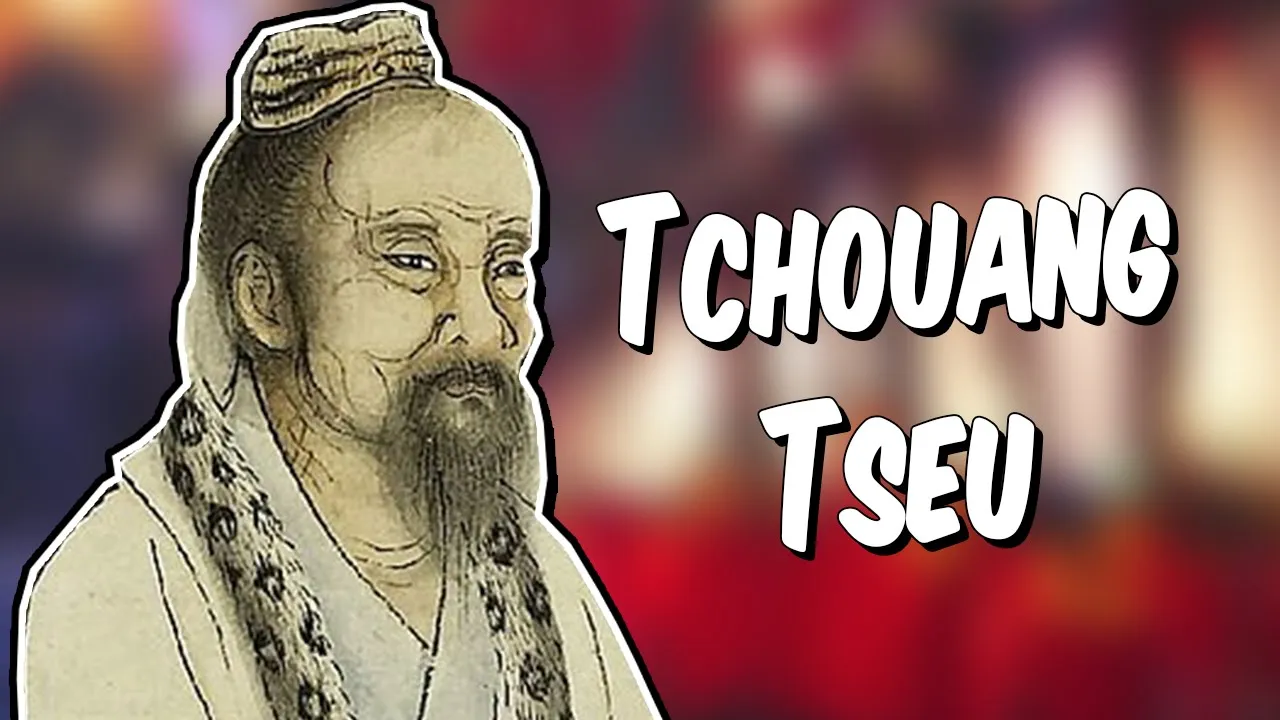





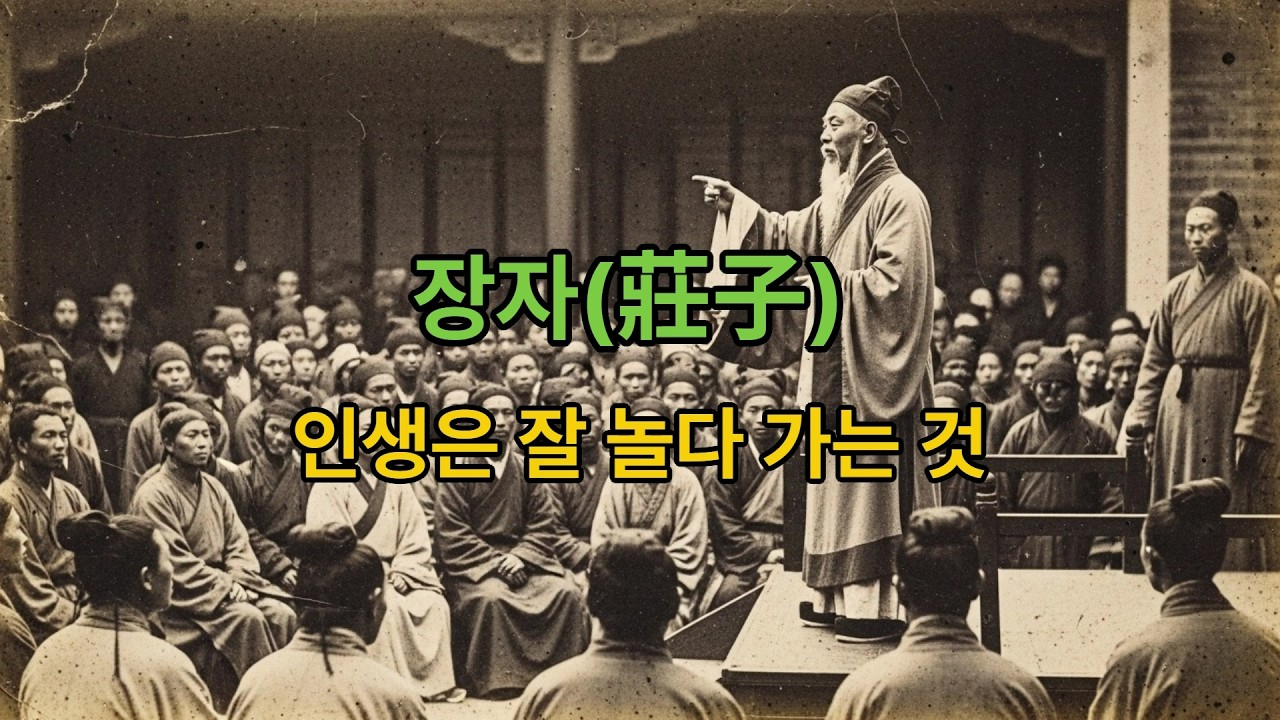
Zhuangzi, the great Daoist philosopher of ancient China, argued that right and wrong, like 'this' and 'that,' are perspective-dependent concepts that cannot be objectively determined through language or moral reasoning; instead, the true path to wisdom involves skillfully engaging with the natural patterns of the world through intuitive, non-verbal understanding, as illustrated by his famous butterfly dream and the butcher's story of following the 'heavenly patterns' (天理) of nature.
Zhuangzi: Daoist Philosopher on Relativism and Mysticism
Added:Familiarity with the foundational concepts of early Daoism, particularly the concept of the 'Dao' (the Way) and 'Wuwei' (effortless action) as originally presented in the Daodejing.
Historical context of the Warring States Period in China and the intellectual debates among the 'Hundred Schools of Thought' (specifically the competing schools of Confucianism and Mohism).
A basic understanding of the philosophical definitions of relativism (the belief that truth and morals are relative to cultural or individual perspectives) and skepticism (the questioning of the possibility of absolute knowledge).
An introduction to the philosophy of Confucius, as Zhuangzi frequently critiques and parodies Confucian virtues, rituals, and dogmatic moralism.
The historical development of Neo-Daoism (Xuanxue) and how commentators like Guo Xiang reinterpreted Zhuangzi's concepts of self-transformation and spontaneity.
The syncretic integration of Daoist thought with Indian Buddhism, specifically exploring how Zhuangzi's views on the limits of language and dualities influenced the rise of Chan (Zen) Buddhism.
Comparative philosophical analysis mapping Zhuangzi's perspectivism and skepticism against Western philosophers such as Pyrrho, Sextus Empiricus, or Friedrich Nietzsche.
The application of Zhuangzi’s philosophy to modern psychology, particularly comparing his anecdotes of 'spontaneous skill' (like Cook Ding cutting the ox) to the contemporary psychological concept of 'Flow State'.
24.9K views681likes58:32Original Release: 2021-02-05
they're we are just thrilled about the part the interest and uh um in having professor brian van norden here with us today my name is pauline lee and i am a member of the department of theology here at st louis university and um professor van norden first was going to speak to our class and there was such interest expressed by people who heard he was coming and he was so generous that we have now been inspired to turn it into a series of talks called tea time with the sages and our next one will be in april email me i'll put it on the chat if at pauline.li at slu.edu i'll put it in the chat for further information it will be april the 16th and um part of the audience right now is the next speaker professor tobias zern um let's see anything else i need to tell you um yes professor van norden has he'll take questions and comments after his talk and you are welcome either to put them in the chat anytime during his talk and we'll go through those and try to sort them out or simply just raise your hand after the talk and he'll take questions i think that is it for me and i'm going to turn this over to my colleague and my co-conspirator professor helen de cruz hi everybody i'm helen de cruz and i teach philosophy at st louis university i hold the danford chair in the humanities and i am at the philosophy department and i'm really thrilled happy very grateful to professor van norden to to talk for us so he is the james monroe taylor chair in philosophy at vazar college in the us and chair professor in philosophy in the school of philosophy at wuhan university in china he has published 10 books on chinese and comparative philosophy including the introduction to classical chinese philosophy readings in later chinese chinese philosophy readings and classical chinese philosophy taking back philosophy a multicultural manifesto he has done so much to show the importance of chinese philosophy and why it is relevant and important that we teach this at western philosophy department and i'm very grateful for all the outreach that he's done in that regard so without further ado we'll turn it over to professor van norden well thank you very much both to professor de cruz and to professor lee having me here today and thank you all suit to st louis university for sponsoring this event and of course thank you to the students and the other people who joined us for the presentation today most of my translations will be coming from this volume readings in classical chinese philosophy edited by philip ivanhoe who's now at georgetown university uh and myself uh it's the second edition although the third edition will be coming out in a year or so so if you'd like to check out the translations you're welcome to use that so i'm talking today about juwanza and in the initial advertisements for the talk i said he was a great taoist philosopher but in fact some people would say he is the greatest taoist philosopher although not as well known in the west as lauza so to give you a sense of what chuang's is like juwanza had a philosophical colleague a fellow philosopher named huiza and you might say they were friends but i think to use a contemporary expression we might say that juans and hueza were really frenemies because they they kind of were friends but they also had some very intense philosophical disagreements and that's reflected in this anecdote which comes from the sayings of chiwanza so juans and wades were out walking one day and they were going on a bridge over the howe river and juansa looked out to fish and said wow this is what fish really like they like swimming around to and fro carelessly going with the flow in the water and wade's uh eyes juwongsen says you're not a fish how do you know what fish like without missing a beet juanza says no i'm not a fish but you're not me so how do you know what i know huev shoots back true i'm not you so i don't know you but i do know you're not a fish so therefore you don't know what fish enjoy dwanza then says let's go back to the beginning of the argument you asked me how do i know what fish like well the question assumes that i do know what fish like so you agree with me that i know your only question was how do i know how do i know i know by standing here above the river howe now that gives you a flavor for what the juans is like and it raises some interesting questions because there are some people who think that this is a very powerful philosophical exchange and juwanza is making a deep philosophical point there are other people like me who think that this is primarily just a philosophical joke a kind of a sophistry but even the people like me who think this is just kind of a joke kind of a sophistry we have to answer well why is it included in the juansa if it's just a joke what's the point of the joke and i think there is a kind of point to it even if it is just a joke and if we have time we'll return to that later but first let's try to contextualize a little bit who who this guy juwangza is and uh you know what his writings are like so here on the left we have an actual chinese postage stamp it's from a series of ancient thinkers and i've got these stamps in my collection uh there's one for confucius there's one from for some other philosophers you might not have heard of like mangza and maudzia and this is the juanza stamp and dwanza is a real historical individual he lived in the fourth century bce in china uh he was a contemporary of a num number of other very influential philosophers and the writings attributed to juwanza are eponymous which is a fancy way of saying that their writings attributed to juan's are just called the juansa but we know that the juansa as a text didn't take its current form until long after the time of the historical individual jawanza the juanza reached its current form sometime around 300.
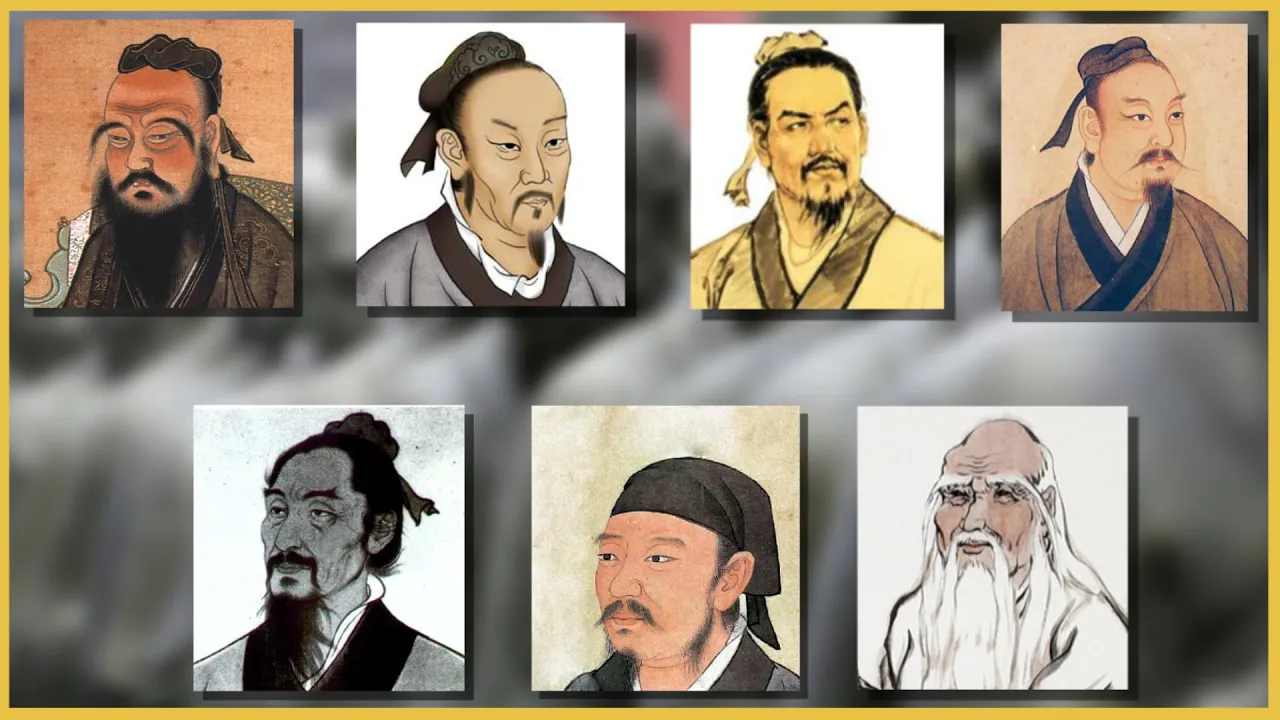
of the common era and the text of the juansa is conventionally divided into three parts the inner chapters which are the first seven chapters in the wongsa the outer chapters then the miscellaneous chapters now some people and i'm one of these people thinks that the inner chapters show a linguistic consistency that suggests although it doesn't absolutely prove that this text is by one author but that doesn't mean there's nothing valuable in the outer chapters or miscellaneous chapters it doesn't mean there's nothing that's authentically juangzian but for example in our selections we focus on the inner chapters because we it feels to us that these are by one author one philosopher but that's a controversial claim now how do we categorize chewang in terms of the systems of thought in china there's a traditional view about who dwanza is and how he fits into chinese philosophy and i'm going to give you this traditional view because it's very influential both in china other parts of east asia and also you see this repeated in a lot of textbooks and i'm going to problematize that view suggest there's a problem with it but it's really influential so you should know the view now among the traditional systems of chinese philosophy that survived into later errors it's common to classify many thinkers as either confucians or taoists and a traditional story you get is that taoism is founded by this figure lauza who supposedly wrote this work called the dao da jang the classic of the way in virtue and supposedly laozi was a slightly older contemporary of kunsa kuns is better known in the west by the latinization of his name of confucius and the traditional story goes that laozi found taoism kunsa founds confucianism and then one of the major later followers of confucius is mangza sometimes known by the latinization of his name as mencius and mangza according to the traditional account is just explicating or defending what kunsa originally said and then likewise in a parallelism is a taoist who is just explicating or defending what laudza originally said now uh i'm gonna claim and i'm not everybody agrees with this but there are many scholars both in china and the west who would agree with this that this account is fundamentally wrong in important ways the confucianism side of the equation is not as wrong monza certainly thinks that he is defending the tradition of which kungsa confucius is one of the major if not the major figures however some scholars have suggested and i've suggested this that what confucianism means for mangza might not be the same as what confucianism means for kungsa although manza certainly thinks he's defending what kungsa said even more problematic is the right hand side of this chart because first of all taoism didn't exist as anything like an organized movement in the time of laozi or juan's wouldn't know what you meant if you said they were taoists taoism as a religious and philosophical movement really developed later in the han dynasty which is a later period in chinese thought after the period uh that these guys all lived in so not only would laoz and zhuangzan not recognize that they were taoists but zhuangzi i don't think thought of himself as defending or developing the ideas of laoza there are some references to laodza in the juwangza but zhuangzi never speaks of louds as if he's the master he's defending so it's worth understanding that this is how we categorize these thinkers but it's a a categorization that they themselves might have thought was kind of alien but it is true that jawanza was a contemporary of this confucian philosopher mangza and it's true that juansa disagreed with manza about a lot of things so for example uh the sayings and dialogues attributed to manza are also eponymous that is to say they're named after him the writings and sayings amongst are called the mangza and in a very famous passage amongst the passage 2a6 manga says the heart of compassion is the sprout of benevolence and the heart of disdain is the sprout of righteousness what does he mean by that what mangza means by that is that humans spontaneously sometimes have feelings of compassion for other humans or other animals even and this spontaneous feeling of compassion represents an innate but incipient tendency towards the virtue of benevolence just like the sprout of a plant is not a full-grown plant this this sprout could be the sprout of an apple tree for all we know but obviously this sprout in the photograph is not capable of bearing fruit that's okay uh but the sprout has an active potential to become a fully formed apple tree likewise the sprout of benevolence has the capacity to develop into a fully formed virtue of benevolence but at the beginning it's just innate and incipient so likewise we disdain to do certain things we have an ethical sense of shame to regard things like cheating in a sporting event as shameful we're embarrassed if people catch us cheating in a sporting event or if people treat us with contempt we're upset about that we disdain to be treated with contempt amongst us says these innate tendencies to regard certain things is shameful that's the sprout the innate but incipient disposition which can grow into the virtue of righteousness or integrity so mangza thinks that human nature has these innate but incipient tendencies towards virtue and you can use these as a guide to what is right and wrong you have to cultivate them and develop them but still in your innate nature are dispositions towards virtue that can be your guide now what is among sorry what does juan's say in response well this is a passage in the jewongsa that says the sprouts of benevolence and righteousness and the pathways of right and wrong are all snarled and jumbled and if you remember that zhuangzha is a younger contemporary of mangza the confucian and you remember that mangza talks about the sprouts of benevolence and the sprouts of righteousness you realize that juan's is here critiquing something that moses says and what is amongst them what does sorry what does zhuangzi mean our taoist philosopher mean when he says the sprouts of benevolence and righteousness are all snarled and jumbled to illustrate this i have used a picture i was teaching in singapore for a few years and i went on a vacation during one break to indonesia and i took a tour of a this kind of jungle area and the the guy who was steering the boat he would point to snakes in the trees around us and say oh look there's a snake right above us and he kept pointing and saying look you see the snake you see the snake i couldn't see the snake but eventually just so we could keep going i said oh yeah i see the snake and i took a photograph with my cell phone then i get the photograph back at my room that night i blow it up really big i look at it really carefully and eventually if you look really carefully on that one branch there's something curled around the branch that's the snake he was referring to so what's my point it's if you're looking at a tangle of growth it can be very hard to identify one thing from another thing in this case i couldn't even see a snake that was right in front of me juan's is saying that confucians like mongzo want us to look in our minds and identify the sprouts of virtue and cultivate them but zhuangz is saying how are you going to identify the sprouts of virtue and distinguish them from the weeds of vice in a way that isn't ultimately question begging of how do i know what a sprout of virtue is like when i see it or to put it in another way how can you tell you're actually feeding a sprout of virtue as opposed to nurturing a weed of vice how can you tell that you're say nurturing the sprout of righteousness instead of the sprout of self-righteousness how can you tell that you're nurturing the sprout of benevolence instead of the sprout of hypocrisy or condescension so and if if you don't recognize this gif i'm kind of dating myself here this is from a wonderful movie from i guess it was a few decades ago now little shop of horrors which is based on an even earlier movie and a broadway show and it's a delightful movie that i think you'd enjoy but it's about someone who feeds a plant and the plant grows into a monster so likewise juan za says look the sprouts of benevolence and righteousness are all snarled and tangled with other things how are you going to identify them that's a clever and suggestive rhetorical device but it's not yet a tightly formed philosophical argument does give us a precise philosophical argument against the position that we find in manza he does and at first if you read wong's argument it might not be clear what point he's making what he says at one point is that comes from this and this follows from that this is the doctrine of the parallel birth of this and that now when you read this you might be like uh what are you talking about you want so i have no idea what's going on here he's actually making a really interesting point in the philosophy of language and this chart illustrates it if you're learning english one of the things you have to learn is whether you say it's this apple if you're referring to an apple that's close by or that apple if you're referring to an apple that's far away likewise in english we distinguish singular and plural and so if you have a bunch of apples nearby there are these apples if you have a bunch of apples in the distance they're those apples you find this phenomenon in every language terms whose proper use depends on their context of utterance and this and that are classic examples of terms which in order to use them correctly you need to know who's using them and what the context is so i might refer to this cup of coffee but if you wanted to refer to the same cup of coffee you'd call it that cup of coffee because to you it's that cup of coffee interesting little tidbit but why is that so important it turns out that this and that are examples of terms that we find in all human languages whose reference depends on their context of use and linguists and philosophers of language sometimes refer to these as indexicals examples of indexicals include this and that but also pronouns like i you her i can use i to refer to this person you would have to use you or him to refer to this person likewise now before or after right whether we're talking about something happening now the same instant of time that is now now will be before and another point in time and after at another point in time likewise left right above below right so in the in the building where i usually teach there are bathrooms on the uh first floor and the fourth floor and so if you want to know are the bathrooms on this floor are they above are they below depends on what floor you're in right so it depends on your perspective okay that's kind of neat that every language has these indexical expressions okay interesting but why is juan's just so concerned with this we know that it wasn't just zhuangza who was concerned with the problem of indexicals other philosophers in his era also discussed them one of those philosophers was remember the guy over the bridge over the river howe juan's frenemy that he always likes to engage in this these playful philosophical debates um sometimes you think they're not so fl playful um was actually famous in his own era for propounding a series of paradoxes and unfortunately we have wade's as paradoxes but we no longer have wade's arguments in favor of the paradoxes but i think you can make a very plausible case that the way to understand wade's paradoxes is they all depend upon indexicals and here's a great example of them one of the things that wades is famous for having said was i went to uh today and i got there yesterday what is uh uh was a state far to the south of the part of china that juansa and mangza and hueza were from they were from the yellow river valley which is way to the north of china and ue is way down in the south so the idea that you could go to uh today and get there yesterday is really paradoxical how could that possibly be true well here's one possible interpretation maybe i leave for the state of uh on tuesday i travel tuesday and wednesday and i arrive in uh on thursday then if i said i went to uh today said on tuesday that is true and then i got there yesterday let's suppose actually i arrived in uh on wednesday then i could truthfully say on thursday that i got to uh yesterday so whether it's true that i got to uh today and i got there yesterday depends on the perspective from which we evaluate today and yesterday and we know jawanza was interested in these paradoxes not just because he liked to argue with wadeza who propounded the paradoxes but also because he refers to this paradox in a particular passage chiwanza says if your made up or fixed heart or mind counts as a teacher then who doesn't have a teacher but to have right and wrong before you've made up your mind before you've made up your heart that's like going to you ed today and getting there yesterday it doesn't make any sense so zhuangz is saying that just like today and yesterday these indexable terms depend upon your perspective so likewise does do the judgments of your heart which manga wanted to use to ground morality depend upon your perspective and furthermore juan's started to wonder what if every truth is ultimately indexical what if every claim ultimately has to be grounded in judgments that depend upon your perspective to be true or false is there any way to get it a truth that's not ultimately indexical in the way that this that right left up down now before after our indexical i think chuangzoo was very attracted to this view that ultimately all truths are indexable and he applied this to morality so in a passage nearby the one that i quoted earlier juan za says what is this is also that right it's this cup from my perspective it's that cup from your perspective and what is that is also this that is both right and wrong this is also both right and wrong and wong's is doing something really clever in the original chinese here that's a little hard to follow in the english because what is pointing out is that there's a term in chinese in the center of this diagram sure sure can be a demonstrative pronoun in which case it means this and as a demonstrative pronoun this sure sure is contrasted with b which means that but the same term sure can also be a moral term or it can be a verb which refers to being right being correct and in that sense sure is contrasted with fey meaning is wrong so by means of this kind of pun in classical chinese chuanza is suggesting that just as this and that are not objectively true but depend upon your perspective so likewise right and wrong also depend upon your perspective and he makes this explicit in a passage where he says how is the way the right way to live the right way to organize society how is the way obscured that there are true and false how are words obscured that there are right and wrong where can you go that the way does not exist how can words exist and not be okay the way is obscured by small completions words are obscured by glory and show so we have the rights and wrongs of the confucians and the most each calls right what the other calls wrong and each calls wrong with the other calls right now the moest were another ancient chinese philosophical school and they didn't survive the the movement didn't survive into the following han dynasty but the confusions of the most disagreed about a lot so for example the confucians said that what filial piety requires is that you show a kind of favoritism to your parents over other old people and your children over other young people the most in contrast advocated impartial caring gen eye and so they thought that uh there might be practical reasons for aiding one person over another for practical uh practicalities but in terms of their their moral weight or your obligation to them you have equal you ought to have equal concern in principle for everybody so the confucians call conventional filial piety right and they call the impartial caring of the most wrong the moes call conventional filial piety wrong and impartial caring right now that debate we can understand and we understand similar debates in our own society about is capital punishment ever justified um do is abortion something that women have a right to or do you regard abortion as murder is gun is the right to own a firearm an intrinsic right that every u.s citizen has or or can firearms be heavily regulated but what if those disagreements are like having a disagreement over whether it's this mug or that mug if right now professor de cruz or professor lee interrupted me and said you keep talking about this mug it's not this mug it's that mug and i said you're wrong that's ridiculous it's not that mug it's this mug and we started getting really heated about this you'd laugh at us you'd say that's ridiculous what are you guys arguing about it's this mug from van norton's perspective it's that mug from professor lee's or professor de cruz's perspective there's no objective fact about it but what if ethical disagreements are the same way chiwanza asks us so what is this conclusion now i'm going to suggest a tentative interpretation of what wongs is saying but i'm going to show you a technique i'm going to illustrate for you a technique in reading philosophical text because when you're reading a philosophical text you have to form hypotheses about what the text means but you also have to be open to the possibility that your initial hypothesis about what the text means is mistaken because it can't handle some other passages in the text so i'm going to throw a hypothesis out there it's one very common way of reading the juanzo but i'm warning you i'm going to call into question in just a minute so maybe don't fall in love with it just yet but some people do fall in love with this hypothesis and some people think they read the juans and they think this is what the juans is about so the hypothesis is that what juan's is telling us is right and wrong are relative terms like this and that so it's wrong to criticize others just like you'd be silly to criticize me for saying well the bathroom is one floor up when you say no the black bathroom's not one floor up it's one floor down well if you're on the the fourth floor and the bathrooms on the third floor and i'm on the second floor we're both right why would we argue with each other so you want to say that impartial caring is right and filial piety is wrong well fine that's true from your perspective why should i argue with you so some people think this is what wongs is all about but there are problems with this way of reading the juan said to start to understand the issues let's talk about the opening story in the juwangza the story of the giant fish that becomes a giant bird and i know if you're in uh professor de cruz and lee's class you've already looked at this passage a little bit um so the juan's opens with this great story about a giant fish that transforms into a giant bird by the way there's a statue of the giant fish at the moment it transforms into a giant bird on the campus of uhan university in china which is one of the institutions that i sometimes teach at and the the characters there on the front of the statue that's the a quotation of the juansa describing the giant fish turning into a giant bird i've actually been uh to this uh the square where they have this statue that's me with my daughter a few years ago in front of the statue um and it's interesting because this statue was paid for by alumni of uhan university which is one of the top universities in china and it was paid for by alumni from the first class to graduate from uhan university after the cultural revolution during the cultural revolution in china in 1966 to 1976 universities were closed down and students were encouraged to join the red guards and to root out the last vestiges of feudalism and capitalism in chinese society and when the university was reopened at the end of the cultural revolution the students went on to become very successful and they donated money to build this statue we have time we can talk about why did the statue and this image from zhuangzi mean so much to them well let's look at the story and see what we think it means the juansa opens in the northern darkness there is a fish named minnow the chinese is kun one interpretation is that that means fish eggs or tiny fish although the name suggests a small fish no one knows how many thousand lee around he is a lisa unit of length it's about a third of a mile so this fish is hundreds of miles around he changes into a bird named breeze again we don't pun is just a name but it could be a holonym for breeze so let's read it that way he changes into a bird named breeze no one knows how many thousand leah cross he she is she ruffles and flies and her wings are like clouds hanging from heaven as the seas turns she thinks to migrate to the southern darkness the southern darkness is heaven's pool beautiful language and in particular think about this image of heaven's pool the chinese term chur suggests pond or a pool not an ocean but obviously the southern darkness has to be the size of an ocean to be a fitting resting place for this huge bird breeze so the point is that an ocean from our earthly perspective is a heaven sorry it's just a pool from the perspective of heaven the passage then continues the cicada and the student dove laugh at her saying when we start up and fly we struggle for the elm or the sandalwood sometimes we don't even make it but just plunk to the ground what is she doing rising 90 000 li and heading south juansa or the narrator then concludes what do these two little bugs know the cicada and the student of little knowledge does not measure up to big knowledge or few years to many so what's the message of this story one way you could read it is perfectly in line with the hypothesis i expressed before which is that juan's is saying that right and wrong good and bad appropriate and inappropriate depend upon your perspective so you shouldn't judge others negatively so the cicada and the student of are mistaken for criticizing the bird breeze the punk bird because it flies differently from them it flies in the way that's appropriate to it that is one way you could read the opening story but there's a problem with our first hypothesis and the story of the cicada the dove and then later there's a quail that also laughs at at the bird breeze uh that story suggests the problem our hypothesis was that right and wrong are relative terms like this and that so it's wrong to criticize others but if right and wrong are relative terms then isn't it right relative to some of us to criticize others maybe you know the cicada and the dove are just it's maybe it's their nature to criticize others that's what they do they criticize and condemn others that's what's appropriate for them so if it's wrong to criticize others then it seems like it's also wrong to criticize others for criticizing others so and if it's right to tolerate others then isn't it also right to tolerate others for being intolerant so the problem with the first hypothesis although it seems to make sense of a lot of passages in the chuangza is it ends up being kind of self-undermining and even in the story of the pungbird it's really not clear are we allowed to call the cicada and the dove and the quail just little bugs because they don't understand the pun that's how they understand the pug who are we to say that they're wrong but then is there any content to our relativism at all so it looks like we have to modify our first hypothesis but then what hypothesis should we go with another story in the drawing pardon me sorry another story in the dwanza suggests another way of reading juan's point supposedly a butcher was carving up an ox in front of a of an aristocrat lord went away and the thing was the butcher was carving up this ox so skillfully his hands just it was like dancing you know just zooming through the carcass and never hitting a bone and things that didn't just fell apart and ironically ivanhoe who co-edited readings and he and i coded readings in classical chinese philosophy and he did some of the translations in here his family owned a butcher shop and so i asked him about this and he said oh yeah somebody knows what they're doing it's just amazing to watch them cut up you know a carcass because their hand just glides through it and i know that i've tried to cut up just like a chicken and i just hack away at it because i don't know what i'm doing um so anyway the butcher is just miraculously carving this animal just falls apart so easily and lord huy says when hue says wow i didn't know skill could reach the such heights but the butcher says uh your highness what i care about is not just skill what i care about is the way and the butcher describes how he had to practice for years to get to the point where he could carve an animal this skillfully and he says his secret is that i rely on the heavenly patterns thienly and that becomes a really major term of art in later chinese philosophy in carving up the ox i rely on the heavenly patterns the natural structure of the ox i strike in the big gaps am guided by the large fissures and follow what is inherently so this suggests a very different vision of what wongs is advocating and so the butcher says his blade never gets dull because he never hits a bone because he just follows the inherent heavenly pattern of the ox as he carves it so here's a second hypothesis for how we might understand what lungs is saying maybe juan's is saying that the right way to live is to follow the natural pattern of the world the tienli so through skillful engagement with things to naturally follow the to follow the natural pattern of the world in a skillful way and do it so well that you can do it spontaneously maybe that's the right way to live and the story of the butcher suggests that but now we got another problem which is well this helps us understand the story of the butcher how do we reconcile this with juan's comments about the relativity of right and wrong because it seems like there is a right way for the butcher to carve up the ox and so if following the natural pattern is the thing to do well then right and wrong aren't relative are they another passage gives us an answer to this so duquan was reading a book up in his hall and wheelwright's slab was chiseling a wheel in the courtyard blow wheelwright is just somebody who makes wheels for carts and wagons or maybe repairs uh wheels for carts and wagons and so duke wants reading a book and wheel writes slabs chiseling a wheel and will write slab looks up at duquan and says uh lord uh what are you what are you doing and the duke says oh i'm just reading the uh the words of the sages and the will right slab says are they alive or dead and he's and the duke says well they're dead now and the wheel right says well then you're just eating the leftovers of the deceased and duquan is outraged he's like how dare you question what i'm doing if you can explain what you mean by that you live but if you don't have a good explanation for making fun of me for reading the sages you're dead on the spot so we'll write slab very calmly says well it's like my craft you know your majesty um when i chisel a wheel if i hit too softly it slips and won't bite if i hit too hard it jams and won't move neither too soft nor too hard i get it in my hand and respond with my heart but my mouth can't put it into words there's an art to it but your servant can't show it even to his own son and he can't get it from me and if you've ever done any kind of craft activity like i'm actually not a very crafty person in that sense i don't do a lot of craft things um i do play poker and ironically that this has resonances with some way things about how you play poker when you're playing it really well but uh i have seen you know documentaries about for example master stone masons who carve gargoyles on the side of buildings and they talk about how you know you have to just learn through practice how to hold the hammer and the chisel at just the right angle if you get it too steep you can destroy something and ruin months of work if you don't get it deep enough it just slides doesn't go in how do you do that you just have to learn it by doing it you could read a book about it but the book's not going to tell you how to do it or examples i like to use maybe these work better for you learning how to touch type one of the most useful courses i took in high school was a typing course where i just learned how to touch type you type learning to touch type is yeah i mean you follow rules but eventually your fingers just know where to go to type the words or playing a guitar or learning a martial art yeah you can read books about these things but at the end of the day the only way to really learn it is to do it you don't learn to play a guitar just by reading a book you have to play the guitar you don't learn how to box or how to do judo or jiu jitsu just by reading a book you have to actually do it and then what you know is a kind of knowledge that can't be completely put into words or think about riding a bicycle right when you ride a bicycle you can read a book about riding a bicycle but really the only way to ride a bicycle is to learn how to do it or floating it took me so long when i was a kid to learn how to float because i kept trying to follow the directions for how to float until i finally just said i just have to feel how to float and you can't you can give people guides but they're they don't really contain the full truth so let's modify our first hypo our second hypothesis the right way to live is to follow the natural pattern of the world but maybe to want some things this way is not something that you can learn from words especially not words like right and wrong so zhuangzi uses language in order to show us that language like right and wrong true and false cannot completely reveal the truth so we must encounter the natural patterns of the world through skillful spontaneous action i'm just checking i think i might have a making sure i'm recording okay here okay um there we go okay so so that's our new hypothesis now about what juan's is saying that he's really telling us that um we have to uh we have to engage with the natural pattern of the world but in a way that language is not going to be adequate to explain to us now i mentioned before that wong is often responding to his contemporary the confusion amongst them and one of the most famous passages in the amongst is amongst the 187 it tells the story of how the king was sitting up in his hall and someone let an ox pass below this is a traditional chinese image of this scene the king's up there in the raised hall looking down the courtyard someone leads an aux through the courtyard and the king says to one of his advisors hey where's that ox going and the advisor explains oh the ox is being led to slaughter we're going to slaughter it to ritually consecrate a bell with its blood and the king says oh that's terrible i feel so sorry for that ox spirit i cannot bear its innocent appearance like an innocent person being led to the execution ground spirit and monks asked the king about this story and says i heard the story is that true and the king says yeah it's true and monza says the feeling the heart which you showed your majesty in sparing the ox being led to slaughter that feeling shows you have the capacity to be a great king if you would only try to do so and the king says why do you say that and monza says the compassion that you showed for the ox being led to slaughter show the same compassion for your subjects your subjects are like the ox in that they too are innocents being led to slaughter but the slaughter there led to is the wars of conquest that you launch your majesty the slaughter there led to is the starvation that occurs because you tax them so that you and your other aristocrats can have luxurious lives while they starve so if you would have the same compassion for your subjects that you had for that ox then you would be a great king it's a beautiful moving passage and we kind of like we're on amongst the side here because he's trying to encourage the the king to do the right thing but there's a puzzling aspect of this passage that you know most people notice my students always bring it up um and i it's always struck me too in the middle of telling the king that he has to try to be a better king mungza says hence gentlemen keep their distance from the kitchen hence gentlemen keep their distance from the kitchen what does that mean what it means is monza says well you see your majesty that's why people like you shouldn't go into the kitchen because having seen animals slaughtered you'll no longer be able to eat their flesh and so you shouldn't hurt your delicate sensibilities by watching the animals get killed but this seems really hypocritical right i mean if you really think it's bad for the animals to be slaughtered well here's an idea stop slaughtering them right but mangza doesn't take that seriously so the reason i'm bringing all this up and discussing uh juwanza is that what does juan's ado juan says read manga obviously and he already refers to monza sprouts of virtue but he's obviously read the exchange involving the king in 187 and what he what what juan's is doing is he's flipping amongst a story on its head so not only does zhuangzi say no the gentleman shouldn't keep their distance from the kitchen but in fact the gentleman can learn the right way to live by watching a butcher do his job and so zhuangzi inverts amongst the story and has a person yet learn a very different lesson from actually observing an animal carcass be dismembered so while we're admiring zhuangzi for the quality of his rhetorical device of taking amongst his example and flipping it's on its head um and for pointing out the hypocrisy in mungus's suggestion that uh you know you should show compassion for animals but maybe don't watch them be slaughtered because you know that would damage your delicate sensibilities let's also keep in mind what this seems to imply about juan's view about ethics because dwanza says yeah you can watch animals be slaughtered um and by the way i'm sorry i meant to give you a little like trigger warning before this slide came up because it's a little you know a little striking to see this but i wanted you to see this because i want you to realize this is what you want saying that watching somebody cut apart an animal carcass could actually give you an insight into what it's like to follow the natural pattern of the world but if you can be a drongzian butcher who carves up animal carcasses and that's how you express your skillful engagement with the world could you also be a bull fighter now i'm kind of torn about bull fighting it's illegal in many parts of the world but it's still practiced in some other parts of the world i find it fascinating because bull fighting is an echo of ancient rituals involving bowls that probably go back to the bronze age and the story of theseus of the minotaur may reflect ancient rituals involving the slaughter of bulls and so i'm kind of intrigued by it on the other hand i understand people who say look bull fighting is just cool because you're basically torturing an animal and then eventually killing it uh i mean this is you know a picador who's putting barbed spears in the back of the bowl which is one of the things that happens before the bull the bull fighter comes out and then eventually you know kills the bull but if you can be skillful in carving up an animal carcass presumably you could also be skillful as well right couldn't that be a way in which you could show your skillful interaction with the natural pattern of the world so this raises another problem for our hypothesis so far we're thinking that zhuangzi says the right way to live is to follow the natural pattern of the world but this way is not something that you can learn from words especially not words like right and wrong but if you can follow the natural pattern by butchering an ox can you also follow it by being a skillful bullfighter or a skillful assassin or what about a skillful nazi officer there were some very skillful people who worked for the nazis in world war ii rommel was one of the greatest generals in world war ii and he fought on the nazi side werner von braun developed the german v1 and v2 rocket program and then at the end of the war he worked for nasa the united states probably would never have gotten to the moon without the assistance of ex-nazi collaborator verner von braun so if juansa is about being skillful can you be skillful in a way that is amoral or even immoral well i wouldn't be able to forgive myself if i gave you a lecture on juan's and i didn't say something about what is probably the most famous story in the geelongs of the butterfly dream and a butterfly dream here is illustrated in with a wonderful illustration by one of your professors uh helen de cruz and she's got a forthcoming book that i've also had the honor of contributing to that illustrates some great philosophical thought experiments and the basic story is that uh one night juan's a dream to being a butterfly so he's dreaming of being a butterfly and floating around following the air currents think back to the bridge of the river how and how juan's appraised the fish for just flowing around and following the currents in the water and so he's having this nice dream and then he wakes up but in that moment where he's half awake he's not sure whether he's juanza who had dreamt that he was a butterfly or is he a butterfly that's now dreaming that he's a human chongza now what's the point of this example some people compare it to the dream argument of the western philosopher rene descartes and descartes trying to find the limits of human knowledge and trying to find out whether anything is absolutely certain reflected that he could be dreaming he thinks he's sitting writing this work meditations on first philosophy or sitting by a fire but he could wake up and realize that nope he wasn't in front of a fire that was all just a dream maybe his name isn't fake heart maybe you know he's not in a place that has a fire maybe he's somebody completely different maybe the whole world is different so juan's sorry descartes used his dream argument to argue that you can't know what the truth is but i don't think that's the point of juan's dream argument some people have read it that way they said oh there's a skeptical argument you don't know whether you're a butterfly or a human i don't think that is the point because i think the point juan's is trying to make is that in the moment where juan's is not sure whether he's a butterfly or a human chuangza is getting a hint of the way the sage sees the world which is not to mark precise distinctions between butterfly and human in another passage chiwanza says that in ancient times there were those who thought there had never been anything perfect done there was nothing to add next were those who thought there were things but never any boundaries next were those who thought there were boundaries but never any right or wrong the way is lost in the glorification of right and wrong so the best way to see the world is not even to ask what what is real and what isn't real if you have to think about what is real and what isn't real at least don't draw precise boundaries between things like human animal plant and if you have to draw boundaries between things for goodness sakes don't label things as intrinsically right and wrong because the way is lost in the glorification of right and wrong so instead of being a skeptical thought experiment i think the butterfly uh dream story is about chongzi in that half awake moment where he doesn't see a precise distinction between himself and a butterfly seeing the world the way a sage sees it all the time where you don't mark precise distinctions now i'm almost done i'm going to look at one last issue here if juan's is right that we can't use language to give us a unique objective description of the way the world is should we just stop talking why not remain silent if language can't give us the truth and juwanza anticipates this objection in one of my favorite passages in the chuangza and indeed is one of my favorite passages in all of world philosophy juansa says a trap is for fish when you've got the fish you can forget the trap a snare is for rabbits when you've got the rabbit you can forget the snare words are for meaning when you've got the meaning you can forget the words then juansa wonders where can i find someone who's forgotten words so i can have a word with him so what schwang's is saying here he's saying that words are tools that you use to point to something independent of the words that doesn't mean you're going to stop talking or stop using words it does mean that you're going to realize that the words are merely a tool like a rabbit snare or a fish trap that is used to get something that you really want which is the thing beyond the trap or beyond the snare or beyond the words that doesn't mean you stop talking it just means that you recognize words are just tools for pointing to something and the word meaning here literally is pointing juror to something beyond the words and i can't help but point out that this is remarkably reminiscent of the view on language that we get in a seminal 20th century western philosopher ludwig vitkenstein and louis vickenstein wrote this seminal philosophical work in the 20th century the tractatus logico philosophicas and in the tractatus wickenstein gives a theory of the meaning of words but if you pay really careful attention to wittgenstein's theory of how words mean and what they and how they mean and what they mean and how meaning works you realize that wittgenstein's book the tractatus cannot be meaningful by the standards of its own theory of meaning in other words the theory of meaning that we get in the tractatus rules out the meaningfulness of the tractatus itself so you might think that you've caught wittgenstein in a paradox and he has to admit that his book was stupid oh no he knows that his book is meaningless and he says my propositions serve as elucidations in the following way anyone who understands me eventually recognizes them as nonsensical when he has used them as steps to climb beyond them he must so to speak throw away the ladder after he has climbed up it and then wittgenstein concludes the investigate that's tractatus by saying whereof one cannot speak thereof one must be silent the doubter jing attributed to loudza simile says those who speak do not know those who know do not speak but of course the doubted gene uses words to express this point thank you so much for listening to my talk if you'd like to learn more about chinese philosophy i invite you to take a look at my book might be your local library introduction to classical chinese philosophy which has a chapter on zhuangza also chapters on manga konza confucius loudza and also you might check out my website brian van norden dot com which among other things has a bibliography of suggested readings to learn more about chinese philosophy indian philosophy africana philosophy and indigenous american philosophy thank you all for your attention and i respectfully invite your corrections thank you
Up Next

41:43
Daoism Explained: Laozi, the Dao De Jing, and Core Teachings
@ReligiousStudies100
88.5K views•2013-04-22

164:01
John of Damascus on Holy Images: A Theological Defense
@BannedBooks
139 views•2026-04-25
68:45
I Ching Philosophy: Divination in Neo-Confucianism & Jung
@BryanVanNordenPhilosophy
74.4K views•2021-04-26
4:57
The Myth of Sisyphus: A Greek Legend of Eternal Punishment
@TEDEd
8.6M views•2018-11-13
Related Study Plans & Knowledge Roadmaps
Structured learning paths in Philosophy
philosophy
Frankfurt School: Critical Theory & Culture
01Foundations of the Frankfurt School and Critical Theory
02Horkheimer & Adorno: The Critique of Instrumental Reason
03The Culture Industry and Mass Deception
+ 2 more learning modules
12h5 modules
Explore Roadmap
philosophy
Philosophy of Language: From Frege to Austin
01The Linguistic Turn: An Introduction to Language in Philosophy
02Gottlob Frege: Sense and Reference
03Early Wittgenstein: The Picture Theory of Meaning
+ 3 more learning modules
15h6 modules
Explore Roadmap
philosophy
Feminist Epistemology: Standpoint & Injustice
01Introduction to Epistemology and Feminist Critiques
02Sandra Harding and Standpoint Theory
03Donna Haraway and Situated Knowledges
+ 2 more learning modules
12h5 modules
Explore Roadmap
philosophy
Environmental Philosophy: Ethics & Deep Ecology
01Foundations of Environmental Ethics & Anthropocentrism
02Biocentric Individualism and Animal Liberation
03Ecocentric Holism and Deep Ecology
+ 1 more learning modules
10h4 modules
Explore Roadmap