







![[EBS 인문학특강] 최진석교수의 현대철학자 노자 제10강](https://i.ytimg.com/vi_webp/N0y5Im2r6KA/maxresdefault.webp)









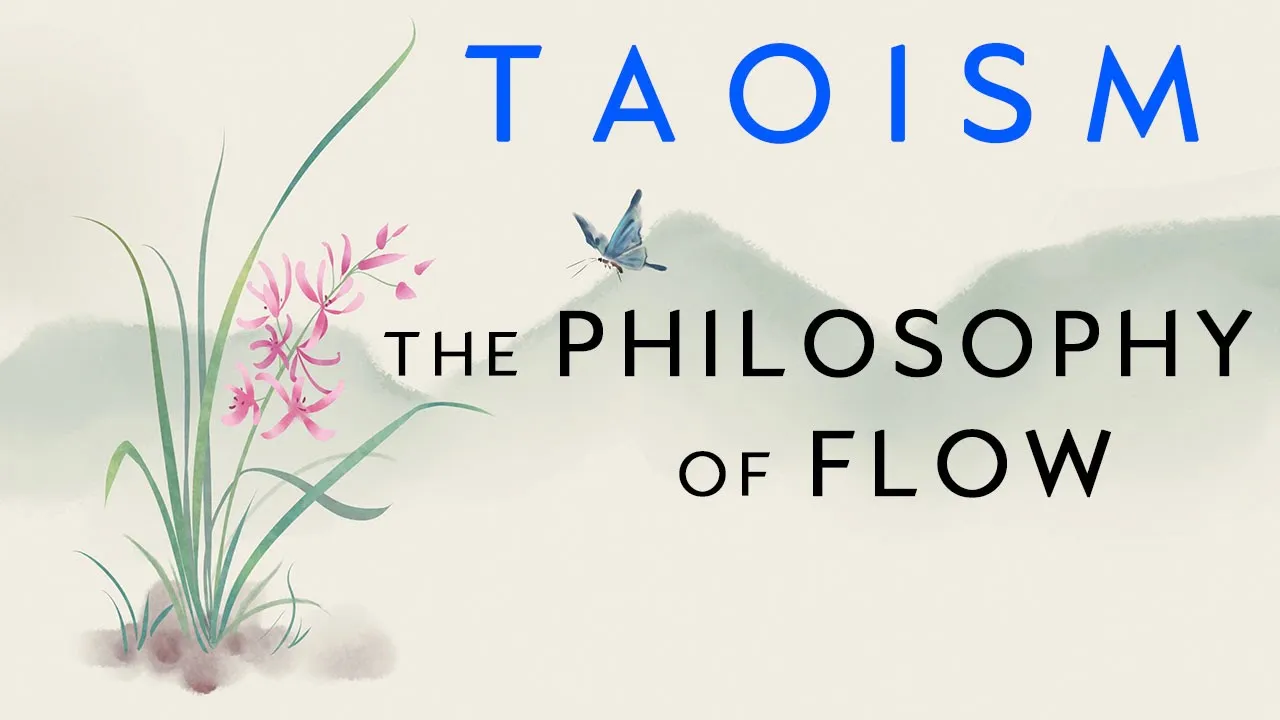





The Daodejing, attributed to the legendary sage Laozi, presents a paradoxical philosophy where the fundamental nature of the Dao (the Way) cannot be fully understood or defined through conventional language, as naming inherently divides and confines what is essentially indivisible; instead, the text employs poetic paradoxes, opposites, and riddles to cultivate intuitive understanding of Wuwei (effortless action) and harmony with the natural flow of existence.
Laozi and the Daodejing: Daoism's Ancient Chinese Philosophy
Added:The historical context of the Hundred Schools of Thought during the Spring and Autumn and Warring States periods in ancient China.
The foundational Chinese cosmological concept of Yin and Yang as complementary, dynamic forces.
A basic understanding of Confucianism, since early Daoist philosophy developed largely in response and contrast to Confucian social ethics.
Familiarity with the distinct characteristics of Eastern philosophy, such as its emphasis on paradox, intuition, and holistic harmony over rigid dualism.
The teachings of Zhuangzi (Chuang Tzu) and how his allegorical texts expanded on Laozi's foundational concepts.
The historical evolution and distinction between Philosophical Daoism (Daojia) and Religious Daoism (Daojiao).
Modern psychological applications of Wuwei, such as the concept of the 'flow state' and effortless action in decision-making.
The syncretism of Daoism, Buddhism, and Confucianism in Chinese history, specifically how Daoism influenced the development of Chan (Zen) Buddhism.
The application of Daoist environmental ethics to contemporary ecological crises and sustainable living.
193K views14.2Klikes10:18Original Release: 2025-06-20
My job as a historian is to explain things, to describe people, places, and events, and to make things make sense. Sometimes it takes an extra bit of hard work to untangle a complex topic, but the solution there is simply explain it better, weave a stronger thesis – do The Job, but More. What’s especially tricky are those rare topics which cannot be logic’d out, which by their nature refuse to be understood cleanly: subjects like the ancient Chinese classic the Daodejing and its enigmatic author Laozi. This short text of 5,000 logographic characters across 81 chapters is a genuine masterpiece of Chinese literature, and an essential source for the philosophy of Daoism.
This book is, quite simply, a paradox – it is both delightful and impenetrable, a joy to read and puzzle over, yet it willfully defies decipherment. The Daodejing simply refuses to be grasped like any other work of philosophy, to explain it contains it, to define it confines it. Now, if I sound like I’m losing my mind… Good, because the Daodejing calls for a completely opposite approach to how we usually cover books around here. So if I do my job correctly, by the end of this video you won’t have any interest in understanding the Daodejing, but you will be equipped with the historical and literary context to feel it. Our first task is to wind our way back to the mid first-millennium BC and see where the text and its author supposedly came from. In lieu of doing some History, allow me to quote the book itself: “How do I know these origins? Like this.” [21] Now cast your eyes back to the 5 and 400s BC, where China was a web of independent states, competing for power, prestige, and territory in an increasingly contentious neighborhood. But as the states got bigger and the armies got meaner, there was a parallel contest playing out in the realm of philosophy. Scholars developed principles for how societies should function, how people should act, and what rulers should do for an advantage in the endless conflict. Known to history as the Hundred Schools of Thought, this scholarly climate served as China’s laboratory for quintessential philosophies like Confucianism, Legalism, Moism, the military studies of Sun Tzu, and our subject of choice today, Daoism.
This is the philosophy of The Dao, which literally means the way or path but represents something far more abstract, many somethings, really: the way of universe, the force that is and governs nature, how one follows that nature – it’s hard to pin down, the point is kinda that we’re not supposed to, but it’s enough of a concept to know what the book is broadly about. Daodejing can translate to The Classic of the Way (Dao) and its Virtue (De).
Obviously I cannot speak Chinese but I hope I can at least convey a sense of the language here.
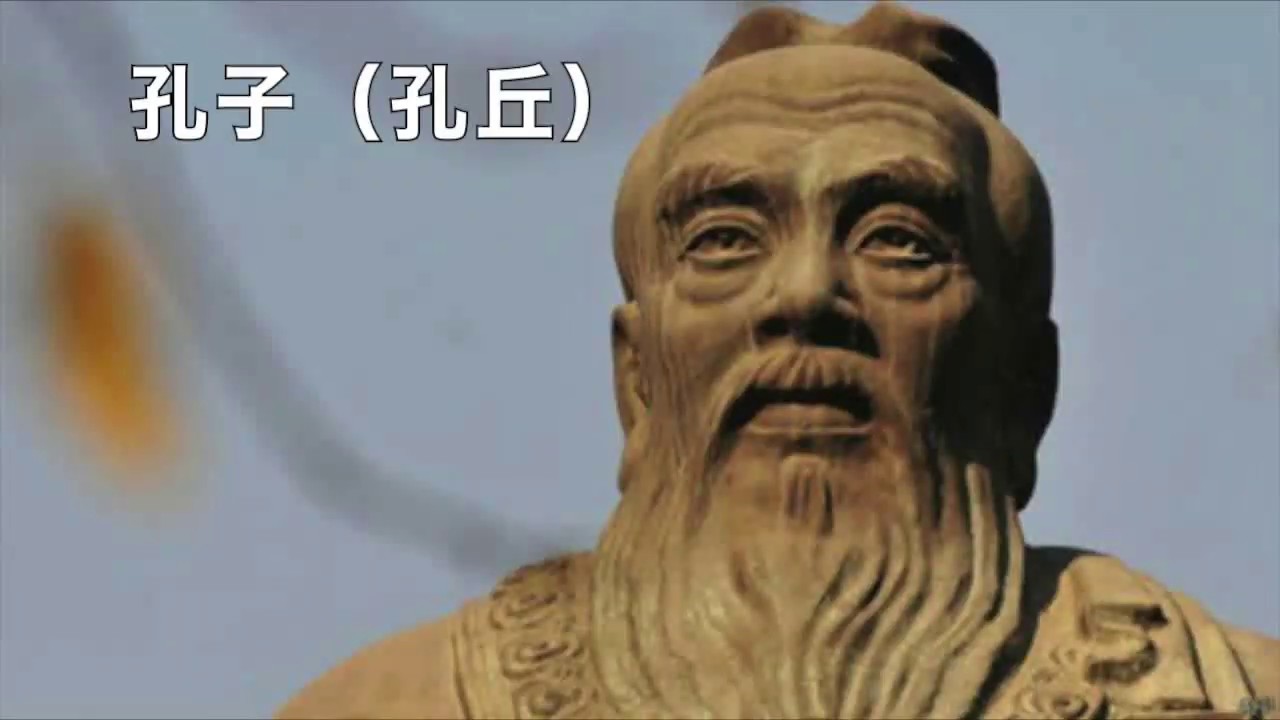
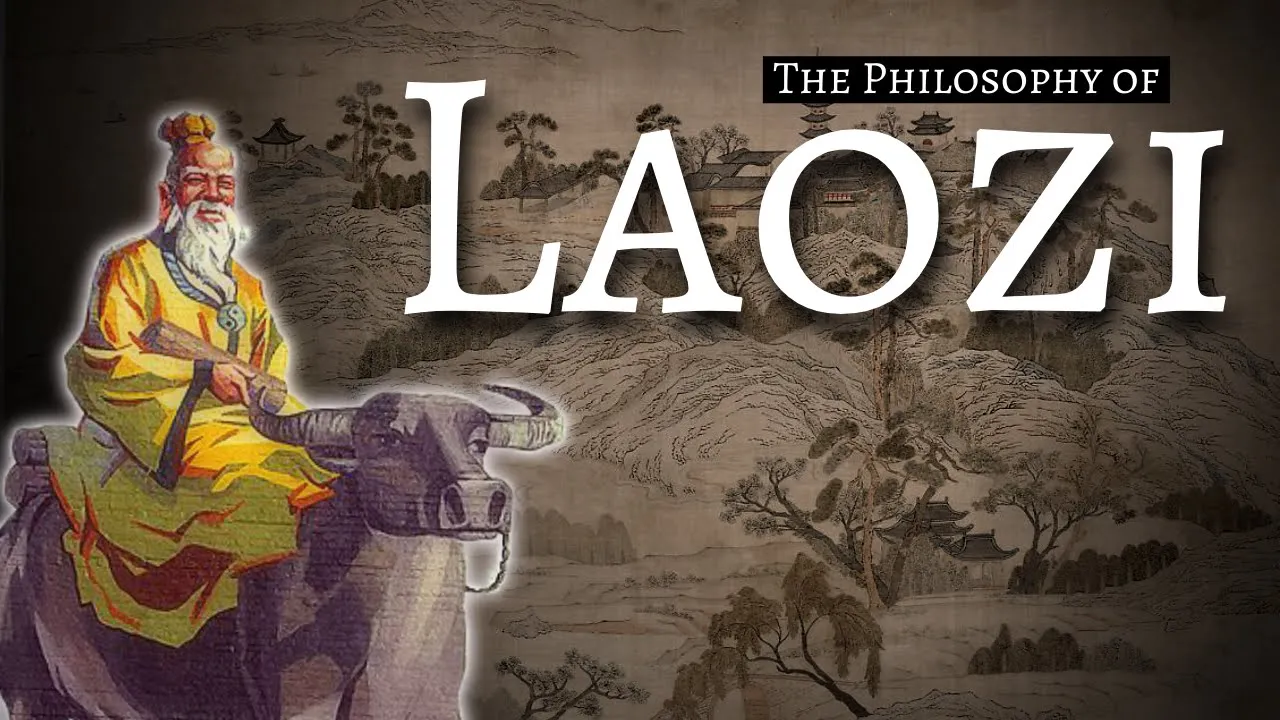
Our oldest written account of its origins comes from The Records of the Grand Historian by Sima Qian – not just any historian, the grand historian, don’t forget it – and his Han Dynasty-era work from the 90s BC contains, among so many other things that the book literally does not yet have a complete English translation, a brief description of the scholar Laozi. The name is an honorific meaning Old Master, but in his lifetime his personal name was Li Er. According to the story which is not true but let’s indulge ourselves: he worked in the city of Luoyang as a historian for the Zhou dynasty, during which time he was visited by none other than Confucius, who asked about etiquette and walked away so impressed he told his followers “I met Laozi today, he’s like a dragon!” But all would not be well forever, and seeing the decline of the Zhou, Laozi left the royal capital and headed west to the mountains. At the pass, the gatekeeper recognized that this wise man was about to withdraw from the world and asked Laozi to put his great wisdom into a book before departing. So, after finding the flattest surface to write on, Laozi got scribbling, “expounding the meaning of Dao and De in some 5000 characters, and then departed. What became of him afterwards, no one knows.” These attributions, like so many narratives about the Warring States period and earlier, were all written centuries afterward and thus very hard to verify. But given Sima Qian immediately pivots his account to various rumors of who Laozi might actually have been or how “some say” he was over 200 years old, one gets the sense of some ass-covering here; “Look man, criticize not the humble Grand Historian, I’m just writing what they told me!” Now here’s the thing, Chinese history loves having provenance for ideas and texts, even if it has to be invented here and there. So while Sima Qian and his contemporaries eyed this narrative with suspicion, it’s still a good story – and the scene of Laozi setting off into the mountains became a recurring motif in Chinese painting. It’s straight-up iconic – the man just wanted to leave, imagine the dialogue with the gatekeeper: “Ugh, fine, these are the secrets of the universe, here you go. Goodbye.” Speedrunning a consolidated rundown of every key philosophical idea in your head in the time it takes the gatekeeper to put on the kettle and ask for your autograph? Every artist I know of dreams they could be that quick on the draw with their life's work!
Do you know how long we agonize over these scripts??? Oh good god, okay, back on track.
So where does that leave us? Essentially, Laozi is a ghost, created by folk tradition and codified in record by Sima Qian. What we can work with is the text itself, the earliest version of which had long been the so-called Wang Bi text from the Three Kingdoms period in the 200s AD, when Daoism grew in popularity across China and morphed into something more like a religion. However, in 1973, an older version was discovered in a tomb at Mawangdui dating to 168 BC, then in ’93 archaeologists found it written on bamboo slips in a tomb dated to 300 BC. Both of these texts invert the chapter order from the Wang Bi version, and the earliest copy contains less than half the total chapters.
This aligns with the notion of a rolling composition, where Folk-Knowledge accumulated over time into the book we know, rather than coming from any singular author. We’ve seen a similar process with Sunzi’s Art of War, so it’s no great surprise for it to happen here, but the Daodejing remains an atypical philosophy text, as it’s written more like poetry than a treatise. For example, looking at Confucius, Sunzi, and even the other core text of Daoism called the Zhuangzi, they all explain themselves, drawing on examples, stories, and characters to impart a specific message onto the reader.
The Daodejing does none of that, instead speaking through opposites, paradoxes, and puzzles, with the intent for the reader to tease out a meaning from the enigmatic chapters.
Let’s take the very first one. In my best attempt at Chinese, the opening line is Dao ke Dao fei chang Dao: “Dao called Dao is not Dao”.
The Way is indescribable; name the thing, and it’s gone. Later in the book, Laozi tells us that “Those who know don’t talk. Those who talk don’t know.” [56] It’s humorous on the surface – and I fully recognize the irony of what I’m even doing here – but paired with the opener, we can intuit something: talking uses the human construct of language, and words have meanings: things they are and they aren’t. Identifying something creates a division: “Recognize good and evil is born. Is and Isn’t produce each other.” [2] For me to call the Daodejing poetic implies books that aren’t, and it attaches this book to a particular set of assumptions that you have with the word Poetic.
To name is to divide, and thus to try and name the Dao is to make that not the Dao, my language will sever something off of what it truly is.
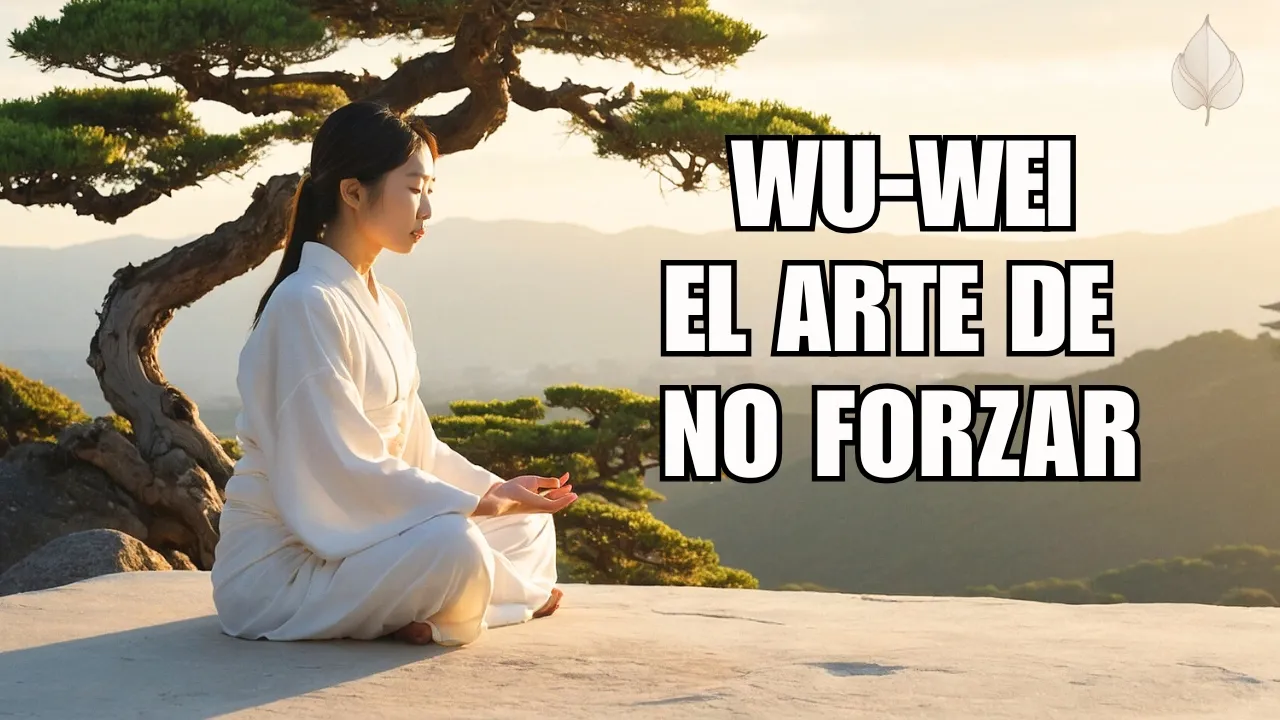
And that’s a lot of my difficulty here. I promised I can’t explain the Daodejing to you, because no matter how well-chosen my words can be, they create divisions within the very-pointedly-indivisible Dao, so I’m playing a losing game. The Dao is kind of the metaphysical order of the universe, kind-of a one-ness that pervades all existence, impossible to comprehend, but possible to recognize, and with discipline and wisdom, possible to follow. One goal of the text is to give the reader an intuition, a hunch, a vibe for the Dao, so they can learn to live in harmony with it rather than acting counter to it. And that’s a principle called Wuwei, translatable as “Effortless-Action”, the habit of doing what follows the flow of nature, the opposite of Forcing It.
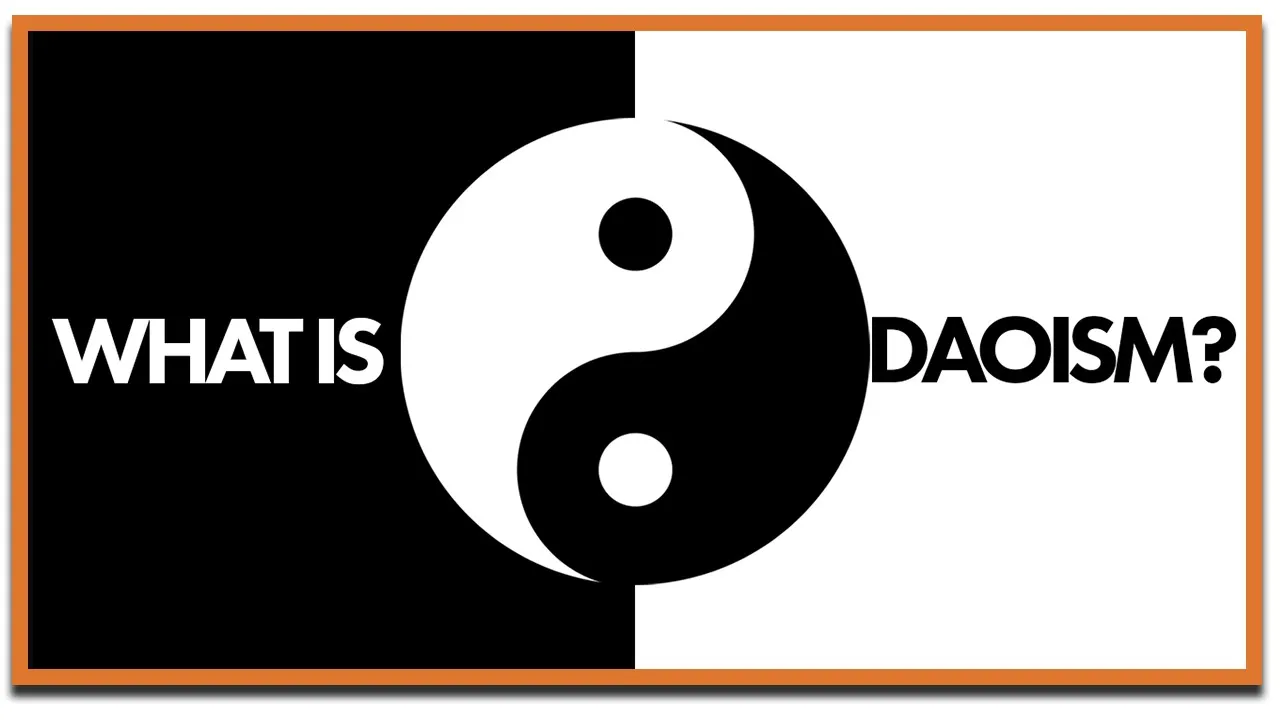
Daoism is very much a game of opposites: “To collect, first scatter. To weaken, first strengthen.” [36] That coexistence of contrast takes an elegant symbolic form in the Taijitu, one variant of which is the iconic black and white disk containing the inverse forces of Yin and Yang. There’s the straightforward read of harmony across the light and dark of nature, but the Daodejing extends this into valuing seemingly-weak characteristics and even emptiness itself: “Clay is fired to make a pot. The pot’s use comes from emptiness. Windows and doors are cut to make a room. The room’s use comes from emptiness.” [11] The pot don’t work so good if it’s a solid block, emptiness itself is an essential piece of the cosmic whole, and also your ability to drink tea.
Daoism is so dang fun to think about because it’s an entirely new pattern of thought than any of us normally do. It’s a thinking of un-thinking, it has to be felt. Plenty of philosophies are complicated, but Daoism is straight up mysterious, and that’s a rare delight. To that end, I cannot in good conscience conclude this video, it just wouldn’t be right. So instead, let’s read a few chapters together; Don’t try to solve it, just feel it: [16] Attain complete emptiness, hold fast to stillness.
The ten thousand things stir about; I only watch for their going back.
Things grow and grow, but each goes back to its root. Going back to the root is stillness.
This means returning to what is. Returning to what is means going back to the ordinary.
Understanding the ordinary: Enlightenment. Not understanding the ordinary: Blindness creates evil. Understanding the ordinary: Mind opens. Mind opening leads to compassion, compassion to nobility, nobility to heavenliness, heavenliness to Dao. Dao endures. Your body dies. There is no danger.
[22] Wounded becomes whole, crooked becomes straight, hollow becomes full, worn becomes new, little becomes more, much becomes delusion.
Therefore the sages cling to the One and take care of this world; Do not display themselves and therefore shine; Do not assert themselves and therefore stand out; Do not praise themselves and therefore succeed; are not complacent and therefore endure; Do not contend and therefore no one under heaven can contend with them.
The old saying Wounded Becomes Whole is not empty words. It becomes whole and returns.
[70] My words are very easy to understand, very easy to practice. No one under heaven can understand them, no one can practice them. Words have ancestors, deeds have masters. If people don’t understand this, they don’t understand me. Few understand me, and that is my value. Therefore the sage wears rough clothing and carries jade inside.
Thank you for watching. While we’re at it, why not have another: Heaven is long, earth enduring. Long and enduring because they do not exist for themselves. Therefore the Sage steps back but is always in front, stays outside but is always within. No self-interest? Self is fulfilled. Puzzle over that one, and I’ll see you in the next video.
Up Next
21:29
Taoism Explained: History, Origins, and the Dao De Jing
@ProfG
128.1K views•2017-04-29

164:01
John of Damascus on Holy Images: A Theological Defense
@BannedBooks
139 views•2026-04-25

68:32
Should We Destroy the Machines? Big Tech Surveillance Critique
@TheStoriesWeTell303
167.9K views•2025-11-30
4:57
The Myth of Sisyphus: A Greek Legend of Eternal Punishment
@TEDEd
8.6M views•2018-11-13
Related Study Plans & Knowledge Roadmaps
Structured learning paths in Philosophy
philosophy
Frankfurt School: Critical Theory & Culture
01Foundations of the Frankfurt School and Critical Theory
02Horkheimer & Adorno: The Critique of Instrumental Reason
03The Culture Industry and Mass Deception
+ 2 more learning modules
12h5 modules
Explore Roadmap
philosophy
Philosophy of Language: From Frege to Austin
01The Linguistic Turn: An Introduction to Language in Philosophy
02Gottlob Frege: Sense and Reference
03Early Wittgenstein: The Picture Theory of Meaning
+ 3 more learning modules
15h6 modules
Explore Roadmap
philosophy
Feminist Epistemology: Standpoint & Injustice
01Introduction to Epistemology and Feminist Critiques
02Sandra Harding and Standpoint Theory
03Donna Haraway and Situated Knowledges
+ 2 more learning modules
12h5 modules
Explore Roadmap
philosophy
Environmental Philosophy: Ethics & Deep Ecology
01Foundations of Environmental Ethics & Anthropocentrism
02Biocentric Individualism and Animal Liberation
03Ecocentric Holism and Deep Ecology
+ 1 more learning modules
10h4 modules
Explore Roadmap