














![Defects in Solids [Complete] in 25 minutes | Solid State](https://i.ytimg.com/vi_webp/QaC-phLCXQw/maxresdefault.webp)

Crystals are classified into seven crystal systems based on their unit cell dimensions and angles: Cubic (a=b=c, all angles 90°, 3 lattices), Tetragonal (a=b≠c, all angles 90°, 2 lattices), Orthorhombic (a≠b≠c, all angles 90°, 4 lattices), Hexagonal (a=b≠c, α=β=90°, γ=120°, 1 lattice), Rhombohedral (a=b=c, all angles equal but ≠90°, 1 lattice), Monoclinic (a≠b≠c, α=β=90°, γ≠90°, 2 lattices), and Triclinic (a≠b≠c, all angles different and ≠90°, 1 lattice). These seven systems combine to form exactly 14 possible Bravais lattices, which represent all possible ways atoms can be arranged in crystalline solids.
Crystal Systems & Bravais Lattices | Class 12 Chemistry Solid State
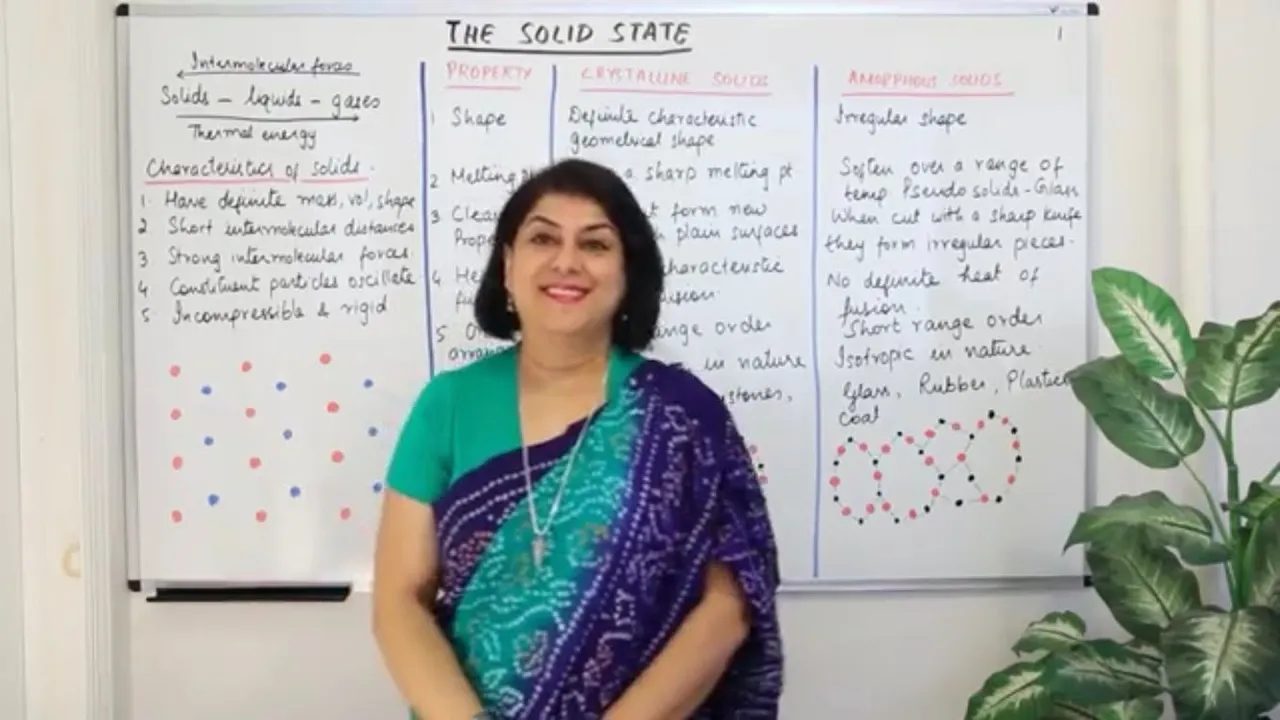
Added:Distinction between crystalline and amorphous solids based on their structural order.
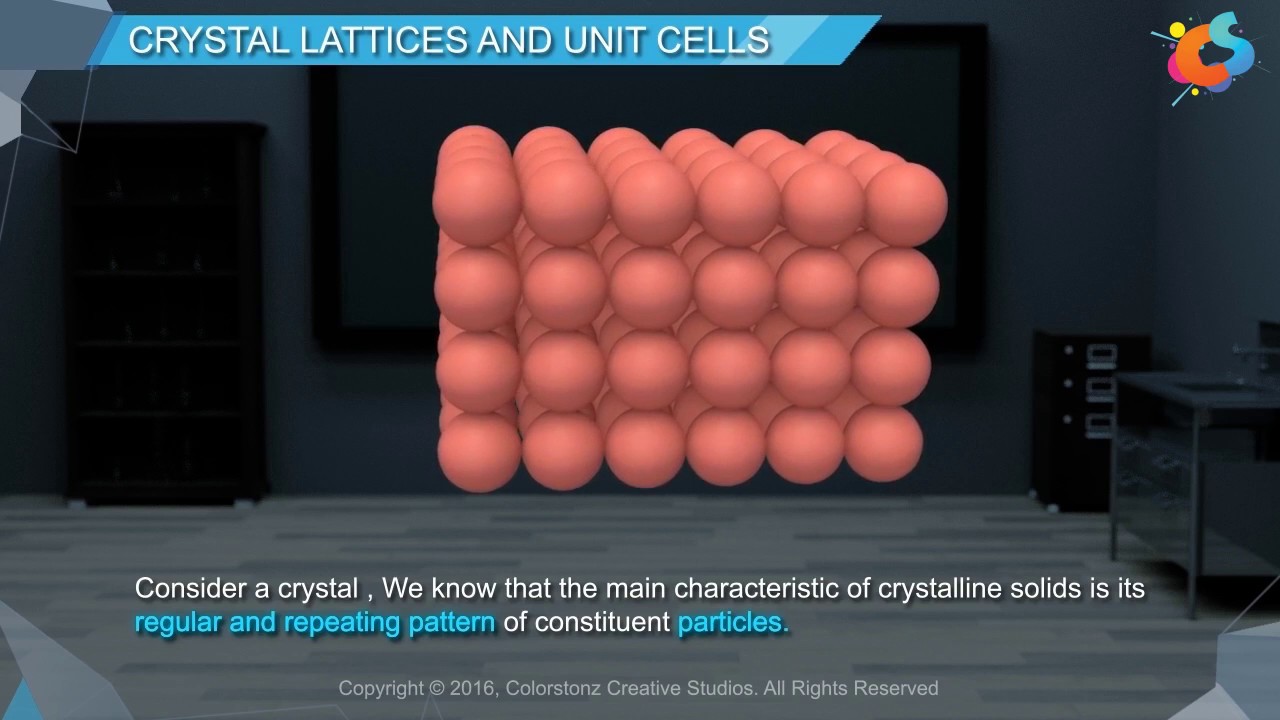
The definition and conceptual understanding of a space lattice (crystal lattice) and a unit cell.
Characterization parameters of a unit cell, specifically the axial distances (a, b, c) and interfacial angles (alpha, beta, gamma).
Basic three-dimensional spatial visualization and Cartesian coordinate systems.
Calculation of the number of constituent atoms per unit cell in different cubic lattices (primitive, body-centered, face-centered).
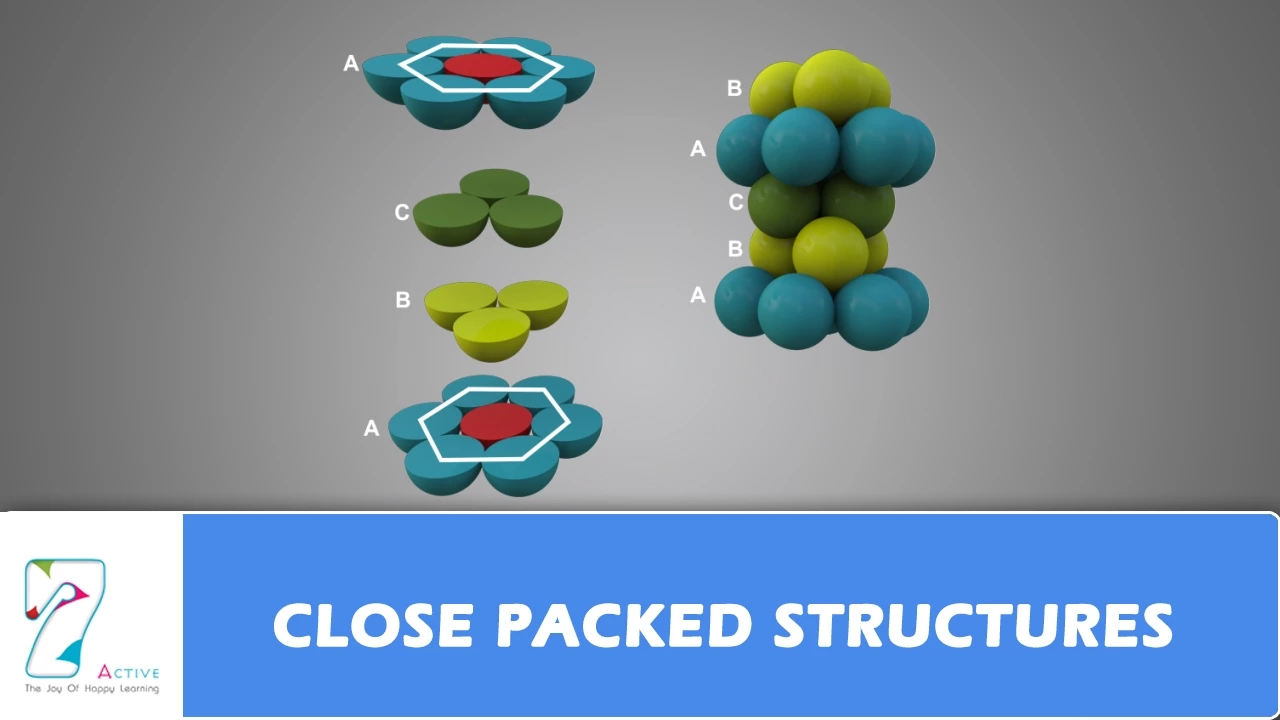
Understanding close packing of spheres in three dimensions (hcp, ccp/fcc) and determining coordination numbers.
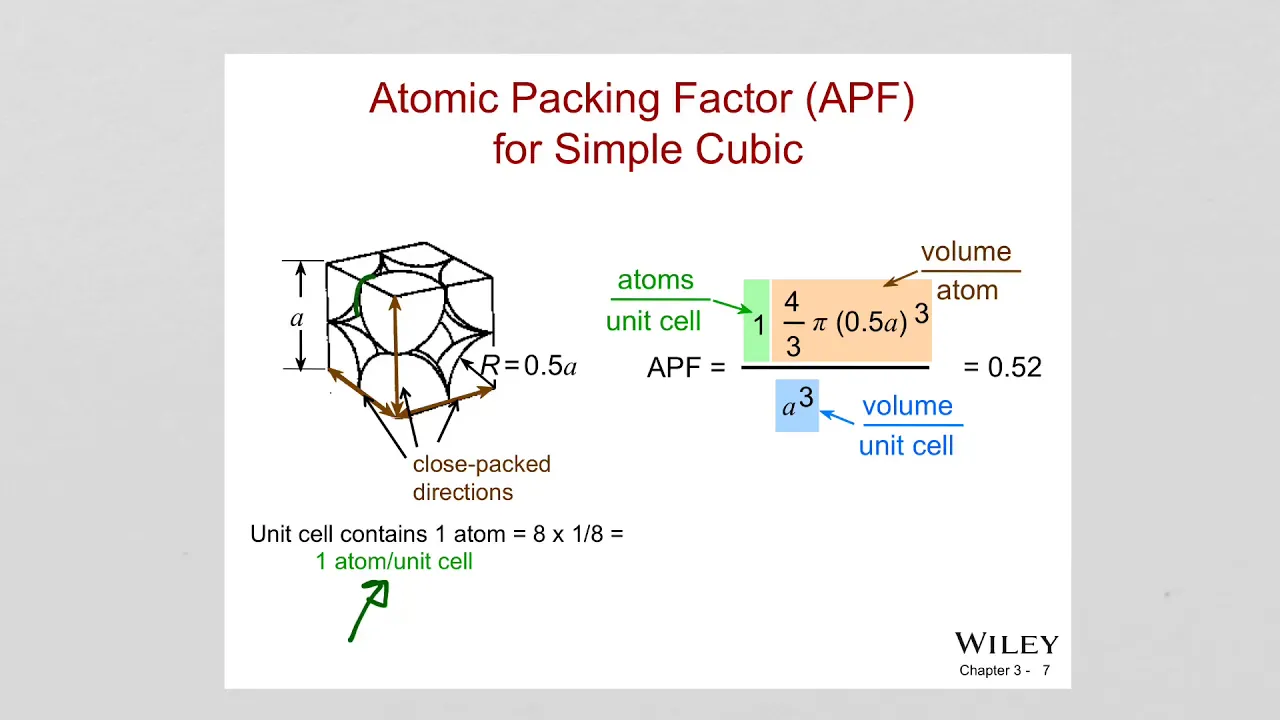
Mathematical calculation of packing efficiency and the density of a unit cell.
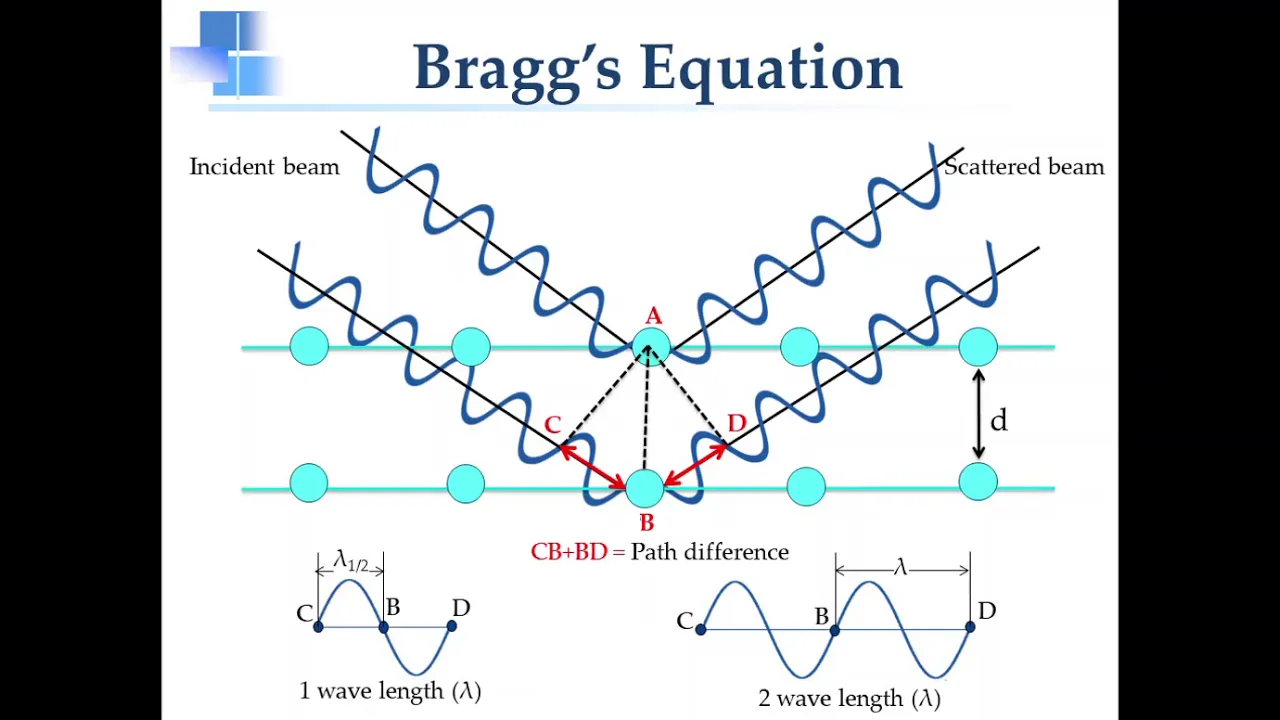
Introduction to Bragg's Law and how X-ray diffraction (XRD) is used to analyze crystal structures experimentally.
Study of imperfections in solids, including point defects (Schottky and Frenkel defects) and their effect on electrical/magnetic properties.
41.1K views969likes17:54Original Release: 2019-03-01
hello I'm Seema and welcome to part 4 of the chapter the solid state move on with our discussion of the unit cells and the bravais lattices are the lattice systems let me now explain to you what are the basic different kinds of unit cells there are seven basic types of unit cells and how the different arrangements of these unit cells of where the particles are present on the lattice points or as the centered unit cells what are the 14 possible breve lattices that are possible so let us now stop understanding these systems or the unit cells and the systems in the lattice systems one by one the first type of crystal system is a cubic unit cell the unit cell is as you know a cubic unit cell is one where it is like a cube where all the lattice points and the primitive cubic cell would have all the lattice points that is all the corners of the cube of you hide by atoms so each one of these corner cubes they are the ones that are that are occupied they are the ones which are which are atoms and when you join the lines the Centers of each of these atoms you find that they result in the formation of a cube so in a cube what do you have the different sides that is the length breadth and the height all of them length breadth and the height all of them are equal so all the sides are equal that is a is equal to B is equal to C and all angles that is the angle between a and B B and C all of these all three handles they are 90 degrees so a cubic unit cell is one which is cubic in nature and the primitive unit cell it has one of the possible variations in a few you can have a primitive unit cell but all the corners are occupied you can have a body centered one that is one in the middle so if you have these corners all occupied then if you see this in the middle this one what would this be this would be a face centered cube if you really see the one in the middle is a face centered it is in the center of a face so a face centered cube and if you imagine the cube which falls between all the face centers that one would be the body center so that is one variation that is possible the primitive unit cell and the body center bed there is one cube or one ball in the center and the face center as you can see these are all face center with every face in the center of each face you have a ball or a cube here it is a cube actually the atoms we imagine them to be spheres and there is one radiation which is not mentioned here which you will be doing later and which is edge Center and since I am quoting the Rubik's Cube which is easy for me to explain it to you right now gives you on the edge each edge in the center of each edge also you have a cube so such cubes are edge centers so they are edge centered and of course the end centered are top and bottom that you already know off so in the cubic lattices what are the different kinds of variations that are seen in nature we find that the cubic lattices show the primitive variation the body centered variation and the face centered so there are three possible cubic lattices the prevail addresses so here I've made a cubic lattice and I told you that there are three possible variations here this is a simple cubic lattice where a is equal to B is equal to C and the angle speech' angle gamma alpha angle and the and on top all of these are equal in all of them a 90 degree so it is a cubic a proper cubic arrangement what are the axial distances or the edge lengths the edge lengths are represented by a BNC so a is equal to B and is equal to C and angles all three angles alpha beta and gamma are 90 degree examples of cubic lattices are sodium chloride zinc blende and copper come to the second category now you have a tetra gulel arrangement what is a tetragonal arrangement a tetraman arrangement would be it's not a cube now you imagine this a is equal to B the two sides are equal but C is not equal to it so instead of a cube you have a cuboid although this is not an exact you boiled but still I am using it for explaining the typically imagine that this side or they're not equal imagine that these two sides were equal and the third side was not so you'll have the tetra kernel arrangement is a cuboidal arrangement and here what is again that what are the possible lattice points that are occupied or systems that you would see the primitive that is all corners occupied and the second possibility is the body centered although there is a possible you can imagine space centers you can imagine edge centers but it has been found that in all those compounds or crystals which have the tetragonal this thing tetra mono unit cells they usually show only two variations that are and Bonnie said so what are the lens that is dimensions of the edges for a tetra guna unit cell for a tetragonal unit cell a is equal to B but it is not equal to two sides are equal but let us say lengths and Bretta equal the height is different so the third side is not equal to the other two then what about the angles the angles are all right angles that is a is equal to B length is two brett-brett is two height and breadth height is two lengths all of them are all angles are 90 degrees examples of this kind of arrangement are white still that is Jin oxide aluminum oxide and calcium sulfate here is the tetrahedral arrangement you can see just you boil in shape le is equal to me but it is not equal to C and all angles are 90 degrees and it has two variations that is the primitive and the body centered the third kind of unit cell is the orthorhombic and optimum mix system would be you know it is like a cube but the only acuity but the only thing is that the cuboid is is not except for right angles let us see what them and also rubric arrangement is where a is not equal to B is not equal to C all three now this is actually orthorhombic it is not equal to B is not equal to C and alpha beta and gamma are all 90 degrees so this is actually an orthorhombic the true orthorhombic shape so you have a is not equal to B is not equal to C and the animals but the angles are all right and thus do you see this is all right angles so that is an orthorhombic shape and this has the number of lattice variations that is you have the perimeter you have the body centeredness you have face centered and you have any Center so let us let me explain each one of these one by one taking a cube the first you have is primitively all the corners are occupied then comes the body centered the one in the center the one the one ball that is not visible to us in the middle that one is body centered the face center is the center of each face is a is one of the of all the six phases faces the central part that is occupied in the case of the orthorhombic shape i am showing it to you in a cube but you to imagine it in this you to imagine it enough or the rhombic shape so and you have face centered and you have n centered and i explained to you that n centered means that on two opposite ends the centres of the faces of two opposite ends makes it an end centered here itself so these are the different variations possible in orthorhombic primitive body centered face centre and n centre what are the dimensions of the orthorhombic arrangement a is not equal to b is not equal to c all the three sides have different lengths but all three angles are 90 degrees but alpha is equal to beta is equal to gamma and it is equal to 90 degrees and the example of this kind of a crystal would be wrong big sulfur potassium nitrate and barium sulphate and I made this diagram of orthorhombic there are four types of crystal systems possible here then the next one is hexagonal the hexagonal shape as you see here the actual unit cell is not the entire hexagon you see this this is like an arrangement this is actually how many of exogenous now imagine this diagram this hexagon is lying here and you using this this spot which I knocked up do you see if you just cross it like this this one and this so what would what would the angle here me the angle here would be a hundred and the actor here will be a hundred and twenty right and if you come down imagine that this comes down in this shape you have the walls coming down and the same base being formed so you see the arrangement as a kind of a cuboid which is slightly twisted so if you imagine this shape to be that cuboid which is kind of which is kind of twisted at an angle this may actually break so let us imagine that this is like a cuboid at an angle it's not being straight like this you imagine that it is kind of a little twisted a little tilted to one side so the angles are not all 90-degree now so what are the for a primitive for a hexagonal unit cell you would have only one variation that is the primitive only the lattice sites only the lattice points are occupied and the actual rigid cell is not hexagonal in shape the actual one is like this it is like that it's like a cuboid which is or I could rather say just more like the orthorhombic one might be the variation so what are the dimensions a is equal to B but the third size is not equal so this is like a cuboid or tetra Bhuvan arrangement but as for angles is concerned it is different from the terminal in in tetrahedral shape all angles are 90 degrees but here the gamma angle is 120 degrees while alpha and beta are 90 degrees length is to Brett and Brett is to height are both 90 degrees but here this angle is 120 degrees so that is what the hexagonal arrangement would be like what are the examples of crystals which have this hexagonal arrangement you have graphite you have zinc oxide and you have cadmium sulfide so this was the next kind of arrangement that is excellent the first kind of unit cell is the rhombohedral or it is also called tri go member the rhombohedral also this also has only one radiation that is the primitive and what are the dimensions for the rhombohedral look at the figure here rhombohedral has all equal sides it's like a cube all sides are equal a is equal to B is equal to C that it's length is equal to breadth is equal to height but all angles are are wonky they are not 90 degrees they are all tilted so alpha but all of them are the same angle so alpha is equal to beta is equal to gamma but they are not equal to 90 degrees they are all equal but they're not 90 degrees so you would find the cube to be tilted slightly on all sides such an arrangement is known as the rhombohedral or the tribunal examples of such crystals would be calcite as a sketch of carbonate and cinnabar that is mercuric sulfide and if you really look at the structure here the rhombohedral is this it appears to be a cube which is twisted you see it is tilted a tilted cube and it has only one arrangement that is the primitive arrangement and then we come to the next kind of arrangement that is more of a monoclinic you must have heard about monoclinic sulfur and rhombic sulfur so the rhombic sulfur is rhombohedral and more clinic sulfur would come here monoclinic arrangement has there are two possibilities primitive and end Center and Center do you understand where the Centers of two opposite phases are also occupied by the constituent atoms or molecules or ions for a monoclinic arrangement a is equal to p is not equal to c it means all the three sides are not equal and the angles alpha is equal to beta both of them are 90 degrees but either is equal to gamma which is 90 degrees but beta is not equal to 120 degrees unlike this when you had alpha equal to beta and this 90 degrees and gamma is 120 here at Phi is equal to Vita which is 90 degrees with gamma or the third exact angle is 1 not 120 degree it is different but it is not 90 but it's not 120 and the angle is not specified it could be any angle examples of this kind of crystals would be monoclinic sulfur sodium sulfate and the diagram here you can see that the angles here the angle is different it is not a hundred and twenty like a hexagonal but alpha and beta are ninety degrees that is length is to break and break this to height are ninety degrees but on top that angle is different so now is the last kind of unit cell which is known as the triclinic the triclinic if you really see out of all these arrangements that we are studying as we kept coming down there we started with the most symmetrical form that is the cubic form and as we come down we find that one of the sides is not matching one of the angles is not matching more than one angles is not matching or side and angle both are not matching that is a symmetrical 90 degrees and then finally we come to triclinic h does not believe in any rules here none of the things is matches with another one so this is try telling is the extreme or what term what should I say there is order but with maximum disorder in the basic arrangement so it has only one form again triclinic sorry primitive arrangement and what are the what are the mentions a is not equal to B is not equal to C alpha is not equal to beta is not equal to gamma and none of them is equal to 90 degrees so all sides are different all angles are different and none of them is 90 none of them is a right angle and so the most twisted arrangement would be the triclinic one examples are potassium dichromate copper sulfate and boric acid and this is the example of triclinic arrangement and in the laboratory you would be crystallizing copper sulfate crystals and when you get those crystals you're really going to enjoy the the shape of these and you must I would encourage you to really observe the shapes of crystals when you go to the laboratory next and you and the more you watch those shapes you're going to appreciate how beautiful they are and how beautiful these arrangements and if you can make up the angles and get an idea of the crystal then it would be wonderful so Trinity also has only the primitive kind of arrangement so on the basis of this were to be understand cubic arrangement has three kinds of lattices can produce three kinds of breve analysis Tetragon to orthorhombic for hexagonal one rhombohedral one monoclinic two and triclinic one and if you find the sum of all of these it comes up to 14 bravais lattices and according to prevail there are only 14 possible crystal systems they can be only 14 types of unit cells on the basis of which the crystal on expansion of which the different crystals in all the crystals that are known to us they fall into one of these 14 categories of unit cells so this was unit cells and the Ruby lattices and that this I'll finish this if you found it helpful please give it a thumbs up subscribe to my channel recommend it to your friends and please keep returning for more videos and chemistry thank you for watching and bye bye for now
Up Next
7:13
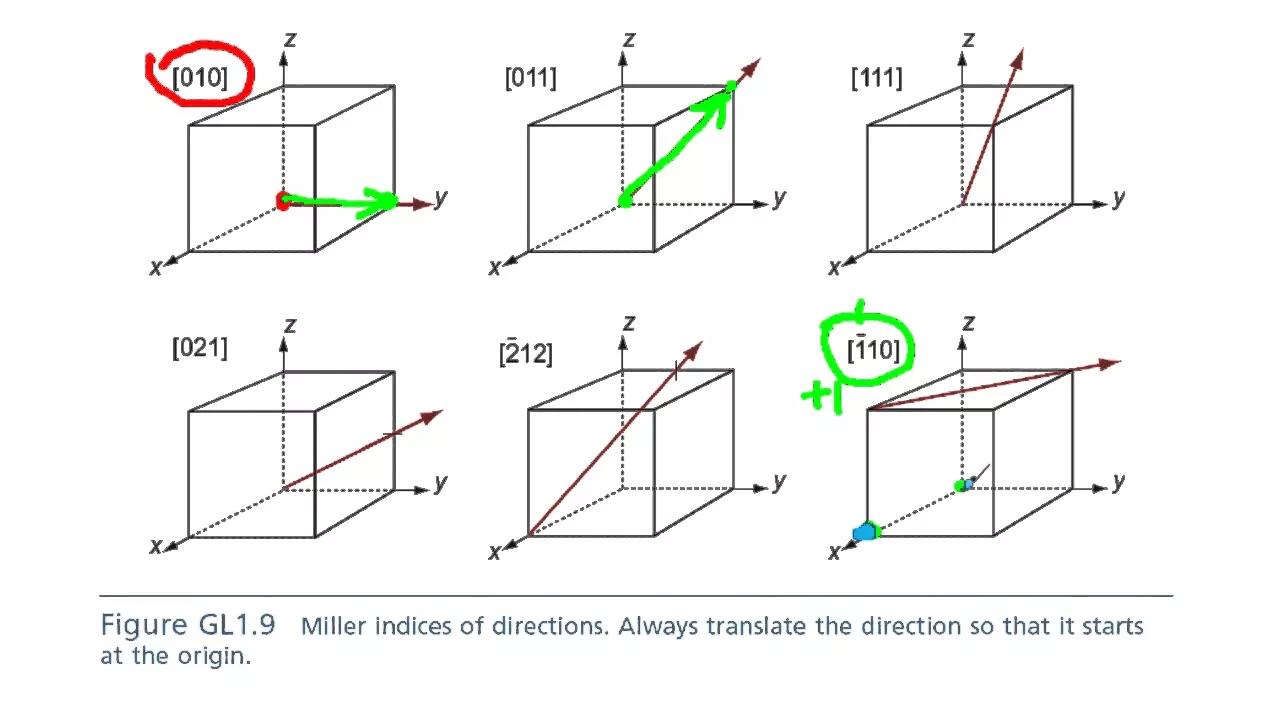
Miller Indices for Crystallographic Directions Tutorial
@lvanasup
809.6K views•2012-09-25

12:53
21cm Hyperfine Transition in Neutral Hydrogen: Radio Astronomy Basics
@AaronRobertParsons
12.4K views•2011-10-13

32:32
NMR Spin Physics I: Zeeman Effect, Resonance Condition & Larmor Frequency
@nptel-indianinstituteofsci8064
2.3K views•2024-01-17

27:14
Entropy and the Second Law of Thermodynamics Explained
@veritasium
27.5M views•2023-07-01
Related Study Plans & Knowledge Roadmaps
Structured learning paths in Physics
physics
Nuclear Physics (Decay, Fission & Reactors)
01Atomic Structure and the Binding Force
02Radioactive Decay and Half-Life
03Nuclear Fission Mechanics and Chain Reactions
+ 2 more learning modules
12h5 modules
Explore Roadmap
physics
Soft Matter (Polymers, Colloids & Rheology)
01Foundations of Soft Matter & Thermal Forces
02Polymer Physics and Macromolecules
03Colloids, Surfactants, and Self-Assembly
+ 2 more learning modules
38h5 modules
Explore Roadmap
physics
Analytical Mechanics: Lagrangian & Hamiltonian
01Mathematical Foundations: Calculus of Variations
02From Newtonian Mechanics to Constraint Dynamics
03The Principle of Least Action & Lagrangian Mechanics
+ 3 more learning modules
28h6 modules
Explore Roadmap
physics
General Relativity (Spacetime & Cosmology)
01Foundations of Relativity: Special Relativity
02The Geometry of Spacetime: Equivalence Principle & Curvature
03Einstein's Field Equations: The Mathematics of Gravity
+ 2 more learning modules
55h5 modules
Explore Roadmap