



















Telescopes have revolutionized human understanding of the Universe by enabling observations across the electromagnetic spectrum, from visible light to radio waves, infrared, X-rays, and gamma rays, with modern innovations like adaptive optics, interferometry, and space-based observatories (such as Hubble and James Webb) allowing astronomers to discover expanding galaxies, exoplanets, black holes, and the cosmic microwave background, fundamentally transforming our comprehension of cosmic history and the potential for extraterrestrial life.
The Telescope: 400 Years of Cosmic Discovery | Full Documentary Film
Added:Basic principles of optics, specifically how light behaves when refracting through lenses and reflecting off mirrors.
An understanding of the electromagnetic spectrum, including visible light, infrared, ultraviolet, and X-rays.
The historical shift from the geocentric (Earth-centered) to the heliocentric (Sun-centered) model of the solar system.
The concept of atmospheric distortion and how Earth's atmosphere affects astronomical observations from the ground.
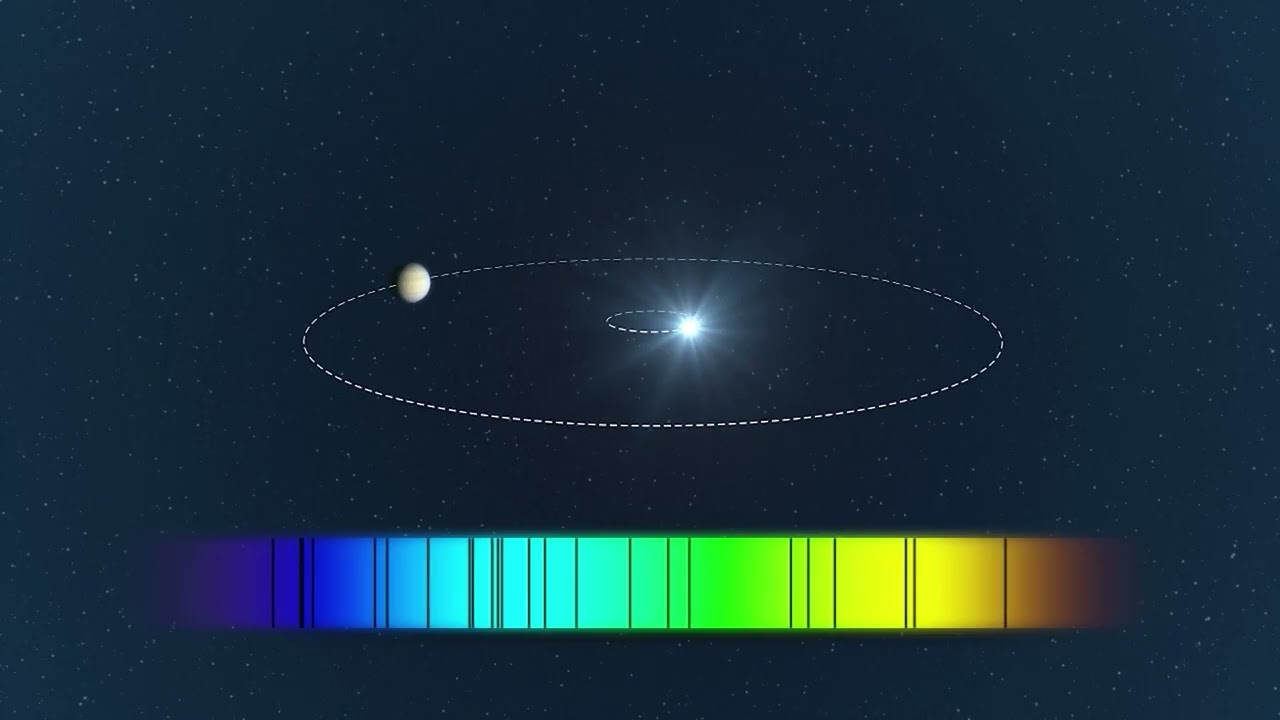
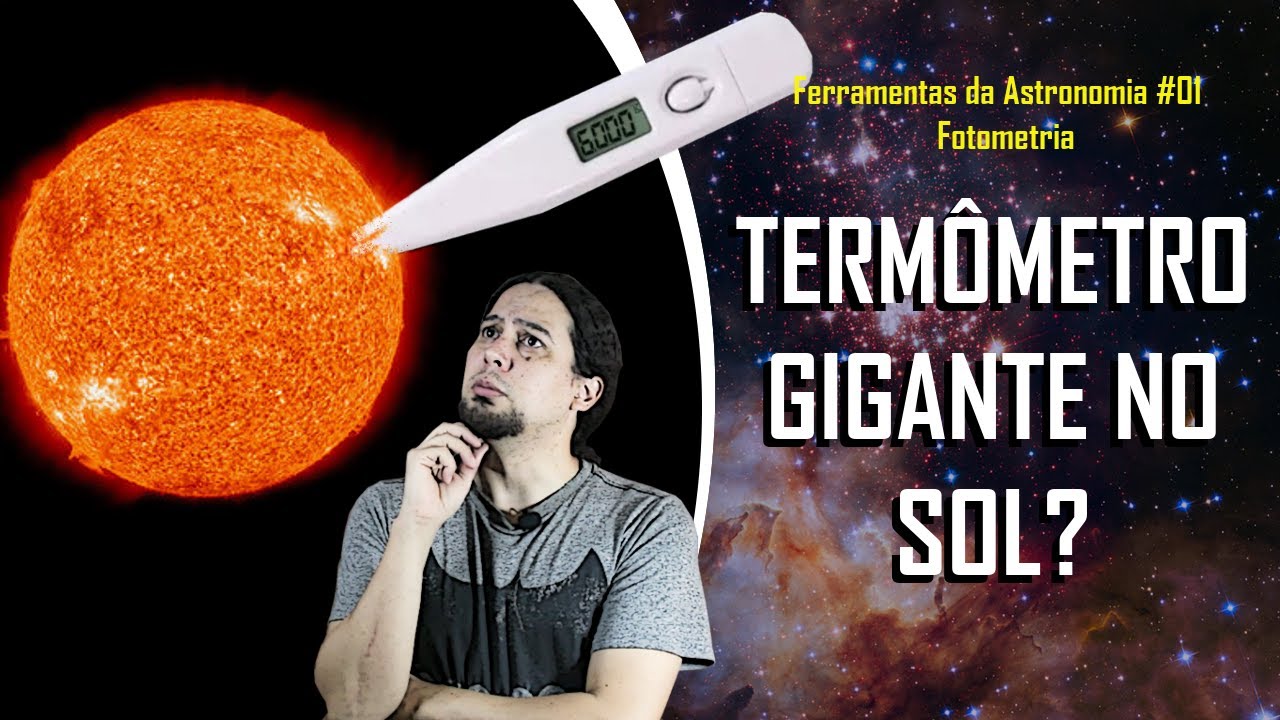
Advanced observational techniques, such as astronomical spectroscopy and photometry used to analyze starlight.
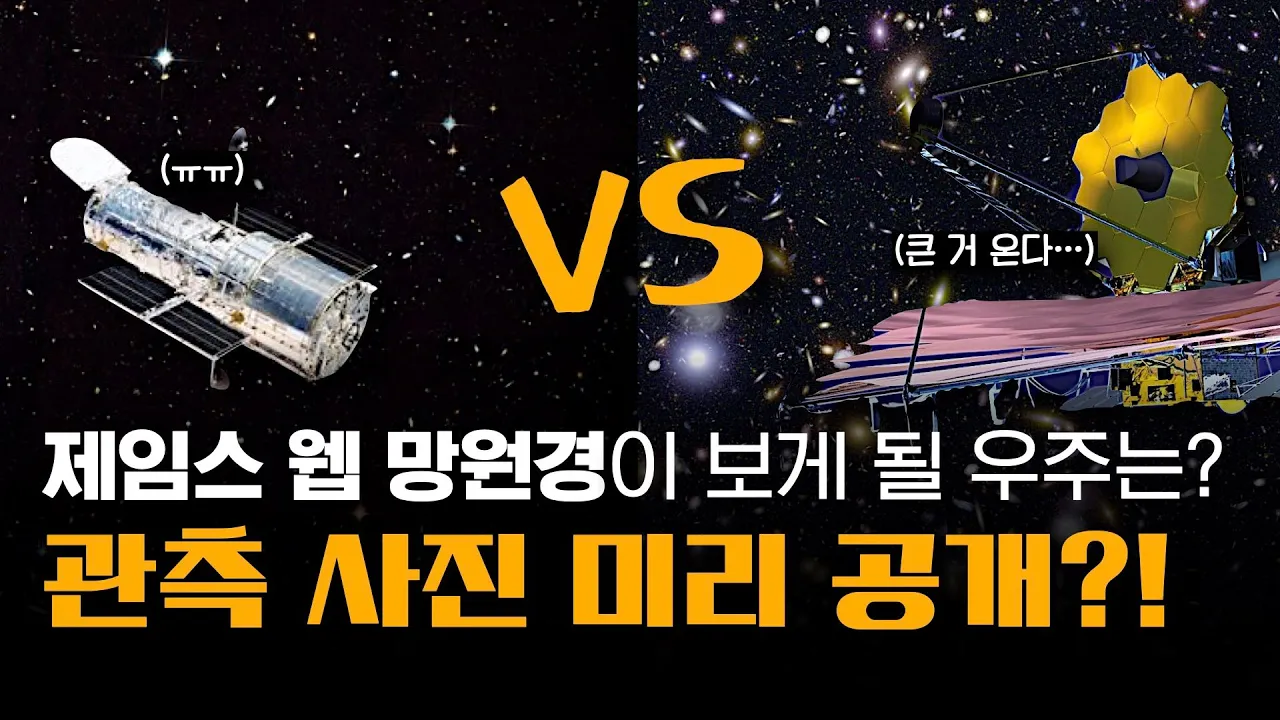
The engineering and scientific objectives of modern space observatories like the James Webb Space Telescope (JWST) and the Hubble Space Telescope.
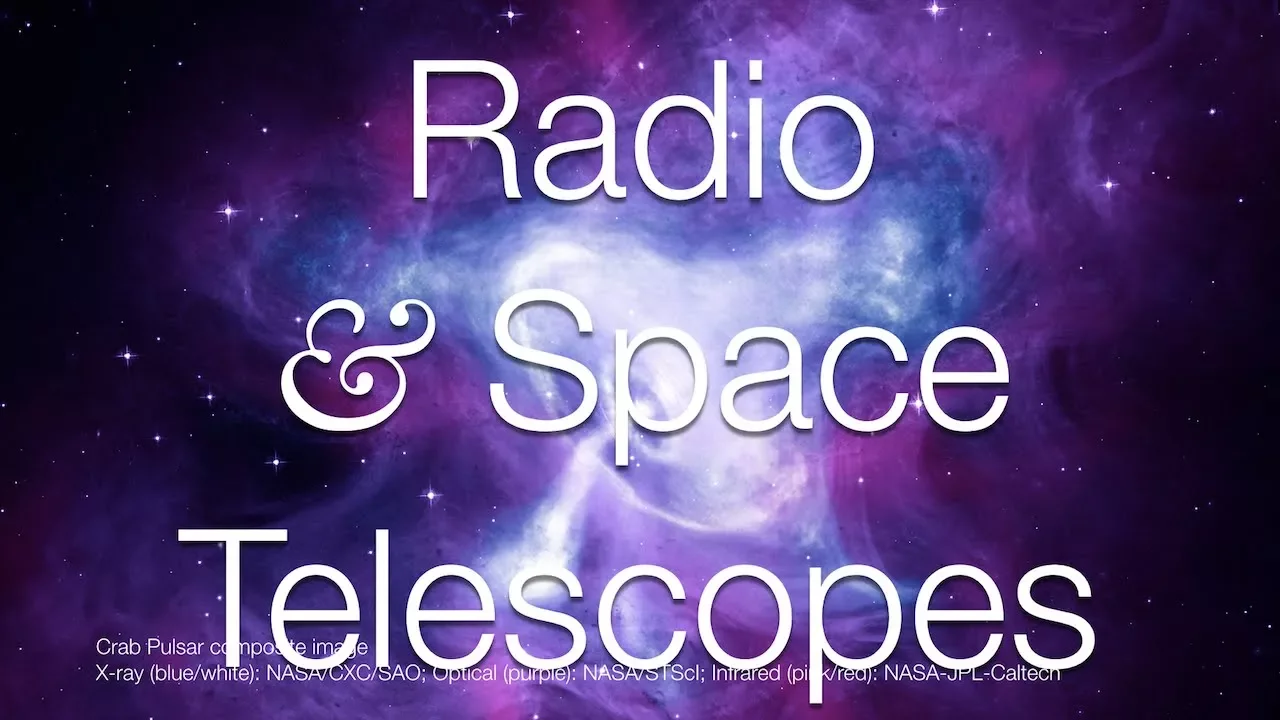
Radio astronomy and the principles of interferometry, including how array telescopes like ALMA combine signals to create high-resolution images.
Cosmological concepts derived from deep-space imaging, such as gravitational lensing, cosmic redshift, and the expansion of the universe.
77.1K views852likes1:00:06Original Release: 2019-04-23
By taking our sense of sight far beyond the realm of our forebears' imagination, these wonderful instruments, the telescopes, open the way to a deeper and more perfect understanding of nature. - René Descartes, 1637 For millennia mankind gazed out into the mesmerising night sky without recognising the stars of our own Milky Way Galaxy as other suns or the billions of sister galaxies making up the rest of our Universe or that we are merely punctuation in the Universe’s 13.7 billion year-long story.
With only our eyes as observing tools we had no means of finding solar systems around other stars, or of determining whether life exists elsewhere in the Universe.
Today we are well on our way to unravelling many of the mysteries of the Universe, living in what may be the most remarkable age of astronomical discovery.
I am Dr. J and I will be your guide to the telescope - the amazing instrument that proved to be mankind's gateway to the Universe.
EYES ON THE SKIES 400 Years of Telescopic Discovery 1. New views from the skies Four centuries ago, in 1609, a man walked out into the fields near his home.
He pointed his homemade telescope at the Moon, the planets and the stars.
His name was Galileo Galilei.
Astronomy would never be the same again.
Today, 400 years after Galileo first pointed a telescope to the skies astronomers use giant mirrors on remote mountaintops to survey the heavens.
Radio telescopes collect faint chirps and whispers from outer space.
Scientists have even launched telescopes into Earth orbit high above the disturbing effects of our atmosphere.
And the view has been breathtaking!
However, Galileo did not, in fact, invent the telescope.
That credit goes to Hans Lipperhey, a slightly obscure Dutch-German spectacle maker.
But Hans Lipperhey never used this telescope to look at the stars.
Instead, he though his new invention would mainly benefit seafarers and soldiers.
Lipperhey came from Middelburg, then a large trading city in the fledgling Dutch Republic.
In 1608 Lipperhey found that when viewing a distant object through a convex and a concave lens, the object would be magnified, if the two lenses were placed at just the right distance from one another.
The telescope was born!
In September 1608, Lipperhey revealed his new invention to Prince Maurits of the Netherlands.
He could not have chosen a more advantageous moment because at that time the Netherlands were embroiled in the 80 Years' War with Spain.
The new spyglass could magnify objects and so it could reveal enemy ships and troops that were too distant to be seen by the unaided eye.
A very useful invention indeed!
But the Dutch government never granted Lipperhey a patent for his telescope.
The reason was that other merchants also claimed the invention especially Lipperhey's competitor Sacharias Janssen.
The dispute was never resolved.
And to this day, the true origins of the telescope remain shrouded in mystery.
Italian astronomer Galileo Galilei, the father of modern physics heard about the telescope and decided to build his own.
About ten months ago, a report reached my ears that a certain Fleming had constructed a spyglass by means of which visible objects though very distant from the eye of the observer, were distinctly seen as if nearby.
Galileo was the greatest scientist of his time.
He was also a strong supporter of the new worldview advocated by the Polish astronomer Nicolaus Copernicus, who proposed that the Earth orbited the Sun, instead of the other way around.
Based on what he had heard of the Dutch telescope, Galileo constructed his own instruments.
They were of a much better quality.
Finally, sparing neither labour nor expenses, I succeeded in constructing for myself so excellent an instrument that objects seen by means of it appeared nearly one thousand times larger than when regarded with our natural vision.
It was time to train the telescope on the heavens.
I have been led to the opinion and conviction that the surface of the moon is not smooth, uniform and precisely spherical as a great number of philosophers believe it to be but is uneven, rough, and full of cavities and prominences being not unlike the face of the Earth.
A landscape of craters, mountains, and valleys.
A world like our own!
A few weeks later, in January 1610, Galileo looked at Jupiter.
Close to the planet he saw four pricks of light that changed their position on the sky night after night along with Jupiter.
It was like a slow, cosmic ballet of satellites orbiting the planet.
These four pricks of light would come to be known as the Galilean moons of Jupiter.
What else did Galileo discover?
The phases of Venus!
Just like the Moon, Venus waxes and wanes from crescent to full and back again.
Strange appendages on either side of Saturn.
Dark spots on the face of the Sun.
And, of course, stars.
Thousands of them, maybe even millions.
Each too faint to be seen by the naked eye.
It was as if mankind had suddenly thrown off its blindfold.
There was a whole Universe to discover out there.
News about the telescope spread across Europe like wildfire.
In Prague, at the court of Emperor Rudolph II, Johannes Kepler improved the design of the instrument.
In Antwerp, Dutch cartographer Michael van Langren produced the first reliable maps of the Moon showing what he believed to be continents and oceans.
And Johannes Hevelius, a wealthy brewer in Poland, built huge telescopes at his observatory in Danzig.
This observatory was so large that it covered three rooftops!
But the best instruments of the time were probably constructed by Christiaan Huygens in the Netherlands.
In 1655, Huygens discovered Titan, the largest moon of Saturn.
A few years later, his observations revealed Saturn's ring system something Galileo had never understood.
And last but not least, Huygens saw dark markings and bright polar caps on Mars.
Could there be life on this remote, alien world?
The question occupies astronomers to this day.
The earliest telescopes were all refracting telescopes that used lenses to collect and bring together the starlight.
Later the lenses were replaced with mirrors.
This reflecting telescope was first built by Niccolò Zucchi and later refined by Isaac Newton.
Now in the late 18th century, the largest mirrors in the world were cast by William Herschel, an organist turned astronomer who worked with his sister Caroline.
In their house in Bath, in England, the Herschels poured red-hot molten metal into a mould and when the whole thing had cooled off, they would polish the surface so that it would reflect starlight.
During the course of his life, Herschel built more than 400 telescopes.
The largest of these was so huge that he needed four servants to operate all the various ropes, wheels and pulleys that were required to track the motions of the stars across the night sky which is of course caused by the Earth's rotation.
Now Herschel was like a surveyor, he scanned the heavens and catalogued hundreds of new nebulae and binary stars.
He also discovered that the Milky Way must be a flat disc.
And he even measured the motion of the Solar System through that disk by observing the relative motions of the stars and the planets.
And then on the 13th of March in 1781, he discovered a new planet - Uranus.
It was over 200 years until NASA's Voyager 2 spacecraft gave astronomers their first close-up look of this distant world.
In the lush and fertile countryside of central Ireland, William Parsons the third Earl of Rosse, built the largest telescope of the 19th century.
With a metal mirror a whopping 1.8 metres across, the giant telescope became known as "The Leviathan of Parsonstown".
On the occasional clear, moonless nights, the Earl sat at the eyepiece and sailed on a journey through the Universe.
To the Orion Nebula - now known to be a stellar nursery.
On to the mysterious Crab Nebula, the remnant of a supernova explosion.
And the Whirlpool Nebula?
Lord Rosse was the first to note its majestic spiral shape.
A galaxy like our own, with intricate clouds of dark dust and glowing gas billions of individual stars, and who knows - maybe even planets like Earth.
The telescope had become our vessel to explore the Universe.
2. Bigger is better At night, your eyes adapt to the dark.
Your pupils widen to let more light into your eyes.
As a result, you can see dimmer objects, and fainter stars.
Now imagine you had pupils one metre across.
You'd look pretty strange but you'd also have supernatural eyesight!
And that's what telescopes do for you.
A telescope is like a funnel.
Its main lens or mirror collects the starlight and brings it all together into your eye.
The bigger the lens or the mirror of a telescope, the fainter the objects you can see.
So size really is everything.
But how big can you make a telescope?
Well, actually not too big if it's a refractor.
The starlight has to pass through the main lens.
And so you can only support it around its edge.
Now if you make the lens too big it becomes too heavy, and it starts deforming under its own weight.
That means that the image will be distorted.
The largest refractor in history was completed in 1897, at Yerkes Observatory outside Chicago.
Its main lens was just over one metre across.
But its tube was an incredible 18 metres long.
With the completion of the Yerkes telescope, the builders of refracting telescopes had pretty much reached their limit.
You want bigger telescopes?
Think mirrors.
In a reflecting telescope, the starlight bounces off a mirror instead of passing through a lens.
That means that you can make the mirror a lot thinner than a lens, and you can support it from the back.
The result is that you can build a lot larger mirrors than lenses.
Big mirrors came to southern California a century ago.
Back then, Mount Wilson was a remote peak in the wilderness of the San Gabriel mountains.
The sky was clear and the nights were dark.
Here, George Ellery Hale first built a 1.5 metre telescope.
Smaller than Lord Rosse's retired Leviathan, it was of much better quality.
And at a much better site, too.
Hale talked local businessman John Hooker into financing a 2.5 metre instrument.
Tonnes of glass and riveted steel were hauled up Mount Wilson.
The Hooker telescope was completed in 1917.
It would remain the largest telescope in the world for 30 years.
A big piece of cosmic artillery, ready to attack the Universe.
And attack it did.
Along with the incredible size of the new telescope came transformations in the way the image was viewed.
Astronomers no longer peered through the eyepiece of the new giant.
But instead collected the light on photographic plates for hours on end.
Never before had anyone peered so far into the cosmos.
Spiral nebulae turned out to be brimming with individual stars.
Could they be sprawling stellar systems like our own Milky Way?
In the Andromeda Nebula, Edwin Hubble discovered a particular type of star that changes its brightness with clocklike precision.
From his observations Hubble was able to deduce the distance to Andromeda: almost a million light-years.
Spiral nebulae, like Andromeda, were clearly individual galaxies in their own right.
But that wasn't the only incredible thing.
Most of these galaxies were found to be moving away from the Milky Way.
At Mount Wilson, Hubble discovered that the nearby galaxies were receding at small velocities whereas the distant galaxies were moving away at a much faster pace.
The conclusion?
The Universe was expanding.
The Hooker telescope had given scientists the most profound astronomical discovery of the 20th century.
Thanks to the telescope, we have traced the history of the Universe.
A little less than 14 billion years ago, the Universe was born in a huge explosion of time and space, matter and energy, called the Big Bang.
Tiny quantum ripples grew into dense patches in the primordial brew.
From these, galaxies condensed.
A stunning variety of sizes and shapes.
Nuclear fusion in the cores of stars produced new atoms.
Carbon, oxygen, iron, gold.
Supernova explosions blew these heavy elements back into space.
Raw material for the formation of new stars.
And planets!
Someday, somewhere, somehow, simple organic molecules evolved into living organisms.
Life is one miracle in an ever-evolving Universe.
We are stardust.
It's a grand vision and a sweeping story.
Brought to us through telescopic observations.
Imagine: without the telescope we would know about just six planets one moon, and a few thousand stars.
Astronomy would still be in its infancy.
Like buried treasures, the outposts of the Universe have beckoned to the adventurous from immemorial times.
Princes and potentates, political or industrial, equally with men of science have felt the lure of the uncharted seas of space, and through their provision of instrumental means the sphere of exploration has rapidly widened.
George Ellery Hale had one final dream: to build a telescope twice as large as the previous record holder.
Meet the grand old lady of 20th century astronomy.
The five metre Hale telescope at Palomar Mountain.
Over five hundred tonnes of moving weight, yet so precisely balanced that it moves as gracefully as a ballerina.
Its 40 tonne mirror reveals stars 40 million times fainter than the eye can see.
Completed in 1948, the Hale telescope gave us unsurpassed views of planets star clusters, nebulae and galaxies.
Giant Jupiter, with its many moons.
The stunning Flame Nebula.
Faint wisps of gas in the Orion Nebula.
But could we go bigger still?
Well, soviet astronomers tried in the late 1970s.
High up in the Caucasus mountains, they built the Bolshoi Teleskop Azimutalnyi sporting a primary mirror six metres in diameter.
But it never really lived up to its expectations.
It was simply too big, too expensive, and too difficult.
So did telescope builders have to give up at that point?
Did they have to bury their dreams of even bigger instruments?
Had the history of the telescope come to a premature end?
Well, of course not.
Today we have 10 metre telescopes in operation.
And even bigger ones are on the drawing board.
What was the solution?
New technologies.
3. Technology to the rescue Just as modern cars don't look like a Model T Ford anymore, so are present day telescopes radically different from their classic predecessors like the five metre Hale telescope.
For one thing, their mounts are much smaller.
The old-style mount is an equatorial one where one of the axis is always mounted parallel to the Earth's rotation axis.
In order to keep track of the sky's motion, the telescope simply has to rotate around this axis at the same speed with which the Earth rotates.
Easy, but space-hungry.
The modern day altitude azimuth mounts are much more compact.
With a mount like that, the telescope is pointed much like a cannon.
One simply chooses the bearing, chooses the altitude, and off you go.
The problem is to keep track of the sky's motion.
The telescope pretty much has to rotate around both axis, and at varying speeds.
Essentially this only became possible once telescopes were computer controlled.
A smaller mount is cheaper to build.
Moreover, it fits into a smaller dome which reduces the cost even further and it improves the image quality.
Take the twin Keck Telescopes on Hawaii, for example.
Although their 10 metre mirrors are twice as large as the one of the Hale telescope, they nevertheless fit into smaller domes than the one on Palomar Mountain.
Telescope mirrors have evolved too.
They used to be thick and heavy.
Now they're thin and lightweight.
Mirror shells that can be many metres wide are cast in giant, rotating ovens.
And they are still less than 20 centimetres thick.
An intricate support structure prevents the thin mirror from cracking under its own weight.
Computer controlled pistons and actuators also help to keep the mirror in perfect shape.
This system is called active optics.
The idea is to compensate and to correct any deformations of the main mirror caused by gravity, the wind, or temperature changes.
Now, a thin mirror also weighs much less.
That means that its whole supporting structure, including the mount can also be a lot trimmer and lighter.
And cheaper!
Now here's the 3.6 metre New Technology Telescope built by European astronomers in the late 1980s.
It served as a testbed for many of the new technologies in telescope building.
And even its enclosure has nothing in common with traditional telescope domes.
The New Technology Telescope was a great success.
It was time to break the six metre barrier.
Mauna Kea Observatory sits on the highest point in the Pacific 4200 metres above sea level.
On the beaches of Hawaii, tourists enjoy the Sun and the surf.
But high above them astronomers face chilling temperatures and altitude sickness in their quest to unravel the mysteries of the Universe.
The Keck Telescopes are among the largest in the world.
Their mirrors are 10 metres across, and wafer-thin.
Tiled like a bathroom floor, they consist of 36 hexagonal segments each controlled to nanometre precision.
These are true giants, devoted to observing the heavens.
The cathedrals of science.
Nightfall on Mauna Kea.
The Keck Telescopes begin collecting photons from the far reaches of the cosmos.
Their twin mirrors combining to be effectively larger than all earlier telescopes.
What will be tonight's catch?
A pair of colliding galaxies, billions of light-years away?
A dying star, gasping its last breath into a planetary nebula?
Or maybe an extrasolar planet that might harbour life?
On Cerro Paranal in the Chilean Atacama Desert - the driest place on Earth - we find by far the biggest astronomy machine ever built: the European Very Large Telescope.
The VLT is really four telescopes in one.
Each sporting an 8.2 metre mirror.
Antu.
Kueyen.
Melipal.
Yepun.
Native Mapuche names for the Sun, the Moon, the Southern Cross and Venus.
The huge mirrors were cast in Germany, polished in France, shipped to Chile and then slowly transported across the desert.
At sunset, the telescope enclosures open up.
Starlight rains down on the VLT mirrors.
New discoveries are made.
A laser pierces the night sky.
It projects an artificial star into the atmosphere 90 kilometres above our heads.
Wavefront sensors measure how the star's image is distorted by the atmospheric turbulence.
Then, fast computers tell a flexible mirror how it has to deform itself in order to correct the distortion.
In effect untwinkling the stars.
This is called adaptive optics and it's the big magic trick of present day astronomy.
Without it, our view of the Universe would look blurred by the atmosphere.
But with it, our images are razor-sharp.
The other piece of optical wizardry is known as interferometry.
The idea is to take the light from two separate telescopes and to bring it together in a single point, while preserving the relative shifts between the lightwaves.
If it is done precisely enough the result is that the two telescopes act as if they were part of a single, colossal mirror as large as the distance between them.
In effect, interferometry gives your telescope eagle-like vision.
It allows smaller telescopes to reveal a level of detail that would otherwise only be visible with a much larger telescope.
The twin Keck Telescopes on Mauna Kea regularly team up as an interferometer.
In the case of the VLT, all four telescopes can work together.
In addition, several smaller auxiliary telescopes can also join the ranks in order to sharpen up the view even more.
Other big telescopes can be found all over the globe.
Subaru and Gemini North on Mauna Kea.
Gemini South and the Magellan Telescopes in Chile.
The Large Binocular Telescope in Arizona.
They are constructed at the best available sites.
High and dry, clear and dark.
Their eyes are as large as swimming pools.
All kitted out with adaptive optics to counteract the blurring effects of the atmosphere.
And sometimes they can have the resolution of a virtual behemoth thanks to interferometry.
Here's what they've shown us.
Planets.
Nebulae.
The actual sizes - and squashed shapes - of some stars.
A cool planet orbiting a brown dwarf.
And giant stars whirling around the core of our Milky Way Galaxy governed by the gravity of a supermassive black hole.
We've come quite a way since Galileo's day.
4. From silver to silicon 400 years ago, when Galileo Galilei wanted to show others what he saw through his telescope, he had to make drawings.
The pockmarked face of the Moon.
The dance of the Jovian satellites.
Sunspots.
Or the stars in Orion.
He took his drawings and published them in a small book The Starry Messenger.
That was the only way he could share his discoveries with others.
For well over two centuries, astronomers also had to be artists.
Peering through their eyepieces, they made detailed drawings of what they saw.
The stark landscape of the Moon.
A storm in the atmosphere of Jupiter.
The subtle veil of gas in a distant nebula.
And sometimes they over-interpreted what they saw.
Dark linear features on the surface of Mars were thought to be canals suggesting civilised life on the surface of the red planet.
We now know that the canals were an optical illusion.
What astronomers really needed was an objective way to record the light collected by the telescopes without the information first having to pass through their brains and their drawing pens.
Photography came to the rescue.
The first daguerreotype of the Moon.
It was made in 1840 by Henry Draper.
Photography was less than 15 years old, but astronomers had already seized on its revolutionary possibilities.
So how did photography work?
Well the sensitive emulsion of a photographic plate contained small grains of silver halide.
Expose them to light, and they turn dark.
So the result was a negative image of the sky with dark stars on a light background.
But the real bonus was that a photographic plate can be exposed for hours on end.
When you take in the night sky with your own eyes once they're dark adapted, you don't see more and more stars just by looking longer.
But with a photographic plate you can do just that.
You can collect and add up the light over hours on end.
So a longer exposure reveals more and more stars.
And more.
And more.
And then some.
In the 1950s, the Schmidt telescope at the Palomar Observatory was used to photograph the entire northern sky.
Almost 2000 photographic plates, each exposed for nearly an hour.
A treasure trove of discovery.
Photography had turned observational astronomy into a true science.
Objective, measurable, and reproducible.
But silver was slow.
You had to be patient.
The digital revolution changed all that.
Silicon replaced silver.
Pixels replaced grains.
Even in consumer cameras, we no longer use photographic film.
Instead, images are recorded on a light-sensitive chip: a charge coupled device, or CCD for short.
Professional CCDs are extremely efficient.
And to make them even more sensitive, they are cooled down to well below freezing, using liquid nitrogen.
Almost every photon is registered.
As a result, exposure times can be much shorter.
What the Palomar Observatory Sky Survey achieved in an hour a CCD can now do in a few short minutes.
Using a smaller telescope.
The silicon revolution is far from over.
Astronomers have built huge CCD cameras with hundreds of millions of pixels.
And there's more to come.
The big advantage of digital images is that they're, well, digital.
They're all set and ready to be worked on with computers.
Astronomers use specialised software to process their observations of the sky.
Stretching, or contrast enhancing, reveals the faintest features of nebulae or galaxies.
Colour coding enhances and brings out the structures that would otherwise be difficult to see.
Moreover, by combining multiple images of the same object that were taken through different colour filters, one can produce spectacular composites that blur the boundary between science and art.
You too can benefit from digital astronomy.
It has never been so easy to dig up and enjoy the amazing images of the cosmos.
Pictures of the Universe are always just a mouse click away!
Robotic telescopes, equipped with sensitive electronic detectors are keeping watch over the sky, right now.
The Sloan telescope in New Mexico has photographed and catalogued over a hundred million celestial objects measured distances to a million galaxies, and discovered a hundred thousand new quasars.
But one survey is not enough.
The Universe is an ever-changing place.
Icy comets come and go, leaving scattered debris in their wake.
Asteroids zip by.
Distant planets orbit their mother stars, temporarily blocking part of the star's light.
Supernovas explode, while elsewhere new stars are born.
Pulsars flash, gamma-ray bursts detonate black holes accrete.
To keep track of these grand plays of Nature, astronomers want to carry out all-sky surveys every year.
Or every month.
Or twice a week.
At least that's the ambitious goal of the Large Synoptic Survey Telescope.
If completed in 2015, its three- gigapixel camera will open up a webcam window on the Universe.
More than fulfilling astronomers' dreams, this reflecting telescope will photograph almost the entire sky every three nights.
5. Seeing the invisible When you listen to your favourite piece of music, your ears pick up on a very wide range of frequencies, from the deepest rumblings of the bass to the very highest pitched vibrations.
Now imagine your ears were only sensitive to a very limited range of frequencies.
You'd miss out on most of the good stuff!
But that's essentially the situations that astronomers are in.
Our eyes are only sensitive to a very narrow range of light frequencies: visible light.
But we are completely blind to all other forms of electromagnetic radiation.
However, there are many objects in the Universe that do emit radiation at other parts of the electromagnetic spectrum.
For example, in the 1930s it was discovered by accident that there are radio waves coming from the depths of space.
Some of these waves have the same frequency as your favourite radio station, but they are weaker and of course there's nothing to listen to.
In order to "tune in" to the radio Universe, you need some sort of receiver: a radio telescope.
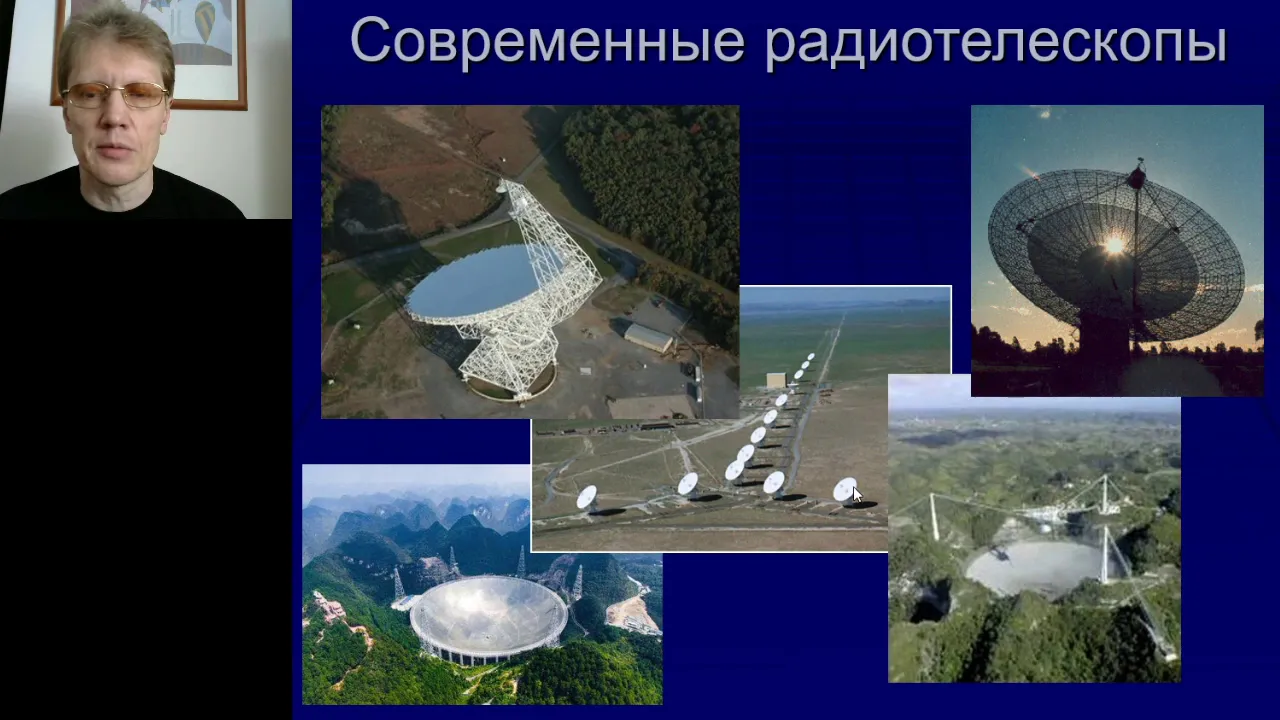
Now for all but the longest wavelengths, a radio telescope is just a dish.
Much like the main mirror of an optical telescope.
But because radio waves are so much longer than visible lightwaves the surface of a dish doesn't have to be nearly as smooth as the surface of a mirror.
And that's the reason why it's so much easier to build a large radio telescope than it is to build a large optical telescope.
Also, at radio wavelengths, it is much easier to do interferometry.
That is, to increase the level of detail that can be seen by combining the light from two separate telescopes, as if they were part of a single, giant dish.
The Very Large Array in New Mexico, for example, consists of 27 separate antennas, each measuring 25 metres across.
Now each antenna can be moved around individually, and in its most extended configuration, the virtual dish mimicked by the array measures 36 kilometres across.
So what does the Universe look like in the radio?
Well, for a start our Sun shines very brightly at radio wavelengths.
So does the centre of our Milky Way Galaxy.
But there's more.
Pulsars are very dense stellar corpses that emit radio waves only into a very narrow beam.
In addition, they rotate at speeds of up to several hundred revolutions per second.
So in effect, a pulsar looks like a rotating radio lighthouse.
And what we see from them is a very regular and fast sequence of very short radio pulses.
Hence the name.
The radio source known as Cassiopeia A is in fact the remnant of a supernova that exploded in the 17th century.
Centaurus A, Cygnus A and Virgo A are all giant galaxies that pour out huge amounts of radio waves.
Each galaxy is powered by a massive black hole at its centre.
Some of these radio galaxies and quasars are so powerful that their signals can still be detected from a distance of 10 billion light-years.
And then there's the faint, relatively short-wavelength radio hiss that fills the entire Universe.
This is known as the cosmic microwave background and it is the echo of the Big Bang.
The very afterglow of the hot beginnings of the Universe.
Each and every part of the spectrum has its own story to tell.
At millimetre and submillimetre wavelengths, astronomers study the formation of galaxies in the early Universe, and the origin of stars and planets in our own Milky Way.
But most of this radiation is blocked by water vapour in our atmosphere.
To observe it, you need to go high and dry.
To Llano de Chajnantor, for example.
At five kilometres above sea level, this surrealistic plateau in northern Chile is the construction site of ALMA: the Atacama Large Millimeter Array.
When completed in 2014, ALMA will be the largest astronomical observatory ever built.
64 antennas each weighing 100 tonnes, will work in unison.
Giant trucks will spread them out over an area as large as London to increase the detail of the image, or bring them close together to provide a wider view.
Each move will be made with millimetre precision.
Many objects in the Universe also glow in the infrared.
Discovered by William Herschel, infrared radiation is often also called "heat radiation" because it is emitted by all relatively warm objects including humans.
You may be more familiar with infrared radiation than you think.
Because on Earth, this kind of radiation is used by night vision goggles and cameras.
But to detect the faint infrared glow from distant objects, astronomers need very sensitive detectors, cooled down to just a few degrees above absolute zero, in order to suppress their own heat radiation.
Today, most big optical telescopes are also equipped with infrared cameras.
They allow you to see right through a cosmic dust cloud, revealing the newborn stars inside, something that just cannot be seen in the optical.
For example, take this optical image of the famous stellar nursery in Orion.
But look how different it is when seen through the eyes of an infrared camera!
Being able to see in the infrared is also very helpful when studying the most distant galaxies.
The newborn stars in a young galaxy shine very brightly in the ultraviolet.
But then this ultraviolet light has to travel for billions of years across the expanding Universe.
The expansion stretches the lightwaves so that when they are received by us, they've been shifted all the way into the near-infrared.
This stylish instrument is the MAGIC telescope on La Palma.
It searches the sky for cosmic gamma rays the most energetic form of radiation in Nature.
Lucky for us, the lethal gamma rays are blocked by the Earth's atmosphere.
But they do leave behind footprints for astronomers to study.
After hitting the atmosphere, they produce cascades of energetic particles.
These, in turn, cause a faint glow that MAGIC can see.
And here's the Pierre Auger Observatory in Argentina.
It doesn't even look like a telescope.
Pierre Auger consists of 1600 detectors, spread over 3000 square kilometres.
They catch the particle fallout of cosmic rays from distant supernovas and black holes.
And what about neutrino detectors, built in deep mines or beneath the surface of the ocean, or in the Antarctic ice.
Could you call those telescopes?
Well, why not?
After all, they do observe the Universe, even if they don't capture data from the electromagnetic spectrum.
Neutrinos are elusive particles that are produced in the Sun and supernova explosions.
They were even produced in the Big Bang itself.
Unlike other elementary particles, neutrinos can pass through regular matter, travel near the speed of light and have no electric charge.
Although these particles may be difficult to study, they are plentiful.
Each second more than 50 trillion electron neutrinos from the Sun pass through you.
Finally, astronomers and physicists have joined forces to build gravitational wave detectors.
These "telescopes" do not observe radiation or catch particles.
Instead, they measure tiny ripples in the very structure of space-time - a concept predicted by Albert Einstein's theory of relativity.
With a stunning variety of instruments, astronomers have opened up the full spectrum of electromagnetic radiation, and have even ventured beyond.
But some observations simply can't be done from the ground.
The answer?
Space telescopes.
6. Beyond Earth The Hubble Space Telescope.
It is by far the most famous telescope in history.
And for good reason.
Hubble has revolutionised so many fields in astronomy.
By modern standards, Hubble's mirror is actually quite small.
It only measures about 2.4 metres across.
But its location is literally out of this world.
High above the blurring effects of the atmosphere, it has an exceptionally sharp view of the Universe.
And what's more, Hubble can see ultraviolet and near-infrared light.
This light just cannot be seen by ground-based telescopes because it is blocked by the atmosphere.
Cameras and spectrographs, some as big as a telephone booth dissect and register the light from distant cosmic shores.
Just like any ground-based telescope, Hubble is upgraded from time to time.
Spacewalking astronauts carry out servicing missions.
Broken parts get refurbished.
And older instruments get replaced with newer and state-of-the-art technology.
Hubble has become the powerhouse of observational astronomy.
And it has transformed our understanding of the cosmos.
With its keen eyesight, Hubble observed seasonal changes on Mars a cometary impact on Jupiter an edge-on view of Saturn's rings and even the surface of tiny Pluto.
It revealed the life cycle of stars, from their very birth and baby days in a nursery of dust-laden clouds of gas, all the way to their final farewell: as delicate nebulae, slowly blown into space by dying stars or as titanic supernova explosions that almost outshine their home galaxy.
Deep in the Orion Nebula, Hubble even saw the breeding ground of new solar systems: dusty disks around newborn stars that may soon condense into planets.
The space telescope studied thousands of individual stars in giant globular clusters, the oldest stellar families in the Universe.
And galaxies, of course.
Never before had astronomers seen so much detail.
Majestic spirals, absorbing dust lanes, violent collisions.
Extremely long exposures of blank regions of sky even revealed thousands of faint galaxies billions of light-years away.
Photons that were emitted when the Universe was still young.
A window into the distant past, shedding new light on the ever-evolving cosmos.
Hubble is not the only telescope in space.
This is NASA's Spitzer Space Telescope, launched in August 2003.
In a way, it is Hubble's equivalent for the infrared.
Spitzer has a mirror that is only 85 centimetres across.
But the telescope is hiding behind a heat shield that protects it from the Sun.
And its detectors are tucked away in a dewar filled with liquid helium.
Here the detectors are cooled down to just a few degrees above absolute zero.
Making them very very sensitive.
Spitzer has revealed a dusty Universe.
Dark, opaque clouds of dust glow in the infrared when heated from within.
Shock waves from galaxy collisions sweep up dust in telltale rings and tidal features, new sites for ubiquitous star formation.
Dust is also produced in the aftermath of a star's death.
Spitzer found that planetary nebulae and supernova remnants are laden with dust particles, the prerequisite building blocks of future planets.
At other infrared wavelengths, Spitzer can also see right through a dust cloud, revealing the stars inside, hidden in their dark cores.
Finally, the space telescope's spectrographs have studied the atmospheres of extrasolar planets - gas giants like Jupiter that race around their parent stars in just a few days.
So what about X-rays and gamma rays?
Well, they are completely blocked by the Earth's atmosphere.
And so without space telescopes, astronomers would be totally blind to these energetic forms of radiation.
X-ray and gamma ray space telescopes reveal the hot energetic and violent Universe of galaxy clusters, black holes supernova explosions, and galaxy collisions.
They are very hard to build, though.
Energetic radiation passes right through a conventional mirror.
X-rays can only be focused with nested mirror shells made of pure gold.
And gamma rays are studied with sophisticated pinhole cameras or stacked scintillators that give off brief flashes of normal light when struck by a gamma ray photon.
In the 1990s, NASA operated the Compton Gamma Ray Observatory.
At the time, it was the largest and most massive scientific satellite ever launched.
A fully fledged physics lab in space.
In 2008, Compton was succeeded by GLAST: the Gamma Ray Large Area Space Telescope.
It will study everything in the high-energy Universe from dark matter to pulsars.
Meanwhile, astronomers have two X-ray telescopes in space.
NASA's Chandra X-ray Observatory and ESA's XMM-Newton Observatory are both studying the hottest places in the Universe.
This is what the sky looks like with X-ray vision.
Extended features are clouds of gas, heated to millions of degrees by shock waves in supernova remnants.
The bright point sources are X-ray binaries: neutron stars or black holes that suck in matter from a companion star.
This hot, infalling gas emits X-rays.
Likewise, X-ray telescopes reveal supermassive black holes in the cores of distant galaxies.
Matter that spirals inward gets hot enough to glow in X-rays just before it plunges into the black hole and out of sight.
Hot but tenuous gas also fills the space between individual galaxies in a cluster.
Sometimes, this intracluster gas is shocked and heated even more by colliding and merging galaxy clusters.
Even more exciting are gamma ray bursts, the most energetic events in the Universe.
These are catastrophic terminal explosions of very massive, rapidly spinning stars.
In less than a second, they release more energy than the Sun does in 10 billion years.
Hubble, Spitzer, Chandra, XMM-Newton and GLAST are all versatile giants.
But some space telescopes are much smaller and have much more focused missions.
Take COROT, for example.
This French satellite is devoted to stellar seismology and the study of extrasolar planets.
Or NASA's Swift satellite, a combined X-ray and gamma ray observatory designed to unravel the mysteries of gamma ray bursts.
And then there's WMAP, the Wilkinson Microwave Anisotropy Probe.
In just over two years in space, it had already mapped the cosmic background radiation to unprecedented detail.
WMAP gave cosmologists the best view yet of one of the earliest phases of the Universe, more than 13 billion years ago.
Opening up the space frontier has been one of the most exciting developments in the history of the telescope.
So what's next?
7. What's next?
In Arizona, the first mirror has been cast for the Giant Magellan Telescope.
This huge instrument will be built at the Las Campanas Observatory in Chile.
Its seven mirrors, each well over eight metres across will be arranged like the petals of a flower.
And together they will capture more than four times the amount of light any current telescope can catch.
The Californian Thirty Meter Telescope, planned for 2015 is more like a giant version of Keck.
Hundreds of individual segments make up one enormous mirror as tall as a six-storey apartment.
In Europe, plans are ready for a European Extremely Large Telescope.
At 42 metres in diameter its mirror will be as large as an Olympic swimming pool - twice the surface area of the Thirty Meter Telescope.
These future monsters, optimised for infrared observations, will all be outfitted with sensitive instruments and adaptive optics.
They should reveal the very first generation of galaxies and stars in the history of the Universe.
Moreover, they may provide us with the first true picture of a planet in another solar system.
For radio astronomers, 42 metres is peanuts.
They hook up many smaller instruments to synthesise a much larger receiver.
In the Netherlands, the Low Frequency Array, or LOFAR is under construction.
Fibre optics will connect 30 000 antennas to a central supercomputer.
The novel design has no moving parts, but it can observe in eight different directions simultaneously.
LOFAR technology will probably find its way into the Square Kilometre Array, which is now topping the wish-list of radio astronomers.
The international array will be built in Australia or South Africa.
Large dish antennas and small receivers will team up to provide incredibly detailed views of the radio sky.
And with a total collecting area of one square kilometre, the new array will be by far the most sensitive radio instrument ever constructed.
Evolving galaxies, powerful quasars, blinking pulsars no single source of radio waves will be safe from the spying eyes of the Square Kilometre Array.
The instrument will even look for possible radio signals from extraterrestrial civilisations.
And what about space?
Well, after its fifth and final servicing mission, the Hubble Space Telescope will be on active duty until 2013 or so.
Around that time, its successor will be launched.
Meet the James Webb Space Telescope, a space infrared observatory named after a former NASA administrator.
Once in space, its 6.5 metre segmented mirror unfolds like a blooming flower - one seven times as sensitive as Hubble's.
A large sunshade keeps the optics and the low-temperature instruments in permanent shadow, allowing them to operate near a whopping minus 233 degrees Celsius.
The James Webb Space Telescope won't orbit the Earth.
Instead, it will be parked 1.5 million kilometres from our planet, in a wide orbit around the Sun.
Half a century ago, the Hale telescope on Palomar Mountain was the largest in history.
Now, an even bigger one will be flying into the depths of space.
We can only speculate about the exciting discoveries it will make.
Stay tuned!
Meanwhile, creative engineers come up with revolutionary designs for new telescopes all the time.
In Canada, scientists have built a so-called "liquid mirror telescope".
In this kind of telescope the starlight is reflected not by a solid mirror but rather by the curved surface of a rotating reservoir of liquid mercury.
Because of their design, mercury telescopes can only look straight up, but their advantage is that they're relatively cheap and easy to build.
Radio astronomers want to put a LOFAR-like array of small antennas onto the surface of the Moon, as far away as possible from terrestrial sources of interference.
Who knows, one day there might even be a big optical telescope on the far side of the Moon.
And using space telescopes and occulting disks, X-ray astronomers hope to improve their eyesight tremendously in the future.
They may even succeed in imaging the very edge of a black hole.
One day, the telescope may answer one of the most profound questions puzzling humanity: are we alone in the Universe?
We know that there are other solar systems out there.
We suspect there are even planets like Earth, with liquid water.
But is there life?
Locating such extrasolar planets proves difficult.
They are often hidden from astronomers by the intense light radiated by their mother stars.
Interferometers launched into the darkness of space may provide a novel answer.
Right now NASA is considering a project called the Terrestrial Planet Finder.
And in Europe, scientists are designing the Darwin Array.
Six space telescopes orbit the Sun in formation.
Lasers control their mutual distances to the nearest nanometre.
Together they have incredible resolving power, cancelling out the light from overbearing stars so scientists can actually see Earth-like planets around other stars.
Next astronomers must study the light reflected by the planet.
It carries the spectroscopic fingerprint of the planet's atmosphere.
Who knows, in 15 years time we may detect the signatures of oxygen, methane and ozone.
The signposts of life.
The Universe is full of surprises.
The sky never ceases to impress.
No wonder that hundreds of thousands of amateur astronomers across the globe go out every clear night to marvel at the cosmos.
Their telescopes are much better than the instruments used by Galileo.
Their digital images even surpass the photographic images taken by professionals just a few decades ago.
Astronomers' quest for cosmic understanding, their telescopic exploration of the Universe, is only 400 years old.
There's still a lot of uncharted territory out there.
We've come a long way since Galileo began charting the heavens with his telescope four centuries ago.
Today we still observe the Universe with telescopes not only from Earth but in the limitless regions of space.
The seed of humanity lies in our seemingly endless supply of ingenuity and curiosity.
We have just begun answering some of the greatest questions conceived.
We have charted over 300 planets around other stars in our own Milky Way and located organic molecules on planets around far flung stars.
These incredible discoveries may seem like the zenith of human exploration, but the best is undoubtedly yet to come.
You too can join the discoverers.
Look up and wonder.
Up Next
8:44
Astrophotography Calibration Frames: Bias, Dark & Flat
@astronomass
9.2K views•2022-12-03

12:54
Triumph of Orthodoxy Icon: Byzantine Art & History Explained
@BenCallan
2.1K views•2024-08-06

9:49
FastAPI vs Flask vs Django: Choosing the Right Python Web Framework
@TechWithTim
302.5K views•2024-05-26

1:42
Game of Thrones Opening Credits: A Cinematic Analysis
@gameofthrones
46.3M views•2011-04-18
Related Study Plans & Knowledge Roadmaps
Structured learning paths in General & Interdisciplinary Studies
general-studies
Elevator Engineering: History, Physics & Cities
01From Hoists to Safety Brakes: The Dawn of Vertical Lift
02Hydraulic vs. Traction: The Engineering Physics of Elevators
03Modern Speed, Safety, and Algorithms
+ 2 more learning modules
12h5 modules
Explore Roadmap
general-studies
Rubber: Material Science, History & Geopolitics
01Origins of Natural Rubber & Mesoamerican History
02The Chemistry of Natural Rubber & Vulcanization
03The Geopolitics of the Rubber Boom & Colonization
+ 2 more learning modules
12h5 modules
Explore Roadmap
general-studies
Containerization: Evolution, Logistics & Trade
01Ancient Trade & Bulk Cargo: Amphorae to Barrels
02The Industrial Revolution & Cardboard Packaging
03The Containerization Revolution: Malcom McLean
+ 2 more learning modules
12h5 modules
Explore Roadmap
general-studies
Textile Tech: Evolution, Labor & Global Impact
01Pre-Industrial Textiles: Handloom & Cottage Industry
02Mechanization: The Spinning Jenny to the Power Loom
03The Factory System & Global Labor Transformation
+ 2 more learning modules
10h5 modules
Explore Roadmap