


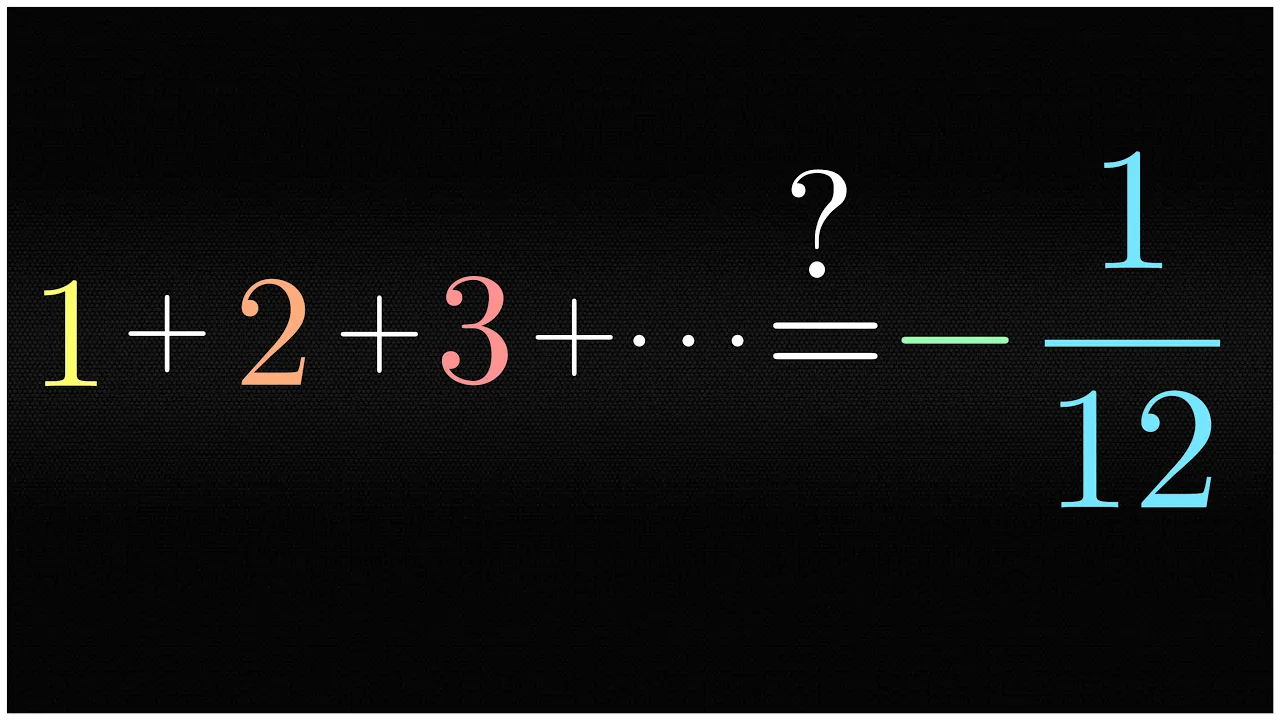







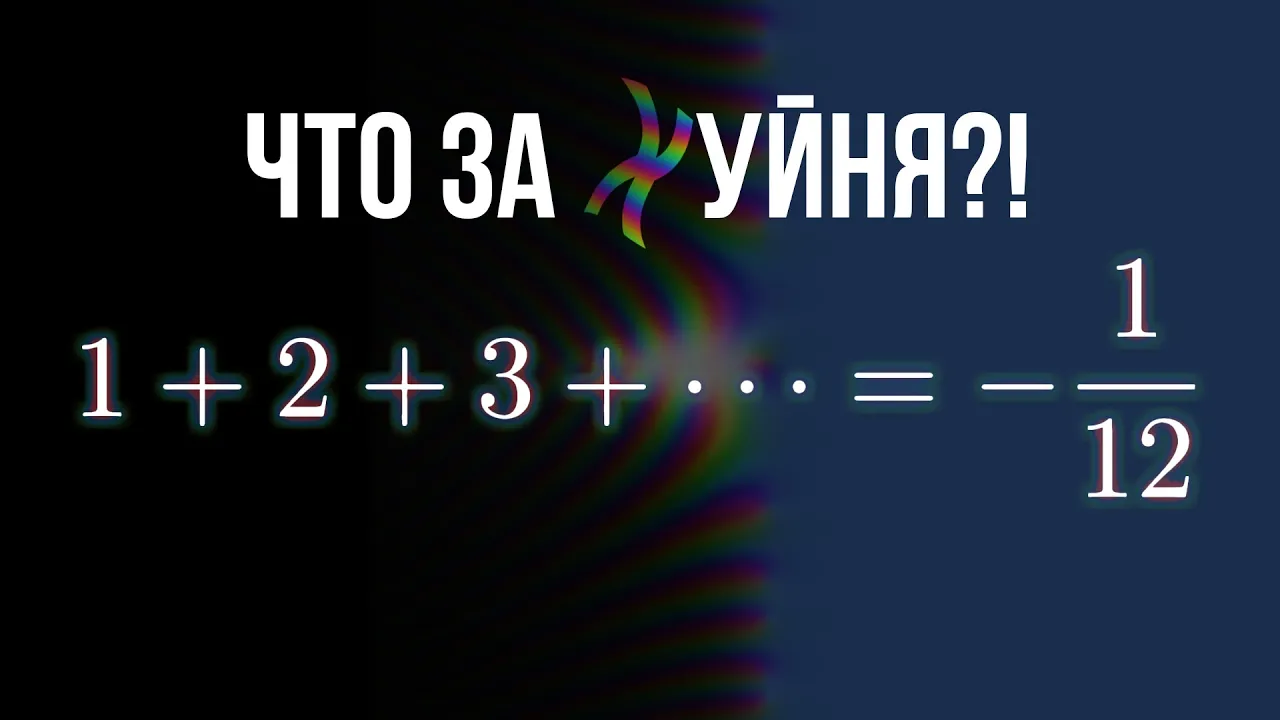


The identity 1+2+3+... = -1/12, famously derived by Srinivasa Ramanujan in his 1913 letter to G.H. Hardy, is not a literal sum but rather a result of assigning meaning to divergent series through advanced mathematical techniques like analytic continuation and Ramanujan summation. In standard calculus, this series diverges to infinity, but using methods such as Cesàro summation (averaging partial sums) or analytic continuation of the Riemann zeta function, one can assign the value -1/12 to this series. This demonstrates how different mathematical frameworks can assign different values to the same expression, with the choice of framework depending on the context and purpose of the calculation.
Ramanujan Summation: Decoding 1+2+3+... = -1/12
Added:Fundamental understanding of infinite series, including the definitions of convergence, divergence, and limits of partial sums.
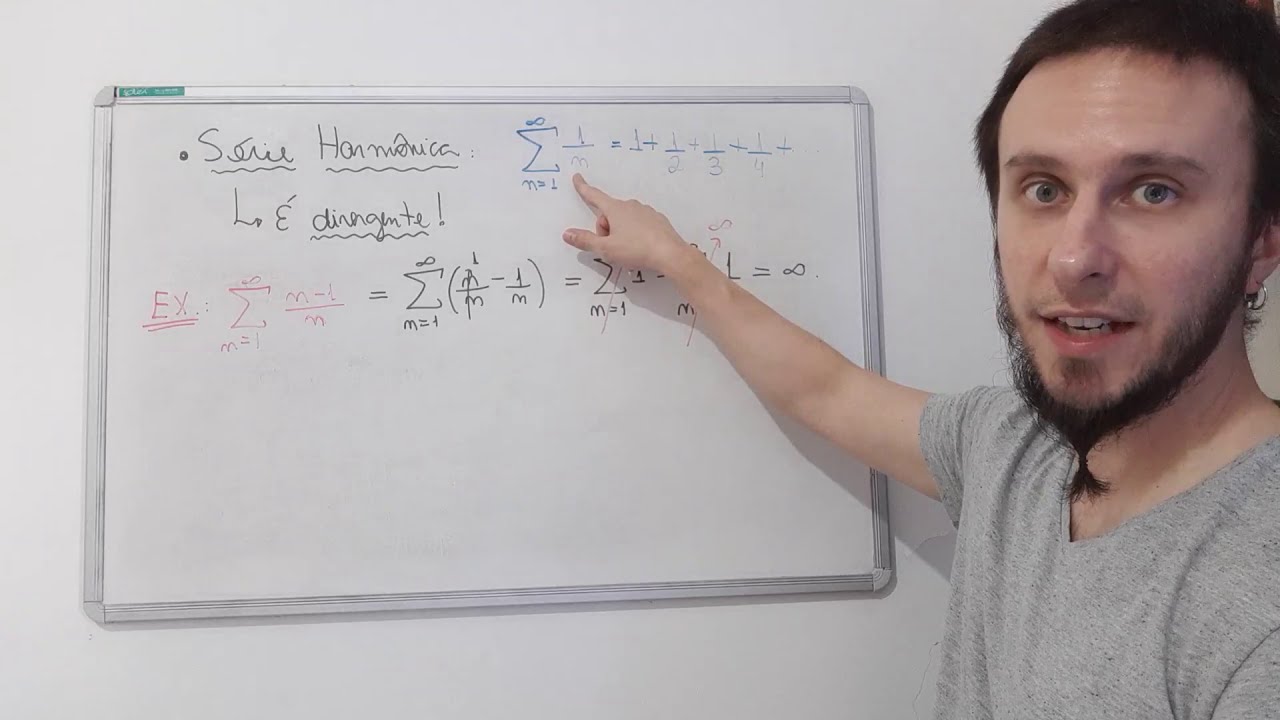
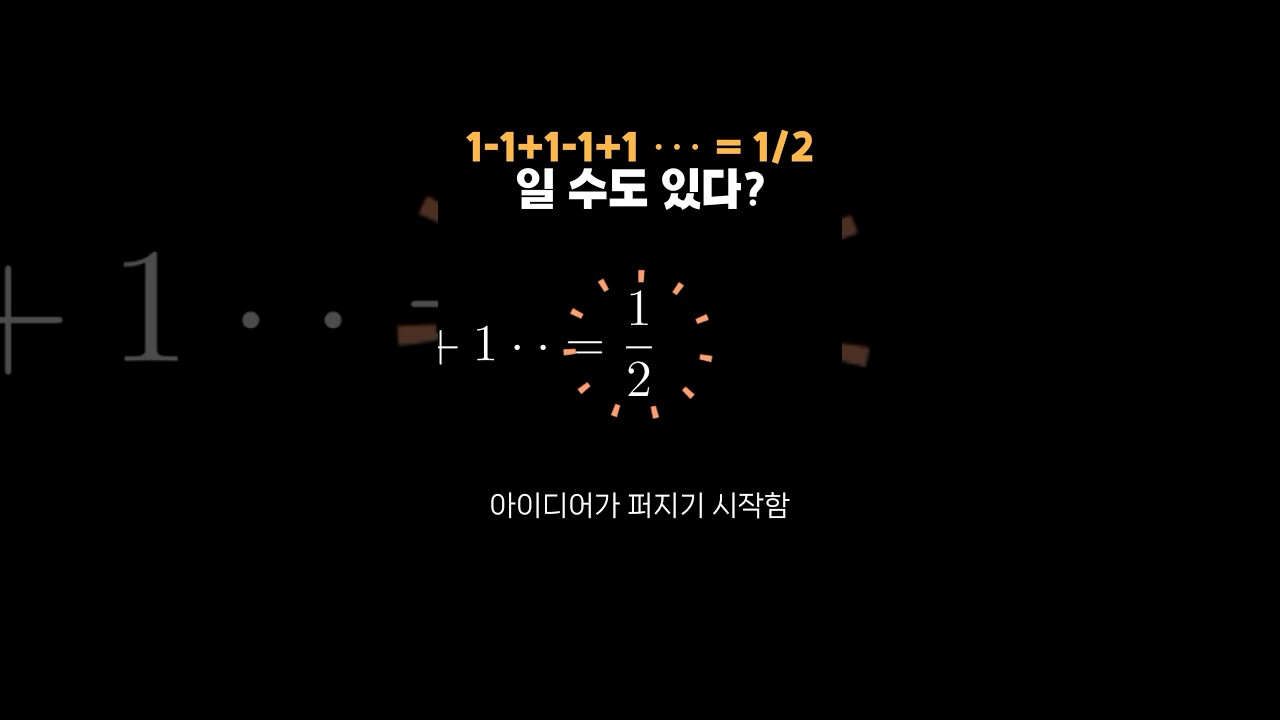
Familiarity with basic divergent series paradoxes, such as Grandi's series (1 - 1 + 1 - 1 + ...) and Cesàro summation.
Basic knowledge of complex numbers and the concept of mathematical functions defined on the complex plane.
The concept of analytic continuation in complex analysis, specifically how the Riemann zeta function is extended.
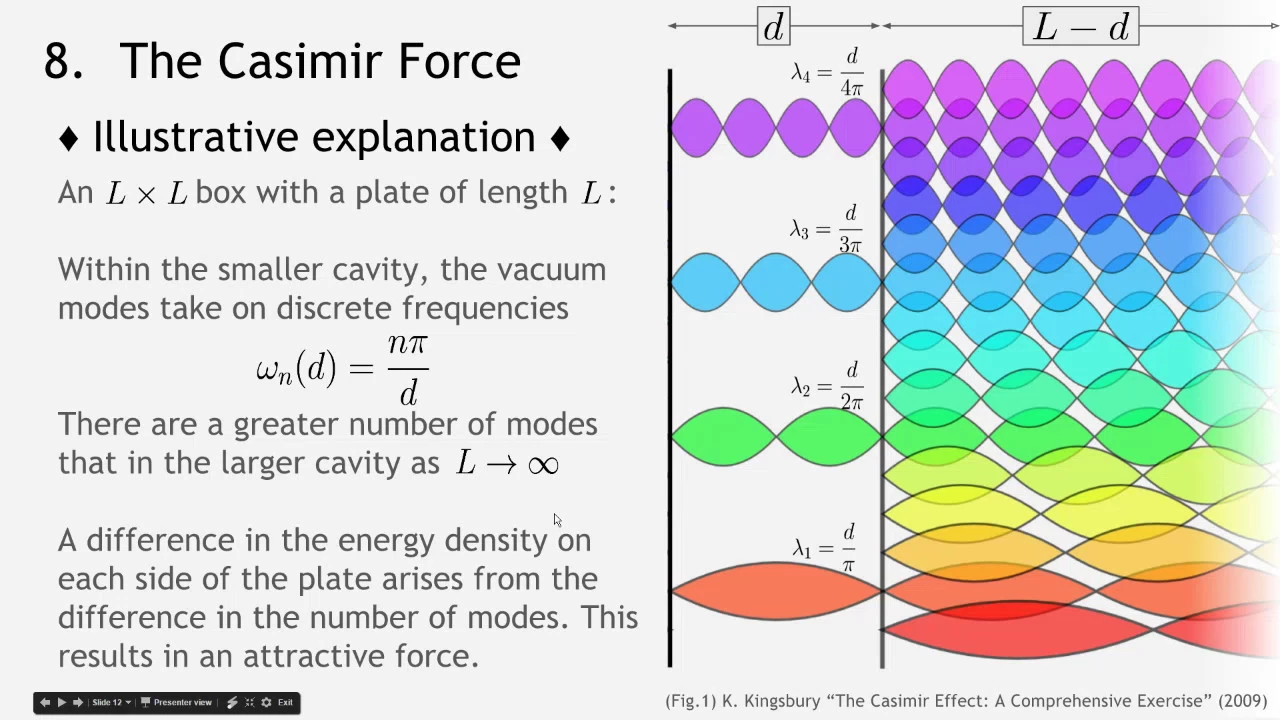
The physical applications of Ramanujan summation, such as calculating vacuum energy in the Casimir Effect.
The role of the -1/12 result in Bosonic String Theory for determining the critical dimension of spacetime (D = 26).
Other rigorous frameworks for divergent series, such as Borel summation and Abel summation.
3.5M views55.5Klikes34:24Original Release: 2016-04-22
A lot of you will be familiar with this strange identity here: 1+2+3+... is equal to -1/12. Now when you think about it this looks totally insane because what we're doing here on the left side is we are adding larger and larger positive values, infinitely many of them, so if anything this left should add up to plus infinity. And not to negative 1/12. Most people who look at this for the first time think that this is just nonsense. Except it comes up in a very very famous letter in mathematics. A letter that was written by this guy down there Srinivasa Ramanujan in 1913. It was addressed to G.H. Hardy in Cambridge, UK.
one of the most famous mathematicians at the time.
Now a lot of people have heard about this letter but have not seen it. So I thought I show it to you. Ok, so here is the letter.
It is a long letter and it's basically lots and lots and lots of theorems, mathematical theorems, enumeration of lots of theorems that Ramanujan says he's found and the most remarkable thing about this is that he has no real former mathematical training unlike Hardy. And so a lot of these things are pretty amazing and towards the end of the letter well this strange identity here comes up, and a couple of similarly strange identities around it. And actually this letter got an invitation to England to work with Hardy. So, you know, maybe we should have a really close look at this and that's actually what I want to do today. Now, I'm not the first one to do this Numberphile's done a couple of videos on this, and other people, but I think I'd like to really try to do this properly, so it's going to be a very long video and so to make it accessible to as many people as possible I've split into four parts, so four levels of enlightenment, and you can pretty much stop anywhere and, you know, get something out of it this way. So let me know how far you get with this video. Since, eh, Ramanujan was a devout Hindu, I thought I'll ask the elephant god to help us out here, to lead us through these four different levels of enlightenment when it comes to these strange sums. Ok, here is level 1: Just do it.
Now, Ramanujan actually doesn't tell how he derives this strange value in his letter to Hardy. You know, it's just there, he just says "that's what I get".
Now, we have his notebooks, and there is one of the pages from the notebook where he actually talks about this. In the previous page he also talks about this; it is more like an afterthought to what he does on the other page; but this one I can actually do in a video like this so keep it completely elementary I can do this one here. Let's have a closer look at what he does Ok, so he starts by saying C. And he doesn't call it a sum he says it's a constant C is equal to this strange sum. And then he does a couple of logical deductions, and at the end of that he gets to -1/12. Not much, so should be able to do this right?
Ok, so here we go. So, he says there's something there. That something - I call it C.
C is equal to this sum. Now, if that something is halfway as reasonable, I should be able to manipulate this as usual. One of the things I should be able to do is multiply it by 4. So he does it. So, 4 times C is equal to... 4 times 1 is 4. I put the 4 under the 1. No I put it under the 2. Whatever Let's just go with it. Then 4 times 2 is 8. Again I skip one. Put the 8. Then I always skip one and put down all the multiples of 4 here in the second line and now the next step is to subtract the bottom from the top.
we get C minus 4C is -3C. 1-0 is 1. 2-4=-2. 3-0=3. 4-8=-4. And so on So we get this nice sum here 1-2+3-... etc Now comes something surprising. Now, Ramanujan somehow sees that this is equal to a 1/(1 +1) squared. Well that's 1/4.
So, if that somehow makes sense, well, then we can say -3C = 1/4 Just solve for C, and we get -1/12 Ok, we still need that step here, that's not clear at all. So how do we get that?
That's actually has two ingredients. The first ingredient is that Ramanujan knows that (1-2+3-... etc) sum is equal to the (1-1+1-... etc) sum squared Ok... Second ingredient is this here: that the (1-1+1-... etc) sum is equal to 1/(1+1) Let's try to make sense of this. First one. So, here we've got an infinite sum that's multiplied by itself So, how do we do this?
We have to multiply every term at the top by every term at the bottom and then add up everything. So, let's arrange this like this so this is the first sum here that's the second sum here. Now we do first term times first term, that's 1 times 1 is 1 Now first term times second term is (-1) first term times third term is 1 and so on And that actually gives us this nice checkerboard pattern of plus and minus ones How do you sum up this checkerboard pattern here?
Well, you do it in diagonals. So, here we go.
We're gonna put in diagonals. And now what's the sum we're actually forming here?
Well, blue diagonal is 1, green diagonal is -2, yellow diagonal is +3, next diagonal is -4 and so on. So this then clarifies what what he means by this What about the second step?
that the (1-1+1-... etc) sum is equal to 1/(1+1) Well, that comes from something that a lot of you will be familiar with: this identity here Sum of the geometric series.
Now, this is not valid for all R. It's only valid if the R is kinda small. If it's in the range from -1 to +1, this actually works So, for example, if you choose R is equal to 1/2, then this whole thing turns into 1+1/2+1/4+1/8+... and so on is equal to two. So, you know, a lot of people would have seen this. A lot of people will be familiar with this.
As I said, this works in the range from -1 to 1.
It doesn't work for -1, it doesn't work for 1. At least not in standard calculus But what Ramanujan now does (and a couple of people before him actually) is substitute R = -1 anyway and when you do that what you get: Here you get -1, Here you get 1, Here you get -1 and so on So that gives you this identity Then, of course, if you substitute this into that, you got exactly what Ramanujan wants.
If you know any calculus, you think like every single step here is totally insane.
So there is the sums here, right. This one here, that one here, that one here We're subtracting infinity from infinity, so nothing here makes sense.
So I've got my insaneometer here at the left.
Let's give this a score of 4 on the insaneometer.
Well, insane, yes, but remember: this guy is a genius and this guy here G.H.Hardy, well, he's... he's no dummy either. So somehow they can take these things seriously, so we better have a close look.
Okay, so what does Ramanujan do here?
Well, he actually does something that a lot of mathematicians do when they don't know what to do. So, often, you know, you're encountering expressions like this is somebody that's kind of scribbled down on a piece of paper something with lots of dots in it, and to start with, that's just a couple of symbols on a piece of paper and you don't really know what they mean, right? So don't really know what they mean. You know, if there's just finitely many (without the dots), usually know what it means but if there's dots in there, you know, it gets tricky You don't know what this means, right. Now, you can try and kind of just straight away develop some theory that makes sense of these sorts of things, but often it's a better idea just kind of do it. Okay? So what you do is you don't know what these things are so you just let them be some sort of unknown value, and then you just kind of go for it. So if there's anything reasonable, you should be doing this sort of manipulations that maybe are not too wild and then maybe get you somewhere.
And let me just demonstrate this. This is kind of a very famous one. You've got this infinite sum (that is actually a geometric series that we just looked at), and... What can I do here?
Well, if that's anything reasonable, I should be able to multiply (just like what Ramanujan does – at the beginning he multiplies by 4) I multiply by R Ok? So I multiply R times C, then on the other side we get 1 times R (put R here), then R times R – R^2 (I put it there), and so on. And that will give me this; and I do exactly what Ramanujan does and subtract the bottom from the top. So C minus RC - there we go; then here, well, here we are really lucky, a lot luckier than Ramanujan was with his sum. Everything here pretty much cancels out, and the only thing that's left over is the 1.
And then we can for C, and we get this. Ok. And so, what we've found here is that assuming that this somehow makes sense and that we can manipulate it as usual, [we] necessarily get that this has to be equal to 1/(1-R). Now, later on in calculus, when we actually really go for it we actually say "well, this does make sense when R is in this range, but only then". Yeah? So for other values of R, like -1, that one here, that doesn't make sense; that gets discarded, that's evil, we don't want to know this, we don't touch this in standard calculus. But actually it turns out that, you know, if you just setup mathematics in a slightly different way, this might actually make total sense. So on a different planet that might be totally okay.
I could also try R=2, for example, in here, and then you get something really strange, which is very close to the sum that we actually started with; it's 1+2+2^2+ +2^3... that's all positive values getting bigger and bigger, and should add up to infinity, but this guy here says it's actually -1. So how does that work? Well, it turns out that if you're just on the right sort of planet, there is mathematics that makes perfect sense and in which this is actually true.
Ok, and now, that was level 1, so you survived so far?
Perfect. Now, if you want to actually know how we make sense of all these things stick around for Level 2 :) Ok, so in Level 2 we're actually going to focus not so much on what happens on other planets but what happens on Earth. So Level 2 is about following the rules. What are the rules for dealing with these sorts of things in standard calculus? What makes this right and all of these wrong? Well, short answer is that this guy here on the left, which is called an infinite series, is convergent and has sum 2, whereas all of those guys here are divergent. Ok, let's have a close look.
Now, at some point in time, somebody wrote down this infinite sum, and at that point in time, actually, nobody knew what it really means. Well, you know what (1+1/2) is, you know what (1+1/2+1/4) is.
But what does it mean to add up infinitely many things? To start with, you know, there's no... that doesn't have any meaning.
Alright, but you can try to give it to some meaning.
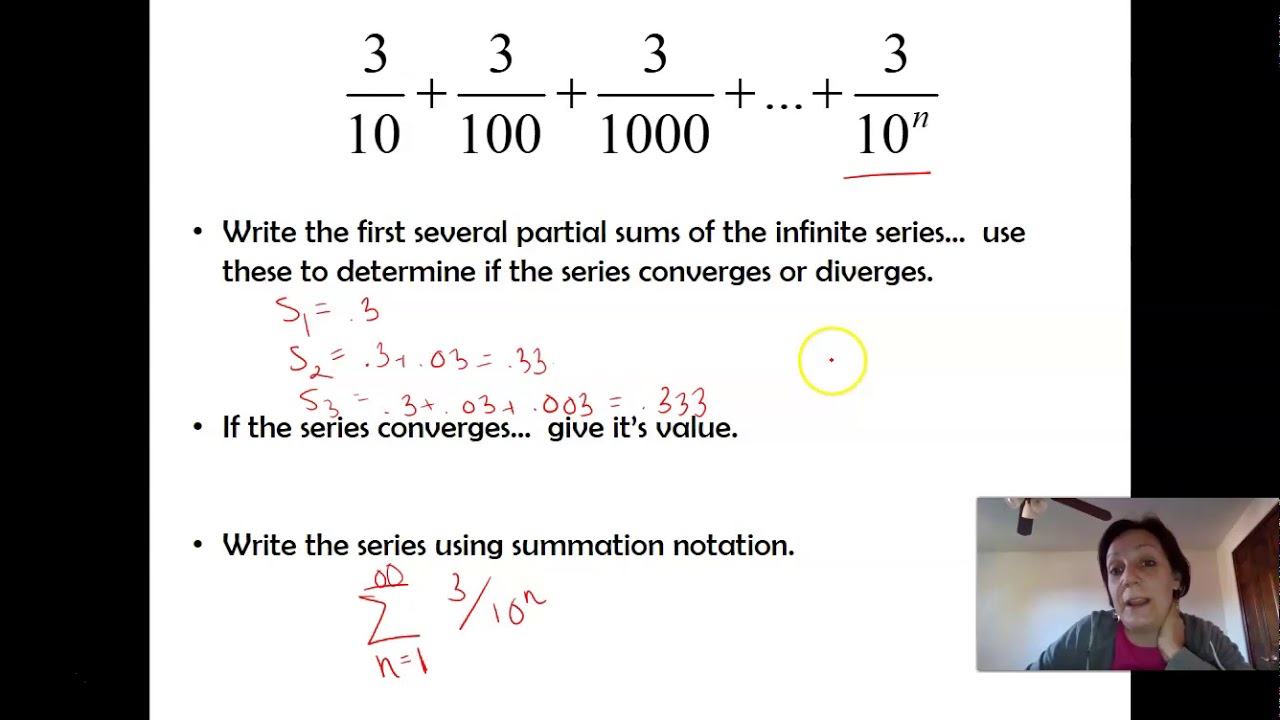
So we'll just start adding, ok? So we've got 1 (put it down); we add 1/2 to 1 - we get three halves, and then we add 1/4 to get 7/4. We just keep on going like this and we get a sequence of numbers down here that goes on forever.
And when we have a close look at this sequence of numbers, the sequence of partial sums, then we see... Well, they get closer and closer to 2. And actually 2 is greater than all of them. And in fact, 2 is the smallest number greater than all of these fellows, all of these partial sums.
And if you look at this expression, well, if it's to mean anything, really the most natural thing to say here is that this should be equal to 2. And actually it's a definition, it's, you know, a definition that mathematicians have made. It's our choice to say that this something is equal to 2, it's a definition. It's a very natural one, it's probably the most natural one, but it's still a choice. Our choice to do it this way and not another way. In fact, there is another human choice in there, and (human choices will always gonna be in the background whenever you deal with these sorts of things) it is that we're actually always, by default, talking about real numbers.
Okay? So we're talking about real numbers; that's how we make sense of things.
There would be other possible choices for the default number system that we use, and on different planets, maybe, they do something different; for example, the surreal numbers or the hyperreal numbers. But for everything that we do here on earth as a default it's the real numbers. It's also important to keep in mind.
Now, why was our choice of definition so good?
Well, because, to a large extent, you can actually manipulate these sums just like you would manipulate finite sums. You know, this, you know, sometimes not, but... For example, if you've got a convergent series here and its sum is A, then you can actually multiply the right side here by something, for example 5, and you get something convergent again. The series that we get down here is convergent again.
And it converges to... has the sum 5*A, as expected. So that's really good.
Or, if you've got two of those guys, right, so infinite series (sum A), infinite series (sum B), we can term-wise add things, and that gives us another infinite series that converges.
And the sum is A plus B – perfect! Or we can subtract the bottom from the top and it would be also, I think, A minus B – perfect! So what that means is in particular, is that if this guy here is a convergent sum, then all of these manipulations that with did here are perfectly OK, and we get the right result.
So we multiply, we subtract, it works again, and we get the right result.
Now, in standard calculus courses you actually usually don't get to this point, as actually some bits about our definition that are not so great. So, for example, if you've got something that works – convergent, convergent – and you multiply them together, you would expect that you always get like A times B, something convergent with the sum A times B, and often that is the case, but sometimes it actually isn't. So, for example, this guy here, that's convergent and has a sum, but when you actually do to the square of this, this sum by itself, that doesn't converge.
And it's a bit of a problem. Let's just keep this in mind OK. So, this is maths on Earth. So let's just have a look at these sums here.
Why don't they work? Well, let's have at the first one here.
Partial sums, we need partial sums. So first partial sum is 1. 1-1 is 0, +1 is 1, -1 is 0, and so on, so 1, 0, 1, 0, 1, 0. That doesn't converge to anything, that doesn't have a limit. So it's, you know, it doesn't have a sum in the usual sense. So that means it's divergent. What about the second one?
1, 1 minus 2 is -1, plus 3 is 2, minus 4 is -2, and so on. Also doesn't settle down – forget about it.
Last one. 1, 3, 6, 10 – kind of explodes.
All these series here, on the left side, are divergent. They don't have a sum.
Definitely not 1/2 here, definitely not 1/4 here, definitely not -1/12 there.
Hm, but when you kind of look at it... These sequences that we get to, the sequence of partial sums You know, they're very different, so instead of calculus, you could just take everything that's not convergent and just say "well, throw it away". So you don't really look at the difference that you get here, this, you know, graduation.
There's actually different sorts of divergence here, different sorts of divergence. And this one is kind of a tame one, this is... Well, Well, this is kind of oscillating around a common center here somehow.
And this kind of explodes.
You know, maybe you want to capture the differences between these different sorts of divergence. So let's have a look at the first one here. So it's a very very famous one; actually, the first thing you see in calculus pretty much saying that, you know, this doesn't work, you know, for various reasons.
Now, partial sums: 1, 0, 1, 0... This is supposed to be equal to 1/2. Well, how to get one half out of 1and 0? Well, somehow do the average.
So average of 1 and 0 is 1/2. And actually there's a very neat way of defining the sum of one of these series in a different way. So what we do is: we don't stop with the sequence of partial sums, but now what we do is we generate a second sequence of averages. So, average of 1 is, well, 1; average of 1 and 0 is one-half; average of 1, 0, and 1 is 2/3; and then 1/2 again.
And it keeps on going like this. So we have another sequence of numbers here. And actually when you look at that one, here every second one is 1/2 and then the red ones here they also converge to 1/2; they have a limit of 1/2.
So overall, the sequence that we're generating here has a limit that is 1/2. So, in terms of this second sequence, what we get is convergence.
And it makes sense to say that, in some ways, this series here does converge to 1/2 And there's actually the special name for this: this sum is Cesaro convergent (if that sort of thing happens). If you've got a series, you first do the sequence of partial sums and then you do the sequence of averages; if the sequence of averages converges to a number, then this number is called the Cesaro sum of the series that we're looking at. So the series is Cesaro convergent. And actually this different sort of convergence, just different sort of attaching a sum to a series makes a lot of sense and really, on a different planet with different sort of civilizations, they may actually have chosen this as their default definition of sum of a series. Could well be. This sort of thing actually has just as nice properties as everything else. So, for example, if a series converges in the standard way, then it will also be Cesaro convergent. So that's really good.
But obviously what we've seen here says there are certain series that this guy here can sum that normal, you know, normal people can't, can't sum.
Also, this sort of thing works.
If you've got something that Cesaro sums to A, then 5 times that is that one, in terms of Cesaro.
And the adding business works, the sutracting business works. And so what that means again is, you go back to the very beginning If in your version of mathematics you're talking about Cesaro sums, talking about something like this, then this calculation here will actually give you the right answer. And it does it, right? It gives us the answer One-half for (1-1+1...) and so on.
Further in calculus, you actually learn about these things.
They're actually very useful, so they not only make sense but also are very useful, even for the stuff that, you know, we define as making sense.
So, for example, before I told you that when you've got something that has sum A, and there we've got another one with sum B, in the standard way... in the standard way. Then the product not necessarily will converge. The product sometime diverges. But when you add the product in the Cesaro way, you'll actually always get what you expect: A times B So actually adding in the Cesaro way gets rid of one of those not so nice things about the usual definition of sums. And there's other things that Cesaro summation takes care of.
There's something called Fejer's theorem, which is about Alright, so let's have a look at our insaneometer.
Well, on planet Cesaro, if Ramanujan writes the letter, he will actually only get an insanity score of 3, instead of an insanity score of 4 that we had before.
OK, now let's have a look at the next sum here on our list, that was the 1-2 +3, and so on, sum.
If you look at the partial sums, you get 1, -1, 2, and so on. So that doesn't work. Now, let's just do the Cesaro thing, so the averaging. When we do the averaging, we get these guys here, and you see: well, that doesn't work, right, that doesn't converge. So we've got every second one as 0; these guys here, the red ones, they converge to, they have a limit of 1/2 OK, so if you actually step back here, step back and look at the sequence of partial sums, you see every second one is a 0, and then eventually the red ones will be indistinguishable from 1/2. OK, well, there is 1/4 that we had before What do have 0 and 1/2 to do with 1/4? Well, it's average, right, it's average, so we can actually kind of repeat our game. So we're just do the averages of the averages now. So we do, you know, put down 1, and then we do the average of those two and then the average of those three, and then the average of those four, so this gives us another sequence of numbers, and that will actually converge to 1/4. I'm not going to write the numbers now, but it's going to work. And we can actually now choose these higher-order Cesaro thing to mean our sum. Right, so on a different planet again you know, on a different planet, maybe on the planet of the blue aliens, people define sums of, of series in terms of this (first, second) third sequence of numbers that's associated with any series.
Сould do that. And a planet like this well, the insaneometer here will show just a reading of 2, so on a plant like this, you know, that gets more and more reasonable what, what Ramanujan does there. We can actually keep on going playing this game; so we had like the first sequence (that's us), second sequence (that was my green alien friend who prefers this sort of summation), then the blue alien friend who prefers the next one down, but of course we can do more and more kind of averages; so the next one would be the average of the average of the average, another sequence. And these methods get more and more powerful, so you kind of go up and up and up and up and up, and you can sum more and more of these series.
But what about this guy here? Will we ever be able to get to -1/12? Well, if you think about it, eh, no. Right? So we've got positive numbers here, we do partial sums that's got to be positive numbers again.
Average of positive numbers – again, positive numbers; or whatever you do here, you'll never get anything that will get into the minuses.
Alright, for our super-sum, I have to tell you a little bit about the functions.
OK, so here we've got x^2 graphed over the positives. Now, we can extend is nice smooth function into the negatives in infinitely many ways, and I've just drawn like three of them. So there's, we can extend it as x^2, but also in many-many other ways, in a smooth way across 0 here.
OK? Just keep that in mind. So far, we've been talking about the real numbers. And the real numbers are usually represented by the real number line. Now I also have to talk about the complex numbers, which is... usually represented by the complex plane. Here there's some complex numbers. If you've never heard of complex numbers, check out some of these videos here before you watch the rest. Now, everything I've said about standard summing of series, Cesaro sums, averages of averages sums Stays true if you're actually considering series of complex numbers. You can also have functions... complex functions defined on various bits of the complex plane. And some of them are actually super duper nice, smooth; they're called analytic functions.
OK, so if you've got, for example, a function defined on the right part here of the complex plane (everything to the right of the imaginary axis), how many different ways are there to extend this to the left here, to the left part of the complex plane? Now, these analytic functions are actually really-really-really nice, a lot nicer than real-valued functions. So, if actually this continuation exists, then it's uniquely determined, so that's something very-very special, and it's called the analytic continuation of our analytic function. So these things are super duper nice. OK, let's have a look at one of those things. So, here is an infinite series that depends on a variable Z, so that Z can be any complex number.
Right, now we can check for which complex numbers does this thing converge, say, in a standard way. In the standard way it converges everywhere here, in the yellow, so, for example, at 1, Z=1, if we substitute, we get this series, and we've already seen this before in the Apu paradox video. That sums to ln(2).
Alright. Now, since you've watched this video, you probably come up with an idea straight away: what if we don't sum in the standard way but if we sum like the Cesaro way? And actually something really-really nice happens – you get part of the analytic continuation defined like this. So if you sum Cesaro, you get everything here to the right. It's really nice. Among other things, you can figure out what's the value of the analytic continuation here, at 0.
And what you get?
Well, at 0, we have... well, it's everywhere 1, 1, 1, 1, 1... so we get (1-1+...), and we know what the Cesaro sum of that is – that's 1/2.
OK, and then what about average the averages?
Well, that gets us everything up to here. Let's just plug in (-1) here, so -1.
Mm. Well, that sum, and so that tells us that analytic continuation here is actually equal to 1/4. And then we do averages of averages of averages, and we get this guy there... And we keep on going like this. Actually, kind of nice homework assignment: what do these question marks stand for? A bit hard :) Alright.
So these things are actually useful, you know, for defining the analytic continuation of this very important Dirichlet function.
Now we'll change all the minuses to pluses; that's the Riemann zeta function.
So, the Holy Grail in mathematics – the Riemann hypothesis – is all about this guy here.
So it's very important to know what it is. Now, the series (just with a standard summation) defines an analytic function here to the right again of the purple line.
So what does Cesaro give us? What does averages of averages give us? What do all of the other things give us? Do they give us the analytic continuation of this thing?
Well, sadly, not really. You don't really get anywhere with this.
But there is an analytic continuation here, and let's just see what we get you formally if we substitute (-1). So if we do (-1), we actually get our Ramanujan sum, super sum. OK? OK, so what are we thinking now... Well, to start with, when we defined these generalized sums, we took the first thing that came to mind here. But what if there's different ways of generalizing the standard way of summing series? Other ones, right, but more sophisticated ones.
Maybe those will allow us to calculate the analytic continuation of of this sum up there. And there actually are. There are more complicated ones.
For example, Ramanujan invented one. And then... Well, since the are such sums, maybe it's possible to then calculate these sums using Ramanujan's that manipulation. And it's actually true: the analytic continuation at (-1) is (-1/12).
Now here is something very-very-very important.
Those first couple of summations methods that I've talked about... They conceivably could really be replacements of the standard way of summing things (on some planet). Now, these more complicated summation methods, like Ramanujan's one (when you look at it: it's got integrals, and it's got like sums in it, and special numbers), they only work in special context. They work for special sorts of series. They're really-really useful there, but they could never ever replace standard summation. If at any point in time you get on your calculus test "what is 1+2+3+4 etc.", and you answer "-1/12", almost certainly you'll get zero marks. Whenever you get something like this, there's a standard way of interpreting a sum like this; and the standard way involves, you know, the partial sums. Do the partial sums converge or not over the reals – that's what's being asked here. Nothing else, OK? If you give any other answer, it will be wrong.
OK? Let's keep that in mind.
So the last thing I want to talk about is again the geometric series because most of you will be familiar with this, and most of you have been told to disregard anything outside, you know, small values of Z.
Now, this one actually works for complex numbers too and defines a nice analytic function here in the unit circle. If you actually now some using Cesaro, it will also give you things on the unit circle. So it will actually give you the analytic continuation on the unit circle. What else? Well, if you do averages of averages, actually doesn't get you anymore.
But there's an analytic continuation, of course, of this function that's defined here.
And this analytic continuation is actually this sum here that we calculated before.
So again, I mean, what comes out of there is not nonsense; it defines something, it defines values of the analytic continuation of the function that's defined by this guy here. But that's what it is.
Up Next
15:36
Analytic Continuation of the Riemann Zeta Function | Number Theory
@Fematika
7.3K views•2017-11-09

8:17
JEE Maths | Circles: Pole & Polar Explained with Equations
@TargetPublications
14.4K views•2019-02-23
10:44
Fourier Series Introduction: The Big Idea Explained
@DrTrefor
387K views•2021-05-03

6:00
The Mathematical Impossibility of Accurate World Maps
@Vox
23.3M views•2016-12-02
Related Study Plans & Knowledge Roadmaps
Structured learning paths in Mathematics
mathematics
Projective Geometry: Coordinates & Conics
01From Euclidean to Projective Space
02Homogeneous Coordinates
03Duality and Projective Transformations
+ 2 more learning modules
14h5 modules
Explore Roadmap
mathematics
Tensor Calculus: Vectors to Riemann Curvature
01Mathematical Foundations: Linear Algebra & Calculus
02Covectors, Dual Spaces, and Tensor Basics
03The Metric Tensor and Index Gymnastics
+ 2 more learning modules
40h5 modules
Explore Roadmap
mathematics
Gödel's Incompleteness: Logic, Proofs & Limits
01Introduction to Formal Systems & Hilbert's Dream
02Set Theory, Cardinality, and Cantor's Diagonal Argument
03Arithmetization and Gödel Numbering
+ 2 more learning modules
14h5 modules
Explore Roadmap
mathematics
Galois Theory: Fields, Groups & Solvability
01Foundations of Abstract Algebra: Groups & Fields
02Polynomials & Field Extensions
03Splitting Fields & Symmetries
+ 2 more learning modules
24h5 modules
Explore Roadmap