






![[GEOMETRIA] O *RESUMO COMPLETO* da Geometria Analítica 10º e 11º ano (TEM TUDO! RESUMO NO FINAL!!!)](https://i.ytimg.com/vi_webp/QX-BDW5AVe0/maxresdefault.webp)


















Einstein's special relativity reveals that the speed of light is constant for all observers, regardless of their motion, which leads to counterintuitive consequences: time dilates (moving clocks run slower), lengths contract along the direction of motion, and simultaneity becomes relative (events simultaneous for one observer may not be for another). These effects, while negligible at everyday speeds, become dramatic as velocities approach light speed, fundamentally reshaping our understanding of space, time, and their relationship to matter and energy.
Special Relativity: From Light to E=mc² | Full Course by Brian Greene
Added:Classical Mechanics: Familiarity with Newton's laws of motion, relative velocity, and the concept of Newtonian Galilean relativity.
Basic Algebra and Geometry: Comfort with algebraic manipulation and the Pythagorean theorem, which are essential for deriving time dilation and length contraction.
The Wave Theory of Light: A basic understanding of light as an electromagnetic wave and the historical context of the luminiferous aether hypothesis.
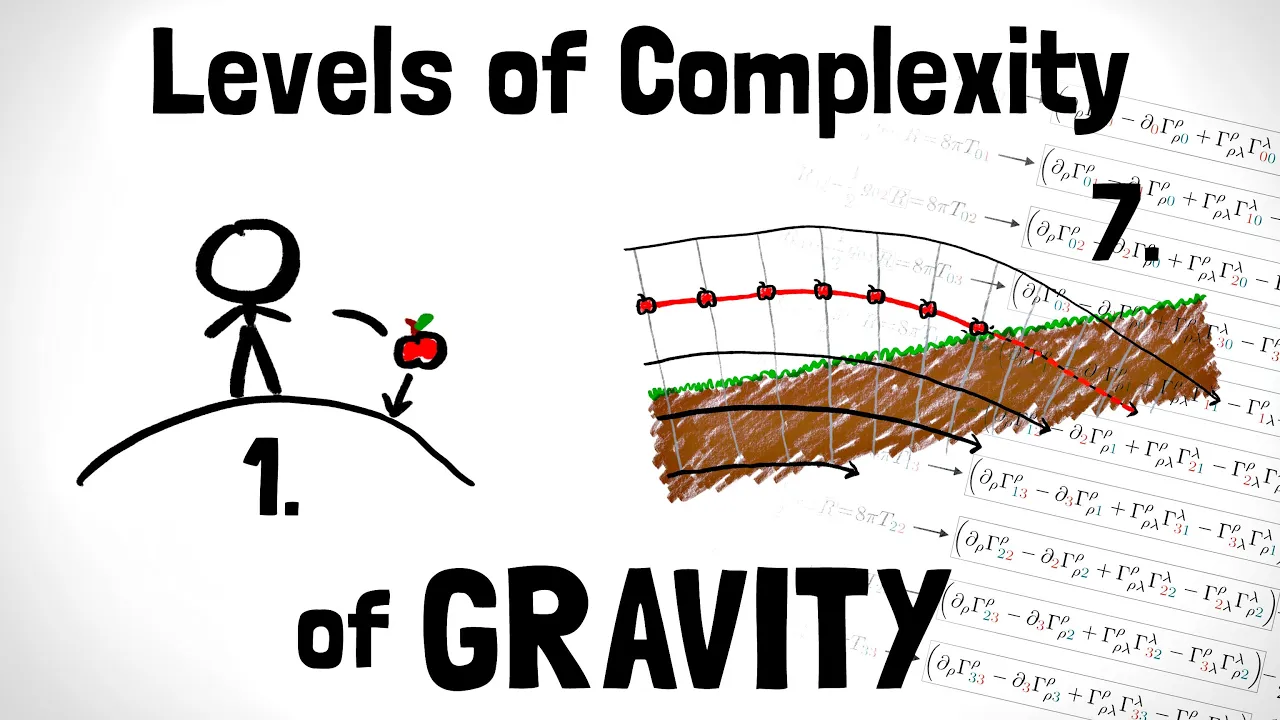
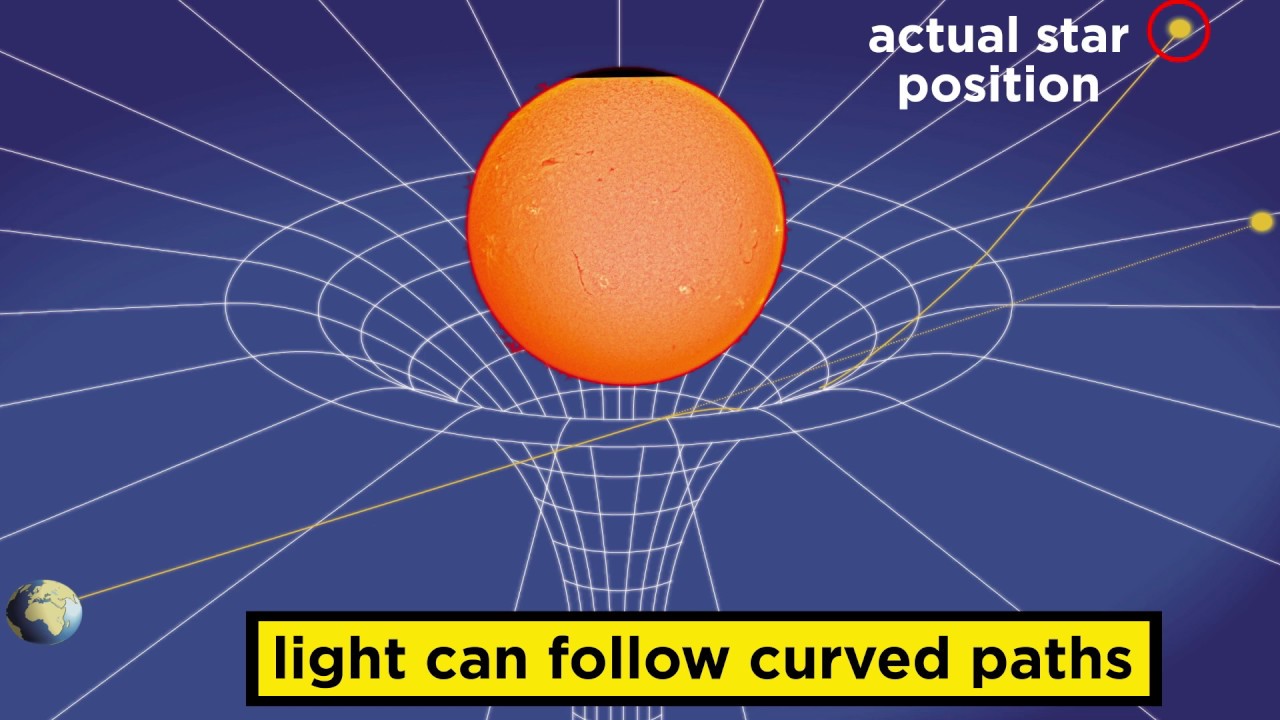
General Relativity: Moving from flat spacetime to curved spacetime to understand gravity, acceleration, and the geometry of the universe.
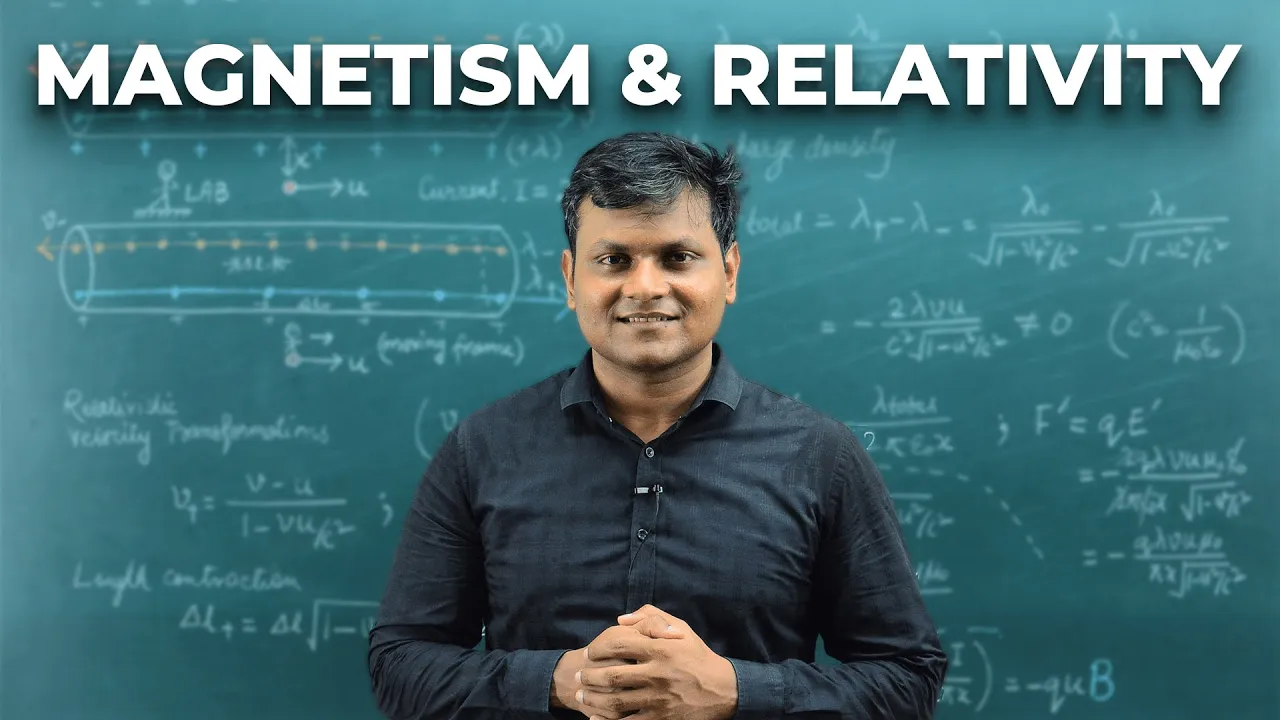
Relativistic Electrodynamics: Exploring how electricity and magnetism unify into a single mathematical framework under Lorentz transformations.
Quantum Field Theory (QFT): Investigating how special relativity merges with quantum mechanics to describe subatomic particles and fundamental forces.
Astrophysics and Cosmology: Applying relativistic principles to extreme cosmic phenomena such as black holes, time dilation in strong gravitational fields, and the expansion of the universe.
Practical Applications of Relativity: Studying how relativity is corrected for in modern technologies like Global Positioning Systems (GPS) and high-energy particle accelerators.
236.9K views0likes11:28:59Original Release: 2020-09-02
in the spring of 1905 a storm broke out in the mind of Albert Einstein at least that is how Einstein himself described it later in life and the result of that storm of thinking is the special theory of relativity a theory that completely transforms our understanding of space and time and matter and energy I mean Einstein found completely counter to experience that clocks in motion TI off time at a slower rate he found that objects in motion are contracted along their direction of motion he found that clocks that one set of individuals say are in sync relative to each other he found that if someone's moving relative to those clocks they would say they're not synchronized and of course he also found the most famous equation in all of physics eal mc² establishing this deep hidden connection between mass and energy now you should say to yourself if there is such a unexpected nature to reality that we have missed through our everyday experience why have we missed it I mean why aren't we aware of special relativity right in our bones and the answer to that is when we look out at the universe we recognize that there are a huge range of scales that constitute reality and we humans only have access to a very small part of that totality so to give you a feel for that let's look at one axis a length axis and if you look at the scale that are out there in length atoms 10us 10 m viruses 10- 8 m red blood cells 10- 6 single cell organisms there we humans are 2 meters the Earth 10 to the 5 m solar system 10^ the 13 Galaxy and on to the observable universe itself a huge range of scales when it comes to length and we humans really only have direct access through experience to a small part of that and that's only the axis of length imagine we look at the axis of mass there too we will find a huge range of scales right so if we go back and look at atoms they weigh in 10us 26 kgam go down to red blood cells 10 Theus 15 humans well depends who you're talking to but about you know 100 kilogram or so solar system onto the entire universe the observable part 10 to the 52 kilogram a huge range of scales in Mass we humans only have direct access to a small piece of it one more axis to look at is the AIS of speed so we humans we walk around the world at certain ordinary everyday speeds sometimes you go into airplanes but there's a huge range of speeds out there the growth of human hair that's pretty small human speed typically space shuttle 10 to the 3 m/s speed of light that's a number that's going to come up a lot in our discussion 10 to the 8 or so m/s the point is in this spectrum of all possibilities in length in mass and also in speed we humans occupy a tiny tiny part so our experience the experience that has given us our intuition is built up from a very limited sense of what is is actually out there so our intuition which really has come in some sense From Evolution right so we evolved out there in the jungle and our intuition got built up in order that we can survive the survival value of understanding your environment it is what matters we humans only have access to a small piece of the totality of what's out there and therefore it would be surprising if what we have experienced really does tell us about the physics at all possible scales in length in speed and in mass and it turns out that indeed it is the case that when you look at extremes of mass or length or speed the world operates the universe operates in ways that we are not accustomed to if you are looking at extreme say a very small size eyes the new physics that comes into play is called quantum mechanics if you are looking at extremes of huge mass the new physics that comes into play is the general theory of relativity if you are looking at extremes of speed How the Universe behaves at very very high speeds then it is the special theory of relativity that comes into play that is what we are going to be discussing so in a nutshell all of the discussion we are going to be having here is focused upon how the universe behaves at very high speeds that is the special theory of relativity since speed is the fundamental core of what drives the special theory of relativity let's start at the beginning and ask the most BAS basic question of all which is what is speed well we all know the answer to that but let's get all on the same page so if that car say has a speed of 100 kilometers per hour we all know what that means if we look at how far it's gone divided by how long it takes it to get there so let's say this is 1 hour Journey if it's going 100 kilometers an hour we know that it will have traed Tred 100 km in that hour that's what speed is so in essence speed is nothing but distance that an object travels divided by duration now expressed in that language speed might seem like I don't know a kind of boring concept a pedestrian concept why concern yourself with speed the answer to that is clear if we recognize that distance is a measure that has to do with space duration is a measure that has to do with time so if we find as we are going to find going forward that speed has unusual features when the speeds involved get very big near the speed of light what we really will therefore be learning is that space and time have weird strange features that is what we are after okay good that's where we're headed let's start by first thinking about the non strange features of speed the features that we all hold in our intuition so what are the Bas basic features of speed well first off speed is a concept that even before Einstein was known is a concept that is relative what do I mean by that well imagine we look at this car say it's going 100 kilomet per hour what we need to say is 100 kilm per hour relative to the road why if that road is itself moving let's say it's on a boat the boat is moving then the car speed relative to the water is not 100 km per hour and if we zoom out and look at that car on the surface of the Earth and we realize that the Earth itself is spinning around the Earth itself is going in orbit around the sun with respect to the frame of reference our perspective right now that car is executing a pretty complicated motion not just 100 kilom per hour so it's always vital when you're talking about speed to recognize that you can only ever frame the idea of speed for ordinary objects that we encounter as the object has this and that speed relative to this or that object you need to specify the reference in order that the speed that you are specifying has any meaning at all okay so that's a very basic feature of speed that it is relative another basic feature speed is that it is additive and subtractive so what do I mean by that well let's imagine that we have two characters who are playing a game of catch with say a football George and Gracie two characters that we are going to encounter often in our discussions and imagine that they're throwing that football back and forth at say five meters per second now that's all well and good completely understood but let's imagine that they go out to play a game of catch on another day and Gracie is surprised to see that George has a hand grenade now she doesn't like hand grenades and so she runs away when he throws it because she knows that by running away from the hand grenade she can change the speed at which it approaches her she can subtract her own speed from the speed of the oncoming grenade and that way have it approach her not say at the initial speed at which it was tossed which for instance might be just like the football 5 m/s instead if she runs away at 3 m/ second she knows that now the grenade will approach her more slowly at two m per second and that is a good thing when it comes to hand grenades similarly it's the case that if an observer like Gracie is to not run away but say run toward a object that is being thrown at her the speed with which she approaches the object will be added to the rate at which it approaches her so if it was thrown at five and she's running toward it at three well we all know that that means it will approach her at 8 m/s speed is additive and subtractive you can change the speed with which an object is coming toward you by either running toward it or away from it now let me quickly mention just as a small footnote these basic calculations that we've done here we surprisingly are going to find that they are only approximate when you take into account some of the strange features of Relativity but that's something that we will encounter later especially if you're doing the math version of this course but in terms of the basic idea that comes from our intuition you certainly would anticipate that if you run toward an object its speed will approach you more quickly if you run away from an object it'll approach you more slowly third basic feature of speed that again we are all familiar with is this when you are executing a very special kind of motion what we call constant velocity motion motion that has a fixed speed fixed magnitude and a fixed Direction then you can't feel that motion right you can't feel that motion for a very good reason if you are executing constant velocity motion you are completely justified in claiming to be at rest and the rest of the world moving by you in that sense constant velocity motion is very special because it is motion that is completely subjective there is no absolute notion of being in motion when the velocity is constant so let me give you a quick example of that so let's imagine that we have one and the same physical situation described from two different perspectives so what I'm going to imagine is having George and Gracie floating in space okay floating in space now here's George's view of the events he looks out and he sees a character Gracie coming toward him and she waves as she passes as does he his perspective is that he is stationary and she is rushing by him good now I'm going to show you exactly the same situation but from Gracie's perspective so what does Gracie say from her perspective she says that she is stationary out there in space she looks out into the distance and she sees George rushing by he waves she does too and he goes on his merry way is one perspective right and the other wrong absolutely not you are completely Justified if you're not accelerating if you aren't changing your speed or changing the direction of motion to say that you are stationary now the reason why I'm emphasizing constant velocity motion is something that you have all experienced right if you are in a car and you take a sharp turn you feel your body being pushed this direction you know that you are moving if you are in an airplane and it's taking off as it accelerates as it speeds up you feel yourself pushed back into the seat you know that you are in motion but if you're not accelerating you don't feel the motion and in fact there is no way for you to detect the motion at all so for instance if you imagine that George and Gracie were in Two floating Laboratories out there in space and they do experiments to work out the laws of physics they will work out exactly the same laws because there will be absolutely no Remnant no experimental implication of their relative motion if that motion is at constant speed in a fixed Direction no way to determine your state of motion because you are justified in saying that you are at rest now that idea that idea that you can claim to be at rest that there's no implication of constant velocity motion does not start with special relativity it does not start with Albert Einstein this is an idea actually that goes way way back it goes all the way back to Galileo and Galileo wrote a wonderfully poetic description of this idea let me show you a little visual representation of what he said and I'll just read his words to you while this plays so he said shut yourself up on a large ship and there procure gnats flies and other small wing creatures he said let a bottle be hung up which drop by drop lets forth its water into another narrow neck bottle placed underneath then with a ship lying still observe how the winged animals fly with like velocity told all parts of the room how the distilling drops all fall into the bottle plac underneath then he says having observed all these particulars make the ship move with what whatever velocity you please so here it is the ship is going into motion and he says that so long as the motion is uniform by which he means constant velocity you shall not be able to discern the least alteration in all the four named effects nor can you gather by any of them whether the ship is moving or standing still that is the very same idea that constant velocity motion cannot be detected it has no impact on your observations old idea back with Galileo so where then does Einstein come into this story Einstein's new contribution is to say that among the for named effects that Galilea was talking about he was just talking about the gnats and flies and the water dropping into the bottle plac underneath that those things would not change if you go into motion so long as its uniform Einstein added something to the list Einstein added to the list of things that would not change he added the speed of light this is the surprising new insight of Einstein let's see what it means the speed of light is constant right that is one of the most famous sentences in all of science the speed of light is constant now what does it mean and why should you care well to get there let's think about how it is that Einstein came to this idea that the speed of light is constant it's an interesting history where over the course of many centuries many people struggle to understand light and perhaps a good place to pick it up is in the 1600s to the 1800s when a whole group of physicists spent a lot of time put a lot of effort into trying to measure the speed of light and they did a pretty good job RoR Hans Bradley fuzo Fuko these guys some of whom had very long hair made increasingly precise measurements of the speed of light with modern updatings we now know that the speed of light is 671 million miles per hour if you like those units it's 300 million meters per second or a little bit more precisely it's 299,792,458 m/s but we will round that off to 300 million meters perss for the most part so that was good people understood the speed of light but even so physicists lacked an understanding of what light actually was and that's when two physicists Michael Faraday and James Clark Maxwell who through experiments mostly Faraday through theorizing mostly Maxwell they realized something quite amazing because they studied electromagnetic waves they studied ripples in an electromagnetic field and came to a stunning conclusion so Maxwell did this mathematically based upon the experimental results of Faraday and roughly speaking what Maxwell ultimately concluded from the equations from the math was that an electromagnetic disturbance always travels at a particular speed regardless of the wavelength which is the distance between one Crest and another and remarkably the speed that he found for Electro magnetic waves again independent of whether they have a very long wavelength or if for instance they have a much shorter wavelength like this fell coming in here he found in the equations that the speed of those electromagnetic disturbances would always be equal to a particular number and that number turned out to be 671 million miles per hour or 300 million m per second so this was a stunning insight and again if you haven't studied electromagnetism it doesn't matter all that matters here is that Maxwell had these equations and from the equations out came from a calculation a speed that was equal to the speed of light what was Maxwell to conclude well naturally he said if the speed of the electromagnetic disturbances is equal to the speed of light then light itself must be an electromagnetic disturbance it must be an electromagnetic wave that was a great step forward now we had an understanding of what light actually is but even with the progress that that represented it still raised a profound mystery and that mystery is this as we described before whenever you talk about speed you need to say an object has this speed relative to that object you need to state things in that manner for Speed to even have any meaning right but when it comes to the equations that Maxwell was studying they didn't specify what speed 671 million miles per hour was relative to right so if you have sound waves the speed of sound is relative to the still air if you've got water waves the speed of the water wave is relative to The Still Water what was the thing relative to the speed of light was being calculated nothing seemed apparent so physicists dealt with this Mystery by making up an answer they said maybe there is something called The Ether filling space and when you talk about the speed of light you're talking about the speed of this electromagnetic wave relative to The Ether experiments were done to try to find The Ether and to make a long story short no evidence for The Ether whatsoever so the puzzle remained this is where the genius of Einstein comes into the story because Einstein had this uncanny ability to look at something that everybody else had been staring at and see it in a new way and Einstein said look if the equations are saying that the speed of light is 671 million milph but the equations are not specifying what that speed is relative to maybe that's because you don't need to specify anything Einstein said the speed of light is 671 million miles per hour relative to anything so long as it is traveling through empty space now this is a strange idea it is a Maverick idea you might say it's a crazy idea because we are unused to any speed that isn't relative we are unused to any speed that for instance can't be changed by running toward it or away from it but that is what Einstein was saying so let me give you just a little visual example of what this constant speed of light this fact that Einstein was saying that you don't need to specify the reference for the speed of light it is just a number a law of physics here is what that would imply so imagine we have George and Gracie out there again Gracie has a meter that can measure the speed of light when she's standing still George fires his laser beam and she gets 300 million meters per second but now let's change things just a little bit and imagine that Gracie runs away you would think the speed should be less because she's running away but no Einstein would say it's still 300 million meters per second it is a constant it is a law of nature that the speed of light is that number relative to anything similarly if Gracie were to run toward George you'd think the speed would go up because she's running toward the oncoming laser beam no 300 million m/s again and the same thing would hold true if it's not not Gracie that's running but George so the source if the source is running you think the speed should be a little bit bigger 300 million meters per second not one iota bigger and similarly if George were to be running away you would think that the speed she should measure should be smaller than 300 million meters per second but it remains according to Einstein the same fixed number a constant 300 million m/ second now if this is true right this is Einstein's idea if it's true it's telling us as we mentioned before that speed has some very unusual properties when you're talking about speeds that are very fast near the speed of light 300 million m/ second or 671 million miles hour is very fast fast enough to go around the earth seven times in a single second and what Einstein is saying at those speeds you begin to reveal a feature of nature that you would not anticipate based upon footballs or hand grenades or any of the ordinary objects of everyday experience so if it's true if speed has these weird features when you're talking about speeds near the speed of light then that would mean that space and time because speed distance over duration space over time it would mean that space and time have weird features that's why this is such a critical idea but of course the essential question is is it right is the speed of light actually constant in this section we're going to take on a subject briefly that is not the most scintillating of subjects but it's an important one which is the question of units what units should we use when we're doing actual mathematical calculations in special relativity and that actually slightly short changes the subject because one way in this little discussion is to think about for a moment a question that I have been asked many times over the years which is what is so special about the particular numerical value of the speed of light right we talk about 671 million miles hour 300 million meters per second but why those numbers and not like you know 400 million or 800 million what selected of all possible numbers those particular values for the speed of light and the answer to that question is there is nothing at all special about those particular numbers because those numbers are completely dependent on the units that you choose and we know that right because if we look in units of say miles per hour we've spoken about the speed being 671 million but we've also noted and perhaps you know yourself already that if you use different units like units where we take the time unit to be seconds and we use say miles still for space the speed of light is a different number 186,000 m per second and if we use different units still meters per second we've noted that it's 300 million m/s the numbers in the right hand column are all different and as you can imagine by choosing any particular units that you like to work in you can make that number in the right hand column anything that you want so the key thing is the only thing special about the speed of light is it's not zero and it's not Infinity it's a finite number and once it's a finite number then by changing the units you can make it any value that you want now there's something particularly useful about this idea which is that from a practical standpoint right we're going to be doing a lot of calculations in special relativity and we're going to find that the speed of light C crops up all over the place and if you are using units in which the speed of light is a big number that means you have to constantly over and over again do calculations with a big number and there's a trick that allows us to alleviate that kind of headache of having to write and calculate with a big number over and over again and that trick is this we can carefully choose our units so that they're tailor made so that the value of the speed of light in those units is a very simple number now what are the simple numbers well the simplest number the one that we'd love to work with is the number one right can we make the speed of light one in particular units and the answer is absolutely yes right so if we choose our time units to say be the year and we choose our space units to be the light year how far light travels in one year then by definition the speed of light in those units is one light year per year the speed of light is numerically equal to one in those units if you choose your time units to be seconds you can play exactly the same game choose your space unit to be the light second now the light second is the distance that light travels in one second in familiar units it's the numbers we were talking about before but if you make use of those as your base units then in them the speed of light is one light second per second by definition now let me give you one other example where the speed of light becomes one this is just really an accident historical accident but it's a useful one and it's one that we're going to make use of from time to time which is this if you choose your time units to be the nanc one billionth of a second then it turns out you're going to do a little calculation to verify this it turns out that light travels very nearly one foot in one Nan it's not exactly right but it's a pretty good approximation we're going to use that approximation often so if you choose your space units to be feet this archaic unit that only Us in America and a few other backward countries when it comes to units actually used but in relativity that actually turns out to be useful because in them as I just mentioned the speed of light is very nearly one foot per Nan and what this means is if we use those units it'll make for very easy arithmetic in our calculation either if we use Lightyear per year unit for the speed of light within which the value of the speed of light is one light second per second again numerical value of speed of light in those units is one or one foot per Nan and that is the way we're going to do our calculations on occasion we'll make use of 671 million miles per hour those sorts of units but it will make life much simpler if we choose our units so that the speed of light is one and that is what we will often do the constant speed of light certainly violates our intuition about how speeds behave how speeds combine but it also seems to violate basic mathematics of how you combine quantities right I mean we're used to the fact that if for instance you are throwing an object then if someone's running away the way you get the speed is by subtracting so we would expect that if the speed of light is C and you're running away from it the mathematical way of combining your speed V with the speed of light would be to get C minus V the basic mathematics if you're running toward the light we expect it to be C+ V but these formula can't be correct because the speed of light is constant so a good good question to ask is how does special relativity modify this very basic mathematical way in which speeds should combine based upon any normal way of thinking about how quantities of that sort would be put together and I'm going to now describe the answer to that question in special relativity I'm not going to derive the new formula that's going to replace that formula on the the board I'm going to derive it later but right now I want to show you the formula because it helps alleviate a kind of misunderstanding a little bit of a pitfall that sometimes people encounter in the subject which is the thought that the new ideas of Relativity only kick in when light is involved only kick in when the speed of light is part of the problem that is not true the new ideas of relativ kick in at all speeds but as we'll see their effect at small speeds is small so we don't notice them and we can see that mathematically by looking at a couple of situations so let's consider an example where say we have Gracie throwing a baseball and let's say she throws it at velocity V right so we're used to the fact that if George now runs away at speed W that it will approach him at V minus W and of course we're also used to the fact that if he runs toward the ball at speed W it would approach him now at the higher speed of V plus W so what is the new mathematical formula that special relativity gives us to replace the velocity combination formula that we are used to so of course we are used to saying that the speed of approach will be V minus W if George is running away it'll be V plus W if he's running toward the ball and special relativity replaces both of those in the following way so the new equation looks like this V minus W divided by 1 minus VW over c^2 new correction factor from special relativity that we will derive but now I just want to show you what the result is and this one is V plus W with a similar correction factor 1 plus v w over c^ 2 so I want to say a few things about these formula as they are a vital part of understanding how it is that special relativity modifies the basic equations that we are familiar with from Newtonian physics so Point number one that I want to make is that when V and W are much smaller than the speed of light that's what that symbol means much smaller than the speed of light notice that this piece that we have in the denominator one minus or 1 plus VW over c^2 if V and W are each very small compared to C that's a small number and that's a small number too which means that these formula reduce to V minus W and v+ W when speeds are small that is how we are assured that special relativity recovers Newtonian ideas at low velocities but this correction factor is always there even if it's small nonetheless okay Point number two surrounds what happens when say one of either V or W is the speed of light so now no longer a baseball let's say a laser is involved so let's look at what happens to C minus W that turns into C minus W divide by 1us CW over c^ 2 and of course that's very nice because that is equal to C * 1 - W / c divid 1us one of the C's cancels over here W over C these guys cancel and we're left with C in other words when you run away from a beam of light instead of its speed of approach going down to to C minus W its speed of approach goes to this value which evaluates to the speed of light doesn't change it at all exactly what we need to have happen for the speed of light to be constant and of course the same thing happens for C+ W that now goes over to C + W / 1 + CW over c^2 and indeed everything cancels out and you are left with the speed of light again so here is a very nice example where we see directly how the new mathematics of special relativity ensures this strange fact of the speed of light being constant now one other point worthy of emphasis here I've written down these two formula as if they are somehow different formula they're actually actually of course the same formula because the only difference between running away and running toward is the sign of the speed our convention is positive speed is going that way and so negative speed is going this way and indeed if you change the sign of w from running away this is where it's a positive number make that a negative number minus a minus is a positive similarly downstairs this formula becomes that formula so they really are the same equation the other thing to bear in mind is that equation holds true regardless of whether it is the Observer who's running toward or away or the source so for instance where we to look at an example now where Gracie does the running you would have thought that would yield a speed of approach of V plus W no it yields V plus W over 1 + VW over c^2 and similarly if Gracie is running away and throws that ball towards George pay ATT oh he wasn't looking you would have thought that would have been V minus W and that would have been better for George if it was but it's v- w over 1us VW over c^ 2 so that is the new way in which speeds combine in special relativity that's the new formula again we will derive this a little later in our discussions but before we get to that point it's good idea to get a feel for these equations by playing around with them so there are a couple of demos that we have to do that so in this demonstration here you say pick the speed of a rocket or a projectile so let's say you choose the speed of a rocket that's firing a projectile that's like Gracie throwing the baseball and then notice as you vary the speed with which the projectile is launched from the rocket the combined speed never gets bigger than the speed of light and perhaps it's worth emphasizing in this equation here as well you will never get a number that's bigger than the speed of light because the numerator will never be more than c times the denominator and that you see directly happening here so you should play around this to get a feel for the way the equations work another nice thing in this demonstration is if you click show Newtonian you can see in that dotted white line if you focus in on this closely here's what Newton would have said for the speed of a projectile being launched from a rocket if the Rocket's going fast and the projectile is going fast relative to the rocket their combined speed according to Newton can be quite large bigger than the speed of light but this new formula turns the curve over and it never does become bigger than the speed of light and the other demo that is good to play with is just the reverse situation where you are varying the speed of the other object so let me show you that over here so in this demo say you can pick the speed of the projectile then say vary the speed of the rocket and again the faster the rocket goes the faster the combined speed of it and the projectile become the Rockets going forward it's firing that projectile so you're going to watch the projectile go faster but how much faster if you were Newton you would imagine situations where the combined speed again would become larger than the speed of light but because of this new relativistic velocity combination law of special relativity the combined speed never does become bigger than the speed of light so that is the essential lesson of the Velocity combination law according to special relativity it ensures that the speed of light is always constant it ensures that the combined speed of two objects never gets bigger than the speed of light and it also is always present but at low speeds the impact of the correction from special relativity just hardly matters that's why we don't notice it but it's always there we care about the speed of light being constant because speed again is a measure of space per time so if speed does something weird then that must mean as we've emphasized already that space and time must be doing something weird too and in this section we're going to describe one of the most startling implications of the constant nature of light speed which is is that there is no Universal agreement on what things happen at the same time that's where we're going now to get there let's start with the basic intuitive understanding of time right so over the course of many centuries we humans have gotten pretty good at learning how to measure time we have developed all sorts of clocks that Through the Ages have gotten better and better and better at measuring the time interval between one event and another with absolutely astounding accuracy now having said that we have still struggled for ages to really understand what time itself actually is we don't yet have an answer to that question but we do have certain basic understanding of the properties of time for instance we all agree that clocks that are properly functioning and properly set all of those clocks will tick off time at the same rate so they will all be in sync with one another they will all agree with one another we also generally agree that individuals that are measuring the duration of an event with properly functioning clocks will get the same answer we all agree on how long it takes for something to happen and we all agree generally speaking on what things happen at the same moment right those are the basic features of time as we experience time in everyday life here is the thing the constant nature of light speed says that all of that is wrong it tells us that properly functioning properly set clocks do not generally agree with one another it tells us that we generally do not all agree on what happens at the same moment in time and we generally will not all agree on how long it takes for something to happen now those are some pretty striking claims I'm not going to describe all of them right now but we're going to take on one of them want to describe how it is that the constant nature of light speed ensures that different perspectives of individuals that are moving relative to each other will not agree on what events happen at the same time and to do that I'm going to frame it in the context of a little story story goes like this imagine that there are two Waring Nations forward land and backward land and they've just come to an agreement they're ready to sign a treaty except except each president stipulates that he does not want to sign the treaty before the other so the Secretary General of the United Nations needs to come up with a plan that convinces them that in the procedure that they are going to use each president will sign at the same moment here's the procedure that the Secretary General comes up with he says look we're going to have you both sit at opposite ends of a table we're going to put a light bulb in the middle we'll turn on the light bulb when the Light reaches your eye you sign the treaty you're equidistant from the bulb and therefore it should take the same amount of time for the light to reach you you should sign simultaneously so here is the setup the light goes off the flash goes toward each of the two presidents hits them and they sign the treaty and they are all very very happy good now they are all very happy that this agreement has been reached and a few months later they come to another agreement that they again they want to sign at the same moment except this time both presidents want to do it a little differently even though they have many many differences each of the presidents of forward land and backward land they both have a deep love of trains so they want to do the treaty signing ceremony on a train that is going right right across the border between forward land and backward land so they set up the same scenario and here they are on the train train is going along there is a table again in one of the cars the presidents are equidistant on the train from the bulb the bulb will be turned on just as in the previous case and when each president sees the light he will sign the treaty okay so here we go the bulb goes off the light flashes goes toward each of the presidents and they sign the treaty and everybody on the train is again very very happy with the result but here's the thing just after they sign the treaty word comes that the people on the platform are fighting they're fighting because those folks from forward land claim that they have been duped they claim that their president from forward land signed the treaty first how could they come to that conclusion well here's how it goes so the people from forward land they are on the platform watching this happen and from their perspective look what happens when the flash goes off the president of backward land is moving away from The Flash from their perspective so it takes longer to reach him than the president of forward land who is moving toward the flash so let me show you that again watch what happens when the flash goes off the president of forward land moves toward the flash president of backward land moves away from the flash the light has to travel further to reach the president to backward land than the president to forward land it has the same speed the speed of light is constant so if it has to travel further it's going to take longer to get there from the perspective of those people watching on the platform and therefore they claim that the two presidents did not sign the same moment they claim that the president of forward land signed the treaty first let me show you one more variation on that so you can really see the detail of what's going on this time I'm going to draw a line where the flash takes place there's where the flash took place look how far the light has to travel to reach the president of forward Land versus backward land it only has to travel this distance to reach forward land it has to travel this distance to reach the president of backward land light travels at the the same speed if it has to travel further it's going to take longer to get there so we now have an interesting situation those people on the train are absolutely convinced that the two presidents signed at the same moment those people on the platform are just as convinced that they did not sign at the same moment so the big question is who is right and who is wrong and the answer is they are both right the reasoning of each group of individuals is absolutely impeccable for those on the train the presidents are equidistant from the bulb bulb lights up the light travels the same distance to each so they sign at the same moment perfect reasoning those on the platform they say the flash goes off and it doesn't have to travel as far to president of forward land as it does to the president of backward land speed of light is constant and therefore they do not get the flash at the same moment that reasoning is absolutely impeccable so what this is telling us is that the constant nature of the speed of light means that events which take place at the same time from the perspective of one group of individuals will not take place at the same time from the perspective of another group of individuals moving with respect to them now this relies of course on the constant speed of light because what Newton would have said is he would say the projectile say the light will get an additional kick from the train moving in this direction and that additional speed will allow it to cover this distance in the same amount of time the light going this way would have its speed dimin finished and therefore it's traveling a shorter distance and when you take those two effects into account Newton would say both of the presidents get hit at the same time regardless of your Vantage Point but because of the constancy of the speed of light we come to a very different conclusion this is what's known as the relativity of simultaneity and is one of the most startling implications of the constant nature of light speed I want to now briefly focus on a pitfall that I've seen many people encounter when they are first studying relativity which has to do with the relationship between What You observe what you see and what actually happened to be responsible for what you see you see those two things are generally not the same there is a difference between what you see and experience and what what actually happen let me give you a real quick example of that imagine you head off to a baseball game and you know baseball tickets are a little expensive so you decide to sit in the cheap seats right so you're out there in the bleachers and you're watching the game and there's a common experience that anybody who sits in the bleachers always has which is this you watch the pitcher the pitcher is ultimately going to throw the ball to the batter but I I want you to compare when you see the batter hit the ball versus when you hear it right let's watch this see the difference right so you saw the ball being hit by the bat before you heard it being hit and the reason for that is straightforward it takes longer for the sound to travel to your ear than it takes for the light to travel to your eye and therefore if you're naive if you're not thinking things through you might might come to the conclusion that the process that produced the light that you're seeing happened at a different moment from the sound that you're hearing because after all you are experiencing them at different moments but of course that's not right we all know what's going on here what's going on here is you need to distinguish between what you perceive and what actually happened of course the ball sound and the light from the ball were produced at the same moment they were all produced by the the bat hitting the ball it's just your perception is leading you to a perhaps erroneous conclusion unless you're smart about it unless you recognize that you must use what you see and experience to figure out what happened you can't just go by your raw perception right let me give you another example this one not with sound and light but this one with light and light right so imagine that we have have a situation where our fearless friend George is looking at two firecrackers they go off at the same moment travels and hits his eye at the same moment so he sees them explode at the same moment and therefore concludes that they explode at the same moment good but now let's compare this with the following situation where again from our stationary perspective from his perspective the firecrackers go off at the same moment but since he's closer to one he sees the light from that one first he sees the light from the other explosion second so if he weren't thinking things through right George might conclude that the firecrackers went off at different moments because he sees the flash of light at different moments but of course he needs to postprocess his observations to take into account the light travel time to reach his eyes and when he does that if he does the calculation correctly he will correctly conclude that the firecrackers actually went off at the same moment let me give you one other example so here's one where the firecrackers from his view go off at different moments notice that the one on that side goes off first that second boom they hit his eye at the same moment so again if he were naive he would conclude that they went off at the same moment because he sees them at the same moment but that's wrong he has to postprocess his observations to figure out what actually happened and when he does that he will rightly conclude that it was the firecracker to his left that went off first allowing it the additional travel time to reach his eye because it's farther away they did not go off at the same moment even though he saw them at the same moment so the reason I'm bringing this up is because in the example that we looked at this treaty signing ceremony I use some pretty loose language right I spoke about what observers on the train see and what observers on the platform see and that's loose because I would really need to specify which Observer on the train which Observer on the platform how far away they are from the two presidents and so forth and I don't want to get into all of those details nor do I want you to be confused into thinking that those details have any impact whatsoever on our conclusion because the bottom line is what I was really referring to when I was using that loose language was what The Observers figure out regarding what happened I am assuming that The Observers are smart right I'm assuming that they postprocess whatever they see to figure out what actually happened and indeed in this particular case with the treaty signing ceremony the individuals on the train and on the platform they don't actually need to literally see anything at all they can just think it through right let's do it let's do it together right so if you are on the train your reasoning again is two presidents equidistant from the light bulb light travels the same distance therefore they will receive the light simultaneously perfectly valid sharp correct reasoning now imagine you are on the platform let's think it through without even any literal observations from the platform perspective they hear about the procedure of the treaty signing ceremony and immediately they conclude it's not fair why they say president of backward land is rushing away from the light it has to travel further to reach him same speed will reach him after it reaches the president of forward land nothing to do with what they literally see rather they're using their knowledge to figure out what actually would happen if they watched this treaty signing ceremony take place so the upshot is that we really need to distinguish between two important ideas to observe something versus to measure something and when I use more precise language which I'll try to use when matters when we talk about measuring something what I mean is to figure out what actually happened to figure out reality that is based upon your observations or your knowledge plus and this is the key thing plus postprocessing to take your observations whether it's your observations in this case of firecrackers or whether it's your observations on the train the treaty signing ceremony to use your observations to postprocess and figure out what actually happened so in the example that we studied where we have the two gentlemen on the train from the train perspective getting the Light Beam at the same moment and from the platform perspective they don't get it at the same moment this is with post-processing this is actually figuring out how reality works this is not a matter of perception so the bottom line then is we've concluded that after postprocessing your observations after doing needs to be done to figure out that the baseball and the bat are described correctly by saying that the impact produces the sound and the light at the same moment when you postprocess to figure out that the firecrackers went off at the same moment even if perhaps George sees one before the other after you do that postprocessing you conclude that two events that are simultaneous for me will generally not be simultaneous for you if we are in relative motion this is reality this is not a matter of perception that's the key thing to bear in mind we are talking about how the world works not merely some optical illusion that is fooling us reality is such that things that happen at the same time from one person's perspective do not happen at the same moment from another perspective if they are in relative motion all right let's get down to business mathematical business and let's do a calculation let's calculate the time difference from the perspective of one set of observers when certain events happen versus the perspective of another and in particular let's make use of the example that we've been focusing upon this treaty signing ceremony on a train again the scenario itself is not important what is important is we've got two sets of observers those on the train say the events happen at the same time those on the platform say that these events did not happen at the same time and I want to now calculate the lack of simultaneity from the perspective of those folks on the platform okay let's see how this goes and it's a pretty straightforward calculation let's set it up in picture form so that we know what we're doing so let's imagine that this is a schematic representation of the train and on there we've got the president from forward land we've got the president from backward land and the story as you now know quite well is that there is this light bulb in the middle between them that sends out the beam of light heading off in both directions so let's just put the light is headed this way and the light is headed that way of course at the speed of light and then on top of this the key thing is that the train itself is in motion so let's say this guy is moving over to the right let's call that speed equal to V okay so what I want to now calculate is from the perspective of those on the platform what is the time say TB and the time TF for the light that's traveling toward each of those presidents how long does it take from the platform perspective to reach each of those presidents well that's easy for us to work out how does it go from the perspective of the platform how far does the light need to travel to reach the president from backward land well at first you'd say that if the folks on the platform say that the length of the train let's call this length and they find that the length of that train is say equal to l then from their view the light has to travel L over two to reach the president of backward lamb so the distance it needs to travel is L over two but that's not quite the end of the story right because as the ball of light is in transit we know that this train is sliding over it's moving after all so in a Time equal to TB how much does it move over it moves over in amount V times TB which means the distance according to the platform folks for the light to reach the president from backward land that is the distance that the light needs to travel how long does it take well we know that if you take c times TB velocity times time that's how far the light can travel in a Time TB and for it to hit the president of backward L it had better cover that distance so this must equal to l/ 2+ V time TB and now that's a little equation that we can solve bring vtb over to the other side so we have C minus V time TB is equal to l over 2 and therefore TB solving for it is L over 2 * C minus V so that's how long it takes from the perspective of those on the platform for the light to travel from here all the way to reach the president of backward Land good what about the time it takes the light to go the other way and hit the president to forward land how far does it need to travel to reach that president so this is to backward land to forward land it needs to travel well you initially would say l over2 but of course as the train as time elapses the train is moving over to the right how far will it move in time TF well again it's just velocity time time time TF and there the light doesn't have to travel as far by an amount V * TF and therefore the corresponding equation over here is velocity of light the speed of light times the time it reaches to the president must be equal to the distance it travels which is l/ 2 minus V * TF and therefore playing the same game bringing the V to the other side we have C plus v * TF equals l/ 2 and therefore TF is equal to l over 2 * C+ V different answer that just reflects what we've already established that the two presidents do not receive the light at the same time but now we just want to go a little further and calculate the time difference so let's calculate the difference between when the president of backward land gets the light and when the president of forward land gets it and we have everything that we need so we have L over 2 * c - V - l/ 2 * C + V and let's simplify that a little bit put everything over a common denominator so we have L over 2 times let's put it all over C minus V * C + v c minus V * C plus v and then upstairs what we will get is we have a c plus v from the first term and then we have a minus C minus V from the second term to make that all equal to one another and what we have upstairs therefore is notice that the C's cancel against each other the V with the minus V has a minus sign in front so that gives us 2v we have an L out front and that's all over 2 times now C minus V * C plus v downstairs you'll recognize that as c^2 minus V ^2 and canceling out the factors of two we have our answer which is V * L / c^ 2us V ^2 so that is the answer that we were looking for and that's worthy of boxing that guy up this is a Formula that we will use pretty frequently in our calculations because of course in situations without a train the notion will still arise that folks that are a distance L apart from our perspective their notion of simultaneity will differ from ours and we want to know by how much regardless of the scenario and that is the answer now let me as long as we have these equations on the board let me just point out one more thing to you how would this calculation have changed if we were working in say a Newtonian perspective not a correct relativistic one what would Isaac Newton say would be going on here how would the calculation change well you see what Newton would have said is the speed of the projectile the speed of light he would say it is increased when it's moving to the right because the train kicks it how much would he say this is increased by Newton would say this is not C he'd say this should be C plus v because it's getting a kick from the train Newton would say that similarly the speed of the projectile headed this way would be diminished because the Train the source is moving in the opposite direction and he would say this guy should be C minus V now notice what happens the V over here times TB vtb would be on both sides of the equation it would cancel out the speed of the train would be irrelevant to the calculation similarly over here minus V * TF minus V * TF cancel from both sides again irrelevant to the calculation and that's why from a Newtonian perspective there is no relativity of simultaneity there is no notion that different observers in relative motion don't agree on what happens at the same time because of the little modification to the calculation that we just did so Newton would would say no time difference at all but Einstein in the manner that we just described says that there is a time difference so let's just record our answer up here for clarity we have found that the time difference between when the Light reaches the two presidents that is the time difference in the notion of simultaneity between those on the train and those in the platform is given by LV over c^2 minus V ^ 2 now there are a couple key features of this formula that are worth emphasizing both are relatively intuitive but it's good to spell them out the larger the speed of the Train the larger the speed of one frame of reference relative to another the larger the time difference becomes right you've got a v upstairs in the formula bigger that is the bigger the effect is also the bigger bigger V is upstairs bear in mind that this denominator as V approaches C this denominator gets small so that also increases the effect as well the other thing is the larger the train is that is the greater the separation between the two folks in the moving frame of reference the larger the lack of simultaneity from the platform perspective as well that also is in here right so you've got this factor of l in this formula the larger L is the bigger the time difference from those on the platform relative to the folks on the train saying that things happen at the same time now formulas of course can be a little bit abstract let's plug in some numbers here to see what this turns into so let's for an example imine we're dealing with a train that is 10,000 M long that's a long train but I want these effects to be a little bit more prominent so you can get a feel for it and let's imagine that the velocity of the train varies from 100 m/s all the way up to very close to the speed of light at the bottom all I'm going to do right now is plug in the formula you could do this at home if you would like at 100 meters per second that's a time difference at small at 10,000 well it's getting bigger but it's still pretty so at a million meters per second well time difference is still pretty small 100 million it's starting to creep up there but it's still a tiny fraction of a second 200 million meters per second right that is really fast but still the time difference has got a bunch of zeros after the decimal point but just to show you that this effect is real and can make a difference let's look at this guy over here so in this rare case I'm actually using the precise measure of the speed of light not 300 million m/s but 299,792,458 m/s is a speed of light and I'm getting really close to that with all those nines after the decimal point plug that into the formula and you will find that the time difference between when the president of forward L and backward L receive the light that those on the train say is simultaneous jumps to 83 minutes 83 minutes so according to those on the platform president to forward land and backward land sign the treaty 83 minutes apart even though everybody on the train says that they signed it at the same moment okay let me give you a little demo of this that you can play with on your own to get a feel for the lack of simultaneity from the perspective of those who are on the platform relative to those who are moving say on a train here it is so what you do here is you pick the speed of the train you then can pick the length of the train as measur by platform observers and feel free to use meters or feet and as you change the speed of the train notice what happens so here's the thing at very low speeds tiny tiny time difference speed creeps up half the speed of light you know it's still pretty small here we are at 90% of the speed of light it's only starting to become a larger number still it's pretty small but it only kicks in in a significant way over here only as we get really close to the speed of light does it start to kick up that's why it took the genius of Einstein to figure this out we live over here the scales that we experience are over here the effect is real but tiny it's only when the speed of the train gets very close to the speed of light that this little formula that we have over here only when V and C are very close to each other will this thing crank up to be a big number but the point is you can make that number as big as you want you can make the relativity of simultaneity as large as you want by making the speed of the moving observers the moving folks in this case on the train if their speed gets very close to the speed of light you can make the relativity of simultaneity as big as you want okay those the essential ideas that allow us now to understand quantitatively the time difference between events that we say on the train happen at the same moment but those folks on the platform say happen at a different moment the relativity of simultaneity strongly hints in fact almost necessarily requires that motion speed must be affecting time itself the rate at which time passes must be affected by motion that's the only way that we really can conclude as we have already that simultaneity depends upon your perspective I mean in the treaty signing ceremony if clocks on board the train agreed with clocks on the platform then everyone would agree on what happens at a given moment everyone would agree on whether the president signed at the same moment but they don't agree and so clocks that are moving relative to each other must tick off time differently now for us to make that idea precise to us to really understand how it is that motion affects the passage of time we need a way of measuring the passage of time we need of course a clock right now you can use for all that we are talking about about here in relativity you should feel free to use any clock that you like right your favorite Rolex your favorite grandfather clock any clock that you'd like to use I however am going to make use of a special kind of clock that's quite unfamiliar but as you will see it's a very powerful kind of clock for assessing the effect of motion on time so I should spend just a moment addressing the issue of what is a clock right so what is a clock a clock is any any physical system that undergo cyclical repetitive motion and it does that cyclical motion it undergos those Cycles in a uniform way right so if you're talking about using the Earth as a clock the Earth spins around its axis in a uniform way and we use that to say every time it goes around once that's a day we can talk about the Earth in revolution around the Sun right it does that in a fairly uniform cyclical way and we call each Revolution a year and on a more standard wristwatch if you have well I should say one of the oldfashioned ones that has a a second hand that's sweeping around it does that sweeping motion cyclically sweep after sweep after sweep and we call each of those sweeps a minute right so that is what a clock is conceptually the new kind of clock that I'm going to introduce has that same kind of feature cyclical motion a cyclical process happens over and over again but the process itself is a little unfamiliar because the kind of clock that I'm talking about is called a light clock what is a light clock a light clock is a Contraption in which we have two mirrors that are facing one another and a ball of light will bounce in between them and every time the ball goes up and down you can think of that as Tick Tock right tick tock the ball is just going up and down so let me show you a quick visual of this kind of clock this light clock there it is so every time it's going up and down so let's do it so it goes tick tock tick tock it's regular cyclical motion that you could use to measure how much time elapses between one event or another the reading is up there at the top of this light clock and what I want to stress at the outset is that this light clock however unfamiliar it is right it is unfamiliar you cannot go down to Walmart and buy one of these light clocks but conceptually a light clock is no different from any other kind of clock which means any conclusion that we reach about the nature of time that makes use of this light clock as an intermediate part of the reasoning that conclusion applies to any clock it would just be harder to reach that conclusion with a clock that had a more complicated internal mechanism because as I'll show you in a moment the beauty of the light clock is that because the mechanism The Tick Tock mechanism is so simple we can very easily determine the effect of motion on the passage of time okay so to do that I'm going to want to introduce a second one of these light clocks because I'm going to want to compare the rate at which time elapses on one compared with the other not when they are stationary as they are here but I'm going to want to set one of them in to motion actually before I do that let me let me tell you what you're going to see just to prepare you because this is a great wonderful result that we're going to find and I want you to be fully prepared for when it comes imagine in your mind that I have one of these light clocks okay and I'm going to walk with it now it's in motion from your perspective think about the trajectory that the light will travel right from your perspective the light will start here it hits the top of the mirror here and then it hits the bottom mirror here so from your perspective the light will have undergone a diagonal up and a diagonal down trajectory as I'm walking with the like so I'll show you this in a moment but let me just address one quick question first you might think well if you're walking with this light clock with the two mirrors won't the ball of light sort of Miss the top mirror because you're moving as you're going along answer absolutely not what's the argument the argument is simply this from my perspective okay I'm undergoing constant velocity motion right same speed in a fixed Direction which means from my view you I can say that I am stationary and it's you and the rest of the world that are rushing by me and therefore from my perspective it has to be that the ball of light just goes up and down and up and down because my view I'm not moving so the ball of light has to hit the top mirror and if it hits the top mirror from my view it has to hit the top mirror from you from your view too the ball of light cannot therefore fly out into space so what therefore would happen is this let's put these two clocks over to the side and let's look at that ball of light undergoing its motion in the moving clock diagonal trajectory up and down now notice something the amount of time that passes on the two clocks is different why is that well think about it look at the trajectory of the light in the moving clock because it's a double diagonal going up and down on the diagonal the trajectory that it follows for it to go tick and talk and let me show this in slow mod the trajectory that it follows to go tick and talk is longer right so let's take a look at that set these guys into motion this guy has already gone up and down he registers one this guy because he's going on a longer trajectory from your perspective and yet the speed of light is constant longer trajectory it's going to take it longer to get there which means this guy's gone Tick Tock this guy has yet to reach the top of the mirror so if we let this guy continue on then notice that this guy is reached two this guy is just bouncing off the bottom he's far away from reaching two let him keep on going and so on and so forth you see that the rate at which you've got time elapsing on the moving clock is slower than the rate at which time elapses on your stationary clock and it all comes down to the speed of light being constant the perspective that is from the laboratory observers those folks who are watching the moving clock Rush by they see that the ball of light in the moving clock is still going bouncing up and down between the two mirrors but from the perspective of those of us in the laboratory the trajectory which the light needs to follow to go Tick Tock in the moving clock the trajectory the path path is longer because it's going along this double diagonal trajectory from our perspective and if the path is longer but the speed of light is the same that means that the tick tocks happen at a slower rate in the moving clock our clock's going tick tock tick tock the moving clock is going tick tock tick tock time itself is elapsing slower on the moving clock so this is this wonderfully amazing idea that we have now established with this light clock that from the perspective of those in the laboratory watching a moving clock they will conclude that time runs slowly on that moving clock and again I've used the light clock as a tool as an intermediate step because as we just saw I can easily see the effect of motion on the passage of time the same would be true if I used any other clock a Rolex a grandfather clock because what we're talking about is how motion affects time itself and the conclusion is that from our stationary perspective a clock that's in motion will take off time at a slower rate we now know that time elapses more slowly on a clock that is moving relative to you and we're going to shortly calculate the rate at which that moving clock ticks off time compared to your clock but first I want to address two vital questions to this issue of the slowing of time and the first is if you are moving with that moving clock and someone on the platform watching you says that your clock is taking off time more slowly do you feel that time is elapsing more slowly and the answer to that is absolutely no you don't because again it goes back to that very same point that I stressed at the outset right when we had say George and Gracie out there in space so they're out there in space and they were passing each other and I emphasized that each could claim to be at rest and that the other is moving by them right so that very same idea here we're only talking about constant velocity motion fixed speed and a fixed direction that tells us that the person that you see moving with that moving clock that person can claim that they are at rest and it's you that's moving so from their perspective time is elapsing as it always does if you will the light clock relative to them is going up and down and up and down just as it always does you and the rest of the world are rushing by them so bottom line is nobody actually feels internally that time is ticking off more slowly because of the fact that everybody can claim to be the person the clock at rest okay now that being said if if indeed you are watching a clock that relative to you is moving you should see that time on it is elapsing more slowly if you're not moving with that clock so the question then is why don't we ever notice that time ticks off slowly on a clock that's moving relative to us why did it take the genius of Einstein to figure this out why don't we know this in our bones why don't we experience this in everyday life and the answer to that is the same answer that we've come to in analogous questions that we've encountered earlier it all has to do with the fact that everyday experience only Taps into a small little part of how the world is configured and in this particular case everyday experience does not involve us watching objects that attain speeds near the speed of light which is where these effects kick in maximally so let me just give you a little demonstration where you can see that idea in action so this here is if you will your very own light clock that you can play with on your own and what you do with this light clock is you set the velocity of the clock at whatever value you want and it's all in fractions of the speed of light good okay now if you set the speed of the clock to be relatively small non zero but relatively small let's look at the rate of ticking on that clock compared to what it would be doing if the clock were not moving at all and notice that the diagonal path here has hardly any diagonal to it at all because the speed of the clock is so slow compared to the speed of light that light goes up and down up and down with virtually no ability for the clock to move to the right during any of the tick tocks so the motion of the clock has very little effect on the passage of time time when the speeds are slow but when the speeds pick up let's do another version of this let's put the speed I don't know 60% or so of the speed of light now the clock can move significantly between its Tick Tock because it's going quickly it's going at a speed on par with the speed of light half the speed of light a little bit more and now the diagonals truly are longer than the straight up and down and just to emphasize that point maximally in this little demonst ation again play with this here we are at 99.9% of the speed of light so if I now turn this fell on here wow look at that look how far it didn't even get to do its first tick of tick tock that's how fast this clock was moving relative to the speed of light so whereas when it's stationary it would go Tick Tock this one went tick didn't even get the C of tick that's how far this clock moved to the left left because of its very high speed so this clearly shows us that again it is the speed of the clock which determines the rate at which time on it will tick off more slowly than on a clock that is stationary that's the key point but we want to go further because ultimately what we really want to do is to derive a formula for how much slower time ticks off on a moving clock compared to a stationary one and I'll derive that mathematically for those of you who are taking the math version of this course in the next section but let me give you the essential idea here and what is the essential idea well the essential idea can be gotten by a little bit of analysis on one of these moving light clocks so here is our little schematic version of a light clock that's in motion and if you think about the process of going tick talk based on what we've described that little demonstration that we just did the key thing to think about in order to know how quickly this clock will go ticktock is to look at the length of the trajectory so the light little Photon if you will starts here and in order to go tick it has to travel that journey and to go tuck it has to travel that Journey and since the speed of light is constant what is most relevant here is how long that journey is relative to how long that Journey would be for the stationary clock and for the stationary clock it just goes up and down so if I just Mark that for good measure let's give that guy a different color let's call this guy blue so if this length over here is say equal to l and this this length over here is equal to D then this one will be D as well so this guy to go Tick Tock the stationary one it goes up and down so it goes L plus L it goes to L to go tick tock on the stationary clock and on the moving to go Tick Tock it's D plus d equals 2D now again since the speed of light is constant this is telling us that the duration for each tick tock on the moving clock let's compare that with the duration for this guy to go tick tock on the stationary so that's the duration of tick tock on the moving compared to the duration for tick talk on the stationary clock well that ratio is is just the ratio of the distances because the speed of light is the same so that's 2D over 2L which is D over l so that is the essence of the issue tick tock on the moving clock compared to tick tock on the stationary clock is the ratio of the length of the trajectory in the moving clock from our perspective watching it compared to the length of the trajectory on the stationary clock so that is is the key formula describing the rate at which the tick tocks happen on the two clocks but now let me just take this a little bit further and note the following point which easily can get confusing it's a very simple point so if ever you find yourself confused in this calm down take a deep breath think it through and you'll be able to work it out which is this if you're considering the amount of time time that elapses between two events right if you're measuring the elapse time between two events on any clock but in particular on a light clock you want to know the number of tick tock that tells you how much time has gone by now if the duration for each Tick Tock is longer then less time will elapse on that clock longer tick tocks Tick Tock means less time will elapse so what that means is if we are looking at not the duration of tick tocks but the elapse time so the elapse time on and I'll fill in which clock in a minute divided by the elapse time here and I'll fill in the clocks right now so if the duration of the tick tock on a moving clock compared to the duration of Tik tock on a stationary clock let's say this is a ratio of 5 to one that means that five times more time will elapse on the stationary clock where the tick tocks are faster compared to the amount of time that elapses on the moving clock so then this translates into the elapse time on the stationary clock compared to elapse time on the moving these are inversely related to the duration of the Tik tocks this is equal to D over l so again if this length here is five times the length for the ball to go up and down the ball of light to go up and down in the stationary clock then that means the tick tocks are happening five times as slow in the moving clock which means five times more time will elapse on the stationary clock compared to the moving clock because the tick tocks are happening faster over here here so that means that we can now take the little formula that we have indicated over here and translate that into the elapse time in the stationary clock to the elapse time in the moving clock is the ratio of the length of that diagonal that we have over here to the length of the straight up and down so now we've basically reduced the calculation of how much time slows on the move moving clock compared to a stationary clock to really a bit of geometry geometry and trigonometry and I'll show you how that goes if you're taking the math version in the next section but let me give you the answer here is the answer that we will establish if this clock that we are looking at over here let's say this guy has a velocity that's heading over this way and this velocity is equal to V then that formula takes the speed v as input and tells us how much slower time elapses on the moving clock compared to the stationary clock now for those not taking the math version of this course this is one of only two equations I'm going to show you the other of course being equal mc^2 but this formula is just as important as eal mc^ 2 not quite as famous but it tells us that the time that elaps on a moving clock is slow relative to that on a stationary clock by a factor of one over the square < TK of 1us v/ c^ 2 this expression this little formula is so important we give it its own name we call it gamma again we'll derive that in the next section but I just want you to get a bit of a feel for this result before we do that we are going to look at two clocks and one clock you can imagine is here on Earth which we will call the stationary one one clock is on a rocket ship so now we've gone from a train to a rocket ship because we want some of these speeds to be able to be really fast and what this demonstration will do it simply takes the formula the formula that I have told you that we will derive in just a moment so just remember what that formula is so this is equal to we claim one over the < TK of 1 - v/ c^ 2 the demonstration will take the V that you input into the demonstration calculate that and show us the amount of time that elapses on the rocket compared to the amount of time that elapses on Earth okay let's do that all right so let's be conservative at first I've chosen the speed of the rocket ship to be 12% of the speed of light set this this guy in motion and you can begin to see a bit of a time difference between them it's hard to see but there is a bit of a difference but now let's crank this up and let's go to 66 67% of the speed of light and now you really can begin to see that the lapse time on the rocket ship is less from the perspective of those of us here on Earth looking at our stationary clock and let's then be inspired and you should do this on your own again to feel the formula this formula for this object called gamma in your bones I'm now at 95 I don't know let me push it all the way let's go to 98 half% of the speed of light and now you really begin to see the difference between these two it's dramatic here we are on earth and hour after hour is going by in the usual way but from our view that clock in motion time is ticking off very very slowly so this Factor this guy called gamma this time dilation as we call it kicks in substantially for speeds near the speed of light at everyday speeds time dilation is still there right so this guy over here where the velocity is in the denominator that kicks in at any velocity right but that number is so close to one for pedestrian every day speeds that we don't notice it so clocks move around the world all the time we don't notice that they're ticking off time at a different rate only because that formula is such that gamma is very very close to one so the ratio of time on the moving clock to time in the stationary is virtually indistinguishable from being equal to one another but the effect is there nevertheless having said that let me just emphasize one little loophole that we will come back to it's kind of a curious loophole which is that if you have individuals that are moving at relatively slow speeds but they're very very very far apart then that can amplify this effect so there can be big differences in time even at slow speeds if you're talking about observers that are very far apart in space we will come back to that and its curious implications as we go forward but putting that to the side if you're talking about observers that are reasonable distances apart distances that might be planetary scales or even Galactic scales it's only when they're moving relative to one another very quickly that this time dilation effect kicks in substantially but it is there all the time so in some sense we all carry our own time this shatters completely shatters the Oneness of time that Newton envisioned right Newton envisioned that there's one clock out there in the cosmos ticking off second after second after second the same for all of us this shows directly that that's not true we each carry our own clock and our clock ticks off time at a rate compared to others that depends on the relative speed between us let's now work out the mathematical formula for the rate at which time slows on a moving clock again just to get us on the same page what's the essential idea what we have seen is that the elapse time time on the moving clock differs from the elapse time on a stationary clock that just comes from considering the lengths of the paths that the light takes in each of those clocks to go tick and talk and again we're framing this in the language of light clocks but it is true for any clock light clocks are only special that they allow us to see their internal mechanism so clearly that we can easily figure out how quickly times slows on on the moving clock okay so what we then therefore need to do according to what we've already established is we just need to calculate the lengths of the trajectory in the moving clock from our perspective versus the length of the trajectory in the stationary clock from our perspective okay so let's just set this up similar to what we did before but now we're going to put some mathematics behind it so there goes the tich tra trajectory and there's the to trajectory we will again call this length D and if we're looking at the guy going up and down in the stationary clock let's say this guy is over here let's call that length equal to l so our goal is to calculate D / by L that's what we want to calculate how do we go about doing that well let's note that if this angle here is Theta then we're in the happy situation that we've got a simple right triangle at our disposal so if I drop this guy over here then I note that D over L can simply be gotten from looking at sine of theta right because sine of theta is is given by L over d right so that means if I look at sin Theta to the minus1 this will be equal to D over L as we wanted so the calculation of D over L comes down to calculating sin Theta and flipping it upside down so how do we calculate the sign of that angle well here's the key idea as the light is traveling from here to there we know that its speed of course is equal to the speed of light in that direction now as you will recall from doing components of vectors in basic geometry or trigonometry if the speed of the light is C going in that direction then it devotes a component of its speed equal to C * cine Theta AA in the horizontal Direction so this is the horizontal component of the light's speed now the reason why I'm interested in the horizontal component of the light speed again the speed of light is C but its progression in the horizontal direction is given by C * cosine of theta again cosine is the adjacent over hypotenuse so that gives us the projection of that speed into the horizontal Direction this must be equal to the velocity V of the clock itself right because that's the only velocity for which the ball of light will keep perfect Pace with the moving clock which we know it must because again we can give the argument that the stationary person sees the clock moving but the person moving with the clock from their perspective the clock isn't moving at all and therefore from their point of view it must be the case that as you're going along right as you're going along the ball of light must be moving in the horizontal Direction at exactly the speed of the clock to keep Pace with it that ensures that the ball will go up and down as we know that it does so this is a cool little formula over here because if V is equal to C cosine Theta then that means that cosine Theta is equal to V over C so given V the velocity of the clock we can get cosine Theta not exactly what we wanted we wanted sin Theta but that's fine because you will also remember the famous little formula that is really just the Pythagorean theorem slightly disguised that sin squ theta plus cosine squ Theta is equal to 1 and that being the case we can now write that s^ 2 Theta is equal to 1 minus cosine 2 Theta and from cosine Theta equal V over C this guy is equal to 1 minus V over c squared so sin Theta is the square root of that so that's the Square t of 1us V / c^ squared and then finally flipping that upside down sin Theta to theus1 1 is equal to 1 / the square < TK of 1 - V / c squared and sin Theta to the minus1 is in fact D over l so that therefore tells us that D over L what we're after is nothing but one over that quantity square root of 1 minus V over c^ squared and that is deserving of being called out because that now is a derivation of the rate at which time elapses on the moving clock compared to the rate at which time elapses on the stationary clock and that is this factor that we call gamma that we mentioned earlier on and what I'd like to do is now show you a somewhat cleaner version of that derivation because this is such an important point that it's worth seeing it done systematically more than once and here is a video version of the same derivation so there's the moving clock and there's the main point that the component of the velocity of that light in the horizontal direction must be equal to the velocity of the clock and the horizontal component of the velocity of light is just gotten by taking C * cine Theta and once you know that that's equal to the velocity of the clock you are home free because now we can just solve for cosine Theta given that and the result between SS and cosiness as I mentioned before you can go ahead and solve for S Theta solving therefore for 1/ sin Theta and 1 over sin Theta is nothing but the ratio that we are after and therefore we get our result the gamma the relationship between the elapse time on the stationary clock and the lapse time on the moving clock is simply given by 1 over theare < TK of 1us v^2 over c^2 this famous time dilation Factor gamma so let's take a quick look over here what I'm showing in this demo and again play with it at home to get a feel for these results is a plot of gamma versus the velocity of the clock the velocity of the ship whatever object is moving I'm going to going to always plot that velocity in units of the speed of light so we can choose the speed say of the spaceship in this case to be 29% of the speed of light and if you calculate gamma at that speed you have something that's bigger than one but not a whole lot bigger and one over gamma is a number that also will come into all our calculations so you should have a feel for it too and the point of this little demonstration is to note that gamma stays very very close to one it's always big bger than one right so bear that in mind we have over here it's one over the square root of this quantity this quantity itself is always less than one so this ratio is always bigger than one there's always more time elapsing on the stationary clock compared to the moving clock so gamma is always bigger than one but how much bigger is it than one and that we see here is that it doesn't get much bigger than one until look at the Steep rise in this curve over here when the speeds get close to the speed of light then it takes off and it shoots up and in this graph it doesn't get any bigger than 20 but it can be as big as you want because again as V gets very very close to C this gets very close to zero and one over Z Soares to infinity and this now allows us to go back to demonstration that we looked at before and understand it in quantitative detail so you played with this earlier in which you saw that time on the moving clock goes off slow from the perspective of the stationary clock but you didn't know the math behind this now you do and to signify that this demonstration now also has the time dilation Factor this is actually one over gamma that we are showing here the right hand graph that was on the previous demo and again as the velocity gets very close to the speed of light one over gamma gets smaller and smaller which means less and less time elapses on the moving clock compared to the stationary clock this is the essence of time dilation let's take a look at a couple of examples in which we can see this effect of time dilation in action and I'm going to focus on examples that have to do with space travel so first scenario let's imagine that someone is taking a journey from Earth to the star closest to Earth among a collection of stars proximate centory four and a quarter light years away and let's assume that the speed that they are able to attain is pretty fast those archaic units 80% of the speed of light in general units and let's now work out some features of their Journey what does this journey look like well let's take a look over here so we have the ship heading out toward Proxima centu 4 and a qu light years the ship forgets to put the brakes on burns up as it reaches the star that is not vital to the calculation that we are going to do instead what we are interested in figuring out is how long does this journey take according to clocks on Earth and then we're going to work out how long this journey takes according to clocks that are on the ship okay so let's do that little calculation pretty straightforward to do so the duration according to the clocks that are on earth we all know how to work that out we just need to know how far the ship is traveling according according to those on earth divided by its speed and we have all of that data given to us so this is we're told 4.25 light years and the speed is8 * C speed of light speed of light I'll write down as one light year per year and now we can just plug that in to get our answer 4 and a/4 divid 8 and if you plug that in to a little calculator you get 5.31 years okay good that's the straightforward part of the calculation now let's work out how long it takes according to clocks that are on the ship itself and of course to do that we need to First calculate gamma the time dilation Factor so let's do that so gamma We Know by definition 1 over the square < TK of 1 - v/ c^ squar so let's now plug in V = 8 * C so it's 1 / the < TK 1 -8 s C's cancel against each other so let's just work what that is so it's 1 over the square < TK of 1 -64 that's 1 over the square < TK of 36 so that's 1 /6 1 / 6 610 which is the same thing as 3 F so put that upside down and we get gamma is equal to 5/3 now to work out the amount of time that is gone by on the ship we know that less time has gone by on the ship so we take our 5.31 years so we take time on the ship equals 5.31 years and we divide that by gamma 5/3 and if you plug that in you will get this is approximately if we round it off to 3.19 years so that's the answer that we were looking for 5.3 oneyear Journey according to the clocks that are on earth 3.1 nyear Journey according to clocks that are on the ship now let me use this example to also emphasize one point that is going to be something you're going to encounter over and over again when you do calculations in special relativity so many times you'll calculate gamma and you'll say to yourself what do I do with gamma do I multiply by Gamma or do I divide through by gamma and your inclination might be to try to go back to the basic equations and have the math tell you what to do but to tell you truth the way we really do it us physicists who work on this sort of material we don't often do that what we say to ourselves is look is the number that we're calculating is it meant to be bigger or smaller than the initial number that we calculated so in this case the initial number 5.31 years is the time on the ship going to be more than that or less than that we know it's going to be less because a clock in motion as we're looking at it ticks off time more slowly if it's going to be less and we know that gamma is always bigger than one to get something smaller than 5.31 years need to divide through by a number that's bigger than one so gamma must go in the bottom so that's the most straightforward way to work out where the gamas go in any sort of problem of this sort okay so that's example number one let me do another example in this example we are going to look at another space journey in which a ship will head out into space at 99.999 9% of the speed of light but now it's going to do a round trip Journey it's going to go out for half a year and come back and we want to figure out how much time passes on Earth during that Journey okay so let's take a look at this one so this time the rocket heads out into space goes half a year on its own clock turns around and comes back for another half a year on on its clock and our goal is to work out given that one year has gone by on the ship's clock how many years have gone by on Earth clocks again this comes down to calculating gamma and given the amount of speed given the velocity that the ship is attaining we can easily calculate that so gamma in this case one over the square Ro T of 1 minus so the speed that we are given has a lot of Nines in it let me make sure I get the right number of nines so I believe I got five nines 1 2 3 4 five this is what we want to calculate and again I don't know about you I can't do those calculations in my head maybe you can which is great but I just stick this into a calculator and when I do that I find the result 2 23.6 for that value of gamma now what does that mean well we are given that time on the ship equals one year and we're we want to work out time on Earth well how do we get that well we say to ourselves the amount of time on Earth we know is going to be bigger than the amount of time on the ship so we must be multiplying by gamma since gamma is bigger than one so we take one year for the time on the ship multipli by gamma 223.50 and we come to our answer that 223.50 years have gone by on the earth during this round trip journey in which the rocket has gone out into space and come back so that's a pretty dramatic example in which there is a sharp difference between clock on Earth versus the clocks that are ticking away on the ship itself and again to get a feel for this let's look at a couple of demonstrations so here you have a nice little demo again you should play with all of these so you choose the speed of a rocket ship here it is at let's say 33% roughly the speed of light and we're assuming that you go on a round trip Journey just like a little example so that the elapse time in the rocket we assume is one year one year has gone by you've gone out and come back you are one year older how many years have gone by on Earth this little demo calculates it it's basically just calculating gamma for you but putting in this language and as the speed gets bigger and bigger notice that the amount of time on Earth gets larger and larger and in fact it could become as large as you'd like by going at speeds that are closer and closer to the speed of light another Mo where we can look at the same idea in a more graphical form in this demonstration over here again you picked the speed of the rocket but now it allows you to see graphically how the time on Earth increases as a function of the speed of the rocket so look at that white ball for low speeds there's not much of a difference between Earth and the rocket but look how it Soares up as the speed gets closer and closer to the speed of light and finally let me just turn this demonstration around in another manner which is in this case let's look at a fixed duration of time on Earth imagine a rocket that is going out and back and we're fixing how many years have gone by on Earth clocks how many years will go by on the rocket clock is what this demo shows and again it just gives you a feel for what's happening as the rocket goes faster and faster the amount of time on its clock when it returns gets smaller and smaller so again as V gets just near the speed of light can't of course reach the speed of light we'll explain why that is later on but as the velocity gets very close to the speed of light the amount of time on the rocket gets ever smaller compared to the amount of time that has gone by on the earth clocks now let me just mention that we've come upon something pretty striking here because in these round trip Journeys in essence the person on the spaceship has undertaken time travel right I mean if we say that only one year goes by say on the ship but hundreds or thousands of years have gone by on Earth when the person steps out of the rocket ship back on Earth and they look around it will be thousands of years later or millions of years later depending on how close V for that ship was to the speed of light so that's remarkable right there Einstein in a sense has laid out a blueprint for how to travel to the Future not science fiction from the point of view of fundamental physics it is science fiction from the point of view that we can't achieve those speeds yet but that's technology ol that's not fundamental science now the other issue that these round trip Journeys raise is a potential Paradox that may well have occurred to you as you are hearing me talk about this stuff right because I've emphasized now over and over again that anybody can claim to be at rest if they're executing con velocity motion and the rest of the world is going by them so what stops the person on the rocket ship from claiming that they're at rest everybody else is moving and therefore every other clock is ticking off time slowly and there is is the one that's going faster why can't we use that perspective and indeed we can't use that perspective here's the quick answer and we're going to explain this in some detail later on the person in the rocket ship is not actually EX executing constant velocity motion why we saw it they went out and then they came back they changed their velocity and that change of velocity is what's responsible in this particular case for breaking the Symmetry between the two views it's only the Earth perspective that is really justified in claiming to be at rest in these scenarios and therefore it is only the Earth clocks that are showing more elapsed time but we will come back to the so-called twin paradox later on in these discussions but the bottom line is that we now have not only a formula for the rate at which time on a moving clock ticks compared to that on a stationary clock we now see that to apply it is pretty straightforward and comes some some fairly dramatic conclusions conclusions that incorporate a scientific version if you will of time travel I have been talking as though time dilation is an established fact regarding how time itself behaves and there's good reason for that right we came to this idea of time dilation based upon an experimental fact that the speed of light is constant and then following in the footsteps of Einstein we have part laid that into an understanding that time on a moving clock ticks off more slowly than on a stationary clock good okay all that's fine but you know when you're talking about an idea that is as strange that is as countered to experience as time dilation well you just are happier you just are more convinced if you have some direct experimental support for that idea idea so the question is is there some direct experimental support for time dilation and there is there is a lot of experimental support I'm just going to give you two little examples that really help solidify the idea that this really is tapping into the true nature of time okay the first example is look the most flatfoot straightforward way of verifying that time un moving clock slows down it is an experiment that was undertaken in the 1970s and what happened in this experiment is very straightforward scientists took two atomic clocks they put one of those clocks on an aircraft and the other atomic clock they left back on the tarmac they flew This Plane all around the world and they then then landed the plane ultimately and compared the amount of time on the moving clock to the amount of time on the stationary clock and lo and behold when they compared the two clocks they found that different amount of time had elapsed on each in fact the time difference between them is exactly what Einstein's ideas predict it's a touch more complicated to work it out relative to the form for that we have derived here the formula that we deriv this gamma Factor plays a part in the analysis but because this plane is flying around it's not a constant velocity gravity comes into the story it's a little more complicated but it absolutely establishes very directly that time on moving clocks ticks off at a different rate and when you undertake the detailed analysis taking account of all of the complexities that we're not going to talk about it confirms all all of the ideas that we have described so that is look once you see that these two clocks show a different amount of elapse time you I would think should be convinced that these ideas are correct but nevertheless let me give you one other piece of experimental evidence that's sort of fun and we're going to come back to it in a little while it has to do with a species of particles called muons you don't need to know what muons are but they're very much like electrons they're a little bit heavier but the essential feature of muons is that they are unstable which means that they disintegrate they fall apart in a fraction of a second which means that when these particles are produced as they are in the upper atmosphere they can drop down toward Earth but at some point in the journey the particle disintegrates it falls apart into other particles it breaks apart in essence and the question is how far can the particle travel before that disintegration kicks in and that's worth studying for a moment so the particle starts up here and drops all the way down to there and the issue is how far can it travel before it breaks apart now you all know what the answer to that is it must be the case that the distance it travels is equal to the velocity times the time and this time here is its lifetime right how long it lives before it disintegrates before it falls apart into other particles now in the laboratory scientists have measured the lifetime of these muons and it turns out that the answer is 2.2 time 10-6 seconds and since scientist also know the velocity that these muons have in the upper atmosphere as they're coming down they know how far they should be able to travel and here is the remarkable thing when you do that calculation you find that the muon you would think should only have enough time before it explodes to go about that far but observations show that the muon goes much further what's the explanation well let's think about time for a moment because this is the time as measured in the laboratory the muon is in motion right that means that its clock is ticking off time more slowly which means that the muon from our view its clock is taking off time slowly so so it should be gamma time delta T as measured in the laboratory when it's at rest the way to think about this is it's as if the muon if you don't mind me putting it in slightly violent language the muon has a gun to its head right and when a clock that the muon is carrying ticks off 2.2 * 10 to Theus 6 seconds it pulls the trigger and it falls apart but if the muon is in motion from from our view its clock is ticking off time more slowly so our watch will have long since gone by 2.2 * 10 to Theus 6 seconds and the muon still will not have pulled the trigger because from its view that amount of time has not yet elapsed so what this means is that the distance D that the muon should be able to travel taking this time dilation into account is now V time 2.2 * 10 the -6 seconds its lifetime went at rest multiplied by gamma so the formula then is 2.2 * 10 - 6 seconds * V / Square < TK of 1 - V over c^ 2quared and it's that formula this number is bigger than just the product of the two things in the numerator this fella over here makes it larger that explains that the muon can go all the way from here to Here Without disintegrating so let's get a feel for this result that muons travel further than you would have thought based upon Newtonian reasoning because of this time dilation Factor so this little demo what you do here is you can choose the speed of the muon there in the upper atmosphere and this will show how far the muon travels before it disintegrates so again at slow speeds not much of a difference from Newton but then it really kicks in with a vengance at high speeds and in fact this one lets you show the Newtonian answer so that dotted line that you have on the bottom there if you can see it it'll be easier for you to see it on your own when you play with this so This dotted line is how far Newton would say the muons will be able to travel before they disintegrate so that's just 2.2 * 10 the- 6 times their velocity but then if you take time dilation into account you see that the muans can travel much much further and that's how we can explain how they can reach from the upper atmosphere down to the surface of the Earth where Newton would have thought they would have disintegrated way before they hit Earth's surface so that gives us two strong pieces of experimental evidence that time dilation is real straightforward Direct experiments that can really only be explained by this idea that moving clocks tick off time slowly there's a wonderfully startling implication of time dilation that isn't often as fully emphasized as it might and I like to briefly describe it to you now it has to do with the following fact so we know from the formula for gamma that the effects of time dilation only really kick in in a significant way when the relative velocity that's being studied in a given situation approaches the speed of light that's all true but there is another way in which the effects of time dilation in which the effects of the relativity of simultaneity in fact can be Amplified over very large distances over very large distances these effects can become significant even when the speeds involved are ordinary everyday velocities so how does this go well to set it up let's first think about time for a moment from the perspective of experience right so we all generally think of time as a kind of continuous unfolding a continuous flow but for the purpose at hand it's useful to also think about time in a different way as a kind of series of moments a series of snapshots one moment after another moment after another moment and any physical process can of course be described in this way a flower a wild animal running moment after moment after moment horse running and so forth it's just a series of snapshots that capture each subsequent moment in time in fact you can even go out into space if you will and think about the Earth in its orbit around the sun again moment after moment after moment okay so what I'd like to do is start with that way of thinking about things and I'd like to compare my set of snapshots my sequence of events that are unfolding over time and want to compare my snapshots to somebody else's snap shots who's moving relative to me and to do that there's a related idea that I want to introduce which is the concept of a now slice and by a now slice what I mean is I consider the world and I think about all things that are happening right now like the stroke of 12 on a clock or at that moment my cat jumping or perhaps other events like a bird taking flight at this very moment moment say in Venice or we can go Cosmic on this too so we can imagine at that very moment a meteor just striking the surface of the Moon or go even further away we can imagine a supernova explosion way in the far reaches of our galaxy now a now slice is a slice in this picture here where I put down all those events which I say happen at one moment in time and if I look at one now slice after another this is the unfolding of one moment after another after another so each of those events that lie on a given slice constitute those things that I say were real were happening at a given moment one now after another now after another now there are two points that I want to stress about this we give this picture a name that makes perfectly good sense we call this SpaceTime right because we have all of space in each one of these slices imagine the slice goes on forever includes everything that's out there in the cosmos at a given moment and along this direction of course we have the unfolding of time so we have space and time that's where the name comes from second point is common sense and everyday experience would tell us that every single observer in the universe regardless of their motion should agree on what is on a given now slice that's the Newtonian view of how the world is put together but when Einstein comes into the story that radically changes because with Einstein we have now learned that the constant speed of light means that observers who are in relative motion do not have the same sense of simultaneity they do not agree on what is happening at a given moment in time and that has a startling implication that I'd like to describe and to do that let me use a little metaphor here it's one that actually I used in my Nova program fabric of the cosmos if you've seen that but if not it's a straightforward metaphor think about this whole expanse this whole SpaceTime expanse as if it's kind of like a big Cosmic loaf of bread and what these now slices are I'm basically cutting this loaf of SpaceTime into pieces which represent all of space at a single moment in time from my perspective if someone is moving relative to me they have a different perspective of what now is what is simultaneous and that means they carve up the loaf at a different angle from me so let me just just show you that schematically so let me imagine I consider the bird's eye view of that picture just because it's easier for me to draw and let me write down my now slices in there so from the bird's eye view I will draw space at one moment of time space at say the next Moment In Time the next moment in time and so forth so these are all my now slices and just so that I have these labeled in a way that we all understand put it down here going to the right in this picture is what I consider the future and go this direction is what I consider the past now somebody is moving relative to me and let's say they are also interested in drawing SpaceTime slices so let's draw theirs and because they're moving relative to me they will slice up this region of space time at say a different angle relative to me they slice the loaf with a knife that's angled relative to my slice because their notion of simultaneity what's happening at a given moment say differs from mine now if we are dealing and this is the point if we are dealing with low velocities the person far away has a low velocity so we're not talking about velocities near the speed of light what that translates to in this picture is that the angle that we have here this angle is relatively small so in the vicinity of where that person is sitting low velocity motion has virtually no impact but the point and I'll show you an animation of this in a moment is that over larger and larger distances let's say I am over here and let's say somebody else who's doing the moving is far away over very large distances a tiny angle can get Amplified into a very large difference in time a very large difference in our conception of what's happening at a given moment so let's take a look at that idea in in animated form let's imagine we are looking at a big expanse of space and time and we have a character an alien very very far away in space and we have a more familiar looking character a human being sitting still on a bench over here now if initially these two individuals are not moving relative to one another they share the same idea of simultaneity if there's no motion so they slice through the space-time Loaf in the same way they both agree on what's happening at a given moment in time okay but now let's change things a little bit let's let our alien friend hop on an alien bicycle say and let's say the aliens starts to ride away from me because of the relative motion between the alien and me or the guy in the bench the alien has a different conception of simultaneity a different notion of what's happening now and what that means is when the alien slices up the space-time loaf into all of space at a given moment the now slice the now slice will cut through at a different angle and again the point is small velocity means small Ang angle but consider a small angle over larger and larger and larger distances between us and that small angle turns into a big change in time so in fact the alien's now slice actually sweeps into the past and it can be a significant sweeping into the past when you put in some numbers as we'll do later on in this course you find that the sweep goes beyond when that guy was a baby goes further back in time than that and in terms of events on Earth that the alien would claim to be happening right now from his perspective it might be hundreds of years ago say Beethoven putting the final touches on the Fifth Symphony now the thing that's not completely obvious about this and does take some mathematics and if you're taking the math version of this course we will do the math if you're not taking the math version I hope this is sufficient exciting that you might take the math version of the course but putting that to the side why did it swing to the past and not say to the Future here's a quick way of thinking about it remember the treaty signing Ceremony President of backward land right backward L was rushing away that President and he signed the treaty late right he was not the one who did it first he did it second if you recall so in essence if you are moving way you are sweeping to the Past you are old news from that perspective but that also means thinking now from the treaty perspective the president of forward land if you are approaching if you're going forward your notion of simultaneity should sweep into the future and indeed that is the case so if the alien hops on the bike again but turns around say and doesn't ride away from Earth but rides toward the the Earth then indeed the alien's notion of what's happening right now on Earth does sweep from what we consider to be the present into what we consider to be the future and might include strange things from our perspective like this guy's great great great granddaughter maybe teleporting from one place in the universe to another so the point is the whole notion of what you consider to be real what you consider to be taking place right now is totally dependent on your motion right so initially when the alien was not moving say relative to us let's put ourselves in the position of the guy on the bench from our view we agree with whatever the alien says is happening right now whatever is real we totally agree right now when the alien gets on a bike we don't suddenly discount the alien's perspective because he's on a bike so if the alien then says that other events are considered to be now to be real on his now slice at a given moment we should Accord that statement the same status the same believability as when the alien wasn't moving relative to us so if the alien tells us that things in our distant past are real they are on his now slice at a given moment we need to take that into our perspective on what's real if the alien tells us that things in our future are on his now slice at a given moment we need to take that into account too so what this collectively tells us is that the traditional way that we think about reality the present is real the past is gone the future is yet to be that is without any real basis in physics physics what we're really learning from these ideas is that the past the present and the future are all equally real time dilation is one of the strangest counterintuitive Concepts that you're ever really going to encounter and it's nice to have a kind of mental pneumonic a kind of shorthand way of thinking about this strange idea that perhaps makes it a little bit more intuitive I'd like to give you such an intuitive way of thinking about time dilation now and let me say you can justify the explanation I'm about to give you mathematically and if you're taking the mathematical version of this course we will justify it a little bit later on but if you're not don't worry about it but this gives you a nice way of thinking about why it is that time ticks off more slowly when a clock is in motion here's the idea forget about time for a moment let's just think about space and imagine that we have a car that's headed due north at 100 km per hour now imagine that the car steers off and drives to the east without changing its speed now its motion in the northward direction will not be as as quick as it was previously because some of the northward motion has been diverted into Northeast motion so what that means is motion can be shared between dimensions and when motion is shared in that way motion that was fully devoted to One Direction gets diverted to another Direction so Motion in the initial Direction slows down let me just show you a little visual on that so here we have our car I'm going to show three versions of the car one's going du North the others are going Northeast at various angles and there you see the point this car has traveled much further in the northward direction than these cars because these cars have diverted some of the northward motion into Eastward motion so the idea is when you go in a different direction through space you divert some of your initial motion into that new Motion in the New Direction good okay now now let's take that idea and apply it not to space but to space and time okay so right now here I am and you would say that I'm not moving relative to you say but of course I am moving right look at my watch right my watch is ticking second after second after second taking me forward in time forward in the time Dimension if you will good now imagine that I get up and I start to walk Einstein basically told us that as I walk I divert some of my previous motion Through Time into this motion through space which means I move through time less quickly much as over here this car goes less quickly in the northward direction because it's diverted some of the initial North motion into East motion when I start to move I divert my initial motion Through Time into this motion through space so my Passage through time slows down that idea to me is the most straightforward intuitive way of understanding time dilation you can make it mathematically precise but putting that to the side if you want to think about why it is that a clock slows when it's in motion simply think to yourself when it's sitting still all of its motions through time when I see it moving through space it has diverted some of that motion motion Through Time into motion through space so it passes through time more slowly that's why time ticks off slower on a moving clock the constancy of the speed of light we've seen in the context of all of the ideas of special relativity has a dramatic impact on our understanding of time it also turns out Remar remarkably that the constant speed of light has a dramatic effect on space and also on mass and we're going to talk about both of those but for now let's turn to the first one the implications of the constant speed of light for our understanding of space so first is why would we expect motion to affect space well it's pretty straightforward right because speed as we emphasized is distance divided by duration which of course is space divided by time so if we learn as we have that the speed of light is constant well we've also learned that time is not constant so that means that space must in some way compensate for the non-constant aspects of time in order that their ratio stays the same allowing the speed of light to be unchanged so in schematic language in order to ensure that the speed of light is constant space must adjust itself in tandem with time so that the ratio for light stays fixed so the picture you should have in mind is something like this if we consider that time is not constant therefore space must change too in relation to motion so that the r ratio space over time is such that the speed of light can remain unchanged and what we'd like to do is take that rough idea and make it explicit we'd like to now determine what the effect of motion is on Space how are we going to do that well let's work in the context of a concrete example let's imagine that we have a train and we want to ask ourselves how would you measure the length of a train well that's a pretty straightforward thing to do when the train is stationary right because if the train is stationary you take out a tape measure and you measure the length of the train right so let's get things going let's imagine that that is the situation and we're going to consider the length of a train from the perspective of somebody on the train so that will be our fear This Train Rider George from his view the train is at rest relative to him so he pulls out his tape measure and he simply stretches it from one end of the train to the other and that way he measures the length of the train and let's say he finds that the train is 210 M long good okay that's all perfectly straightforward let's now imagine that our second character Gracie she is on the platform form so from her view the train is in motion so she has to use another approach to measure the length of the train right she can't really pull out her tape measure and measure the length of the train because the Train's rushing by right so that's not a way that she's going to measure the Train's length instead she does something more clever let's assume that she knows the train speed let's also assume that she has a stopwatch what she can do is the following she'll start the stopwatch just as the front of the train is passing her she will stop the watch as the rear of the train passes her so she knows how long it took for the train to pass by her she knows the speed of the train and she simply multiplies them together she multiplies velocity times time to get the length of the train right so let's see her do that there she is on the platform she has her stopwatch handy the front of the train goes by boom she starts the watch going when the rear of the train passes her boom she stops the watch she gets the elapse time in this case 5.9 seconds she multiplies it by the known speed of the train in order to get the Train's length that's her approach now here is the remarkable fact the two approaches George's approach where he simply used a tape measure graci's approach where she uses this watch and the known speed of the train they yield different answers right so if you multiply this out just in this particular example 30 * 5.9 177 MERS numbers I should say which I've made up just to illustrate the point which is that Gracie has got gotten a shorter length of the train compared to George now at first sight that is hugely surprising right but the question is does this actually puzzle George assuming that George has taken the discussion that we've already had to heart and he fully knows about time dilation with the notion of time dilation does the discrepancy in the length of the train from his perspective and from Gracie's perspective does it puzzle him and the answer is no because from George's perspective here's what he says he says look I understand Gracie's approach she's using length equals speed or velocity times a lapse time but I also know that Gracie from my perspective right I'm now George Gracie from my perspective is in motion clocks in motion take off time at a slower rate if a clock is taking off time at a slower rate it'll show less elapse time and therefore it will in that multiplication yield a shorter length so from that point of view George understands why it is that Gracie got a shorter length but the question remains who is right is the length of of the train 210 M as George says that it is or is the length of the train 177 M as Gracie says that it is now you can probably guess the answer to the question of who is Right based on what we have discussed so far the answer is they are both right the answer is length itself is a con that we need to rethink we normally think about length as the length of an object but in fact the length of an object depends on its speed when you measure it now where does that idea really come from that idea comes from the following fact that we have emphasized repeatedly simultaneity is in the eye of the beholder right now to measure the length of an object you need to measure its front and its rear simultaneously at the same moment now if two observers have different Notions of simultaneity they will therefore have a different notion of the length of an object no single result is solely right no result is wrong they're all equally good now having said that just a little bit of language we generally call the length of an object when when you measure it when you are at rest relative to the object as George is in the case of the train we call that the rest length of the train we call it the proper length of the train but that just calls out a particular perspective the perspective of somebody not moving relative to the object but fundamentally you can measure the length of an object when it has any speed relative to you and you will get a different answer depending upon the speed of the object so the general conclusion then that we are reaching is that moving objects are shortened along the direction of their motion and let me stress that it's only along the direction of motion that the object will appear shorter the height of the object will not change at all and a little tiny argument can establish that for instance if you were to imagine that the train were going into a tunnel right and let's say it just barely fits now if it were the case that from one person's perspective the height of an object not in the direction of motion if that were to change let's say I were to say that the height of objects gets smaller well then from my perspective on the train the tunnel will be smaller I won't be able to fit I should smash into it right from the perspective of someone who's on the tun tunnel it'll be the train that will be shrunk in that direction and so it will fit now however weird relativity is it can't be the case that in one person's perspective there's a crash of the train into a tunnel and from another person's perspective there's not a crash that would really be a contradiction that would be a paradox that can't happen and therefore we learn that it can't be the case that Dimensions that are perpendicular to the direction of motion they are not changed at all they stay fixed and so we describe the shortening of an object along the direction of motion we call that length contraction or we call that the rent contraction that is the language that we used and let's take a look at a simple example of that so here is a case where we're looking at a New York City Taxi Cab moving pretty quickly along and along the direction of motion the taxi cab is shrunken it is shorter along that direction than it would be when it is at rest so let's take a look at a demonstration which will give you a feel for the amount by which an object appears shrunken along its direction of motion when you are looking at it so this little demonstration here allows you to pick the speed of this taxi cab as it's rushing by you and again get a feel for this in your bones as the speed creeps up not much of an effect on its length but when the speed approaches the speed of light the object gets ever shortened along the direction of motion now you can ask yourself uh natural question at this stage which is does the object in motion really shrink and if it does like what's the force that's squeezing on it now that's a a natural question but it's pretty Loosely phrased because the main point that we have come to is that the notion of length itself the notion of length itself requires a notion of simultaneity because again if you're measuring the length of an object in motion if you first say measure the back of the object and the object moves and then you measure its front let's say I'm measuring the length of a fish in a pond right if it's swimming along and I first measure its tail and I let the fish swim and then I measure its nose well I'll get a different length than I would if I measured the front and the back the nose and the tail at the same moment so it's critical in talking about the length of an object to commit to a notion of simultaneity and that requires choosing a frame of reference because observers and motion don't agree in what happens at the same moment in time and because of that different Vantage points differ regarding what happens at the same moment we come to the conclusion that an object in motion has a length that depends upon its speed because its speed determines the degree of the lack of simultaneity between two perspectives so if we ask the question again to OB objects in motion shrink the best answer I can give you is yes and no it definitely is the case that an object in motion has a length from my perspective that is shorter than when that object is at rest but it's not as though someone has come in with a vice and squeeze crush the object down it simply is that the old idea that there's a universal notion of the length of an object needs to be updated by relative ity the length of an object depends upon its speed when you measure it and that is a surprising result the length of an object depends on its speed now give you a couple other little examples of that to have in mind and both of these examples make use of the idea that we discussed earlier the relationship between observing something and measuring something so back then I described how we're mostly focused upon reality so we don't really care so much about human perception we care more about what happened in the world to be responsible for what we see but sometimes it's kind of fun to look at what we literally would see if some of the effects of Relativity were visible to us and in this example here we are now going going to look at a taxi cab but done more precisely so this is how a rushing taxi cab would literally look if you could see it rushing by at high speed notice that the taxi cab appears kind of Twisted right in the last frames of that little video we could see the whole back bumper of the taxi cab even though ordinarily if a taxi cab was rushing by us we wouldn't be able to see the whole bumper we'd only see the part that was near to us the reason for that is a little bit complicated it makes use of the fact that when we look at something we are seeing light from the object light takes different amounts of time to reach us from different points on a three-dimensional object because those three-dimensional points are a different distance from our eye if you take that into account then that little video gives you a really good sense of what it would be like to literally see an object rushing by near the speed of light the second example puts us inside the taxi cab itself shows us what it would be like to look out the window of a taxi cab that's rushing through a city near the speed of light and as you can see the world around you not only does it have the length contraction that we've described if you take into account the finite light travel time the differences from one point to another you see that face has a kind of warp distorted curved look the world around you seems to be curving in around you when your speed approaches the speed of light so again if you could find a taxi that could travel near the speed of light and if you had really good eyes so you could actually see the world around you as it was rushing by you at very high speed that is what you would see so these are some very strange strange effects that the constant speed of light has on the nature of space but they all follow directly from the analysis that we've already done with time so once you know that time has weird features you know that space must have weird features too in order that in tandem they can keep the speed of light constant let's now work out the mathematical formula that will allow us to figure out the amount by which a moving object is shortened in its direction of motion if we know what its speed is and what's the essential idea there well we're going to just do a little bit of algebra simply making use of Gracie's approach for measuring the length of the train and we'll compare that to a similar calculation that George could do and we'll see that George's answer will always be different from Gracie's Gracie's answer is going to be shorter than George's if she's watching him rush by okay so again what's Gracie's approach she simply says that the length of the train is equal to the product of the speed of the train times the amount of time according to her I'll call this now T Gracie the amount of time on her watch between when the front of the train passes her to when the end the back of the train passes her good okay now bear in mind that George could actually play the same game we described him measuring the length of the train using a tape measure but look you know George could on the train as he's going along he could look at Gracie he could start his watch when he passes her he could stop his watch when she passes the back of his train and in that way he could get a length which would be the length of the train from his perspective which would be V times the amount of time that elapsed on his clock good now we can compare these two because we know that the amount of time on Gracie's clock is going to be shorter than the amount of time on George's clock right because we know that a clock that's in motion and again from George's perspective graci's clock is in motion so that means that this gamma which is bigger than one goes downstairs so the amount of elapse time on Gracie's clock is less than the amount of time on George's clock and therefore we can now plug that back in upstairs so gamma downstairs means we have t * George time this is 1 over the < TK 1us V c^ 2 so putting it downstairs brings upstairs a factor of 1 minus V over c^ 2 and now we are done because if we plug that into this equation over here we have V times T gracium now going to write as T George times square root of 1us V over c^2 and now I look over at this expression here and I recognize that the piece of this in Brackets V * T George is just the length of the train from George's perspective which means that the quantity that I have on the right hand side here this can be Rewritten as the length of the train according to George in the brackets times the square root of 1 - v/ c^ squared so then putting it all together we now learn that the length of the train according to Gracie is equal to the length of the train according to George times this factor of 1 over gamma which is 1us V over c^ squared and again this quantity over here this is one over gamma this is always less than one which means the length of the train according to Gracie is always less than the length of the train according to George so uh basically you can see it right here this all comes from the time difference between their two measurements of how long it takes the full length of the train to pass one location in space and basically space is compensating for that time difference in just the right way actually to keep the speed of light constant but the bottom line is the length of the train according to Gracie she's watching it Rush by will be the length of the train according to George times its factor that is less than one so now we can go back to this demonstration of these ideas with a little additional understanding now because we have an understanding of where the amount of contraction comes from mathematically so in this expression we now have gamma shown as well we didn't have that before so you should play around with this to get a feel for it and there you see it as gamma gets bigger then one over gamma gets smaller and smaller and that's the amount by which this is Contracting and that is the mathematical version of the idea that we described earlier qualitatively that's the quantitative way to work out the degree to which an object rushing by will be shortened along the direction of motion all right now let's put Lorent contraction length contraction to work in a handful of examples so the first example that we'll look at is actually one that we encountered earlier where we had a space journey where we had a ship going from Earth to Proxima centor and you may recall that we calculated a variety of things associated with that Journey let me remind you of the data and the results that we found we took the speed of the ship to be 80% of the speed of light we're going to still choose that to be the speed now the distance between Earth and proxim centu we approximated that as four and a quarter light years and we first worked out the duration of that Journey according to clocks on Earth that's pretty straightforward it's just the distance divided by the speed which we found gave us 5.31 years if you remember if you don't that's the answer that we found with we then worked out the duration of the journey according to clocks on the ship and we found using the time dilation formula that the duration was not 5.31 years but rather 3.19 years good okay that's what we found earlier now we're going to take it a little further and describe things in terms of a kind of potential puzzle that we will encounter it's not really a puzzle the way we'll resolve the issue is of course by making you of what we've just described Lorent contraction okay here is the potential puzzle so if indeed it is the case that the distance between Earth and Proxima centor is this number of four and a quar light years let's just write this out so if that distance there is 42 five light years and and indeed if the duration of that Journey according to those on the ship delta T ship is as we found it to be 3.19 years then the potential puzzle is how could the ship cover four and a qu light years in 3.19 years I mean light itself from the perspective of those on Earth would take 4 and a qu years years to cover that distance how could the ship cover that distance in less than four and A4 years that's the little puzzle now of course it's not really a puzzle we just need to think it through how do we think it through well let's bear in mind that when you're talking about the distance between Earth and proximus centor four and a qu years is the distance according to those on Earth but those on the ship have a different view right because on the ship the ship is moving from Earth to Proxima centur which means from the perspective of those on the ship that distance between Earth and Proxima centu is moving this way right they claim to be stationary with the rest of the world rushing by and when a distance when the length rushes by we know that it becomes Lorent contracted right so let's work that out so the distance between Earth and Proxima and Tor is lorence contracted and let's put in some numbers we know that the Lorent contraction Factor again comes from our favorite number gamma so what we do is we take 4.25 light years and we divide through by gamma to get the Lorent contracted distance and we know what gamma is you got guys have now done many of these calculations so you're expert at this so I can do this quickly if the speed is8 C then we get a08 squared here and I won't bother taking you through all the details either you can do it yourself or you may simply recall that we found that gamma equals 5/3 for V equal 8 C which means now if we look at this distance rather than it being 4.2 25 light years which is what people on Earth say it is we now divide through by gamma and that's dividing through by 5/3 so we're now looking at 3 fifths of 4.25 light years and that we can easily work out this gives us 2.55 light years and that is wonderful because 2.55 light years presents no puzzle to be covered in 3.19 years no longer do you need a speed bigger than the speed of light you're now taking a larger number in years than you are covering a distance in light years so the velocity will be less than one and in fact let's work out what that velocity is using these numbers so if we take V now to be equal to the Lorent contracted distance 2.55 light years divided by the duration according to those on the ship so now we're doing an Apples to Apples ratio it's the distance according to those on the ship and the time according to those on the ship and that's the kind of calculation that you want to do where you using quantities calculated from the same perspective 2.55 / 3.1 9 encourage you to work it out and if you do you will find that it's 8 C as it had to be right because that is the speed of the ship that we are given and therefore that is equivalently the speed with which the distance between Earth and proximus centor is rushing by the ship from the ship's perspective so let's just box that little guy up as this is the answer that we were looking for so the velocities in indeed 80% of the speed of light when we take into account the lorence contracted distance between Earth and Proxima centor and correctly use that in an Apples to Apples ratio the distance according to those in the ship the speed at which that distance is rushing by the ship will be gotten by using the duration of the journey according to clocks on the ship and when you do the ratio in that way indeed you get 80% of the speed of light just as it had to be okay let's now take a look at a second example of the Ren's contraction in action and in this case we're going to look again at an example that we studied earlier which offers us a similar kind of potential puzzle we're going to look at this case of muons falling toward the Earth and you may recall in this example that we mentioned earlier we noted that time dilation plays a key role in allowing the muons to travel the distance from where they begin to where they end without disintegrating and root and let's now give some numbers associated with that and see in detail what it means okay so here is the distance that the muon travels and as in the statement of of this situation let's assume that V is equal to 994 time the speed of light and if you go ahead and calculate gamma for this I'm not going to do that you can easily work it out 1 over 1 minus V over c^2 that turns into 9.14 okay let's hold that in mind now let's look at a potential puzzle in this situation we are told that me on only live for 2.2 * 10-6 seconds and yet if we look at the distance that the muon travels in this particular example let's give this a number an experimentally verified number 5.9 kilometers the question is what does that mean for the speed of the muon because again if it travels 5.9 kilometers in a time from its perspective which is 2.2 * 10-6 seconds then from that you can get a velocity of the muon with respect to the Earth just by doing distance divided by time and if you do 5.9 kilm divid 2.2 * 10-6 seconds the result you get is quite large in fact if you work it out as I have worked it out for you here it comes in at more than nine times the speed of light so what in the world is going on well it's obvious what's going on we've done the wrong calculation here right because when we're talking about things from the muons perspective from the muons perspective this distance is length contracted it is Lorent contracted right so rather than going five 5.9 km the distance from the Neons perspective is equal to 5.9 kilomet divided by gamma it's shortened and that distance is 65 kilomet and now if we use that length in calculating the speed 65 kilm divided by 2.2 * 10 to the minus 6 seconds lo and behold as it must this gives us n94 times the speed of light again properly speaking from the muons perspective it is the earth that is rushing toward it at this speed but the key fact that I want to emphasize here is again from the perspective of the muon itself it is only traversing 65 kilm it is not traversing the length that we would ascribe to it of 5.9 km and that's how its speed works out to be the correct value a value that is less than the speed of light all right another example of the utility of this idea of Lorent contraction let's consider the following example imagine that Grace she's just turned 18 very excited and she decides that for her 19th birthday she wants to celebrate it on the planet zachar and here's the issue zachar is pretty darn far away it is we are told one billion light years away so at First Sight the notion that Gracie could travel from Earth to the planet zachar in one year even though though the distance between these guys is so incredibly far that just seems kind of preposterous right so this distance over here is a billion light years is that what we were told yeah goodness gracious so this is 10 to the nine light years can she travel from here to here in one year naively no but the answer actually is yes when we take into account all of the effects of Relativity let's see how that goes so from Gracie's view if she is rushing along at a speed V how long will she say that is what will she say is the distance from Earth to zachar again from her view she's stationary zakar is rushing toward her and because of that the distance between Earth and zachar will be length contracted so she will say the distance is 10 to the 9 light years but now she's going to multiply that by the contraction Formula 1 minus V over c^2 so that from her view is equal to the distance between Earth and zachar that needs to be negotiated and she wants to negotiate that in one year so what does that mean well if we look at velocity of Gracie times the time for Gracie which I can just now hardwire in at one year she wants velocity time time to cover that distance of 10 9 * the square < TK of 1 - V over c^ squared so the question is is there a v such that this equation will hold true right so that the distance that she covers velocity times time in one year will be equal to the Lorent contracted distance from her view between the two objects well this is just an equation now right we can just solve this equation and it's straightforward to do that and let's just work it all out for good measure so let's Square everybody up because you have a square root over here that we want to solve for V within so we have v^ 2times 1 year squared this is equal to 10 to the 18 * 1 - V over c^ 2 and the units I'm just going to carry these over on this other side so that we have them so it's Lightyear squared so this whole thing over here was in light years so now we squared up and the units are Lightyear squared sometimes it's good to keep the units along for the ride just to ensure that at the end all the units work that is a nice diagnostic to make sure that you haven't made any mistake okay so this is now a calculation that we can carry out so let's bring all of the V sares together and what do we have then so we'll have v^2 times well what do you get so we have a v over c^2 and a factor of 10 to the 18 over there so let's now bring that over with a plus sign to the other side so that's this guy over here and the role of the C over here is just to change these units so C one lightyear per year so when you take c^ s multiply by Lightyear squared the net result of that is to give us a year squared which is exactly the right units that we have over here I don't know if you need me to do that okay I'll quickly do it so we have one lightyear per year this quantity is squared it's in the denominator over here so it's one over that and we're multiplying that by a factor of Lightyear's squared over here and in my haste I've actually left this out so it's one lightyear per year I should have said so then when you put all these guys together the year squared comes upstairs and the units are exactly what you need them to be to combine them good that was a little diversion now let's carry out the rest of the calculation V ^2 * 1 + 10 18 what are we left with on the other side well we're left with 10 to the 18 and then the fella over there is just giving us a factor of one lightyear per year squared so let's call that c^ squ so that will get our result in the units of the speed of light and now we can just solve for v^2 and it is equal to 10 to the 18 ID 1 + 10 18 * c ^ 2 and now if we just take the square root of that the speed at which Gracie needs to travel is equal to the Square < TK of 10 to 18 over 10 to 18 + 1 times C so that shows us that Gracie has her work cut out for her to achieve that high speed but because of length contraction she can actually travel all the way from here to here and only age one year one way of thinking about that is time dilation that's another way of solving the same problem this time I'm wanting you to think about this in terms of length contraction for the other concept from her view from the view of a space traveler she's not actually traveling that far from our view it's very far away a billion light years away from her view it's not because this Factor over here when V is very close to C as this is this is very very close to C this Factor here is very close to zero so like the taxi cab that distance is length contracted Loren contracted and she can in fact cover it in one year all right one more example of applying this idea of length contraction and what we're going to do is consider a light clock again but the light clock in this case will be in an interesting configuration it's going going to be turned on its side and what we're going to see is by demanding that the length of time the amount of time I should say for the light clock to go Tick Tock should be the same regardless of whether it's vertical or on its side we're going to be able to have an alternate derivation of the length contraction formula so we're going to make use of the fact that two clocks must take off time at the same rate rate regardless of their orientation in space and in order to make use of that we're going to consider a light clock that is ticking horizontally not vertically and we want to calculate how long it takes that clock to go Tick-Tock and demand it's the same as the amount of time when the clock is vertical and so let's record here that when the clock is in its usual orientation that we're used to when the clock is vertical if it's stationary relative to us that guy ticks at a speed of two times L has to go up and down and if the length between the mirrors is L when it's stationary it's 2 * L over C and if this guy is now in motion we're going to compare the vertical clock in motion to the horizontal clock in motion we know when this guy is in motion it ticks off time at a different rate where the factor of gamma comes into the story so it ticks at a rate gamma remember it ticks slower times 2 L over c^2 so this is the amount of time that it takes the clock to go Tick Tock and now I want to explicitly do that calculation but for the horizontal clock okay so let's look at the horizontal case and let's break the calculation of The Tick Tock into the two natural pieces that we have on the board right here so when this guy is say moving to the right let's say the amount of time it takes for the ball to go tick let's call that amount of time let's call it t right because the photon is moving to the right and when we look at the second part over here for it to bounce to the other mirror let's call that amount of time tuck we'll call that t left so the total time for the horizontal clock to go Tick Tock will be TR plus TL so we're going to equate this equal to tr plus TL and now it's incumbent upon me to calculate TR and TL which will only take us a moment okay what is TR well how far does the light need to travel to go from here to here well that distance whatever it is must equal velocity times time and T right is the amount of time we just need the distance well the distance of course is equal to let's call it l Prime whatever the length between the two mirrors is from our perspective watching this move it's got to be L prime plus well how far did the clock travel from here to here well that's just velocity of the clock times the length of time that we are looking at it which is TR familiar construction now allowing us to calculate TR so we have C minus V * TR r equal L Prime and therefore t right is equal to l Prime / C minus V right this should be familiar from the calculations we did with the president to forward land and backward land this is just a version of that same story what about for T left so we have c times TL that must be equal to l Prime but now the ball of light doesn't have to travel as far because the clock is helping it it is moving in the opposite direction to the direction of the ball of light so we should subtract off V * TL and that means that c plus v * TL must be equal to l Prime which means that TL must be equal to l Prime / C+ V okay we are now cooking with gas because if we add TL and TR together what do we get so we get L Prime over C minus V plus L Prime over C + V that's equal to l Prime let me put all the stuff that is multiplying L Prime over a common denominator C minus V * C+ V and that C+ v c minus V means I need to multiply this guy by C plus v the first term the second term I need to add in this guy I need to multiply by C minus V in the numerator so putting those both together we note that the v's cancel against one another and we are left with 2 L Prime Time C / C minus V * C + V is c ^ 2us V ^2 okay now what we want to do is compare that to this expression because I said that t right plus T left must be equal to the same amount of time for a tick tock on the moving vertical clock so I'm going to put the final part of the calculation up here so we are left with gamma times 2 L how do I get a c squ in there you guys should have stopped me at home if you saw that I had the extra Square in there so let me just fix that over here right so this guy over here of course is 2 L over C time gamma where did that two come from there I don't know it was a mistake next time you should feel free to correct me I'll let it go this time but let's keep going so we have gamma * 2 L over C that is equal to 2 * L Prime * C / c ^ 2us V ^ 2 this equation now allows us to solve for L Prime which is perhaps I should have written it down but I said it it's the length between the two mirors from our perspective as this guy rushes by we now just solve for L Prime which is straightforward for us to do and I'll leave the rest of the algebra to you because it's just two lines but you will get at the end of the day that L Prime is equal to l / gamma and you will recognize that that is the very same length contraction formula that we have already derived this is an alternate derivation which comes from this kind of s click way of packaging the ideas that a light clock should go tick tock tick tock at a rate that doesn't depend on whether it's ticking horizontally or vertically and demanding that they both go Tick Tock at the same rate requires that the distance between the two mirrors as the clock is rushing by is less than the distance between the two mirrors when it is vertical and the factor between them is indeed the length contraction Factor G just as we know it must be so let's briefly recount where we've gotten so far and what we have seen in essence is that observers who are moving relative to one another do not agree on some very basic things they do not agree on time they don't agree on the notion of what happens at a given moment they have different conceptions of simultaneity and they do not agree on how long it takes for something to happen we've also seen that observers in relative motion do not agree on Space right they do not agree on the length of objects and they do not agree on the distance between one point and another all of that is great all of it is stunning what we want to do now is to find a general mathematical framework that will put all of these effects together in one mathematical framework we want to kind of find a unified mathematical structure if you will that will Embrace everything that we have found so far and in the end of the day what it's going to provide us is with a systematic kind of turn of the crank approach for working out the relationship between the observations of two sets of observers that are moving relative to one another that's where we are headed now what are some of the essential ideas to get the ball rolling we need to think of reality much as we have been doing as a collection of events that's all that reality is Right a firecracker explodes a baseball gets hit by a bat somebody jumps off of some high mountain dives into the water every one of those physical phenomena can be thought of as an event and reality is nothing but the collection of all of these events that happen across space and throughout time and that way framing it is vital because events each and every one of them occur at some point in space and they occur at some moment in time and what that means is if we want to understand the relationship between the observations of two sets of observers we have to be able to address the following question where and when do I say sequence of events take place where and when does somebody else say that that sequence of events take place it may be surprising at some level that that kind of question would hold so much importance for the nature of reality but we've already seen hints or even more than that we've seen evidence that this question is vital because different observers don't agree on where and when things happen means that space and time are not what we thought they were but what we want to do now is to set up a framework for answering that question in a more systematic manner that'll take into account all of the effects that we have already discussed relativity of simultaneity time dilation theen contraction we want them all to be built into this framework to do that the first order of business is we need an efficient effective way of describing where and when events take place and that takes us to the subject that we are now going to consider the subject of coordinate systems and I'm going to begin with the discussion of coordinate systems using The Familiar example that you already have encountered over the course of many years of schooling that is coordinates for space and a little bit more precisely cartisian coordinates for space so this is a subject that we are all familiar with but just to make sure that we're all on the same page let me take you through this material that you probably already know about just so that we all are starting from the same place so to talk about about coordinates in space let's start with a simple example so if we're looking at coordinates to describe locations say in a city like Manhattan what do we do well we can set up a coordinate axis those are the red lines and we can use streets and cross streets or streets and avenues as a way to delineate location in the flat plane of the city but of course the city itself we know is not really flat if we dive in to Manhattan for example we find there are buildings there are tall structures of course and we need therefore to extend our coordinate system so that it can describe not only where things are in the street and Avenue sense but also where they are in the vertical direction as well so you can think about X and Y as the streets and avenues and you can think about Z as the coordinate that g gives us the position of an object in the vertical Direction so if for example some event were to take place a flashing bulb goes off at the ampire State Building at some particular location if the Empire State Building is say at the origin of the XY part of the coordinate system that event will be at 0 and zero for that location being at the origin of the system and six would indicate height at which that flash took place and if we look at another flash I don't know if you saw that it went by quickly so let me show you that again so if you look at another flash over there at the Chrysler Building in this coordinate system that might take place at X Y and Z at 4 minus 3 and five so that is a very basic simple example of coordinates that describe uh three-dimensional space and I want you to think about a three-dimensional coordinate system as a tool a powerful tool that allows us to delineate the series of locations that may be occupied by any object in motion so if we look at a baseball going through this 3D space we can delineate its trajectory by highlighting the points in 3D space that the baseball goes through during its journey and the flashing lights there that is the highlighted points in this 3D grid are a record if you will of where the ball was during its Journey now of course if we had a very refined grid this would be a continuous highlighted line that would give us a record of the trajectory of the baseball through that 3D space okay so that's fairly standard idea of coordinate systems in three dimensions often times for Simplicity we will consider coordinate systems not in three dimensions but in two and that is even easier to deal with let's imagine we start with a schematic version of our 3D coordinate system to turn it into a 2d system all we need to do is say take a bird's eye view and then project out squash out the Z Direction and then we have a nice two-dimensional system that is used to describe the location say of two buildings in the city there's our Empire State Building and there is the Chrysler Building even more than that we will sometimes simplify even further still and I have to tell you for most of the calculations that we're going to do we're going to make use of the simplification that I'm about to describe where rather than just going down to two dimensions of space will actually go all the way down to one dimension of space so we squash out if you will the Y AIS and we're left with the x axis describing the positions of objects along a straight line now you may recognize this is actually fairly accurate if you think about each of these ticks as being two city blocks then if you're familiar with how things were laid out on Fifth Avenue in Manhattan that's not a bad little schematic description of where those particular objects are but the bottom line is this is the way we go about setting up coordinates ideally we'd always work in three dimensions it's often too complicated so we either work in two and for the most part in many of the examples we'll talk about as I mentioned we'll do one-dimensional examples that will be rich enough to reveal most of the mathematical structure that we are heading for an important feature of coordinate systems is that there is no unique way to lay them down right you can really choose to orient your coordinate system any way that you choose and the idea is that different coordinate systems amount to giving different coordinate labels to the same location let me give you an example to make that concrete so if we take this two-dimensional system the red one we can also lay down a green system which is rotated relative to the red system and let me just pull them apart so you can see them separately each of these coordinate systems is as good as the other notice though that the coordinate labels that the Chrysler Building gets in two systems are different right so there's no way to say that one system is right one system is wrong there are both equally good ways of describing where things are but the coordinate labels are different from one another and we will encounter different coordinate systems all the time because ultimately we're going to apply this to observers that are moving relative to one another each of whom has their own coordinate grid that's where we are headed and what we're going to do is always distinguish the different coordinates in two such coordinate systems either by colors but for the most part I'll distinguish them in the conventional way of having one set of coordinates say the XY coordinates over here and these coordinates will typically call the X Prime y Prime coordinates and the kinds of examples then that we will study will require us to set up a dictionary between one set of coordinates and another and this again is something that I think many of you have already encountered but it's perhaps worth going through it just to make sure that we are all on the same page so let's look at two little examples where we'll set up some coordinates and we'll set up a dictionary between them so let's set up some initial coordinate system so I've got say my XY axis so let me choose a more reasonable color so here's my X and here's my Y and I'm going to that line out a little bit and let's imagine we now put another coordinate system in here let's choose I don't know one that's rotated relative to the first say something like that and that system is one that we would call X Prime and Y Prime and first off just to refresh your memory on how you use these coordinate systems these different systems let's say you've got some point over here in order to get the coordinate values of that point in the XY system what you do is you drop a line parallel to the Y AIS over there and you drop a line like that parallel to the x axis and this location let me call that x0 and this location let me call that y0 means that you associate the point with the coordinate labels X notot Y KN now for the other system let's just change colors on that you play the same game we drop a line over here parallel to that axis and we drop one over here par parall to the other axis and just as in the case before we use those values so this guy over here let's call this guy X Prime Z and let's call this guy over here y Prime Z and that means that this point let me give it a name p can either be called xnot y KN in the original Blue System but P can also be called xnot Prime y KN Prime in the red system two different coordinate labels for the same point and what we want to do and we will do this in the more General case ultimately when time comes into the story but let's start where everything is much more familiar we want to set up a dictionary between these two coordinate systems so how do we set up that dictionary well that's a straightforward calculation I think many of you have already seen and if you've already seen this you can skip ahead but if you haven't or if you want a little refresher this is worth just bearing in mind how this goes so let's consider this point over here say in the XP Prime y Prime system this guy X notot Prime y not Prime and we want to know what coordinate labels that would be Associated to say in the blue system the XY coordinate system so the little XY down there indicates that I'm trying to figure out the coordinate labels in the blue system how do I do that well it's pretty direct so let me take this guy and note that I can write it as xnot Prime times one Z in the prime system plus y not prime 01 in the prime system which means if I can take this little guy over here which is 1 Z in the prime system or this little guy over here which is 01 in the prime system if I can rewrite each of these in the blue system the XY system I can plug in and then I would be done I would have my answer how do I figure out therefore what one Z Prime is equal to in the blue system well let's say I tell you that this angle through which I've rotated the system is equal to Theta well you know therefore that if I zoom in over here and if you let me draw it a little bit bigger over here so we got angle Theta this is one because I'm looking at one Z in the prime system we know this is a nice little right triangle that we can draw to get the length along the blue axis which of course will just be cosine of theta in that particular case because that's adjacent over hypotenuse hypotenuse is equal to one so that tells us that this guy can be written as cosine Theta along this Direction that's that length over here what about the coordinate value of this guy in the Y well that I would have to drop this and look at that right triangle and as you can see the length of the blue segment the other leg of the right triangle gives the y coordinate value and as you can see that would just be equal to sin Theta same idea but now I've just got the right triangle with the other side of the triangle relevant to the calculation so that's one Z Prime what about 0 One Prime what is that equal to well I want to now take that point and project it it left and right and it's the exact same calculation except now you see that I'm going to get a minus sin Theta along this direction and I'm going to get a plus cosine Theta in the y direction so now I have succeeded in writing one zero in the prime system in terms of the XY the blue and similarly for 01 Prime and as I said now I'm cooking with gas because I just plug those into the equation that we have over here so this therefore is equal to x0 Prime that's just a number times cosine Theta time sin Theta in the second slot plus y Prime Times minus sin Theta cine Theta in the second slot and now I can just expand this out and get my answer for the coordinates of P in the XY system so we find that x0 y0 are equal to putting this guy through the parentheses and collecting the terms in the first slot I get x 0 Prime Time cosine Theta minus y0 Prime sin Theta and then in the second slot I have an x0 Prime s and a y0 prime cosine both with a plus sign so it's x0 Prime sin theta plus y0 Prime cosine Theta and there we have it so that gives us our dictionary that allows us to go from one coordinate system to the other and this may again likely is something that you've seen before but this is a nice little model for the kinds of machinery that we are looking for but ultimately when we're including time in the story as well that's where we are headed but now at least we have got our base we understand coordinate systems a second coordinate system and the dictionary that allows us to go from one coordinate system to another and the next thing that we are going to do to get a feel for it you should play around with it a little bit and this demonstration is one that lets you do that so in this particular case you can choose the XY coordinate of a point at will that's the yellow guy over there and you can choose the angle that rotates one coordinate system relative to the other and what the demonstration does it tells you the coordinates of the point in the rotated system so basically it just makes use of the calculation that we just did to figure out what the new coordinate label of the point is in the new system you should play with this but let me just emphasize one point before we break which is this the yellow Point itself it's not moving at all in this way of thinking about things it's the coordinate systems that are moving and it's therefore just the label that we use in the coordinate system of the rotated system relative to the unrotated one that changes and that is again a model for where we're going because we are ultimately going to find that events out there in the world they are the anchor if you will they are the unchanging ingredient in reality and we are going to find that the different perspectives of one Observer relative to another provides the labels if you will much as the different coordinate systems provide the different labels one frame to another so now we've reviewed how to translate from one coordinate system to another if those two coordinate systems are rotated relative to one another there's an even easier case that will be of relevance to us which is when we are looking at coordinate systems that differ by a translation where you slide one coordinate system relative to another so let me just do that example quickly for complete Ness here so again let me set up my little system set up my coordinate axes here's axis number one the y axis number two say the X and now the new system that I want to talk about just amounts in essence to moving the coordinate grid over say from the right to the left or from the left to the right so let me just overlay that so that we can see it and imagine that we're told that the amount by which the coordinates have moved over let's say this amount this distance here say is equal to a now what is the way of translating from one coordinate system to another well it's immediate so if this is the XY system as before this is the XP Prime y Prime system as before and let's imagine that we have some Point P I don't know put it right over here if p in the blue system the XY system has coordinates let's say they're xnot y KN what will the coordinates of that point what will those coordinates be in the red system well if we have slid the red system over to the right by an amount a that means the coordinates of this point x not will be diminished by that amount because the coordinate system has moved under it if you will what about in the y direction well we haven't done anything there at all so that guy remains unchanged so that's a nice really simple dictionary that allows us to go between the two coordinate systems if a translation is involved now you know that we sometimes like to get a little bit fancy when we're talking about physics and coordinates and indeed what we can do is consider where we do the general case where you both translate and rotate at the same time it's not hard to work out I'm not going to do the mathematics for you here but it just is a combination of what we've already discussed instead I'm going to let you play with it again by fiddling with some of these demonstrations so let's take a look over here so this is a case which will first just have the translation so that's real simple that's what we just describe choose a point at will slide the coordinate system back and forth and make sure it's simple but make sure you understand how it is that these coordinates are changing in the translated system but if we look at another example where we put both of those effects together then it's a little bit harder just to eyeball so now imagine that you choose the coordinates of a point let's put it over there and now let's both Slide the new coordinate system but also rotate it and doing that it's a somewhat more complicated mathematical dictionary it's just a combination of the two effects that we've already been talking about but again it gives you at least a more intuitive feel for how it is that change of coordinates looks numerically when you look at some explicit example where you've got control of both the angle and the displacement okay that's all that I really want to talk about on the issue of coordinates for space the next thing that we are going to turn to is our real interest right this is stuff that's old hat to most of you but our real interest is to take these ideas and apply them to time we know now how to specify where an event takes place using coordinates in space but of course when you're talking about events you need to not only say where they happened you also need to talk about when they happened and so we need to figure out a way of doing it and the standard approach in special relativity it may seem a little extravagant but here's what we are going to imagine doing we're going to imagine putting a clock at every single point in space right and we're going to use the clocks much as we use the coordinate grids of a spatial coordinate system namely the spatial coordinates tell us where an event happens and the clock sitting at that location tells us when the event happened so it's a kind of curious idea let me show you a couple pictures to make it a little bit more intuitive what we're talking about here so imagine that we have our 3D coordinate system in Space the red grids as before but now as you see we have put a clock at every single point in space now of course I haven't used every Point I've used to use the intersections of the coordinate axes because it's only there that I can draw a picture that would be sensible but you should imagine that every every single point in space has a clock ticking away and we use that clock to figure out when an event took place now that's sort of using if you will oldfashioned analog clocks if you want to bring us a little bit up to date we can take a look at a coordinate system in which the clocks that we put at each intersection of the coordinate lines is a digital clock it doesn't matter what clock that you use but the point is in order to describe where and when an event takes place this is the kind of structure that we are going to set up a coordinate grid of the 3D sort for space and then we are going to consider putting a clock at every location now just to give you a feel for how we make use of this let's now imagine that we consider say that baseball remember that baseball that we spoke about earlier moving through three-dimensional space we can use use this structure to not only record where the baseball went but also when it was at a given location so here's the ball going through space and now we can give a more refined description of its trajectory by as before recording the locations in space that it passed through those are the flashes but every time it goes by a given clock we stop the clock in order that we have a record of where the baseball was and also when it was at that particular location and that idea is General right so we're going to use this basic geometrical architecture if you will for specifying where and when any event takes place right so whatever it is a firecracker goes off you look at the coordinate system you read off the X Y and Z values so you know where the firecracker explod exploded and you also look at the clock at that location in space and that tells you when the firecracker exploded that is the basic setup that we will be using now for Simplicity as I've mentioned before we're often not going to use these pretty structures these three-dimensional structures instead we're often going to do a version where we only have one dimension of space so let me show you what that would look like if you had a baseball moving through one dimension and you want to specify its motion how would that look well starting with 3D here let's now collapse this down to two and then to one and now let the baseball go across and you are recording when it was at every location that it passed through in this onedimensional space so it's much simpler of course than the kind of trajectory that we were describing over here but nevertheless Le the Simplicity of this picture will be very useful to us and then once we have the equations under our belt we will be able to generalize those equations to the three-dimensional space so I'll show you those equations at the end as well okay so that is the basic setup for describing when and where events take place good there is something vital to this discussion however that has been a little bit hidden in what I have shown you it is of course absolutely essential that the clocks that we are using when we have these clocks located at every point in space those clocks had better be synchronized with one another if they're not synchronize with one another than the meaning of the readout on the clocks well it's useless it's meaningless we won't know what it means if the clocks themselves are not aligned with one another in time if they're not synchronized so the question is how do we synchronize a large collection of clocks again it might seem like it's one of those questions that you know it's just a detail that you shouldn't really worry so much about just assume that we've synchronized the clocks but as we're going to see it's vital that you really think about this issue because it will play a key role in our understanding how to translate from one set of observations to another when observers are in relative motion okay so let's take this synchronization question seriously what's the most straightforward natural suggestion that you might make well gather all the clocks together in one location start them all going and then take the synchronized clocks and move them to each and every location in space that's the most natural suggestion that you could have what is the subtlety with that well we know that clocks in motion tick off time at different rates so you might synchronize them as a group right here but then when they fan out all over the universe that motion will disrupt the synchronization they'll no longer be in sync so that is not going to work rather what you really want to do is have the clocks already at their appointed locations okay so they're already out there so you don't have to move them so you don't have to worry about that subtlety but now the question is if you've got all these clocks out there how do you synchronize them here's the approach that we are going to take let's imagine that the clocks are all in the off position they're not ticking yet and let's imagine that you have a lot of friends okay so many friends so many co-workers if you will that you can assign each one of your friends to each one of the clocks that are out there so every clock now has a person an observer who's with that clock one special person at the origin let's just for argument sake take that person to be me what I'm going to do is I'm going to set off at a given moment in time a bright flash and when I set off that bright flash I'm going to start my clock ticking forward in time then when you one of my friends one of The Observers out there with a given clock what you're going to do is the following you are going to know how far away you are from me okay and when the flash goes by you you're going to start your clock in motion but you're going to be clever about it because you know that there's a certain travel time for the light to reach you so you're not going to start your clock at zero the way I did you're going to start your clock a little forward in time the amount by which is simply the length of time the duration of time that you know it will take light to travel from me to you and each and every observer in the universe will do that they wait for the flash when the flash comes by they start their clock but they have already made their clock forward in time they have set it forward in time to account for the light travel time from my clock to your clock to their clock that ensures that all the clocks out there will be perfectly synchronized that's the idea let me show you that in a 1D and a 2d example so we can see that in action so here is a 1D system The Flash goes off and each of these individuals knows how far away they are from the origin and when the flash went by they set their clock in motion but they didn't start it at zero they started with a delay with the amount of time that set it Forward equal to the travel time that they know light will take to go from the origin to them let me show you that again as that went by a little bit fast okay now watch as the light goes by that one sets to two to three to four to five and now they're all in sync that's the way we can have a whole collection of clocks that ultimately are all ticking forward in time and they're all having the same readout let me show you a 2d version of the same story so now we have an observer a person at the origin they set off their flash each of these people know how far away they are from the origin and they set their clock ahead by the amount of light travel time so that when they're all ultimately turned on all of the clocks agree with one another that's the way we can have a whole collection of clocks throughout the universe that are all in sync with one another and to get a feel for that it's good to play around so here's a little demonstration that you can use to do that and in this demonstration you can view it as a little puzzle if you'd like so you I'm not going to do this one for you for each of these clocks you are going to set it to the amount of time that you think it should start so that when the flash of light goes by if it then starts to sing forward from that amount of time all the clocks will be in sync so you can choose any value that you want for these guys so let's say I was to put that one at 16 I'm going to do this wrong just so you see how it looks when it fails so I'm going to choose these to be random numbers you're going to choose them to be sensible numbers and if I chose those values and I start this going the flash goes out and look what happens I set that guy to 16 that was wrong and notice that it's not in sync with the rest of the clocks you're going to be smarter and simply figure out the value that each clock should initially be set to in order that the collection will be in sync after the flash goes by The Flash again is what starts each clock ticking forward in Time bottom line is when you make use of this procedure this procedure we've spoken about for laying down a coordinate grid in space and for putting a clock at every location in space to give us an understanding of time that yields what we call SpaceTime coordinates and in 3D those coordinates are T XYZ in two or one dimension you just drop one or two of the coordinates again we'll typically focus on the 1D case where we have t and X collection of coordinates of this sort is called a frame of reference and you should think about it as we've seen as providing a nice systematic way of locating an event in space and time it gives you the location in space and the moment in time for any given event that takes place and you can really think about this and I just want to quickly emphasize this point as providing a systematic procedure for dealing with the issue that we discussed a little while back the difference between what it is to measure something and what it is to see something observation vers measurement because remember we had this issue that we spoke about which is when you look at something you're not seeing it as it is right it takes light travel time to go from the object to your eyes you need to postprocess to figure out what happened that's responsible for the light that you are now seeing in this approach no postprocessing right because to work out what happened and what happened you use the coordinate at the event and you use the clock at the event there's no light travel time that comes into describing when and where an event takes place if you've got A Spacetime coordinate system if you have a reference frame and we'll find that it's a very powerful tool for being able to describe the observations of one set of of observers relative to another set of observers that ultimately is where we're going we're going to set up two of these space-time coordinate systems and try to set up a dition AR between them we now have described how we set up a space-time coordinate system for a given Observer we have coordinates that are spread out through space we have clocks that are spread out through space as well that allow us to specify when an event takes place but our ultimate goal will be to consider two frames of reference that are moving relative to one another and to set up a dictionary that allows us to translate between when and where each of those sets of observers say given events take place now to do that let me set up a little bit of language I'm going to often describe one set of observers one SpaceTime reference frame that I'll call team platform and as a name indicates I'm going to imagine that that that's the frame of reference say that we are in we are stationary relative to that frame we'll call it team platform and we're going to contrast that frame of reference with the second frame that's moving uniformly relative to the first frame and I'll will call that frame of reference team train so it's as if one coordinate system is being carried Along by a train if you will and we're going to compare that to the coordinate system that we have stationary with respect to us so to get a little feel for what that's like let's start with 3D example so there's our say spatial coordinate system here is the train frame moving relative to us it sweeps through US relative to us and that's the relative motion of the coordinate systems that we are talking about now that animation is inaccurate in a number of ways right because when we lay a coordinate system we generally imagine that the coordinates go on forever right X Y and Z typically don't have an end to them so if we have one system moving relative to another Each of which extends infinitely far then a better picture would be something like this so we have the blue system moving relative to the red system and just keeps on moving at constant speed in a fixed direction that just keeps on moving forever that's the two coordinate systems that we are going to try to relate to one another now team train of course has clocks as well as coordinates in space so if you let me go back to the finite picture just because it's easier to draw and to see what we really want to do is consider not just how the spatial part of the coordinates move relative to one another we're also going to be concerned with understanding how the clocks in one frame of reference relate to the clocks in another frame of reference now those pictures are pretty but they're a little complicated to deal with because they are in three dimensions of space what we'll actually deal with in detail are examples in which we have one dimension of space so this is the analog and one dimension I've displaced the one dimension iions in this vertical Direction so you can see it more clearly but really these should be on top of each other and the idea is the blue system the train frame is moving relative to our frame of reference the platform so this is team train and this is team platform so in this one-dimensional case the coordinates that will be relevant will be say t and X for the red system and we'll have other coordinates that we will call T Prime and X Prime for the train system and our goal is to set up a full dictionary between these guys but let me ask at the outset one leading question if you will which is this how do the clocks of Team train look to those who are in team platform in the platform frame of reference and perhaps I should say the reason I'm using the word team is because I am imagining that there is an observer stationed at each and every location who's responsible for setting up the synchronized clock so that's where the language comes from so if you have all of these people here looking at that frame the question is what do the clocks look like from their perspective and vice versa what do the clocks of Team platform look like to those folks who are constituting team train and I'm going to go through the answer to this in some detail but before I do let me just emphasize that you pretty much can give me the answer at least qualitatively to that question already because all you need to do is think back on the treaty signing ceremony right that's a very potent example it plays a direct role here what do I mean by that well in the treaty signing ceremony those folks who were on the platform those people on the platform right they did not agree that the president of forward land and backward land signed the treaty at the same same moment even though the presidents of forward land and backward land thought that they did so to those on the train the two presidents were in sync to those folks on the platform the two presidents were not in sync which basically translates into this picture that the relativity of simultaneity comes to Bear meaning that each team will claim that the other teams clocks are not in sync with one another amazingly the relative motion between the two frames of reference ensures that even if every person in each team does their job impeccably sets their clock at the right moment when the flash goes by just as we described if they do that correctly nevertheless those people who are looking from Team platform toward team train and those from Team train toward team platform will claim that the clocks are not in sync with one another and I'd like to spell that out in detail for you mathematically now so we can really get a sense of how it is that these two sets of observers have such different conclusions about the nature of the clocks in their frame of reference okay so let's now go through the clock synchronization procedure that those observers in team team train Undertake and we want to analyze it from the perspective of those people in the platform okay so how does this go let's look at the blue frame that's going by and the idea is the flash of light goes off and when it reaches the person over there at X Prime what does that person do so now let's fill in some equations so we know what we are talking about so team train they follow the same clock synchronization procedure that we have discussed which means that the person at X Prime says to thems how long did it take the light to reach me and they say well it took an amount of time distance divided by the velocity of light so they say I had better turn my clock on and set it equal to X Prime over C and then allow it to tick forward in time that's what they do and that's true regardless of where they are so X Prime is the variable and there regardless of the value of x Prime that's the approach to synchronize the clocks now those in team platform so they criticize what they see happening in this moving frame of reference for a number of reasons let me spell them out so reason number one those in the platform say Hey you you set your clock to X Prime over C but that distance is not actually equal to X Prime right from the perspective of those in the platform we have length contraction coming into play which means that they claim that that distance is actually X Prime over gamma not equal to X Prime they also say you were moving to the right so you were moving away from the beam that was coming toward you just like the president of backward land right so you're moving away from the light and what does that mean it means that it takes longer to reach you how long does it take to reach you well let's work that out so from the perspective of those in the platform okay they say that the amount of time that it takes that ball to reach that person well it must be an amount delta T such that when you mult multiply it by the speed of light you get a distance what distance does the light need to travel well it has to travel this distance over here which is X Prime over gamma according to those in the platform but the light also has to travel from where it was emitted to the initial location here before it travels that final part of the journey that is it has to travel a distance equal to the amount of display bement X Prime experience to the right from the perspective of those in team platform what is that well that's just the velocity of Team train times delta T so very similar equation that we have encountered numerous times before so this tells us therefore that delta T * C minus V must be equal to X Prime over gamma so according to those on the platform the amount of time between when the flash went off and when the person at X Prime received it is equal to X Prime over gamma time C minus V now there's a third effect that the platform observers also say comes into play which is they say that the clocks in team train they say they're in motion so team train clocks tick slowly right so there we have our time dilation effect so the folks in team platform say this is the amount of time that we say went by from when the flash went off till when it reached this person at X Prime but they say your clocks are ticking off time slowly in particular this clock at the origin is ticking off time slowly so they say that delt T Prime the amount of time that actually has gone by for team train is equal to delta T / gamma and we have our formula for delta T so that means this is equal to X Prime / gamma 2ar * 1 / C minus V and now let me just simplify that guy a little bit write this as X Prime so gamma squar downstairs it's 1/ 1 - b c squ so that comes upstairs as 1 - V / c^ 2ar / C minus V and that we can simplify as well so let's just pull out this as X Prime over c^ 2times let me write this as c^2 minus V ^2 that's the same thing I pulled out a c^2 on the bottom over the top I should say so C minus V and I write it like that because now I have my answer X Prime / c^ 2 time C + V which as well can be written as X Prime Time X Prime over C that is times 1 + V over C okay so that is the answer according to those who are in the platform they say that is is the time at which this person should set their clock so when they look over here and that person sets their clock to X Prime over C what do the people in team platform say well according to team platform what then is going on they say that this individual over here should set their clock initially to that value when the flash goes by namely X Prime / c times 1 plus v over C but instead they set their clock to X Prime over C and what then is the difference between these two the difference between these two is equal to X Prime * V over c^ 2 so according to those in the platform this person over here has set their clock to to a value that's too small too early in other words that clock will lag behind the clock at the origin of Team train because when the clock at the origin of Team train is reading that value this clock will read the value X Prime over C so according to The Observers and team platform this number is the amount of time that the clock at X Prime lags behind the time that we have over here so this clock will lag behind this clock by an amount given by this expression now this expression of course works also if you're looking at clocks on the other side just replace X Prime by minus X X Prime what that will mean is clocks on this side are going to be ahead of the clock at the origin so according to those in team platform we now have this wonderful result that the clocks are not in sync namely although team train has done an impeccable job from its perspective in synchronizing its clocks we learn that team platform says the train clocks are not in sync they are out of sync and in particular we have learned that the leading clocks the clocks that are in the direction of the motion okay those clocks are behind in time and those clocks that are in the rear of the motion those clocks are ahead in time so that is a very different picture from what the folks in team train are saying nevertheless that is where this analysis takes us so we can look at a little mathematical demonstration of that so let's look at that over here where in this demonstration you get to play with choosing which frame of reference you are interested in and you can choose the relative speed between them and see how the clocks differ in time so let's imagine that these two frames are moving relative to each other you choose the veloc velocity the velocity will just be indicated here you won't actually see the frames moving relative to each other and now you can choose one frame or another as your reference frame okay so if this is your reference frame so in the examples we're talking about schematically that would be the train that's what we've been putting above when the train looks at the platform clocks they see that they are out of sync for the same reason that we have described but the one that we have described directly is this one here we are in the platform all of our clocks are in sync but those in the train are not in sync and again those that are in the direction of the motion are ever further behind because of the X Prime in the formula that we just derived those that are in the rear of the motion are ever further ahead and by changing the speed of the two frames you can make the time difference between those clocks larger and larger so so what then is say a video picture of what this would look like let's take a look over here so if we consider the view from Team platform on team train here's what we have found so from these guys perspective the beam of light that's headed left or right has different distances to travel just like in the treaty signing ceremony so when The Observers in team train carry out the synchronization procedure from the perspective of Team platform the collection of clocks will all be out of sync those that are further to the right again will be further back the lag the clock at the Arin those clocks that are to the rear of the motion they will be ahead in time and again this is nothing but the treaty signing ceremony spelled out now in full Glory right so just as the president of forward land signed first was ahead in time the clocks that are in the rear of the motion will be ahead in time and just like the president of backward land signed the treaty second was lagging in time the clocks that are in the direction of the motion will be lagging the time at the origin as well it is nothing but that example spelled out in detail we now know that clocks that are in sync from the perspective of one set of observers are not in sync from the perspective of another set of observers moving relative to them and we're going to make use of this asynchronous nature of clocks in motion to carry out the goal that we have set for ourselves which is to have a nice systematic dictionary a mathematical formula from the coordinate system of those in the platform to the coordinate system of those in the train including in that coordinate system the clocks of each set of observers that's where we're ultimately heading but before we do that I thought it would be kind of fun to take a moment out from that task and just look at the way in which we can use this realization of asynchronous to understand some of the things that we have already encountered and to use it to come to some pretty surprising conclusions about some things that we've yet to discuss okay so the first example that I'd like to look at is the issue of length contraction but now viewed from a different perspective right so when we initially spoke about length contraction what do we do let's think about it again reflect back so we had Gracie on the platform George is rushing by on a train and she seeks to measure the length of his train by using a watch right so when the front of his train passes she starts the watch when the back passes she stops the watch what does she do with that duration of time well she multiplies it by the speed of the train to get the length of the train velocity times time is a length and we concluded that that number would be smaller than the number that George who's on the train claims to be its length and we understand that because her clock is ticking slow from George's perspective so she gets a smaller length that all makes good sense but here's the thing using our coordinate system that we've now spent some effort setting up there's another way that Gracie and her team of friends in team platform can measure the length of George's train and and this particular way that I'll now show you doesn't seem to make use of the rate at which time elapses on her clock at all so I'll show you the video in a moment let me just quickly tell you what you're going to see right so Gracie's new approach is this she has set things up with the engineer of the train in which George and his compatriots are moving she set it up so that the front of the train is going to pass by her at exactly 12:00 noon let me do it this way so the train is going to come in and at exactly 12:00 noon she set it up so that the front will pass her she says to all of her friends that are flanking her on left and right she says when the back of the train passes you look at your watch if your watch also says 12:00 raise your hands why because since Gracie's measuring where the front of the train is at 12:00 it's right where she is if she knows where the back of the train is at 12:00 and she'll know that by looking at her friend whose hands go up she'll just measure the distance between her and her friend and in that way she will measure the length of the train okay let's see that in action so here it is we've got the train coming in to the station oh it's coming from this side so it's set up so that 12:00 noon it just passes graci she puts her hands up and it's this person over here it's this member of her team who found that the back of the train was passing her at 12:00 noon and all Gracie then needs to do is look at the length between her and her friend so again just so you can see this in a little bit more detail as we're going to analyze this the train is coming in she has already set it up so that at 12:00 noon it's all worked out it is just passing her she puts up her hands her friend down the line is waiting for the back of the train to pass looks at her watch it's also 1200 noon so she raises her hand and it's the distance between the two that they will now claim is the length of the train and the reason why I'm describing this alternate approach to measuring the length of a train is because in that scenario the rate of time that elapses on Gracie's clock seems irrelevant right we haven't had any time elapse on her clock at all really we just set One Moment In Time when the front of the train was passing her so the question is since the rate at which time ticks on Gracie's clock and her friend's clock seems not to matter how do George and team train now explain the fact that Gracie and her team get a shorter length for the train than he and his team do let's work out the claim that they make now to explain the discrepancy in the lengths here's how it goes it makes use of of course the asynchronous clocks so what George and team train claim is that the clocks in Gracie's frame in team platform they claim those are not in sync because from Team trains perspective the platform is moving right and in a little bit more detail they claim that Gracie's clock right they say that Gracie's clock is ahead of her friend's clock why from the perspective of Team train right team train when we saw the animation was coming in this direction right which means from the perspective of Team train itself the platform is moving that way right if the platform is moving that way we know that clocks that are in the rear of the motion are ahead Gracie would be in the rear she's in that direction relative to her friend so Gracie's clock according to this reasoning would strike 12 noon before her friend's clock did what what does that mean well the location of the front of the train is measured first the train continues to move and only then is location of the back of the train measured so according to team train it's obvious why team platform gets a shorter result they measure the location of the rear of the train after it has moved forward so let me show you what that then would look like in a little animation over here so now we are in Geor in team trains perspective okay coming into the station there's the platform they claim that Gracie throws up her hands first and then her friend throws up her hands thereby measuring a shorter length let me show you that in a little more more detail that went by a little fast so here we go going to watch it slow down a bit and we'll put some stops in the middle George is coming in 12 noon Gracie throws up her hands okay now I want you to focus focus on the clocks let me make them a little bit more visible so I've made the second hand longer so you can see it notice that the clocks going this way are ever further back right they are ever late that's the asynchronous nature of the clocks so from George's perspective the clocks to the right have yet to reach 12 noon so it's only later on when there's enough time elapsed for these clock to go forward that Gracie's friend her clock will finally reach 12:00 noon but in the interim the train of course has moved and therefore they will get a shorter length they're only measuring that piece of the train because the train is moving so if we now take a look at this in full Glory George and his train they're coming in and they find that Gracie throws up her hands first her friend throws up hand second and in that way measure a shorter length for the train so it's a nice application of this asynchronous nature of clocks now we have another way of thinking about length contraction that all has to do with one set of observers not agreeing on what the other set says are clocks that they claim are in sync the other set of observers say that they are not we understand how team George Team train explain the fact that team platform says that the train is shorter than the length that they think it is okay all that's good now I'd like to ask a question how does team platform how does Gracie and her friends explain team Train's claim of having a longer length train we should be able to explain that too here's one quick way of thinking about it team train decides that they are going to leave an imprint of their length so that Gracie and her friends and team platform can examine the length of the train at their Leisure without it speeding by right so what do they do they get two cans of spray paint right they put one in the back of the train one in the front of the train and they ride through the platform and at an appointed moment each of those cans of paint the button is pushed and it sprays out a splotch on the platform team train continues to go but now Gracie and her friends can look at the two splotches and simply measure the distance between them to get the length of the train so the question is will team platform now have an explanation for why that length is longer than the length that they directly measured for the length of the train well asynchronous clocks come into the story again because I'll show you a little picture of this in a moment but think it through with me think through with me so what's going to happen here so from the perspective of Team platform the clocks in team train are not in sync right so the train is coming in it's rushing by let's do it this way the train is rushing by this way from there I'll do it this way so you can see the front rushing by this way from their perspective we know the clocks in the rear are always ahead right so if team train has worked out that at 12: noon from their perspective both of the cans of paint will be fired well team platform will say noon happens first on the clock over here this clock lags behind the clock in the front lags behind which means they will see this paint fired train continues to move and then that can of paint fired and therefore of course the splotches will be further apart because the train moved before the front splotch was made that is the idea so we can see a little picture of that there it is train is coming in and from Team platform's perspective splotch and splotch right and the distance between between these two splotches is long team platform agrees with that it is longer than the length of the train that they measured but they aren't at all confused by that because they say that this splotch over here was made after that the train moved and that's why the splots are further apart so again asynchronous clocks come to the rescue and giving us an understanding of one set of observers observations of how things are versus those of another it all fits together it all works all right one more example a kind of surprising example where asynchronous clocks change our prediction or understanding of what would happen in a fairly simple situation and what I have in mind here is to consider the motion of a bicycle wheel right so normally what you would think based upon what we have discussed so far is you know if a bicycle wheel is rushing by you would think that it would be Lin contracted so it would be squashed along the direction it's moving it would not have any of its height change so the circle would kind of turn into an oval turn into an egg but it turns out that that is not the full story because if you think about it the bicycle wheel itself is an object where you can imagine that there are clocks on it right it has a reference frame associated with it so it can have clocks on it and again if you have the bicycle wheel rushing by you know that the clocks in front are going to be behind those in the rear they always lag behind now what that will mean is very interesting when you consider the motion of the spokes so let me draw a little picture so that we can see what I'm referring to and let me use a little piece of graph paper to try to keep this reasonably close to the shapes that I'm talking about so imagine that we have a a bicycle wheel uh it's not a bad Circle I guess right there and let me draw some spokes on this and I don't know what color let me choose green spokes for the heck of it so imagine in fact let me just draw one spoke to be simple about it so that's a Spoke which at a given moment in time is vertical right now this wheel is rolling now what will that mean so let's look at the spokes a little while later and I'm going to contract this up a little bit because it's assumed to be moving to the right with some speed but I'm really interested more in what's happening with spokes right now and notice the following so if you consider the fact that from the perspective of those who are moving with the bicycle right they would claim that as the wheel turns the spoke that we see over there will go from the vertical position to say the horizontal position and what we mean by that is that at One Moment In Time let's say for argument sake that at 12: noon the spoke has now turned from its initial position into the position that we now see so it's rolling along in that direction now 12 noon right from the perspective of those who are moving with the wheel so 12 noon 12: noon from our perspective as we're watching this go by what do we say well we say that the clocks that are in the front are lagging behind so that means that the spoke reaches 12 noon here first but the clock over here has not reached 12 noon yet it's behind which means that the spoke must not yet have made the full turn so from our perspective what that means is so I'll draw a rough picture here and I'll show you more precise ones in a moment so if I draw the shape of that spoke then it'll look something like that it will look bent to us because this guy over here has not yet reached 12 noon from our perspective it'll take a little while longer this guy will have to rotate down that will take a little bit of time this guy will rotate up in that amount of time so we will never see straight spokes going from one side of the wheel to another so let me show you a more precise picture ill rating that idea so let's look at a bicycle wheel ordinary wheel at low velocity would look like that let's Let It Go by at high velocity and see what it looks like so oh that went by a little too fast so let's slow it down so we can see what's going on so still high speed but we'll slow down the animation so we can see it at high speeds we begin to see Len contraction right it's oval shape but look at at the spokes the spokes have the kind of shape that I was describing before because of the fact that the clocks in the front are lagging behind the clocks in the rear spoke first hits there and then its other end hits the horizontal position which means the spokes are bent so that's a kind of cool idea you can play around with that in a little animation or I should say a little demonstration over here where you can pick the velocity of the wheel now it's going the opposite direction but it's the same idea it doesn't matter and you can pick the number of spokes that you like all colorcoded so you can see this is a blue spoke this is a green spoke and they are all bent and that effect becomes bigger and bigger and bigger and if you had one going by at really high speed the effect would be really significant so so this shows us an interesting example where asynchronous clocks show us that for an object in motion it's not just Lorent contraction that comes into play in terms of the distorting effects on the object the asynchronous clocks come into play too and yield this unexpected feature of a bicycle wheel that the spokes will not be straight from our perspective one other interesting example where we can make use of asynchronous clocks has to do with the perspective of different observers regarding the temporal order of events which events happen first which events happen second so let's look at an example imagine that we have two firecrackers and we're told that they are set off 30 feet apart we are told that from the perspective of say the ground frame that will be the frame of our fearless character Gracie we are told that they go off at the same moment simultaneously and what we are asked is if Germaine is moving to the right with a particular speed half the speed of light George is moving to the left with a speed of half the speed of light half a foot per nanc the question is what will they say regarding which firecracker went off first again not a matter of what they see we're talking about what they will figure out what they will postprocess to learn about what happen from their perspective okay so let's take a quick look at that example and let me make sure I've got the data of this example straight so here we have our two firecrackers and let's write down the data associated with this little scenario we're told that these guys are 30 feet apart so let's get that down 30 feet and we're told that from Gracie's perspective these two firecrackers explode simultaneously at the same moment right that's with her postprocessing that's what from her frame of reference actually happens both firecrackers go off at the same moment we're then asked to work out what happens from a different perspective so we bring another character Germaine into the story and we're told that Germaine is moving relative to Gracie and we're told that her speed is equal to a half a foot5 feet per nanc which in our approximation that we like to use of the speed of light being 1 foot per NC this is.5 C and we're told that her motion is that way to my right looking at the picture here so let's put that into the picture as well so this motion is heading off that way okay that's all we need right so from Germaine's perspective right Germaine says I am standing still and the rest of the world is rushing by me which in this case would mean the rest of the world is rushing this way right she's headed off that way from Grace's perspective from Germaine's perspective everything is heading that away now that's important because what we have seen is that clocks which are in that direction in the direction of motion lag behind and that's all we need to do to figure out from Germaine's perspective which firecracker goes off first so let's label these guys so we can know which firecrackers we we are talking about what should we call these events well let's call this event a let's call this one over here event B and from Germaine's perspective clocks in this direction are lagging behind which means that firecracker goes off first that firecracker on the left a goes off second so Germaine concludes that b goes off first then a that's the temporal order that Germaine concludes in fact we can go a little further we can actually work out the time difference from Germaine's perspective between when the firecrackers go off how do we do that well we know that the time difference is going to depend upon the lack of synchronicity between the clocks at A and B from Germaine's perspective those clocks are not in sync B is ahead of a how far ahead is it well we have our nice little formula for that so the lack of synchronicity between the clocks is gotten by taking the velocity of the frame of reference times the distance between the clocks Delta X Prime in the frame that's moving divided by c^2 and this now we can plug in some numbers so we have 0.5 fet per nond on V the distance is 30t and speed of light is 1 foot per nanc in our approximation and therefore working this out the units work just as we want and we get 15 nanoseconds as the lack of synchronicity between the clocks at b and a so for instance if B is 12 noon when that firecracker goes off the clock at a will be 12 noon minus 15 NS 15 NCS behind now we're not quite done in working out the time difference between when the firecrackers exploded from Germaine's perspective because if this clock is lagging behind that one by 15 NS there's another effect that comes into play which is these clocks are in motion so they're ticking off time more slowly so from Germaine's perspective how long will it take for those 15 NS to go by well it will take longer by a factor of gamma the time dilation Factor so we should work that out so what is gamma in this case well gamma is 1 over the < TK of 1 - v^2 over c^2 V is half of the speed of light so we get 1 - a half squar which is 1 minus a quarter in the denominator so this guy here is 1 over theare < TK of 1 - a/4 which is 3/4 and therefore this is 2 / the square < TK of 3 and now we take that 2 / the < TK of 3 gamma multiply it by 15 n seconds because the clocks in motion are ticking off time more slowly so our clock will elapse more than 15 NS in order for a to catch up to B and multiplying gamma by 15 NCS you can just work this out put it into a calculator and the result you get is 17.3 nanoseconds approximately so that is the time difference according to Germaine between When A and B explode good second part of the question well that's now quite straightforward for us to work out what about from George's perspective only difference George has the same speed we're told half a foot per NC but rather than moving to the right he's moving to the left so now we just take our results and we reverse them so according to George it's not going to be that b goes off and then a instead he will say that a goes first and then B because again from George's perspective if he's traveling that away he says the rest of the world is actually traveling this way which means clocks in the front are lagging behind B is lagging behind from his perspective and then the exact same calculation tells us that the time difference between these is the same 17.3 NCS and again it's good just to compare this with where we started we said that according to Gracie these two firecrackers explode at the same time they simultaneous from her perspective whereas Germaine says that b explodes first then a and George says that a explodes first and then B and let me emphasize this is not some kind of optical illusion this is not an issue of human perception each of these individuals is correctly calculating the reality of what happens from their perspective and we see that asynchronous clocks are tial to understanding of how these three individuals come to a different understanding of the order of events so again we have found Gracie says A and B they go off at the same time Germaine says b goes first than a and George says a goes first and then B different description of the same events different understanding of the temporal order of what unfolds okay let's look at one more example of an application of asynchronous clocks in a moving frame of reference and in many ways this is the most important example in this module I mean all of the examples are important but this one really has a chance of clarifying for you an issue that is very confusing when you first encounter time dilation which is this in time dilation we learn that if I am looking at a clock in motion I will conclude that that clock ticks off time more slowly than my watch than my clock good okay that's all straightforward the confusing part however is if we now put ourselves in the shoes of the person that was moving they look back at my clock they say that I am in motion and therefore they say that my clock is taking off time more slowly than their clock and the tension The Logical tension is how can both of these perspectives be correct right how could it be that I can say that your clock is taking off time slowly and you can look back at me and say that my clock is taking off time slowly and yet we're both correct no contradiction well there is no contradiction but I want you to see now how we can resolve that apparent tension and I'm going to do so in the context of a little example so let's imagine that we have a situation where let's imagine that our character Gracie well let me just go back to the video our character Gracie is doing a a skateboard time trial right so she's timing how long it takes for her to go from the starting line to the finish line and George is doing that timing too and we want to compare the amount of time that each will claim that that Journey took and to do that let's set up a little chart over here here that will help us to keep track of all of our results so the upper two panels here are going to be from George's perspective so let me just Mark that so we can keep this all straight so we're going to look from here to here this is going to be George's perspective and what I want to do is fill in the times on all of these clocks that each will claim for the amount of time that elapses from say the start this is the start of this time test and this is the finish and after I do this from George's perspective I'll do the same thing from Gracie's perspective and we'll compare what we find okay so to put numbers in let me assign a a certain velocity to Gracie so I'm going to imagine that she's going to travel along pretty quickly at 12 133 times the speed of light quick for a skateboard but it will be good for our purposes let me also note that the length of the track I'm going to pick a particular length for it from the starting line to the Finish Line I'm going to choose that just so that the numbers work out well I'm going to choose this to be 156 light minutes so that's how long it would take light to go from the starting line to the Finish 156 minutes now let's work out from George's perspective how long it takes Gracie to go from the start to the Finish that's pretty easy for us to do so delta T for this race this time trial according to George is just going to be distance divided by speed so that's 100 156 light minutes divided by the speed which is 1213 the speed of light speed of light is one light minute per minute so if I want I can keep these units here for just a moment and dividing through I get 169 minutes so according to George therefore at the start of the race Gracie's clock read zero his clock read zero and this is his teammate's clock at the Finish Line not moving relative to George so in the same team and therefore according to George this will also read zero and our little calculation tells us that George will say at the end of the race to finish 169 minutes will have gone by on his team's clocks okay straightforward now let's work out from George's perspective itive how much time will have elapsed on Gracie's clock how did we do that well according to George the amount of time that goes by on Gracie's clock it's going to be less it's a clock in motion it ticks off time slowly how much less well we take the 169 minutes and we divide through by gamma now what is gamma for V = 1213 C well you can work that out or simply remember that for those numbers it's 13 / 5 so we can just put 13 over five here and then dividing through 13 and five 65 65 minutes so according therefore to George this clock over here Grace's clock will read 65 minutes by the time she crosses the finish line now let's do the same calcul but from Gracie's perspective so what is Gracie's view her perspective is the following so first off Gracie says that she is stationary and it's the rest of the world that's rushing by her which means that the distance between the starting line and the Finish Line according to Gracie will be Lorent contracted it is a track in MO so from her perspective it is shorter so therefore when she calculates delta T for this time trial from her perspective she does distance divided by speed what is the distance well she takes the 156 light minute distance she divides that by gamma that's the lent contracted length of this track and she divides that further by the speed now you could call it her speed but more precisely it's a the speed with which the track is rushing by her and that is 12 over 13 times the speed of light so putting those numbers in remembering that gamma is equal to 13 over5 then we'll be left with we have a 12 over 13 cancel against 12 13 5 * 13 and indeed you find 65 minutes just as George found so what Gracie is therefore saying is that from her perspective her clock begins at zero at the start of the race so let's mark that again from her perspective and at the end of the race it's 65 so that's good so George is saying 65 she's saying 65 no contradiction but here's where the tension comes into the story because if Gracie now calculates the amount of time that she says so slightly non-standard notation here so let's just follow it this is the amount of time that Gracie says elapses on George's clock she says that his clock runs slow and therefore less time will elapse on his clock than on hers so she takes the amount of time that elapsed on her clock 65 minutes divides through by gamma again that's 13 over 5 and what do you get here so the 13 goes in here five times Time 5 so you get 25 minutes so at the end of the race right when the race is finished what this is telling us is that according to Gracie George's clock which she agrees started at zero as her clock did will read 25 minutes at the end of the race and that's where the tension comes from right right so according to George at the finish his clock will read 169 according to Gracie it'll only read 25 because from her perspective it's taking off time more slowly than her own clock which she says will read 65 minutes at the end so how do we resolve this problem well as I mentioned at the outset it all comes down to asynchronous clocks what do I mean well let's go back to the start of the race according to to Gracie right from Gracie's perspective this race starts and from her view team George is rushing this way right she's stationary from her perspective team George is rushing this way which means from her perspective this clock will not be in sync with that clock this clock will lag behind it's in the front of the motion in the direction of the motion this clock therefore will be ahead how much will it be ahead well we can calculate it we know how to do that so the time difference comes from taking the velocity which is equal to 1213 C multiplied by the distance between the clocks in team George's frame itself which is 156 light minutes and dividing that by c^ S what do I get from that so 13 into 1 is 12 12 144 44 minutes which means that according to Gracie this clock in team George's frame doesn't read zero at the start of the race instead it reads 144 it starts ahead now if it starts at 144 that means if we add over here 144 to the 25 that she claims George's clock reads at the end again this is going to be now 144 ahead of 25 and that gives us 169 so according to Gracie this clock in George's frame of reference will read 169 exactly what team George said from their perspective so everything now works out perfectly well so just to summarize what this gives us we find therefore that according to George it takes Gracie 169 minutes to cover the track however George says that Gracie's clock runs slow and therefore on her watch only 65 minutes will go by what does Gracie say well as we calculated here she says indeed 65 minutes do indeed go by on her watch but she says that George's clock kicks off time slowly and only 25 minutes will go by so they're three interesting times on the board 169 65 and 25 and in order to bring everything into cohesion consistent results we now take into account this final fact over here that according to Gracie George's clocks are not in sync that clock is 144 minutes ahead of this clock and we take that into account 25 minutes go by on team George's clocks this guy didn't start at zero started at 144 so it ends up at 169 so as Gracie crosses the Finish Line her watch says 65 and George's clock at the Finish Line the clock in teen George at the Finish Line reads 169 everybody agrees on what those clocks say so the difference therefore between this 169 and this 25 From graci's perspective that's nothing but the relativity of simultaneity realized in the context of a synchronous clocks bottom line George says that Gracie's clock runs slow Gracie says that George's clocks run slow but for everything to be consistent the asynchronous nature of clocks kicks up this clock at the Finish Line starts at 144 and therefore finishes at 169 just as team George claimed that is the way that you can have two individuals in relative motion each claim that the others clock is tiing off time slowly and there's no contradiction because the only direct comparison that Gracie can make is with Team George's clock at the finish line and indeed everybody agrees on the data at the Finish George says 651 169 and Gracie says 6569 it all works it all hangs together so that's his beautiful way in which asynchronous clocks avoid any tension that you might have thought there would be between each individual claiming that the other's clocks run slow that is a perfectly sensible situation so long as you take into account this asynchronous nature of clocks in the moving frame now finally we're going to complete the task that we set ourselves to find the mathematical formula that will relate the the space and time coordinates of one set of observers that we are calling team platform to the space and time coordinates for another set of observers the ones that we have been calling team train okay so how are we going to do this we basically have all the ingredients in place but let me start by asking a leading question that will push us right into the calculation we want to do if it were Isaac Newton who was trying to set up a dictionary between these two frames of reference what would he say is the mathematical formula and that's something that we can directly work out so let's set up the situation there is team train the blue frame there is team platform at the origin they set their clock so they're in sync with one another and then the blue frame continues onward and what we want to do is focus our attention mention on one particular point that I will call the point p over here and the point p is at the coordinate X Prime in team trains frame of reference where is P from the perspective of Team platforms coordinates according to Isaac Newton well the first thing is when Newton approaches a situation like this he assumes that time in the train and time in the plat platform are the same in fact he doesn't even address that question it was just so obvious back then that there was one notion of time that worked for everyone that it went without saying that you didn't have to set up any kind of fancy dictionary between the time in one frame and the time and another good so we have disposed of that part of the story but what about the position of that coordinate well we can dispose of that pretty quickly too because what Isaac Newton says he says look the distance that the blue frame has traveled in an amount of time T that of course is V * T and therefore if you want to figure out where this point is in team platforms coordinates you just now need to take V * T and add to it X Prime which is the distance according to the blue frame and the red frame between the origin and the point P to get the total x = x Prime + VT and there you have it that is the dictionary that Isaac Newton would set up between team train and team platform now we recognize that this is not right because there are significant subtleties that Einstein and relativity bring into the story first of all clocks in team train from the perspective of team platform are not in sync and vice versa we also know that time is dilated so if we're in team platform looking at Team trains clocks go by they are ticking off time slowly compared to our clock so you can't just do this T equals T Prime business any longer and finally of course lengths are contracted when we look at Team train the distance between points shrinks as a function of the velocity of Team train brain we need to take all of these effects into account let's do it let's work it out let's update the dictionary that Isaac Newton would give to us okay now to simplify things we are always going to assume that as the train frame passes by the platform frame the clocks at the origin in each frame are both set to zero that's how we begin when the origins cross we don't have to do that but by setting the origins equal to one another it just makes life a little bit easier so we're going to do that and we're going to again focus on an arbitrary Point called X Prime in the moving frame and we're going to work out where it is at time T in the platform frame making use of all of those effects okay so here's our setup there is the blue frame team train going by and there is the flash of light that the blue frame uses to set up its clocks but at the moment let's focus on the spatial part not on the temporal part okay so let's take into account all the corrections that we just noted that Isaac Newton was not aware of but we are okay so how does that go so first off let's make use of our understanding of lent's contraction to say that the distance from here to here is not actually X Prime but instead this is X Prime ided gamma okay we have to take that into account let's do what Newton did as well in terms of understanding how far team train has moved in an amount of time that is equal to T from the platform perspective and if amount of time T has gone by according to the platform people then velocity times time will give us how far the blue system has moved over to the right and using that we now can say that the distance from the origin in team platform so let me do this a little bit cleaner now so from the origin to this location over here according to the platform folks we have VT over here we have to add to it X Prime over gamma so if you put those both together we now have X the location of that point from the perspective of those in the platform frame is equal to X Prime over gamma plus VT and often times we like to simplify not really simplify we like to solve for x Prime it's a cleaner looking expression so let's do that multiply let's subtract this guy up from the other side so we get xus VT and then let's multiply that by gamma and this over here is therefore equal to X Prime so X Prime is equal to gamma * x - VT so let me record that over here x Prime is equal to gamma * x minus VT that is the relationship that we find that's Worthy of boxing up because this is 1/2 of what we are looking for this is 1/2 of the Loren transformation now let me point out as long as we have this over here that I could of course solve this one too for X Prime so X Prime is equal to x minus VT that's what Newton would say and now we see that the difference between Newton and Einstein is a factor of gamma the famous factor that we have encountered over and over again so the dictionary between the two when we come to space is just a factor of gamma different now we will turn to relating the time part of the coordinate systems now let's turn to the second half of the Lorent transformation equ equations let's work out how time in one frame looks to time in the other and let me just stress at the outset an obvious at this point but very important point which is there's no meaning to talking about relating the time of the platform frame to the time of the train frame because the clocks in each frame are out of sync from the perspective of the other so team train says there isn't a single time for Team platform team platform says there isn't a single time for Team train because all the clocks are out of sync relative to one another so instead the calculation that we're going to do is to relate the time te of Team platform from Team platforms perspective they have a single time that's fine but we're going to relate that time to the time T Prime in the moving frame at the location X Prime because you need to specify where the clock is that you are talking about because the clocks are out of sync relative to one another so let's do that calculation and see where it takes us do it over here set up a little worksheet here so when the origin of Team train coincides with that of the platform they both set their clocks to time zero and that's the moment when for instance each sends out a flash to synchronize their clocks so from the get-go we are assuming that the origins cross so let's record that so we have t equals T Prime at the origin these guys coincide when they both are equal to zero when the origin of this guy and the origin of that guy just pass one another they flip the switch both clocks read zero and then they tick forward okay that's how we're setting things up now what are the key equations that we need so first off we know that the time T from the platform perspective that elapses that number is always going to be bigger than the amount of time that elapses in the train frame and it's bigger by a factor of gamma gamma always bigger than one so we know that this is the relationship between the time that will register on this clock and the time that will register on that clock they're both agreed but then this one ticked off time more slowly right so this will always be bigger so if that reads three this will read three times gamma that's the relationship between those clocks good we also know that the reading on this clock stands in a very specific relationship to the reading on that clock what is that relationship this guy is in the front and therefore this guy is always going to lag behind asynchronous clocks right we we worked out in fact the amount of the asynchron let me remind you of that relationship so the time T Prime on the clock X Prime will lag behind the time T Prime on the clock at the origin over here by an amount that's given by the velocity V times the distance between them as measured in team Train That's where X Prime comes into this equation over here here divided by c^2 okay that's nice because now we can solve this one for the time T Prime at the origin is equal to T Prime at X prime plus VX Prime over c^2 and now I can take that equation and put it into this one over here and we have the time T and again this is the T for the platform frame is equal to gamma time time T Prime at X Prime I'm not even going to bother writing that we'll just assume that if there's an X Prime in the formula it means that we're talking about the time on the clock at X Prime in that equation and this is basically what we were after it's in a form that's not quite as convenient as we'd like I'd rather this be in a form that mimics what we have over here right so here we have X Prime in terms of x and t I'd like that one to be in the form of T Prime equals something in terms of x and t but that's easy to do because we recognize that team train can equally well claim to be at rest with Team platform moving in that direction with speed V if it's moving that Direction with speed V we can use the same equation where we interchange the roles of platform and train so let me interchange the RS let me call this T Prime equals gamma and T now V becomes minus V from the perspective of Team train and X Prime changing the roles of who is stationary and who is moving X Prime becomes X and that therefore is the relationship between t Prime and T and x and indeed that is the second half of the Lorent transformation equation so to summarize where we've gotten then we have now derived a formula where given x and t we can figure out both X Prime and T Prime we have a nice systematic dictionary for doing that and that dictionary is X Prime equals gamma * x minus VT that's the one that we derived over here and T Prime is equal to gamma time T minus VX over c^2 the one that we have derived over here and collectively these two equations are known as the Lorent transformation that is the dictionary we were after you now give me x and t in the platform frame and I can give you T Prime and X Prime in the moving frame of reference okay let's get a little feel for this as we always like to do do by playing around with a little demonstration so in this demonstration you the user get to pick the values of T and X for some event so choose whatever values you'd like choose the speed V of the moving frame of reference and this little demonstration if you see right down here if you can uh come in real close these are small come in real tight on this guy over here here you see that as I vary the velocity this factor in front is changing that's gamma changing the factors inside are changing wherever the v's appear in the Len transformation formula and we are getting the final result over here for T Prime and X Prime for given values of T and X so in essence what we have done now is found a turn of the crank a mindless approach where given when and where something happens in one frame of reference we can figure out when and where it happens in another frame of reference and all of the effects that we have discovered through diligent effort have been included in this formula we have in there the relativity of simultaneity right the clocks were out of sync we have time dilation gamma is there all over the place we have Loren contraction that came vital into our calculation of the relationship between X Prime and X it's all been packaged in a general systematic formula and what that means is in some sense you don't have to think any longer now that's good and bad it's good to think right it's good to struggle with these ideas and really parse through in your mind what are the physical features what are the effects that are driving the relationship between one set of observations and another but you know after a while you want to just be able to get to the answer and when you get to that stage especially when you don't want to make a mistake and leave out some vital effect the Lorent transformation becomes a very powerful tool you just plug in and turn the crank as this demonstration shows you can just have a computer program that turns the crank for you so now all this wondrous physics has been packaged in a simple set of mathematical formula that is what the lorence transformation gives us so we now have the lorence transformation equations in hand that's good that's exciting let me give you a couple of notes a couple of observations extensions of these ideas that are worthwhile to keep in the back of your mind before we head onwards so observation number one I have only spoken about x n t and X Prime and T Prime poor Y and Z haven't had any role in anything that we have discussed and the reason for that is we've been looking at motion just in one dimension so Y and Z basically just come along for the ride and that means that if I write out the Lorent transformation equation and including y and z and y Prime and Z Prime the additional two equations are pretty simple y Prime equal Y and Z Prime equals z there's no change in the Y Dimension from Team train to team platform similarly Z Prime and Z so if we were to extend that is team train and team platform to have a y and a z and a y Prime and Z Prime they would just come along for the ride okay note number two I've pretty much already made use of this in the derivation but what you call team train what you call team platform is a matter of perspective in that team train can claim to be at rest with Team platform moving or vice versa and that means that the equations we derived must have a simple Incarnation from the other reference frames perspective and indeed we already have indicated what that is so if the relationship between t Prime and X Prime and T and X has a minus sign where the V is concerned it's going to be a plus sign if you go to the other frame of reference because from their view the other frame is moving the opposite direction that's the only change so to go from T and X to T Prime and X Prime that is the equation that you use again y z y Prime and Z Prime just coming along for the ride if we're just moving in one dimension another Point that's worth emphasizing is that you can make the Lorent transformation equation look a little more symmetric If instead of framing it in terms of T and X you use C * T and X right so the speed of light you know we choose these clever units where it's equal to one that can obscure the Symmetry that's inherent in these equations because CT has the units of a length it's a velocity c times a Time that's a length and so if you frame the Loren transformation in terms of CT that's a length and X which is also a length there's a chance that the equation looks more symmetric between them and indeed it does so just throwing in factors of C in a way that keeps the equations the same notice now that CT and X are playing exactly the same role they're just interchanged from one equation to the other if you like to think about trans Transformations using matrices which are the way that we can describe linear Transformations you can do that as well with the Loren transformation so sometimes you'll see the Loren transformation in this form where we look at a column Vector which has CTX Y and Z and given that the transformation between the two has this nice simple Matrix form final point is this I showed you some fun animation early on where we had clocks at every grid point in a three-dimensional space and we had three-dimensional grids of clocks moving through other three-dimensional grids but then I said those pictures may be nice but we're not going to work with the full three-dimensional examples most of the time because it's a little complicated and as you see we've only focused on these one-dimensional examples over here but yet it's really rich right we've been able to come to these surprising conclusions about space in time having said that it's nice to at least see once in your life what the Lorent transformation looks like if you do allow Motion in a full three-dimensional space and you take count of X Y and Z for both the stationary and the moving frames here is what the Loren transformation looks like in that case so to make the formula a little bit easier to read we introduce this notation beta so beta X beta Y and beta Z the ratio of VX X to C VY to C and VZ to C and in terms of that motion if that is the motion of the moving frame then the relationship between c t Prime X Prime y Prime Z Prime and CTX Y and Z takes this form now do you understand why we didn't do the three-dimensional case it's a pretty complicated looking formula you can derive it it's not actually that hard to derive we don't typically make use of this in in many of the calculations because it becomes unwieldy but nevertheless it's good to see that you can do it and this is the way in which the space and time coordinates in the moving frame relate to those in the stationary frame if the two frames are moving with that velocity VX VY and VZ now that is a complicated formula to actually deal with analytically but of course you can program a machine to do the work for you and in this demonstration that you'll play with on your own the full threedimensional Loren transformation is taken into account so we imagine in this demo that we have a torus a donut if you will and we're going to ask ourselves what will the doughnut look like from the stationary frame if it is moving with a velocity that now can be through the full three dimensional space so you get to pick the direction that this guy is going to be moving by moving this around in this space and you can pick the magnitude of it not just its direction and by moving this around you can see that the dut can take on a variety of interesting shapes based upon the motion that the frame of reference that it a stationary in the frame of reference that is moving relative to us that is causes the object to have a distorted look so it's fun to play around with this it's using the equation that we have up there on the board it's a little bit involved to work out by hand but there you have it that's the impact of the full three-dimensional Len transformation before the review that we have at the end of every module I want to give you a kind of overarching summary of where we have now gotten Okay so so what we have found is that we should think about reality in the following way so reality is nothing but a collection of events right so firecrackers explode races begin objects fall they're collection of events now remember what is an event an event itself is nothing but something that takes place at one single location in space and at one single moment in time and of course that's why we like to talk about firecrackers exploding and guns firing because it really intuitively gives you that sense of it happening at one moment in time but think about reality as just a Grand collection of events which are things that take place at one particular position in space one moment in time so if you want to make a list therefore of what constitutes reality well we can make a little table if you'd like and uh why don't I make this sort of neat for us here so let's imagine that I have a little chart like this and let's say I've got well let me while I'm at it put this guy over here too extend this guy a little bit so imagine therefore that I have event number one it can be say a gun firing or a firecracker exploding whatever some event number one some event number two some event number three and in principle I could list out all the events that constitute reality it would be a pretty long list but this is in principle how I could delineate what comprises reality now when I look at these events from the perspective of two different observers let's look at them from the perspective say of Team platform and the perspective of Team train team train and team platform will all agree on the events themselves every Observer agrees on the events the only way that they differ is in where and when each of them says that the events take place so team platform might say event number one took place at T1 X1 and say event number two perhaps they say it takes place at T2 X2 and event number three say at T3 X3 and we could keep ongoing if we wanted to team train will assign its own space-time coordinates to those events so team train might say that this event number one happens at T1 Prime X1 Prime T2 Prime X2 Prime for event number two and say T3 Prime X3 Prime for event number three they all agree on the events they just don't agree on when and where those events take place and what the Lorent transformation gives us is a simple comprehensive mathematical dictionary that allows us to translate from the space and time coordinates according to one Observer to the space and time coordinates according to another Observer that's all that the Lorent transformation is so the result that we have found is that t Prime is equal to gamma * tus vx/ c^ 2 and X X Prime is equal to gamma * x - VT so if you know the T and x coordinates for a given event you can use this transformation to fill out this table and vice versa using the inverse Loren transformation that we wrote down where interchange the primes and un primes and change the sign of the Velocity because from Team trains perspective team platform is moving in the opposite direction this is all that the Lorent transformation is and again the physics behind this transformation is nothing but the ingredients that we have carefully painstakingly derived right time dilation Len contraction and asynchronous clocks so the second thing that I'd like to do in this little wrapup of Loren's transformation is just show you how to get Loren's transformation and time dilation and asynchronous clocks from the lent transformation itself since we use those ideas to get this result we should be able to extract them back out and it's straightforward to do that now to do that let me also bear in mind that I'm assuming as we always do the team platform and team train that their Origins the space-time Origins agree so that when T and X are both equal to zero T Prime and X Prime are both equal to 02 and I mention that because really the right way of thinking about this Loren trans is in terms of the coordinate differences but when an event takes place at that SpaceTime location and you're looking at its coordinate distance from the origin or more precise I should say the coordinate difference not distance coordinate difference from the origin I would just be subtracting up zero and zero so don't bother writing it down but the general result that we have seen you will recall is that I can write delta T Prime is equal to gamma * delta T minus V Delta X over c^2 where now I'm looking at the space and time coordinate differences between two events it could be two of the events that I have on the board here and Delta X Prime is equal to gamma * Delta x minus V delta T and for good measure let me put down the inverse Transformations just that we have them on the board here so delta T is equal to gamma time delta T prime plus v Delta X Prime over c² and Delta X is equal to gamma * Delta X Prime + V delta T Prime okay good that's worthy of a little box just so that we have it right in front of us okay good now let's use this to just see where Loren's contraction and time dilation and asynchronous clocks arise in this little formula it will just take us a moment so let's do number one let's look at time dilation so the canonical situation is I am looking at a clock that's in motion right now if the clock is in motion in its own frame of reference which would be the prime frame of reference Delta X Prime will be equal to zero now if Delta X Prime is equal to zero I can use this little equation over here and write delta T is equal to gamma time delta T Prime and notice that because Delta X Prime is equal to zero this term over here drops away and that's the result I have and there you have it that is time dilation the amount of time between two events on my clock will be bigger than the amount of time in the moving clock by a factor of gamma so manifestly we have now extracted familiar time dilation from the Lorent transformation okay let's move on and look at length contraction or Lorent contraction how do we pull that out well it's as easy so in the canonical example of luren contraction I'm looking at an object in motion and what I do is I measure its front and its rear at the same moment in time right that means the separation between those two measuring events delta T is equal to zero I measure the front and the rear at the same moment in time now I also know in these canonical examples that Delta X Prime the length of the object according to those moving with it is the rest length of the object L not what do I measure using the Loren transformation for the length of the object itself well which formula shall I use let's use formula number two over here because delta T is equal to zero that will make that's a particularly nice formula so we find Delta X Prime is equal to gamma time Delta X and I don't have to write anything else down because again come in over here delta T is equal to zero and now if I just solve for Delta X the length that I measure I get Delta X Prime / gamma which is equal to l KN / gamma the length I measure is contracted by a factor of gamma so there we have length contraction or Lorent contraction again coming right out from the Lorent transformation equations and just for good measure let's finish this up and talk about asynchronous clocks in the moving frame of reference so how does this work well again canonical example I'm looking at clocks in a moving frame of reference and I look at two of those clocks at the same moment in time from my perspective simultaneously from my perspective so again that means that delta T is equal to zero that looks like a a Delta gamma sorry about that let me just clean that up a little bit for you so delta T is equal to Zer that looks better now with Delta t equal to0 let's use this third of the Loren transformation equations so if you zoom in on here for a second if delta T is equal to Zer I can take the gamma immediately divide it through and therefore just set delta T prime plus v Delta X Prime over c^2 equal to zero so let me just do that over here so this tells me therefore that delta T T prime plus v Delta X Prime / c^ 2 is equal to Z and therefore I conclude the delta T Prime is equal to minus V Delta X Prime / by c^2 and you will recognize that as telling me that there is a difference in the readings of the clocks in the moving frame of reference that is given by the velocity of the frame of reference times the distance between the clocks as measured in that frame itself divided by c^2 and you will recall that is exactly the formula that we have derived earlier that we have been using for the asynchronous nature of clocks in the moving frame of reference so the bottom line is we now see how all those familiar features that we have derived over the course of the previous modules are completely embedded in these Lorent transformation equations you can pull them out by carefully applying these equations and indeed these equations are nothing but an encapsulation of those ideas so when you look for instance at an equation like this right if you focus in here for just half a second you see right away in fact let me use this one over here instead you see right away that this term over here is nothing but the time dilation factor and this term over here is nothing but the AC synchronous clocks in the moving frame of reference that's what that formula means every time you see that formula I want you to think about these physical features when you see that gamma time dilation you see this V Delta X Prime over c² just don't think of it as a formula think of what it means this is the asynchronous nature of the clocks in the moving frame of reference and similarly over here in this formula it's better actually to divide this through by gamma in fact let's use this one the one that we used before so if you think about this as Delta X Prime over gamma that is Loren contraction that's length contraction and the remaining term over here Delta x minus V delta T that's just the usual Galilean motion of one frame relative to another so the reason I'm emphasizing this is I don't want you to look at these equations just as mathematical symbols every time you see them think about the underlying physics that is embodied in those equations nothing but time dilation the rent contraction asynchronous clocks in a moving frame of reference and collectively it all is just again telling us reality collection of events different observers assign different SpaceTime coordinates to those events they all agree on the events they don't agree on where the events happen or when they happen and the Loren transformation equations give us the dictionary to go from one to to another that's what this is all about we now have the Lorent transformation equations at our disposal we've derived them let's put them to work let's see how to use the lorence transformation equations in a couple of concrete examples first example I'm going to apply the Loren transformation to our friend the light clock right we've not seen the light clock in a while but it provides a nice little example to show how these equations work so there it is there's our light clock we have the bouncing ball of light starts on the bottom mirror bounces up and reaches the top mirror and let me do a little bit of analysis on this and what I'd like to do is figure out from the perspective of Team stationary what the relationship is between where the ball of light begins and ends its Tick Tock motion from their perspective compared to that of a person moving with the light clock itself okay so how do I set up that question a little bit more mathematically this is the Prototype that we always will do in the Loren transformation equations we are going to first fix on the events of interest to us so what are the events well let's call them event number one and event number two and in this particular case they are simply that the light ball hits the bottom mirror that's what happens at the very beginning of this episode over here so it hits the bottom and then the second event is going to be that the light ball hits the top mirror so I'm not going to worry about what happens to the right of this moment I'm only concerned with event number one and event number two let's write down the coordinates from the perspective say of Team moving right so team moving is holding on to the light clock so they are moving with it so what do they say well from their perspective of course let's again choose our time to be optimal to the problem so we're going to say at T Prime and X Prime equals 0 0 that is where this event takes place from the perspective of Team moving so we'll say t One Prime X1 Prime = 0 0 okay what about event number two from their perspective well from the perspective of Team moving of course the light clock is staying at a fixed location right they're moving with the light clock so from their perspective the x coordinate of the clock is not changing and how long does it take let's say it takes one unit of time say one second for it to go from The Tick at the bottom to the Tock at the top and therefore we'll call this one Z so this will be 1 Z according again to team moving let's now use this data to figure out what the SpaceTime coordinates of these events are according to team stationary right so team stationary and we don't have to think about it at all any longer we don't have to think about time dilation or clocks out of syn or length contraction it's all all built into the formalism all built into the equations so what do we do well we're going to assume as always that the origins of these guys line up so we're both going to claim Z 0 as the SpaceTime coordinates for this initial event but we want to work out what team stationary says about the second event where do they say it happens and when do they say it happen let's just plug into our equations and to do that I'm going to need to specify of course a speed for the clock and let's choose that speed to say b v equals 45ths c and of course I choose that because if I then calculate gamma associated with that gamma is 1/ of 1 minus v^2 over c^2 so we'll get 1 - 16 over 25 which is 5/3 a nice number to work with so we can now write out our equation that X for the second event is going to be equal to 5/3 that's gamma times x Prime which is zero and we have to add to that plus 4 fifths which is the velocity times T which is one that is I should say t Prime is equal to one so here this guy has come into the equation over here here is V * T and therefore with thinking we know that the event upstairs took place at 5/3 * 4 fths which is equal to 4/3 so in the coordinate system that's stationary this will happen at the location coordinate 4/3 what about the time let's again plug in so T we know T is equal to gamma * T Prime + VX Prime over c^2 that's the formula we derived now we're just going to plug into that and again I will always choose units for C equals one so I don't really have to worry about it at all so 5/3 times 1 so there's our T prime plus VX Prime over c^2 but X Prime for this guy is equal to zero so that just gives us V * 0 which is zero and the result we get is 5/3 so whereas team moving says the SpaceTime coordinates of this location are one zero we've now calculated that the same event according to team stationary takes place at 5/3 comma 4/3 and again the beauty or the pitfall depending on how you look at it is that we got this result without having to think we already now have length contraction issues and asynchronous clocks and time delation it's all built in and we're able to just turn the crank and get the answer let's take a look at another example of the Loren transformation equations and action this one is particularly fanciful where we are envisioning that the year 2887 way in the future and the Chicago Cubs have won the World Series so bear with me I know that fanciful but it's worth it for the little example so and they were playing the Yankees and what are we told well we're told that they are celebrating by firing a cream pie from home plate toward their ace pitcher at 4 fifths the speed of light he's being dowed with champagne 40 feet away therefore it hits him 50 NS later right because he's 40 feet away and it's going four fifths of the speed of light the Yankees who lost the game are getting out of town they are traveling in at 3 fifths the speed of light and they happen to be traveling exactly the same trajectory that the cream pie is following going from home plate toward the pitcher what are we asked to figure out we want to know where and when do the Yankees say that the pitcher gets hit by the cream pie okay so that is a pretty long- winded way of setting up this problem but let's take a look at it and see what we get let me just draw it so that you don't have to keep thinking through what we have found in the description of the problem so what is it so we have over here we've got our home plate we've got our pitcher over here and we have our projectile which is this cream pie thing which is heading off in this direction and of course we have the Yankees frame of reference which is moving off to that side too let me indicate that a little bit more clearly so that the Yankees are moving along this direction and we're told that they are heading out of town pretty quickly they're going at 3 fifths the speed of light this guy is going at four fifths the speed of light so what are the relevant events in this particular case it's always good to set it up this way so event number one the relevant event there is that the pi is launched and of course relevant event number two will be that the Pi Pi hits the pitcher right those are the two events of relevance to the problem that we're looking at here and let's write down some coordinates so from the perspective of those in the stadium who are not moving the stadium coordinates let's just set things up as we always do so that the time of the first event and the position of the first event are simple we put those at the origin of our coordinate system and we'll also do that for the Yankees as well so they're flying away at 35ths the speed of light but we'll make sure that the origins all coincide so T Prime 1 and X Prime 1 will also be equal to 0 0 for the Yankees now let's write down the coordinates for event number two the pitcher getting hit so that's T2 and X2 it reaches the pitcher 50 NS later and the piter is we're told 40 feet away so if I include the units in might as well do that and the question that we are asking ourselves is what according to the Yankees are the time and position of that second event so this is what we are trying to figure out and that's something that we can now do by just plugging into the lent transformation equation in fact let me just do it up here so I don't have to bend as much so what do we have so we have T2 Prime we know that's equal to gamma times and I'll write I'll work out gamma in a moment so that's times 50 NCS so that's the value of T2 and we are told you subtract from that VX over c^ 2 so X is 40t and the speed is 35s C so that's VX divid c^ 2 and we know what gamma is because the Yankees have a velocity of 3 fifths so gamma is one over the square Ro TK of 1 - 3^ sar 9 over 25 and that gives me 16 over 25 square root flip it upside down that gives me five quarters so that then tells me that T2 Prime is equal to 54 time 50 us 120 over 5 and all this is in NCS so if you just plug that in to crank out the numbers well let's just do it so this is 5 * 250- 120 is 130 and then the fives cancel and you have a four on the bottom so we have 130 / 4 Nan so that is the answer for the first question mark 13 30 / 4 nond what about for the second question mark So X2 Prime that's equal to gamma 54 time xus VT and X in this case is 40t minus that's a 40 not a six so 40 minus V 35 C time T which is 50 NCS and what does that give us so that gives us if we pull all those factors together I'll leave you to check the arithmetic but that gives me 50 divided by four in the units of feet so 50 over4 feet is the second number that we are looking for and there you have it we have now worked out from the perspective of the Yankees when the ace pitcher of the Cubs gets hit by this cream pie now of course who cares about this particular problem but my point in doing this little calculation for you is look at the power of the Lorent transformation formula we would have had to take into account all sorts of physics to work this out if we were doing it peace meal we'd have to work out the Lorent contraction of the distance according to the Yankees between home plate when the pitcher gets hits we'd have to talk about the asynchronous natures of clocks in order to transform 50 NCS from the perspective of the stadium to whatever time the Yankees would have claimed it we don't have to do any of that when we have the Loren transformation formula we plug and we chug and that's the beauty as I said it's also the potential Pitfall because you don't want to stop thinking you always want to think about what's going on but as a means of efficiently getting to the answer of problems the Lorent transformation canot be beat let's look at one final example where we put the Lorent transformation to work and this example is particularly nice because it shows how all the pieces of what we have been developing fit together okay so what is the question at hand we are going to imagine that a laser is at the origin of Team platform we switch it on just as team train goes by right the laser is firing team train folks George and his friends are looking at the laser and we want them to calculate the speed of the laser from their perspective we know what the answer has got to be it has got to be the speed of light but it's very useful to see how all the pieces of what we have developed will fit together to ensure that the speed of life light is constant it has to be that case we've used that in our very derivation but it's nice to see it all in action all right let's do the calculation over here and let's set up our little problem so what do we have let me set up a coordinate grid here in one dimension so here we go let's make this the platform coordinates let's imagine that George and his friends are rushing by and they are going like this at some velocity equal to V and what happens we are told is that at the origin of the coordinate system we have this little light bulb and just as the origin of the moving frame and the origin of the stationary frame cross the light beam is sent out okay so let's then look at the two events that will be of relevance to our calculation so what is event number one well now you should have some feel for what we will put here event number one is that the light is emitted what is event number two let's call event number two that the light let's say that the light passes position x equals velocity of light times time from the perspective of those in the platform frame so event number two whatever we can put this down here let's call this location x equal C * T now we want to work out where and when this second event took place from the perspect perspective of the moving frame again we're going to assume that they all agree on what happens at the origin okay so from the perspective of Team platform what are the coordinates of relevance to us so of course we have T1 X1 we'll take that to be the origin that gets us going and for T2 and X2 well those coordinates in fact define the event itself so T2 will just be equal to T and X2 will be C * T which is where the second event takes place good okay now let's look at Team train let's just plug into the lorence transformation to work out the coordinate values that they will ascribe to the second event so T2 Prime will will be equal to gamma time well we know the formula it's T minus vx/ c ^ 2 What is X x is C * T right so we got C * T over here and therefore we can write this guy out well let's just leave it like that for the time being let's get x2 Prime into the story that will be gamma time what it's x minus VT and X in this case is CT and VT is just VT okay so we now have the time and space coordinates according to team train of the second event of the light passing a given location how do we use those to get at the velocity of light according to team train well velocity of light according to them is gotten by looking at the distance that the light covered divided by the time that it took it to get there so that's gamma times CT minus VT divided by gamma time T minus VCT over c^2 okay so now we can look at this equation cancel out the gamas let's also note that we have a t a t a t and a t that we can cancel out too so left with C minus V / 1 - v/ c and lo and behold that's the same as C * 1 - V / C / 1 - v/ c those guys cancel and the only symbol that is left standing on the board is one factor of the speed of light equal to C so it all works out just as we knew knew it had to space and time conspire in just the right way to keep the velocity of light equal to the speed of light as it must but it's great to see how it all fits together just when you thought all the examples were over one more just for good measure it's a quick one so just stay with me in this problem we're going to imagine that a sprinter is running in a stadium with a velocity that we're now allowing to have all three components X Y and Z components to the velocity let's imagine some explosion takes place at Stadium coordinates and there they are I won't bother reading you the details you can see what they are and the question is where does the explosion take place from the perspective of the Sprinter who is of course a frame that's in motion now look it would be a bit of a mature to work out the answer to this and I'm not going to work it out by hand but rather this is one example where you can make use of one of the demonstrations that we have put it to good use and you can work out the answer just by letting the computer do the work right so you should do this on your own I won't do it for you here but you see that you can choose the coordinates of any event so if you want and you should choose these coordinates to be the coordinates of the explosion you can choose the velocity of the moving frame to be whatever you want in three dimensions here and then all that this little demonstration does is make use of the complicated three-dimensional Loren transformation formula that is three spatial dimensional Loren transformation formula to work out what the coordinates of that point look like from the perspective of the mo moving frame so play around with this this is not something that you're really ever going to get a real intuition for but it is something which at least you should know in principle is a calculation that you can do earlier on we came to the conclusion that the way velocities combin the way speeds combine in relativity must differ from what we expect based upon Newtonian physics based upon common experience right it's very simple if you run toward or away from a beam of light with a speed V you would expect based upon the usual way that we combine speeds that the light would approach you at C plus v or C minus V but that doesn't happen and therefore we know that speeds must combine according to a different mathematical Rule and in fact if you remember I told you that the failure of speeds to combine according to that equation C plus v or C minus V is not special to the speed of light it is indicative of a general new way that speeds combine in relativity and I gave you a formula for that so just in a concrete example imagine that there's a cheetah that runs with speed W and imagine that you are running away or toward the cheetah at speed V what will your view be on the speed of the cheetah it will not be w+ V or W minus V instead we noted that the new formulas look different they have this funny factor in the denominator and that funny factor in the denominator is very important because it ensures that if any of the speeds involved are the speed of light if we're not looking at a cheetah but we're looking at a laser this velocity combination law ensures that the speed of light light will not be increased or decreased if you are running toward it or away from it so all of that we've all already mentioned what I want to do now is derive this formula for you all we need is the Lorent transformation law that we have at hand so let's make use of it to understand how velocities combine in the special theory of relativity okay so to do that let's imagine as in the state M of the problem that we have say this cheetah over here and this cheetah say is running along at some speed W and imagine that you who surprisingly look very much like the cheetah just you're drawing at a slightly different angle you are running toward or away from the cheetah at a speed V so in this case you're chasing after it so let's do this example over here and work out the velocity combination law for it the other case will follow just by changing the sign of V okay so what are we going to do so let's start with platform coordinates all right so from the platform perspective that's us watching this scenario unfold what would we say well imagine that these guys both start at the origin so that would mean that at time Z they're both Crossing x equals 0 which means where will the cheetah be at time T well at time T the cheetah will be at location W * T just velocity time time okay where will you be you're running after this cheetah so let's call that U where will you be well you will be at location t v T at time T okay now what I'd like to do is work out from the perspective of you not the platform but from your point of view where is the cheetah in your frame of reference at time T when it's at location W * T well we can work that out so T Prime is equal to gamma time T minus vx/ c^ 2 that's a general formula but now for X of course we can put in W * T so this is gamma * T minus V over c^ 2 * WT and from that we can get half of our problem solved because you know the time at which the cheetah will be at a given location now we just got to work out the location from your view so again performing the Lorent transformation from the platform frame to your frame X Prime is equal to gamma * xus VT now X in this case is W * T minus VT so we have gamma T time wus V okay so from your perspective the cheetah will be at location X Prime given by this formula at time T Prime given by this formula so from your perspective running after the cheetah what will its speed be well we take distance divided by time so V of the cheetah from your perspective that's just equal to X Prime divided T Prime and we can just plug in what we have so it's gamma time t * wus V from over here divid gamma * T minus V over c^2 W * T and what do we have so the gamas cancel against each other we've got a t in every term those cancel against each other and what we're left with is wus V upstairs and downstairs we are left with 1 minus V W over c^ 2 and there you have it so there is the relativistic velocity combination law the speed of the cheetah from your perspective is not W minus V which is what Newton would have said which is what common sense says instead we have the correction factor that we noted earlier 1 minus VW over c^2 again where does that come from it comes again from the Lorent transformation on time it comes from the relationship between clocks in the moving frame compared to clocks in the stationary frame but there you have it simple derivation showing us this new way of combining velocities now we have derived it now that we have derive the relativistic velocity combination law when the objects are all moving in the same direction or opposite directions that's the formula that we have over here again if you replace V by minus V it would be the formula in which you are running toward the cheetah be W + V over 1 + VW over c^2 that's good but we'd like to take this formula one step further right we'd like to have the formula when the velocities involved are not always in the same or opposite direction what is the relativistic velocity combination law that is when we allow Motion in the full three-dimensional space so let's do that derivation it's not particularly hard and it will actually be very useful to us this is not simply an academic exercise at this point well I guess you could say this is all an academic exercise from some perspective but we're trying to figure out how reality works and we will find that the threedimensional relativistic velocity combination law will be very useful in deriving something else that you have heard of eals MC s so we will make use of this later so it's not simply a matter of showing that we can do it it will be useful okay so how are we going to do this let's choose a train frame so we'll put it in this language so in the train frame we're going to have the train frame has a velocity V and we're going to take that guy to be in the X Direction but where we are going to be more General is we are going to consider an object and the object be it a cheetah or something else we're going to have its velocity from the perspective of the platform okay so we're watching this object and we're going to take the velocity from the perspective of the platform to be General so it's going to be WX Wy and wz and what's our goal so our goal is to work out of course in this particular case what is the velocity of the object from the perspective from the poov of the train right so it's a variation on the same theme so now we are taking the velocity of the object to be known from the perspective of us in the platform we're watching it go we're also watching a train rush by us right in the X Direction and we want to work out if we were to put ourselves in the perspective of the train what would the velocity of the object now be okay so let's set up some coordinates so in the platform coordinates again let's assume that the origins Al line at T equals z the same game so we don't have to worry about that so in the platform coordinates at time T where is the object well if this is its velocity then at time T it's going to be at wxt wyt and W ZT good now we need to transform this SpaceTime coordinate of the object to the perspective of the train and that just requires that we undertake a Lorent transformation so we want to work out T Prime X Prime y Prime and Z Prime these are the train coordinates that give plus the SpaceTime coordinates of this event that the object passes through this point at this moment in time so let's just put down the Loren transformation and again this is not the complicated Loren transformation because the speed of the train is in the X Direction the complexity is that the object that we're concerned with is moving in X Y and Z okay so we have gamma times I'm just going to write down the formula that we already know so so it's T minus V * well what is the X position the X position is WX * T so that's VX / c^2 for X Prime we know that X Prime is gamma time xus VT so that's WX T minus VT and what about y Prime and z Prime we know that they just come along for the ride when the motion is in the X Direction so that then will just be w y * T and wz time t Okay so that's the Loren transformation which takes this location that the object passes through in time and space and shows us what the time and space coordinates are from the perspective of the train all right well there we're cooking with gas oh and let me just emphasize since there a lot of velocities going along here this gamma of course is one over the square root of 1us V over c^2 it is the velocity of the train that comes in of course to the gamma Factor we're going from the platform to the train and that's the relevant velocity okay now that we have this on the board we can now work out what WX Prime and Wy Prime and wz Prime are the speeds of the object from the perspective of the train how do we do that well we take X Prime over T Prime X Prime over T Prime is just gamma times well let's put the T outside we have a WX minus V divided by gamma time T * 1 - V WX over c^ 2 and we can kill the gamma T we can kill the gamma T and therefore we get WX - V / 1 - V WX over c^ 2 okay good so that is the answer for the X component of the speed let's go on to the Y component of the speed well that's just y Prime over T Prime and Y Prime over T Prime what is that well that's just wyt divided by this quantity over here so let's work that that out wyt / gamma * T * 1 - vwx over c^2 I just pulled the T out of this expression and if I now cancel out the t's I get Wy divided by gamma * 1us vwx over c squared so that's a curious result the speed in the y direction does change even though the train is only moving in the X Direction because of the way the clocks in the train differ from clocks in the platform finally let's work out wz Prime and that is just Z Prime over T Prime so that's just wzt same really calculation as in y gamma T 1 - V WX over c^ 2 and that then is just wz / gamma * 1us V WX over c^2 so there are the three components of the Velocity from the perspective of the Train the object itself has speed again WX Wy wz from the point of view of the platform but from the point of view of the train moving relative to the platform at a speed V here are the three components of the Velocity from that frame of reference from that perspective so you see it's kind of curious It's not that the Y and Z components of velocity just come along for the ride you might have thought that it's a natural thought for a moment but then if you think it through you realize that velocity has to do with distance and time even if distance in the transverse Direction is not affected by going from the platform frame to the train frame time is affected and we see the way in which that effect on time comes into the formula so the result then that we have now derived is that if the train frame is moving with velocity V relative to the platform and the object has speed WX Wy wz here I called it a cheetah here I don't know what I called it I didn't even spe specify what the object was doesn't matter the velocity combination law is as we have now derived this interesting combination of WX Wy wz together with v and the various factors of 1 minus vwx divided c^2 we now have a nice little formula for how to combine velocities in special relativity we've derived it we have have the case in which the velocities are going along the same direction or opposite but we've also done the more General case in which the object of Interest may be moving anywhere in the three-dimensional space of possible velocities let's do a couple of examples just to make this a little bit more concrete so example number one let's look at a case where Gracie is running by George at 80% of the speed of light and yells tager it he then runs after her at 70% of the speed of light from his perspective how quickly is she getting away okay so that's a direct calculation for us to do so let's just use the notation that we have been using all along so let's say w is equal to8 C that is Gracie's speed in the positive X Direction George his speed is 7c again both are plus they're both going in the same direction in this little problem so you know you've got Gracie running along at 08 C you've got George chasing after now at 7c the question is from George's view how quickly is Gracie getting away well we know how to do that we use our velocity combination law Newton would have said the answer is W minus V that Gracie is getting away at 10% of the speed of light 8 minus 7 but we know that we need to correct that in relativity using our factor of 1 minus v w over c^ 2 and now it's just a matter of plugging things in so we have8 C minus.7 c divid 1 -8 * 7 that's 56 and the c^ 2 cancels against the c^ 2 so we've got.1 c /44 c and if you plug this in you will get the result.
23c so instead of the answer being what Newton would have said which would be 0.1 C we see that the answer is. 23 C quite a difference when the speeds involved are getting close to the speed of light so far we've only made use of our relativistic velocity combination laws when the motion involved was in the same or opposite direction now let's for good measure just look at an example where we have to use the full three-dimensional formula let's imagine we're still having this game of tag George is chasing after Gracie who takes a sharp turn and starts running North at 80% of the speed of light George is still running due east at 70% of the speed of light question from George's perspective what is Gracie's velocity as she is running away okay so let's do that calculation over here and it's just a matter of making use of the relativistic Velocity combination law that we have already dered so just in picture form so we know what we're doing here we've got George over here we've got Gracie over here and unlike in the previous problem she's going to actually run in this direction Point 8 C in the north Direction while George is heading here in the East Direction at 7 C this is how things look from our perspective in the laboratory the stationary frame the platform frame whatever you want to call it what we're asking is put yourself in George's perspective from his point to view what is the speed with which Gracie is running away and now we can just plug into the formula using W is equal to we'll call our X Y and Z components to be say the east north and we could have a third component in principle but it won't come into this particular story so that is for Gracie for George what is his speed well he's going at 7 C in the X direction or the East Direction he's got nothing in the y direction or the North Direction and we're not even going to talk about the other axis at all so now we just take these two and we combine them in order to get Gracie's velocity from George's perspective we just use our formula so what does a Formula say well it says that you take the X component of Gracie which is zero you subtract from from that the X component of George over here and you divide through by one minus the product of those guys but since you've got a zero in there that doesn't contribute much at all okay what about for the y direction where we're told you take 8 C minus George's y velocity which is equal to zero and you take this guy and you divide through by gamma time 1us vwx over c^2 but again you have a zero involved in WX so you get a zero in there and then nothing at all happens in the third Direction because there's no velocities there at all to deal with so that is the combined velocity and if we just work that out what we get is a velocity of minus 7 C that makes sense from George's view he's running this way if he claims to be stationary as he always does he would say that in this direction Gracie has a speed going minus 7 C she's going the opposite direction at the same magnitude but the feature that is unexpected is that when you look at the Y component of her speed you get 8 C divided by gamma now gamma is something that we calculate from George's speed so gamma equals 1 over the square < TK of 1-7 C over c^ squared and if you plug that in the answer you get for gamma is 1.4 or very close to 1.4 so you get a factor of 1.4 here in the bottom so then if you just want to see the numbers it's minus 7 C and you've got.57 C and zero so that is the answer from George's view making use of this more robust version of the relativistic Velocity combination law now as always with these formula I like to give you some practice using them to get some intuition for them by playing with a demonstration and we can look at a demonstration here so let's take a look at one where we can play around with this so in this demonstration what you are able to do is you can choose the X Y and Z components of the velocity of an object you choose them at will so long as the magnitude is less than the speed of light and then you can choose the relative velocity between between the stationary frames perspective which is the frame within which these velocities that you chose that you selected were defined have another frame moving relative to that frame and notice what the velocity of your frame does to the velocity of the object so from your perspective that is how the velocity looks when you are executing a velocity chosen by this fourth slider so again play around with it to get a little bit of a feel for this relativistic velocity combination law ultimately it's kind of abstract but it'll give you some sense of what's going on with that formula let's turn now to the subject the important subject of SpaceTime diagram so what are space-time diagrams and what are they about well fundamentally SpaceTime diagrams speak to a particular question which is how should we depict a series of events right that's something that we always do in our thinking about relativity we're looking at various events from various perspectives what is the most efficient way to depict that series of events and we already have seen a variety of possibilities right you all know about movies right a movie shows event after event and you just watch the film unfold on the screen and that's the way the series of events is indicated but earlier on WE encountered another way of thinking about a series of events let me show you this video again because it really gets the point across really well you can think about a movie like this where you only see one moment at a time and once it's gone it's over or you can think about a series of events more as a kind of series of snapshots a series of Records which the picked moment after moment after moment remember we encountered this earlier when we were talking about the weirdness of changes in time over large distances my point here is a little bit different my point here is if you want to be able to see a whole sequence of events at once this is a good way to do it to depict moment after moment after moment in one big collection of snapshots not literally snap shots because we're talking about events at the same moment in time from one person's perspective but this is a good way of doing it now we saw another version of the same story when we focused in on a more if you will Cosmic perspective like we have here where again earlier we described how you can look at a series of events as a kind of series of now slices we call them one moment after another moment after another moment and the value of depicting events in this kind of way is that you're able to see a whole sequence of events at once you don't lose a moment after it's on the screen and gone and this is in essence really what a space-time diagram is about it's a diagram we will see and which we are able to depict a whole sequence of events in one frame in one geometrical picture in one graph if you will so mathematically we are thinking of time if you will as a new axis moment after moment after moment is being given a geometrical interpretation right you can think about this direction as the time Direction this direction is space each slice depicts what's happening at various locations in space this axis is a Time axis so the way to think about that is we are including time as an additional Axis or if you will an additional Dimension is the language that we use where we are looking at all of space at each moment of time but including all of it in our pictures now when we think about this from the perspective not of pretty animation but when we put equations and Mathematics to this we depict events in much the same way except by convention for no really good reason we typically choose the time axis to be the vertical axis and we use these directions to be the spatial directions of course we can't truly show three-dimensional space through time because we don't have enough Dimensions to show that we don't have four dimensional screens at least not yet three space in one time so what we do is we play the same game where we have two dimensions of space or sometimes one we'll simplify there as well but we usually take the time axis to be vertical so the picture then you should have in mind for our version of SpaceTime diagrams will be something like this so we'll have the x axis the y axis there is space at One Moment In Time that's like one of the now slices but now if we have the time Max is going vertically we have space at one moment in time after another moment after another moment after another moment exactly the same kind of picture that we had a moment ago when we were looking at moment after moment in the expanse of the cosmos geometrically though mathematically this is how we will encapsulate it so we'll have X and Y say two dimensions of space some time one to simplifies things and we'll generally take the vertical axis to be the time axis now let me give you just a couple of examples so we can get a feel for how these SpaceTime diagrams work so example number one let's consider a flash of light that is spreading out from the origin let me say from the outset that we're going to choose our units so that the speed of light is equal to one in those units and that becomes particularly useful because what it means is that when we look at a beam of light the beam of light let's say a flash goes on and it sends out light in all directions the distance that the light will travel of course is velocity times time if the velocity is one then the distance that the light travels numerically will be equal to the amount of time in those units that has elapsed which gives us a particularly pretty picture for how we will depict in A Spacetime diagram a flash of light okay so let's take a look at that so here is a flash of light at the origin it spreads out its radius is velocity of light time time which in the units that we're using will just be R equals T this is the movie version of a flash of light spreading out in all directions what does the space-time diagram for that look like well let's take a look at it over here so here is the SpaceTime diagram version now notice what it has it keeps each moment in time by having this additional axis the time axis so the movie The Light spreads out and we only see the final moment in the frame of the movie but here we have moment after moment after moment of the light spreading out more and more and more and just to bring that point home let me highlight the slices one moment the next moment the next moment the next moment this is the unfolding of the spreading out of the flash of light over time so you see the value of the SpaceTime diagram is we see the whole history of the spreading of the light as opposed to just seeing where it got to at a given moment in time so that's one example in which we have the SpaceTime diagram version of a certain physical phenomenon let's look at another example a flash of light in one space Dimension where we'll see that the light goes along 45° lines instead of a 45° cone we will simplify what we're doing again by only looking at one dimension of space not two as we were looking at in that picture so what would the one-dimensional version of this be so in one dimension we have say a flash of light that will happen at the origin that spreads out in one dimension but the space-time diagram version the light travels on these 45° lines again the speed of light equals one means that we'll have equal amount of distance covered and equal amounts of time so we have these 45 degree lines this line over here is the history of the flash of light moving toward the right this line over here is the whole history of the flash of light moving to the left you see the movie version you're left with two dots in the final frame of the movie The SpaceTime diagram version you've got more information there you've got the full history at your disposal okay so those are a couple of examples having to do with light but you of course don't have to just look at light we can look at a variety of other examples let's take a look at a few of them set up our graph paper here so I can make a nice clean SpaceTime diagram to work with of course you don't have to have graph paper but it's kind of nice in order to show what's going on so here say are my coordinates and let me label these guys now as one dimension of space one dimension of time so that will be the simplification that we'll use and let's look at a variety of simple physical situations as depicted in a space-time diagram so example number one is somebody who's sitting still at the origin what will their trajectory in the SpaceTime diagram look like well since they're not moving through space the only thing that happens is they move through time their trajectory in the SpaceTime diagram would look like that so that is someone sitting still at the origin this is their history they're always at one location in space the origin but they're there for various moments in time okay let's look at another example let's say we look at firing bullets whose velocity is less than the speed of light well what will that look like well it's useful now for me to show you in this picture what velocity what a light beam looks like so we've seen it already but let's write it down 45 degrees I think that is 45 degrees so that is the trajectory to the right of a beam of light if something is moving slow lower than the speed of light what will its trajectory look like well let's choose another color and if an object is going slower than the speed of light then that means it won't cover as much distance in a given amount of time which means the slope over here will be larger that is it's going more in time than it is in space and that could be say a bullet whose velocity is less than C what about another example so here we have a roundtrip Journey so someone goes off into space and comes back let's even assume that they don't have uniform velocity in either part of their Journey so let's say that maybe they go out into space and then they come back now just so long as the magnitude of this slope is never smaller than one and it looks like I've drawn a little bit awkwardly over there but you get the point this would be some someone who starts at the origin turns around and ultimately comes back what about two laser beams that are firing at each other from different locations okay what would that look like so let's use yellow for a laser beam and let's say we've got one laser firing from here so a laser beam from there oh that's kind of orangey I don't really like orange for the color of a laser beam so let's use yellow so here is a laser beam 45 degre I don't know let's put it over here and somebody else is firing from another location let's say they're firing say from over here maybe and their laser beam is going in that direction so laser fire One Direction laser fire another direction again we're getting the full SpaceTime history in the SpaceTime diagram final example what if we look say at two people having a duel they're firing bullets at each other well let's use this for our first one if someone is firing a bullet from some other location let's say we use red for that they too firing back in the other direction and the slope here has to have magnitude that's bigger than one so it might look something like that so maybe the two bullets hit each other at some location in SpaceTime right now look you can get confused with these diagrams it looks very two-dimensional but what is going on here is we've got one dimension of space and two bullets are firing toward each other right so they will hit each other at some location they're just moving in one dimension but this is showing the full twodimensional SpaceTime history of the events in question so that's the basic idea of space-time diagrams and what what we're going to look at next is how do we depict the space-time diagrams for two different observers moving relative to one another now let's take a look at how we would depict the SpaceTime diagrams associated with two sets of observers that are moving relative to one another and let me start actually by not working with SpaceTime diagrams let me just remind you of something we've already discussed but it is a model if you will for what we are about to talk about in space time remember that in basic geometry as we've reviewed the change of coordinate system is a very useful tool to have at your disposal and it's straightforward to work out the relationship between one set of coordinates and another right so the prototypical example that we have been looking at is a two-dimensional space facial system remember you rotate one relative to the other and you get different coordinate labels associated with a given location and we have worked out you know this even before this discussion that we're having you know how to translate one set of coordinates to another using the basic trigonometric relations just to remind you we deriv this formula no doubt you knew it before I remind you of this because the Lorent transformation that takes us from T and X to T Prime and X Prime is conceptually very similar to what we have over here when you think about things geometrically namely you look at these Transformations between the TX coordinates and the T Prime X Prime coordinates and as we're going to see if you embody that algebraic equation in geometry in a geometrical depiction which we will do in a space-time diagram then you can interpret that as also just a change of coordinate axes so much as we go from X and Y to say x Prime and Y Prime in this example we will have a similar way of thinking about the transformation from TX to T Prime and X Prime as just changing the coordinate axes in a space-time diagram okay so let's work that out so let's imagine that we have two frames of reference moving relative to each other at some speed V and I want to draw the X Prime and T Prime axes of that moving frame of reference I want to draw them in the SpaceTime diagram of the original frame of reference so that we can compare them okay so let's take that calculation on here and it's again good to have some graph paper so we can keep this as neat as possible so let's take this to be our T axis let's use double-headed one so this will be our x axis and I want to figure out T Prime and X Prime look like in this coordinate system okay so let me start by noting that the oh I'll start with say the t equal to zero axis right so X of course the equation is t equal to zero so if I want to draw the XP Prime axis right the X Prime axis is just given by solving the equation that t Prime is equal to zero now that's something we can do because we have the Loren transformation at our disposal so T Prime is equal to gamma times well it's T minus VX over c^2 that should be a t not a t Prime so let me take that back it's T minus VX over c^2 I'm not going to write the c^2 any longer sometimes I'll put it back but C is equal to 1 so it won't affect anything numerically that we are calculating so setting this guy equal to Z to get the X Prime axis we learn that t is equal to V * X now tal V * X we can plot that in this diagram that we have here V of course is less than one because in units where the speed of light is equal to one the velocity of a frame of reference is always less than C and if the slope here is less than one then that axis looks something say like that so that would be say the X Prime AIS plotted in this system so that is the equation of course T Prime is equal to zero so this if you will is all of space at a single moment of time from the perspective of the moving frame much as this is all of space at a single moment of time from the stationary perspective okay let's move on having done the XP Prime axis let's take a look at the T Prime axis and of course the T Prime axis is gotten by solving an equation just as this T axis is the locus of x equal to zero right so that's the equation here x is equal to Z all along the T axis the T Prime axis is given by solving the equation x Prime is equal to zero and we can do that because we have the Lorent transformation that tells us that X Prime is equal to gamma time xus VT so setting that equal to zero gamma can be Dro can drop out of the equation and we have xal VT which I am going to write as T = 1 / V * X because we're used to writing equations for a line say yal MX plus b remember that from high school so y now T is playing the role of Y this now is the slope of the line and it's one over V this is bigger than one so I can plot that guy too and doing so would look something like this something like that okay so that therefore is the T Prime axis so this is the T Prime axis which of course is gotten by the equation x Prime equal to zero so this now is a geometrical embodiment if you will of the lorence transformation so we've drawn the x axis we've drawn the X Prime axis I should say we've drawn the T Prime axis and now we can use this to in a geometrical way write down the coordinates of any event how would we do that let's say a firecracker explodes at some location let's say that event happens I don't know right over here now what would the SpaceTime coordinates of that b well in the original frame say the stationary frame you draw a line parallel to this axis you draw a line parallel to the other axis and this gives you say the x notot coordinate of that event and this gives you the T knot coordinate so in the blue stationary frame you'd call this event t xot that's where it takes place now if you want to do the same thing in the moving frame of reference all you do is drop axes drop lines I should say that are parallel to the axes that we have here so if I want to work out the X Prime coordinate I just draw a dotted line parallel to this guy and let's see if I can get something reasonably parallel no doubt that's not perfect but that's the intersection there and to get the other we want to now draw a line a dotted line that's parallel to say this guy over here so that would look something roughly like that and we would look at this value which I call xnot Prime look at this value which I'll call T Prime and then we would say that this event let's call this event e can and be written in the blue system with those coordinates or in the moving system with the coordinates t0 prime x0 prime so that is the way in which we can depict the coordinates of an event either in the stationary frame which is the blue one or in the moving frame which is the red one now let me just stress a couple of things about this picture that are really worth emphasizing the diagram directly shows the relativity of simultaneity right it's right there geometrically because look at what this line means this line is all of space at one moment of time from the perspective of the moving frame these moments are all at the same moment of time all simultaneous but from the perspective of the stationary frame in this case the blue frame these points cut across many different moments in time because they cut across many different horizontal lines which from the stationary frame are different moments in time so the fact that this goes at an angle is nothing but the relativity of simultaneity turned into a geometrical form so we have the basics of space btime diagrams now out on the table there are a few useful remarks that I want to make about them because they are a somewhat unusual subject and let me just emphasize or re-emphasize some of the things that characterize space-time diagram so let me get one up here and let me label this guy as say x coordinate and T coordinate it and let me put up SpaceTime axes for the moving frame of reference in here too so we know that one of those axes might look like this and then the other let me try to get close to something looks reasonable something like that so let me label those as well so that would be the X Prime axis and that would be the T prime a axis now first remark is notice that these axes the T Prime and x- Prime axis they're not orthogonal axes right we're used to whenever we change coordinates in basic geometry we start with axes that are at right angles to each other and then we say rotate them or we translate them but in relativity we see things are a little bit different so the axes are not orthogonal but that's okay there's no mathematical rule that says axes have to be orthogonal they provide a perfectly good coordinate system and we've seen how you get the coordinates of any point by drawing lines that are parallel to one or the other axis to figure out the coordinate values of that point so again if I have some point over here all I need to do is draw a dotted line This Way parallel to that axis dotted line this parallel to that axis and these two points of intersection call them x0 Prime as we've seen t0 Prime give us the coordinates of this event e in the blue system as X let me put it in the correct order there that we're more used to so let me call this t0 Prime and x0 Prime good okay so they're not orthogonal but they're perfectly good coordinate axes second point is let's just remind ourselves what the meaning of these ax are right so here we have all of space at one moment of time from the perspective of the moving frame this axis over here this is the origin of the moving frame as it evolves in time so if someone's standing still at the origin in the moving frame this is the trajectory that they follow this is their path through space time as plotted in the red system the blue system of course the person would say that they are not moving at all now it's also useful just to reemphasize that you can read off key features of the motion of the moving frame by just looking at the slopes of these lines right so the slope of this line the slope of this is equal to the velocity again we're using units we C is equal to one so this is the velocity of the moving frame if you look at that slope this guy over here the slope is 1 over V again V is always less than one so this is always bigger than one so the T Prime axis is always sloped upwards in that way and just by looking at the diagram you can read off the Speed the velocity of the moving frame also note and it's worth just putting this in for completeness that if I plot over here let's say the trajectory of a beam of light so a beam of light would be at the 45 which would be say something like this if the light beam is heading off into the rightward direction and as the velocity of the moving frame gets faster and faster approaches one approaches the speed of light this axis will sweep up toward the yellow line the time Prime axis will sweep down toward it they'll never cross it because V can't get bigger than one so one over V can't get smaller than one so they'll never cross but they'll get ever tighter they're more tightly hug if you will this trajectory of a beam of light that makes sense the faster the frame is going the closer the velocity of a person at the origin will be to the speed of light good okay so two other points that I want to make before we move on point number one is this when you look at this space-time diagram it seems not to manifest the Symmetry that I have emphasized repeatedly that the person who is moving can claim to be at rest and the other frame of reference from that person's perspective would then be moving in the opposite direction there doesn't seem to be a symmetry manifest in here and that's clear it's clear why we are showing what the space and time axes of the moving frame look like plotted in the coordinate system of the stationary perspective you don't have to do that you could take the perspective of the moving frame and plot within that frame of reference what the red system would look like so just for Giggles why don't we take a look at that so let me plot down here imagine we take the starting perspective to be the blue system so here is its axis and let me keep it reasonably close so that then would be labeled as T Prime and X Prime so there is space and time from the perspective of the moving frame and then from this perspective which is now going to be considered stationary in the way that we're looking at things the red system is heading off to the left and therefore if you were to look at say the trajectory of somebody who is sitting still at the origin of the red system that person in this way of looking at things would have a trajectory well that's a little off from the origin so let me be a little bit better than that so something like this good right so this will now be the TA axis and to draw the x axis we just again take things nice and symmetric about the light trajectory which would be at the 45 degree angle again as over here the angle that we have here will always equal the angle that we have over here because of the way the slopes work out well relative to the velocity same thing in this diagram but now let me just label it for completeness so we will have over here this now will be T and this will be X and now you see the nice symmetry so from the red system the blue frame is moving and its space and time axes look as we've drawn from the perspective of what we initially called the moving frame now make it the stationary frame and the other frame is now moving to the left and we can draw its space and time slices as well and you see this perfect symmetry between the two pictures okay one final point which is this it is really important to always keep in mind what these diagrams mean right so we started off by saying that you can illustrate a sequence of events in two ways as a movie or you can illustrate a sequence of events by showing the whole history in A Spacetime diagram those are equivalent representations of the same information and you should always try to keep both pictures in mind so if we are thinking say of this in a movie perspective the idea would be this is all of space at One Moment In Time the next moment in time would be represented of course by drawing a parallel slice to this guy say over here that's a next moment in time and a next moment in time and so on so a movie version of this would show this axis which is all of space at one moment of time from the perspective of the moving frame moving in the way that we've indicated here so this then would be say the origin at one moment time the origin at the next moment the origin at the next moment and so on so let me show you that just so that you can have that picture in mind when you think about SpaceTime diagrams so the movie version would look something like this so here you have a frame moving relative blue frame is moving relative to the red and you see that axis which is all the space at subsequent moments of time is moving up and you see the origin is is moving along the trajectory we described these are equivalent pictures try to have them in mind when you are thinking about space-time diagrams as it will keep you from getting confused and allow you to extract the full information that space time diagrams are providing us so now that you have the basics of what a space-time diagram is and how to express the SpaceTime diagram for a moving reference frame relative to one that is stationary you should get a little bit of practice with those ideas and of course good way to do that is to use some of the demos that are available to you so let's look at one of those demos over here so this is a demonstration where you choose the velocity of the moving frame and as you can see this is showing showing you the spatial slices right so this is the T Prime equal to zero AIS right this is all of space at a single moment of time from the moving frame of reference perspective now this is just one of the axes that is it's giving us one slice of space at a given moment of time if we want to show the other spatial slices well you click that button and this is now showing you time minus two all space at minus two all of space at minus one all of space at one all of space at two so you can get a feel for how these spatial slices vary as the velocity of the moving frame changes okay so that's when we're looking at these spatial slices over here we have the other axis the temporal slices so this is looking at one position in space throughout all of time much as this a is the origin of space throughout all of time this is a similar idea but now in the moving frame and again if you change the velocity of the moving frame you see that the angle changes look it varies from being very close to our own x equal to zero axis and then it sweeps over gets close to 45 deges but never crosses it because the velocity is always less than one and the slope of this line is one over V so the slope is always bigger than one it never comes down to the 45 degree axis and if you want to see the other temporal slices that is other positions in space throughout moments of time that's what they look like and you can vary the velocity to get a sense of what those temporal slices look like now of course you want to put both of those together to get a feel for the full SpaceTime diagram and we can do that over here so we vary the velocity of the frame that is how the two axes vary relative to the velocity and now we can fill in if you will the rest of the grid of spatial and temporal slices and there we have the space-time grid associated with the moving frame of reference okay so there are a few other demos that you should play with Beyond these that are available to you and the point is use these to get some feel for the mathematical equations that we have derived bottom line is though we now have at our disposal a geometrical way of thinking about Lorent Transformations we go from one SpaceTime diagram to another and we understand the algebra behind it and from what we have shown through these diagrams we understand the G geometry of it too there's a tantalizing similarity between rotations in ordinary space which take us from one coordinate grid to another and the kind of Strang looking rotation that occurs in A Spacetime diagram when you go from one frame of reference to another where the axes kind of come together so the question is is there a way way in which the Lorent transformation taking us from one space-time reference frame to another SpaceTime reference frame can be described in a language that's similar to the language of rotations in ordinary space and the answer to that question is yes it makes use of hyperbolic cosign and signs instead of the ordinary cosiness and signs and I'd like to just take you through that as it gives us another way of writing mathematically the Lorent transformation I'm going to break this little calculation up into three or four little pieces so let's just go through them one by one I'm going to begin with what might look like a kind of strange definition of a variable that will play the role of an angle but the definition is going to be e to the FI this now defines the variable f is equal to the Square t of 1 + v/ C / 1 minus V over C where V is again the relative velocity of two different frames of reference and therefore e to the minus 5i is that guy flipped upside down 1 minus V over C / 1+ V over C and I want to play around with this definition to put it in a particular suggestive form so Point number one that I'm going to make with that definition of fi you can show that gamma is equal to e to the 5 plus e to the minus 5 over two how do you do that well you know just straightforward calculation let's spell it out so e to the five squ < TK of 1 + V / c 1 minus V over C plus eus 5 squ < TK of 1 - V / c 1 + V / C and we're going to take one2 of this all right in order to evaluate that let's put it all over a common denominator let's put it all over 1 minus V over C Time 1 + V over C downstairs and what will we have upstairs well we'll have two terms so from this guy over here we will have multiplied this guy by 1+ V over C so that will give us the square root of if you will 1 + V over c^ squared from the first term over here from the second term over here I'll have something of exactly the same sort so if I can squeeze that in over here plus the square root of 1 minus V over c squared divided by the product here which I'll simplify and write that in the form 1 minus v^2 over c^2 that is the same all right so putting those two guys together the square roots take away the squares on top so we get 1 + V over C plus 1 minus V over C from the second term and both of these guys are over the square root of 1 minus v^2 over c^2 and we see that the V over C goes against the V over C we get two here but bear in mind there's a factor of a half that I should have carried over but there it is so with that half that factor of two turns into one and we are left with 1 over the square < TK of 1 - v^2 over c^2 which of course is our friend gamma so indeed we've now established part one of this little calculation that gamma can be written in this way e 5 plus eus 5/ 2 now why is that useful not that useful yet but let's just keep on going and let's look at Point number two over here and point number two is the claim that cinch of five the hyperbolic sign of this variable fi can be written as V over C time gamma okay so what is cchi well of course cchi maybe it's worth saying over over here since I'm going to make use of it that this guy over here is the same thing as kosi so this can also be written as gamma equals Kosh fi where by definition Kosh fi is that particular combination of the exponentials good so the claim is that cchi which is the combination where you have a minus sign instead of a plus sign can be written in terms of v as V over C * gamma how do you show that well remember that cos 2qu F minus c^ S F this plays the same role for hyperbolic cosiness and signs as the sum of the squares does for the ordinary ones this is always equal to one and now we're in good shape because writing cinch squar 5 is equal to c^ squar of five -1 we now can make use of what we derived over here that kosf is nothing but gamma so we can plug that in this expression here and write this as gamma 2ar minus one gamma squar of course is 1 over 1 minus V over c^ squared if you want to subtract off one we can do that by subtracting off 1 minus V over c^ 2ar over 1us V over c squared and as you see the one will cancel against the one the minus sign will turn that into a plus sign and we will be left with v over c^ 2ar time 1 over 1us V over c^ squared so this is cinch squared of five if we take the square root of that to get cinch of f we'll have cinch of fi therefore is equal to V over C from the guy in front Time 1 over theare < TK of 1us v/ c^ 2 which is indeed V over C time gamma as we advertised again it should not at all be obvious to you why these manipulations matter but they will in just a moment okay so that's part two of the calculation now for part three so for part three just going to put these two together and we remember what they are so we can clear this away and give ourselves a little bit of room we have found that gamma is equal to kosi and we have found that cchi for this definition of fi is equal to V over C time gamma and the reason now why we care about this putting it together is that when we look at at the Lorent transformation the Lorent transformation of course involves gamma and V over C * gamma so let's now rewrite the Lorent transformation in these variables so for instance we know that t Prime is equal to gamma time T minus VX over c^ 2 which we can now write as well for the gamma we have kosf so we have kosi times t from this first term here we have a gamma time V over C with an additional factor of C that we will need to include so that combination gives us cinf times x over C and here we have a transformation that starts to look like a rotation albeit an exotic rotation since we're using hyperbolic angles but nevertheless this looks very similar to the transformation from XY to X Prime y Prime okay that's half of the story what about the other half X Prime is equal to gamma * x minus VT well we can plug in for gamma Koshi here as well so we get a kosi times x over here what's the next term well we have a gamma V we know that gamma V equals c cchf so let's write this guy as the second term just for the heck of it V over C gamma time c t just put a c up and down and putting it that way we see that we can just put in our cinch in the second term so then we can write this as C 5 * x minus cinch 5 time c t and there we have it writing our Loren transformation in terms terms of kosas and CES let me also note that if you look at tanch fi that of course is cinch fi / Kosh fi and plugging in from what we have above we have V over C time gamma / gamma so that is simply equal to V over C so the way that you can think about this is as follows so so if you give me the speed of one frame relative to another I can use that to find an angle fi by solving this equation and then I can take that angle and plug it into a transformation from T and X to T Prime and X Prime where the transformation over here looks very much like a rotation with some different signs and replace when I say signs there I mean s i GN different signs signs because normally when you do the rotations in two Dimensions you have one minus sign and one plus sign here we've got two minus signs that reflects the fact that we're doing space and time as opposed to space and space but there you have a nice way of representing the Loren transformation that looks very much like a rotation in this exotic space so if I write this down in terms of CT Prime and X Prime I can make it look even a little bit nicer and if I put this in Matrix form now it really does start to look like a rotation if you closed your eyes and you didn't see the H in cinch and Kosh it would look like a rotation it's not in the ukian sense it is a rotation in this hyperbolic sense so just to compare that here is what we would have for space to space transformation and now we have space to time in a form that looks very similar so it's a nice way of thinking about how the Loren transformation can be given a kind of geometrical interpretation in terms of this exotic rotation a while back we described this curious idea that if two observers are very far apart from one another then even at modest speeds their conception of what's happening at a given moment of time can be radically different and now we have enough Machinery at our disposal to show the mathematics behind that SpaceTime diagrams are a particularly nice way of showing this so let's set it up in the formalism of SpaceTime diagrams so let's get some axes into the story here let's imagine say that this is my ta axis and let's say this over here is my x axis let me just label those so we don't get get confused here's X and here is T and if you recall this scenario involves say me let's just be concrete here I am sitting still at the origin initially and very far away there is an alien we can even give the alien a name let's call it chewbaca or chewy why not right so here I am here is the alien and what happens of course is over time I move up my ta axis because I'm just sitting there and time is evolving so I go say up the Axis and let's say we consider this moment in time over here and chewy is assumed to not be moving relative to me initially so chewy also just goes up this txis and at any given moment in time we all agree on the now slices we all agree on what's happening at a given moment so let's say at this moment in time we all agree what's happening at this moment in time we all agree with what's happening and so on good now if you're call the scenario what happens is at a given moment in time chewy gets restless and decides to get on a bike say and ride directly away from Earth let's do that case let's make the moment when chewy gets up and starts to move say right here and we know that we in a space-time diagram can show the trajectory that chewy follows let's say it's something like that and that then should be labeled correctly as the T Prime axis for chewy now what about the XP Prime axis that is what about space at a given moment in time time from Chewy's perspective well to draw that let me just put a little bit of reference in here so let me put say a little line let me use a different color so we don't get confused so right over here say is the x axis at that moment in time from our perspective and we know that from our understanding of SpaceTime diagrams that the XP Prime axis for chewy will look like this so it's symmetric relative to the x and t axis for me and now I can label that so labeling that with say this guy over here here is the XP Prime axis for chewy so this now represents points in space that chewy says are happening at a given moment in time right now what I want to do is simply extend this line after all it refers to all of space so why don't I fill it in to see what it includes when we are focusing upon what's happening near planet Earth so let's take this guy and now going to just extend it back and notice that whereas from my perspective I am over here and this point and this point both lie on the same now slice before chewy starts to move this is the beauty of this whole thing so here is the now slice at that moment before chewy starts to move chewy who's over here and I I'm over there we both agree on what's happening at that given moment in time so here I am here chewy is perfect perfect agreement chewy then gets up and starts to move and now Chewy's notion of all of space at a given moment in time changes it has sweeped into what I consider the past now we can go further how much has it swept into the past well let me just put some symbols in let's say that chewy and I are a distance D apart we know from our understanding of space-time diagrams that the slope of this line right the slope is equal to V and if you know the slope of a line you easily can work out how much it rises or Falls over a given distance the very definition of slope is the amount that this drops over a distance D is equal to so the drop is simply equal to the slope time the distance which means that this change this sweeping back in time is an amount delta T which is equal to this quantity V * D now we can take that a little bit further because I have been working as we always do in SpaceTime diagrams with the units where C is equal to one now if we want to put C back into this so we can use more familiar units in that case of course rather than thinking about the velocity as something between Zer and one we can think of it as any number between zero and C if we look at V over C so if I were to replace this by V over C that would allow us to put C back into the equation but one little subtlety with the units of course if I'm not using units where C equals 1 then I really need to choose my units such that this CT and this guy over here X have the same units right this will make them both equal to a length so this would tell us that the drop in CT the sweeping back in CT is v d over C and that implies that the drop in t itself is equal to v d over c^2 and by drop in t i mean the amount of time that Chewy's now slice has swung into what we consider the past and of course I won't bother doing it but you can easily see if Chewy was not going away from Earth but was going toward Earth this would then sweep that direction and would sweep that amount into what we call the future so let's put some numbers in here because we have a formula and it's fun to see what it gives us so there is the formula minus V * D over c^ 2 if chew is going away from Earth if going toward Earth it's VD over c^ 2 and let's assume that chewy is very far away 10 billion light years away but let's assume that the velocity involved is pedestrian everyday speeds and I've used miles per hour there 6.71 miles per hour just chosen that it makes the math work out well and if chewy gets on the bike and goes at that speed 6.7 miles per hour the amount by which this slice will sweep into the past is equal to 100 years right and similarly if chewy gets on the bike and goes toward Earth the now slice will sweep upward 100 years into the future and of course the reason why we care about this I emphasized this earlier but now we see the equations behind it if we ask ask ourselves what is real what's happening at a given moment right that's what we consider to be real well chewy and I both agree on what's happening at this moment therefore I am willing to Accord chewy the status of saying I agree if you tell me something's real I am going to put that in my list of things that are real when chewy gets on a bike we don't suddenly discount that idea and now chewy says that things that we consider to be in the past are real and that leads us to conclude that the past should be on our list of things that are real too going to the Future would just require chewy to ride the bike toward Earth and that gives us this idea that the past the future and the present are really all on the same footing from this relativistic perspective they are all equally real so to get a a feel for the mathematics that we've just derived by behind this idea let's take a look at one of our demonstrations let's bring it up over here and in this demonstration what you can do on your own is you can choose the distance to some Observer some alien being if you'd like so that is moving this red dot along the axis here and you can choose the velocity of that Observer so if initially that Observer is not moving relative to you then you can't even see that observer's now slice because it coincides with your own but then if the Observer starts to move say away from you their slice if you can see it maybe coming close on this one this red dot it's a little bit faint but these red dotted line here this is the alien observer's now slice that the Observer is moving away from Earth and if the Observer turns around and comes toward Earth it will sweep into the future so there you can play with it get a feel for the effect of distance the effect of speed but the main point I want you to take from this beyond the startling idea that past present and future seem to be on equal footing I want you to take the idea that relativistic effects don't only just kick in at speeds that are close to the speed of light they only kick in at those speeds locally but if you're looking over large distances then that large large distance can amplify a tiny effect even when the speeds are small into a large impact on what we consider to be happening at a given moment different frames of reference will have a different perspective on when and where events take place they'll have a different set of space and time coordinate values for any given event that we are considering and that is one of the beauties of the special theory of relativity to go from the location and time that one person says something happens to the location and time that another person says that they happen now that being the case it is often useful to have quantities that everyone agrees on they provide if you will a kind of anchor they provide quantities that transcend the differences between different perspectives so it's useful to find what we call invariance so invariance are those combinations of coordinates that do not vary from one frame of reference to another that's what I'd like to derive for you some SpaceTime coordinate invariance to do that I'm going to break the discussion up into a couple of pieces I'm going to start start where things are more familiar in variance of just spatial coordinates and after we cover that material which is probably totally familiar to you we will generalize to the case where time is part of the story too okay let's begin with a familiar example let's imagine that we have two grids and I'm going to use the grids that I've introduced earlier they're going to have a common origin let's be concrete put that origin say at the Empire State Building and we are going to look at the fact that the Chrysler Building has different coordinate values in the different coordinate systems and then we're going to try to use those coordinate values to find what it is that the two coordinate systems agree on okay so here's coordinate system one there's coordinate system number two if we again pull these guys apart Chrysler building has coordinates four minus three in one system coordinate 5 comma 0 in the other but as no doubt you know there is a combination of those coordinates that everybody will agree on all we need to do is consider the sum of the squares of the coordinates in each system so just by way of review let's do that so for the Empire State Building it's at 0 in both systems Chrysler is at 4 minus 3 in the red system it's at 5 Z in the green system and now if we look at the sum of the squares of those coordinate differences we'll get four + - 3^ 2 is 25 in the red system we'll get 5^ 2 + 0 2 = 25 in the green system and they agree now why do they agree we all know why they agree we're talking about with that particular combination of coordinates if I take the square root of that number I'm talking about the distance between these two locations and the distance between here and here doesn't care about the coordinate system system that you might happen to use the distance doesn't change when you start rotating coordinates it's just the coordinate labels that change and this particular combination of the coordinate labels is by the Pythagorean theorem the distance between these two locations in either system and therefore that number has to agree because distance is a coordinate invariant doesn't care about the coordinates that you use okay so that's a familiar idea let's just make certain that we're all on the same page by fiddling around with a little demonstration and this demonstration you get to choose the angle between the two coordinate systems and you get to pick the location of the point of Interest that's the yellow Dot and the thing that I want you to take away from this demonstration is that if you look at this number as I vary the angle the coordinate values will change but the sum of the squares will not so here we go notice that the numbers are all changing but 127 in this particular case is fixed because that is the distance of that point from the origin and the distance doesn't care about the coordinates that you use so this is a good model for thinking about invariance of a coordinate system we're now going to jump off from this example to to put time into the story and look for invariance of SpaceTime coordinate systems we've seen that different spatial coordinate systems will all agree on the sum of the squares of the coordinate values of a given location because that gives us the distance of that point from the origin distance of course is something that doesn't care about your coordinates so all coordinate systems will for instance agree on the sum of the the squares I could take a square root but it doesn't matter because if the some of the squares agree then the square root will as well now we want to move on to include time in this story and here is the claim there is an analogous expression that uses the space and time coordinates of a given event that all observers regardless of their relative motion will agree on and there is the expression right there if you take minus C ^ 2 * T ^2 + x^2 regardless of which coordinate system you are using the answer we claim will be the same much as in the spatial case the sum of the squares of the coordinates will be the same the difference as you can see is that there is a curious little minus sign that comes into this space time coordinate and variant that indicates really the difference between space and time but let's see see if we can prove this result and of course the way you prove it is much the same way that you prove this result in the spatial case if you want to prove this result you just make use of the relationship between x and x Prime Y and Y prime using trigonometry plug it in and you find that the result is independent of the angle between the systems we're going to play exactly the same game here where we're going to make use of of course the Lorent transformation that relates T and X to T Prime and X Prime so we're just going to make use of that dictionary between the two coordinate systems okay so what is Loren transformation I remind you T Prime = gamma * T minus vx/ C ^2 and X Prime is equal to gamma time x minus VT and now what we want to calculate is c ^ 2 T Prime 2 - x Prime 2 that's the same invariant that I have over here I've just multiplied it by a minus sign which won't change anything at all because I'll do it on both sides we want to know is this in fact equal to c^2 t^2 minus x^2 so let's go ahead and just calculate this particular combination of the coordinates see what we get okay straightforward to do so so let's look at T Prime 2 that is equal to gamma 2 * T ^ 2us 2 VX T over c^2 from the cross term plus a v^2 x^2 over C to 4th from the last term okay that's T Prime squar let's look at X Prime squar so X Prime 2 is equal to gamma 2 * x^2 the the cross term here will be Min - 2 v x t and then the final term will be the square of this guy which is v^2 * T ^2 now let me just put on the side just so that we remember as I'll be using it that gamma squar of course is equal to 1 over 1 - V over c^ 2 again it's because I'm looking at Gamma squared all right now let's look at the difference then c^ 2 T Prime 2 minus X Prime 2 what does that equal well I'm going to organize the calculation by just looking at the quadratic the linear and then the zeroth power of T what those terms look like so what do we have for the quadratic part the C squ I'll just pull out in front where do I have t squar in this expression well I have one over here with the gamma squared in front and that gives me a factor therefore of 1 over 1 minus V over c^ squared from that guy what other T squares do I have well I've got an X Prime squared if I look in that expression I've got a v^2 t^2 but since I pulled out a c^2 in front bear in mind I've got to compensate for that and I have a minus v^2 over c^2 therefore and then the gamma squar that happens in both of them 1 minus V over c^2 in the bottom okay that's the quadratic term what about the linear term where do I have linear terms well I have one over here so I've got a 2 VX coefficient that c^2 will cancel against the c^2 that I have over here and therefore I will just be left with Min - 2 VX / 1 - V over c^2 any other linear terms well in X Prime squ of course I have one over here that minus sign combines with that minus sign to give me a plus sign and that gives me a plus 2vx / 1us V / c^ 2ar good that's the end of t^2 and T what about terms that have no T's at all well let me pull out an X squar in front and look at all of the coefficients that arise in front of X squ so I have an x s over here so I've got a v^2 over C 4th but the c^2 will make that a v^2 over c^2 and the gamma squar again will still be in front 1 minus V over c^ squared where else do I have X2 of course I have one over here as well and that will come with a minus sign from the minus sign in front of X Prime s so that's a minus 1 over 1us V over c^ squared all right now we are in good shape because let me look at what cancels against what so this term cancels against this so I have zero in front of T what about over here well I've got 1 minus V over c^2 in the bottom and I've got 1 minus V over C squ in the top so those guys cancel and give me just a factor of one so I get a c^ 2 T ^2 * 1 from that coefficient what about the X2 coefficient well it's just the reverse of what I had over here so instead of getting one I will get minus one so this guy comes together to give me a minus x^ SAR and indeed we have now established what we were after our goal was to show that this is a coordinate invariant and by direct calculation we have now shown that this is true because we've calculated this guy over here and shown indeed that he's equal to this combination over there so that is the proof that this combination that we were looking at- c^2 T ^2 + x^2 is something that all observers regard regardless of their state of motion will agree on let me just give you one note that's worth stressing when we were looking at the distance from a given point P to the origin we were actually looking at coordinate differences right so when we look here at x^2 + y^2 that really is the difference in the x coordinate from the origin the difference in the y-coordinate of that point from the origin it's coordinate differences of of course because you look at distance between two points implicitly if one of those points is the origin you don't need to write down zero but it is there the same idea holds here when we're talking about SpaceTime distance this is often called the space-time distance or the SpaceTime interval and it too should be thought of as a distance that involves two points the point of Interest Who has coordinates T Prime and X Prime in one system or T and X in the other system but implicitly those distances those coordinates are relative to the origin so if you then want to be General and in this case consider the distance between any two points not just the point and the origin if you had two points you'd look at Delta X and Delta y between those two points and calculate Delta x^2 plus Delta y^2 same thing holds true in the space-time setting if you've got two events whose coordinates are T1 X1 and T2 X2 you want to look at the space-time distance the SpaceTime interval between them you look at delta T and Delta X and you calculate exactly the same combination of coordinates with t Prime replaced by delta T Prime X Prime by Delta X Prime similarly delta T and Delta X how would you prove that that is invariant it is exactly the same proof because the Lorent transformation is linear and because it's a linear transformation I can simply replace all of these T's and X's by Delta T's and Delta x's and the proof will go through exactly as we did it for the case of T and X so that is our argument that we've now identified an invariant that all observers regardless of their motion will agree upon it is the analog of distance for space this is the SpaceTime distance between two events let's look at a little example where we can see this SpaceTime distance or the SpaceTime interval in action so let's imagine that we have a rocket that's being viewed from the earth and it's traveling at a constant velocity we're told for 13 years from the perspective of those on Earth it covers a distance of five light years we want to know how many years pass on the ship's clock you can solve this problem simply by calculating gamma using the time dilation formula straightforward to do let me just show you the alternate approach that you could follow that makes use of this SpaceTime invariant how does that go well let's look from the perspective of the earth frame what is the data that we are given so we are told that delta T is equal to 13 years from the perspective of those folks on Earth We're told that Delta X is equal to five light years and again this is all in the earth frame and we want to work out what's happening in the rocket ship frame now in the rocket ship frame that frame moves with the ship itself so what that means is that Delta X Prime is equal to zero in that frame and we're asked to figure out what delta T Prime is and now we can do that by making use of the invariant SpaceTime interval so we just calculate away minus c^ 2 Delta t^2 plus Delta x^2 we'll put numbers in there for a moment but the conceptual idea is that this thing is equal to minus c^ 2 delta T Prime 2+ Delta X Prime s and since Delta X Prime is equal to zero in the rocket frame since the frame moves with the rocket this gives us c^ 2 * Delta Prime squar we know delta T we know Delta X from the data that were given in the problem therefore now we can solve for delta T Prime so now it's just a matter of plugging in some of the numbers and what you will therefore get here is is c^2 * delta T we know again if you use C equals one light year per year to make life simple then this 13 years turns into 13 light years if you square that that will be minus 169 Lighty years plus 5 squar light years so plus 25 equal 144 time light years squared and that's supposed to be equal to I should put a minus sign there that should supposed to be equal to minus c ^ 2 * delta T Prime s and of course that means that delta T Prime is equal to 12 years so it's just a little example where you can see the SpaceTime interval come into its own and the nice thing is we able to calculate that result without having to calculate gamma we just made use of the invariance of the space time interval to get at the answer so that gives you some feel for the way in which you can make use of this invariance to get a better feel for it you should play around with this little demonstration where you can see how it doesn't change as you change reference frames so we just did an example of that but let's take a look at an example over here so in this demonstration you get to pick the SpaceTime coordinates of some chosen event choose them at random if you'd like and then let's vary the speeds between the two frames and look all of the coordinates T Prime X Prime are varying as we mess things around here but the value of the interval between them this number over here is not changing at all so look way over there on the right hand side these numbers are rapidly changing but the interval itself stays fixed so that is a demonstration of the invariance of the SpaceTime interval as you change from one frame to another we given an example of how to put this invariance into practice to solve problems in a somewhat different way we've seen that different observers that are moving relative to one another do not agree on the amount of space distance between two events they don't agree on the amount of time the time interval between two events nevertheless we've seen that there are some things that they do all agree on the SpaceTime invariant interval being a prime example but what about the issue of cause an effect do all observers agree on whether or not one event can be the cause of another right so let me give you a little example silly little example to get us going on this question so imagine that Gracie is over there at the Arin she throws a baseball and gives George a black eye right so her throwing the ball is the cause of the effect the effect being George gets a black eye and the question we want to ask is if you look at that sequence of events from the perspective of another Observer moving relative to that frame of reference will they necessarily agree that Gracie's act could be the cause of that effect or will they come to possibly a different conclusion that's the question let's frame it in the language of SpaceTime and variance and see if we can get had a nice quantitative understanding of whether or not all observers agree on this issue of cause and effect okay so let me set up SpaceTime diagram over here and let's look at that example of Gracie throwing a ball and hitting George so assume that Gracie is over there at the origin of these coordinates and she throws the ball from here she throws it of course with a speed that is less than the speed of light which in the context of SpaceTime diagrams means that the slope of the trajectory of the ball must be larger than that of 45° which is the trajectory of a light beam so that might be the trajectory of the ball and over here is where the ball hits George in the eye now mathematically what is the requ requirement for the possibility of having cause and effect well it's just that this trajectory must have a velocity less than the speed of light so it must be therefore the case that the distance between the two events must be less than the distance that light could travel in the amount of time that is separating those two events and that is just the statement that Delta X over delta T which is the velocity of this signal if you will is less than C so is it the case that all observers will agree on whether or not there is the possibility for a signal to go between this event and that event and the answer to that is yes we can make use of the space-time interval let me frame this in that language so this being the case what does that imply that implies that if I look at minus C delta T squar plus Delta x^2 because of this relationship this is negative these are the same statements but remember all observers will agree on the invariant interval so all observers will agree on the fact that that combination of coordinates is negative so once we recognize that a causal link so a causal link between two events is tantamount to requiring that this equation holds true for their coordinate differences in space and time if one Observer says that this holds all observers will say that this holds because they all agree on the invariant interval so they all will agree regardless of their motion that graci's action could in fact be the cause of George's black eye so the statement then is by looking at the notion of a causal link using the invariant interval we come to the conclusion that all observers will agree on this quantity so they will all agree that there can be a causal link between those events and that's a special case of the possible values of the invariant interval between events let's look at the more General situation where we can imagine that if we have two events whose coordinates say are T1 X1 and T2 X2 so we have delta T and Delta X there are three possibilities for the sign of the invariant interval of course it can be negative that's the case that we just looked at it can be positive or it can be equal to zero so if I draw some examples which illustrate those possibilities let's in order that we see where the speed of light comes into the story let me draw that 45 degree line right here so there is the trajectory of a light beam and the idea is if we have locations in the space-time diagram let's choose one of the events to be the origin to make life simple and the second event say could be be over here so these guys have an invariant interval which is negative if I want one that's positive I can say choose a location over there and then if I look at choose another color for that one if I look at this separation in space and time there's very little time a lot of space which means this will overwhelm that and so the invariant interval here will be positive so this guy will be positive invariant interval this guy will be negative invariant interval and this guy over here will be zero so for light C delta T equals Delta X so that combination will give you zero okay so what do we make of those particular invariant intervals well much as we just found that in order to have a signal traveling from one event to another you need the speed of that signal to be less than the speed of light which translates into the ability of one event to affect the other so that's the case over here so this trajectory is a signal that has a velocity less than the speed of light what about the case when it's positive well if the invariant interval is positive then if you looked at the purported speed of a signal going from here to here that would have a velocity bigger than the speed of light that's not possible so all of the events in this region over here under the light signal these guys are causally disconnected from the origin because there's no way for a light signal to travel from the origin to any of the locations in here because the light signal is the fastest signal that there is nothing can go faster than the speed of light so there's no way for this to affect anything in this region but anything that is above the trajectory of a beam of light and for completeness let me also show the beam of light going in the other direction as well so we can get a full picture going over here so the beam of light can go this way in the onedimensional sense it can also go that way to the left and let me keep this nice and symmetric so all of the stuff in this region has invariant interval positive similarly for this region over here in this region the invariant interval is nice and negative so all of the stuff in here is causally connected to the origin which is simply the statement that you choose any event in here and you write down down the trajectory of a purported signal to go between the origin and that location and all of these signals travel at less than the speed of light so that gives us our picture that if the invariant interval is negative one event can be the cause of the other if the invariant interval is positive one event cannot affect the other and again all observers will agree on this regardless of their motion because they agree on the value of the invariant interval special case when the invariant interval between two events is zero such as that location at the origin and say this event here or this event here they can be causally connected but the signal of course that gives the causal link must be a beam of light because you need to travel at the speed of light in order to connect them okay so that is the basic idea of causality in the language of invariant intervals We Now find that all observers do agree on whether or not events are causely connected or disconnected the terminology that we typically use is we say that if two events are potentially causally connected if the invariant interval between them is negative we say that they are Tim like separated that's just the language if the invariant interval is positive and they're causely disconnected we say that they are space like separated the language makes sense because basically we're saying caus connected points there is a lot of time between them but a little bit of space say in this frame of reference and that's why we say they're Tim like separated here we have a lot of space and a little bit of time they're space like separated and the boundary between the two where they can only be connected by a beam of light we we say that they are lightlike separated so those are the three possibilities and this holds true of course regardless of what point you choose as your initial Point any two points can be put into this framework and we can determine whether or not there is a potential causal link between them so let's look at a little demonstration where you can play around with this on your own so in this demonstration you are able to pick whether you want to look at all locations that are causally connected or disconnected from a given point if the given point is the origin let's look at the causally connected region so the causely connected reasion is all of the points in here I also put the points down here because these are the points of course this guy can't affect anything in the past but all of these points can affect whatever is taking place at this location so all of these points can have a causal Link in the manner that we just described If instead you want to see the causely disconnected points so these SpaceTime locations are such that somebody at the origin could not affect them they would have to send a signal faster than the speed of light in order to do that and that is not possible and of course what separates the two is what we call the light cone which are the trajectories of a beam of light that's emitted from the origin and what you should do is you should play around you can change the reference point that you are using let's say this is where you are standing and you want to know what points you are causally connected to of course this is cut off here there's not much room on the right hand side of the demonstration but as you see it's the same idea this cone of points above the cone of points below let me bring that back so it's a little bit clearer but you should play around with moving this and there you see the idea of causally connected and causally disconnected points but the bottom line is which is reassuring all observers will agree on causality in the sense that if one Observer says this event could be the cause of that then all observers will agree on that there's a fun little fact that comes into play when we're talking about whether or not two events are causally connected in SpaceTime let me describe it to you it's the following fact so if you have two points that are causally connected the invariant interval between them is negative then the claim is there is a frame of reference such that those two events happen at the same place in that new frame of reference if its velocity is chosen correctly and if two events in SpaceTime are causally disconnected if they're space likee separated the claim is there is a frame of reference in which those two events happen at the same time in the boundary case we say that they will lie on a causal boundary and will describe what that means in a moment as well but let me try to establish this fact for you and it's easy for us to do so let's set up a new SpaceTime coordinate system here so here we'll say be our taxis this will be our x axis of our initial system and let's choose one of our events to be at the origin to keep life simple and let's look at another event with which there is a causal link because the invariant interval with will be negative and let's figure out what frame of reference it would be in which these two events as we see happen at the same place how can we do that well it's pretty clear what we do here is that frame of reference let me draw it in Red so this will be my new T Prime axis p passing through those two points and this will be my new X Prime axis chosen again so that its angle relative to X is the same angle of T Prime to T so let me now Mark these guys so if I take this to be X Prime this to be T Prime this is a single location in Space over many moments in time so from the perspective of the red frame this white dot and this white dot this event and this event are happening at the same place they're happening at the origin in this coordinate system but they are happening at different moments in time now is this a sensible trajectory can that actually be achieved of course because the very fact that these points were causally connected means that a signal can go from here to here at a speed slower than the speed of light and all we're doing is we are riding along with that signal in this particular frame of reference so in the example where Gracie was throwing the ball at George imagine you go into a frame of reference where you are moving with the baseball from your perspective Gracie throwing the ball and the ball hitting George in the eye those are happening at the same place in your frame of reference and here is that frame of reference for the other case if we are looking at events that are spacelike separated let let's do that over here let me choose another point for a space likee separated event let's choose one say at this location the origin and that point are space likee separated no way for a signal to go between them but the claim is there is a reference frame where those two events happen at the same time what is that reference frame well I'll draw it for you so let's choose another color so we can keep this great so I'm going to choose my new xou Prime axis let me see if I can get this to go through hey that's not too bad so that will be my xpre Axis what about my tble Prime axis I just choose the same angle over here so that guy comes down yeah it's not perfect but pretty close let me Mark those to keep them clear so this guy will be X double Prime this guy will be t double Prime and in the green system these two spacelike separated points are happening as you see right over here they're happening at the same moment in time right different locations in space same moment in time that in fact is TP Prime equal to zero it's the origin in time from the green frames perspective so there you have it you can immediately write down frames of reference that establish the claim if you like to do things algebraically you of course can do that too so if you want to write down the equation for instance in this particular case over here where we wanted this point and this point to happen at the same location the equation you would solve therefore is Delta X Prime equal to zero now that of course is gamma time Delta x - V delta T setting that equal to zero you simply have Delta x equals V delta T and it's just obviously giving you that the velocity of this Frame you choose it to be the spatial separation between this point and this point in the original frame divided by the temporal separation but that's just saying what I said before you're moving along with the baseball and in that frame the two events are happening at the same location but at different moments in time you can play the same game for the space like separated ones but I encourage you to do it but you'll see that it works out just the same so the nice thing here is we have a nice picture of what it means for events to be Tim likee or space likee separated so they are Tim likee separated if there is a frame of reference in which the only thing that separates them is time they are space like separated if there exists a frame where the only thing that separates them is space that's where the language comes from this also gives us a nice physical interpretation of what the invariant interval is because in the case where there is a causal connection what is the meaning physically of the invariant interval minus C Delta t^2 + Delta x^2 well look in this Frame Delta X Prime is equal to0 so if we plug that in to this expression Delta X Prime equal to zer tells us that the invariant interval is nothing but minus C delta T Prime squ and that is something that obviously we can't interpret that's minus c^ 2times the time in this Frame between the events so you can think about the invariant interval in that case as minus c^2 times the amount of time that elapses on a clock that is moving with the signal from one person to the other from the cause to the effect so going back to Gracie and the baseball baseball is traveling along if we travel with it then from our perspective the ball is at one fixed spot we look at our watch between when Gracie throws it and when it hits George in the I that amount of time delta T Prime multiply it by minus c^ 2 that is the meaning of the invariant interval so you can think about the invariant interval between two causally connected points as minus c^2 times what we call the proper time the amount of time that elapses on a clock for which these two events are taking place at the same location in space good what about the other case oh and I should say point of notation we often introduce the symbol to I'll come back to this later which is why I'm mentioning it now we often call to the proper time to distinguish it from the laboratory time which we often use T so the amount of time that elapses on a clock that is traveling along with the signal from one event to the other is the proper time between those two events what about the other case if they are causally disconnected what then is the meaning of the invariant interval well it's pretty clear right so what is the meaning of minus c s delta T Prime SAR plus Delta X Prime squar well look the invariant interval between these guys minus c^ 2 delta T Prime SAR plus Delta X Prime squared this now is equal to zero in that frame of reference so all we get therefore is Delta X double Prime squared so the invariant interval between this point and this point is nothing but the distance between them measured in a frame of reference where those events happen at the same moment in time so that we call the proper distance between the two events and that is the way in which you should think about the invariant interval when there's a causal link it's the proper time between the events when they are disconnected no caal link it is the proper distance in space between the events you remember that earlier I gave you an utive way of thinking about time dilation a kind of I described it as a mental pneumonic for thinking about why it is that when a clock is in motion from your perspective it ticks off time at a slower rate and just to remind you what I described I described how by analogy with a car right so if a car is going fully in the northward Direction all of its motion goes toward the north but if it veers off to the east by varying angles it won't travel as quickly in the northward direction as it did when it was pointed directly north because some of its motion has been diverted from the northward direction to the Eastward Direction and I encourage you to take that idea to heart and apply it not just to one space Dimension and another space Dimension but rather to a space Dimension and a Time dimension so remember how that went I said look I said if I'm right here right now I seem not to be moving remember I described it but I am moving because I'm moving through time and then I said if I start to walk I divert some of my motion Through Time into motion through space so my Passage through time slows down now I also mentioned to you that there was a mathematical way of thinking about that idea let me show you now because we finally have the Machinery to do that how that mathematical justification goes all right so to do so what I'm going to do is the following let me imagine two frames of reference one of those frames of reference will be say your frame of reference watching me and the other frame of reference will be my frame of reference where I'm moving with my own watch and let's look at the invariant interval between those two frames of references we say I'm looking at the events of Interest being my watch going tick and then talk right now from my point of view my watcho tick and talk happens at the same location in space because after all I am moving with my watch so the invariant interval if you recall when events are happening at the same location in space is nothing but what we call minus c^ 2 times the proper time it's the amount of time that I see elapse on my watch minus c^ 2 time the proper time squared which we often write as minus c^ 2 Delta to^ squar proper time squared I introduced this notation earlier but this is of course what it means I am going to choose my units so that C equals 1 just to make make life simple so the invariant interval from my perspective therefore is just minus Delta to^ 2 what about the invariant interval from your perspective in your frame well you will say that this is equal to minus Delta t^ 2 plus Delta x^2 that's the invariant interval between tick and talk as you are watching my clock evolve forward in time now let's write this then as Delta t^2 equals to I should say Delta to^ s is equal to Delta T2 minus Delta x^2 and let me just play around with this and again of course the equality here is just the equality of the invariant interval right I'm hopeful that you remember that fact let me bring the Delta x^ squar over to the other side and write the equation like this and now let me divide through by Delta t^ 2 so I will write the equation as Delta to^ 2 over Delta t^ 2 plus Delta x^2 over Delta t^2 is equal to 1 and that's a very simple set of manipulations but that little equation written in the form here is particularly striking when we think about what it means so let me just indicate in English what this means so if we look at this term over here what is that so I guess I'll write it on the other side this is equal to the rate of elapsed time the rate at which time elapses I should say so rate of elapse time rate at which time elapses on my clock that's Delta TOA so that's squared divided by the same rate at which time elapses on your clock right because your clock is governed by Delta t squared plus what is Delta X over Delta t^ 2 that is simply my speed from your perspective my speed squared is equal to one and let me box that guy up too because in in English that makes clear the point that I was making as my speed increases right this quantity must decrease because the sum is fixed it must be equal to one so when my speed says equal to zero the rate at which time elapses on my clock is equal to the rate at which time elapses on your clock that will then make this equal to one the equation is satisfied but when I get up and I start to move this term gets bigger and bigger never gets bigger than one my speed is always less than the speed of light but as it gets bigger and bigger this must get smaller and smaller or mathematically this term gets smaller and smaller what does that mean it means the rate at which time elapses on my clock compared to yours gets smaller and smaller my Passage through time the rate at which my clock is ticking slower and slower compared to yours because my speed through time is being diverted into my speed through space there it is that's the mathematical justification for this idea which is again a wonderfully intuitive way of thinking about why it is that time slows down for a clock in motion the rate at which time elapses slows down because you are diverting the motion Through Time into motion through space that's the mathematical justification for this very nice way of thinking about time dilation the poll in the barn Paradox it's one of the famous paradoxes of special relativity and maybe a paradox that already occurred to you as we've gone through our discussion we're going to talk about it now but let me first stress at the outset that there are no paradoxes in special relativity right if there were a real paradox that would mean that the theory was inconsistent there can however be and this is what we are going to encounter right now there can be what we might call seeming paradoxes right which are situations where from the perspective of two different observers it seems like they're coming to conclusions that are so opposite to one another that there's no way that they can be reconciled but the thing is every time if we carefully exam examine the situation we find that we are able to resolve the issues okay so I want to show you how we resolve the issues in this particular so-called Paradox all right to set it up there are a couple of characters in this Paradox some animate some inanimate so we are going to have a pole 15 feet long when it's at rest okay we are also going to have a barn we are going to stipulate that the barn is 10t F feet long when you measure it at rest yes it's a pretty small barn but we're just using it for the example so that we can see what the seeming Paradox is so what is the seeming Paradox well when at rest if you try to put a 15ft pole into a 10-ft barn it doesn't fit right good that's straightforward but now let's imagine the following scenario let's imagine that the pole is moving toward the barn at very high speed let's say it's moving toward the barn at 1213 the speed of light really fast calculate gamma for that high speed what do you get well you get 13 over five now if you take 13 over five and you use it to look at the length of the pole from the perspective of the barn or someone who's at rest relative to the barn the length of the pole drops from 15 ft to 15 over gamma and with gamma equal to 13 over5 the Pole's length becomes 5.8 ft so it seems that from the perspective of the person in the barn as the pole rushes by it should fit but from the perspective of the pole or someone running with the pole they come to a very different conclusion because they say that the barn is Loren contracted so it's not even 10 ft it's less than 10 ft put in the numbers you get 3.8 ft so from the perspective of the barn the pole fits from the perspective of the pole it doesn't fit seeming Paradox okay so let's see that visually so we have the issue clear here's how it goes so we're going to take Gracie to be our Observer who is at rest relative to the barn George will be our carrier of the pole so he will be running with the pole making it go really near to the speed of light so let's set this up and put it into motion there he goes and he's going to run toward the barn and again this high speed which we're taken to be 1213 C and we want to see what Gracie says and we will see that she says that the pole fits because it's length contracted there we go right so you saw that from Gracie's view the pole fit that may have been in a little bit fast of course 12 13 the speed of light is fast but let's use the wonders of Animation to slow down 12 13th C so we can actually observe from Gracie's perspective what's happening okay so here George is coming in and he's now going again at very high speed from Gracie's view the pole is length contracted and because it is length contracted it fits inside the barn so that is Gracie's perspective now let's take a look at George's perspective the Pole's perspective okay so as we describe from his perspective the pole will not fit but let's see that so his view it went really fast maybe I should show you that one again so from his view he's going by at such a high speed that the barn is shrunk so there it is the barn from his view is length contracted so his poll it didn't fit even when it was at rest now it doesn't fit even more dramatically because from his perspective it is the barn that's in motion the barn is contracted and therefore he comes to his conclusion that it doesn't fit okay that is the Paradox or the seeming Paradox so the question of course is what is the resolution we want to know who is right right from the poll's perspective it doesn't the the Barnes perspective it does and the answer is and you perhaps are not surprised by this answer they're both right right they're both right now how can they both be right well let's just clarify that a bit when we say they're both right what I mean is each can make perfectly good sense of the other's seemingly contradictory claim right they have different perspectives different claims yet they can reconcile them why is that well here is the key point when we talk about the length of an object that invokes a notion of simultaneity right we are referring to the measurement of the front and the back of the object at the same moment in time now if two observers are in relative motion we already know that they have different conceptions of simultaneity they will have different conceptions of length so one can conclude and rightly so that the pole fits inside the barn and the other can conclude rightly so that it doesn't because they have different conceptions of simultaneity they therefore have different conceptions of the length of objects now to make that idea a little bit more precise let's look at their different conceptions of simultaneity a little bit more closely and to do that let's Adorn the pole and the barn say with clocks so we will now have a pole that has two clocks on each end and the barn will have a clock at each opening of it and we want to understand from each perspective how the other comes to the seemingly contradictory claim if we can do that if we can tell a coherent story about how the other came to their bizar our sounding claim all of the seeming Paradox will go away so let's do that so question is from Gracie's perspective from the Barnes perspective how does team pole arrive at their crazy answer well let's take a look now again let me just set this up from Gracie's perspective right the poll is coming in this direction right now we know that if a reference frame is in motion its clocks from her perspective are not synchronized we know in fact that the clocks in the front of the motion are late they are behind clocks that are to the right of the motion so what that means is when the poll comes in I want you to look at the readings on the clocks and what we're going to see is Gracie will say that from George's perspective the position of the back of the pole will be noted first because those clocks are ahead the position of the front will be noted later after the pole has had time to move outside the barn and that will explain From graci's perspective how it is that George claims that the pole does not fit let's see that so there are the clocks right notice that this one is behind it's the leading clock so it's behind 7 o' 7 o' so from George's view the front and the back of the pole at 7:00 were not inside the barn but Gracie says that's merely that your clocks were out of sync she says the front and the back were in at the same moment of time it's just that her notion of the same moment of time is different so that's how she explains how it is that George comes to this strange conclusion so here it is a couple of stills of the key moments of that animation from Gracie's perspective the clock on the trailing edge of the pole reads 7:00 when it's just entered the barn but by the time the front clock reads 7:00 since it's lagging behind the front of the pole has had time to exit that is how she makes sense of his claims now let's do the other direction from the polls perspective how does George understand that Gracie and team Barn arrive at their crazy answer it's exactly the same collection of words right now from George's view right so George is coming in in this direction right now but from his view that means that the barn is coming at him from the left in the animation that we have here that means that clocks on the barn the clock on this side will be late relative to this clock over here which means that from George's perspective Gracie will not be measuring where the front and the back of his pole is at the same moment in time and that is going to be how he resolves her claim that the pole fit so what George will say is because Gracie's clock over here is ahead of the clock over here he's going to say and we'll see it in a moment that she is actually located the back of the pole early relative to the front so she's saying the back is in but then according to George the barn continues to move and then after the barn moves she works out where the front of the pole is and there has been time for the front of the pole to enter the barn because of that asynchrony let's take a look at that one over here so we'll now look at the clocks from George's perspective on the barn again he's going to find that this clock is lagging compared to that clock over there so he doesn't think he fits but he notices that at 7 o' and at 7 o' according to Gracie because the barn clocks are out of sync he actually fit right so let me just quickly show you that one again so he is heading in and he's looking at the barn clocks trying to understand how Gracie says he fits which means he knows that Gracie says at one moment both ends are in 7:00 that end is in 7 o' that end is in but from George's view that's merely because the barn clocks were out of sync with one another he claims that in reality he doesn't fit but understands how it is that Gracie comes to this conclusion that is the resolution of the poll in the the barn Paradox let me show you a couple of still images just to solidify the idea that from George's perspective what he is saying is that Gracie's clocks the barn clocks are not in sync so indeed when the barn clock reads seven there on the left hand side one end of his pole is in and even earlier than 7:00 the other end is in so it easily made it into the barn so from his view he understands why it is that Gracie would say that the pole fits but he attributes it to the asynchronous nature of graci's clocks all right let's take a look at a little demonstration where you can play with this so this is just the pole in the barn experiment done in the traditional way that we have been doing things this over here is our schematic representation of the barn here we've got the pole and here you've got the Barn's perspective Ive and the PSE perspective both here at the same time so if you choose the relative speed between these guys at will you should do this on your own but let's say we choose it to be high speeed and then we play it at high speed the barn says that the pole fits good the poll however says that it doesn't fit and again the resolution simply has to do with the fact that they do not agree on what happens at a given moment in time it's the Rel ity of simultaneity that allows us to understand both of these perspectives we understand now the resolution of the poll in the barn Paradox at least qualitatively let's now take a look at the numbers the mathematical details which will allow us to reconcile these two apparently contradictory perspectives so what we want to do is to First Take a look look say at the perspective of Team Barn we know that they say that the poll fits and what we want to work out is how does team pole come to a different conclusion from the perspective of Team Barn team Barn is like I can't understand how they came to this different conclusion they said the poll doesn't fit let's understand mathematically how it is that they resolve that headache that conundrum and they do finally understand this claim of Team Paul that doesn't fit so to set this up let's start by considering the perspective of Team Barn let's try to figure out how they make sense of the strange conclusion that they hear from Team pole and to do that let's record a little data to begin with so according to team Barn the pole is rushing by at 1213 the speed of light pretty fast and remember that the pole its rest length we are told is equal to 15 ft okay good now let's draw a little picture of this so we know what we are talking about we have the pole it's rushing along and it's rushing along in this direction to my left as I face the board and the speed of this guy is at V equal 1213 C okay now what does this mean from the perspective of clocks that are being carried by the pole from the Barnes perspective right so let's imagine that the pole has clocks at the front and the back and let me draw those for good measure so let's say we have a clock here and we have a clock over here and we know that the clocks from the Barn's perspective will not be in sync with one another right so if the pole is rushing this way we know that the leading clocks will lag behind in time they will be late right and let's calculate how far behind this clock is relative to the clock at the rear and that we know how to calculate the time difference so the difference between those two clocks this little formula we take V times the distance between those two clocks divided by c^ 2 so plugging in the data that we have at hand velocity is equal to 12 over 13 C we've got the distance between those clocks and again this formula is the distance as viewed in the frame whose clocks we're discussing so this will be 15 ft and since we're using feet of course we'll take C to be one foot per nond squared so here we have our answer 12 * 15 is 180 divided by 13 NCS and this is about 13.8 nanc so what that means is when team barn looks at these clocks if for instance this clock over here on the right is reading 13 8 NS then this clock over here on the left will be 13.8 NCS behind so it will be reading zero when this one's reading 13.8 NCS now qualitatively what does that mean qualitatively that means that according to team Barn team pole is assessing the location of the rear of the pole before it assesses the location of the front of the pole that means that the pole moves moves between when the rear position is assessed and when the front position is assessed and that's why the front has time to get out of the barn according to team Barn that is why according to team Barn team pul comes to this weird conclusion that the pole doesn't fit now let's make that quantitative we know that there's this 13.8 nond difference in the reading of the clocks that is not the time difference according to team Barn regard ing when the front and the rear are assessed because of course this clock needs to catch up to that one 13.8 NCS but it's ticking off time slowly because it's a clock in motion according to team Barn so if we calculate gamma in this case which will allow us to convert that time difference into the time difference according to team Barn what is gamma in this case well again 1 over the square < TK of 1 - 12 over 13 squared and if you work that out that gives us a nice answer of 13 over 5 so what team Barn says is you take this 13.8 nond difference in the clock readings and you multiply it by 13 over five to figure out how long after the assessment of the rear of the pole will the front of the Po's position be assessed by those in team pole so let's do that so if we take 13 over5 times the difference in the clock readings and let me just write that as 12 over 13 C * 15t / 1T per nanc just to get our full answer so the 13s go away the five goes into 153 so this gives us 36 nond so according to team Barn 36 NS after the rear of the Pole's position is assessed the front of the Pole's Position will be assessed by those in team pole how far does the pole move between those two assessments well that's just velocity times time right so we have 36 NCS how fast is this pole traveling well it's going 1213 C so that's 1213 foot per nanc using our usual formulation and therefore if you just plug in the numbers and calculate this out you will get 33.
23 ft approximately is how far the pole is going to move between the assessment of its rear location and the assessment of its front location so what does this mean let's draw a couple of pictures to see what this implies for the measurement of the position of the pole so let's draw a little schematic representation of the barn and for good measure let's make some doors so that the pole can get inside of the barn and now let's look at the motion of the pole from the Barn's perspective so according to the barn folks Gracie and her friends they say that the pole fits in inside period end of story but they also recognize that the clocks that are attached to the pole are not in sync relative to each other and they say that the pole people first measure the location of the rear of the pole and only later measure the location of the front and we've calculated that there's a 36 nond time difference between when the rear and the front are measured which means the pole moves during that interval in fact we've calculated how far it moves the distance between these two locations we calculated that as 3323 ft so that's how far the pole moves between when the rear of it is measured and when the front of it is measured so of course the pole doesn't fit inside the barn during that interval it travels this distance so the front of the pole gets outside of the barn so in this way team Barn is able to clear their headache right they didn't need any Excedrin they didn't need any Advil they just did a little calculation and in that calculation they recognize that team pole first assesses the rear location and only later assesses the front and by the time they assess the location of the front it has slipped outside of the barn that's how team Barn explains this weird sounding conclusion according to team pole that the pole does not fit inside so that gives us our nice explanation according to team Barn of the weird conclusion of Team pole good now what we want to do is the same kind of analysis but from the perspective of Team pole we want to understand mathematically how it is that team Pole can explain the observations the conclusions the claims of Team Barn that the poll does fit and we can do really just the same calculation but it's worth doing a second time same essential ideas but now let's look at this from the perspective of Team Paul and try to understand how team Paul explains this headache inducing claim that team Barn is saying where the team Barn says the poll fits team Paul says how could they say that and we want to understand how they clear that conundrum by analyzing clocks in the barn frame from their own perspective and of course the key idea will be that according to team Paul the clocks in the barn frame of reference are not in sync even though the barn folks say that those clocks are in sync right so just so we can get a picture of what's going on here if we draw a little schematic here of the barn so the barn has clocks all along its length let's just draw the clock say at one end and the other and according to team pole it is the barn that is rushing along at a speed V in this direction and that speed V is equal to 1213 of the speed of light and since the barn is rushing in that direction according to team pole this is then a leading clock it's in the direction of the motion leading clocks lag behind they are late so this clock will lag behind this clock and we can calculate how much it will lag behind in order to understand the reasoning of Team Barn from Team Po's perspective so what is the time difference between those clocks well we know what to do we take the velocity which is 1213 C we multiply it by the distance between the clocks from the perspective of Team Barn that's the way this formula works that is 10 feet and we divide through by c^ squar which is just 1T per nond in the approximation that we are using so this gives us 120 divided by 13 NCS and if you just work that out that's approximately 9.2 nond difference between these two clocks what that means is according to team pole if say this clock is reading 12 noon then this guy over here will be lagging by behind and will be 12 noon minus 9.2 nond so qualitatively what this means is according to team pole team Barn is first going to assess the location of the front of the pole say they will claim it's inside at 12:00 noon and then they will allow some time to elapse before this clock catches up to 12:00 noon and in that interval the barn will will move to the right allowing the rear of the pole to slip inside and that's why according to team pole team Barnes says that the front and the rear of the pole are inside at the same moment whereas from Team Po's perspective those are not the same moment because the in the barn are not in sync now we can make that quantitative of course by figuring out according to team pole how long will it take for this clock to catch up to 12: noon it's not 9.2 NCS because clocks in the barn frame of reference are ticking off time slowly according to team pole so we have to multiply that 9.2 NCS by gamma to get the amount of time that will lapse according to team pole between when those two clocks when I should say this clock catches up to 12: noon so let's do that what is gamma gamma is 1 over theare < TK of 1 - 12 over 13 2 1 - V over c^ 2 work that out that is 13 over 5 so now if you allow me I'm just going to take that 13 over5 and multiply it by the time difference that we calculated above so if you don't mind I'm just going to do it right over here 13 over 5 * 120 over 13 13s cancel 5 into 120 24 so that gives us 24 nond so again according to team pole the assessment of the front and the rear of the pole happen 24 nond apart that is this clock and this clock differ from one another and it takes 24 NS for this clock to catch up to 12 noon now in that interval the barn is moving over to the right how far does it move well that's just velocity time time so we have 12 12 over 13 C so let's do that 1213 ft per nond multipli by that 24 nond time difference and if you just calculate that out it comes to about approximately 22.2 feet so according to team pole the barn is moving 22.2 ft between the measurements of whether the front and rear of the polar inside namely more precisely it is moving 22.2 ft between when this clock and this clock have the same reading so we can see what that implies by drawing a diagram similar to the one that we had over here but now this is from the perspective of Team pole let's draw a version of the barn and let me as before give some doors for this pole to come inside and from the perspective of Team po what we therefore have learned is the following from their view the pole does not fit inside and again that's the end of the story according to team pole but team pole also recognizes what we have now calculated which is that the clocks in team Barn are not in sync with one another so according to team Paul what happen happens is the barn folks first assess the location of this end of the pole they say it's inside but then they wait 24 NS before they assess the location of that side of the pole so let me just draw that so imagine that we now look at this situation 24 NCS later so let me draw another schematic of the barn now according to team pole the barn has moved moved in those 24 nond which means that even though according to team pole this end of the pole did not fit inside the barn at the same moment as that end of the pole they recognize that according to team Barn they do fit because according to team Barn what happens is they wait 24 NS later according to team pole the Barn moves over we've calculated how far that is how far was that Ah that's 22 ft so let me just record that for good measure so if I draw a little dotted line here little dotted line over here this now is 22.2 feet so clearly this diagram is not to scale but the idea is correct so according to team Paul what happens is the barn moves over 22.2 ft between when team Barn assesses this location and that location and then of course according to team Barn the pole will fit inside it's not measuring according to team Paul the front and the rear at the same moment whereas of course according to team Barn this moment and this moment are the same moment according to team pole they are not the same moment the relativity of simultaneity coming back with the Vengeance so that is the explanation according to team poll of how it is that team Barn comes to this weird conclusion that the pole fits inside whereas they know that it doesn't fit inside both of these pictures are absolutely correct they're just two different perspectives that allow us to understand how it is that not only do these two frames of reference come to a different conclusion as to whether or not the pole fits inside but we now also understand how each team understands the other team's claim even though they don't agree with it again coming from the relativity of simultaneity so that's the mathematics behind this way of resolving the apparent Paradox of the poll in the barn what we want to do now is to get some feeling for these ideas by working with some demonstration which are good to play around with these things on your own and that's what these demonstrations are for so let's take a look quickly at one but you should study this in more detail this is very similar to the demonstration that we had earlier except now you will note that it's adorned with a little bit of extra detail so we now have doors on the barn One Moment In Time from the perspective of the barn but not one moment in time from the perspective of the pole and you know that because there's going to be a a flash I should have said that when it was going watch for the Flash and again do this on your own the flash is at One Moment In Time from the pulse perspective the pul says that and that those are same moment in time from the pulse perspective very different moments in time from the Barnes perspective and similarly you should work on the pole perspective too well you'll see again the relativity of simultaneity but now in mathematical form fully explains this poll in the barn Paradox SpaceTime diagrams provide another way of understanding the pole in the barn Paradox it gives a kind of visual way of thinking about it that some people find useful so there are a couple of demonstrations where you're going to have the opportunity to play with the SpaceTime diagram version of the pole and the barn Paradox let me just quickly show you what they are and then of of course you should play with these on your own that's what they are for to get a feel for these ideas so in this demonstration over here you can pick one perspective or the other Pole or the barn let's pick the Barn's perspective first now from the Barn's perspective it is sitting still it is not moving which means that the two ends of the barn which are represented by these two lines simply go straight up that's an observer whose velocity is equal to zero with respect to the barn frame of reference front and back just move up now from the Barn's perspective of course the pole is moving and these two lines here indicate the front and the back of the pole from the Barn's perspective and what you can do is you can choose the speed of the pole and you'll note that if you choose very very high speed and then you allow this thing to evolve over time you will find that if you chose it fast enough that the pole will fit inside so boom it just fit inside just barely actually in that case you should Crank It Up to higher speed to see the effect even more dramatically and then you can play with Tom in your own so to speed things up notice that at this moment right right inside there the pole because the yellow line is inside is inside the barn from the Barn's perspective and of course you can do the Po's point of view too and from the poll's point of view too it comes to a very different conclusion right because the barn look how skinny the barn is in this SpaceTime diagram it's that blue line from the Pole's View and no way does it fit inside right so let that guy run no way does the pole fit inside the barn but it understands how the barn folks will claim it does if you carefully think about these four buttons over here which just illustrate what we have calculated early the relativity of simultaneity one other demo that I want you to play with to get a feel for this is this demo over here which is really the same demonstration that I showed you a second ago with the one difference being I find it useful in these demonstrations to have the ability to show the slices the now slices if you will space at One Moment In Time from each perspective so it's the same thing as before that I was showing you but now you can turn on say from the Barnes perspective here are the equal moments in time here are the pole perspective these are the equal moments in time from its point of view and if you play with this I won't try to do this in front of you because this is one of the things you need to think about in the privacy of your own brain as you play this you'll be able to directly see how it is from say the Barnes perspective the pole fit but from the poll's perspective it doesn't because that event did not happen on one of these equal times time slices from the poll's point of view so again play with the demonstrations because it's the only way that you build up an intuition as best you can for these pretty strange ideas we've explained the pole in the barn Paradox we understand how the relativity of simultaneity allows each perspective to understand the other's view regarding whether or not the pole fits but it still may leave you with a question when I first learned about this pole in the barn Paradox it still left me with a question which is this I mean what if you have a barn that has doors let's say steel doors right and as that pole is coming in when you say that it's inside bam you shut those steel doors wouldn't that prove that your perspective is the right perspective that the pole really does fit inside the barn well yeah it would establish your perspective that the pole fits but now you've pretty much changed the problem right because if you have these steel doors then the pole is going to slam into it which means it's going to no longer be moving at constant velocity it's going to experience an acceler ation or in this case actually a deceleration as it slams in and then all sorts of issues come into play because if you try to accelerate an object well there's no such thing as a fully rigid object in the world right so if you push on anything at all the push that you exert the force you exert has to travel through the object so the back knows that the front has been pushed and that can cause a compression of the object or if you're pulling on it that can cause the object to stretch so you really have changed the problem but nevertheless it's an interesting problem to raise can we work out exactly what would happen in this situation so we're going to give a model for the idea of causing the pole to stop when it's inside the barn and we're going to give a mathematical model for that in a moment but let me first give you the essential idea which is really just what I was mentioning from the perspective of the barn boom they shut the doors at the same moment good what will the perspective of the poll be well from the poll's perspective of course the clocks in the barn frame of reference are not in sync with one another so the pole is coming in which means the barn is going this way which means the clocks in the back are ahead of the clocks in the front from the Po's perspective which means they claim Boom the back door closes first the pole comes in it compresses then the front door is closed that's why from the poll's perspective it now fits where previously the pole said that it didn't now I'd like to take that idea and make it a little bit more mathematical and to do that I need to commit to some very specific way of stopping the motion of the pole because to understand this compression effect we really need to understand the details of how the pole is brought to rest and here is the method and the reason I'm going to use it is because it's particularly simple for the calculations the method I'm going to use is not literally steel doors we could do that it's a little bit more complicated instead let's imagine that Gracie and all her friends in the barn frame of reference are standing there waiting for the pole to come in and they agree that when the pole is inside at an appointed moment they will simultaneously grab hold of it instantaneously from their perspective bringing the pole to rest that gets rid of some of the issues of rigid bodies if we're going to grab it from the Barnes perspective all at the same moment that's how we are going to describe the pole being brought to rest what will the pole perspective be right so I'm now going to be the pole from my perspective here I'm standing the barn is coming toward me which means that the clocks far away are further ahead in time which means as the pole comes in I'm going to claim if I stand this way that first someone in the barn grabs this point then this point then this point then this point then this point then this point a wave of grab ing of the pole not at the same moment in time because I have a different conception of simultaneity if I'm moving with the pole and what I'd like to do is do a little calculation right now of what would happen to the pole in that circumstance if it's grabbed here then grabbed here then grabbed here then grabbed here now the issue of compression comes into play if the pole is grabbed here this part continues to move then it's grabbed but this part continues to move and then it's grabbed and because of that there will be a squeezing down of the pole and that's why it will now fit let's do the calculation to see how that actually goes all right so let's look at our poll so here is a picture of the pole and from the Pole's perspective what happens is different parts on the pole get grabbed at different moments so let's indicate that so from the Po's view the barn is moving that way which means that this guy over here is grabbed first according to the pole this guy over here is grabbed second third and fourth and say this guy over here is grabbed last and I want to focus in on one little chunk of the pole let's just look look at one piece right in there and let's call that length say Delta L knot that's the length of that little chunk and I'm now going to apply this idea that the left side is grabbed first relative to the right side to calculate how much it squeezes down how do I do that well let's calculate the time difference well the time difference between the grabs well we know what that time difference is from the perspective of the pole the barn is moving this way which means the clocks on this side are earlier by an amount that is given by the velocity of the barn from the Po's perspective times the distance between the two clocks and the distance between those two clocks say is equal to Delta X and you take that and divide through that amount by c^ S where this is the distance between The Observers that are grabbing the pole in the barn frame okay now given that we can then work out that that amount Delta L KN will get squeezed it'll get squeezed by the amount that this part of the pole moves before it gets grabbed this guy gets grabbed then this guy gets grabbed the time difference times the speed is how much it'll squeeze down so you start with that length you subtract off the velocity times the time which is V * Delta x / c ^ 2 okay so what is the value of delta X so Delta X is just this guy Delta L KN so this then is equal to Delta L KN time 1us V ^2 over c^2 and we recognize that as Delta L KN Time 1 over gamma squar now that happens to each and every chunk of the pole each and every chunk of the pole gets squeezed down by the amount that the right hand side moves after the left hand side has been grabbed right so if you take account of that over the full pole that means L KN itself the length of the pole from the perspective of those who are moving with it will be go down to L KN divided by the same factor gamma squared so according to the folks in the poll frame of reference this procedure of grabbing the pole because from their view it does not happen simultaneously results in the pole being squeezed down and it's squeezed down by a sufficiently large factor that now the pole people completely understand why the pole fits it's not a mystery any longer not a matter of different perspectiv it's been squeezed down now I want to ask you though Does this answer make sense relative to everything else we know and the answer is it does why do we get the answer L KN over gamma squar well think about it from the perspective of those in the barn so the barn people they say that the the Pole's length is L KN / gamma because from their view it is length contracted when they grab hold of it instantaneously therefore this is the length of the pole that they expect and this is the length of the pole that they would get so why do we have an extra factor of gamma over there well let's think about it this of course is the perspective from the pole frame of reference and after the pole is brought to rest in the barn right the pole frame of reference the guys who were initially moving with the pole they aren't stopped the reference frame isn't stopped the reference frame continues to move so now after the pole has been brought to rest the pole people say that the pole has velocity V and if the pole has velocity V then it gets length contracted from the perspective of the pole observers so it has length L over gamma in the barn frame but the pole frame is moving relative to this so it gets length contracted by an additional factor of gamma and therefore indeed the result L KN over gamma squar is exactly what we'd expect to find so the way to think about this is the one factor of gamma you can think about coming just from ordinary Lorent contraction this additional factor of gamma comes from the compression of the pole at least from this frame of reference so there you have it we can model how we bring the pole to rest indeed it will fit inside the barn from the perspective of the pole observers though there's a reason for that the pole has been crushed it has been shrunken down by a compression Factor because it was was not grabbed simultaneously the parts on this side continue to move after this side was brought to rest so that's how you can understand the pole in the barn Paradox if you go this next step and consider stopping the pole inside of the barn it all makes perfect sense with L KN over gamma squar being the resultant length of the pole after it is brought to rest in the Barn's frame of reference so lorence contraction and compression explain what happens in this version of the scenario the twin paradox is the most famous of all paradoxes in the special theory of relativity but before we get into it let me just stress the most important point there are no paradoxes as I said earlier in special relativity if there were the theory would collapse there are however situations where it seems like there's a paradox it seems like we have two perspectives that we can't somehow meld together into coherent story but that generally means we have to think the situation through with detail think it through with our understanding of the essential physics and when we do that all paradoxes fall to the side the same will happen happen here okay let's set it up the Paradox or the seeming Paradox will involve a couple of characters they are twins George and Gracie and the scenario is one that may have occurred to you in our earlier discussion of time dilation and space travel because we are going to imagine in this case that Gracie goes into a spaceship she travels out into space we're going to have her go pretty fast she's going to turn around and come back here here is the issue from George's perspective stay at home George on Earth looking at Gracie from his perspective he knows how time works in special relativity he says that her clock must be running slow so that when she comes back he will say that he will be older not as much time will have elapsed on her slow moving clock compared to him Gracie however she looks back at George and she says to herself look I understand special relativity too and it's George from my perspective that's moving I'm stationary and therefore it's his clock that's ticking off time slowly so when I return it should be the case that I Gracie am older because less time will have elapsed on George's clock that is the issue let's see that in visual form so here is the question there is George first character and let's bring in his twin these are fraternal twins Gracie she gets into her spaceship and we're going to send her off into space so let's do that and let's say she's going fast so there really will be some kind of significant time dilation going on here she goes off into space she's going to reach some point that we will call P the turnaround point and she will then come back okay so then the question that we are faced is when these two guys compare the amount of time that has elapsed according to each will it be the case that George is older than Gracie will his clock have ticked off more time will it be the case on the other hand that it is Gracie that is older will it be that more time has ticked off on her clock or you could even imagine a resolution that puts these two together maybe it's the case that each of them will have aged each will be the same age as the other when they return that is the question we want to figure out which of those three scenarios is correct to resolve this seeming Paradox that each says that the other's clock must be ticking slowly each therefore says that they should be older okay so I'm going to offer you some resolution to this Paradox the Deep question is who is Right which of these scenarios is correct now you might guess that they are both right because that has been often times what we have encountered so far in special relativity each perspective is right and you just have to reconcile them with your understanding of how special relativity works so that's a natural guess but that guess will not fly in this case that will not work because at the end of The Journey right George and Gracie are together right so they can face one another they can be standing right next to each other in fact they can even go into the same frame of reference and there can no longer be any mismatch in their observ at that point one cannot look at the other and say that you are older and the other looks at the other person says you are older that's a contradiction that's a paradox that can't happen so we cannot rely upon the kind of resolution that we have found earlier somebody here is Right somebody here is wrong how do we figure out which well I am going to give you the answer it is Gracie who turns out to be younger George turns out to be older and I'm going to give you three explanations for that let me start with explanation number one which is a simple explanation that really cuts to the heart of the Matter Where does the contradiction come from where does the apparent Paradox come from it comes from George saying that he can be viewed as at rest Gracie moving therefore her clock ticks off time slowly and of course Gracie can say I am stationary and it's George who's moving and therefore I can claim that it's his clock that is ticking off time more slowly is that valid in this situation well remember the only time that you can claim to be at rest and the rest of the world is moving by you is if you are going at constant velocity constant speed speed in a fixed direction that is manifestly not true in this case for Gracie Gracie going out into space and then coming back she has to turn around and when she turns around she has to accelerate she slows down and then she speeds back up to get back to George on Earth she feels that acceleration she knows that she is moving she is no longer moving at constant velocity she is no longer justified in saying that she is at rest and the rest of the world is moving by her so her perspective her reasoning is negated by the fact that she is accelerating she's not in an inertial frame of reference throughout the whole version of this journey and therefore we cannot trust her conclusion George on the other hand is in an inertial frame he he is at rest on Earth's surface he does not move subject to the issues of whether earth's surface is an aural frame but those are the complexities that we are not worrying about for the discussion we are having George's perspective therefore is valid he is constant velocity throughout this entire Journey his conclusions are unassailable they are absolutely correct and he says that Gracie's clock is ticking off time more slowly and therefore when she returns he will be older period end of story that is the resolution or I should say a resolution of the twin paradox we will come to other explanations as we proceed further with this deep scenario that lets us really sink our fingers into a lot of the details that we have been developing but as a first pass to this scenario that is the explanation Gracie is accelerating for part of the journey her perspective therefore cannot be taken into account she cannot say she's at rest George is the only one who can say that and his conclusion that he will be older is correct in the first and most straightforward explanation of the twin paradox we make use of the idea that Gracie the twin who goes out into space in the rocket ship has to turn around and come back has to accelerate and therefore we cannot trust her perspective and therefore we only in this scenario can trust the perspective of George who stayed at home who claims that he will be older good okay we understand that but if you think about it there is a simple way of modifying the scenario that doesn't need accelerations at all right you can imagine a situation now where we have three observers right so let's imagine that those observers are George who stays home on Earth as in the first version Gracie who as in the first version has always say moving to the right except now we're not going to have her accelerate to come home instead we're going to imagine that she has a friend called called Germaine who is going to pass her take the reading on her clock set Germaine's clock to be equal to graci's and she's going to head back to Earth and compare her clock to George's so in this way there's no acceleration to come back because there's a kind of handoff between Gracie and Germaine so pictorially this would look something like this so as before George and Gracie Gracie is in the rocket ship she heads out into space but there's her friend that she's worked this Arrangement out with Germaine as they pass Germaine sets her clock equal to Gracie's and then she passes by George and can compare the amount of time that has elapsed on her clock to the amount of time that has elapsed on George's clock so now we seem to be in a situation where there isn't any acceleration at all no accelerated in this version of The Story So now how do we explain that there is a time difference between George's clock and Germaine's after all Germaine's clock is the same if you will as Gracie's clock because Germaine took on Gracie's time when they passed by one another so we seem to be in a situation that's a little bit more difficult than the initial version of the twin paradox because now there's no acceleration that we can rely on to say that one perspective is wrong and the other perspective is correct so how do we get out of the twin paradox in this case let's take a look at how we can resolve this version of the story and to do that I'm going to set up a little table over here with three key moments in this version of The Story So Gracie heads out into space one key moment is when she passes Germaine and they set their clocks equal to each other Germaine then starts on the journey back home and a final key moment is when Germaine passes George because we want them to compare the amount of aapse time on their watches on their clocks and what I want to do is fill in each of these boxes with the amount of time these are basically clocks I want to fill in with the amount of time that each will claim those clocks read okay okay so these are pretty straightforward calculations based on everything that we have developed so far let's put some numbers into the story so we are going to assume that the speeds involved are pretty high so both Gracie and Germaine will travel with v equal 1213 of the speed of light let's call this location over here P so the distance between Earth and the point p we're going to take that to be 12 light years okay so now George says look graci's traveling out at 1213 the speed of light for her to cover 12 light years he knows that that means it's going to take her 13 years to get there so from his perspective when she reaches the point P his clock will read 13 good okay now at that moment Germaine takes over the story she also has to travel 12 light years back and George says well it's going to take her the same 13 years to go back so he says that when she returns let's put this here 13 is the same time when she starts her journey back takes her 13 more years to get back so 13 + 13 he says that his clock will read 26 years when Germaine passes him good okay so that part of the story we understand well now let's look at George's view of Gracie's and Germaine's clock what does he say there well he goes ahead and knowing about time dilation George calculates Gamma 1 over the square < TK of 1 - 122 over 13 SAR and if you just plug in those numbers you'll find gamma equal 13 / 5 okay with gamma equal 13 / 5 you'll notice that I have gamma equals 513 there that's wrong it should be the inverse of that everybody makes mistakes that should be gamma inverse so gamma inverse is 513 gamma itself is 13 over 5 but what this means is according to George the clocks that Gracie is using and Germaine is using they are taking off time slowly from his perspective so if it took 13 years from his perspective for those for Gracie to reach the point P he claims that it will only take on her clock five years her clock is ticking slow so he puts in here the number five now according to the scenario when Germaine and Gracie pass one another we know that she is going to set her clock equal to the time on Gracies so that will be five which means that as she begins her journey back home toward George her clock starts at 5 and then George says look of course it's going to take her the same amount of time to get back as it took Gracie to get there her clock is ticking slow just as graci's they're traveling at the same speed just in opposite directions so he claims that when she gets back here it'll be five plus five more 10 okay so that is George's view he claims that he will be 26 years older when Germaine goes by while he'll claim that only 10 years will have gone by on the combined clock of Gracie and Germain okay so that is the perspective and I should just mark this so it's clear this of course is George's view this one we understand quite well now what we want to do is compare this to the view of Gracie and Germaine so to do that let's set up another little table so we can record what they claim are the elapse time on these various clocks so the same table as before but let me Mark this so we know that this is the perspective of Gracie and Germaine what do they say all right well let's just play the same game first off from Gracie's perspective how far is this journey from Earth to this point P well of course she will claim that there is lorence contraction involved so even though George said it was 12 light years she will say that 12 light years actually is shorter it should be 513 time 12 light years so that is the distance that has to be traversed so let's record that so the distance is 513 * 12 light years how long will it take well again the speeds involved are 1213 the speed of light so if we do distance divided by velocity so it's 60 over 13 for distance 12 over 13 C for Speed and that yields a total of five years so Gracie will claim and this agrees with George that five years will have gone by on her clock when she reaches the point P okay again the scenario tells us that Germaine will pick up five years there too because she is setting her clock equal to Gracie's all that makes good sense now what does Gracie say about George's clock okay Gracie says look on my journey I'm experiencing no acceleration whatsoever I am perfectly justified in claiming to be at rest rest and George is moving no acceleration now getting in the way and therefore I can conclude that George's clock is running slow and because it's running slow if five years have gone by on my clock only 513s of five years will have gone by on his clock so she claims at this location when she passes Germaine that 25 over 13 years will have gone by that's about 1.92 years less than two years so she says five years for her less than two years for him okay now let's move on to Germaine's perspective Germaine is looking at a journey that starts over here where her clock reads five again she says that the distance is length contracted so rather than being 12 light years as George says she claims that it's 513 of that which means that she's traveling 60 over 133 like ears just as Gracie did and of course it will take her the same length of time to get back so she claims that her own clock will read 5 + 5 equals 10 so far so good now let's look at Germaine's perspective on George's clock that's where the issue will arise again Germaine will say that she is executing constant velocity motion the whole way through no accelerations in this particular case and therefore she claims that G's clock is running slow and because of that again she says that only 25 over 13 years will have gone by on the return Journey just as it took 2513 for the outbound Journey so the total here she says is 25 over 13 * 2 50 over 13 and now we see the Paradox or the seeming Paradox in full force everybody agrees that that Germaine's clock will be 10 we see it in this table we see it also in this table but in this table which is georg's view 26 in this table over here 50 over 13 a number that's less than four years so that's the issue that we now need to think through to resolve how do we make sense of these contradictory claims here is the answer we've made a mistake right what is the mistake that we have made well we have assumed that from Gracie and Germaine's perspective that all of the clocks in George's frame are in sync with one another but they're not relativity of simultaneity asynchronous clocks in a frame that is moving relative to you we haven't taken that into account let's do that now okay so the point is Gracie and Germain see Team George's clocks as out of sync and in particular let's now look at the clock in George's frame at location P what will Gracie say that that clock reads at this moment will that read 25 over 13 absolutely not because this clock from Gracie's perspective George's frame is rushing by she claims to be at rest so George's frame is rushing by which means clocks over here are ahead head of clocks over here how much are they ahead we've now used this formula many times you simply take the speed of the frame times the distance divided c^ s and if you plug in those numbers it means that the clock at p is ahead of George is by 122 over 13 144 over 13 so the time here according to Gracie if she's now careful would be 25 over 13 plus 14 44 over 13 good now Germaine comes into the story Germaine is in a different frame of reference from Gracie right from Germaine's perspective George's frame is moving that way right and if the frame is moving that way it means George's clock is ahead of the clock at P so you have to take that into account in order to properly get Germaine's perspective how much is the clock here ahead of the clock over there well again by an amount 12 over 13 * 12 again VD over c^ 2 and putting all that together then the clock over here would have a reading of 25 over 13 + 144 over 13 + 144 over 13 I've simply taken the time over here and I've added to it it 144 over 13 the time by which it is ahead of the clock at P good okay so what do we do with that well now Germaine says I still am going to allow that clock to evolve in time as I am executing my return journey and that adds to it the amount 2513 that's how much George's clock will evolve forward in time from this amount so now let's put that together so here have the 25 over 13 the 25 over 13 which gives us the 50 that we had before but now we have to add this offset and that offset is 144 over 13 + 144 over 13 so if you add all that up what do you have well the simplest way to do this this is 5^2 over 13 122 over 13 5 2 + 12 2 is 13 squar 13 SAR over 13 is 13 you do that twice I encourage you to check the answer that you get is 26 so it all works out if you correctly take into account the asynchronous nature of the clocks in George's frame from the perspective of Gracie and Germaine you come to this wonderful fact that whereas initially when we didn't take that into account we had what looked like a paradox in our hands right we had that George's clock was supposedly reading 26 from his perspective but only 50 over 13 from Gracie and Germaine's perspective but when we correct it using the asynchronous nature of clocks in motion we get 26 years on George's clock so the two sides of the story right Gracie and germain's perspective this table George's perspective over here this table they are now in complete agreement that result solves the Paradox no need to talk about accelerations in this case but you do need to take into account that at this moment we change from one frame to another and that results in a time difference for what this Observer claims George's clock reads when that handoff takes place take that into account and it all works no Paradox at all We Now understand how we can resolve the twin paradox without relying on accelerations to save the day in this version over here we don't have any accelerations at all it's simply that when you change from Gracie's frame of reference to germain's that results in a jump in the time on George's clock from the perspective of Germaine who's undertaking this return Journey it's nice to see a graphical version of that story and that's what space-time diagrams give us so let's see the space-time diagram version of this resolution of the twin paradox so let's take a look at A Spacetime diagram that will embody all of the interesting physical features that we have been talking about so as always this will be our x axis this will be our taxis and we are going to imagine that we look say at the trajectory of Gracie as she is beginning on her journey so let's give her a nice red color and she's traveling near the speed of light but certainly not equal to it so let's say I don't know she goes out to here that is Gracie's outward trajectory and now want we put Germaine's trajectory coming back into the story too so let's put in here Germaine's return Voyage as well okay so what are we going to put in this diagram well let's put in the equal time slices from Gracie's perspective and from Germaine's perspective so we'll use orange here and let's plot all those positions in space that are at the same moment of time from Gracie's perspective so let me just Mark that so this is an equal time slice a now slice if you will for Gracie and you'll note that over here we have from her perspective that the amount of time that has gone by on George's clock is quite small in fact let me might as well just fill in the numbers so 25 over 13 years have gone by to this location on George's clock but now Germaine takes over and let's put an equal time surface for Germain and let's choose say uh yellow for that so that equal time surface for Germain will make a similar angle but just going in the other direction it look something like that good okay and again from the perspective of Germaine 25 over 13 more years will go by on George's clock between those two locations and the resolution to the Paradox why it doesn't come out to a total of 50 over 13 is because of this time Jump in here and that time Jump is equal to this amount of time in between these two locations is the jump that we have calculated and that jump of course is equal to 2 * 144 divided by 13 so in a space-time diagram perspective this is what happens this is the time Jump that occurs when you switch from Gracie's perspective where these are the equal time surfaces to Germaine's perspective where she has different equal time surfaces so again it is just the fact that clocks in motion are not in sync from your perspective if you were moving relative to them and it's this jump in here as we go from the Gracie perspective to the Germain perspective that ensures that when Germaine returns George will be 25 over 13 plus 2 * 144 over 13 plus 25 over 13 if you add all that up you will get 26 years so that's the SpaceTime diagram version of this resolution and it gives us a kind of nice geometrical picture of what's going on in this situation allowing us to not have to rely solely on the arithmetic and the numbers but we can actually see that there is a jump in time when we change off from one frame to another and this explanation is one that I want you to get a little bit of experience with so we have a little demonstration that you should play with on your own and it is just a version of the calculation that I just did so here you have it you can choose the velocity of the person who's going out into space and of course it's the same velocity of the person who's returning you can dictate how much time total will elapse on Earth so here I'm choosing 15 years and you can take the Earth perspective George's which is simple one ship goes out the other comes back not much to it but if you take the spaceship perspective then you can show the outbound Journey where only a little bit of time according to the person going out has elapsed on George's clock then there's a change of reference frame which makes a jump from their perspective in George's clock and then finally the inbound Journey has again just a little bit of time elapsing this is the 25 over 13th put it all together and you get exactly the numbers that we have calculated but you should play with that to again get a feel for this SpaceTime diagram version of the resolution of the twin paradox but also more generally this resolution which does not involve any accelerations at all even in that case we have a perfectly good understanding of why it is that George is the one who ages more in the situation in most of the scenarios that we consider in special relativity we're really not that concerned with what someone would actually observe right we're more interested in what they would measure what they postprocess figure out was responsible for what it is that they are now seeing because we're really interested in how reality is constructed not reality that then has to be filtered through all the issues with perception light travel time and things of that sort in this version of the twin paradox we're going to change that perspective a little bit we're going to ask ourselves what would each of the twins in the twin paradox actually see if they were able to communicate with one another another during the journey so in this version we're going to have Gracie go out into space she's going to turn around she's going to accelerate and come back but we want to understand what would happen if each of them has a powerful telescope is looking back at the other throughout the entire journey and when they return we know the answer we know that George is going to be older but how will they see that asymmetry where will they see that asymmetry in a in take place if they're looking at each other the entire time so what will they see in this situation and to make this nice and systematic we're going to imagine the following George is going to send out a bright flash once each year toward Gracie Gracie is going to send out a bright flash once each year toward George so all we really need to do is count the bright flashes that each of them to determine how much time they will say has gone by for the other okay so let's see what that would look like see here we have George and Gracie Gracie is going off out into space and each year George is going to send out a flash one year goes by for him two years go by for him and so on and Grace is going to do exactly the same thing so each year that goes by on her ship clock she's sure to send out a beacon toward George which alerts him that one more year has gone by on her clock and what we want to do is we want to keep track of those flashes between George and Gracie so we're going to set up some counters that allow us to do that so here we see this will count how many times George has sent that a Flash and then over here each time Gracie receives a flash in her telescope it will go up by one notch and we're going to do of course exactly the same thing for George every time he receives one of the signals that Gracie sends out that'll tick up by one every time Gracie sends one out this guy will Notch up by one so that's the way we are going to keep track of the flashes that each sends and receives we are going to look ultim at a comparison in which we are going to count the number of flashes that each has sent and that each has received and that number again will be the number of years that George has aged and the number that Gracie sends out will be the number of years that she has aged the number that George receives is his understanding of how much she has aged and again Gracie the number that she receives gives her an understanding of how much George has aged so now what we want to do having set up this way that the twins will communicate let's look at the experience that each of them has all right we'll begin with George what's his experience well during the outbound part of the journey while Gracie is rushing away notice that he will say Gracie's clock runs slow and he'll also say that because Gracie is moving away each flash has to travel much further to reach him so he's going to receive those flashes slower than if she was standing still so he's going to receive those flashes at a slower rate compared to what happens when he is looking at the inbound flashes right the inbound flashes when she's coming back each of those flashes has to travel less far compared to the previous because she's getting closer year by year those flashes according to him will be coming in therefore more quickly so let's take a quick look at that so from his perspective let's look at his counter as Gracie is going away he's getting the flashes at a certain rate but relatively slowly because each flash looks how much farther it has to travel compared to the one previously but then when she turns around let's now focus on the inbound flashes the inbound flashes well when he finally receives the first one and the second one will come in very quickly and watch so boom boom boom boom boom they come in very fast at the end because each one is traveling much shorter distance than the previous one but what I want to stress in this picture is that the flashes that are coming in more quickly don't immediately arrive after Gracie turns back because it takes some time for that inbound flash to reach him but when the inbound flashes start to come in they come in Rapid Fire so the point that we should stress here is that the effect of Gracie's turnaround does not kick in immediately on his experience it takes a while for the effect of her turnaround to have an impact on him because she turns around she fires but it takes a certain amount of time for that flash to travel the intervening space and reach him good that is George's experience let's take a look at Gracie's experience she similarly will find that during the outbound part of her journey the flashes from George are coming in relatively slowly why is that George's clock is running slow and also since from her view he's moving away each flash has to travel much farther than the previous to Reacher good we understand that what about the inbound part of her journey after she turned turns around then she's going to say that the flashes from George are coming in more quickly because again she's getting closer so the flashes don't have to travel as far to reach her so they will be coming in faster on her return Journey than on her outbound Journey so let's take a look at that from her point of view and let's see so she will go out into space George is sending these flashes since she is rushing away each flash has to travel farther to reach her so they're coming in relatively slowly in fact she hasn't even gotten one yet but then when she turns around and Begins the inbound part of her journey look what happens flash flash flash they're coming in Rapid Fire here she is going towards them they don't have to travel as far to reach her and therefore they are coming in bang bang bang bang bang throughout the entire half of her return Voyage now the the thing that you need to recognize is unlike George the turnaround has an immediate impact on Gracie from George's view she turned around and it took a long time before the inbound flash has reached him her act of turning around only affects George when enough time has elapsed for the signal that she sends here to reach him and then all subsequent ones come in Rapid Fire but Gracie's experience is very different immediately when she turns around she receives the flashes that George sent Rapid Fire for the entire return Voyage see the bottom line is because it's Gracie's act that is the operative act in this situation her action affects her immediately her action only affects George after a delay and that is the key asymmetry that is why in this situation it is Gracie you know we'll work out these numbers in a little while it is Gracie that will receive many many flashes indicating that George has aged a lot whereas George will not receive many many flashes because the Rapid Fire part of his experience only happens for a small window of time at the end so Gracie's actions affect her immediately they only affect George after a delay so if I put both of those together in this animation here let's see both of those experiences at once okay so there she goes off into space George and she are both sending out their flashes when one year has gone by on their respective clocks but now focus in on what happens as Gracie makes the turnaround you will see that her receive counter starts to go up very quickly she receives many flashes rapidly because they don't have to travel as far to reach but George has not received many flashes his rapid fire experience is about to happen only when the inbound flash first reaches them boom boom boom boom boom then all of them kick in giving him a total number in this particular example that we will calculate of 10 but you see where the asymmetry comes in Gracie turns around and at that point all the way for the rest of her journey she is receiving many many flashes George only receives many fl flashes Rapid Fire for a tiny window toward the end of the journey after the first inbound flash that Gracie has fired has had a chance to reach him that is the explanation from the perspective of what they would observe regarding how it is that one recognizes that more time will have elapsed for the other now look talking in terms of light flashes may not be particularly evocative particularly gripping way of describing what each of these observers will see so let me show you what they would literally see if they had a powerful telescope that was not just sensitive to light flashes but could literally see the other person okay because and let me set it up for you when I say that light flashes are coming in Rapid Fire I literally mean that if you're looking at the person you are seeing year after year after year after year go by very very quickly that is Gracie's experience here George's experience of Rapid Fire is just at the very end so the bottom line that we'll see in a moment is each sees the other in slow motion when the flashes are coming in slow for part of the journey each sees the other in fast motion for part of the journey the asymmetry is Gracie sees fast motion in George for more of the journey than George does so let's make that clear over here so in this picture we're now looking at what George and Gracie would see so they both see the other in slow motion for part of the journey because the flashes are coming in slow because they are each receding from the other but look what happens at the turnaround at the turnaround when graci's looking at George now it's fast motion and look he's aging right she's watching him the beard is growing he's getting older and older but from George's point of view Grace is still in slow motion until here and then boom fast motion but only for a little part of the journey that's where the asymmetry comes from each of them sees the other move slow for part each sees the other age quickly for part but it is George who only sees fast motion for a little bit of the journey Gracie because she is is the one who turns around sees fast motion for half of the journey and that is why George is older at the end now to make this quantitative to understand the numbers 10 and 26 in this example we have to introduce another idea which is important in its own right called the relativistic Doppler effect and that is what we will take up in the next section the relativistic Doppler effect is important in its own right but we are ultimately going to apply it to understand the twin paradox but let's start general and note that the Doppler effect refers to a situation in which you have a source sending out a signal toward an observer and there is relative motion between them right this is something that you have experienced No Doubt with sound waves right the ambulance is coming rushing by and the siren right you hear it it goes right you've heard that that's because the sound waves are piling up as the vehicle is coming toward you making the frequency higher as it rushes away the sound waves are stretched further and further apart so the sound goes down that basic idea that you have experienced is something that applies to light as well and since light is something that travels fast at the speed of light you need to take relativistic effects into account to mathematically understand what is happening so let's take a look at that and do a calculation so what we're going to try to figure out is if you have light that say has a frequency new and if you have an observer that is moving relative to that light with a velocity V our goal is to understand the frequency that the Observer will see relative to the frequency at which the light was emitted and let me give you the answer before we derive it that is the formula that we are going to find the frequency observed can be gotten from the frequency at which the light was emitted by multiplying by this Factor sare < TK of 1us V over C divided < TK 1 + V / C just a little calculation to establish that so let's take a look all righty so let's imagine that we have a source over here and that source is sending out some light waves so let's draw a few of those so the light waves are all emanating from The Source something like that and imagine that you are receiving that light so let's say imagine you are right right over here but let's also Imagine let's do the case where say you are running away so you are moving away at a velocity equal to V and we want to figure out the frequency with which you receive those light waves now a couple little details worth emphasizing on the side remember quite generally from your understanding of waves that the wavelength of light times its fre frequency that is the speed of light so this is equal to C and therefore it'll be used for us to write this in the form new is equal to C / Lambda and Lambda of course if we want to draw it in the picture is the distance between these wave crests so let's imagine that one of these wave crests has just hit you you're moving away you want to know how long it will take for the next Crest to hit you how long will it take this one to reach you that's not hard to do because if you call that time delta T it better be the case that the speed of light times delta T is equal to the distance it needs to travel now at First Sight you might think that distance is Lambda but now that we've done this kind of calculation many times you recognize that you were moving so actually you've moved over here so the distance between your initial and your next location there is going to be V delta T so the light has to cover that distance as well for this next Crest to hit you and therefore we can solve for delta T delta T bring that over to the other side is just Lambda over C minus V now we're not quite done because this delta T over here is the time that we watching this unfold would say took place the time according to the Observer him or herself is delta T Prime that watch of course is ticking off time slowly so we need to take delta T for us and multiply by a number less than one of course it's either going to be Gamma or one over gamma don't get confused about them don't even try to figure it out from a formal mathematical sense you need a number less than one since this time is less than this time and that therefore means it must be 1 minus V ^2 over c^2 so now we can plug in for delta T and we will have what we are looking for so writing this say as Lambda over C * 1us v/ C that's the same as that expression that's Delta ttimes the square < TK of 1 minus V ^2 over c^ 2 I'm going to play a game here this can be written as 1 + V over C * 1 minus V over C so let's write that 1us V over C * 1 + V over C and then I can bring this guy inside by squaring it one factor will cancel against that leaving us with 1 plus v over C over 1 minus V over C and the square root so we have Lambda over C Square Ro TK of 1 plus v over C / 1us V over C now that's the amount of time it will take for that next Crest to hit if we're interested in the frequency so the frequency observed of course that goes like one over the time between when the crest hit bigger frequency means less time between each of these hits and therefore we need to flip that guy upside down C over Lambda s < TK of 1 - V / c 1 + V / C and then we recognize from the formula that we have over here that that is just the frequency at which the light was emitted this term in front so this is new emitted Time Square < TK of 1us V / C / 1 + V over C and indeed that that is the formula that we advertised giving us the frequency observed in terms of the frequency emitted a factor of square < TK of 1 minus V / C / Square < TK of 1 plus v over C and you can play with a nice little demonstration that I will leave it to you to manipulate where you can choose the velocity of the source you can choose the wavelength of the light that it's emitting and you'll be able to see how the frequency of the light changes depending upon whether the source is coming toward you that would be if you were in this location or if the source is moving away as you will note if the source is coming toward you the frequency will go up which means that the color of the light will shift toward the blue that's blue shift if the source is moving away from you the frequency will go down because that means that V would be positive in that case and that means the light gets shifted toward the red so that's the essential idea of the relativistic Doppler shift let's then go on to understand how we would apply this idea not to light in general as we've described here but to the case of interest that we will apply this to in a moment when we have our two characters George and Gracie sending flashes to one another because it's just a moment's more work to recognize ize that the formula that we have derived here will be just as relevant in that case what do I mean by that well each flash that George and Gracie sends to the other you can really think of each flash as just like a crest of a wave so rather than thinking Crest after Crest after Crest you can think about it as flash after flash after flash so exactly the same formula that we have derived for how the frequency of the wave changes can now be interpreted as how the rate of flashes changes based upon your relative motion so there is the relativistic Doppler shift formula that we have derived for frequency we now just reinterpret it as giving us the rate at which flashes are observed compared to the rate at which they are emitted and I can show you a couple of visuals that will make that link between this picture and the Flash picture a little bit more direct or more precisely between this formula and the formula that we are going to use in the case of flashes so let's take a look at an example where we can see that interpretation in terms of flashes and action so here George is throwing one flash after another after another and get a feel for the Rhythm as Gracie receives them so five 6 7 8 n right you can feel that but now let's change things and have some relative motion between them in this case Gracie is going to run toward the flashes and look what happens as she does so get a feel for the rate at which she receives them 3 4 5 6 7 8 9 10 11 12 right you feel it it's going faster because she's running toward them and we would make use of our formula in which as we've seen the rate increas is augmented even more by time dilation so that with v replaced by a minus V which means that the rate at which she receives them goes up relative to the rate at which they were emitted and you can look at the various other combinations too so now we are going to do a case where Gracie the source is going to run so George gets them three four five and so on now if Gracie runs toward him that also is a case where V would be negative as they are approaching each other and get a feel for the rate at which George receives the flashes now so she's still throwing them at the same rate but he's going to get them 1 2 3 4 five faster because of the relativistic Doppler effect so that gives you a good sense of how the relativistic Doppler effect can be reinterpreted as giving us an understanding of the rate at which flashes are emitted versus how they are received you should play around with a little Dem demonstration over here where you can basically do a version of the animation that I just showed you so here we have the velocity of a source and I'm going to have the source throw out flashes in both directions and you will note that the flashes on this side are piling up so a person here would get them quickly 1 2 3 four five someone over here very slowly one two 3 four five so play around with that because that's just an illustration of the relativistic doppers shift formula our goal ultimately will be to apply this formula to the twin paradox where the twins are sending signals back and forth but the relativistic Dopp Shi formula is vital and important in its own right so look at the equation and try to get a feel for the math by manipulating the demonstration we connect now make use of the relativistic doppers ship formula to give a quantitative explanation for what each of the twins George and Gracie will see if they have their telescope trained on the other during the scenario of the twin paradox okay so let's see how that goes the data that we're going to use same data from before we're going to assume that the velocity of Gracie ship is 1213 the speed of light and now what we just want to record over here is the rate at which each of them will receive flashes when they are looking at flashes emitted during the outbound part of the journey and when they are looking at flashes emitted during the inbound part while they are coming together and we know how to do this we have our Formula 1 - V / C / 1 + V / C put V = 1213 so we're looking at 1 - 12 over 13 1 + 12 over 13 and that is the square < TK of 1 / 25 = f 1if means one flash each five years so when they're moving apart that's the rate at which each of them will receive flashes if they are looking at light that was emitted while they were separating good what about when they're looking at light that was emitted when they're coming back together well we know you just flip that formula over so instead of getting 1if we'll get five so it's five flashes per year when they're looking at the light emitted when they're coming back together this 1if as I mentioned means one flash per 5 years okay so far we have complete symmetry between the two situations I didn't even have to mention who was George who was Gracie it doesn't matter which is which all that matters for that calculation is the relative velocity now let's make use of that calculation in order to work out the experiences of both Gracie and George in this twin paradox context where they are looking at each other so let's work this out here make it nice and clean so here George and Gracie let's divide this up and let's put over here the outbound part part and then we will do let's put the inbound over here okay so what is graci's experience well from her view she's traveling out to the turnaround Point P we've calculated before that that takes her five years during that part of the journey the relevant number over here is one flash per five years so five years times one flash per 5 years one per 5 years she gets one flash during that part of the journey good then she turns around and she comes back and from her perspective that's another fiveyear Journey now the relevant part of the calculation that we did over here is this one five flashes per year so five years times five flashes per year equals a total of 25 that she receives during that part of the journey so if we add it all up together she receives a total of 26 flashes and that 26 flashes means to her that George has aged 26 years because he sends out one flash every time he ages one year good okay now let's turn to georg's experience so George is looking at Gracie and he knows that she is traveling 12 light years away before she turns around she's going at 1213 the speed of light which means it will take 13 years for her to get to the turnaround point then she emits a flash a flash that is an inbound flash that's when the inbound part of her Journey Begins but George knows that she's 12 light years away when she emits that flash so it will take 12 additional years until he starts to receive the inbound flashes so he says that the total Journey for her is 26 he knows that it will take her 13 years to get to the turnaround Point P it'll take 12 years for the light from that point to reach him so it will take 25 years before he starts to receive the inbound flashes which means for the first 25 years it is this calculation that matters one flash per five years so it's one flash per 5 years times 25 years when we take this into account which gives us a total of five flashes then there's one year left on the journey from his perspective and that one year is one for which the inbound part of the calculation matters so from year 25 to 26 that is when he's getting all the inbound flashes that Gracie emitted after she turned around so for one year he is receiving five flashes per year for a total of five more flashes and there we have it a total of 10 flashes which means that from George's perspective Gracie has aged 10 years she's sending out a total of 10 flashes that's what he is receiving she sends out one flash every time she ages one year so 10 is the right number and from Gracie's perspective we see that she will see George age 26 years he sends out one flash per year of aging from his perspective 26 is what she receives 26 years is how much he has aged let's take a look at a visual depiction of that idea so here we will now show each of our twins firing a flash at the other and you will notice that there's a nice symmetry here in that five and one is what we see over here and of course you'll note that you will have five and one here right that is the outbound part of the journey one flash for five years but now on the return look what's happening Gracie is getting flash after flash after flash but George it's only at year 25 that he gets boom boom boom boom boom at the end taking him to the total of 10 flashes so we see that the asymmetry kicks in precisely because it's Gracie's a of turning around that is what distinguishes outbound from inbound that turn affects her immediately because after all she's doing it George has to wait 12 years before he even sees that she has turned around so the inbound part of the journey from George's perspective only lasts one year and that's why in total he gets a smaller number of flashes than Gracie does okay so let's take a look at a little demonstration where you can play around with this very idea on your own so here you can choose the speed of Gracie's spaceship at will and if you play this you will see exactly what we have been describing Gracie gets very few flashes until the inbound and then she gets many and that's from her perspective but if you now want to see say George's perspective you can choose that too and from his view he is getting flashes at the small rate for most of the time until the very end when he gets a bunch of them rapid fire and once you have all of that well understood look at both of them at the same time and if you look both of them at the same time you will see the same kind of scenario that we just discussed where it's symmetry until the turnaround Grace is now getting many and only for that little window at the end does George get many so that is a nice quantitative way of thinking about the twin paradox when they can't communicate the final point I want to make is again one I mentioned before these flashes are really indicative of how much George or Grace has age they really are sending out the flash if you will on their birthday each year they're sending out one which means if George sends out 26 he really has aged 26 years and again we saw this before but now it will make more quantitative sense if they're actually looking at each other not just at the flashes per se they will each see the other in slow motion because they're getting one flash for each of their five years that goes by for them for that part of the journey but then when Gracie turns around she starts to get George's flashes rapidly which means that she literally is seeing him move more quickly age more quickly and that's why we see him getting old and it's only at the very end of the journey when George receives the flashes in Rapid Fire that he will see Gracie moving very quickly he only sees her move quickly for a small window there is a very straightforward flat foot version of the asymmetry between them that is the resolution of the twin paradox when the twins can see each other when they can communicate with each other perhaps the most famous equation in all of physics is eal mc^2 it comes right out of the ideas that we have been developing and I'd like to First give you a sense of where it comes from just motivating eal mc^2 for those of you who are taking the mathematical version of this course I will do a full derivation in short order but let's just begin with the ideas that lead us to the possibility that energy and mass E and M might be deeply related they might have some deep connection that is ultimately embodied in Einstein's famous equation equal mc^2 now to do that I'm going to start by telling you a little story a story that I like to call the parable of the two jousters so it's going to be a kind of joust but different from the one that you might have in mind we're going to have two individuals perfectly matched so they're going to be um identical horses they'll have identical masses and they're going to hold a land but not one that has a sharp end we're going to imagine that there is a large metal ball at the end of the Lance and the way this Jou will work when the two combatants Cross by each other just as they are passing each is going to Lunge outward toward the other smashing their spherical balls together trying to knock the opponent over so let's take a quick look at what that joust would look like this initially was meant to be another George and Gracie animation but you know I contacted Gracie she said talk to my agent getting kind of Diva like so we have a new character whose name is evil George so it's George versus evil George there they have their lances with the metallic spheres they slam those into each other and because they are perfectly matched we are assured that it will be a draw a tie okay now George takes a course in special relativity and he starts to think he says to himself from my perspective I'm stationary right and therefore evil George is coming at me and let's assume that this joust is happening at very high speeds the horses are moving near the speed of light let's just say to be dramatic and George says to himself that means evil George is in motion from my view that means evil George's watch his clock is ticking off time more slowly that means from my perspective evil George as he goes by he may be moving quickly on his horse but his movements will be slowed down slow motion so George says this is going to be a piece of cake because as evil George Goes by he's going to Lunge at me so slowly that I will easily be able to knock him over and win so that is his view in his mind so just to peer into George's perspective as he thinks about this relativistically he says evil George's Lance is approaching me slowly so I should win and yet he doesn't win it's still a draw so the question is what was George leaving out evil George thrust the Lance at him slowly he should be able to knock him over because he's going to thrust it quickly what has he left out well if you think about it the amount of impact that you receive from a joust of this sort depends on two things not one it depends on the speed of the lunge that's absolutely the case but it also depends on the mass of the sphere at the end so what this tells us because it has to be a draw again right because it can't be that you change your frame of reference and you turn a draw into a win all observers in SpaceTime agree on the events they may not agree on when and where they happen but it can't be that from one perspective it's a draw from another perspective it's a win so we know it still has to be a draw so how can it be that evil George hits George with the same Force even though the Lance is going slowly it must be that the m mass the mass of the sphere at the end of the Lance must increase to compensate for the slow push that evil George uses so that suggests to us that energy of motion must be able to increase the mass of an object and in fact we can go a little bit further we know the degree to which evil George's Lance has slowed down it's just the time dilation Factor gamma that we have encountered over and over again so it must be the case that the mass at the end of evil George's Lance increases by the same gamma factor to precisely compensate for the Slowdown with which evil George is thrusting his l so that suggests to us that the mass of an object must depend upon its speed the mass depends upon its speed and the way it depends on the speed is the mass that it has when it's at rest multiplied by the gamma Factor now that is a remarkable formula because if we look at a little demo over here look at what this formula is telling us as the velocity of an object gets larger and larger this is telling us that its mass becomes bigger and bigger so you can play with this on your own of course but there you see it as the velocity of an object gets larger its mass grows larger and larger until as it approaches the speed of light the mass grows without bound now this has a number of vital consequences number one we have spoken a lot in our discussions about the speed of light and implicitly we've always been using the fact that nothing can go faster than the speed of light but you may have recognized I have never really established that for you now I have because if you think about it when you try to speed up an object you've got to push on it right now if its mass gets larger because its speed increases from your initial push to get it go faster still you have to push it harder and harder and in fact as the speed of the object approaches the speed of light its mass gets bigger and bigger and bigger which means you need to push harder and harder and harder to get it to go faster still until at this point you need an infinite push to get it to go beyond the speed of light no such thing as an infinite push and that establishes that the speed of light is a speed limit for any object that has mass the second consequence here is that this result strongly suggests that energy and mass are interchangeable that you can take the energy of motion the energy of evil George's motion it turns into if you will the mass of an object that he is carrying so this interchangeability between energy and mass is itself pretty vital but let's take it one step further still when an object is at rest it's still has mass of course M at V equal to Zer what we call the object's rest Mass so using the interchangeability of mass and energy we're led to anticipate that the object at rest still also has energy so let me motivate the formula for how much energy the object at rest has we know what the units of energy are in traditional units you may recall it's kilograms time me s/s squar if you're not familiar with that formula don't worry about it but this is the unit within which energy can be specified now mass of course has units of kilograms so for energy and mass to have the same units we'd have to multiply mass by something with the units of me squar per second squar Meer squar per second squar well me/ second that's a speed what speed would we multiply by in to have some Universal way of translating between energy and mass well of course the speed involved would be the speed of light so this is one way of thinking about Einstein's amazing realization that energy and mass are interchangeable sort of like dollars and Euros with the conversion factor between energy and mass being nothing but the speed of light squared e = m c^ 2 N root to eal mc^2 which is where we are heading there are a couple of ideas that we need to develop we'll need to understand the notion of momentum in relativity we'll need to understand the notion of kinetic energy in relativity and then ultimately we'll be able to put it all together and arrive at our goal a mathematical derivation of eal mc^2 so I'm going to start with momentum in relativity think about how the ideas that we have so far developed impact the usual notion of momentum that you have encountered in earlier studies okay so to do that that naturally takes us to Newton's Second Law right so Newton's second law is usually written in the form fals n ma a but of course that can also be written as DP DT with P equal m * V assuming that m is constant so this is one way of expressing the traditional second law of motion good now what I'm going to argue is that you can still in relativity have an equation of just that sort fals dpdt but I'm going to argue that P has to be changed if you are doing relativity rather than an M * V we'll see it's m notot the rest mass of an object V its velocity multiplied by the gamma Factor again and the way I'm going to do this is with the following approach one of the critical features of Newton's second law is that if there is no external force acting on a system if F external is equal to zero then the total momentum of the system won't change and what we're going to do is we're going to examine that idea relativistically and what I mean by that is we're going to consider a collision between two particles two identical particles and we're going to consider that Collision from two different frames of reference and what we're going to see is if the traditional notion of momentum M * V is used then that might be conserved in one frame of reference but then it will not be conserved in another frame of reference so we'll see that the usual conservation of momentum doesn't really hold true from that perspective if you use P equals MV it might hold true in one frame but it will not hold true in all frames that will then motivate us to try to update our definition of momentum and that definition is the one that we will come to okay so let's take a look at the particle collisions so here is Collision number one and I'm going to look at the same Collision again from a different frame of reference in a moment two equal Mass particles number one and two red and blue they hit each other blue as you saw went up and down red came in at an angle and bounced off the other Collision that I'm going to look at or I really should say the same that I'm going to look at from a different frame of reference will be well let me do it over here so I'm going to imagine that I go into a frame of reference that is moving to the right so that it is keeping Pace with the red particle in that frame of reference what will happen the red particle will come down and go straight up and it's the blue particle that will be coming in from the right because my frame will now be in motion okay so here it is this is the same Collision from frame number two red goes straight down and up and blue comes in and bounces off and what I want to do is now analyze mathematically that Collision from these two frames of reference so let's draw a little schematic picture of those two collisions so in frame number one the red particle came in and bounced off whereas in that frame the blue particle just went straight up and down so draw those arrows in a moment and in the other frame of reference say over here it's the blue particle that comes in bounces off and Carries on its merry way whereas the red particle in frame number two is the one that goes straight up and down same Collision just with two different perspectives and let me just put the arrows in so we don't get confused on what particle is doing what I won't bother color coding those but the red one comes in to this location bounces off the blue one goes straight up and straight down in that frame and frame number two what happens is it is the red one that goes straight down and straight up and the blue one comes in and bounces off so those are the two pictures of the same Collision now let's look at the issue of moment um and in particular the issue of momentum conservation so in this Frame and let me actually give these guys names so I don't have to worry about color coding this is particle one particle number two and what we have in this Frame is that the change in the Y component of the momentum of particle one in order to have momentum conservation must be equal to minus the change in the Y component of the momentum of particle 2 right so this guy goes up and down this guy also goes up and down as well as moving to the side but in the Y Direction that's the relationship that must hold there's no external Force here so that is conservation of momentum and we can go even a little bit further the change in the momentum it was first going down in the y direction and then up the red particle if we just look at that component this then is equal to twice the Y component of the momentum first down then up so the number minus minus itself gives it twice the number similarly over here this is 2 py of 2 and therefore we have py1 equal minus py2 from that little analysis over here now let's do the same analysis for this Collision over here and I'm going to call the momenta primes in this Frame this Frame number two in fact let me label those as well so this will be in frame number one and this will be in frame number two so the Y component of the momentum of the first particle just as before the change in that must be equal to minus the change in the Y component of the momentum of particle 2 for the exact same reason as before and again just as we had on the other side this will be 2 py Prime 1 and this guy will be equal to minus n 2 py Prime 2 now the one other thing that we're going to make use of and of course you can kill the factors of two and get the same formula in the prime system now the one additional observation that we're going to make here is that this collision and this Collision are so symmetric the masses of the particles are the same the only difference in some sense is that this one is a flipped upside down version of that one so that symmetry allows us to easily conclude that the change in the momentum of particle one in this system over here that's a one not a prime that must be equal to whatever this guy changes must be exactly the opposite of what the blue guy does from this frame of reference since they're just flipped upside down so we can say Delta py1 therefore is equal to minus Delta py Prime 2 this now is a relationship between quantities in the two frames of reference and because we know what is going on with these fellas over here in terms of how they relate to the momenta we now conclude from this that P y1 must be equal to and from this guy over here I can now plug that in and this guy will give me Delta py Prime 2 which is equal to minus of py prime 1 so the minus signs cancel and I'm left with py prime one and that is the little equation that is after because as I mentioned we're after an understanding of momentum conservation and relativity and here we have directly that form without doing much analysis at all just using symmetry properties the Y component of the particle number one on this frame of reference must be equal to the Y component of the momentum of particle one from the other frame in other words by changing your frame of reference we've now established that you don't change the Y component of the momentum because you're only moving in the X Direction good now comes the Crux of the matter if we set using the neonian approach so if we take Newton to heart and we set py and I'm going to drop the ones now because only particle one is going to be relevant for this calculation so all of these quantities refer to particle one but I won't write it if we set py say equal to what Newton would have told us to namely that we set that equal to M * VY and similarly if we set py Prime equal to M * v y Prime the question is is it the case that py will be equal to py Prime as is required by the analysis that we just did and we can answer that question because we know how to get the relationship between the two velocities right the velocity that we've called velocity of particle one which is now just VY that can be gotten in a straightforward Way by using the velocity combination law right so here we have the Velocity in the y direction of this guy being v y Prime frame number one is moving if you will to the left relative to frame number two it's moving to the left with the speed equal to minus VX so frame one moves with speed minus VX relative to frame number two that's the way we set things up in order that in this Frame the particle number one is bouncing in that manner but in this Frame it's going straight up and down frame number two had to move to the right with VX which means frame number one is moving to the left with speed VX and that's what that minus sign over here means now we know how to transform velocities our velocity combination law from one frame to another if we know the relative speed between them and that tells us therefore that VY can be written as VY Prime remember this formula that we had gamma of minus VX ultip 1 - - VX time VX Prime which in this case is just zero in that frame of reference gamma of minus VX is just gamma VX it only depends on the square of the quantity so this gives us VY Prime / gamma of VX now if we take that relationship between VY and VY Prime and plus PL it in that tells us that we can write py equal to M * Vy but now I'll write it as VY Prime / gamma of VX and the question is does that equal py Prime which is M * VY Prime and as you see it doesn't we have an additional factor of gamma of VX in the bottom so the answer to that question is absolutely no which means means that this formula that we derived that must hold for momentum conservation to work if you change frame from one perspective to another that will not work if we use the Newtonian formula for the momentum of a particle all right so what then do we do we have to change that formula in some way how are we going to do that well we have a good guess at our disposal for what to do right because already in the parable of the jousters we found that we really should think about M as not a fixed number we found that we should think about M the mass of a particle as a function of its speed and we said that the formula should be M time gamma of V so maybe we should stick in that form for the mass into the Newtonian expression and then see if momentum conservation holds it's a guess but seems like a reasonable guess let's do a calculation and see if that will fix up this problem with the failure of momentum conservation using the Newtonian formula okay so here's our try here's our guess so we're going to try the new formula where we're going to take momentum to be equal to and I can do it in Vector form it doesn't matter M of V now instead of just m times the velocity where of course as I just said this is m not of V gamma of V multiplied by the velocity so now what I want to do is take that expression plug it in to this equation and see whether or not it holds and that's just a matter of doing a little bit of calculation couple lines here we go so we'll look at m0 multiply by VY so this is for particle one in frame number one now we're said we're told to divide through by 1 minus vx2 + V y^ 2 over c^2 because again in frame number one this particle has an X and A Y component to its velocity they both come in to the calculation of gamma does that equal the same expression when we plug that in for VY Prime so m v y Prime and we want to divide that now the new Factor 1us VY Prime 2ar over c^2 is that an equality or not well how do we check that well we know the relationship between VY and VY Prime so we calculated On The Other Board a second ago VY y Prime is equal to gamma of VX * VY right this is what we have in our little calculation over here VY Prime over gamma VX I'm just going to multiply through by the gamma of vx to put that in a somewhat more convenient form and now all I need to do is take this fella and plug into this equation and see what I get so this is a question mark we're trying to see if this holds true so we'll put this as M multiplied by gamma of VX * VY divided the square < TK of 1us Vy Prime squar is now gamma 2ar of VX time V y^ 2 over c^ 2 all right let's just carry on follow our nose and see where this leads so we get m * VY gamma is 1 over the sare < TK of 1 - vx^ 2 over c^2 and then we have an additional term in the denominator here Square < TK of 1 minus the gamma squared there gives us a 1 over 1 - vx^ 2 over c^2 that f is now multiplied by V y^ 2 over c^2 and we can bring this guy inside when we bring it inside it'll turn this Factor over here into a 1us vx^ 2 over c^2 what we'll do to that factor well to bring it inside I of course will be multiplying those two guys together and where should I put that answer then so that then is equal to M times VY divided by the square root of that first Factor let me write that one out 1 - V x^2 / c^2 and then the other Factor over there that guy just cancels him out in the bottom giving me minus V y^2 / c^2 and lo and behold if I now look at what I had over here it is an exact equality so that's worthy of boxing this fella up because we've now seen that our guess for what the momentum definition should be in relativity has borne fruit because by using this new form not just MV but M gamma of V * V by using that new form we have indeed found that this momentum conservation equation holds right so this then is the justification for the formula that we have here that in special relativity when objects are moving quickly in particular you need to use this different form for the momentum which has the factor of gamma in it so let's take a look at a demo where you can see this new momentum formula in action so this demo assumes that the object has a certain mass at rest just chosen to be 5 kg and now as you vary the speed the velocity of the object you're not just getting M * V you're getting M * V * gamma so as you see the momentum starts to really pick up of course that's again just our friend the gamma Factor coming in kicking the momentum up very very large when the velocity approaches the speed of light so this concludes part one of our approach toward eal MC ^ s We Now understand the relativistic form of Newton's law the relativistic form of the formula for the momentum of a particle that has velocity V with the relativistic formula for momentum under our belt we can now use that to work out the relativistic form of the kinetic energy right so that's a straightforward thing for us to do let me just quickly tell you what we're going to find before we get there we're going to find that rather than just having say 1 12 mv^ 2 the Newtonian expression will have a somewhat more complicated form for the kinetic energy but it is straightforward for us to work out where that comes from okay so what do we do well when you talk about kinetic energy you can talk about building it up from a force that's acting on an object so if you want the change in the kinetic energy that a particle experiences we know how to do that you just look at the amount of work that is done on it and for the work done that of course is equal to a force acting on it that's exerted through some distance let's say that's Delta X and using the fact that f is DP DT we can write this as d PDT Time Delta X and we can play a little game where we take the Delta X and the DT or the delta T put those guys together into a velocity and write this as DP dotted with or times the speed V now that's a nice way of writing things because we can write down P also in terms of V it's just m time V * gamma which is 1/ < TK of 1 - v^2 / c^2 and then putting those together we can write down if you don't mind me writing this in a more calculus type form D of the kinetic energy is equal to D of m v over Square < TK of 1- v^2 over c^2 multiplied by V and now we just integrate this expression up to get our answer and let me just write it down formally and then I will give you the answer so integral of the D of the kinetic energy is the kinetic energy and you can calculate that by just doing this integral that we have over here v d of the stuff inside m v over Square < TK of 1 - V ^2 over c^2 now I'm not really really been using much calculus at all in the discussion that we've been having so I'm not going to assume that you are expert on doing these kinds of integrals I'm going to give you the answer in a moment but let me note if you want to go through all the steps there's an office hour question in the timeline to the course where you can look at the calculation and it will guide you through it step by step but now it really is just reduced to a problem in calculus and so this is something I'm just going to give you the answer because we're not not really interested in teaching calculus in this particular set of discussions so if you do that integral here is what you find kinetic energy will be equal to M c^2 multiplied 1 over the square < TK of 1 - V ^2 over c^ 2us 1 and that is our relativistic form for the kinetic energy of a particle whose rest mass is M and is traveling along with a velocity V just as advertised now one quick thing that's useful to point out here which is probably clear from the discussion before that the mass of an object Soares to Infinity as its speed approaches the speed of light here you see too as V approaches C this expression over here gets larger and larger so the kinetic energy gets larger and larger which is another way of concluding again that there's no way to reach the speed of light you can get close but it would take infinite energy to get there so let's take a look at a little demo over here where we can just see that spelled out for us so in this demo what we are choosing is the rest mass of some object a particle then you get to choose its velocity and in this column over here there's a comparison between the result in special relativity and the result that Newton would have given us and you see that there is a difference between them and as the velocity of the object gets larger and larger that difference becomes ever more pronounced but you do see that when the velocity is small Newton and special relativity actually do coincide with one another and that is something that we can derive just by looking at this equation over here just for one more second so if I imagine that V is very small compared to C then I can expand that one over the square root in a tailor expansion so this then becomes close to only for V much less than C I will get my m c^ 2ar in front 1 over the square otk of 1 - b^2 over c^2 tailor expand that and you get 1/2 with a plus sign so you get 1 plus 12 of the quantity inside the bracket which is v^2 over c^2 so again if you're not familiar with tailor expansion that's something that you should learn about but this is a close approximation to that formula and then I still have the minus1 from over here and that then of course is equal to M c^2 time 12 V ^2 over c^2 as I start to write ever more downhill but let me then cancel out those c^ squs and write this as 12 m not v^2 that's great right so there you see the usual expression that Newton taught us about 12 M v^2 12 mv^2 and that's why we have this nice Confluence of the Newtonian curve and the relativistic curve at low velocity but we see that at high velocities there's a sharp distinction between the two of them kinetic energy and special relativity is fundamentally different from what Newton would have thought and that difference becomes ever more pronounced at larger and larger velocities we're now ready to take on E equals m c^ 2 let me just quickly remind you of the meaning of eal mc^ 2 the idea is we want to establish that energy and mass are convertible they can be transformed one into the other and that c^2 is nothing but the conversion factor that takes you from Mass to energy now we actually have already seen a hint of eal mc^2 in our formula for for the kinetic energy of a particle and let me just show you this little hint it's just suggestive but then we will do the real thing in a moment the hint that I have in mind is when we talk about the energy of an object we know that we usually break that up into kinetic energy plus potential energy which means that kinetic energy can be written as the total energy minus the potential energy so let's take the form for the kinetic energy that we have and write it in this way so kinetic energy we have is M c^2 * 1 over theare < TK of 1 - V ^2 over c^ 2 minus one let's write that in a form that's similar to what I have on the top line I say m c^ 2 * gamma so that's just my gamma over there minus m m not c^ 2 and this way of writing it is suggestive in fact it's true but this might lead you to think that the energy total energy is given by m c^2 * gamma and that there's some kind of potential energy stored energy if you will in the mass of a particle itself and the amount of stored energy looks like M c^2 so again that's just suggest esve let's now undertake a real physical mathematical argument to derive eal MC squ and to do that I am going to play a game that is very similar to the game that we played in trying to come up with the relativistic equation for momentum right remember how we did that we looked at one and the same Collision but we looked at it from two different frames of reference we are going to do the same thing now with another specially chosen collision between two particles and the kind of collision that I have in mind that I'll show you here involves two particles coming together slamming together and sticking creating one particle whose mass is going to be bigger than the mass of the particles that come in now the thing that I want you to think about as this will be critical to the approach that we're taking ordinarily if particles slam together we assume that we hear something we assume that the air molecules get jostled and therefore some of the kinetic energy that comes in gets converted to waste heat in the environment but we are going to imagine that in this kind of a collision there is no environment to take away any energy we are going to assume that all of the energy is totally in the system at the end if it was there in the beginning and the question is therefore where does the kinetic energy of the incoming particles go and we are going to argue that the kinetic energy that they slam together with goes into increasing the mass of the particle that they create their kinetic energy is going to be transmuted into an additional mass of this particle that they create and we're going to calculate how much additional Mass this particle gets from the kinetic energy and that will lead us to the promised land of eal mc^2 now to do that I'm going to consider that Collision but from another frame of reference so this frame of reference as you will see is one in which the second particle remember there's one particle that came in from here the other particle came in from the other side let's look at a frame of reference where that second particle is at rest in other words we have a frame of reference that is moving to the left with the speed of the original incoming particle from the right so here it is one particle is at rest the other particle slams into it and of course finally it pushes the combined particle off to the right now we're going to do a mathematical analysis of this Collision imp particular and show that the kinetic energy must be transmuted into Mass so I'll call this particle over here particle a and it may be a different color from what you just saw a moment ago but don't worry about that this guy particle B is the one that it slams into let me get that in a closer line over here I don't know if that's much better but imagine these guys are in the same line so this guy over here on the left is is coming in he slams into that particle so this is what happens say before the collision and then after the Collision they join together into the third particle which itself is kicked off to the right because of the incoming Collision from the left so if you will this is what we had before this is what we have after and let's now fill in some of the mathematical details and do some calculation all right so let's call this guy a let's call this guy B you might think I'd call this guy C but I won't because I don't want to get confused with the speed of light so let me call it particle D and I am going to assume that in the laboratory frame that both of the particles that we looked at over here assume that these guys were coming in so I might as well just have the lab data as well over here so in the laboratory frame what was happening is the particles were both coming in so one particle was coming in this way the other particle was coming in this way and from the laboratory perspective this guy say had velocity V this guy has the same speed V in the opposite direction so this is particle a in the lab and this is particle B and this is particle D so if that is the picture from the lab point of view then from the moving frame which makes particle B stationary there is a standard calculation that we are now quite familiar with to determine the velocity V Prime of a in the moving frame all right how do we do that well we know that the frame that we are looking at the frame in which B is at rest is a frame that's moving this way with a velocity equal to B which means that V Prime gets increased by the amount of the velocity of that frame it's got velocity minus V because that frame is moving to the left but we know there's a correction factor and the correction factor is 1 + V * V v^ 2/ c^ s just our favorite velocity combination formula good so that's the velocity of particle a in this frame of reference what about the velocity of particle D well in this Frame particle D was at rest so if the new frame is moving this way then particle D is moving that way with velocity v as I've indicated over here now we're in good shape because we can calculate the consequence of momentum conservation in this frame of reference so let's write down that the momentum of particle a in this new frame of reference is equal to then the mass of particle a Time its velocity time gamma so I have to divide through by < TK 1us V Prime 2 over c^2 and therefore we can substitute in this expression for V Prime in terms of V so we've got 2 V over 1 + V ^2 over c^2 we can plug that expression for V Prime into here and I'm going to leave it to you to do the algebraic simplifications couple lines of algebra not hard you'll find that the momentum of particle a in terms of V is 2 m v / 1 - V ^2 over c^2 okay that's the momentum of particle a what about the momentum of particle D well first off this of course is equal to the momentum of particle a by momentum conservation but let's write down the formula for the momentum of particle D in its own right which is equal to its rest mass m of D times its speed V time gamma which is s root 1 - V ^2 over c^2 and the nice thing now about equating that expression to the momentum of particle a is that we have the ability to solve now for the rest mass of particle D in terms of the rest mass m of particle a and equating those two expressions we'll find that M KN of D is 2 m kn now that's not quite the end of the story because if you look over here I've got a 1 - v^2 over c^2 in the denominator for the momentum of particle a but for D I've got a square root of 1 minus v^2 over c^2 which means for these guys to be equal to each other I need to throw in one more factor of the Square t of 1us v^2 over c^2 and that is a remarkable formula if you think about it for a moment because it's basically telling us that the rest mass of particle d That's this guide that we have over here the mass of particle D when at rest is not equal to to M KN it's not equal to the sum of the masses of the two particles that are coming in it's a little bit bigger than the sum of the masses of the two particles coming in this expression right here is showing us that the kinetic energy of a and b as they collide with one another is being transmuted into an additional amount of rest mass of particle D you would have thought you would have thought that the rest mass of particle D you just add up the mass of a and the mass of B to get 2 m KN but we don't have 2 m not we have something bigger bigger by the factor gamma so let's actually calculate how much bigger it is than we would have anticipated so let's look at that expression that I have over there which is 2 m multiplied by gamma minus 2 m this is what we would have expected so the difference then is equal to let me call this Delta M of d is equal to 2 m KN * gamma -1 this is the additional mass that this particle gets from a conversion of the kinetic energy between those two incoming particles now how much kinetic energy did we have at the start so from the laboratory expression at the start of this experiment When A and B are coming in each of them has the same kinetic energy so kinetic energy total is equal to 2 * the kinetic energy of each of them individually and that is equal to m c^ 2 time gamma minus one that is the formula that we have already derived so now you see what's going on here the kinetic energy equal to 2 m c^2 gamma minus one is being converted this is being converted into that amount of rest Mass so if I think about that in equations I'm saying that the change in the mass of this particle D can be thought of as equal to the change in the kinetic energy this is the kinetic energy at the start at the end there's no kinetic energy so that's the change from before to after you take the change in the kinetic energy divide through by c^ 2 in order to get the amount of mass that that turns into and that is a nice expression because if you think about it the additional Mass from the colliding particles is just Mass it's like any other mass and we're basically saying that the particle D at rest has some frozen energy inside of it it's holding on to the energy that was initially kinetic energy now it's turned into mass and you could in fact envision building up the particle d by many of these collisions over and over and over again making its mass bigger and bigger until we have the form that we have here so what this is really telling us is that there is a rest energy which is what we usually call it a rest energy of the particle D an energy that it embodies even when it's sitting still because that kinetic energy has been turned into that which is given by the mass of D at rest multiplied by c^ S so that kinetic energy turns into mass time c^ 2 the particle is at rest and yet it embodies that amount of energy now if the particle is moving then it has its own kinetic energy so let's get the total energy of this particle which we would get by looking at the rest Mass time c ^ 2 * gamma minus1 the formula that we derived earlier for the kinetic energy of a particle but now we add in this additional energy that we have just established that it contains even when it is sitting still and putting those together we get at our formula M so the mass of this particle when it's at rest times c^ 2 time gamma and that is Einstein's famous formula that is eals mc² because typical notation that we use if we Define the in fact let me just do it over here because it's our final an important equation so if we Define the mass as we have been doing now we have established it mathematically M of V defined to be the rest mass of an object divided by 1 over theare < TK of 1 - v^2 over c^2 then the equation I have on the other board is nothing but E equals m c² with this definition of the relativistic mass so there you have it eal MC squared it simply comes from this beautiful little argument the kinetic energy the incoming particles slam together and we can show that it increases the mass of the particle they create to be larger than just the sum of the masses of the incoming particles their kinetic energy is transmuted into Mass the particle at rest therefore has that energy inside it and the amount of that energy is given by this formula Delta m is the change in the kinetic energy over c^2 which gives us eal mc² squ with the mass being the mass that depends on V Mass goes like m 1 /un of 1 - v^2 over c^2 one quick little example so we can see the power of this result we've shown here that energy is being turned into mass of course you can go the other direction too Mass can be turned into energy and doing a little calculation just to see the power of this result if you had 10 kilograms of potatoes just sitting at rest plug that into eal MC s to get the total amount of energy that the potatoes at rest would give you gamma in that case is one so just m c^ s plugging that in you find that the result is 9 * 10 17 jewles which in kilowatt hours is about 10 to 11 kilowatt hours just to give you a feel New York City uses about 10 to the 11 kilowatt hours each year so were you able to extract all the energy in 10 kilos of potatoes you'd be able to power New York for a year that really gives you a sense of the Wonder and power of this unexpected interchangeability of mass and energy and Einstein's famous E equals m c² thanks for coming along on this ride into the wondrous world of special relativity these wild ideas that come out of Einstein's thinking about space and time and matter and energy let me leave you with just one thought as you reflect back on all of the material that we've covered all of the results that we have found all of them fundamentally come from one idea the constancy of the speed of light right that is where the relativity of simultaneity came from remember forward land and backward land it's the constant speed of light which makes it so that those on the train and those on the platform do not agree on what happens at the same moment the constant speed of light is what makes clocks tick off slowly as they are moving by us right we use the light clock again constant speed of light as it travels along the double diagonal that is why time ticks off slow when a clock is in motion we then parlay that into length contraction where lengths of objects in motion appear shorten along the direction of motion and finally we've gone further and we've come to this stunning realization that energy and mass are interchangeable again it comes from the constant speed of light the fact that observers in different frames of reference should agree on say momentum conservation and the transformation between one frame and another is dictated by the nature of light the constant speed of light it all comes from that single idea which is just to show that if you focus on an idea if you focus on some new feature of the world and are really able to think it through to its logical conclusion sometimes that results in a revolution in the way that we think about things so go back to the rest of the course review it try to get a feel for these wondrous ideas because special relativity is truly one of the crowning achievements of our species
Up Next
96:20
General Relativity 10: Gravitational Waves and Weak Fields
@stanford
216.5K views•2012-12-11

12:53
21cm Hyperfine Transition in Neutral Hydrogen: Radio Astronomy Basics
@AaronRobertParsons
12.4K views•2011-10-13
0:43
The Quantum Measurement Problem: An Academic Overview
@WorldScienceU
7.9K views•2018-04-05

27:14
Entropy and the Second Law of Thermodynamics Explained
@veritasium
27.5M views•2023-07-01
Related Study Plans & Knowledge Roadmaps
Structured learning paths in Physics
physics
Nuclear Physics (Decay, Fission & Reactors)
01Atomic Structure and the Binding Force
02Radioactive Decay and Half-Life
03Nuclear Fission Mechanics and Chain Reactions
+ 2 more learning modules
12h5 modules
Explore Roadmap
physics
Soft Matter (Polymers, Colloids & Rheology)
01Foundations of Soft Matter & Thermal Forces
02Polymer Physics and Macromolecules
03Colloids, Surfactants, and Self-Assembly
+ 2 more learning modules
38h5 modules
Explore Roadmap
physics
Analytical Mechanics: Lagrangian & Hamiltonian
01Mathematical Foundations: Calculus of Variations
02From Newtonian Mechanics to Constraint Dynamics
03The Principle of Least Action & Lagrangian Mechanics
+ 3 more learning modules
28h6 modules
Explore Roadmap
physics
General Relativity (Spacetime & Cosmology)
01Foundations of Relativity: Special Relativity
02The Geometry of Spacetime: Equivalence Principle & Curvature
03Einstein's Field Equations: The Mathematics of Gravity
+ 2 more learning modules
55h5 modules
Explore Roadmap