







![24-1. [고체물리학] 결정장과 얀텔러 웨곡](https://i.ytimg.com/vi/QynB7BKVCW4/maxresdefault.jpg)





![L1PB Introduction to Spintronics: Fundamental Interactions [ENG]](https://i.ytimg.com/vi_webp/0pap5MH_eaI/maxresdefault.webp)





The magnetic properties of transition elements depend on the number of unpaired electrons in their d-orbitals; free metal ions exhibit paramagnetism due to unpaired electrons, while complexed ions show different behaviors based on crystal field splitting—strong field ligands cause low-spin complexes with paired electrons (diamagnetic), and weak field ligands produce high-spin complexes with unpaired electrons (paramagnetic); additionally, orbital angular momentum contributes to magnetic moment only when there are empty or half-filled orbitals of similar symmetry and energy to accommodate electron circulation, which is typically quenched in octahedral complexes but may contribute in certain geometries like tetrahedral complexes.
Magnetic Properties of Transition Metals: Spin & Orbital Contribution
Added:Understanding the electronic configurations of d-block transition metals and how to determine their oxidation states.
Fundamentals of Crystal Field Theory (CFT), including d-orbital splitting in octahedral and tetrahedral coordination geometries.
The physical meaning of electron spin and orbital angular momentum quantum numbers.
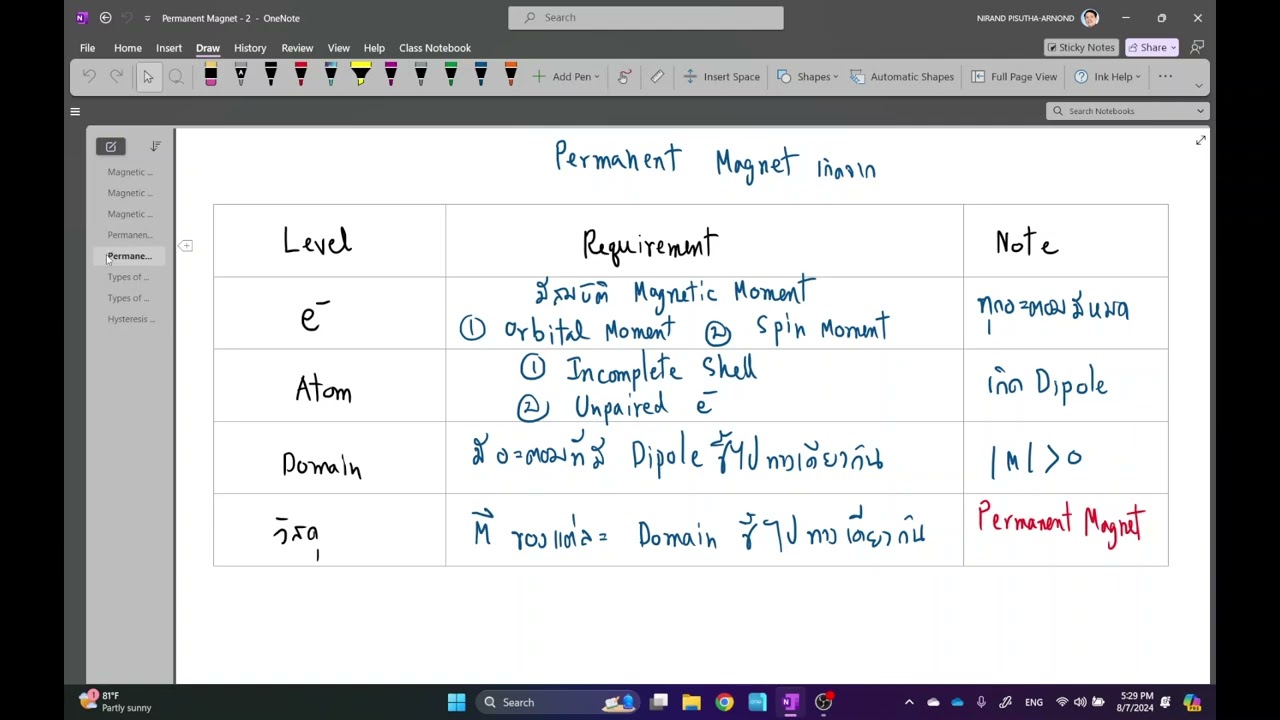
The basic classification of magnetic materials, specifically distinguishing between paramagnetism and diamagnetism.
The concept of quenching of orbital angular momentum and how Jahn-Teller distortions affect magnetic moments.
The Curie and Curie-Weiss Laws, which describe the temperature dependence of magnetic susceptibility.
Advanced coupling schemes, such as Russell-Saunders (L-S) coupling and j-j coupling, for heavier elements and lanthanides.
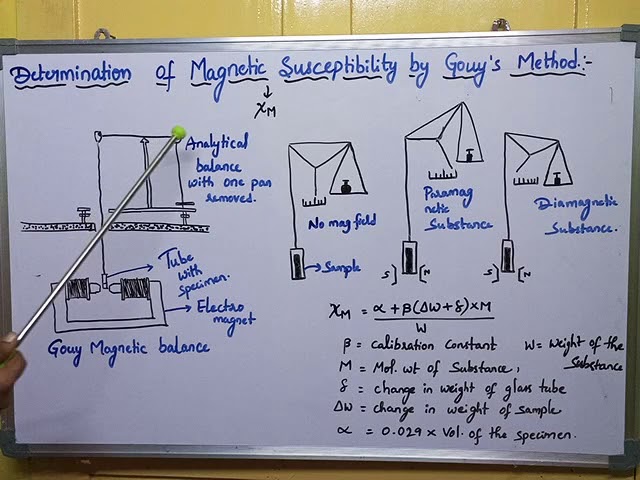
Experimental methodologies for measuring magnetic susceptibility, such as the Gouy balance, Evans NMR method, and SQUID magnetometry.
An introduction to cooperative magnetic behaviors, including ferromagnetism, antiferromagnetism, and molecular magnetism (e.g., single-molecule magnets).
119K views1.7Klikes21:06Original Release: 2017-10-14
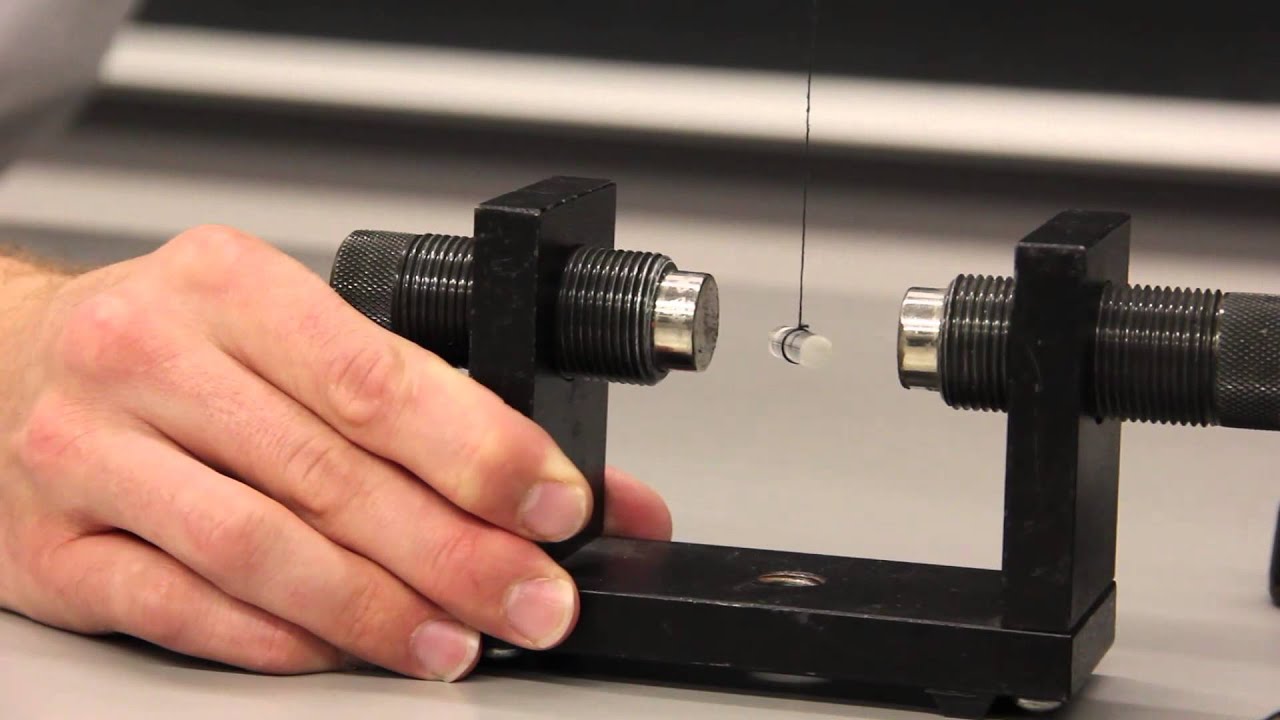
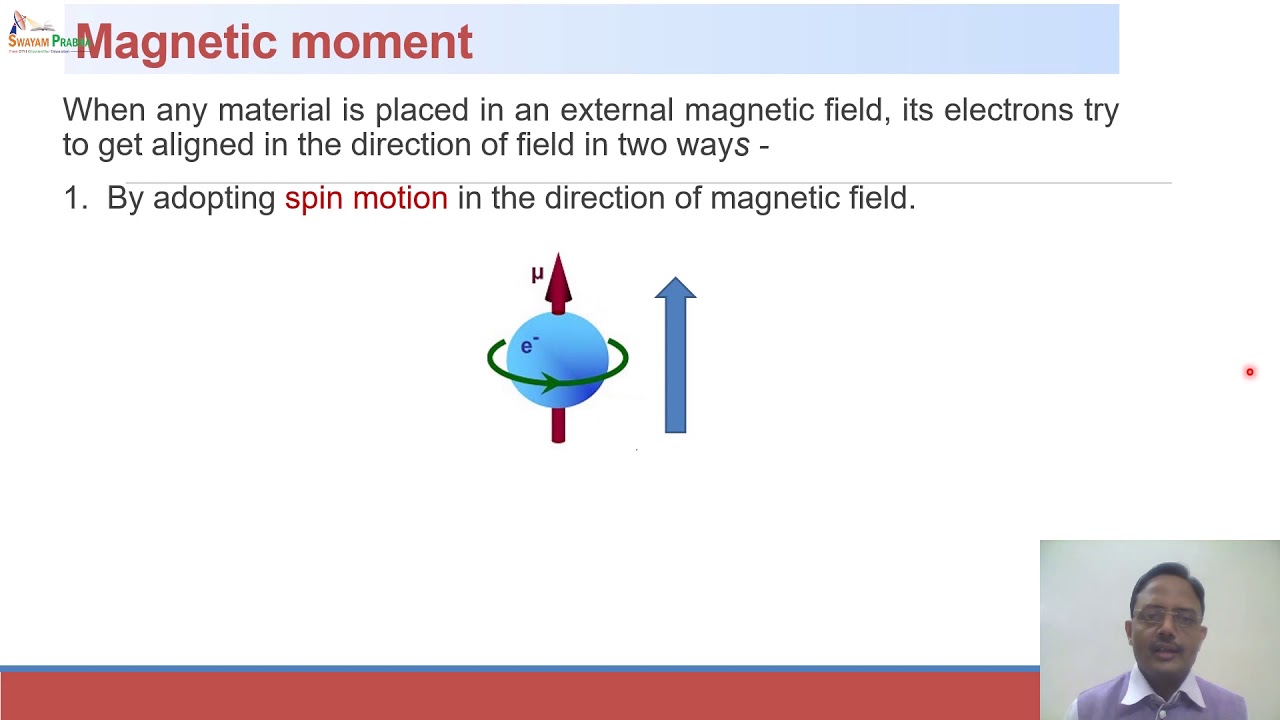
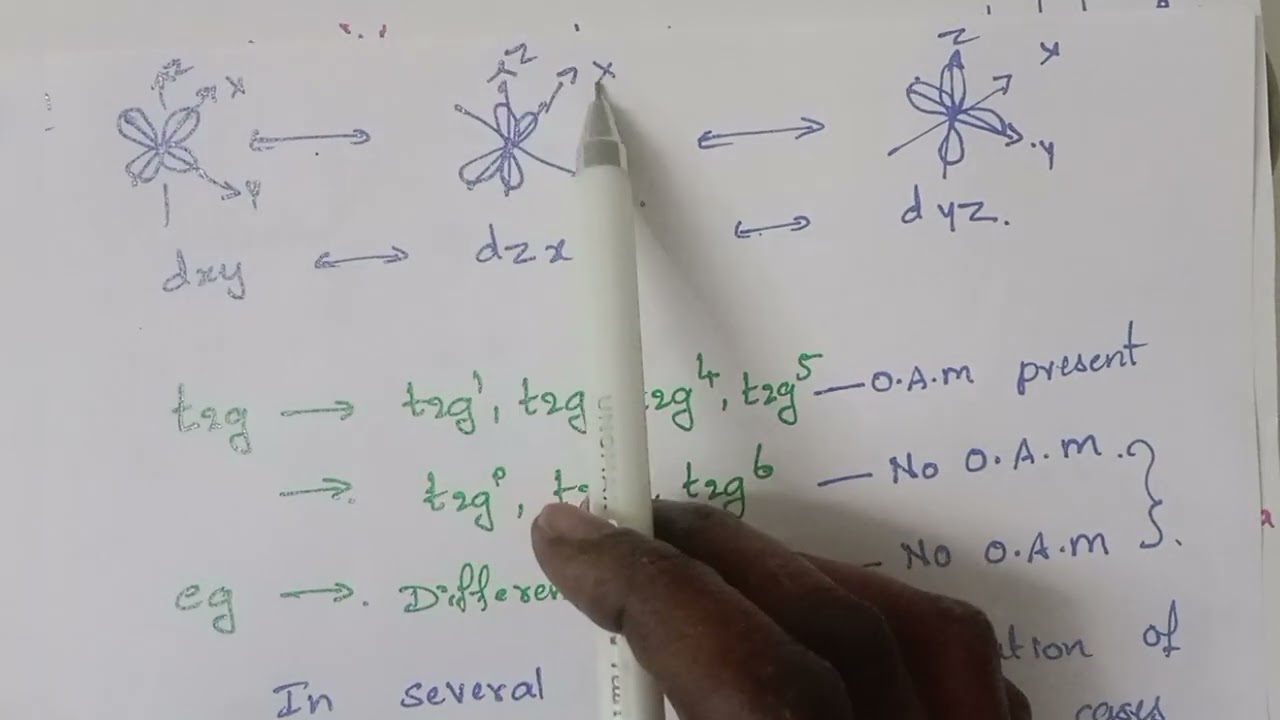
hello students they never this video we will understand about some magnetic properties of the transition metals in order to understand the magnetic properties we firstly consider some general phenomenons that are related with the magnetic properties the first video winner is not diamagnetism in this phenomena the compound is repelled in the magnetic field and such a phenomena is shows when the compound possess no unpaired electrons it means all the electrons are unpaired then the compound is repelled in the magnetic field and it is called diamagnetic the another is para magnetism when a compound is attracted in the magnetic field or it get attract about the magnet such a phenomena is found when the compound possess unpaired electrons and due to presence of unpaired electrons the compound is attracted in magnetic field and it is called a paramagnetic compound the third phenomenon is the Ferro magnetism such type of phenomenon is generally found in the iron cobalt and nickel such compounds are strongly attracted in the magnetic field they also possess unpaired electrons but in this case the magnetic field when with the compound is kept in the magnetic field they spin off all the metal ions get aligned in the same direction it means that spin of all the electrons get in the same direction so the compound is strongly attracted in magnetic field the four phenomenon is the anti ferromagnetism what is this as from the name NT it means it feels strongly repelled in the magnetic field it also passes on paired electrons but in the magnetic field the I spin off all the metal ions get aligned in such a way that they get paired up it means all the spin becomes pay and so the compound is repelled in the magnetic field now he comes to the magnetic property of the transition metals this is the electronic configuration of transition metals as we know in transition metals the electrons are filled in the penultimate D orbitals and these are the electron that decides the magnetic property of the transition metals and it also should be noted that in the case of transition metals the magnetic property greatly differs when it is in the Free State or in the elemental state or when it get complexed with the ligands firstly we see the magnetic property of the free metal ion it means when the metal is in the Free State it has not been complexed or it is in the elemental form then most of the transition metal shows paramagnetism and this is due to the presence of unpaired electrons because the electrons are being filled at each level these are filling in that d orbital this is the first transition series these are other elements of first transition series as you can see at the first level this is one electron then in the titanium there are two electrons two unpaired electrons in vanadium 3 in chromium 4 and in manganese 5 unpaired electrons are present and this shows the highest paramagnetism theater our highest unpaired electrons then in the iron there are four unpaired electrons and in cobalt 3 in nickel 2 in copper there is one unpaired electron but in the case of zinc all the electrons are paired up so zinc does not show para magnetism it is a diamagnetic compound so the magnetic property depends upon the number of unpaired electrons and we can say in that zinc in cadmium very intimately they all shows diamagnetism their +2 and shows diamagnetism because all the electrons are paired here one thing should be noted that in the case of mercury rezaian it means in three plus it is diamagnetic it should be paramagnetic but it is diamagnetic because it is presented as a dimer it means there are two ions so they spin or both get paired up and it is present as dimer so it is diamagnetic the number of unpaired electrons greater will be the para magnetism and hence greater will be the magnetic movement for the free metal ion the magnetic movement is given by the contribution of spin angular momentum and the orbital angular momentum because there is a spin orbital coupling so that total magnetic moment is given by the under root for s s plus 1 plus L L plus 1 where s is the spin quantum number and L is the angular quantum number or orbital quantum number and BM is the Bohr Magneton metal complex it means when the metal that complexed the orbital contribution to the morgan magnetic movement is usually quenched it means it becomes equal to zero why due to the non spherical environment about this quenching of the orbital contribution we will study later firstly we see that in such cases the magnetic movement is usually given by the spin only formula what is this formula that is mu s is equal to under root for s s plus 1 or it may be under root and n plus 2 p.m. where n is the number of unpaired electrons S is the spin quantum number and BM is the Bohr Magneton that is the unit of the magnetic moment the ball by mattone is given by the formula e H bar upon 2 n e where H bar is equal to H upon 2 pi is the charge of the electron and amy is the mass of the electron and all of these are constant so its value is equal to 9 point 2 into 10 raised to the power minus 24 jul now one thing should be noted why this is the change in the behavior of the transition metals when they get complexed with the ligands and this can be explained on the basis of the crystal field theory what is crystal field theory according to the crystal field theory when the metal is in the free I am when it is in the free state it has not combined with the ligand all the five D orbitals are T hundred it means all have the same energy so the electron get a part for the rotation around the nucleus and it forms the orbital angular momentum and hence the magnetic movement is resultant of the spin and the orbital angular momentum but when the ligand is complexed with this metal it means when the ligand comes near that degeneracy of these five orbitals is removed it means that three of these D orbitals that are DX dy and DZ that get lowered in energy and these three are degenerate so they are called T 2g orbitals why do I know that that a DX square n DJed square get higher in energy and these forms the eg set of Ag set of the orbitals so we get two different sets that at T 2 g and EG and there is a difference of energy between these two levels now two things I can be happen when the ligand is strong field it means it is - ligand similar to cyanide or Co carbonyl these are strong field ligand and these can cause the high splitting of these D orbitals it means the energy gap between these two levels is very much higher when through elegant is complex to the metal so the energy of T 2 G level is very much while that of easy level is very much high in the case of octahedral complex we are taking here octahedral complex in the consideration so the energy required to jump at electron in this level is very much higher as compared to energy that is needed for pairing the electrons in these levels so the electron wants to pair up it means they firstly get drilled in this T 2 G level and then they pair up and then they comes to the eg level so that complex that we get is of low spin type it means the maximum electrons get paired and we get a low spin complexes such complexes are mostly diamagnetic now we see the case of weak field ligand when the ligand is weak field such as chloride ligand or oxide ligand in such cases the splitting is very small the energy gap between these two level is very small so the electrons can easily jump to this easy level and the electrons firstly go to t2z level then go to eg and then they pair up so we get a high spin complex it means maximum number of electrons remains unpaired and we get a paramagnetic complex so this decides that whether a compound will be low spin or high spin we can see it with the help of an example if we take the iron and we take sits too complex furnish the this type of complex that is Fe C n 6-4 charge this is a complex with the strong field ligand because cyanide is a strong field ligand and it causes a large splitting of the two levels this is a large splitting so the electrons all get paired up in this t2z level because it requires higher energy to jump in the eg level so all the electrons get paired in that t2z level and the MU s it means the magnetic moment is spin-only formula we get under root n + + 2 and it becomes equal to 0 because there is no unpaired electrons so this compound is diamagnetic and if we see another compound that is Fe h2o whole 6 +2 charge in this compound water is present as a ligand and this is a weak field ligand so it causes a small splitting very small splitting of these two labels so the electrons can easily jump into the eg level then becoming either pair up in this level so we get this type of structure it means four unpaired electrons are present here so the magnetic movement is given by under root 4 4 + 2 that is 4.90 p.m. and such a compound is highly paramagnetic the 40 and the five day series the magnetic movement is given by the spin and the orbital contribution but in the case of first transition series the magnetic movement is generally given by the spin only formula but there are some cases like lo is spin Fe plus VN high spin Fe plus 2 iron Co plus 2 ion in these cases the MU effective or the magnetic movement that is observed is usually greater than the MU s if we see the transition series carefully then we find that for the d1 d2 louis fendi 5 high spin d6 and d7 complexes mu effective is greater than the MU s why because in these cases the magnetic moment is given by the combination of both the spent and the orbital angular momentum so why it happens that in some cases we get the magnetic movement by only spin formula and in some cases we use both I spin and the orbital contribution the reason for this is that the orbital angular momentum generates due to the rotation of the electron around the nucleus and this rotation happens via the orbitals it means this is a nucleus and the electron rotate around this nucleus and it is present in the orbitals so it will rotate via the orbitals around the nucleus and when it rotates then only the orbital angular momentum generates if there is no path for the electron to rotate that it cannot produce the orbital angular momentum so in most of the metals this angular momentum is usually quenched why because of the restricted rotation it means the rotation of electron is restricted because it does not get the path for the rotation this is somewhat due to the shape of the orbital and somewhat due to the effect of the ligands or the outer environment so for the orbital angular momentum to contribute there must be one or more empty or half filled orbitals similar in energy to that of the orbitals occupied by the unpaired electrons such a orbitals should be present for the orbital angular momentum to contribute and this orbital should be of the appropriate energy it means its energy should be similar to that of the orbital that part is the electron and of the same symmetry and this orbital should not possess the electron of the same spin as that of the rotating electron so that the electron can use this nearby orbital to circulate around the nucleus it means it provides a path for the electron to circulate around the nucleus and in this way it can generate the orbital momentum for example if we see these two orbitals this is DX square minus y square orbital that is we have denoted by the black color and this red colored is d XY orbital now these two orbitals are off almost similar energy and this can be transformed by rotation around 90 degree so these provide a path to the electron for the circulation this blue colored line shows the circulation of the Letran when we apply a field perpendicular to the XY plane and this orbital should not participate so that this electron can move by this orbital to z orbitals all the T 2 G orbitals DX y dxz and dyz are degenerate and have the same energy shape and symmetry and there can be transformed into one another by rotation around 90 degree so if we see that D 1 and D 2 configuration in D 1 there is one electron present in T to Z level and these two orbitals are vacant so the electron can use this orbital to rotate around the nucleus and in this case there are two electrons and this orbital is empty so the electron can't rotate via this orbital so these two makes the contribution orbital contribution towards the magnetic moment why in the case of D 3 configuration there are three electrons in that 3 T 2 Z orbitals so all are of similar spin so there is no vacant t 2z orbitals so there is no path and hence no orbital contribution and in this case the magnetic movement will be given by only spin formula the lowest-paid D 5 configuration this is the stage of the T 2 G level there are four electrons and two electrons in this orbital it means one electron with the inverted spin in this orbital while in these two orbitals there is no electron with the inverted spin so it provides a path for this inverted electron to rotate and this makes a contribution orbital contribution to wata similarly in the high-spin p6 there is one electron with the inverted spin in this orbital while these two do not have so it provides a part for this electron to rotate similarly in d7 configuration these two have to two electrons it means this one with the inverted spins and this do not have so it provide a path for this electron or this electron to rotate around the nucleus so all of them will make the orbital contribution to what magnetic movement and we will have the magnetic movement higher than the spin only formula but when all that t2z orbitals are singly or doubly occupied it means there are 1 1 electron in all t2z orbitals or two two electrons in all t 2z or tails then there is no path for the rotation of the electron so they will not make the orbital contribution toward the magnetic movement so the move active will be equal to MU s it is also affected by the geometry of the complex which type of geometry the complex is taken for example if we see the nickel plus 2 ion that has d 8 configuration in the free ion state it has both Ln s coupling it means it's magnetic movement is given by the combination of both the orbital and the spin contribution and it will be equal to four point four seven but it when makes the octahedral complex this is the splitting in the octahedral complex and these t2z levels all are filled completely so there is no path for rotation and this complex do not make any orbital contribution to what magnetic movement so its magnetic moment is given by a spin only formula now when it makes that tetrahedral complex as you know in tetrahedral complex the splitting is invited it means easy level is downward while the t2z level is apart this is highly energy so this type of configuration is found in the tetrahedral complex and this is the T 2 G level you can see there is two electrons in this orbital while burn one in these two orbitals so this electron with the inverted spin can find a path to rotation via this orbital or this orbital so it can rotate and it makes a contribution towards the magnetic movement so there the MU effective will be greater than the MU s it is higher so by this we can easily see that which will be the magnetic movement how much magnetic movement a compound will have when it is complexed or it is not complex so you can easily determine by this thank you for watching this video if you like this video please share please subscribe if you want any more topic you can send us
Up Next

16:18
Why Transition Metal Complexes Are Coloured: d-Orbital Splitting Explained
@cambridgechem
130 views•2020-11-24

83:56
Biocatalysis and Catalysis in Islatravir Synthesis | Merck Webinar
@SCIwheresciencemeetsbusiness
675 views•2020-10-08
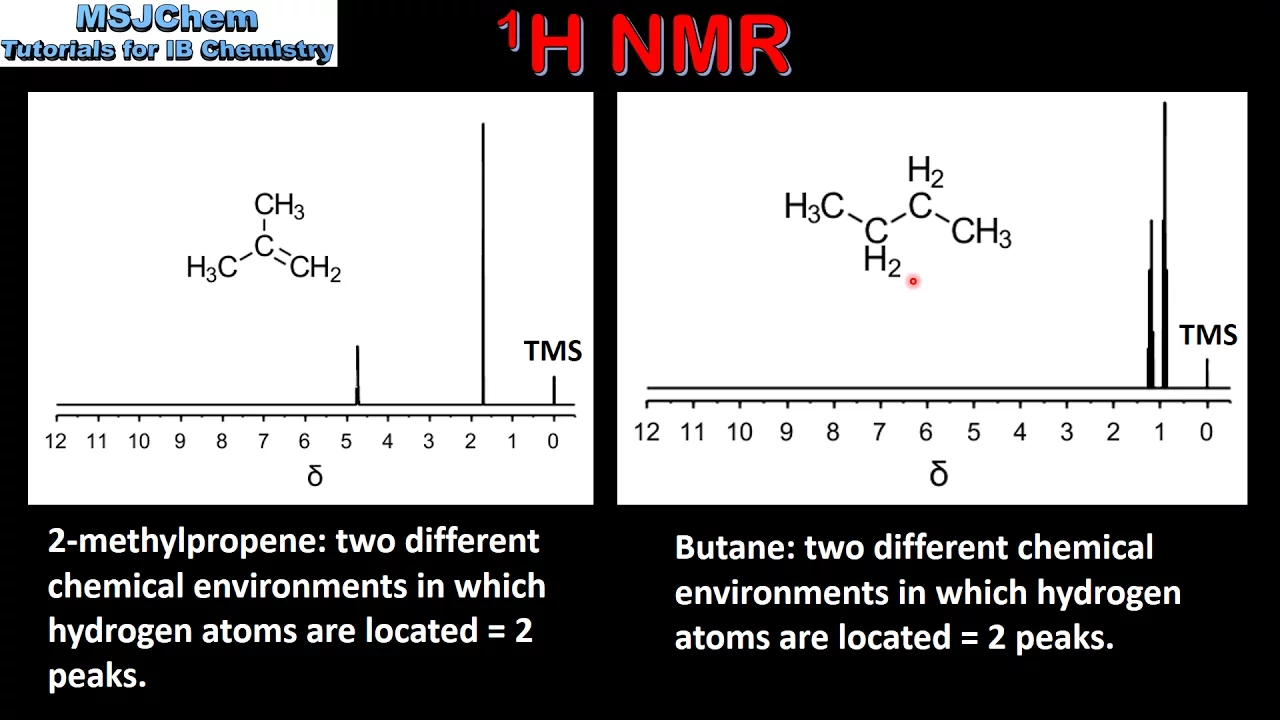
10:06
1H NMR: Determining Number of Peaks from Structure
@MSJChem
59.2K views•2017-04-06

17:31
Edible Water Bottles: A DIY Guide to Sodium Alginate Spherification
@ryan
10.5M views•2019-06-21
Related Study Plans & Knowledge Roadmaps
Structured learning paths in Chemistry
chemistry
Nuclear Chemistry: Decay, Meds & Fuel Cycle
01Introduction to Nuclear Structure and Radioactivity
02Decay Dynamics and Kinetics
03Radiation Interaction and Detection
+ 2 more learning modules
24h5 modules
Explore Roadmap
chemistry
Supramolecular Chemistry: Forces & Machines
01Foundations of Chemical Bonding and Intermolecular Forces
02Introduction to Host-Guest Chemistry
03Thermodynamics and Dynamics of Self-Assembly
+ 2 more learning modules
16h5 modules
Explore Roadmap
chemistry
Photochemistry: Excited States & Reactions
01Foundations of Light-Matter Interactions
02Molecular Orbitals and Electronic States
03Photophysical Processes and Jablonski Diagrams
+ 2 more learning modules
18h5 modules
Explore Roadmap
chemistry
Coordination Chemistry: Bonding & Properties
01Introduction to Transition Metals and Ligands
02Crystal Field Theory (CFT) and Geometry
03Magnetic Behavior and Spin States
+ 2 more learning modules
14h5 modules
Explore Roadmap