


![[1] Metal Ligand Bonding In Transition Metal Complexes | Inorganic chemistry | BSc 3rd Year](https://i.ytimg.com/vi/gnlhR1bpxco/hqdefault.jpg?v=6076b888)







![🧪อะตอมและสมบัติของธาตุ 5 : การจัดเรียงอิเล็กตรอน [Chemistry#5]](https://i.ytimg.com/vi/YsjvR-F-pDE/maxresdefault.jpg)








![Quick Revision of Coordination Compounds Class 12🔥 | JEE 2022 [IIT JEE Chemistry👻] | Vedantu JEE✌](https://i.ytimg.com/vi/6IC-MbkiR9U/maxresdefault.jpg)







Transition metal complexes are coloured because their d-orbitals split into two sets of non-degenerate orbitals when ligands approach, and the energy difference between these orbitals corresponds to visible light wavelengths; electrons absorb specific wavelengths to jump between these split orbitals, and the remaining wavelengths are transmitted, producing the observed color. Different ligands cause different amounts of splitting, resulting in different colors for the same metal ion. Non-transition metals like zinc and scandium are colorless because they lack partially filled d-orbitals or have completely filled d-orbitals, preventing the absorption of visible light.
Why Transition Metal Complexes Are Coloured: d-Orbital Splitting Explained
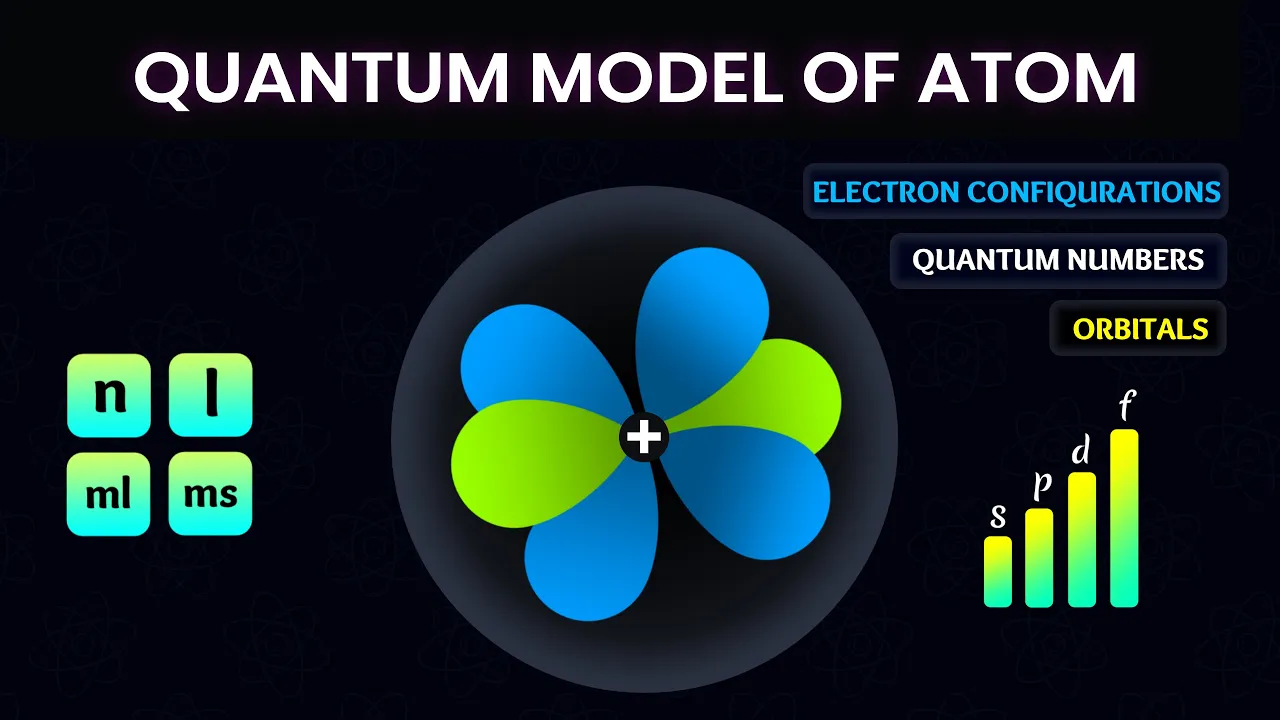
Added:Basic atomic structure and the specific spatial shapes and orientations of the five d-orbitals.
The fundamentals of coordination chemistry, including how ligands coordinate to transition metal ions to form complex ions.
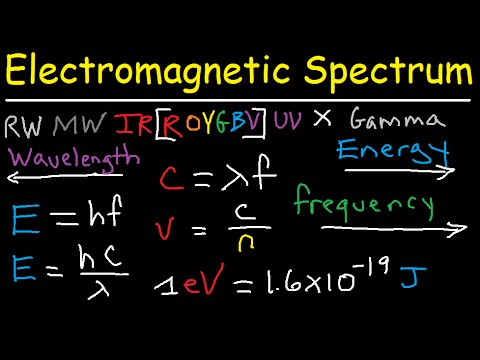
The relationship between the electromagnetic spectrum, light absorption, photon energy (E = hν), and how the human eye perceives complementary colors.
Electron configurations of transition metal atoms and ions, specifically the determination of d-electron counts (d^n systems).
A deeper exploration of Crystal Field Theory (CFT) across various geometries, comparing splitting energy (Δ) in octahedral, tetrahedral, and square planar complexes.
The Spectrochemical Series and understanding how ligand strength (strong-field vs. weak-field ligands) affects the magnitude of d-orbital splitting and the resulting color.
The determination of high-spin and low-spin configurations, and how d-orbital splitting influences the magnetic properties (paramagnetism vs. diamagnetism) of complexes.
Selection rules for electronic transitions (such as the Laporte and spin selection rules) that govern the intensity of the observed colors.
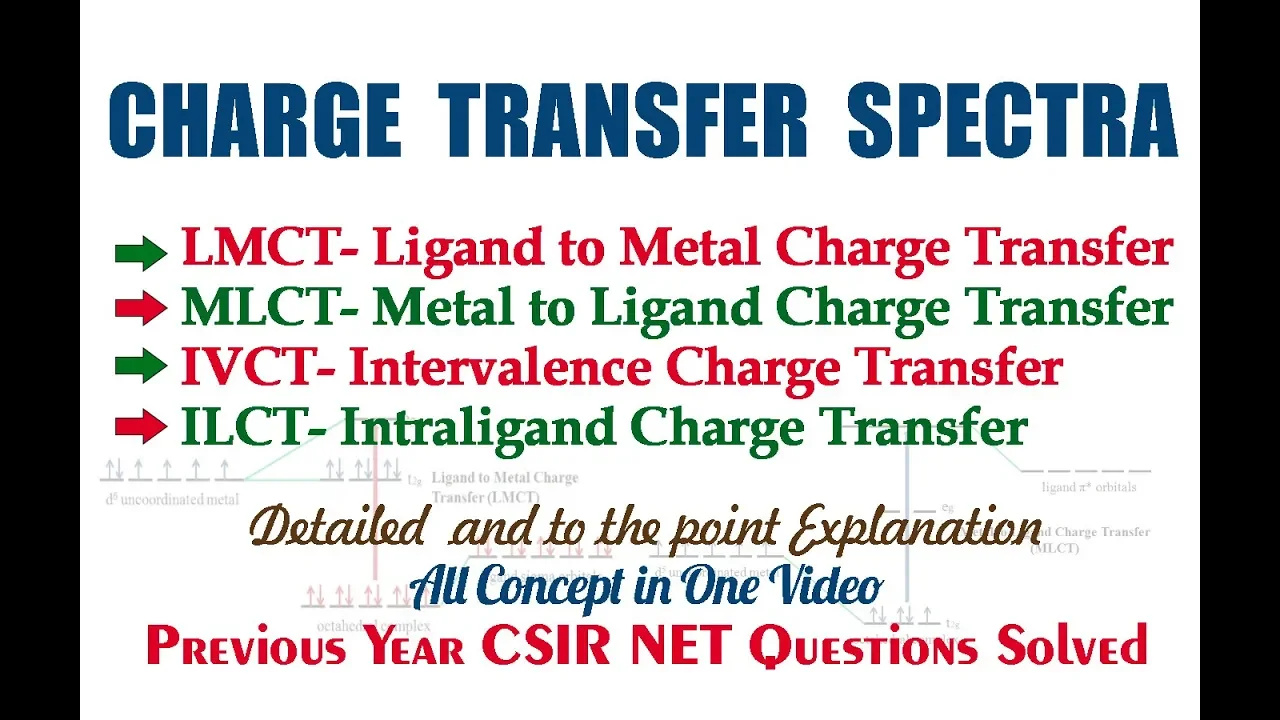
Alternative mechanisms of color in transition metal complexes, such as Ligand-to-Metal (LMCT) and Metal-to-Ligand (MLCT) charge transfer transitions.
130 views2likes16:18Original Release: 2020-11-24
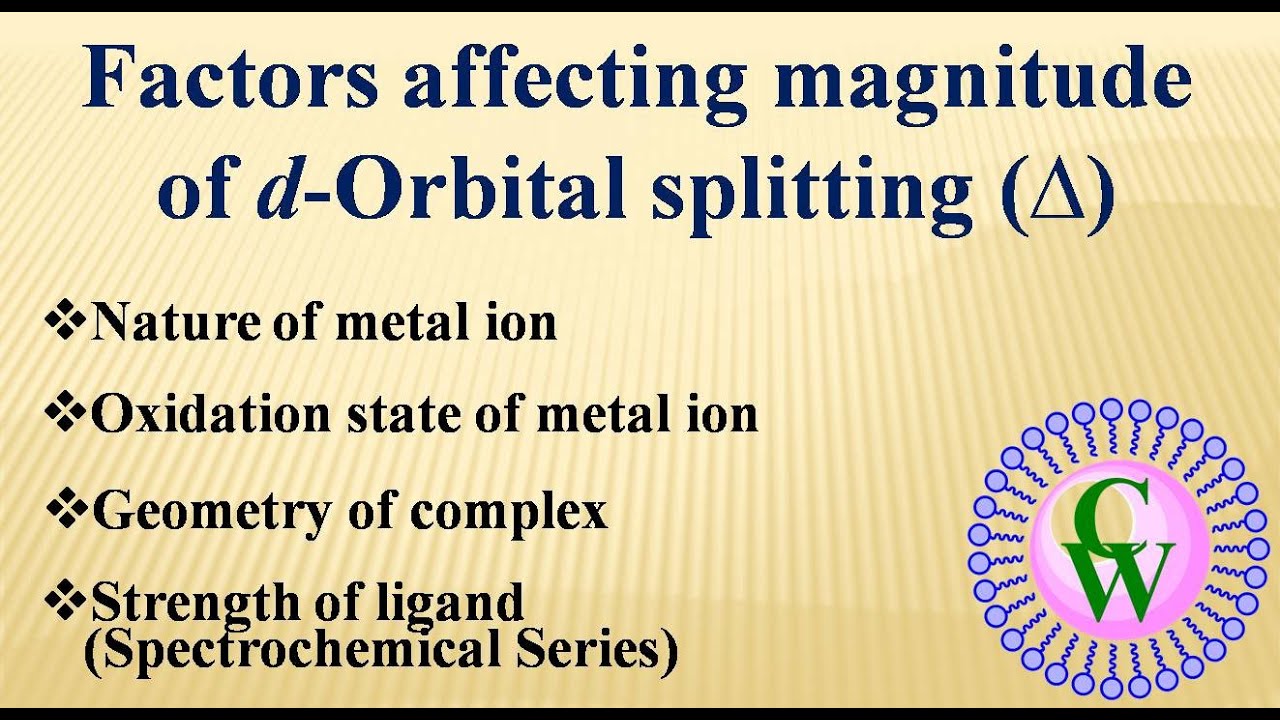
[Music] oh access of transition elements they can actually give you different colors okay so part of the visible spectrum okay is actually absorbed by the transition metal complex that is actually the uh the the complex have the ability to show color because certain parts of the visible spectrum is absorbed okay so what is actually uh the reason okay the reason is when we look at transition metals okay they have this uh orbitals okay which is going to be responsible over here is going to be the d orbital okay the d orbitals are the one that is responsible and then we do have five orbitals okay so this one okay you have one two three four five okay so there are five orbitals each one box is called orbital okay so the entire thing is called d subshell okay the entire thing is called d sub shell so they are five d orbitals okay and they are described as degenerate okay what is the meaning of b generate degenerate they are at the same energy level okay this is understood not only d orbital uh d orbitals even p orbitals they are in the same energy as well okay degenerate okay even um i think uh in our syllabus p d okay they are same energy level okay so p x p y p z is going to be same energy level so degenerate now but okay when you have get a coordinate bonding okay with the ligands okay the moment there is a bonding okay with the ligand they cause the orbitals to split into two different sets of non-degenerate orbitals it means that the moment when you have cu two plus okay cu two plus when they are bonded with six ligands of water what happened okay the d orbitals start to actually split into different energy levels okay it causes the orbitals to split into two sets of non-degenerate orbitals okay i want to ask you what is meant by non-degenerate orbitals let's see whether you are still with me childhood what is non-degenerate orbitals different energy level very good okay so they are two set okay one set another set okay two set of different energy level so maybe this set one set will be higher energy level another one is going to be lower energy level okay so they are not going to be the same energy level anymore because of the ligand now let's actually look into detail now this is uh we no need to memorize okay but do remember if you have p sub shell we call it p x p y and p z d has different naming also yeah these are the naming for d okay no need to memorize there are five different names okay five different names for each of the orbital now out of these five orbitals get out of these five orbitals the lone pair donated by the ligands repel the electrons in these two orbitals okay when they repel okay what happens okay what happens okay let's actually look at which one is the orbital this orbital and this orbital okay the ligand the lone pair repel the electrons okay and they are going to make these two become one set and these three become one set so they are going to be two sets of d uh non-degenerate orbitals okay so let's move on so because they line up with the coordinate bonds at uh octahedral shape and closer to the bonding increasing repulsion the orbitals are split so you just need to actually understand that the ligand okay they uh they are going to actually make okay uh d z two d x two minus okay this one they are going to make okay because there is a repulsion okay because uh the shape and closer to the bonding electrons okay the orbitals are split into two d non-degenerate orbitals i think no need to know in detail okay let's move on this is going to be a diagram to show us okay what is actually happening here earlier they supposed to have okay the remaining two supposed to have the same energy level yeah uh dz to this one okay same energy level they are called degenerate orbitals but the moment that there is going to be ligand then what makes it uh what is going to be different over here is the moment that they have ligand they are going to be split into two sets of non-degenerate orbitals and there is going to be a difference in energy level okay difference in energy level so splitting of the d orbitals give non uh degenerate orbitals energy absorbed from the visible spectrum that corresponds to the change of the energy it means that when you have a visible spectrum or your white light okay the white light gained the energy okay some of the visible spectrum is going to be absorbed by this change of energy level and some of it okay those which is not going to be absorbed it's going to be going to our eyes okay so here okay you are going to see that the excited electron absorbs energy so basically what's happening this electron they are going to actually go there okay when that electron okay basically when you get energy okay when you get energy energy from where the visible spectrum yeah when you get the energy the electron likes to move from lower energy to the higher energy so they actually move from lower energy to higher energy so when they move this particular electron absorb the energy from where from the visible spectrum okay from the visible spectrum once it's absorbed okay let's say there are seven so you are absorbing two for example the rest that is going to be coming out okay the energy absorbed this one i think your physics your planck constant and so on okay so this one no need to actually know so what i want you to know is generally uh you can say okay this is uh over here the color changes arises because different ligands cause the d orbitals to split by different amount of energy so like for example if you are using water maybe this much if you are using cl minus then maybe different okay so different ligands will have different energy and that different energy is going to actually affect the visible spectrum at different way and that different way will give you different colors okay that's why you can have cobalt to become pink that's why cucl4 kcucl4 is going to be yellow that's why cocl42 minus is going to be blue okay that's the reason yeah now so different color is absorbed by the visible light different color is seen so what is the color of zinc ion and scandium ion so let's actually see whether you really understand this nickel trisha what is the color of zinc ion and scandium ion white if they are powder colorless when they are in solution why because zinc and scandium they are non-transition metals if they are non-transition metals they don't have colored complex okay so most likely they will be white or colorless okay you cannot actually have them blue rain and so on so i hope you can understand this part why in chemistry we do have solutions with different color yeah the different colors comes from okay all these uh transition metals okay complexes yeah so if you look at the question okay what do we mean by degenerate atomic orbitals d generate orbitals with the same energy level explain how why an octahedral complex of a transition element is colored okay whatever that we learned just now the ligand in a complex okay causes the d orbitals to split forming two sets of non-degenerate orbitals the difference of energy between the non-degenerate uh orbitals okay corresponds to the energy of the part of the visible spectrum right so when light travels through the solution containing the complex one electron from one of the lower and non-degenerate orbitals absorb the amount of energy that corresponds to the energy earlier the difference of the energy so they will jump okay to the higher non-degenerate orbitals and once that energy is absorbed okay you are going to leave certain amount of visible spectrum the rest of the visible spectrum that can be seen will actually transmit the colored light which we will see that's color like okay like for example white vc there's a colorless of white because combination of seven frequency of the colors yeah so if you remove certain frequency what happens you are starting going to see different color combinations so that is the explanation okay draw do they ask us to draw any of the orbitals over here the answer is no okay they won't ask you to draw this they won't ask you okay but what they will ask you if they ask you to draw they are going to ask you to draw the non-degenerate orbitals so something like this you need to know how to draw this so it's nickel two plus okay nickel to plus so nickel two plus is three d uh eight okay so 3d8 so you can see this is 3da so what is going to happen the last two shells okay these are going to be known as uh dz 2 dx [Music] okay no need to know okay no need to know but the last two orbitals they will come up and then the remaining three will be staying there if i'm going to use this to explain it means this is going to be a different in energy level so when visible light comes in okay the electrons over here they will absorb the energy from the visible light they will start to jump to here okay they will start to jump over there they will fill up the electron over here okay that is the time okay that is the time where the parts of the visible light will be absorbed so remaining parts will be seen by your eyes so that will give you the colored compound of zinc ah nickel to plus nickel to plus generally i think if uh it's clean yeah so that might happen any question okay you see yeah uh this is actually what i put over there just like i said that scandium and zinc two plus they are white in powder colorless in solution the reason quite simple yeah quite simple because they are not transition metals okay but if they ask you to give reason and then you have to give reason you see they have this electronic configuration okay so if that is splitting okay if there is a splitting that is happening to have two sets of non-degenerate orbitals what happens there are no electrons over here no electrons here no electrons over here if no electrons over here no electrons can come over here so that is what they are telling okay there is no electron so no visible light will be absorbed in promoting one electron from lower energy to higher energy so if you look at zinc two plus okay zinc two plus is three d tap it means that all the electrons uh the orbitals are fully uh occupied okay all the electrons are fully occupied when they split okay splitting can happen when they split what happens they are fully occupied so when you have visible light okay when they come the electron even if they absorb the energy they cannot actually go up because there's no empty orbital okay because of that you don't see any color okay so i don't want you to actually just simply answer this oh this is colorless because they are not transition metals i want you to when they ask about color i know this is actually based on your understanding but when they ask for color i want you to still okay mention about okay the electronic configuration and you mentioned about splitting once you have splitting you have to mention for one they don't have electrons for another one for zinc two plus they have electrons but it's complete so they do not actually absorb the energy and move to the higher orbitals
Up Next
28:21
Orgel Diagrams: Complete Guide for d1-d9 Complexes & Transitions
@AllBoutChemistry
180.7K views•2018-07-17

83:56
Biocatalysis and Catalysis in Islatravir Synthesis | Merck Webinar
@SCIwheresciencemeetsbusiness
675 views•2020-10-08
10:06
1H NMR: Determining Number of Peaks from Structure
@MSJChem
59.2K views•2017-04-06

17:31
Edible Water Bottles: A DIY Guide to Sodium Alginate Spherification
@ryan
10.5M views•2019-06-21
Related Study Plans & Knowledge Roadmaps
Structured learning paths in Chemistry
chemistry
Nuclear Chemistry: Decay, Meds & Fuel Cycle
01Introduction to Nuclear Structure and Radioactivity
02Decay Dynamics and Kinetics
03Radiation Interaction and Detection
+ 2 more learning modules
24h5 modules
Explore Roadmap
chemistry
Supramolecular Chemistry: Forces & Machines
01Foundations of Chemical Bonding and Intermolecular Forces
02Introduction to Host-Guest Chemistry
03Thermodynamics and Dynamics of Self-Assembly
+ 2 more learning modules
16h5 modules
Explore Roadmap
chemistry
Photochemistry: Excited States & Reactions
01Foundations of Light-Matter Interactions
02Molecular Orbitals and Electronic States
03Photophysical Processes and Jablonski Diagrams
+ 2 more learning modules
18h5 modules
Explore Roadmap
chemistry
Coordination Chemistry: Bonding & Properties
01Introduction to Transition Metals and Ligands
02Crystal Field Theory (CFT) and Geometry
03Magnetic Behavior and Spin States
+ 2 more learning modules
14h5 modules
Explore Roadmap