














![B.Sc. III Year | Discussion on the electronic spectrum of [Ti(H2O)6]+3 | इलेक्ट्रॉनिक स्पेक्ट्रम](https://i.ytimg.com/vi_webp/xzjcwlD0rEQ/maxresdefault.webp)


Orgel diagrams are graphical tools used to predict electronic transitions in octahedral coordination complexes by showing how d-orbital terms split under crystal field effects; they are specifically applicable to high-spin complexes where electron pairing does not occur, and the number of observable d-d transitions depends on whether the electronic configuration produces a D term (one transition) or an F term (three transitions), with special cases for d⁵ (6S term) and d¹⁰ (1S term) configurations that do not split.
Orgel Diagrams: Complete Guide for d1-d9 Complexes & Transitions
Added:Crystal Field Theory (CFT) and Ligand Field Theory, specifically d-orbital splitting in octahedral and tetrahedral geometries.
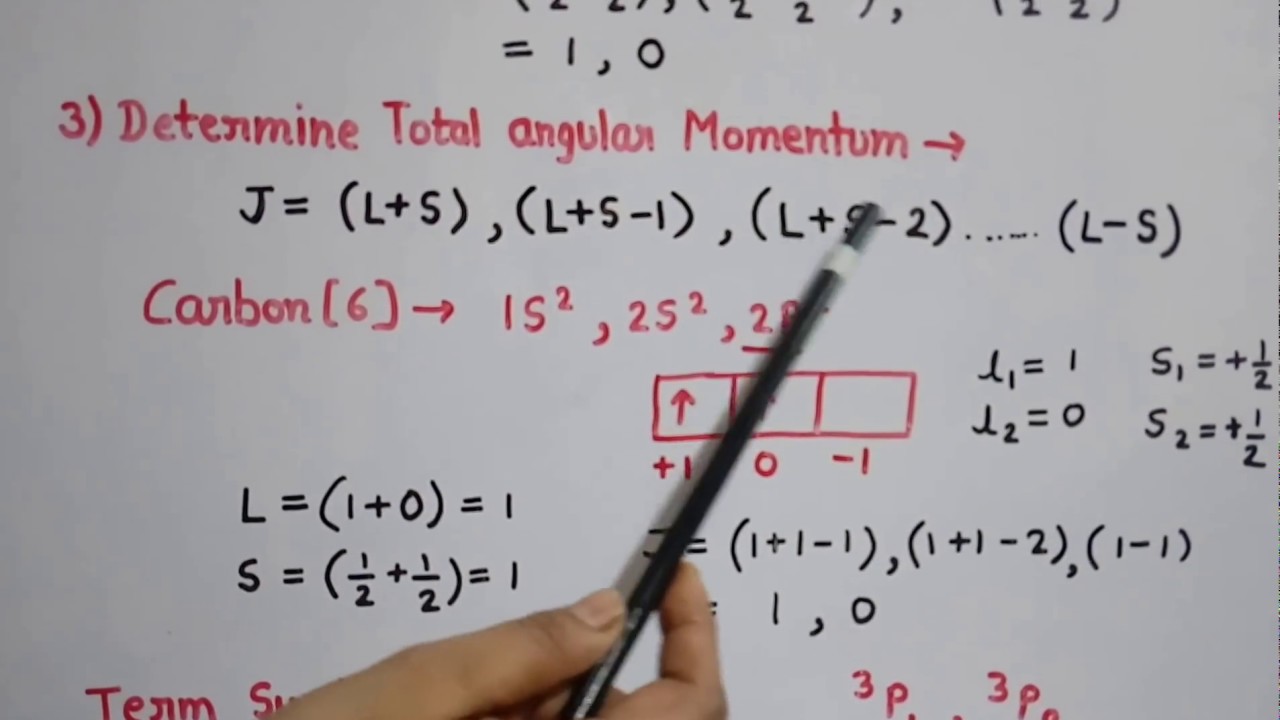
Derivation of Russell-Saunders (L-S coupling) term symbols for d-electron configurations (e.g., determining ground state terms like D and F).
Basic principles of electronic spectroscopy, including the Laporte and Spin selection rules for d-d transitions.
High-spin vs. low-spin electron configurations in transition metal complexes and the factors influencing pairing energy.
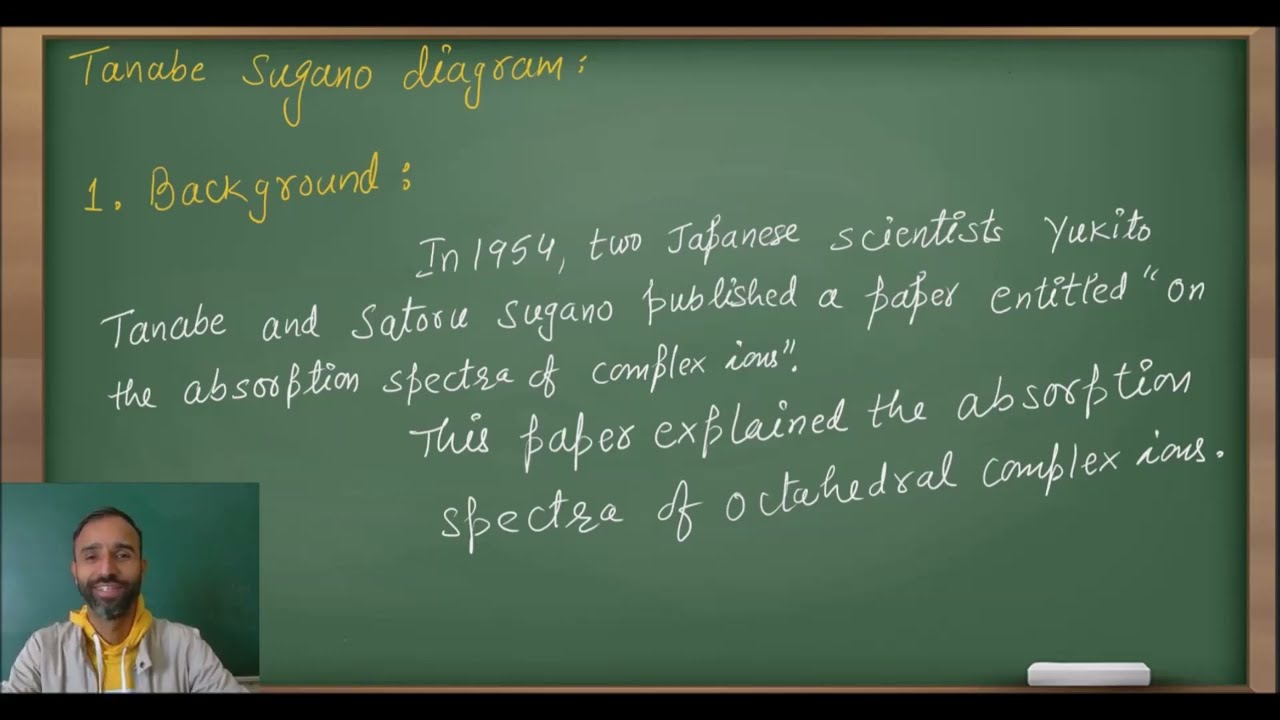
Tanabe-Sugano Diagrams, which accommodate both high-spin and low-spin configurations and allow for quantitative analysis of transitions.
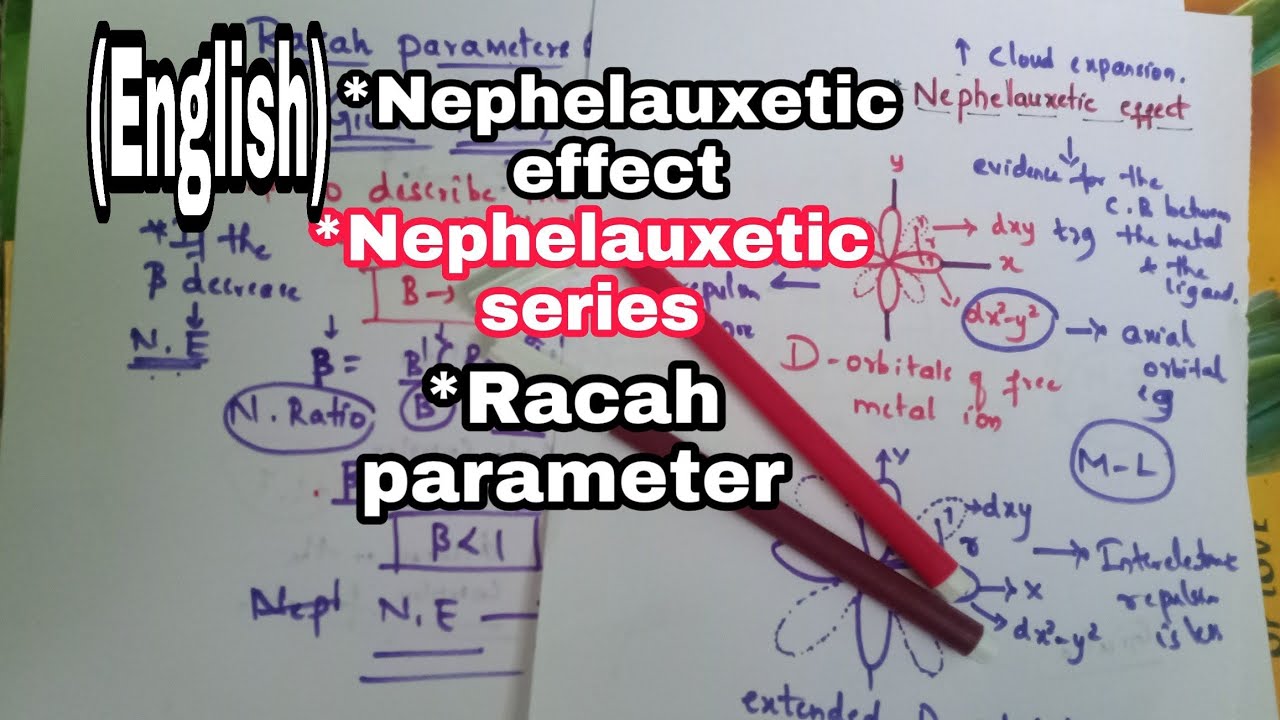
Calculation of Racah parameters (B and C) to quantify interelectronic repulsion and the nephelauxetic effect in coordination complexes.
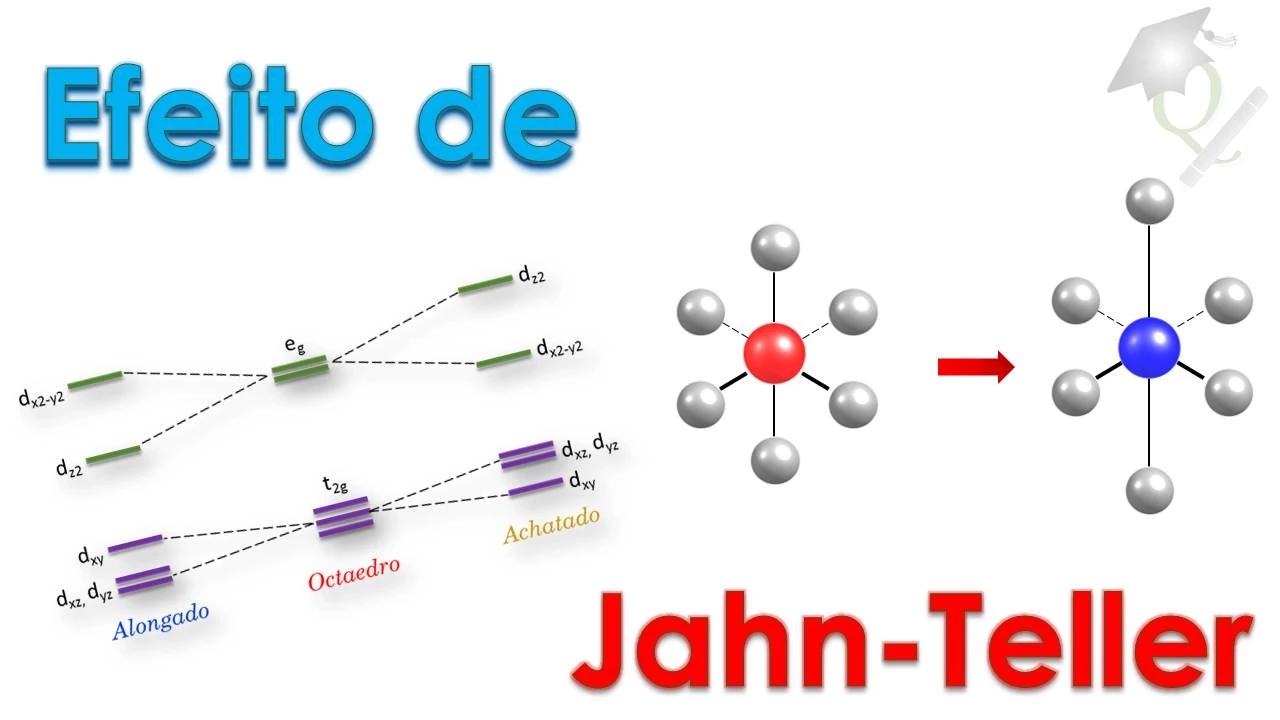
Jahn-Teller distortion and its effect on the electronic spectra and splitting of degenerate states in d4 and d9 complexes.
Interpretation of experimental UV-Visible absorption spectra of transition metal complexes to calculate crystal field splitting energy (10 Dq).
180.7K views3.3Klikes28:21Original Release: 2018-07-17
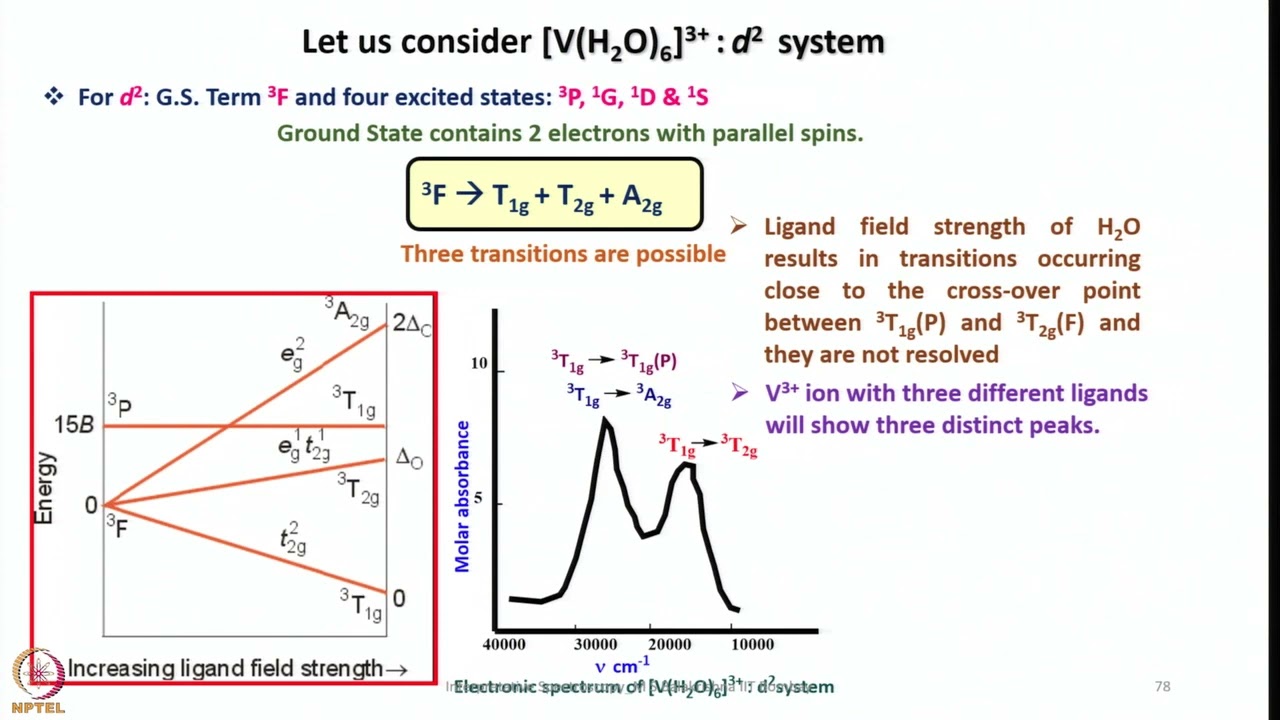
hello everyone and welcome to the channel today in this video we are going to understand a ball I've been posting videos for coordination compound and like this is going to be the fourth review of that series I've already posted video on the basics of coordination compound then jahn-teller distortion then how the orbital dis fields and in this video i am taking talking about I'll be I'll be going to talk about organ alright so I have all I have tried to complete like all the important points of this topic like off the coordination compounds maybe I'll post one or two more videos from here I am NOT going in the basics of this topic because those are two basics to understand you can read so many of the books already so that's just taken the important topics over here so in this video is going to be like just like my previous videos I will be taking the topic I will explain this they like in Greece try to cover all the important aspects of our Bell diagram and then at the end of the video we will try to solve the questions which have been asked on this topic and the VBACs air exams okay so let's just begin to drop it okay so before starting the like before starting about Oregon diagram there is like you should know about the spectroscopic terms and if you have watched my previous video on how to calculate or how to find out the terms in one like it will be easier for you so here's the link for that you can watch that video so here in they like these are the spectroscopic terms and these are the monican term in which this splits all right so the spectroscopic term s splits into a one g p splits into t1 g then your B splits into T 2 G Plus V G means it is fruits into two like two a different energy levels then f splits into three energy levels that is T 1 G C 2 G and a 2 G & G splits into 1 2 3 4 4 energy level alright so like this for the tetrahedral for the octahedral compound the splitting is like this now for the tetrahedral compound for the tetrahedral complex the splitting will be same we just have to remove the G term over there alright so why we put G term that I have already explained in my previous video put the G term because like if we get constant center of symmetry that is I there's a symmetry element then we put G as the length G in the subscript all right but here the tetrahedral term you will not get that thing and these like these are the basics and that have already explained in my previous video or in the jahn-teller distortion we do already so this was all about like the terms already so now let's move on to the D orbitals okay so now let's check that while filling the electrons like the electronic concentration of D 1 D 2 D 3 d 4 D 60 70 80 90 I am skipping D 5 and D 10 I will be discussing that in the and all right so first we'll discuss about all these things on this 8 all right so we have given F so we will say it like this now if we seal it like this so vary the value of this is their value is +2 4 this is +1 0 minus 1 minus 2 so the overall L value is 2 + 4 - the term is C 4 0 1 2 all right so 0 s 1 is P & 4 2 is d 3 4 3 it is F all right so here the value of L is 2 so the term over here will be d okay and we will discuss about like we have to consider we have to consider the spin multiplicity we right over here - s plus 1 so the value of s is like 1/2 because one electron is there so that will give you like 2 into 1 by 2 plus 1 that will give you 2 so it will be 2 it will be 2 D now see I feel electrons here so one and one all right so this is plus two and this is plus one so overall L value you will get three and four that that term will be F and that the 2's plus 1 value will be 3 now again for d3 we were feeling like this okay so again plus 2 plus 1 and 0 so again we will get F value now means L value is equals to 3 plus 2 plus 1 that will give you 3 and the term will be F and that's pin multiplicity will be for no we will put 4 electrons so 1 2 3 4 ok so plus 2 plus 1 0 minus 1 so now you will get L is equal to 2 so that means D that will be 5 D now again 46 will feel like this 1 2 3 4 5 & 6 that will be plus 2 plus 1 0 minus 1 minus 2 so L value we will get 2 here and that L value will give you d and then you will get side T now again see as one easier way is like you just count the number of unpaired electrons just add 1 to that 4 unpaired so 4 plus 1 that will sighs okay 3 F 3 plus 1 will give you 4 okay so that's one easier to calculate the spin multiplicity okay so as you can see that all the like well lollie still all the electronic configuration that is d1 d2 d3 d4 the sixty seventy eighty nine in everywhere you can see that only two terms are possible either you are getting D as a term or LF a certain did not talk about the spin multiplicity here because that doesn't play much role here alright so just the terms in Orgel diagram so one of the most important thing is the Orgel diagram is only applicable alright only applicable for high spin complex I spin complex means you the electrons will not like the low spin complex are like they get because of strong field ligand they get paired but here you have to only consider the high spin complexes that means the painting of electron will not take place and the filling of orbital Sylvie's in length will be according to the normal homes role alright so it is only applicable for high spin complexes or high spin electron filling alright so the only two terms you are getting either D term or F term so now the thing become very easy for you that you just have to remember one thing okay I will tell you how okay so now if you get the term as d already so if term is d then you have to look at this Orgel diagram now this will correspond to the term D now we are talking only about the octahedral complexes here that's where in blu-ray has a terms here alright g-gee are there in the yeah over here already so the term should be D so if you have the term D that means you have to look upon this so as you have like in the starting I told you that the term D splits into two energy states one is T 2g and one is e G so there are two conditions is that theta G will be having lower enough Giani ji will be having higher energy or it will be a positive that that means T 2g will be having higher energy and easy will be having lower energy okay so you have to just start from here okay so just write like like write D one attractor okay so if you have d1 tetrahedral configuration just start from the tetrahedral one okay so d1 tetrahedral you have to just start now just add 4 to it sorry no I just add 5 to it ok so it will become 1 plus 5 that is 646 tetrahedral so d1 tetrad L&D sister Treader okay now again what you have to do now like if tetrahedral ZAR there bonita here you have to write the same thing in octahedral so it will be D 1 octahedral and D 6 octahedral okay now see you are having DS 1 tetrahedral nd6 tetrahedral okay now just subtract this with 10 okay so subtract this value with 10 so you will get 10 minus 1 9 so d9 octahedral and again this is will be d 4 octet so these will lie on the left side of this horrible diagram and here and just subtract this from the 10 so it will be d9 tetrahedral and D for thunder so these will all die on the right side of the organizer so the left side correspond to D 9 and D for octahedral D 1 and D 6 detrital remember value while you are like solving for tetrahedral you have to remove this G term okay then here you just have to write T 2 and E ok here also it will be e and it will be T do now the right side will correspond to D 1 octahedral d 6 of turtle and D nectar tried L and D photo trader so this much only you have to remember and the rest of the things can be done but from here you'll solve the quotient cell at that time I will tell you that how to use this this information okay okay so let's talk about those electronic considerations which were relying F s term okay so if you see what I have already derived that which terms will be having like which configuration will be having worked on there we have seen that b2 and b3 b7 and b8 all these terms having like all these electronic considerations will be having after all right super after Forex time you have to look at this Orgel diagram now if you see here so these these are this this is a 2 G this is T 2 G this is T 1 G for the F term and this T 1 G is comes from the P okay so this is for the P term so this will be like these are 2 T 1 G so one correspond to the FM other correspond to the free term and they are like like they do not cross each other this is like they are repelled from each other this is called non crossover crossing over effect already or non crossing over rule so I will not talk about this rule and detail but you can find this rule in hooey all right so James really James V we you will sign this thing over there and there it's T 1 G like it's opposite of this T 1 G t 2g t 1 g 4p and 8th position these can cross each other because the terms are not same it's a nice I need to talk about the like there which will like lie so the D 2 on the D 2 tetrahedral all right so d2 tetrahedral will lie always on the rights and this you have to remember that D 2 tetrahedral will always be on the side of a 2g so where you are seeing this a 2g in that side only you will be having D 2 tetrahedral nice you remember this then the rest is very easy for you now if we do then add 5 this will give you this error so D 2 and D 7 tetrahedral will be this side now the the that is D 3 and d is the dried root will be on that on the left side okay now just take the positive them that will give you the operator so it will be D 2 and D 7 octahedral here and D 3 and d 8 of that the load on the right side so this much if you know then you don't have to do anything all the portions and everything you will be able to say now let's talk about the transitions all right okay so if the electronic configurations are like d 1 d 4 d 6 or d9 then you have to look up on this Orwell diagram as I already told you and the term will be D so here the number of transitions possible is just one electron can can excite from this level to this or from this to this depending upon the which the electronic configuration here looking in so for D term we will be having only one DD transition alright one transition possible so only one transition will be possible here now what in case of your electronic configuration that is d 2 B 3 D 7 and D 8 which correspond to F term now here we will see how many transitions c1 transition is possible from T 1 G 2 T 2 G now one is possible from T 1 G F it correspond to F term to the T 1 G of P alright sorry this is from T 1 G 2 and this a to G ok and the next one is from T 1 G 2 T 1 G e so three transitions are possible and likewise here also this set also so for the terms which are having for the electronic Constitution which are having F s term there are three transitions possible whereas the electronic configuration which are any F as as D s term there only one transition is possible so this is all about like number of transitions okay so now let us talk about the one which we left while discussing the others 3035 electronic configurations now in case of D 5 electronic configuration we have like we have to seal 5 electrons already so we have 1 2 3 4 & 5 so it will be plus 2 plus 1 0 minus 1 and minus 2 so it will add so the Sigma L value means the sum of all these two are like all the L values will give you 0 the 4 0 we have term s so that's that term will be S 4 here and as I told you that the S will be like the Mulliken term symbol or the spectroscopic terms involve term for this fall that 4 s will be a 1 G and that means the S will not display it alright means the in the DC electronic consideration it will not display it will be having a single value that will be even G so that's all for that defy system similarly for a d-10 system also also for DS is day 10 system okay stun alright so for D 10 system is you know the electrons they are also you will be sealing it like this it's not sealing it correctly but I think the way of Sylvius was not correct but yeah you will end up getting this on yourself plus 2 plus 1 0 minus 1 minus 2 3 will get element is 0 that means s as the term and like for s you you will get a 1 genome one thing we just skipped there is like you have to also mention them this spin multiplicity right here all right so for s term you you can represent it by 8 1 g but here yeah you have to represent air you have to tell the spin multiplicity now the spin multiplicity formula is 2 s plus 1 or you can use n plus 1 here n is the number of unpaired electrons here you have to put the value of s that is 1 by 2 ok so i i i use this formula that is more easier for me to calculate so here I have 5 unpaired electrons so the value of spin multiplicity will be at 5 plus 1 that is 6 it will be 6 even G there as here I don't have any unpaired electron that means n is 0 here so I will be having 1 a when G okay so for D 10 configuration I have the spectroscopic term as 1 even G whereas in 4d size electronic configuration I have 6 avenging ok so in this way like for all the electronic configuration from diamond to beat them you can now assign their Orgel diagram now these two will not like they will not split so there is no orbble diagram for them so now you have got all the well or like all the things and you know how to draw the orwell diagrams for and now we have we can like use that thing through salt potions which were asked in csironet exam well take 3 portions and we'll try to solve it using what we have just learn in this video with it but there are a few questions which he has been like on the basis of what we have studied yet so this question is just so practice it doesn't came in CSI but it's just for a practice alright so whether you are preparing for CSA or gate or Jam this quotient was like this will give you a little bit practice so that I am taking this question the question says that I come complex is given co h2o 6 + 2 + and it shows three transition bands and the black bands are given at 8,000 centimeters inverse 16,000 centimeter inverse and 200,000 centimeter inverse you have to just design them that which band correspond to this transition all right so first of all this cobalt is your d7 complex so your d7 complex alright so cobalt plus 2 is your d7 complex and so now 47 complex we have to lick the term which we will have it will be like to just fill these 1 2 3 4 5 6 & 7 we have + 2 + 1 0 minus 1 minus 2 so the overall L value we will have is minus 3 so we'll take modulus of it because always the L value we always take the modulus so you'll get 3 4 3 we have the term F so that means we have to we have to follow the second doorbell diagram which is like the second in the diagram the second one alright so based upon that we will solve this push ok so the term over here is s and the the spin multiplicity will be 4 because we have three unpaired electrons so it will be 4s now it is pretty sick like this so on this side we were having d7 octahedron already I'm not bringing it again like Oh everything I'm not saying so on this side we were having d7 octahedral here we have d7 and it's octahedral complex because because it's given the potential number six over there so we will take this side of the ortho Orgel diagram this side all right and we will try to solve it so see how many transitions are possible one transition then the second transition and like the third one okay so this one is going to be the third transition okay so now we have to assign that which transition is which already so see the like the distance between like see the transitions are given in the question the transitions are given in the form of centimeter inverse that means the value of lambda is centimeter means this is the unit of lambda that means it is given in the form of their number now we know that energy is equal to H nu bar alright sorry that this is the wave number okay so energy is proportional to the wave number means that will larger the value of the wave number is not solute energy that means for this the energy gap will be most and for this the energy gap will be least now we have to see from there from an orbital diagram that which gapping is the energy between these two another gapping between which two energy state is least nor from T 1 G 2 T 2 G the energy state is T 1 G 2 T 2 G 1 transition will be this swash design all the transitions of T 1 G 2 a 2 G so this one is a 2 G now T 1 G is T 1 G 2 T 1 G all right so now see the difference between the like the energy gap here is the least that's why this will correspond to 8000 centimeter inverse now this gap is more than that so it will correspond to 16,000 centimeter inverse and this will correspond to your 20000 so inverse so it all depends upon the that they are all right because the value is given even in centimeter inverse if you two have been given in well in centimeter then you would have considered it as the wavelength then that then there we have to follow this FC well M okay these energy is inversely proportional to lambda that's then overall the concept of energy means larger gap smaller value there will be okay because the lambda value will be inversely proportional to D alright so I hope this question you got work to do alright so let's take a portion which was asked in CSAR exam so the question says that the spectroscopic ground state down symbol for the the number of transition in titanium h2 all six to plus complex okay so titanium is basically your like titanium easier it's a 4 D 4 s 4 s 2 and 3 D 2 complex okay now now we have like titanium plus 2 that will be your key D 2 complex okay and for s 0 so that 3 due to complex will show you like 4 3 D 2 let us see it and check it out so okay so we have 1 2 plus 2 plus 1 0 minus 1 minus 2 so the value of L is equal to 3 that means the term is f the fourth term f we have already studied that the number of transition will be number of transition will be how much 3 all this for f we have 3 transitions and for D spectroscopic term D we have 2 transitions now we have to check that what is the a spectroscopic ground state on Sunday now again I will am NOT drawing it just see from here only so this was for d7 octahedron so it will be good it will be similar for d2 obtainable also because it's in subtract 5 from there so we get D 2 whatever D 2 operator will also lie on to this on this side only so this ground state will be yeah T 1 G so that's me that means that the ground state a spectroscopic term will be T 1 G and again we have been proved up as the spin multiplicity so here we have two unpaired electrons plus 1 will be 3 so this will be the spectroscopic term symbol and this will be the number of transitions so this is the dispersion can be easily done it was asked in CSF for 4 months let's take one more question which was asked in CSIR ok so this will be the last question for this video now the question also asked me see a surge in 2016 and the question says that a complex of chromium by pi Radian whole trace 3 flash holes left the red phosphorus due to the following transition not for here the chromium is presented plasticity so fermium we have 4 s 2 and 3 d 4 also the electronic cultivation for s 1 and 3 D 5 or chromium and for premier plus 3 it will be 4 s 0 and 3 D 3 okay so for 3 D 3 complex they have to follow like first seal and check them da-dum + 2 + 1 0 minus 1 minus 3 so 2 B 1 2 & 3 3 electrons are say like this so their value will be 3 and the term will be this so now we have to look at the like f will split into three terms alright so one will be your even G even G T 1 G and T 2 G ok now based upon the oracle diagram if we will see the Orgel diagram then what it will form d3 complex what do you have so for DT of title we lose this set of all Allegra now if you'll see then the transition which is possible will be from a 1 G to a T 2 G or MLG to even G or from even G 2 T 1 G okay so these three transitions are possible now see now the spin multiplicity will be how much 1 2 & 3 unpaired electrons are given now then the spin multiplicity will be 4 okay so if transitions possible transitions from the orbital diagram you're getting is your 4 a 1 G 2 4 T 2 G then over a 1 G 2 4 T 1 G and for M and G 2 for T 1 G because all these 3 transitions you are getting now in the options you have none of them okay so you don't have any of them so sorry it will be a 2 even settled a 2g so if you'll see the options from A to G 2 T 2 G also and from A to G to give Angie also both are given so both are possible remnants both options are here but see this potion was like not based upon directly upon the horrible diagram you should have know few things about their phosphorescence not phosphorescence if you know this thing that phosphorescence is spin forbidden spin forbidden transition all right spin forbidden means when the transition will take place the spin multiplicity should change so this option and this option vanishes according to the if phosphorescence is shown then the transition should be spin forbidden so this option and this option cannot be the correct answer all right now look at to the other two now here the this is been allowed but now one more thing is there that phosphorescence is from a higher state means from excited state excited state to ground state okay so among these two in which one the transition is happening from excited to brown only in the 3rd option ok the arrows and opposite direction so don't get confused from the sign of their from excited you are going to the ground stream now how come two is coming here see what would have happened and now the oxide in the excited state what would have happened one electron would have entered to the e PG orbital of the next think of the next term ok so it would have entered there and since it was one unpaired electron so that's an a spin multiplicity will be 1 plus 1 that is 2 so it would have happened in the excitation and and now after the excitation it is coming down to the ground state that is a 2 each okay so we'll come back to a 2 G only so obviously then it will come back then there will be 3 unpaired electrons so their spin voltage here will be 4 so that's not ashamed for so it means that the excitation is means the transitions happening from excited to ground state and it's spin forbidden both condition follows the false phosphorescence that's why this option will be the correct option for this question now this question came for four marks and see if anybody would have done it using the Orgel diagram would be like little confusing : okay so you should be you shoot more few things about a phosphorescence follow sense fluorescence and okay so if anybody would have known these things then the answers would be correct so in this way question can be done from Mooreville diagram I hope this would be able to have helped you in in understanding whatever well diagram is and how to use this how to draw different length transitions and all all right so like thank you for watching that's all for this video and for all those who haven't subscribe the channel yet please subscribe it your subscription gives me motivation and like it motivates me for making more and more videos so thank you for watching and do subscribe the channel alright so thank you
Up Next
56:33
Ligand Field Theory Explained: Bonding & Magnetism
@iit
38.7K views•2014-01-08

83:56
Biocatalysis and Catalysis in Islatravir Synthesis | Merck Webinar
@SCIwheresciencemeetsbusiness
675 views•2020-10-08
26:42
Partial Molar Quantities & Gibbs-Duhem Equation | Thermodynamics
@AllBoutChemistry
86.5K views•2020-06-25

17:31
Edible Water Bottles: A DIY Guide to Sodium Alginate Spherification
@ryan
10.5M views•2019-06-21
Related Study Plans & Knowledge Roadmaps
Structured learning paths in Chemistry
chemistry
Nuclear Chemistry: Decay, Meds & Fuel Cycle
01Introduction to Nuclear Structure and Radioactivity
02Decay Dynamics and Kinetics
03Radiation Interaction and Detection
+ 2 more learning modules
24h5 modules
Explore Roadmap
chemistry
Supramolecular Chemistry: Forces & Machines
01Foundations of Chemical Bonding and Intermolecular Forces
02Introduction to Host-Guest Chemistry
03Thermodynamics and Dynamics of Self-Assembly
+ 2 more learning modules
16h5 modules
Explore Roadmap
chemistry
Photochemistry: Excited States & Reactions
01Foundations of Light-Matter Interactions
02Molecular Orbitals and Electronic States
03Photophysical Processes and Jablonski Diagrams
+ 2 more learning modules
18h5 modules
Explore Roadmap
chemistry
Coordination Chemistry: Bonding & Properties
01Introduction to Transition Metals and Ligands
02Crystal Field Theory (CFT) and Geometry
03Magnetic Behavior and Spin States
+ 2 more learning modules
14h5 modules
Explore Roadmap