Afrofuturism is a scholarly and artistic movement that imagines the future through Black people's experiences, addressing the lack of Black representation in science fiction (only 8% of top-grossing sci-fi films featured protagonists of color). Coined by Mark Dery in 1994, it emerged from earlier works like Sun-Ra's 1973 album 'Space is the Place' and George Clinton's Parliament-Funkadelic, using Afrocentric designs that connect futuristic visions to ancient Black heritage. The movement transforms historical struggles into positive futures, empowering Black people to envision and fight for futures on their own terms, as seen in works by André 3000 and Janelle Monáe.
Afrofuturism: Bridging Sci-Fi and Social Justice
Added:Deep Dive
Basic understanding of the science fiction genre and its traditional themes of technology, space exploration, and speculative future societies.

Many Voices of John Stephenson (Flintstones / Scooby-Doo / Fantastic Four ... AND MORE)
73.2K
Science fiction explores humanity's relationship with advanced technology and the cosmos. Themes include space travel between planets, alien civilizations, and technological dependence. Characters like Cybertronians and space riders represent humanity's aspirations to explore beyond Earth. The genre examines how technology can solve problems but also create vulnerabilities, as seen in characters relying on specialized equipment. These narratives challenge audiences to consider humanity's place in the universe and the responsibilities that come with technological advancement.
Click to watch →

7 películas de CIENCIA-FICCIÓN DESCONOCIDAS y DONDE VERLAS
66.8K
Science fiction is a narrative genre that places action in imaginary spacio-temporal coordinates different from our own and speculates rationally about possible scientific or social advances and their impact. The genre encompasses diverse themes including dystopian futures, alien encounters, space adventures, robots, time travel, and consciousness transfer. Films in this genre explore humanity's relationship with technology, environmental collapse, population control, and the consequences of scientific advancement. The genre serves as a mirror reflecting contemporary anxieties about technological progress, social change, and human identity.
Click to watch →

The Themes of HARD Scifi! (Advice)
43.3K
Tech-based science fiction is the most common and commercially prominent category, associated with imagery like spaceships and laser swords. It focuses on exploring the ramifications of technological advancement and humanity's attempts to achieve goals through technology. Great sci-fi should predict not just technology but its consequences—the 'traffic jam' that follows. Frankenstein, considered one of the earliest sci-fi stories, exemplifies this category with its mad scientist creating artificial intelligence. Themes include societal impacts of technology, as seen in Foundation, I Robot, and stories about predicting death. The Martian and Alien franchise also demonstrate this category's focus on technological ramifications.
Click to watch →

Elements of Science Fiction
7.5K
Science fiction is a genre centered on future science and technology with some possibility of events occurring. The 'what if' concept drives writers to explore how current knowledge could develop. Settings follow a probability hierarchy: Earth in the future (possible but questionable), space (highly probable), different worlds (low probability), and different universes (most unlikely). Characters often include robots and AI but always involve humans, examining human-technology relationships and ethical dilemmas. The genre explores unlimited possibilities, values, and dangers of technology, always concerned with how humans will be affected by technological advancements.
Click to watch →

Videolezione LA FANTASCIENZA
6.3K
Science fiction (fantascienza) derives from 'Science' and 'fiction', meaning 'scientific fiction'. It is a popular narrative genre that uses scientific discoveries to tell fantastic stories at the edge of the incredible but not impossible. The genre developed primarily during the 20th century alongside technological innovations like telecommunications and household appliances. Common characters include aliens (extraterrestrial beings), robots (complex machines that may rebel), cyborgs (part human, part machine), and mutants (biologically mutated beings). Settings range from ordinary places with extraordinary events to future Earth, research laboratories, and extraterrestrial spaces. Frequent themes include Earth's destruction, colonization of other worlds, space wars, alien encounters, machine rebellions, and journeys to mysterious worlds.
Click to watch →
Deep Dive
Historical context of the African Diaspora, including the legacies of colonialism, the transatlantic slave trade, and the Civil Rights Movement.

African Diaspora Series, Part 1: History
15.5K
The African diaspora encompasses communities of people of African descent dispersed globally through historical migrations like the transatlantic and trans-Saharan slave trades; ancient African civilizations made significant contributions including astronomy (Egyptian star charts, Dogon observations of Saturn's rings), mathematics (Zari and Yoruba numeration systems), medicine (vaccination, anesthesia, brain surgery), and architecture (Great Zimbabwe, Mali Empire with Timbuktu's library holding 700,000 manuscripts); notable African empires include Mali, Carthage, Great Zimbabwe, Kingdom of Kush with female rulers called kandakes, and Songhai; the impact of slavery continues today through discussions of segregation, cognitive dissonance, and intergenerational trauma, while modern movements like Black Lives Matter and the Pan-African movement continue the legacy of resistance and progress.
Click to watch →

Young, Gifted and Black, Black Excellence Program
291
The African continent is recognized as the birthplace of humanity and cradle of civilization. West African peoples had rich, diverse histories, cultures, and art. Africans were especially skilled in medicine, mathematics, and astronomy. They created luxury items from bronze, ivory, gold, and terracotta for local use and trade. West Africans traded with Europeans through the Mediterranean and North Africa for centuries. However, in the 17th century, European demand for sugar led to the transatlantic slave trade, which lasted for 400 years. Despite this trauma, African American contributions to the United States are described as immeasurable. The Civil Rights Movement in the United States took many forms including sit-ins, boycotts, protest marches, freedom rides, and lobbying government officials. Key events include the Children's Crusade in Birmingham (1963) where hundreds of students protested and almost 900 kids were arrested; the Little Rock Nine, the first African American students to enter Little Rock Central High School; and Ernest Green's graduation as the first African American from Central High School in 1958.
Click to watch →

Brief Comment on Introduction to African Diaspora for First Year Undergraduate
272
African diaspora refers to the international community of individuals of African descent whose geographic dispersion emerged from the transatlantic slave trade and other periods of involuntary and voluntary migration. The transatlantic slave trade began around the mid-15th century when European powers shifted from agricultural commodity trade to slaves as a more needed commodity, reaching its peak in the 18th century. European slave merchants targeted individuals with physical and artistic capacity such as warriors, blacksmiths, and farmers, leaving behind children, the weak, and the disabled. This forced migration resulted in lasting impacts of trauma, grief, and racial and economic inequalities. When Africans were transported to Europe and America as slaves, their values were undermined, their identity was submerged, their names were changed, and their food diet was eroded. The middle passage was a traumatic experience in which many Africans were dehumanized during transportation from Africa to Europe. Many women were raped and abused, and those who refused to be brutalized were thrown into the Atlantic Ocean. Africans in the new world were engaged in forced labor on European plantations, where they were reduced to the level of animals with their humanity degraded. By the 19th century, Europeans realized the need to do away with Africans in Europe. The industrial revolution starting in Britain in 1750 made slave labor unnecessary as machines replaced human labor more efficiently. Britain passed legislation in 1803 and 1807 to end the slave trade and return some Africans to Africa. The American Anti-Slavery Act of 1833 prohibited slavery and the transportation of Africans across the Atlantic. After abolition, Europeans felt it was necessary for Africans to spread Christianity in Africa, establishing theological missionary schools in Sierra Leone and Freetown where former slaves were taught theology to become priests and evangelists. These returned Africans played important roles in colonial administration, Christianization, and education, becoming instrumental in helping Europeans establish colonial enterprises by serving as clerks, interpreters, and writers.
Click to watch →
![Diáspora africana [história da escravidão africana] [escravidão africana no Brasil]](https://i.ytimg.com/vi_lc/VDDqGgOrsKQ/maxresdefault_en.jpg)
Diáspora africana [história da escravidão africana] [escravidão africana no Brasil]
769
The African Diaspora refers to the sociocultural and historical phenomenon involving forced migration of African peoples for slave and mercantile purposes throughout the modern era until the end of the 19th century, plus subsequent voluntary black migration to Europe. In the United States, slavery led to the Civil War, but racism remained structural. In Brazil, approximately 66% of favela houses are occupied by black people, representing a legacy of slavery that perpetuates itself. The diaspora continues today, with approximately 2% of Portugal's population (200,000 people) being Afro-descendants. Colonialism continued providing cheap labor to European countries even after slavery's abolition, as seen in undocumented African immigrants in Paris. Despite oppression, African descendants have contributed significantly to Brazilian society through art, culture, science, and religion, leaving an indelible mark on national identity.
Click to watch →

What is Pan-Africanism?
147.9K
The Atlantic Slave Trade, beginning with the Portuguese, was the largest forced migration in human history, transporting at least 12 million Africans to the Americas. Through this brutal trade, various African peoples were stripped of their original cultures and brought together for the first time, beginning the formation of the African diaspora. Meanwhile, Africa was colonized and divided at the Berlin Conference, with borders drawn that continue to cripple the continent. The creation of the diaspora coincided with global capitalism, European domination, and anti-Black racism, with racist ideas forged to support economic exploitation. This historical trauma gave rise to Pan-African consciousness as a response to centuries of subjugation.
Click to watch →
Deep Dive
Introduction to social justice concepts, systemic inequality, and how marginalized groups are historically represented in media.
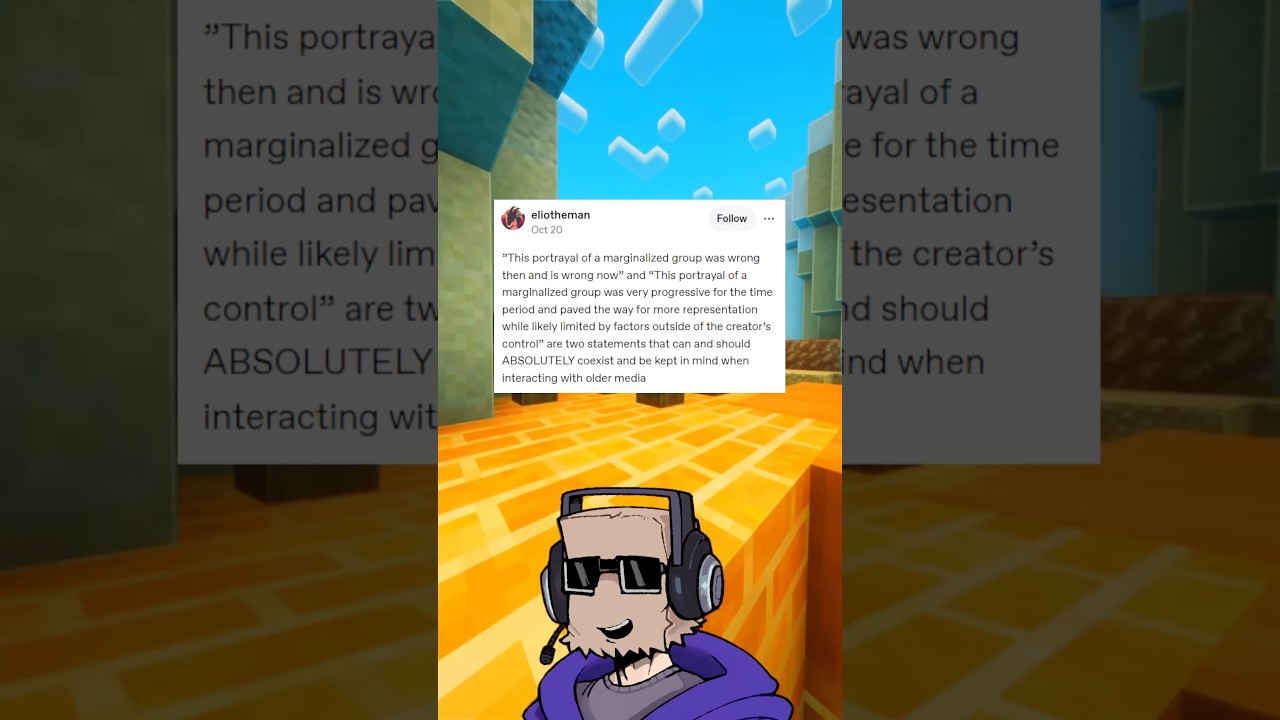
marginalized groups
142.7K
When analyzing older media, it is important to recognize that portrayals of marginalized groups may be both wrong by today's standards and progressive for their time period, as demonstrated by Moby Dick's anti-racist elements written by a white author in the 1850s, which paved the way for more representation despite being limited by factors outside the creator's control.
Click to watch →
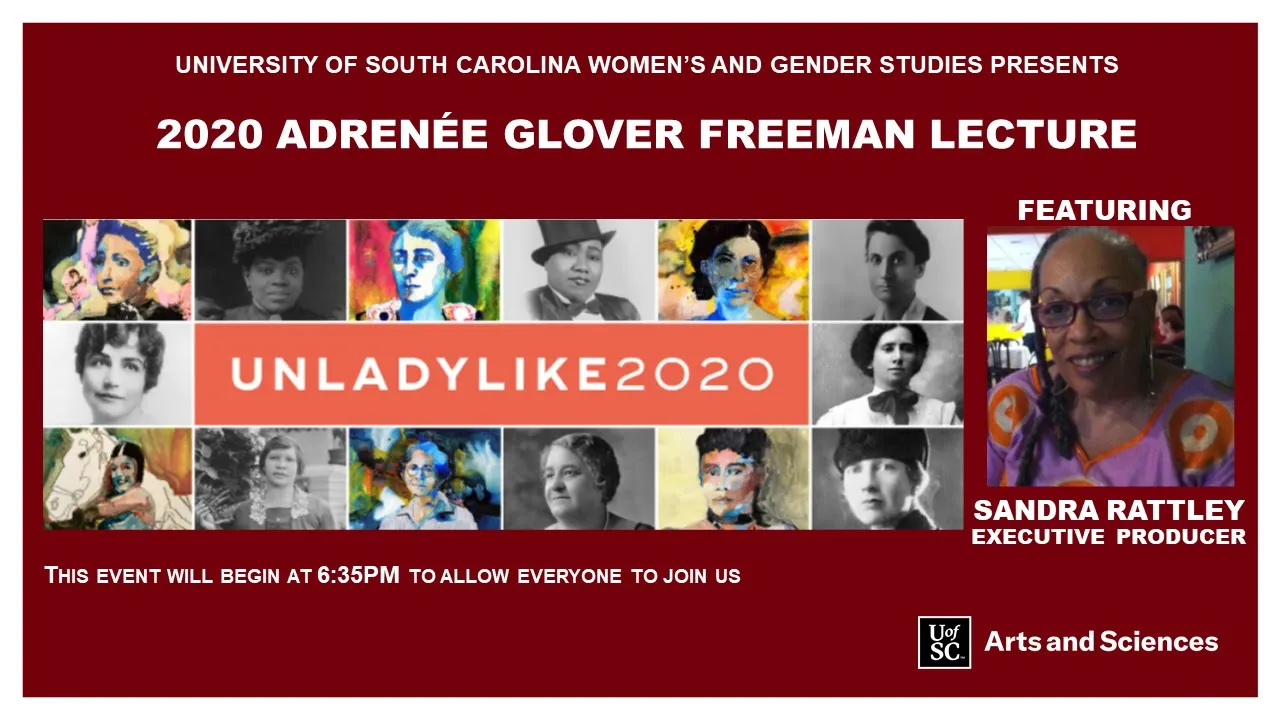
2020 Freeman Lecture featuring Sandra Rattley and UNLADYLIKE 2020
358
This section examines how systemic forces have historically excluded marginalized groups from media representation and public memory. Representational justice asserts the right of all people to be seen and heard according to their own narratives. Historically, women, Black people, Indigenous peoples, LGBTQ+ individuals, and others have been underrepresented or absent from prominent media. In the 19th century, Black women were locked in domestic spheres through advertising imagery, with stereotypes like the 'mammy' archetype persisting for over a century. Women faced legal barriers including inability to own property or obtain credit cards until 1974. Mary Church Terrell exemplifies intersectional activism, fighting racial and gender injustice simultaneously. After her friend Thomas Moss was lynched in 1892, she co-founded organizations and coined 'lifting as we climb.' Her 1952 Supreme Court victory against restaurant segregation demonstrates how representational justice requires persistent legal action to challenge systemic discrimination.
Click to watch →
Ginny & Georgia Reactions || It's a Face Not a Mask || S1E2
6.6K
The hosts discuss social justice and systemic inequality, noting how different groups face different treatment in society. They discuss how some people 'don't get the same liberties' as others and how cultural identity can influence social experiences. They discuss how media representation matters in storytelling and how different audiences may perceive content differently. They also discuss how social injustice tends to upset people and how different groups experience these issues differently.
Click to watch →

marginalized groups
546.4K
When analyzing older media, it is important to recognize that portrayals of marginalized groups can be both wrong by today's standards and progressive for their time period, as these two perspectives can coexist; for example, Moby Dick (1850s) contains anti-racist elements like Ishmael's positive description of a Polynesian character's skull, demonstrating how historical works can advance representation while still being limited by the era's constraints.
Click to watch →

CHICO PINHEIRO ENTREVISTA - 17/02/25 - ERIKA HILTON
101.7K
Social justice requires addressing systemic inequalities based on race, gender, sexuality, and geography. Erika Hilton identified key injustices including discrimination based on skin color, socioeconomic status, gender identity, and sexual orientation, as well as violence, hunger, and war. Her approach emphasizes transforming both macro-level structures and daily practices, recognizing that meaningful change requires addressing both systemic issues and everyday experiences of inequality. She expressed desire to change how marginalized groups are represented in historical records, moving beyond repetitive stories that reinforce existing power structures. This perspective emphasizes that political transformation includes cultural and narrative transformation, requiring new stories that challenge historical patterns of exclusion and marginalization.
Click to watch →
Deep Dive
The concept of speculative fiction as a tool for cultural critique and societal reflection.
Top 10 TV Shows of the Decade (So Far)
58.3K
Speculative fiction serves as powerful vehicle for social critique by extrapolating contemporary issues to their logical extremes. 'Severance' explores corporate dystopia by imagining procedures that fragment employee identities, raising questions about work-life balance and personal autonomy. 'The Last of Us' uses post-apocalyptic setting to examine grief, loyalty, and human connection in extreme circumstances. These narratives demonstrate that speculative fiction allows creators to critique modern society by creating fictional scenarios that mirror real-world concerns, making abstract social issues tangible and emotionally resonant for audiences.
Click to watch →

A Conversation with Writer María José Maldonado
102
Speculative fiction serves as powerful social critique by imagining futures where current problems evolve or transform. When biological boundaries between genders blur, traditional assumptions about gender roles, identity markers, and social categorizations become destabilized. This genre allows writers to examine how systemic issues like various forms of discrimination continue to evolve and intensify as society organizes both for and against change. By imagining futures where white feminists have taken over government and economy, speculative fiction can critique contemporary power structures while exploring alternative possibilities for social organization.
Click to watch →

Reviewing every BOOK, MOVIE, & SHOW I've consumed these last 6 months
33.3K
Speculative fiction explores hypothetical societal transformations to examine underlying assumptions about human nature and social organization. By imagining dramatic reversals of power structures—such as women gaining abilities that shift gender dynamics—authors can reveal uncomfortable truths about contemporary society while prompting readers to reconsider taken-for-granted social arrangements and their potential consequences.
Click to watch →

SFTV#6: invitată Carolina Vozian
258
Speculative fiction serves as a powerful tool for social critique by allowing writers to imagine alternative worlds that challenge existing social, political, and economic systems. Through speculative fiction, authors can explore utopian and dystopian scenarios that reveal the constructed nature of our current reality, helping readers envision possibilities beyond the status quo. This genre enables critical examination of issues like climate change, capitalism, and social organization by creating parallel worlds where different social arrangements are possible, thus empowering readers to imagine and work toward transformative change in their own societies.
Click to watch →

The Handmaid's Tale by Margaret Atwood (1985) - Banned Books Conversations (Season 4)
188
Speculative fiction serves as a powerful tool for reflecting and critiquing society by presenting exaggerated or alternative versions of current realities. Margaret Atwood has stated that everything depicted in The Handmaid's Tale is based on real historical events, arguing that nations build radical governments on foundations already present in their history. The deep foundation of the United States, according to Atwood, was the 17th-century Puritan theocracy of New England with its bias against women, which only requires social chaos to reassert itself. Speculative fiction functions as a mirror that reveals uncomfortable truths about existing social structures, allowing readers to examine their own society critically. The genre enables exploration of complex social issues in ways that direct criticism might not achieve, making abstract concepts tangible and immediate for readers.
Click to watch →
Prerequisite Knowledge
- Concept 01Basic understanding of the science fiction genre and its traditional themes of technology, space exploration, and speculative future societies.
- Concept 02Historical context of the African Diaspora, including the legacies of colonialism, the transatlantic slave trade, and the Civil Rights Movement.
- Concept 03Introduction to social justice concepts, systemic inequality, and how marginalized groups are historically represented in media.
- Concept 04The concept of speculative fiction as a tool for cultural critique and societal reflection.
Subsequent Learning
- Step 01In-depth analysis of seminal Afrofuturist works across literature, music, and film (such as the writings of Octavia Butler, the music of Sun Ra, and the film 'Black Panther').
- Step 02The conceptual distinction between Afrofuturism (which is often diaspora-focused) and Africanfuturism (which is rooted directly on the African continent).
- Step 03How speculative design and Afrofuturist frameworks are applied to real-world urban planning, policy-making, and social justice activism.
- Step 04Comparative study of other cultural futurisms, such as Indigenous Futurism, Chicanafuturism, and Gulf Futurism, and how they reclaim marginalized histories.
Roots
Empower
Roots
0:02Playing Section
- 1
Highlights lack of black protagonists in futuristic films.
- 2
Explores early Afrofuturist music by Sun-Ra and Clinton.
- 3
Links civil rights struggle to positive futuristic themes.
Afro-Pessimism
While Afrofuturism is fundamentally optimistic, imagining liberatory futures and technological progress shaped by Black experiences, Afro-pessimism offers a stark critical counterpoint. This theoretical framework argues that anti-Blackness is not a temporary hurdle to be overcome by social justice, but a foundational, structural element of the modern global order. From this perspective, Black people exist in a state of 'social death' where the concept of humanity itself is defined in opposition to Blackness. Afro-pessimists critique the speculative optimism of Afrofuturism as potentially escapist, arguing that projecting Black liberation into a technologically advanced future overlooks the deep-seated, ontological impossibility of overcoming anti-Blackness within current societal frameworks. Instead of seeking hope in speculative futures, Afro-pessimism demands a rigorous confrontation with the inescapable realities of structural violence in the present.
Deep Dive
In-depth analysis of seminal Afrofuturist works across literature, music, and film (such as the writings of Octavia Butler, the music of Sun Ra, and the film 'Black Panther').

Afro futurism,the future of black expression in media.
517
Afrofuturism is a movement that reimagines the future through African heritage, blending African heritage with science fiction across music, literature, comics, film, and fashion. African-American visionaries like Sun Ra and Octavia Butler used art, music, and storytelling to imagine black futures by drawing on African heritage and reworking traditions into visions of tomorrow. The movement is now global, with African designers reimagining patterns as futuristic symbols and styling traditional elements as royalty from another galaxy. In music, techno represents Afrofuturism as a cultural aesthetic reimagining black identities across the African diaspora using science and technology themes. Abu Qadim Haqq, central to the visual development of these worlds, created artwork for artists like Carl Craig and Model 500, influenced by Japanese cartoons like Battle of the Planets and Robotech.
Click to watch →

"Ihr Erstkontakt mit postkolonialen Außerirdischen" - David Zabel
678
This segment introduces Octavia Estel Butler (1947-2006) as the most important author in Afrofuturism, whose work is foundational to literary Afrofuturism. The speaker recommends starting Afrofuturism with literature rather than film because literary works are closer to the author's original intentions. The segment focuses on 'Dawn' from the Xenogenesis Trilog, set in an atomic war where 95% of Earth is made uninhabitable by radiation. The Oankali are introduced as the alien species who save humanity from extinction, described as the 'friendliest colonizers.' They have a tentacled, multi-legged form but can take human-like forms to facilitate interaction. They can access and manipulate the DNA of any life form, including humans, making them powerful healers who can cure radiation damage and extend human lifespans to 150 years.
Click to watch →

Intro to Afrofuturism | Part 2 Examples of Afrofuturism
399
Afrofuturism is a cultural and artistic movement that explores the intersection of Black identity, science fiction, and speculative fiction, examining how African diaspora culture interacts with technology and future possibilities. The genre emerged in the 1970s, influenced by social justice movements and the Vietnam War's end, and has evolved across multiple disciplines including literature (Samuel Delany, Octavia Butler, N.K. Jemisin), music (Sun Ra, Janelle Monáe, Missy Elliott, Wu-Tang Clan), visual art (Jean-Michel Basquiat), and film (Black Panther, After Earth, Independence Day). Afrofuturism empowers Black communities by envisioning alternative futures where Black people thrive technologically and culturally, challenging historical narratives of oppression through creative imagination.
Click to watch →

Skai Lounge Talks Secret Parties in Cape Town, Afrofuturism, Creating a Community - Ep79
431
Afrofuturism is a cultural movement that combines science fiction themes with African and Black experiences, challenging traditional portrayals that center on European narratives. It manifests across literature (Octavia Butler), music (Sun Ra, Janelle Monáe), and film. This genre allows creative freedom and cultural reclamation, countering narratives that portray Africa as uncivilized. The movement emphasizes that African technology and development are sustainable and progressive, not primitive.
Click to watch →
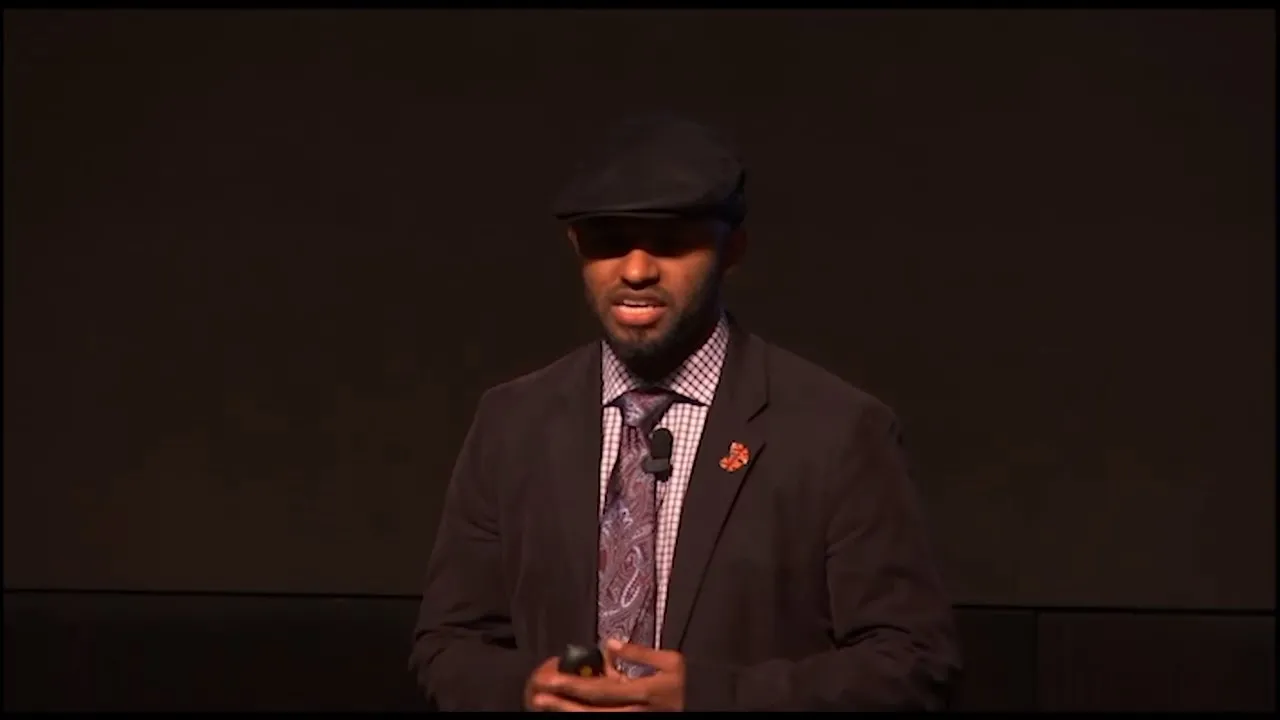
Afrofuturism Forever: Cartoons, Literature, and Black Panther | Dr. Alexander Brickler | TEDxFSU
6.7K
Afrofuturism is a speculative fiction approach that treats African-American concerns within the context of technoculture, using prosthetic enhancements and futuristic narratives to reimagine Black futures beyond the constraints of slavery and colonialism; it allows communities to look back at their history while projecting it forward into liberatory futures, as exemplified by works like Black Panther and literature by authors such as George Schuyler, Octavia Butler, and Steven Barnes.
Click to watch →
Deep Dive
The conceptual distinction between Afrofuturism (which is often diaspora-focused) and Africanfuturism (which is rooted directly on the African continent).

On Black Speculative Fiction #BlackLitChallenge
2.7K
While Afrofuturism positions African-American themes at its center, Nnedi Okorafor coined 'African futurism' to emphasize direct roots in African culture, history, mythology, and point of view. African futurism is specifically concerned with visions of the future, interested in technology, optimistic, and centered on people of African descent rooted first and foremost in Africa. This contrasts with Afrofuturism's focus on African-American experiences as descendants of enslaved Africans. Both frameworks acknowledge historical erasure while offering distinct approaches to imagining futures from African perspectives.
Click to watch →

In Class with Carr, Episode 268: We're All Sinners!
38.9K
There is an important distinction between 'Afrofuturism' and 'African Future.' Afrofuturism is a speculative genre that imagines African futures, while 'African Future' represents the actual future of African people. This distinction matters because Afrofuturism can be seen as a form of cultural meaning making that imagines possibilities, while African Future represents the actual trajectory of African people and their cultural development.
Click to watch →
Afro futurism,the future of black expression in media.
517
Afrofuturism is a genre where African people utilize their culture and historical past while fusing it with the future, allowing Black people to express themselves through future depictions in space, technology, comics, and media. African futurism, coined by Nnedi Okorafor in 2019, is a subcategory of science fiction that differs from Afrofuturism by focusing directly on African culture, history, and mythology without centering Western narratives. While Afrofuturism confronts the painful history of slavery and the transatlantic slave trade, African futurism emphasizes what was, what is, and what could be. Precursors to African futurism include Ben Okri's 'The Famished Road' and Buchi Emecheta's 'The Rape of Shavi.' Key examples include 'Binti' and 'LaGuardia' by Okorafor, which feature intergalactic universities and alien-human integration, and 'The Famished Road' by Okri, which follows a spirit child known as an abiku.
Click to watch →
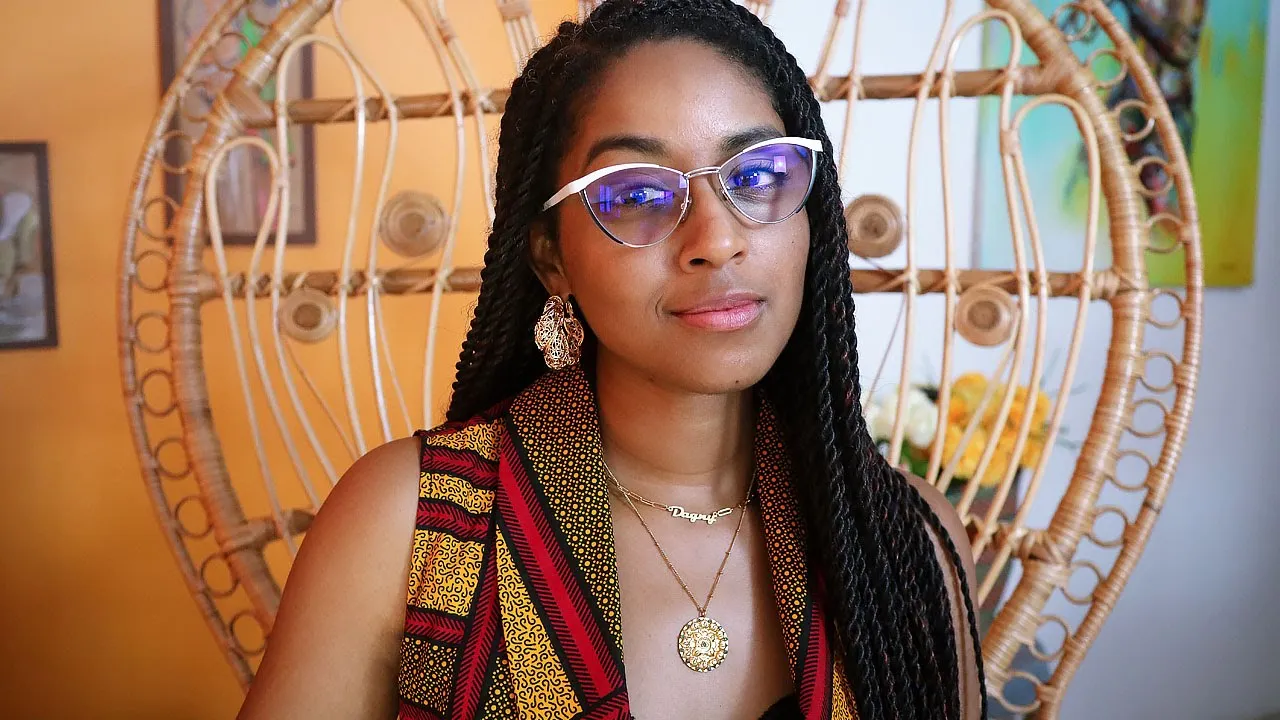
What Is Afrofuturism And Africanfuturism | Dagny Zenovia
883
Afrofuturism is a cultural aesthetic and philosophy exploring the intersection of African diaspora culture with technology, encompassing science fiction, fantasy, alternate history, and magical realism; Africanfuturism, coined by Nigerian-American author Nnedi Okorafor in 2019, is a subcategory of science fiction directly rooted in African culture, history, mythology, and perspective that does not privilege or center the West. The key distinction lies in setting and perspective: Afrofuturism often features African characters in futuristic or alternate settings (like the Black Panther film where T'challa goes to America), while Africanfuturism keeps narratives grounded within Africa itself, focusing on African cultural contexts and societal commentary through fantasy elements.
Click to watch →
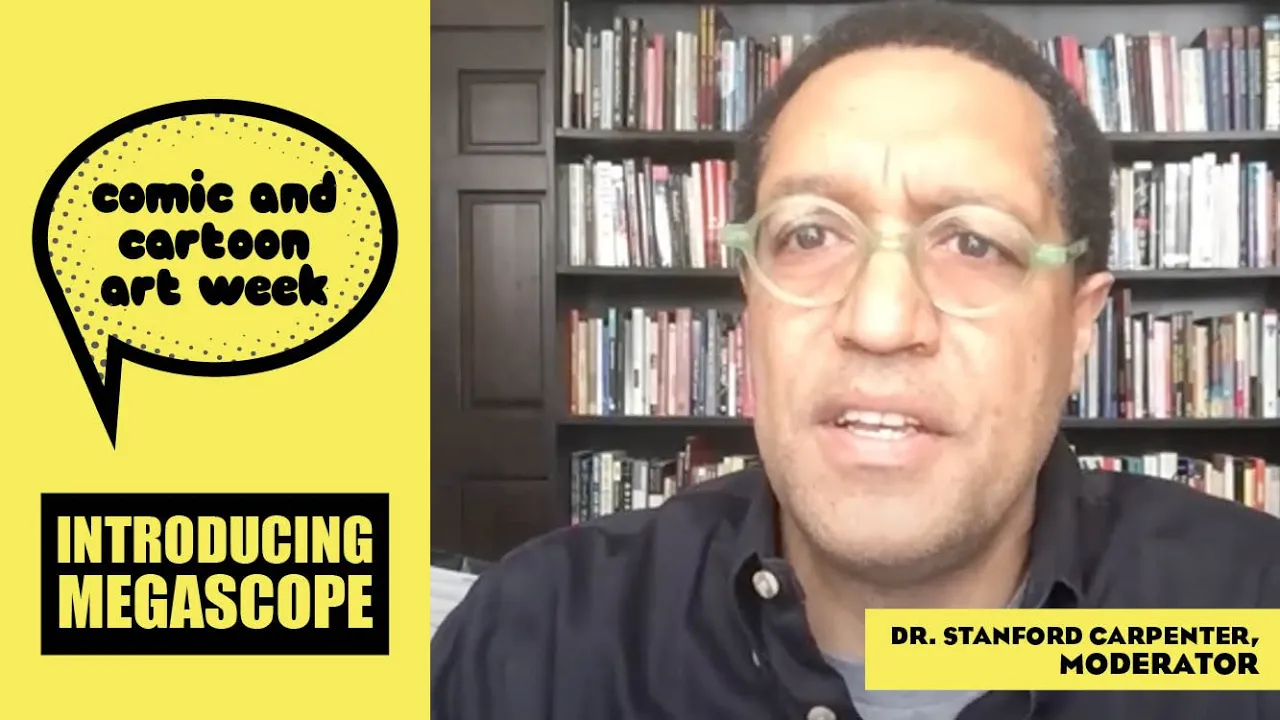
Introducing MEGASCOPE
156
Afrofuturism and African futurism represent distinct but interconnected speculative fiction traditions. Afrofuturism, as defined by Mark Dery in 1993, focuses on Black experiences in America and responds to Westernized notions of speculation, exemplified by works like Black Panther. African futurism, developed by Nnedi Okorafor, centers on the African continent and emerges directly from African experiences, particularly West African ones. The distinction matters because it reflects different geographic and cultural starting points for speculative imagination. Both traditions serve as spaces for processing racial trauma, reconciliation, and envisioning alternative futures, with comics increasingly becoming a global platform for these conversations.
Click to watch →
Deep Dive
How speculative design and Afrofuturist frameworks are applied to real-world urban planning, policy-making, and social justice activism.

Radical Futures: Supporting Community-Led Design Engagements through an Afrofuturist Speculative ...
140
This research demonstrates how an Afrofuturist speculative design toolkit, consisting of five card decks (forecasting, topics, liberation, message, and tools) and a workbook, can support community-led design engagements by centering marginalized communities as collaborators, fostering conversations on race, and promoting inclusion of historically excluded groups in design processes; however, researchers must balance imaginative design practice with commitments to action to maintain community trust and avoid trivializing the design process.
Click to watch →

NEW (dr)INC: Future Memory & Spatial Justice
239
This segment explores Afrofuturism as an artistic and cultural movement exploring Black cultures of the past, present, and future through computational and analog mediums. The speaker presents the Slime Tech Lab project, which uses slime mold—a microorganism with predictive properties that can mimic and exceed machine learning—to inspire non-hierarchical structures for community organization. The project travels to Black and brown communities to work with slime mold and machine learning, creating non-linear stories about future worlds. The segment then explores how science fiction shapes technology and society, noting that over 70% of daily technology was inspired by science fiction while 75% of the canon is written by white men. The Opening the Portal project addresses this by using machine learning to generate future predictions from Black and brown science fiction stories. The segment culminates with the Investing in Futures Beyond Policing project, launched in response to George Floyd's murder, which used gamified workshops to help 300 participants imagine worlds without police. The resulting 100+ worlds have influenced policy changes, demonstrating how speculative design can translate into tangible community action and policy reform.
Click to watch →
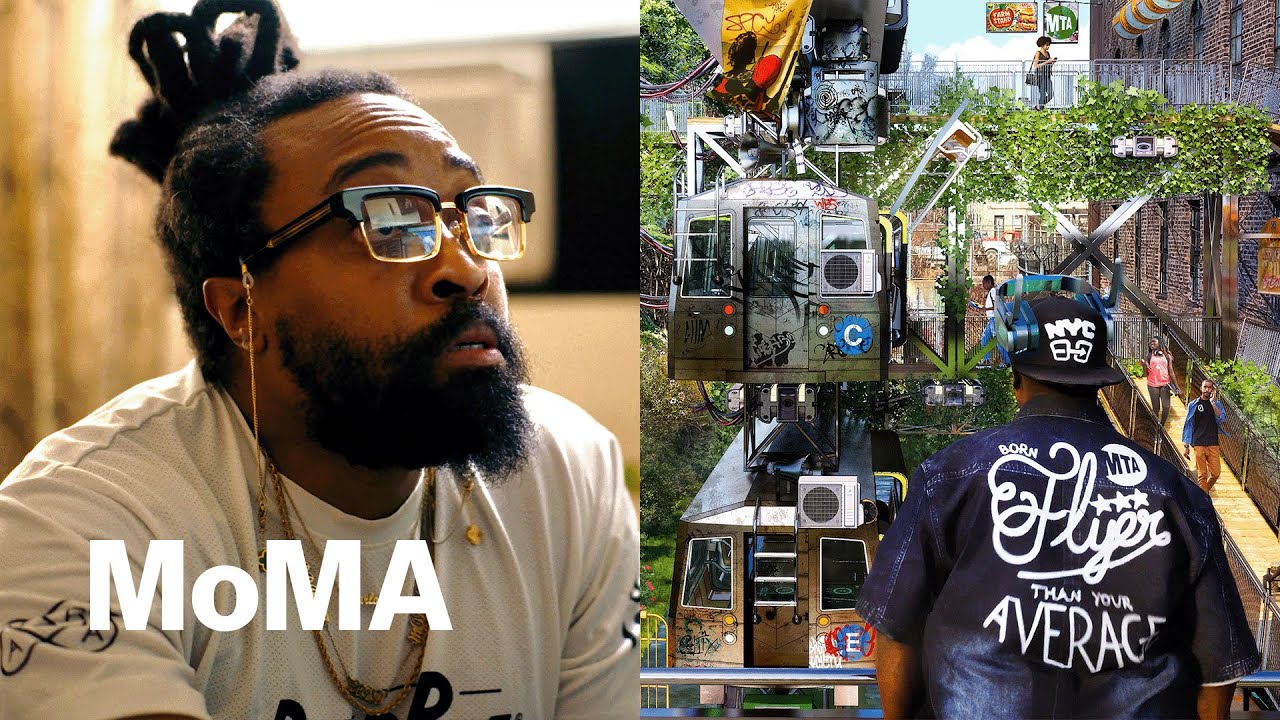
Reimagining cities through a dreamer’s eyes | Architecture & Virtual Reality
24.5K
Afrofuturist artist Olalekan Jeyifous creates speculative urban landscapes using VR, collage, 3D modeling, and public art to envision cities built with everyone in mind from the start, demonstrating how daydreaming serves as a powerful tool for questioning power structures and imagining alternative futures for marginalized communities.
Click to watch →

Episode 21: Redesigning Cities in Science Fiction
143
Afrofuturist urban visions offer critical lessons for contemporary urbanists and designers. First, rethinking apocalypse: what seems dystopian (dense urban populations, white flight, end of oil economy) may actually be opportunities for reclaiming marginalized ways of knowing. Second, reconsidering appropriate science and technology—historically privileging Western phenomena while recognizing diverse knowledge systems. Third, multiplying professional strategies by combining established techniques with ground-up approaches and cultural knowledge. Fourth, acknowledging responsibility when scholars from privileged positions amplify marginalized voices. Fifth, recognizing that designers often plan for communities they don't inhabit, requiring deeper community engagement. Sixth, understanding that Afrofuturism doesn't reject professional expertise but expands it through diverse perspectives. These principles collectively challenge urbanists to reimagine futures beyond dominant paradigms.
Click to watch →

Speculative Futures | Johanna Hoffman
7.9K
Speculative Futures are design approaches that create high-resolution visions of potential realities, collapsing the distance between tomorrow and today to inform present decisions. These approaches include science fiction prototyping (inspiring real innovations like tablets and language translators), world building (researching political, ecological, and cultural contexts), experiential VR (exploring climate scenarios), design fiction (creating prototypes of future objects), and speculative design (challenging assumptions through provocative scenarios). Simple tactics like Candy Chang's post-Katrina sticker project asking what buildings should be also qualify. The core purpose is to ask 'what if' and 'why not' to envision alternatives beyond current conventions.
Click to watch →
Deep Dive
Comparative study of other cultural futurisms, such as Indigenous Futurism, Chicanafuturism, and Gulf Futurism, and how they reclaim marginalized histories.

Adivasi and Dalit Futurism: Artists Subash Thebe Limbu and Osheen Siva in Conversation
967
This segment explores indigenous philosophy and comparative approaches to futurism. In indigenous philosophy, all animated beings including plants, flora, and fauna are treated equally. Every time one plants a crop or cuts down trees, they must ask for an apology before proceeding. This philosophy is shared by most indigenous communities worldwide and brings new conversations about the rights of forest beings and nature. In indigenous communities, other species are seen as siblings, and this ingrained ideology prevents extermination for skins or furs. This philosophy is increasingly relevant to global conversations about environmental rights. Subhash KB Limbu discusses how he incorporates indigenous traditions into his contemporary artwork, particularly the weaving tradition of his grandmothers and mothers. He fused the imagery and act of weaving with science fiction concepts, imagining how time could be woven if it is not linear but ductile. He also incorporated the storytelling tradition called 'mundum,' an oral tradition passed down from generations, telling stories about what to do when a child is born and aspirations for futures. Afrofuturism and Adivasi futurism share similar essential approaches to imagining futures for marginalized communities, using speculative fiction and art to dissect how colonialism, racism, and classism affect marginalized people.
Click to watch →

2025 The Humanities and Popular Culture/Counterculture Lecture Series - Dr. Lee Francis IV
112
Indigenous futurisms represent a growing movement in Native American literature and media that explores alternative histories and futures where colonization never occurred. This speculative approach asks questions like: What would Native American societies look like without European contact? How would indigenous cultures develop technologically and socially in different scenarios? Works like the Coyote and Crow role-playing game series and Virgil Ortiz's dystopian/utopian sculptures explore these possibilities. This genre allows Native creators to imagine positive futures while also critically examining colonial impacts. Similar movements exist among indigenous peoples globally in Australia and New Zealand.
Click to watch →
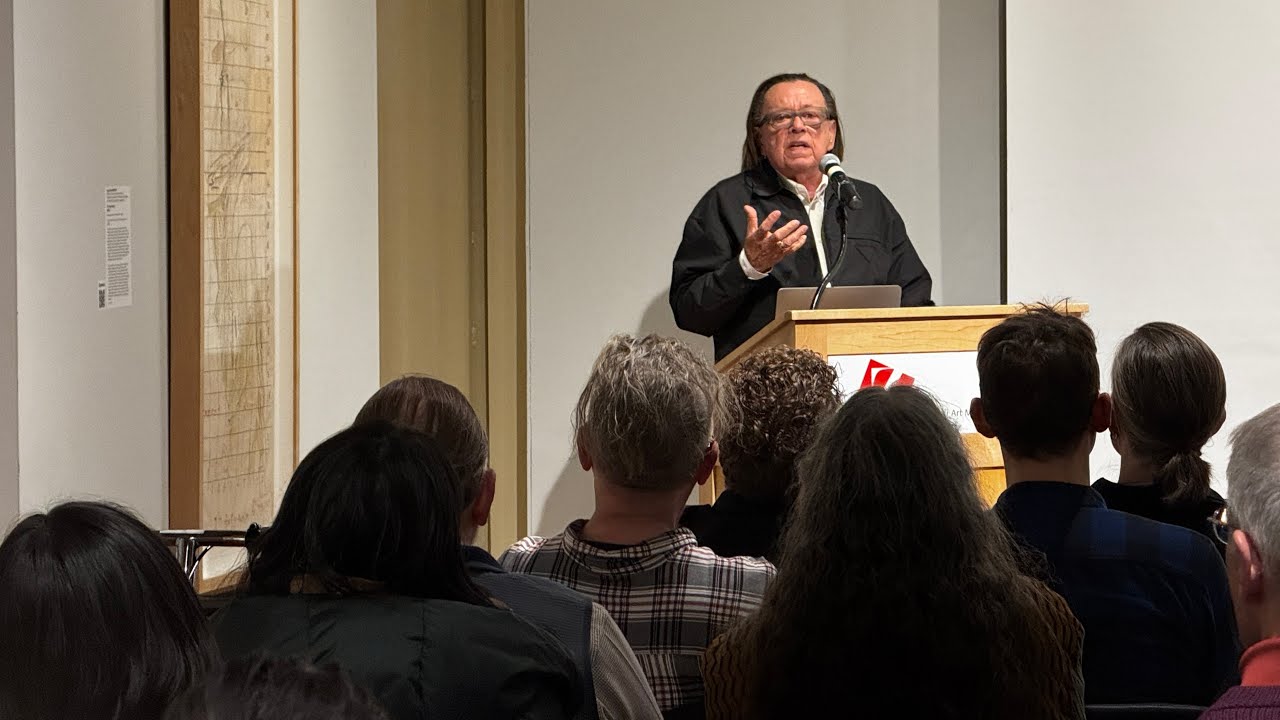
Traditional/Contemporary: Perspectives on Native American Art
125
Indigenous futurism represents a distinctive mode of artistic and cultural production that differs fundamentally from European futurism. Unlike early 20th-century European futurists who were often aligned with fascist governments and rejected literary predecessors, indigenous futurism centers on bringing traditions to distant future locations rather than abandoning them as relics. Tradition is understood as living, changing, and applicable to present circumstances, worthy of reinvention and adaptation. This approach draws on science fiction imagery and vocabularies to explore indigenous experience and the formation of the new world, reappropriating colonial narratives for indigenous ends. The concept challenges Western progress narratives while maintaining connection to ancestral knowledge systems.
Click to watch →
Indigenous Futurisms Reimagining the Future of the Arts & Humanities Presented by Maria Hupfield
520
Indigenous Futurisms is a creative movement coined by Dr. Grace Dillon that positions Indigenous peoples as active agents in shaping their own futures rather than being confined to historical narratives; it involves Indigenous artists using futuristic themes, traditional knowledge, and contemporary media to reclaim agency, resist colonial erasure, and imagine new possibilities for Indigenous life, while also asserting that Indigenous peoples have always possessed sophisticated knowledge systems and creative visions that deserve recognition alongside mainstream narratives.
Click to watch →
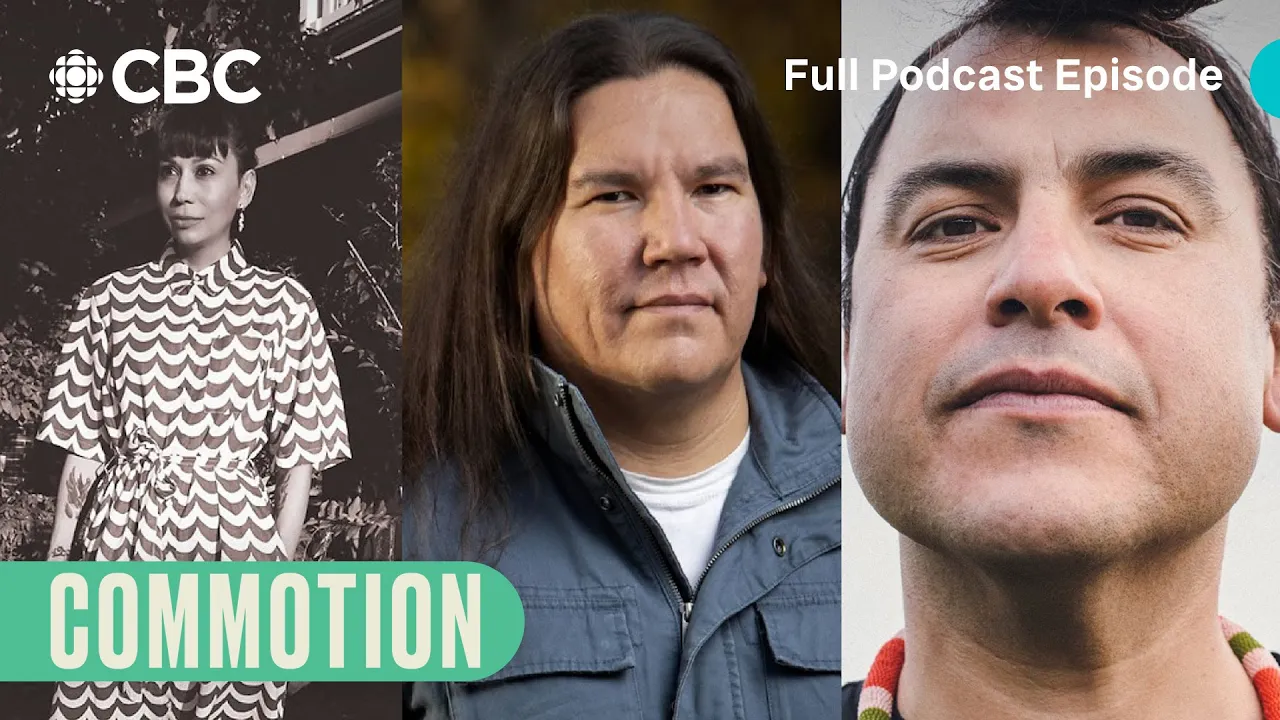
How Indigenous Futurism is changing the conversation
757
Indigenous futurism is an artistic and philosophical movement that challenges the common portrayal of Indigenous peoples exclusively in historical contexts by imagining Indigenous peoples and their teachings occupying prominent roles in future narratives; this movement draws inspiration from Afrofuturism and incorporates Indigenous nonlinear concepts of time, where past, present, and future are interconnected rather than sequential, allowing artists to envision empowered Indigenous futures while honoring ancestral knowledge systems and promoting self-determination.
Click to watch →
Roots
Empower
Roots
0:02- 1
Highlights lack of black protagonists in futuristic films.
- 2
Explores early Afrofuturist music by Sun-Ra and Clinton.
- 3
Links civil rights struggle to positive futuristic themes.
Afro-Pessimism
While Afrofuturism is fundamentally optimistic, imagining liberatory futures and technological progress shaped by Black experiences, Afro-pessimism offers a stark critical counterpoint. This theoretical framework argues that anti-Blackness is not a temporary hurdle to be overcome by social justice, but a foundational, structural element of the modern global order. From this perspective, Black people exist in a state of 'social death' where the concept of humanity itself is defined in opposition to Blackness. Afro-pessimists critique the speculative optimism of Afrofuturism as potentially escapist, arguing that projecting Black liberation into a technologically advanced future overlooks the deep-seated, ontological impossibility of overcoming anti-Blackness within current societal frameworks. Instead of seeking hope in speculative futures, Afro-pessimism demands a rigorous confrontation with the inescapable realities of structural violence in the present.
Basic understanding of the science fiction genre and its traditional themes of technology, space exploration, and speculative future societies.
Historical context of the African Diaspora, including the legacies of colonialism, the transatlantic slave trade, and the Civil Rights Movement.
Introduction to social justice concepts, systemic inequality, and how marginalized groups are historically represented in media.
The concept of speculative fiction as a tool for cultural critique and societal reflection.
In-depth analysis of seminal Afrofuturist works across literature, music, and film (such as the writings of Octavia Butler, the music of Sun Ra, and the film 'Black Panther').
The conceptual distinction between Afrofuturism (which is often diaspora-focused) and Africanfuturism (which is rooted directly on the African continent).
How speculative design and Afrofuturist frameworks are applied to real-world urban planning, policy-making, and social justice activism.
Comparative study of other cultural futurisms, such as Indigenous Futurism, Chicanafuturism, and Gulf Futurism, and how they reclaim marginalized histories.
270.5K views7.7Klikes3:11@VoxOriginal Release: 2016-03-04
When people envision a future in art most often it's seen through a white lens.
Only 8% of the 100 top grossing sci-fi and fantasy films featured a protagonist of color.
Half the time the protagonist was Will Smith.
The future looks different, if you look at it through the lens of black experiences.
But we’re not all white or Will Smith.
The future looks different, if you look at it through the lens of black experiences.
That’s why we have this thing called Afrofuturism.
The term was coined by culture critic Mark Dery in 1994 to point out the lack of black writers and black stories in science fiction.
But this kind of art existed long before the term Afrofuturism did. Just look at music.
Jazz musician Sun-Ra is probably one of the most recognizable Afrofuturists.
He lays out an afrofuturistic design is his 1973 album Space is the Place, which you’re listening to now, and also became a film.
The key is that his future was afrocentric – linking his futuristic self, to ancient forbears in Egypt.
These ideas were more politically direct, and a lot more funky, in George Clinton’s Parliament during 1975.
In “Mothership Connection” he connects the struggle of civil rights and “We Shall Overcome” to a positive future with evidence the struggle will work: "You have overcome. For I am here" He not only references an old song from the underground railroad to escape slavery: "Swing down, sweet chariot. Stop and let me ride."
But he flipped a desperate history into positive futuristic ride on his spaceship as evidence the struggle is over and we’ve won "Swing down, sweet chariot. Stop and let me ride" — so of course everybody wants to get on.
[Dr. Dre's "Let Me Ride" playing] And people did get on, [Dr. Dre's "Let Me Ride" continues] or at least some 90s hip hop heavyweights did.
But Afrofuturism also critiques the way the future looks today like André 3000 did on his ATLiens verse.
“Because the future of the world depends on" "If or if not the child we raise gon' have that n***a syndrome."
"Or will it know to beat the odds regardless of the skin tone.” He wants his unborn kid to get the future they want, not the one society created for them because of race.
And that’s why he takes pride in the difference.
They alienate us cause we different keep your hands to the sky.
Like Sounds of Blackness when I practice what I preach ain't no lie.
And empowers black people to fight to get what’s ours.
"I'll be the baker and the maker of the piece of my pie."
'Cause that’s the thing about afrofuturism — it’s rooted in black people a better future for ourselves on our terms, like Janelle Monáe does in "Q.U.E.E.N."
"Even if it makes others uncomfortable" "I will love who I am."
This is the common thread of Afrofuturism. To overcome the current ways society remains unequal There needs to be futures where those problems are solved.
Afrofuturism shows us what that looks like.
It looks like hope.
[Crowd shouting "We goin' be alright."
"Will you be electric sheep? Electric ladies, will you sleep? Or will you preach?"
Up Next

9:53
Romanticism Art Movement: Key Figures and Lasting Influence
@theartstory7275
38K views•2021-09-12

114:18
Christian Iconography: History, Theology, and Meaning | Fr. Panayiotis Papageorgiou
@Trisagionfilms
58.8K views•2020-02-21
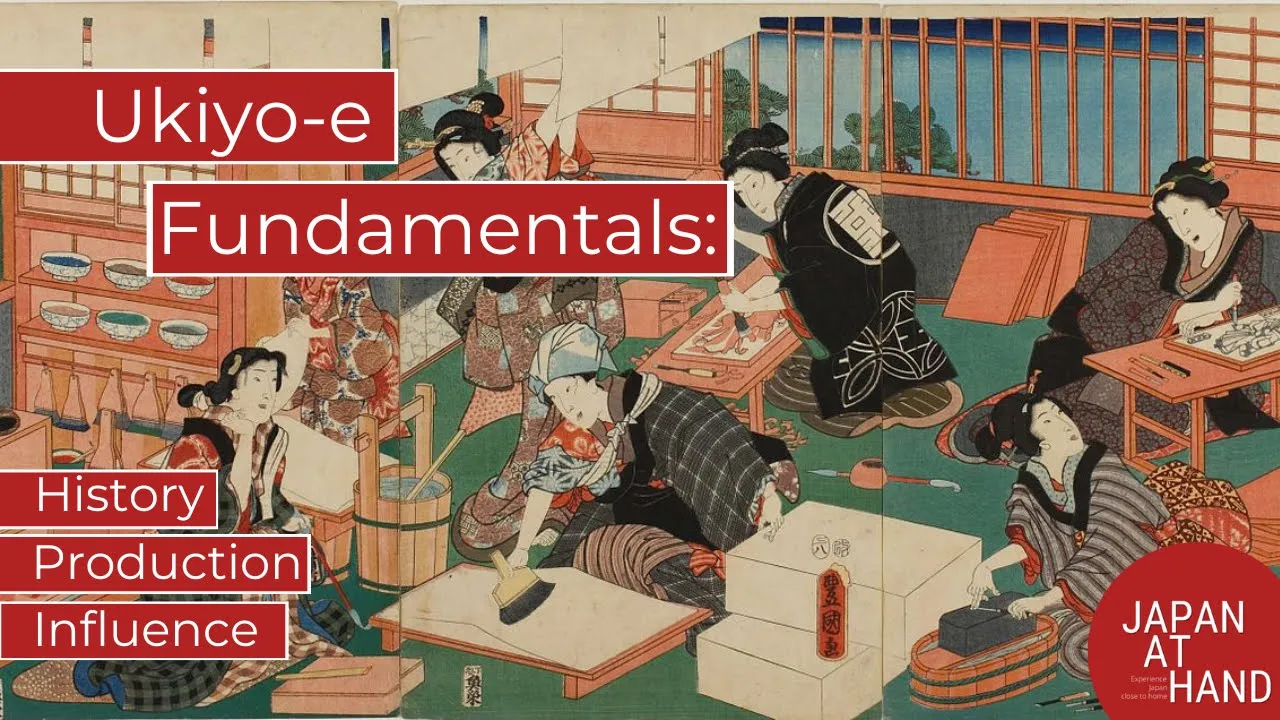
7:48
Ukiyo-e Art: History, Woodblock Printing & Influence
@japanathand
6.3K views•2023-06-08

16:34
Earliest Depictions of Jesus in Art: 10 Ancient Images Explained
@UsefulCharts
5.9M views•2022-06-03
Related Study Plans & Knowledge Roadmaps
Structured learning paths in Art History
art-history
Gothic Cathedrals: Engineering, Light & Society
01The Birth of the Gothic: Romanesque to Suger's Vision
02The Structural Triad: Pointed Arches, Ribbed Vaults, and Flying Buttresses
03Theology of Light: Lux Nova and Sacred Geometry
+ 2 more learning modules
14h5 modules
Explore Roadmap
art-history
Pre-Raphaelites: Realism, Symbolism & Critique
01The Victorian Art Establishment and Academic Formula
02The Founding of the PRB and Radical Realism
03Medieval Revivalism and Literary Symbolism
+ 1 more learning modules
8h4 modules
Explore Roadmap
art-history
Street Art: From Subways to Art Market
01Subcultural Origins in Philadelphia and New York (1970s)
02The Subway Era and Style Wars (Late 1970s - 1980s)
03The East Village Scene and Early Gallery Crossover
+ 2 more learning modules
10h5 modules
Explore Roadmap
art-history
Classic Maya Art: Iconography, Glyphs & Ritual
01Foundations of Classic Maya Visual Culture
02Deciphering Maya Hieroglyphs & Text-Image Integration
03Sacred Geography and Cosmological Architecture
+ 2 more learning modules
14h5 modules
Explore Roadmap