




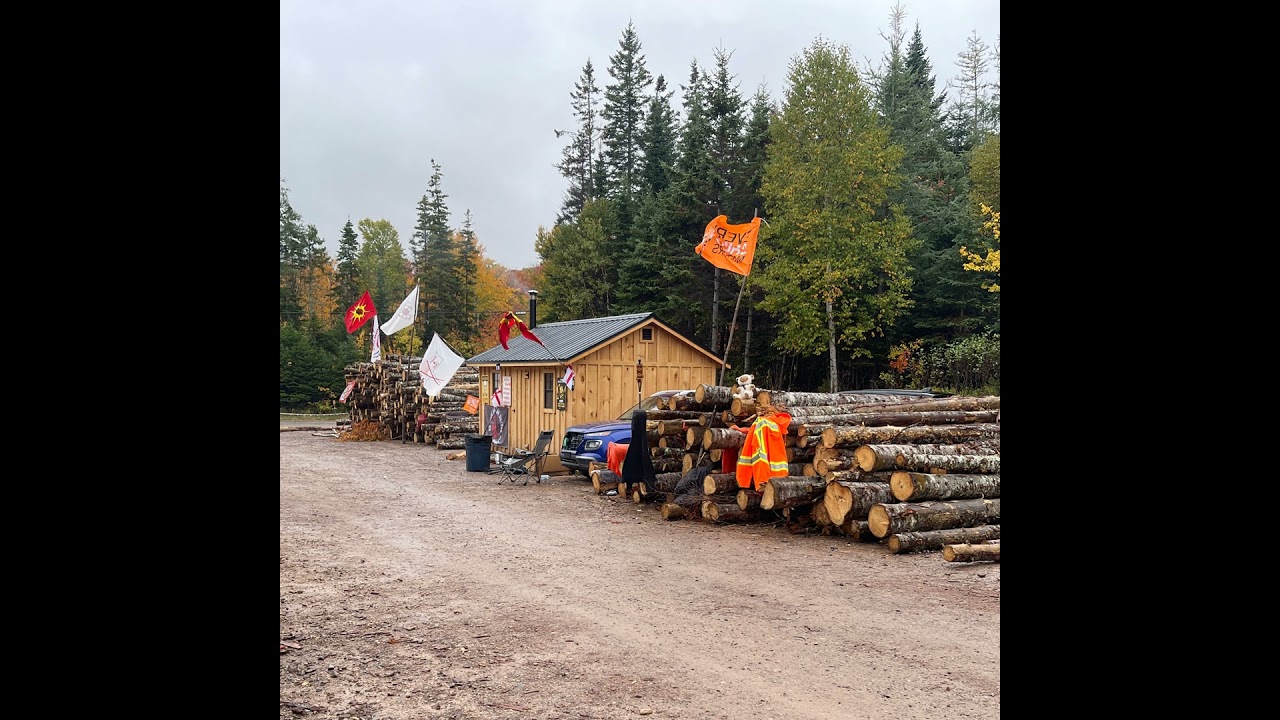
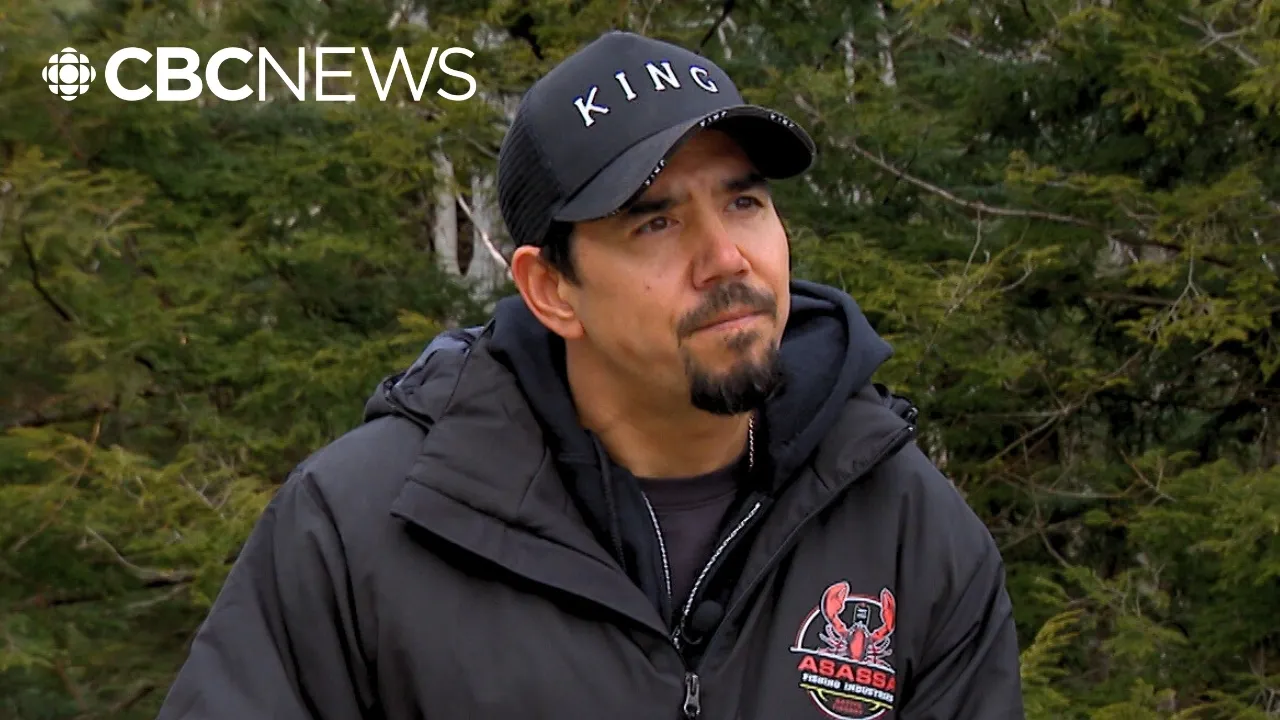


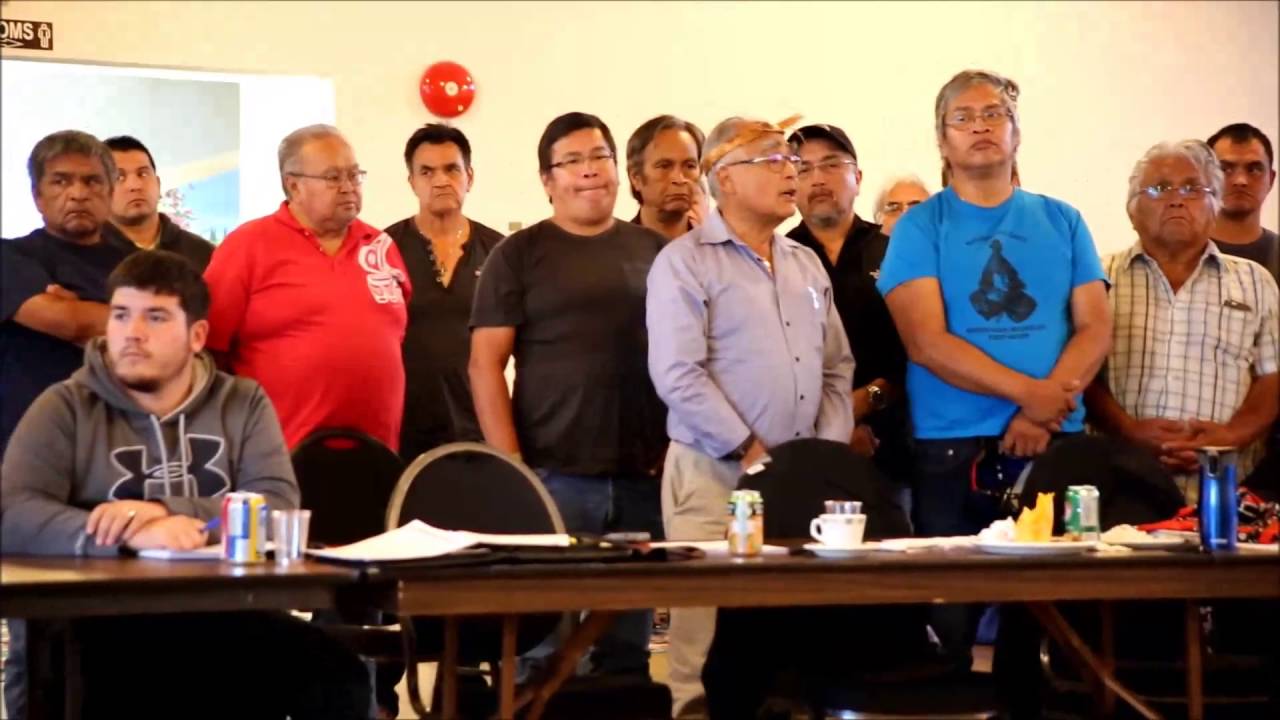



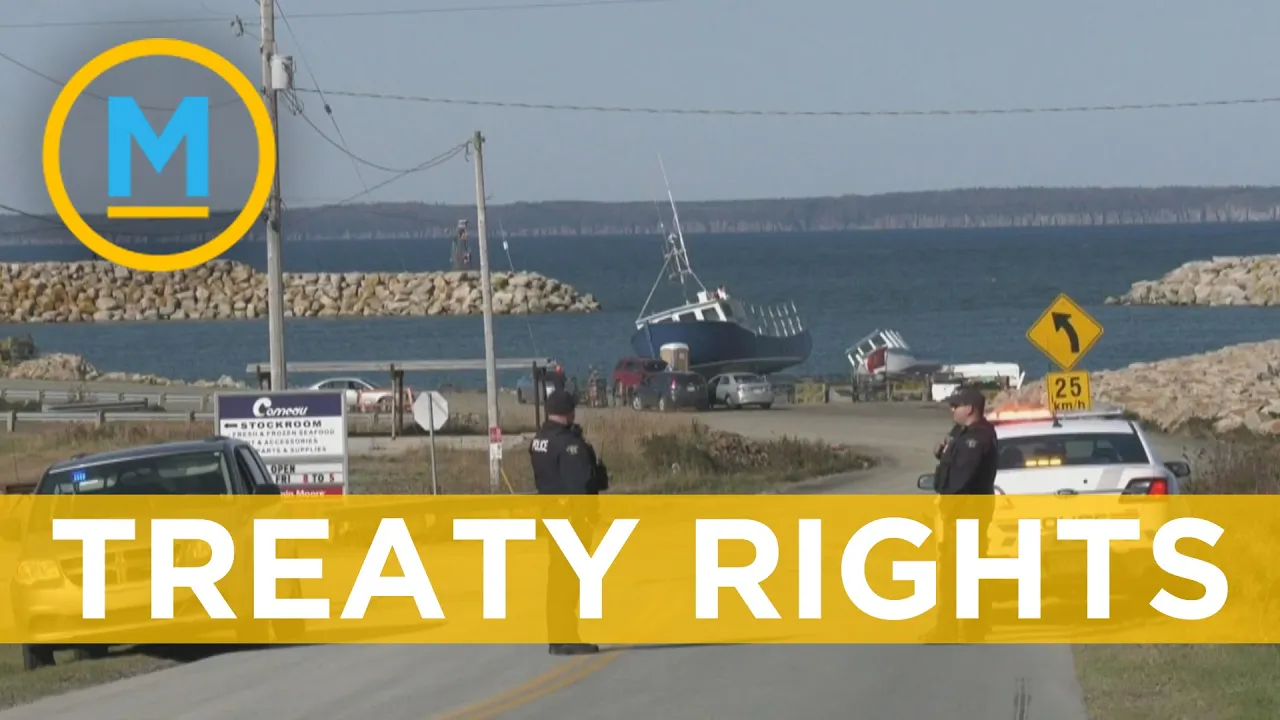

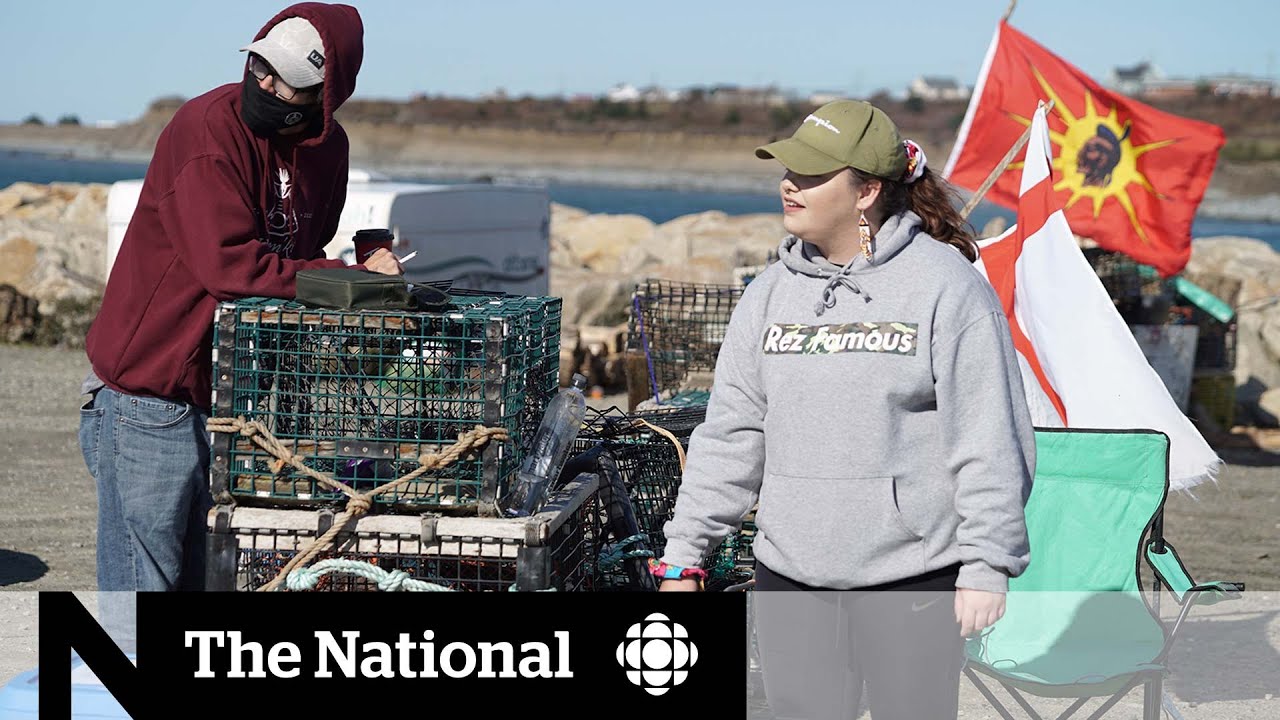




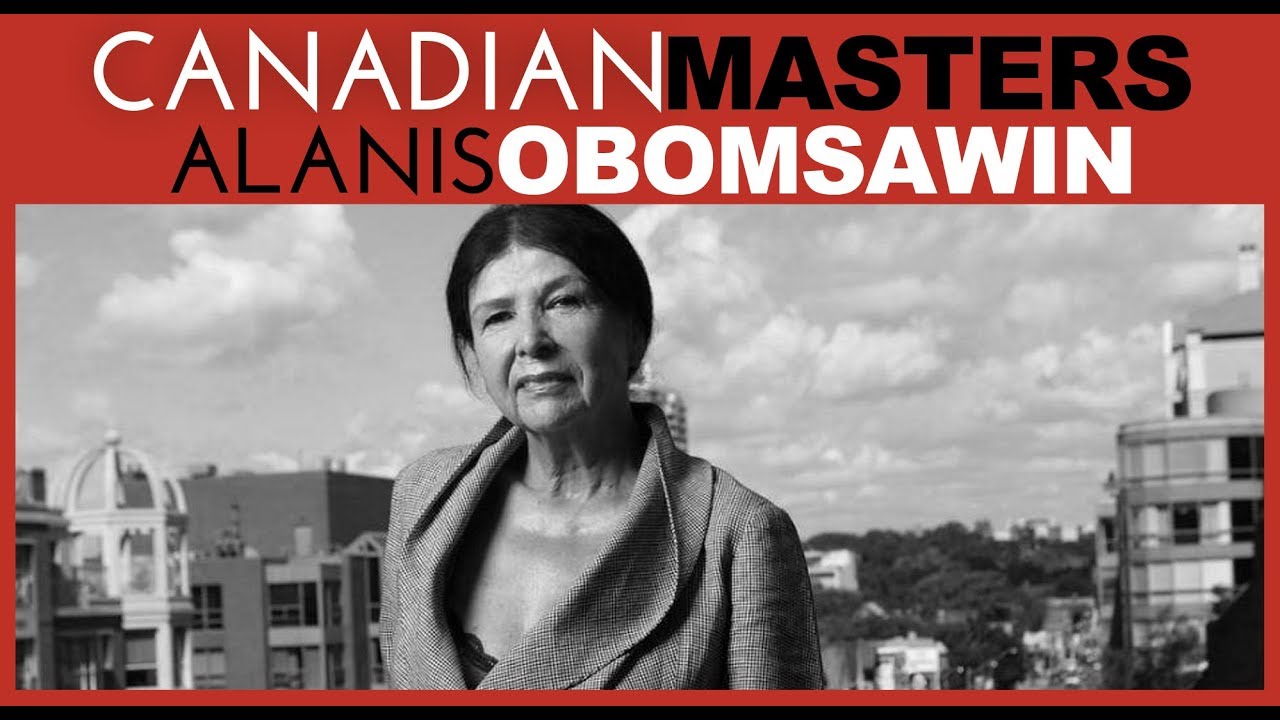


The Marshall Decision (1999) affirmed that Mi'gmaq people have inherent treaty rights to fish for sustenance, equivalent to a moderate livelihood, based on the Peace and Friendship Treaties of 1752; however, the subsequent enforcement actions by the Canadian government, including aggressive policing and legal prosecution, created significant conflict between Aboriginal communities and authorities, highlighting ongoing tensions over resource rights and self-determination.
Treaty Rights & Indigenous Fishery Conflict: Burnt Church, Canada
Added:The historical context of the Peace and Friendship Treaties of 1760 and 1761 signed between the British Crown and the Mi'gmaq (Mi'kmaq) people.
The landmark 1999 Supreme Court of Canada 'R. v. Marshall' decision, which affirmed the treaty right of Mi'gmaq people to fish, hunt, and gather to earn a 'moderate livelihood'.
The division of powers in Canada regarding natural resource management, specifically the role and jurisdiction of the Department of Fisheries and Oceans (DFO) in relation to Indigenous treaty rights.
Fundamental concepts of Indigenous sovereignty, self-determination, and the historical tensions between state-regulated conservation policies and traditional harvesting practices.
The ongoing legal and political struggles to clearly define 'moderate livelihood' in Canadian courts and the resultant policy negotiations.
An analysis of subsequent and modern-day fishery disputes, such as the 2020 Sipekne'katik First Nation self-regulated livelihood fishery conflict in Nova Scotia.
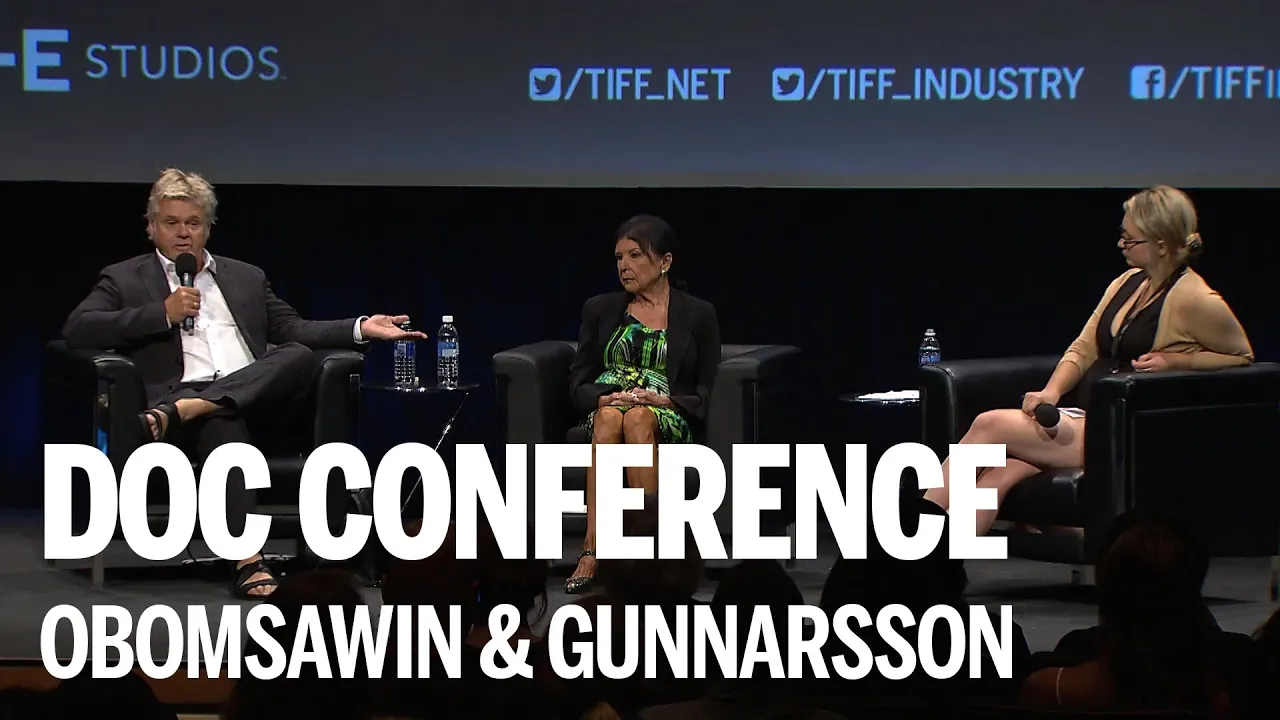
The role of activist documentary filmmaking, specifically exploring the body of work by Abenaki director Alanis Obomsawin and its impact on Canadian public policy and public perception.
How international frameworks, such as the United Nations Declaration on the Rights of Indigenous Peoples (UNDRIP), apply to local resource disputes and Indigenous economic autonomy.
13.2K views219likes1:36:35Original Release: 2016-11-14
[Music] it's always difficult to relive uh what happened uh last last year only because of the uh the long awaited truth to be finally acknowledged uh of uh our inherent rights as a mea people [Music] [Applause] you re Satan and all his works and all his empty promises I do you believe in God the Father father almighty the creator of Heaven and Earth I do you believe in Jesus Christ his only son our Lord who was born of the Virgin Mary was crucified died and was buried rose from the dead now is seated at the right hand of the father I [Music] do e [Music] our ceremonies are relevant to us as they were prior to Columbus how we live our life our world fi uh our land uh the waters the fish everything is connected to each other in in more deeper ways than um how we've come to be organized by North American Social policies and you know legislation and so forth community of esano is just it it it means a Lookout Point it's a traditional meeting place and Gathering Place for our for our people it's located right on the water on the shoreline of the Mari Bay Here Comes My Line we played and lived and our whole life around that water it revolves around that water it is integral to our culture and our people and and our livelihood so it's a very important part we've been here historically for over 11,000 years I just don't understand why there's not enough for us I mean in this beautiful territory I raised Rays swimming in these Waters and it's a shame that I can't feed myself and teach my children how to fish I mean my grandfather taught me and my brothers and uncles taught me and now I'm not allowed teaching my children I had my son this morning reduced to tears because he couldn't go fishing no more that it was too dangerous for him and I wouldn't let him go by doing that the Canadian government has robbed us of our right to raise our children in accordance to our culture and my son reduced me to tears I mean I had to bring him with me just because that is our way and that's being robbed from us just want to go and fish that's all I want to do make some money save some for food but if they stop try to stop us you know I'm going to be out there too fighting with them I fought last year and the year before be out there again this year I'm only using the D all and I'm huling the traps by hand I got no machine got no hauler to haul them up you don't mind being alone in your boat no I'm used to there I've been doing it all these years since I was 12 years old I'm just going to keep practicing our rights and if anybody tries to stop me or any of us you know I'll be out there fighting with them and if I go to jail and if I come back out I'll be out there again [Music] Mo mg MO is black bear I'm going French school I go to um burn church which I get MC Mac and he doesn't all he knows is French all the kids in his school um not everybody they they are know English some but not everybody Michelle can only speak a little bit English and my school what school is he in school's French when I was younger when I was a kid I didn't stay here in the burn church Reserve I was sent to a shuen residential school I I spent about seven years there what was it like there I wouldn't like to talk about it talk about it all that's how it was yeah and then I come home and there was a company Anderson's company and I fished for them 15 years every summer when I first started was dollar dollar 50 a day and gradually went up and last of I was getting two $2.75 a day then finally I decided I want to fish for myself so with me track brother and I we made 400 traps in all winter but the fish were down and the government that time they start buying back the licenses from the white MH community and uh but me I I I didn't they didn't offer me nothing buy back well I had no license I had a permit like from the treaty you know from the Tre and uh so I voluntarily gave it Up 3 4 years and the fish start to come back again and the fish ever since has been good mhm and I wanted to get back into it that time about 15 years ago but they told me I had to buy a license I said I don't have to buy a license I need my permit back because I gave it up tell you I never got nothing for it I was denied my permit commercial fishing season starts here on the May on May 1st and it ends at July 1st 8 weeks of we go by a communal license in uh from burn church so everybody all the native boats here fish on communal the fall fishing is for food for food fishery they're trying to take that away from us we were all out there in the fall like here except him I don't blame him he didn't want to risk his um livelihood and his and stuff like that what we catch in the summer that's just a little money to get by day by day but like during the winter and stuff like that it's it's harder we need to be on welfare or we have to be on welfare where we don't want to be you know like us we would like to work and it's just not enough there's no work I got to provide for my family and this is the only way we can I can provide for my family when when Marshall came through it was just like winning a lottery a little Lottery at that and um I had hope I could see my children smiling now like in the future with nice clothes and something to eat on a table in 1993 Donald Marshall was arrested for fishing eel out of season with illegal Nets and for selling it without a license at issue was whether he possessed a treaty right to catch and sell fish which would exempt him from complying with the Department of fisheries and oceans regulations the signature stories of the peace and friendship Treaty of 1752 were his Excellency perigrine Thomas Hopson and major Jean batis cope chief of the tribe of mamau Indians and the delegates of the eastern coast of Nova Scotia and New Brunswick it is agreed that the said tribe of Indians shall not be hindered from but have free Liberty of hunting and fishing as usual and that if they shall think a truck house is needful at the river Shuan acade or any other places they Resort they shall have the same built and proper merchandise lodged therein to be exchanged for what the Indians shall have to dispose of and that in the meantime the said Indians shall have free Liberty to bring for sale to Halifax or any other settlement within this province skin feathers fowl fish or any other thing they shall have have to sell where they shall have Liberty to dispose there to the best Advantage these agreements were renewed and ratified in previous and successive treaties for the Chiefs for the said tribes their heirs and The Heirs of their heirs Forever After Marshall was convicted on all three counts he appealed to the Nova Scotia court of appeal and was denied Marshall then appealed to the Supreme Court of Canada the Supreme Court allowed Marshall's appeal stating nothing less would uphold the honor and integrity of the crown in its dealings with the migar people to secure their peace and friendship September 17 1999 6 years after Donald Marshall was arrested the Supreme Court declared declared its decision it affirmed the Miga people had the right to provide for their own sustenance by Hunting Fishing Gathering and trading for what in 1760 were called necessaries the court said this should be construed in a modern context as equivalent to a moderate [Music] livelihood the day the decision came down that was very joyous and everyone was happy and it was like yes you know we can now do something to support ourselves our rights had been reconfirmed we had the right to exercise our uh access to the fishery and um the community went fishing what happened last summer was um well a few of us uh went out there start uh taking our traps out there to uh back up our management plan that was created by uh James Ward and Lloyd Lloyd Augustine and so a few of us went out there to uh start putting action behind the management plan the women the women that were there one of them uh it's my sister me Mahan Karen Somerville it was these two women that I took out in the water that started sitting out their own traps they are the ones that started putting the traps in the water first and it took the the ladies the women of our of our community to make it happen and I'm deeply uh thankful for them Yo our first yes Karen and Mahan with our first lobsters Yahoo everyone was happy everyone was glad everyone I guess figured like you know all right everybody going into water fishes money many Lobster if you want and and go ahead and sell them but it's and they were like they fish like the buy fish buyers were buying them like but they I guess they were being threatened by non-natives so yeah they just wouldn't come back we're not even on the basis of discussing as soon as the migar people asserted their rights the non-native fisherman applied pressure on the government to shut down the Aboriginal Lobster fishery no one should ask ordinary hardworking inore fishermen to pay the price for decades of national inaptitude towards one of our founding peoples the fishing itself in the bay simply has to stop fishermen see that they're still trapped there and that it's not a subal amount of TR that been being pick up I think that it will be more and more difficult to stop the fisherman in a show of force the non-native Fishers protest Ed and threatened to take matters into their own hands yeah it does not give you the right to go out there and [ __ ] cut my traps fires were set thousands of traps were vandalized and the communities were at [Applause] War [ __ ] out my [ __ ] you there's a lot of tension when you fish alongside a non-native fisherman you know like a friend of mine he was fishing in the spring they they took his traps they cut his traps they threw him back in the water they run his buoys over tell him you're a long way from home I know cuz I lent to my traps and I and I lost him my he lost some of my traps but you know that's the problem we have we can't even fish side by side each other when they say we could you know what I mean there so much so much anger and hatred out there last this [Music] the racism and the hatred um has become a very evident part of our daily living coming off coming out of our community it's very evident in some areas it's really unfortunate because um with the Acadian people and the Migo especially in our area there's a long Cooperative history there of where we were always able to get along it is unfortunate that some has put a very negative light on their society that they've cut our traps they shot at our people they've beat them up at local establishments and and constantly fighting and racial slurs being thrown here and and and for the government to feed on this um in this day and age it is is very sad truth a very sad reality that the government ain't fighting for conservation they're fighting for control the history desin noic is one of the uh Lobster fishery being ESS essentially a an Aboriginal fishery until the 1940s when uh there was a licensing system used to squeeze the Aboriginal people out of the out of the out of the industry wasn't as if they'd never been there um so so people went back into the water saying we're exercising our right and uh as we know the uh State rather than giving effect to the rights rather than limiting the fishing of the white fisherman brought its full force of full police authority to bear with helicopters and uh Patrol boats and and and guns and observation by by by airplane RCMP detachments dozens of RCMP cars and so forth uh on the people of esano um and the amazing thing is that was all to enforce a regime which had essentially been declared unconstitutional the esano village is thousands of years old and the largest migar community in New Brunswick the migar people lived in wigwams made of Birch Park in the summer they stayed in fishing villages in April and May the men fished the salmon the women and children gathered fiddle heads and other fresh Wild Greens then the big sturgeon came sometimes it was as heavy as 800 lb the custom was to fish at night with a torch summer was a busy time the people gathered fruit berries and caught all kinds of fish some were dried or smoke to preserve for the cold season they traveled easily with their incredible design of a light birch bark humback canoe capable of facing open Waters when winter came they moved in land to the shelter of the trees and for hunting deer moose and Caribou trading was always part of their lives they traded with other tribes and in 1581 they began to trade first with private Merchants from France by 1 1902 a large population of French people was established in different parts of the mirami and in the surrounding area of mamar country the newcomers had arrived and so had unknown diseases one epidemic killed over 16,000 migal people in the maritimes the influence of the Europeans changed their lives and the people became impoverished the struggle between Britain and France to control migar country and its natural resources was ongoing during one of the battles led by the English the migar protected the acadians by hiding them in secret places the English Burns everything including the church this is how esen noich got its other name burnt church as time went on the newcomers were taking ownership of the resources the rivers and the forest their ways of harvesting were different and much greater several fish species became extinct salimon stocks were diminishing and the migu suffered the lack of a resource that had sustained them for thousands of years by March 1805 their vast territories were diminished to a reserve with 258 acres plus tabis Tac and pamus with 10,000 acres for a long time the lobster was considered poor men's food the migar fished it without interference but not for long I have to enforce to make sure that we have conserv ation as our priority because if we let people fish whenever they want whatever they want we're not going to have a resource and my mandate is to protect the resource they are being told a lot of wrong things there's not a whole lot of us here you know and there's not a there's not a whole lot of traps or a whole lot of equipment we have I know that uh in May the non-natives have about two approximately 270,000 traps and that's just its own 23 in our members sheet here now we come up with uh they wanted us to have only 40 traps what does that tell you 40 traps is not going to feed the rest of our people or bring any income to our people we're not going to deplete the stocks we're all conservationists here you know we we we know we've been doing it since the beginning of time our ancestors did it we we are doing it we make sure that uh the the undersides are thrown back in the water we make sure that the females are properly put back in the water gently these are the things that we do we can regulate our own resources we only catch enough to survive we only catch enough to pay our bills we only catch enough to pay put clothes on our children so they'll start looking good in schools enough to put food on our table enough to generate a little income for for a family wow one or two you got one or two girls all right 17 catch up to day 17 and they say we'll open fish are they crazy not too long after that uh the DFO you know um kind of kind kind of came around where we were started wondering what we're doing and um we had approximately about 10 traps at the time in the water so every time we come back in they they'd go around our traps and start pulling them out this what's just going on on a daily basis got call this morning that uh there's a DFO boat in the water so we went and headed out to respond to it uh picked up a couple guys we got in here realized uh it looked like the DFO boat was trying to um probably gather some information for future r [Music] now we're at it again are we we're making sure you don't take their traps we shall fight in the sea but we will never surrender I'm very associated with the concept of warrior being one to begin with we promote the concepts of honor and for me I always have to give a definition when I talk about honor because it's what drives us what compels us to do what we do and honor for us being a warrior is having the moral strength to do what's just at all times regardless of the consequences even when for instance here we are outnumbered outgunned overwhelmed by the Canadian Forces we still have to make that stand we don't get a salary physically if we're talking about being beaten abused possibly hurt or even sent to jail but it's something we take on very willingly we embrace the idea of what we're doing cuz we know in the end what we're doing is Honorable actually I have a degree in political science with a specialization in international relations I'm former military I was with both a Canadian militia when I was younger and then I went down to the American Military I was with an elite unit afterwards I attended University and and I did my thesis on Aboriginal self-determination on how about we have to take the initiative if we want to control our Destinies and create a destiny that's going to be beneficial for our people we have to be willing to stand up and go out and take that political initiative and make it happen even if it means that we have to be at odds with the Canadian government it's a for a lot of people they may see that as detrimental they may say oh my God why look at the consequences involved but I always ask you know look at the consequences of inaction if our condition right now what we consider peace with the Canadian Nation produces the highest suicide rates in the world some of the highest incarceration rates in the country alcohol drug spouse child abuse Way Beyond anything comparable to the non-native Society why are we trying so hard to maintain this condition so if I stand and make a fight for my people I'm fallowing to traditions of a warrior looking out for the next seven generations and I'm doing something that probably won't happen unless somebody takes on this type of mentality what we realized we had to do is take our own resources into our hands under our escano fishing policy we have the capacity to issue our own licenses we take a unique approach to it that vast majority of our people fish in the fall that's our traditional fishing season the non-native society and the commercial fishing they fish in the spring but during The Fall season um after the molten more plentiful within the bay I've have single women with three four children fishing three four traps three or four traps a day or are able to supplement and give their children a better life we do not issue 300 traps per individual we Issue four per individual it gives approximately 6,100 traps in the fall to fish we have never ever Norway near ever came to fishing that amount there's some people that don't fish on the larger scale they they fish to supplement their income they fish to supplement their food storage they fish to maintain a culture you can't reflect that within the dfos agreement you can't address that they don't they are constantly taking a parental attitude of where we know what's best not only for you but for the resource mind you they bought many species to decimation to the brink of Extinction and they are still thinking they know what's best if they were honorable and if they had a grain of De decy and good sense they would take this opportunity as a wonderful opportunity to learn how to live in balance with the mother earth as the migal do and we as migal people uh feel that we are also Defenders of our Earth that these unbalanced approaches that they're taking have to stop they have to we are destroying the resources that feed us and they're not going to be here forever especially the way they're going at them now instead of us being perceived as a liability and a threat we should be perceived as a partner as a true partner in this [Music] country the uh Chiefs of the uh First Nations of New Brunswick have requested a bit of time to be able to get back to their constituents and their councils as well as their Elders it was a very good discussion and we look forward to uh working with the government of Canada under a bilateral process uh you be looking at extinguishing aage rights no we uh we're not looking at extinguishing uh Aboriginal rights uh or or uh the like we no longer have an extinguishment policy and that's been made very clear over and over again across the country and uh I want to uh uh make it very clear here to you uh that that's not the intent we're trying to Define of course without having the courts continue to do it for us uh what a what a treaty the treaty that already exists uh would look like in a modern context the uh Atlantic policy Congress consists of First Nations Chiefs from all over the Atlantic provinces including U ourselves from from Eastern Quebec and uh the alliances that we form as MCM malice P MCA is a very important one in the Atlantic provinces we have never surrendered our lands our treaties will be the mechanism that we need to use in the coming years in fighting with the federal government there seems to be an assumption here that we're going to integrate into the licenses regime and it's unfortunate that there's not emphasis on looking at what is wrong with that regime and us coming up with more practical Solutions based on our treaty right right from the onset when that Supreme Court decision came down and said that the the federal government have the right to regulate this we should have said no your regulations are not adequate that is what's depleting the resources we we we produce our own licenses we do our own regulations they have to recognize our licenses that we issue for that purpose so it's kind of like opposite of what they're proposing you know what I mean what we want to do is develop our own uh enforcement Branch our own Fisheries Branch uh our own ability to enforce our own regulations um in the survey I I noticed there isn't any mention of any of that I have I have concerned that the next round of Marshall that we're gearing toward more licenses [Music] I think a license on the outgoing Market before the Marshall decision was going at approximately $50,000 to $70,000 um since the Marshall decision decision I have heard it fluctuate to $175 to $200,000 for license the only way we can access those licenses under the DFO management regime is uh is if we enter into agreement with the DFO we have a supreme court right we're the only ones with a supreme court right to earn a livelihood off of fishing and yet we are the ones on welfare and we look around us from non-native fishermen to the minister Dolly wall himself are all extracting salaries and benefits from the Fisheries which none of them have a supreme court right to we do you know there was a judgment of the Supreme Court who said that there are rights for natives but that the government has a responsibility for enforcing the uh the protection of uh of the fishery we will not allow people to go out and fish illegally we will not allow unauthorized fishing and we will take enforcement action I remember one morning when there was a whole Fleet coming towards us and we jumped on our dories and these are just small little dories about 16t to 12T dories and uh we all looked at each other and uh we all kind of just shout at each other not to uh to stand your ground you know we're fishing here we're not doing anything wrong I said that's all we're doing but they came and came and there were so many of [Music] them give me the phone yeah back toore we're on the line with the deputy [Music] Minister every time they came there was a little more aggression and every time that we went out we were we were really unsure about any one of us coming back to shore so it really got a little um scary for a lot of us you leave our jum man the [ __ ] [Music] with protect your [ __ ] head you're are violating our rights know that [Music] grab it grab the Trap watch out Leo [Music] boys you in your [ __ ] forhead [ __ ] right behind him holy [ __ ] they trying to Ram them holy [ __ ] fck spin in [Music] them and but for some I've seen uh the looks in their eyes you know I seen the proudness in their eyes and and uh I knew that they were committed they made a commitment to stay in the waters regardless of their own safety and that uh that put a lot of Pride back in our in our hearts water [Music] Victory this is the proudest day of my life this is what it's all about [Music] our inherit rights are being threatened worse than they ever been before we are living in a dangerous time right now as far as the relationship with the federal government and the original people because of my race because of who I am it's a constant fight and struggle just to survive for for example my daughter she 14 years old um her statistically she supposed to drop out of school by you know 15 and 16 and a strong possibility of committing suicide um th those are just because she's an Aboriginal female because of the fact that you know of who we are and trying to beat the odds you know for for my children um is is is hard work I watched my son Leo there was whole bunch of dfos out on the waters and he was out there all by himself and they were just going real fast trying to uh tip the boat I was terrified really I I was terrified and there was nobody else around not not our boats or anything it was just in there and I couldn't take it I went in my bedroom and I cover up under the blanket cried my heart out I mean it's I never cry in front of people and I uh it's just the idea that I was I pray a lot I I pray a lot about God taking care of them and I knew we would so after a while somebody kn on my door and said Leo got away I am very proud with them but the things that I go through and they're out there that's but they'll survive every one of them will survive and they'll get what they fighting for no matter what I guess [Music] oh I'm very proud to be from burn church it pulled it pulled us to what I seen last fall it pulled us together like one big family and when we did that it be made us 10 times as strong it wasn't really till the fall time when I wanted to be sworn in as a peace officer for burn church on September 12th we heard a distress call from the chief on our way to go respond to the call we're intercepted by um RCMP when they came on our boat we were teargas and it was pretty we couldn't see nothing up until like they got really close and they stormed our boat they shoved us right down and they had the machine gun started tactical one guy had his knee on my neck and he held it to the back of my head and they did that to all of us on the boat there I told them that we were officers and they just ignored us well I couldn't see anything when we were tear gas the other boat took off and when we were being towed in we saw we we saw that other boat upside down in the water the rest ofish boat they capsized and all the guys flew off the boat that's how hard they ran by the RCMP I was afraid that they killed him we we I asked him where what happened to the guys and stuff like that and they wouldn't answer us they wouldn't tell us what they're where where they're taking us where they just wouldn't answer us anything they this seemed like they paraded us through [ __ ] when we were coming in there were so many people at the [ __ ] War all the non-natives were just laughing at us and stuff like that it was awful when you go to nwac and you talk to non-natives up there when it's not fishing season they're they're you know pretty nice you know they're decent but once it's fishing once it's fall time they don't even speak to us people don't even wave at us no more there are some there are some non-natives I know that support us you know they say you guys have to write the fish you know but it seems like those people don't speak out on our behalf I felt pretty s that because as a kid growing up I I looked up to the RCMP as I thought maybe I'd be an RCMP and what I seen last fall are just all they are to me now are just maybe modern day Indian Fighters how we got involved is that uh you know we have about a 100y old U protocol you know when another another MCM Nation asked for help you know we just can't stand by and uh and uh and see him suffer you know we got a call and then 5 minutes later you know we're backing up and on our way you know we had a convoy going so as soon as we left here uh you know we could see the rcms around surround an area and sort of like had an eye on us so really we said well you know we'll go as far as we can and we'll see if they stop us we arrived you know with no major problems and uh there very very happy you know you know we could see that you know when we're driving our boats and a lot of a lot of their people coming in and hugging us and shaking our hands and saying you know we're very very happy that that you uh decided to help us I seen that uh you know we are so strong you know when we help each other and uh and uh stick with each other and even if the uh results aren't something that uh that we want at least one thing for sure you know we're [Music] United more and more First Nations people came to support the members of esan noich in their [Music] stand what happens here in the east coast affects the West Coast fishery native people all across the country they're starting to know their rights they're starting to um exercise those rights but it also an important thing is that we have to protect those rights by any means necessary I was on the boat with uh with Danny we we got swarmed and um DFO pretty much ran over us I just seen something coming I looked over and I just hit the floor as soon as I hit the floor the boat came right over top of me while I was laying there I was pushing their boats away so that they wouldn't grab me they they hit me on the back a few times and they were trying to hit me in the face but I I ducked and I climbed up on the boat again I I managed to stand up and they hit me from behind and I fell forward into their boat and that's when to grabbed me it was a lucky a thing for me that morning cuz normally I go out there and I and I don't wear a life life jacket but for some reason that morning I had a life jacket on and I think that's what saved me because you know with all the gear that I had on I didn't I I hadn't expected to be in the water that quickly and the boats kept coming right up to me and I kicked the boats away and you know tell them to screw off or whatever finally they pepper spray me on one boat I tried to swim away from that one and another boat would be pepper spraying me to go back to the other boat type of thing so finally I couldn't see and they were you know all this stuff was going in my mouth too and was getting hard to breathe and uh finally they took me on board they charged me with uh obstruction assault and uh assault with a deadly weapon what was the deadly weapon uh a paddle I was told that I assaulted nine DFO officers that morning and I wasone Thro them in the water I am a peace officer for the burn church first nation's people it was a job at one time I used to really enjoy over the past couple years it hasn't been too too good at all don't ever think that I'm going to be standing beside the RCMP or the department of fisheries and oceans no I can't and I won't in New Brunswick the RCMP provides the provincial policing Services it is their duty to maintain peace and to conduct an investigation into the actions that took place on the water this summer should the RCMP not proceed proceed with laying charges we'll be left with the definite proof that there are two levels of laws in Canada one for the First Nations one for the other Canadians what we've seen is extremely UNC Canadian and it's not the Canadian way to uh maintain the peace in Canada so we'll we'll be looking at this very very seriously we have an obligation to enforce whenever there's unauthorized or illegal fishing and we'll continue to do that I was still in the military and um during that time I went through the yoka crisis being on the wrong side of Defense type of thing now I came out of the military I think just you know just in time because I I didn't want anything to do with the the the federal government at all considering you know what was happening with our people here when we had the the conflict there I was doing a lot of sweat lodge uh Ceremonies for the uh for the Warriors and and the people that uh you know wanted to get involved with it and we're out in the water and and stuff you know knowing that uh you know we've done all we can you know spiritually to prepare ourselves to do what we have to do you know you you're not uh you're not afraid you know you do what needs to be done and you know it's uh it's a comfort you know to know that what you're doing is the right thing you know there's no uh I don't hesitate to to do what I did last summer you know because I was well prepared you know spiritually you know emotionally physically you know everything all fit together but when individual First Nations people such as burnt Church take necessary and courageous steps to raise the standards for all I will be there to stand with them when they point out to Canadians that fairness and Equity are essential if there is ultimately to be social peace and Justice in this country I will be there to stand with them and I think every effort should be made by the by the minister himself to give instructions to his people first of all a back off and to give instructions to his people to consider that the management plan that has been developed by the burnt Church to be able to sit down and resolve this and hopefully that some logic and rational will prevail so that we do not have an NOA situation there was quite a few haulers taking up the traps and um big Zodiacs were um defending them one of them got me I get run over you know could have been my back my head my leg pretty close I didn't think nothing would happen you know I didn't think it would be that serious I thought it would just be another raid take our traps and Cat Mouse game but that morning when they ran my friends over it was something Fu Oh I thought I thought they killed somebody I couldn't believe what they did they went it happened so fast it was unbelievable it you know I thought they ran my friends over and that was it and then I seen my friend stand up and I seen the boat Turn Around made a circle and I thought like they were just going to pull up beside them and try to rest them and do their thing but the boat didn't stop and just ran over them a second time I didn't think the first time was good [Music] enough holy [ __ ] oh they're going to get run over [ __ ] they knock the people in the water when we got towards the boat I uh shouted at my brother Brian to uh to pull him up and he was trying to pull him up but these these uh officers were hitting us with batons prevented us from picking him up in the water so he was really struggling for his life here few of our friends uh uh created aversion for them you know so they came and started throwing things like rocks I think and that gave us enough time to to lift this young individual in the boat and and uh take off from there there's times that you get numb to it a little bit you know and then you start realizing that okay we must do this we must we must keep going you know we cannot uh we cannot stop now we cannot bow down now to these guys and we didn't so you know I tip my hat off to these young men because they got the boat out of the water about maybe about an hour after it happened and got another motor put the motor back on the boat and off they went out again I didn't really see how bad it was until I saw a tape of what happened and at was when it was really scary I almost died out there and I don't want to leave my kitchen it's hard to believe that we have to fight this hard for something that's ours already this fall if this happens again I won't be out there no I just don't not it's not time for me to leave this world yet so don't want to leave my kids yet the 2000 fall fishing season was over and the cost of preventing the migal people from exercising their rights was $15 million you think it's going to end tomorrow today no it continues until the people start seeing us or the government start seeing us as equals by Spring 2001 the community still had not signed an agreement with the Canadian government however 31 out of 35 migal bands had signed the people of esan noich had become fractured with the increasing pressure and the air of uncertainty hung heavy while waiting for the next fall fishing season to start I see partridges and squirrels snakes sometimes raccoons this winter there was a baby seal on the water lost and um it was lonely and uh it was on the icebergs all alone and it was just a baby I seen six Bears uh one mother and uh five little baby bears way down near the highway my dad stopped and looked at them they they were climbing up in the tree and yeah looks real cute I really like that meanwhile the migar people have to raise money to get to court and face the charges from last year's arrests we don't have any funding to get uh to get counsel we're running out of uh Avenues we're running out of uh ideas how to uh how to beat this in court it's very difficult for all of us to stand in front of them and uh watch them decide Our Fate you know their Supreme Court of Canada recognized their inherit inherit right of fish and that's all we've been doing I know I have uh a charge for assault and obstruction and fishery act you know and uh also criminal criminal codes of assault and obstruction uh apparently uh one of the Department of fisheries and ocean said that I I I brushed up on him and touched him on the chest or whatever it was you know and those are those are the charges we're looking at I'm to be sentenced on May 29th on my birthday but I be I'll be fishing again right after that probably the next day what the court is doing to us is a process of criminalization I've got no criminal record I've always been uh a standup person within my own Community but when I go out into the water very likely I will get charged there will be jail time I have to ask I mean are are we at war is the crown at war with us think we're going to get that legal funding I certainly hope so think so those are all our children watching us come out of court my kids on there being dragged as criminals in front of our [Music] children the legal side was definitely another crisis that that we Face there were problems with disclosures there was problems with um having no legal counsel on record to obtain the disclosures uh people were being charged and not knowing why they were being charged or uh What offense that they had committed um all they knew is that they were going out fishing to exercise their treaty rights and that would be the end of it and and you know here we are today I know my grandparents 11,000 years ago fish the same territory I do and not one no one sitting in this room besides Aboriginal people can say that and I have to sit here and prove to you it is a disgrace Mr La he would like to say that seriousness is only measured by a jail term I'll tell you from the poverty of my first nation seriousness is measured in a lot of different ways to have children come up to you with blood trickling down from their faces because where they live and to be told oh it's not serious the ramifications of what happened here today if it goes in a negative Direction it very well could cost our people's lives getting the state funded council is to make sure that our defense is that best possible defense that can come up with within your court systems so I would like to respectfully submit those arguments to you that this is in the interests of fairness ultimately the issue is one of social justice the rights are are arguments along long way but what we're really talking about is addressing a massive dispossession a massive denial of rights Deni all have access to to means of subsistence it's a disaster to have the governments taking this very hard line and saying you know show us in every case blueberry bush by blueberry bush and fishery by fishery and treaty by treaty and Community by community that you still have the rights where these rights exist because uh they're creating a uh resentment and and and pent up desire for economic benefit which which will come back to haunt them it seems to me I mean what message are you sending to people they go to the court they win the government doesn't respect the decision so what do you expect people to do what do you what are you teaching your kids that the best thing to do is to is to pick up a gun it it's encouraging the most radical kind of kind of response which is just scary I can't respect these people because of what they've done to our people and what they have done to our children they have scarred our community a great deal and then they go back to their courts and they sit there like they're the good guys careful when they choked out a few of our boys out there one of them happened to be my brother he is just coming home on the boat there they they got two Zodiacs ramming it they boarded it and he had to jump in the water water he stayed in the water approximately an hour at night to stay away from these guys your children will be embarrassed by what you're doing here he went right by our face and he took out his gun he point right at me I said shoot shoot me they called my brother in that night and asked him to come back on the boat and nobody will harm him and you know he's speaking to him in our language sure enough my brother swims and when he gets on board they all grab him and choke him out and put a beaten on him they bruised his knees and his ankles and and had marks around his throat you know that's the kind of stuff that they they did my body was damaged in several areas my knees the back of my neck my lower back my tailbone I was choked to unconsciousness and roughed up pretty bad I was Shackled down and to the point of where um the circulation on my foot was um was actually turning purple I myself uh come from a law enforcement background I'm former cable from uh burn church First Nation went with the RCMP for a short period of time in an Aboriginal training program from there I moved to Chief of Police My First Nation so my children my two boys Isaac and Daren were were both raised with me being a police officer and the saddest part of that time was when my children had asked me if I was a bad guy I feel sad because all what happened to all the people that them fighting for our rights of fishing and now there couple of them were in the hospital and they're getting uh hit and everything I woke up in the night and I seen them I seen them raming my dad and everybody else I just they never did that cuz they they think we just we just trying to not share with their lobster we could uh we could share mad it's like they're just trying to destroy everything that we have and take over I don't know like what they'll do next might even accidentally kill somebody last year's Troubled Waters left the parents and children with a feeling of discouragement a summer camp was organized and a circle was created where all could belong they've had uh quite an immersion of their culture it was reenacting how our communities were 340 years ago and I'm quoting an elder from our community that this is the life style that he remembers we were you know sharing our food and living together it was really wholesome we had activities we had marshmallows at night we learned how to drum learned how to make baskets and crafts out of clay we had also teenagers there who was volunteering there were uh Camp leaders the younger ones we really uh looked up to them as role models it was such a success all the way around part of the objective of this uh Camp was also to try and uh establish uh a healthier relationship with the uh the authorities it was a miracle to see uh the the Canadian Army and uh Aboriginal Rangers work together uh to build uh put up the camps for the Youth and our children got to witness that that this was all for them we have our own way with them like we take them off a little further down the the river maybe and let them do whatever they want in on the boat like we kind of drive a little a little fast with them and they jump off the boat and that's what they learn now we can't do that in front of the counselors CU you know they get upset with us so it was good to see that they were feeling safe enough to start to share how they felt about what happened last year and uh during the the sweat lot ceremonies it was um something to witness uh and hear them talk about their prayers that the federal authorities leave their parents alone let let us fish in peace it's our culture and so you know hearing them say that it's like um makes me feel hopeful that uh that we're going to uh have a you know a very strong uh future back in the courtroom the judge's decision was that the federal government should provide funding for the mikas legal council I feel uh optimistic it's been a really long haul um looking for for um legal consultation uh we haven't uh been too successful in raising the funds that uh we need to get proper uh legal advice and and and representation so I hope that this decision on the one case follows through in the rest of them because they're all complex um and and it is a very important issue and like the judge said it affects many many many Aboriginal people if not not all but today is a good day you know it's a it's good news for all of us what is the cost to the Canadian people and the taxpayers for denying Aboriginal rights it's becoming more expensive to deny Aboriginal people than it is to allow them to exist under their own sovereignty and jurisdiction and deal with them in a good faith manner on a nation-to-nation basis in August 2001 the community held its B anual election the current chief Wilber deam and Leo bog ran for chief chief dam was reelected by a very close margin with a few changes in his Council Leo was elected as a band counselor the pre-election anxiety and the continued pressure from the government to sign an agreement with the band Council left the community torn apart and another fishing season was about to begin there's about 1,300 people here on the reserve and uh the majority is very young oh the majority here is very young there's yeah there's a lot of young people here that's lot I T what I that's the ones I went to go see a lot during election they came here we talked about a lot of things there isn't really too much for them to do on a reservation eh it's so boxed in and there's not much to do there's no dances there's no no playground for them there's no no basketball court no base there's nothing like that for them to do around here you can imagine what if there's nothing here to them to do what what's left you know just drugs and alcohol and you know what lead to that after that suicide stuff like that a lot of people anxious to go back to fishing I know I am that's part of my life thatan oh crazy Brian he's something else say he's a good guy Brian yeah he cares a lot about the community too he didn't run this year no he didn't run that's the results of the election have been disappointing for me I'm not going to hide that uh the current leadership and the balance of power have shifted to leadership that's been prone to signing agreements we're hoping that the community will will prevail that the community will stand up and and continue to defend their treaty right and if the people lead you know our leaders will follow and that's what got us to this point so far that our community will has been very strong in the defense of our treaties and we won't allow an Indian Act Chief and counsel to interfere with that and I think that is what is uh echoing throughout this this country that the federal government's initiatives and policies no longer will do it Remains the prision of burn not to enter into an interim agreement as proposed by the federal government but to fish under our own fisheries management plan Chief and counsel is looking for Solutions within the Canadian system as long as Chief and coun is willing to stay on the right path and fight for their people we'll always be willing to back them up because we don't see them just as Chief and counsel we also see them as members of our community and we'll be willing to back them as long as they're doing the right thing for the people if they do something that's detrimental to the people then we have no choice we have to turn around and tell them we don't recognize your actions we we can no longer support what you're doing and we'll go out and defend the people that wish to fish according to their inherent right I myself I just want everything to stop I want us in Indians to fish I want us to live our lives the way we used to be this is our culture our way of life as people that don't have jobs that are still on social insistance um that that can't even go out in the real world and try to get a job we we try but we can't some PE some people do uh uh reject us you know uh they don't they won't give us a job some of them because of our color maybe or the way we live or something I'm not too sure we only have this in the woods if they shut this down we have nothing you know it's it's bad enough you go and you cash your welfare check everybody and everybody in in the non-native Community knows we go and we cash our welfare checks at their stores you know they they look at us yeah we're we're on welfare you know but the the feeling of having it bounce well it kills your spirit are people willing to make a change are they willing to open up their eyes and see or do they just not care or is it been 500 years of repression that's got us to this point where we're psychologically incapable of making change I don't know we can't do it I mean it it's not like it was 5 years this just happened in the past 5 years this takes years and years and years and generation after [Music] generation when D talking to a kid and he was talking about he can't wait till he get his own welfare I mean that's that's not right I don't like that so when I talk to him and talk about fishing and or working in the woods you know there's more than just having welfare you know really got me going if we St now and have the right to fish in the future that person won have to rely on Ware and look forward to welfare when he gets old enough you'll have more more hopefully I see the same eye when I look at the old leaders the picture and I see it in our kids see the same eye you know the the Sparkle and it's powerful I feel it if they'll be my leader I'll [Music] follow these traps were donated by other reserves cuz uh our fishermen lost all their traps with the DFO took them all and uh every time that happens people from other reserves even all the way back from Ontario they donated food the traps and some even the big Co guys even brought their boats when we lost some of ours some of them have to be repaired a little I guess but they're still good enough to use they'll lose them anyway we're uh managing the fishery with the with the fisherman from burn church with 26 uh Rangers uh from esage it's all volunteer on volunteer bases it was the same situation as last year it was like that 24 hours 7 days a week we had uh uh Rangers from uh Arisa Reserve that came in and assisted us the community again was there as well to help help uh protect our rights and and our fishery none of us our armed we don't see any need for us to be armed cuz we're here to protect our our our people people as opposed to go into a gunfight type thing don't need that it's not going to solve nothing there's a lot of RCMP around now they're at the warf burn church Warf they got their own headquarters in neac when day they could come here there'll be 20 cop cars next day that's how it come that's how it goes and it's just right in between the communities nwac and burn church they got their main headquarters so they're they're keeping an eye out you see helicopters you see planes going by it's not what it was last year but it only takes uh it don't take long for that to come back well I I felt very good last year our policing model was a model that we called the measured approach and that measured approach was founded upon two fundamental principles that was for mutual respect of both communities as well as respecting the Dignity of all people and Paramount with that measured approach was the emphasis on a problemsolving approach that dealt with many Tools in a toolbox called communication dialogue facilitation and the last tool that we ever wanted to use was one of enforcement and I think our model was a great success last year when you compare the crisis compared to Oka iash and gustus and Lake our uh uh presence here once again is to uh achieve our fundamental goal of safe homes safe communities at this point um I'm feeling that the only way to avoid any more violence it it seems like we have to silence ourselves up again quiet so we won't be targeted no violence will come our way but if we don't exercise our rights if we don't assert our rights right will die spiritually and so will die physically also the band said it would begin Del wall informs the mikmar people they have the next seven days to fish legally in hopes that he can negotiate an agreement in this time right now senior officials from my department are in New Brunswick prepared to meet immediately with the community newly elected Chief and counsel all we've wanted to do is fish and provide for our children it is hard to earn a moderate livelihood in seven days with 500 traps for a community of 1500 people the math just doesn't work he says this isn't a commercial license at all this is only for ceremonial and food purposes for the power what do you think of license well the the the reality is he's using a double language he is on one hand saying yes there's a commercial component on the second hand he's saying that there's a food and social and ceremonial is this good enough oh absolutely positively without a doubt in my mind no well this is a declaration Way Beyond his jurisdiction now I say that based on the fact that as mcmack people we have never given away our lands or our resources people have to realize the nature of our treaties their peace and friendship this isn't land surrender this isn't any type of conditional surrender um we have never given up sovereignty we have never given up traditional government that doesn't exist within the context of our treaties so how is it that the minister of uh fisheries and oceans can just walk in and out tell us you can't fish it's not up to them now they're giving us s Days 7 days what happens on the eth you it's again we'll have to see and watch from the shorelines like it's like last [Music] year well I went fishing anyway got my Lobster this is day four or five put traps in I still haven't checked them yeah just don't have time motor was down and just don't have time to do it yet that's the problem is right now burn chur is getting isolated right you're almost having a law enforcement Siege being conducted around buron church and they want to isolate us so the only thing we got is just ourselves and what little resources we have to fight this off right how about boats it's a big problem lack of boats com all from uh no I mean to help you out well my understanding is two of them tried to come in on the weekend from Big Co but the RCP turned them around we're not getting them in well I don't know what's going to happen with this uh DFO I don't know they only give us a week or something like that is it but I'm h of them out Monday Monday morning yeah to be on the safe side anyway did you have any of your traps seized the last fall yeah I had SE 100 yeah I put in 50 They seized them all I put another 50 in and sees them all again yeah never got them back yeah I was wondering why why a facility like this for a small community small area like this all we're asking is everybody on on all sides uh to ensure that uh everybody treats everybody with mutual respect and understanding and we're just here to keep the peace but this is also in conjunction with the DFO you have to you are working together with DFO on this operations set well we're we're working with everybody uh to allow dialogue dialogue to happen cuz this is all we want peace and uh this is kind of intimidating when you see anything like this for a small community of uh 15 to well we're here for your protection as well I hope so I hope to God it's not uh to enforce Theo regulations and the federal government's way of uh intimidating the people of skan and the surrounding area because I wasn't even aware of this uh building what was going on till I heard a few individuals and we're just down for the power out this weekend I hope we don't need to come back for anything else I have to go out there I can't exercise my rights on land I have to be the water and I think I already have some traps out there my wife don't want me to go out there she doesn't uh think she thinks I shouldn't be out there this time because um I've been getting calls left and right from uh government government no government officials and uh these uh these calls are uh all you know they're all think kind of warning me about you know think about all this think about uh what's going on you um I am a little bit concerned about my life I [Music] am rather than recognizing the migar treaty rights Minister dalwa persisted in offering new agreements each with a different set of restrictions he limited smallscale commercial fishery the uh in a restricted area of Mir Mishi Bay the latest offer included an extension of the fishing season to October 20th but within a smaller boundary and for only 900 traps these type of Agreements are nothing more than equivalent to somebody stealing a vehicle from you and trying negotiate how many hours you can actually access your own vehicle we need to go out way out to because it gets colder the water gets colder and the lobster gets F Lobster goes out when the Bott gets colder boundaries means reservation like it's it's it's another part of putting another reservation under water for us there's rumors that they'll come in and uh destroy our uh traps or people will come in and fight us and that scares me I don't allow my children to go out late cuz we're I'm scared there something's going to happen or you know somebody will take them or you know I hope I hope nobody gets hurt over this uh but my opinion is it it's we have to do this we have to do this we can we can't keep backing down and and now with this with this new boundary line that they're imposing it's there's there's nothing there to fish I mean there's nothing there and they know that we have to follow our Lobster out we've been doing that for years [Music] go closer hello hey come here on to talk to you there's no reaction from them you'll get no reaction from them huh hey [Applause] revie an interview I have 10 traps set out right along in front of the warf where the uh where the boats approached I lost traps and I know many many people here in burn church that were set along the border where where all this was happening RCMP was sitting on a Warf they have high powerered uh binoculars they seen they would have to see it was still dayl the non-natives uh 22 boats had come in and started grabbing our traps they're maybe just a kilometer off our Shoreline so it wasn't very far away and we could watch them from our Shoreline we're just sitting there you basically as a spectator would watch what's going on so it's very evident the actions have being taking place the RCMP were just a little ways down on the warf for also watching what was going on but did absolutely nothing I call 91 1 they hanged up on me my girlfriend called 911 they hanged up on her her father called they hanged up on him at that point in time we realized we have to do something ourselves so the Rangers our burn church Rangers went out in I believe it was two boats maybe three very small boats to go take on 22 non-native fishing boats as they got out there that's when the RCMP started to mobilize not to go on the water and stop the um non-native fishermen from destroying our here but to go after our guys they said they're investigating they haven't questioned nobody about uh traps being lost you know C they certainly haven't come to seen me anyway I mean you know I don't care if they come to see me or not they going to help me out anyway it's been proven last year and the year before they they're not here to help native people it's getting to be expensive last year I lost 70 some trap I barely had enough to give to my father to my aunt and uncle the family you know but uh other than thinking that they I made money after that no no native people in burn church have made too much money on this they talk about the Indians endangering their livelihood with no regard to Indians making a livelihood that they've mistaken our kindness for weakness why can't we fish there's 240,000 traps out there as we speak today 240,000 traps we only have 5600 and I just don't understand it I don't understand why the big fuss you know why is it that when we have our 5600 traps in the water it's conservation when they have 240,000 in there it's a livelihood I just don't [Music] understand bravo bravo is Archangel over ahead yeah we just get a confirmation of three DFO boats leaving [ __ ] War over okay turn for we're going to take a closer look from an advantage point over R [Music] over the deadline is over with now as you can see we're still fishing actually this is too far M they want us further inside where there's no Lobster what we want is the whole B good over there the Horseshoe they call that and that's the place where they're protected they don't want us near there because there's a lot of lobster there and uh what they'll do is they will gather their forces to to to chase us out and uh it's really hard when you have to look over your shoulder when you're fishing you shouldn't be fishing like that I know in the commercial season they don't have to look over their shoulders cuz we're not going to be there harassing them but yet they do that to us cuz they don't want us in the water period for Rangers rangers the deadline came and went no agreement was signed the migar kept on fishing into October the non-native Fishers kept on protesting they came in a flotilla gunshots were fired it looked like a war zone on water while the children and their parents watched from the shore God it is I can't even count him what are they all doing want I scared the Indians they start fishing is that all the Indians no that's white people holy God to this day none of the boats and traps that were confiscated ated have been returned in February 2002 John David dam was convicted and sentenced to 3 years in prison for throwing [Music] rocks the result of the rcmp's investigation was that there was no proof of wrongdoing on the part of the Department of fisheries and oceans subsequently there was no ground for legal action against the DFO the court of Queens bench overturned last year's Lower Court decision which provided funding for legal councel consequently the migar would have to stand trial at their own expense but of course they too will appeal first doing this is a waste of money really if you look at it taxpayers money he they spent 15 million last year imagine yeah where's the government going to get that back that should have went to the hospitals in education instead of fighting Indians I mean his rights are there he put a lot of money fighting man's rights where he should have went other way he asked the government to go for good cost like they said no money where do you get money to fight the Indian he it sounds crazy to me you yes where you get the money to fight indans you should have went to health care or something we don't need strength anymore we don't need any more strength we came from Bad situations we we know what it's like we know what it's like to live in you know with you know seeing your parents drinking seeing you know no food for 4 days we know this stuff we have the strength we know that that's where our strength comes from it's a [ __ ] hell of a way to get strength but you know that's how you get it you know and we have that we don't need anymore we need hope I'm determined not to stay in a life of poverty and I I believe that uh every member in a SK Village wants to experience something different than poverty I will continue to uh fish and I will continue to to hunt gather because it's not just a livelihood it's our way of life this is what uh defines us as migma that needs to be respected in this country [Music] o [Applause] [Music]
Up Next
44:59
Seat at the Table: Anand Giridharadas Interviews AOC | Political Analysis
@VICENews
96.3K views•2020-04-23

24:30
BRICS Pay and de-dollarization: A New Financial Order Emerges? | 55 chars
@DannyHaiphongYT
164.6K views•2024-10-22
7:33
Government Surveillance Methods: 10 Ways You May Be Watched
@BeAmazed
1.6M views•2017-04-09
10:19
Explaining the Saudi-Iranian Proxy Conflict in the Middle East
@Vox
18.2M views•2017-07-17
Related Study Plans & Knowledge Roadmaps
Structured learning paths in Political Science
political-science
Economic Statecraft: Sanctions & Chokepoints
01Foundations of Geoeconomics and Economic Statecraft
02The Mechanics of Weaponized Interdependence
03International Sanctions: Types, Implementation, and Efficacy
+ 2 more learning modules
12h5 modules
Explore Roadmap
political-science
Central Bank Independence: Politics & Policy
01Foundations of Central Banking and Monetary Policy
02The Time Inconsistency Problem & Inflation Bias
03The Delegation Model and Designing Independence
+ 2 more learning modules
12h5 modules
Explore Roadmap
political-science
Consociationalism: Power-Sharing & Stability
01Democratic Dilemmas in Divided Societies
02Introduction to Consociational Democracy
03The Four Pillars of Consociational Design
+ 2 more learning modules
12h5 modules
Explore Roadmap
political-science
Rebel Governance: Legitimacy, Economy & State
01Foundations of Rebel Governance and Statehood
02Establishing Political Legitimacy and the Rebel Social Contract
03Wartime Economies and Rebel Resource Management
+ 2 more learning modules
14h5 modules
Explore Roadmap