













![2 - Mecánica Teórica [Euler-Lagrange 1]](https://i.ytimg.com/vi_webp/_6vYEdTQxCs/maxresdefault.webp)






D'Alembert's Principle states that a system of forces acting on a body in motion is in dynamic equilibrium with an inertial force (mass × acceleration) applied in the opposite direction of motion; this principle transforms Newton's Second Law (ΣF = ma) into an equilibrium equation (ΣF - ma = 0), allowing engineers to analyze accelerating systems using methods developed for static equilibrium.
D'Alembert's Principle | Dynamics | Engineering Mechanics Tutorial
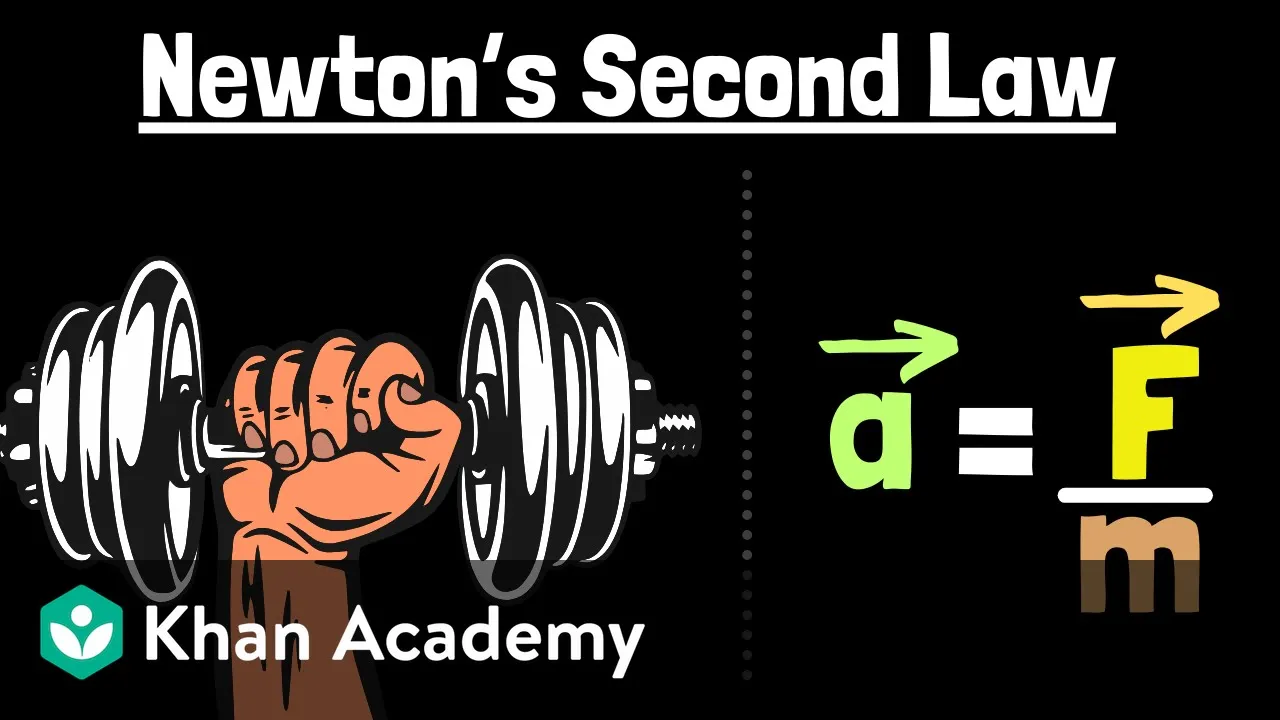
Added:Newton's Second Law of Motion (F = ma) and the concept of inertia.
The ability to draw accurate Free Body Diagrams (FBDs) to identify all external forces acting on a body.
Fundamentals of static equilibrium, particularly the conditions where the sum of forces and moments equal zero.
Basic kinematics, specifically understanding how to calculate linear and angular acceleration of particles and rigid bodies.
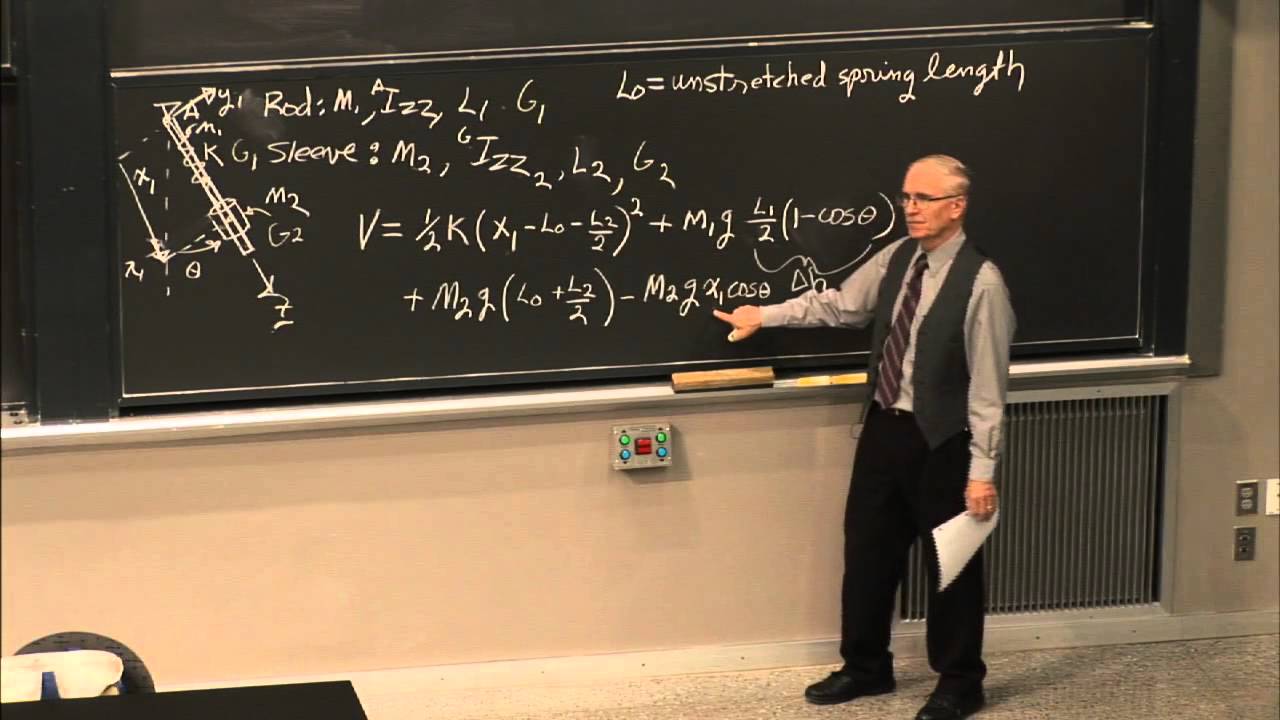
The Principle of Virtual Work, which serves as the theoretical extension of D'Alembert's principle for complex systems.
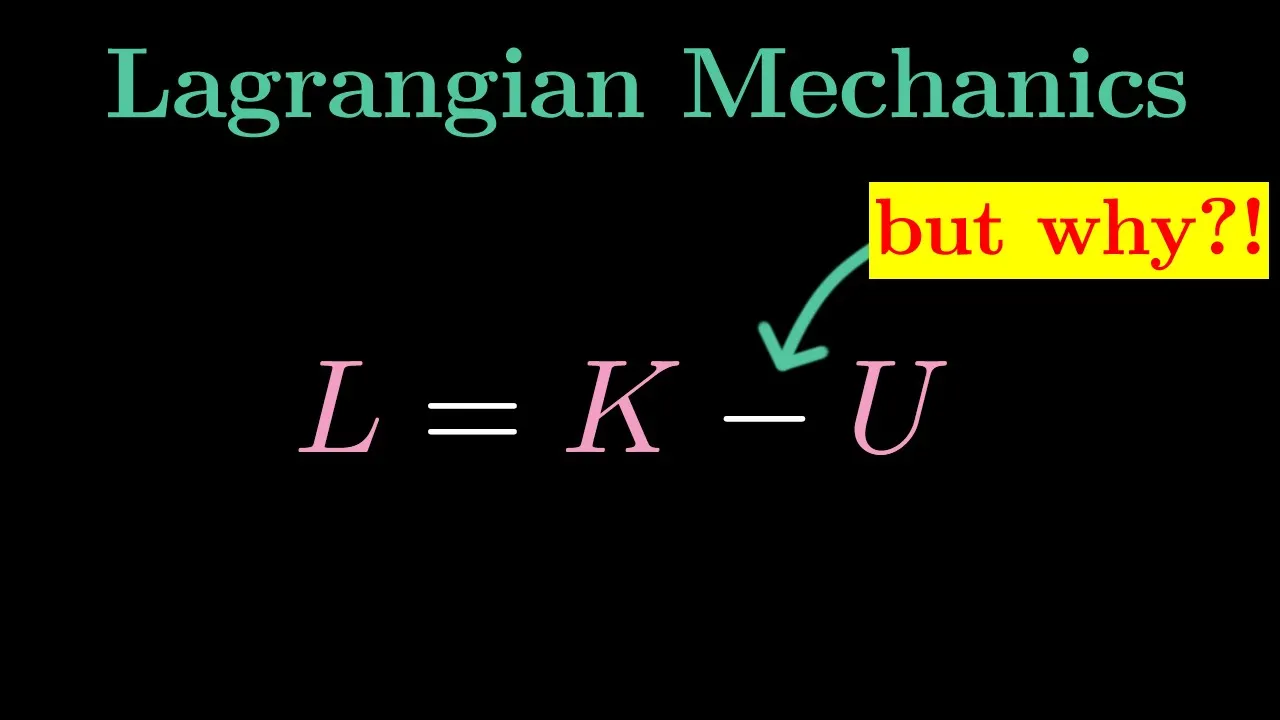
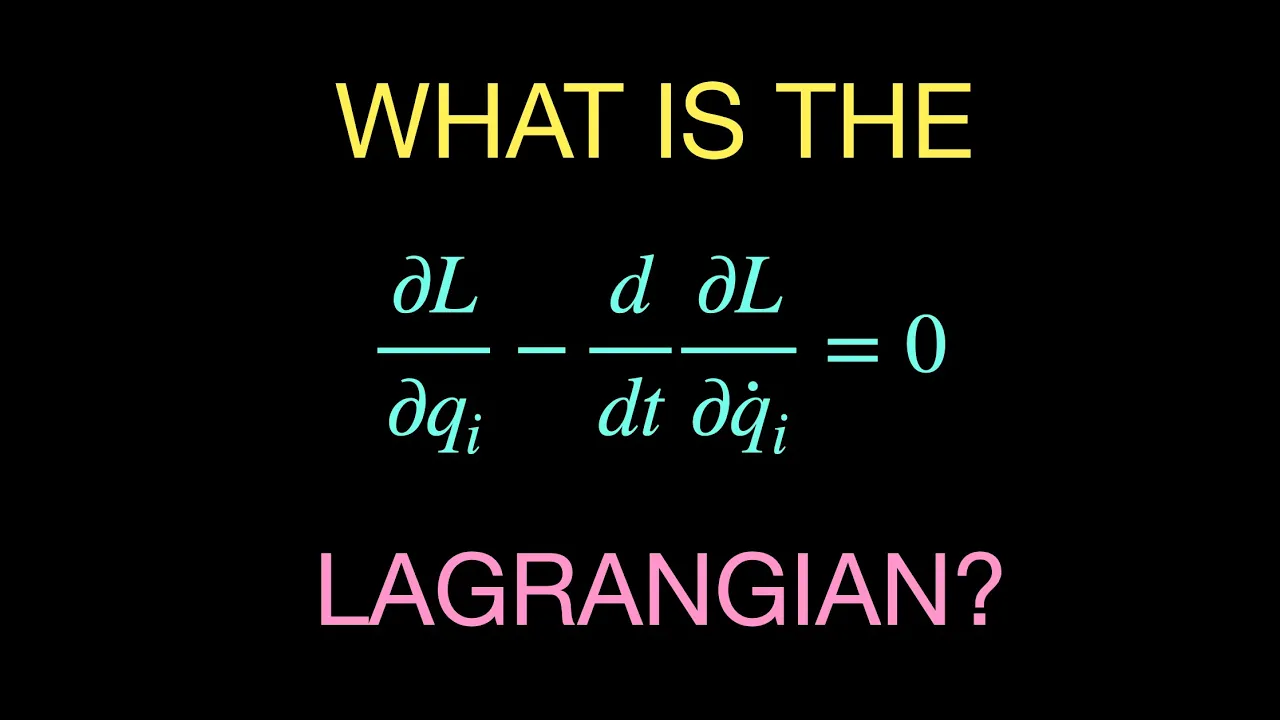
Lagrangian Mechanics, utilizing generalized coordinates to derive equations of motion for multi-degree-of-freedom systems.
Analysis of dynamic systems with holonomic and non-holonomic constraints without the need to calculate constraint forces.
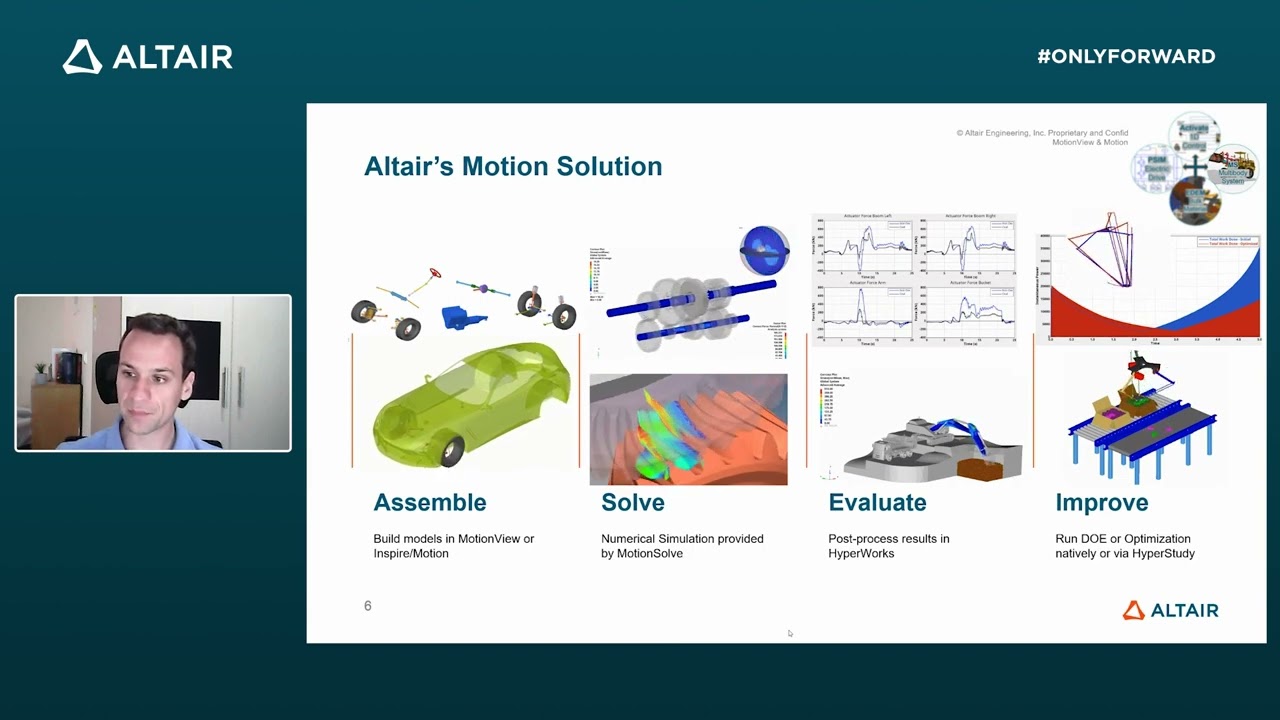
Applications in Multi-Body Dynamics (MBD) software used in aerospace and automotive engineering to simulate vehicle and robotic motions.
269.3K views4.9Klikes19:54Original Release: 2017-12-14
want to learn engineering and science will you've tuned in to the right channel it's subscribe and press the bell icon and never miss an update from us hey guys what's up this is your friend on Twitter - and it's gonna be hittin a decision in this lecture series on engineering mechanics well today we're gonna be beginning with a very important topic on dynamics that is the kinetics of a particle this is also known as particle dynamics now this essentially is based on three important principles starting off with ta language principle then we have the work-energy principle and then finally we're going to go through the impulse momentum theory okay now in this part 1 of this video series I'm going to talk about D alembert principle which is absolutely based on the Newton's second law of motion when you talk about the work-energy principle this in fact is completely based on the difference of kinetic energy it states that the kinetic energy at position 1 minus the kinetic energy at position 2 is equivalent to the work then okay or the difference in kinetic energy at two different points two different position is equivalent to the work done and then finally in the third video of this lecture series we'll actually go through this impulse momentum theory ok and this actually talks about the law of conservation of momentum right so in this lecture let's talk about this fellow John garand hello Bert okay now in order to clearly understand what this theory has to say we need to go through Newton's second law of motion Newton's second law of motion but I'm pretty much sure that you guys must have gone through Newton's second law of motion in ninth grade tenth grade or in 11th grade right but I'll briefly explain to you what it is okay so let's say we have a body let's say this body is having a mass m and this body in fact is acted upon by a bunch of forces let's call this forces f1 this is f2 and this as f3 now the effect of all these forces is going to be like this all of this is gonna have one single resultant something of this sort okay let's just assume hook and minion sir for simplicity that the overall effect of this forces is having a resultant of magnitude R and which is going to induce the body to move somewhere along in the horizontal direction let's say in the X direction right so what Newton's second law of motion says that the summation of all the forces of all these forces acting on a body is equal to the product of mass this M multiplied by the acceleration so this is essentially a mathematical expression of the second law of motion now what we will do right now is that we'll try to apply the Newton's second law of motion and we will try to calculate either the force or the acceleration let me try to explain you what exactly I am trying to say so here we go let me remove one of this and let's just say that upon this frictionless surface this is ground in fact you can see this is frictionless frictionless shortcut okay let's say we have a body having a mass let's just assume this mass has 10 kgs and let's just say that this is being acted upon by flow forces from two different directions now let's say this force is having a magnitude of hundred new things and one more force is there okay acting from the right to the left of your screen something of this sort and this in fact is having a magnitude of let's just assume it as 50 Newtons okay so how can Newton's laws of motion or the second law of motion help us in calculating the acceleration that this body is going to have or this object is going to have acceleration okay let's see that the acceleration is represented by small e okay so what Newton's law says is this summation of all the forces is if you will do let's say in the x-direction right now we are working in the X direction this way this is the y axis and none of the forces are acting in the Y direction so analysis along this axis is not Twitter analysis along the x-axis is to be carried out right now submission of all the forces in X direction is equivalent to the product of mass and acceleration so what are the forces acting 150 100 is towards the right taken as positive and if there is a force acting over here it has to be taken as negative so we have this hundred positive we have this 50 negative and all of this is going to be equal to the product of mass how much is the mass it's 10 kgs so they could write this as 10 multiplied by acceleration so guy is you essentially we need to solve this equation right and then you're going to immediately get the value of acceleration this is 100 minus 50 is 50 50 over 10 is obviously 5 so the value works out as 5 meter per second squared so this is the acceleration that this object or this body or this system is going to acquire when these two forces are acting simultaneously that is 5 meters per second square okay let let me give you one more intuition in this concept of acceleration what we basically calculated basically calculated is this acceleration has 5 meter per second squared so you can essentially say or you can essentially write this as 5 meter per second per second what does this mean this means in a span of one second the body will acquire a velocity of five meters per second or will increase the velocity of the body will increase by an amount of five meters per second so initially the velocity is going to be zero but let's say at T is equal to one second the velocity is going to be five meters per second right and let's say at T is equal to 2 so previously it is 5 5 mu so the velocity at T is equal to seconds is going to be equal to 10 meters per second so this is why acceleration is so helpful in computing the velocities are different time spans right and this actually is a sort of an equation of motion which is this one final velocity is equal to initial velocity plus acceleration / time okay so if the initial velocity is zero and you take this T is equal to 1 T is equal to 1 you have the acceleration over here in the form of 5 5 into 1 is how much it's going to be equal to 5 it's silver so the no CT final is 5 right so guys that was all about the computing acceleration by applying the Newton's second law of motion okay let me rub all of this I'm pretty much sure that up till now you must have got a good idea as to what this Newton's second law of motion has to say and how this can be applied to calculate the value of acceleration now let's take one more example and here we are not going to calculate the acceleration we will be given the acceleration and we will try to find the force by which that sort of acceleration can be produced let me try to draw this and we can understand this in a bit away let's say we have a body okay so this body over here is having a mass the came 10 kgs let's say people now apply a force whose magnitude is unknown let's just assume that this force now is represented by P okay now due to this force P this body is having an acceleration of let's just assume this has 5 meters per second squared so what we are supposed to do is we have to calculate this force P because of which this 10 kg block its accelerated by an amount of 5 meters per second square this is going to be very simple so you have to just apply the Newton's second law of motion it goes like this summation of all the forces and here the forces acting are around the x-direction so we have to take this subscript is equal to mass into acceleration force obviously is P okay and again assuming this as frictionless right there is no friction kinetic friction is equal to mass is how much this is sin x what it's the acceleration that's 5 so in this way you can actually compute the value of Force which needs to be applied at this P which is going to work out noodles in order to produce an acceleration of 5 meter square per second square right so this was all about the application of Newton's second law of motion so guys let's take the session forward and let's try to understand what this fellow Sean did on a limb but has to say ok for understanding his principle what will do is will again consider a frictionless surface and let's see above this frictionless surface we have a body having a massive okay now this mass M is being acted upon by a bunch of forces again say in the form of F 1 and F 2 let's take this F 3 also now all the three forces can be written by one single force in the form of resultant let's say the resultant for simplicity be acting somewhere along in the horizontal change because of which there is going to be some motion along this direction okay and the collective effect of these forces can be written in the form of mass into acceleration what we'll try to do is well we're going to enclose this in a system like this okay and let me tell you what da Lebert has to say D alembert says that if this entire thing is assumed as one single system and since this is in motion and in order to bring the system in to pilgrim what we need to do is we need to apply a force of same magnitude that is mass into acceleration but in the opposite direction of motion so this is the direction of motion and this force is actually acting in the opposite direction of motion and this force is what he terms as the inertial force inertial force so that is according to D alembert's this is what he says summation of all the forces okay acting on the system acting on the body acting on the object - the inertial force right this is if inertial is equal to Z so in order to break the system which is in motion we need to apply a force of equal magnitude mass into acceleration but in the opposite direction and this equilibrium he terms it as the dynamic equilibrium trying to make equilibrium okay now you guys must have heard about static equilibrium let's take this duster for example okay what is the state this duster is in right now it's in static Librium right all the forces the atmospheric are due to the atmospheric pressure there are forces acting from this side from this side from this side and this side and there is going to be a reaction offered from my hand from the palm of my hand over here right but thus this just a move no it does not okay so this gesture can be assumed to be in a state of static equilibrium but as far as this moving object is concerned this is right now in a state of dynamic equilibrium this is sort of a figment of imagination okay anyways if you were to frame the statement of diella but it would be something like this a system of forces acting on a body in motion is in dynamic equilibrium with the inertial force so that was the statement of T alembert's now let's take up one more example and with the help of this example I will try to help you to frame the equation with the help of Newton's second law of motion and also with the help of TLM words okay so here we go let made up all of this and this example that we're going to take right now is going to be absolutely based on an inclined plane so let's say we have an inclined plane over something like this and onto this plane we get we do have to body an object something of this sort having a weight double okay now let's say that the inclined plane is at an angle of theta right so I'm gonna be doing two different stuffs over here I'm gonna be applying the Newton's second law of motion and over here they're going to see that we are going to be framing the equation with the help of D alembert's principle let's go ahead and do this so since this block is in contact with this inclined plane let's just assume that this over here is having a friction let's say mu K right wait is obviously gonna act a downward so it's gonna be something like this like this this is gonna be tough Lu and but this way this way this w is gonna have to comprehend like this this is what do you call it up new cosine theta now obviously this is gonna be theta this is gonna be w cosine theta and over here this component is what you referred to as the blue sine of theta so this is actually for our convenience the access that we are going to be taking this is the x-axis and this over here is the y-axis right and let's just say this is the positive x-axis right since motion is going to happen somewhere along this direction we will try to frame the equation from both of these philosophies okay since the object is in contact with this plane so this plane is going to offer some sort of normal reaction absolutely perpendicular to this plane we're going to have a normal reaction let's just say this normal reaction is given by n right now since there is some kind of friction that this surface is offering to this flow so there is going to be a friction force also now obviously because of gravity this block will have a tendency to go downwards because of which there is going to be a friction force acting along this direction if we go ahead and make this friction force will be along this direction it's magnitude is going to be mu n so since we're dealing with moving bodies we have to use this kinetic friction mu K in right so first of all let us try to frame the equations with the help of Newton's second law now Newton's second law is this summation of all the forces is equal to mass multiplied by acceleration so there are essentially two different modes in which the forces have been lined up one along the plane while the other perpendicular to the plane X and that's going to be Y okay let me take this into consideration summation of all the forces in X Direction is going to be equal to mass into acceleration because it's going to move okay it's going to be in motion in the x axis that's why - into acceleration as well as the y axis is concerned there is no motion and here the summation of forces is going to be equal to C okay so W sine theta since this direction is positive so we have this W sine theta okay what else so we've got this mu K in so we have used this let me circle this I'm going to write this as minus mu K in anything else so I can use this also right so these are the two forces acting along this direction and both of them will be equal to mass into acceleration there is something else that you can do you can do this summation of all the forces in Y Direction is equal to zero why because there is no movement if there is no movement there is no motion and there is not going to be any acceleration that means acceleration is zero so if acceleration is zero M into a zero is zero so summation of all the forces will be zero so we have this let's take this as positive if we have this let's take this as negative so n minus W cosine theta n minus W cosine theta is equal to zero so this is exactly how equations can be framed with the help of Newton's second law of motion this is going to be an equation to one and this is going to be our equation two now let's do the same stuff with the help of this guy the alembert's principle like this completely okay so what dlm bird is trying to say is this okay he modifies the Newton's second law of motion so as far as English grammar is concerned you must have heard about active and passive voice so if you consider Newton's second law of motion as the active voice then this over here summation of all the forces minus ma is equal to Z is going to be the passive voice in which this over here is the inertial force and this over here is the system of forces system of forces the object on the body okay whatever you may call it anyways so let's try to do this analysis like if someone along the x-axis along the x axis motion analysis right so we have this w cosine theta okay let's write this w sine theta anything else we have this mu K in again this is opposite minus mu KN and if we apply an inertial force minus of mass into acceleration then all of this entire stuff will be in dynamic equilibrium that's it so what DMM Burt has done is he's written the passive form of this equation right and this stuff is going to be exactly the same you no need to worry much about this summation of all the forces in Y Direction is equal to zero you've got this reaction force n upwards and this w cosine theta downwards so n minus W cosine theta is equal to zero so these are the two equations and a bunch of outputs can be calculated so guys in this lecture we've seen the Newton's second law of motion and how it is deeply connected with the T alembert's principle again I would like to explain this summarize this dueting second law of motion mathematical formulation is this summation of all the forces is equivalent to the mass into acceleration and if you bring this mass and acceleration product of mass acceleration over here something of this sort this automatically can be referred to as the inertial force which when applied in the opposite direction of motion will bring the entire system in the state of dynamic equilibrium and that's exactly what John Doe non-olympic has tried to explain his theory so guys that was all from my side for today if you've got any doubt or query to write them down in the comment section below I'll be very happy to answer them and if you believe that this video tutorial has added value to your knowledge of engineering I can then do share in like this video subscribe to the channel and also press the Pelican so that whenever I upload a new video you get a notification you get an update and also to tell your friends about this channel so that they can also benefit anyways I'm gonna be back with one more video in this series which is going to be based on work and energy until then it's a wrap this is - but Nyak signing off take care have a great day keep learning
Up Next

28:58
Optimizing Industrial Bioreactor Design for Biofuel Production
@ProfSeleghim
6K views•2012-10-01
30:32
Ultrasonic Transducers: Resonant Frequency Measurement and Horn Design
@imajeenyus42
229.9K views•2017-02-22
54:16
Polymer Environmental Degradation: Mechanisms & Stabilization
@iit
1.8K views•2012-07-10
33:39
How a Student's Question Saved a NYC Skyscraper from Collapse
@veritasium
22.8M views•2025-04-26
Related Study Plans & Knowledge Roadmaps
Structured learning paths in Engineering
engineering
Building Acoustic Levitators: Physics & Arduino
01The Physics of Sound and Standing Waves
02Piezoelectric Transducers and H-Bridge Drivers
03Arduino Programming: Generating 40 kHz Signals
+ 2 more learning modules
14h5 modules
Explore Roadmap
engineering
Building Peltier Cloud Chambers: Particle Tracks
01Cosmic Rays & Cloud Chamber Physics
02Thermoelectric Cooling (TEC) Fundamentals
03Custom Liquid-Cooling Loop Design
+ 2 more learning modules
18h5 modules
Explore Roadmap
engineering
Yagi-Uda Antennas: Modeling, Build & VNA Test
01Introduction to RF and Antenna Fundamentals
02Yagi-Uda Antenna Design Principles
03Antenna Modeling and Simulation in 4NEC2
+ 2 more learning modules
18h5 modules
Explore Roadmap
engineering
ECG Monitor Design: Op-Amps, Filters & Noise
01Electronics & Breadboard Basics
02Op-Amps and Instrumentation Amplifiers
03Bioelectricity and ECG Fundamentals
+ 2 more learning modules
18h5 modules
Explore Roadmap