Self-help evictions, where landlords illegally attempt to force tenants out by shutting off utilities or changing locks, are illegal under Florida law and can cause severe harm to vulnerable tenants, as demonstrated by a case where a landlord cut off water and electricity to a family with a six-month-old baby, forcing them to use a car for cooling and pipe water from a neighbor's home.
Illegal Landlord Self-Help Evictions: Utility Shutdowns Explained
Added:Deep Dive
The basic legal structure of a residential lease agreement and the mutual obligations of landlords and tenants.

Аренда квартир. Как сдать квартиру. Все об обязанностях наймодателя.
3K
A comprehensive residential lease agreement must include seven key obligations for the landlord: (1) a 30-day notice period before requiring the tenant to vacate; (2) compensation equal to one month's rent if the landlord terminates the contract early (within 6 months); (3) landlord's right to inspect the apartment only once per month with prior tenant agreement; (4) landlord's obligation to repair furniture and appliances within 3 days if not caused by the tenant, with the tenant's right to self-repair and cost deduction; (5) landlord's full material responsibility for property defects even if unknown at signing; (6) mandatory return of security deposit in full upon move-out; and (7) landlord's guarantee of legal ownership rights and consent from all property owners.
Click to watch →

Содержание договора найма жилого помещения
153
A residential lease agreement establishes mutual obligations between the landlord (naym odatel) and tenant (naym atel): the landlord must provide a habitable, isolated dwelling (such as an apartment, house, or part thereof) and maintain it in good condition with proper utilities, while the tenant must use the property for residential purposes only, ensure its preservation, pay rent and utility bills, and family members living together share these rights and obligations.
Click to watch →
Landlord-Tenant Law: Leasehold Estates Explained | Bar Exam Property Law Guide
329
Landlord-tenant law governs property relationships through lease agreements, creating two distinct property interests: the landlord retains fee simple absolute ownership with a reversionary interest, while the tenant receives a leasehold estate granting possessory rights. Four leasehold types exist: tenancy for years (fixed term with automatic termination, over one year requires written statute of frauds compliance); periodic tenancy (renews successively until terminated by notice); tenancy at will (continues indefinitely until either party terminates); and tenancy at sufferance (holdover after lease expiration, creating liability for use and occupancy fees). Tenants owe obligations to pay rent (except for natural disasters or landlord material breach) and avoid waste by returning property in original condition. Landlords must deliver possession and have implied repair obligations in residential leases, absent in commercial leases. Residential leases contain implied covenants: warranty of habitability requiring habitable premises, and covenant of quiet enjoyment guaranteeing possession rights. Breaches occur through actual eviction (physical exclusion terminating lease) or constructive eviction (substantial landlord-caused interference making premises uninhabitable, requiring tenant vacatur within reasonable time).
Click to watch →

Lease Agreement Basics: Guide for Landlords and Renters
407
A residential lease agreement is a legal contract between a landlord (property owner) and tenant (occupant). Key elements include: landlord responsibilities for property safety, maintenance, and habitability; tenant obligations for rent payment, property care, and minor repairs; requirements for written agreements exceeding one year, signed parties, property description, and legal disclosures; termination rights for both parties under specific conditions like non-payment, violations, or protected status; security deposit rules with return timelines; eviction procedures requiring valid grounds; lead-based paint disclosures for pre-1978 homes; and the implied warranty of habitability ensuring livable conditions. State-specific laws govern many aspects, making local research essential.
Click to watch →

⚖️🏠 LOCATAIRES & PROPRIÉTAIRES : quels sont réellement vos droits et devoirs ?
108
Under Law 2018-575 of June 13, 2018, a tenant is a natural or legal person who takes residential property under lease, while a landlord is the owner who grants the property. Landlords must conduct joint inventories before and during the lease, deliver properties in good condition without defects, and provide rent receipts. Major repairs (roof, walls, waterproofing, plumbing) are the landlord's responsibility, while minor repairs (faucets, light bulbs) fall to tenants. Tenants must behave as good heads of household, pay rent according to contract terms, and can perform urgent repairs without waiting for landlords, provided they inform the landlord and can deduct costs from future rent.
Click to watch →
Deep Dive
The standard, legally mandated judicial eviction process (unlawful detainer/summary procedure) as opposed to informal removal.

Tenant eviction vs unlawful detainer. How to make your child move out of your home.
270
An unlawful detainer action differs from a landlord-tenant eviction in that it applies when there is no formal rental agreement—such as when an unmarried partner or family member lives in a home owned by another person without paying rent—and requires filing a lawsuit similar to eviction, taking approximately one to three months to resolve through summary procedure; unlike landlord-tenant cases where tenants can claim three months of rent damages for illegal lock changes, unlawful detainer cases involve common law actions with no statutory damage formula, though occupants may recover consequential damages like hotel costs if wrongfully removed.
Click to watch →
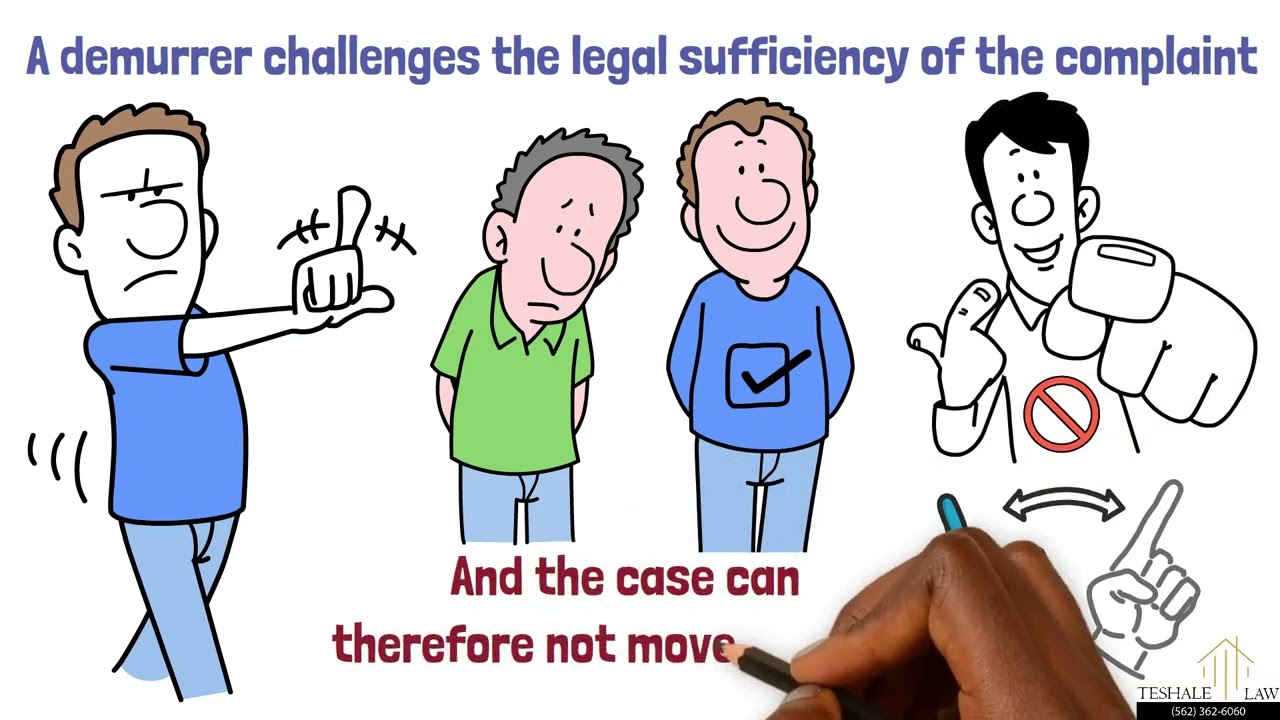
The California Eviction Process (Unlawful Detainer)
570
The California unlawful detainer process involves four stages: (1) Notice and Response, where landlords serve notices (3-day pay/quit, 3-day quit, 30-day quit, or 60-day quit) and tenants have 5 days to respond by filing an answer, demurrer, or motion to quash; (2) Pre-trial Preparation, including discovery methods like interrogatories and depositions, and settlement negotiations; (3) Trial, which can be a bench trial or jury trial with opening statements, witness testimony, evidence presentation, and closing arguments; and (4) Post-trial, where the court issues a judgment and tenants may pursue appeals or seek a stay of execution.
Click to watch →
Unlawful Detainers in California - What you Need to Know
7.3K
The unlawful detainer process in California begins after the notice period expires, involving filing a court complaint, serving the tenant through personal service (5-day response), substituted service (15-day response), or posting (15-day response), followed by either a trial or default judgment, then obtaining a writ of possession which allows the sheriff to post the order and force removal after 5 business days; critical factors include accuracy in documentation, avoiding any rent acceptance which restarts the process, and properly listing all occupants to prevent legal challenges.
Click to watch →

How to evict a family from your home using an unlawful detainer action
960
Summary procedure accelerates unlawful detainer cases from standard 20-day timelines to just 5 business days, recognizing property possession as a fundamental right. After this period, plaintiffs obtain default judgments through court clerks and judges. Enforcement follows via writ of possession, where sheriffs post 24-hour notices demanding vacatur. The sheriff returns to peacefully escort occupants while property owners oversee removal of belongings. This expedited system balances swift resolution with due process, ensuring property owners can reclaim their homes efficiently while maintaining legal protections throughout the process.
Click to watch →

Unlawful Detainer (Eviction) Process: From a Landlord's Perspective
600
The unlawful detainer (eviction) process requires landlords to follow a strict legal sequence: first, provide appropriate written notice (3-day for non-payment or curable violations, 30-day for tenants under 1 year, 60-day for tenants over 1 year, or 90-day for Section 8 housing), then file the complaint with the court, serve the tenant, wait for the response period (5 court days for personal service, 10 days for substituted service), and finally obtain a writ of possession from the court to execute eviction through the Sheriff's Office. Landlords must comply with the Tenant Protection Act (TPA), which requires just cause for eviction (no-fault reasons like family moving in or property withdrawal, or at-fault reasons like non-payment or lease violations) and may require relocation assistance for no-fault evictions.
Click to watch →
Deep Dive
The concept of the 'implied warranty of habitability,' which legally obligates landlords to provide access to vital utilities like water, heat, and electricity.
ProfDale Property Video 24 The Landlord's Implied Warranty of Habitability
7K
The implied warranty of habitability is a legal doctrine developed by Hawaii and New Jersey courts approximately 60 years ago that holds landlords responsible for maintaining residential properties in conditions that comply with local housing codes and ensure the health and safety of tenants; this warranty applies only to residential leases and provides tenants with flexible remedies including terminating the lease, recovering damages through rent refunds, withholding rent until repairs are made, abating future rent, or repairing defects themselves and deducting costs from rent, while landlords cannot waive this warranty or defend against it by claiming tenants assumed risks or made complaints in bad faith.
Click to watch →

Habitability 101 - Your Right to Decent Housing- Presented by Housing and Economic Rights Advocates
1.9K
The implied warranty of habitability is a legal protection in every California residential lease that requires landlords to maintain rental units in a condition fit for human occupancy, including functional plumbing, heating, electrical systems, and structural integrity; tenants can enforce this right by documenting conditions, notifying landlords in writing, and pursuing remedies such as repair and deduct, vacating the premises, or seeking assistance from local health departments or code enforcement agencies, while also being protected from landlord retaliation for 180 days after reporting habitability issues.
Click to watch →

The Implied Warranty of Habitability: Property Law 101 #80
2.2K
The implied warranty of habitability is a legal protection for residential tenants that guarantees landlords will provide clean, safe, and habitable living spaces, emerging from tenants' rights movements in the 1960s and 1970s and adopted in all U.S. states except Arkansas; this warranty is typically tied to housing codes, which are local ordinances requiring landlords to maintain minimum standards like temperature control and pest-free conditions, though enforcement challenges persist due to limited resources and insufficient legal remedies for affected tenants.
Click to watch →

Handling Issue of Habitability // Joint Webinar Recording
258
The implied warranty of habitability, established in Green v. Superior Court (1974), requires landlords to maintain habitable premises regardless of rent amount. This warranty is implied in every residential lease, even if silent. Landlords must maintain structural elements (roof, walls, windows, doors), plumbing, gas lines, hot/cold water, and lawful sewage connections. Heating must maintain 68-70°F throughout the unit; plug-in heaters and fireplaces do not satisfy legal requirements. Electrical safety requires GFCI outlets in wet areas. Sanitation requires adequate trash receptacles and clean exterior areas. Handrails must be grippable with proper returns. Guardrails require minimum 36-inch height (42 inches recommended). Door locks must allow emergency egress. Tenants must clean, remove garbage, properly use appliances, and ventilate during showers. Landlords should install automatic humidity-controlled exhaust fans to prevent mold. California Health and Safety Code Section 17920.3 defines substandard conditions including inadequate sanitation, heating, ventilation, dampness, bugs, rats, mold, and sewage. Landlords must comply with both state and local codes. Proper mold remediation requires licensed experts who identify leak sources, follow proper protocols, and verify resolution through pre- and post-remediation testing. Closed-cell construction (stucco over wooden decks) creates unventilated spaces where condensation causes mold and dry rot leading to structural failure. Pre-1978 properties require lead testing before renovations, and landlords must follow statutory abatement procedures for lead and asbestos.
Click to watch →

Court Laughed at an 9-Year-Old Black Boy — Until He Used His Legal Genius to Protect His Mom
66.3K
This segment explains the implied warranty of habitability, a legal doctrine requiring landlords to maintain safe, livable conditions. Any violation can void a tenant's obligation to pay rent and make the landlord liable for damages. Malik discovered this legal weapon while researching property law. He also learned that next friend representation under Federal Rule 17C allows individuals who lack capacity to sue to have someone else file motions on their behalf. This enabled Malik to represent his hospitalized mother in court, demonstrating how legal knowledge can be weaponized against powerful opponents.
Click to watch →
Deep Dive
The jurisdictional distinction between local housing authority rules, state statutes, and civil court systems in property disputes.

أصول المحاكمات المدنية، الاختصاص المحلي للقضاء العادي و نظرية المحاكمة
108
For real estate disputes (dعاوى العينية العقارية), personal rights disputes related to property (الدعاوى الشخصية العقارية), and possession disputes (دعاوى الحيازة), jurisdiction belongs to the court whose territorial jurisdiction includes the property or part of it. If multiple properties are involved in a single contract, the plaintiff can file in any court whose jurisdiction includes any of those properties. This rule applies regardless of which property is larger or more significant. The rules of local jurisdiction are matters of public order (قواعد من النظام العام), meaning courts must apply them ex officio and cannot be waived by parties.
Click to watch →
شرح مبسط للإختصاص المحلي للمحاكم حسب قانون المسطرة المدنية
378
The legislature has established numerous exceptions to the general territorial jurisdiction rule in civil courts. For real estate disputes, jurisdiction belongs to the court of the property location. In mixed disputes involving property rights, jurisdiction may belong to either the court of the property location or the defendant's domicile. Maintenance disputes allow jurisdiction at either the defendant's or plaintiff's domicile. Medical treatment and food product disputes fall to the court of the place where treatments or products were provided. Compensation disputes belong to the court of the place where the harmful act occurred or the defendant's domicile. Construction and contract disputes follow the court of the place where contracts were concluded and performed. Public works disputes belong to the court of the place where works are executed. Tax disputes belong to the court of the place where taxes are paid. Capacity disputes belong to the court of the legal domicile of minors or incapacitated persons. Insurance disputes belong to the court of the insured's domicile or the place where the harmful act occurred. Employment disputes belong to the court of the establishment's location or where contracts were performed. Workplace accident disputes belong to the court of the accident location, with exceptions for accidents abroad.
Click to watch →

ЖИЛИЩНОЕ ПРАВО. ЛЕКЦИЯ ОТ 14.06.2020 Г.
560
This section covers the distinction between housing relationships and civil law relationships, and the obligations of property management companies. Housing relationships involve provision of housing services governed by the Housing Code, while civil law relationships involve general obligations governed by the Civil Code. Some disputes involve mixed legal relationships incorporating elements of both. The section covers jurisdiction and venue, explaining that most housing disputes are heard in municipal courts while more complex cases may be heard in district courts. It covers the scope of municipal court jurisdiction over utility payments, property management services, and minor property disputes, as well as filing fees and exemptions. The section also covers types of claims available including specific performance, damages, and declaratory relief.
Click to watch →
3/28/2023 - Assembly Committee on Growth and Infrastructure
105
State statutes can be amended to allow local authorities to adopt ordinances with different civil penalties. When a local authority adopts such an ordinance, persons who commit the prohibited conduct shall be subject to the local ordinance's provisions and civil penalty rather than state law. This preserves local jurisdiction's ability to handle issues according to their specific circumstances.
Click to watch →

Eugene City Council Work Session: March 13, 2019
167
Some housing issues require state-level action (particularly tenant-landlord law), while others fall within local jurisdiction (rental housing code). Understanding these jurisdictional boundaries is essential for effective policy development and implementation.
Click to watch →
Prerequisite Knowledge
- Concept 01The basic legal structure of a residential lease agreement and the mutual obligations of landlords and tenants.
- Concept 02The standard, legally mandated judicial eviction process (unlawful detainer/summary procedure) as opposed to informal removal.
- Concept 03The concept of the 'implied warranty of habitability,' which legally obligates landlords to provide access to vital utilities like water, heat, and electricity.
- Concept 04The jurisdictional distinction between local housing authority rules, state statutes, and civil court systems in property disputes.
Subsequent Learning
- Step 01Florida Statute Section 83.67 (Prohibited practices) and the specific statutory damages (e.g., three months' rent) tenants can recover for violations.
- Step 02The legal doctrine of 'constructive eviction' and how it applies when a landlord's neglect or intentional actions render a property uninhabitable.
- Step 03The procedural steps for drafting and filing an emergency motion for injunction or a tenant petition for relief in Florida county courts.
- Step 04How to identify and legally counter 'retaliatory eviction' when a landlord attempts self-help after a tenant complains about housing violations.
Illegal Eviction
Restoration Efforts
Illegal Eviction
0:00Playing Section
- 1
Landlord shut off utilities for baby, breaking law.
- 2
Family endured no power, water; food spoiled.
Property Owner Recourse and the Burden of Formal Eviction Processes
While illegal self-help measures like utility shutdowns are strictly prohibited by law, property owner advocacy groups highlight the severe financial burdens that the formal judicial eviction process imposes on landlords, especially small-scale owners. From this perspective, the legal system can be slow, costly, and easily exploited by non-paying or destructive tenants. While not justifying illegal acts, this viewpoint argues that landlords are often forced to subsidize housing costs—such as mortgages, taxes, and utility bills—for occupants who are violating their leases. Proponents of this perspective advocate for streamlined, accelerated legal eviction procedures to prevent landlord financial ruin, arguing that a more balanced and efficient legal system would reduce the desperation that drives landlords to resort to illegal self-help tactics.
Deep Dive
Florida Statute Section 83.67 (Prohibited practices) and the specific statutory damages (e.g., three months' rent) tenants can recover for violations.

Massive Deportations Begin in Florida 2026 — Millions Losing Homes Overnight!
1.1K
Florida Statutes section 83.67 prohibits landlords from terminating utility services or restricting tenant access to premises during detention. Violations allow tenants to sue for damages up to 3 months rent plus attorney fees. Security deposit regulations under Section 83.49 require landlords to return deposits within 15 days of vacating, or send certified claims within 30 days. For detained tenants, certified mail sent to the vacated property creates procedural barriers preventing tenants from filing objections, resulting in automatic forfeiture of deposits.
Click to watch →
¿SOY INQUILINO YTENGO UN CONTRATODE ARRENDAMIENTO? ⚖️🏨
107
In Florida, a person living in a hotel room for an extended period (such as three months) with no other residence and personal belongings may be considered a residential tenant rather than a transient hotel guest, which means they have legal protections against immediate removal and self-help eviction (changing locks, disposing of belongings) under Florida Statute Section 83.67, and may be entitled to damages including actual damages or three months of rent for each incident of illegal eviction.
Click to watch →

Florida's NEW 2026 Immigration Laws – Somali Families Suddenly at Risk
37.2K
Florida statute section 83.67 prohibits self-help evictions including changing locks, removing belongings, shutting off utilities, or physical intimidation. Tenants subjected to self-help eviction are entitled to recover the greater of three months rent or actual damages plus attorney's fees. The Federal Fair Housing Act (42 USC section 3604) prohibits housing discrimination based on national origin. Landlords who refuse to rent to Somali families or threaten tenants with immigration enforcement may be violating federal civil rights law.
Click to watch →

THESE New Florida Laws Will DEPORT All Illegals IMMEDIATELY!
391
Florida statute section 83.67 prohibits landlord self-help evictions. A landlord in Florida cannot remove a tenant by changing the locks, removing doors or windows, cutting off utilities, or removing the tenant's personal property, regardless of the tenant's immigration status or the landlord's frustration with the situation. Any eviction must go through the formal court process under section 83.56 and section 83.57. A landlord who conducts a self-help eviction is liable to the tenant for actual damages or 3 months rent, whichever is greater, plus attorney's fees.
Click to watch →

Landlord Prohibited Practices - English
355
Florida law requires landlords to follow a strict court process to evict tenants, including serving a notice, filing a lawsuit, obtaining a judge's final judgment, and having the sheriff issue a 24-hour notice; landlords cannot use self-help methods like cutting utilities or changing locks, as Florida Statute 83.67 prohibits such actions and imposes penalties including three times monthly rent damages and mandatory correction of violations.
Click to watch →
Deep Dive
The legal doctrine of 'constructive eviction' and how it applies when a landlord's neglect or intentional actions render a property uninhabitable.
How to Sue Your Landlord -- Constructive Eviction || Real Estate Explained #318
2.5K
Constructive eviction is a legal doctrine that allows tenants to terminate their lease and avoid paying rent when landlords substantially breach their obligations, specifically by neglecting to provide essential services like heat, hot water, or electricity, thereby violating the tenant's covenant of quiet enjoyment; to successfully claim constructive eviction, tenants must prove five elements: (1) the landlord neglected to maintain or repair a vital service essential for habitability, (2) the tenant provided proper notice to the landlord about the neglect, (3) the landlord's neglect made the premises uninhabitable, (4) the tenant vacated the property within a reasonable time after serving notice, and (5) the landlord failed to remedy the situation; tenants should consult local legislation and an attorney before pursuing this legal action.
Click to watch →
2026 Real Estate Exam Prep | 100 Questions (Part 2)
23.5K
Constructive eviction occurs when a landlord's negligence or failure to maintain the property makes it uninhabitable, forcing the tenant to abandon the property. Examples include failure to provide heat in winter months. This is a tenant remedy. The opposite is actual eviction, which is a landlord remedy typically for non-payment of rent or other lease violations.
Click to watch →
Illegal Evictions with Attorney William Merrifield | The Legal Zone Blog & Podcast Episode #22
28.7K
Constructive eviction occurs when a landlord intentionally fails or interferes with the tenant's intended enjoyment of the property, making it so uncomfortable or uninhabitable that the tenant must leave voluntarily. When this happens, tenants have two options: stay and sue for damages or vacate and then sue for damages.
Click to watch →
Wild Court Moments #189
35.2K
Constructive eviction is a legal doctrine that prohibits landlords from taking actions that make a property uninhabitable, such as cutting off utilities. This doctrine has been part of Michigan law for over 50 years and protects tenants from being forced to leave their homes due to landlord actions. Landlords have legal obligations to maintain habitable living conditions, including providing working utilities. Landlords who are not aware of these legal requirements may inadvertently violate tenant rights.
Click to watch →

Judge Gives SovCit “Karen” a Harsh Reality Check — Sovereign Citizens React!
476
Constructive eviction is a legal doctrine that applies when a landlord allows a property to become uninhabitable, giving the tenant grounds to terminate the lease without penalty. However, this doctrine typically requires the tenant to vacate the premises. If a tenant continues to reside in the property while claiming constructive eviction, their legal position becomes weaker because they have not actually vacated the premises as required by the doctrine.
Click to watch →
Deep Dive
The procedural steps for drafting and filing an emergency motion for injunction or a tenant petition for relief in Florida county courts.
Tenants Fire Lawyer, Claim Emergency — Judge Isn’t Buying It
294
In landlord-tenant law, emergency motions must demonstrate genuine, immediate safety risks that require urgent court intervention; mere claims of emergency without factual basis or timely filing will not be granted, and courts will reset all motions and issue warnings to ensure proper legal procedures are followed.
Click to watch →

WE WENT TO THE COPS ... BAD NEIGHBORS BROKE THE LAW
158.2K
In Florida courts, obtaining an injunction requires a specific sequence: criminal charges must be filed, then a third offense must occur before an injunction can be granted. This multi-step process makes injunctions nearly impossible to obtain. The speaker criticizes the judge for acting as an advocate for the petitioner rather than remaining neutral, leading and guiding Linette as if she were their lawyer. The judge failed to act as a mandatory reporter when a child was in a vehicle with an abuser. The proceedings relied entirely on hearsay evidence without cross-examination. The judge set the next hearing on December 6th without giving the respondent's lawyer any opportunity to object or prepare, despite the lawyer having a medical procedure scheduled months in advance. The judge denied a motion for continuance and failed to accommodate legitimate scheduling conflicts.
Click to watch →
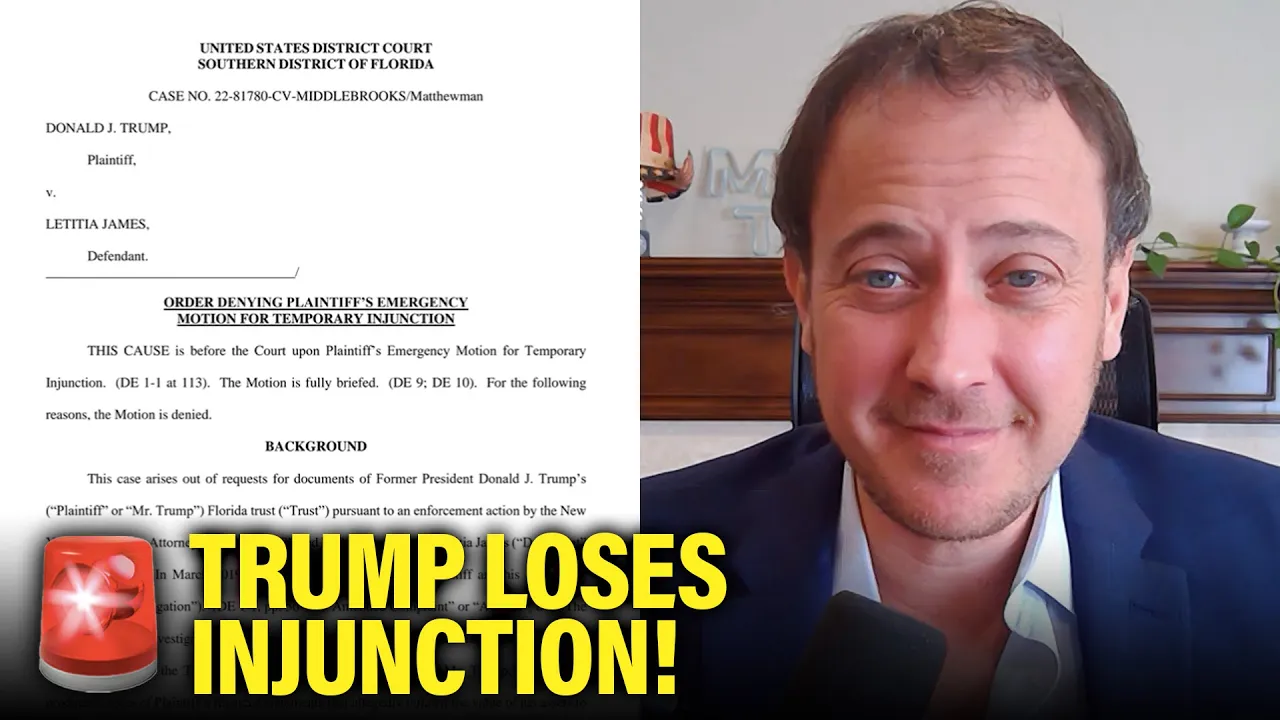
Federal Judge DENIES Trump FRIVOLOUS Injunction Request
225K
Federal Judge Donald Middlebrooks denied Donald Trump's emergency motion for a preliminary injunction in Florida federal court, which sought to block New York Attorney General Letitia James from accessing Donald Trump's revocable trust documents during her $250 million+ fraud lawsuit; the judge ruled the motion was completely frivolous and rejected it on four grounds: lack of personal jurisdiction, New York's interstate sovereign immunity, issue and claim preclusion, and the Rooker Feldman Doctrine, while also noting that the Trump Organization had already been found guilty by a New York jury of several counts of tax fraud.
Click to watch →

@WhatTheHales' Lynette Wants to Win on THIS Florida Law?! Judge DeThomasis Better #BuckleUp
64.6K
Florida Statute Chapter 784.0485 establishes comprehensive procedures for obtaining injunctions against stalking, enacted in 2021 to address technology-facilitated harassment. Key provisions include: (1) Standing limited to victims or their legal guardians; (2) No bond requirement for injunction entry; (3) No residency requirements—petitions can be filed in any county where the petitioner resides, respondent resides, or stalking occurred; (4) Clerk of court must assist petitioners and provide simplified forms; (5) No filing fees apply, though clerks may seek quarterly reimbursement at $40 per petition; (6) Clerk must ensure petitioner privacy during form completion. The statute creates a cause of action for protection against both traditional and cyberstalking. Additionally, Florida Statute Chapter 837 defines perjury as making false statements under oath in official proceedings regarding material matters, classifying it as a felony third-degree offense punishable by up to five years in prison. Florida Statute 784.0485 subsection 3a mandates that stalking injunction petitions include explicit warnings about perjury consequences, requiring petitioners to acknowledge they have read all statements and that each is true and correct, with violations punishable under Florida Statute 837.02 as felony third-degree offenses carrying up to five years in prison. Each false statement in a petition constitutes a separate perjury count, potentially resulting in multiple felony charges.
Click to watch →

January 2025: Preferences and Procedures in the 18th Circuit for Seminole County
123
When filing emergency motions requiring more than one hour of hearing time, attorneys should list this requirement in their email to the judicial assistant. Additionally, if the emergency motion involves statutory provisions such as a petition for relocation, a motion for relocation, or a challenge to a general magistrate's report and recommendation, these details should be included in the email body.
Click to watch →
Deep Dive
How to identify and legally counter 'retaliatory eviction' when a landlord attempts self-help after a tenant complains about housing violations.
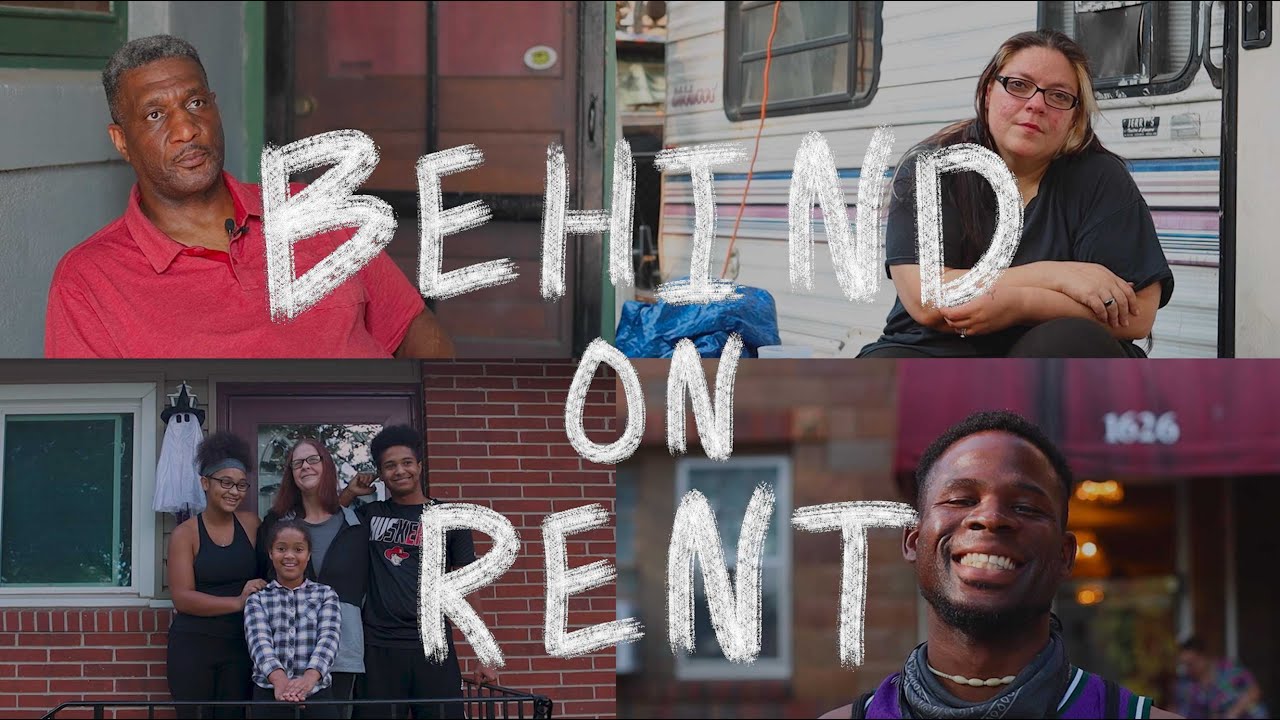
Behind On Rent (Official Full-Length Film)
169.9K
Retaliatory evictions occur when a tenant files a complaint with the city or asks for basic repairs to be made, and the landlord responds by evicting them either immediately or giving a 30-day notice, or sometimes breaching the lease. Landlords may prefer tenants who aren't complaining or asking for repairs.
Click to watch →

Contemptuous Serial Liar Pushes Judge Simpson to the Brink!
108.3K
Self-help eviction (changing locks, removing belongings without court order) is illegal and can result in legal consequences. The court found the landlord 'resorted to self-help' and ordered him to show cause. The tenant claimed he was locked out, but the court found no lockout occurred. This demonstrates that landlords who engage in self-help eviction can face legal liability and court orders requiring them to justify their actions.
Click to watch →

Judge Mocks Teenager in Court, Shocked to Learn He's a Genius Attorney in Disguise!
14.3K
Retaliatory eviction occurs when a landlord attempts to remove a tenant in response to the tenant exercising their legal rights. Jaylen argued that his cousin's eviction threat was retaliatory because it followed her attempt to contest a baseless complaint. He demonstrated procedural violations including: failure to issue a formal hearing, failure to provide written notice of the alleged complaint, and failure to allow the tenant to respond in writing. He cited Arizona Revised Statutes (ARS) 33-1367, which grants tenants the right to dispute retaliatory or baseless eviction threats. The defense attorney's attempt to claim Tiana had a history of behavioral complaints was countered with documentation proving they were vague, unsupported, or false.
Click to watch →

Entitled Tenant DESTROYED by Her Own Facebook Post…You Won’t BELIEVE Her Excuses!
191.9K
A tenant can defend against an eviction by claiming it was retaliatory, even if they were delinquent in rent. Retaliation occurs when a landlord evicts a tenant in response to the tenant exercising their legal rights, such as requesting repairs or complaining about conditions. The tenant must prove the elements of retaliation, including that they complained about something and the landlord retaliated.
Click to watch →

Entitled Bully STUNS The Judge By MOCKING Him… Judge SHATTERS His Ego
72K
Retaliatory eviction claims require specific legal elements to be established. The tenant must demonstrate that the landlord's actions were motivated by retaliation for the tenant's protected activities. The court evaluates whether the timing and circumstances suggest retaliatory intent. The tenant must also show that they engaged in protected activities such as reporting code violations or complaining about conditions.
Click to watch →
Illegal Eviction
Restoration Efforts
Illegal Eviction
0:00- 1
Landlord shut off utilities for baby, breaking law.
- 2
Family endured no power, water; food spoiled.
Property Owner Recourse and the Burden of Formal Eviction Processes
While illegal self-help measures like utility shutdowns are strictly prohibited by law, property owner advocacy groups highlight the severe financial burdens that the formal judicial eviction process imposes on landlords, especially small-scale owners. From this perspective, the legal system can be slow, costly, and easily exploited by non-paying or destructive tenants. While not justifying illegal acts, this viewpoint argues that landlords are often forced to subsidize housing costs—such as mortgages, taxes, and utility bills—for occupants who are violating their leases. Proponents of this perspective advocate for streamlined, accelerated legal eviction procedures to prevent landlord financial ruin, arguing that a more balanced and efficient legal system would reduce the desperation that drives landlords to resort to illegal self-help tactics.
The basic legal structure of a residential lease agreement and the mutual obligations of landlords and tenants.
The standard, legally mandated judicial eviction process (unlawful detainer/summary procedure) as opposed to informal removal.
The concept of the 'implied warranty of habitability,' which legally obligates landlords to provide access to vital utilities like water, heat, and electricity.
The jurisdictional distinction between local housing authority rules, state statutes, and civil court systems in property disputes.
Florida Statute Section 83.67 (Prohibited practices) and the specific statutory damages (e.g., three months' rent) tenants can recover for violations.
The legal doctrine of 'constructive eviction' and how it applies when a landlord's neglect or intentional actions render a property uninhabitable.
The procedural steps for drafting and filing an emergency motion for injunction or a tenant petition for relief in Florida county courts.
How to identify and legally counter 'retaliatory eviction' when a landlord attempts self-help after a tenant complains about housing violations.
271.3K views2Klikes3:00@WPTVnewsOriginal Release: 2023-04-14
they are called self-help evictions landlords trying to get tenants to move out by shutting off their utilities or changing the locks on their doors so when a Lake Worth Beach landlord did shut off power and water at the home of a six-month-old baby girl her father called Contact five investigator Dave Bowman looked into this case he's joining us now here in studio with an update Dave Chan and Michael self-help evictions are illegal but that doesn't stop some landlords from trying thank you people renting this Lake Worth Beach House say for two days they dealt with no running water and sweltering heat because you know food is expensive now like oh Angelica Paul struggled to keep her six-month-old daughter Christina comfortable I have a child here this is horrible like contact five confirmed with Lake Worth Beach Utilities the landlord had electricity and water shut off Tuesday it was like a slap in the face how would you feel if that happened to you Johnny Paul is the baby's uncle and says he's a victim of a self-help eviction all evictions must be Court approved contact five looked at court records and found no evidence a landlord even filed paperwork to start the eviction process under Florida law that makes the Water and Electric shut off illegal with no electricity baby Christina was sweltering in the hot house so her mother to keep her cool would bring her route to the car turn it on and let the baby sit in the air conditioning for about a half hour everything is spoiled when electricity came back Thursday afternoon it was too late to prevent a freezer full of food from spoiling as for water the family piped in some from a neighbor's home to their bathroom with a garden hose just to stay comfortable we have to fill the toilet stool up you know to use the bathroom so this is what we was doing right here we called and texted the landlord wanting to know why she had utilities shut off and what prompted her to turn them back on shortly after contact five made calls to her and Lake Worth Beach Utilities try to cut something for the baby Jermaine Simpson believes his call to us started the process of getting water and electricity restored you came out you did your research you helped us and I'm really thankful for you on that note there was one other question we wanted to ask the landlord will she reimburse the family for the food and the baby formula that's spoiled when the refrigerator didn't work because the family went without electricity again the landlord is not returning our calls or responding to our texts now if you believe you're the victim of a self-help eviction go to our website wptv.com click on this story and we'll link you to those who might be able to help I'm contact five investigator Dave Bowman WPTV NewsChannel 5.
Up Next
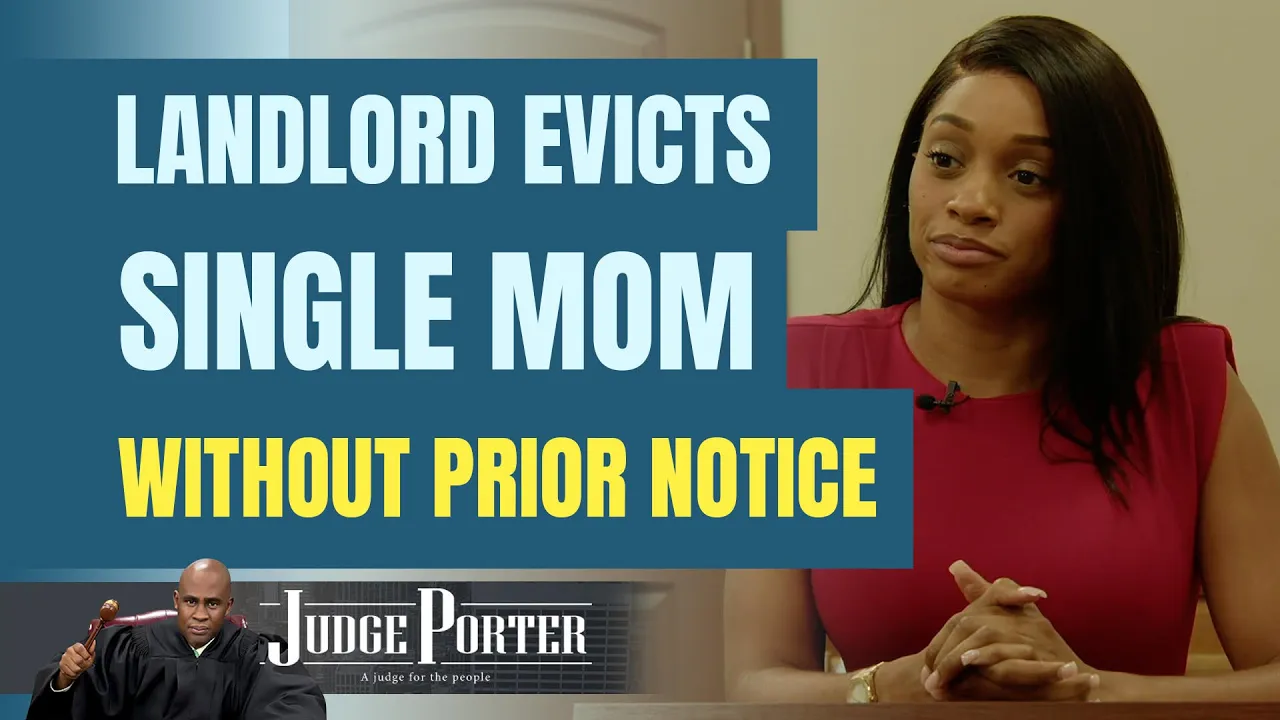
21:39
The Landlord & Tenant Act: Illegal Eviction Legal Case Study
@Judge-Porter
115.6K views•2025-12-12

4:27
US Secondary Sanctions Impact on EU Businesses and Blocking Legislation
@Bureauvandijk
1.6K views•2019-03-20

5:27
Forensic Phonetics: Speaker Identification in Legal Cases
@nptel-nociitm9240
539 views•2025-03-19

24:42
Police Interrogation Tactics: False Confessions & Legal Reform
@LastWeekTonight
7M views•2022-04-18
Related Study Plans & Knowledge Roadmaps
Structured learning paths in Law
law
Self-Defense Law: Imminence & Castle Doctrine
01Foundations of Self-Defense Law
02Imminent Threat & Reasonable Belief
03The Principle of Proportionality
+ 3 more learning modules
12h6 modules
Explore Roadmap
law
Defamation Law: First Amendment & Actual Malice
01Introduction to civil torts and the First Amendment
02Elements of Defamation: Libel and Slander
03Public Figures vs. Private Individuals
+ 2 more learning modules
8h5 modules
Explore Roadmap
law
Hearsay Rule: Trial Evidence & Exceptions
01Introduction to Trial Evidence & Courtroom Basics
02Demystifying Hearsay: The Core Definition
03Non-Hearsay: Exclusions Under FRE 801(d)
+ 3 more learning modules
14h6 modules
Explore Roadmap
law
Medical Malpractice: Law, Liability & Care
01Foundations of Tort Law and Civil Liability
02The Four Elements of Medical Malpractice
03Defining and Proving the Standard of Care
+ 2 more learning modules
12h5 modules
Explore Roadmap