


![[42] Discrete-Time Fourier Transform](https://i.ytimg.com/vi/AwVjd5eIcC8/maxresdefault.jpg)







![[통신시스템] Ch.3 Frequency Domain Analysis of Signals - Fourier Transform](https://i.ytimg.com/vi/ug32S1nsngo/maxresdefault.jpg)

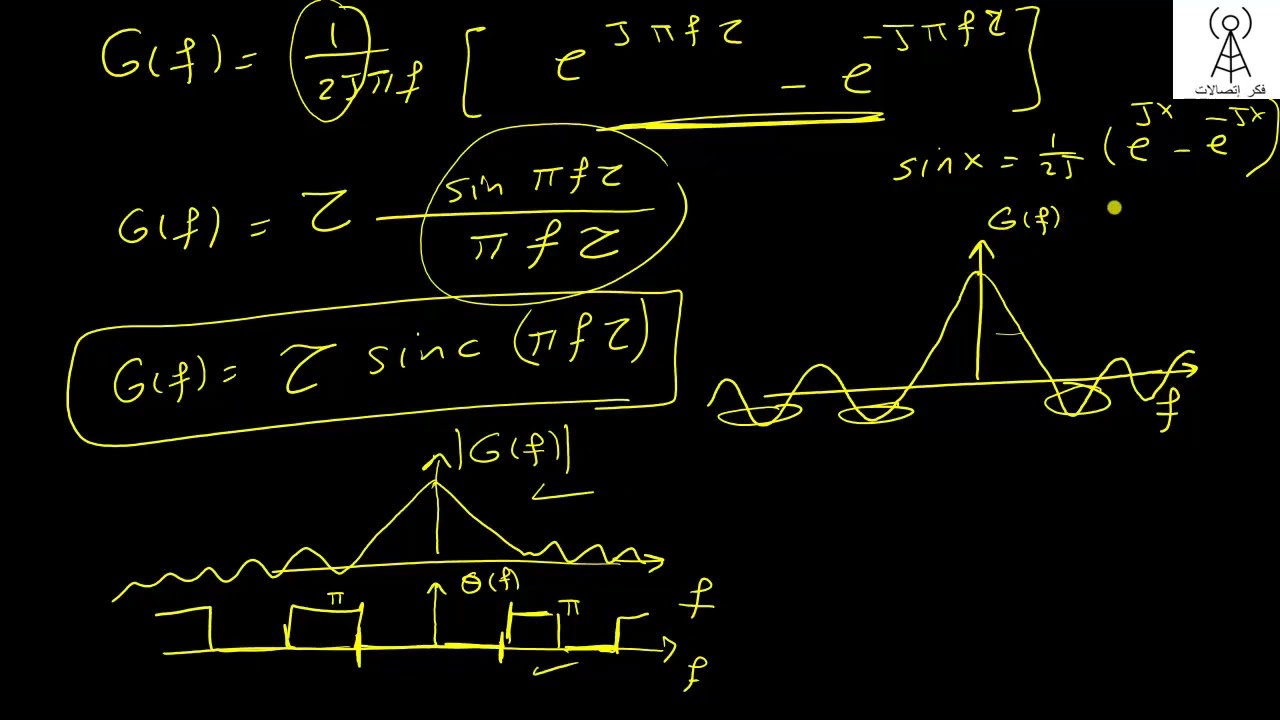
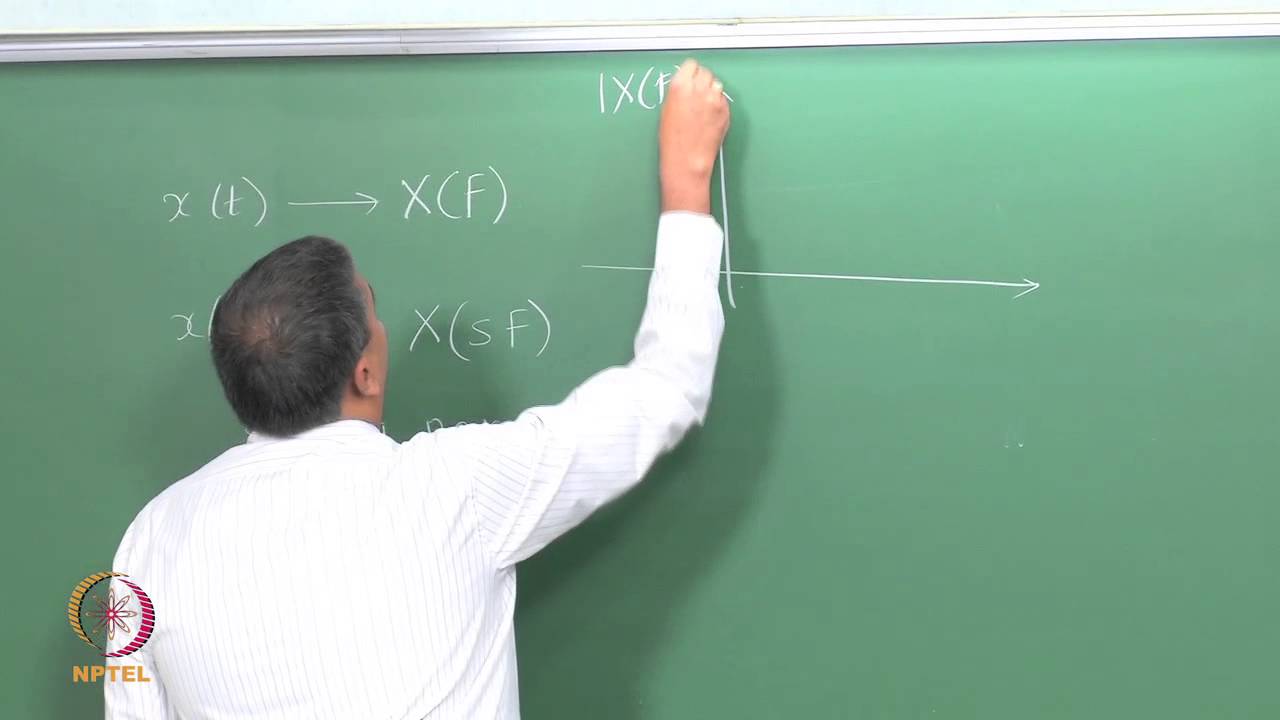



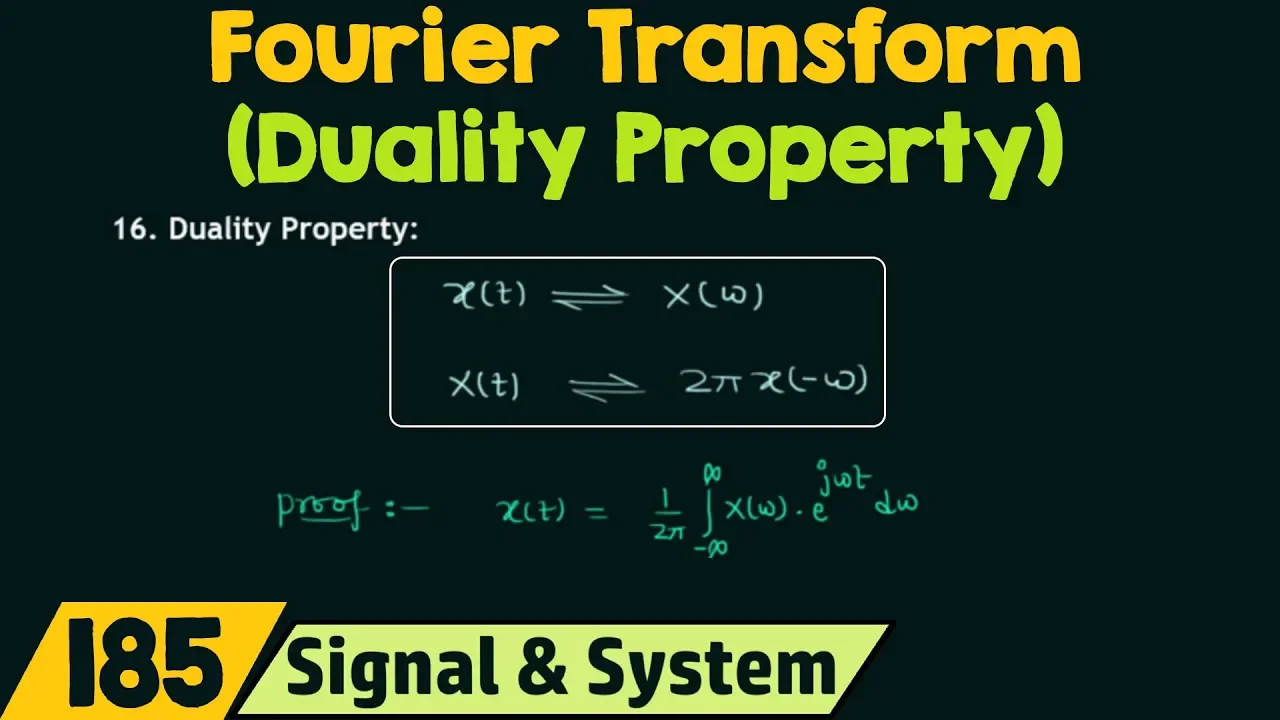










The Fourier Transform involves a critical scaling factor that relates the frequency domain representation to the actual amplitude of the time-domain signal; when transitioning from periodic functions (using Fourier Series) to aperiodic functions (using Fourier Transform), the amplitude information in the frequency domain must be scaled by dividing by the period T (or equivalently, the integration time), which is why the Fourier Transform output contains Dirac Delta functions that carry the true amplitude information when properly scaled.
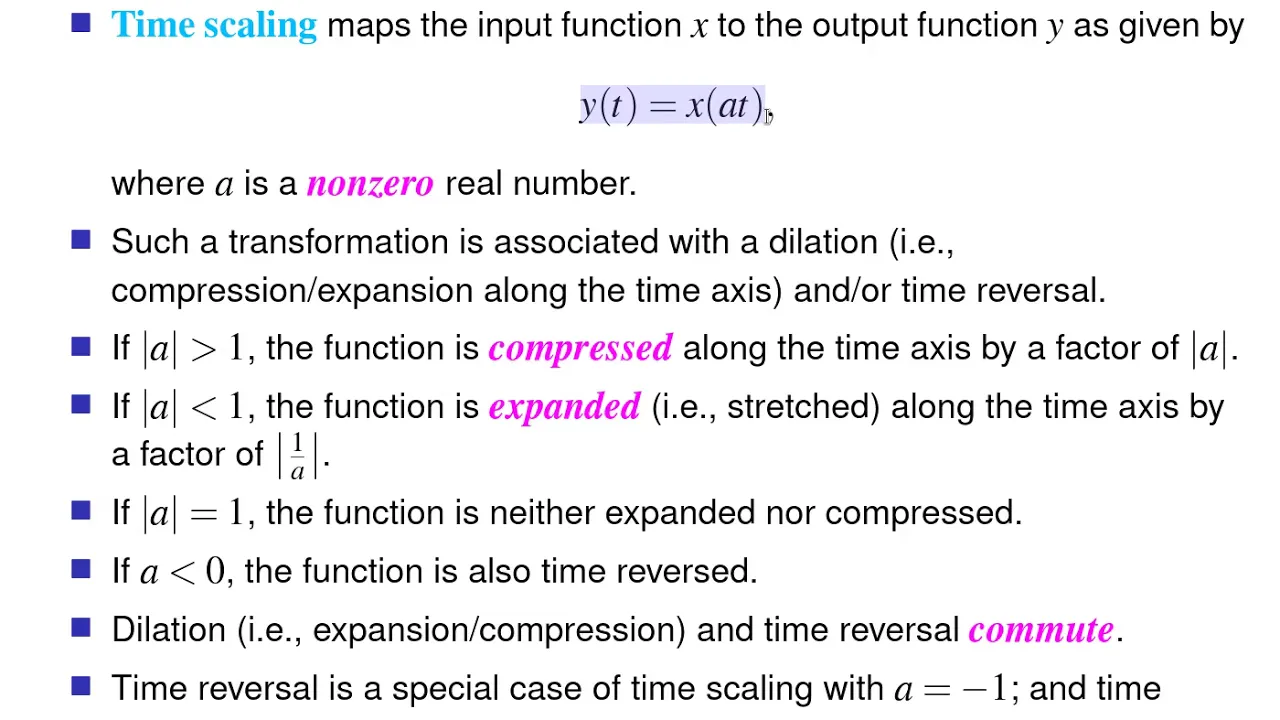
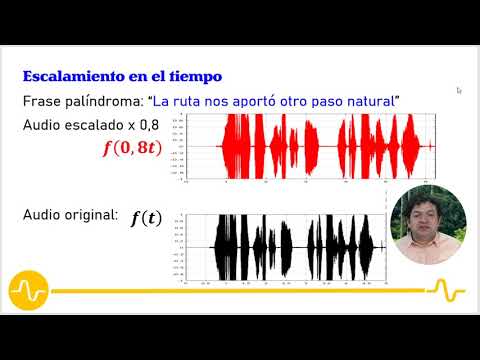
Fourier Transform Scaling Explained | Mathematics of Frequency Analysis
Added:The fundamental definition and formula of the Continuous-Time Fourier Transform.
Mathematical function transformations, specifically how scaling the independent variable affects a function's graph in the time domain.
Core calculus techniques, particularly integration by substitution (u-substitution) which is required to mathematically prove the scaling property.
The conceptual relationship between a signal's duration in the time domain and its spectral bandwidth in the frequency domain.
Other core Fourier Transform theorems, such as the Time-Shifting, Duality, and Convolution properties.
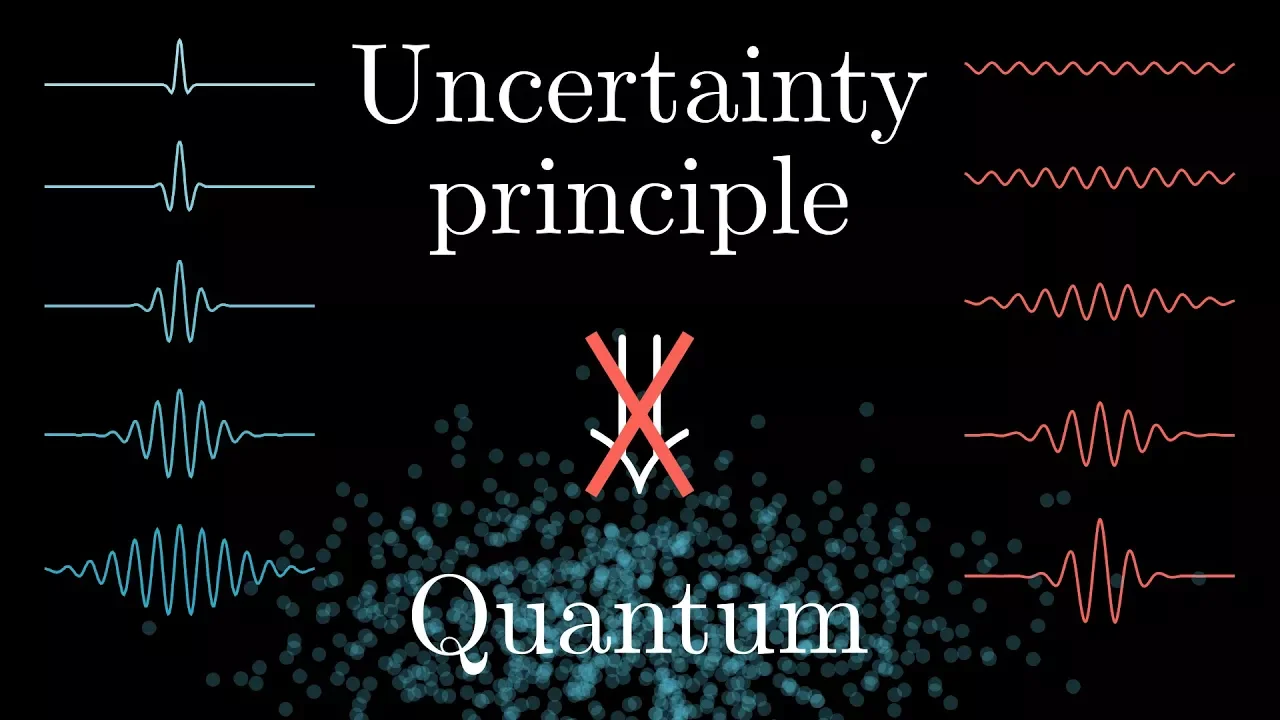
The Fourier Uncertainty Principle, which mathematically explains why a signal cannot be highly localized in both time and frequency domains simultaneously.
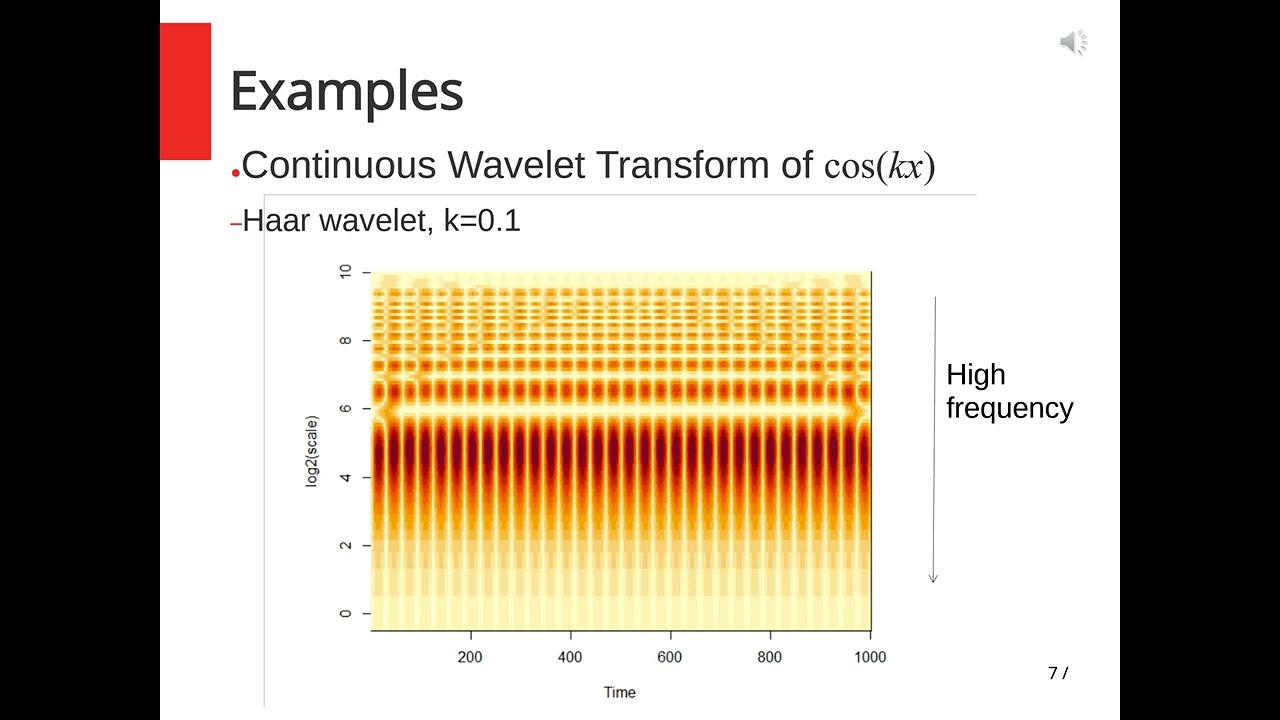
An introduction to Wavelet Transform theory, which relies heavily on scaling (dilation) and shifting (translation) of a mother wavelet.
Practical DSP applications of scaling, including multi-rate signal processing, decimation, interpolation, and audio time-stretching.
531.7K views6.2Klikes12:56Original Release: 2013-01-19
welcome back to control system lectures hopefully if you're watching this you've already seen part one of the Fourier transform this video just continues where that one left off however before I jump right into part two of the transform I have a correction that I need to make concerning something I said in part one one of my subscribers asked a question about where the scaling term goes when you move from a periodic time function to an a periodic time function and then how does that output relate back to the amplitude of the sine wave well in an effort to simplify the Fourier transform into basic operations I accidentally left off that critical part of the formula and the explanation I stated that the frequency information was amplitude directly and I didn't state that I had to scale the frequency data first to get the amplitude and so this is my attempt to correct my mistake and also answer his question about scaling in the process now the main goal of part one was to simplify the inverse Fourier transform into just a series of multiplication and summation steps which is analogous to how you would do it manually if you only had two or three sinusoidal q late it's a simple concept that I think it's overly complicated by our mathematical nomenclature I wrote the inverse Fourier transform like this where e to the I 2 pi nu T is the complex representation of sines and cosines the function f of nu is the amplitude and phase information for all sinusoids across the spectrum and the integral then sums up all of the results for all time now my error in part one though is that I forgot to mention that the function f of nu is also scaled so it doesn't directly represent the amplitude and phase information and so in this video I'm going to try to explain why there's so much confusion about this scaling term and how it gets handled in the Fourier transform we'll start with the time signal that's periodic over the period T in this case I'm using a ramp function if you wanted to represent this time function in the frequency domain then the complex Fourier series is the transform of choice the Fourier series is used for periodic time functions and converts a continuous-time signal into a discrete frequency signal the transform pairs look like this a pair is both the forward and inverse functions together they're called pairs because the two equations undo each other if you plug the answer from one into the other you'll get back your original function however here's where it gets tricky and frankly pretty annoying if you look up the equations for complex Fourier series you might not see it written exactly like this that is because there are multiple variations of these equations this includes using frequency instead of angular velocity with the relationship omega equals 2pi f now the way that I wrote it K is a multiple of the fundamental frequency also the equations might integrate over different periods or you can replace the period T with the fundamental frequency F naught where F naught equals one divided by the period and lastly moving all or part of the scaling factor one over T to the other equation and it's this last variation that really confuses the issue of Fourier series and Fourier transforms and that's because I could have written the equations like this where the scaling factor one over T is in the inverse equation and you'll see this in some references and by doing this you're still keeping the equations pairs of each other but you're redefining what the output signal consists in this case the output signal is unscaled but here they're scaled by the period so what's right well they both are but however you scale them you need to make sure that you undo the scaling on the way out in other words make sure you're using a set of equations that belong to each other or you're using a transform pair but just remember that there's a scaling term in there somewhere in one or the other pair so let's move on we started with a periodic time function and we used the Fourier series to represent the signal in the frequency domain but what happens if we increase the period of the periodic function then the fundamental frequency gets smaller and smaller and each harmonic of that fundamental frequency also gets smaller in proportion then if you take the limit as T approaches infinity the result will be an a periodic function this is a function that has a period of infinite time and when you take the limit as T approaches infinity in the Fourier series you arrive at the Fourier transform pairs but now the question becomes does the Fourier transform still have scaling and it's so where did it go well let's see if we can answer that by walking through a Fourier transform example but first I want to start with a simple way that I use to remember the Fourier transform equation and that's the equation in green at the very top of the screen let's start with an analogy if you want to know how many $5 bills it would take to make $15 how would you go about figuring that out you'd probably take 15 divided by 5 to get 3 $5 bills or I could have ordered it how many 5s are there in 15 but can we extend this analogy of division to help us understand the Fourier transform for example how much 15 Hertz signal is there in a particular time domain signal while extending the analogy we would just divide the time signal by that sinusoid and you'd be left with the answer in the frequency domain so let's see if that's true in the complex Fourier transform we represent sines and cosines using Euler's formula so if you took the time signal X of T and divided it by some version of e to the I T then we could reasonably expect to get something out that represented how much of e to the I T is in that signal believing a complex number in the denominator is bad form so we can move it to the numerator by making it a negative exponent and now this should start to look familiar it's already similar to the Fourier transform now all we have to do is integrate across all time and for all frequencies across the spectrum and we'll get the frequency domain representation of the function this might look like mathematical magic at least it did to me for a really long time I mean how does simply dividing by e to the I T get is any kind of useful frequency domain information if you work through the problem graphically it tends to make more sense let's take a cosine wave cosine of T in the time domain if we multiply this signal by some form of e to the I T at a frequency other than what the cosine wave is at for example cosine of 2t and then we sum the result across all time I claim that the sum will approach zero now you might be asking why I'm multiplying didn't I say divide well we move the exponential into the numerator and what we did that the divide became multiply and e to the minus I T is the cosine of t minus I sine of T so I'll multiply cosine of T by this yellow equation so here I'll try to draw out the result of cosine of T times cosine of 2t but you can multiply these examples out in your own to check it out what you'll find is there's a beat frequency between the two a repeating pattern that will always be exactly the same amount of positive signal as there is negative signal and the sum as the limit approaches infinity approaches zero another way of saying this is that the green signal cosine of T has no power at the frequency of the red signal cosine of 2t so let's move to the next example what if you take cosine of T again but this time you multiply it by e to the negative I T at the back same frequency so you'll have cosine of T minus imaginary sine of T here I accidentally drew a positive imaginary sine wave instead of a negative one but the results will come out the same you can try this on your own now for the real component of the frequency data you're going to get cosine squared which will have a value that's only positive and for the imaginary component you'll get cosine times sine or negative sine which again will sum to 0 across all of time so you would expect to have no imaginary component and a really large number for the real component in fact you'd expect an infinitely large number since the area under the green curve for all time would approach infinity and if you plotted this point in the real imaginary plane you'd be able to find out what the phase and the amplitude work and since the transform output is real the angle off the real line is 0 degrees which corresponds to a zero degrees phase shift which is a cosine wave and what's the amplitude well here it says that it's infinity but what does infinity really mean in this case well that's where the scaling comes in the output of the Fourier transform is scaled by the period which is the integration time of the time signal which in this case is infinite so in order to get amplitude information out you need to divide by an infinite number but once you hit infinity all information is lost right I mean what is infinity divided by infinity but this is one of the useful properties of the Dirac Delta function we can still have infinity without loss of information recall that the Dirac Delta function is an impulse that is infinitely tall an infinitesimally thin such that when you multiply the two to get the area under the curve you get 1 therefore by multiplying the amplitude by the Dirac Delta function and then taking the integral of the product for all time leaves the area under the curve which is the amplitude so in this equation the Dirac Delta function is 0 for all frequencies other than when nu equals the fundamental frequency and then it goes to infinity so now if you solve for or you look up the Fourier transform for cosine of T you'll see that the result is the amplitude and phase information scaled by the Dirac Delta function let me plot this so you can understand it a little bit easier here the horizontal axis is frequency nu and the vertical axis is the real component of this yellow equation you'll see that half of the amplitude occurs when the multiplying frequency is at the positive fundamental frequency nu naught and the other half is at the negative fundamental frequency just like we'd expect and this is how scaling is accounted for in the Fourier transform but the Fourier transform can also handle a phase shift in the time domain if you solve for the Fourier transform of a sine wave you'll see that the real component then sums to 0 and the imaginary component is the one that goes to infinity which means that the frequency information is all imaginary and no real parts or 90 degrees phase shift and if the signal had only been phase shifted by 45 degrees you should expect to see an equal portion of real and imaginary components and so this is how I tend to think of what the Fourier transform is doing in the forward direction it's just taking a time domain signal and it's dividing it by a bunch of sines and cosines and then adding up how much stuff is left across all time in the inverse direction it's taking the scaled amplitudes and phases and then multiplying them by a bunch of sines and cosines to get back to the time domain and that's really all they're doing all variations of these equations are performing these exact same simple steps all right so I hope these two videos help to demystify the Fourier transform a bit for you like I said before the equations can get a bit confusing but I think most of the confusion stems from the fact that there's different references using different variations of the equations however no matter the variation the underlying concept of what the transform is doing is the exact same and if all you remember from these videos is that then you're still going to be in pretty good shape as always please leave questions and comments below and like I did in this video I'll try my best to answer them all so for the first time ever I'm on Twitter so if you want you can follow me at Brian B Douglas as always thanks for watching and I look forward to hearing from you
Up Next
10:34
Discrete Fourier Transform Step-by-Step Tutorial
@SimonXu
974.5K views•2015-08-03

4:43
Elliptic Curve Cryptography Explained: ECC, ECDSA, ECDH
@PracticalNetworking
28.5K views•2024-10-21
10:44
Fourier Series Introduction: The Big Idea Explained
@DrTrefor
387K views•2021-05-03

6:00
The Mathematical Impossibility of Accurate World Maps
@Vox
23.3M views•2016-12-02
Related Study Plans & Knowledge Roadmaps
Structured learning paths in Mathematics
mathematics
Tensor Calculus: Vectors to Riemann Curvature
01Mathematical Foundations: Linear Algebra & Calculus
02Covectors, Dual Spaces, and Tensor Basics
03The Metric Tensor and Index Gymnastics
+ 2 more learning modules
40h5 modules
Explore Roadmap
mathematics
Gödel's Incompleteness: Logic, Proofs & Limits
01Introduction to Formal Systems & Hilbert's Dream
02Set Theory, Cardinality, and Cantor's Diagonal Argument
03Arithmetization and Gödel Numbering
+ 2 more learning modules
14h5 modules
Explore Roadmap
mathematics
Galois Theory: Fields, Groups & Solvability
01Foundations of Abstract Algebra: Groups & Fields
02Polynomials & Field Extensions
03Splitting Fields & Symmetries
+ 2 more learning modules
24h5 modules
Explore Roadmap
mathematics
Non-Euclidean Geometry: Models & Geodesics
01Euclid's Fifth Postulate and the Birth of New Geometries
02Hyperbolic Space and the Poincaré Disk Model
03Geodesics: Defining Straight Lines in Curved Spaces
+ 2 more learning modules
15h5 modules
Explore Roadmap