

















Naturalism cannot explain why our cognitive faculties are generally reliable, as it posits a universe indifferent to human epistemic success; this creates an explanatory gap that theism resolves by positing a purposeful creator who ensures our minds track truth, making theism the more theoretically virtuous explanation for our justified beliefs.
Naturalism and Rationality: The Argument from Reason | Philosophy Podcast
Added:Understanding of Philosophical Naturalism and Physicalism: The view that the natural world is all that exists, and that all mental phenomena can be reduced to physical processes.
Foundational Epistemology: Basic concepts of truth, justification, belief, and what constitutes a reliable cognitive faculty.
The Mind-Body Problem: Familiarity with the debate between dualism (mind and body are distinct) and materialism (mind is a product of physical matter).
Basic evolutionary theory: Specifically how natural selection operates on behavioral adaptation and survival, rather than directly on the acquisition of abstract truth.
Alvin Plantinga's Evolutionary Argument Against Naturalism (EAAN): A formal analysis of why the probability of our cognitive faculties being reliable is low under naturalism.
C.S. Lewis's Formulation of the Argument from Reason: Studying the historical critique of naturalism presented in his book 'Miracles' and the subsequent philosophical debates surrounding it.
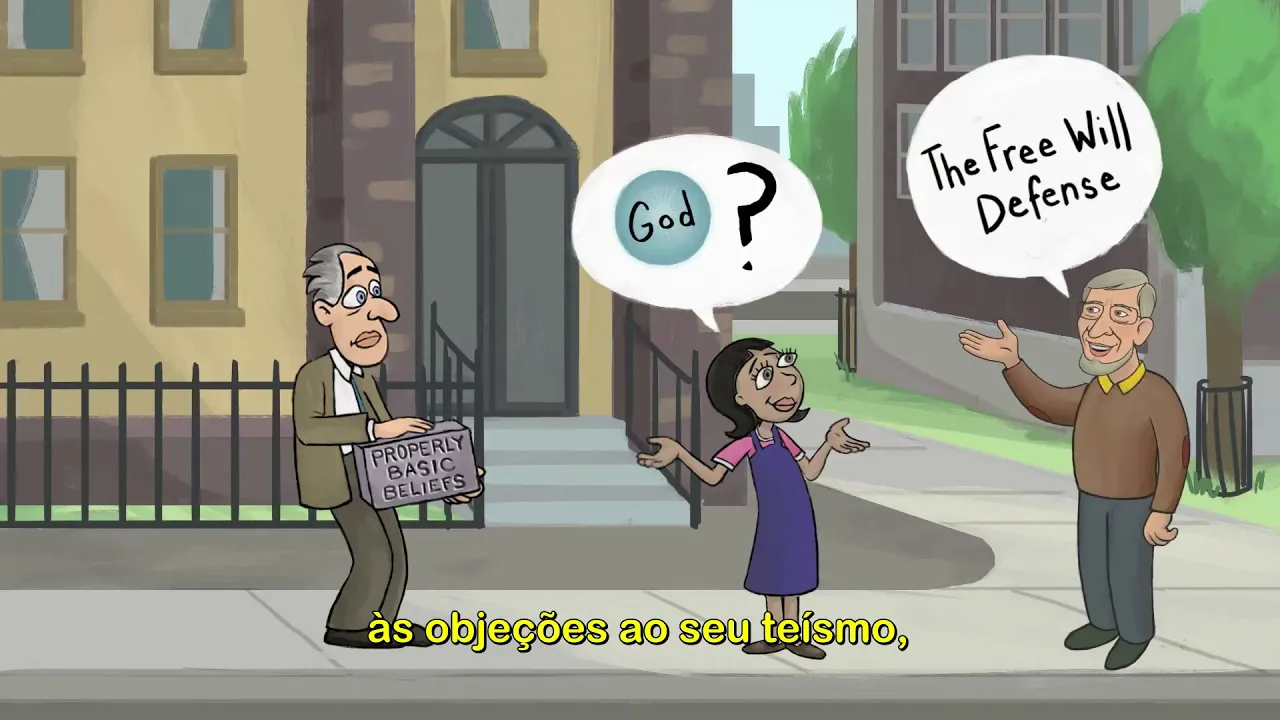
Reformed Epistemology: Exploring the intellectual movement that views theistic belief as a 'properly basic belief' that does not require propositional evidence to be rational.
Physicalist Responses in Philosophy of Mind: Investigating how contemporary materialists and cognitive scientists attempt to ground rationality and intentionality within a purely physical framework (e.g., functionalism, eliminative materialism).
1.6K views172likes2:09:24Original Release: 2026-08-04
All right, everybody. Welcome. I was going to say welcome back, but this is our first episode. So, welcome to Suma Contra, everybody, where uh Pat Flynn and Ethan Muse take on the world, I guess. So, that we'll find a better slogan as we move along. But, uh I'm excited to be here. Uh this is a project we teased a little bit, but this is probably going to be a a surprise drop, a shadow drop to a number of people. So, here we are. I'm I'm looking forward to this. Ethan, I really liked how you explained what our project is. Uh, so I'm going to kick it over to you. What are we doing here? What sort of expectations should people have? And I mean, for the show in general, the the particular episode, we'll get to that in a minute. It's a good one, folks. So, stay around. Uh, but yeah, Ethan, why are we here? What are we doing?
>> Yeah. No. Well, I mean, I've really enjoyed having conversations with you on philosophy for the people and I felt like we had good chemistry back and forth and so we wanted to do basically a more regularly scheduled, you know, interview series podcast where both of us talk about our thoughts on a range of issues related to Catholic apologetics.
And specifically what we thought we'd focus on are basically philosophical considerations that affect like just the plausibility of a Catholic worldview and working through those and helping helping people reason about those because that's really both the intersection of both of our interests and expertise. Um and I think it's something uh that where we where we can be of use to people in having those conversations. So we're going to be less concerned with like what I do elsewhere which is like, "Oh, here's a bunch of evidence for specific miracles or here's, you know, historical evidence for the credibility of the Bible or something like that and instead just focus on like big picture worldview considerations."
Yeah. Great. Okay. So, the today we're going to talk about arguments from reason. We're focusing on atheism. I mean, this is relevant for lots of people, but it's it's relevant for both of us because we have a background in atheism. Both of us do, right? We're both converts to the Catholic faith. We both had a period um as as atheists. Uh everybody's a teenager once as they say, right, Ethan? Um so, all right, let's I don't want to do too much preamble here, but I think it's important to kind of set this up. And I I will just say just just just personally, um this was sort of a big thing for me. I I haven't focused a whole lot of it in my sort of public facing work, but just just personally, um having an an an epistemic bodyguard, I know that's the way that you put it, was something I felt was always needed, but also sorely lacking in the sort of naturalist worldview. And I always just had this this this deep concern um of falling into and never being able to get out of a pit of catastrophic skepticism as a naturalist, right? And I don't mean being a skeptic about morality. That that was that was a concern for me. I always was always a moral realist. I know that you had a a period where you were an anti-realist, but I was always a moral realist. I never found good grounding for that within naturalism. I always felt the most plausible direction to go was anti-realism. But for for many or all the reasons that sort of caused me to be skeptical or caused me to think I should be skeptical of the moral dimension as a naturalist um seemed to uh be forceful beyond the moral dimension. So um what did I do? Well, rather than than give those commitments up, I I I switched my worldview. So I I do have a a personal history. Um, in fact, I think if you trace my my line of thought thought out all the way through to classical theism, perhaps my biggest concern is just avoiding skepticism at the end of the day. Um, so I'm interested I'm interested in exploring this with you. I think it will be a fun and provocative episode, but give us a little bit of background from your perspective and then let's let's discuss what we mean by an argument from reason.
>> Yeah. No, I mean similarly I was an atheist and yeah I would say the concern that basically made me the most worried about my atheism or more specifically my naturalism was how to vindicate and explain basically this assumption that I had to start out with that there was an aptitude of my mind to discover and to understand truth about the world right and it seemed to me and that across domains right so that can include particular domains like morality ity and mathematics, you know, but it also just extends to like how I have vertitical perception, you know, like it's true that I have a mom and a dad and like these uniformity assumptions hold in both directions. So both like we're not in a scenario where the universe just >> appeared like spontaneously formed with the appearance of age five minutes ago and also there's not going to be like anti-induction that's going to hold in the future and you know all all of this these wide ranging concerns about something that I'm just starting out assuming that I have to assume it's just sort of presupposed by rational inquiry and just like the feasibility of achieving any of the goals I wanted to achieve through rational inquiry >> but where when I actually started trying to think about even vindicating it but you know not even to mention explaining it um within my naturalist worldview I was always at a loss for what to do and my main rejoinder when I was a naturalist was mainly two quoquay arguments where I would say well the theist doesn't solve the problem so theism is just a bad re has bad options to redress this difficulty but notice where that leaves me >> in skepticism you know or at least with uncomfortable levels of skeptical worries that I can't red address. And so I'm like, well, your alternative doesn't help was my solace. But I never actually had a good positive rejoinder for like how I can establish that I am justified in holding all of these foundational assumptions that I I sort of feel compelled to hold.
>> Yeah. Yeah. Good. So, yeah, I'm with you there. Um, just a little bit more background. It does seem that if we're going to get around in the world, um, I mean, there's sort of two postures we can take epistemologically, right? we can just assume everything is sort of guilty until proven innocent, right?
With respect to our suite of cognitive faculties, um, you'll get nowhere with that. I think if there's anything that people agree on, [laughter] right, I said if you if you start from an overly skeptical attitude, you're probably never going to bring yourself out of out of that hole, right? Or you can start from a posture of um generally innocent until proven guilty, right?
that we we just have to assume that our cognitive faculties do have this this aptitude. Generally, clearly they're not perfect, right? We get things wrong. We make mistakes. Uh some are rather trivial and everyday the stick appears wavy underwater. We know it's not. But even notice in cases like that, we only know that we're wrong because we've used the same sentence senses, right, to confirm that we're wrong, right? So there's already this sort of background assumption of reliability that has to be in place to make sense of and to establish that it's not completely reliable or infallible. And then the question is well what sort of what sort of worldview can kind of ground that or make sense of it or explain it. And there's weaker and and stronger arguments you know uh either against the naturalistic position or for the theistic one. Um, but I think that's I think that's that's right. And I was I was concerned about the um the YouTube objection as well in the sense that okay, like there's a basic sense that theism might be able to help here. Like if we're designed by God and and God um has good reasons to orient us towards truth and goodness and stuff like that, then um I think that this this could help a lot. I think it does help a lot.
Um but we need to fill in the details of that story. And I think also at the higher level, we need a story about divine cognition um that doesn't reinvite skeptical worries or pressures. And for those interested, I actually have focus on a bit on that in in in my dissertation. Uh so all that actually veered me towards classical theism, but I don't want to go that far yet. Ethan, uh how do you like to introduce the argument from reason?
Anything I'm leaving out there? I know we want to start sort of broad and then we want to um sort of focus on particular domains as we go along.
Obviously, we are going to be giving uh arguments against the naturalistic worldview as we move along. So, we should probably spend some time actually articulating what that is as well.
>> Yeah. Well, so basically first arguments from reason basically start out I mean at least the way that I construe them in the way that I run them and tend to find them most compelling. They start out with just those basically epistemic assumptions that are just like completely presupposed by all rational inquiry and where in my personal opinion it would be like catastrophic to either reject them or even to call them into question. And that's related to like for me personally, like if I'm just honestly reporting, I'm not really in any doubt that there are other minds out there, right? I'm not in any doubt what's going to happen when I turn the door handle and thrust backwards. You know, I'm I'm not really in any doubt about what's going to happen when I flip on the light switch when the room is dark. You know, I'm not in any doubt about whether the sun is going to rise tomorrow morning.
I'm not really in any doubt about whether two plus two equals four. you know whether torturing babies is horrifically evil. So I'm not in any doubt about those things. I'm not and I have extreme confidence that they are in fact true. But then I need to then proceed to this further question of like why is that the case? Right? [laughter] Why is it the case that I have this confidence in the reliability of these faculties and is that reasonable? is that justifiable confidence that I have as well as what does that imply about the way the world is such that the confidence I have is reasonable and such that there is such a being who's able to form reliable predictions about the future and to comprehend you know all these transcendental categories like truth and beauty and goodness and all the rest. And so that's that's basically the explan that we start out with. All of those rational faculties and the basic reliability of those faculties which is just like anti-keeptical is the reason I posit them in the first instance as opposed to having independent evidence for them and where they seem to be invoked by any further argument that I would make. So it's hard to non-ircularly justify them. Then I say, okay, so I'm just taking for granted that we need to vindicate those.
And so therefore, I can assume that that data holds, that I do, in fact have general reliability, not necessarily infallibility because I'm also wrong about lots of stuff all the time, but just the basic levels of general correctness, coarse grained accuracy to where I don't feel like I'm the brain in the vat skeptical scenario.
>> Then I say, okay, well, basically two forms the argument from reason as I construe it can take from here. Okay, >> one of them is basically abductive and the second is transcendental.
>> And so the abductive form of the argument just starts out with all of that data that I have reliable faculties as the explaners from that what's the theory that best explains that data and predicts that data. And so then we can say what seems like naturalism and just anything that has a hypothesis of indifference where the universe doesn't care about me. It doesn't care about me having truth tracking faculties preserving me from skeptical scenarios. Those are actually not going to predict that I'm going to all of those assumptions are going to wind up being verified with respect to me or with respect to just like a random observer, right? A typical observer in the universe, And therefore, because it it fails to predict that data, whereas theism predicts it quite well, because it seems like God does in fact care about basically being my epistemic bodyguard, you know, referencing this language that I've used elsewhere and preserving me from skepticism and ensuring I have a general reliability even if not like a sort of epistemic impeccability. And so that that's the first form, right, is just saying the alternative theory fails to predict this data. In fact, it predicts the contrary.
The theory that I have without any ad hoc auxiliary assumptions just to force this prediction does predict the data.
And so therefore, that's a massive explanatory advantage for this theory and gives me a very compelling reason to accept it.
>> And the naturalist can't deny the fact of the data. So then they just would need to show there's some non-ad hawk um version of naturalism that's just as theoretically virtuous as theism that accommodates this data while being consistent with the rest of the data that they need to accommodate. So that so the first strategy is basically just to exclude those naturalistic alternatives and to establish that basically the theistic hypothesis is theoretically virtuous and that the theistic hypothesis does in fact predict this data at least to a much higher degree than naturalism. Then the second approach is transcendental. So this doesn't deal with explaining that um reliability assumption but instead vindicating the reliability assumption.
So thinking about what's actually what what what what's presupposed right by me being justified in assuming the basic reliability of my cognitive and perceptual faculties and saying that there's actually something about the theistic hypothesis that's entailed by me being justified in those assumptions.
And so we can get more into that later.
But a a big strand within that is going to be this idea of like explanationism.
And so you can see this quite clearly with respect to particular domains. But I'm going to argue that it actually generalizes across the board to just anti-keepticism in general. But like with respect to particular domains, take mathematics. Okay, let's say you're just like a platonic realist about mathematical entities and they exist in some ethereal realm, you know, and what makes our mathematical beliefs true is that they represent these Platonic entities that don't causally interact with us that exist in this ethereal realm, right? And so we have representations that correspond to these forms, these abstract entities. And it's because of the various similitude between the representations and those forms that our mathematical knowledge is true. Well, then the explanationist worry is going to be if I'm to be justified in my mathematical beliefs. If those are to be justified, then it seems like there needs to be some kind of explanatory connection between the belief forming process that led me to arrive at those beliefs and the truth of those beliefs.
>> Right? You believe it because it's true in some sense. or to learn that the reason I believed all the mathematical stuff I did was literally just because a random number generator randomly number generated random beliefs to be to be put into my head, it feels like my beliefs would be undermined. But if it turns out that there is no explanatory contribution of the truth of the mathematical beliefs to the development of the faculties that caused me to form them, it does feel like in a similar way that learning that it was just like pure random spontaneity that led me to form these beliefs would undercut my justification. If it turns out that there is an explanatory gap um there is no there's an epistemic gap that exists between this mathematical domain and then all my beliefs and the process by which I form them. It feels like that undermines my justification. So there needs to be something that correlates the two. So for instance, the reason my brain was designed the way it was was because there was, you know, a benevolent creator deity that wanted me to have accurate mathematical knowledge, right? And so he correlated my belief forming process with the truths of mathematics.
>> Right. That would be an example factors into that. Right. Yeah.
>> Right. It would it would provide an explanatory connection whereas just assuming just fortuitously my I I wound up developing faculties that caused me to develop representations that had content that corresponded the way this was. though it equally well could have been that I formed inaccurate ones that failed to represent the mathematical forms as they were and I would it would be exactly the same from a fitness perspective. Right. Let's just say um for the sake of argument for now. Now there's a lot more >> you still got your joints into the right place. Right. Yeah.
>> Yeah. There's a lot more that needs to be said, but this is just to give a general sense for the style of argument that I'm talking about when I'm talking about this sort of more transcendental style of reasoning, which is just saying um not not so much you can't tell some plausible naturalist story where there happens to be a correspondence between the um the beliefs and then whatever the truth makers are for those beliefs, but instead that there's a defect in any such naturalist story, which is that it basically results in it just being a fortuitous coincidence. and that actually justification requires there to be a deeper explanatory link, >> right? It can't just be happen stance.
Good. Okay. So, let's um let's go back to to the we'll get to the transcendental um form later. Uh let's go back to the original case. All right.
So, naturalism, you know, as I understand it is is something like this, right? uh whatever else you want to say about reality at bottom uh it's indifferent and then there's usually some combination of atomic and evolutionary theory and then you get us right that minds are late and local uh naturalism is essentially committed to the idea that that whatever exists is supplied to us by uh our best physical uh theories uh or some non-existent ideal physical theory but what we have is perhaps close enough to give us an idea. Um, and a naturalistic sort of epistemology for filling that out is of course science rocks, right? That's the idea of of of sort of mainstream naturalism and and and mindedness is is late and local, right? Okay. So, why do you think and add any details you want um shape that up however way you want, Ethan? All right. Uh why is that worldview in tension with um the general reliability of our cognitive faculties? Um spell it out in detail for us and then maybe we can consider some of the the the best attempts naturalists have made to avoid these these dire results.
>> Yeah. Well, I mean, and really we can think we can even distill what we're reducting with this argument down to like this sort of hypothesis of indifference where whatever the fundamental explanation is for why the universe is the way it is is indifferent to humans and indifferent to basically the aptitude of humans to accomplish certain epistemic goals. Right.
>> It just doesn't care. Right. Yeah.
>> So, it doesn't care. So, it's not that it's adversarial. So it's not that it's actively trying to deceive us, right? Or is biased against us succeeding, but it's just that it lacks a bias in favor of us succeeding. And that most fundamentally it's because it doesn't have teological explanation that refers to basically human minds and human basically epistemic aptitude. But also just we can push it a little bit further and say that even in the absence of teological explanation, there's just no structural bias within the that's sort of suggested by the theory that leads to promoting um epistemically successful agents, the existence of epistemically successful agents.
>> And so that's the that's the thing we think is a problematic feature of naturalism because it's in tension with this qualitative feature of the universe that all of us have to assume holds. um and that seems like it does in fact cry out for explanation. It shouldn't just be a massive fortuitous coincidence that it holds.
>> Right.
>> Right.
>> And so then we go and um we're now trying to argue basically well depending on which horn we take. Right. The abductive or the transcendental. As for now we're focusing on the abductive.
>> Yeah. We're just saying there's a failure of the naturalist theory to make the prediction that the vast majority of agents are going to be um basically non-skeepical agents, we'll call them, right? Non-skeepical observers.
>> Yeah.
>> Um and so part of this has to do with okay, get non-zero observers at all within naturalism, which can sometimes be problematic. non-zero conscious observers is is actually something hard for naturalists which often comes up in fine-tuning debates. But then once you do this imposes an additional constraint on the agents that you generate, right?
Which is the agents you generate have to be people who are non-skeepical. So there they have to be people where they're justified in the beliefs that they have and they have beliefs about the range of domains that we have beliefs about and where we it's really important to us that we're right about those domains. Right.
>> And this actually basically satisfying that first thing and satisfying that second thing often are in direct conflict with each other because oftent times the way that naturalists explain basically why there are conscious observers is through basically adopting planitudinous hypothesis. So they basically say okay well these are complex highly structured things that we wouldn't just expect to be like to generic to be generic features of any random naturalist universe that was in existence right.
>> Yeah. So then they say well but good we can do this sort of anthropic reasoning where it's like we have to be somewhere where there are observers to be observers observing right so then let's just make it to where rather than having fine-tuning that's like targeting or selecting for this like agentically relevant thing which is life which is very suggestive of theism let's just have it to where we generate a bunch of naturalist universes and we say well surely there's going to be some where there are observers and so then we'll have some observers right >> now the problem is the The reason why that's intention with the second thing is because it actually turns out for reasons I'll argue to be a lot easier to get skeptical observers than non-skeepical observers. And what you need is not just for it to be a lot easier to get um non-skeepical observers, but basically the upper bounds of our confidence are going to be whatever the proportion of skeptical versus non-skeepical is. Right?
>> So let's say you even got to a point where it was 50/50 skeptical versus non-skeepical observers. That's probably not good enough to actually vindicate the epistemic assumptions that we have because I'm not at 50/50 that 2 plus 2 equals four. I'm not at 5050 that I have a mother. I'm not at 5050 I don't have a Boltzman brain. Right? But if we're assuming that it's just reasonable um for us to reason is if we're the typical observer that's generated by our theory, then whatever the proportion of non-skeepic observers is is going to be basically we're going to have to aortion our credence that we're a non-skeepic observer accordingly. Um, >> yes.
>> And basically, at least in so far as there are skeptical observers that have experiences that mimic ours or that are similarly complex and similarly credible as ours, but who are nonetheless deceived. And so we can get further into this, but I'll let you jump in.
>> Yeah. Good. Well, it's it's interesting you took the the the naturalism plus Marvel universe explanation. I think about that, right? Um, I think that's right. I think that's the one of the best ways that they can get um conscious observers. And I also think it's just obviously correct that that's going to give us um a situation where we're just exactly in the sort of skeptical scenarios that that we're trying to avoid. I wanted to go down the the the evolution um route. I don't know if we want to do that yet or if you want to say anything more about this this point first because I mean clearly the most common response is that that evolution somehow solves this problem, right? that the forces of of evolution shape our cognitive faculties in such a way that for whatever reason that they want to tell um are like truth truth and and fitness correspond in such a way that we we can have the reliability that we want >> um and >> yeah go ahead >> well and so there's one thing um basically that I'm I'm trying to get at a strategy that sort of is prior to getting those concerns about evolution, but then we can get into further deeper concerns about skeptical worries from >> evolution, >> but basically the >> Yeah, because you don't need you don't need like consider evolution at this point. Yeah, I totally get that, right?
Like we could just you have a scenario like for all we know, we could be that Boltzmon brain, right, with just with these false impressions of this evolutionary history that don't actually obtain. So it's like the problem Ethan is drawing out here is is fundamentally deeper, right? Yeah. Uhhuh. It's a problem which is so what one question is once we've got enough assumptions about where where we are in the universe and what the past history of our universe is then we can continue to proceed to ask the question of like are we justified in believing our f faculties are reliable given all of those assumptions about what the past history is. But it's just not true from generic naturalism that we're going to be able to start there.
Like that we can be justified assuming we have this past history because there's lots of ways to create elucory past histories within basically feasible naturalistic scenarios, right? And so one of these that's the most common way to do it >> is just to think and it's actually something where it's very threatening like just using empirical argumentation.
There's not a good non ad hoc way for naturalists to avoid it.
>> It's just reasoning about statistical mechanics, right? And this is how you get the famous like Boltzmon brain argument >> which basically goes like this. It it's let's just assume we've got like a pretty big state space and that we're exploring it through random fluctuations between um states and that one of the things is that there's going to be an entropic bias and how we go about exploring the state space which is consistent with like the second law that we observe in our universe, right? And so what we're going to see is that states that have a lower entropy deficit compared to the state of maximum entropy, since you're basically with the dynamic laws, you're always converging to states of high entropy regardless of where you start exploring from. And it's less likely that you're going to wander to the states that have a further entropy deficit compared to maximum entropy.
>> Since maximum entropy is just defined as like these very like this state where there's lots and lots of micro states corresponding to one macro state, right?
And so basically we think about how much entropy deficit there's going to be and one thing that people have pointed out is that the entropy deficit to just have a human brain that pops into existence any past history of evolution or anything like that or like an environment that corresponds to what the brain is perceiving but literally just the duplicate of the structure of your brain >> that persists for some short period of time and then pops out of existence. the entropy deficit for that is much um basically there's much less of an entropy deficit for that than compared to actually generating the full complex history that corresponds to like the vertical perception of your environment and all these other observers and stuff like that. And so the chance of just through random fluctuation getting one of those it's going to be like those are going to be like we can idealize and say infinitely more common you know than the full past hypothesis scenario that we'd have to lay out. And so then we're just going to say actually just from pretty generic features of the laws, we can see why we would expect there to be a much greater abundance of radically deceived observers with elucory environments compared to ones that actually just did emerge through evolutionary processes in the way that you would suspect through just doing abductive reasoning from their internal experiences. And so and that that's like a concrete illustration of something that more general that you can worry about which is just that anytime you're generating planitudes of observers. It's like a special feature that you have to engineer that there would be a correspondence between the internal representations of the observer and their external environment. But there's nothing and you and not only do you need to have it be that there's some observers that satisfy that condition which is what's easy for them to do anthropically. The thing you have to do is suppress all the observers who don't satisfy the condition but give the false appearance of having satisfied it.
Right. Yes. Right. That's what's almost impossible for them to do because now they need to jointly satisfy. Give me enough observers to where it's probable that they're going to come into existence. Right. But suppress all the badly behaved observers, >> right? So that way you know you're not, you know, you're not the bold spot brain with all the false impressions, right?
So this is good. This is a really good pressure point because you quite obviously can't evolution your way out of this problem, >> right?
>> Right. Because it's downstream of the assumptions that are already under attack.
>> Yeah.
>> Is suppress rather than create. So >> yes, >> the evolution problem is going to be how can I create rationally justified observers, right?
>> Yes.
>> How do I explain how those get produced rather than deceived observers, right?
But in this case, we're talking about how do I make it to where I'm sampling enough to create lots and lots of observers, but I don't wind up creating lots of deceived observers alongside whatever non-deceived observers that I create. And it's going to be extraordinarily difficult to accomplish this. But even when you can, so even if you find certain ways of accomplishing it, which it won't it won't follow from like the most natural ways to do physics that that will be true, right? that you're going to be able to define an ensemble of worlds that basically will have this feature like it it actually isn't. So it's not even clear that you can >> and I take it that's a constraint for naturalists, right?
>> Yeah. But let's say let's say you could somehow so you found something that's like relatively non-ad hawk, right? Where you're not literally just like fiatting it into whatever the way you're specifying the world is that it just happens to be one of the one of the ones that doesn't have this feature. Well, basically still there are lots and lots of non-ad hoc really plausible alternative hypotheses on naturalism where the great planitude of observers will be deceived observers. And so you're still taking a huge probabilistic hit relative to all the like basically relative to naturalistic indifference to be restricted to just that theory.
>> Whereas theism takes almost no hit to fiat the sin. Right. Right. It's still a it's a massive massive deficit. um even if you found a way to do it, which it's not clear that you can.
>> Yeah. Yeah. Okay, good. Well, now I'm wondering if it's even worth going down the evolutionary route. Maybe it's it's worth >> I think so >> a few remarks. Yeah. Um but I hope the point is clear of why the problem that Ethan is drawing out is >> is in a sense um you can't evolution your way out of it. Yeah, that that seems right. Um Boltzman brains are a problem. Okay. Um, anything else you want to say on that point or should we or should we go to the to the fitness considerations?
>> Yeah, we can go to fitness.
>> Okay. All right. So, right. All right.
So, we we we are the product of evolutionary forces and we should think that our cognitive faculties are generally reliable because we have reason whatever that might be to think that our getting at the truth of things is like super conducible conducive for survival. Ethan, what's wrong? What's wrong with that? Right.
>> Yeah. Well, so obviously there's a bunch presupposed in suppressing like elucory um past histories and environments um that we just talked about in terms of getting this argument to go through. But let's just suppose we grant it. So we grant you like past hypothesis. We grant you that you found some way to suppress all the Boltzman brains. we that you did it in such a way that like you didn't build in a bunch of features to the laws that themselves cry out for a deeper explanation, right, and make it seem like it's ad hoc or fine-tuned to achieve the result, right?
>> Yeah.
>> We're granting you all that in the background and then now we're proceeding to okay, given that in our past history we have evolution, is that sufficient to make it to where it's not a miracle that we wind up having reliable faculties?
And I argue no, right? And so, >> surprise, surprise. [laughter] And so there's a bunch of different ways you could go about doing this, right?
One of them is just to go with this guy Donald Hoffman who I think you've heard of, right? Um but basically he has this idea of like what he calls like interface theory of perception, but basically like efficiency beats truth, right?
>> Yeah. Right. And so the idea is that there are lots and lots of ways to map internal representational states of an organism to behavioral profiles. And there are lots and lots of different internal representations of the outside world that given whatever your behavioral mapping is from the internal states to behaviors will produce exactly isomorphic behavioral outputs. Right? So you'll get the same behaviors given the same inputs while representing the world in radically different ways from the inside, >> right? And even that alone >> will already be enough to where we won't expect there to be a visa similitude between whatever the internal representational states are and the actual structure of the external world.
And if you just think about that, think about if I just took the whatever your representations are for the world as it is right now and I map that to the behaviors as if the world were slightly different in terms of its external structure. So there's two independent variables, right? And what what the assumption that my internal states are going to accurately reflect the outside world. In order for that to be optimal for fitness, I have to assume a highly constrained mapping from internal representations to behavioral profiles, >> right?
>> And so if I was just randomly sampling over the universe of them, right, rather than just assuming I started out with whatever the optimal one was, actually no, it's actually going to be extremely unlikely that I'm going to get one where there's going to be even a highly structure preserving mapping, right? But then um in addition to that we can keep pressing further and further which is there are actually certain biases that are going to bias us against having structure preserving mappings which is one of them is that actually if all I care about are internal representational states that maximize basically um inclusive fitness right if that's all I care about then there's going to be lots of ways in which I'm going to want to depart from vertical structure in order to achieve greater efficiency. So like if I'm an organism like there's some benefit to me there's a benefit to me in having really accurate knowledge of what my surroundings are like in order to better control my behavior but there's also a cost to maintaining and updating very detailed representations of that external environment right and oftentimes the let's say you improve my efficiency at gathering food by 15%. So I get 15% more food by having this much of an accurate ability to maintain a map of my surrounding environment. Well, if that comes at a metabolic cost that's 30% greater, well now I need to get way more food in order to maintain whatever this advantage was, right? And so oftent time so basically we can see there that there will also be a certain bias towards actually not going with whatever the optimal mapping was for verid for veriticality because verticality is just something that's like good but not absolutely good right so like and notice like the the design of the human organism is it optimal for running fast?
No, we aren't completely op. We run good, >> right? [laughter] But >> some of us do, >> right? We run good for the most part, >> but we're not optimized primarily for that objective. And so there's tons and tons of compromises that enter into the design of the human organism that are negative from the perspective of optimizing success at running. Right.
>> Right. Mhm.
>> But if you aren't optimizing, let's say you were just optimizing success at truth tracking to the same degree to vertical representation to the same degree and you made tons of compromises, well then you're actually going to get a huge huge accumulate accumulated deviation from basically what would correspond to actually like a veritical mapping and then patterns of inferences drawing from that mapping. Now, that's that's just one way of looking at this, which is basically there's lots of ways in which departing from what the world is actually like will be more efficient, right? And we're definitely at least going to want to compress and so have a lot less structure than is actually out there. But also, the behavioral mapping has to be very specific in order for there to be an incentive for us to even have remotely accurate internal representations monitoring the environment around us. But we can go further. But that's already enough to where there's a huge problem here for this actually being a sufficient explanation. So another way we can go further is by let's just consider a few scenarios like this.
>> Mhm.
>> One assumption is that you're the orchestrator of your behavior. Right? So the stream of consciousness that you have right now that you inhabit that you identify with is the orchestrator of your organism's behavior. Mhm.
>> But there's lots of ways that that assumption could be violated, >> right? Yeah.
>> Like for instance, imagine, so organisms dream, right? We know we do all the time, right? We dream. Every night we go into an environment that doesn't exist.
And we basically find ourselves in a little mini skeptical scenario. And for some reason, there was something either advantageous or tolerable about that from an evolutionary perspective. for us to spend a considerable fraction of our existence in non-real scenarios that are simulating basically a world that just doesn't exist outside of ourselves and oftentimes are bizarre surreal deviations from the way the world is or plausibly could be right >> and so you could have lots and lots of organisms like for instance imagine I want to run 30 different simulations in parallel that feed into my bigger orchestrator guy and he's monitoring the outputs of these 30 little dreamlike simulations underneath him to then inform his big macro decision, right?
Even as human civilization, we're thinking about doing that, running like bunch of ancestor simulations and then using those inputs to make, right? And so notice there's a big key massive assumption that we're making, which is that we are in control of the organism and that the conscious internal representations that we have are the ones that are uniquely determining and driving behavior without any further under the hood computation that's abstracting from that. But >> there's not really any good reason to assume that that's true, right?
um that that would be a generic outcome of evolutionary development. But it's yet another sort of auxiliary that we have to be putting on. We we have to make assumptions about how representational content corresponds to functional behavioral mappings, right?
>> Because that also you could have lots of ways in which representation was basically epifenomenal, you know.
>> Yeah, that was the direction I was going to go. I don't I don't think you need or should like require epifenomalism for these problems, but it's it's particularly helpful in drawing them out. Right.
>> Right. And so you and so you get into these scenarios where the way in which you map brain states and basically functional mappings from those brain states to behaviors to the representational contents of those states. um basically doesn't correspond at all to basically like the control problem that basically evolution is trying to solve because it can just be an epipen phenomenon that's over on top of these basically like the solution to the control problem, >> right? So it's just this sort of conscious foam, right? That just like floats a top that is just causally irrelevant. It doesn't really doesn't matter what the the content or the experience is. your joints, as long as your joints are getting into the right place, you're you're going to be good to go from a fitness perspective, right?
Yeah.
>> And we and we see I mean there's a bunch of other stuff that happens where like we're assuming we're assume so here's further assumptions that we're baking in. We're assuming that um basically let's say all the stuff that lower animals have so like what apes have right is let's assume all that is vertical. So everything that lower animals have or just you know let's take apes you know primates that are or any other primates that are closely related to us right we assume everything they have let's assume all of that's vertical well there's way way less um selection time and selection history that goes into the evolution of humans versus apes but almost everything we care about is higher cognition that develops during that period right >> and so we're having to assume basically near optimality of higher cognition Right.
Right.
And and we can see this with respect to concrete examples as well. Like basically almost nobody I talked to thinks that pure mathematics human ability at pure mathematics was selected for right. Um a lot of people think that it's basically like a spandrel that comes from other sort of general purpose abilities that humans develop. Right.
>> Yeah. there's like a third factor theory or something that goes into Yeah.
>> Right. And so if a bunch of other stuff that we're doing that's related to higher cognition, if a bunch of that um is spandrels, right? So it's not even like the reason it evolved is not even because it was selected for to optimize fitness, then we have even less warrant.
>> Yeah. Let alone because it's true, right? Yeah. [laughter] >> And then you you add on top of that theories people have for why humans develop higher cognition. Well, basically a lot of these theories ma place very very little weight on solving control problems a lot better for the human organism generically right >> so what I and what I mean by that is let's say um you go with like Robin Hansen's story which he tells in this book called the elephant in the brain and let's assume like the conscious agent and all the social cognition that we do the reason why we do it is basically almost like social gamesmanship right where We're trying to there's certain coordination problems that we have with other humans. And a lot of the reason why we have the introspective faculties that we do, why we have the emotions that we do, why we tell the stories that we do, why we have these like illusions of making free will decisions that we do according to him is basically to rationalize actions to explain them in a socially acceptable way to other people. Right? And I'm not saying you need to endorse this particular theory about how it works.
I'm just giving it as an example of of one of a multitude of options, right, >> for telling a story about a lot of what makes humans unique. Yes. And >> so a lot of what we were doing was evolved for social intelligence and a lot of the reason we involved social intelligence was to manipulate people, >> right? Mhm.
>> Well, if that's the primary reason it developed. So, if we already had solved most of the control problems related to like giving us enough food to eat, you know, and to have sex with each other at the ape level, >> right, >> and all the higher cognition stuff was kind of just bonus damage that wasn't really needed to solve the more fundamental control problem.
>> Then there's not very good reason to think all the additional higher cognition stuff is going to be really anchored to like tracking truth, right?
If the whole purpose of it is like take for example social manipulation then that can run very freely of the way things actually are but we're basically we're putting a lot of stock in a lot of higher cognition. So like our ability to do philosophical reflection and the metaphysical categories that we use and our abstract reasoning about mathematics and our abstract reasoning about morality and all these various different things which actually are very late they have a very very thin evolutionary pedigree and they are often times not being specifically selected for because of their advantage in control.
>> Yes. Yeah. Okay. Great. I mean I I think the case is is hopeless for nationalism which is one of the reasons I gave it up. So, sort of like you, I think the the best thing a naturalist could do, um, is just try to show that the theist doesn't actually have a solution. I think that's just just try and level the playing field. I think that's probably the best move, and I want to get there in a in sooner or later. But, I don't know. What else? What else do you think, Ethan? Is there is there is there any big obviously plausible move the nationalists could make to anything you've said at this point that that keeps them in the game even just a little even just a little bit.
>> I mean I think there basically we can think about the naturalist approaches to answering this question. One of them is to basically just say we get to assume epistemic friendliness for free and that we don't need necessarily to explain it, right? Because it's basically a piece of data that every theory just gets to start out with, right? And so this is sometimes so they are basically talking about um rather than having to update on old evidence >> um basically that's basically what we're trying to do as theists. We're trying to update on old evidence, right? And so like just the basic piece of data that we have is that we have reliable faculties and then we're giving theories to explain the data but we're not we're not treating it as an advantage to one theory um over and above basically that it can accommodate this bare piece of data that it was also like a generic outcome of the theory that this piece of data were to obtain.
>> Yeah.
>> And so they're basically getting to treat it as um um they they get it for free.
>> Yeah. How convenient. Yeah.
>> And I think I mean obviously I don't I'm not a fan of that approach, but that's mainly the way that I've seen people sort of try to deal with this or try to respond to it is to treat it like the epistemic friendliness of the environment is old evidence and is something that just gets to be fiatted in. Um yeah. No, I was just I was just going to say when I I think of some of the more sophisticated naturalists that I've read recently in response to at least this general form of argument, that's not the approach that I've seen. Um, usually they do try to tell some some story and then might also want to emphasize the amount of of of error we do have to assume and why theism doesn't have any particular advantage over that. Um, which I find completely unconvincing and untenable.
But yeah. Okay. So, so what do you say in response to the old evidence line?
Well, yeah. I mean, it just seems to me to rest on um like a premise that defeats like almost explaining anything that's like a past observation, right?
>> So, like if I go around and look and like one of the things that motivated the development of like evolutionary biology is looking at this observation that there seems to be like adaptive fine-tuning of organisms to the environments that they inhabit. And it seems that if we had two theories, one according to which that's just a miracle that we basically just fiat in as like an ad hoc stipulation that there were just a series of random fluctuations that just so happen to produce this qualitative feature. And then you had another theory which says no actually there's like simple deep principles that give rise to this as a natural consequence you know given a whole wide range of initial conditions. Um, and so we can just posit that those hold and then those wind up generating this data that it's just clearly the case to me intuitively that abductively the second theory is way way better and more plausible than the first theory that's forced to posit a miracle.
>> And it doesn't seem to me that there's any reason to say that just because this is like a epistemically necessary assumption, so it's something we have to assume right from the get-go.
Yeah. that we therefore suspend the rules for what counts as a good explanation of the fact that that assumption holds >> or that you don't have to explain it.
Like to me, it's like, yeah, granted, you get to start with this. Everybody gets to start with it, right? But you don't get it for free, right? It's like I'm lending this to you because everybody has it on lend, but at some point you have to you have to pay it back, right? You have to give a story, right? that that's plausible for why you get to hold on to this and like like imagine >> I'm willing to I'm willing to grant the people like the thing I'm not saying this seems to be oftenimes the confusion in these conversations >> is the thing we're not saying >> is that you should reject right that your faculties are generally reliable >> right >> so a lot of the a lot of time the assumption seems to come down to this with how the dialectic goes and this is why I I think it's common when I talk to naturalists that this comes up which is basically I'm not saying that you assuming we took theism off the table as an option and then you have two options left on the table right given all your naturalistic worldview accept admit basically epistemic self-deeat and then become a global skeptic or basically posit this miracle that in fact holds and just assume that a fortuitous coincidence has in fact taken place.
Both of those are terrible, terrible, terrible options. But I'm not arguing with you right now about what you should choose in that scenario, right? And that's what they often seem to be assuming. They seem to be assuming that what they get to say is no, I get to hold on to this even if it requires a miracle, >> right? But what I'm saying is if they're comparing two theories, one according to which it's a miracle and one according to which it's not, it actually follows naturally from some more fundamental commitments, >> then it is far more preferable to hold the deeper explanation than deposit a miracle.
>> So yes, a lot of a lot of these people tend to respond to it as if I'm arguing to them why they should become a skeptic.
>> When no, the whole point of the argument is I'm arguing why you should become a theist. And so I'm saying the exploit.
So even if we just take for granted that you definitely get to assume this and you assumed it at the starting point of inquiry e whether you want to consider yourself to have been self-defeated because you can't find a justification within your worldview for retaining it or whether you want to obstinately continue to hold it even though you can't find a deeper justification within the worldview.
>> That's sort of not of my concern. That's something for you know the naturalists and their therapists to work out amongst themselves. [laughter] But what I'm saying is good. Neither of those options are at all appealing. And a far more preferable option is to go with me.
>> Yeah. I mean, imagine if it was just like mautheism and theism, right? Like you have like the Daycart's demon, you know, hypo and that's it, right? Like clearly clear like surely, right? You're not just going to insist that you get to hold on to you're gonna say, "No, I should I should prefer theism to mouth theism, right?" Okay. Um, good. All right. That's that's that's that's good on that point. So, let's turn to the Well, I you tell me where do you want to go? Do you want to go to the transcendental considerations first, or do you want to address the YouTube objection first?
>> Um, I think Yeah, I think we should address two you two separately for each.
>> Yeah. Yeah. Good. Yeah. Uh, and it's a fine band, but we're not talking about the band. We're talking about the attempt that the the naturalist may well make. And I think this is probably the the best, in fact, again, this is a recurring theme for me. I I really think the U2 objection is is very often the strongest or most interesting objection, at least with lots of things that I'm interested in, right, with with fundamentality or necessary existence, um religious debates, we did the YouTube objection thing with with Protestantism.
So, we'll probably revisit this a number of times, but here we have another particular instance of it. The naturalist is in some way or other going to insist that theism doesn't actually solve the problem. This was your card to play, Ethan. So, how did you like to play it? And what eventually made you give it up?
>> Yeah. Well, so what my my basic thought as a naturalist responding to this was let's assume. So, first thing I'm not going to grant you is that theism is like a nonad hawk hypothesis which should be given significant um like prior probability before the consideration of the evidence. Right.
>> Yeah. Yeah, once you have that, like if you're one of these people where you're like, I started out 50/50 on theism versus non-theism, and then you got evidence like this, like it's obviously going to be just a completely decisive blow in favor of theism to get evidence like this, right?
>> But I was the guy where I'm like like theism is like worse than most ad hoc naturalist theories in terms of starting out with your prior, right? So it's you get you assign it a very negligible prior to begin with. So if I just it would be sort of tantamount to me just assuming like a pretty contrived set of laws that just happens to force the um that happens to force basically the epistemic constraints being satisfied.
Right.
>> Yeah. And so what if from that perspective as the naturalist what I'm saying is if I have one complex theory that I'm just going to posit arbitrarily that fiats in this prediction and I have another that has parity with it in terms of like the theoretical virtues and the sort of prior probability that's assigned to it then assuming that rough par um sure it puts theism way more as a contender but there are so many different naturalist alternatives that are sort of comparably complex as theism >> and theism is being matched to those individual alternatives rather than to naturalism as a class of theories, right?
>> Yes.
>> Theism still winds up being unlikely even if it gets a big boost from these types of considerations.
>> Yeah.
>> And and basically um one way to put this is that theism within this view is just a another way of a miracle. It's a it's a certain type of miracle, you know. So like the language I was using in the previous ones is we're assuming if it has to be a huge fortuitous coincidence that there were a huge number of possibilities and we just happen to get the one where our sort of fundamental epistemic assumptions are vindicated. Um if that if it has to be a fortuitous coincidence rather than following naturally from some non-ad hoc theory we're calling it the miracle. Right. And so if theism counts as one of these more ad hoc theories rather than a non-adhawk theory it would just be an instance of a miracle. Right.
>> Right. Yeah. So like if I just say there were 10 to the 120th state spaces at first and then we got a fluctuation to one that occupies this tiny region of that space and then I said but then there was another fluctuation within that tiny region to another tiny region.
>> Y >> I didn't get much better [laughter] by positing two miracles or just that there was one prior m and so that that was basically how I like to run the two quay objection.
>> Yeah. So that's But I mean obviously this is going to depend on the the prior's debate but I guess you put a lot of stock in that. I got to be honest I never did but yeah I continue.
Yeah. And so part of that is um basically one way of pro. So one thing that is still my burden as a naturalist in formulating this objection is to show that the ad hocness of the theistic hypothesis is sort of comparable to or tantamount to the ad hawkness of basically um some kind of naturalistic alternative that explains the same data.
Right? And so basically um one way of accomplishing that as a naturalist is just to run like stocking horse style arguments, right?
>> So basically the stocking horse style argument that I would run as a naturalist is just let's strip away all the key attributes that make this god.
Right? And then once we've stripped away those attributes, let's have it just functionally produce the same behaviors with the same propensity distribution over it. But just we can call it like a spaceless you know I mean like a spaceless timeless you know extensionless point >> with a causal power that causes it to have a propensity to produce you know these physical states with these probabilities. Right. Right. Um, and so we just call it that. And like however complex that is will basically like a divine mind that happens to be such that it wants to create these little finite universes with uni with observers who happen to be epistemically truth tracking but not immensely so you know is going to be roughly as good.
>> Um and so and so that that that's the next stage in the sort of naturalist rejoinder is just to show that there are ways of generating stocking horse candidates like that. Mhm.
>> Um that now it still kind of winds up being miraculous that such a stalking horse exists.
>> Right. But the theist hypothesis is no better because it is just one of these examples from the class of theories of the stocking horse.
>> Right. Yeah. Exactly. Uhuh.
>> Now I can go into how I want to reply to that, but I guess I've been doing the whole I've been I've been doing all of them so far. So maybe you give some first thoughts.
>> Uh yeah. Well, I had an initial thought isn't immediately related, but we can revisit it. Let me just put on the table so we remember turn to it. But I I take it that one of our sort of pretty basic deliverances is some broad experience of God, right?
Um so like already I think the naturalist is is having to sort of break a piece of cognitive reliability off along with with um other aspects. And I take it that, you know, a worldview other things equal um that can better anticipate, explain or or predict those broad deliverances is to be preferred. Let's let's let's table that uh for now. Um right. Yeah. So the the prior thing, it's been a while since I've I've thought about this. Um I don't know. I always thought it was extremely arbitrary how the partitions were drawn, you know, how Draper does it or other people. um you know um whether you however you however you carve it up I just found no way to want to put any sort of confident endorsement in the way that naturalist would draw it up versus some other more favorable way of drawing up say we'll partition it between a perfect foundation and an imperfect foundation or something like that. So, I would probably hop off considerably sooner before you even get to the to the stalking horse types of things. And then my other way of thinking about it is now as a classical theist with all those other sorts of commitments, I'm just I'm just going to deny um that whatever sort of contrived entity that you posit as a naturalist that can put that teological arrow in towards epistemic reliability is at all as even close to theoretically virtuous as the the classical theistic conception of God whe whether it's with respect to onlogical simplicity or ideological simplicity or any of the relevant simplicity considerations.
Um so yeah I would or that it's even explanatorily adequate either. Um but yeah why don't you yeah you take it up from there. I don't have a whole lot else that I think would be beyond those general thoughts. Yeah.
>> Mhm.
>> Yeah. Well, basically, and this comes down to how I like to respond to um Stocken Horse objections to fine-tuning.
>> I sort of that this is my preferred response as well in this context because in a way you can view this version of the argument we're running as just the fine-tuning argument with a second way or constraint besides just getting wife, right?
>> Yeah. which is basically like getting a high proportion of non-deceived to deceived observers or you know non-skeepical to skeptical observers is is an additional constraint in addition to just getting lots of observers and so what so that's so my first line response is going to be similar to what I say in fine-tuning and what I say in fine-tuning is let's just grant for a moment that the theistic hypothesis is similarly complex as the stocking horse candidates right that mimic the like um functional predictions that the theistic hypothesis makes right for creating this individual universe. Well, one way, even if you have two comp hypotheses that are similarly complex, one way to show that one is far less ad hoc than another is to show that it's an instance of something that you observe frequently in the universe of a type of explanation or a type of mechanistic explanation that you observe frequently and therefore you're extrapolating from that to inflating the probability of that mechanism explaining any particular instance. Right.
>> Right. And so one thing I like to do in the theistic case is just show that intelligent explanation of agentically relevant desitter or goals um is something that we observe with high frequency in the universe. Now, meanwhile, naturalistic stocking horses that are fine-tuned or tailored to produce agentically relevant goals are basically like a non seen that, right?
>> And so, in the same way, if we observe lots and lots of times rain is associated with clouds in this universe, even if you came up with a stalking horse called the schme, right? and schmes and clouds a priori even if you thought both of those were equally plausible given any rain type observation positing a cloud is going to be far more reasonable than positing a sche given that inductive experience that you have >> right and so we have some broad experience of how intelligent agents behave and the types of goals that they type they like to pursue >> right and we notice that those are highly characteristic of intelligent agents and not at all characteristic of natural processes right of undirected natural processes And so therefore we extrapolate from that to saying that even if we started out with parody because of this inductive experience there's way more inductive support for positing an intelligent explanation a design explanation than there is for positing a natural explanation of the universe satisfying these design constraints like yeah there being rational observers with and a high preponderance of non-skeepical to skeptical observers just given typical agentic psychology that we observe in the universe. Right now there are rejoinders that people will give to this um but they seem very weak to me. Um because the point is one thing that people people so one thing people say is that look this induction is going to be such a weak induction right the because the problem is um one god psychology is going to be so different than normal agentic psychology and so there since there's such dissimilitude between god and these mechanisms we should have a low prior that basically god psychology will conform to agentic psychology >> but these people the thing that this seems to rest on that people aren't understanding or appreciating is how to think about really really small numbers.
Right? So the probability of let's say the naturalistic stocking horse that happens to have these agentically relevant goals may be you know let's just call it it's going to be actually in fact far smaller but let's just say 10 to the -200 >> right now let's say I have a very weak inductive and so I just start out with that for theism because I'm not making goodness or anything like that and I'm saying it's similarly complex as this so it's 10 to the negative 200 >> then let's say I get inductive support for basically this being an agentically relevant goal.
>> Well, all that needs to do I don't need to have get to the point where I'm 51% sure that God would behave this way.
>> Yeah.
>> All I need to do is get to the point where it becomes like 10 to the negative 150 that God would behave this way because that's agent characteristic of agent. So I'm I'm actually making a very weak prediction about God. But it moves it up by lots of orders of magnitude because now there's some special reason to prefer these goals over the universe of all possible goals. Right. Yeah.
>> minuscule orders of magnitude. Yes.
>> Is still tiny but significantly larger because now there's some special reason to prefer it >> just in the same way um like if basically we can and we can do this with awesome theistic evidence cases just to illustrate right.
>> Yes. Yes. My probability that God is going to paint out in the sky, you know, the gospel of John with the configuration of the stars, the way the dynamics of the stars wind up working is minuscule.
>> But I know that it's way more likely given God than given non-God because it's an agentically relevant goal, >> right?
>> Is this sort of linguistic communication to this audience. And so that's what I'm looking for is just a tiny little I don't need to have a strong prediction that God would do it. I just need special reason to think God would do it over a generic stocking horse. And then that can move it by orders of magnitude above the naturalistic comparison class.
>> And so just with that little bit of inductive asymmetry, I then get a huge huge explanatory advantage for the theistic hypothesis.
>> Um, a second >> that's good. That's good. And so yeah, yours your approach is nice there because it sort of bypasses the previous considerations that I and maybe you would want to challenge them just for their own sake anyways, but just for the sake of this argument, you're not going to get into the squables about which one is relevantly simpler or engaging in the background metaphysics of or anything like that. um you're just making this inductive case which in the relevant context is going to be more than adequate to move somebody in favor of of theism with respect to these considerations, right? Yeah.
[clears throat] >> And we can see in other contexts basically the fact that something is non- ad hoc, so there's some inductive support for this type of mechanism is actually usually very strong evidence for positing that mechanism or something similar. Yeah. In cases where the observed output is characteristically similar to the things where you observe that type of mechanism just in our everyday ordinary experience.
>> If you ever see a mechanism produce something like this, the relative probability that that mechanism is responsible for similar things in other instances goes way up compared to any arbitrary novel mechanism that you could invent.
>> Yeah. Right. Good. And so that and that the reason I really like this approach is because the thing I don't want to have to do is invoke goodness or beneficence to be the thing that makes the prediction.
>> Yeah.
>> Right.
>> Because that winds up generating all of the sort of um evidential problems and requires me to invoke these intuitions that are going to be highly contested by naturalists about what what exact predictions beneficence makes. Right.
>> Yeah. So if you if you if you bring in goodness considerations, I actually think those are important, but for the sake of this this context, one could see the challenge there. You're then going to have to deal with all the badness, right? [laughter] >> Yeah. And you're just going to have to you're going to have to deal with basically um one getting your opponent to understand beneficence, right?
And then to agree that beneficence make certain predictions about like creating agents that are non-deceived. But then second getting them to agree that basically we're not just underdescribing the data and that if we just add minimal more details we realize the hypothesis is like not predicting this data at all.
Right? So we're like we're just completely predicting the wrong world given this hypothesis.
>> Yep. Um, and I think that it's also just the thing that drives the prediction for me most strongly when I reflect on it introspectively is not really a strong intuition about that a good beneficent creator would make lots of non-deceived observers in greater proportion to deceived observers. You know, I think that argument goes through, but it's not the thing that makes it like super obvious and injubitable to me that something like this argument has to work. Yeah, >> the thing that just makes it obvious to me is like this is the sort of thing an agent would do, right, compared to a non-aggent. This is the sort of thing an agent would care about compared to a non-aggent based on everything I know about agents. Not from the concept of agents, but just based off of all my experience with agents. And so therefore, if I observe something that is highly characteristic of agents in my experience and it feels like the whole universe is designed in the way that's characteristic of things that universes I mean that agents design um and that agents care about then it seems way way more likely to attribute that to an agent than some ad hoc naturistic mechanism that happens to have a set of propensities that correspond to agentic pursuit of that objective, you know.
>> Yeah, 100%. Yeah, great lesson here because um um yeah, hopefully this will be a recurring theme on on the podcast.
you know, we not we not only want to we we not only want to get things right, but hopefully we want to help people see what the most effective route could be um in a particular conversation. So, where I was inclined to maybe go into particular more technical debates and metaphysical swables that I think are interesting and important um concerning what the the nature of this sort of fundamental entity could be, whether it it could be co-opted by a naturalist in the way that these stalking horse proposals uh presuppose, which I would deny on various grounds. what Ethan is showing us here is a is a much more I don't want to maybe it is more ecumenical as well in a sense it's more ecumenical there's I think there's there's there's more with your route that is direct and shared that hopefully should make it more effective across a broader range of conversations >> yeah well I I just also want for this argument to be as independent as possible of arguments where I have to persuade you of things that would get you to my conclusion right >> totally yeah right can stand largely on its own. Yeah, that's good. Yep.
>> Yeah. Like a lot of the metaphysics debates are going to be scenarios where I basically have to persuade you of enough that you're basically already there. [laughter] You're already getting to the point where you're going to reject naturalism inevitably.
>> No, yeah. Right. Right. Right. And that's right.
>> I want it to be that I can just go from this to convincing you you're wrong without having to independently establish a bunch of stuff that could have gotten you there without this, you know.
>> Yeah. Yeah. Yeah. Know that's interesting, right? Because like quite clearly if you like convince somebody that there's a purely actual being the game is done right but if but if you compare it as like a theory of I've got this this metaphysics of and there's this sort of purely actual foundation versus you've got this >> but I have a second thing that I wanted to say on this which is more similar to the >> type of approach you want to take >> which is just >> basically let's assume you have lots of meta uncertainty >> about basically how theoretically virtuous theism is as a theory. Right.
>> So basically what prior should be assigned to God being pure act. Right.
>> Right.
>> Um and to the all the assumptions about the goodness of God and the typical behaviors of God that are forwarded by theists. Right.
>> Um and what what God would pursue and the manner in which he would go about creating a universe and like what goodness predicts and entails and all the rest. Right.
>> Right. Right. Right. Totally. You contest and you personally strongly reject all of these theistic claims that goodness predicts a universe like this one, you know, even remotely that the theistic mechanism is at all simple or theoretically virtuous or that there's an elegance to it. You personally reject all that. But let's say you have high meta uncertainty about it. So because lots of smart people believe it or because um just it's a complicated enough issue and it touches upon enough areas where you yourself are very fable and uncertain. Mhm.
>> Well, then let's say you assign like 1% credence that it's way more theoretically virtuous than you thought, right? So, you're doing this sort of meta uncertainty.
>> Well, now let's do this reasoning on your worldview, all your options are extremely bad, >> right?
>> On the theist worldview, in that 1% where you're wrong, there's one option that's not catastrophically bad that explains all the data. Right.
>> Right. Yeah. So then we go and we should actually view this as evidence that you're making some mistake in leading you to consider this one hypothesis where there wouldn't be a catastrophic miracle as bad.
>> So you're basically getting meta evidence that even if you don't see why this theory is viable that you're basically because your theory has no good options and that theory assuming it is viable has good options. And so the whole point here, the new asymmetry is not just inductive support, but the new asymmetry is that you have way more higher order evidence for theism being a non-ad hoc plausible theory.
>> Yes.
>> Than you do for um any of the naturalistic stalking horses.
>> Great. And and there's um a third candidate response which is even better than this second one >> for this which is basically um I'll concede you that your stocking horse works on this third one for making it to where theism is just part of this class of candidates right for candidate stocking horses and it's on a par with all of them. So now my evidence doesn't get me all the way to theism from here because there's such a large ensemble of candidates, right? That are also still naturalistically feasible candidates.
But what I want to say is the asymmetry between theism and all the rest of these um is that there's some kind of independent um empirical support or a priori support for theism compared to the rest of the naturalistic candidates, right? which puts it winds up pushing it orders of magnitude more plausibility because we we consider this independent evidence for it, >> right?
>> So like take for example the fact that um like you were bringing up earlier that it seems like everybody like the religious anthropologists have sort of demonstrated that theistic belief um is sort of like there's a natural sort of culturally universal tendency for people to acquire this pre-reflectively, right?
a theistic belief, right? Well, and so if we're just assuming like all of our assumptions about basic reliability will then lead us to say, well, that provides us with a big prior boost to theism, right?
>> Just like the fact that we have a tendency to pre-reflectively believe in math and logic and morality provides a big boost compared to the complete absence of that. The same thing will be true for theism. And that's a huge asymmetry between theism and all the naturalistic stocking horses that there's a a basically a pre-reflective tendency for everyone to find it anticedently plausible even if not in fact all do but that um there there's that universal tendency plus basic liability assumptions. Another thing is just like the evidence of religious experience or the fact that there are apparent miracles or all the rest.
Basically, what we're showing is um that even if this argument doesn't get you all the way, you now have a very low tolerance for independent evidence for the theistic hypothesis because that puts it in a different class of explanation than the rest of the stocking horse candidates. Right.
>> Right.
>> Um and so like just take epistemic like the easiest one to do is just epistemic conservatism.
>> Lots of people start out intuitively finding theism very compelling across cultures, right? And then if we just assume in social epistemology we consiliate with other people that requires us to then based on conservatism give a big prior boost to theism. Right? And once theism has a big prior boost then when we start looking at specific evidence that favors it so strongly it was just in a different category than the naturalistic stocking horses before you considered this evidence.
>> Yeah.
>> So it may be true that theism just considered stated on a piece of paper what all the commitments of theism are.
even if that's no better than the naturalistic stocking horses with any of these other considerations. So either empirical like religious experience miracles all the rest or like um a priori where it's just like we're sort of consiliating about all these pretheoric intuitions about how plausible it is that there's a mind that created the universe and all of us blah blah blah right and so that's another way to go about establishing an asymmetry.
>> Yeah.
Just lastly to summarize the all three candidate approaches that I laid out for answering the two quay. The first is inductive support for theism over the naturalistic stalking horses because the the type of goal is characteristic of the type of goals that agents pursue.
The second approach is just to say even if you don't see why theism is theoretically virtuous which would be a show unto itself to try to explain why theism is theoretically virtuous. Even if you don't and even if you don't see why it predicts all that strongly basically that these two data points would be satisfied the you know existence of rational observers and the preponderance of skeptical to non-skeepical >> even if you don't see that if you have at least non-negligible uncertainty about it then you should just assume because there's no good naturalistic option that you assign non-negligible credence to there being a good theistic option even if low and therefore you just get a huge boost that theistic option is good >> is right is good that you have no tolerance for symmetry breakers between theism and the naturalistic stocking horses over and above how well they explain this particular data. And so there's no naturalistic stocking horse that's supported by as many independent lines of converging evidence as the theistic.
Yeah, good. That's that's super powerful. Those are those are really good responses. Um the other thing I wanted to um maybe briefly you can tell me if you want to go down this road if we want to go to the transcendental considerations is like how inbounds the stalking horses should really be because when I think about when I was a naturalist and like like what's what's allowed right for a naturalist I mean people can do whatever they want it's a free country in America right you can posit whatever you want but like generally it's like okay we're supposed to spell out our ontology through a specific like science rocks epistemology ology and I just I don't know like if the game is just to like try and mirror whatever theists do independent of those sorts of considerations of what's fundamentally supposed to be motivating naturalism in the first place feel like some some sort of foul should be called at some point we can I don't know what do you think worth pursuing or should we move on [snorts] >> sorry so could you could you repeat the question >> so I like so what's the I guess it depends on like what is the biggest motivation for naturalism and I think that there's I guess there's two, right? Um the the I take it that the biggest is is some is the science rocks motivation like is like we just don't need um theism or fairies or goblins or centaurs, right? Uh in our ontology because we can explain everything we need to do through some sort of idealized completed science, right? and we have at least a close enough approximation to that probably from current science, right? Um, so to me like that that should put constraints I would think on what naturalists are even like suitably allowed to to posit. Unless of course like your na your motivation for naturalism is is not that and I guess this is this is the way that maybe many naturalists would go because there's many now more exotic forms of natural like maybe you're just a naturalist because of the problem of evil, right?
Like maybe that's it. Maybe it's not science rocks. Maybe you're you're not like inclined towards scientism at all.
Maybe you're open to all sorts of exotic types of explanations. you just you just think for whatever reason that that that God doesn't exist. Um okay, fair enough.
So maybe maybe that's that's the way you go. I don't know. Any throw any thoughts you want on that and then we can move on. Ethan? Yeah.
>> Yeah. Well, I mean so I I view there and remember for the most part in this episode we focused on arguments from reason in so far as they're a problem for naturalists as distinct from atheists. Right.
>> Yes. So we'll consider the atheist to just be anybody that denies the existence of God with whatever the essential attributes of God are, you know. Yep.
>> So that could be anybody from Graham Oppy to like William Wayne Craig, you know, >> but [laughter] but the um >> No, but the the thing I want to to get at is if people are willing to posit teological explanations so that the universe in some way cares about us, there's like a purpose to its development. there's something fundamental and necessary about that about whatever that sort of teological orientation that the universe has that explains why it is the way it is.
>> Um we have yet to make a bunch of arguments from them for or any arguments really against them and the adequacy of their explanation for this data. Right?
But the people we're specifically concerned with are the naturalists who are basically the people who are going to deny that there are such teological explanations and who are going to hold basically this like hypothesis of indifference that the universe is indifferent towards us and that we're sort of random excretions of this purposeless development that's explicable in terms that don't really make reference to humans or human interests you know.
>> Yes. Um and so and naturalists, so basically people who hold those more indifferent uh worldviews, the the big motivations oftent times are first the observations that they make about the universe that make it seem like it's cold and indifferent and doesn't care about us, right?
Then the absence of evidence that the universe does care about us. [laughter] And then basically parsimony arguments for why there's some kind of special onus of justification or evidence placed upon a person who wants to posit sort of like a fundamental agentic explanation for why things are the way they are.
Right.
>> And so this isn't actually really a theism versus atheism debate. This is more of a you know um indifference versus like >> non-indifference. Yeah. Exactly. Yeah.
Is there is there an arrow or isn't there? Right. Yeah. Yeah. And so the stalking horse arguments um in a certain way they um do lose a sort of motivation for the naturalist picture.
>> And I think people do need to appreciate that.
>> Yes.
>> Which is what they're now conceding is at the very least there's not the appearance of indifference within the universe being the way it is. Now, maybe you don't think the universe appears as if it was carefully and intelligently designed by someone who was fully beneficent and shared your values, >> right?
>> But there are features of the universe that you're having to posit that are at least crying out for something that very closely mimics basically optimizing for agentically relevant objectives.
>> Right. Yeah. Exactly. Uhhuh.
>> So there's not apparent indifference anymore.
>> Now there may not be because you you need to not conflate or equivocate between these two things. the basically indifference where there is no fundamental agentic explanation and then full omnitheistic >> suite of predictions because you can have objections to those >> but then still be on the hook for basically giving a more agentic teological explanation. So at the very least this argument should succeed in pushing you towards what I'll call something is going on something is up >> right even a demi urge or whatever.
Yeah. Right. Uhhuh.
>> Right. And so like the nothing ever happens super cynical nihilistic naturalism. Um basically that's what's getting taken off the table. Now you're going to have to open your mind to a wider range of possibilities for >> open your horizons. Yes.
>> Fundamental [laughter] explanations. And I think this primes you or puts you in a better spot to be receptive to theistic arguments going forward. Even if we didn't get there in this episode.
>> Yeah.
>> And with the transcendental stuff, we may get there.
>> Yeah. Well, let's let's do it now. No, that's that's great. That's that's exactly kind of what my my line of thought was. So, thank you for putting it in those nice words. All right. Uh so, all right, let's um let's now move to the transcendental considerations.
Can we go further, Ethan? Let us see.
>> Yeah. And so, the transcendental is a more aggressive strategy than the previous like abductive strategy really for two reasons. The the first is that it's actually going to make an argument where it seems like alternative views can't even vindicate the data, not just explain it.
>> So vindicate means like they accommodate it. They result in this scenario where they where the person does is justified in the antiseptical beliefs that they hold. Right? Whereas explain is we're just granting you for free that you are justified as I was saying previously and then just saying what then is the best theory to explain that or to accommodate that data that predicts the data. Right?
And so now we're just saying no no no you can't even vindicate it without God or that you're going to have to do lots of epicycles to get to the point of vindicating it and it's not clear what your route to doing so is going to be.
>> Got it.
>> So that's the first reason it's more aggressive. The second reason it's more aggressive is because we actually can get to something more than what I was just talking about, which is just purely agentic teological like non-indifferentist explanation to something that even starts to sound more like God. And so we're going to get something with more divine attributes or where it seems like there's actually like a godsized hole >> in the ontology to result in this sort of epistemic antic harmony.
>> Yeah. Um, and so that those are two reasons why the transcendental strategy is to um is the more aggressive strategy. It's more ambitious.
>> Well, I'm all about ambition, Ethan. So, let's go. Let's see what we got. All right. Take us which where do we start with this one? Yeah.
>> Yeah. So, I think it'll actually be helpful for the transcendental strategy for us to just start with a particular domain and then speak about how we can generalize it to be domain general, which is what I had sort of teased at at the beginning >> with mathematics or do you want to do morality? Which one do you want to start?
>> Yeah, I mean I I can do morality for now and then we can do we can mention other particular domains too but then I'll generalize it to just anti-keepticism.
>> Got it. Good.
>> So basically I mentioned mathematics before. Let's just do morality where people a lot a lot of people have the unshakable intuition that the categories of right wrong ought versus ought not permissible impermissible all of these categories there's some truth that's outside of us that we are trying to discover and to conform our lives to and that provides a regulative ideal for human action and that sort of is stance independent so it doesn't depend depend just on the agent's subjective evaluation of >> what the world is like or the agents interests and desires and what is the most instrumentally rational way to pursue them but is instead some standard against which the desires themselves can be judged or the actions can be judged independently of the sort of right >> um subjective perspective of the agent that's performing the action. You are not an infallible judge of what is good for you is another way of putting it.
>> Or that it's not what's good or bad is not constitutively explained by your judgments. Yes. You know, >> right. Yeah. Yeah.
>> That basically there's some standard outside of you which regulates you and which you are obliged rationally to conform your behavior and your desires to >> to it. Right. Good.
>> And that we can judge you for success or failure. In the same way, we can just draw an analogy. um your representational states have goals that are inherent to the natures of those representations, right? So your beliefs, they're trying in a certain sense to represent the world the way that it is, right? Whether um and so the belief can be judged for success or failure. It can be a true or false belief. It can be a justified or unjustified belief, right?
And what makes it true or false or justified or unjustified is something about like the very nature of having a belief is that there's a certain evaluation that's associated with it that determines whether it's a successful state or a non-successful state. And I could have desires to believe falsely rather than to believe truly, >> but there's still some standard of evaluation that's baked in and that's applicable to my belief. qua belief where I can it's in a certain sense trying to represent truly >> regardless of what other stances or perspectives or attitudes I have in view of the belief. It's almost constitutive of what the belief is.
>> Yes.
>> One way to think about morality is thinking about that as like the standard of success or failure that like being an agent it's just correlative of that that we can judge you for success or failure against that standard in the same way we can judge beliefs for whether they're true or false. It's a standard of success baked into its nature. Right?
There's a standard of success for agents that's baked into being an agent.
>> And [clears throat] that's what when we're making an objective evaluation of morality, we're evaluating you against that regardless of what other contingent desires you may have.
>> Right? Good.
>> So when we're saying there is objective morality, >> what we're saying is that whatever it is that constitutively explains both the applicability of that standard and all the details of what the standard is for your success or failure, the stance of dependent success or failure, it's not solely grounded in your attitudes or your moral sentiments. Not it's not dependent upon your fancies. Right.
Good.
>> Right. And so for many of us and it's a whole show unto itself to actually fully justify moral realism or to persuade someone who's skeptical about it to adopt it, but for many of us it's just intuitively obvious that it's the case.
And it's like axiomatic for us that that's true.
>> And many naturalists too, right? Yeah.
>> Yeah. And if if it were otherwise, like many people have this sense that you would be doing a profound disservice to morality to try to explain what's wrong about torturing babies in some kind of widely shared moral sentiment, right?
>> And that in the absence of such a sentiment that there would be nothing that privilege the course of action that involve refraining rather than engaging in that type of behavior.
>> Correct.
>> That it's the universe making some demand upon us. So a lot of people accept that basically aimatically. Yep.
>> Um and so we'll just give it as an example, but we can do in other domains if you happen to be the natural.
>> Yeah. If you're a moral skeptic, we got more for you. Don't worry. Right. Yeah.
>> Right. Right. But we'll just you do this one. Um for starters.
>> Yeah.
>> So then we we say, okay, what makes the those moral facts true? What grounds or constitutively explains those moral facts? And then we ask, okay, why do we form the beliefs that we do about what those moral facts are, right? And what explains that? And so for a theist, there's an explanation that suggests itself um immediately and obviously. And the the theistic explanation is oh God basically ensured in his providence that regardless of how humans were developed whether he designs them in the womb whether he or you know fine-tunes the evolutionary history whatever he does whatever process by which humans evolve he ensures he imposes as a constraint that we have belief forming faculties that are at least somewhat reliable with regard to the moral domain. And so there's some kind of correspondence between whatever the moral facts are grounded in whatever um whatever features of our nature, whatever um features of the world at large or the divine law or whatever.
Yeah.
>> That he's promagated, whatever those are, that there's some kind of correspondence and various similitude between the moral representations and those facts.
>> Um and so that that provides an easy way to bridge an epistemic gap. Now, for naturalists, there's actually a huge problem that touches upon all these evolutionary um considerations that we were raising earlier, which is that morality winds up being relevant to behavior, right? And to what behaviors that people engage in.
>> And so this leads to something called like an evolutionary debunking argument, >> right? And so the idea is that regardless of what the moral facts were, it seems very implausible that they're constitutively explained by fitness facts, right? It seems like there it very easily can be the case that what would be most fitness conducive is to rape and plunder and do all these various things that are bad. Right.
>> Right.
>> And to lust after people or to sometimes sleep with animals, to cheat, lie, be unfaithful to your spouse. like there there's lots of ways in which those could be fitness conducive. Um and so and whatever constitutively explains the moral facts, it doesn't seem like it is at least what's what maximizes individual fitness for the particular organism, >> right?
>> And so therefore, and yet it guides behavior, the moral beliefs that we have.
>> Yes. And we would expect through the evolutionary process for the moral beliefs that we form to just be whatever suite of moral beliefs would optimize inclusive fitness. Maybe not for the individual but maybe for the society or some higher unit. Right. Yes.
>> Which case we can make [clears throat] further arguments. Right. So what in whatever the like fitness optimal social contract is, it seems like it would be it seems implausible that constitutively fitness optimal social contract is what accounts for the moral sense that we have and the the moral notions that we would like to cling to and to adhere to.
>> And so I can I can debate and we can go into the naturalist who wants to hold that it is constitutively grounded in that. But for now, we're just gonna assume there's lots of intuitive problems with >> Yeah. Like this the idea of, you know, Darwinian counterfactuals and if evolutionary had evolutionary history had taken a different trajectory, we could have radically different moral beliefs that would seem to violate a constraint thesis. This the idea of you mentioned stance independence, but a lot of robust moral realists want to say there has to be a constraint thesis, right, of like moral facts were substantively constrained, right?
There's boundaries which they could not go beyond. There's no possible world where it could have been really good for us to, you know, torture a young baby, rape, slander, any of that stuff. Right.
So, yeah, good with you. Um, right. And >> yeah, continue. Yep. Mhm.
>> Yeah. So this takes us to this point where we say given that we have moral beliefs at all um within the naturalist paradigm and that we evolved them there's actually very good reasons to think that the explanation for why we have the moral beliefs that we do um has nothing to do with what the like is not explanatory connected to the constitutive explanation for the moral facts. Right? because it seems that like basically either individual or group fitness considerations are not what constitutively explains morality but nonetheless are what are the sort of creative engine for us developing the moral belief forming faculties that we do.
>> Yeah.
>> And so there's an >> that's an important distinction. That's good. I'm glad. Yeah. And so there's an epistemic gap between the grounds for morality and then the basically explanation for why we acquire the moral epistemic machinery that we have.
>> Yes. Good. And so we can fiat in um we could just say it just so happens to be the case that there's a co a fortuitous coincidence where you know evolution doesn't deterministically optimize for rationality nor does it deterministically optimize for fitness but there's some kind of stochastic element to it and so it can sometimes you can get something that would be more epistemically fortuitous just by chance.
Right. Right. or as a spandre or some built into some feature of the architecture that we just happen to get the thing that corresponds to what the constitutive grounds were for moral belief.
>> Um now but so we're just conceding that that would be relevant to an argument of the first type abductive just arguing that that's a really bad theory. Right.
>> Yes. Right.
>> Like there's something qualitatively interesting about like accurate moral beliefs and if you're just positing it's a massive coincidence or a miracle that seems disadvantageous to your view.
>> That's right. But we want to go transcendental, right? Yeah.
>> Right. We want to go further and we're just going to say the moral beliefs that you have, even in the case where we just assume for the sake of argument that these there is a fortuitous coincidence between the moral beliefs that you have um and what the moral facts are given what constitutively grounds those moral facts. Um that would be insufficient for you to be justified and hold epistemically justified in holding those moral views. But the fact that you're justified in holding them is part of the data that we're seeking to explain.
>> Not just that they're true, but that you're justified, that it's reasonable for you to accept them as true.
>> And so if it turns out that by your own lights, it would have to be a miracle or fortuitous coincidence for which you don't have specific evidence besides your hope or your need for the moral beliefs to turn out justified. That would be inadequate as a justification.
>> Yes.
>> Right. Mhm.
>> So there need there is an explanationist constraint on justification where there needs to be an intimate explanatory connection between the your formation of the belief and then the truth for the belief grounds for truth.
>> Um >> and so then we're so that that that's basically illustrating the difference between the transcendental approach to arguing and this more abductive approach to argu arguing.
>> Yeah. which is and now we're focusing on justification as opposed to explaining how you had accurate beliefs. So we're focusing on >> what makes it justifiable or reasonable for you to hold the belief that you do.
>> Yes.
>> Um and going back to what we were talking about at the beginning, >> we can see in parallel cases that the um that it's we're clearly not justified in certain types of cases imposing fortuitous coincidence. So for instance, let's say a person um believes that Naples is the capital of France. Okay, I'm choosing something false just um so Naples is the capital of France. They believe that and the reason they believe it is because they saw it in a textbook.
>> Right?
Now, if the person were to learn that the textbook um was produced by randomly generating text through an AI system that said assign random cities to random capitals and then produce this text and the person were to learn that that was the manner in which their belief was produced, right?
Then because they the causal process was they looked at this textbook, right?
They then formed the belief because the textbook is asserting that Naples is the capital of France. But then it turns out that the um Naples is the capital of France was not because someone actually had like any sort of direct explanatory connection to whatever the capital of France was and then we're reporting that or recording that accurately, but instead was just pure spontaneity of this machine generation, >> right?
>> Well, it feels like that defeats the person's justification for their belief.
They're no longer justified. It's no longer reasonable for them to hold this belief.
>> Right? Now, I haven't proven to them that Naples isn't the capital of France.
And they could say, well, it would just be so catastrophic if my beliefs were wrong. So, therefore, I can continue to hold Naples as the capital of France, even though in the absence of any explanatory connection, right? But that that feels not right. It doesn't feel right that that type of knowledge they can just assert it knowing now that it depends upon a fortuitous coincidence, the way that they formed the belief for the belief to turn out right in that case. And that holds if if we make it Paris is the capital of France. So even if it turns out to be accurate, they're still not justified.
>> That's right. Yeah.
>> And so in the same way when we shift over to the moral domain, um basically once we learn that the moral belief forming faculties, we're completely divorced from the explanatory grounds of the moral facts. the the impetus for you forming the moral beliefs that you did was sort of operating freely of the of trying to track the constitutive grounds. It doesn't matter what else you say, right? You've lost justification for the belief. Um >> Right. Of course. Yeah.
>> And so you can just choose to assert that a fortuitous coincidence obtains and says you haven't given me evidence the fortuitous coincidence doesn't obtain and I'm justified in my phenomenal conservatism in continuing to hold it. But no, I do feel like it's even if I grant the phenomenal conservatism epistemology otherwise, I think that rests on the tacid assumption that there is an unknown explanatory connection between the intuition and the truth of the intuition.
>> There has to be. There has to be. Right.
Yeah.
>> And so it's not just that you get to assume intuitions are right just because they're intuitions. Even if you can exclude that the intuition was formed in a way that has any explanatory relevance to the truth of the thing.
>> Right. Yeah.
>> The thing is the intuition is a justifier but only in so far as it's reasonable for you to continue to assume there's an explanatory connection.
>> That's right. That's right.
>> Once there become grounds for positively excluding such a connection that would be a defeater to the justificatory force provided by the intuition.
>> And to be clear here it's not that we're just saying we don't see what it is.
We're giving you reason to think that there isn't one. Right?
right? That we basically are now get thinking. We now know within the naturalist picture what the explanations and what the creative you know force impetus for you forming this beliefs was.
>> And we can see that it has nothing to do with whatever the constitutive grounds for the moral effects are. And that it easily could be that you would form moral intuitions in a way that was biased towards um that had nothing to do with whatever the constitutive grounds for morality were.
>> Right. Right. And yeah and this is like standard like it's pretty standard nihilism right many naturalists are just like happy to tell that story right so it's it's funny because like in one sense you have many naturalists essentially making the argument uh for us but on the other in on the other hand I forget the latest survey data but last I checked I think most naturalists are moral realists right um >> yeah and the pro I mean it also limits naturalist options for meta ethics is another thing we should keep in mind >> which is there is now this sort of epistemic constraint on the constitutive grounds for the moral facts where the so we need to now as a naturalist for instance a lot of them want to be like plaintists right y >> so when they're moral realists they want to say that it's like abstract objects that are the um constitutive grounds for the truth of moral propositions >> right >> now those are basically conceptually they are explanatoryally inert for influencing fitness.
>> And so then they're just having to say it's a fortuitous coincidence that the fitness conducive moral faculties were the ones that corresponded to the abstract objects that were the constitutive grounds for the truth of the moral propositions.
>> Yeah.
>> Right. So now that type of option which they were thinking is a live option for them as realists if they want to have robust realist intuitions is actually completely off the table given the explanationist constraint. Right.
>> Yeah. I agree. then and so then if they want to start becoming moral naturalists there's even further conditions that are being imposed upon them. It's not enough to say that they're naturalists, right?
>> Because the other thing is they need to say um there's something about the moral belief forming process that is in their brains that is involved or implicated constitutively in making certain moral propositions true.
So for instance, their concept of morality that's in their head is what is the constitutive grounds for the truth or falsehood of moral propositions.
Right?
>> So it's if it's in virtue of the meaning of their concepts that the um moral facts are what they are, the concepts that are in their head.
>> Yes. Yes. Now, there's a bunch of cognitive science objections that I could present against such a theory. And there it's going to jeopardize our moral knowledge in ways that I don't know if I would be comfortable with if I were them to start advancing that line. But notice that's the type of explanation that they're now being cornered into to deal with this. Right. Because they they need the constitutive explanation to be something that is very intimately connected with the forming of the belief.
>> Right. Yeah. No, that's good. We don't have to go there if you if you don't want. I think the um um I think enough has already been put on the table to show what the what the fundamental problem is for the other domains. Is there any is there any significant difference or are they all going to be structurally similar or is it worth exploring any other particular one?
>> Well, yeah. I mean the um the particular domains that we can look at, one that I really like is induction.
Yeah. Oh yeah, we should definitely do induction. Let's do that one. Yeah.
>> Yeah.
Which is just we're assuming basically as an epistemic starting point that the laws of the universe which have held in the past are going to continue to hold substantially unaltered in the future.
And so therefore we can project from past experience to future experience reliably. Right? there's going to be a pretty robust correlation between patterns in the of observations in the past and patterns of observations in the future.
>> Right >> now, let's think about how there could be an explanatory connection within the naturalist paradigm between my belief that induction will hold and the truth of induction, right? Or the fact that induction will in fact hold, right? And notice this explanationist constraint actually becomes extremely hard to satisfy for the naturalist because let's just assume let's go for something that's very common among naturalists, right? But will wind up being less tenable when put up against this line of reasoning and then we'll go to another option for naturalists that's less common >> but more tenable when considered in light of this reasoning.
>> So the less tenable but more common naturalist picture >> is sort of a humanism, right? where >> what the people will wind up saying is that laws are just patterns of regularities in the world.
>> Right.
>> Right.
>> And so it's not that laws are like causal explanatory entities in their own right that then produce the p or generate the patterns of observations or constrain the patterns of observations, but instead laws are just something we abstract from the distributions of events within the world >> that just so happen to be systematize the observations, right? Um, and so this is a very like Lewissian sort of human line to take.
>> And if we go there, it's just very clear that explanationist constraints are going to be violated.
>> Um, >> because the future events make no causal difference to the past events, >> right?
>> But the justification for my belief in induction depends upon the conformity of the future to the past.
>> To the past. Yes. Right. And so there's no there's no causal mechanism that's correlating the past and the future.
>> And so therefore it's just a fortuitous coincidence that induction holds, right?
>> Um and it's not actually something for which there's a deep explanation >> um within my worldview.
>> Right.
>> And so the explanation is constrained.
It's just violated. My belief in induction may be explained by the fact that induction has held in the past.
>> Right. Yeah. And so that's why I formed the belief because it was successful within whatever evolutionary environment in which I developed >> my cognitive faculties.
>> But the projection of that to the future would only hold if there were some explanatory connection between the success of induction in the past and the success of induction in the future. And if that explanationist constraint is violated, then it's just a fortuitous coincidence that I'm banking on that induction will continue to hold in the future.
>> Right? your justification.
>> He [clears throat] obviously doesn't face that problem >> because God >> in his providence is sovereign over all the whole sequence of of events. Yes, >> he imposes induction >> in large part because he wants us to be epistemically successful. Right. Imposes uniformity and gives us the right categories with which to project the right natural kinds into the future.
Right.
>> Yes. Yep.
>> And so we obviously we don't face any explanationist problem at all. Um now then okay let's think about >> is that is and is that an area too where you think that there's a strong case for a robust conception of of theism we're moving beyond just a demi urge or I don't know some exotic form of naturalism.
>> Well I think we are not quite there yet but we will get there.
>> Okay.
>> Um we're at least getting a lot of information about the goals of this theistic agent. Right.
>> Got it. Got it. Got it. So in the in the previous one, so basically for the theistic agent to want us to know about moral knowledge, to want us to know about mathematical knowledge, to want the universe to be intelligible to us, and for it to there to be enough order and regularity to where we can, you know, predict and plan. Um there's the minimum amount for that to occur. It's at least imposing a lot of anthropocentric constraints on the goals that this agent has, >> right?
>> But um I we've yet to get to the part where I think we get most of the divine attributes.
>> Okay. Yeah. But we'll come back to that then. Continue. Mhm.
>> Yeah. So then um we have this basically alternative naturalist approach which is basically like an anti-human approach where you think of laws as things and you attribute like causal powers to the laws and the laws sort of like pre-exists the data. So they're the data generating process and there's some law that governs or regulates or constrains the data generating process, right? And then we say whatever those laws are um are what explains why we form the beliefs that we do, right? And those laws also explain basically the inductive regularities. And so therefore they wind up correlating um they wind up correlating the past states and the future states and the belief forming processes in the requisite way to satisfy the explanationist constraint.
Um, now this is where we get into a little bit more of a nuanced argument, which is we're going to argue that the explanationist constraint requires there not just to be a common explanation, but also for the explanation to basic basically like intentionally select for the um correspondence, >> right?
And so one way to think about this is let's say we have um a set of laws that gives rise to people that wind up having mathematical beliefs, right? And so the the law that we have produces people that have mathematical beliefs that are exactly like ours.
>> Yes. Those laws will result in there always being 100% coincidence between our mathematical beliefs in our head or just as accurate as we are whatever that level of accuracy is >> between the mathematical beliefs in our head and then whatever those like um abstract mathematical entities that are the truth makers for those mathematical beliefs are >> right >> those so those laws whatever they are as long as they produce Rs um deterministically and since Rs correspond to the abstract truth makers there will be a 100% coincidence between this level of accuracy that we've achieved and these laws obtaining.
>> Yeah. Got it.
>> But it feels like that is an insufficient level of explanation right in that case.
It's not as strong as the induction case yet. We're get we're working there. But it feels like that's an inadequate level of explanation because even though the laws that explain our belief forming processes are um always going to achieve this coincidence. So there is an explanation that forces there to be a correspondence. There's what cries out for explanation is why were the laws such that they had this qualitative feature. Right? So even if there's no indeterminacy in the laws producing agents with inaccurate mathematical beliefs. So you've explained it in that sense there will always be accurate given what the laws were. that qualitative feature that it preserves or ensures accuracy is itself something that cries out for further explanation in order for us to be satisfied. Right?
>> And so and it feels like what the type of explanation is, it needs to be a sort of intentional explanation. It feels like the explanation needs to be something along the lines of um there was selection for this correspondence in order for there to be a satisfactory um satis a satisfaction of the explanationist constraint on justification and and so it wasn't it wasn't sufficient that just the laws were such that they insured a correlation or they ensured accuracy. So there was an explanation that insured accuracy. Now the thing that's stronger in the induction case is that the laws explain the regularity and they explain the belief. Right? In the previous case, the laws didn't explain the mathematical facts being as they were. Right.
>> They just explain the belief. Yes. They to where there was always going to be a correspondence between the beliefs and the facts. Right.
>> Right. Yeah.
>> Now, in this case, they're explain the laws are explaining both. Right. But the laws aren't um obtaining the belief in induction based off of the um the future.
>> Right.
>> Right. The belief in induction based off of the past up to that point.
>> But if they had been anti-inductive laws, >> they would have um resulted in exactly the same prediction. So you can't contrastively explain. So if we had anti-inductive laws where like there was an inversion in all these key inductive associations that occurred in 2050. Yes.
>> But otherwise it was like perfect uniformitarianism up until 2050.
>> Yeah.
>> They generate exactly the same predictions as these laws. Right.
>> Yes. Right.
>> And so the feature of the laws that explains the accuracy of our beliefs is not the feature that explains basically the correspondence between the past and the future.
>> Right.
>> Right.
>> Yeah. It's the subset that explains the past. But the future, the part that explains the correspondence between past and future was superfluous to explaining the um inductive success or the acquisition of the induction >> belief.
>> Yeah. Yeah.
Now we then say okay so what we want then is for laws where the fact that uniformitarianism holds is what explains our beliefs not just the fact that the laws explain uniformitarianism and they explain our beliefs.
>> Yes.
>> Got it. Yeah. Mhm.
>> And so and that's the thing that is going to be very hard for um for naturalists to achieve just because all selection processes are going to ignore future information >> of course.
Yeah. Good. I mean good. Any any other point to that? I mean that was a a bit more technical point but I I think I followed most of it. So um >> okay. Yeah. Go ahead. Finish your thought and then we'll we We'll move on.
Yeah. Mhm.
>> Well, and we can think about it as um like another example that we can think about to try to drive this home is basically we assume simple more likely than complex, right? So like the simple laws with initial conditions are more likely to hold than very complex laws with the same initial conditions. all else equal.
>> Yes.
>> Like if you extrapolate from the future to the past how simple the laws are versus how complex the laws are, we're going to go with simple laws. Right?
>> Now, the simplicity of the laws does not explain the data um any more than the more complex laws would explain the same obtaining exactly the same data >> because the equally simple and equally more complex laws empirically are equivalent with respect to all the data we've observed up to the point that we're at right now.
>> Right? Um and so we start out with just like an epistemic bias towards assuming that simpler is more accurate.
>> But basically the fact that simpler um given empirical equivalence is more likely is itself uh not something that can be inferred or abstracted from the data that we have.
>> Yeah.
>> And is not something that's explained by the laws themselves.
>> Right.
>> So there may be some selection over laws, right? Right? Which is what we sort of tend to assume. Like here's what we often tend to assume in everyday life implicitly even when we're trying to reason like naturalists. We assume that there was like a set of possible laws >> and then there was like a probability distribution over those laws and that the probability distribution over those laws put more weight on the simpler ones and less weight on the more complex ones, right? And then it selected them and it generated based off of that bias over laws.
>> Right? But naturalists have no reason to believe anything like that actually onically. Right.
>> Yes. Yeah. Right. Uhhuh.
>> But then there becomes an explanation of why is it successful to like reason hypothetically as if there were that type of selection process over laws.
>> Right. Right. Right. Uhhuh.
>> Right. What vindicates that? What explains that bias for simplicity in what laws are obtained?
>> Um and the law itself can't explain that bias why a simpler law was more likely to obtain than a complex law. The law itself isn't the explanation for that.
>> Yeah, it can't be. Right.
>> That's something that's sort of presupposed by the agent when reasoning.
>> And yet it can't be something that the laws explain.
>> So the laws can explain why simplicity works within the universe, but they can't explain this like meta point about why the simpler laws obtained rather than more complex laws obtained. And yet the assumption that the simpler laws are the ones that actually hold and explain the observations is what's key to all of these um further abductive inferences that we all make upon.
>> Yes. Right. Yeah.
>> And so that's the thing that the naturalist can't get at which is no matter what law they go up at, there's like this more deeper fundamental question where um and it won't and since they don't have intentional explanation, it seems like they have no way out.
>> They're out of options there. Okay. This is this has been this has been really good. There's been a I think a very substantial case made so far. We took the abductive approach. We're looking at the transcendental approach. We considered morality, induction, uh math. All right. Um I don't know if there's if there's one more you want to peek at. I mean, obviously we could we could go all day on this stuff. I think there's already been a very good case made. I guess the the last thing I definitely want to get to is is the case for traditional theism in in particular.
Um, is that itself a a cumulative project for you at least from from from what we've been discussing here Ethan or is there or do you have a more single direct shot to that?
>> No, no. So basically the last thing I want to go to so we've seen we've seen the transendential type approach how that works in morality we've seen how we can sort of try to apply it to induction and there's lots more variations and different uh attacks that you can take for all of this but we're kind of just laying out like a schema for types of arguments that we >> seeing this weakness in naturalism and you'll notice once you see it you'll see epistemic gaps everywhere right? Yeah.
It's like you'll see like psychophysical harmony, epistemic gaps, and all this stuff. But basically, there's all sorts of places where it might be easier for naturalists to just like accommodate some data point by like explaining how it arises naturally, but it's harder for them to explain it how it arises naturally in a way that also vindicates the reliability of our knowledge about it. Right.
>> Yes. Right.
>> Um and so you just once you start noticing that, you can apply that everywhere. Mhm.
>> But I have a version that I like which basically applies it at the most fundamental levelism >> or transcendental style of approach which is um one thing that would really defeat my beliefs as we noted earlier in the abductive section is if the vast majority of observers who had qualitatively identical beliefs to me or at least qualitatively similar belief sets to me were deceived.
>> Right?
>> If all of them were in skeptical scenarios. So the fact that not just that I'm happen not to be in a skeptical scenario, but it would defeat my justification if I believe that the vast majority of people in the universe were in skeptical scenarios. Right. And I was having to posit just that I won the epistemic lottery. Right.
>> Right. And so then what I want to say is there needs to be um some kind of explanatory connection between the absence of all of those deceived observers and then my belief in that the preponderance of non-deceived observers is greater than the number of deceived observers. Right? So in order for me to be justified in holding this key antiseptical assumption that the universe is overall or the totality of all reality is mostly epistemically friendly, right? That epistemic friendliness obtains and not just that I won the epistemic lottery and I happen to be in an epistemically friendly >> of a universe that's full of epistemic unfriendliness for people that are all relevantly similar to me. Now, we've seen already how it's hard for naturalists to accommodate just the bare data that the preponderance, right?
>> But now they need there to be a connection between the proportion of non-deceived versus deceived and my beliefs about the proportion of deceived versus non-deceived. Yes.
>> Or otherwise I lose my justification for my anti-keepticism, for my skepticism.
And notice how impossibly difficult that is for them to do. Because the reason it's impossibly difficult for them to do that is because regardless of what they say about this universe, there's no explanatory connection between the existence of this universe and the non-existence of a causally isolated alternative universe that plays by different rules.
>> Yeah. How could there be? Right. Yeah.
>> There can't be an explanatory connection that correlates those two things. And so therefore, it's impossible for the absence of the deceived observers to explain any observable facts about this universe. Right.
>> Yes. Right.
>> And so therefore, it's impossible for there to be an explanatory connection um between my forming this belief and the absence of the tons and tons of skeptical observers elsewhere in the multiverse.
>> Right.
>> Yeah. And so therefore, my justification for that belief is defeated because there's no possible way for the way it was formed to be explanatory sensitive to its truth.
>> Yes.
>> Because I can only access the facts that are in my local causal network and not all the parallel universes that are sort of causally insulated from this universe.
>> Um >> Oh, yeah. That's good. That's that's that's tight. Um No. Yeah. Go ahead.
Uhu.
>> Now, but this is where we start getting more directly to classical theism.
>> Yeah. Good. which is >> if we think about it what is required for God in order for him to satisfy that explanation constraint for us >> because notice initially we could just say there's a designer right and the designer cares about us having accurate mathematical beliefs and somehow has access to the mathematical knowledge or somehow has access to the moral knowledge right >> but in in that case the it's sort of irrelevant if that designer is finite in his power and finite in his knowledge as long as he covers all the power and knowledge that's necessary to design a universe where all of our epistemic constraints are satisfied, right? And cares about us satisfying those epistemic constraints. So you can get a demi urge basically, right?
>> Right.
>> Or any variation on the normal classical theistic god, >> right?
>> Um to accommodate the same data. But in this case, the first thing that our guy has to have in order to serve this epistemic bodyguard role to make it to where him wanting us to know that the preponderance of observers are rational.
Um, basically where he can correlate the truth of that with our believing it involves everything exists. Everything that exists depending upon the consent of this entity to exist.
>> Right.
>> So that that gets us first to ultimacy.
>> Yes. Right.
gets us to ultimacy.
>> And why does it get us to ultimacy?
Because he has to in order for him to function as the epistemic bodyguard, he has to explain absences.
Which means that in he has to consent to the existence of anything because if he doesn't if if he doesn't have that power, if there are things that could pop into existence that he would have no causal influence over, >> right? Yeah.
>> Then he wouldn't actually be able to explain the non-existence of observers in those.
>> Yes. precisely. He has these motivations and everything that exists outside of him in some way depends upon his existence and its conformity with his goals >> in order to exist. And so that's there's that ultimacy, >> this priority where he gets to determine what exists. And if he doesn't permit it to exist, if it's not consistent with his objectives that it exists, it doesn't exist.
>> It just doesn't ever come about. Right.
Good.
>> And so that already gets us from the demiurge, right? from the simulator in the nested loop of simulations or whatever [laughter] like that, >> right?
>> Those guys, none of those guys are equipped to play this role.
>> No. Right.
>> Only the first cause guy that is ultimate >> is actually equipped to play the role of epistemic bodyguard.
>> So that's the first point is ultimacy.
There's some kind of onic priority that he has where everything else depends upon his consent for its existence so that he can ensure this prepoundonderance condition is met.
Yeah.
>> That the prepoundonderance of observers are rational non-deceived observers. A second thing that this gets us that's very good is the necessity the sort of metaphysical necessity because if we assume that it's metaphysically contingent that this guy exists but it could be that he doesn't exist or it could be that a different guy with different objectives existed.
[clears throat] >> Right? If if we assume that then um the fact that we have this guy rather than another guy is not something that he can explain but it's something that we do need to presuppose. Right? So notice if I'm presupposing that I have this guy that guy existing um he doesn't explain he he he can explain given that he exists why I believe that he exists but he can't contrastively explain you know given that he doesn't exist all these sorts of facts right.
>> Yeah. Yeah.
>> And why he exists rather than all these other alter. So anyways, so you start to see so when you get necessity and ultimacy and then you get that he's agentic because he has teological goals and the goals are very articulated anthropocentric goals, right? So he cares about me having accurate knowledge that I'm not in a skeptical scenario that I have moral knowledge that I, you know, that the universe is intelligible to me all this stuff. Well, I've already gotten really, really, really far towards building God, >> right? Yes. Yeah.
>> An ultimate necessary personal intelligent cause.
>> Fantastic, Ethan. Yeah. Awesome. Oh, well. All right. So, two hours and uh we covered a lot of ground and um if nothing else, I hope that this this conversation gives gives the gentle listeners something something interesting and new to think about.
Perhaps some some some tools for conversations as well. Um, I feel like this is probably a very good um, representation of what people can expect from this podcast in general. So, if you guys enjoyed this this conversation, please be sure to subscribe and and help spread the word. Ethan, any final thoughts on everything we've covered so far? Uh, thoughts about the direction of this show moving forward, so on and so forth. Yep. Or anything we missed. Yeah.
>> Um, no. I mean, well, I think it's good.
Basically, the the first thing I would want to say to people is don't let yourself off the hook for this question if you are the atheist, if you or if you are the naturalist, which is it's something that's easy to do. It's like out of sight, out of mind um for these types of questions, >> right? But I think actually let it bother you would be my big piece of advice, which is just that like if you're like me, you find skepticism to be intolerable.
>> Oh, I'm with you, man. And like I I couldn't imagine this not bothering me.
It it always deeply deeply bothered me and that's why I abandoned the naturalistic ship in large part. Yeah.
And then you just you need to start thinking about how theism and related adjacent worldviews start to provide you with the ingredients for digging yourself out of skepticism. So even if you can't if even if right now and we're going to work on this with the rest of the episodes on this podcast, but even if right now you theism isn't satisfactory to you as the escape, at least hopefully you see that there's something really desirable about this idea that there's a super duper powerful ultimate necessary guy who is literally caring about preserving epistemic friendliness of your environment and of building your brain to where it tracks truth. And how when you discard that feature or when you get rid of that feature and you just are in the cold, purposeless and different universe, you now start to get, you know, maybe you got to the moral nilism, but you're right on the verge of epistemic nihilism, even though that's even more unfathomable.
And so, and let it bother you that you don't have that and that you're basically positing like the big bigger miracles than any in the Bible. Um, >> way worse than the Red Sea, right?
[laughter] And so that and I just that when I was an atheist, the fact that I could never really satisfactorily answer this was something that always was impelling me in the direction of theism. Even when I wasn't fully satisfied that theism had a better answer, at least you can see how the idea of a metaphysically necessary thing that cares about my epistemic success is at least has the rudiments of a way out.
>> Yes. Yeah. Fantastic. Uh, and hopefully if you do continue to have holdups, uh, stick around. We'll see if we can help you out with those as well. So, gentle listeners, thank you for tuning in.
We'll catch you guys next time on Suma Contra, everybody. Peace.
Up Next

80:03
Meta-Ethics: Simon Blackburn on Quasi-Realism and Emotivism
@CosmicSkeptic
178.3K views•2025-07-28

164:01
John of Damascus on Holy Images: A Theological Defense
@BannedBooks
139 views•2026-04-25

68:32
Should We Destroy the Machines? Big Tech Surveillance Critique
@TheStoriesWeTell303
167.9K views•2025-11-30
4:57
The Myth of Sisyphus: A Greek Legend of Eternal Punishment
@TEDEd
8.6M views•2018-11-13
Related Study Plans & Knowledge Roadmaps
Structured learning paths in Philosophy
philosophy
Frankfurt School: Critical Theory & Culture
01Foundations of the Frankfurt School and Critical Theory
02Horkheimer & Adorno: The Critique of Instrumental Reason
03The Culture Industry and Mass Deception
+ 2 more learning modules
12h5 modules
Explore Roadmap
philosophy
Philosophy of Language: From Frege to Austin
01The Linguistic Turn: An Introduction to Language in Philosophy
02Gottlob Frege: Sense and Reference
03Early Wittgenstein: The Picture Theory of Meaning
+ 3 more learning modules
15h6 modules
Explore Roadmap
philosophy
Feminist Epistemology: Standpoint & Injustice
01Introduction to Epistemology and Feminist Critiques
02Sandra Harding and Standpoint Theory
03Donna Haraway and Situated Knowledges
+ 2 more learning modules
12h5 modules
Explore Roadmap
philosophy
Environmental Philosophy: Ethics & Deep Ecology
01Foundations of Environmental Ethics & Anthropocentrism
02Biocentric Individualism and Animal Liberation
03Ecocentric Holism and Deep Ecology
+ 1 more learning modules
10h4 modules
Explore Roadmap