












Václav Havel, a Czech poet, playwright, and dissident intellectual, developed the philosophy of 'living in truth' as a method of resistance against totalitarian regimes, arguing that individuals can undermine oppressive systems not through armed struggle but by refusing to participate in state-mandated lies and maintaining personal integrity, which he successfully applied during the Velvet Revolution to peacefully overthrow communist rule in Czechoslovakia without violence.
Václav Havel: Poet, Dissident, and Czech President
Added:The geopolitical landscape of the Cold War, specifically the division of Europe and the establishment of the Soviet-dominated Eastern Bloc.
The concept of totalitarianism and how state censorship and surveillance impacted civil society and artistic expression in 20th-century communist regimes.
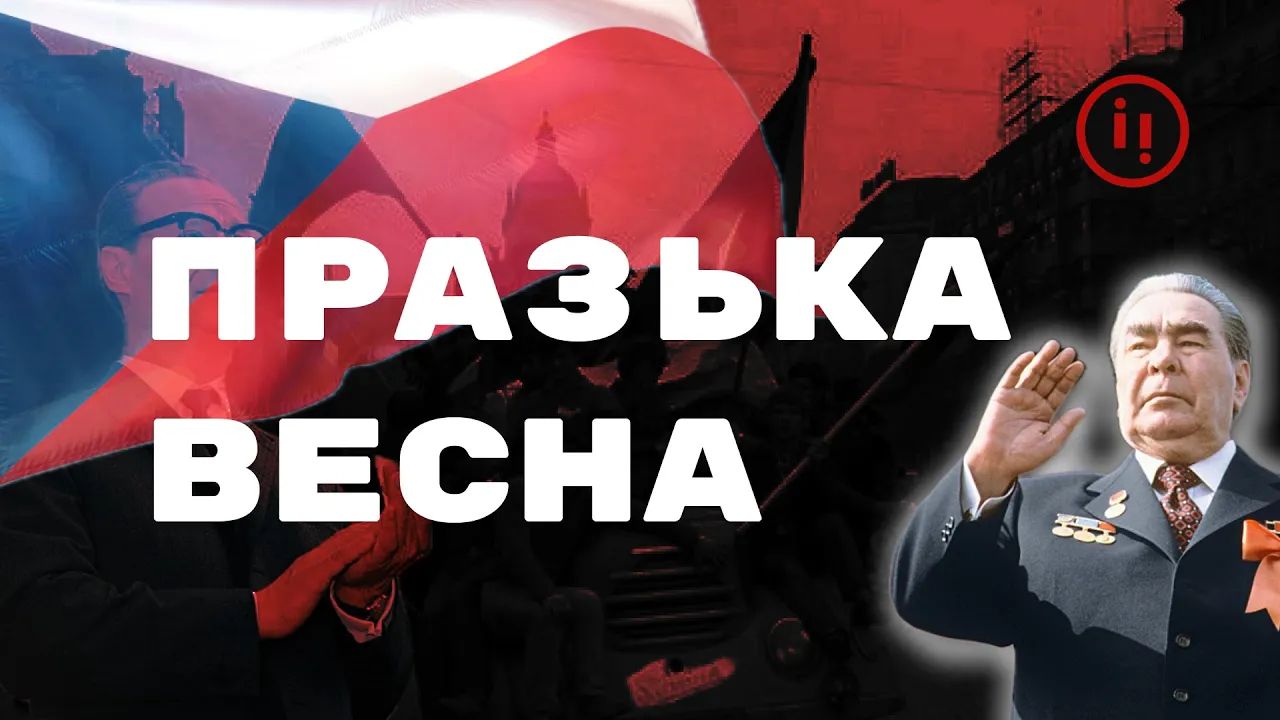
The significance of the 1968 Prague Spring and the subsequent Soviet-led Warsaw Pact invasion of Czechoslovakia, which set the stage for Havel's dissident activities.
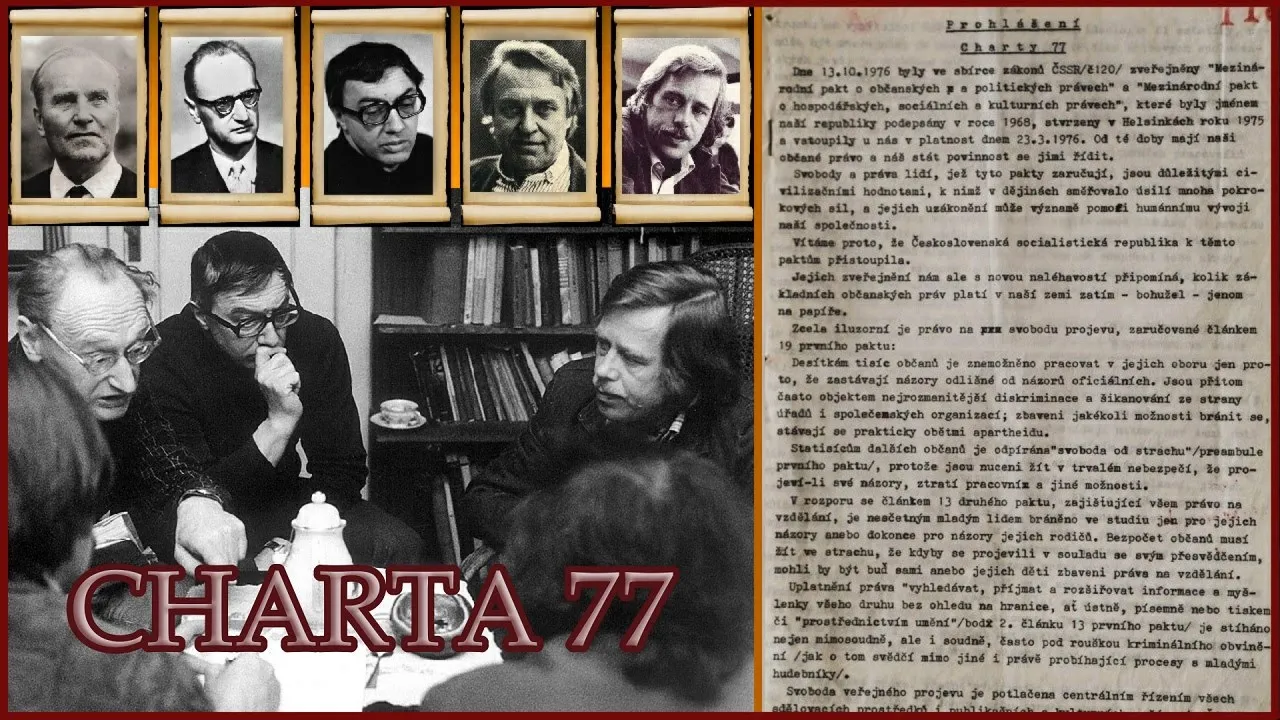
The basic tenets of Charter 77, the civic initiative in Czechoslovakia that demanded human rights compliance from the communist government.
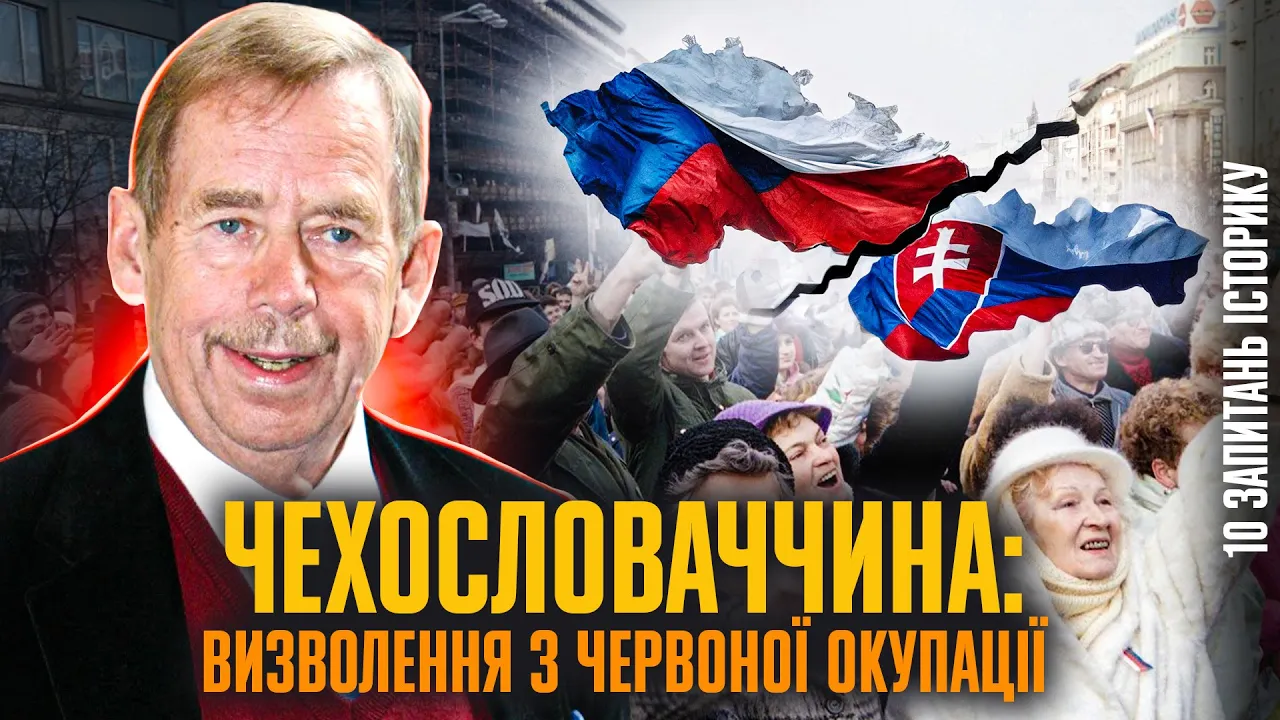
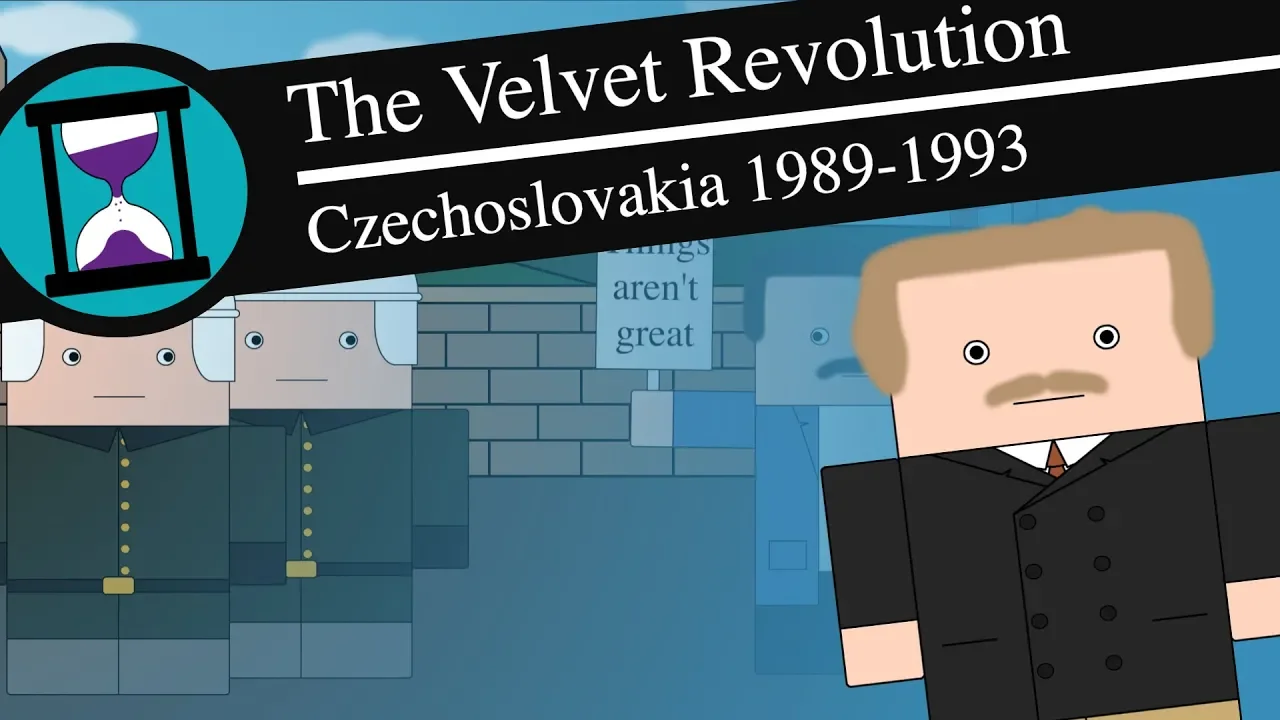
The Velvet Revolution of 1989 and the peaceful dissolution of Czechoslovakia into the Czech Republic and Slovakia in 1993.
A deep-dive analysis of Václav Havel's seminal political essay, 'The Power of the Powerless', and its definition of 'post-totalitarianism'.
Comparative political studies of other Eastern Bloc dissident movements, such as Lech Wałęsa and the Solidarity movement in Poland.
The institutional and societal challenges faced by post-communist European nations transitioning to democratic governance and market economies.
528 views30likes24:53Original Release: 2021-09-09
[Music] a few years ago i visited prague the architecturally stunning capital of the czech republic while there i visited the museum of communism an absolutely amazing museum that details both the horrors and also the crushing mundaneness of living under a communist system as the former people of czech slovakia had for over 40 years after this brilliant yet kind of harrowing experience i went to the gift shop one of the books on display was a small slim book called the power of the powerless citizens against the state in central eastern europe written by vaclav havel a figure i'd never heard of before but i assumed that he was some sort of dissident intellectual during the communist era i needed something to read for the plain home and the book was really easy to fit in my bag so i decided to give baklava a try sadly i slept home in the played and didn't read havel but i learned that havel was a dissident intellectual as i guessed he was a poet a playwright and a writer but what i hadn't guessed correctly was that he was not just some sort of intellectual layabout who just wrote books all day no not at all he actually became the first ever president of the czech republic in 1993.
from poet to president is a pretty impressive career trajectory so i decided to give his book a try and i instantly became an admirer of havel while not an explicit libertarian by any means howell was definitely a lover of freedom his life and writings are a lesson in the practice of living in truth a term however crib from alexander solzhenitsyn made center of his philosophy havel's essay the power of the powerless is one of the most insightful diagnoses and critiques of totalitarianism a word that's often debated and discussed by those who have little experience of its misery but havel didn't just accurately label the problem he also had a plan to remedy it and unlike most high minor philosophers havel actually delivered on his promise in this episode we're going to talk about how a dissident chain smoking intellectual help lead revolution against the communist state and won all without firing a single shot vaclav havel was born in prague czech slovakia on october 5th 1936.
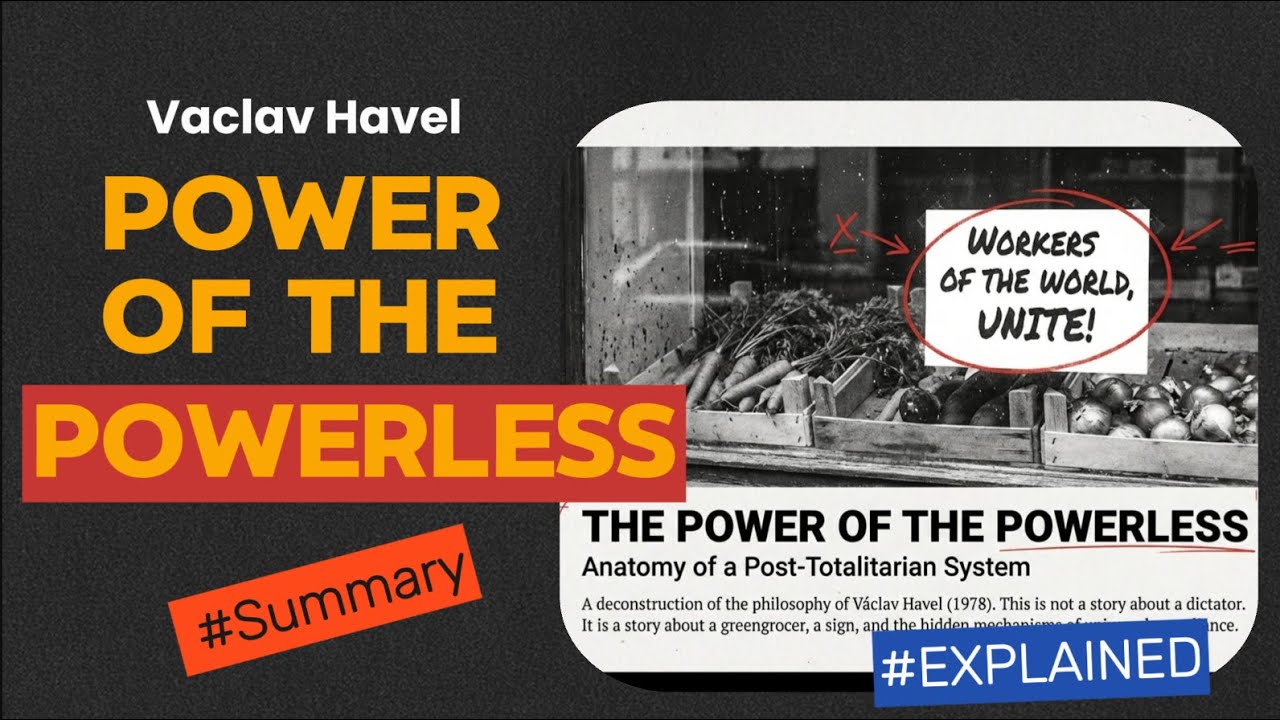
powell was not born into hardships by any means his father and grandfather were highly successful entrepreneurs in the construction industry havel's mother was no sledge either she was the daughter of a diplomat and a journalist working as a visual artist and designer but despite all this familial success life was not going to be easy for havel in 1948 the communist party of czech slovakia the backing of the soviet union took control of the country launching their miserable four decade long rule anyone deemed too wealthy or as the communists say bourgeois was persecuted and their property was taken by the oh so benevolent state because of his family's reputation and status having his younger brother ivan were barred from any form of higher education they were to live like good proletariats working manual labor jobs and factories for the good of society coming from a highly educated intellectual family halal applied to colleges with humanities programs to develop his budding interest in theatre and film under normal circumstances a student like havel would be accepted at nearly any university but in communist czech slovakia things were different hubble was not accepted to any colleges because of his family's class status now normally if you heard a university rejected someone based on class you'd assume that the college is elitist but in czech slovakia it was actually kind of the opposite habel's family and their original sin of being wealthy rubbed off in ivan and havel therefore the communist state cut off any opportunities for the children are formerly prominent to rise again knowing they might harbor mixed feelings about the regime that stole their parents livelihood with few options hubble decided to study at the faculty of economics at the czech technical university in prague but left and toner took two years of mandatory military service in between what he called the drudgery and mindlessness of drills havel began an amateur troop putting on plays that were meant to elevate the ideological consciousness of his fellow conscripts but in reality they always contain subtle yet subversive elements something havoc put to great effect later in his career as a playwright after finishing his military service papa was certain his passion for theater and applied to the academy of performing arts where he was rejected not based on merit but again due to familial connections and the educational blacklist of the communist state he was eventually out to study but only through correspondence however found work at theaters in prague first as a stagehand then as a dramaturge and later as an assistant director in 1963 however had his first ever full-length play entitled garden party performed the story follows the play of hugo pludek an average man from a middle-class family like every parent hugo's families worry about his future to secure his future they organized for hugo to meet mr cabalis an influential man with many connections but mr colabus isn't busy attending a garden party held by the liquidation office but refusing to miss this opportunity hugo is sent by his parents to mingle at the party as increasingly absurd scenarios unfold everyone who works the liquidation office speaks in a highly ideological kind of manner but their speech is devoid of any actual content hugo notices this and begins to speak just like the others through platitudes and cliches thanks to his mimicking hugo actually secures his position as head of the newly created central inauguration liquidation committee when hugo returns home successfully his parents actually barely recognize him hugo resembles the average person living in communist society where to constantly conform to an official ideology and way of speaking simply to keep their economic livelihood making them unrecognizable to their family and friends howell's next play called the memorandum deals with similar themes the protagonist gross due to work has to use a new synthetic language called pidep i don't really know how to pronounce it but either way the whole idea is that it's supposed to be a more rational and logical language suited for the modern world kind of like scientific socialism the language represents how bureaucratic systems operate using a sort of official language that is blatantly not fit for purpose for any aspect of life but bureaucracy due to strict censorship havel could not directly criticize the communist state so we had to use indirect methods where the meaning is kind of hidden but also in broad daylight howell's play used an absurdist style to highlight the moral bankruptcy of the communist regime which forces citizens not to innovate and create but to conform havel's characters are often faced with the absurdity of the system they live under they have to constantly rationalize their behavior and moral compromises in an attempt to conform which inadvertently actually makes them part of the system that oppresses them the oppressed become both the oppressor and the oppressed simultaneously in 1968 the reformer alexander jubeck was elected as the first secretary of the communist party in czech slovakia he wanted to bring partial decentralization into the economy and lose some restrictions on the media speech and travel these reforms were not well received by the kremlin so half a million soviet troops supplied by the warsaw pact occupied czech slovakia and put an end to what is now called the prague spring witnessing these events unfold havel no longer felt he could simply critique the system he had now to oppose its machinations fully in the first week of the occupation however went on air in a radio station urging people to resist against this foreign occupation while also encouraging the protests and asking western listeners to condemn the invasion after the suppression of the prague spring pavel was investigated for sedition and was banned from theater many artists and intellectuals simply fled the country the government actually offered havel many chances to leave in exile to get rid of the troublemaker but havel consciously chose to stay in his home country even though he easily could have made a living as a playwright abroad where his plays had already been performed in places like new york but havel stayed firm explaining that the solution of this human situation does not lie in leaving it [Music] the quelling of the prague spring brought in a period euphemistically known as normalization an effort to return to the status quo through oppression hubble supported himself with theater royalties until he was forced to take a job at a brewery as an unskilled laborer during this time he wrote three plays about the character vanick an insert for havel he publishes plays and writings in the same zap form some of that is the russian word for self-publishing throughout the socialist eastern bloc there was stringent government control over all aspects of life especially publishing possibly controversial works by 1975 hal began circulating his own sas madame sharing extracts from banned books even writing an open layer to czech slovakian president criticizing the incumbent regime pavel had become a prominent figure in the descent movement through his writings and plays but what really launched him as the head of it was his involvement in charter 77 [Music] in czech slovakia like the rest of the eastern bloc as i said nearly every aspect of life was tightly controlled and regulated by an all-powerful state not even music was the exception in 1976 an alternative cycle like rock band known as a classic people of the universe were arrested for playing music without a license to make an example of the band members they were put on trial and given lengthy sentences for not being conformists and having long hair though their music sounded jarring and odd to him at first hubble appreciated the band and that their music was free of any sort of ideological coercion you wrote that here's something serious and genuine and internally free articulation of an existential experience that everyone who had not come completely obtuse must understand how the help organized protests in support of the band because he viewed the trial as a priesthood that the state could incarcerate anyone for individual expression political or not in the aftermath of the trial czech intellectuals artists and writers formed charter 77 an informal civic initiative criticizing the state for failing to respect human rights provisions the state itself had already agreed to such as the 1960 constitution of czech slovakia the charter was co-authored by hafel and demanded freedom of expression religion privacy and basic civil rights whose codification would greatly contribute to development of human society one of the most amazing things about charter 77 was there was a priori open to all people of any political persuasion signatories came from the catholic right all the way to the trotsky's left an unheard of alliance of socialists and religious leaders and intellectuals with wildly varying political opinions all came together signed this document sharing commitment to the rule of law and civic virtue in december 1976 signatures were gathered and the charter was then published in january of the new year [Music] the government-run press tore into charter 77 calling it anti-state anti-socialist demagogic abusive piece of writing written by traders and renegades charter 77 was deemed an illegal document and was never fully published by any of the official state-run press signatories were punished using a wide array of tools available to the state many were fired from their jobs or at educational opportunities denied their children and some were exiled or lost citizenship pavel as a co-author and leading spokesperson was arrested was served a suspended sentence it was during this time that havel wrote his most famous and enduring work the power of the powerless [Music] the original project was for polish and czech slovak writers to come together and write a book on freedom with havel's essay forming the basis of discussion for fellow authors however however was constantly under pressure from the secret police who interrogated him on a daily basis when hafel refused to cave he was imprisoned with having prison his essay was published in some of that form howell dedicated the essay to his philosophical mentor jan potka a fellow charter 77 founding member who died of a stroke after an 11-hour interrogation by the secret police under the communist regime in czech slovakia it's really important to stress and stress again and again that the state was an omnipresent force that used all sorts of political apparatus to make the population as passive as possible we've already seen some of these means spying on political distance firing from their jobs denying their children education and exile but hafel noticed that there was something different from your traditional run-of-the-mill totalitarian state totalitarian systems operate by extinguishing all sorts of civil society to create the illusion that law and public opinion are effectively the same thing this way totalitarianism creates a system in which the state has a monopoly of power over every single aspect of life that's where the name comes from the all-encompassing nature of the state is totalitarian but havel recognized a new sort of totalitarianism had developed in the eastern bloc especially in czech slovakia under normalization authorities did their utmost to normalize society like the brutal styleness regime hovel notes as classical totalitarianism the scheck slovakian government uses repression and fear but now in a decidedly more anonymous selective and calculated manner though the state has an official narrative that is meant to be enforced by everyone few if any even in the highest positions of power really believe in this narrative increasingly the government resembled a kind of pantomime of endless empty rituals to satiate the ego of the state a non-existent entity in the days of stalin the regime demanded the life body and soul of its citizens to fight for the vision of its leader but what havel calls neo or post totalitarianism is more we're promoting passivity fatalism and cynicism that would make people retreat from political life into individual private concerns though few accept the regime's narrative even those embedded within the state havel observed that the system commands an incomparably more precise logically structured generally comprehensible and in essence extremely flexible ideology that is elaborateness and completeness is almost a secularized religion powell explained that people must live within a lie they need not accept the lie it is enough for them to accept their life with it and in it for by this very fact individuals confirm the system fulfill the system make the system are the system havel uses the now famous example of a shopkeeper who displays a sign with the communist slogan workers of the world unite the signs the shopkeeper hangs come from a shipment of goods provided by the state to sell regardless of his opinion the shopkeeper hangs up the sign because of his fear of the state arresting him or ruining his children's future careers if he doesn't the sign this becomes a symbol of both his submission and humiliation however's example can be applied to people in all sorts of positions not just shopkeepers colossal numbers of people in the communist states informed on one another resulting in an environment of rigid ideological conformity to a hollow ideal that even those in power didn't really particularly believe pavel explains that in the post totalitarian system not only does the system alienate humanity but at the same time alienate humanity supports the system as an involuntary master plan as a degenerate image of its own degeneration as a record of people's own failures as individuals the state that people begrudgingly serve is inadvertently supported by their own actions and words which are manipulated through a complex web of anonymous power wielded by a state without any sort of limit if communism was a crime then every single citizen was now an accessory but resistance seemed completely futile havel wrote if there are in essence only two ways to struggle for a free society that is through legal means through armed or unarmed struggle then it should be obvious how inappropriate the latter is in the post-totalitarian system [Music] then what exactly is someone supposed to do against such a long lasting and efficient tyranny pavel's answer was to live in truth a phrase he borrowed from the famous russian alexander schultzenitzen the author of one of jordan peterson's favorite books the gulag archipelago pavel also took his mentor jan podga's lesson to heart that individuals always carry responsibility with them no matter what the situation if the rest of society lies so be it but never join their ranks have all noticed that the state so harshly punished dissenters because they posed a threat to the system by pointing out its obvious flaws hubble explained that if the pillars of society live in mendacity then living in truth is a fundamental threat to them hence this crime is punished more severely than any other crime by refusing to submit humiliating lead to the lies of others a person living in truth in their daily life stands outside the state mandated culture of normal society havel explained that those at the top try to control every single person but this is a fantasy you could never do it there will always be room for people to refuse to conform living a truth for havoc was a possibility open to all people however that doesn't mean that everyone lives in truth the same way a person like havel might write high-minded plays with the nature of communism while the person either on the spectrum like the shopkeeper might just not display a sign with the communist slogan both are valid ways of living in truth because both are examples of people who refuse to be part of a system that humiliates and degrades them no matter who you are or what your circumstance have a belief that the oppressed always have within themselves the power to remedy their own powerlessness the ideal of freedom can never be extinguished even in the most despicable of regimes havel argued as long as one person refuses to let the system give complete power of their lives there will always be hope for freedom after publishing this essay hovel was imprisoned from 1979 until 1983 and while in prison the irish playwright samuel beckett dedicated his short play catastrophe to him by 1989 hafel was imprisoned again during the commemorations for a protester who died of self-immolation to protest against the 1968 invasion [Music] a petition was organized to release havel it was released on parole eventually but by 1989 something had changed before only a few people would ever speak out or put the aim on a petition for fear of reprisals but when havel initiated a petition calling for democracy he received tens of thousands of signatures compared to the meager few hundred for charter 77.
dissent was now finally widespread by november 1989 the berlin wall fell sending shockwaves throughout the eastern bloc huge numbers of people took the streets by november 20th the number of protesters had grown from an already whopping 200 000 people on the streets to half a million people jingled their keys in the sign of new doors opening but also as a job to the authorities saying it's time to pack up and go home by the 28th the communist party of czechoslovakia pledged to relinquish power and end the one-party state that existed for four decades this surreal event became known as the velvet revolution because it was a near bloodless revolution spontaneously enacted by the people cavall was launched the head of the newly founded group civic forum and was quickly elected as president in the first free election of his adult life but this was a position havel was hesitant to take explaining that i had neither aspired this position nor strived to attain it destiny had indeed played a strange joke on me as if telling me they're all those people are persuaded me to accept office since you're so smart now it's your chance to show everyone you've criticized chose the right way to do things [Music] showing his character pavel's first ever presidential address was not a triumphant celebration but quite a solemn speech where he urged every citizen to acknowledge that they were all co-creators of the totalitarian nightmare they had recently awoken from upon assuming their presidency however opposed any efforts to strip former communist officials of their civil rights or engage in other punitive actions since as he famously claimed all of us were co-creators by 1993 czech slovakia ceased to exist becoming two separate states the czech republic and slovakia as president pavel was respected greatly for his moral authority but many of his decisions confused fellow checks for example despite all the hardships he personally experienced he weren't against any sort of reprisals against former communist officials while czech slovakia was still in existence have disbanded arms and munitions productions stating that he did nothing was ethical to produce arms for the world's armies gorillas and gangs at times hubble's moral convictions made him seem quite aloof to the everyday wants and needs of the newly founded republic but keep in mind that the president's power was mainly symbolic under the czech constitution with real power vested in the prime minister however however did all he could using his presidential veto power over 30 times over his 10-year career in political office pavel often invoked his veto powers to protect the rule of law and political plurality havel also played a significant role in the establishment of a senate a constitutional court and an ombudsman office halo was renowned for his amateurish kind of endearing style of politics he had never held political office but all of a sudden have been hurled into the scene in the long hauls of prague castle his secretaries apparently used to use scooters to get around faster and in 1990 hubble invited rockstar frank zappa to be his cultural advisor though at times unpopular at home hubble rapidly ascended international prominence meaning u.s president george bush in 1990 and addressing both houses of congress but havel's personality kind of transcended politics he met with religious leaders like the dalai lama and pope john paul for his undying commitment to human rights however received numerous awards and accolades including the gandhi peace prize the philadelphia liberty medal and the u.s presidential freedom medal [Music] pavel completed his second term as president 2003 stepping down from office to return to writing and speaking out for victims of totalitarianism across the globe he published his experience as president his memoirs to the castle and back in 2007.
though no longer in politics hull stayed busy as part of the human rights foundation's international council chair an advisory member of the victims of communism memorial foundation after an eventful unpredictable life howell died on december 18 2011 a few hours earlier than kim jong-il the supreme leader of north korea quite the contrast in obituaries pavel's death was met by tributes from world leaders like barack obama and david cameron praising his principled and morally focused leadership unlike many politicians have put ethics far far above the realm of politics a lesson many world leaders still refuse to learn today it's safe to say we probably won't find a more reluctant yet moral leader like havel to come to prominence ever again powell once wrote that when the time is ripe an unarmed man on the street can disarm an entire division of soldiers when i first heard this i thought he was kind of being silly and just a little bit idealistic but the evidence is there in the vowel revolution an environment of dissent that might never come without havel's undying criticism of the communist regime it is hard to describe havel as anything politically because he was seemingly a man above politics though he did speak extensively about the importance of the separation of powers the universal right to vote the authority of the rule of law the importance of freedom of expression and the availability of private ownership but havel didn't emptyly praise institutions he praised people havel saw these institutions protected a sphere for the individual to live in truth to express themselves and live authentic lives free from the course of state and that was why they were valuable not because they were just special in and of themselves because they're an extension of human flourishing being such a towering figure of the history of the czech republic you'd expect prague to be littered with ornate monuments to the deceased havel however my favorite monument was back in dublin when i returned home from the czech republic i visited a place called saint patrick's cathedral in the middle of the city where there is a monument to howell not a giant statue of him looking heroic no special plaques or grand structure instead havel's monument is two chairs with a table in between a tree providing some shade for anyone sitting down it is one of many all over the world they are called pavel's places the two chairs and table represent the willingness of people to come together and discuss their differences a humble monument to political plurality and free expression i cannot think of a better way to encapsulate the life and legacy of vaclav havel [Music] thanks emil for listening i hope you enjoyed this podcast and if you did you can subscribe on apple podcast spotify or wherever you listen portraits of liberty is written and hosted by me palmini and produced by landry ayers you can also visit libertarianism.org to find more shows like this i hope to see you next time [Music] you
Up Next
84:45
Rowan Williams on the Failure of Mass Democracy | Lecture
@RadboudReflectsLectures
15.7K views•2017-09-27

164:01
John of Damascus on Holy Images: A Theological Defense
@BannedBooks
139 views•2026-04-25

68:32
Should We Destroy the Machines? Big Tech Surveillance Critique
@TheStoriesWeTell303
167.9K views•2025-11-30
4:57
The Myth of Sisyphus: A Greek Legend of Eternal Punishment
@TEDEd
8.6M views•2018-11-13
Related Study Plans & Knowledge Roadmaps
Structured learning paths in Philosophy
philosophy
Frankfurt School: Critical Theory & Culture
01Foundations of the Frankfurt School and Critical Theory
02Horkheimer & Adorno: The Critique of Instrumental Reason
03The Culture Industry and Mass Deception
+ 2 more learning modules
12h5 modules
Explore Roadmap
philosophy
Philosophy of Language: From Frege to Austin
01The Linguistic Turn: An Introduction to Language in Philosophy
02Gottlob Frege: Sense and Reference
03Early Wittgenstein: The Picture Theory of Meaning
+ 3 more learning modules
15h6 modules
Explore Roadmap
philosophy
Feminist Epistemology: Standpoint & Injustice
01Introduction to Epistemology and Feminist Critiques
02Sandra Harding and Standpoint Theory
03Donna Haraway and Situated Knowledges
+ 2 more learning modules
12h5 modules
Explore Roadmap
philosophy
Environmental Philosophy: Ethics & Deep Ecology
01Foundations of Environmental Ethics & Anthropocentrism
02Biocentric Individualism and Animal Liberation
03Ecocentric Holism and Deep Ecology
+ 1 more learning modules
10h4 modules
Explore Roadmap