
















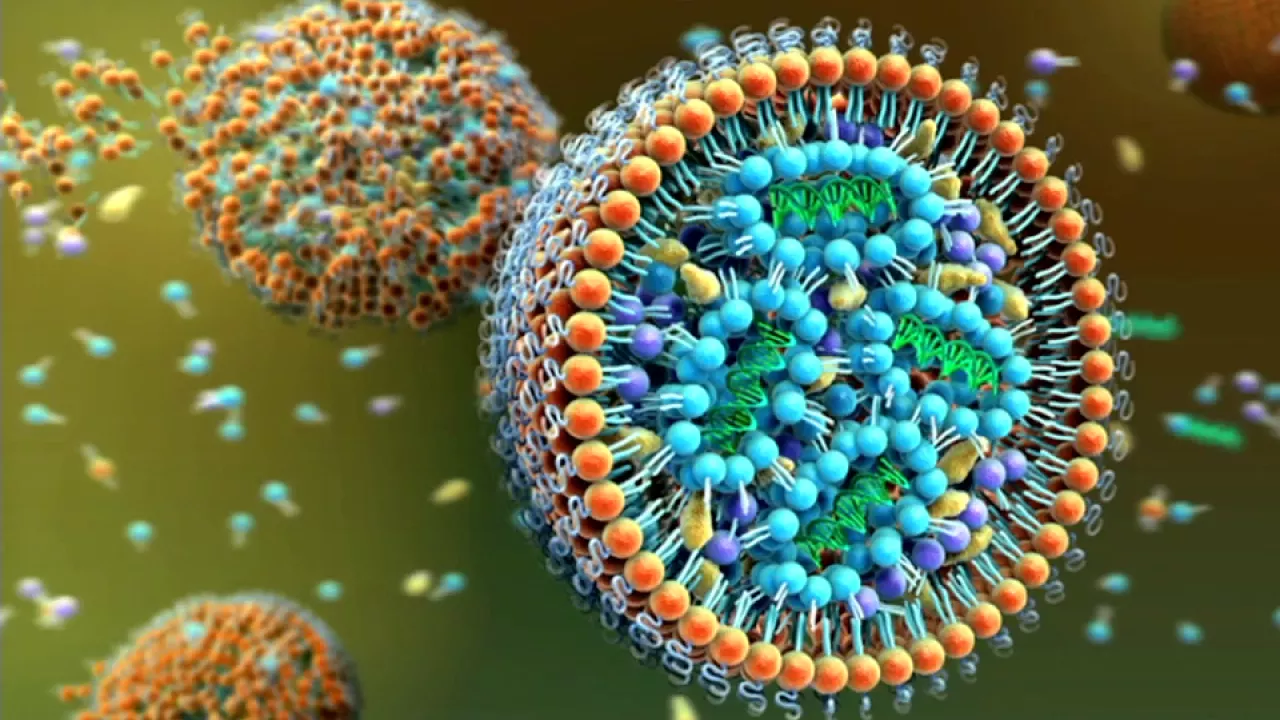


Lipid nanoparticles serve as effective delivery vehicles for mRNA vaccines by overcoming the natural barriers that prevent mRNA from entering cells, with the particles consisting of ionizable lipids that become positively charged under acidic cellular conditions to facilitate endosomal escape, cholesterol for structural stability, helper lipids for proper packing, and PEG for stability and immune shielding, enabling the mRNA to reach the cytoplasm where it can direct cells to produce viral spike proteins that train the immune system to recognize and fight infections.
COVID-19 mRNA Vaccines: Lipid Nanoparticle Technology Explained
Added:The Central Dogma of Molecular Biology, specifically how mRNA translates genetic code into proteins within a cell.
Basic cell membrane structure, including the lipid bilayer and the chemical barriers to transporting polar molecules across it.
Fundamental immunology, particularly how the body recognizes foreign proteins (antigens) to trigger an adaptive immune response.
The chemical instability of RNA molecules and why naked mRNA degrades quickly in physiological environments.
The specific formulation chemistry of Lipid Nanoparticles (LNPs), including ionizable lipids, cholesterol, helper lipids, and PEGylated lipids.
Advanced therapeutic applications of mRNA-LNPs, such as personalized cancer vaccines and in vivo CRISPR-Cas9 gene-editing therapies.
Pharmacokinetics and biodistribution, focusing on how nanoparticles navigate the circulatory system and target specific organs like the liver.
The engineering and scalability challenges of nanomedicine manufacturing, including microfluidic mixing and ultra-cold chain storage requirements.
204.7K views2.5Klikes1:25:02Original Release: 2021-02-18
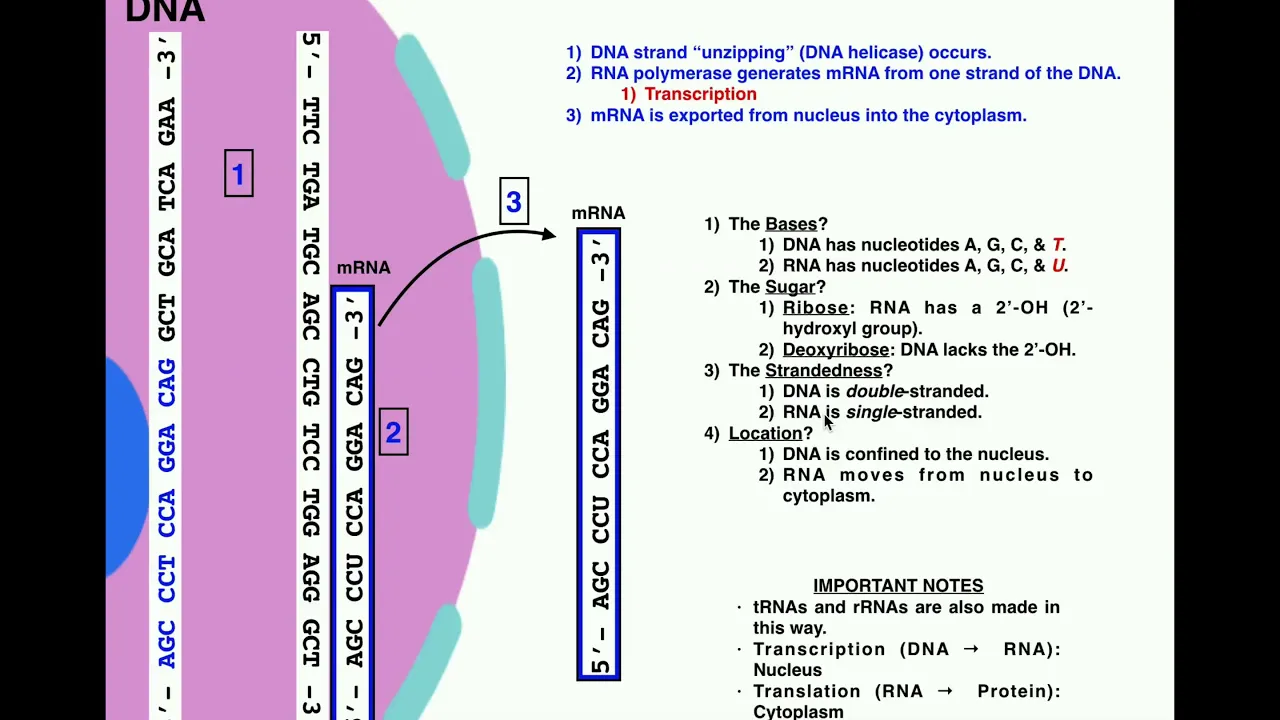
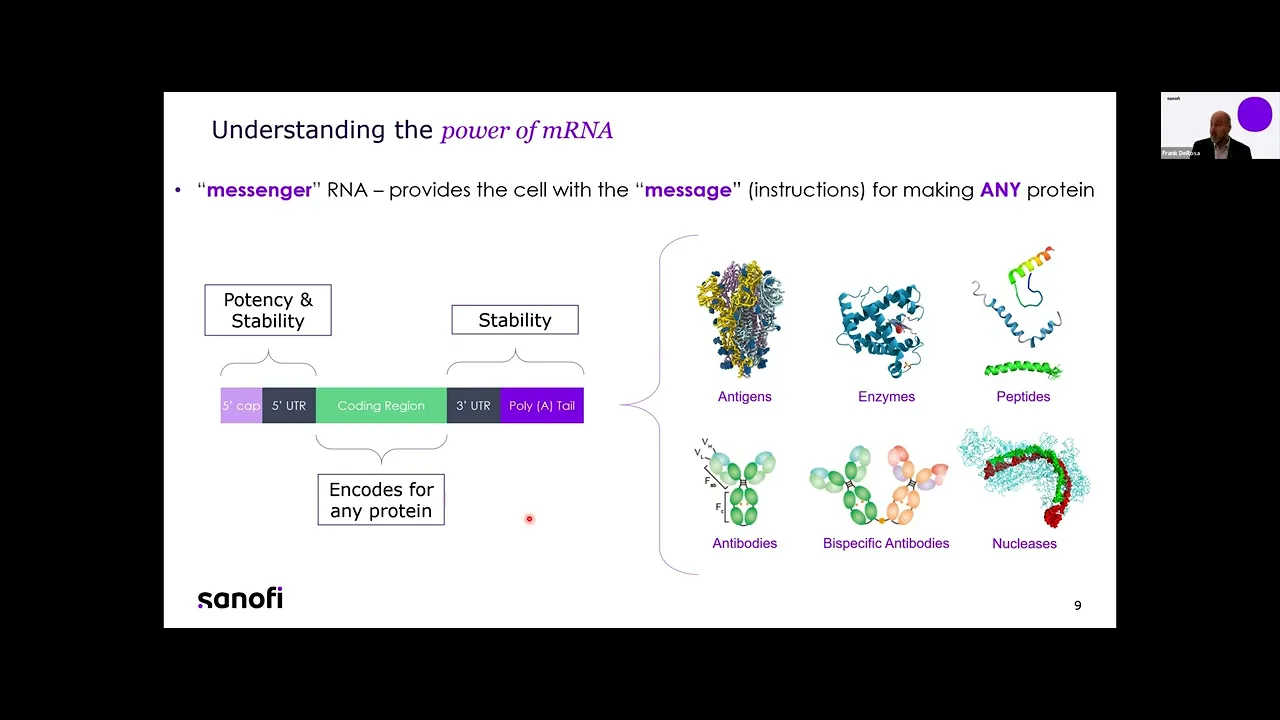
welcome everybody um good morning or good afternoon or good evening depending on where you are um i'm christine from nature reviews materials and together with kiara from nature nanotechnology we want to welcome you all to this webinar and q a session on lipid nanoparticles for mrna delivery we're super excited that so many of you uh could join us today from really all over the world and in this webinar today we want to talk about the technology behind the new covid mrna vaccines such as the ones developed by moderna and pfizer biontech so the technology or the idea of using nanoparticles and in particular lipid nanoparticles for the delivery of drugs and nucleic acids such as mrna has been developed and investigated and optimized for many years by the nano-medicine and materials science communities so we actually know a great deal about this technology and we are very lucky today to have two experts in this field with us kathryn whitehead from carnegie mellon university and yeshudong from ohio state university welcome you both and thanks so much for joining us today um so katie whitehead is an associate professor and dean's career fellow in the department of chemical engineering and biomedical engineering at carnegie mellon and her lab develops rna and protein drug delivery systems really with the long-term goal of predicting and investigating the behavior of these materials in humans and yuju is associate professor in the division of pharmaceutics and pharmacology in the college of pharmacy at ohio state and his lab his research focuses on the design and development of biotechnology platforms for the treatment of diseases including infectious diseases and cancer and he has worked with mrna therapeutics for quite a while um so katie and yuju are going to kick off our webinar today with two short talks in which they will explain the technology tell you um how these mrna vaccines work what they consist of and they're also going to provide a bit of a historical context basically of what's been done previously with this technology already um and after the two short talks we will then try to answer as many questions as we can that you may have many of you have already um sent some questions during registration which is great thanks so much and we will definitely get to those questions but please also use the questions box that you can see on your right hand side hopefully um in in the um go to webinar application to just type in questions throughout the talks throughout the webinar and we'll try to answer as many as we can um and then without further ado i think i'm gonna hand over to katie who's gonna kick off the webinar today thank you katie thanks christine it's so nice to be with you all today and during my presentation i'd like to teach you a bit about these mrna loaded lipid nanoparticles that are doing such a wonderful job in vaccinating populations against stars kobe 2. so i'm going to explain a bit about the drug itself so the medicine itself which is the mrna as well as explain how we put it inside a lipid nanoparticle and what exactly that lipid nanoparticle is so let's see if i can advance okay so messenger rna so mrna this is a genetic molecule for those of you who are not familiar and it's part of the process in our bodies that makes proteins so what you're seeing here is called the central dogma of molecular biology and it tells us that we start with the blueprint information our dna which is permanently stored in each one of our cells and this dna is converted inside of our cells into messenger rna you can think of messenger rna as a little bit of a middle man relaying the information that the dna is giving us and using it to create proteins so proteins are the doers in our body they're responsible for nearly all functioning within our bodies and so really any kind of disease or condition it almost always has some critical protein protein involved either there's too much of a protein too little of a protein sometimes a protein has been mutated and so it doesn't have the correct shape or form or function so we're excited about messenger rna as a type of therapeutic because it's upstream of this protein production and because it's a middle man because it's temporary we can actually try to fool around with its expression so that we can make changes in protein without changing our dna without permanently altering anything in our dna so one of the ways that we can do this if we want for example more of this blue protein here we can simply add more of this same messenger rna so the messenger rna has a particular code we can add more of it into our bodies and so we can augment the expression of that particular protein similarly if we want to make some other protein perhaps even a protein that our body doesn't even normally know how to make we can deliver a different sequence of messenger rna into our body and ask our bodies to make that protein as well and so in this way we can induce all sorts of protein expression that can help either treat or in the case of these vaccines to prevent disease so just a little bit on what mrna drugs can do so vaccines are clearly at the forefront of applications that are being used in the clinic i've been working in the area of rna delivery for over 15 years now and as with many of my colleagues we've long been believers of the enormous potential of these genetic medicines and let me just explain to you a few of the different types of conditions that can be treated with messenger rna so one of the most obvious types of applications is protein replacement therapy so for example those with hemophilia this is a blood clotting disorder and the reason people bleed is because they are missing a particular protein in our blood that helps the blood clot and so a fairly straightforward application of messenger rna would to be to get that messenger rna sequence for that missing protein to deliver it into the body and then our body would be able to make that protein and the blood is able to clot okay so there are numerous different conditions where we need to make more of a protein or to introduce a missing protein into our system vaccines as i mentioned have been the most clinically advanced application and in this case we're not replacing any kind of missing protein but instead we're introducing a type of protein into the body that our bodies have never seen before a foreign protein called an antigen um so in this case uh for sars cov2 we're introducing a small protein found on the viral surface and when we show that to our immune system after the cells create that small antigen the immune system reacts in a way that it will help us respond to a further to any kind of infection that might take place and so to prevent that infection or to prevent a very severe response to that virus i won't go into them in a lot of detail but messenger rna similarly can be used for cancer immunotherapy applications so we can deliver messenger rna that encodes for proteins that will help teach our immune system how to attack the cancer cells in our bodies we can also use messenger rna to create what are called transcription factors these are a type of protein that help the stem cells in our body decide which other types of cells they're going to become so we can help our stem cells create new types of tissues using this technology as well and then finally for those of you who are aware of gene editing or interested in it we can actually turn down protein expression all these other ones involve creating more protein expression but we can turn it down by delivering messenger rna and coding for a nuclease called cas9 or any of the other nucleases which can then go into our nuclei and carry out gene editing to silence particular proteins in our system and if any of you are interested in learning more about details of these applications or to learn more about the delivery vehicles that are being used you can reference this review paper that a member of my group wrote a few years ago so the problem with messenger rna as a therapeutic we can't just take a pill we can't just inject it into our systems and hope for the best this is because it's a very large molecule and it's negatively charged our cell membranes are also negatively charged so when those two negative charges come up against each other the mrna is repelled and it's not able to enter the cell if we just inject it into our bloodstream it will be cleared very rapidly through our kidneys and so what we really need is some kind of a delivery vehicle that's able to package up this messenger rna and then take it to where it needs to go inside the body into the cells where the protein expression is needed so i wanted to just put together a slide here that would highlight all the different things that we need this delivery vehicle to do it's really in my opinion pretty miraculous that we can come up with something that works so in the case of vaccination we are going to receive an injection of these lipid nanoparticles into our muscle tissue okay so those lipid nanoparticles then need to diffuse to the site of the cells that are going to be vaccinated sometimes these cells are going to be the muscle cells sometimes they might be the immune cells because there are also immune cells that reside in our muscle tissue one way or another these lipid nanoparticles will make their way uh to the vicinity of these cells and they're taken into the cell through a process called endocytosis so basically the cell membrane reaches up and around the nanoparticle and pulls it inside normally the cell does this to try to sample its environment and to find nutrients and other molecules that may be out there that it wants when it brings in a lipid nanoparticle it doesn't know what to make of it it's in this walled off compartment called the endosome and the cell keeps it there because if anything damaging is brought in it wants to be able to get rid of it so the problem that these delivery vehicles face is that they don't readily exit this endosome so the chemistry of these particles has been designed very carefully over the years to enable this endosomal escape process as we call it which will then allow the lipid nanoparticle to deliver the rna into what's called the cytoplasm of the cell which is the watery area outside the nucleus and that is where the proteins can then be made so really we're asking our nanoparticles to do quite a lot overcome a number of different barriers and it's really decades of research that has enabled us to get to where we are today and to the very rapid development of these vaccines so cationic lipids have been used for the earliest forms of nucleic acid delivery so dna is where researchers really started in this field and dna although it's structurally somewhat different than rna it's still made up of very negative nuclear bases or nucleosides and it also um you know it's a very large molecule and so some of the properties that we need to encapsulate dna are very similar so what researchers decades ago found was that they could use cationic lipids so these lipids that have a positive charge and then here is something like a 16 carbon long tail two of them um and if you're able to use these lipid nano sorry these lipids to create liposomal structures that encapsulate the dna um so here's what a liposome a traditional liposome looks like this is a cross section right here and here's what it kind of looks like in 3d so it's similar to our cells it has a lipid bilayer all around the exterior of the liposome and these blue balls here represent that cationic head group on the lipid which is water loving so this water loving group faces outward into an aqueous solution and then we also have these water loving materials facing inward meanwhile the tails all come together because they are hydrophobic and they want to hang out with each other so inside the dna which is water loving can be encapsulated over the years the technology and the exact chemistry used for nucleic acid delivery has evolved and dna as i mentioned it is a little bit different than rna and so as we've moved into rna delivery we've also had some developments in the type of particles that are used for efficient rna delivery so we're now at a point where these sars cov2 vaccines they're making use of uh more recent forms of lipid nanoparticles these are a bit more of what i'd call a solid lipid nanoparticle and they're made up of several ingredients so one is called an ionizable lipid so it's like that cationic lipid i showed you before however it only takes on positive charge inside the cell and because it's neutral in the bloodstream it actually causes less toxicity than some of the earlier versions of these lipids there's also a fair amount of cholesterol in these particles just the same way that there's a lot of cholesterol in the cell membranes inside our body so it serves a similar purpose where it helps to fluidize our particle to provide some support and shape to the particle and stability and then there are what we call helper lipids these are phospholipids also can be naturally occurring lipids that we incorporate into these particles that can help with the packing so you can see all these different molecules are packed inside this particle this is just my kind of interpretation for what might be going on here inside the particle these are very small particles and so um to my knowledge you know we only kind of have clues and bits and pieces as to what these look like on the inside but the specific helper lipid is chosen to help this messenger rna shown in black to really pack in there effectively there's a molecule called polyethylene glycol or peg this is a polymer that is currently found in some fda approved medicines and this hangs out on the exterior of the particle it also helps with the stability of the particles and for other applications it can help shield from unwanted immune clearance although that's not as much of a concern in the case of vaccines so this is what these particles look like my lab works with these particles eg's lab works with these particles many different types of very similar looking particles they're all very similar one thing that tends to change is the ionizable lipid so this is where a lot of the intellectual property exists within the lipid nanoparticle space and it is the major difference between the moderna and the pfizer bioin tech vaccines okay so here are these ingredients again they both of the vaccines use the same set of um three other lipid nanoparticle ingredients they all use cholesterol they all use a helper lipid called dspc and they all use a very specific version of this peg okay their messenger rna sequences are a little bit different uh but essentially are going to do very similar things once they get into the body as for the ionizable lipids this is what bioentech pfizer's ionizable lipid looks like so you can see here it's a neutral molecule this is what um you know the muscle tissue sees until these molecules make it inside of the cell and this amine group right here is able to take on a positive charge that helps our nanoparticle escape that endosome okay so uh it's very interesting that if we look at the moderna lipid this is a very very similar looking lipid right so we have an alcohol group the distance between the alcohol and the amine is a little bit different it's two carbons over here versus four carbons over here and then we have similar tail structures all of the tails incorporate this group right here this is called an ester and this ester group is degradable under the conditions inside of our body so this helps to make sure that after our lipid nanoparticles have done their job they're able to um to break down and to degrade inside of our body so that they can be cleared and they don't accumulate to cause toxicity so all of the tails have this and then one of the other differences here is that we have essentially four short tails at the end of the bioentec visor ionizable lipid and we have three tails over on this end so structurally very similar lipid nanoparticles so um i mentioned before that rna is negatively charged and these ionizable lipids they become charged only under reduced ph conditions so we put these materials into slightly acidic solutions in order to form the nanoparticles so these electrostatic interactions help draw our materials together and you can make the nanoparticles either by hand using pipettes or you can make them in a microfluidic device there are a number of different ways but essentially you're going to be mixing an rna stream which is an aqueous stream in water and you have a lipid mixture which is dissolved in ethanol and when you rapidly mix these two streams together you get lipid nanoparticles which precipitate out of solution they tend to be about 80 nanometers in diameter but that can vary depending on the exact ingredients that you put into that nanoparticle so just a couple more slides for me explaining how these messenger rna vaccines are helping protect specifically against sars kobe 2.
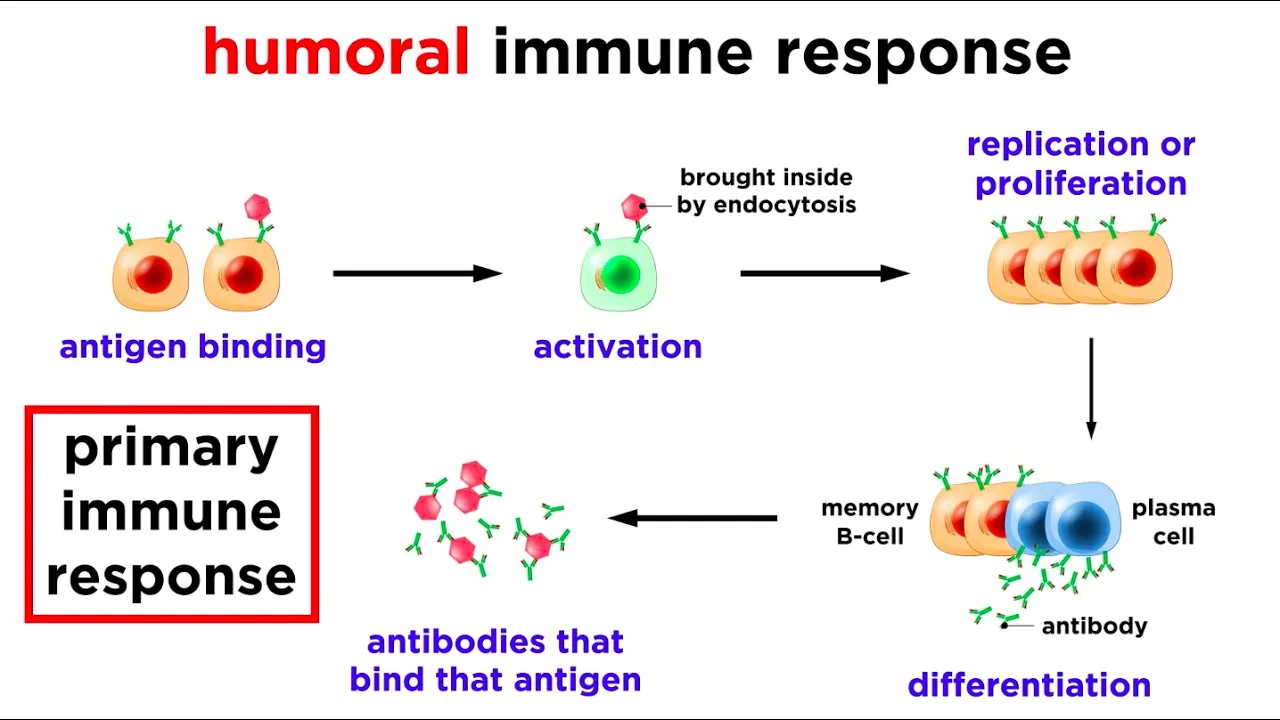
so this is a a depiction of sars cov2 the virus and on the surface of the virus are what are called the spike proteins um you can see these kind of look like a crown or a corona so that's why they're called coronaviruses and this is how the virus the spike protein is how the virus enters our cells so this spike protein can bind to another protein a receptor in our bodies and there's a lot of it in our lungs which is why we tend to get sick in our lungs so this receptor can bind to the spike protein and the spike protein can then bring the whole virus into the cell and to cause an infection so that's how the virus is causing infection but similarly when our immune system responds to this uh to this virus you can see the spike proteins are right here on the surface and so of all the different proteins that are present in the virus it would be most easy for our immune system to detect these spike proteins because they're on the outside so for that reason that's one of the reasons why the messenger rna that's being delivered through the vaccine it encodes for this spike proteins so i'm going to just show you uh for if we have any immunologists in the crowd this is a somewhat simplified version of how our immune system is responding to these particles for the rest of you it will probably already seem overly complicated but the immune system is absolutely amazing in how it works so if people like me the drug delivery scientists have done their jobs in creating a good particle that's able to package up our rna and to live deliver it into cells here's it outside of one of the cells that's going to be vaccinated in our muscle tissue and this vaccinated cell again it can be a muscle cell it can be an immune cell or other cells that are present in the area so this particle needs to enter our our cell that's going to be vaccinated and again it's in that endosome so the particle needs to escape the endosome and deliver the messenger rna that encodes for the spike protein into this watery part of the cell and there it can be turned into protein by the cell so here we have the spike protein that's being made and smaller pieces so sometimes the spike protein can get broken down into smaller pieces all these things are called antigens so an antigen is this foreign bit of protein that our immune system will respond to so some of the spike protein the cell knows it's foreign and so it holds it out it holds it outside its cell and it says hey immune system please come and do something about this so there are a couple of different ways that our immune system can respond one way is that our b cells there will be just a couple b cells in our body that have antibodies that are specific for this particular spike protein it's amazing how many different types of b cells we have in our body so when a b cell finds this infected cell or sorry this vaccinated cell and binds to it it is able to produce um antibodies against that particular antigen okay so in the event that an infection ever tries to take hold so in the event that this virus the sars cov2 virus enters our bodies our immune system will be prepared these antibodies will have been made and they can quickly uh surround this virus bind to the different spike proteins and when it completely coats the whole virus and antibodies that marks this virus for clearance by the immune system so we say it's been neutralized all right so that's one way this works the vaccine teaches our b cells to make antibodies which can then try to get rid of the virus before it ever even infects any of our cells the other thing that can happen is either the b cell can engage in the signaling process or there are cells called antigen presenting cells these are immune cells that can help kick off this other part of the process so a b cell can talk to a t cell called a helper t cell which helps um get the signaling process going it will then talk to an antigen presenting cell differently or separately the anagen presenting cell can detect some of this foreign protein on the surface of this vaccinated cell and gobble it up one way or another the antigen presenting cell can talk to a different type of t cell called the cytotoxic t cell okay so this t cell can kill other cells and the cytotoxic t cell is equipped now with this very tiny piece of antigen that it can use to try to match up with any cell that's been infected so in the event some virus does get into our system and in the event that a cell becomes infected that infected cell will actually show pieces of the antigen on its surface and it will it will match up with our cytotoxic t cell such that the cell is then killed okay so there are a couple of different ways that the vaccine works but the main takeaway here is that our b cells will make antibodies to try to sequester the virus before it infects our cells but if that infection happens we have this other part of the immune system over here that will make sure those cells are killed okay so that's what i have and i'm going to turn it over to professor dawn okay issues you should be presented now yeah great yeah could you see my slides yes let me scream yes okay is that good wonderful so hello everyone uh also good morning good afternoon good evening depending on where you are uh first i would like to thank christine kara and fabio for their great efforts on hosting this very exciting webinar it's really my great pleasure to share with you some examples of lipid nanoparticles for mrna vaccines and the mra therapeutics based on our research experience thanks katie for the wonderful presentation about mre vaccines against south korea ii i don't need to give additional background information on that in our study we learned that both mri sequences and the delivery materials are critical for a effective mri vaccine on the left here's a process for the optimization of mrna sequences we know the untranslated regions utr or mra play important roles in regulating mri functions so we investigated the fire prime and the three prime utromra through two approaches one is bioinformatics analysis of indulgence gene expression we analyzed over 4000 different genes reported in the literature and the other approach is the novel design which is based on several predetermined criteria in early 2020 we identified a pair of lead utr after over four years of studies then this coi19 outbreak occurred we decided to apply our leader mra to code the susqueh2 antigens then we use our lipid nanoparticles to deliver this mrna and induce specific antibodies against susceptible this slide shows one set of our results we prepare the mri encoding spike protein as katie mentioned we then formulated this mra with two types of lipid nanoparticles one is mc3 fda approved a lipid formulation the other one is a tt3 we developed in our lab on the left the y-axis that's the specific serum igg and the x-axis as mc3 and tt3 you can see tt3 induced a high amount of specific igg production which is over 300 fold higher than m63 at the same dose on the right we studied two different administration routes intramuscular injection and the subcutaneous injection we can see intramuscular injection is better than subcutaneous injection in this case for the following several slides i borrowed from the fda advisory committee meetings with final balance and moderna this slides about about the medical actions for mra-based vaccines as kt just described this process involves multiple types of cells and the multiple cellular pathways i think additional studies are still needed to fully uncover the process for laser coin19 vaccines this slide is from the presentation of moderna which contains some important information a lot of researchers and the public are interested in does the vaccine change the host they presented that only a few copies of mrna molecular are delivered into cells compared with over 200 000 mi molecules already in cells mra is cleared through the natural degradation process and importantly there is a minimum or no chance these mri molecules can be reversely transcribed into dna based on our current knowledge in other words these mra vaccines cannot alter human dna here's some highlights about the key discoveries and advances about mra drugs in 1961 mria molecules was discovered it took over 30 years to understand the fundamental biology then in the year 1989 1980 research researchers started to deliver mri into cell and animal models then there's another almost 20 years of pre-clinical and the translational studies of mri in 2009 researchers reported clinical results of the first mra based cancer vaccines after that there's over 10 years of clinical trials for a series of mri pipelines then in december 2020 two types of lipid nanoparticles formulated mia vnt 162 and mra-1273 are approved by the fda as a coinlighting vaccines in addition to viral vaccines mra has been explored for a wide variety of applications such as cancer immunotherapies protein replacement therapies genome engineering and also genome editing i will share with you a few examples in the following talk so this slide shows our strategy to optimize lipid nanoparticles for mri delivery we first synthesize new types of lipids or lipid derivatives and then we formulate with several other components katie just mentioned helpfully feed the cholesterol pack liquid and here the therapeutic cargo is messenger ia through this microfluidic-based device they self-assemble into very nice nanoparticles and then we can characterize the particle properties such as the particle size particle charge internal efficiency of mri and also mi translation efficiency we utilize the orthogonal experiment design which enable us to efficiently identify the optimal formulation with a significantly reduced experiment load after that we identify the optimal formulation then we can test it in different models and here's a model disease hemophilia hemophilia is a genetic disorder caused by missing or mutational factor eight or factor nine patients suffer from life-threatening bleeding or serious complications such as joint bleeds in this study we formulated a tt3 encapsulating mra encoding human factor 9 and then we injected intravenously in the vector9 alcohol mice which is a hemophilia b mouse model so here the y axis that the human factor 9 activity in miu per ml access the different treatment groups you can see it show the dose dependent recovery of the factor 9 activity at the dose of 1.1 milligram per kilogram the 9 activity is around 800 miu per ml in normal serum the factor 9 activity is between 500 to 1500 miu per ml that means the td3 is able to fully recover the factoring activity into the normal range recently we collaborated with the groups of raw wise and daryl erwin we formulated tt3 with self-replicating rna encoding il-12 for cancer immunotherapy and here's an illustration of the process this lipid nanoparticle replica formulation first induce immunogenic cancer cell death and the then subsequently trigger the anti-tumor immunity here are some results our collaborators produced they performed a single injection of the lipid nanoparticle formulation in multiple mouse tumor models you can see it showed a significant extension of mouse survival in b16 f10 tumor models cd26 tumor model and also human 1.7 tumor model they also performed a number of different type of maximum action studies and here is a one example here in the mid-88 sting knockout mice the therapeutic efficacy of this formulation is significantly compromised we are also thinking to apply lipid and minor particles for treating other deadly diseases such as sepsis is a life-threatening condition caused by severe infections it affects over 30 million people worldwide and remains the number one cause of death although there's a significant progress in the intensive care and antibiotic therapy the mortality rate is still pretty high around 25 to 30 percent and this is the illustration of our strategy we designed a series of vitamin derived lipid nanoparticles to deliver mrna encoding antimicrobial components into macrophages and then we treated septic mice with the engineered macrophages in order to boost the innate immunity prevent bacterial immunization and eliminate multi-drug resistant bacteria in this study we established a sepsis model by infecting mice with a mixed bacterial here is a multi-drug resistant as auras and e coli to mimic the sepsis patients then we treated these mice with the engineered macrophages on the left you can see the engineered macrophages significantly reduce the bacterial load in the mice and importantly the engineer the macrophages dramatically extended the mouse survival over eighty percent and these survival mice continue to grow and on the left that's a body weight and on the right after 30 days we noticed both white blood cells and the lymph sides return back to the normal level so in conclusion i briefly shared with you the broad applications of lipid mra nanoparticles such as the kuvin19 vaccines treating genetic disorders cancer immunotherapy or contrary counteracting the drug-resistant bacterial lastly i would like to acknowledge my lab members these are group of talented postdocs graduate students undergrad students and a few high school students thanks our collaborators for their significant contributions on several different projects thanks our uh thanks the funding agency supporting our projects thank you very much for your attention i would like to take any questions thank you thank you very much and thank you katie that was really great it was really uh really informative and uh a great um great seminars to really understand uh what's behind the technology and how we got there um so we have a few questions that we collected from the registration forms and we also have um several questions that came in um during the seminars um so the first bunch of questions we try to group them um as much as we can on the broad theme so the first bunch of questions actually um refers to uh the formulation formulation of the mrna vaccines and the stability of deformation so um you already katie you already talked about the differences between the moderna and the uh physical barrier attack uh boxing and the differences in the um in the lipid we got a few questions on that and i think you made the answer to that but we also got some questions about the storage temperature differences and whether this is related to the formulation and how this is related to the formulation oops sorry you don't need to decide there you go okay it is already it so you have to restart sorry about that okay you can hear me now yeah yes okay so the the temperature is a very common question so the temperature required for storage so first of all the reason why there are storage problems for lipid nanoparticles is because they are fairly unstable particles compared to a lot of other types of drugs that we use it's because they have all those different components and the components have come together in a very particular way at the molecular level and so it doesn't take a whole lot in order for them to fall apart the higher the temperature the more the molecules move around the more you have motion um you know at the molecular level and so the easier it is for the particles to come apart so that's why the very cold temperatures are used for some of these particles moderna has you know has been in the space of vaccination for longer i think they've had more of an opportunity to finagle with their lipid nanoparticle formulation and to add some different things so so there are different people who have found that adding sugars and some other molecules can help stabilize these particles so moderna has had more time i think to figure out how to make their lipids stable at slightly warmer temperatures in the fridge as opposed to the pfizer bioentech vaccines which were i think the lipid nanoparticle formulations there were developed more quickly they didn't have as much time for all the stability testing and optimization there and so to be safe just to be totally safe those are being kept at um you know minus 70.
so i think with time so i think curevac actually has uh they're developing an mrna vaccine that can be kept maybe in the fridge for a couple of months um do you know do you know about curebacks i saw some news but i don't think it's published i don't know so what's exactly yeah it's not published yet but um you know it's an ongoing area of work yeah but that's that's why cold temperatures are required all right thank you very much um that's that's good to know that there are like room for improvement and and one other question that uh came in um is so about the uh yeah so about the pka of the ionizable lipid uh so in the physical vaccine the pka is 6.09 does this surprise you uh like having such a low pka or is this something sure so um i can't say it really surprises me um it's you know it's within it's within a range that i think could work um so you know what we care more about i think in terms of pka is the pka of the surface of the nanoparticle itself um so that's really what is being shown to the endosome into the endosomal membrane inside the endosome not individual lipids that are you know ionizing themselves the whole particle is changing as a function of ph and so um you know without doing experiments on their exact lipid nanoparticle my expectation is that when that that particular lipid is in the context of the lnp that it is taking on sufficient charge while the ph is dropping inside the endosome to facilitate that escape process totally agree i think pka is a very important the beginning for the formulation of the nanoparticles because under acidic condition they need to interact with negative charge the mri molecules after the formulation is constructed then we need to interact with the cell surface and then go through the endosome pathway and the endosome escape to release the mrna molecular to the cytosol then it can have the function so that process is very important because the endosome ph is changing like from the early endotherm to late rhinosome and the lysosome so that makes the pka is a very important parameter to tune for the amazon escape classic thank you and and someone from the audience right now asked what's the um what's the role and what if if the oh group head group in the lipids formulation is necessary for mrna delivery what is the role of it it's not necessary um so there are plenty of examples of lipids ionizable lipids that are used that don't have that alcohol group but it's also acceptable so it happens to appear in these formulations yeah i think it's more about the structure as a whole so like uh for mc3 it's fda for the formulation it doesn't have hydroxyl group on the molecular and for this molecular hydroxyl group i think it facilitates hydrogen bonding interact with other formulation components but like katie mentioned it's not the essential component it has to be there it's more like the overall property of the nanoparticle great thank you um there is a i think another couple of questions about the formulation and then i'll hand over to christine cool another bunch of questions um so another one is like uh does it matter how much mrna is contained in the nanoparticle and does the size of the particle have an effect on the dosage given i don't think exactly like uh techniques to uh quantify how many more mrna molecular copies in each nanoparticle but based on the estimation like from the industry and also academic labs so we think there's only very small number of copies in each nano particle and also i think a lot of varies between particle to particle because the particle is not like a single uh size it's a range i think for the presentation from the companies they presented the particle size for the current coordinating mre vaccines is around 80 to 100 nanometers so it can be varied for each nanoparticle and for the size uh i think it's important but uh i i don't i don't think there's a direct correlation with delivery and one thing to note is that you know ultimately it doesn't matter i don't think it matters a lot whether we have fewer mrna and slightly smaller particles or a little bit more mrna and slightly bigger particles because ultimately when we talk about dosing of the of the vaccine it's based on the amount of mrna in the formulation so a specific amount is going to be injected into your arm and so might be in slightly bigger slightly smaller nanoparticles but um ultimately that shouldn't affect the efficacy too much yeah i think one parameter is a encapsulation efficiency so for the total mri those i think uh the companies are also like academic labs always characterize the encapsulation efficiency of mra let's say 90 or 95 percent so that's an important factor to determine so if there's a lot of free mra then they have much less chance to have the desired function if majority already encapsulated in the nanoparticles then they have a better chance to be delivered and have the function i suspect that the encapsulation for both of these lipids is very high thank you um there is one one other question about the oxidation how vulnerable are the lipids and how much vulnerable are these lipids toward oxidation and if they are oxidized what would be the fate of the mrna loaded into the nanoparticles for the molecular structure itself i don't think it's a like easy to be oxidized and for the ionizable lipid uh hidden shoulder like a fiber modernize i think they're both relatively stable i think for storage i think the main storage condition is trying to optimize it for the particle storage okay i think um i can hand it over to you christine or the other bunch of questions yeah thank you um so lots of people were interested into the delivery route so intramuscular injection versus other delivery roots and which kind of cells can actually take up these nanoparticles and um how this is how is this affected by the delivery route that's a few people have asked this so i covered that um a bit in my presentation but the short answer is that these particles don't have any inherent ability to exclusively go into one cell type uh versus another so they're injected right into the muscle tissue uh the cells that are present there are essentially sitting ducts so if they are inclined to take up these particles they are given the opportunity to do so because they are basically bathed in these nanoparticles so the muscle cells are you know they're transfected which is um what we call when when the material gets into the cell they're transfected to some extent the immune cells that are present in the muscle tissue there are a lot of them that's why um that's in part why all vaccines are given in our arms because there are lots of immune cells there that can respond so those immune cells will also be able to take up some of the vaccine and you know i to my knowledge there aren't any studies that have completely decoupled the effect yet of delivery of the vaccine to say the muscle cells versus the immune cells but i think it's fair to expect that both of them play a role um the immune cells do kind of what i showed where they're like actively responding and talking to the other immune cells whereas the muscle cells they'll still make the antigen they'll still show it to the immune system they can't do as many things as the immune cells do when they uptake the particles but they can still help um thank you and and following up on this we had a question um because you showed how the um the t cell side of the immune response how the killer t cells and can then recognize um or can present the antigen and somebody asked if the killer t cells would then also kill the vaccinated muscle cells because they present the antigen joe do you know the answer to that i i don't think so because the body has its own recognition process generally like muscle cells if they present antigen then there will be the t cells with them so uh and therefore toxic t cells i think they mainly try to clear infected cells so i don't think there's like a worry on that part my very basic understanding is that the way an infected cell would show the antigen is going to be different um than the way a vaccinated cell would and so you know that might have to do with the differences we would really need an immunologist to step in here people were also very interested about the clearance mechanism so what happens after it's taken up and release the mrna what happens to the lipids and to the lipid nanoparticles afterwards so the lipids as i mentioned they'll um you know they'll degrade to some extent and so they'll be small enough that they can be flushed out of the body the body wouldn't really have additional use for those sorts of materials the kidney is able to clear molecules that are that small pretty effectively and as for the other materials so phospholipids cholesterol they're all naturally occurring materials in our body and so um you know i i don't know maybe the body could even like reuse them for certain things or um you know we're not we're not super worried about that the mrna will be degraded it gets degraded eventually inside the cell it's a temporary molecule it only hangs around for so long and um some people are also wondering what you guys think what is the most significant bottleneck of the technology of lipid-based mrna delivery at the moment i think now the kohit mra vaccine it's a really a milestone and the proof of concept i think that's a really cute breakthrough and also that can help like well control this current pandemic so that really opens the opportunity for many many other therapeutic applications i think uh we how to match the delivery to therapeutic indications i think similar to the previous question so what the cell type we try to target we try to deliver and the water function we try to either restore or crack so that's very important if we can deliver the cargo or mra to very specific cell population or disease of cell population and rescue the phenotype i think that'll be very important and also all these about the companies they have quite a broad pipeline there are many like therapeutic indications in clinical trials ongoing i would just add as far as the bottleneck is concerned i think you know the delivery science is clearly at a place that it can support therapeutic development i think we have a lot of questions um you know as you mentioned here about how exactly the delivery is happening what cells specifically but these particles work well enough to make this happen and like how amazing that scientists could uh work so hard and and go from the sequence to first and human uh within a couple of months it's just it's amazing so that part of all of this is here if we had some other pandemic we're in the event that some variants really do require um additional mrna sequences to be incorporated into the particles the real bottleneck is i'm sure many of you are aware in the news is on the manufacturing side um and then also the stability side right so the stability isn't so much of an issue for those of us in first world countries where we have referred refrigerators um so-called cold chain storage available to us but this is a problem for people in the third world and places where you need to transport um where there just isn't a cold storage available so that's one of the main concerns and then also manufacturing we need more rapid production of these lipid nanoparticles great thanks so much um kiara i think i'm going to hand back to you then for the next yeah absolutely so yeah so actually those were questions that were asked about the um versatility of the platform and as well about the the scalability and the manufacturing issues with that another set of questions that came out and i think that might be worrying uh actually uh people that read news and look at it is the adverse reactions that have been reported for some uh people uh so a lot of questions uh where about the effect of crack and whether it whether what's the allergic reaction is it caused by tag and there are other as katie was saying in the beginning there are others uh fda approved formulations that contain peg and yet these severe allergic reactions had not been reported or not they didn't make the news that much so um can you discuss this a little bit is there um is we will pack and also will the the um rise of pack antibodies uh somehow threat the widespread use of leaping nanoparticles for other tracks as well so first i just want to just make sure everybody is aware that the um you know the news has really focused on these vaccines so the number of adverse effects and the types of adverse effects being seen um are you know within the same kind of level as what we would typically see with a vaccine there are always adverse effects it's just that when people go in and they get their chickenpox vaccine or their annual flu vaccine the media doesn't think it's very interesting if somebody has an allergic reaction and so there aren't news stories all over the place um you know woman in alaska has a severe allergic reaction to the flu you know we just don't we don't see that so all of this you know we see it and so we think it's more of a problem than it than it normally is so so just to put that in perspective um that being said yes it's always worrisome when there are uh severe allergic reactions uh there are so many people there's so much variation in the way that our immune systems respond to different things in our environment it's why some people have allergies it's why some people have autoimmune diseases it's because our some of our immune systems they don't work quite right um so it's really hard to predict when these specific particles are the thing that's going to upset somebody's immune system because they're just so many different people the peg the peg could be causing the problem some anti-peg antibodies have been found after administration of other therapeutics that being said um you know so so my lab has been looking at this for a while we haven't published any of it yet but what we're seeing is that the um creation of antibodies in response to peg in lipid nanoparticles it actually has a lot to do with the totality of the lipid chemistry and the totality of how the lipid nanoparticle is being seen by the rest of the body um so for those of you who know what toll-like receptors are there's a toll like receptor four that you know can can essentially recognize some of these lipids as foreign and if that happens it can set off a process whereby our immune system responds to the peg so it's all this very complicated dance between the innate immune response and our adaptive immune response um you're not always going to have antibodies to peg but even if that even if you don't have a response in 99.8 of the population it's still possible it'll happen for others yeah i agree i think that i need to be carefully studied hack i think it's one component that need to be carefully studied and i saw the news the companies are investigating on that and also i think it has to be studied under the right context i think in previous clinical reports there are many other medicines with a component the researchers reported that it's always case by case depending on the molecular weight of the pack those are the pack and the particular administrations so that's i think need to be carefully studied with all these parameters for the current kubernetes vaccines i also just want to add one thing that i think is important to keep in mind so a lot of times delivery delivery systems and these nanoparticles aren't actually created with the best materials in terms of delivery or efficacy sometimes the choices are made for other reasons so we're not all doomed if peg eventually causes antibodies in a lot of people there are many many alternative chemistries that can be used in place of peg some that are actually better even better than peg at preventing immune cell uptake and some of the other things that we worry about with with normal pegulated medicines it's just that peg is fda approved so it's an approved molecule and so whenever you're developing a new medicine it has to go through the fda and the fda is much more comfortable with anything that's already been approved as opposed to anything that isn't and um you know that's why a number of the different ingredients in these lipid nanoparticles were chosen okay so the helper lipid that's in there it's not usually the best for messenger rna delivery it's just that it was already fda approved in the first lipid nanoparticle formulation from all nylon for um short interfering rna therapy so it's already been through the wringer and that's why it's being used again so we do still have hope um is all i'm trying to say if if peg does ultimately pose some problem that's great because actually one of the other questions they came up was like is there are there alternatives out there that have been starting to um prevent this effect or to in case this effect becomes a problem um thank you so much and yeah and then i think christine has a few questions on delivery actually alternative delivery strategies yes um so um a lot of question came in about uh targeting of these lipid nanoparticles because the the nanoparticle particles that are now used in these mrna vaccines they're not targeted towards a specific cell type and people were wondering whether there are options to target these lipid nanoparticles if they could be improved if they could be modified somehow to target specific cells yeah i think definitely so in the uh in the literature or previous studies there are many strategies developed targeted delivery not just for mri based nanoparticles or like for many other different type particles researchers installed like targeting ligands antibodies smoke on moleculars aftermarket all these on different type of targeting different type of cell populations and i think like i mentioned before it has to be matched to the specific therapeutic indications so for this particular case for copyrighting vaccine i think maybe it's better to have broad cell population to express the entity and then antigen presenting cells will have better chance to interact with these antigens so for other applications probably it would be better to target the specific cell populations and how better efficacy and reduced toxicity and i'll just add um and i agree i don't see any point in targeting these mrna formulations unless at some point we figure out that hey it's like way better for the immune cells to be transfected and we don't need very much in the muscle or vice versa i don't see any reason to actually target these right now for other applications that are you know injected iv where you have things circulating you know traditional targeting mechanisms where you put ligands or something like this um you know other proteins on the surface of your particles they've had very limited success it's often because the particles still aren't like passing by the particular tissue type that needs to be um that needs to be targeted so one cool thing about these lipid nanoparticles is that they sometimes have what i refer to as endogenous targeting capacity so when you inject them into different areas in the body um there are proteins that are present say in our blood or in the extracellular space in our muscle tissues and those proteins can absorb to the surface of the nanoparticle and there's a significant amount of research now that shows that depending on which proteins absorbed to the surface it actually influences where these particles go and what cells they enter so for this reason i think sometimes you don't even have to uh you know put things decorate the surface with different ligands you just need to change your chemistry you need to change the surface of the nanoparticle in a way that those particles will um absorb different things it's called a protein corona um onto their surface and take them to this to the cells that you want but there's still so much to be learned in that area and what types of protein coronas you need to form to get to certain types of tissues um so people were wondering about the advantages of lipid nanoparticles compared to other delivery platforms or strategies i think usually you mention it in your talk a little bit there are different strategies that are explored and um so what's the advantages of lipid nanoparticles and for example compared also to virals to inactivated viral viruses as delivery vehicles so i think living our particles uh like kitty mentioned it has been studied for many many decades so researchers at academia or industry they have better understanding of the property and because it's a pandemic like researchers can assemble the particles and the mrna very fast and then we need to move to the clinical trial within a relatively short period of time but meanwhile there are many particles uh ongoing uh in the pre-clinical studies or even in clinical studies like polymers protein-based nanoparticles uh even like some inorganic particles yeah so all these i think at a different stage of the studies they all like show very promising results in the literature so it just i think if another particle has been studied for quite a long time it's uh well established of all the properties uh and uh for the production and i have to just add it i you know i i have to laugh when i see in these news reports you know people um you know kind of freaking out about like how new the technology is like this crazy new technology we're using lipid nanoparticles because researchers have been studying them for decades um and so if you asked somebody in delivery science if lipid nanoparticles are new they would say that is a snoozer i mean i have publications rejected because people are like the nanoparticles boring so boring um so the polymers and these protein particles and like protamine and other things like these are all the newcomers now those are new right more new anyway i just want to add one point i think um there's a broader chemical space we can study either lipids or polymers and the new and the new chemistries are developed they can be applied for many different indications people refer to sleeping nanoparticles or some other polymer particles it's very general very broad in fact the properties for counter nanoparticles is significantly different from the early days because we are delivering very different therapeutic cargos and using very different chemistry and targeting strategies yeah um i guess another question um that been touched upon a little bit but i think it's quite interesting is it how difficult is it to improve the stability of the formulation for example to not uh so that doesn't have to be stored at the temperature or that it could maybe circumvent the cold chain to a certain extent um is this a very difficult thing to do or is this something that could be fairly easily done it just hasn't been done yet because we're in the middle of a pandemic or how would that work i think probably it's like between the science and art for this type of like optimization because there are many parameters that we can tune to stabilize the particles uh and the pharmaceutical industry has been using all kinds of accidents to stabilize a different type of therapeutic agents i think sucrose currently used in the formulations already used for many many years and there are many many other candidates i think can be applied to stabilize this you just need a little bit more time to find the optimal condition i'll give the short answer i think it's difficult all right it is indeed okay um kiara maybe in the interest of time we we move on to this uh next uh parts that we control them and absolutely so a lot of questions uh came in about how easy it would be to modify the vaccines to actually face other possible and pandemics or other possible let's let's stick to this one other possible mutations on the on the covet and on the starscope v2 and uh and is it possible also to eventually combine different mrnas that could kind of like cover the whole family uh as much as possible yeah i think that's the beauty of this mri technology right so within a few weeks figure out the sequence then they produce the mra and formulate particles and uh within like a couple months they can initiate the clinical trial so i saw the news the company is already making vaccines specific for the mutated viruses so this is a big advantage that can be tuned very fast for different type of emerging pathogens it's so exciting i mean it's the most it's one of the most exciting things about messenger rna therapeutics in general and particularly their use in vaccines it's completely um a platform technology very modular so you can just swap out different messenger rnas because they're all made of the same building blocks uh they look very similar to the lipid nanoparticle and you can keep the lipid nanoparticle the same it's just like super exciting from a translational perspective yeah i just want to add one point it can be combined with a cocktail mra then like against different type of virus or mutated virus that's really cool that's actually really really interesting and really and it's uh when they first got approved i think uh all of us kind of like breathed back because like knowing that they could be easily modified it's something that just gives a little bit more m hope uh for the whole and the situation um so yeah sorry can i just mention that like the traditional vaccines that we're used to receiving you know for example the subunit vaccines where people are producing very specific proteins and antigens you know unfortunately that's one of the challenges is that every time you need um a new protein that's that's you know different um you have to go through this process again so that's not to say they can't do it quickly they did it quickly you know they did it quickly this past year um it's just something that's going to be harder for that type of vaccine versus mrna right and so in um in your opinion which will be uh next big and the next big thing on mrna vaccine so i mean we are in the middle of a really big thing so i think that there is a time but what are the other the other diseases that can be uh that can be um tackled with this type of technology and what's in the pipeline if you know or what's been approved or close to be approved that use the same technology i think first it's proof of concept with the vaccine viral vaccine and in the pipelines there are quite a few pipelines for like controlling other type of viruses i think probably they have better chance to be approved sooner than before and also in the pipelines there are quite a few candidates like we just mentioned the cancer immunotherapies that's a big family of diseases and therapeutic agents and also protein replacement therapy gene editing i think all these are ongoing then it's hard to predict which will be the first one in the vaccine space i mean people are are studying you know at least at the academic level they're studying using mrna vaccines for the flu for hiv um for uh ebola for zika for a number of different viruses so um flu to me seems like you know i this is just speculation i'm not you know i'm not on the industry side of things but flu you have you know you need to develop new flu vaccines every single year because of the evolution of the viruses um because of how modular mrna therapeutics are i think that would be one very nice um application of the technology great actually i think talking about the flu vaccine someone sent me a center question regarding the and whether you think it would be possible eventually to have a vaccine that is injected nicely so like the like the flu at the moment is this something that the researchers are working on not sure anybody's working on that yet for sars kobe 2 maybe somebody is who's very forward thinking um i think right now like we're not worried about alternative um you know more patient-friendly ways of of vaccinating we just want to go with the tried and true um ejo do you know of anybody who's looking at pulmonary delivery yes i saw some published work or like uh deposited into our archive there are some studies i think it's great so because we are always having emerging pathogens for future pathogens if we have better administration routes that will be even nicer yeah so we we we actually received a lot of other questions uh i'm not sure we'll have the time to uh go through all of them um what do you think is there anything that that caught your attention christine specifically should we just i think we've gone i think we've gone through quite a lot of them or touched upon them in in the different discussion points i think um i guess to maybe wrap it up a little bit i think we had a few questions about the future of the technology that we touched upon and what this means for example for the treatment of other diseases um usually you mentioned cancer immunotherapy but for example for genetic um diseases and things like that do you what what is the outlook is are you guys both now super optimistic that okay now this is going to go much faster into the clinic and and all the decade long research is going to translate faster or do you think this is still a huge huge hurdle to overcome before it can actually be applied for other diseases regularly in the clinic i think like i mentioned this is a big breakthrough based on the kobe 19 vaccines that really promotes the field and both like academia and the industry to expand the research opportunity on many many different therapeutic indications although we have been working on quite diverse either the delivery system or diverse therapeutic indications but i think in the future there will be more and more like demanding for other type of diseases and also new type of technologies will be developed based on the current success so i'll just comment um so the first lipid nanoparticle the first rna drug that was approved was from l nylon it was approved a couple of years ago for for uh an orphan condition or it was given this uh status and it's being used in very few people so very few people have the condition that's treated with this type of lipid nanoparticle um so the previous kind of human data that's out there on the use of lipid nanoparticles it's been very sparse which meant that any additional indication or any additional therapeutic that was going to come out was going to require a lot of scrutiny because there was no understanding of how this particle this type of delivery system would behave in a broader population we have now been faced with literally a disaster an absolute emergency where the hands of our regulatory agencies have essentially been forced into these emergency youth use authorizations because uh you know these the lipid nanoparticles seem safer than coming down with covid19 um but the result of this is that we are going to have a huge amount of data millions of people who will have been given these lipid nanoparticles we will have a much better understanding of how they behave broadly in all sorts of populations young and old people from different um you know backgrounds different ethnicities different parts of the world and so with all that data i think the regulatory agencies are going to be far more comfortable they're still going to be cautious of course as they always are with new medications but they're going to be far more comfortable with the deployment of these sorts of technologies in the future which i think is just you know absolutely wonderful because regulatory agencies haven't known what to do with these sorts of drugs before all of our medicines used to be kind of single molecules or not very complex molecules and the fda in particular and i'm sure other regulatory agencies around the world they've had to figure out how they're going to handle these sorts of nanoparticles that have like five different ingredients um all these new types of manufacturing how do they actually assess and evaluate the safety of these sorts of medicines so it's it's something that's evolving and a slow process but i really do think that this emergency while we certainly would have preferred not to have it i think it's really going to open the doors for um you know more implementation of this mrna therapy in the future great let me just add one more last point so i think uh we are all quite optimistic about the future mri therapeutics and there will be more and more mri based drugs approved in the future but i also think please do not be over optimistic so mri is just a pretty agent it cannot solve all the disease or all the issues i already got some questions from other people this may be solve all the like disease and cure everything so i think we need to be cautious on that yes i think that's a wonderful wrap up optimism with caution i think that sounds good um cara i think um we've we've gone through as many the moon i mean the more burning most burning questions and the most general ones yeah wonderful so thank you both so much for the talks and for taking the time um and thanks everybody for listening um we hope that you we could shed some light on the technology and uh i hope people now share a bit of our optimism for this technology as katie mentioned it's been with uh with another tech and material science community for quite a while so um so thank you everybody for uh joining us today and please everybody stay healthy stay safe and have a wonderful rest of the day and thank you everybody bye everybody
Up Next

74:07
CRISPR Gene Editing: Treating Human Disease & Ethics
@BCMweb
1.7K views•2022-03-15

56:23
Algae Biofuels: Harnessing Microalgae for Renewable Energy
@LosAlamosNationalLab
623 views•2020-12-03
23:33
Microbial Degradation of Plastics: Biodegradation Pathways & Sustainability
@majeedhammad
2.9K views•2021-04-11

16:04
CRISPR and Genetic Engineering: How Gene Editing Works and Why It Matters
@kurzgesagt
30.5M views•2016-08-10
Related Study Plans & Knowledge Roadmaps
Structured learning paths in Biotechnology
biotechnology
Haematococcus PBR: Design, Stress & Astaxanthin
01Biology and Life Cycle of Haematococcus pluvialis
02Bench-Scale Photobioreactor (PBR) Design and Engineering
03Culture Media Formulation and Inoculation
+ 2 more learning modules
15h5 modules
Explore Roadmap
biotechnology
Phage Cocktails: Isolation, Safety & Stability
01Foundations of Bacteriophages and Antibiotic Resistance
02Environmental Isolation and Purification of Phages
03Host-Range Profiling and Cocktail Design
+ 2 more learning modules
24h5 modules
Explore Roadmap
biotechnology
Forensic DNA: STR Analysis, PCR & Validation
01Introduction to Forensic Genetics & DNA Basics
02Trace DNA Extraction & Quantification Techniques
03Multiplex PCR Amplification for STR Analysis
+ 2 more learning modules
16h5 modules
Explore Roadmap
biotechnology
SPIONs (Synthesis, Coating & Cancer Targeting)
01Foundations of Nanomedicine & Superparamagnetism
02Synthesis of SPIONs via Co-Precipitation
03Polymer Coating & Surface Functionalization
+ 2 more learning modules
16h5 modules
Explore Roadmap