



![[TheNilsor] - Chemie - Aktivierungsenergie und Katalysator](https://i.ytimg.com/vi/PqYFF9j8a1w/maxresdefault.jpg)










![[G-scan] Japanese Commercial Truck Training Video_Chapter 1](https://i.ytimg.com/vi/5SQkUMr3lOU/maxresdefault.jpg)











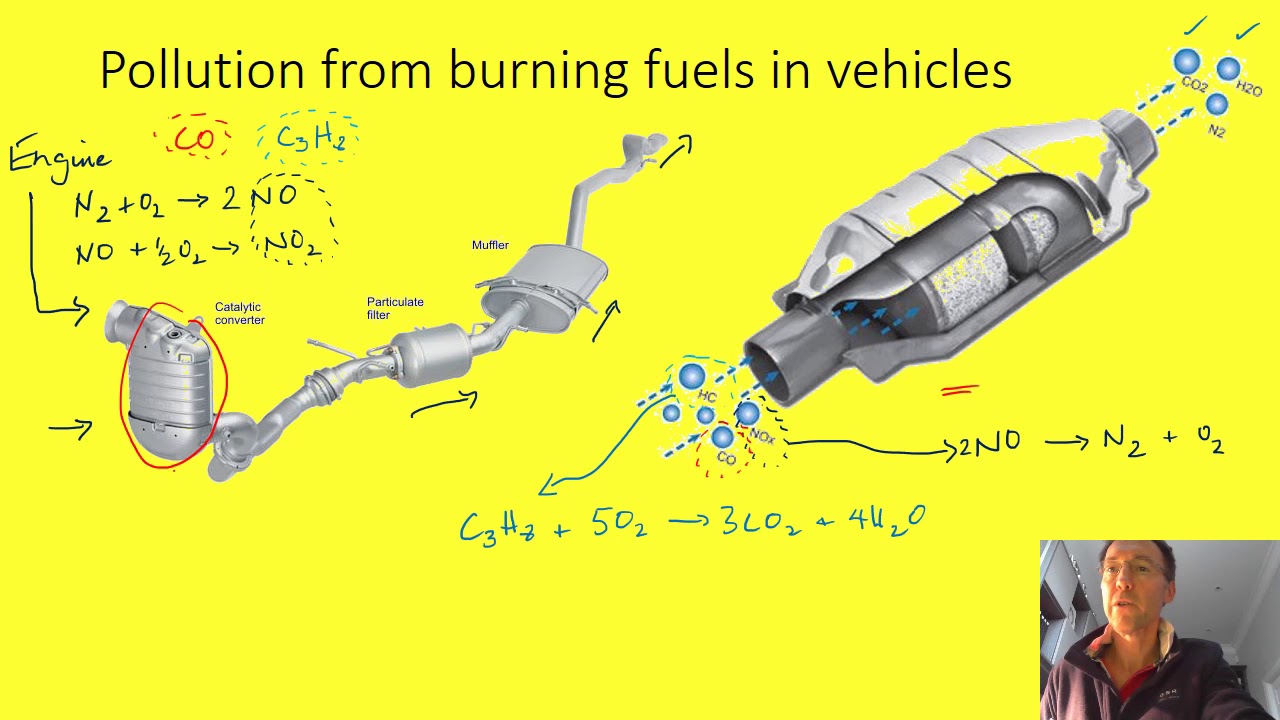
A catalytic converter is an automotive device that reduces harmful emissions (carbon monoxide, nitrogen oxides, and unburned hydrocarbons) through chemical reactions facilitated by precious metals (platinum, palladium, and rhodium) on a ceramic honeycomb substrate; it uses a two-stage process where the reduction catalyst converts nitrogen oxides to benign nitrogen, and the oxidation catalyst converts carbon monoxide to carbon dioxide and oxidizes hydrocarbons, all while oxygen sensors monitor and adjust the reaction conditions to maximize efficiency.
How Catalytic Converters Work: Emission Reduction Explained
Added:Fundamentals of chemical reactions, specifically oxidation and reduction (redox) processes.
The concept of chemical catalysis, including how a catalyst lowers activation energy without being consumed in the reaction.
The basic operation of internal combustion engines and the primary hazardous byproducts of fuel combustion (such as carbon monoxide, nitrogen oxides, and unburnt hydrocarbons).
The principles of heterogeneous catalysis, where gaseous reactants interact with solid catalyst surfaces.
The chemistry behind catalyst poisoning and deactivation, such as the destructive effects of leaded fuel, sulfur, and thermal degradation.
Advanced exhaust management technologies, including Selective Catalytic Reduction (SCR) and Diesel Particulate Filters (DPF).
The role of feedback loops in emission control, focusing on how oxygen (lambda) sensors and engine control units (ECUs) maintain the stoichiometric air-fuel ratio.
The environmental and economic implications of sourcing precious metals (platinum, palladium, and rhodium) required for catalytic converters.
1.9M views50.3Klikes5:23Original Release: 2018-04-11
- Catbacks, resonators, straight pipe.
Today, we're not talking about any of those things.
We're talking about the catalytic converter.
A catalytic converter is designed to reduce harmful emissions.
(coughing) In another video, we talked about how gasoline is made up of hydrocarbons.
If everything goes perfectly, all of the hydrogens and all of the carbons combine with all of the oxygen to give us carbon dioxide and water.
No big whoops.
But the combustion in an engine isn't perfect.
Some of the reactions are incomplete.
And because of the heat in the engine, we create some molecules that don't normally occur.
So one thing we get is carbon monoxide.
It's bad.
It gets rid of the ozone layer.
- Shit - And it's also poisonous.
- (beep) - The heat of the combustion means that some of the nitrogen, because it's 78% of the air, gets jacked up and bonds with oxygen in any number of combinations.
And that's also bad for your health, and it makes our rain acidic.
It's just bad news.
- Hey, that's tough.
- And lastly, if some fuel isn't burnt, those harmful hydrocarbons get shot out the tailpipe too.
(engine revs) Catalytic converters are designed to reduce all three of these emissions.
And the first one was patented by French chemical engineer, Eugene Houdry in 1950.
We talked a little bit about catalysts in our video on tires, and you can check that out right here.
Most basically, a catalyst is something that helps a reaction take place.
The things in here act as a catalyst to help convert your emissions to make them safer.
You see what I did there?
(maniacal laughing) Catalytic converter.
Alright, so what's in here?
There's ceramic.
That doesn't react with anything, but it gets super hot, and it stays super hot so the reactions can happen.
If you're going for an emissions test, make sure your catalytic converter's hot.
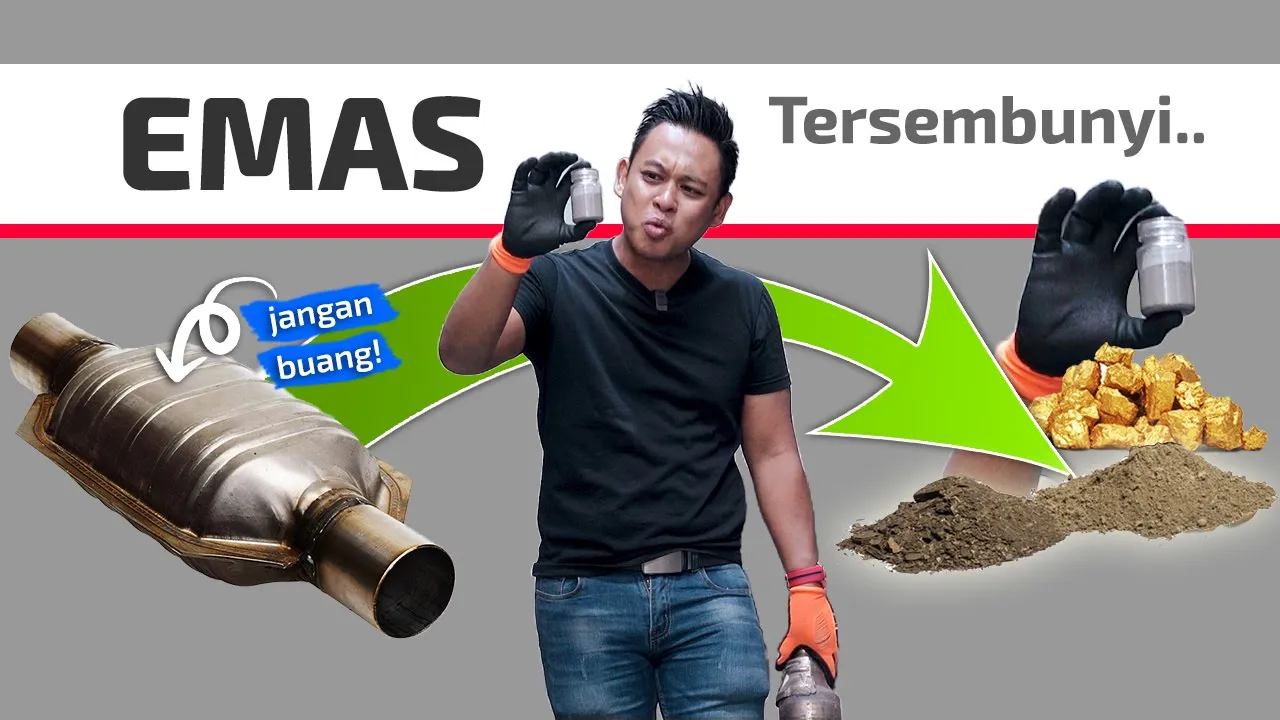
Next, there's rare metals, platinum, palladium, and rhodium that react with the emissions.
They're each worth about $30 a gram, and there's between three and seven grams of them in a catalytic converter.
So that's why people steal them.
But, the metal in a converter is worth about as much as a catalytic converter, so don't be a jerk.
First is a reduction catalyst.
Platinum and rhodium pull oxygen off the nitrogen atoms so the nitrogen gets shot out as benign N2, the way it came in in the first place.
The second stage is an oxidation catalyst.
Platinum and palladium use the oxygen molecules in the exhaust, and the freed up oxygen from the first stage in two ways.
First, it helps bind them to the carbon monoxide to get CO2, the same stuff you breathe out.
And second, this stage converter will oxidize any unburnt hydrocarbons as they pass through.
Some cars have a pre cat closer to the engine.
It's still a catalytic converter, but because it's so close, it gets hotter quicker and it does a super duper job at converting, but because it gets hotter, it can wear out faster.
The oxygen sensor before the cat lets your car know if there's enough oxygen burning the fuel in the engine.
If too many hydrocarbons come through, a computer will adjust to mix accordingly.
Another oxygen sensor after the cat let's your engine know if it's pulling in enough oxygen to complete the reaction in the converter.
It's all super high tech and it happens super fast.
So do catalytic converters rob you of horsepower?
(gasping) Before we answer that, let's cut it open.
(sawing) (metal clanging) (pounding) (sawing) Inside, you can see the honeycomb, and if I hadn't beaten the crap out of it with that angle grinder, we'd have nice clear channels.
And you can still see light through it.
(whistling music) (air whistling) This is a good cat.
(cat meowing) These chambers are designed to have the most surface area possible to make the reactions happen.
They're also designed to affect the exhaust flow as minimally as possible.
Some brain trust cut these honeycombs out to open up the airflow, so that when they get inspected, it looks like they still got one.
But cutting these out means the air is suddenly sitting in a big hollow chamber, instead of shooting straight down a streamlined pipe.
Cars are an intricate system of computers and tuning, and unless you're skilled at this type of thing, just ripping out a part of your exhaust, that can seriously damage your car.
Modern catalytic converters are designed to be efficient.
There's even performance catalytic converters that have been shown to help improve horsepower.
The main thing is that catalytic converters work.
American emission pollutants have dropped an average of over 70%.
That's a big deal.
And when you look at pictures of any major city, before and after we started using them, it's equally as easy to argue that the catalytic converter is one of the most important advancements in automotive history.
Subscribe to Donut.
If you liked watching this video, please share us.
The more we grow, the more cool stuff we can do for you.
Follow me on Instagram @bidsbarto.
Follow Donut on Instagram @DonutMedia.
If you wanna have a bad ass car, check out Tony's video on performance mods that actually work.
You like speed?
Check out this video on F1.
Don't tell my wife I took the catalytic converter off the car.
Up Next
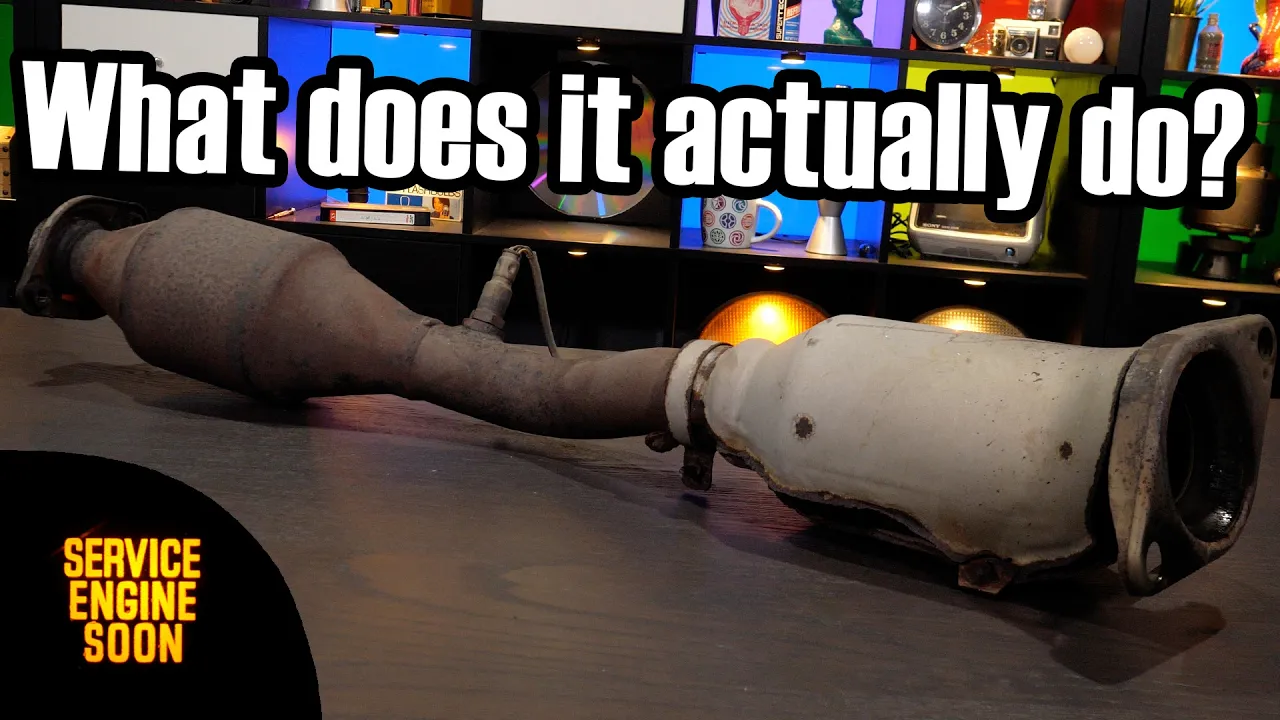
41:46
Catalytic Converters Explained: How They Work & Fail
@TechnologyConnections
1.5M views•2025-10-01
30:32
Ultrasonic Transducers: Resonant Frequency Measurement and Horn Design
@imajeenyus42
229.9K views•2017-02-22
54:16
Polymer Environmental Degradation: Mechanisms & Stabilization
@iit
1.8K views•2012-07-10
33:39
How a Student's Question Saved a NYC Skyscraper from Collapse
@veritasium
22.8M views•2025-04-26
Related Study Plans & Knowledge Roadmaps
Structured learning paths in Engineering
engineering
Building Acoustic Levitators: Physics & Arduino
01The Physics of Sound and Standing Waves
02Piezoelectric Transducers and H-Bridge Drivers
03Arduino Programming: Generating 40 kHz Signals
+ 2 more learning modules
14h5 modules
Explore Roadmap
engineering
Building Peltier Cloud Chambers: Particle Tracks
01Cosmic Rays & Cloud Chamber Physics
02Thermoelectric Cooling (TEC) Fundamentals
03Custom Liquid-Cooling Loop Design
+ 2 more learning modules
18h5 modules
Explore Roadmap
engineering
Yagi-Uda Antennas: Modeling, Build & VNA Test
01Introduction to RF and Antenna Fundamentals
02Yagi-Uda Antenna Design Principles
03Antenna Modeling and Simulation in 4NEC2
+ 2 more learning modules
18h5 modules
Explore Roadmap
engineering
ECG Monitor Design: Op-Amps, Filters & Noise
01Electronics & Breadboard Basics
02Op-Amps and Instrumentation Amplifiers
03Bioelectricity and ECG Fundamentals
+ 2 more learning modules
18h5 modules
Explore Roadmap