












![[NPTEL: noc24_ph11] Nuclear Astrophysics, Problem Solving, Week 4](https://i.ytimg.com/vi/_W53xHYtsZ0/maxresdefault.jpg)

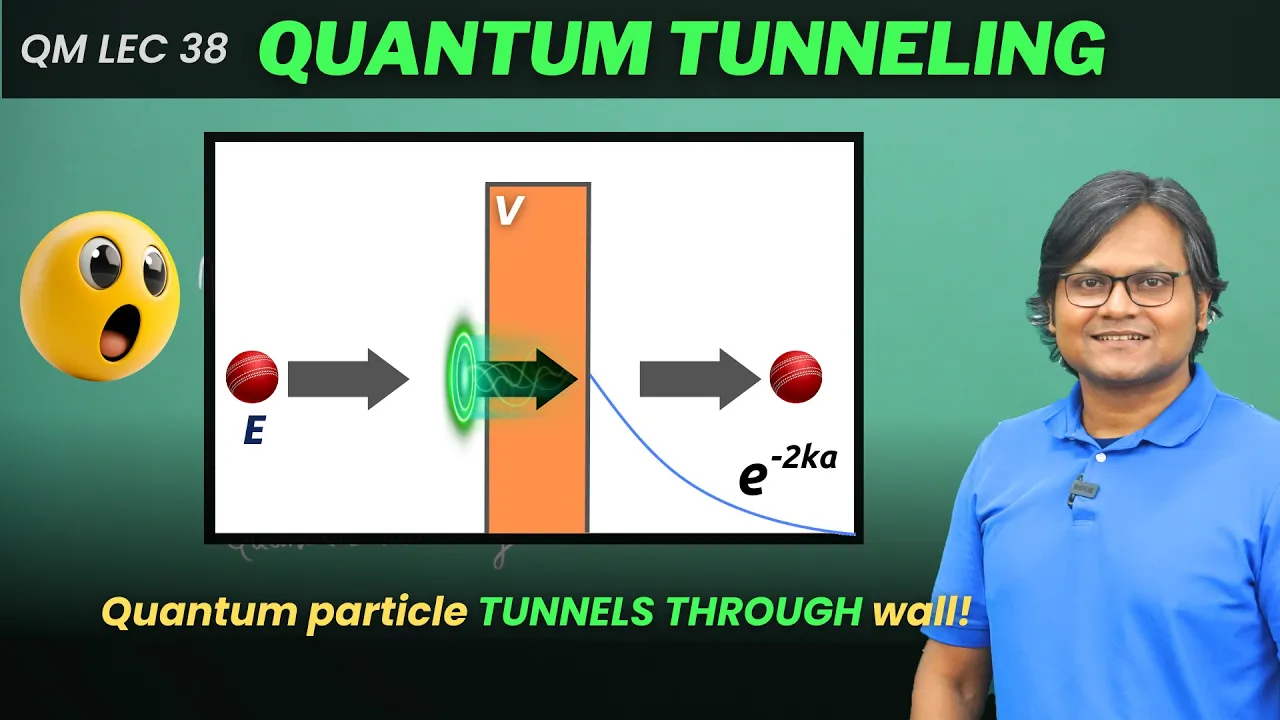



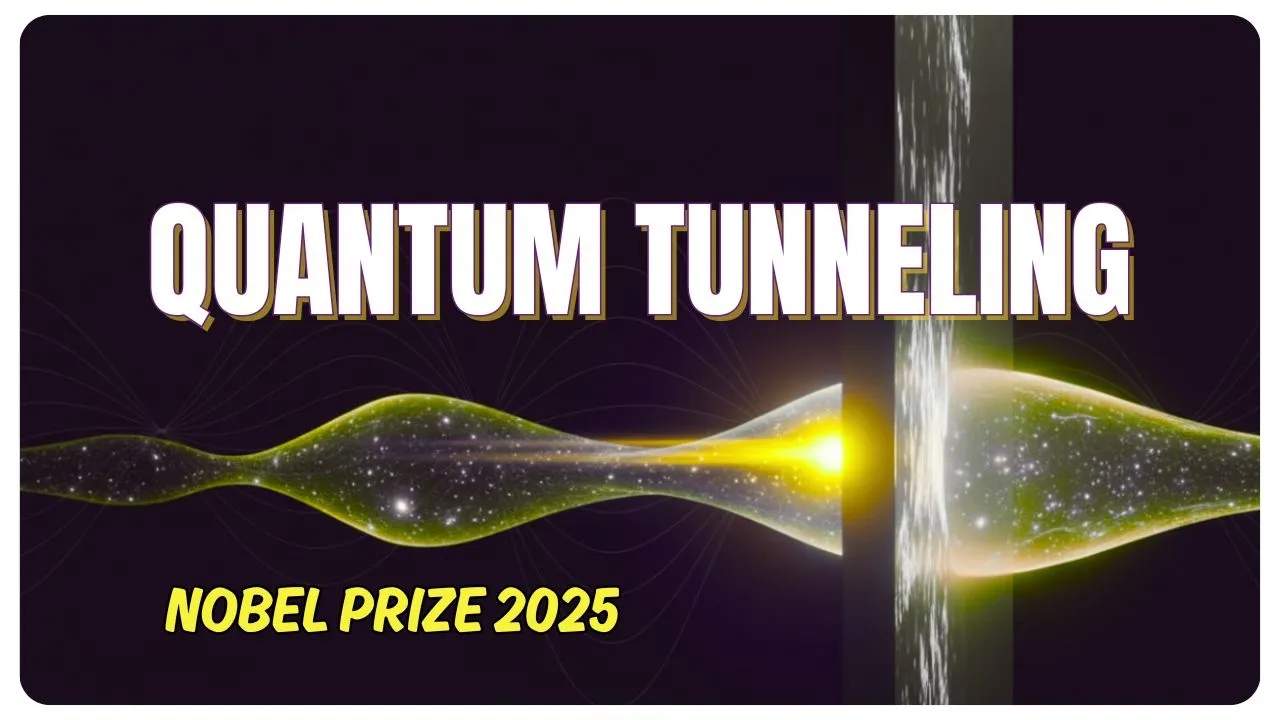


The Sun's core temperature of 15 million °C is insufficient for nuclear fusion due to the enormous electrostatic repulsion between positively charged protons; instead, quantum tunneling allows protons to pass through this energy barrier probabilistically, enabling fusion reactions that power the Sun despite the temperature being too low for classical physics predictions.
Quantum Tunneling: How the Sun Fuses Hydrogen at Lower Temperatures
Added:The basic structure of an atom, specifically protons, and the electrostatic repulsion (Coulomb's Law) that occurs between like-charged particles.
The concept of nuclear fusion as a process where light atomic nuclei combine to form a heavier nucleus, releasing energy.
Fundamental wave-particle duality in quantum mechanics, specifically the concept that subatomic particles exhibit wave-like behavior.
The relationship between temperature, thermal velocity, and the kinetic energy of particles in a stellar plasma (Maxwell-Boltzmann distribution).
The Gamow factor and the mathematical derivation of tunneling probability using the Schrödinger equation.
The detailed steps of the Proton-Proton (p-p) chain reaction in stellar nucleosynthesis, including the role of the weak nuclear force in beta decay.
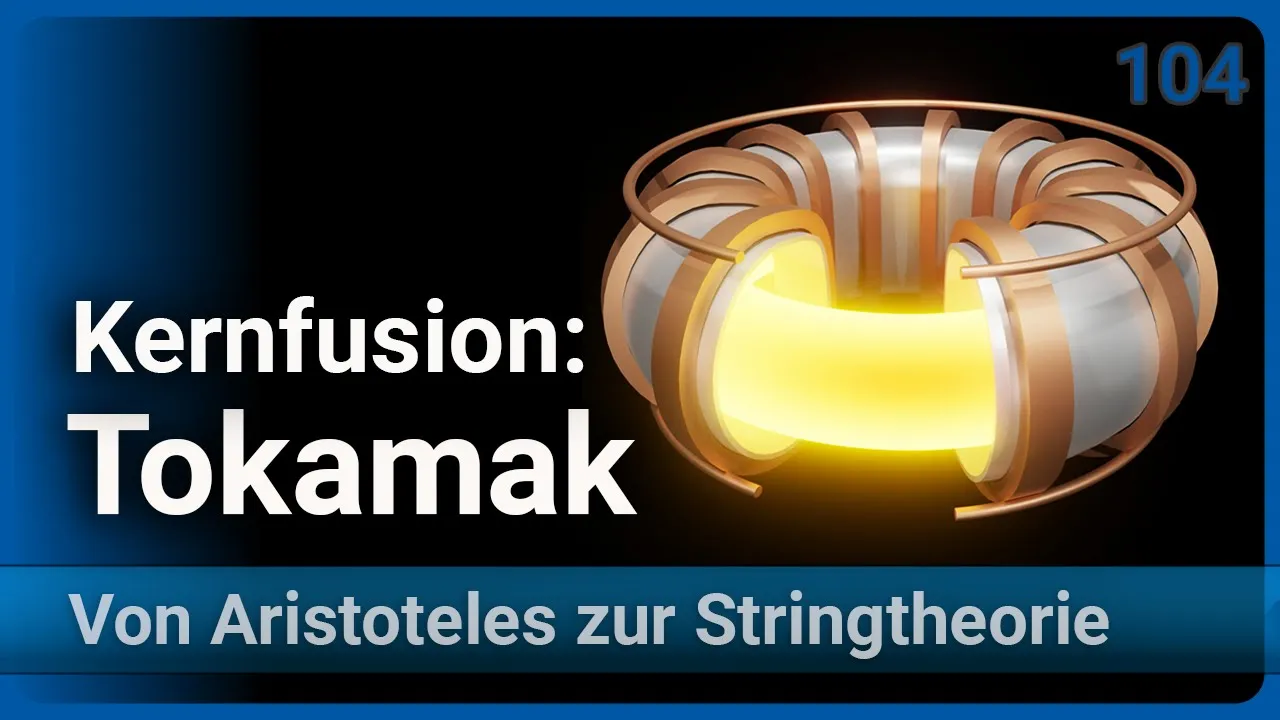
The engineering challenges of magnetic and inertial confinement fusion on Earth (e.g., tokamaks), and why human-made reactors require temperatures exceeding 100 million °C.
Other practical applications of quantum tunneling in modern technology, such as Scanning Tunneling Microscopes (STMs), flash memory, and tunnel diodes.
363.4K views18.1Klikes9:07Original Release: 2020-02-24
Hey Crazies.
We all know our Sun is powered by nuclear fusion, right?
All that gravity compresses the core, causing it to reach ridiculous temperatures.
We’re talking tens of millions of degrees.
Except that’s not hot enough for fusion.
This episode was made possible by generous supporters on Patreon.
The Sun has to be doing fusion somehow, otherwise it wouldn’t be a star.
It turns out quantum mechanics is going to be a big help, but more on that later.
All stars have fusion happening in their cores.
That’s what it means to be a star.
Stars can be plotted on something called Hertzsprung-Russell diagram or HR Diagram.
Which group they fall into tells us a lot about where they are in their life cycle.
Our Sun is a main sequence star, which means it’s in the main part of its life.
In other words, its main source of energy is hydrogen fusion.
That’s when four hydrogen nuclei, otherwise known as protons, come together to form one helium nucleus.
I did a video on that a few years ago if you want to learn the details.
Now is not the time!
What matters for this video is how much energy is released.
Each fusion reaction releases about 27 mega electron volts worth of gamma ray photons.
By E equals mc squared, that’s equivalent to the mass of over 50 electrons.
But that’s just a tiny amount as far as humans are concerned.
Your body uses 4 million million mega electron volts of energy walking up a single step.
The Sun emits so much energy because it has a ton of these reactions happening at the same time.
Like, 10-to-the-38 reactions every second.
That’s a 1 followed by 38 zeros every second.
That’s a lot of fusion.
Yeah, but how does quantum mechanics fit into all of this?
Oh, right. Right. I got a little sidetracked.
Anyway!
Fusion is inherently a quantum mechanical process.
We need to get these four protons to stick together.
That’s no easy feat.
The problem is, they don’t want to stick together.
All protons are positive, so they’re going to repel each other if they get too close.
At nuclear distances, there’s over 50 pounds of force pushing them apart.
That’s like using the entire weight of a 7-year-old kid to pull protons apart.
That’s a ridiculous amount of force for subatomic particles.
Luckily, if we can get them close enough, strong nuclear force can overpower that repulsion and hold the protons together.
That’s where those millions of degrees come in.
The hotter the core is, the faster the particles are moving, and the more they’re going to bump into each other.
Especially, at the densities we expect stellar cores to have.
Except, remember, having protons bump into each other is not enough.
We need them to get close enough for strong force to take over and hold them together.
The Sun’s core is 27 million degrees Fahrenheit.
That’s 15 million degrees Celsius.
Isn’t that hot enough?
Nope!
Seriously!
Tens of millions of degrees is not hot enough for fusion.
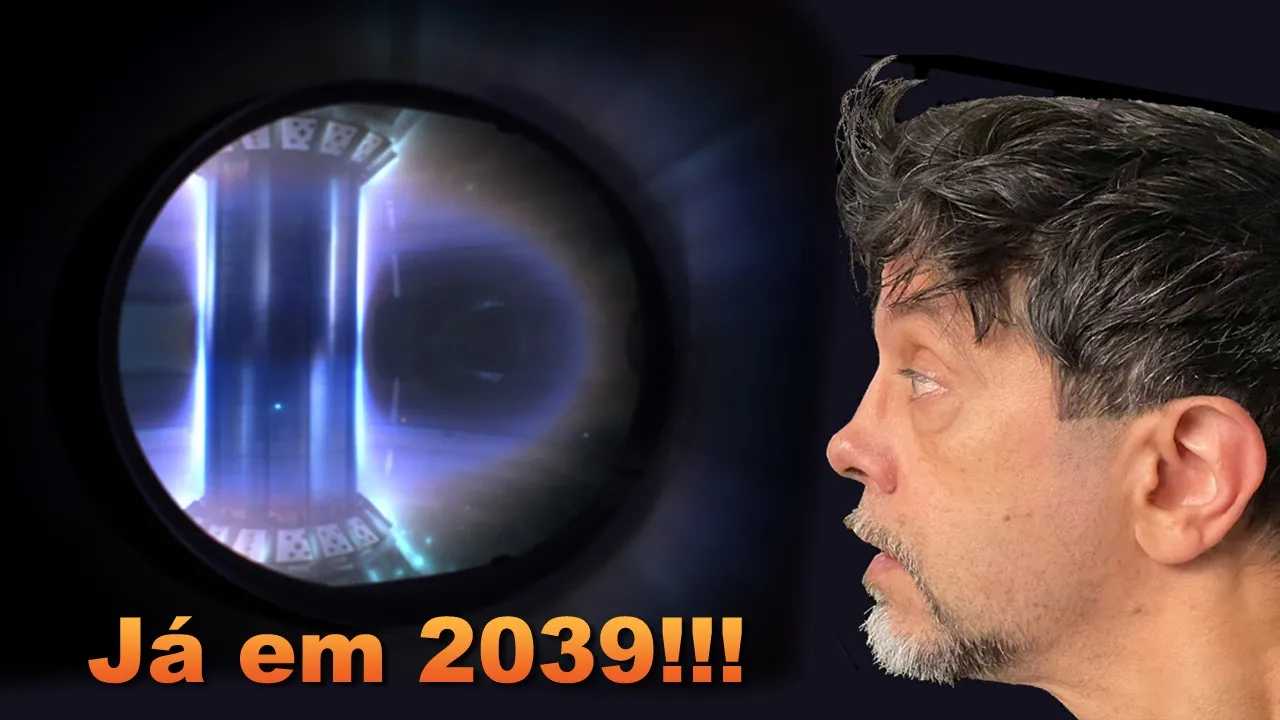
When we try hydrogen fusion on Earth, we need hundreds of millions of degrees.
Then how does the Sun do it?
Quantum tunneling!
See, this animation is really misleading.
It shows protons as if they’re little spheres, but they’re actually little waves.
Quantum probability waves!
Their behavior is described by probabilities.
Where they are, what they’re doing, all of it is probabilistic.
Hmm, let’s consider a really simple model.
This is the particle-in-a-box model.
Say we’ve got a proton in here doing its thing.
We’d like to know exactly where it is inside the box.
Except we can’t because quantum mechanics.
All we get to know are the probabilities of finding it at various places.
It might be here, or here, or maybe here.
All quantum mechanics tells us is that it’s more likely to be here than, say, here.
That’s it. That’s all we get to know.
Of course, that example is incredibly simplistic.
It’s what we call an infinite particle box.
There is an infinite number of energy states.
There’s no such thing “outside the box.” That’s not reality.
So let’s see what happens when we relax that requirement a little.
We’ll say the box is sitting on a table and the top is open.
There are only so many energy states available before the proton is just outside the box.
It’s like trying to roll a ball up a hill.
For some energies, it’s stuck in this ditch.
But if you give it enough energy, it can get over the hill.
Then again, I mentioned earlier that protons aren’t like little spheres, so let’s take a closer look at one of the proton’s states.
We can see from the quantum wave, there are high probabilities of finding the proton inside the box, but the wave also sticks outside the box a little bit.
There is a non-zero probability of finding the proton outside the box.
I repeat.
If a proton is inside a quantum box, there’s a small chance you might find it outside the box anyway.
What? What? What?!
I know. I know. It’s crazy, but this is the reality that quantum particles live in.
It’s called quantum tunneling because it’s as if the proton has burrowed or tunneled through the side of the box.
It’s wild!
But this effect actually explains how fusion can happen in the Sun’s core, even though isn't hot enough.
Rather than little spheres, think of each proton in the Sun as a little wave in a tiny box.
Most of that wave is inside the box, but some of it sticks outside the box like a little tail.
The temperature of the Sun’s core might not be hot enough to get the boxes to overlap, but it is hot enough to get a tail from one box inside another box.
So why doesn’t that work in our reactors on Earth?
There aren’t enough particles.
Remember, this is a probabilities game.
The chance of finding the proton outside the box is extremely small.
For that to contribute to sustained nuclear fusion, we need a lot of protons.
The Earth's reactors just don’t have enough, but the Sun does.
Let’s run the particle numbers.
By mass, the Sun is 71% hydrogen, 27% helium, and 2% other stuff.
By particle count though, it’s 91.2% hydrogen, 8.7% helium, 0.1% other stuff.
Remember, hydrogen nuclei are just protons.
They're a lot lighter than everything else, so there are more of them.
Anyway, that makes for about 10-to-the-57 protons inside the Sun, but only the protons in the core are going to fuse.
The Sun’s core is surrounded by a non-convection zone, so it can’t get any new material.
What it’s got is what it’s got.
And what it’s got is about 12% of the Sun’s protons, so that’s 10-to-the-56 protons, which is still ton of protons.
Now, the chances that two of those protons will quantum tunnel together is about 1 in 10-to-the-28, which is terrible odds.
You have a better chance of winning the grand prize in the lottery three times in a row.
But the number of protons in the Sun’s core is enormous.
It’s 10-to-the-28 squared!
With that many protons bumping into each other, the chances of some of them quantum tunneling isn’t all that rare.
Remember, we only need 10-to-the-38 fusion reactions to occur each second.
There are enough protons in the Sun’s core for that happen, even through the rare process of quantum tunneling.
There’s enough for that to happen for thousands of millions of years.
So how does fusion happen in the Sun?
First, you need lots of pressure.
In the Sun, that pressure comes from the inward gravity.
As pressure goes up, so does temperature, which gives the protons in the Sun a lot of energy.
They’re moving really fast.
Fast fast!
They use that energy to bump into each other, but it’s still not enough for fusion.
The Sun also needs those protons to occasionally quantum tunnel into each other.
Without quantum tunneling, the Sun wouldn’t be able to fuse anything.
Without quantum tunneling, the Sun isn’t the Sun.
So do you know any other interesting stuff about the Sun?
Please share in the comments.
Thanks for liking and sharing this video.
Don’t forget to subscribe if you’d like to keep up with us.
And until next time, remember, it’s ok to be a little crazy.
For those of you asking if the Doppler effect could get us green or purple stars, the answer is "no."
That effect will shift all the wavelengths in the black body spectrum, which means it’s still a black body spectrum, which means still no green or purple stars.
Anyway, thanks for watching.
Up Next
14:02
Quantum Entanglement: A Physics Thought Experiment Guide
@pbsspacetime
2.6M views•2016-09-22

22:39
Fluorescence & Jablonski Diagram | Molecular Photophysics
@yairmeiry
192.2K views•2012-01-12

5:36
Gravity and Falling Objects Explained by General Relativity
@ScienceAsylum
167.6K views•2018-03-06

27:14
Entropy and the Second Law of Thermodynamics Explained
@veritasium
27.5M views•2023-07-01
Related Study Plans & Knowledge Roadmaps
Structured learning paths in Physics
physics
Analytical Mechanics: Lagrangian & Hamiltonian
01Mathematical Foundations: Calculus of Variations
02From Newtonian Mechanics to Constraint Dynamics
03The Principle of Least Action & Lagrangian Mechanics
+ 3 more learning modules
28h6 modules
Explore Roadmap
physics
General Relativity (Spacetime & Cosmology)
01Foundations of Relativity: Special Relativity
02The Geometry of Spacetime: Equivalence Principle & Curvature
03Einstein's Field Equations: The Mathematics of Gravity
+ 2 more learning modules
55h5 modules
Explore Roadmap
physics
Chaos Theory: Pendulums, Bifurcation & Limits
01Foundations of Classical Mechanics and Pendulums
02The Transition to Nonlinearity and the Double Pendulum
03Core Principles of Deterministic Chaos
+ 3 more learning modules
18h6 modules
Explore Roadmap
physics
Optics (Lenses, Wavefronts & Instruments)
01Foundations of Light and Geometrical Optics
02Mirrors, Lenses, and Image Formation
03Wave Optics: Wavefronts and Interference
+ 2 more learning modules
28h5 modules
Explore Roadmap