









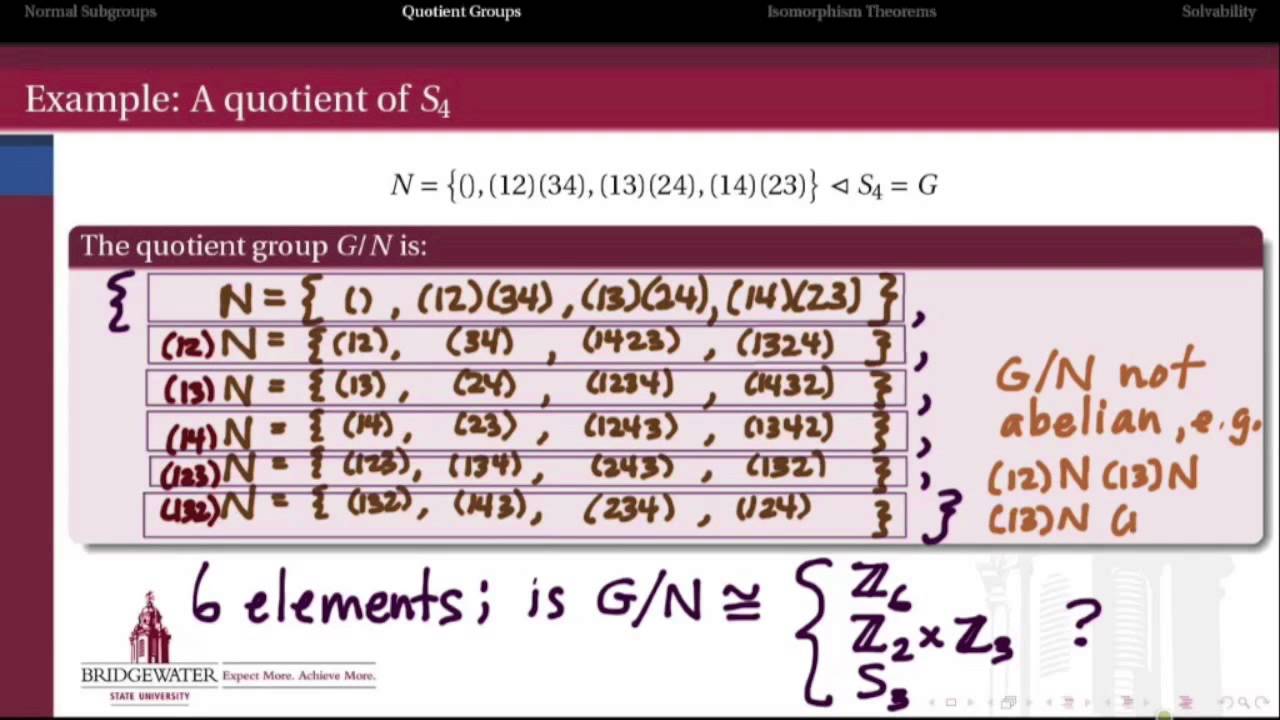







In group theory, a coset is a subset of a group formed by multiplying all elements of a subgroup by a fixed group element (left coset: aH, right coset: Ha). Cosets partition the group into equal-sized, non-overlapping subsets, and the number of cosets (the index) relates to the sizes of the subgroup and the original group. Joseph Lagrange's theorem states that for any finite group G and its subgroup H, the order of H divides the order of G, expressed as |G| = [G:H] × |H|. In abelian groups, left and right cosets coincide, but in non-abelian groups, they may differ significantly.
Cosets in Group Theory: Visual Lecture & Lagrange's Theorem
Added:The fundamental definition of a Group, including the four group axioms: closure, associativity, identity, and invertibility.
The definition of a Subgroup and the standard subgroup tests used to verify them.
The mathematical concept of Equivalence Relations and how they partition a set into mutually exclusive equivalence classes.
An introductory familiarity with Cayley Diagrams and how group generators and relations are represented visually.
The definition of Normal Subgroups, where left and right cosets coincide.
The construction of Quotient Groups (Factor Groups) using cosets as elements.
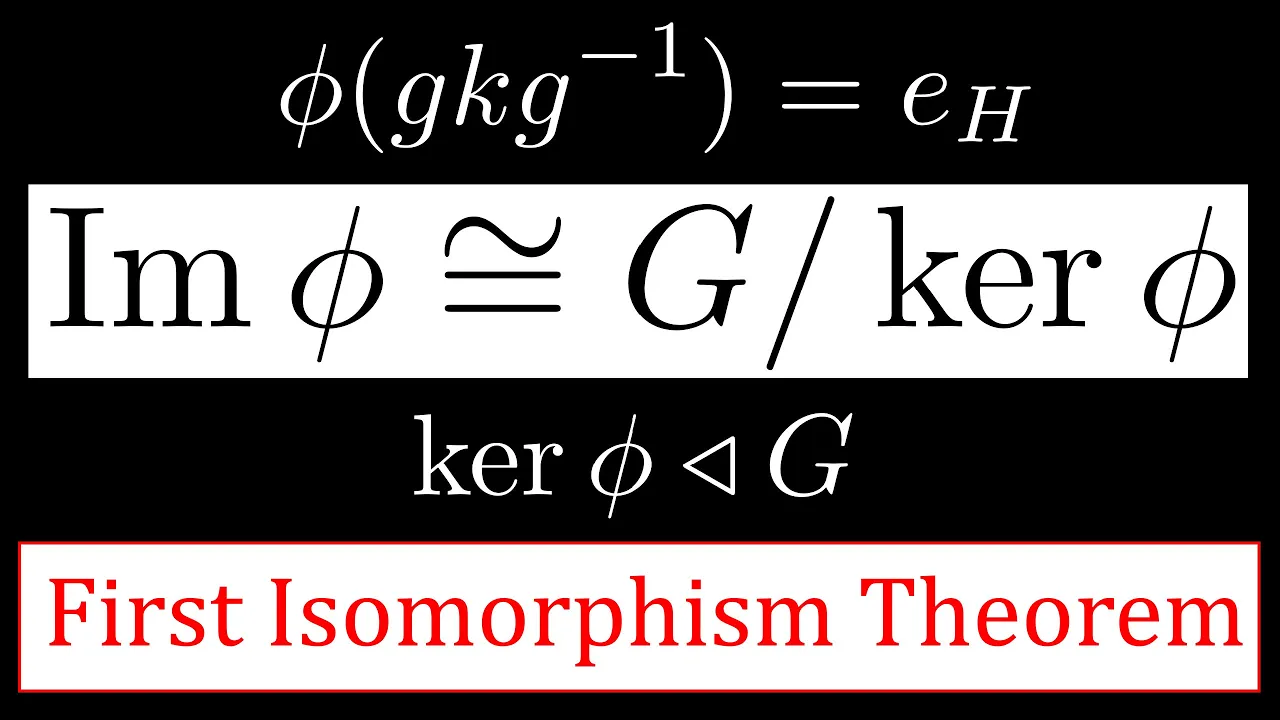
Group Homomorphisms, kernels, and the First Isomorphism Theorem.
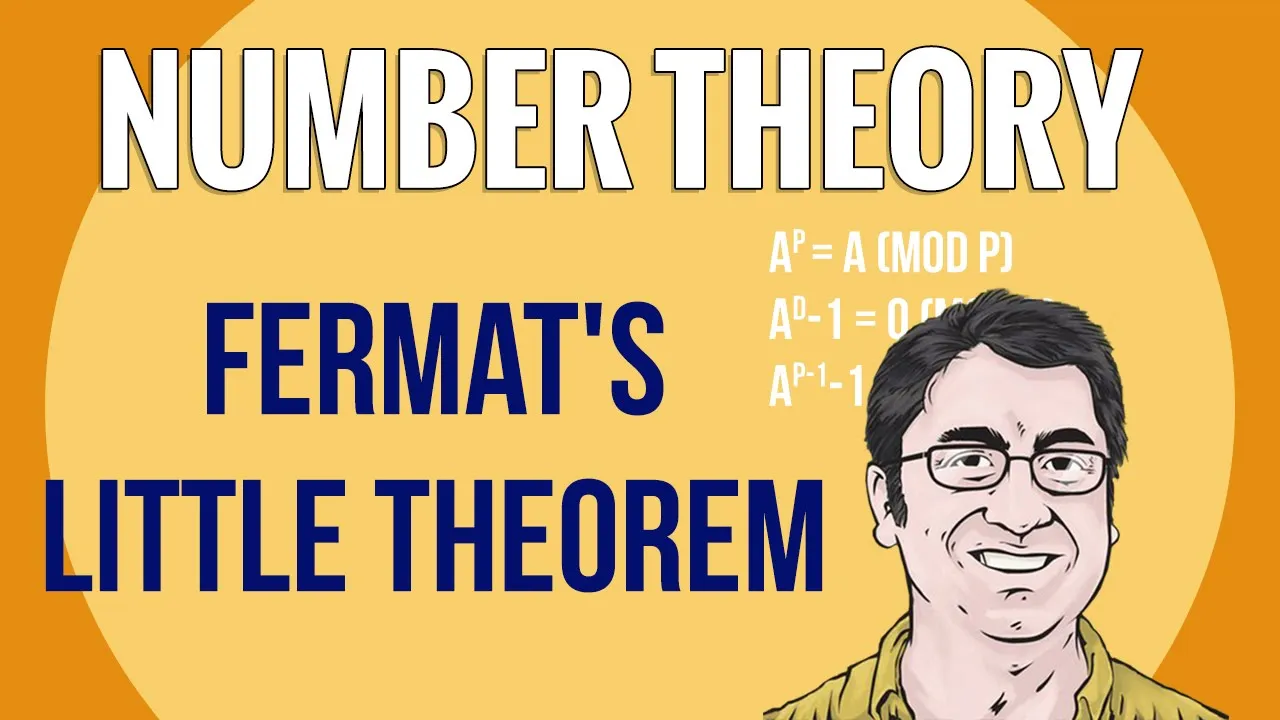
Important consequences of Lagrange's Theorem, such as proving Fermat's Little Theorem and showing that any group of prime order is cyclic.
29.9K views335likes19:11Original Release: 2016-03-07
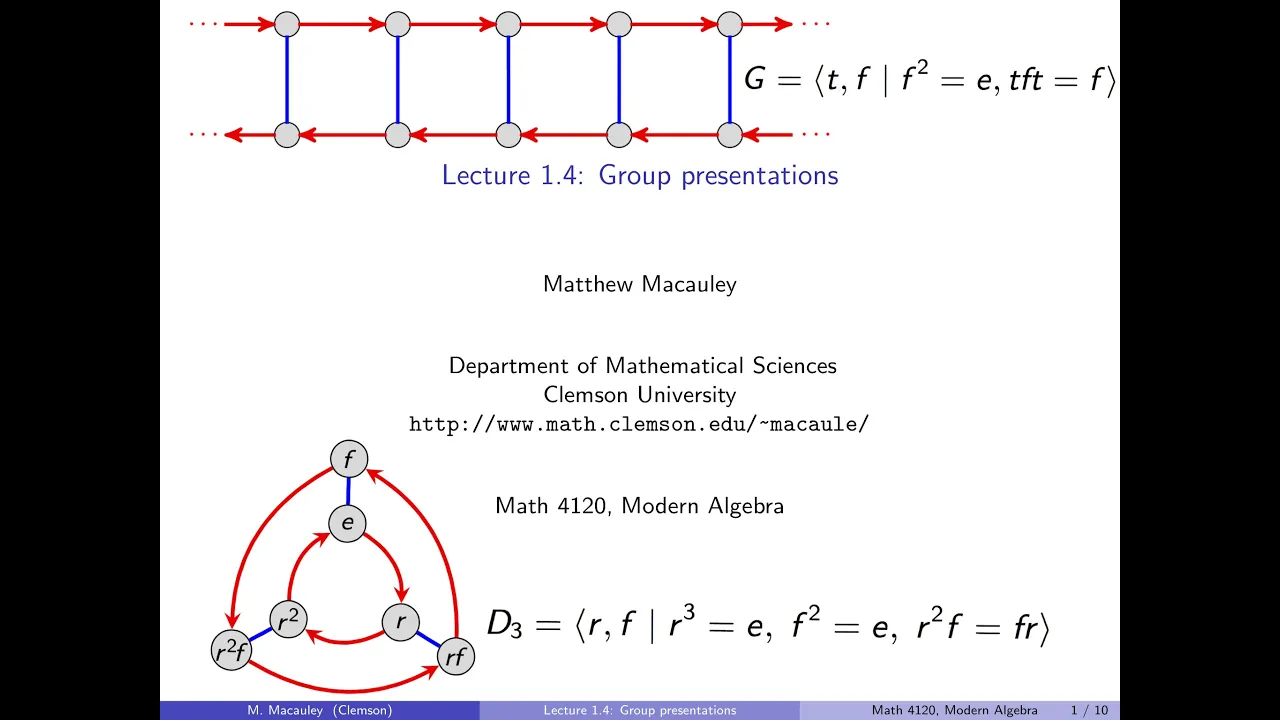
welcome to lecture 3.2 coets so before we begin I want to give you an idea visually as to what coets are so the regularity property of Kaye diagrams implies that identical copies of the fragment of the diagram corresponding to a subgroup appear throughout the rest of the diagram for example the following figures highlight the repeated copies of this subgroup generated by F in D3 so here is the subgroup in the Kaye diagram and notice how there are identical copies of this subgroup in different parts of the diagram now only one of these copies is actually a group namely this one because it contains the identity these other two copies don't contain the identity so they can't be groups so the key Concept in this lecture is that the elements that form these repeated copies of the subgroup fragment in the Kay diagram meaning this set and this set and also this one as well are called co- sets let's do another example so let's find all of the coets of the following subgroup of D4 so this is a subgroup generated by F and r s namely these four elements so if we use r squar as a generator in the K diagram of D4 and we don't need it but let's throw it in as well then it will be easier to visually see the coets and here we go so D4 is generated by these two elements as we know but just for fun we're going to throw in r squ as well so we got to give this a new type of Arrow let's say a green arrow so R squar and that's of course a double arrow because this is order two so R 2 gets you back to the identity so now the coets of this subgroup are the following well here's the original subgroup this size 4 set and then the identical copy is this size four set right here here so here's a formal definition if H is a subgroup of G then a left coet is a set of the following form so we denote it as a fixed element a in G times the subgroup and that is the set of all products of that fixed element times something in the subgroup so the distinguished element in this case a that we choose to use to name the co- set is called the represent ative now a remark is in a ky diagram the left coet ah can be found as follows so start from the node a and then follow all paths in h so we'll do an example so consider the subgroup generated by F in D3 so the coet containing these two elements is the following so it is the set RH in other words R * this subgroup or R time this subgroup here written as a set is just this set right here so it's R * e and r * f r e and RF now alternatively we could have written RF * H toote the same coet cuz notice RF * H is just RF * this set which is the same thing it's RF * e and RF * F which is rf^ 2 f^ s is the identity so that's just the same thing as we got up here so here's the picture the subgroup H is this right here and this is the identical copy that is the coet RH or equivalently the coet rfh so in this slide I'm going to list a series of short results these should be visually clear from the K diagrams and the regularity property now formal algebraic proofs that are not done here will be assigned as homework so first of all for any subgroup h of G the union of the left coets of H is the whole group G and I should mention now that I'm saying left coets because we will also Define a notion of a right coet which is analogous but they in some cases will be different so here's a proof now let's think about what we want to show we want to show that every element in the group G lies in some left coet so let's take an element little G well that clearly lies in the coet GH y because G is just G * the identity which is in this set because the identity is in h so G * the identity is in this set I.E in this coet okay so here's the next result each left coet can have multiple Representatives well we saw that on the previous slide but this actually says more this says if we take any element B in the left coet ah then ah and BH are actually the same coet the last proposition is that all left coets of the same fixed subgroup have the same size that's one of the ones that should be visually clear from the KY diagrams of coets being those identical copies here's the next proposition for any subgroup h of G the left coets of H partition the group G now let's think about why this is the case well we know that the left coets cover the group in other words everything is in some left coet we also know that the coets are going to be disjoint well at least we have that visual picture that they should be so let's prove it formally so again we know that the element G for any fixed little G lies in some left code well namely this left coet GH uniqueness follows because if G is in some other coet than by a previous result we just did that's actually the same coet so there's no way that g can be in two different coets now subgroups also have right coets we can Define the following ha is the set of all elements that are products of something in h time a okay so let's do the same example as we did a couple slides ago except let's use right coets instead of left coets so let's take the subgroup generated by F in D3 now this is a coet it's e * H or just H here's another coet right coet H * R is just this subgroup * R which is this set of two elements time R and by that I really mean R and F R because again e * R is R and F * R is f r and I prefer to write f as R 2f remember this relation now the last coet is H * R 2 which is this size to set * R 2 which is e r 2 there it is and f r 2 which is that which I prefer to write like this so notice that H so this this is the uh subgroup of E and F along with this coet and that coet partitions the group now in this example the left coets for this subgroup are different than the right coets now if you forget the left coets are RH which is R time E and F which is r and RF and the other left coet is R 2 H which I'm just going to write it here here is R 2 and R 2 F and notice that these two subsets are different than these two subsets so here's R and R 2 F in the same rate coet but they're in different left coets so because of that they must look different in the Kaye diagram somehow so that's what we'll look at next the left diagram below shows the left coet I'm going to call this RH because this this is Big H for that subgroup in D3 so it's these two nodes and notice that these are the nodes that well I'm going to call the blue arrows F arrows because they correspond to the element F so these are the nodes that the F arrows can reach after the path to R has been followed so in other words start with the identity apply the element R and then apply all the arrows of elements in the subgroup which case just F arrows so start here do R and then apply all of the F arrows now the right diagram right here shows the right coet HR and D3 that is the nodes that our arrows can reach from the elements in the subgroup H so here if we're reading left to right we first start at the identity follow all of the F arrows that traces out this subgroup in other words these two nodes and then after we do that then we apply R so from here if we apply R we get there and from there we get to that node thus left coets look like copies of the subgroup while the elements of right coets are usually scattered and the only reason for this it's it's partially artificial is because we adopted the convention that arrows in a ky diagram represent right multiplication as opposed to left multiplication so a key point from here something that I want you to take away is that left and right coets are generally different not always but you should suspect that they don't need to be the same so let's continue with this now for any subgroup h of G we can think of G as the union of non over lapping and equal siiz copies of that subgroup or I said any subgroup maybe I should have said of that subgroup um so those equal siiz copies are that subgroups left coets though the right coets also partition the group The corresponding partitions could be different here are a few visualizations of this idea so on the left we have a group these are just cartoons but here is a subgroup h and here are the identical copies of the subgroup which are the coets now these next two pictures um really illustrate the idea of left and right coets being different so here's a subgroup h and maybe let's say that the left coets look like Stacks so they are a partition of the group but the right coets might be different now some of them are going to be the same or some well H and H both of these are left and right coets those have to be the same but for the other coets let's say maybe this left coet is equal to this right coet but in general maybe this coet left coet g2h might be different than this right coet so here's a definition that we will need uh throughout the rest of the course for any subgroup of G the index of that subgroup in G and we write that like like this the index of G I'm sorry the index of H and G I guess we say it from right to left is the number of distinct coets of H and G and I don't care left or right it's the same number so here's a picture of this for the group D3 now remember that we determined that the left and right coets are different or at least two out of three of them are different so here is a picture of the left coets and here is a picture of the right coets now if we take a different sub group let's take the subgroup generated by R so that's these three elements then the left and right coets are the same and notice that we don't actually have any choice of this it's because this subgroup takes up half of the group well everything that's left over is the other coet in this case it's a left coet f * n and in this case think of it as a right coet n * F so this is a small little result that we can prove just by writing down that argument I will let you do that as an exercise so if we have a subgroup that has index two that just means there's two coets then the left and the right coets are the same and again that just follows from the fact that there's only two coets they're the same size they partition the group and and we know that at least one of them has to be the same in terms of the left coet and the right coet so that forces the other one to be the same as well okay so let's look at a special case of aelan groups recall that in some aan groups we use the symbol uh Plus for the binary operation in this case left coets um have the form a plus h so we don't actually write it a * H you write it a + H for example let's let G be the subgroup of the integers and consider the subgroup H which well here I'm going to write this as for H because by this I actually mean the set of all products of four * H so this is a a subgroup so it's a set of all multiples of four the left coet of this subgroup are the following so obviously H is a coet but then 1+ H is set of all integers that are equivalent to 1 mod 4 2 + H is the integers that are equivalent to two mod 4 and 3+ H are those that are equivalent to 3 mod 4 so clearly these things partition the integers in other words every integer is in exactly one of these coets notice that these are the same as the right co- sets of H namely these four sets words if I add one two three and and zero to the right versus the left that doesn't change anything now more generally do you see why the left and right coets of an aelan group will always be the same well let me sketch it out so a plus h is the set of all elements a + H where H ranges in the subgroup and since this is aan I can write this as H + a where H ranges throughout the subgroup and that's just h plus a so again the left coet equals the right coet and and this doesn't have to be just for this H this can be for any subgroup of an aelan group and finally I want to point out why it would be incorrect to write 3H for the coet 3 + H so in fact if I had written 3H that would probably be interpreted to be the subgroup 12 Z so in other words if this is H the multiples of four and I had written three time put a three in front of there then that suggests that I'm multiplying all of these elements by three and then I get multiples of four which is another subgroup namely it's the subgroup 12z so we will finish this lecture with one of our first major theorems which is named after the prolific 18th century Italian and French mathematician Joseph LR so lr's theorem says that if G is is a finite group and H is a subgroup then the order of H divides the order of G so notice that this doesn't make much sense or it's kind of meaningless if G is infinite hence the Restriction so let's prove this so let's Suppose there are n left coets of the subgroup H since they are all of the same size and they partition G then it must be the case that the order of G is equal to the sum of the orders of each of the coets in other words N times the the size of a coct which is the size of H well therefore the order of H divides the order of G why because the order of H times an integer is equal to the order of G that's what it means to divide and that's the end of the proof so one Coral eror to this say G is a finite group and H is a subgroup then the index of H and G is just the order of H divided by the order of G
Up Next

15:58
Galois Field Arithmetic and Cryptography: An Introduction
@BillBuchanan
7.7K views•2023-02-16

4:43
Elliptic Curve Cryptography Explained: ECC, ECDSA, ECDH
@PracticalNetworking
28.5K views•2024-10-21
35:40
Field Automorphisms and Galois Groups Explained
@ProfessorMacauley
53.6K views•2016-04-08

6:00
The Mathematical Impossibility of Accurate World Maps
@Vox
23.3M views•2016-12-02
Related Study Plans & Knowledge Roadmaps
Structured learning paths in Mathematics
mathematics
Tensor Calculus: Vectors to Riemann Curvature
01Mathematical Foundations: Linear Algebra & Calculus
02Covectors, Dual Spaces, and Tensor Basics
03The Metric Tensor and Index Gymnastics
+ 2 more learning modules
40h5 modules
Explore Roadmap
mathematics
Gödel's Incompleteness: Logic, Proofs & Limits
01Introduction to Formal Systems & Hilbert's Dream
02Set Theory, Cardinality, and Cantor's Diagonal Argument
03Arithmetization and Gödel Numbering
+ 2 more learning modules
14h5 modules
Explore Roadmap
mathematics
Galois Theory: Fields, Groups & Solvability
01Foundations of Abstract Algebra: Groups & Fields
02Polynomials & Field Extensions
03Splitting Fields & Symmetries
+ 2 more learning modules
24h5 modules
Explore Roadmap
mathematics
Non-Euclidean Geometry: Models & Geodesics
01Euclid's Fifth Postulate and the Birth of New Geometries
02Hyperbolic Space and the Poincaré Disk Model
03Geodesics: Defining Straight Lines in Curved Spaces
+ 2 more learning modules
15h5 modules
Explore Roadmap