


















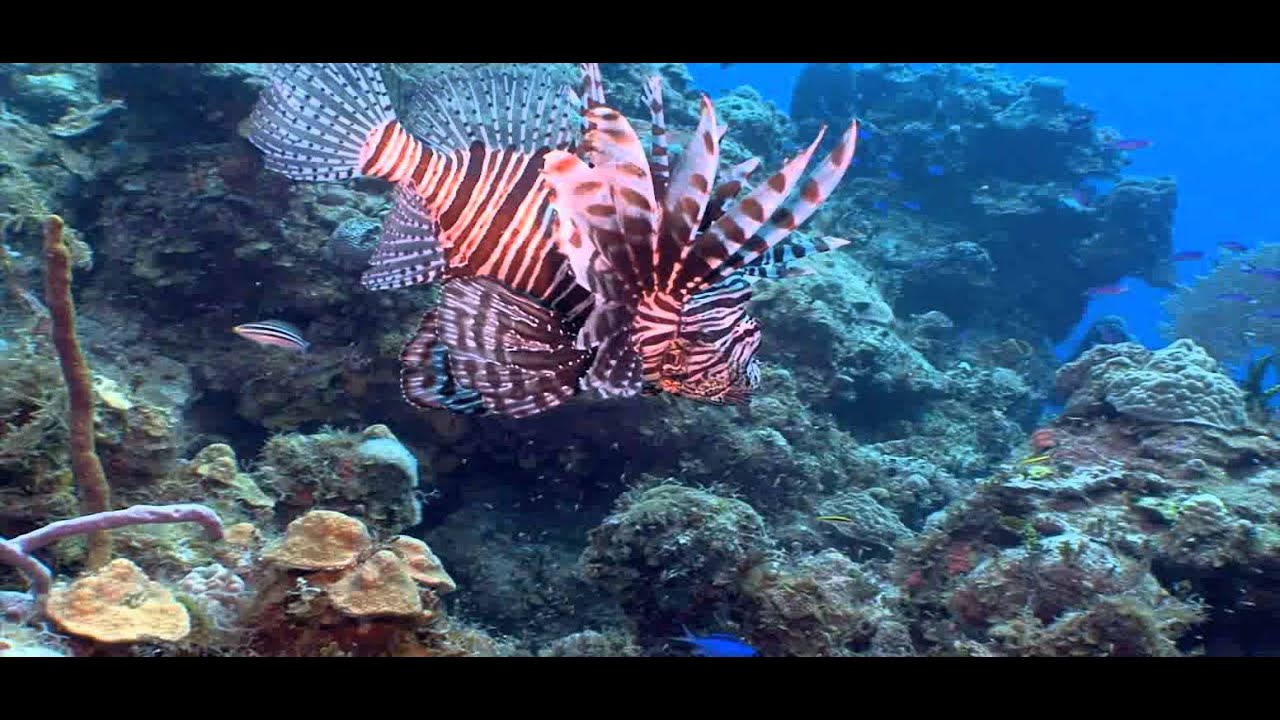

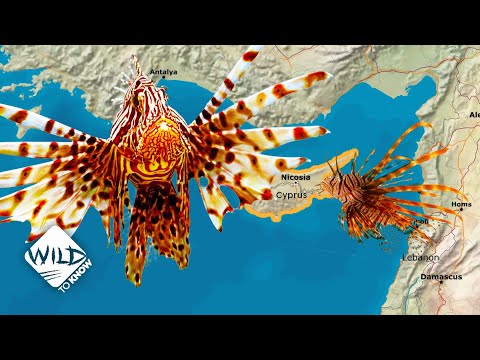

The invasive lionfish (Pterois volitans and Pterois miles) represents a significant ecological threat to Atlantic and Caribbean reef ecosystems, having been accidentally introduced to Florida waters in 1986 and spreading rapidly through larval transport via ocean currents. As venomous predators with rapid growth rates (reaching over 20 inches), high reproductive output (over 2 million eggs annually), and lack of natural predators in their new environment, lionfish consume prey up to two-thirds their body size, disrupting reef food webs and causing trophic cascades that reduce native fish populations and promote algal overgrowth. While eradication is no longer possible, active human removal efforts remain the primary control method, requiring sustained community involvement through organized derbies, spear-fishing tournaments, and educational programs to prevent lionfish populations from reaching problematic levels that could permanently alter reef ecosystem dynamics.
Lionfish Invasion: Biology, Impact, and Removal Strategies
Added:hey 4c diverse thank you for tuning in this is a very special presentation for us because we are coming to you live in our classroom because we've got people here that are going to watch the presentation along with you all the people at home i know some of you guys don't live close enough to get down here so we wanted to make sure that this presentation was available for you because it is a fantastic topic and we've got adam nardelli here adam say hi hey guys all right and we're gonna be talking about the invasive lionfish and we're gonna let um adam do the powerpoint presentation and talk but just remember guys it is may it is our spear fishing month so make sure that you go online check out our spear fishing page and come out and do some dives with us we have a lionfish derby june 11th if you want to get another person two team or two person team come out kill some lionfish win some prizes if you want more information about that go on our website www.forcedashee.com all right so hey everybody all right i think the floor all right so uh before beginning my name is adam nerdelli how many people here are already lionfish hunters awesome okay lionfish have been around for a while so there are people who are consider themselves expert hunters for now and i've designed this presentation to kind of uh touch base with those hunters that are already hunting and people who have never hunted lionfish before so i'm gonna there's two parts to this i'm gonna go into the history of the invasion here in south florida in the caribbean talking a little bit about the natural history of lionfish and then the second part i'm going to talk about the control and the removal and uh it's sort of like a walk down memory lane for me because i've been working with lionfish for a long time and i'll talk about what we knew what we learned and what's going to work for the future so all right you have to change this with you okay i didn't i thought it was in sync i saw that changed come on there we go i don't know it's weird um all right so a little bit about my background i'm a patty uh scuba instructor and dive master i've worked a lot for 10 years as a dive master on scuba time i'm a high school marine science teacher today and i graduated from nova southeastern oceanographic center studying fishery science marine science and i'm a former brief intern now by the way all these pictures here it's funny thanks to google um i didn't actually have these on file and i was just looking at me and lionfish and all this stuff came up so really like i said i've been working with lionfish for a while um this right here is one of the studies that i started another um colleague that was in my fisheries lab took over the study and published it i from the beginning of the invasion and we were doing lionfish derbies i was interested in the socio-economics of the the people who are coming to fish for lionfish and how does it support the community and is this a movement that can be sustainable to continue control of the invasion um so we did find that people came from all over not just local areas uh just to support the lionfish removal efforts and brought a lot of money in and the catch effort was pretty good um this is one of the first prototypes of the zookeeper and they had a uh they put like a plastic in the front hexi plexiglas so that you can see your your lionfish in there um i did a lot of stuff for outreach at different events so it's been it's been a long history with lionfish what if he hit the keyboard the keyboard's not working um all right so let's just do a quick little test here all of these species can be found here in south florida how many of them are native and how many are not native so when we look at these how many of you think there's more than two species that are native there how many people think there's uh more than three well less than two species native okay why do you why'd you raise your hand for that i don't think any of them are native yeah um none of these are native here to south florida they're everywhere in here in south florida um and so we're going to talk about what makes a species native and what makes a species non-native or invasive is another term flamingos everybody thinks of florida and flamingos and they have lawn displays of plastic flamingos flamingos did have a larger home range here before we took over their habitat and urbanized much of south florida there is still a corridor pocket where their transient in southwest florida in the mangroves over there but they used to have a much broader range here just we took it over so they've been kind of displaced so there so there are species that did transient through here but now there's no room for them um peacocks they're not from here and we have them here um marine toads they're all over um papayas are not native from here but they're delicious right um cuban um uh frogs uh we've got parrots burmese pythons armadillos are native to north america but not to florida and they came in a long time ago during a change of sea level and they basically expanded all of their range up central america into north america um iguana is definitely invasive and not native and then this is australian pine which is a really big problem here but everybody plants it because for aesthetic reasons so there's lots of different species here in florida florida has over 500 fish and other wildlife non-native species i love this image here there's mickey right there looking at the hazmat guys trying to get rid of all the invasive species so what is a native species a native species is of species that historically occurred or currently occurs in that ecosystem not by means of an introduction so there's historical reference that it was always there it gets pretty complex when you talk about places that are like islands uh that develop as seamounts from the middle pacific like hawaii because all those species colonize that area and when they form there were no native species there so you know there's there's gray areas to that term but a non-native species also known as introduced alien exotic non-indigenous or naturalized refers to organisms introduced to an area outside of their native range so any species that's relocated from its native habitat to a non-native habitat is now a non-native species it's not really known what it's going to do in its new habitat yet so at this point it's now an introduced species as introduced species arrive as non-native they evolved in one place and they were transported to a new ecological community brought by people either intentionally or unintentionally so uh like if they the organisms can be just uh carried along in ships in the ballast or as stowaways if like rats um or snakes and in unintentionally brought in or people brought their culture with them when they came to new places and they intentionally brought plants and other animals that reminded them of their home to north america um and then for other reasons we tried to control non-native species with their native species from their homeland so we brought them in as well so it's pretty complex of how we move species this is a big problem that we created ourselves because we are homogenizing the world's biodiversity by moving all these species around and we'll see that it's had some unintended consequences especially with the lionfish most introduced species fail to establish populations but the ones that thrive and flourish are called invasive species introductions can be useful like crop plants or livestock that have been brought in so some introductions could have positive benefits oh nicole are you are you changing with me sorry read that one okay next one so an invasive species is something else other introductions may be directly harmful to the environment it's considered invasive when an alien species whose introduction does or is likely to cause economic or environmental harm to human health they can i refer to them as biological pollutants because we think of pollution as chemical or physical waste but when we bring in these organisms that are causing harm to the environment um it's another form of pollution um so examples here in florida as well are kudzu um all of southeastern united states are covered with these massive vine plants and when you actually see kudzu just take over trees it's impressive when i drive up 95 to go up to new york you can see some areas just covered in it um cane toads or marine toads are not only here in florida they're also invasive to australia and that's caused a big problem there um zebra mussels took over lake michigan um however the positive benefit is that uh because of all the eutrophication that was in lake michigan which means that there is an excess amount of fertilizers and nutrients that water was pretty much toxic before zebra mussels got in there zebra mussels being powerful filter feeders cleaned up all the water of the great lakes and now they're crystal clear but they just overgrow everything and they spread through the tributaries of the great lakes through other rivers um the in a study that i read cost to u.s funds totaled 138 billion dollars per year in damages losses and control measures so yes the government does look at this because this is a big problem economically and environmentally and we don't want to pay for uh cleanup okay the the important part is to prevent this from happening all right so invasive species pose threats to community stability introduced species become invasive when limiting factors in their environment that normally regulate their population growth are absent in their native environments they've had our the community has had a chance to evolve with that species so all of the natural restraints that keep the species populations in checks and checks and balance or put on that species but when you take that species out of its native environment and put it somewhere else it's completely novel to the new community evolution hasn't worked there yet so its population is growing beyond what we call carrying capacity and it it just overgrows and takes over that one so what what are these factors that normally keep populations in check competition predators parasites so in the non-native range we see a lack of competition a lack of predators or parasites that affect them in their former native ranges this gives these invaders an advantage over new community species and i'll talk about that for the life specifically in a minute so how do they arrive um there could be natural range expansions or disturbance events like changes in sea level might allow corridors or pathways for species to expand um or a big hurricane storm might blow species in uh and wrap them into other areas and islands um so there are natural examples of species moving around um but in introduction uh the intentional or unintentional escape release dissemination or placement of a species in an ecosystem is usually the result of human activity oranges are not native to florida but we're the citrus state right or at least we used to be before the crop failures but um oranges in fact even though they're flourishing flourishing in europe as well are actually native to asia so they've been brought all over the world um ship ballast water this is a big problem it's actually caused some international regulations and laws to form because now ships have to exchange their ballast water out in the ocean so many miles before they come in why do they do that because what's floating around in this ballast water they're carrying all the larvae all the juveniles of species from that native area that will have time to mature while they're hanging out in that ballast water and then when they release their ballast water in the port they just dumped all the larvae and juveniles of that species into the new area so now there's regulations preventing it from doing that if you're not sure like in the all these uh port freighter ships they exchange ballast because they're trying to take in cargo and the weight of the ship is going to be different whether they have cargo on them or it's moved off so they have to suck in water to replace the weight of the cargo so they maintain the proper ballast and sea level um and then of course just aquarium release which can be intentional or sometimes unintentional but most of the time people let go of their pets and that's been the case for most of south florida's non-native introduced species i'm going this way okay so there are certain stages of the invasion process they don't just happen overnight although it like in the case of the lionfish usually by the time they're noticed and they're already established and at that point their numbers are going to rapidly increase the time that you want to stop it is here as you move down the arrows it gets harder and harder and harder to remove the invader so the at the first stage is transport where we have uptake and transfer of the organism once it gets transported to the new area and it releases and it's surviving in that new area it's now considered an introduction we still have a good chance of getting rid of it when it's just an introduced species but when one species that's a male sees the female and they mate and they start becoming a reproducing population now we have establishment we've established the colony of that species and and we have a growing population of a non-native species here from that point from that establishment place it's now a stepping stone to be transported to other reef habitats and pay attention to this because this is exactly what happened with the lionfish invasion there's no better clear-cut example and i'll go over the exact pathways how it did in a moment um so each phases can have um the ability to be stopped up to establishment so we are a non-native hot spot here in south florida um part of the reason is when you think about our ecosystem and our climate here it is very conducive to be a home to almost any species we're warm we've got lots of water we've got lots of food species do very well here we have monkeys we have um like i said parrots we've got even tegus which are a new big monitor lizard that are taking over the everglades i mean anything you name it it will survive here in south florida i guess unless it needs really like cold adapted environments um but these are just some of the marine species that have been spotted right here in our south florida waters um there are 31 marine fish species that are non-native that have been observed this is from um the usgs information there are seven jury hailing species these species that can go from fresh to salt water like um snake heads um walking catfish um and then the only real established species still for the past almost 15 years is the red lion fish um now nicole and i actually went diving we saw this elephant tang and i said should i spear it and then we both agreed underwater that it's an herbivore and it's only the one we've ever seen like we're gonna leave it because we need more herbivores on our reefs to be honest um and he hangs out at that this one spawn every time i go to the street what was it turtle ledge i think it was turtle ledge he's always there at this one spot and he hangs out with the other uh surgeon fish and the grunts um so we love him stay but uh fairy basslets they are it's uh interesting their their range is all of the caribbean except for florida and so they're in the bahamas if you go diving in the bahamas you'll see lots of fairy bastards or my favorite fish they like to hang up upside down under crevices um there was a year probably about maybe 10 2008 i want to say it was in 2007. i was seeing fairy vaselines on on the reefs all over and nobody believed me and then i think they did a study on it and there was a corridor that came off of the gulf stream that brought them from the bahamas into our waters as larvae and they developed and they they didn't stay here um because a lot of times on species like i said when they get introduced it's not the ability they don't have the ability to survive there the conditions aren't right so they will they will live until the end of their life but they can't reproduce or some environmental change will happen and they all die um so there's lots of different species to be on the lookout for here when you're diving okay so the lionfish is the perfect invader it's the only one out of all of those that's really been able to establish itself um i'm not gonna lie the first time i learned about the lionfish was in the movie deuce bigelow male gigolo when he put him in the blender and he had a mishap with the lionfish in the i'm not gonna say anyways um so they're in family scorpionity which makes them scorpion fishes if you know anything about a scorpion fish or just the idea of a scorpion that means that they sting they have venom um we do have native scorpion fish here so they are uh distant cousins uh but they are they don't really act or have the same ecological niche as the lion fish they just they share that venom um two species of lionfish are the ones that are responsible for the invasion they look almost identically the same there are a few differences and there are some genetic differences um that that that you can tease them out with but teroy's volatiles which makes it the dominant of all of them and troy's miles are the two species of lionfish that have taken over this red area here so all throughout the eastern seaboard of north america down to florida the gulf of mexico all the caribbean bermuda they are starting now to expand their range into brazil and then this at the time was a star because they were just starting to see observations of lionfish in the mediterranean through the suez canal but now they are also taking over the mediterranean and so scientists that have worked with lionfish in the western atlantic are trying to apply what has worked to help scientists in the mediterranean um they have of course some governmental differences and issues that makes it harder for them and if you've ever been diving the mediterranean it's really not the same um so that can make it logistically hard as well um but so this is the territory of troy's miles uh mostly comes from the indian ocean and then troy's volatiles is a pacific uh species both have been released and because they both look very similar to each other um that kind of exp when you see when i talk about the introduction um that'll go into why two different species were released um all right so you guys know i'll talk about him in a second but 1986 let me i don't think i can pause it i'll have to come back um 1986 was the first reported um release of a lionfish in the western atlantic and does anyone know where it was dania beach florida right here okay it's gonna let this play again so in 1986 is when we have the first record now there have been i have read anecdotal reports of the late 70s people finding lionfish and releasing them but 1986 right up dania beach florida look how long we have though we have a few years go by about six more years now we start to see a little bit more miami 92 as hurricane andrew and then they stay relatively localized not many then it hits bermuda and it goes up to brilliant virginia on the carolinas then it starts to spread all through the bahamas down through the caribbean and it takes over the southern caribbean gulf of mexico and then lastly ends up back to the florida keys so this is the journey that lionfish have taken now why do i have uh gizmo here if you know anything about the gremlins great movie because i consider the invasion story of lionfish like gizmo when remember these lionfish we think that they were released because of the aquarium trade people had them as a pet and they let them go why would they let them go because lionfish are predators they are carnivores they like to eat things and they grow really well in captivity so somebody had a lionfish when it was about this big in their tank and over time it grew this big and this big and then it started eating all of their expensive saltwater fish in their tanks and that so what do you do with lenny the lionfish you don't want to kill lenny the lionfish and put him in the toilet first of all he's expensive fish and that's like that's your boy lenny so they take him in a net and they say go be free and enjoy the ocean and swim with all the other fish up there well if one person did it 10 other and then 100 other people have done it and eventually lenny the lion fish meets lisa the lionfish and now we have established a reproductive population um so the idea with gizmo is that when you brought gizmo home you know they said okay you can keep them by himself take keep them as a pet they gave them rules about gizmo but then once those rules were broken they turned to gremlins which just kept reproducing and taking over so all the lionfish from that point are the gremlins of that original lenny the lionfish um the reason why they spread around this way i'm going to come back to you but can anybody think of what would connect all of these areas together to help the lionfish move around exactly yep i'll come back to that okay so i i i made i started a presentation like this in 2014 and i had a slide that had a bunch of news headings about it so i thought it'd be fun to see where have they come since then so in 2014 um they were already making huge headlines lionfish bash helps control invasive species in south florida um fight intensifies against lionfish invasive species from ecosystems lionfish is the new terminator of the sea lion the media has a frenzy over lionfish and they love to talk about it and they and they love to highlight it years later we're still seeing this but in new ways now um and we're still talking about the voracious and invasive lionfish taking over the atlantic lionfish menace continues from the sun sentinel that was just in 2021.
excuse me but now even the mass singer came out as a lionfish singer okay so it's making the mass singer now then we've got new contraptions being created to help with the invasion um i thought this one was hilarious the roomba of the sea it's a lionfish zapper that um that basically stung stuns the lionfish with a zap and then it's a submer it's a it's a little rov um and it sucks up the lionfish after it's zapped so there's all different gimmicks it's still a heightened frenzy people go crazy over lionfish is that something you can buy or is that something that like big companies do you know the zapper i haven't seen the uh ability to buy it it was just uh researchers that were using it and and trying to control them um they're probably trying to sell them to governments to use them um okay so back to the establishment and the introduction so when we when we watched the jump from florida in 92 there was hurricane andrew so we think that was responsible for a couple of aquariums being destroyed near the ocean and letting them be released but it goes from bermuda to uh the carolinas there from there it really they really take a footing and then the bahamas gives them the launch they need to get through the caribbean and we already said what do we think does this what helps with that are the currents from the gulf stream so if this is a thermal image of the gulf stream here and you can see all the little eddies that create corridors so lionfish were released here the lionfish had a moving highway that carried them up to bermuda and then eddies can funnel off and they took over the reefs near the carolinas and then from there they found their way back down to the uh the bahamas now when we think about the lionfish moving around it's really not the adult lionfish they do swim and they move around but they don't move around that much they don't have the potential to carry huge ocean distances like this another part of their lifestyle and and it is what has been on the move it's their larvae so these corridors are transporting the lionfish larvae not the adults um as they relocate to the new locations right so this uh graph here shows um the invasion process lionfish fit this model uh very well um and it also tells us where what we can do to control them and where's the lionfish now so when we first see an invader um we don't really see it when it shows up there's a lag time between the time it's been introduced to when it's really starting to rapidly appear like i showed you 1986 to 1992 there was just a couple of them and then overnight almost they took off so that's the problem with these introduction events we don't see it until it's already here and it's happened so if you see a bunch of them they've already been around for a good period of time um the invasion after it gets through its exponential growth phase will have a peak this is in what we what we call a classic ecology would be something similar to carrying capacity but there really is no carrying capacity for an invasive species um what the ecosystem looks like if the invader was to meet carrying capacity would be a completely different ecosystem because it's taken over and changed the dynamics of that so it's not the normal carrying capacity um anymore what that what will happen though is the lionfish will eventually um overtake enough of the area that the fact some factors will come in like usually predator and prey dynamics so if the predator runs out of prey the predator population starts to go down and gives the prey a chance to rebound that's where we have equilibrium the problem is that if lionfish get to this point where they've done that we've decimated most of the native fish at that point so um right now lionfish are still in this exponential growth phase even from the time that i've been research researching them since 2009 um we've kept them here why because we've been able to create uh teams of divers to go out and control the population so we have not yet seen the invasion peak they we won't ever once they're established here it will never go back the other way this is only a one-way direction so we need to keep constant pressure here to keep the lionfish at this level so that they are not able to reach that peak this means we need constant continual removal efforts removal efforts at that level okay so what makes the lionfish the perfect invader what life history traits about it um superman's one of my favorite superheroes so i try to throw him in wherever i can um if you think about superman though even though he lives on planet earth he's an alien from krypton so he came from an uh another planet he is a non-native on planet earth and he the reason why he has his superpowers is because the earth's gravity gravity and the sun doesn't work on him like it does everybody else if he goes to krypton he's like a regular person um he he doesn't have the superpowers but it's the it's the um the heat and the rays from our sun and the gravity of planet earth that because of his dense molecular bone structure that gives him all the powers that he has so that's the same idea with an invader like lionfish when they go from a non-native place to a new ecosystem they have never had to deal with the evolution that all those other species had to adapt to in that new area so they're almost like the superheroes or in this case super villains of that area because they have an advantage over all the other species that are there that have been controlled by evolution and adaptations working together um so remember first of all they are scorpion fish uh which means that they are venomous i'm going to take out my lenny the lionfish here so lionfish are kind of frilly like this and they have um venomous spines and fin rays on their dorsal side they have a cuddle tail here um then they have two anal fins that have a venomous spine and fin rays um so the arrangement of the spines there's 13 dorsal spines followed by some fin rays that do not have any venom spines then there are three on the anal fin and two on the pelvic fit so again there's 13 on top three on the anal fin and two on the pelvic fins so you really want to avoid all the top and bottom of the lionfish without getting stung the the cuddle tail has no spines and the rear of the dorsal has no spines the pectoral has no spines but i don't want to deal with any of them okay when i'm dealing with lionfish and i'll talk about this handling them i just avoid all of that okay but just be aware of of where they are um so then the soft dorsal rays are not venomous um so if they they really don't harm you at all um the reason why the venom uh is extracted from the the spine is because th this each spine is surrounded by a sheath of skin and there really aren't venom glands in the skin there it's more like glandular cells that release the toxin this sheath of skin when it when it goes to pierce you actually gets pulled back and it squeezes the glandular cells and this and the spine is like a sharp syringe needle and that and that it injects the venom through a groove that where the the toxin follows down into your wound um so um a lot of non-native predators exhibit avoidance for lionfish they're able to detect that these things are venomous so they are smart enough to stay away this has given them an advantage in their native habitat for protection and it's giving them even greater advantage here nothing wants to mess with them because they are venomous they have a rapid growth and abundance um species do not generally grow in population in their native ranges the way lionfish do um so they they have no checks and balance on how they can grow they grow in much higher densities and they grow to larger sizes here in their non-native range than they do in their native ranges um why did this happen because let's think about this if these lionfish came from originally a founding genetic stock of aquarium released species that means that those fish that were in the aquarium had to survive being taken from their native environment captured brought on a plane stayed in an aquarium an aquarium store fish tank for a while and then went to somebody else's fish tank for a while and then made their way to the ocean so these are genetically hardy species they are strong and they're already good at surviving because they've already been through that test um so now these genes are the founding genes for all of the offspring that are that are now invasive the gremlins they um they do have some uh they have parasitic release the parasites do not control their growth like they would for other fish that are native here if you ever cut open a fish and really examine it they're riddled with parasites um the the lionfish exhibit what's called parasitic release they they may have a few but it's not the right life stage um for them to be at the fish to really do any harm to it um they live longer than 15 years reaching sizes of greater than 20 inches uh the average size of a non-native lionfish was is about 7.4 inches but ranges in size can be from one to 15.3 inches so we're talking over a foot i know some have been recorded some derbies as uh i think 22 inches so pretty pretty large all right so where do they live habitat preference and behavior lionfish inhabit all marine habitat types and depths from the shoreline to over a thousand feet deep they could be really shallow they could be under dock pilings or in canals or they could be down at the bottom depths where nobody's going to reach them because they're in a thousand feet of water um they like also artificial structures like canals but they also uh and shipwrecks but they also can be found in estuaries mangroves and shallow deep reefs um in these areas lionfish can reach densities over 200 adults per acre um and that's not that you just go out there and just see like a swarm of lionfish but they have been able to survive that closely packed together which is not something that you normally see in their native habitats um i was in hawaii a few months ago and they have the green lion fish which i thought was really cool i'm like just hey i've never seen a green lion fish you've seen lots of other ones the red lion fish and there was one and it was tiny and it was and it was super camouflaged and it blended right in with its environment um the dot the dive instructor found it but i only saw the one the whole time i was diving in hawaii whereas opposed to here i mean you see lionfish all the time there and they live in groups close together um lionfish exhibit what's called high sight fidelity they don't move around very much when i was um a master's student i was trying to help study um the lionfish movement and looking at do they travel along the reefs as as continuous reefs would enable them a habitat to just move wherever they want or are they more isolated in patch reef areas um and really the studies have shown that um that in patch reefs they stick around very well but in continuous reefs there's more movement in my study uh i'm not entirely sure if it was because we were tagging them and sort of messing with them that it caused them to leave but it was rare that we did find the same tag lionfish at the same site after we went to it um but for the but they do like localized areas um when i dive on turtle ledge or lighthouse uh reef i will always see lionfish in the same spots so maybe they are attracted to just certain types of crevices that's uh something else to consider um they are commonly observed along reef ledges and outcroppings hovering near motionless with their head tilted slightly down so if i use lenny the lionfish here again most of the time they're almost motionless like they're just hovering and they always have their head tilted down a little bit with their cuddle tails up at this angle because they're scanning they're they're doing this to blend in with their surroundings but they're also active predators they're not sit in weight predators they are actually hunting all the time and so this is their sort of hunting movement and they're positioning themselves to snatch up a prey which i'll show you in a video in a moment of what that looks like they have a thermal tolerance range of about 56 degrees fahrenheit to 81 degrees fahrenheit so lionfish have been found as far north as new york and massachusetts but those waters get way too cold in the winter and they die so that's another example of of how climate can limit introductions of species so that's why south florida is just such a great spot for them because it's right in their range yeah good so in those kind of far extents are they migrating up there and then coming back or they're just kind of haphazardly going up there and then dying correct second one yeah exactly those just they won't come back they just go up there and get lost in the die same thing happens with a lot of our other other other tropicals like damselfish butterfly fish can be seen up there um surgeonfish can actually do pretty well um sergeant majors but when the water drops really cold like that they usually die our sea turtles also have a big problem with that because especially the juveniles um they are just following the gulf stream and they're too young to have learned yet when it's time to turn around so they stay up there through the winter and they get cold shocked and stunned and so there's actually rescuers on long island that will go out and rescue the stranded sea turtles because they're ectotherms they can't survive in the cold and they they ship them they fly them back down to um florida and then they they put them in therap uh uh therapy to get them back to health uh go ahead what's your question oh i was looking at the temperature tolerance it gets a lot warmer than that in a lot of the areas they are so they can live but just not as well yeah okay a lot of fish gets hot i mean even corals and other fish will stress out when temperatures get that high because you're depleting the oxygen um and they it even though i mean this is average right so it's usually during an el nino year when we get those waters that are really really like almost 90 degrees and um and that's all the animals are stressing at that time good question all right so i have to go i don't think this is going to play so i have to go out of this into my other file here so um like i said lionfish can live to over a thousand feet deep so uh this is a video that i'll play that shows just uh some of the deep areas we observe them here in south florida so end show right i'm gonna hit that yeah and then i want to go to here i remove this yet oh wait so this is the antipodes it's a small little yellow submarine it was donated for usage at nova southeastern for about a week and all different scientists went out on it to observe lionfish in the depths it can only go about six i think knots so it has to be transported with another towboat to its destination and then it can be deployed um we have to use a little zodiac so you can actually get into the hatch is this one of the first times that we've been able to see lionfish at the depths that we were i did basically yeah um it was definitely awesome this can hold about five people two on each good for the is they're making use of this these artificial you know structures here so that's increasing their you know options for habitat but this you know the smaller fish the juvenile fish are hanging around these small structures too so it's it's it's a good for the lionfish they don't have to do too much work to get to get food [Music] look how fat they are you can tell i mean they've been just gorging themselves they're not scared of having a giant [Music] and it's a lobster condo with the flap in here still has been modified so that it's they got more of a circumference uh covered and then the outside they've taken the mesh part off the lobster trap off and put a dry bag around it with a nice handy zipper so you don't have to reach around and grab all those spines you just dump the lionfish right out so that makes it nice and handy um so let me go back to powerpoint so as you can see lionfish can be found on shallow reefs under natural crevices or in that example where they were at i think that was probably like 400 feet the one i went to is about 330. um they look for any artificial structure when it's that deep they they there's they were around nothing else but where that one artificial structure was so they like to use that they use that to their advantage um to camouflage them when they're hunting and uh they were not afraid of anything else that was around them and they were fat happy lionfish down at a couple hundred feet of water um here we go so lionfish have high reproductive rates lionfish become sexually mature in less than a year and spawn in pairs they usually do a little bit of a courtship with each other a single female lionfish can spawn over 2 million eggs per year after courtship reproduction occurs throughout the year about every 30 days so that means like once a month a female is able to release these egg masses the egg masses are bound in gelatinous material that are dispersed via ocean surface currents and they hatch four days as competent swimmers able to capture other zooplankton so from the moment that they are basically born they are carnivores and they're eating other zooplankton uh creatures and these are when lionfish are in their larval stage so the currents are able to transport them very far distances it their larval duration is about 26 days so they can be transported from the caribbean to the gulf of mexico and atlantic ocean no problem because all of those waters are connected by current activity um so they're wrecking habit in the larval stage of their of their of their lives which also affects the community of all the other fish that also have larvae in the planktonic stage during their early development this is the gelatinous egg mass it's usually broken down by bacteria that releases all the eggs and it's floats because it's gelatinous so that helps you go with the currents and i found this guy off of um the nursery in pompano my friend amanda and i uh found it and you can see this is this guy is just a recruit us that's settled on the reef it's not even really uh two centimeters yet um what's that how'd you catch it so we we we kind of corralled it with our hands and then i had i happened to have a ziploc bag and we got it into the ziploc bag it took two of us we i mean we didn't have anything else so we didn't want to touch it either but um she had great eyes and she's the one that's spotted to give her credit for it um but this is so so you can see they look a lot different when when their uh post-settlement larvae becomes a new recruit and then they'll develop into a more mature alliant fish now um also with the evanimations and the stings when they're younger the venom is usually more potent as well um okay so lionfish habitat and hunting so lionfish are relatively inactive during the day and can be found lurking among the reef crevices for shelter um they like to be hiding in things all the time they won't be just out in the open during the daytime um although they retreat into shelter during the day they are not nocturnal predators we actually call them crepuscular they're most active in the early morning and the late afternoon the juveniles live in small groups but adults typically live alone when hunting their pectorals are spread wide and the new maneuver prey into a position that can be swallowed whole with a rapid snap of their jaws so when they're hunting in that head down inverted position they're using their pectoral fins spread out to kind of herd their prey into an area along the crevices where they block it and trap it and then they just they have like vacuum mouths that rapidly suck them up um i think my next video here right oh it's not yet it's coming i have a video for that um they are voracious carnivores um so they have a very unique predation strategy that is actually not seen here in the caribbean atlantic by anything else they are cryptic which means that they blend in very well with their environment but they stalk and heard their prey during these capruscular hours it makes it a lot different than our other sit and wait predators stingrays scorpion fish um even an octopus well they they hunt a little bit but um but they they're more like let's i'm gonna sit here and wait for my food to come to me i'm gonna learn maybe they'll have a little lure um but lionfish they just camouflage themselves they are almost motionless and they stalk their prey um so nothing else does that here all the prey don't know to avoid this behavior because then again evolution hasn't set that into their instinct um they are generalist carnivores that consume over 56 species of fish and many invertebrate species as well when they're younger they tend to eat more invertebrates as they get older they switch to more of a fish diet um prayer commercially recreationally or ecologically important like herbivores or food web stability of the trophic level biomass so if they're eating all the herbivores that's bad because we don't want algae on our reefs some algae is good for the reef but if we have a problem with pollution like we do here in south florida all those algal blooms take over the the substrate of the reef and prevent coral growth um and it also changes the whole um uh trophic levels uh dynamics that that are is responsible for expanding that energy through the food web so they can cause what's called a trophy cascade and affect the entire food web this way they consume prey up to two-thirds of the lionfish's body size i have seen uh lionfish with their mouth a gape and they can't close it because there's a fish still stuck in its mouth and this is a fish that was dissected this came from reef and you can see all of these were found in its stomach contents they haven't even been fully digested yet i used to do lots of dissection with them and always i mean you noticeable how many fish that you can identify inside their guts um but lots of herbivores and juveniles even um juvenile nassau grouper which are endangered can they do any crustaceans yes they yeah they do crustaceans yup little shrimps um here we go so lionfish sucking crowded play i have to switch back out of this because it doesn't want to play in this format what about cyclopods that's a great question i have not seen that but they don't have much bone or they really only have their beaks so that would that's all that would be left after digestion really um so i think that's hard to detect but maybe that's that's a great thing to look into open with okay so now how do i find it how it's ready and i'm going to turn the sound off okay so um i was catching lionfish alive and putting them in tanks just to observe their behavior and see how they were feeding um and so i'm feeding them ghost shrimp here there's a little ghost room um and so there he goes head down right away pectoral fins spread wide moves very very slowly and the snap he's gone this he sees another one yup see that see how rapid that is their mouth actually protrudes forward and creates a suction um there's that head down inverted posture so these guys are active hunters um and this is a tank that i had at um the nova oceanographic center facility come on so invasion impacts they create competition for food and space among native species they are definitely competing with our groupers which are uh basically top predators on the reef um so i've even seen groupers in uh deep uh depths eat a shark so um groupers are big carnivores they can compete with sharks um but lionfish are doing a pretty good job competing with the native groupers uh because they they prey on the same species that um groupers would um they also do a good job they they have been reported eating lobsters so you ask about crustacean they do eat lobsters um but they're also not just worried about competing with all these other species for food and taking away the food but they take up space if there's a bunch of lionfish in here this is the same habitat that grouper likes to rest and shelter in as well so we're kicking out and displacing our native predators this is again destabilizing the whole community um so we are what we have seen and luckily control efforts have put a stop measure to this but um where lionfish were not in control and especially at the early stage of the invasion um we've had a biodiversity reduction in the native species on reefs um there were fewer large predatory reef game fish for human consumption and we lost our top down predator control this triggers cascading impacts through the disruptions of the food web so we go from a nice healthy complex food web ecosystem here to adding the lionfish in there and now we've got a disturbance in our ecosystem [Music] okay so invasion impacts reduced herbivory like i said we want our herbivores on the reef consumption of orbis fish causes increase in reef algal growth and this this disrupts top down macro algae control it's the macro algae that overtakes the reef habitat it grows much faster than coral does so if it doesn't give a chance for the coral larvae to settle where there is algae so we need our herbivores on the reefs to prevent basically they're the lawn mowers of the reef so a lot of people used to say to me at the beginning of studying all this in the invasion well why do you have to kill them why you know what they're here nature set its way which nature didn't do it it was human um impacted but what would be the worst thing we just let them stay here and let nature take its course nature always finds a way right jurassic park um well albus and hixson have done a lot of work on lionfish extensively they came up with a worst case scenario continued lionfish spread throughout the greater caribbean would only be controlled if we just let them do it on their own first starvation which means that they've eaten all of the prey there's no more native species um then we also would see biotic resistance of the native species so eventually there could be where we talk about equilibrium at the end of that invasion stage some native species might start to learn to become competitors some predators might possibly start to prey upon lionfish and then parasites or pathogens could find their way to take over lionfish we haven't seen any of this yet years later so lionfish are established they're here to stay but there is good news save a reef eat a lionfish they are tasty they are delicious anybody ever had lionfish awesome sweet flaky fish um ceviche fried grilled however you want to do it luckily they're tasty and you can eat them the hard part in the beginning was convincing people that because they're venomous that you can eat them but it's only the venom's only in their spines this white um flaky meat tissue does not have the venom and it is a delicious fish and because they grow so large here you um they can become commercially valuable which is what we're trying to do um for the to control the invasion this is chef andrew gordon he was down in the keys when i was an intern down there and they did um uh we did a derby and he took all the lion and fish and cooked a whole bunch of food with them and it was great i still like the ceviche the best um so eradication is not possible now that lionfish are established that is something that we've learned okay there there's no way are we ever going to have a reef free of lionfish um from the florida fish and wildlife commission though they've got it they've done a really good job of getting involved in action and managing the issue um they revoke from the beginning they revoke the requirement to have a saltwater fishing license to remove lionfish so you don't if some people don't want to be fishers they don't like spear fishing they don't like look at mine fishing but they want to protect the reef they will hunt lionfish just to remove the lionfish and this way they don't even need a license to do it um there's no bag or size limits on lionfish like there are for native fish um prohib this is really important they prohibit the importation of live lionfish and they're able to do this under i think the lacy act which is a federal law um but basically the idea is that we already have so many lionfish that we're trying to get rid of in the ocean we don't want them being grown in captivity and transported around you can sell lionfish but they have to be caught from the ocean and sold from the ocean not through the aquarium trades that allow them to import lionfish um and there's uh uh also uh fwc has been uh sponsoring an increased opportunity that will allow participants in approved tournaments and other organized events to spear lionfish and other invasive species in areas where spirit fishing is not allowed that's super important marine protected areas um a lot of places still have regulations that don't allow people to even take a spear into those waters so we've had to sort of remove those control measures to allow people to remove the lionfish in there um so like some of the mpas down in the keys like alligator reef for instance and you know giga rocks and all that you can't spear anything normally but you can steer live yeah they you can they actually were for well it's been a minute since i've did that now they're doing all that but we used to have a lionfish flag yeah that's that we would fly that would show that we are here spear fishing for lionfish only and you can take the short poles like i like one of these here yeah okay so um so this i mean this usually is a good giveaway that you're only going after lionfish with this um and they have special permits that you can get as well um but uh yes they have allowed lionfish removal um throughout the keys all the all the leaves are popping out along the reef line there can people fish those areas normally yeah not real fish and spearfish yes there are no restrictions or regulations here in popular which i think is unfortunate they tried years ago to create a marine protected area there and regulate the fishing and everybody came out and was like no against it i will say though up at the blue heron bridge you can collect them but you can't bring in a spear you have to collect them with those that's the netback yes i'll show you how to do that i have that um yeah so like places like that though they still regulate you have to check the location because uh blue heron bridge is now a marine protected area correct yeah it's a no take something still take something okay well no take on scuba because they have the fishing point oh right yeah yeah um all right so what are we relying on for this local human control this is shown to be the greatest measure in uh controlling the lionfish invasion but there are limitations uh we have to stay within safe dive depths and maintain a proper bottom time it's not worth it to go into deco for your lionfish and like i showed you we are limited to um recreational divers max death 140 feet and if you're a tech diver you may go down deeper i actually have pictures of i gave some tech divers some lionfish bags and and they did spear but honestly um they have such a long deco time on the way up they're stuck holding these lionfish so they don't want to take them down there with all their bottles so lionfish are can be even beyond that and over a thousand feet maybe some rebreathers will go down there but um uh at a thousand feet really there they have free range of territory um so that's a big limitation how we control them we're really only able to target them in certain areas um visual detection may underestimate population size because due to cryptic and propuscular behavior so because they blend in so well and because they're only most active during the daytime early morning i'm sorry early morning and late evening it makes it really really hard for us to be there when the lionfish are there how many lionfish should be removed to decrease the population well in a study done by morris james morris um in his model 27 of the adult lionfish population needed to be removed per month in order to just maintain um a normal balance borrower said and her model came up with 65 per year um so that is a big effort of how many life issues move and again we may not even know their full population in the area because they hide in so many crevices so well um all right so lionfish hunting first have a lionfish repair kit if you are hunting here are some essentials for lionfish hunting you want to have protective puncture proof gloves especially and that's for a certain situation when you're handling them these gloves right here are cut proof but they are not puncture proof so their spines will go through this um and i i will show you and i'll talk about how you can just avoid that all together but if you're going to be handling them you really only want to use the kevlar puncture proof gloves uh hexar i'm sorry hexart puncture-proof roll-ups um which are hard to find um you want to have a pole spear so there's a lot of different sizes of pole spheres right some people do like to put lionfish with a sphere like this because they feel like they can get um further into some of the deeper crevices um but my my pole spear is only about this size and i find this to be most appropriate um because it allows me to just get right up in where i want to be to get my shot on the lionfish you don't need a whole lot of area to up to hunt them you really want to be close to them before you strike um the other part is that you want to have on your pole sphere a trident tip so the trident's tip you can buy them separate and just attach them if it's just a single point speeder but let me open up this one here the trident tip acts like a paralyzer so that see that it's got three prongs on it and they got little barbs at the end here so when you go to sits there he's gonna sit when you catch your lionfish okay it basically paralyzes it and it can't spin around on the sphere it's it's punctured this way with the three prongs and it can't move um the single point tips allow it to flick off it'll it they can um bend really fast and they're powerful and they'll just flick right off that spear um so you that's where you really want to have these trident spears to make sure they can't escape once you get them on there um then you want to have a containment device no i'm going to do that because so it could be a thick plastic bag like a dry bag which is what we used to use when i was netting them or the zookeeper which has become very common and popular it's a pvc tube plexiglas and this protects you completely from their spines and it's really easy so that when you get your um your lionfish on this one you just put it right in the tube right there and then it pulls right off and you don't have to deal with them all and this way you're not ever touching them you should have gloves but you don't have to worry about the gloves because you're not actually touching the lionfish it's going right in there with the spines you pull it off and it's in its containment device um so this is really handy and you can just you can clip it on to you or hold it it's got a handle so you want to have a containment collector or a thick plastic dry bag will work as well um you want to have a flashlight because remember lionfish are going to be underneath the crevices and they sometimes they could be upside down too under there so they blend in very well they're cryptic so that flashlight is going to bring their color back it'll help you see under those crevices you want to have dive cutting shears i'll talk about this later but this is what you want to use to help remove the spines um also if you're doing a reef clean up this is also very handy to come in to get the monofilament line um then you also want to have a gallon of hot fresh water kept on board the boat and i'll tell you why in a moment but that is the treatment that we use if you do get stumped and then you need a bucket with ice for the fish caught on the boat this will euthanize the fish very humanely and it keeps the fish fresh especially if you want it for meat um yes does anybody just use some kind of method to strip the fish off the pole and leave it for scavengers um so yeah i'll talk about that but people do and yeah i'll talk about that i'll come back to that um control methods um so protect your hands from the envenomation with the puncture proof gloves these have this hex armor they have a pad in here not in the palm side but on the back side that protects from the uh spines so that's if you're so if your hand is near it this way it's protection air um and it's pretty stronger but they can still puncture through but these are what we're using for a long time when we're holding the lionfish um and catching them and then you can see they're using shears to remove those venomous spines so you want to protect your hands and remove the spines lionfish generally avoid human divers if you approach them too fast they will retreat um worldwide scorpion fish is ranked second only to stingrays in the total number of envenomation with an estimated occurrence of approximately 40 000 to 50 000 cases annually by stingray yeah by searing out lionfish so really stingrays tend to be still the more dominant um and when we think about how lionfish have spread everywhere stingray still are responsible for it the number one but lionfish things can be severe the severity of the sting reactions um in humans is dependent upon a number of factors the location of the state um the amount of venom delivered and the strength of the immune system of the victim it's different for everybody um localized envenomation symptoms include persistent intense throbbing radiating sharp pain at the site of the envenomation it is the worst pain of your life and i know that women have uh childbirth this is not if not that 10 times it's like somebody just put your hand in a vice smashed it um it is a throbbing pain um then afterwards you might get a tingling sensation it could get hot and sweaty or uh and blister as well um worst case examples of the envenomation may cause headache nausea had a friend i'll talk about that headache nausea vomiting happened abdominal pain delirium seizures paralysis of limbs a rise or drop in blood pressure respiratory distress heart complication including congestive heart failure pulmonary edema tremors muscle weakness and loss of consciousness um also a secondary infection could occur from the bacteria this is all variable because everybody's body is different there is no such science of what's going to happen from this thing it depends on your tolerance to the sting um this is my hand when i was stung and i can tell you i didn't have the nausea i didn't throw up um but you can see how red i only got stung right there on my pinky and my pinky was you can see how fat all of my hand got from it and my entire hand hurt i couldn't move my hand it was completely locked up we were the only thing we were worried about was um because the tips of my fingers were turning white that i was going to get blood loss because the pressure and throbbing was building so much and it just hurt like my hand was uncontrollably under pressure like if that's the only it's the weird it doesn't feel like a sting it's a throbbing pressure um i'm glad i only experienced that once um here is what they're doing they're they're soaking it in hot water okay and the reason why hot water works is because it's the heat that denatures the venom protein complex every venom has a different way that that protein gets denatured or broken down you can't pee on it you can't use vinegar that's for like jellyfish venom stinks but stingrays and of uh lionfish can both be treated with hot water because you want to break the shape of the protein that's how it's active and working on your cells and your tissue by changing the shape of the protein it inactivates the venom um so basic treatment for lionfish and venomation includes immersing the afflicted area in hot water about um uh at about 100 degrees um celsius um which is boiling right so you want to test that before with your good hand before you put your hand in there because it's very important that you don't burn that your skin your hand is hurting so much you will you will not notice the temperature of the water so you want to test it with your good hand first if it's too hot cool it down throw some cool water in there as well but keep it in there for 15 to 20 minutes to help inactivate the venom it will still swell and hurt for a while afterwards where hot water is not available other products such as hot hands which are heating pads can be used to heat up the water and then it's recommended to seek secondary medical treatment because like i said you could get a secondary infection or it could have caused muscle tissue or damage um all right so lionfish hunting tips be conscious of the environment and protect the wreath while hunting first and foremost the whole reason why we're hunting lionfish is because we want to protect our reefs so if you're in uh the on the reef and you're trampling all over it and your hands on the reef and you're breaking the coral to get a lionfish you're just being a negative influence instead of a positive influence okay it defeats the purpose so be conscious of your environment protect the reef while you're hunting move slow breathe slow and maintain good buoyancy control this is so these two skills right here are just basic good diving skills that you can use to become a good hunter this will help your bottom time and hunting skills to catch more if you are slow and you have good control you are less noticeable to the lionfish i guarantee you you cannot outswim a fish i have tried it and if they catch on to you that you're trying to catch them they are gone so you want to maintain good buoyancy to hover like they hover you got to kind of be the predator yourself and then you want to just very very slowly creep up on them and have good lung control to do that also having good lung control means that you're conserving your air and you can spend more time down there it's very easy to get caught up in your hunting and trying to catch that lionfish and then you look down in your air and you've got like 200 pounds when you thought you had a thousand okay so you want to be aware of your pressure and your breathing while you're doing this um think like a hammerhead you know when hammerhead sharks swim they swim from side to side they have all that sensory in their heads okay they swivel swim like this so be a swivel swimmer you want to scan across the entire reef don't get focused in one air you want to be able to go up the reef and down there and zigzag around it um so that you create a broader path of where you're looking for your lionfish look under crevices but do not stick your head or hand inside because what else could be in there a moray eel maybe a nurse shark something else okay or maybe you put your hand on the lionfish so you don't want to necessarily go inside and reach in that's why your flashlight would come in handy um uh under the crevices sometimes this is the only place to find them so again carry a flashlight and use your inverted body posture then if you're good and you're buoyancy you can you can dive with your head down and your feet up and then you can shoot them that way or at least find them and reposition yourself um lionfish are crepuscular so hunted dawn or dusk when they are most active most people don't dive at those times so you're going to be looking under those crevices um visit artificial reefs because in most cases that is the only habitat structure in the area for them to go to so they will they will target those artificial sites because a lot of these everything else around it is just sand usually um train your eyes for lionfish patterns yes you can train your eyes to be a lionfish hunter um remember lionfish have these white tips and uh with their thins and spines that are spread out i kind of think um like feather dusters i think for like feather dusters on the reef and so i look for that i look for that broken up variation of those white kind of flowery um fins um the parts of the lionfish that were intended to be in defense or help the corral the prey to be a predator of the lionfish give them away to us as well so use that against them um and where there is one lionfish there are probably more in that same area there are many times where i shot a lionfish and then i looked and said oh this one was sitting right next to me the whole time to even notice it um all right so there are two methods to be a lionfish hunter in both methods always approach slow and in control of your buoyancy again you don't want to give yourself away um now back before we were really spearing when we first started removing the lionfish we were collecting them with nets and i didn't even have them anymore but we were using hand nets where i have pictures to show you but we would kind of position the nets around the lot the lionfish and scoop them up as one like that it took a long time to do that and you eventually would get beat the learning curve and get good at it um but it was it was just not really efficient um you could use a pvc pole as sort of like a positioner to kind of motion nudge them over to where you want them to scoop them up but a lot of times they would just get tired up and dart off um we would contain the lionfish in the nets like on the sand and then bring over or you could keep them together like this and bring it over but you want to bring over your dive bag or your plastic bag and then um you need your buddy for this so this takes two people because you can't hold two nets and the plastic bag um so then you would take out your protective gloves um so from the lionfish and you'd always uh position it by holding it from the head okay and then you would then place it into the bag this is how people got stuck this is why we wanted to wear the gloves okay um so here's some pictures of that so you can see there's the lionfish and i'm taking my uh my two net bags bringing them together and then scoop them up really quick and then you i would carry around like 10 lionfish they always felt uncomfortable just carrying a plastic bag once sometimes their spines would stick out but usually when the spines hit the plastic bag and kind of folded them in so they never actually punctured through um but you can see like this is how we did it for a long time and this was what was done in a lot of the marine protected areas before they started to allow people to spear in there but like i said it's very inefficient um so the second way is spearing and this quickly became the more efficient way to do it we saw how quick you could do it and the benefit is that it requires only one diary to actually go after the fish but you still want to maintain good body contact with your diver um with your other buddy use pole spheres with a trident or paralyzer tip like i already went over that but it's this paralyzer tip here that allows the fish to be stuck without being able to flick off and spin around on you with the pole spears um they basically have this band and well i don't wanna this is tied up i wanna do it but you pull the band on it and you pull it back and then you let go of the band and it shoots forward okay and you still maintain position of the spear and that's why um you don't have to you don't want to be far away from the lionfish you want to be within contact um aim for right behind the gill covers or their pickup now where you where go for where you think you're going to get the lionfish but the best spot to make sure that lionfish is going to uh not get off that spear and have a good kill shot is right behind that pectoral fin it's the fattest fleshiest part of it and all those prongs can get in there right away and usually if i get that fish right there i've got it the first time right away it's not going to get off so that's really the best spot so i mean i've i've gotten them here on the tail but then they can still even flick off because this is so thin here they can just move their tail they have more of their power up here so this really just um uh restricts them if you get them right behind here and it's easiest to put them into the zookeeper that way um keep this keep them on the spear and then use dive shears to remove spines or place directly into the containment collector with the spirit this kind of least what you were saying um so some people take the lionfish and hold it down with the spear like in the sand and keep it immobilized and then under water they cut off all the spines because they don't want to deal with it at all they want to take care of it there um or they just put it right into the zookeeper and then they'll deal with the spines later but you still want to use the shears now you would ask me like do some people just let them go if you cut off their spines they will grow they they were still alive they'll still be a voracious predator um if you uh don't cut the spines just let them go and you think they have a good wound on them they will heal fish are really really good at healing and recovering um they have a really you know their immune system these things are even though they're fish um they can tolerate a lot of diseases and pain and and they will grow i've seen lionfish with scars um survive and they learn if you let them go they learn very very fast of what it means to be hunted and they are harder to catch the second time i mean even with um if you miss the first time they've already learned what you're doing and it's hard to catch them again um i have left lionfish underwater but i take um i hold them down with my spirit i take out my dive knife and i uh put it through both their eyes to break the brainstem and then they're and they just float up dead completely so if i didn't have a containment device and i and i caught a lionfish um and i didn't want to bring it up i'm not recommending that's what everybody does but that's that's what i have done in the past i've never just let the lionfish go um and yeah there's a question on the online um is it better to cut their spines off underwater or wait till you get back on the boat i'm gonna address that in a second it's a really good question um so here's spearing um so you can see they're very effective in the zookeeper you can still get a whole lot of them using the short pole sphere um see my spear is a little bit longer um and i've got the lionfish and a paralyzer tip so i can swim with it and it's not going anywhere um and then usually like i hold it down onto like the not the reef but like the sand area and i can that's where i'll cut the spines off under water there um here's some more with the zookeeper and spearing so it's really easy to administer the putting the fish into the zookeeper um so here you can see the again also the the sphere is towards the head right behind their curriculum there again as well that's the best spot to uh to spear them um what not to do um there are a few known predators of lionfish studies have observed coronet fish in the native ocean ranges eating lionfish um we don't have cor we have some um uh we don't have coronet fish here uh but we do but they're not the same size they're totally different here and also our cordette fish have not seen lionfish before larger lionfish consume smaller lionfish as cannibals so that has been observed many sharks are known to consume noxious or venomous prey with no obvious signs of ill effects so some sharks can tolerate um the lion fish and they are opportunistic so they perhaps will eat them but divers are feeding lionfish to groupers and eels in hopes that they will become a part of their diet there is no conclusive evidence that top predators can learn to prey on lionfish but they can learn to get a quick snack from that diver so that's really all you're teaching and there are some dive sites now where um like in the caymans the nassau grouper will take you to the lionfish and ask to be fed but they are not getting it themselves they're they're like puppy dogs they're lazy they want to be taken care of in the bahamas i know i've heard some stories where it was so hard to remove the lionfish because the sharks were going after the containment devices okay they so they've been trained to associate humans with food now and in an uncontrolled way it's not like the shark feeding where they're controlling the the setup of of how they're feeding the sharks this is just you're hunting and the sharks are getting snapped um so this is not a behavior that we want to encourage because it makes it harder for us to dive safely um so we don't want to be eaten by more eel i get bit by a more eel mistakenly also this now answers that question do not remove lionfish spines on the boat as someone who's worked as a dive master on a boat for a very long time i used to yell at my divers there's a pet peeve even if one spine stayed on the boat and somebody stepped on that's all it needs these spines still contain a venom even after they're cut off okay and so i would see divers cutting the spine so it's like no take that back to the dock either take either leave this take the spines off in the water um while you're diving or leave them in the bucket um not the z keeper but your ice bucket and then bring them back to the dock and take their spines off there on the fish cutting table um so uh remove the spines back at the dock not on the boat um this happened to my friend amanda who was a dive master on scuba time somebody uh brought up a lionfish on a gun spear it had a single point and he handed her the gun and though and it saw all the spines on it and the lionfish slid down the pole onto her hand and stabbed her hand and this is the morning trip i immediately got a phone call and said she was throwing up and she was not able to work the afternoon so i had to work for her which is fine i mean i don't mind working but um i love diving but uh like you know the spines do not be long uncontained on a boat it's very easy to cause these evanimations and people don't get it because they've never been stung yet themselves this is a very big deal it's my big type um all right so what can you do get involved join a group this is just from facebook i put in lionfish you can see there's a group called line of fish hunters um there's florida lionfish derbies or lionfish hunters of florida so there's a lot of social um uh meetups and avenues to um let me just yeah a lot of social meetups and avenues to participate in these lionfish removal events um all right this is what um nicole was saying at the beginning uh june 11th from 12 to four um in boynton beach there is a big lionfish derby um and uh it's at the boyington harbor marina and i think you need to have a partner or buddy to do it correct um or we'll prepare you oh okay all right so um 4c is helping to sponsor it and so it's a if you want to get out there after practicing and hearing this is a big derby competition and these events are important this is where we make an impact and we're able to remove the most lionfish um and we want to keep these things going so work on your life or skills and this is the first upcoming derby event of the summer that's local they just had one a few weeks ago up north um and if you don't if you don't go and do the dive you can come down to the marina after the dives and they'll have presentations about lionfish fellaine they'll have booths doing vendors stuff they'll have live music um food stuff like that i think flow grown is sponsoring it too right maybe um all right so um all right so participate in local lionfish removal events are get certified with the distinctive paddy specialty as an invasive lionfish tracker with force e um so i have a lionfish die planned for this sunday and we're already sold out on it and it's just you know for people who already experienced or um want to go for their first time it's also a reef cleanup we do them once a month well once a month yeah and so the reef cleanups yeah although okay yeah so great and um uh it's it's so we've already booked that boat it's we want to continue these events we want to do it once a month because this is how we control the lionfish and then you can actually get a patty specialty out of it if uh if you want as well uh i'm a patty instructor and i teach that specialty here at 4c um all right it's also the 2022 lionfish challenge time um and 4c pompano here where you are is a checkpoint for um your entries with these lionfish fwc through the reef rangers has an ongoing sort of removal challenge um the florida fish and wildlife conservation commission annually hosts a lionfish challenge to encourage anglers to remove the invasive species in florida waters by offering prizes for the most lionfish harvested um the 2022 challenge began may 20th and it runs through september 6. the summer long tournament which is now in its seventh year is open to competitors around the state you have to pre-register you can go to fwc reef rangers.com um and the fwc's goal remains the same encourage anglers to remove as many lionfish as they can in just 3.5 months so you'll bring your lionfish in here to be recorded and that'll get entered and and you can go on the website and see some previous winners and they give lots of prizes um so it's a fun thing for the summer um so there are lots of outreach and control programs throughout the caribbean there's lionfish cookbooks they've come out trying to come with lionfish traps in cages um this is that lionfish uh special flag i was talking about to show that you're experiencing if you're like in the mpa um some people have certified uh in some of the islands core um uh through st thomas uh and it's also i think in belize now um has been doing some lionfish permitting removals now this is the problem the mediterranean um where i remember i said that we're trying to apply the lessons learned from the western atlantic to the mediterranean um a lot of those countries like turkey and israel i mean their their governments are uh don't allow people to bring spears into the water at all and it's harder to work with those government agencies um so they're completely off-limits so if we can't spear them it's going to make it harder to control the invasion there um so some of this is a coordinated government effort to get them involved into the removal but they have permitted i think turkey has permitted a a set number of divers with a special license to go out and remove the lionfish this is how it started in the caribbean they used to just give certain people licenses to do this like in the caymans um these are some lionfish derbies you can see that they're how many we caught and i stopped after 2013 but there's usually prizes for the most the largest and the smallest at the derby events um all right so what is needed government support coordinated management continue to promote lionfish hunting tourism and public education and outreach to control the size of local lionfish populations allow harvest and mpas with pole spears encourage recreational tournaments encourage commercial fisheries not every area of the reef needs to be controlled for removal to be successful like in the flower garden banks they can only go there anything like twice a year to remove the lionfish and they've actually measured a greater abundance of native species and a decrease of lionfish and just those types of control efforts we need deep water traps for unreachable habitats maybe that's where our roomba lionfish collector can can find its niche but their local removals are still the most effective you can do adopt a reef program or that's your reef you go to all the time and just keep that area clean of lionfish remember eradication is unlikely but control can be a highly successful approach to minimize the impact effectiveness over as we do this should continue to be monitored and quantified to show results um and one of my favorite guys charles darwin gave a forewarning what havoc the introduction of any new beast of prey must cause in a county before the instincts of the indigenous habitats have become adapted to the strangest craft or power so this is sort of him without knowing invasive species science realizing that if a new specie species was not adapted to its environment it would take time before any of the habits became adept to that new species as well in other words invasive species are a big problem um to the native ecosystems and that have not yet adapted with it um these are some resources um you can go to noaa usgs reef fwc and these are my just my references um that's it guys any questions very good thank you so much for taking it for staying here with me and learning more about the lionfish removal efforts i appreciate that thank you um thank you for giving me all your attention this whole time are there any questions online no you guys got them all thanks guys thanks you guys for tuning in see ya thanks so
Up Next

Bermuda Fishermen Combat Invasive Lionfish | Vendors
@eater
1.8M views•2023-03-22

Life in Biosphere 2: Sustainable Ecosystems & Human Survival
@TED
334.9K views•2009-06-16

Microplastics Everywhere: How Plastic Impacts Our Lives
@TEDx
100.9K views•2018-05-08
Ice Stupa Artificial Glaciers: Solving Ladakh's Water Crisis
@SonamWangchuk66
3.2M views•2015-05-03
Related Study Plans & Knowledge Roadmaps
Structured learning paths in Environmental Science