


























Protected classes under Title VII of the Civil Rights Act of 1964 are groups of individuals who have historically faced discrimination and are therefore protected from employment discrimination; these protected classes include race, color, religion, national origin, sex (including gender identity), age (over 40), disability status, veteran status, genetic information, and citizenship, and employers must ensure equal opportunity for all members of these groups.
Protected Classes Under Title VII in HR: A Guide
Added:The historical context and legislative purpose of the Civil Rights Act of 1964.
Basic concepts of employment law and the administrative role of the Equal Employment Opportunity Commission (EEOC).
The fundamental definitions of workplace discrimination and the general rights of employees and responsibilities of employers.
An overview of standard human resource management functions, specifically recruiting, hiring, and performance management.
Analyzing the legal doctrines of discrimination, specifically the differences between Disparate Treatment (intentional) and Disparate Impact (unintentional).
Exploring expanded federal anti-discrimination statutes, such as the Americans with Disabilities Act (ADA) and the Age Discrimination in Employment Act (ADEA).
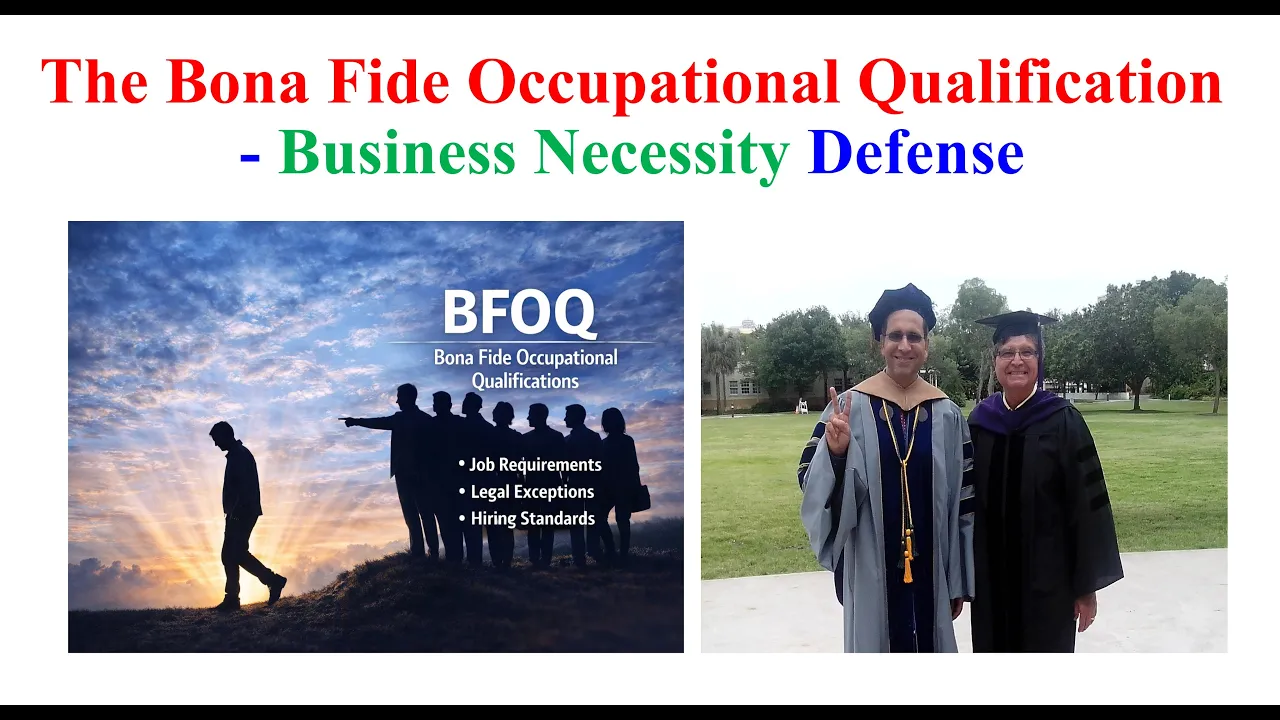
Understanding employer defenses in discrimination cases, including Bona Fide Occupational Qualifications (BFOQs) and business necessity.
Establishing workplace policies and procedures for handling EEOC complaints, conducting internal investigations, and preventing retaliation.
3.3K views93likes4:54Original Release: 2021-02-27
today we're talking about protected classes and what those are and why they might be important if you're somebody who's interested in things like equality and equal opportunity then you're probably familiar with the civil rights act of 1964.
we're going to talk about title vii and how that applies to our work today and i'll outline some changes when it comes to protected classes we'll walk through a whole lot of information about the why and how when it comes to protected classes and what exactly does that mean my name is jessica miller-merrell and i'm the founder of workology and the creator of the ace the hr exam i help hr pros pass their hrci and sherm certification exams today we're talking about a topic that i think a lot of managers get mixed up about it definitely is something that's going to be on your hrci or sherm certification exam and that is protected classes what are they if you're not an hr pro when you think of the civil rights act of 1964 you think of maybe martin luther king rosa parks and the end of segregation for public schools and public places equal opportunity for all if you work in hr you might also think about title vii of the civil rights act of 1964 which focuses on equal opportunity at work and specifically calls out groups of individuals who might not have in the past equal opportunity these are called protected classes and we're going to walk through the protected classes outlined within title vii of the civil rights act of 1964.
one small clarification i'm not just going to be talking about protected classes only outlined in title vii of the civil rights act of 1964.
we've grown and we've evolved and more protected classes have been added over the years so here's the most recent list of federal protected classes as outlined and listed with your equal employment opportunity commission they include race color religion national origin sex including gender identity age including people over 40 those are a protected group people with disabilities veteran status genetic information and lastly citizenship if you don't offer an employment opportunity to one of these protected groups an individual because of the fact that they're a protected group you are committing discrimination and that is a whole other video that we outlined the eeoc charge process for hr pros and for those who are interested in what the eeoc does and the timeline events that occur when you think or you believe that discrimination has occurred the investigation process for hr professionals to determine if discrimination occurred is a whole other series of videos but in this particular video i wanted to introduce title vii of the civil rights act of 1964 and specifically talk about protected classes and what those are chances are if you're taking your hrci sherm certification exam this is an important part of the body of knowledge you might not have a question directly at a protected class specifically but a situational judgment or a scenario type test question is going to ask you for this information or infer that you have an awareness of it so be prepared there might not be a question specifically stated like list all of these but the one that's not a protected class be prepared to identify and understand and be familiar with title vii the eeoc and other employment laws that are focused on discrimination and helping to create an equal opportunity in the workplace well there you have it everything you need to know about protected classes and how they may or may not impact your workplace my name is jessica miller merrill i'm the founder of workology and the creator of the ace the hr certification exam course if you like this video and i know you do give us a like comment or subscribe you can also visit our youtube channel to see more amazing videos and you can check out the courses and content we have available to help you ace your hr certification exam by going to learn.workology.com
Up Next
5:32
Bostock v. Clayton County: Title VII & LGBT Employment Rights
@iammrbeat
177.4K views•2024-11-08

4:27
US Secondary Sanctions Impact on EU Businesses and Blocking Legislation
@Bureauvandijk
1.6K views•2019-03-20

5:27
Forensic Phonetics: Speaker Identification in Legal Cases
@nptel-nociitm9240
539 views•2025-03-19

24:42
Police Interrogation Tactics: False Confessions & Legal Reform
@LastWeekTonight
7M views•2022-04-18
Related Study Plans & Knowledge Roadmaps
Structured learning paths in Law
law
Self-Defense Law: Imminence & Castle Doctrine
01Foundations of Self-Defense Law
02Imminent Threat & Reasonable Belief
03The Principle of Proportionality
+ 3 more learning modules
12h6 modules
Explore Roadmap
law
Defamation Law: First Amendment & Actual Malice
01Introduction to civil torts and the First Amendment
02Elements of Defamation: Libel and Slander
03Public Figures vs. Private Individuals
+ 2 more learning modules
8h5 modules
Explore Roadmap
law
Hearsay Rule: Trial Evidence & Exceptions
01Introduction to Trial Evidence & Courtroom Basics
02Demystifying Hearsay: The Core Definition
03Non-Hearsay: Exclusions Under FRE 801(d)
+ 3 more learning modules
14h6 modules
Explore Roadmap
law
Medical Malpractice: Law, Liability & Care
01Foundations of Tort Law and Civil Liability
02The Four Elements of Medical Malpractice
03Defining and Proving the Standard of Care
+ 2 more learning modules
12h5 modules
Explore Roadmap