
















![[수질환경기사] 필기 기출문제 _ 2016년 2회(2)](https://i.ytimg.com/vi/dLkl_dPQJUM/maxresdefault.jpg)

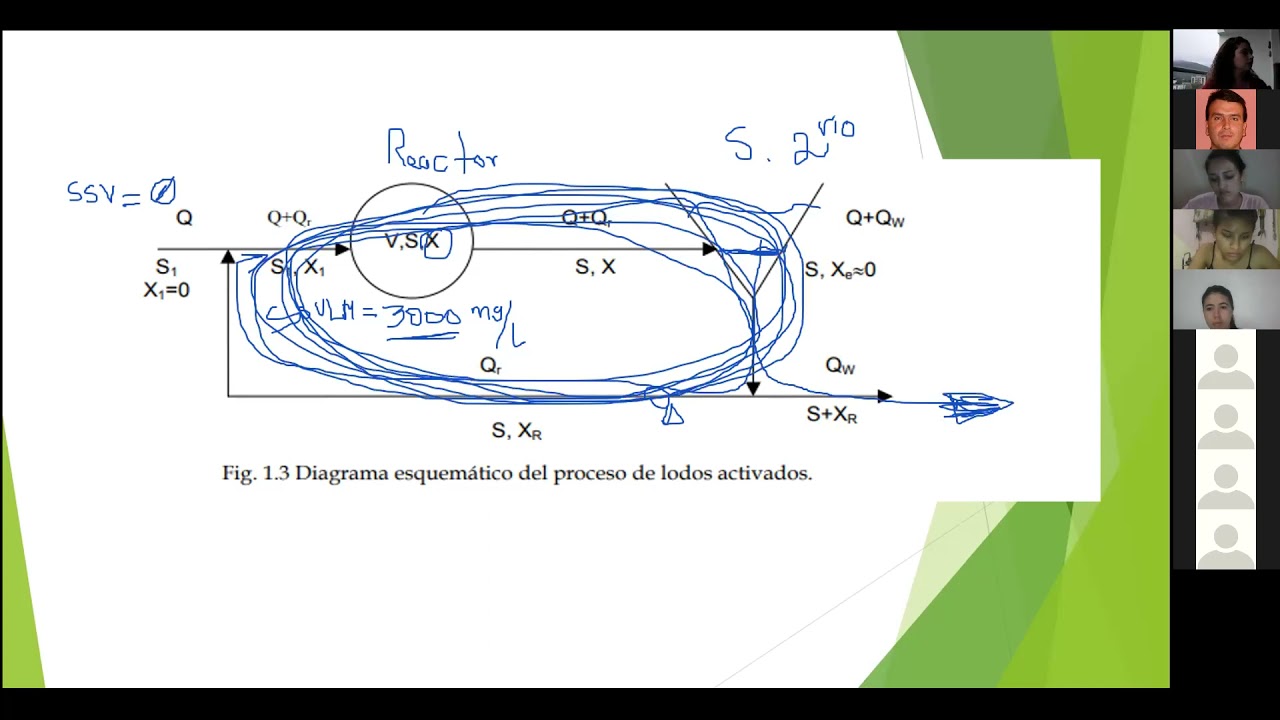
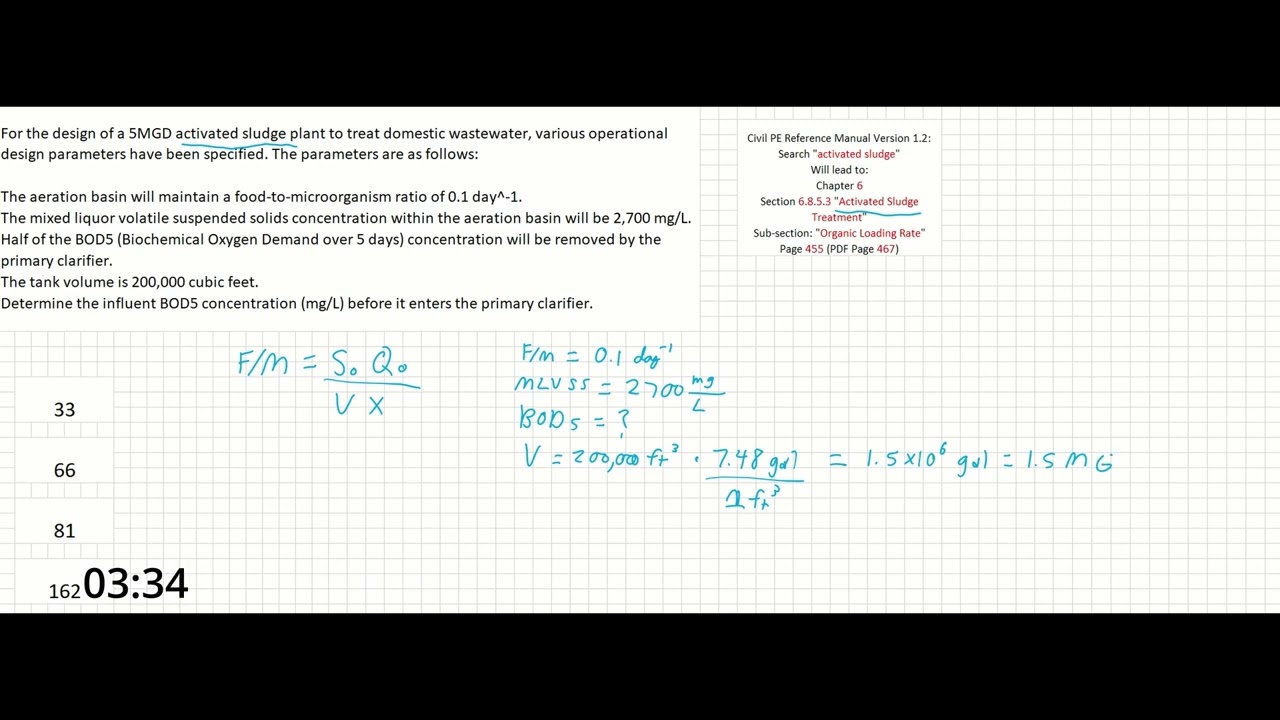




Chemical Oxygen Demand (COD) measures the oxygen required to completely oxidize organic matter in wastewater, calculated using three methods: (1) Direct substitution using back titration formula COD = (N × (V2-V1) × 8 × 1000) / B, where N is FAS normality, V2-V1 is titration difference, and B is sample volume; (2) When only dichromate normality is given, use 1000 ml of 1N dichromate = 8g oxygen; (3) When dichromate molarity is given, use 1000 ml of 1M dichromate = 48g oxygen. The key distinction is that normality relates to equivalent mass while molarity relates to molecular mass, requiring different conversion factors for oxygen calculation.
COD Problem Solving: Engineering Chemistry Wastewater Analysis
Added:Understanding of chemical concentration units, specifically the concepts and calculations involving Molarity, Normality, and Equivalent Weight.
Fundamentals of Redox (Reduction-Oxidation) reactions and volumetric titration principles.
Basic knowledge of water quality parameters and what Chemical Oxygen Demand (COD) represents chemically (oxidation of organic matter).
Stoichiometric calculations and the use of dilution factors in analytical chemistry.
Studying Biochemical Oxygen Demand (BOD) and analyzing the BOD/COD ratio to assess the biodegradability of wastewater.
Designing and operating biological wastewater treatment systems (such as activated sludge or anaerobic digesters) based on COD loading rates.
Exploring Advanced Oxidation Processes (AOPs) used to degrade high-COD, non-biodegradable industrial effluents.
Learning modern closed-reflux spectrophotometric methods and online sensor-based instrumentation for automated COD monitoring.
20.6K views343likes14:25Original Release: 2020-04-25
hello students this is the app I speaking in this class let us try to solve some problems on a chemical oxygen demand in the previous class we discussed in detail about the determination of chemical oxygen demand that is see body of a waste water chemical oxygen demand is a defined as the amount of oxygen required for the complete oxidation of the total organic lauder present in now one liter of water sample using a strong oxidizing agent such as a acidified potassium dichromate so acidified potassium dichromate is a chemical here chemical actually produces oxygen now that oxygen ax attacks the organic waste present in the water sample and converts the organic waste into carbon dioxide under water so how much oxygen is needed in milligrams ax in order to come in order to convert the total organic load present in a one liter of the waste water is known as a chemical oxygen demand moving on let us solve our three different types of a problem serum as per your syllabus our first problem that is problem type 1 1 it is problem 1 given here that is using us I mean a formula directly and then substitution now see OD of the wastewater sample a direct formula is their normality of FAS into V 2 minus V 1 into 8 into thousand divided by B now we do either the volume of FA is used for a blank titration because you know that in co-determination there are two types of titrations back titration and blank titration V 2 is the volume of a face used for blank titration even is the volume of used for a back titration now B is how much volume offer the sieve age water or wastewater is taken from the analysis n is a normality of FAS 8 is equivalent Mustapha oxygen now unit are for Co DS milligrams per liter to read the problem 25 ml of the C wage water so how much water is taken for the analysis 25 so V is a 25 Vieira and up and then that needs to be highlighted the suppose V ISA 25 means up so this is your V okay and then it is treated with 50 ml of a potassium dichromate solution so it is treated with the 50 ml of a potassium dichromate a-- solution so it is excess excess potassium dichromate solution Iza added so we can say that it is excess always we are adding potassium dichromate accessor out of the some potassium dichromate added that some amount will be utilized for the oxidation of the waste the unreacted potassium dichromate them unreacted potassium dichromate ISM I mean the titrated with the ferrous ammonium sulfate solution its normality is given point to fine or mala upon titration 18 ml of a phase is a used up box so unreacted means it is a back titration so unreacted means back hydration back titration means v1 here black titration also they have given under similar condition blank title value also given that is done with the help of distilled ax whatever so it is V so V 2 is always greater than V 1 so for V 2 here 30 ml of FA solution is a consumed ax so it is V 2 it is 30 you are also highlighted V 1 it is a Tina ml Y and V is 25 normality of reference is directly given pointer to 5 so it is very easy plant type of value they will give up unreacted dichromate if the give means it is back titration that volume is to be taken for ax taken as a b11 now upon substitution you have two calculator and you will get 96 milligrams per liter so that is very very easy only thing you have to remember what is normality of a face you have to identify then what is black titer value you have to identify that is always veto what is bad titer value that you have to identify that is generally given as unreacted potassium dichromate that is v1 and then now how much volume of water is taken for analysis it is in the beginning of the problem generally it is founda so that is in the denominator you have to write so v2 is always greater than v1 now okay so this is the answer it is a direct substitution problem moving on problem number two this is different type of problem here it is given 50 ml of an industrial see wage it has consumed 11.5 ml of point for normal potassium dichromate solution for complete oxidation calculate the C body of the industry allure series here they are not given any information about them FAS solution they have not to mention anything about the unreacted potassium dichromate they are not told anything about a blank titration is it correct so when there is no unreacted potassium dichromate no blank title value nothing is a given ah you have to see it is 0.4 normal the data is given in a normality so you have to remember one formula in this case the hose and ml of for one normal potassium dichromate it always gives 8 lamb of oxygen thousand ml means one liter one litre of one normal potassium dichromate er is equal in two to produce enough communities it produces eight lamp or four oxygen so 11.5 ml you know - right below this thousand eleven point five ml of 1.4 normal right below one normal now you write 0.4 normal potassium dichromate reduces how much oxygen so eleven point five ml of 0.4 normal potassium dichromate produces how much oxygen this formula you have to be knowing that is thousand ml of one normal potassium bichromate is 8 emmafox it is one normal one normal 8 gram of oxygen so cross multiplication eleven point five into point 4 into 8 so eleven point five into point 4 into 8 divided by bow Zenda into one this one normal so it is this thousand when the calculator that will give you zero point zero three six eight gram or four oxygen so this is in terms of grammar so you have to convert this one into milligram so multiply this one by thousand so you get thirty six point eight milligram or form oxygen ah that is I mean provided by eleven point five ml 0.4 normal potassium dichromate err and 50 ml of the CVH sample is are taken from analysis therefore Co T of the sample Asia 36.8 there whatever well you get here two multiplied by thousand and divided by this value fifty because 50 ml of the C page water requires a 36.8 milligram of oxygen for ah I mean waste it to be completely oxidized up then thousand ml offer wastewater suppose if you have taken thousand ml of the wastewater means 1 liter of wastewater how much oxygen is required so 36.8 in two thousand divided by fifty whatever I mean volume of the sample water is given that should come in the denominator and then you have to multiply by thousand that is a to calculate for one liter of them or the sample so upon calculation you will get 736 milligrams per liter that is a that means that 736 milligram of oxygen is required for the complete oxidation of the total base present in a one liter of the water sample on a repeater you have to see if there is a data like normality of a face and reacted potassium dichromate black titer value practical value nothing is given meanza in the problem only potassium dichromate data is provided in terms of normality in that case you have to use this formula thousand ml of one normal potassium dichromate is equal to eight am i focusing this is important and after that you go on substituting Accord in eleven point five ml to be written below thousand and one normal below you have to write point four normal then you have to calculate it is equal to how much gram of oxygen that is direct cross multiplication eleven point five into point 4 into 8 divided by thousand so you get zero point zero three six eight gram of oxygen that is nothing but 36.8 milligram of oxygen you have to convert a gram into milligrams sir and after that she OD of the sample to be calculated them this much milligram of oxygen is required for the oxidation of the waste present in 50 ml of the C major Zod means you have to calculate four thousand mlah there are four thirty six point eight in 2000 divided by fifty so that value will get done 736 milligrams per liter moving on third time second and third they are very I mean what they are similar actually only thing is that instead of normality the data will be provided in a molarity rest all it is then instead of normality data will be provided in molarity here also you don't have normality of a phase don't have black tight black tighter value don't have back titration unreacted potassium dichromate no such information will be provided only dichromate data will be provided in molarity in that case you have to remember thousand ml of one molar potassium dichromate is 48 them oxygen it is one molar here whereas a in the previous gazer it is one normal so when one normal dichromate is taken it is eight gram of oxygen 1 molar dichromate is taken then it is 48 gram of oxygen it means to say that one liter of one molar potassium dichromate produces 48 gram of oxygen one liter thousand ml of 1 molar dichromate provides a 48 gramma season one liter or thousand ml of one normal potassium bichromate produces a gram of oxygen now this data you have to substitute them below thousand ml you have to write well point down formula and then zero point zero one five molar that is just below 1 molar a out right here zero point zero one five molar dichromate means how much gram offer oxygen will be provided X now twelve point five into zero point zero one five into 48 that you have to multiply divided by thousand into one that is thousand so upon calculation you get zero point zero zero eight nine eight gram of oxygen that if you multiplied by thousand you get eight point nine eight milligram of oxygen so you are converting gram into milligrams so this much of milligram of oxygen is required in order to oxidize the total waste present in 25 ml of the industrial effluent that means industrial waste so in 25 ml of the industrial wastes oxidation to be carried out um we need eight point nine eight milligram of oxygen but help to calculate C OD we have to calculate it for a one liter that is thousand mlah so we have to multiply this value by thousand and then we have to divide it by them I mean only more first sample taken so eight point nine 18 mm / 25 so that value will get it three fifty nine point two milligrams per liter so problem number two and the problem of three they are very very similar in problem to the normality data is given for a micrometer in problem Emily dichromate strength is provided enough molarity so for normality data is given mean sir that is equivalent to eight gram of oxygen if molarity data is given means the formula becomes a para you have 48 gram of oxygen so this these are the two formula you have to remember that is in problem 2 and problem 3 and a problem Warner it is a direct substitution of typer this problem you have obtained de that is by the calculation of that is that whether calculation means while studying the theory behind us co2 experiment you arrived at done this particular formula hope I have made the things very clear to you still you might have someone doubts ax because problems means certainly some doubts crop up in your mind let the doubts arise in the mind please in case if you have one any queries ax at any time ER you cannot call and get your doubts er clarified only these three types of problems you will be getting up in the examination so solve these three types of problem cells for Europe I mean what better understanding I have assigned one now I have given one assignment er that assignment I have loaded in I mean Google classroom so these are the different types of problems I mean you will find that there in the assignment er just try to solve what try to understand what it is answers all answers are also provided there are just cross verify your answer with that of answer provided that they are M if you don't get any answered error if you don't get the answer that is given over there then please call and ER I mean find out where exactly you have a gone wrong thank you
Up Next

11:09
Chemical Oxygen Demand (COD) Analysis Tutorial
@EscolaCamins
197.4K views•2015-12-01
83:56
Biocatalysis and Catalysis in Islatravir Synthesis | Merck Webinar
@SCIwheresciencemeetsbusiness
675 views•2020-10-08
10:06
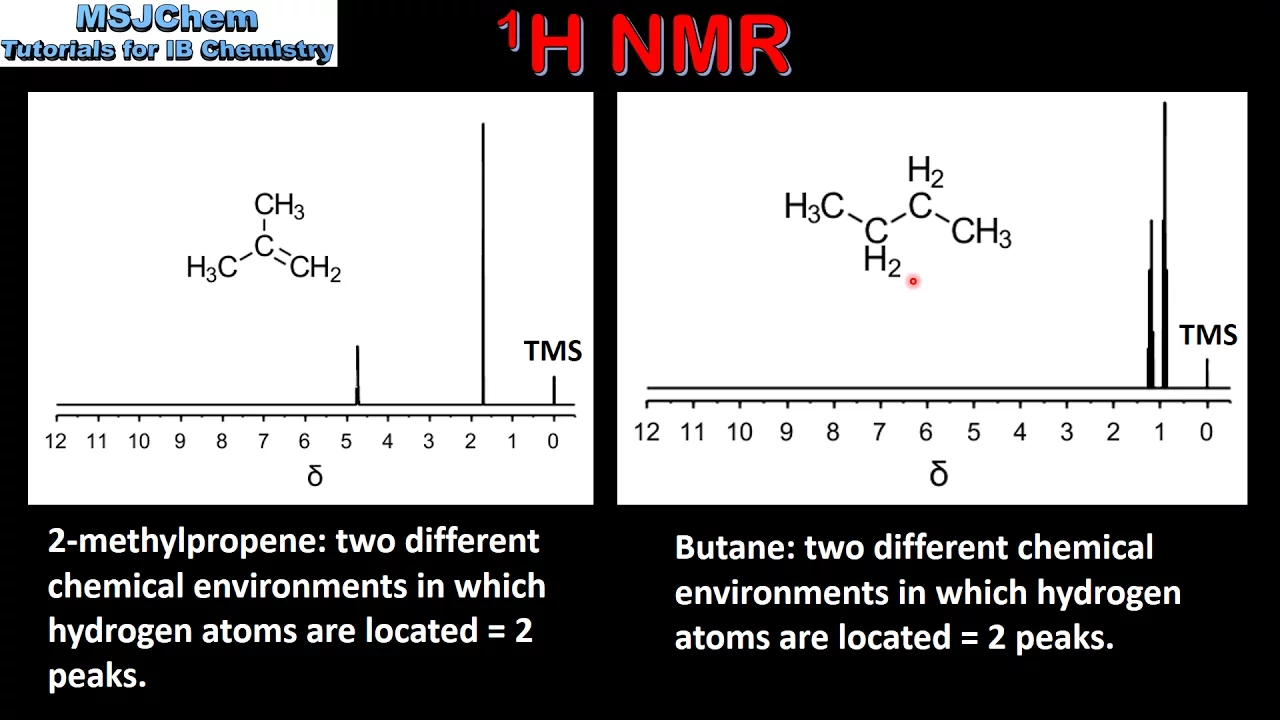
1H NMR: Determining Number of Peaks from Structure
@MSJChem
59.2K views•2017-04-06

17:31
Edible Water Bottles: A DIY Guide to Sodium Alginate Spherification
@ryan
10.5M views•2019-06-21
Related Study Plans & Knowledge Roadmaps
Structured learning paths in Chemistry
chemistry
Nuclear Chemistry: Decay, Meds & Fuel Cycle
01Introduction to Nuclear Structure and Radioactivity
02Decay Dynamics and Kinetics
03Radiation Interaction and Detection
+ 2 more learning modules
24h5 modules
Explore Roadmap
chemistry
Supramolecular Chemistry: Forces & Machines
01Foundations of Chemical Bonding and Intermolecular Forces
02Introduction to Host-Guest Chemistry
03Thermodynamics and Dynamics of Self-Assembly
+ 2 more learning modules
16h5 modules
Explore Roadmap
chemistry
Photochemistry: Excited States & Reactions
01Foundations of Light-Matter Interactions
02Molecular Orbitals and Electronic States
03Photophysical Processes and Jablonski Diagrams
+ 2 more learning modules
18h5 modules
Explore Roadmap
chemistry
Coordination Chemistry: Bonding & Properties
01Introduction to Transition Metals and Ligands
02Crystal Field Theory (CFT) and Geometry
03Magnetic Behavior and Spin States
+ 2 more learning modules
14h5 modules
Explore Roadmap