
















![[알릴레오 북's 16회] 자유의지냐? 운명이냐? / 운명의 과학 - 한나 크리츨로우](https://i.ytimg.com/vi/hTYZF_6xt_M/maxresdefault.jpg)




Neuromarketing is the practice of using neuroscience techniques like fMRI, EEG, and eye-tracking to understand and influence consumer behavior by targeting the subconscious mind, exploiting cognitive biases such as the anchoring effect, hedonic treadmill, and priming to encourage purchases; however, consumers retain agency to make more informed decisions by understanding these psychological mechanisms.
Neuromarketing: How Brands Exploit Your Brain's Subconscious
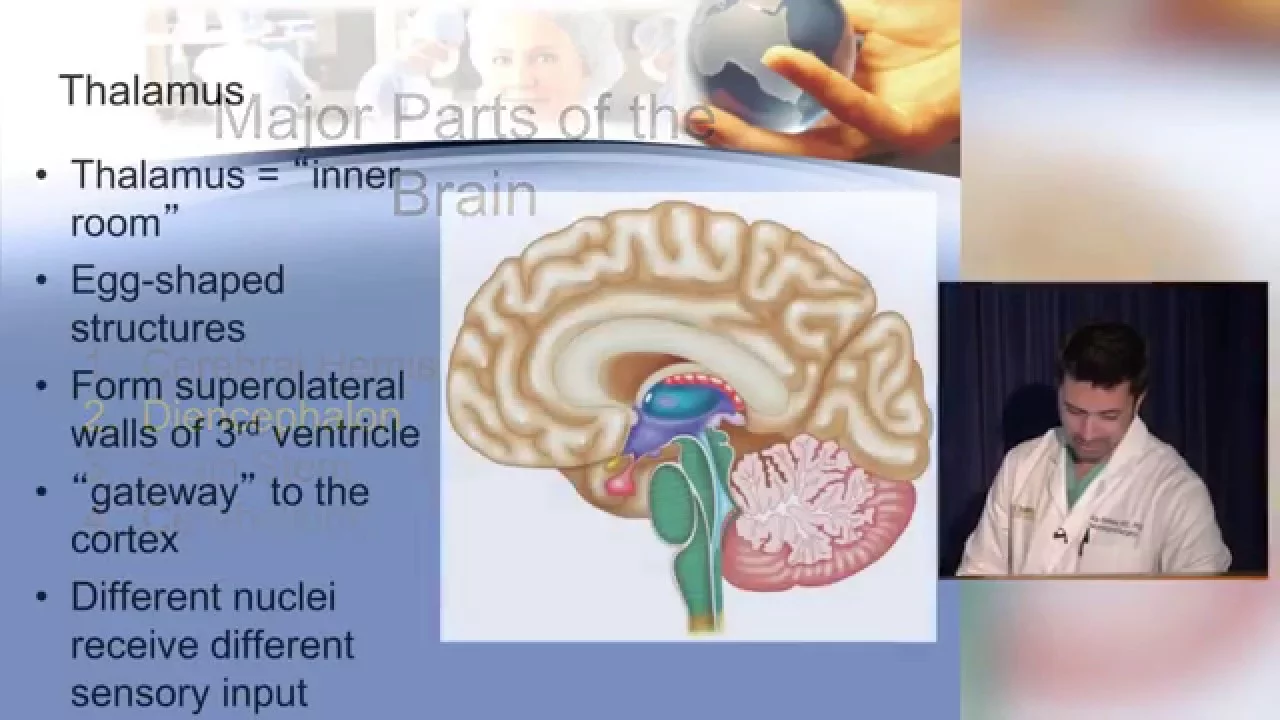
Added:Basic Neuroanatomy: Understanding key brain regions involved in emotion, reward, and decision-making, such as the amygdala, prefrontal cortex, and nucleus accumbens.
Dual-Process Theory: Daniel Kahneman's cognitive model of System 1 (subconscious, fast, emotional) versus System 2 (conscious, slow, logical) processing.
Fundamentals of Consumer Behavior: Standard psychological concepts regarding how consumers perceive, evaluate, and purchase goods and services.
Sensory Marketing: How basic sensory stimuli (colors, sounds, and scents) are used to influence brand perception and consumer attention.
Neuromarketing Research Methodologies: Studying the application of scientific tools like fMRI, EEG, eye-tracking, and biometrics in consumer research.
Ethics and Regulation in Neuromarketing: Analyzing the moral boundaries of consumer manipulation and the debate surrounding cognitive liberty and data privacy.
Behavioral Economics and Nudge Theory: Exploring how choice architecture and subtle environmental design can influence decision-making without restricting freedom of choice.
Applied Case Studies in Neuro-Design: Examining real-world industry examples of how companies optimize packaging, website layouts, and advertisements using neural feedback.
1.8M views45.5Klikes11:37Original Release: 2021-06-18
About a hundred years ago, companies in the Western world ran into a problem: Consumers had everything they needed. So, the companies came up with a great idea: Persuade people that they need MORE things! Even things they didn't KNOW they needed.
Nowadays, companies are studying your brain to get you to keep buying more stuff.
This is called neuromarketing. And... "...neuromarketing is like… marketing on steroids."
"Companies know us better than we know ourselves."
"The brand exists nowhere else but in the mind of the consumers."
"We're going tell you how companies are getting into your head."
In the 1950s, a clever marketer shocked the world with an astonishing experiment.
He flashed the messages "DRINK COCA-COLA" and "EAT POPCORN" on a cinema screen – too briefly for the audience to even notice. He claimed this had people rushing to the counters in droves to buy Coke and popcorn.
"If this story sounds too good to be true, then that's because it is. Thankfully, we're not THAT easy to brainwash."
"Turned out it was all B.S. – he made that up. There's no such thing as a brain's buy button."
This is Prince Ghuman, a marketing professional. He and neuroscientist Matt Johnson wrote a book on how companies tailor their marketing to our brains.
So, the good thing is: we're not mindless shopping zombies. But we do make a lot of our decisions subconsciously. And that's where neuromarketing comes in. Companies are trying to better understand how our brain works – to figure out what we really want.
"Traditional marketing studies work like this. Someone will ask me: do you want an apple or do you want a chocolate bar? And I'd say: I of course want the apple.
But… do I really want the apple?” "We feel as if we're in control, we feel as if we're the author of our decisions and we're thinking through these things very rationally.
But study after study after study shows that we are extremely irrational and that we're, generally speaking, pretty unaware of the full range of factors which ultimately inform and sometimes actually decide the different behaviors and paths that we take."
"In short: we don't always know what we want. We don't know if we actually want the apple or if we prefer the chocolate bar. But our brain doesn't lie."
And that's why neuromarketers have adopted a range of technologies in their marketing studies to see what's happening under the hood--inside consumers' brains. Functional magnetic resonance imaging and electroencephalograms measure activity in the brain. Eye-tracking shows where we direct our attention. Heart rate and skin conductance show what we find exciting.
"For better or worse, people are complex and the brain is really complex."
Uma Karmarkar is a scholar whose research revolves around how we make decisions.
"What neuroscience does is it gives us access to some of these emotional elements or these elements that might not be fully conscious and tells us a little bit more about some of the things that might also be contributing to people's experiences and choices."
"Take Cheetos, for example. When its parent company Frito-Lay asked consumers how they felt about the brand, many said: well, it's a bit of a kids' snack. But when they looked at their brains, it turned out people got a real kick out of getting their fingers messy with this orange dust that they're covered in. It IS fun…" "There was something subversive about that orange dust on your fingers. There was something a little unusual about it, and people kind of enjoyed it, even though it was not that respectable."
Frito-Lay took these findings and built an entire ad campaign around this feeling of subversive pleasure. It became a huge success.
"More and more businesses are investing in this type of research – most of which is happening in secret." Through neuroscience – but also with the help of psychology and behavioral economics – they get a pretty good idea of what makes us tick. And they use this knowledge to get us to buy more of their stuff.
"I'm going to give you four examples of this that you've probably seen in your everyday life."
One: They wear you down. Our brain operates in two different thinking modes. There's what's called system 1, which is fast, unconscious and automatic.
And then there's system 2, which is deliberate and conscious – but takes a LOT of effort.
"If I ask you: what is your name?
System 1 will immediately have an answer to that question.
But if I ask you what is 23 times 48, you're going to have to switch to system 2.
This requires effort. Now imagine, you're going grocery shopping."
You have to find your way around the different aisles and make loads of decisions in a short amount of time. When you finally get to the checkout counter, you're tired.
"One way in which you can get somebody to be more system 1 oriented is actually through wearing them down.
So system 2, very resource intensive, requires a lot of metabolic resources. When we're tired, when we're malnourished, we're much more likely to go with a much more impulsive system 1 response."
And that's why right at the end of your shopping trip, retailers tempt you with loads and loads of sugary snacks – that you might just pick up at the very last moment.
Shopping malls exploit the same situation. They're confusing, they're overwhelming, they're quite frankly exhausting – so you're more prone to spend money on something you might not even need.
Two: They tell you what the right price is.
"Let's say you walk into a store and see a bottle of wine for, I don't know, let's say 15 dollars.
Your brain doesn't really know if this a lot or this is not a lot.
So, it's immediately starting to look for some context."
"Typically, people don't really have a sense of price, like they don't really know how much wine should cost or what's the right price of a wine."
This is Moran Cerf, a computer hacker turned neuroscientist and business professor.
"People create their kind of impressions of the price range not by knowledge, by information – but by sampling reality."
The store will happily give your brain a reality to latch onto – by placing a second bottle next to it, costing 50$.
Now your brain thinks: 15$, that's actually a PRETTY good deal. So it's very likely you're going to buy this bottle.
"Our brains are like ships, we're looking for places to anchor, right? And adding any sort of context or understanding of value, having an anchor helps."
Three: They keep you on the treadmill.
Another quirk of our brain that brands are using is that it's constantly seeking pleasure.
And the key word here is "seeking".
"Once you're experiencing a sort of thing that you wanted, you don't just get to bask in that pure pleasure for a long time. It's not the type of emotion which is enduring over time. And that's a very, very good thing for brands."
Because pleasure is so fleeting, brands keep sending us to what's called the "hedonic treadmill".
"…the iPhone 6…" "…the iPhone 6S…" "…this is iPhone 7…" "…iPhone 11…" "…the iPhone 12…" "You buy an iPhone 8. It's a brand new physical design and you're loving it. And just like clockwork, 12 months later, 8S comes out. Whatever pleasure you got from achieving and purchasing the iPhone is now immediately gone. And now you're looking to again, jump on the hedonic treadmill and look, chase the next pleasure."
Four: They hide little nudges in plain sight.
"So… you remember that cinema story from the beginning?
Subliminal marketing messages like this, so things that we can't pick up on consciously, are actually illegal in most countries. But a few companies must have thought: well, why don't we just hide them in plain sight?"
Check out this ad from KFC. See anything unusual?
Well, look again. There's an actual dollar bill photoshopped into the burger – which happens to cost 1 dollar.
And check out this can. Coca-Cola made it look like it's smiling-- to tie in with its brand image of happiness.
And in literally every ad for watches, the time is set to 10 past 10.
Because that makes it look like the watch is smiling at you.
These types of subtle hints are called 'primers'.
"I would say right now, it's controversial whether priming works. That said, we still teach that in school and in business school as kind of a mechanism people should be aware of because it's easy to implement. For the small chance that it does work, why not try it, if you're trying to sell something" "If you see a 10:10 watch, you're not compelled by some physical force to go out and do everything you can to buy it. But if you're already feeling like buying a watch, maybe you're very favorable towards the brand, and that additional data point is going to push you maybe a little bit further."
And this is not limited to visual triggers.
An experiment showed that if a wine store plays French music, customers buy more French wine. And if it plays German music, they buy more German wine.
"A lot of this stuff is hiding in archives for companies and it is in their best interest not to reveal it. But we would be silly to think that this isn't part of the experiential design that companies are creating to better engage with their consumers."
So where does all this leave us? Are we ultimately just puppets, without a will of our own, buying whatever corporations throw our way? Or do we have a choice?
"Totally mindless behavior is rare, total control is also rare. And in between there's a wide gray area and we can move the needle between whether we make choices that are very informed and very kind of thorough. Or very impulsive and not too thorough." \ "If you like something that's going to be the most important determinant of whether or not you choose to spend money on it or your time on it or your resources in general on it.
And that speaks a lot to the power that we have as consumers and individuals."
"Now, neuromarketing is a very powerful tool. It gives companies access to something that even we don't even have access to: our subconscious. But just knowing that and knowing how our brain works, can already help us make better decisions."
Have you ever come across any of the things we've shown you in the video? Let us know... What was...what was that?
… did you see that?
Anyway. Let us know in the comments. And hit subscribe for more videos like this every Friday.
Up Next

4:16
How Chronic Stress Changes Your Brain Structure and Function
@mindfulness360
39.9K views•2016-12-13

21:55
Deciphering Neural Circuits Controlling Anorexia in Mice | Richard Palmiter
@AllenInstitute
2.3K views•2011-10-10

4:10
Vagus Nerve (CN X): Anatomy, Nuclei & Functions Explained
@Alilamedicalmedia
305.2K views•2022-10-31
13:03
How Exercise Benefits Your Brain: Science Explained
@TED
11.4M views•2018-03-21
Related Study Plans & Knowledge Roadmaps
Structured learning paths in Neuroscience
neuroscience
Appetite Regulation: Brain Circuits & Hormones
01Foundations of Endocrinology and Brain Anatomy
02Introduction to Energy Homeostasis
03Peripheral Signals: Leptin, Ghrelin, and Insulin
+ 2 more learning modules
14h5 modules
Explore Roadmap
neuroscience
Neuroeconomics: Value, Risk & Brain Mechanisms
01Foundations of Neuroscience and Brain Anatomy
02Introduction to Neuroeconomics and Subjective Value
03Dopaminergic Prediction Errors & Reinforcement Learning
+ 3 more learning modules
18h6 modules
Explore Roadmap
neuroscience
Spatial Navigation: Cells, Grids & Brain Maps
01Foundations of Brain Anatomy and Memory
02Place Cells and Head-Direction Cells
03Grid Cells: The Brain's Coordinate System
+ 2 more learning modules
12h5 modules
Explore Roadmap
neuroscience
BCIs: Neural Decoding & Prosthetic Control
01Neuroscience Foundations: How the Brain Signals Intent
02Signal Acquisition: Recording the Brain's Activity
03Neural Decoding: Translating Brain Waves into Data
+ 2 more learning modules
25h5 modules
Explore Roadmap