

























![RHEUMATOID ARTHRITIS AND HOMOEOPATHIC PERSPECTIVE. PART I - Dr KULWANT SINGH [IFPH] - 1758](https://i.ytimg.com/vi/B6BSD5OAkKY/maxresdefault.jpg)






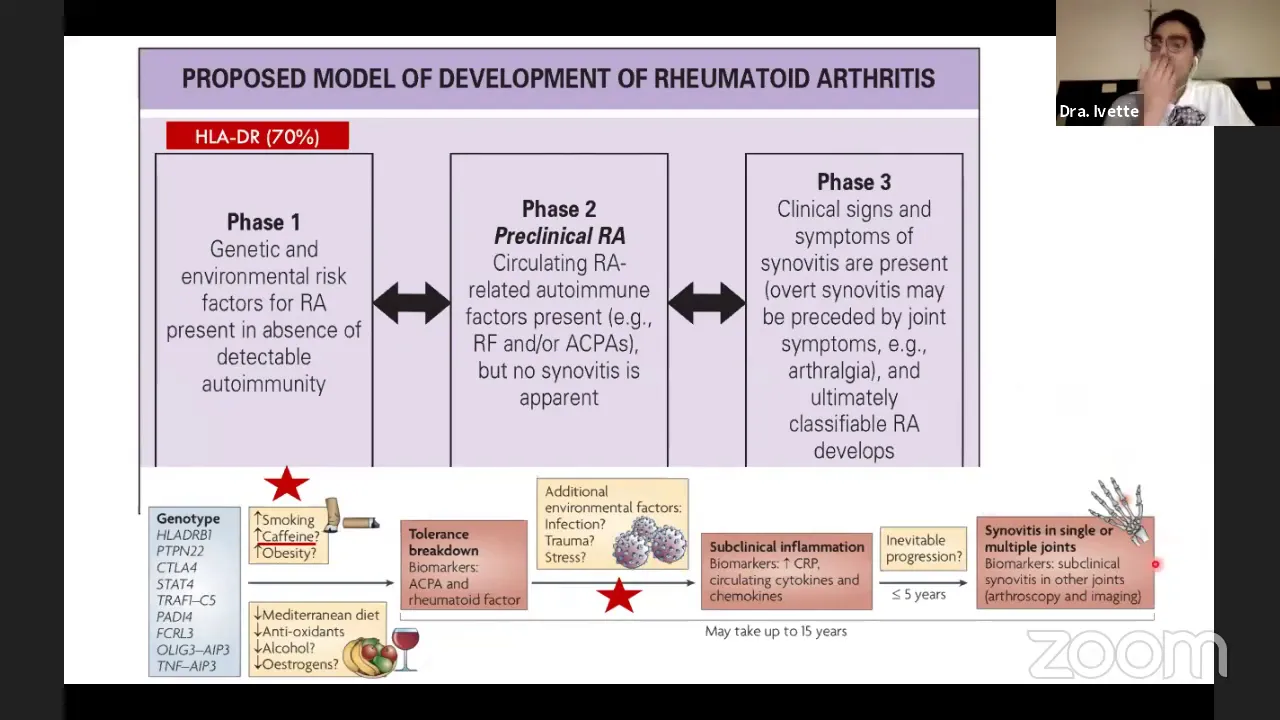

Rheumatoid arthritis diagnosis relies on multiple blood tests: ESR and CRP measure inflammation, RF detects autoantibodies in 60-70% of patients but lacks specificity, while anti-CCP antibodies show greater than 90% specificity and indicate more aggressive disease; ANA testing helps rule out other autoimmune conditions like lupus or Sjogren's syndrome; together these tests guide accurate diagnosis and treatment decisions.
Top 5 Essential Blood Tests for Rheumatoid Arthritis Explained
Added:Understanding the basic pathophysiology of autoimmune diseases, where the immune system mistakenly attacks the body's own healthy tissues.
An introductory knowledge of what Rheumatoid Arthritis (RA) is, including its primary symptoms like joint pain, swelling, and systemic inflammation.
Basic concepts of immunology, specifically what antibodies and autoantibodies are and their role in the immune response.
The distinction between general markers of systemic inflammation (like acute-phase reactants) and highly specific autoantibodies.
Exploring the ACR/EULAR classification criteria for Rheumatoid Arthritis, which combines lab tests with clinical joint involvement and symptom duration.
Understanding how inflammatory markers (ESR and CRP) are used longitudinally to monitor disease activity, flare-ups, and efficacy of treatment.
Investigating the differential diagnosis process to distinguish RA from other mimicking conditions like Osteoarthritis, Lupus (SLE), or Psoriatic Arthritis.
An introduction to Rheumatoid Arthritis pharmacotherapy, such as Disease-Modifying Antirheumatic Drugs (DMARDs) and biologic therapies, initiated after diagnosis.
34.1K views449likes8:16Original Release: 2023-10-22
How are doctors diagnosing people with Rheumatoid arthritis?
What are the most common blood tests used to diagnose these autoimmune diseases?
Is the rheumatoid factor, the ANA / antinuclear test or the anti-CCP antibodies?
Many patients I see in my clinic have questions about their blood tests related to RA.
In this video, I will explain to you thet -what are the most common blood tests in RA?
- what do these tests mean?
-how do I use these tests to make a diagnosis of RA?
Let’s begin….
Rheumatoid Arthritis Blood Test Results When Rheumatoid Arthritis (RA) is suspected, your doctor will order many blood tests.
Once you receive the results, if they are abnormal, you will receive a referral to see a rheumatologist.
Now, It may take between four to six months to see a specialist.
Naturally, you will search for additional explanations, and searching on google is very handy….correct?
But much of the information that will be available there is usually confusing and scary….and….very important, written by people that ARE NOT DOCTORS and DO NOT TREAT RA every day….. When to suspect Rheumatoid Arthritis (RA)?
If you start having more more pain in the hands, feet, or other joints, if you notice swelling in the joints and experience prolonged morning stiffness (more than 1 hour), then you need to be evaluated by a physician.
These signs and symptoms are not usually related to aging.
RA tends to affect young people between 30 and 60 years old and the elderly.
Red, swollen, hot joints are suggestive of inflammation.
These signs should prompt you to see a physician, who will examine you and order the following steps to diagnose, like blood tests or X-rays of the joints.
What are the Rheumatoid Arthritis blood tests?
Many blood tests can be ordered.
Let’s discuss common blood tests for Rheumatoid Arthritis and what they mean.
Markers of Inflammation We commonly use two blood tests to assess inflammation: erythrocyte sedimentation rate (ESR) and C-reactive protein (CRP).
In a patient with active RA disease, they both may be elevated, indicating a high level of inflammation.
However, there are patients with Rheumatoid arthritis with normal blood tests.
Confusing, right?
Rheumatoid Factor Rheumatoid factor (RF) is the most common blood test ordered when RA is suspected.
However, this blood test is positive in only about 60-70% of patients.
Thus, even patients who test negative for Rheumatoid Factor (RF) may have the disease.
Sometimes, RF can be positive years before the diagnosis, even 10 years before the diagnosis of RA is done.
BUT……Rheumatoid factor (RF) blood tests can also be positive in other conditions, such as Sjogren’s Syndrome or Infections (Hepatitis C) Lymphomas Normal people Thus, a positive RF blood test positive does not equal Rheumatoid arthritis.
If you want to learn more about the Rheumatoid factor test, watch this video on my YouTube channel.
https://youtu.be/hsjAY02ogMI?si=jRF8BX3-Z886ulAY Anti-CCP antibodies Anti-CCP (cyclic citrullinated peptide) antibodies is another test commonly ordered when Rheumatoid Arthritis is suspected.
Anti-CCP is usually ordered along with RF.
Is this anti-CCP antibodies test better than the Rheumatoid Factor (RF) test?
They are both appropriate blood tests.
This test is positive in only 65% of patients with RA.
However, the anti-CCP antibodies test has a better SPECIFICITY, over 90%.
What does it mean?
If this test is NEGATIVE, the likelihood of having Rheumatoid arthritis is minimal.
If you test positive for both RF and anti-CCP antibodies, then you most likely have a diagnosis of Rheumatoid arthritis or a high chance that you will develop this disease.
The presence of anti-CCP antibodies was also shown to be related to more aggressive Rheumatoid arthritis disease and with a poor response to treatment.
People who smoke tend to have higher titers of anti-CCP antibodies and more aggressive disease.
So, if you are a smoker, this might be the time to stop SMOKING!
Other tests As a rheumatologist, my goal is not only to diagnose people with Rheumatoid Arthritis but to make sure that the diagnosis is correct.
I must rule out our other diseases that may mimic Rheumatoid arthritis.
Thus, I order tests to make sure patients do not have Parvovirus Hepatitis B Hepatitis C Tuberculosis HIV ANA (Antinuclear antibody) test and Rheumatoid Arthritis There is an ongoing debate in the rheumatology community on whether we should or not order an ANA (antinuclear test) when we evaluate a patient for Rheumatoid arthritis.
Personally, I test ALL my patients for the ANA test.
Here are the reasons for the ANA test when Rheumatoid Arthritis is suspected: To rule out other autoimmune diseases (e.g., lupus or Sjogren’s syndrome) If the ANA test is positive, certain drugs (e.g., TNF alpha inhibitors is better to be avoided) If the ANA test is negative before treatment with TNF-alpha inhibitors, we can make further correlations in case of side effects.
That is all, my dear RA warriors!
If you want to learn more, subscribe to my channel and get educated!
Knowledge is power!
At Rheumatologist OnCall, we specialize and we are dedicated to diagnose and treat Rheumatoid Arthritis (RA) using today's most advanced methods.
But we also have a comprehensive approach that includes genetic assessments and state-of-the-art blood tests.
Our approach is unique as we use a holistic approach focusing on nutrition, physical therapy, mindfulness practices, and the most advanced treatments designed specifically for Rheumatoid Arthritis (RA).
We treat the whole body and the mind.
We treat the patients, not their disease!
If you or someone you know wants to improve sooner, please visit our website or contact our office directly to schedule a consultation.
Please leave comments at the bottom of this video if you have any comments.
Thank you for joining me today!
Up Next

88:26
Juvenile SLE With Lupus Nephritis: Case Presentation | PG CLUB RHEUMATOLOGY
@iapkerala833
349 views•2026-04-03

48:47
Graphic Medicine: Comics for Collaborative Healthcare Communication
@nationalpatientadvocate
189 views•2023-12-04

10:28
Neuroanatomy: Central and Peripheral Nervous System Divisions Explained
@AKLECTURES
136.2K views•2014-09-20

3:05
Stages of Labor and Vaginal Birth | Childbirth Animation
@nucleusmedicalmedia
52.1M views•2017-08-18
Related Study Plans & Knowledge Roadmaps
Structured learning paths in Medicine
medicine
Abnormal LFTs: Diagnostic Workup & Pathology
01Liver Anatomy and Basic Physiology
02Introduction to Liver Function Tests (LFTs)
03Hepatocellular vs. Cholestatic Patterns
+ 3 more learning modules
12h6 modules
Explore Roadmap
medicine
Analyzing Blood Smears: RBC, WBC & Platelets
01Introduction to Blood Components & Smear Preparation
02Normal Morphology of Blood Cells
03Erythrocyte Pathologies & Morphological Variants
+ 2 more learning modules
12h5 modules
Explore Roadmap
medicine
Mechanical Ventilation: Waveforms & Alarms
01Anatomy and Physiology of Breathing
02Introduction to Mechanical Ventilation & Core Modes
03Ventilator Settings and Waveform Interpretation
+ 2 more learning modules
12h5 modules
Explore Roadmap
medicine
Neuro Exam: Localization & Stroke Syndromes
01Foundations of Neuroanatomy and Vascular Supply
02The Neurological Examination: Step-by-Step
03Principles of Neurological Localization
+ 3 more learning modules
18h6 modules
Explore Roadmap