











![(M5E3) [Microeconomics] Expected Utility Theory](https://i.ytimg.com/vi/zrXWSXmOVFA/hqdefault.jpg)









Expected value is a mathematical tool that allows us to predict the average outcome of probabilistic events by multiplying each possible outcome by its probability and summing the results; this concept enables better decision-making in uncertain situations by converting multiple uncertain possibilities into a single representative number, such as determining that a $2 lottery ticket has an expected value of only about 6 cents (making it a poor investment) or calculating that a 20-minute commute with three traffic lights each having a 40% chance of being red will take approximately 22 minutes and 24 seconds on average.
Expected Value Explained: A Practical Guide to Probabilistic Decision-Making
Added:Basic Probability Theory: Understanding how to calculate the likelihood of simple events and the rule that all probabilities in a sample space sum to 1.
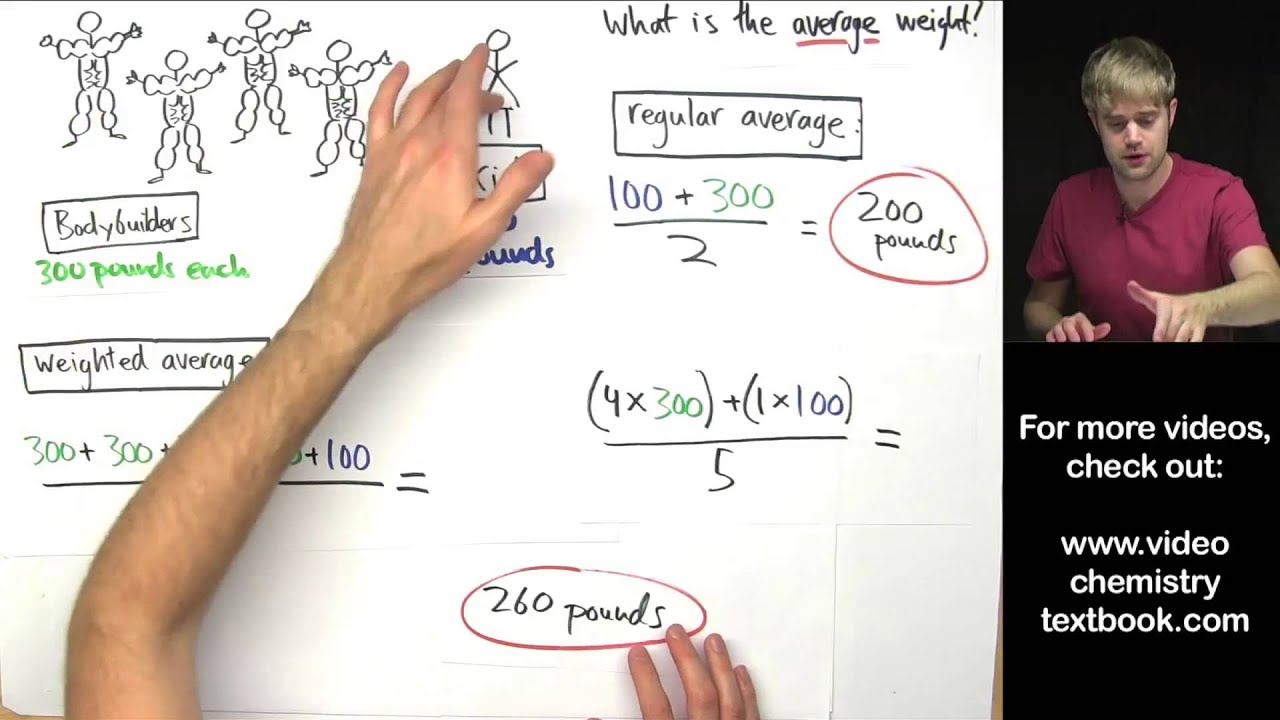
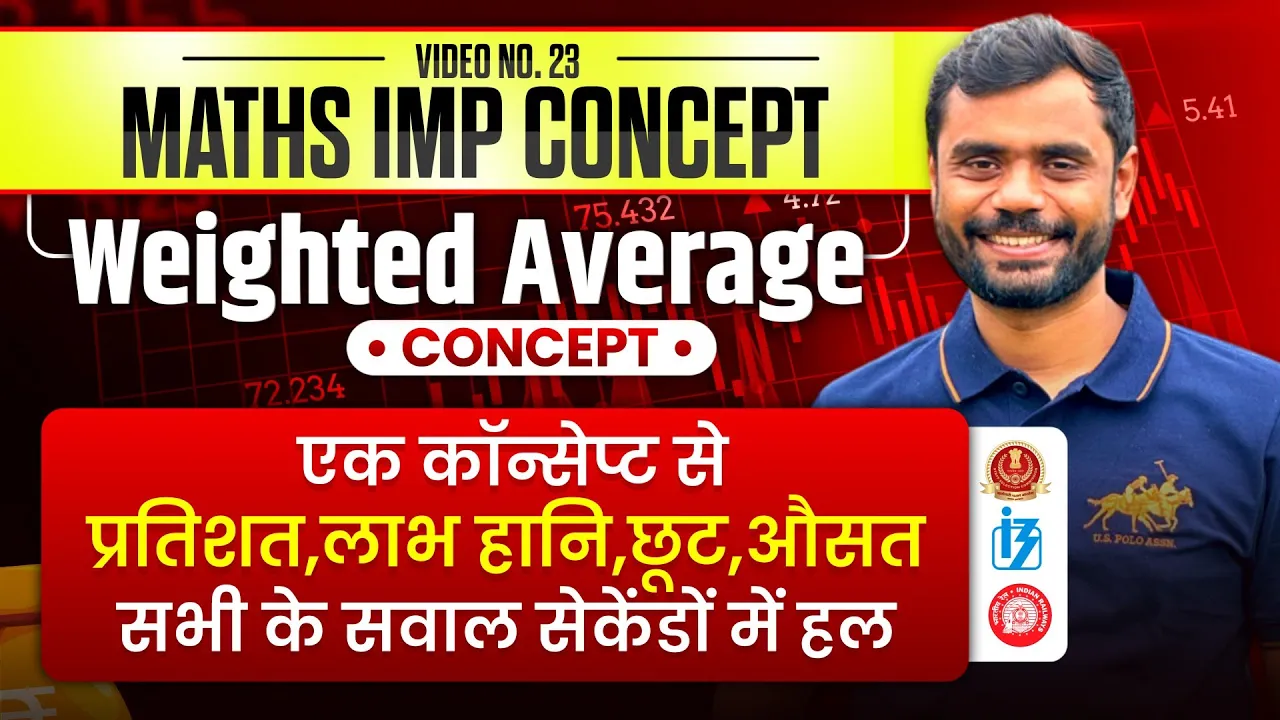
Concept of Weighted Averages: Knowing how to calculate an average where different values carry varying degrees of importance or frequency.
Discrete Random Variables: Familiarity with numerical variables whose values are determined by the outcomes of a random phenomenon.
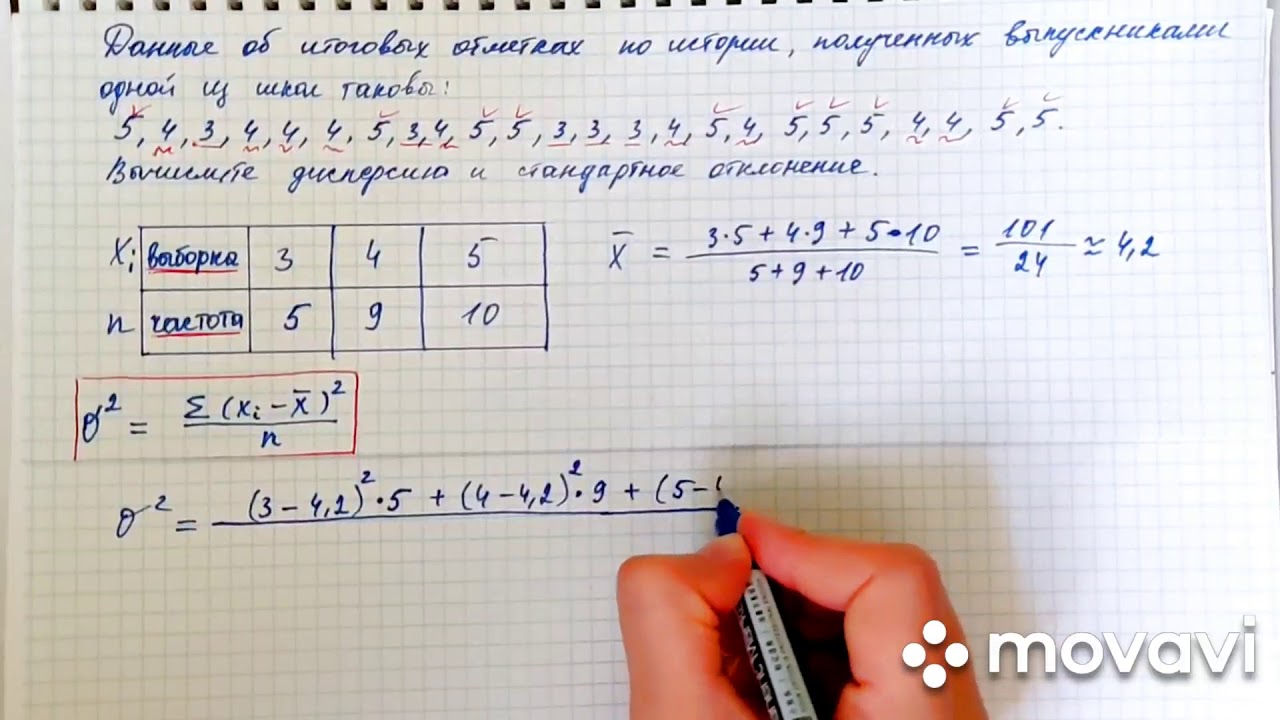
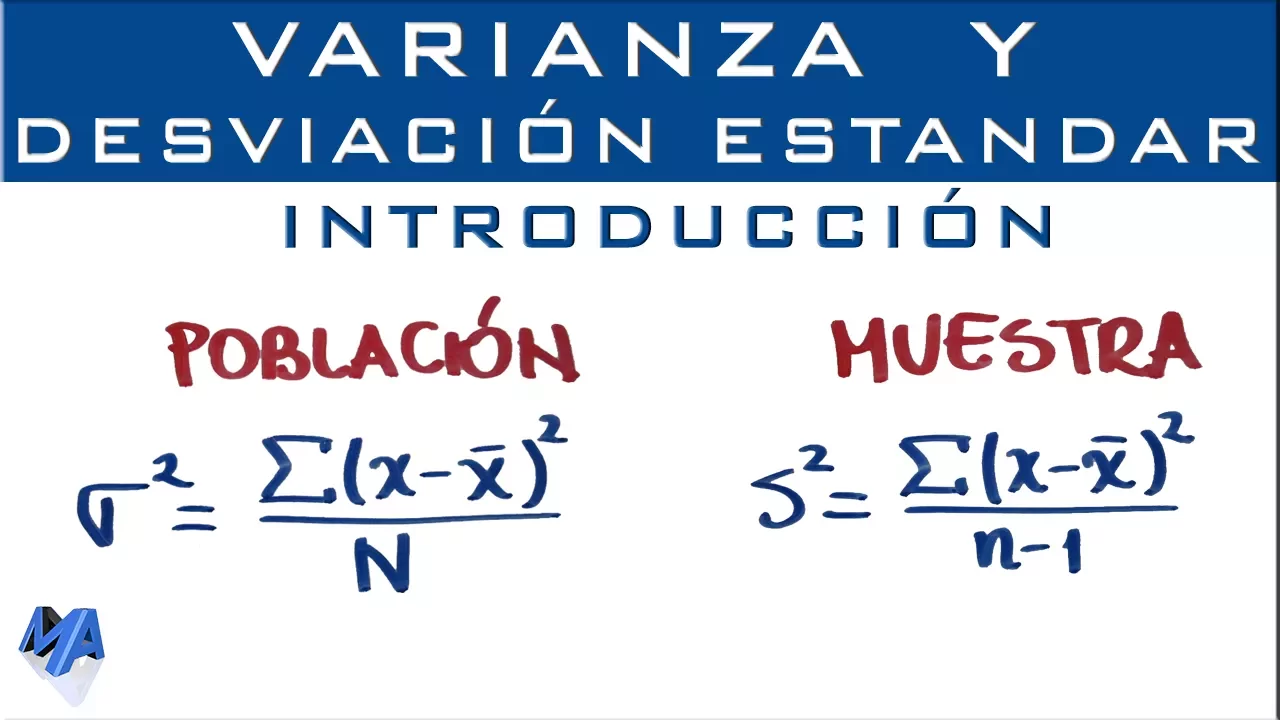
Variance and Standard Deviation: Learning how to measure the variability, spread, and financial or operational risk around an expected value.
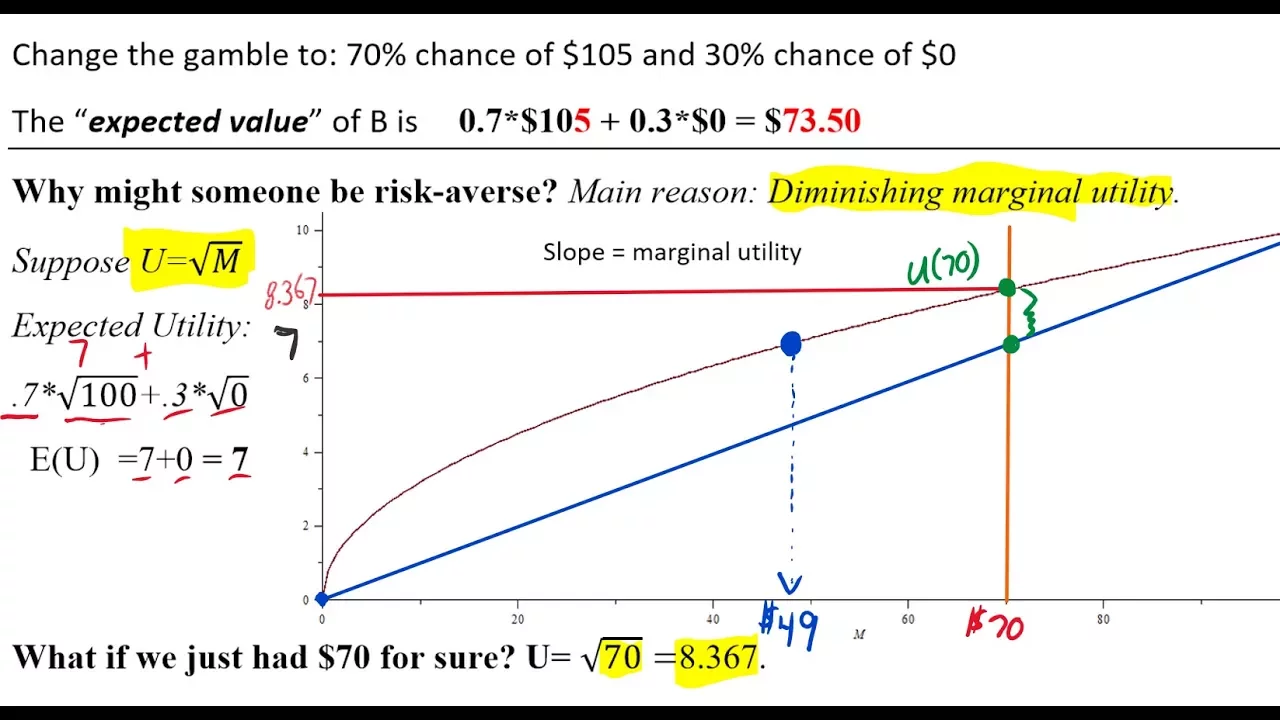
Expected Utility Theory: Exploring how psychological factors and risk aversion explain why people make decisions that deviate from purely mathematical expected values.
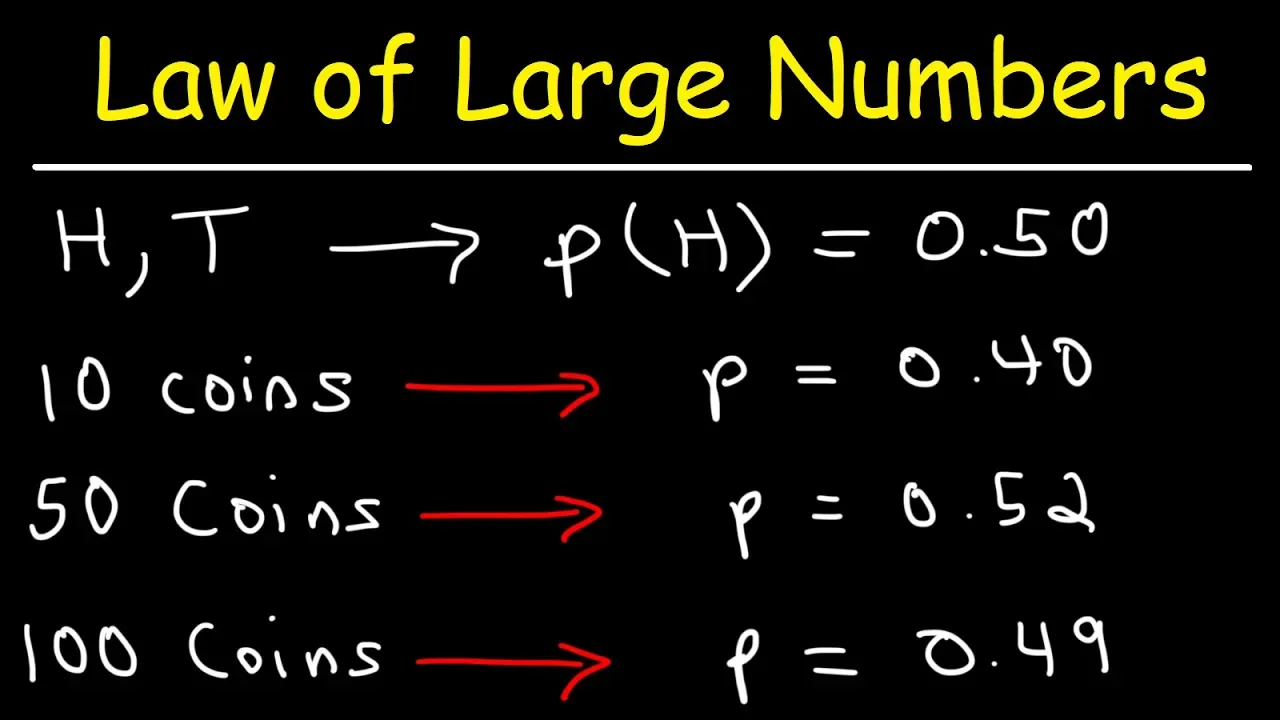
The Law of Large Numbers: Understanding how empirical results converge toward the theoretical expected value over a high number of repetitions.
Decision Trees: Applying expected value calculations to complex, multi-step scenarios in business and strategic planning.
54.2K views2.3Klikes9:07Original Release: 2020-11-05
welcome to data demystified i'm jeff gallick and i'm on a mission to equip you with the information you need to thrive in our data rich world [Music] sometimes when we think about the future things are very simple if i press down on the gas pedal my car will start to move if i push the power button on my remote my tv will turn on and if i take a bite of pizza it's going to be delicious those are what we call deterministic or nearly deterministic events i do something and a known consequence follows however the future is rarely so cut and dry for example if i leave my house at 8 am to get to work how many red lights am i going to get stuck at if i binge watch youtube videos how many of them am i actually going to enjoy and if i eat a fist full of jelly beans how many are gonna make me delighted and how many will make me wince unlike the first few examples these last three are what we call probabilistic events they are events whose possible outcomes are known but what's not known is how many of each of those outcomes will actually turn up the focus of this video is to try and understand how we can interact with a world filled with probabilistic situations in particular we're going to learn about expected value and how it can allow us to make a better prediction about future events if you stick around i'm going to quickly define expected value using a simple stylized example then i'll provide a bunch of practical examples on how expected value can be used in the real world and finally we'll work to help you take what you've learned turn it into intuition and apply it to other examples in your life so let's start with a definition basically expected value is a way to think about all possible future events as a single number we do that by considering every single reasonable outcome how likely those outcomes are and how much value each outcome provides and then sum it all up this is a lot easier to explain with an example so let's do that to kick this off we'll pick a really simple example and then we'll build to make this a lot more interesting and useful so imagine you have a fair coin that has heads on one side and tails on the other now imagine that you flip this coin 100 times you might wonder how often it'll come up heads and how often it will come up tails without actually flipping that coin 100 times you can't say for sure but you can come up with a really good guess and i bet all of you have the exact same guess it'll come up heads about 50 times and tails about 50 times you already have that intuition and in fact you just calculated an expected value whether you realize it or not basically you intuitively understood that if there's a 50 chance of a coin coming up heads or tails and you repeat that flip 100 times you get an expected value of 50 heads a bit more formally we can say that we give a point every time that coin comes up heads and gives zero points every time it comes up tails so on our first hypothetical flip there's a 50 chance we'll get one point and 50 chance we'll get zero points if i multiply those out and add them up i get half a point that means that every single coin flip will earn us half a point and if i do this 100 times i get 50 points since we said that points are just our reflection of how many times heads comes up we can say that we expect out of 100 flips 50 of them to be heads that was a pretty long way to go for a simple example so let's see why this idea is actually important in the real world but before we do that if you like what you're seeing please take a moment to like this video subscribe to this channel and click that little bell icon so you don't miss out on any new content that i put out with that said let's take a look at how to use expected value when buying lottery tickets a lot of us like to play the lottery it can be fun and exciting to hold on to that ticket dreaming of what you'll do with all that jackpot money but is buying a ticket a good idea it turns out expected value can answer that question for us let's take the very popular mega millions lottery if you're not familiar with how this lottery works basically you pick five numbers from 1 to 70 and an extra bonus number from 1 to 25.
if the randomly drawn numbers match your picks you win the jackpot for now let's just pretend that the jackpot is the only prize i'll get to the small prizes in a second the folks at mega millions report exactly what the odds are of getting all those numbers right in fact it's a staggering one in more than 300 million we can convert that to a percentage by taking one and dividing it by that value doing so we see that the likelihood that you'll win the jackpot is zero zero zero zero zero zero three three percent like our coin we're getting heads was fifty percent likely in lottery winning is zero point zero zero zero zero zero zero three three percent likely knowing this we can compute the expected value of the lottery if the jackpot is 20 million dollars which is the smallest jackpot possible we just take 20 million and multiply it by our tiny percentage and we get that the expected value of the lottery is just about 6 cents so why is this useful information to know it's useful because you have something to compare it to a ticket cost two dollars and what that expected value tells us is that the value of the lottery if we just consider the jackpot is six cents in other words you're buying six cents for two dollars not exactly the best deal now some of you may say sure that's true but if you win the jackpot it'll all be worth it that's true of course but the whole point of an expected value is that it allows you to combine both the likelihood of you winning which is tiny and the amount that you'd win doing that we get that single number 6 cents that is the value of your two dollar ticket this is the point where some of you are probably ready to yell at me and tell me that i'm being super unfair because i'm ignoring all the lesser prizes and you'd be right so we can work that into our calculation as well i'm not going to go through all the math but if you include all the lesser prizes the expected value of the lottery is now about 31 cents that's better than the six cents from before but it's still far less than two dollars it cost us to buy the ticket in fact to make the lottery's expected value greater than those two dollars the jackpot would have to be at least 530 million dollars so this actually ignores the fact that if multiple people hit the jackpot they can split the prize decreasing the expected value for you the point of all this is that you can use expected value to figure out if buying a lottery ticket is worth it if all you care about is making money it is unequivocally not worth it on the other hand if you also get some joy just from holding that ticket and dreaming of what might happen if you win well those two dollars may be well spent lotteries of course are not the only place where expected values are useful in fact why don't we consider that morning commute of yours if you're like me you want to get every second of sleep possible so you leave for work as late as you can while minimizing the risk of being late but how much time should you allot to your commute well some of that is relatively easy to figure out based on distances but some things are out of your control one such thing is whether the three traffic lights on your commute will be red or not and that's where expected value comes in let's pretend that just driving time to get to work is 20 minutes the likelihood of hitting each of those red lights is 40 and each red light lasts about 2 minutes doing that we can work out how long on average it'll take you to get to work if the probability of each light being red is 40 and if it's red we wait for two minutes that means that in expectation each traffic light adds forty percent times two minutes or 48 seconds to our trip since we have three traffic lights that means we add 144 seconds or two minutes and 24 seconds to our 20 minute drive time in other words in expectation it'll take us 22 minutes and 24 seconds to get to work to be clear sometimes it'll take a bit more and sometimes it'll take a bit less but on average it'll be 22 minutes and 24 seconds i'm oversimplifying a bit here because we don't know when we would arrive in a red light cycle and whether there is traffic but we can do the exact same type of calculation to figure that out as well for instance for each light we can be more precise and break out the wait times like this giving us an expected wait time of only 30 seconds per light and for travel time we can break it down based on how much traffic there might be like this giving us an expected drive time of 24 and a half minutes doing that we get a new estimate of 26 minutes to commute to work all of this uses the same basic idea of expected value and critically what it lets us do is make important decisions in our life like how many extra precious seconds of sleep we can get we see these types of expected values in more places than you might think when playing board games understanding expected value can dramatically increase your chance of winning when choosing between trying something new and sticking with something you love expected value can help you make that trade-off and when deciding on whether to invest time and money into hunting down a bargain versus just paying full price expected value can help you make that call much more objectively the point of all this is that expected value is an amazing tool for comparing between deterministic sure things and probabilistic unexpected ones when you find yourself deciding on whether you should do something with unexpected outcomes see if you can compute an expected value and then compare it to some kind of sure thing often that sure thing is just not spending money or not wasting time those are guaranteed to be useful but how useful will the uncertain thing be it might be the case that taking a chance will give you a greater expected value than the sure thing but it also might be the case that it won't the good news though is that by first thinking about the expected value for any unknown situation you could make much more informed decisions to be fair i glossed over a few topics that are important to understanding expected value a bit more deeply like sample sizes the law of large numbers and the central limit theorem but if those are topics you're interested in please take a moment and leave a comment below and i'll make sure to make content meant just for you my viewers finally if you like what you saw please take a moment to like the video subscribe to this channel and click that little bell icon so you don't miss out on any new content i put out thanks for watching
Up Next

16:14
Mutual Information Explained: A Clear Step-by-Step Guide
@statquest
164.6K views•2023-02-06

4:43
Elliptic Curve Cryptography Explained: ECC, ECDSA, ECDH
@PracticalNetworking
28.5K views•2024-10-21
10:44
Fourier Series Introduction: The Big Idea Explained
@DrTrefor
387K views•2021-05-03

6:00
The Mathematical Impossibility of Accurate World Maps
@Vox
23.3M views•2016-12-02
Related Study Plans & Knowledge Roadmaps
Structured learning paths in Mathematics
mathematics
Tensor Calculus: Vectors to Riemann Curvature
01Mathematical Foundations: Linear Algebra & Calculus
02Covectors, Dual Spaces, and Tensor Basics
03The Metric Tensor and Index Gymnastics
+ 2 more learning modules
40h5 modules
Explore Roadmap
mathematics
Gödel's Incompleteness: Logic, Proofs & Limits
01Introduction to Formal Systems & Hilbert's Dream
02Set Theory, Cardinality, and Cantor's Diagonal Argument
03Arithmetization and Gödel Numbering
+ 2 more learning modules
14h5 modules
Explore Roadmap
mathematics
Galois Theory: Fields, Groups & Solvability
01Foundations of Abstract Algebra: Groups & Fields
02Polynomials & Field Extensions
03Splitting Fields & Symmetries
+ 2 more learning modules
24h5 modules
Explore Roadmap
mathematics
Non-Euclidean Geometry: Models & Geodesics
01Euclid's Fifth Postulate and the Birth of New Geometries
02Hyperbolic Space and the Poincaré Disk Model
03Geodesics: Defining Straight Lines in Curved Spaces
+ 2 more learning modules
15h5 modules
Explore Roadmap