










![ABUSE OF DOMINANT POSITION [SECTION 4 OF THE COMPETITION ACT, 2002] [ABUSE OF DOMINANCE]](https://i.ytimg.com/vi_webp/E39D50a5N8c/maxresdefault.webp)







![[한은금요강좌] 블록체인(BlockChain)이 불러올 변화(2018.05.11)](https://i.ytimg.com/vi/b6IbOl7bOyM/hqdefault.jpg)


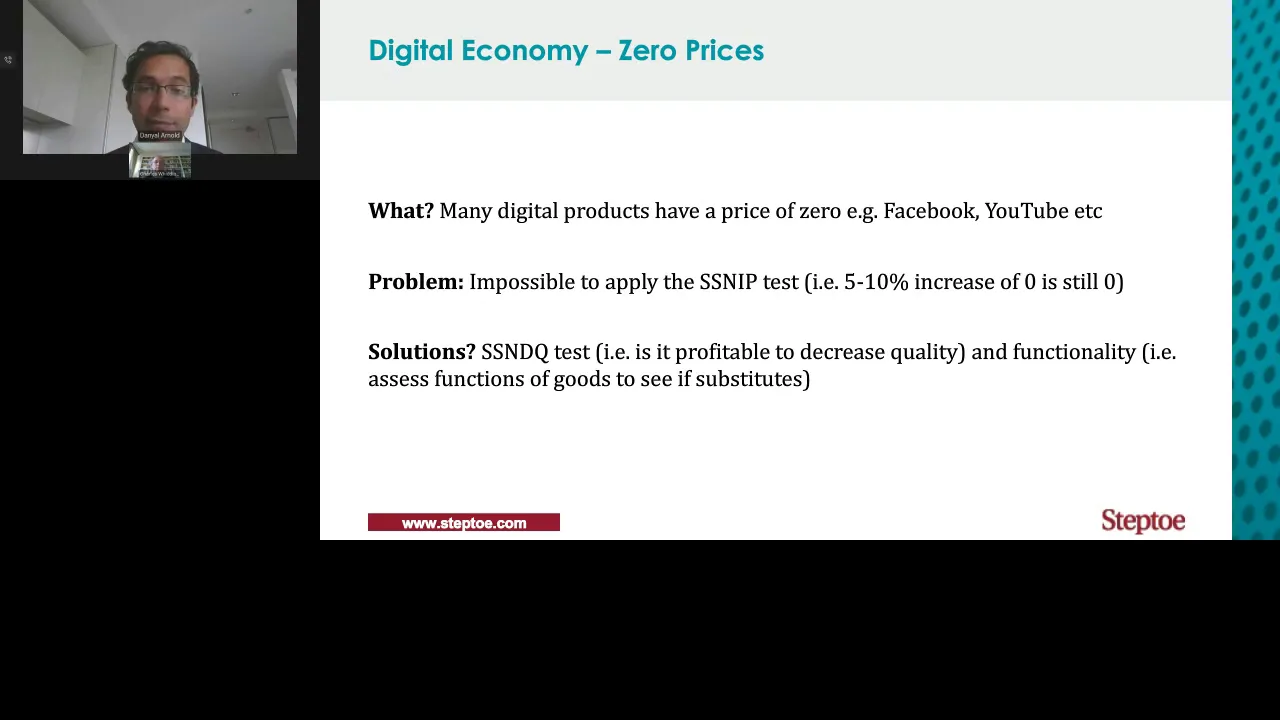







Competition authorities define relevant markets using the SSNIP test (Small but Significant Non-Transitory Increase in Price) to identify the smallest set of products and geographic area where a hypothetical monopolist could profitably raise prices, which is crucial for assessing market power in merger reviews and abuse of dominance cases; however, digital markets pose additional challenges due to multi-sided nature, indirect network effects, and free services requiring adaptations like the SSNDQ test (quality decrease instead of price increase).
Market Definition in Antitrust: The SSNIP Test Explained
Added:The fundamentals of microeconomics, specifically the concepts of supply, demand, and price elasticity of demand.
The definition and economic significance of 'market power' and how monopolistic behaviors harm consumer welfare.
The basic distinction between a 'relevant product market' and a 'relevant geographic market' in legal and economic contexts.
The concept of product substitutability and how cross-price elasticity of demand identifies close competitors.
How to apply market definition to two-sided or multi-sided digital platforms where one or more sides may face a zero-dollar price tag.
The SSNDQ (Small but Significant and Non-transitory Decrease in Quality) test, developed as an alternative to SSNIP for non-price digital competition.
Quantitative methodologies used alongside the SSNIP test, such as Critical Loss Analysis and Merger Simulation Models.
How market definition feeds into merger analysis, market concentration measurements (like the Herfindahl-Hirschman Index or HHI), and unilateral effects analysis.
13.5K views140likes8:25Original Release: 2022-06-09
When competition authorities analyze an alleged infringement or review a merger, they should understand what market is being affected to duly assess the impact on competition.
But what is a relevant market?
For example, do soft drinks and fruit juice belong to the same market?
Do producers of soft fruit juice closely compete with producers of soft drinks?
The answer is not obvious and will depend on consumer preferences in your country but also on a number of other criteria, including how soft drinks and juice are produced, distributed and sold.
Relevant markets also have a geographic dimension, which includes the alternative suppliers available to customers in a given area.
Usually the geographic market for retail groceries is rather small, while for some high technology industries with only a handful of producers around the world, it could be global.
Competition authorities have to collect extensive information to be able to define the relevant market.
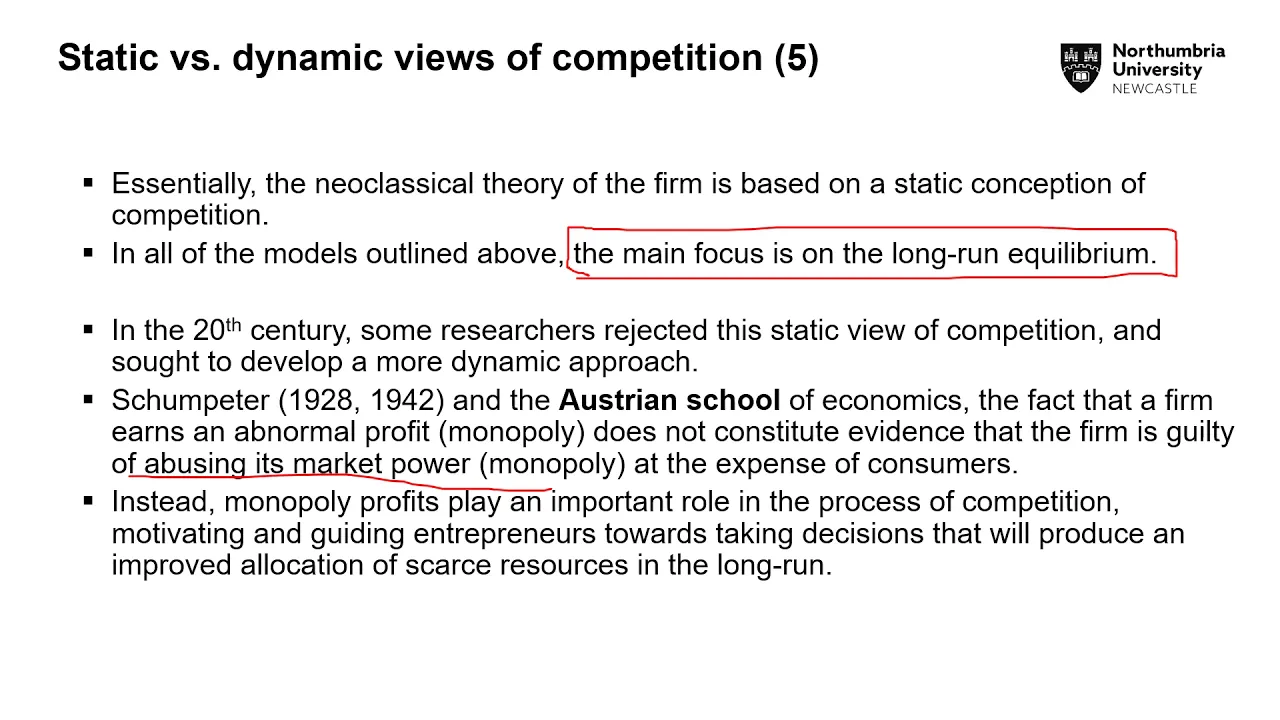
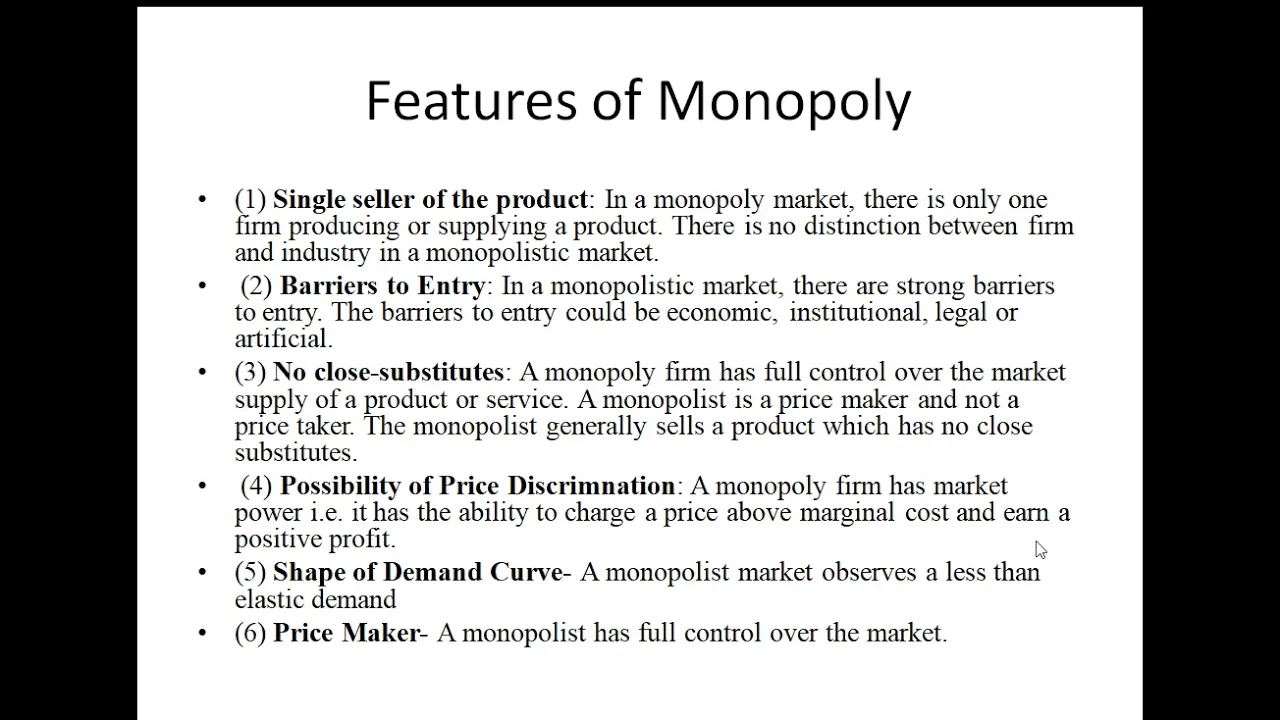
Market definition can be a contentious issue, particularly in abusive dominance or merger cases, where market definition is needed to assess market power which is a crucial factor in the investigation.
To go back to our first example, two prominent juice producers that intend to merge might argue that the relevant market is broad and includes soft drinks and therefore their combined market power in this broader market would be limited.
The competition authority would need to verify whether this is true in light of the evidence.
Competition authorities have developed a method to identify the boundaries of markets, which is called the hypothetical monopolist test or SSNIP test.
The aim of this test is to identify the smallest set of products in geographic area for which a hypothetical monopolist or monopsonist could exercise market power, that is profitably increase its price above competitive levels.
The rationale behind it is that if a hypothetical monopolist cannot profitably increase its price, it's not a real monopolist.
In particular, it means that a significant portion of its customers could react to the price increase and switch to a different product.
How does this test work?
You should start from the focal product, in our example through juice and apply a small but significant non-transitory increase in price (SSNIP).
We know that price increases usually lead to a decrease in demand, so based on the information collected you will have to estimate the portion of customers leaving the product due to the price increase.
If despite this drop in demand, the price increase is still profitable for the hypothetical monopolies fruit juice is the relevant product market.
If it is not profitable, then you must include the closest substitutable product -probably soft drinks- or maybe some soft drinks that are more similar to fruit juice and repeat this experiment until the price increase becomes profitable.
That will be your relevant product market.
The same test applies to the geographic definition, using territories instead of products.
Many sources of information can help competition authorities to come to an informed position on the relevant market.
Some common and simple sources are very important.
First, precedents from previous cases or from other jurisdictions are a valuable starting point.
It it will be for the competition authority to conclude whether precedents still apply or on the contrary market conditions have evolved since past decisions or are different in other countries Second, information from market participants, such as competitors, distributors, customers, or industry experts often allows gaining a better understanding of the market.
For this reason, it is always a good idea to send out targeted requests for information and hold hearings.
The third key source of information is internal business documents of the parties.
It is always revealing to learn from them whom they consider to be their direct competitors.
Of course, they have to be genuine and not prepared in relation to the investigation.
In some circumstances, past events -like sudden price changes of an input or the entry or exit of suppliers can shed light on how customers reacted to price increases in reality, thus making the SSNIP test much more than a theoretical assumption.
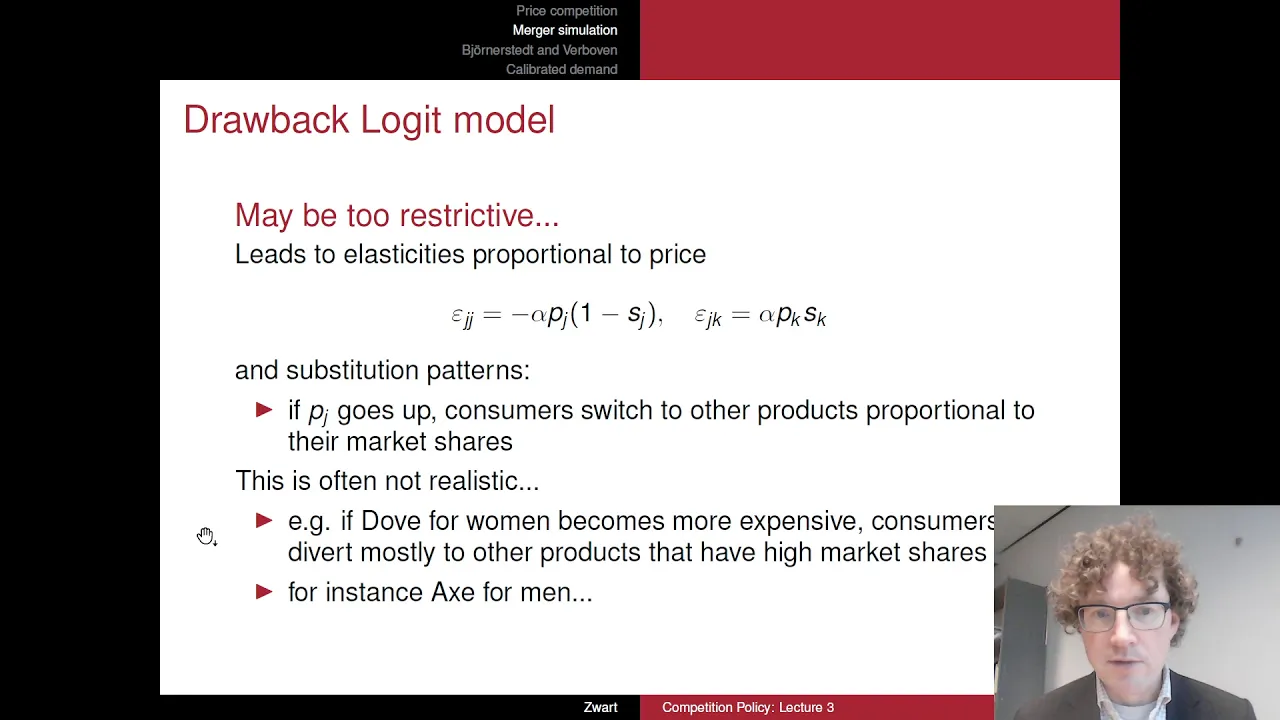
Finally, there are more sophisticated tools that competition authorities can consider, including price correlation, critical loss and price/margin concentration analysis.
In most cases, they are not strictly necessary for the assessment Although digital markets come in a variety of different shapes and sizes, many share common characteristics that can create challenges for the exercise of market definition.
Firstly, focusing too narrowly on current product or service attributes could lead to incorrect conclusions that miss the bigger picture of how firms compete.
Another challenge is the multi-sided nature of many digital markets.
Multi-sided markets where the outcomes between different markets are related.
For example, consider a social media site that competes both for users and advertisers.
The more users the site can attract, the more attractive it will be to advertisers.
This is an example of an indirect network effect because outcomes in one market, competition for users, affects another, competition for advertisers.
Indirect network effects can complicate matters.
For example, it means that a simple SSNIP test cannot just look at one market - it must also consider feedback from the related markets.
That is no simple task.
In the case of multi-sided markets, a key question for authorities is whether to define single or separate markets.
The answer is not always clear but requires a careful assessment of the nature of the markets in question.
Ultimately though, whether single or separate markets are defined should not have a large impact on the outcome of competition assessment, although it may affect how to take into account any efficiencies A third challenge often associated with defining digital markets is the fact that services are provided for free, effectively having a price of zero.
This does not mean though that no competition takes place or that there are no markets.
To define them, a strict interpretation of the SSNIP test is impossible.
Thankfully adaptations are available, for example using a decrease in quality instead of an increase in price, the SSNDQ test.
Although this assessment is particularly likely to be qualitative rather than quantitative, it still provides a helpful conceptual framework.
Finally, geographic market definition can also pose challenges in markets where national borders may seem notional at best.
Some competition experts have started to challenge the paramount role traditionally played by market definition.
It is true that a strict conclusive definition of the relevant market is not always necessary, and indeed a holistic assessment can be more appropriate in some digital cases.
That said, it is undisputable that the market definition exercise can provide competition authorities with a better understanding of the issues at stake and lead to more informed decisions.
Up Next
9:09
Monopoly Surplus & Deadweight Loss: Economics Problem Solved
@EconomicsinManyLessons
295.8K views•2014-05-06

67:20
Globalisation and the 21st Century Enlightenment | Joseph Stiglitz
@EdinburghUniversity
44.8K views•2009-02-10

10:33
Behavioral Economics Explained: Rationality, Nudges, and Risk
@crashcourse
1.1M views•2016-03-12

113:18
The Age of Easy Money: Fed & Inflation | Full Documentary
@frontline
21.2M views•2023-03-15
Related Study Plans & Knowledge Roadmaps
Structured learning paths in Economics
economics
Intellectual Property: Innovation vs Monopoly
01Foundations of Market Power: Monopolies & Deadweight Loss
02The Economic Trade-Off of Intellectual Property
03Patents: R&D Incentives vs. Market Monopolization
+ 3 more learning modules
12h6 modules
Explore Roadmap
economics
Sovereign Debt: Defaults, IMF & Restructuring
01Introduction to Sovereign Debt & Government Bonds
02Debt Sustainability & Credit Ratings
03Anatomy and History of Debt Crises
+ 2 more learning modules
12h5 modules
Explore Roadmap
economics
Market Design: Matching Theory & Gale-Shapley
01Introduction to Market Design and Price-Free Markets
02Two-Sided Matching & The Gale-Shapley Algorithm
03School Choice Systems and Mechanism Design
+ 2 more learning modules
10h5 modules
Explore Roadmap
economics
Impossible Trinity: Forex, Capital & Policy
01Introduction to Monetary Policy and Central Banking
02Exchange Rates and International Capital Flows
03The Mundell-Fleming Model
+ 2 more learning modules
8h5 modules
Explore Roadmap