








![Global trends, International Relation [part 2]](https://i.ytimg.com/vi_webp/1fGjdY5TpnI/maxresdefault.webp)













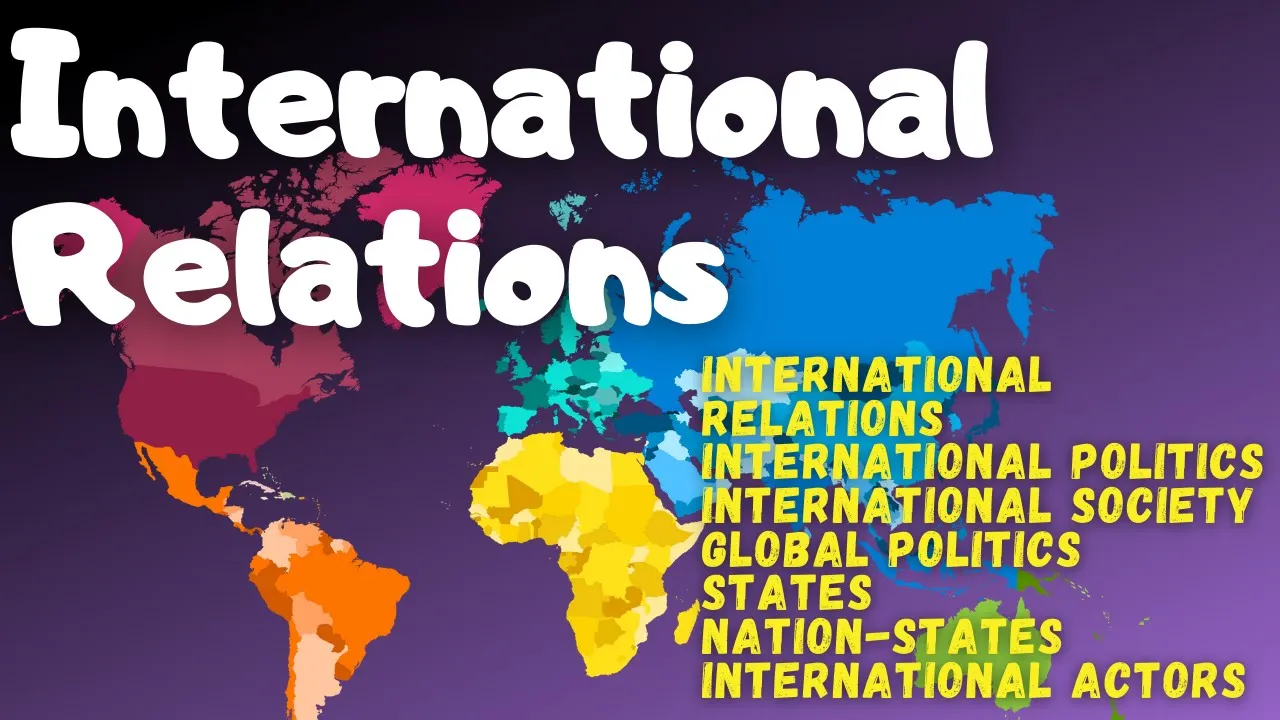
This lecture introduces three major theories of global governance: Realism, which views international politics as a struggle among sovereign states for power and survival in an anarchic system; Liberalism, which emphasizes peaceful cooperation, democracy, free trade, and international institutions as means to achieve collective gains and peace; and Constructivism, which argues that international relations are shaped by socially constructed ideas, identities, and norms rather than purely material factors like power and economics.
Theories of Global Governance: Realism, Liberalism & Constructivism
Added:The concept of state sovereignty and the historical Westphalian international system.
The fundamental distinction between 'global governance' (cooperative steering) and 'global government' (a centralized authority).
The concept of 'anarchy' in international relations, representing the lack of a supreme governing authority over sovereign states.
An overview of the primary actors in international relations, including nation-states, intergovernmental organizations (IGOs), and non-governmental organizations (NGOs).
Critical and alternative IR theories, such as Marxism, Feminism, and Post-Colonialism, and their critiques of global governance.
Deep-dive analysis of the structure, functions, and limitations of major international organizations like the United Nations, the World Trade Organization, and the International Monetary Fund.
Applying Realist, Liberal, and Constructivist frameworks to contemporary global challenges, such as international climate agreements, global health pandemics, and nuclear non-proliferation.
The debate surrounding the 'democratic deficit' and the legitimacy crisis facing modern global governance institutions.
19.9K views247likes12:41Original Release: 2018-08-18
hello everyone this is Tata to letter from a tooth online study and today I'm going to give you my presentation on theories of global governance and here I'm going to discuss about realism liberalism and constructivism for this for helping me to do this presentation I would like to thank miss Jo Podell and miss Suzanna Shrestha realism the distillery regards power and national interest as important elements in international politics according to Dunn and admit and sovereign states are unitary and rational actors in international system and they compete with each other for power and security statism Anarchy survival self health security dilemma and balance of power are the central elements and core concepts of realism the core ideas of realism thoughts are as follows the world is made up of States there are the most important actors of Wolpaw world power politics they are the supreme authority world politics is essentially a struggle among interested States for survival security and power and relative capabilities every state has an obligation to promote its national interest associated with the acquisition of power to enhance self-preservation and maximize power and security states are not equal in terms of power powerful or stronger stronger States dominate powerless or weaker state there is insecurity and lawlessness in the international system due to absence of higher regulatory authority to curb conflict and Wars in the international system by which states can protect themselves and resolve their disputes each state is responsible for maintaining its own survival and national security since conflict and struggle for power cannot be controlled sufficient military military capabilities and arms to defeat potential enemies to excise influence over others and maintain their own reservations economic growth determine the power of state international organizations have no enforcement power and impact over the actions of state and the nature of world politics in an an article international environment the primary objective of all states is survival and hence they try to maintain security some powerful states make an attempt for territory expansion by defeating head of the state in the portal trees do they expand more powerful typical realism asserts that in an environment of looming threat and spiral of insecurities in the world states must seek to survive by checking the power of the opposing side this theory has been severely been criticized by liberals and constructivist for this it's narrow and partial view of international politics on following grounds realist neglect important aspects of international relations such as cooperation values and beliefs of people in international relations it gives selfish impression of state as it suggests to use their power to advance their own interest rather than to promote friendship cooperation and collaboration to promote their mutual Queens it's pessimistic about the possibility for eliminating conflicts and war within the international system it holds hard and cruel nature of international relations and global governance in this age of globalization there is in the dependency among state an idea of realism is irrelevant in present context despite these shortcomings many people believe in realist view as it focused on power and importance of sovereign states in the world quality the realism theory has been called strongest contemporary challenge to realism the proletariat views international relations as the study of interactions among individuals groups and societies beyond the formal relations between Garen in the globalized world liberalism assumes that international relations involved peaceful interactions among various actors and global issues can be settled by the means of global cooperation and joint efforts core concern of the story is bringing about peace and collective gains among the states by the means of coordination through rules and organizations in the 20th century after the end of the First World War covalent of the League of Nations that is 14-point proposal by Woodrow Wilson was based on liberalism following were basic and common assumptions of liberalism about international relations and global governments Nielsen states are main actors but not the sole actors in the international relations other actor includes international Institute's global cooperation cooperation among national seats is essential for a peaceful international system world politics is a struggle for consensus and mutual benefits rather than a struggle for power purest actors interact with each other agree some common rules norms and recognize their common interest their greater independence communication interaction and democratic values promote greater cooperation which in turn brings peace security and justice conflict reduction practices and brands used in any state can be used when dealing with international disputes modes of bringing peace and collective benefit in the world our democracy free trade and global institution democracy democratic nations prefer peaceful means of conflict resolution rather than war and hence democratic states are more peaceful than other authoritarian States feat freed free trade between countries increases communication gradually destroys national selfishness and encourages States to avoid conflicts it creates in their dependencies among states that in turn encourages cooperation promotes a cooperative international order as well as peace prosperity and justice in the world global institutions global institutions like the UN the WTO the IMF you are can etc can create laws and norms that are binding on their members which in turn change the patterns of international politics they could help overcome selfish state behavior by encouraging them for the greater benefit of continued cooperation rather than immediate gains liberalism has been criticized on the ground that it has not exceeded its idealist heritage some of the criticisms made are democratic states may slide back to another form of non democratic and authoritarian forms free trade and interdependence may not ensure cooperation as claimed by them global institutions have minimal influence over the behavior of states and they control their behavior according to balance of power logic liberalism appear in the low political arena that is low global issues related to economic social cultural democratic and environment rather than high political arena that is international peace and security states can cooperate among themselves on the basis of their own decisions and self national interest as mentioned in realist theory no state can avoid self-help and the security dilemma constructivism many scholars and students of international relations have turned to constructivism after the failure of realism and liberalism to anticipate the event of the end of the Cold War in the early 1990s the idea of constructivism were popularized by Alexander ended in 1992 realism and liberalism both tend to focus on how material factors such as military power economic wealth and trade affect relation among states and world politics in contrast to this constructivism focuses on how the world revolves around social ID and shared understanding which have significant impact on world politics the key tenants of constructivism can be summarized as follows the international system is a set of ideas thoughts and beliefs arranged by people in the past social world is a world of human consciousness that is thoughts beliefs ideas and understanding among human and group of human being therefore these influences world politics construct a constructivist views that national identity national interest and behavior of actors such as individuals and states are socially defined and socially constructed state functions in social environment because society gives meaning to many core concepts such as Anarchy power national interest and security dilemma sovereignty of states is the most important institution in international society construct constructivist the view state souls in sovereignty as a changing fenomena global institutions are the norm setters and creators they socialite states to accept new norms values and beliefs in the international system thus they serve as an agent of social constructions which has independent effect on international relations it holds that actors other than States matter in the world affairs however they are influenced by who they are and how they perceive themselves and others constructivism in general focuses on three key ideas and they are interest ideas and norms interest it refers to goals which are defined by the society and social groups for example two enemies become friends without changing material factors identities it refers to actors perceptions of who they are and what their rules I didn't these are socially conducted nuns are shared rules and moral principles that define how actors should behave in the global affairs constructivist in phil emphasized the rules of socially constructed ideas and intangible factors in global affairs since they play important roles in shaping interest and behaviors of actors it holds that actors other than states matter in the world effects however they are influenced by who they are and how they perceive themselves and others there are some limitations limitations of constructivism and they are constructivist are good at describing change in ideas thoughts and shared beliefs lead to change in world politics and an international system but they are aware on explaining the causes of change that lead to change in ideas and shared understanding that is how when and why do such changes emerges yes also argue that it is an approach not a theory of international relations because it could not deal with real and serious matters of international relations for example the theory of culture cannot explain and replace the theory of politics so it was pleasure for me to share my knowledge fear at use online study channel more of the educational videos are on the way so do press like button share button and subscribe button and do leave your comments in comment box too so that it would help us to improve our witness and maintained by the sides of us so thank you
Up Next
6:34
Why States Disobey International Law: Compliance Theories Explained
@InforMEAInitiative
2.1K views•2017-03-27

24:30
BRICS Pay and de-dollarization: A New Financial Order Emerges? | 55 chars
@DannyHaiphongYT
164.6K views•2024-10-22

7:33
Government Surveillance Methods: 10 Ways You May Be Watched
@BeAmazed
1.6M views•2017-04-09
10:19
Explaining the Saudi-Iranian Proxy Conflict in the Middle East
@Vox
18.2M views•2017-07-17
Related Study Plans & Knowledge Roadmaps
Structured learning paths in Political Science
political-science
Economic Statecraft: Sanctions & Chokepoints
01Foundations of Geoeconomics and Economic Statecraft
02The Mechanics of Weaponized Interdependence
03International Sanctions: Types, Implementation, and Efficacy
+ 2 more learning modules
12h5 modules
Explore Roadmap
political-science
Central Bank Independence: Politics & Policy
01Foundations of Central Banking and Monetary Policy
02The Time Inconsistency Problem & Inflation Bias
03The Delegation Model and Designing Independence
+ 2 more learning modules
12h5 modules
Explore Roadmap
political-science
Consociationalism: Power-Sharing & Stability
01Democratic Dilemmas in Divided Societies
02Introduction to Consociational Democracy
03The Four Pillars of Consociational Design
+ 2 more learning modules
12h5 modules
Explore Roadmap
political-science
Rebel Governance: Legitimacy, Economy & State
01Foundations of Rebel Governance and Statehood
02Establishing Political Legitimacy and the Rebel Social Contract
03Wartime Economies and Rebel Resource Management
+ 2 more learning modules
14h5 modules
Explore Roadmap